The sci-fi sequel Skylines is in selectcinemas from December 18th, so we caught up with some of the talent behind the film. In this video, we talk to actor Alexander Siddig.
Don’t forget to subscribe to our YouTube channel for more exclusive interviews and content.
The sci-fi sequel Skylines is in selectcinemas from December 18th, so we caught up with some of the talent behind the film. In this video, we talk to actor Lindsey Morgan.
Don’t forget to subscribe to our YouTube channel for more exclusive interviews and content.
The sci-fi sequel Skylines is in selectcinemas from December 18th, so we caught up with some of the talent behind the film. In this video, we talk to director Liam O’Donnell.
Don’t forget to subscribe to our YouTube channel for more exclusive interviews and content.
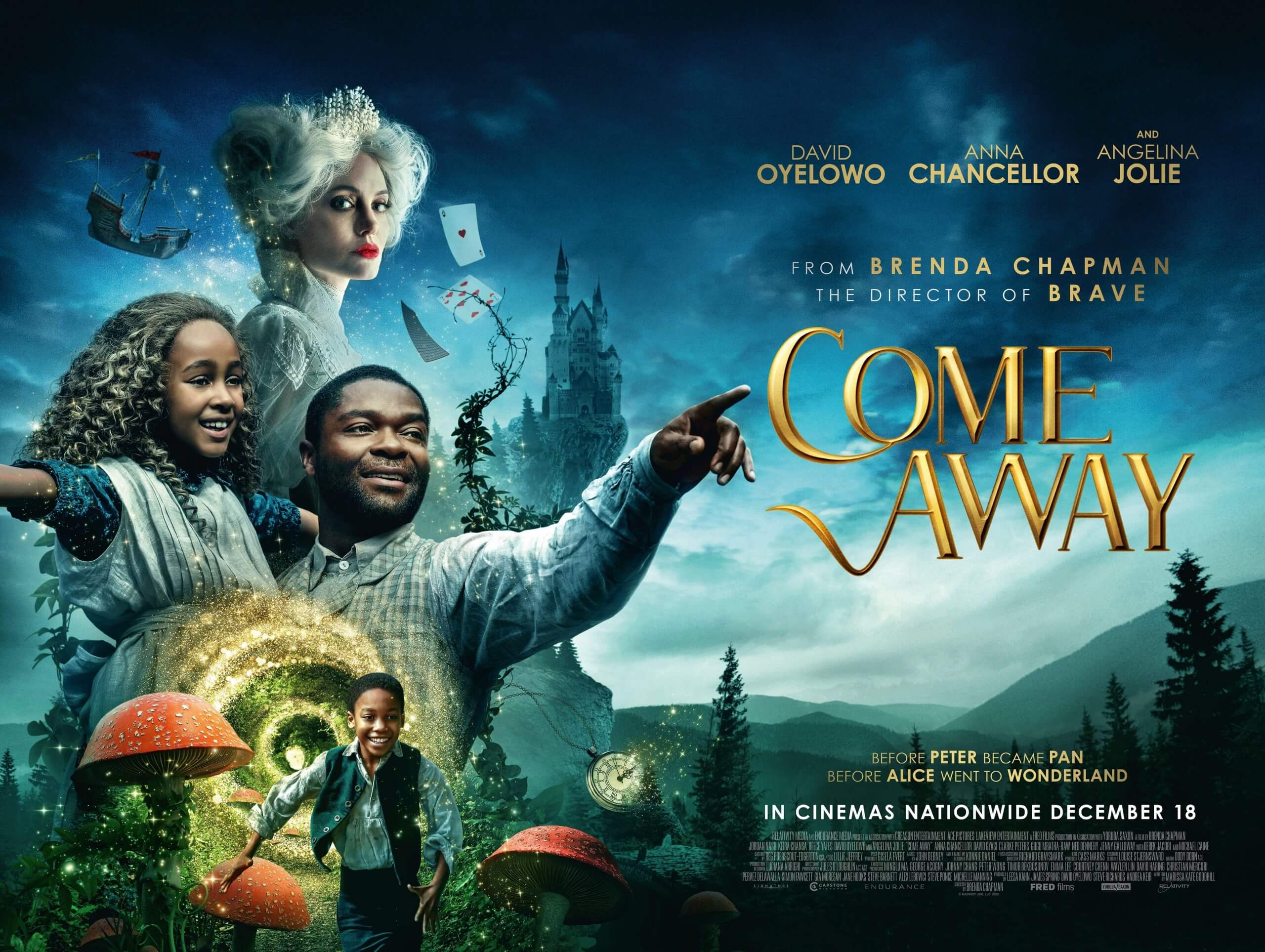
In his new film, Come Away, David Oyelowo adds another instance of the great British literary canon to his illustrious career. While the actor is equally known for his roles in historically-based dramas, wherein he portrays real people – such as Dr. Martin Luther King, Jr. in the Oscar-winning 2014 film, Selma – Oyelowo has acted in Shakespearean plays, voiced James Bond, and next year sees him joining up with Peter Rabbit.
However, in the conceit of Come Away, the actor plays Jack Littleton, the father to Alice and Peter, who will soon come to be better known by the appellations of Alice in Wonderland and Peter Pan, respectively. It’s an intriguing concept, made all the more interesting by the fact that the film was directed by longtime Disney, Pixar, and DreamWorks filmmaker Brenda Chapman, in her live-action directorial debut. There’s a lot to take in when discussing his career, but it was a joy to speak with David Oyelowo and see how the actor connects historical fact with literary fancy, and what it means to him as an actor.
STARBURST: It seems as though Come Away is a further example of your work wherein you get to be part of this grand literary tradition, as well as one that’s specifically British. You’ve done many adaptations of classic works: you got to be James Bond for the audiobook of Anthony Horowitz’s Trigger Mortis, you’ve done Shakespeare, you’re tied into both Peter Pan and Alice in Wonderland with this film, and you’ve got Peter Rabbit 2 coming out next year. What’s it like, getting to be a part of this historical literary tradition?
David Oyelowo: I think it’s born out of my love of literature – my love of the classics, whether it be plays or stories – so I gravitate to those. They’re tried and tested. They are beloved, and with good reason. Sometimes it’s because you get to play dress up as well. [laughs] These period dramas – which I definitely grew up on, being from the UK – there’s something elevated about them, as well. You can either be a superhero and wear a costume or you can play Javert and wear a costume so, yeah, I probably gravitate towards them partly for those superficial reasons but mainly because the stories are just really good and the characters are wonderfully complex. They’re great challenges to try and conquer.
We imagine that was part of what attracted you to Come Away, as well as probably the possibility of working with Brenda Chapman in her live-action feature directing debut?
It really was. Brenda’s work has been a fan favourite of ours in our house with The Lion King. Prince of Egypt is a big film in our house. I have a daughter who adores the film Brave and so, again – a tried and tested filmmaker and storyteller. Also, the concept behind this story was just really imaginative. The idea of putting Peter Pan and Alice from Alice in Wonderland together as brother and sister sort of feels like an idea that should have been had a long time ago, but when Brenda approached me with the script, I realised that someone like me was now going to be reflected in a story that I had loved growing up, but never really seen anyone who looked like me within.
Not only was that going to be something for me, but something for my kids – something for kids all over. Partly why I gravitate towards these kind of roles is, I would love to see them normalised. I would love to see it normalised that someone like me gets to be in those stories, because the truth of the matter is black people didn’t pop up in the middle of slavery or the civil rights movement or the Windrush in the UK. We’ve been on this planet for a very long time and participating in its well-being in ways that transcend struggle and racial issues and so that should, therefore, be reflected in storytelling.
It is such a wonderful thing to see representation in adaptations of classic literature, rather than simply going with the flow of, “Well, this is the way it’s always been done.” Now, this is sort of apropos of nothing we’ve been discussing but, whenever I see Michael Caine in a film, I have a bit of joy, no matter how briefly he’s in it, such as in this picture. Did you know that you would be working with him when you signed on and if so, was that also part of the appeal?
No, I did not at all. It was a complete surprise. We approached him almost as a bet to each other and, lo and behold, it happened really quickly. It happened within a week of us going out to him and suddenly, he was on set with us. It was a really discombobulating thing because it’s Michael Caine with that voice and that face and I now had to do scenes opposite him, which really threw me because I felt like, “Why is Michael Caine doing an impersonation of Michael Caine?”
It just felt so odd having that voice come at me in the midst of a scene but, again, just one of the joys of being an actor is getting to work with your heroes. For me, to get to work with Angelina Jolie and Derek Jacobi and Clarke Peters, and a friend of mine, David Gyasi – let alone these wonderful young actors – it was just a just a complete dream.
You are best known for your work in historical drama and we were really intrigued by the idea that you’ve done all of these literary works, but you’ve also done so many things where you’re playing real people. How does that process differ or how is it the same? We assume that, in both cases, you’re having to work based on already extant presuppositions of how people might think these people should be.
It’s an added layer of challenge. Any role you’re playing is exposing, especially when it comes to film. You’re putting yourself out there, so to speak, but historical characters – or, I should say, even just characters who people have, like you say, a presupposition, with their own assumption of what they should be – I would almost put historical figures and literary figures in the same bucket, because whether it’s Dr. King or Javert, people are coming at it with their own baggage.
You have to just accept that you are not going to please everyone and so therefore, the thing to fastidiously do is to figure out what your best three-dimensional interpretation of that character is and to do it unapologetically, because the temptation is to half do it and sort of fall somewhere in the middle or do an impersonation of someone else or even the character you’re playing and then that feels surface, rather than revelatory. I just think you go full ball and just accept you’re not going to please everyone. Tell the truth. That tends to be the guiding principle for me.
You mentioned your family. Can we assume that possibly some of the roles you take are so that your children can see you in films? We know some actors have this thing of taking roles because they’re like, “Oh, my kids are going to like this.” Does that happen with you at all?
Absolutely, it does. Earlier on in your career, you take these roles that appeal to you and your sensibility and your journey and maturation as a human being. Then, you have children and you suddenly turn around and your kids are 10, 12, and 13 or whatever and you go, “They don’t know what I do because they haven’t seen anything I’ve done,” because it’s just inappropriate for them.
Peter Rabbit 2, which I did not long ago and will be coming out sometime next year, was a film I actually turned it down quite a few times because I was about to direct a film – my directorial debut, called The Waterman. I was understandably nervous about directing a film and wanted to give myself all the preparation possible and then, Peter Rabbit 2 came at a time where it would bleed into my prep time, but my daughter heard me over the phone turning down Peter Rabbit 2 and said, “Daddy, what are you doing?!” She loved the first one so much and so literally, Zoe is the reason I am in Peter Rabbit 2, but the byproduct of that is just getting to do a breadth of things, which is what I want. I want to appeal to the whole family, not just a certain demographic and so, getting to mix it up is not a bad thing.
Your career has been something that we think any actor would be like immensely satisfied to do. You seem to get these parts that allow you to have something in which to sink your teeth. Would that be an accurate description?
Yeah. It’s partly by design. I once heard someone say the greatest power an actor has is to say, “No,” which is a very privileged thing to be able to say. Most actors are just trying to make them nuts and enough to live. You’re doing incredibly well to make an actual living from being an actor but I’ve been very blessed with opportunities and thankfully, blessed enough that I can be a bit more judicious with my choices.
Every time you say, “No,” rather than panicking about whether you’re gonna work again – my approach has been, every time I say, “No,” it’s to create room for the thing I really want to say “Yes” to and the things I say “Yes” to are the kind of roles that you allude to: they have a bit more meat on the bone. They have something to say. They are holding a mirror up to humanity. I like films that have both magic and meaning but, most of all, I want to be thoughtful. I don’t particularly want to be in things that are pure entertainment with no real substance. Nothing is more satisfying to me when I watch a TV show or a film then if it stays with me – if it has me thinking or if it has me ruminating on it.
You don’t always succeed! Don’t get me wrong: there are definitely choices I’ve made that didn’t go as well as I would like, but the intent has always been to do something that has some substance to it.
In terms of substance, your role in Come Away is a father and you are a father and the heartbreak at the core of this film – we can’t imagine what it’s like, as a parent, having to work with material such as that, where you’re dealing with the loss of a child. Is it a little difficult or a little too close to the bone at times, when you’re having to deal with something like that?
Inevitably, one of the things you do as an actor in a given situation that you have to play is you think about what that would mean for you as a husband, as a father, as a friend – in any given circumstance, how would this impact you? Of course, some of what my character and Angelina Jolie’s character go through in the film is the worst thing you could have to deal with as a parent – or, indeed, a human being – and it’s very uncomfortable to have to entertain those thoughts, but that’s the job. The job is to reflect the reality of humanity as best as you can and I would much rather play those circumstances than experience them myself, in my own personal life.
Sometimes, the portrayal of those difficult circumstances can be incredibly healing for an audience, some of whom have been through some of that stuff. I lost my dad this September. He lived with us for the last four years and I’ve had to watch my kids go through the challenges of losing their grandfather and in our film, we are trying to balance fantasy and reality and trying not to patronise kids and trying to equip them to deal with the challenges that we will all inevitably face in one way or another, and especially now, in the middle of this pandemic. There is something cathartic about watching it played out in films that, hopefully, can help people deal with this stuff in life.
We can’t imagine what it’s like to have to have something such as that in the back of your mind while you’re promoting a movie about a family. Without giving too much away for folks who’ve not yet seen Come Away, in the film, you are not only the father to Peter Pan and Alice of Alice in Wonderland but, essentially, you are the grandfather to another set of literary characters. How does it feel to be such a grand patriarch?
That’s a great way of putting it. What I love about that side of things is the fact that, for people who will see this film in years to come, I just love the idea that we can start to normalise stories like this that have beloved literary characters, where we’re seeing those characters through many different lenses in many different forms and guises from different cultures and backgrounds and ethnicities. The thing about Alice in Wonderland, Peter Pan, and a myriad of fairy tales is the reason they endure – the reason they stick around for such a long time – is because they are universal in their relatability they speak to all of humanity.
Whether you’re black, white, African, Asian, American, South American, Russian: they go to the heart of humanity, much like Shakespeare does and if any piece of literature does that, then I think it behooves us to tell and retell those stories through the guise and eyes of different kinds of people to allow them ownership of those stories. So, for me to play the “grand patriarch,” as you call it, of these literary characters: of course, it’s a great thing for me, but I hope it’s going to be very meaningful to audiences of all shades who will watch this film as the years go.
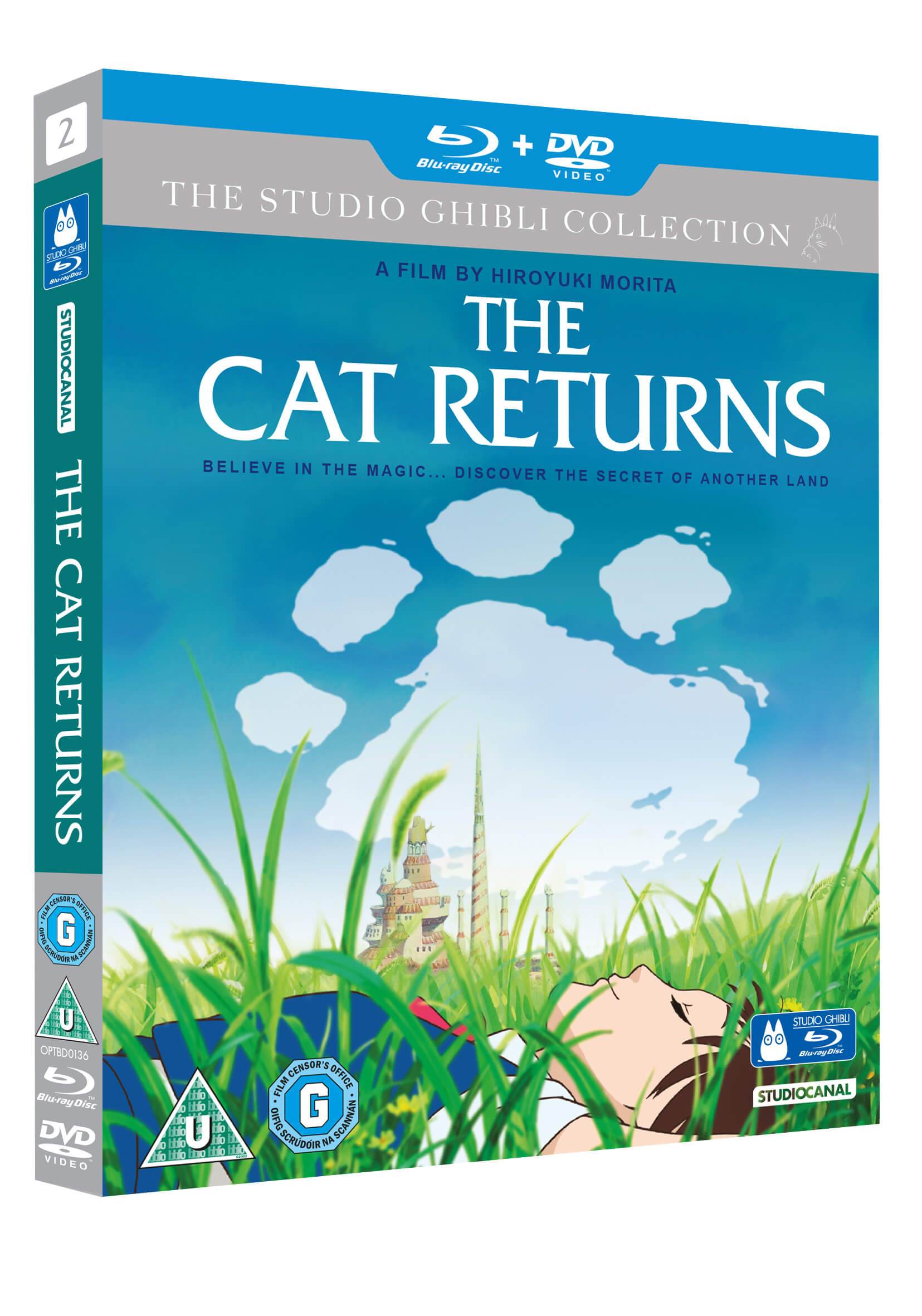
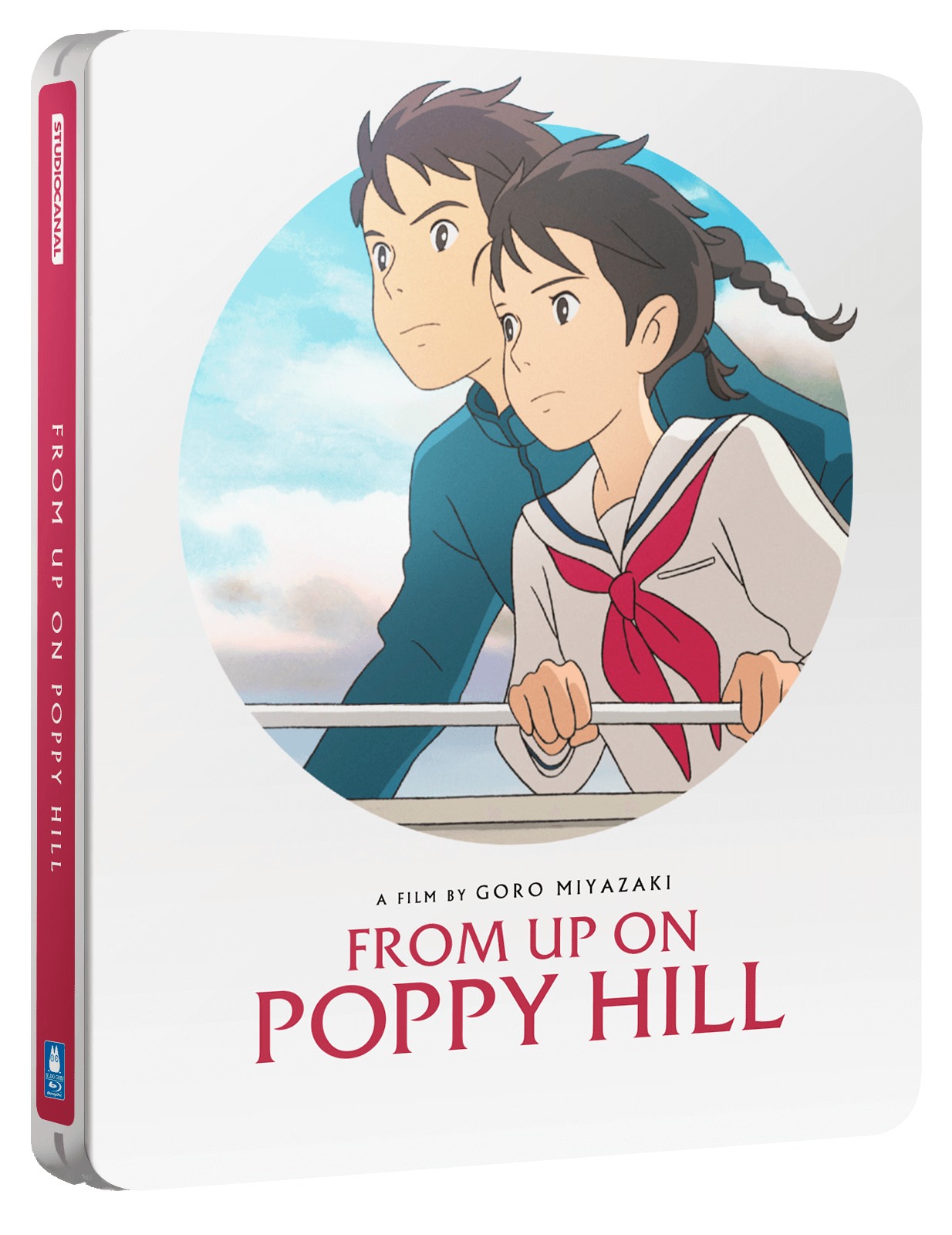
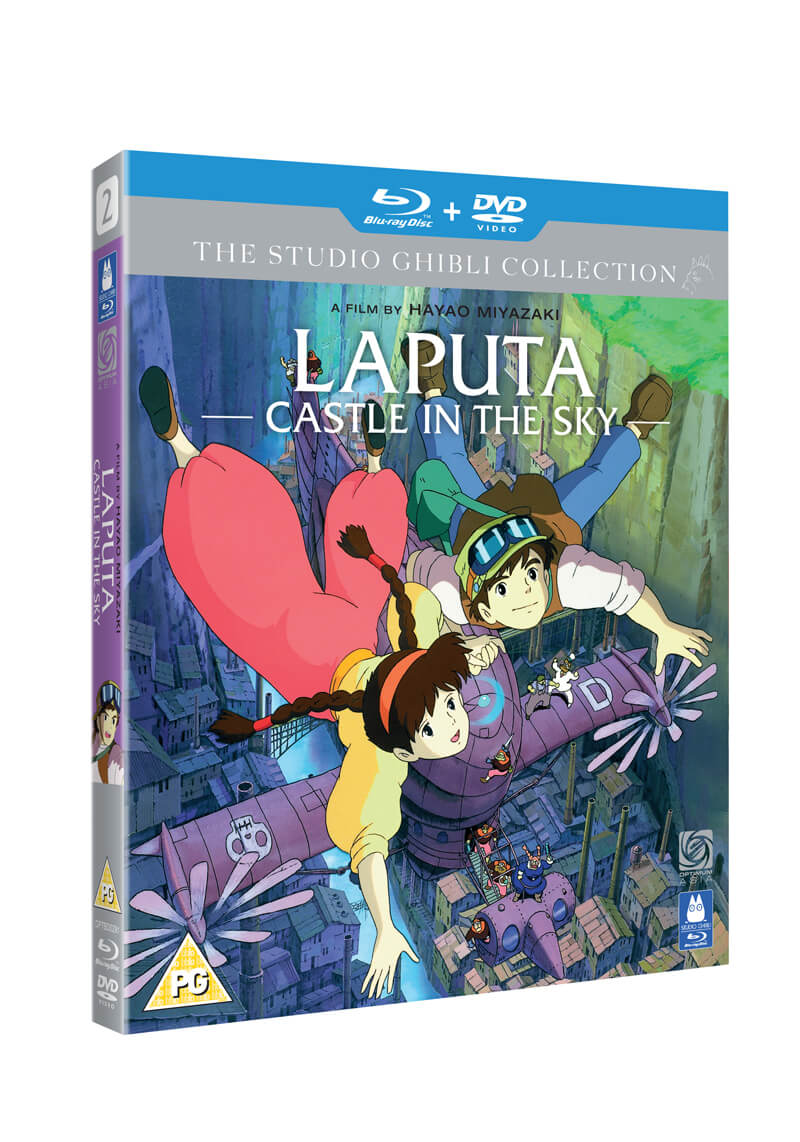
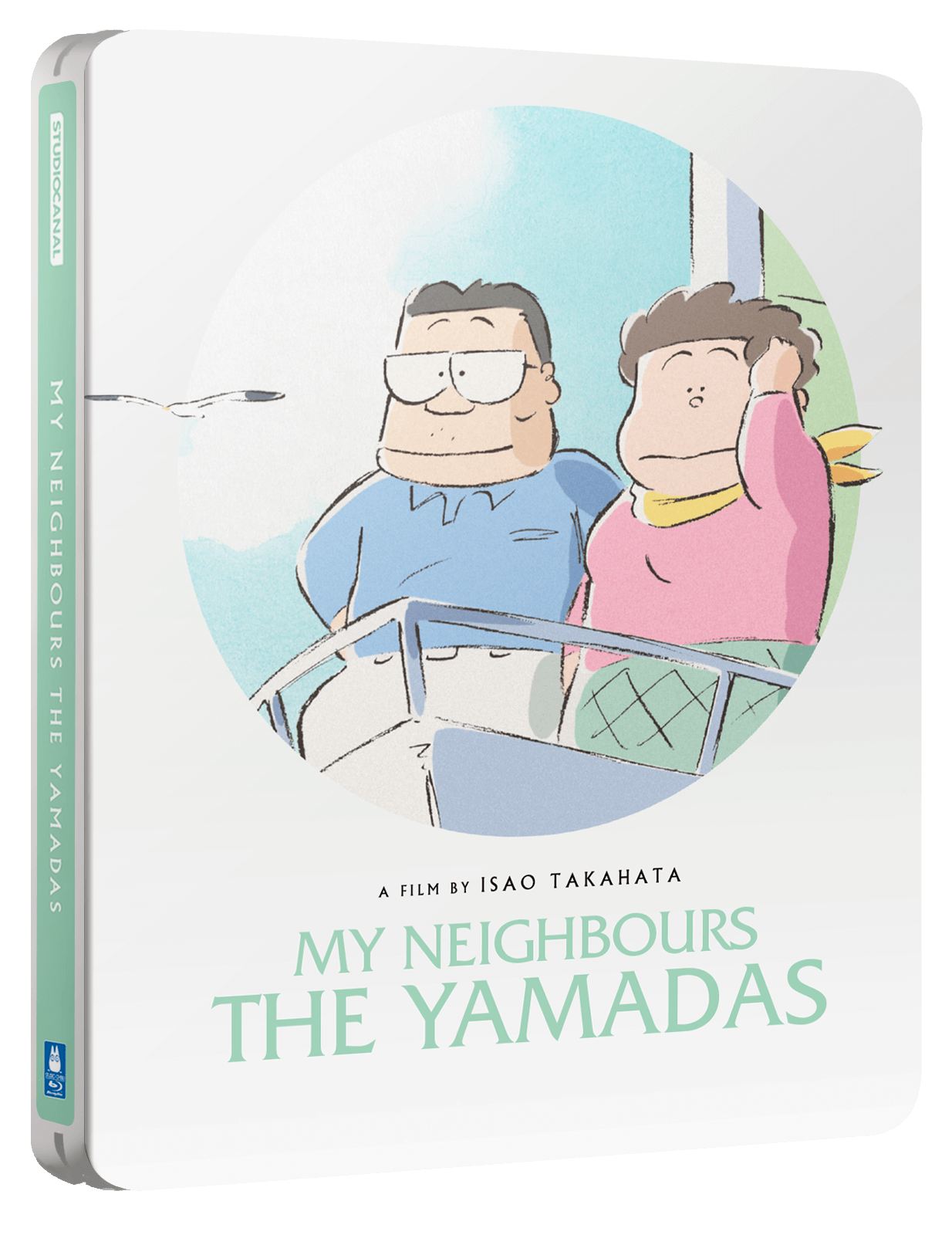
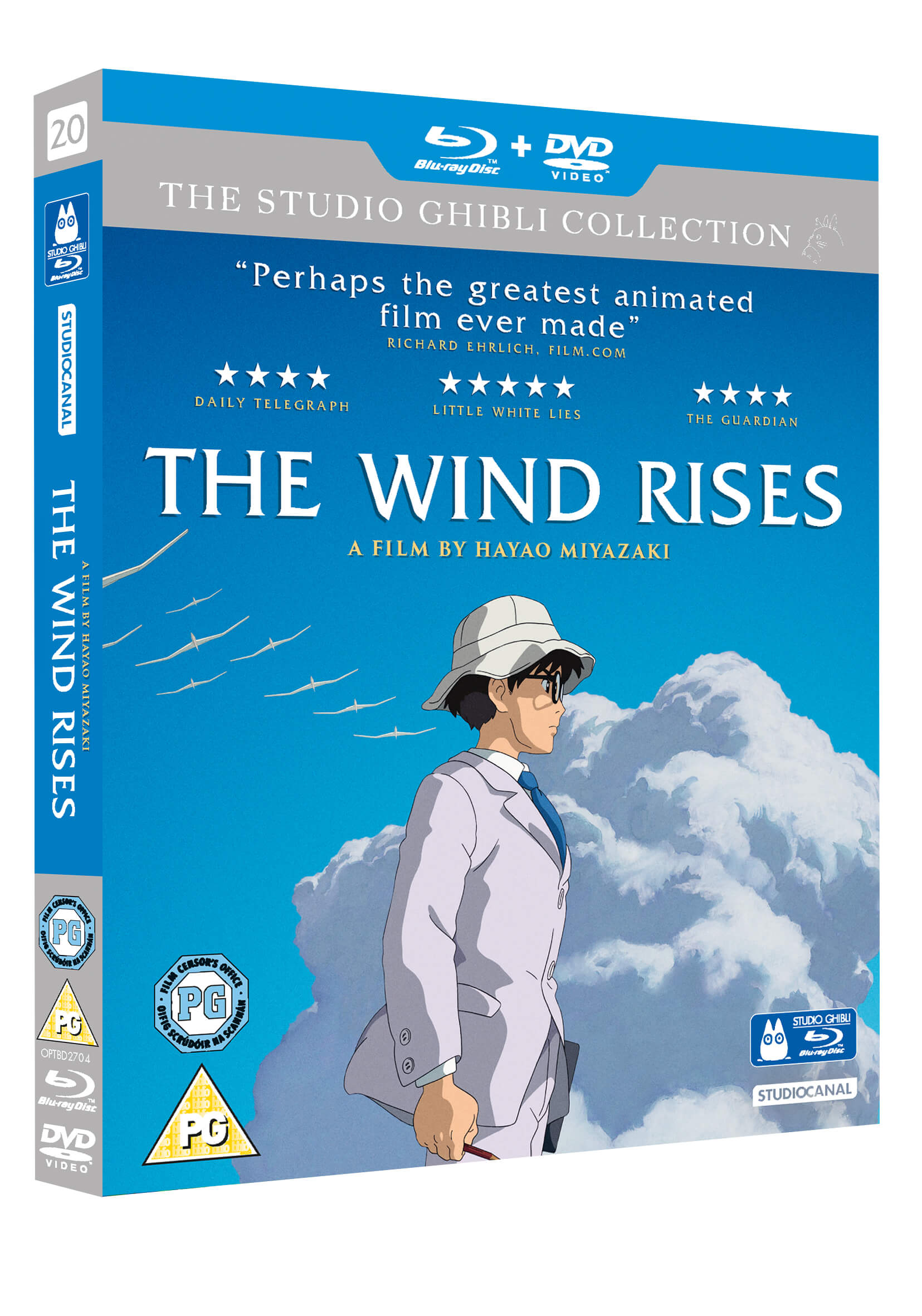
To celebrate the release of the 15th Anniversary Special Collector’s Boxset of HOWL’S MOVING CASTLE on December 21st, we are giving away one special Christmas Studio Ghibli bundle, with four stunning Steelbook releases of From Up On Poppy Hill, My Neighbours the Yamadas, When Marnie Was There, Only Yesterday and Blu-ray editions of Howl’s Moving Castle, The Wind Rises, Laputa: Castle in the Sky, The Cat Returns.
To save you getting lockdown blues, we’re going to be giving you our picks of what to watch on Horror Channel each week. Here are some of our favourites this week:
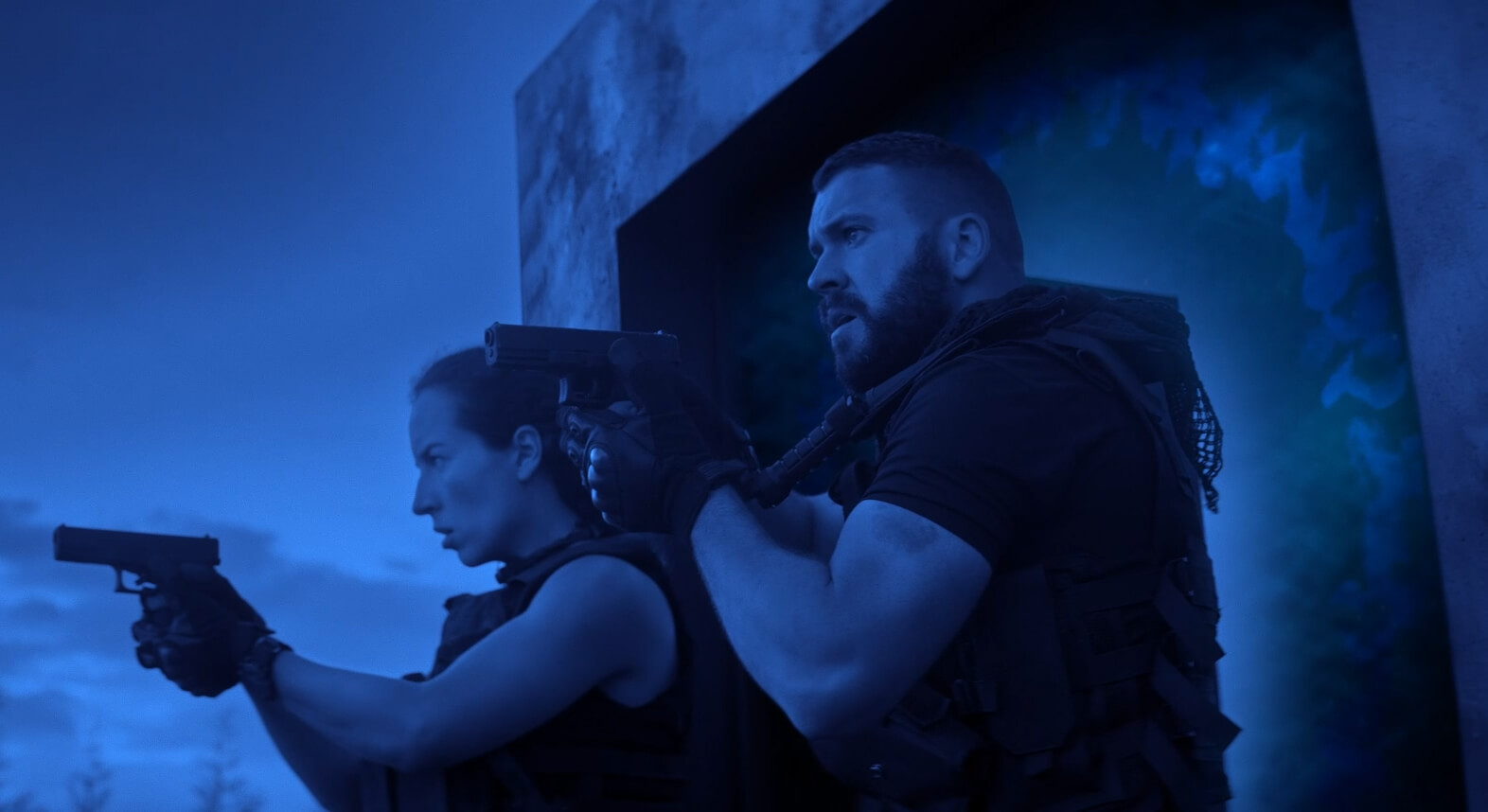
Tuesday December 15th, 9pm – The Ascent (2019)
Director Tom Paton (G-Loc) is one of the bright young things of British genre, and this war-action-fantasy sees a black ops unit having to relive a botched mission over and over. Fantastically acted, this is a mind-bending treat.
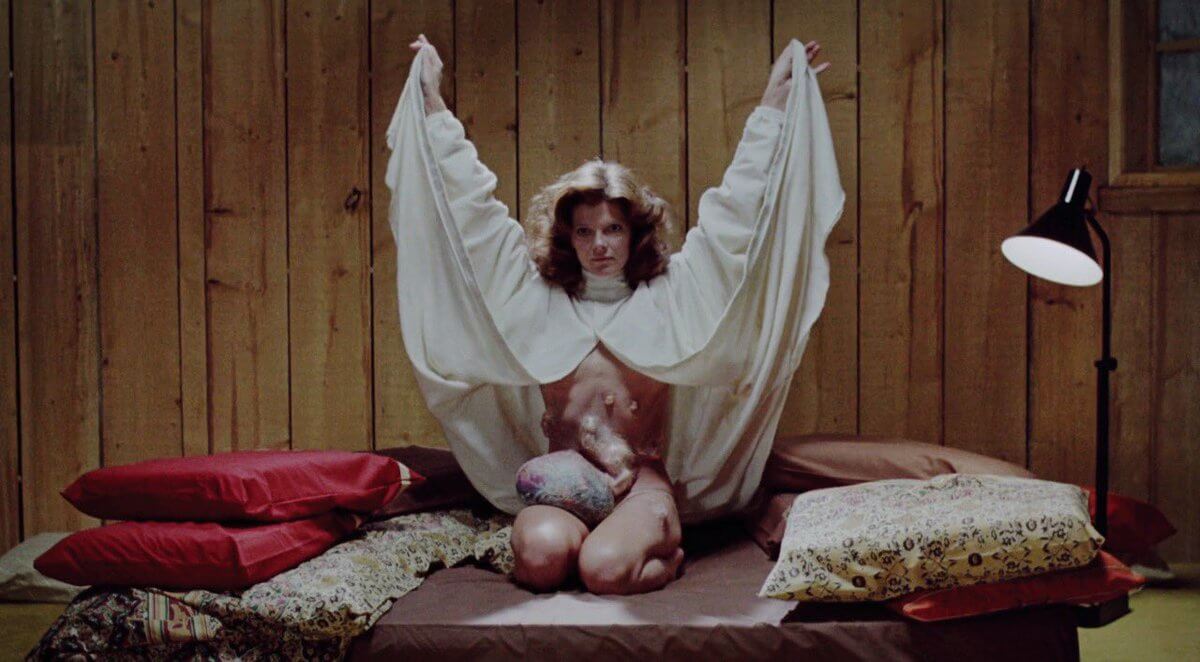
Wednesday December 16th, 10.45pm – The Brood (1979)
David Cronenberg – the king of body horror – directs this fantastic tale of terror in which a psychotherapist’s unorthodox methods leads to disturbing changes in the bodies of his patients. Starring Oliver Reed, Samantha Eggar, and Art Hindle.
Thursday December 17th, 10.50pm – Schizo (1976)
A fun, ‘of its day’ slasher directed by Pete Walker (Frightmare) and written by David McGillivray (Satan’s Slave). A figure skater (played by Lynne Frederick) is stalked by an ex-convict, but is the reign of terror all that it seems?
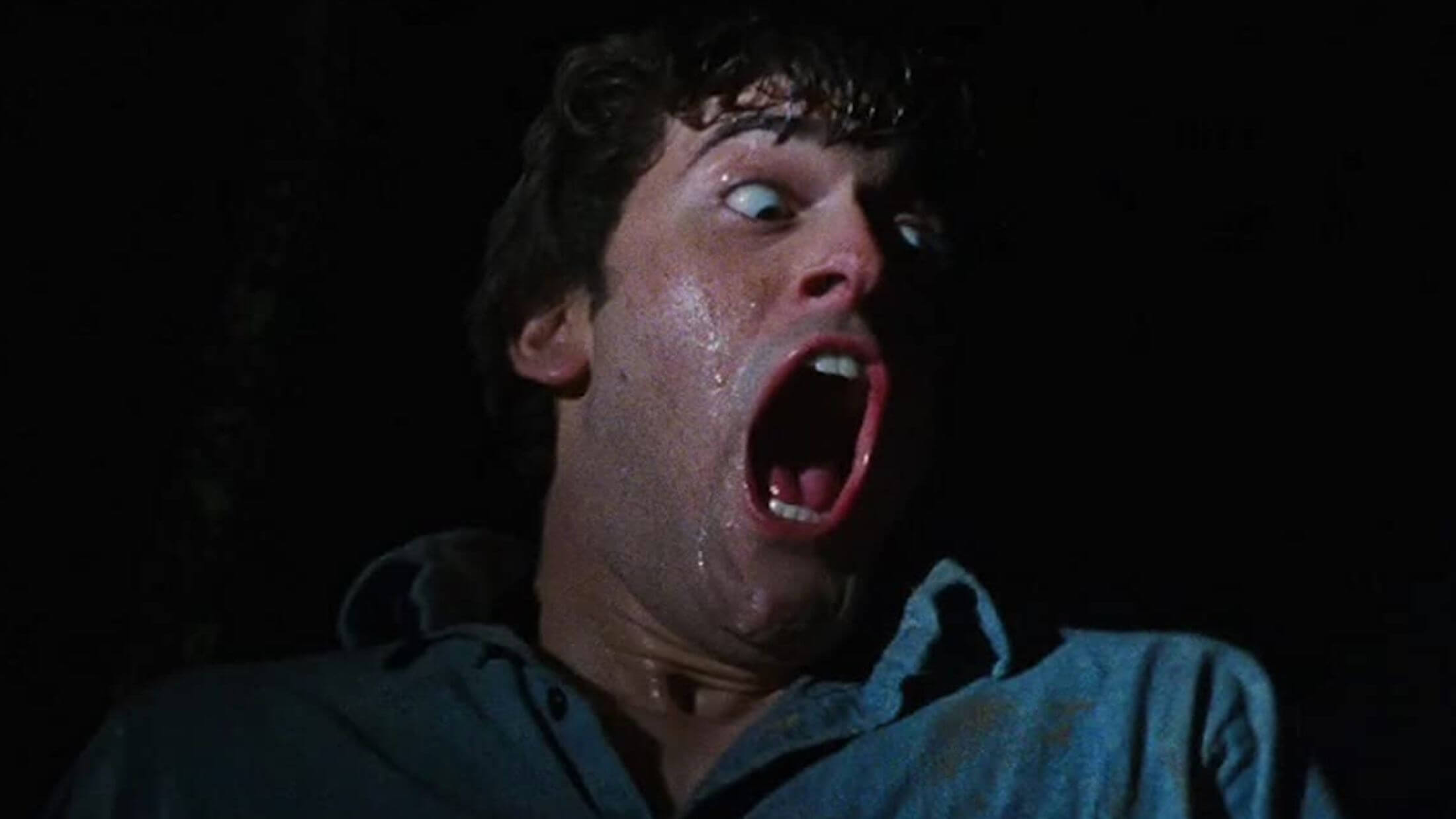
Saturday December 19th, 11.10pm – The Evil Dead (1981)
Sam Raimi’s gore-filled classic established the cabin in the woods trope and influenced hundreds of filmmakers as well as outraging public standards when it hit VHS back in the dawn of the ‘video nasty’ era. It also made a legend out of actor Bruce Campbell. Unmissable.
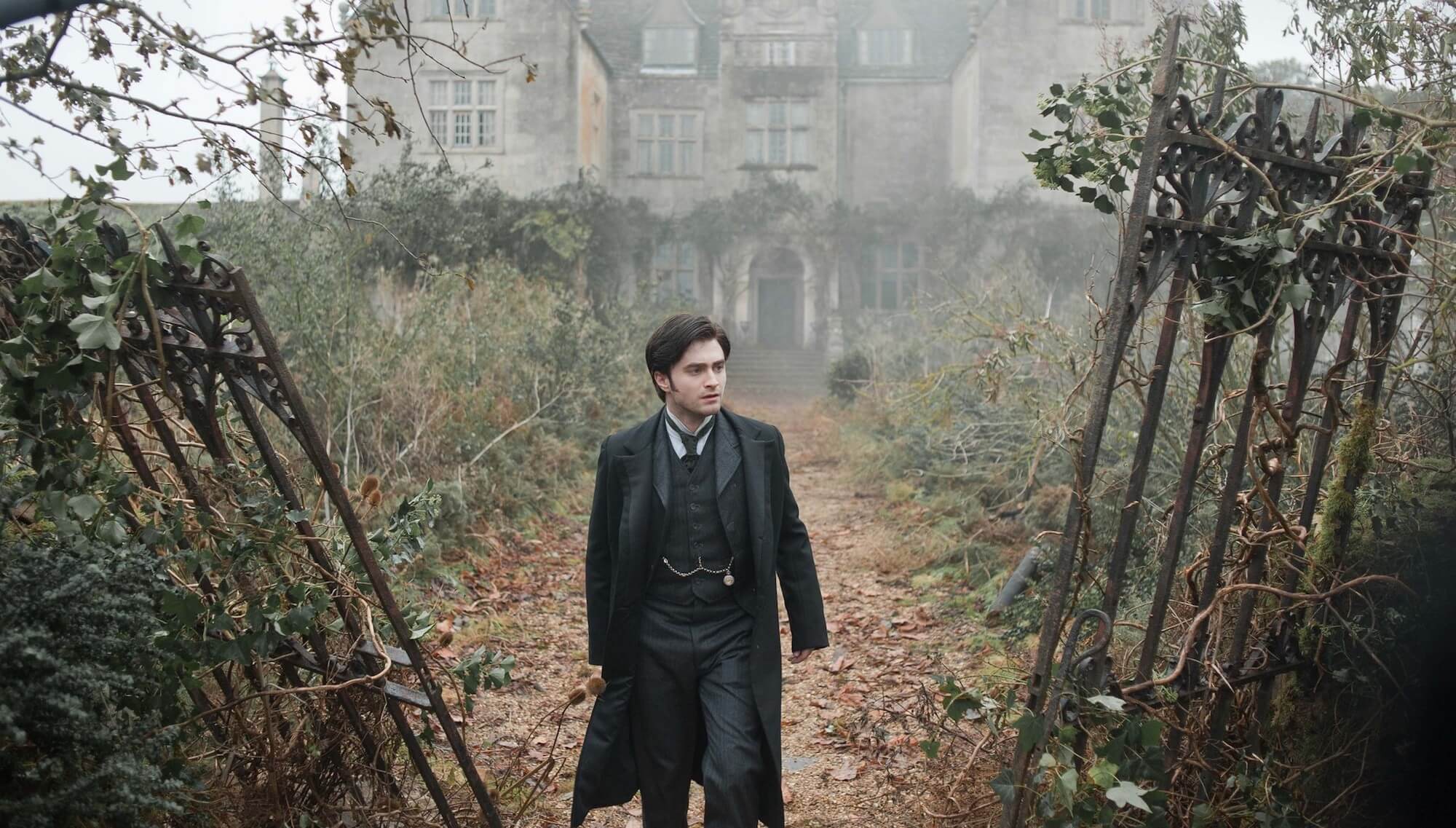
Sunday December 20th, 9pm – The Woman in Black (2012)
The film that proved there was more to Daniel Radcliffe than Harry Potter. Directed by James Watkins and adapted by Jane Goldman from Susan Hill’s hit novel, this partly produced by the reborn Hammer Films. It’s full of more jump scares than the subtle but effective stage show and the 1989 TV version, but it still packs an impressive punch.
Tune into Horror Channel on Sky 317, Virgin 149, Freeview 68, Freesat 138.
[This article was originally published March 2020 in STARBURST Magazine #471]
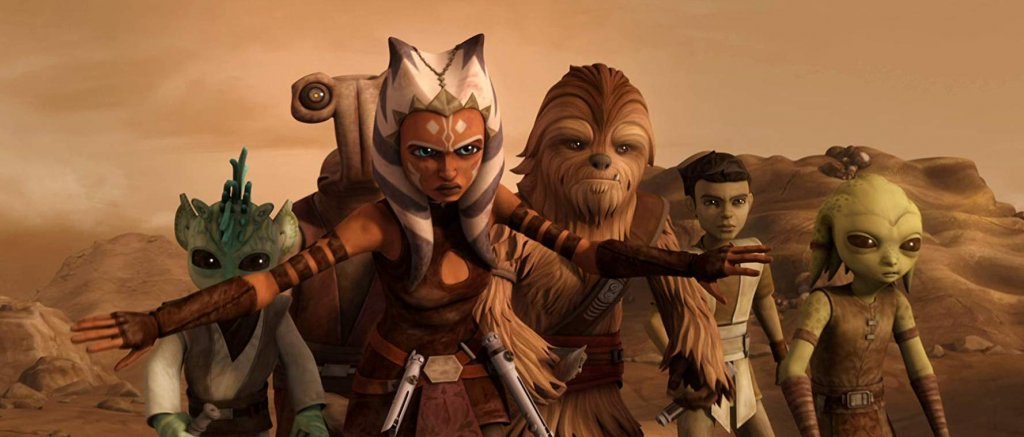
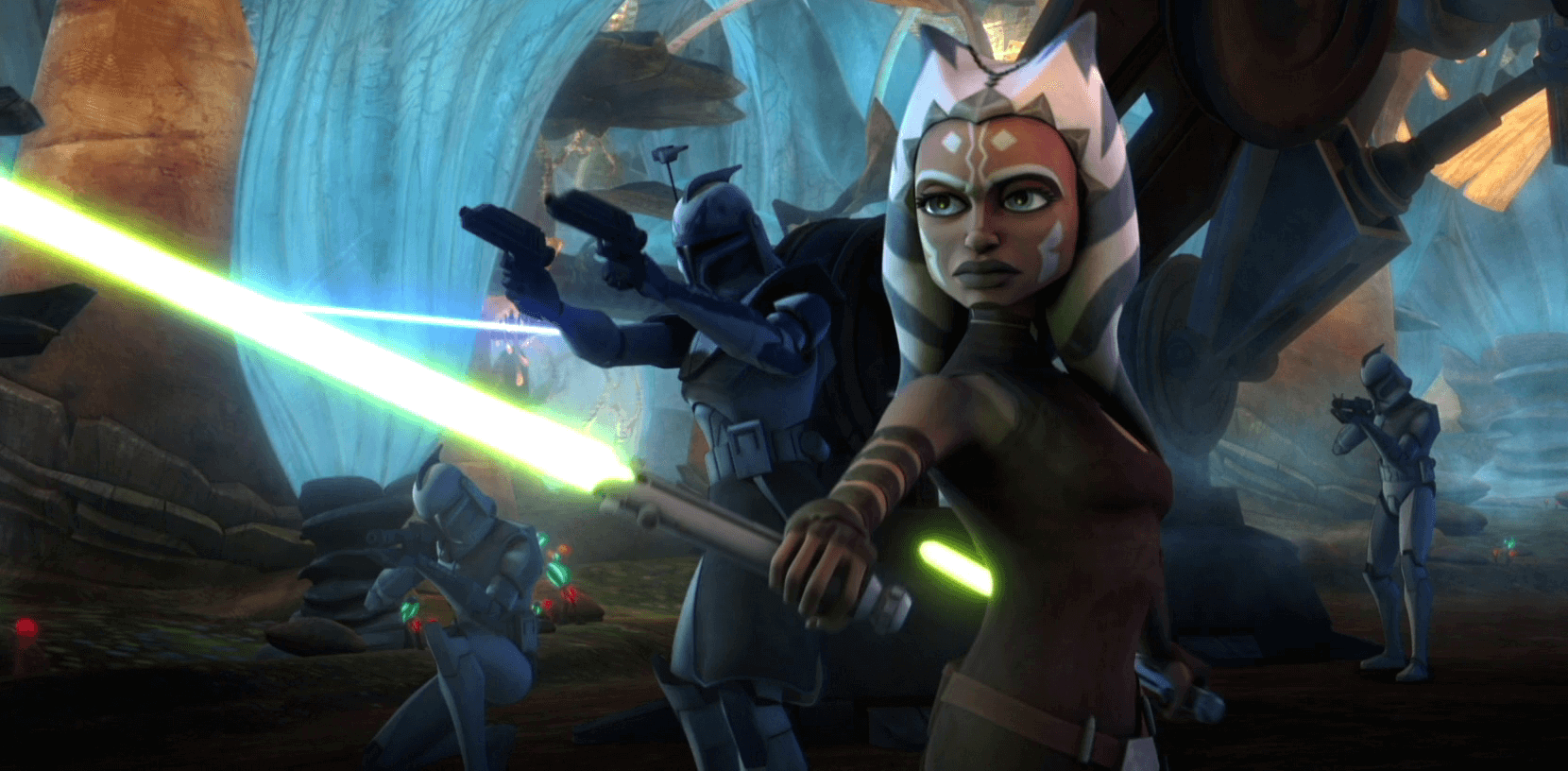
It was April 2005, onstage at Star Wars Celebration III in Indianapolis, when George Lucas first revealed that Lucasfilm was working on a new animated Star Wars TV series, “a 3D continuation of the pilot series that was on the Cartoon Network”. That would eventually become Star Wars: The Clone Wars, but fans had no idea that, along with the characters they expected to journey through the three years of the wars – Obi-Wan Kenobi, Yoda, Mace Windu, Chancellor Palpatine, the Jedi Council, as well as Padmé Amidala and her secret husband Anakin Skywalker – they would be introduced to a new lead character, a 14-year-old Togruta who soon becomes the Padawan to Anakin, himself by now a well-respected Jedi Knight and hero of the Republic.
Initially, she was a tough sell to a large proportion of Star Wars fandom, but Ahsoka Tano was the character who would become the eyes through which much of the series was viewed. Young and relatable for the latest generation of Star Wars fans to connect with, she was feisty and headstrong as well as being (Ewok movies aside) the first female lead in a major Star Wars series; as she grew, so the audience grew with her. Voiced by Ashley Eckstein, she would weather the initial storms of protest, developing through six – soon to be seven – seasons of The Clone Wars as well as appearances in Rebels, Forces of Destiny, and the climactic moments of The Rise of Skywalker to become one of the most beloved characters in the entire saga.
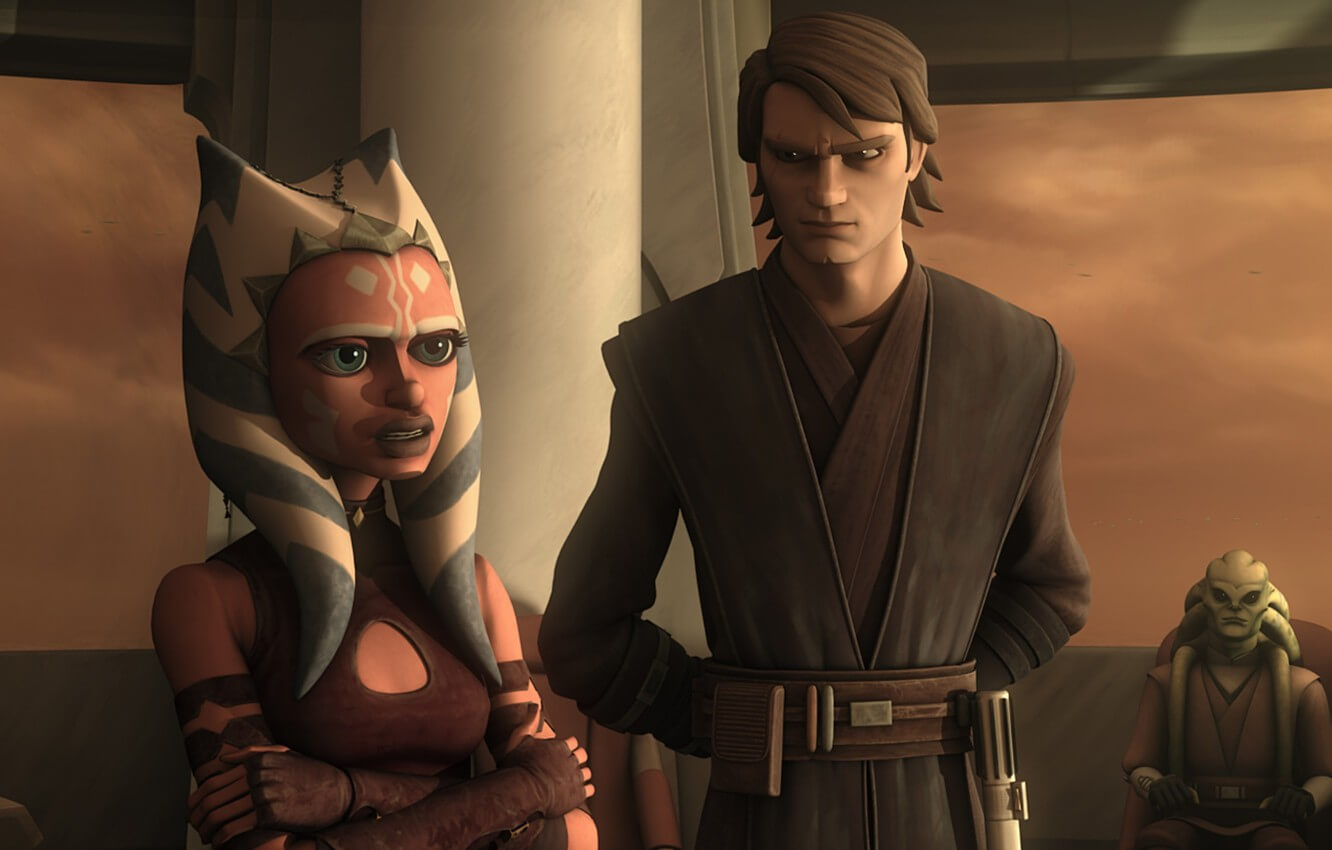
Identified by Jedi Master Plo Koon on her homeworld of Shili, young Ahsoka was taken to Coruscant and the Jedi Temple to begin her training. As the Clone Wars erupted across the galaxy, Master Yoda decided to assign Ahsoka to Anakin Skywalker in the hope that focusing on a Padawan of his own would help Skywalker with his personal development. With her joining Anakin and Obi-Wan on the world of Christophsis (as seen in The Clone Wars theatrical movie in 2008), Master and Apprentice had a tricky beginning to their relationship, especially after Kenobi assumed the new Padawan had been sent for him to train. Quickly learning how to work together, they battled to rescue the kidnapped son of Jabba the Hutt and return him to his father on Tatooine, securing an alliance between the Republic and the Hutts.
Her journey as a Padawan just beginning, the young Togruta would soon be crossing the galaxy on missions with Masters Skywalker and Kenobi. The constant threat from the Separatists and the mysterious General Grievous occupied much of their time, including a mission to the Bith system and on to the Abregado system, where the Separatist vessel Malevolence had been spotted by a now-missing Master Plo Koon. This saw them lead a mission to rescue Master Plo and return with Shadow Squadron to destroy the Malevolence.
After the Republic’s defeat at Falleen and now stationed at Bothawui, Ahsoka would find and rescue the missing droid R2-D2, remaining one step ahead of Grievous while engaging him in a lightsaber battle to protect the ever-loyal Captain Rex. The capture of Viceroy Nute Gunray by the Republic would bring Ahsoka into contact with Count Dooku’s loyal servant Asajj Ventress (first seen in the 2003 Genndy Tartakovsky animated Clone Wars shorts) as Ahsoka and Jedi Master Luminara Unduli teamed up to survive.
After an encounter with Dooku, a skirmish on the crystalline world of Vanqor saw Tano and her Republic troopers rescue Anakin and Obi-Wan before going to the rescue of Aayla Secura after her defeat at the Battle of Quell. A crash-landing on Maridun meant they would encounter the furry Lurmen and defend them from the villainous Neimoidian Separatist Lok Durd.
Entering the Mid Rim, Ahsoka, Anakin, and Kenobi were dispatched to locate the missing Senator Padmé Amidala and Jar Jar Binks, stumbling on a plot to unleash the lethal Blue Shadow Virus. A trip to the world of Iego led back to Naboo where Padmé, Jar Jar, and Ahsoka became infected. Anakin and Kenobi eventually found a cure for the virus, thankfully.
The Battle of Ryloth saw Ahsoka take command of her own squadron for the first time, leading her team into battle against Separatist Captain Tuuk, a mission where her headstrong nature worked against her as many of her group were lost. Regrouping and coming up with a new plan, the Republic drove the Separatists off Ryloth and out of Dooku’s clutches.
Initially slow to learn from her errors, she once again refused to retreat and fight tactically as Separatist Battle Droid forces on Felucia overwhelmed her position. Defeated, Ahsoka was ordered back to the Jedi High Council on Coruscant and sent to the Jedi Archives to work with Master Jocasta Nu to reflect on her actions. It was here that the bounty hunter Cad Bane pulled off an audacious Holocron heist. Ahsoka captured Bane’s shape-shifting Clawdite colleague but lost Bane. Sent to the Devaron system, Ahsoka and Skywalker attempted to apprehend Bane, only for Ahsoka to be captured. She was later saved, but Bane once again outwitted them. A further chance to seize Bane sent them back to Naboo, where a plot was discovered to kidnap Force-sensitive children, but yet again Bane escaped.
Her training and adventures continued throughout the Clone Wars, taking her to the Second Battle of Geonosis, where she fought to save her friend Jedi Master Barriss Offee from the brain invaders, losing her lightsaber in the depths of Coruscant’s streets. This is the same locale they hunted for the bounty hunter Aurra Sing before a trip to Mandalore on a mission to educate the planet’s youth about law and public service. Her association with Padmé brought her into the shadowy world of politics, but a 2,000-year-old distress signal from the Chrelythiumn system took her to Mortis, where she was infected by the dark side, died, and resurrected. Her time on Mortis would have repercussions that would echo throughout the rest of her life….
As she moved into her mid-teens, her actions and adventures would bring her into contact with some of the most important and influential people in the galaxy. She would help foil a plot by Darth Sidious, fight Asajj Ventress and General Grievous on multiple occasions, and become a cornerstone of the Jedi Order, inspiring young Padawans who were still in training. Rewarded for her efforts, she travelled to Onderon to assist the rebel cell there as they fought Confederate forces and battled alongside Steela Gerrera and her brother Saw (later seen in episodes of Rebels and most famously in Rogue One, where he was portrayed by Forest Whitaker), but a life-changing event waited for her on Coruscant as she was framed for a bombing at the Jedi Temple by disillusioned Jedi Padawan Barriss Offee. Going on the run, Ahsoka allied briefly with Asajj Ventress before being captured by Anakin, expelled from the Jedi and taken to trial by the Republic. Only a forced confession by Offee saved her, but the damage had been done, and Ahsoka decided she would take a new path and not return to the Jedi Order.
Her decision unknowingly undid one of the reasons she had been seconded to Anakin, as his own frustrations with the Council grew, something that would affect the fate of the entire galaxy. Kenobi believed her decision to leave had been her own, cementing a fracture in their relationship. Ahsoka would only meet with Anakin one more time as a friend, on Mandalore. Darth Maul had taken control of the planet as the leader of the Death Watch. As Anakin and Obi-Wan headed back to the interior to rescue Chancellor Palpatine from the grasp of General Grievous and the start of the Battle of Coruscant, Ahsoka and Captain Rex stayed on Mandalore, where she fought and captured Maul, efforts that stood for nought as Order 66 was given and her troops – apart from the ever-loyal Rex who had removed his inhibitor chip – turned on her.
After her departure from the Jedi Order and the rise of the Empire, Tano aimed for the Outer Rim to hide from the Jedi Purge, taking the name Ashla and working as a mechanic. Lying low, she lived with a family for a while before heading away when the Empire arrived. She aimed for Raada in the Outer Rim, once again lying low but soon working with the locals to fight off the Imperials, a move that brought her to the attention of both the Empire and Bail Organa, who sent Captain Antilles to find her. Organa was recruiting for a war against the Empire and offered Ahsoka a place in the Rebellion. She initially refused but agreed to help if Organa helped track down and protect the Force-sensitive children who were being hunted across the galaxy. A mission to Raada saw Tano meet with Organa and convince him to allow her to run his intelligence networks, operating under the cover name ‘Fulcrum’.
It was the mysterious Fulcrum who fed information to the crew of the Ghost, and where Ahsoka entered the realm of the TV series Star Wars Rebels. Avoiding direct meetings with the Ghost crew, Fulcrum eventually revealed herself as Ahsoka, bringing the Ghost crew into Phoenix Squadron and mentoring the rebels. However, a trap set by Darth Vader on Lothal was sprung, and after tracking the rebel fleet, Tano discovered that Vader and Anakin were one and the same.
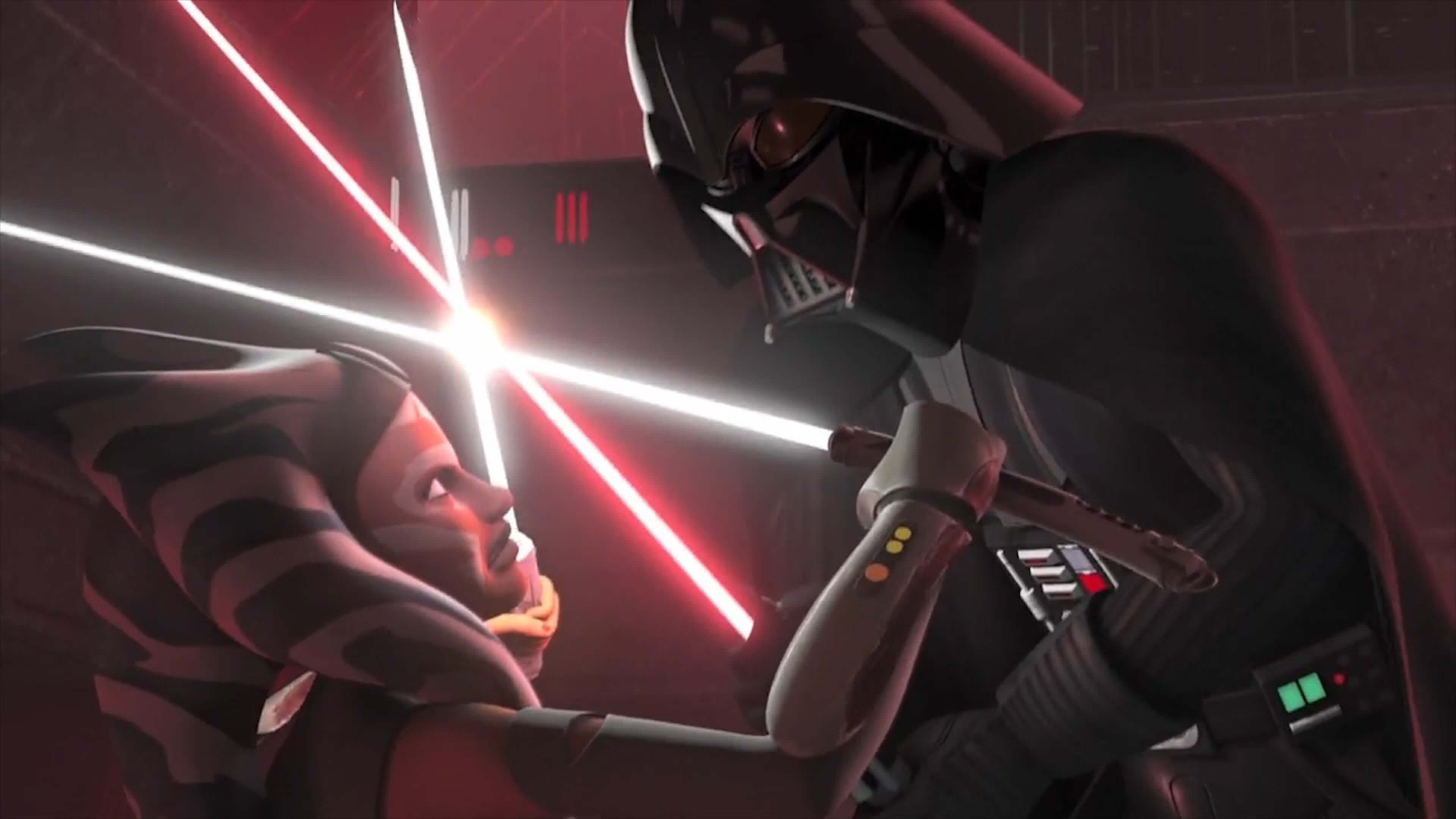
After escaping, they were on the run, eventually reuniting with old friend and former clone trooper Captain Rex, who gave them info on Old Republic installations in the Outer Rim. But Ahsoka needed to know more about Anakin and headed to Lothal and the Jedi Temple, where she faced visions of Skywalker and information that took them on to Malachor. Here they battled Inquisitors and Maul, who initially aided them but slashed out at Kanan, blinding him before being thrown off the temple. Ahsoka finally confronted Vader, confirming that he was Anakin Skywalker after smashing his mask and engaging in a furious battle as the temple closed around them. Ahsoka was believed to be dead. She wasn’t.
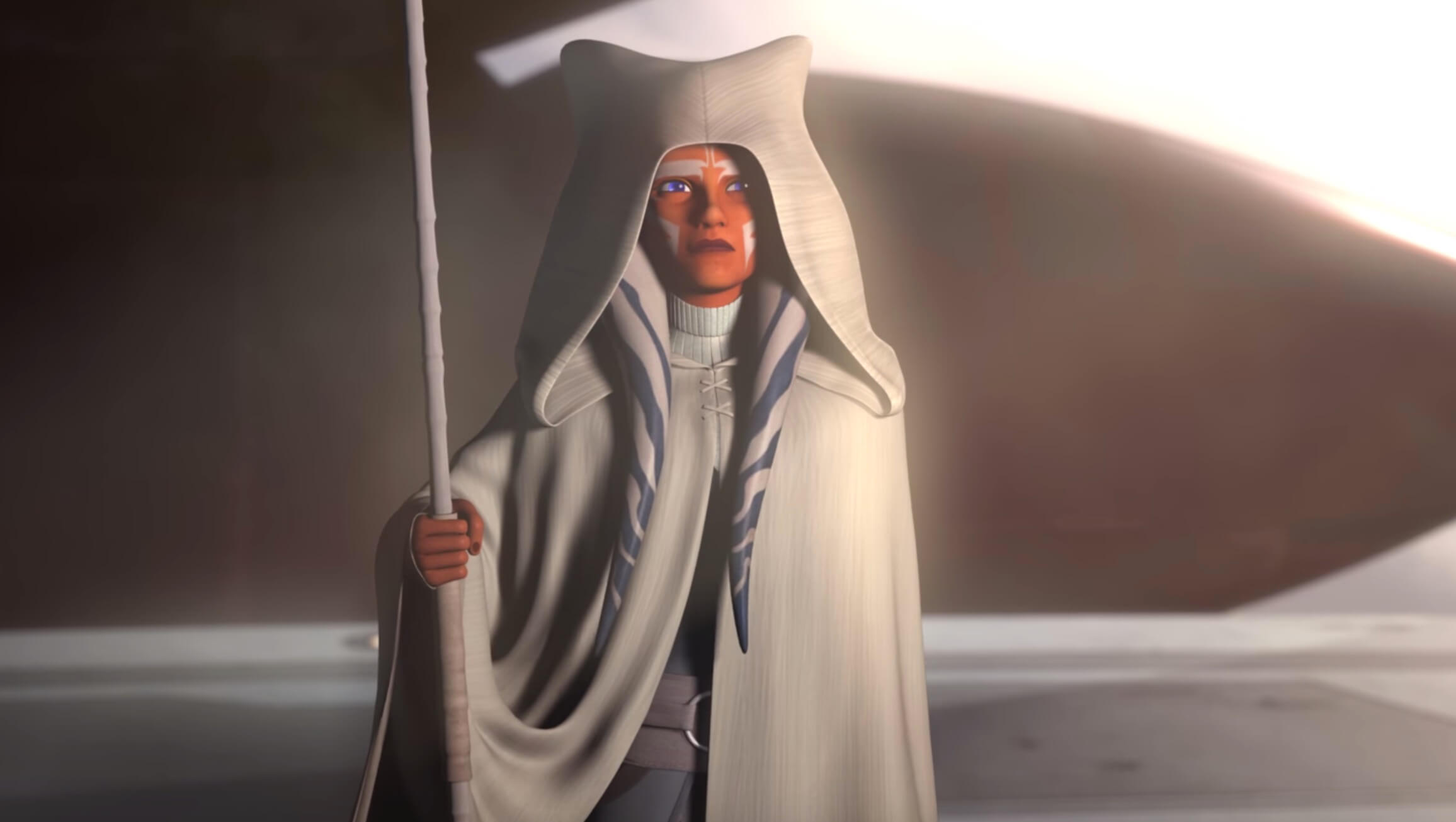
The world between worlds, a mysterious time-altering portal, allowed Jedi Padawan Ezra Bridger to reach through and pull Ahsoka away from Vader’s death blow. Very much alive, she aided Ezra and promised to meet with him again in the future, the two parting ways and leaving through separate portals.
From there, her future is uncertain. It’s known that after the Battle of Endor she journeyed back to Lothal and met with the Mandalorian and Ghost crew member Sabine Wren to search for Ezra, but it’s another 30 years before anything else is heard – her voice, one of many Jedi speaking to Rey Palpatine as she makes her last stand against the rejuvenated Emperor during the Battle of Exegol at the climax of The Rise of Skywalker.
Arguably the most famous horror thriller of all time is BRAM STOKER’S DRACULA. While Stoker himself passed away in 1912, his cultural legacy lives on, with his literary estate curated by his great-grandnephew, writer, historian, and lecturer DACRE STOKER. Vampires have been a never-ending fascination of humanity throughout the ages, from the Egyptian goddess Sakhmet to Vlad Tepes to Edward Cullen. We were privileged to recently check in with Dacre to talk about his work surrounding the legendary author…
STARBURST: What made you want to honour Bram Stoker’s legacy professionally?
Dacre Stoker: It started off being very simple really, I just wanted to learn more about my ancestors, in particular my great-grandfather, Dr. George Stoker, Bram’s youngest brother. The more I dug into my family’s interesting past, the more I found about the close relationship between Bram and George. I found correspondence between the two, which, in turn, led to more interesting finds about both of them. As a teacher and an athletics coach, I have always been very interested in what makes a person ‘tick’. I was obviously aware of Bram’s writing and the worldwide interest in his novel Dracula. I have become fascinated in both what kind of a person he was and what led him to write such an incredible novel.
You have written both an official sequel and an official prequel to Dracula. Do you try to emulate Bram Stoker’s style, or do you strike for something different?
My goal is to simply contribute to my great-granduncle’s legacy through my writing, both fictional and non-fiction, and through giving lectures to interested audiences. Many people around the world are familiar with the Dracula story, but I have found that there are far less who are familiar with its author, his life, and his research and writing of his best-known novel. In writing Dracul with J.D. Barker, we decided to write in the epistolary style, like Bram did when developing the novel. It was challenging for us, but we realised that many fans of Dracula appreciated our efforts.
You give numerous tours of the Romania of Vlad Tepes. Do you have a favourite site, or some lesser known tips?
I have led tours for the past five years to locations in Romania associated with both the real Vlad Dracula III, and to sites associated with Bram’s fictional Count Dracula. While the castles, palaces, and fortresses are interesting, my favourite location is the Saxon village of Viscri with its beautifully restored fortified church dating back to 1100. Although there is no proof that Vlad the Impaler visited Viscri, and there is no action in the novel Dracula set in this quaint little village, Viscri epitomises the romance of rural Transylvania and allows one’s imagination to bring you back to earlier times of Vlad Dracula. I have recently started to visit and have plans to lead tours to Cruden Bay; this is the quaint village in northern Scotland where Bram spent at least thirteen of his summer holidays. Local researcher and author Mike Shepherd has found evidence of the different houses and the hotel where Bram and his family stayed over the years. Mike, in his book When Brave Men Shudder, has pointed out that Bram wrote parts of Dracula here as well as two other novels actually set in this area. I am convinced that Slains Castle, a ruin on the outskirts of town, provided Bram with an interior layout that he needed for describing Castle Dracula. You see, Slains contains a unique octagonal room precisely like the one Bram describes in Chapter 2.
There is endless rich history behind both Vlad Tepes and the mythology of vampires. You tend to do a lot of history-based work in addition to your literary work. Are there any specific tales or peculiar historic facts that you would like to share?
I continue to be fascinated with analysing the myth of the vampire in many different cultures. Many of them seem to stem from the lack of understanding of biological decomposition, as well as that of germ theory and the contagious aspects of diseases like cholera, plague, and tuberculosis. I am always looking for any ‘strange but true’ reports or accounts in old newspapers. When I do research for a story, in this age where many newspapers are digitised, it is fairly easy to find real accounts of events happening during the period that my story is taking place, thus I can insert these events to make the story seem more believable.
Your great-granduncle was heavily involved in the theatre scene. So much so that writing novels seems almost an afterthought of his. What do you believe that the performing arts have to teach us about culture, literature, and the arts in general?
Bram’s writing was a sideline to his primary career as Manager of the Lyceum Theatre in London for twenty-seven years. It appears that he was only able to find the time to research and write his stories and novels when he was on holiday. I can imagine he probably also found the time to write when he was crossing the Atlantic at least sixteen times to travel back and forth to America with the Lyceum actors. Bram was a lover of the Arts; as a college student, he wrote theatrical reviews in a Dublin newspaper, this is what led him to a meeting with Henry Irving, the actor, and the dream job offer to move to London to Manage the Lyceum Theatre. Bram won a prize from the Royal Hibernian Society as a young boy for drawing, and later he became a founding member of the Dublin Painting and Sketching Club. Bram gravitated towards the freedom of expression found in the fantasy world of theatre and at the same time that same trade teaches the discipline associated with portrayal of plays, memorising scripts, attention to dialects, accuracy of costumes and set designs.
The world of vampires has grown significantly since Bram wrote his book. There are endless games, books, movies, TV shows, and everything else. With this, we have seen a seemingly infinite number of changes to vampire lore. Vampires in Twilight, for example, are vastly different thanDracula, but both have legions of dedicated followers. What is your opinion on the wide variation in depictions of vampires up to this point?
Obviously, vampires in literature have changed a lot since Bram Stoker introduced Count Dracula back in 1897. Bram’s Count was a very dark figure, very animalistic in nature; it needed a complete makeover when he hit the stage as Bela Lugosi in the early 1920s. Slowly, over the years, the name stayed the same, but Count Dracula became more human-like and sexier in his demeanor. Over the course of the next fifty years, creative writers such as Richard Matheson, Anne Rice, Stephen King, Charlaine Harris, Kim Newman, and Chelsea Quinn Yarborough, just to name a few, each adapted their vampires to become unique and possess more human-like qualities. What started as a revenant-like creature from the grave slowly morphed into eastern European debonair aristocrats, before the undead more recently started appearing like the boy or girl next door. Personally, I think it is wonderful that so many authors have been inspired by Bram’s novel and I recognise that variation and originality is necessary to keep the readers coming back for more.
Can you tell us about your keynote presentation, Stoker on Stoker?
I’ve been doing Stoker on Stoker: The Mysteries Behind the Writing of Dracula for the past five years. My talks provide an audiovisual glimpse behind the scenes of the life and the writing of one of the least known authors of one of the world’s most famous books. I weave together details of Dracula’s history with Stoker family lore, and Bram Stoker’s life in Dublin and London. I’ve been fortunate to obtain seldom-seen historic images associated with Bram’s research and writing process. Recently, I have added some of the background research and images of locations in the novel Dracul, co-authored with J.D. Barker.
Bram was, among many other things, an Irishman working in London at a time when there was often contempt towards the Irish. Vampires have, continuously, been depicted as the ultimate outsiders. What do you think that vampires can teach us about acceptance and diversity?
Being more accepting of vampires is not a good example of building tolerance for others who are different from us or are from different cultures. A vampire is a supernatural creature who simply wants to take your life; therefore, it would make good sense to protect yourself and keep your distance. On a more serious note, Bram did experience what is what like to be an outsider from Dublin, Ireland, living and working in London, England for twenty-seven years. I believe that Bram was also very aware of the tensions and confrontations associated with religious differences between Protestants and Catholics growing up in Ireland.
On a related note, there are endless disabled creators looking to get into the professional scene. Disabled actors, writers, set designers, puppeteers, you name it! As a veteran creator, what is your advice for those with disabilities looking to get a leg-up in the creative world?
Bram dealt with some version of a disability himself for the first seven years of his life. It is not known exactly what led to his sickly childhood and to what degree he was affected, but he did recover to become a champion athlete at Trinity College in Dublin. Nowadays, as a result of increased awareness and appropriate laws, many parts of the world have become more accommodating for people with disabilities. My advice is to not hold back, apply yourself, become highly skilled and qualified for your desired roles and do not let your disability become a factor.
Hardcover and paperback copies of DRACULA THE UN-DEAD, DRACUL, and BRAM STOKER’S LOST JOURNAL are available to buy at BRAMSTOKERESTATE.COM, alongside some fun merch such as Bram Stoker Bobblehead figures and the new Vintage Dracula Book Cover necktie. For information about STOKER ON STOKER presentations and tours that Dacre leads to Transylvania, Dublin, Ireland, Whitby, Scotland, and other sites associated with the research and writing of Dracula, visit DACRESTOKER.COM
This interview was originally published in STARBURST issue 475.
We’ve teamed up with Eureka! Entertainment to bring two lucky readers a chance to win a pair of fantastic thrillers directed by Samuel Fuller. Just read on, and enter at the bottom of the page!
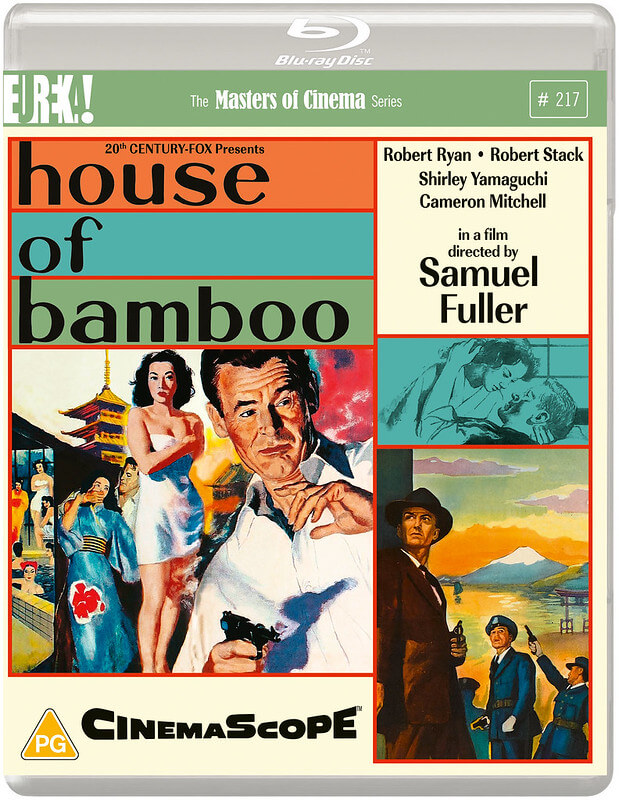
HOUSE OF BAMBOO: Samuel Fuller’s sharp detective thriller set in post-World War II Tokyo; presented on Blu-ray from a 2K restoration as a part of The Masters of Cinema Series, and out now. The release will be limited to 1000 copies only. You can purchase it here.
“What about Japan?” asked Zanuck. “Would you like to shoot a picture there?” “Holy mackerel, Darryl, now you’re talking!” When offered the opportunity to film an entire movie in Japan (Fox would be the first major American studio to do so), Samuel Fuller jumped at the opportunity and the result is House of Bamboo, a lushly photographed, cold-as-ice film noir like no other.
Japan, 1954. A military train is robbed of its cargo by a ruthless gang of professionals led by the sadistic, but brilliant, Sandy Dawson (the incomparable Robert Ryan). Weeks later, one of the thieves lies dying in a Tokyo hospital, shot by his own accomplices. Recently released convict Eddie Spanier (Robert Stack) arrives in Tokyo, and joins up with the gang, impressing Sandy so much he quickly becomes his ‘ichiban’ (number one man), greatly displeasing the former favourite, Griff (Cameron Mitchell). But is Eddie all he seems?
Also starring the beautiful Shirley Yamaguchi, House of Bamboo is a stunning, brutal masterpiece, featuring incredible widescreen photography by Joe MacDonald, and hard-boiled dialogue and action that is the Fuller trademark.
SPECIAL BLU-RAY EDITION CONTAINS:
1080p presentation on Blu-ray from Fox’s 2K restoration.
Original, uncompressed, monaural soundtrack
Optional English SDH
Audio commentary with Film Historians Julie Kirgo and Nick Redman
Audio commentary with Film historians Alain Silver and James Ursini
Fuller at Fox – a video essay by David Cairns looking at Samuel Fuller’s films produced for Twentieth Century Fox.
Original theatrical trailer
PLUS: A collector’s booklet featuring an essay by film critic Richard Combs and the words of Samuel Fuller.
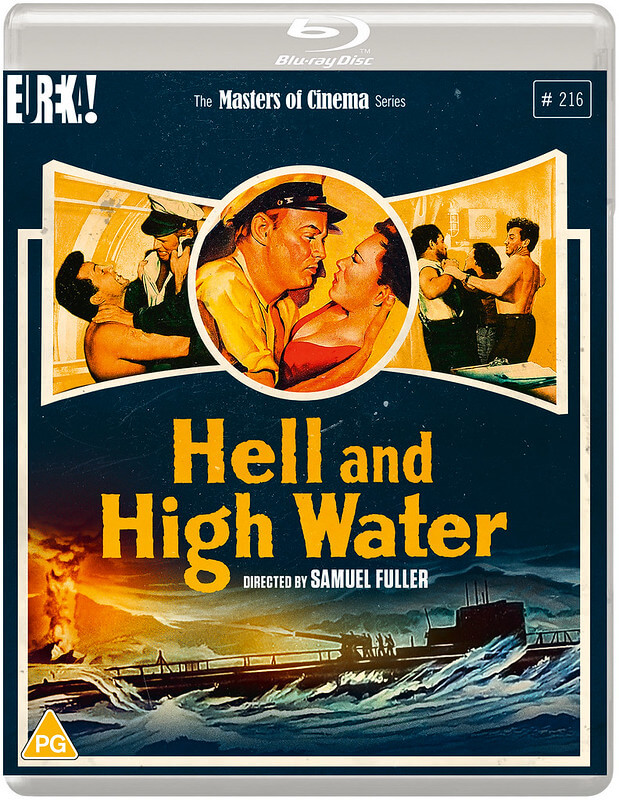
HELL AND HIGH WATER: Samuel Fuller’s Cold War submarine adventure starring Richard Widmark; presented on Blu-ray from a stunning 4K restoration, and out now as a part of The Masters of Cinema Series. The release will be limited to 1000 copies only. You can purchase it here.
“In the summer of 1953, it was announced that an atomic bomb of foreign origin had been exploded somewhere outside of the United States… This is the story of that explosion.” Starting with a nuclear explosion and only escalating from there (Fuller was a master of the opening scene – “If a story doesn’t give you a hard-on in the first couple of scenes, throw it in the goddamn garbage.”), Hell and High Water is a white-knuckle Cold War thriller that would have a huge influence on the future of blockbuster cinema (Steven Spielberg was so enamoured with the film that he kept a print in his car for many years).
When military intelligence suggests a secret atomic base is being covertly set-up on an island near Japan, former US Navy commander Adam Jones (Richard Widmark) is sent on a covert mission to prevent a nuclear attack that could trigger World War 3.
SPECIAL BLU-RAY EDITION CONTAINS:
1080p presentation on Blu-ray from Fox’s 4K restoration
Original, uncompressed, monaural soundtrack
Optional English SDH
Audio commentary by author Scott Harrison
Audio commentary with Film historians Alain Silver and James Ursini
Richard Widmark: Strength of Characters [45 mins] – a documentary on the actor
Original theatrical trailer
PLUS: A collector’s booklet featuring an essay by film critic Philip Kemp and the words of Samuel Fuller.
To be in with a chance of winning, just enter below:
STARBURST does not accept any responsibility for late or lost entries due to the Internet or email problems. Proof of sending is not proof of receipt. Entrants must supply full details as required on the competition page, and comply with all rules to be eligible for the prizes. No responsibility is accepted for ineligible entries or entries made fraudulently. Unless otherwise stated, the Competition is not open to employees of: (a) the Company; and (b) any third party appointed by the Company to organise and/or manage the Competition; and (c) the Competition sponsor(s). This competition is a game promoted STARBURST. STARBURST’s decision is final in every situation and no correspondence will be entered into. STARBURST reserves the right to cancel the competition at any stage, if deemed necessary in its opinion, and if circumstances arise outside of its control. Entrants must be UK residents and 18 or over. Entrants will be deemed to have accepted these rules and to agree to be bound by them when entering this competition. The winners will be drawn at random from all the correct entries, and only they will be contacted personally. Prize must be taken as stated and cannot be deferred. There will be no cash alternatives. STARBURST routinely adds the email addresses of competition entrants to the regular newsletter, in order to keep entrants informed of upcoming competition opportunities. Details of how to unsubscribe are contained within each newsletter. All information held by STARBURST will not be disclosed to any third parties.
Discworld is flat, as flat as a coin, balanced on the backs of four elephants that stand ceaselessly on the shell of the giant turtle the Great A’Tuin, who swims through space always, his wrinkled flippers spreading the stars like sea foam. And on the Discworld is a city, and in that city are witches and wizards and Death’s adoptive family; magic and mayhem and a man named Mort.
This is not Discworld.
It’s a world, of course, and it’s a disc, but two years before he wrote the first in the Discworld series (or would what be epic? Because after all it is deserving), Terry Pratchett wrote Strata, where three aliens are tempted to explore a world that is flat, a world that by all rights of physics and technology and Company law should not exist. But it does. And Kin Arad is two hundred years of bored human who, despite the wear of age and the press of human technology, finds her natural-born curiosity undiminished. Along with her is Marco, the frog-like kung with four arms and a grin that “was a red crescent with harp strings of mucus”, and Silver, the bear-like shand with “binocular vision and a domed skull and several walruses in [her] ancestry”. Marco is a top pilot and Silver a linguist and Kin the best the Company has to offer—the best at what she does.
The Company makes planets.
Our three main characters are brought together by their skills, by curiosity and bribery and just plain asking (in Silver’s case, at least), by a man who has been to the disc world before and wishes to return, which is not easy. But once there, Kin, Silver and Marco are left on their own to explore the disc. To discover what makes it tick, and more than anything, who built it in the first place.
Above all else, Strata is a novel about construction. And not just in the basic terms, the hard-hat-and-cement, the building planets from nothing and giving them history, fossils in the earth and myths in the mist. It’s also about other types of construction, from changing the colour of your hair to your own personal identity. Everything is constructed, everything has an element of falsehood, a lie embedded in the centre of the universe. That is, until our three characters enter the disc world, and then everything starts coming apart.
Genre fiction, many say, focuses on plot, while literary fiction focuses on character (which, consequently, makes it superior, a line of thought I wholly disagree with). Strata is plot-heavy, I won’t lie. It moves swiftly, arrestingly, forcing you to read and read until suddenly it’s 1AM and you have to work the next day and where on earth did the time go, did I even remember to eat dinner? But that’s not to say character development is ignored, or that the novel itself isn’t affecting. There is development, subtle but present, and the plot is part of the reason why it is so thought-provoking. To do this, Pratchett uses dialogue. The prose is sparse, not weighed down with description, and while it works (fantastically), there were times when I did miss the kind of description that is so vivid and thick you can feel the words in your mouth like peanut butter. But as I’ve said, the dialogue makes up for it. The dialogue, the kind that punches you between the eyes, gives you insight into the characters, gives them dimension and personality, and gives us the kind of succinct philosophy that Pratchett is known for. The thoughts of Kin Arad, our reader’s proxy, serve the same purpose, the only time Pratchett strays from either dialogue or neat description being to delve into her head. “We dismiss each other with a few clichés, she thought. It’s the only way we can live with one another. We have to think of aliens as humans in a different skin, even though we’ve all been hammered by different gravities on the anvils of strange worlds…”
It’s well worth the deviation.
The novel is construction within construction within construction. A book is a constructed thing, physically, made from ink and paper with a laminated cover. The text itself is constructed, individual words that by themselves hold singular meaning but when strung together form a greater whole. A picture; the curve of a spine or the line of a building or the swell of a moon—spaceships and robots and the dumbwaiter which makes all of their meals because cooking for yourself has, apparently, become a thing of the past. And within those shapes created by words are characters who construct things, who make lives for themselves, and in this case who build planets and solar systems and whole damn universes. It’s a continuous creation, one that is mirrored within the novel in a theory Kin once heard: “that races arose, and changed the universe to suit themselves, and then died. And then other races arose in the ruins, changed the universe to suit themselves, and then died. And other races arose in the ruins, and arose, and arose, all the way back to the pre-Totalic nothingness…There had never been such a thing as a natural universe.” And there is no such thing as a natural novel, or a natural anything. Even what we think of as natural is constructed. A seed falls from a tree to the ground below, is fed by the water cycle and sprouts to be fed by the sun. Human interference adds to the construction, but even left alone, nature constructs itself. Nothing just happens; there are reasons behind everything, invisible hands and invisible machines moulding and shaping our world from the smallest atom. One of the primary themes of the novel is the natural versus the unnatural, starting from the very first pages where Kin stares out over “a palm-fringed lagoon”, before turning her attention to a strata machine and “another metre of beach spill[ing] out of the big back hopper”. Planets in Strata are unnatural, the animals on them “vatbred” and everything from the mountains to the swamps are made by machine. There is no natural construction, although as the novel progresses and more is learned about the history of the universe, the more the use of the strata machines seems like a natural act. In fact, many of the things we the readers would view as unnatural have become natural to the characters. Kin prefers an artificially constructed sleep, and even her longevity is a construction, not something from natural evolution but payment from the Company. “It paid in extended futures”, and that’s not just a play on words.
It becomes the great irony of the novel that the only time Kin, Marco and Silver act naturally—act according to their natural biological construction—is on the most unnatural of places. “The disc was inside a transparent sphere sixteen thousand miles across, and the stars were…fixed to this.” It isn’t even fitted into the universe, separated in a shell that acts like a two-way mirror, the disc world stuck as if in a snow globe. And yet it is here that our characters are able to let go of their constructed selves, acting instinctually instead of intellectually, shedding their identities in favour of something more distinct. Because there’s an issue within the novel that we already see in our own world: “You can’t apply humans’ values to aliens. But you keep trying,” Kin thinks. Strata’s aliens have largely conformed to human social norms, and it is apparent not only in statements like the one mentioned but also in dialogue and narration. Of course, I say largely, because there are certain cultural things that remain (Silver’s eating habits, for example), and it is because of those things that humans know intellectually that they shouldn’t judge alien actions and culture by a human measure. But they do anyway, because they’re human. And it’s the same for us, in 1981 and in 2011, where differences from one culture to another are sometimes so vast that what one calls a ritual another calls a human rights violation. Debate rages on, about what is right and what is fair and how we should form planet-wide laws when countries can differ so immensely. In Strata, it is even more complicated, but on the disc everything seems simpler. Our characters are different, and they need no justification or attempt at conformity.
Humanity and race are both huge issues in the novel, Kin’s humanity seemingly degraded by time and Marco’s a falsehood. Biologically he’s a kung, but having been born on Earth and raised by a human foster family he claims he is “legally human” for most of the novel, and while most of this has to do with the kung idea of the newly born being a reincarnation of a spirit from their surroundings (in this case, Marco is the reincarnation of a human, no matter his four arms), it is a cultural construct, one that he cannot hold on to forever. On the reverse, Silver doesn’t deny that she is a shand, but is so human in action and conversation that thanks to the sparse description you wouldn’t think otherwise until she eats. Food plays a key part in the novel’s plot and in the development of the characters, using it to highlight their differences by their cravings and their biology and their culture. The dumbwaiter—a food-producing robot—acts almost as a fourth character, hovering in the background both physically and mentally, and further proves how different Kin’s time is from our own. “Why waste space and weight hauling this junk?” Kin asks when confronted with frozen food on a spaceship, our idea of natural construction—cooking—eliminated in favour of an unnatural production by a robot. Although, you can see the appeal: after a long day’s work, who wants to bend over steaming pots and sizzling pans? However, there is something inherently wrong with never seeing fresh ingredients. But I doubt the current ready meal generation will see it that way.
Humanity and race and population are huge presences, and it is only on the disc world that this is so heavily highlighted. The disc world is not an equalizer. For all that their physical appearances are distinct, Silver and Kin and Marco are largely the same. Sometimes, their dialogue even contains a similar cadence. But once on the disc world, it becomes startlingly clear that they are different. They have evolved from different creatures on different planets, and while those differences are not insurmountable (and in fact serve to make their interactions more interesting), they exist. And are acknowledged. There is no more human washing. There is that character growth so many say genre fiction lacks, embedded within the battles and the clever twisting of human history and religion atop the disc world. In fact, the whole thing culminates in one single epiphanic line of thought: “Aliens, [Kin] thought. I called them aliens. Oh shit.”
Of course, I could go on. The whole debate I’ve spent paragraphs outlining is later summed up in a more eloquent way (one devoid of swearing). But at the risk of spoilers, I’ll leave it out. Suffice it to say, that diversity really is the spice of life. It is the backbone of a planet, hell, of a universe. Without diversity, in people and culture and occupation and knowledge, we crumble. Ultimately, it isn’t wrong to think of people as different from yourself—for Kin to think of aliens as aliens. Different is not a negative word. Unity is overrated.
Strata is a brilliant novel all on its own, but as I have said before, it was also a precursor to the Discworld series, the first book, The Colour of Magic, having been written and released two years later in 1983. Many of the things that came to populate Discworld are seen scattered throughout Strata’s disc, in the oceans and deserts and forests. There are demons and genies and flying carpets; a robotic Death with a “power-scythe” and an invisibility cloak and a giant turtle whose shell is mistaken for an island. Great A’Tuin, perhaps, before he was so great? Although, the concept of a flat Earth that “rested on the backs of four elephants” which stood on “a giant turtle swimming endlessly through space” is addressed early in the novel, separate from the case of mistaken identity, and is dismissed as human “racial myth”. Which isn’t wrong: North American, Chinese and Indian mythology all contain a “world turtle” myth (although India is the only country with a “world elephant” myth as well). It’s as if Discworld was always there, hovering on the edges of Pratchett’s mind just waiting to spill out onto the page, and it is fascinating—even to someone like me who has such a limited knowledge of the Discworld universe—to see droplets of it scattered throughout an early work.
I think those who have said that Strata can be seen as a sort-of prequel to the Discworld series aren’t wrong in their assessment. As a stand-alone novel, it is wonderful, entertaining and intriguing and full of things that make you think about yourself and the world in which you inhabit, like all good writing should. But it also functions well as a teaser for a greater universe, one that, while isn’t straight science fiction, holds shadows of the universe we readers were able to spend so short a span of time in. The novel tackles a lot of themes, and I have pages upon pages of notes about them that, were it not for the threat of spoiling the entire plot for those who are looking to this review as a way of finding their next bit of reading material, I would be happy to share. This book is packed. It’s not fluff. You can ignore the themes and symbolism and still find the story enjoyable, however, I found that I loved the book even more when I took the time to consider what some of the patterns I saw in the writing meant. Although some of those patterns really didn’t need pondering.
The writing really does punch you right between the eyes.