Issue 470- Out Now!

In the new issue of STARBURST we look forward the return of James Bond in his latest adventure No Time to Die. As well as previewing the movie, we chat to the actor who has played Felix Leiter the most, Westworld’s Jeffrey Wright. If that’s not enough, we lend an ear to the music of the franchise and look at Bond in comics and who we think should step into the tux when Daniel Craig hands in his licence to kill once and for all.

We also talk to director Leigh Whannell about helming The Invisible Man for Universal, Lorcan Finnegan opens up on directing Vivarium, and LaMonica Garrett talks Primal and playing The Monitor in DC’s Crisis on Infinite Earths.

If that’s not enough, we celebrate the 30th anniversary of The Crystal Maze by looking at some of the best TV adventure game shows. Horror Obscura looks at some creepy-crawly films, plus much more…

Plus all your favourite COLUMNS, NEWS, REVIEWS and much MORE from the worlds of SCI-FI, HORROR and FANTASY!

GAMEBLAST 2020

Imagine being massively into videogames but, due a disability which is completely out of your control, you aren’t able to play. Your friends are all talking about how far they’ve got on the latest releases, but all you can do is watch everybody else play and wish that you were able to experience all the pleasures of gaming for yourself. It’d be awful, right?

The wonderful people at Special Effect are well aware of how depressing such a situation might be, and are on a mission to help as many people as possible to enjoy videogames, leisure technology and communication, no matter what their disability might be. To do this, Special Effect visit their customers at home and work out what they want to play and what they need to play it, then modify or create the equipment needed for those customers to begin their gaming adventures.

Check out this video to see some of Special Effect’s creations in action:

What’s Gameblast all about? Special Effect are asking people to organise and run their own gaming fundraiser (timed marathon, pub quiz, fancy dress day at work, whatever you like!) during the weekend of February 21-23, with the aim of reaching (and hopefully surpassing) this year’s Gameblast target of £100,000. Supporters can take part as an individual, a group of friends, or even as an organisation, and with the likes of Game, Twitch and Insert Coin all helping to spread the word this year, hopes are high for a fantastic weekend of gaming.

All of the money raised during Gameblast’s various events will enable Special Effect to visit more customers and come up with the right equipment for each client. This support is absolutely vital to the charity, as Special Effect doesn’t charge for their services – it’s all done out of the goodness of their own hearts. Approximately 90% of all money raised during Gameblast is spent directly on frontline work with customers and their families, with the remaining 10% being used to simply keep the charity runnning.

So wherever you are in the world, if you feel like turning your usual weekend of gaming into a contribution towards a fantastic cause, please head on over to the Gameblast website for more information:

https://www.gameblast20.org.uk/

Alternatively, if setting up your own event seems like it might be a bit too time-consuming, feel free to hit the link below to support the STARBURST gaming team as they take part in a non-stop 24-hour gaming marathon!

Support the STARBURST team!

Stephen Cedars & Benji Kleiman | SNATCHERS

To celebrate the Blu-Ray release of the hilarious Sci-Fi Horror Comedy, Snatchers, we here at STARBURST had the pleasure of sitting down with directors Stephen Cedars & Benji Kleiman to talk about the film.

STARBURST: First of all, congratulations on the film. It’s super funny, quirky and gory – a bit like Mean Girls meets Alien.

STEPHEN & BENJI: Thank you so much! It definitely did not start off like that [laughs].

This film began its life as a short film back in 2015. Where did the original idea come from for the short film? And as Directors, how was it taking that idea and turning it into a full-length feature – it must feel amazing.

STEPHEN: It was actually very easy as Benji’s sister got pregnant with an Alien and [laughs], I joke of course. It’s funny, Benji and I along with Scott (the third writer), we had an idea that we wanted to do an alien pregnancy movie and had no idea how to. The original plan was for it to be about a forty-year-old woman on a military base – so it came a very long way. We wrote a different script for the short film which served as proof of concept, and we showed it to our manager who didn’t get it at all so we made a proof of concept for our original idea that was Snatchers and we made it and it worked! When we sold it to Warner Brothers, that’s when everything started to fall into place.

BENJI: It was interesting turning it into a full-length feature as we had all these drafts but we didn’t have a finished idea. We had so many great ideas but we had to find a way to get it all together and after the proof of concept the world was there for us and it made things easy. Getting the horror and comedy as a delicate balance was difficult but when it all clicked into place it was a fantastic feeling. It was super fun to incorporate the short into the finished product as that what we had always planned but we had to alter some of the dialogue to have it make sense [laughs]. It was so rewarding overall.

What was it about Mary and Gabrielle that made them stand out as your two leads when they were originally cast?

STEPHEN: I know that when we made the short we had a casting session and when we saw Gabrielle walk in we knew straight away that we wanted her to play Hayley but we hadn’t seen anyone at that moment that stood out as Sara. She had to find a balance between being crass whilst also carrying the emotional weight of the story and then when Mary sent in her audition tape, it was the last thing we saw and we immediately knew that she was the one. Mary had that ability to make the whole thing grounded – it was a very real performance. The two of them worked perfectly together. They felt like old best friends instantly, it was great.

BENJI: The tonal thing, the two of them just got. On top of their natural acting ability, they made things feel so real and helped the consistency of the tone throughout the film.

The film utilizes both practical effects and CGI – how was it working with animatronics and CGI to find that sweet balance?

STEPHEN: When we were first designing the alien, it looked too much like a Pokemon so we had to change it to look more menacing than cute. We shot the movie in two parts, in the first part we had the animatronic with the eyebrows but they didn’t move so when we shot the second part we wanted to add that extra level of character so we made him move his eyebrows – you can actually see in the movie when we finished shooting that first part. The animatronic itself was super annoying to fix to the actors head as they had to balance him on their head whilst also keeping their chin to their chest not being able to see where they’re going [laughs].

BENJI: That was a crazy challenge and blending it with the CGI was another big challenge – but it all worked out better than we imagined. When you grow up you love watching these behind-the-scenes about practical effects and want to do it for yourself and when you’re making it, you have to tell yourself it’s going to look better on camera [laughs]. The hard work paid off and we are so happy with the results. It was fun to see the actors act against the real thing – it also helped it frame the shot easier.

What were some of the crazy ideas or scenarios that you had when writing the film that you, unfortunately, didn’t get to do during the production?

BENJI: I know that we had drafts full of cool crazy things including extra gags for the police station scene and the party scene. But due to time and budget and organisation, we didn’t get to do everything but we were so happy with the outcome. We wanted to destroy a grand piano but that was going to cost way too much [laughs].

STEPHEN: We also wanted to blow up the house at the end [laughs].

Which was your favourite scene to take from paper to screen?

BENJI: Absolutely the clinic scene as that is what started it all. It was so much fun to make this and see our characters come to life for the first time – such a profound moment in our careers.

STEPHEN: It was the first time we had a crew, too. Another amazing scene was the police station – we had the whole thing storyboarded out before we were like “how are we going to do this on a budget?” – we then went on a location scout and found this amazing building which, from the outside, looked like a police station and it turns out it was scheduled for demolition so we struck gold and were able to go mental inside and blow stuff up and make a huge mess. That made things a lot easier and it was a hell of a lot of fun too!

SNATCHERS is out now on DVD, Blu-Ray and On Demand.

Mary Nepi | SNATCHERS

To celebrate the Blu-Ray release of the hilarious Sci-Fi Horror Comedy, Snatchers, we here at STARBURST had the pleasure of sitting down with lead star Mary Nepi to talk about the film.

STARBURST: First of all, congratulations on the film. It’s super funny, quirky and gory – a bit like Mean Girls meets Alien.

MARY NEPI: Thank you so much! It’s funny you should say that we ourselves have used that very same comparison!

What was it about the concept or script that attracted you to the project?

It started as a short film in 2015 and it was a very interesting script – I got it from my manager and they said: “Hey, I’ve got this fun cooky project, do you want to take a look?” and I remember reading the audition they sent over and I had never read anything like this before! The scene involved aliens and Mean Girls humour – I was at home with my parents at the time so I filmed the audition with my dad reading across from me and if you’ve seen the film, some of the scenes were a bit awkward but it was a unique experience. It’s so fun.

A lot of similar “high school” movies fail to capture that innocent essence of growing up but that is definitely one of the main strong features of Snatchers with your character Sara’s relationship with Hayley. How much did your real-life relationship with Gabrielle help you in the film?

We definitely evolved a sister-like relationship very quickly. We had a lot of fun together and it helped our chemistry which developed after we got called back too. I remember even when we read together that this was easy as we had that instant connection. We spent a lot of time together throughout the shoot, it was very very fun – I felt like I had known her forever, which helped the character arc. Some of the most fun scenes were when it was just the two of us getting to be honest and real with each other.

The film utilizes both practical effects and CGI – how was it working with animatronics and having to react to them? Same question when it comes to CGI.

It was so fun! That was one of the most unique things about it – the creature effects by Chris Hanson did a sensational job on our alien friend. Everyone wanted to take pictures with him when we first saw him [laughs]. I loved the way you could manipulate his face for expression. The (other) alien was also practical which was terrifying and helped my performance when reacting to it. Such a great experience and I learned a lot as well. In terms of CGI, I’d like to say that that’s one of the first things you learn at acting boot camp – to react to something that isn’t there. So I was prepared for that but it was still a fun time.

Snatchers is very bloody and gory in places especially that first scene in the clinic – what was your favourite scene to shoot?

Well, that scene was initially the short film – so that was really extremely fun to shoot over four days. None of us really knew what we were doing so we all learned together. I loved the big action bloody scenes especially the one in the police station that was so chaotic with loads of people on set, flying over you – it was like a battle zone! I felt like an action hero [laughs]. Fake arms and blood were flying everywhere! It was insane. The whole ending sequence was another fun shoot with a lot of people which heightened the energy along with the stakes!

The way the film ended brought a conclusion to this particular story but, if there was a sequel, would you be up for reprising your action hero role?

Absolutely! 100% yes – you will have to ask Stephen and Benji (the Directors) if they have plans but for now, I would love to return for sure.

SNATCHERS is out now on DVD, Blu-Ray and On Demand.

[ENDED] Win a PRIMAL Survival Kit!

primal

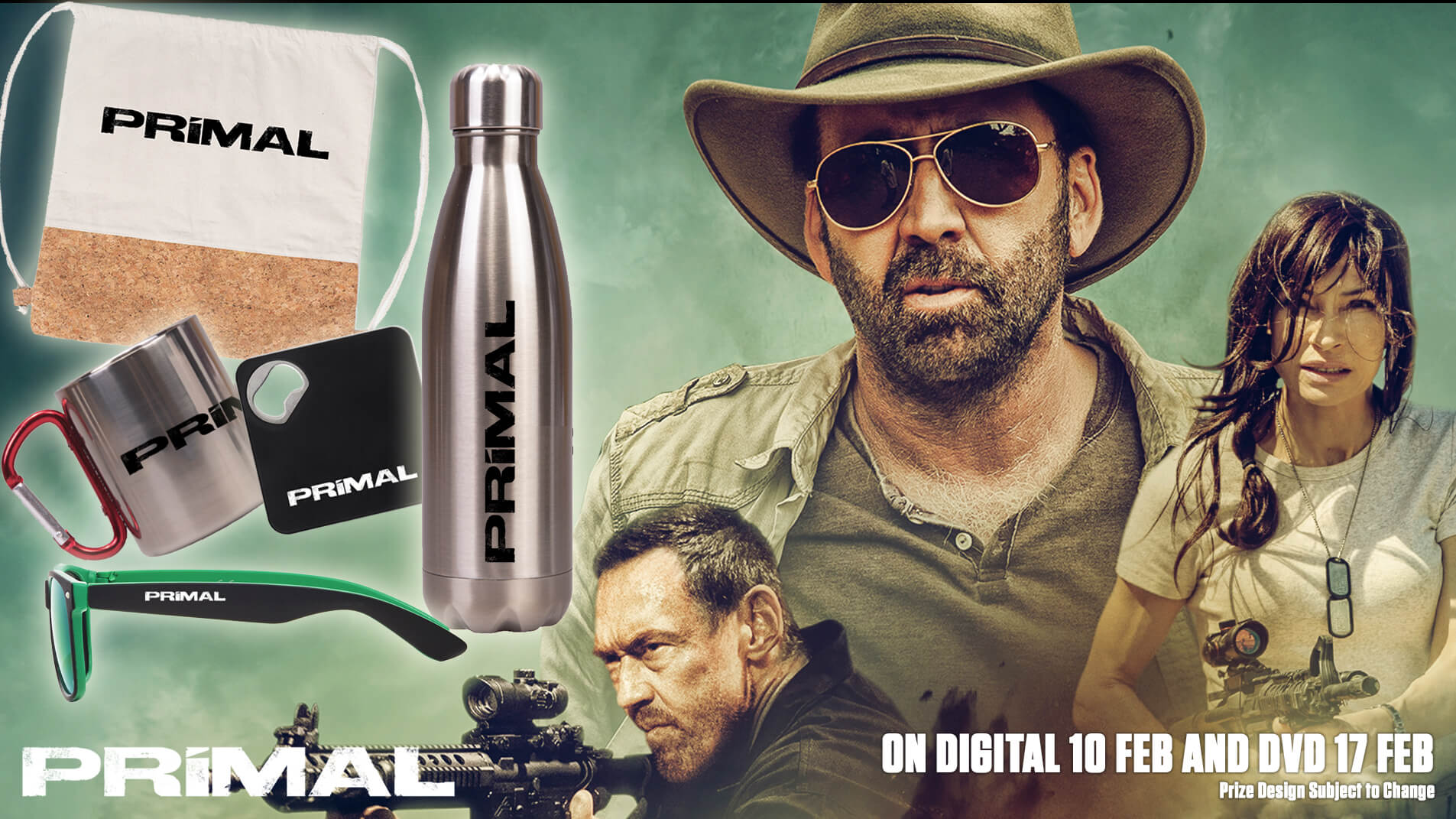
We have teamed up with Lionsgate to give you the chance to win some really unique merch for the movie Primal starring Nicholas Cage. The Primal ‘survival’ kit contains various limited edition goodies: a water bottle, a carabiner mug, a bottle opener, sunglasses and a bag.

primal

To be in with a chance of winning, simply answer the following question:

Which 2018 movie also starred Nicholas Cage?

A) Annie

B) Mandy

C) Coraline

Send your answer, along with your address details, to [email protected] (with PRIMAL in the subject line) before midnight on FEBRUARY 26th.

Primal is on Digital Download now and DVD 17 February from Lionsgate UK

Amazon DVD: http://amzn.to/35AuEXs


Terms & Conditions:

Entrants must be residents of the UK or Ireland and aged 18 or over.

LIONSGATE / STARBURST do not accept any responsibility for late or lost entries due to the Internet or email problems. Proof of sending is not proof of receipt. Entrants must supply full details as required on the competition page, and comply with all rules to be eligible for the prizes. No responsibility is accepted for ineligible entries or entries made fraudulently. Unless otherwise stated, the Competition is not open to employees of: (a) the Company; and (b) any third party appointed by the Company to organise and/or manage the Competition; and (c) the Competition sponsor(s). This competition is a game promoted STARBURST.

STARBURST’s decision is final in every situation and no correspondence will be entered into. STARBURST reserves the right to cancel the competition at any stage, if deemed necessary in its opinion, and if circumstances arise outside of its control. Entrants will be deemed to have accepted these rules and to agree to be bound by them when entering this competition. The winners will be drawn at random from all the correct entries, and only they will be contacted personally. Prize must be taken as stated and cannot be deferred. There will be no cash alternatives.

STARBURST routinely adds the email addresses of competition entrants to the regular newsletter, in order to keep entrants informed of upcoming competition opportunities. Details of how to unsubscribe are contained within each newsletter. All information held by STARBURST will not be disclosed to any third parties.

Prince Charming – A Short Story

charming

Insecure women turn me on. That flicker of fear in their eyes as you land a perfectly timed backhanded compliment.

“You have lovely curves. It’s great to see a woman who enjoys her food. Everyone’s too obsessed about being skinny.”

She freezes as the comment punches her in the gut, then she carries on stirring the pasta.

I smile, satisfied.

Found this one in a bar sitting by herself. Fidgeting with a top too low for her confidence. It was the smell that attracted me. The perfect combination of cheap perfume and perspiring desperation.

When I approached, her eyes lit up. All those Disney movies were about to come true. Prince Charming does exist and he’s going to save her from her crappy nine-to-five, Netflix-on-a-Friday-night excuse of an existence.

Thank you, Walt, for what you’ve done for women. Keeps my dick wet.

As she serves the carbonara, I look around her kitchen. No pictures, ornaments, or decorations. No sense of any identity. Perfect. Women who don’t know themselves are so much easier to mould.

She places the meal in front of me, her eyes searching my face, desperate for approval. I stare back blankly.

This one definitely has daddy issues. You can always tell. Bet her father spends his time working, drinking, or banging the same fifty-an-hour hooker who had his virginity. Too busy to say ‘I love you.’

She lights a wonky candle and take a seat at the kitchen table. I stare at her, unblinking. She lowers her head. Women like her believe feeling uncomfortable is feeling in love.

“Do you like the pasta?” she mutters, swivelling only a small portion onto her fork. I shovel a massive pile into my mouth.

“It’s good. Not usually a fan of salty food but it works.”

Grabbing the wine bottle, I pour myself another glass. She stares at me as I slug it down, clearly desperate for a drink but too terrified of the extra calories. It’s good to see my words have already started to take root.

“When I first saw you,” she murmurs, still too nervous to look me in the eyes, “I knew you were special. You looked like someone from the movies. A real Prince Charming.”

I smile approvingly. Compliments are a behaviour I want to encourage.

She continues. “But I also knew you weren’t perfect, even though you looked it. No man is. Prince Charmings aren’t born. They are created.”

Suddenly, my eyesight stars to blur. The fork falls from my fingers. I try to pick it up but my hand seems to be disconnected from my brain.

“Don’t worry. It’s just the Rohypnol. You’re going to feel very drunk very quickly, and then you’re going to fall into a deep sleep.”

I jump up from my chair, but my knees buckle, causing me to hit the floor. Panicking, I try to crawl away but my arms are struggling to move. Darkness seeps through the veins in my eyes. The last thing I see is her smiling down at me.

When I wake up, it takes a couple of seconds to register the severed limbs. They dangle from hooks above me. Terrified, I try to move but my hands and legs are shackled to a table, my torso strapped down.

Then I see it. The headless monstrosity of sewn-up limbs hanging beside me. Each section of skin a different shade of decay as the flies dance around its neck.

“Beautiful, isn’t he.” She stands in the doorway, now confident and proud. “I made him myself, from men just like you. All imperfect. All in need of a woman’s touch.”

As she steps closer, my eyes notice her fingers caressing a hacksaw. I try to scream, but the gag in my mouth muffles the cries.

“The reality is, true love involves change. Elizabeth changed Darcy. Bella changed Edward. Beauty changed the Beast. A woman has to make her Prince, and we don’t have a lot to work with.”

Her finger runs up my torso. I try to escape its touch, but I’m strapped down too tight. Then she places the hacksaw on my neck, its rigid blade grazing my throat. Her eyes sparkle, like a fairy-tale princess about to receive true love’s first kiss.

“You have such a charming head.”

Babak Anvari | UNDER THE SHADOW

Babak Anvari

With the release of Under The Shadow in 2016 writer and director Babak Anvari announced himself as a formidable new talent in the horror genre. Dubbed by some to have been the best film of that year Under The Shadow has now finally been awarded a Blu-ray release, so we sat down with Babak to discuss drawing on his Iranian heritage, scaring audiences and his influences.

Starburst Magazine: One of the most noticeable elements in the film is that, given the relatively short running time, you really take your time to set up the characters and this world. Was that important to you?

Babak Anvari: Yes, from day one that was the plan. First of all, I always wanted to position the film as a social drama paying homage to Iranian cinema. Then bit by bit it twisted into this expressionist horror film. And I missed the fact that, back in the 80s and 90s, films took their time to set up the world and especially in horror films. In Alien you don’t see any aliens for ages. Jurassic Park is the same. These days everyone seems to be in such a rush. And I was making this film knowing that a lot of international audiences don’t know what Iran was really like in the 80s, so I was keen to take my time.

Did you feel a responsibility then, telling not just this story but any story set in this time period?

I guess the sense of responsibility was in getting everything as authentic as I could. I was born in Iran; I grew up there. Hollywood makes films about Iran but they’re not accurate representations. It was important for me to take the time and I talked to lot of family and friends, did a lot of research as I was roughly the same age as this child during the war. I felt it was my duty to set it up as authentically as I could.

You mention there about being the same age as the child, and you’ve talked a little about this in the past. You’ve drawn on your experiences, but did you also have a little fun going back to that time, like with the VCR and so on?

Oh, I had a lot of fun. I was constantly feeling the nostalgia when I was writing it. Little nuggets like the VCR, Jane Fonda and the Yazoo video. That was great fun.

And the phone; little things that take you back and put you right there.

Yes, the orange phone!

The development process of a film is always interesting. As both the writer and director did the film change or mutate from when you finished the screenplay to when you finished the film? Was the end result what you thought it was going to be?

Not very different. When you’re writing you have a version in your head, and what the characters look like. So, there are little changes, and also due to logistics and budget. It’s such a collaborative medium, though, that when you’re working with your team, they can suggest things that make it even better. But it wasn’t drastically different. The location we found to shoot in in Jordan was much better than I had in mind though.

It’s a very lean film, starved of clutter. Was it difficult at times to remain disciplined and strip it back, like you said, to remain authentic?

It was, and it was a great exercise. It was very low budget and we only had 20 days to shoot so we had to be efficient. It can be a good thing because it forces you to make the correct decisions. It could never be about getting footage and figuring it out in the edit, you know. We knew we could only shoot what we needed.

There’s a little of Hideo Nakata’s Dark Water in there, Poltergeist as well. Now with a little distance and time, looking back was there something, a film or an influence that was most prominent in guiding you to what you wanted?

 One of the huge influences was Roman Polanski’s apartment series, especially Rosemary’s Baby and The Tenant. And I am obsessed with Poltergeist and I was listening to the score when I wrote Under The Shadow. Another film that was really influential was Jack Clayton’s The Innocents because I felt what I was writing was a classic gothic ghost story, just set in Tehran rather than England.

One of the things you play with is that the central character is so insistent that none of this is really happening, and you’re going with her as, at that time, you don’t know if this is going to be psychological or horror.

We had an arc for Shideh as she’s a doctor at heart and she doesn’t believe in Djinn or evil spirits. And then it ends up just her and her daughter and she’s under immense pressure, and that’s when people give in. We enjoyed exploring her being so resistant and then beginning to believe.

One of the most intense scenes is when Shideh flees from her apartment building and she’s arrested. You have all this supernatural horror going on and then suddenly you ground it in reality.

That was on my favourite moments. It’s one of the first times she’s alone in the apartment and my thought was that’s when you’d run away. The problem is that she runs she’s forgotten to cover her hair and there’s still a dress code at this time. It was an interesting way of saying that even if you want to escape you can’t. That scene kind of happened organically.

It’s an oppressive scene. Throughout though, you have women to the fore. Men are secondary and such background characters.

It happened a little organically. We knew we had a lot of strong female characters and the story was essentially about a mother and her daughter. Actually, a friend of mine mentioned that all the men are in the background and I hadn’t really noticed, but I’m so glad it happened.

You really do seem to be playing with your audience. It’s a slow set up and then about two thirds of the way through there is an incredible jump scare that changes the tone. Many films seem to avoid what they see as a cheap trick but you embraced it.

That’s exactly why we did it. People always say they’re cheap and that it’s all about the atmosphere. But then I thought I’m just going to do it and I’m pleased people responded to it. Before that moment audiences seemed to be on edge of their seats because of the atmosphere and then we have this scare, and then people are expecting more of them.

And you use a lot of other horror tropes…

I always said to my producers that I was going to use a lot of horror tropes to lure people in, those who perhaps were less familiar with them.

There are lot of wide shots, where the character is to the left or right, but what you’re really looking at is what might be going on in the background. And you think you see things. A curtain moves or something. Is there anything like that in there or is it just the atmosphere of the film playing tricks?

Ha-ha, I’m not going to spoil it! A friend of mine did say that they saw a shadow in the background of one scene but there’s really nothing there. I’m glad it’s working!

It’s fashionable for films to be labelled as something these days; psychological thrillers and so on. It’s almost like films are embarrassed to be called horror films. But that’s what Under The Shadow is isn’t it?

One hundred percent this is a horror film and I’ve very proud that it is. I think the perspective is changing though. People can see it as whatever they want but for me it’s horror.

UNDER THE SHADOW is out now on Blu-ray in a feature packed Limited Edition box set, courtesy of Second Sight.

Steve Moore | BLISS

Composer and musician Steve Moore would be an icon in the world of synth-driven music, were it only for his work as part of the stellar duo, Zombi, with drummer Anthony Paterra. That group released five full-length LPs between 2004 and 2015, and the prog-rock scope of those albums are insanely stellar. However, in recent years, Moore has turned to scoring films, working on films like Joe Lynch’s 2017 madness-in-an-office-building Mayhem, and the 2014 Adam Wingard/Simon Barrett slasher action film The Guest. The end of last year saw the release of director Joe Begos’ Bliss, and the director’s VFW is due out on home video at the end of March. All of the scores for these films are unique, but still very much identifiable as Moore’s work. Bliss‘ score was just released via Relapse Records, and Moore was kind enough to talk to us about that.

STARBURST: Given that Joe Begos was making Bliss so close to VFW, how did that affect your composition work?

Steve Moore: If anything the quick turnover made it easy for me to give the scores their own identity. Because Bliss was so fresh in my mind while working on VFW, I could be sure I was making different choices. I had a very busy few months between gigs and felt completely fresh going into VFW.

Having worked with the director on The Mind’s Eye – which was early on in your film scoring career – what was the difference, coming back with five years of features under your belt?

I think Joe and I have grown a lot as artists since The Mind’s Eye, and so one thing that’s changed is our expectations of ourselves. I expect more from myself now than I did five years ago, Joe is the same. Another major difference is that we’re more experienced now, and our communication and workflow is really smooth, so we have more time to fine-tune each cue and give the score lots of personality.

Your early composition work was under the name Gianni Rossi. Why did you go with a pseudonym for Plotdigger Films’ Gutterballs and Star Vehicle? Was it because those films are just so over-the-top?

I honestly can’t remember whether it was me or Ryan Nicholson who came up with the idea to use an alias, but at the time we thought it was really funny and decided to go with it. I originally intended to keep the alias a total secret, but I’m just too proud of that funny stuff.

When did you decide to start leaning more into scoring films than working on Zombi, and what was the impetus?

Tony and I haven’t lived in the same city for close to 10 years now, so that’s the main reason we were sort of off and on during the 2010’s. I can score films from home, but Tony and I live eight hours from each other so we can only get together every once in a while. However, Zombi is working on a new record so hopefully you’ll be hearing more from us soon.

The score for Bliss is akin to a decayed, hazy take on Vangelis’ Blade Runner, run through with brilliant flashes of guitar, a comparison I think I made because both films are about a desperate search for identity while trying to survive. How do you begin your work on a score for a film: is there an overall aesthetic you’re after?

I like that observation. For me, working on a score starts with talking to the director, getting his or her thoughts. I like to find out if there are any specific films or scores that have influenced them so I can do any necessary research before I start. I also like to do an in-person spotting session if possible. If the filmmakers have made a temp score I like to give it a listen on its own first, without watching the film, just to get an idea of the sonic territory the filmmakers want to cover – if I do it this way I don’t get too influenced by the way the temp score itself, just the way it works with the film. Once I’ve listened to the temp score and watched the film I start to consider what my angle will be and how I can give the score my own voice.

The guitar work is subtle, but much more prevalent than on your previous scores. What made you want to bring it in for pieces like Diablo or You Don’t Give It Up?

The guitar was mostly Joe’s idea, but I was super into it – once we started adding it we both wanted to use it in every cue. Also it was kind of like a dream come true to have a director tell me, “I think you need to do a bass solo in this cue“.


The score for BLISS is out now from Relapse Records.

Adam Egypt Mortimer | DANIEL ISN’T REAL

Director and writer Adam Egypt Mortimer’s debut feature, the 2015 slasher Some Kind of Hate, co-written with Brian DeLeeuw, was a breath of fresh air into a genre many thought had been done to death, and brought a unique vision of horror to the screen. It’s been a long wait, but the director’s sophomore feature, Daniel Isn’t Real (also co-written with DeLeeuw), finally released recently, and proved to be worth the wait. Not only does Daniel brim with amazing performances from its leads Miles Robbins and Patrick Schwarzenegger, as Luke and his frightening imaginary friend Daniel, but the story is filled with disturbing visuals and a story which will have viewers questioning their own perceptions of reality.

We spoke with Mortimer about the new film, and the thematic ideas to which he’s drawn.

STARBURST: I’ve been a fan of your work since I saw Some Kind of Hate when it came out almost five years ago and I was very excited when Daniel Isn’t Real was announced because I had really been waiting to see what you did for a follow-up for that movie, and it it did not disappoint.

Adam Egypt Mortimer: You know, Some Kind of Hate was the movie that I made basically so that we could make Daniel. Brian [DeLeeuw] and I had written Daniel first, and then realized, “How the hell am I gonna get this crazy movie made as my first movie?” So, then we said, “Well, let’s write what our version of a slasher movie would be like.” That was supposed to be very fast and easy to come together, and then even that was a nightmare to try to make, but all of that was a good thing, because it meant that, by the time I by the time I was finally able to make Daniel, I knew a lot more about making movies than I had when we first sat down to write it.

I think it really came at the at the right time and if you’re somebody who’s a fan of Some Kind of Hate, I’m sure you can see that there’s a lot of dramatic similarities and some similar kind of ideas. It wasn’t conscious at the time. It was a product, probably, of us writing them back-to-back and sharing the sensibility, but looking back on it, you sort of start to see all these things that are themes that are emerging, because they’re really important to me. Maybe I hadn’t even realized that at the time.

They just showed a double feature of those movies in Wales at a theater in Cardiff, and I thought that was so fun. It’s such a cool idea to be able to watch them back-to-back and see not only how have I improved as a filmmaker, but also how I returned to or developed the same sorts of ideas or feelings.

I was going to ask about what I see as the thematic elements that are similar in both of the movies: how things that happen in childhood / youth can have a very long tail in terms of how they affect you growing up.

Yeah, and I think that the idea of trauma on every level is such a crucial part of the human condition. It’s an important part of what we should be exploring in art. You can experience childhood trauma in so many different ways. Everything that you experience when you’re a child is so loud, and and that’s what it’s sort of getting at in that opening scene in Daniel, where we see his parents fighting.

You see these two adults throwing plates at each other, and then you see this tiny, tiny child with his cat puppet. Sometimes, I talk to my dad and I’ll be like, “I remember that totally insane fight you guys had,” or that horrible experience I had and he’ll be like, “Well, I think that we were just mildly annoyed.” Things are so loud, and affect you so deeply, and stain your DNA forever when you’re a child, and I think that was a big part of what I was trying to get at in Daniel.

To go from the dissolution of his family and what that feels like, to a literal bloody massacre within the same moment: it’s this idea that those things are both metaphors and the actual trauma at the same time. I think that, in trying to make Daniel go from a story that’s got a tiny, intimate childhood trauma story to something that becomes vast cosmic horror, I really sort of started to see the idea that the human race is itself sort of as a product of some kind of traumatic cosmic events, or that our whole thing — our whole society — is based on trauma. It’s something I’ve been coming towards more and more as my way of thinking about how the world works.

Both of your features like have — as you have very ably pointed out — this grounding in trauma. In Some Kind of Hate, it’s very much a more visceral sort of thing, where trauma is literally inflicted and can be then inflicted back upon the person giving it, like a vicious cycle. What I find really interesting about both of the movies is the world-building that you set up very early on, that then have this payoff a solid 90 minutes later. Everything that happens within the those first 15 or 20 minutes of Daniel Isn’t Real are so important to the end of the film.

When we had our LA premiere at Beyond Fest, a friend of mine came to see the movie, and he walked in with his popcorn and his soda 90 seconds after the movie had started — missing the opening. Without spoiling it, the opening 60 seconds of this movie is a shocking thing that is really crucial to the movie, and I have not stopped ragging my poor friend — who eventually came back and saw it a second time a couple weeks later.

There are a lot of movies in the horror genre, where a lot of times people offer this structure, where the first 15 minutes of the movie is like, “Everything is nice!” and it’s sunny with the families eating breakfast together, and then things go awry.

To me, I felt like that’s both sort of cinematically boring, and an inaccurate portrayal of the world. If I’m going to do something that’s a deliberately sort of a scary, bleak, shocking kind of story, the beginnings are so crucial. In those first few minutes that you have with an audience, you can really set a tone, and so I want you to feel like you’re kind of getting your ass kicked at the beginning, and then there is this sort of satisfaction from puzzling it out.

Trauma is a puzzle, and if it’s something that can be solved — or, I guess, resolved or compromised with — I think you need those pieces. Some Kind of Hate started the same way, right? The first eight seconds of that movie is a murder, and then you kind of come back around and, at the end, find out who the murderers were, and why, and all that.

I like that feeling of something clicking into place and having an understanding, even if the understanding is a horrific one. Daniel Isn’t Real escalates: it starts out terrifying, with a horrible event, and then I think it dips down, but then it just steadily starts climbing back up and beyond. When the cosmic horror aspect of it kicks in, it’s been built in such a way that you’re you’re there for it. It doesn’t come out of left field.

I love movies where, even like up to the very end, I’m not sure whether it actually happened or if it was all within the character’s head. There are parts of me that still wonder as to whether or not this actually all happened to Luke, or whether he imagined everything that Daniel did.

I think that’s a completely viable understanding of it. I mean, there’s a lot. It’s interesting: in designing the movie, I was obsessed by the idea of what is objective and what’s subjective, and how do you communicate that in a movie like this? How are we gonna live in a movie, where every scene of dialogue, there’s a character that nobody else can see? How is the audience gonna buy that? All these kind of things. It gets you to this really interesting place where, just because you can see something on the screen, what part of that is real and what part of it is not real? Even the title of the fucking movie potentially being, “Are we being honest with the audience or not?”

So, yeah — I’m completely open to the interpretation, but to interpret it the way you’re describing, you would have to look at things that appear to be objective and then sort of have a discussion about what really would be happening there. We don’t do the thing where you flashback and see everything differently, like, “Here’s what it really looked like!”

The way they do at the end of The Usual Suspects is an example of that: where suddenly, at the end, you rewind the whole movie and it’s like, “Oh, it was all a lie because there was actually this thing and there was this thing!” I don’t do that, here. I think I’m much more interested in [the idea that] reality itself is this kind of unstable field, and our unreality is made by our perceptions, and our perceptions are colored by our traumas and our emotions, so where do we stand? That’s the horror of it. The horrific aspect of the story? That’s about perception.

The reason this all works for me is because of the interaction between Patrick Schwarzenegger and Miles Robbins, because it is essentially a twisted buddy picture. I imagine the casting process for those two roles were very intense? These two have to be besties, for lack of a better term.

It is 100% a buddy movie, and the thing was that — no matter what the the metaphysics or the cosmic horror of it or whatever these two characters are in reality — I was very obsessed with making a movie that is accurately depicting the feelings of young male friendship, at that age and at that time, and sort of drawing on everything I could from my own experience of being in college. What is it like when you have these kind of friendships? When you’re 18 years old, with some other guy and it’s this incredibly intimate, energetic, strange kind of relationship that I don’t know that you have any time exactly before or after in your life?

It’s a really particular kind of friendship. There’s the moment where they’re making fun of the roommate, and trying to scare the roommate, and they’re flopping around on the floor laughing together, They’re so in their own world, and so comfortable with each other, and  it’s them against the world. Drawing on those very real experiences, and trying to depict that kind of friendship in a way that I haven’t seen in movie.

So, as far as the casting process? Yeah, I was super obsessed with getting the exact right people and Patrick was able to embody this otherworldly sort of beauty and intensity in the character. Miles was this kind of empathy machine. Then, we had the rehearsal process and put them in a room together for a week, week and a half, before we started shooting — finding that depiction of friendship. The ability for them to be close to each other was the whole crux of the movie.

DANIEL ISN’T REAL is playing in selected UK cinemas from February 7th and will hit Blu-ray and digital download February 10th.

[ENDED] Win BLISS on Blu-ray

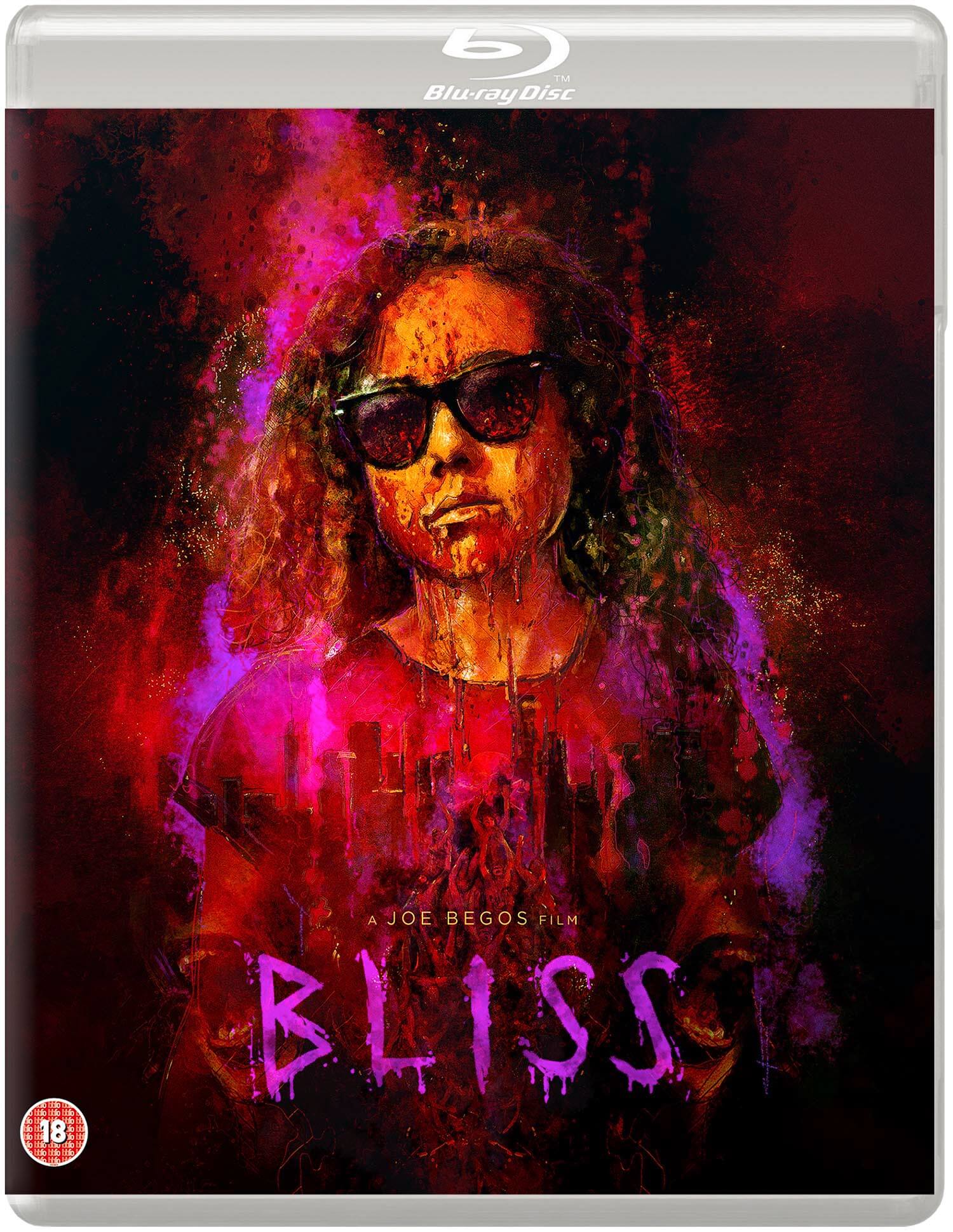
We are celebrating the imminent release of Bliss on Blu-ray by teaming up with Eureka and offering you the chance to win one of three gore-soaked discs that we have up for grabs.

For your chance to Bliss on Blu-ray simply answer the following question after watching the trailer…


Dora Madison who plays ‘Dezzy’ gets caught up in a blood-soaked,drug-fuelled and out of control situation trying to escape a creative block but what is her occupation?

(a) Painter

(b) Zookeeper

(c) Astronaut

Email your answers labelled ‘BLISS’ to [email protected] to arrive before 23:59 on February 26th.


From the Press Release:

Struggling through a seemingly endless creative rut, hard-partying and Los-Angeles-based artist Dezzy Donahue (Dora Madison, Friday Night Lights) can’t stop the resulting bad streak of problems, including unpaid rent and professional stagnation. In an effort to combat her tough luck, Dezzy throws caution to the wind, indulges in heavy drugs and rages her nights away. Her kinda/sorta boyfriend, Clive, is concerned while her debauchery-minded friend Courtney and her enigmatic hubby Ronnie keep feeding Dezzy’s darkest urges.

Gradually, though, the party starts to end, and in its place, Dezzy finds herself thirsting for blood and suffering from terrifying visions. Having never been one for moderation or self-control, she’s unable to resist her newfound dangerous impulses. And that’s very bad news for everyone in her life, all of whom are filled with the red liquid she now so desperately craves

STANDARD EDITION SPECIAL FEATURES

  • 1080p presentation of the film on Blu-ray
  • 5.1 DTS-HD MA and uncompressed LPCM 2.0 audio options
  • Optional English subtitles
  • Brand new audio commentary with film historians Kat Ellinger and Samm Deighan (Daughters of Darkness podcast)
  • Audio commentary with director Joe Begos and actress Dora Madison
  • Audio Commentary by director Joe Begos, producer Josh Ethier, and the Russell FX team
  • Deleted Scene
  • Trailer


BLISS, a blood-drenched voyage of drug-fuelled hysteria from director Joe Begos, is OUT NOW on Blu-ray and can be purchased here https://amzn.to/2rAR7od

Terms & Conditions:
Eureka/STARBURST do not accept any responsibility for late or lost entries due to the Internet or email problems. Proof of sending is not proof of receipt. Entrants must supply full details as required on the competition page, and comply with all rules to be eligible for the prizes. No responsibility is accepted for ineligible entries or entries made fraudulently. Unless otherwise stated, the Competition is not open to employees of: (a) the Company; and (b) any third party appointed by the Company to organise and/or manage the Competition; and (c) the Competition sponsor(s). This competition is a game promoted STARBURST. STARBURST’s decision is final in every situation and no correspondence will be entered into. STARBURST reserves the right to cancel the competition at any stage, if deemed necessary in its opinion, and if circumstances arise outside of its control. Entrants must be UK residents and 18 or over. Entrants will be deemed to have accepted these rules and to agree to be bound by them when entering this competition. The winners will be drawn at random from all the correct entries, and only they will be contacted personally. Prize must be taken as stated and cannot be deferred. There will be no cash alternatives. STARBURST routinely adds the email addresses of competition entrants to the regular newsletter, in order to keep entrants informed of upcoming competition opportunities. Details of how to unsubscribe are contained within each newsletter. All information held by STARBURST will not be disclosed to any third parties