NYFF58: BEST OF THE FEST

letitia wright in mangrove

Today marks the last of twenty-five days of world cinema at the 58th New York Film Festival, screened both virtually and at NYC drive-ins. STARBURST has rounded up a selection of the best movies the Festival has to offer across its Main Slate, Spotlight, Currents, and Revivals categories.

As an aside, it’s worth noting that this list is based solely on the selection of films available for press & industry preview; some notable titles such as David Byrne’s American Utopia from director Spike Lee, Sofia Coppola’s On the Rocks, and German-French drama Undine were not given early access, hence their absence from this round-up. Now, and without further ado, let’s delve into our Best of the NYFF Fest!

Steve McQueen’s SMALL AXE Anthology

Produced by the BBC and Amazon Studios, acclaimed director Steve McQueen created five films as part of his Small Axe anthology. Three of these opened New York Film Festival: Mangrove, Lovers Rock, and Red, White and Blue. Set between the ‘60s and mid ‘80s, each film centres on the experiences of London’s West Indian community “whose lives have been shaped by their own force of will, despite rampant racism and discrimination.”

SMALL AXE

McQueen also added that although the films “are about the past, they are very much concerned with the present. A commentary on where we were, where we are and where we want to go.” Black Panther’s Letitia Wright stars in Mangrove, the first instalment of the series and a gripping dramatization of the events surrounding the landmark 1970 trial of the Mangrove Nine. It shines as a sharp indictment of the systemic racism in law and order, as timely a retelling as there could be in 2020.

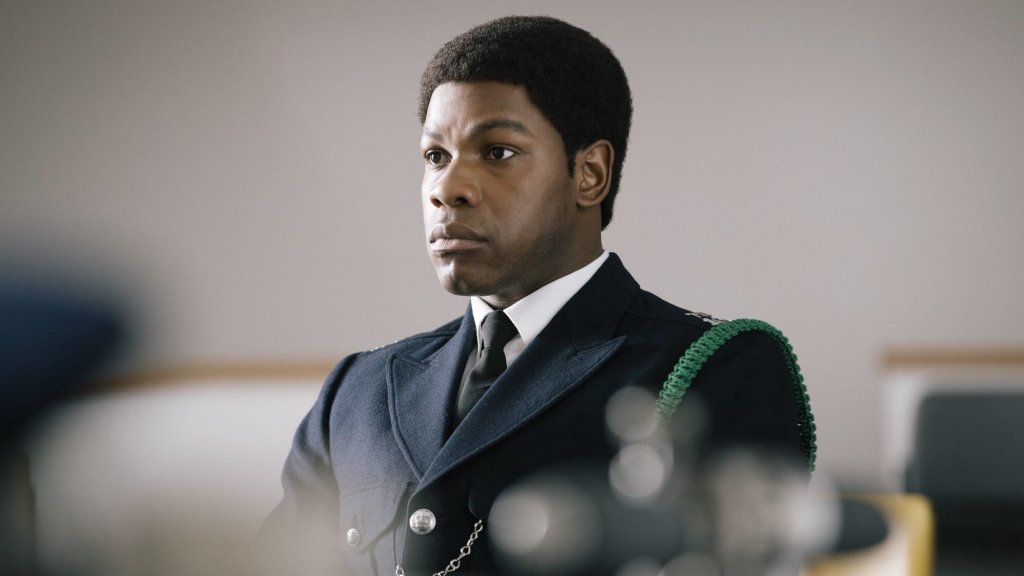
Lovers Rock is the second film, the only one in the series to not recount true events and possibly the most beautiful and enthralling among them. Lovers Rock perfectly captures a moment and feeling in time celebrating Black joy, music, and love. And lastly, Star Wars’ John Boyega gives a career-best performance in Small Axe’s final film, Red, White and Blue as real-life figure Leroy Logan. A member of the London Metropolitan Police Force, this biopic traces the early years of Logan’s career as he witnesses and experiences the organisation’s racism, one which he would eventually try to dismantle.

NOMADLAND, from Marvel’s THE ETERNALS director Chloé Zhao

Frances McDormand stars in Zhao’s beautifully sensitive third feature, adapted from Jessica Brudger’s 2017 nonfiction book about the lives of itinerant older Americans. McDormand is self-effacing in her performance as Fern, a widow who travels the American West in search of seasonal work after losing everything to the recession; Nomadland is also populated with a supporting cast of non-actors, playing versions of themselves. A compassionate portrait of those left behind by the 2008 crash, Nomadland is unmissable.

THE HUMAN VOICE, the English-language debut short from Pedro Almodóvar

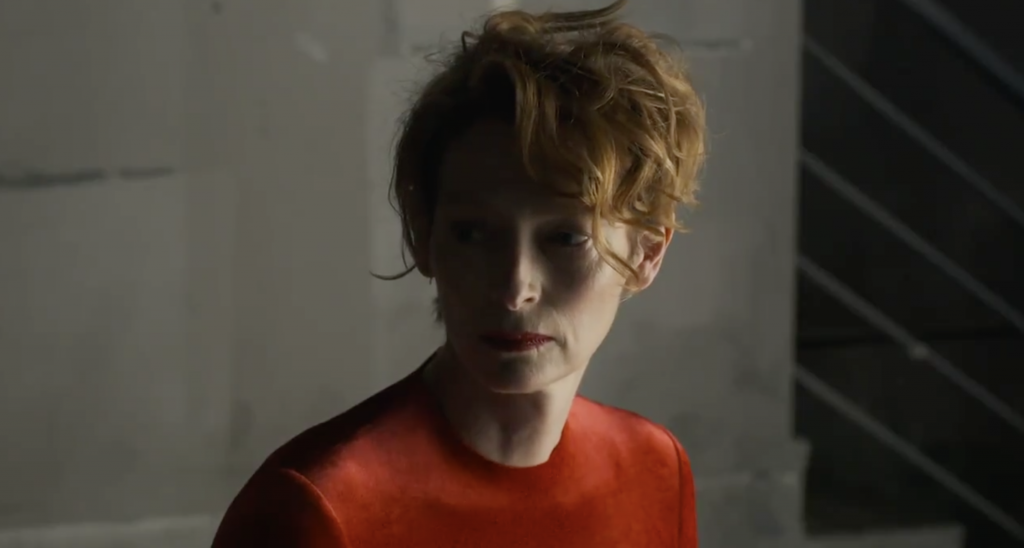
Tilda Swinton is hypnotic as a woman traumatised by the end of an affair, adapted from Jean Cocteau’s 1930 play of the same name. Drifting across her apartment in haute couture, Swinton gives a theatrical performance which proves surprisingly timely: trapped alone between four walls, trying to find connection in phone conversations, this short film proves to be a resonant portrait of loneliness. Stylish and featuring stunning set pieces, The Human Voice is above all a 30-minute visual delight.

THE HUMAN VOICE

FRENCH EXIT, starring a phenomenal Michelle Pfeiffer

Closing the 58th New York Film Festival is French Exit, an absurdist satire from director Azazel Jacobs which brings together an all-star cast which includes Michelle Pfeiffer, Lucas Hedges, Imogen Poots, Valerie Mahaffey, Danielle Macdonald, and Salem Saberhagen (looking notably sleeker and richer than he did in the 90s). At times uneven and slightly meandering, French Exit is nonetheless wryly funny and worth watching for the power of Pfeiffer’s performance alone.

IN THE MOOD FOR LOVE, at 20

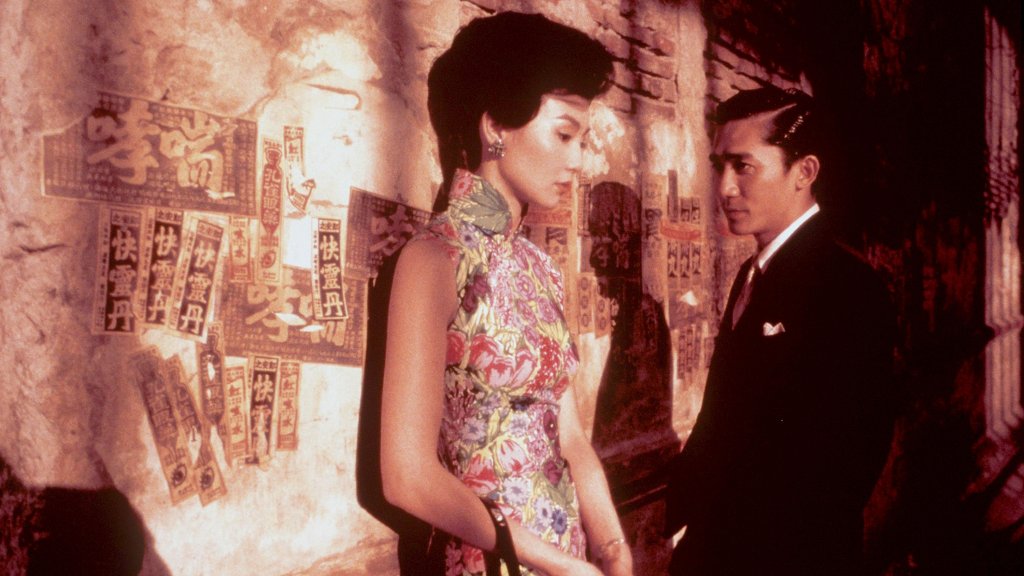
First released in 2000, In the Mood for Love is one of eleven films selected for NYFF’s Revivals slate. Wong Kar Wai’s gorgeous art house romance stars Maggie Cheung and Tony Leung as next-door neighbours in 1960s Hong Kong who discover their respective spouses are having an affair. The absence of their spouses leaves room for a platonic romance to blossom, as Wong teases a deliberately paced, “will they, won’t they” love story.  The cinematography alone is reason enough to seek out this swoon-worthy classic.

IN THE MOOD FOR LOVE

Nathan Hill | ALIENS DOWN UNDER

nathan hill aliens

We catch up with an Australian filmmaker whose enlightening documentaries are making waves down under…

STARBURST: What made you become interested in making documentaries?

Nathan Hill: To be honest, the part I like the most about owning a DVD or a Blu-ray is the special features and featurettes you can explore. The ‘making of’ and the reality side to movies has always intrigued me. So I guess delving into the documentary realm felt like a good transition, or additional stream to what I normally create – that being the ‘moving image’.

How far did you go to research Sex Down Under?

With SDU we really went very far down the rabbit’s hole. What started out as a fun topic to explore, but it became an ever quite seedy one as we progressed, sometimes even scarily, in fact. It was the darker side of the industry and a subject that I hadn’t fully encountered, living right beneath the city. What some people do to play out their sexual fantasies is gobsmacking.

What was the most startling thing you found while making it?

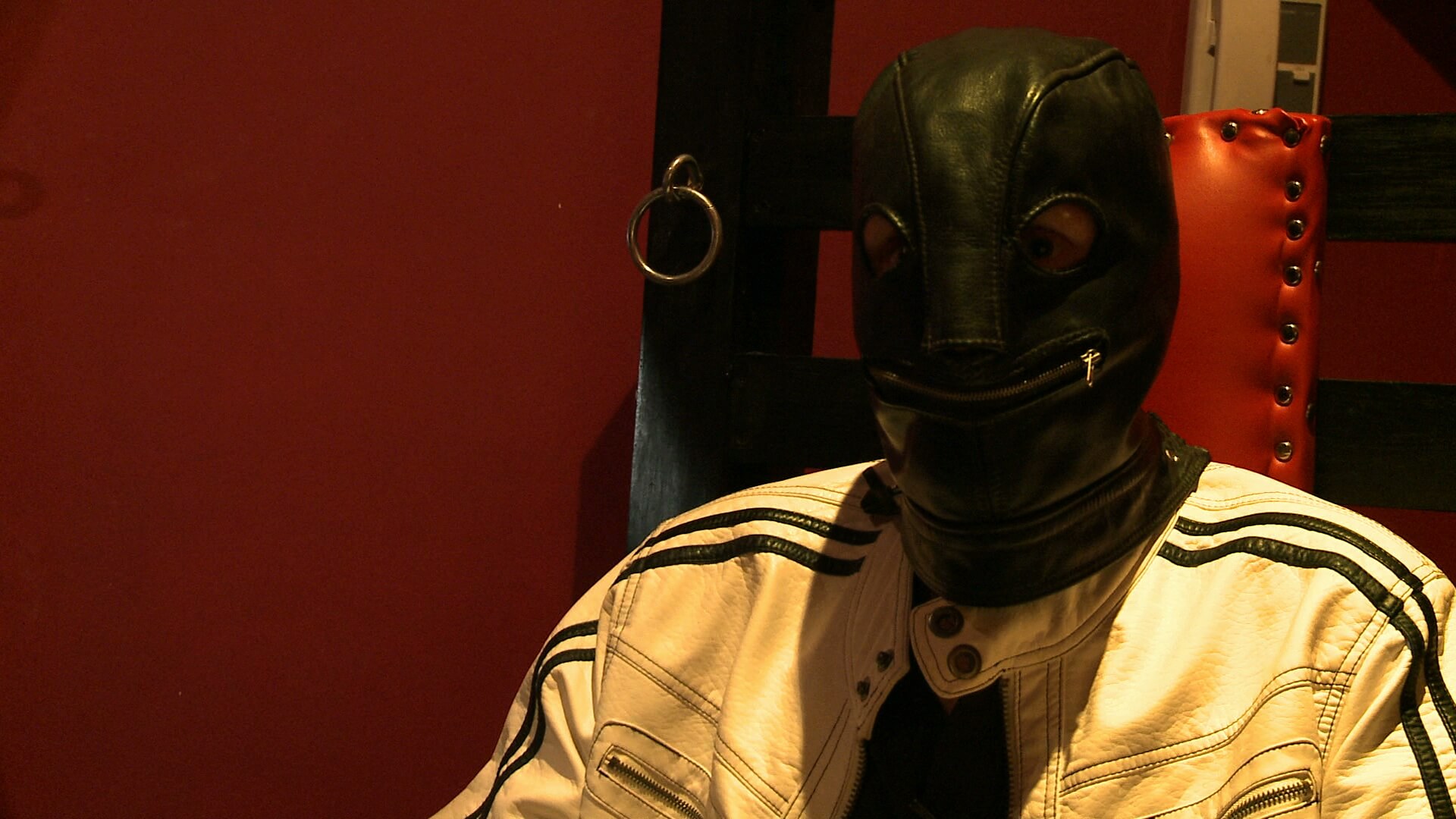
The most startling would have to be our discoveries inside an S&M dungeon, where  people enact their vile and sadistic tendencies and actually pay top dollar for. I was horrified to find out that most of the customers were in fact members of the police, fire-fighters, judges, and politicians, to name but a few. It seems that people of the most distinguished careers and professions are in fact the ones with the most vulgar taste for the sexually absurd.

Were there any moments you thought you wouldn’t be able to show?

There was one spot where they started to show us an instrument where a man would insert his head into a cage-like device. He would then allow a paid mistress to either urinate or excrete her faeces into his mouth. I almost vomited when I saw it and learned what it was used for. I became very claustrophobic in that environment and was constantly looking over my shoulder. It was truly horrible. What the walls had witnessed inside that place are not for the timid or faint hearted, I can tell you.

Did you have an interest in UFOs before making Aliens Down Under?

I’ve always had an interest in UFOs since I was a kid, I don’t know anyone who isn’t or hasn’t been interested in the subject at one time or another! My favourite fictional movies on the subject would probably be Xtro and The Man Who Fell to Earth. It’s foolish to think we are the only ones on the planet, or the solar system for that matter. ADU was the perfect chance for me to throw my hat in the ring and explore the subject on my own terms. It’s something that’s always fascinated me.

Are you a believer after making it?

The scariest thing about making this documentary is that all of the people I interviewed have never met, yet they all claim to have seen a similar thing. In fact Rebecca’s encounters really made me sit up and believe. She’s a really nice, dare I say simple, unthreatening person, who looks you dead in the eye and tells her story like it was yesterday. I couldn’t fault her.

What was the strangest, most compelling story of the film?

I think the most compelling story of ADU is the one told by Aaron. I mean, the guy’s a friggin’ science teacher and a physicist and when he speaks to you, you know it’s the truth. He’s seen a UFO a couple of times and had people alongside him to even share in the testimonials. It creeped me out and gave me a funny sense of déjà vu when he spoke. Watch and listen to him if you’re a disbeliever!

Which set of interview subjects did you find to be the most open – the sex workers or alien witnesses?

Strangely, I thought that the ADU interviewees would be the most open about the subject, but not in this case. They were quite guarded, reserved, and one would say ‘mature’. Whereas the SDU interviewees were quite liberated, open, and verbally loud about the topic. Sex was just an everyday thing, whereas the alien spotting was special, rare, and intriguing to say the least.

Are there any plans for more documentaries in the ‘Down Under’ banner?

I’m loving the Down Under films at the moment. In fact, we have a new one on the slate titled Bigfoot Down Under. This time, we delve deep into the Blue Mountains to try and spot the ‘Yowie’, which is the Australian term for Bigfoot. It’s already proving to be quite fascinating, with the first ever spotting recorded as early as 1795. Intriguing subjects and a slate of ideas are forming and I look forward to what the future brings. My goal is to release a box set of the work in a Down Under series when it’s all said and done. How many we will make? I’m not sure yet of the number.

Would you be interested in making narrative films?

Absolutely. In fact, I’ve made a few. I have decent concepts on just about all genres and feature-length scripts just waiting to be made. I’m also an actor, writer, producer, casting director and director so there’s not much I haven’t done, or can do, when it comes to film in front and/or behind the camera. It’s my life blood. I live, breathe and dream about film in all its genres, mediums and forms. I’m very passionate and enthusiastic about creativity. It is, as they say, king.

Aliens Down Under and Sex Down Under are available on DVD.

Giles Alderson | THE DARE

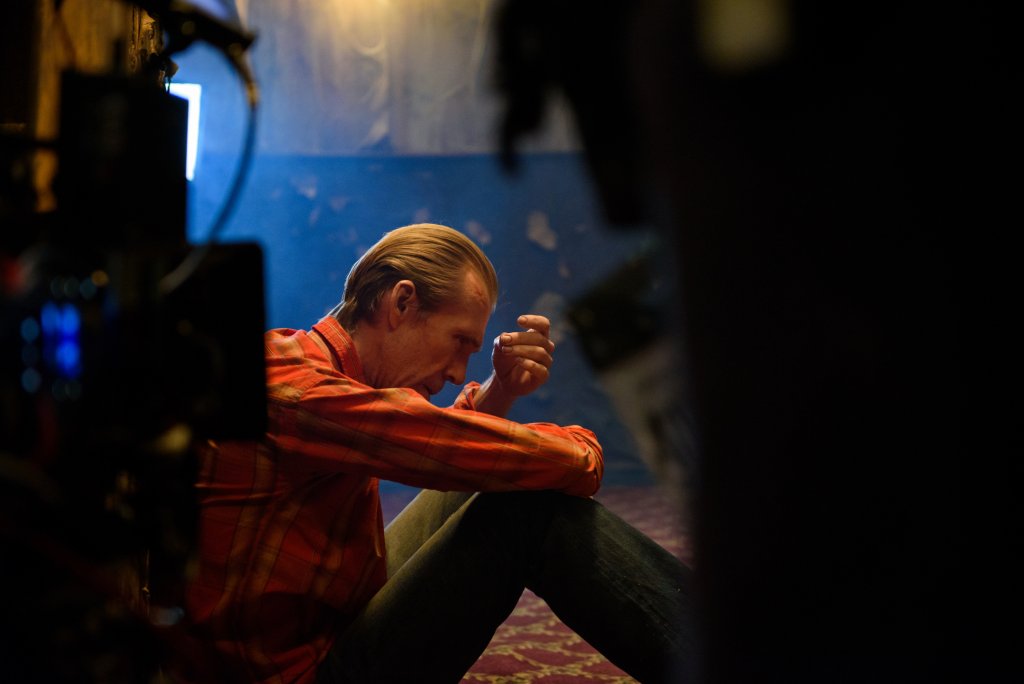
To celebrate the UK release of his horror film The Dare, we sat down with Writer/Director Giles Alderson to talk about his feature debut, working with Richard Brake and making the transition from in front of the camera to behind it.

STARBURST: Congratulations on the film. It’s finally being released in the UK. How excited are you to share it with your home crowd?

GILES ALDERSON: Thank you! I could not be more excited to share it with the home crowd. When I started off writing The Dare it was just two ideas that I put together. And it was always British and had that British feel so to finally have it released over here is great.

You co-wrote the script with Johnny Grant – where did the idea come from and how did the project begin?

Well as I said it was two ideas that I had in my notebooks that I am constantly adding to and I put them together to start writing with my friend Johnny [Grant]. I was originally going to make it for peanuts as I just wanted to get a feature made because a lot of the time the reason you can’t make a feature is because you haven’t made one – people don’t trust you.

Even if you make one for nothing in your garden, that is better than nothing at all. Originally it was English with all English characters but then we decided it would play better if we made them all American – it also made sense to set it in America because of the location of a farmhouse in the middle of nowhere (laughs).

You started off your career in film as an actor and continue to act today. How was it making the jump from in front of the camera to behind it?

It was wonderful. I remember when I directed my first proper thing which was a pilot for the BBC and I fell in love with the idea of directing – you chose where the cameras go, you chose how things appear on screen, and it just blew my mind. I thought “oh my gosh, this could be a career”. Nothing compared to directing. So, I started directing short films and ad campaigns and here we are ten years later, and I finally have my first feature made!

For us, the standout performer is the brilliant Richard Brake as Credence – how was it having someone of his talent on board with the project?

When we were writing it, we didn’t have specific people in mind, we just wanted to get it written first. When it all became serious and we began casting, Richard Brake was always one of the names on the list – and I soon as I knew that he was interested, he had to play Credence.

Even though Credence was written as a bigger man and bigger character, I love Richard’s work and we had a great meeting and from that moment he was my guy. When I heard he was interested I got incredibly excited about it and all the possibilities of how amazing he could be in the role.

The practical effects were great – was that always the plan for more practical over CG?

Absolutely, with The Dare, I always wanted practical from the very beginning. I actually tried so hard to not have any CG whatsoever, but obviously, with what happens in the film, you kinda have to use a least a little (laughs) – even though the actors wanted to do some of the crazy things I had planned! Sometimes as well, using a little bit of CG makes things look so much better especially when you have elements within these stunts that are completely out of your control. We had so much fun with the effects in this film.

You also recently produced the outstanding A Serial Killer’s Guide to Life – what was it like working on that?

It was incredible working with Poppy and Staten on that as I’ve known them a long, long time and I’ve worked with them before on their short This Way Out. We actually shot A Serial Killer’s Guide to Life after I had finished with The Dare so the timelines on those releases are all over the place! Filmmaking, eh? (laughs)

The Dare is out now on VOD and is released on DVD on October 12th.

Mark Dacascos | THE DRIVER

driver

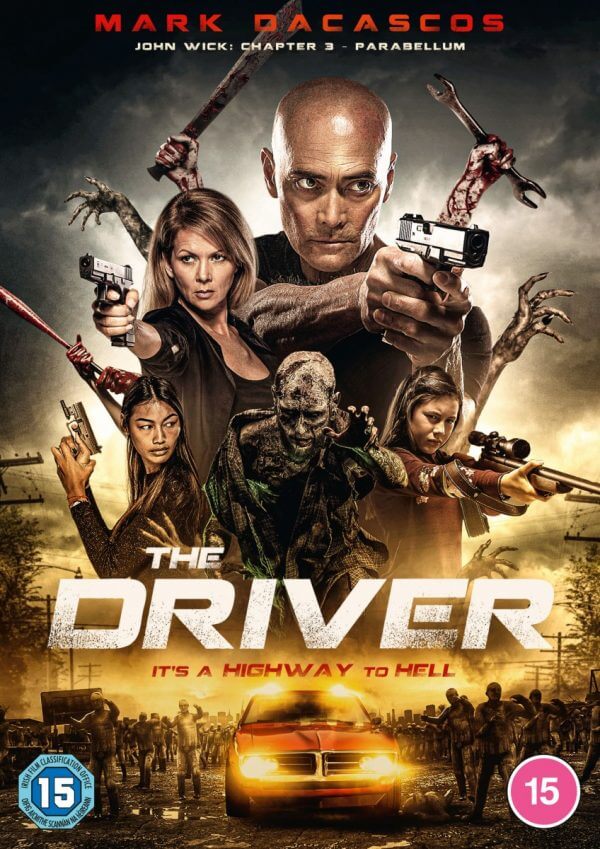
After fighting John Wick as Zero in the depths of Manhattan, actor MARK DACASCOS is now up against a supernatural threat with his new film, THE DRIVER. Directed by Wych Kaos, it tells the story of a former hitman who now has to survive a zombie apocalypse! Acting alongside his real-life wife Julie Condra and daughter Noelani Dacascos, this zombie flick aims for an emotional setting by putting the spotlight firmly on the family relationship. We caught up with Mark to discuss his new movie and more…

How did you get involved with The Driver?

Back in 2018, I had been friends with Wych Kaos, he is the director, writer, producer of The Driver. We did a movie many years before, in Thailand called The Lost Medallion: The Adventures of Billy Stone, we stayed in touch and we had a good rapport. He sent me the script while I was on the set of a Hallmark movie, The Perfect Bride. I read it during my break, and I loved it. I saw that there was a wonderful part for the daughter, and a part for the wife. I thought “I have a daughter, she’s an actress. I have a wife, she’s an actress.” So I thought I may as well submit them for those parts. I talked to Wych about it, he agreed that it could be interesting, and a couple of days later he said yes. Then he started working on trying to get the financing together. Cut to a couple of months later, I was invited by Chad Stahelski to join the John Wick franchise as Zero in John Wick: Chapter 3 – Parabellum. So once I got that, and it was announced, a couple of days later I heard that it was a lot easier to get our financing. So as soon as I wrapped on John Wick in July, a couple of months later, my wife Julie Condra, our daughter Noelani Dacascos and myself went off to Thailand to start shooting The Driver.

You’re once again working with director/writer Wych Kaos, can you elaborate on what it is you like so much about working with him?

I love his sensibility. He’s romantic, he likes action, quirky, interesting characters. I like the way he shoots. On a small budget, that we had for The Driver, we had to shoot fast anyway. I have a feeling, and hopefully Wych and I will find this out together, but on a bigger budget he’d still shoot pretty quick, and I like that. It keeps you in the story, the juices flowing, and it keeps you on edge. He’s really good like that. He brings depth, and I like his style of filmmaking, in that it’s still some-what full. What I love about Wych, is that you can take each character and go deeper with it if you want. He brings real relationships to this other world.

What it was like to work alongside your real-life wife (Julie Condra) and daughter (Noelani Dacascos) on screen?

So with Julie, we hadn’t worked together since Cyring Freeman back in 1994. It had been a long time. Neither of us had ever worked with our daughter Noelani, and of course we had never all worked together. The great thing about that was getting on set, to prepare for the scenes, as long as I was grounded, present – I won’t talk about what their process was because we’re all different – I could look in their eyes and get there in a flash. I had known my daughter since her first day, and she’s playing my daughter in the movie. She was the appropriate age for the character, everything was there. So all I had to do was look at her, and bam I could click in. It was the same with my wife. I want to believe that that chemistry transcends, and that the audience can also feel that. It’s about as real as you can get.

You obviously spent a lot of time filming with your daughter, so looking back on the movie, which scene did you find the most rewarding to work on with her, and why?

I won’t give any spoilers, but from the big compound scene we’re on edge the whole time. Of course, the final scene with us together was challenging, because you never want to have to say those words. However, it was also really wonderful, we got to connect on a very real level, because of who we are in our relationship. And then to also play with all of those wonderful feelings, knowing that after Wych yells cut, that we’d still be around to enjoy each other. It gave us a certain freedom to walk alongside death, in a very tangible way, without having to go there yet. It feels like with nearly every scene in the movie with her, because of the situation, it was deep.

Also, for you personally, what did you enjoy the most about playing a father figure in a zombie apocalypse?

Playing with my actual wife and daughter was just wonderful, because we got to not just experience our lives on the camera, but also off set. We got to go there, it’s really a fight or flight movie, we do both in it. For my daughter it’s a coming of age movie. She got to drive a car for the first time in her life, Wych taught her how to drive a BMW on the roads of Thailand, in the jungle. She had a blast doing that. Then on Halloween, her friends back in California were dressing up, and she was shooting zombies. It was really fun. What I just loved about it, was that we hit so many emotions, and found so many colours, because of our real relationships. We could go there and play with it.

Leading on from that, in the film, it seems like the bond between the father and daughter became closer by the end. So would you agree with that, and for you, how else do you think their relationship changed over the course of the film?

Yes, in the hours that the story takes place we go from zero to one hundred, of beginning and end. We have to put all of these things that I would normally have used, talked about, or tell her, show her through feelings, I’ve got to do that in a very short amount of time. So yes, the characters certainly grow together. As a real father and daughter, I feel like that brought us closer together playing that. We had to trust each other doing the scenes, and in the scenes our characters are 100% committed to each other. It’s weird, but it’s all connected.

You don’t have a lot of fight scenes in this one, however, as a martial arts pro, we must ask you which action scene did you enjoy putting together the most in The Driver?

I had a really fun time working with Brahim and his fighters in the compound, before we had to leave. With any smaller budgeted film, we did not have a lot of time to rehearse or film, but I think that actually added to the energy, because we knew we had to get it done. It had that chaotic vibe as it needed to have, because we were being invaded. That was really fun. To go from that, to the emotions of before, and then right after the fight, knowing what I had to go do, wondering what the outcome was for my family. All these things together, were really fun. It wasn’t just fighting an opponent, or a bad guy, it was fight to survive, and wondering if my family survived? There’s a lot of things going on that might of not been physicalised, but they were there emotionally.
driver

We hear that The Driver is part of a trilogy, with Dead Earth already released. Can you explain how The Driver fits into this trilogy overall, and maybe what else Wych has planned for it?

Yeah, it’s a trilogy, and I hope that Wych gets to do the third one. The script is great, I read all three of them, they’re all really fun, and you see how they progress. Whether he does it or not, I don’t know, but I hope so. He has Kane Kosugi slated for number three. They wanted to do a sequel or number four to The Driver, where Noelani is fifteen/sixteen and just a full-on fighter girl. I’m hoping, because I think that would be really fun for them, and the audience.

We can’t let you go without asking just one question about John Wick: Chapter 3 – Parabellum. What was it like to film that huge final glass fight scene with Keanu Reeves, and what were the creative team behind this film like to work with?

I loved being a part of that movie, for so many different reasons, but most of all, because the leaders of that show, from producers, of course to Chad Stahelski our director and Keanu Reeves, they were just ace human beings. We had a big budget, if Chad wanted to shoot in Grand Central Terminal, he’d do it. If he wanted to film in Times Square, he’d rent out Times Square. He had the studio to back him up. The humanity, humility, the collaborative spirits, and the professionalism was off the charts, as you’d hope it would be. Also, yes, Keanu is as cool, kind, collaborative and humble as we all hear. At least he was for me during the three months that I was working with him. We’re there shooting the finale fight in that glass building, and of course he is working longer hours than all of the other actors, he is there with full heart and passion. When we were doing the fight scene, and he grabs me and he goes for the throat, I had bruises on my forearm for two or three days after. I was hoping they would last longer, because I like to show everybody, like “Hey! Keanu gave me this bruise”. He is strong when he grabs. Chad and 87eleven Action Design trained him well, and obviously he put in the time, because when he grabbed me, I thought “Okay, I’m going flying!”. Fortunately for me, I’m really happy to say that Keanu and I did ninety percent of our own fight, but when it came to the heavy hits or throws – thank goodness for us – our wonderful talented stunt men took them! Keanu threw my stunt man around a lot. Keanu says that he is only a movie fighter, but, he’s got skills, and he’s really strong and athletic. So yeah, that was really fun, it also made it really easy to get into the character. In real life, obviously I am a Keanu Reeves fan, but, I’m also a John Wick fan. So, when I stepped into Zero’s skin, it was almost seamless. When I looked over, I had to really focus, because I’m looking at John Wick and I’m thinking “This is so cool, I’m fighting John Wick!” but that’s what my character would think anyway, so it’s perfect!

Lionsgate UK unleash THE DRIVER on Digital Download from October 12th and DVD from October 19th

 

[ENDED] Win a NAIL IN THE COFFIN Promotional Box

Nail in the Coffin: The Fall & Rise of Vampiro

With Nail in the Coffin: The Fall & Rise of Vampiro now available, we’ve got our hands on a fantastic promotional box to give away to one lucky reader.

This promo box features two Region Free Blu-ray copies of Michael Paszt’s Nail in the Coffin, with one of these copies signed by wrestling icon Vampiro himself. Elsewhere in this package, there are numerous badges and stickers, a poster, a bandana, and a letter from filmmaker Paszt.

All you have to do to be in with a chance of winning this prize is answer the below question:

What is Vampiro’s real name?

a) Hulk Hogan

b) Ian Hodgkinson

c) Randy Savage

Please send your answers to [email protected] labelled Vampiro before midnight on Sunday, October 11th.

In addition to this competition, we also did an unboxing video to showcase what you can expect from this brilliant prize:

The official synopsis for Nail in the Coffin reads:

Semi-retired professional wrestler Ian Hodgkinson reveals the harsh realities behind the glamour of being in the world of wrestling as the infamous ‘Vampiro’.

A Lucha Libre legend, Hodgkinson tells the astonishing story about his meteoric rise to fame in the 90’s and how it almost killed him. Yet none of that was as back-breaking as his current life – working behind-the-scenes as the Director of Talent for Lucha Libre AAA in Mexico City and Lucha Underground in Los Angeles, while simultaneously raising his teenage daughter Dasha in remote Northern Canada as a single parent.

Unlike many professional wrestling documentaries before, director Michael Paszt has constructed a fascinating and heartfelt look at a wrestler who has overcome and continues to battle with physical injuries, sexual abuse, and drug addiction. Not to mention the wild stories of working for Milli Vanilli, and wrestling alongside the punk rock band The Misfits – Vampiro’s stories are multi-faceted and completely enthralling.

Told through an engrossing collection of home videos and personal interviews with his closest friends and family, NAIL IN THE COFFIN is an intimate and genuine look into a single father grappling with fame, the pressures of professional and personal responsibilities, and his own mortality.

Nail in the Coffin: The Fall & Rise of Vampiro is available now on VOD and Blu-ray.

The Umbrella Academy: Previous Appearances From The Main Stars

Nominated for two primetime Emmys, The Umbrella Academy is another show tapping into the public’s seemingly insatiable thirst for superheroes. The plot centres on seven unrelated children brought together as a family by a billionaire industrialist at The Umbrella Academy with a plan to save the world. Of course, things don’t go to plan, and instead of bringing global salvation, the six have to work together to solve the mysterious death of their ‘father’. The scenario is played out with the threat of global apocalypse in the background as the group have to battle their divergent abilities and personalities. Over the past few years, there has been a rise of binge-worthy TV shows with The Umbrella Academy being one of the most popular ones. The series was one of the most watched shows on Netflix in December 2019 with over 45 million viewers.

After fans saw The Umbrella Academy trailer for season one, it was clear to see that the show was going to be hugely popular. Fast forward to this year, and season two was released on Netflix to continue on the story from the huge climactic ending that left viewers wishing to see more. Whether you have already finished the second season, or you’re just about the start, here are some of the roles that the siblings had been in before they became the superheroes of The Umbrella Academy.

Number One – Luther

Tom Hopper

For fans of big-time drama series, some people are going to recognise Tom Hopper more recently for his small role as Dickon Tarly from Game of Thrones. However, millennials in Europe and the UK might also recognise him as Sir Percival in the BBC series Merlin, who fought along King Arthur as a roguish knight. You may also recognise him as Billy Bones in Black Sails, a show in which he also showed off his torso and arms from time-to-time. Trying to play head of the family as the number one sibling, Luther certainly struggles at times with the responsibility.

Number Two – Diego

David Castañeda

David is quite a newbie compared to the rest and has appeared in a few tv show episodes and short films in his career so far.  His most successful appearance previous to The Umbrella Academy is in the movie Sicario 2: Soldado (2018) as Hector. To date, David has always played bit parts of little importance, so here is hoping he makes it big in Umbrella Academy as Number Two in the Hargreeves family.

Number Three – Allison

Emmy Raver-Lampman

With just eleven credits on IMDb, Emmy is also another actor who is less experienced than some other cast members. Though you may recognise her voice from her voice acting career in shows like American Dad (an angry townsperson), and Peppermint from Robot Chicken. As one of her first big roles, her character Number Three certainly has an interesting talent with her special abilities in The Umbrella Academy, so it’s intriguing to see what comes next for the character and actress.

Number Four – Klaus

Robert Sheehan

Long before The Umbrella Academy, Robert Sheehan made a name for himself with the popular TV series Misfits. Playing a young person who develops superpowers probably made him a perfect fit for playing another one in The Umbrella Academy. In his career he has starred in many other TV shows including Genius, Fortitude, and Love/Hate. For fans of other popular supernatural-type content, Sheehan even appeared in the 2013 Hollywood film The Mortal Instruments: City of Bones. Loved by many fans online, he certainly plays a fun, annoying, and loveable character in The Umbrella Academy.

Number Five – Five

Aidan Gallagher

Nickelodeon viewers may recognize Aidan Gallagher him from Nicky, Ricky, Dicky & Dawn, where, even though he was young, he played a good part. He’s relatively new to acting, only having his first credit in 2013. Since then, he has starred in a few shorts and TV movies such as We Make That Lemonade and Jacked Up. Playing a more sophisticated and intelligent role as ‘Five’ in The Umbrella Academy, the young actor definitely knows how to take centre stage as the wisest of the siblings.

Number Six – Ben

Justin H. Min

Justin H. Min has been in many TV series and shorts including Dating After College, American Refugee and Faking It. Compared to his other co-stars, Min had a much smaller role to play in season one of the show. Although, fans still got to see his emotional and funny sequences with Robert Sheehan due to Number Four’s special abilities.

Number Seven – Vanya

Ellen Page

It is not difficult to see why the Umbrella Academy show producers turned Ellen Page into the untouchably strong and perfect female character in the show, since she is one of the biggest named stars. Many probably recognise her from the X-men movies, but older viewers might remember her eerily chilling role in Hard Candy. Even as a younger actress, it was a difficult role that she mastered, which then pushed her onto bigger movies like Juno, Inception, and X-men.

Only time will tell if The Umbrella Academy offers any serious impact on these actors’ careers, but for now the show and characters are becoming loved by fans all over the world.

Terry Zarchi | GROWING UP WITH I SPIT ON YOUR GRAVE

terry zarchi

With the release of I Spit on Your Grave in 4K UHD Blu-ray, which includes the original film and the documentary, Growing Up With I Spit on Your Grave, we revisit our chat with Terry Zarchi, the director of the doc, who happens to be the son of the original director, Meir Zarchi…

STARBURST: How old were you when your dad made I Spit on Your Grave – or Day of the Woman as it was then?

Terry Zarchi: I was nine years old at the time.

And you were in the film too, which is great.

Yes, I was minding my own business in Connecticut, visiting the set – of course being kept far away from any nudity, which was practically keeping away from the set period! And then I was approached to be in the movie. And I was very scared, I was a shy kid. I kept refusing and before I knew it, crew members were surrounding begging me to be in the film, and I finally agreed after I was offered my $10. I did not willingly put myself in this film, but that was the start of me growing up with I Spit on Your Grave.

When did you become aware of the movie’s content?

I was visiting my father’s office in Manhatten while he was editing the movie. I heard lots of shouting and yelling in the other room – they were editing the sounds of the movie, I was like ‘what in the world is he making here?’ When I was about 14 or 15, I finally saw the entire movie from beginning to end. And I have to say I was definitely shocked at what I saw.

We guess you’ve come to accept the movie now.

Of course, I had no choice! The reason why I wanted to make the documentary was because I really felt there was a bigger story to be told, to me this movie I Spit on Your Grave has become more than a movie, it’s become a discussion. And when a movie becomes a discussion, it becomes a little bigger than the screen, a little bigger than life. So I felt that it was important for me to share what I know, and my access to all the materials that my father has given me the privilege to put my hands on. And what you see in that documentary is 100% my story without Meir telling me how to edit anything in or out. That’s the beauty of it, he let me have free rein.

So growing up were you aware of the controversy over here in the UK?

I was aware of the controversy, yeah. I even remember when my father went out to a show out there. I remember him going out there because of the allegations of a teenager who had raped someone and blamed it on I Spit on Your Grave and other movies like it. So yes, I was very aware of that.

Did that cloud your judgement over the film at any point?

No, it’s a difficult film to judge, you know, even to this day and I think that’s what makes it so fascinating, it’s a horrible, terrible subject matter. And it’s a difficult movie to watch, and I don’t believe this is a movie to watch for entertainment purposes. When people ask me, do I recommend it, I say no I don’t recommend it! If you can handle it, see it. And you know, people see this film now because they hear about it so often. And I believe a lot of movies that were made 40/50 years ago that you look at it today feel very watered down – with this movie, there’s no watering down after all these decades, it’s still as horrifying and shocking as it was back then.

We would totally agree with you, it’s harrowing. It’s something that you don’t want to see, but it’s important to have that reaction to what’s going on.

Exactly. And I think a lot of people hear so many things about his film that they know how brutal it may be, but they want to test their reactions and they watch it. It’s a very interesting movie, but I never expected it to still have legs after all these years. And here we are.

Was there much of an outcry over in the States?

Of course, Siskel and Ebert tried to remove the movie from the theatres, and they were successful. They went in front of the theatres back in 1980, and they picketed telling the theatre owners and the audience members not to see this film. And with so much pressure, all the movie theatre owners pulled the film from the screen. And they thought they had victory over this movie, but a few months later the home video industry appeared and people heard about the controversy, and then it became top 10 on the charts all over the place because of that.

When did you get first get the idea to make the documentary?

It was shortly after the release of the remake and I saw that it was doing well, and then when there was a part two in the works, I said, ‘Okay, I have the ability to make this documentary because I’m a videographer by trade. I do event videography so my cameras were in my closet. It was like a simple thing where I’ll bring my camera to the people, and I’ll film them, and get myself a little story here. And it all started out where I thought I was going to just film Meir, and then Camille agreed to be in it, and then I got Eron Taber, who was Johnny in the film, and then I got Gunter Kleemann, who played Andy. So, before you knew it, I had a lot of talking heads. I found the production manager from the original film, so I knew I had a great story to tell, beyond what people thought they knew about this film, and I was excited to share that. So it was around 2012 we started thinking about doing this and it took me five years to make.

You were a producer on the sequel to the original; what was the shooting schedule like for Déjà Vu? It’s a long film!

Yes it is. We started filming in September of 2015. September 21st, and then we finished filming around, I think November 2nd. We shot for 29 days. And we had the luxury of doing as many takes and Meir taking the time that he needed. Meir was taking this time, he would gather all the actors every morning, or he would read the pages on the script to familiarise the actors and himself with everything. He wasn’t looking at the clock. I was!  Our line producer was! But Meir wasn’t, he was very calm and he knew what he wanted to do so, we gave him all the support that he needed, and we were so pleased that Camille Keaton and Meir Zarchi got back together to do this.

It was amazing to see Camille back.

Yeah, exactly. And for her to do such a physically demanding role at her age and looking so fantastic. There was a lot of running around in that movie, it was very physically demanding. And she pulled it through.

Absolutely. How did your father take to working in the digital format?

It was different, I really enjoyed the fact that we went out there and we shot it very naturally. 95-98% of the movie was shot in the daylight, we only really had one scene at night time, the cemetery scene, and we had one quick interior scene. Other than that, the whole entire film was shot outdoors with natural light. In the beginning, before we filmed, we found a look that we all agreed on. We wanted to be as naturalistic and as close as possible to look like the original even with the digital aspect. I’m pleased with the look of the film, I think we came through with that aspect.

What was the hardest part of filming the sequel?

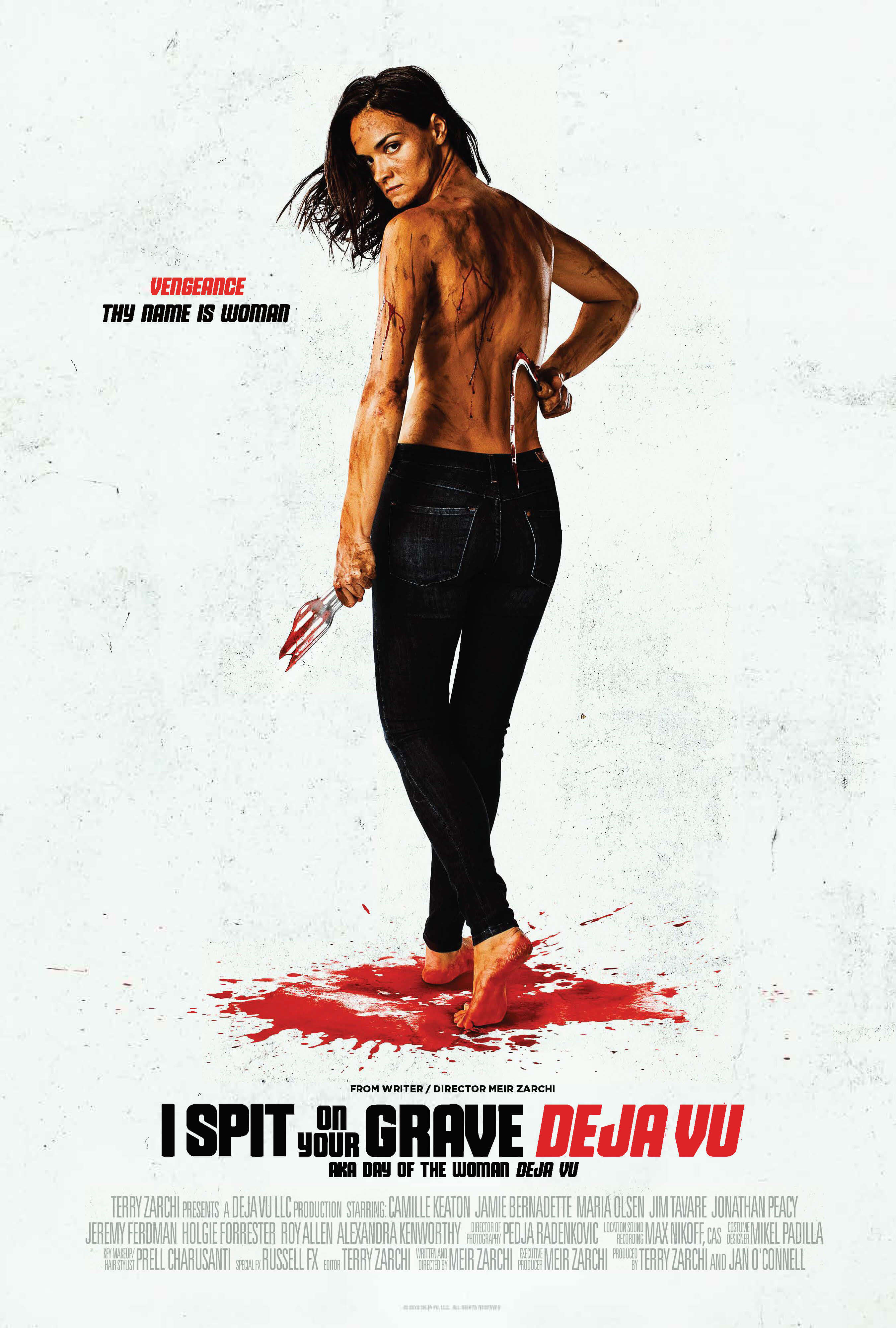
The hardest part of the shoot was the day was when Jamie Bernadette playing the character of Christy Hill was sexually assaulted; that was a very rough few days. It was very, very hot. It was a very tough sequence because it’s not easy to shoot scenes of sexual assault, they’re really not easy at all. We really enjoyed all the gore scenes, like Herman getting the sickle in his back, and Kevin getting the bottle in between his legs – those scenes were where we were having a good time!

There’s a new group of antagonists led by the family of the original rapists. It’s interesting to have a woman – Becky, played by Maria Olsen – as the head of them.

Yeah, Becky is almost the carbon copy of Johnny from the original – she took over the cap. She took on his role she became the leader of her local pack, in the way Johnny was the leader of his pack. So yeah, you’re right about that.

It’s an interesting contrast, because we’re all led to believe women are not as nasty as men but she’s probably just as nasty if not more.

I appreciated the fact that the leader of the pack was a female, it brought a different spin on it.

There’s also the religious aspects of an eye for an eye, which means you’re never finished, because everybody’s going on forever…

Exactly, it’s a never-ending cycle of blood.

The I Spit on Your Grave 4KUHD Blu-ray featuring Terry Zarchi’s documentary Growing Up With I Spit on Your Grave is out now.

David Wong | ZOEY PUNCHES THE FUTURE IN THE DICK

dick

Having served as the former executive editor of Cracked.com as well as writing four beloved and acclaimed novels, DAVID WONG is a writer you’re likely familiar with – and if you aren’t, it’s safe to say that you should be. His first book, JOHN DIES AT THE END, was adapted into a STARBURST-approved feature-film in 2012 and, now, his fifth book, ZOEY PUNCHES THE FUTURE IN THE DICK, comes out on October 13th. David took the time to chat with us, ahead of its release

STARBURST: What’s the “elevator pitch” for Zoey Punches the Future in the Dick?

David Wong: It’s the future and the world is somehow even dumber than our present. A young woman from a trailer park has inherited her father’s massive criminal empire and now has to work with his old inner circle, a group of ex-PSYOPS agents who use elaborately staged lies to run the city behind the scenes. This leads to a series of increasingly bizarre disasters and also Zoey’s cat smells really bad.

A lot of people will know you primarily from your time with Cracked or via the movie-adaptation of John Dies at the End. Is Zoey Punches the Future in the Dick a good entry point for someone who wants to read your books? Or is it necessary to have read the previous Zoey Ashe book, Futuristic Violence and Fancy Suits, first?

Every book I write can serve as a starting point. They’re each independent stories, even if they have the same characters. People’s time is too valuable to require homework and I never want to write one continuing saga out of fear of dying before I finish it. No book of mine should ever end on a cliffhanger.

Again, you’re a prolific writer of many fantastic, factual articles. To what extent does writing them inform your fiction? Is there any synergy between the two types of writing that you do when it comes to research and inspiration?

Only in the sense that writing hundreds of articles trained me to do research and sift through sources, which is actually a skill that takes a ton of practice. Non-writers don’t realise how much research goes into even an objectively ridiculous piece of fiction. If you’re writing, say, a novel about a vampire who works at Olive Garden, you need to know how to quickly look up which dishes have garlic in them.

What was it like having your book, John Dies at the End, adapted into a movie?

Well, the experience was a guy working in a cubicle at an insurance company finding out that a Hollywood director wanted to make a movie out of the story he’d uploaded to the internet, then three years later finding himself at Sundance, hanging out with the cast. I’d have to have an utterly deranged sense of perspective to complain about that.

And were you happy with how the finished product turned out?

I thought it was the perfect match of director and source material. If there’s ever a chance to do another one from the same crew, I’m fully on board. The movie was the second-best thing that’s ever happened in my life – I’ll let my friends and family fight over what they think was first.

John Dies at the End is the first book in your John and Dave series. Zoey Punches the Future in the Dick is the second book in your other series following the character of Zoey Ashe. Is there any chance of Zoey also getting the movie or TV treatment in the future?

It’s in development as a TV series! I haven’t heard anything in a while but that’s how it works: source material goes into a machine and maybe it eventually pops out the other end as a show or movie… or maybe it doesn’t. If they never make the show, the rights eventually just revert back to me and I get to keep their money, so win-win.

Given the futuristic setting, did you want to use Zoey Punches the Future in the Dick to make any specific comments or points about contemporary society?

It’s definitely not like a winking allegory to specific current events; there’s no reality show host who becomes president, there’s no sci-fi version of Brexit happening. It’s really just looking at all of the broad trends in society, trying to project them forward by a few decades and saying, “Wow, we are not ready for how stupid this is about to get.” Zoey’s is a universe in which virtually everyone is live-streaming their lives. You’re always on camera from a dozen different angles, from the moment you step outside. How does that affect a person’s behaviour? How does that affect society in general? At that point, the goal is to try to find the humanity in the situation by focusing on an everyday person who suddenly finds herself at the epicentre. If I’ve done my job right, it should serve as a piece of escapism that has enough reality woven through it to make it feel like it matters.

Among other things, I’d say you’ve made a real name for yourself as an author who comes up with phenomenal, if unusual, titles for your work. Zoey Punches the Future in the Dick is no exception [as should be clear by the fact that we’ve chosen not to abbreviate it once in this interview]. Do you have a mantra that dictates how you come up with these names?

I’m always just trying to come up with a title that would make you do a double-take if you saw it on the shelf or on the Barnes and Noble website. I’m not famous enough to avoid such cynical marketing tricks.

Have you ever had pushback from a publisher because the title was too strange?

The only time the publisher has rejected one was I wanted the last John and Dave book to be titled, ‘John, Don’t Forget to Insert the Title Before This Goes to the Printer’. Apparently, I’m not the first writer to think of that joke – of making the title look like an error – and booksellers don’t find it very amusing. I guess that’s not unreasonable on their end.

What’s next? More Zoey? More John and Dave? Something else entirely?

I’m writing the fourth John and Dave book right now. That’s the last one I’m under contract for. After that, who knows? I definitely want to come back to Zoey, but it – at least partially – depends on whether or not anyone buys this one. Even in a perfect world in which money didn’t exist, I’d still be thinking in terms of what the audience wants.

ZOEY PUNCHES THE FUTURE IN THE DICK is available for pre-order below, and will be released October 13th. The fourth John & Dave book is scheduled for publication in Autumn 2022. For more information on David Wong’s work, visit his official website www.johndiesattheend.com

Jamie Bernadette | I SPIT ON YOUR GRAVE: DÉJÀ VU

jamie spit

Ahead of the release of the I Spit on Your Grave 6-disc box set, which includes the original film, the reboot trilogy, the official sequel, Déjà Vu, as well as a new documentary, Growing Up With I Spit on Your Grave, we caught up with Jamie Bernadette, who stars the sequel.

STARBURST: Were you aware of the first film before you got the part?

Jamie Bernadette: Yes, I was. I had watched it maybe a year before I saw the casting notice for the sequel, so I was definitely aware of it. And when I saw the sequel, I was like, ‘Oh my gosh, I would love to do that’. I couldn’t believe they were making a sequel, I thought the 1978 original was phenomenal, very real and raw, it just feels like it’s really happening. It’s not glamorised at all. If people didn’t know better, I would think it was like a reality video. That’s how real it feels.

Were you aware of the controversy about the film?

Yes, I know the video was banned, I don’t think just in the UK, I think quite a few places if not everywhere at first. I think we’ve come a long way with women nowadays compared to the ‘70s, for sure. So I think seeing a powerful woman on screen wasn’t taken well. So it seems like that’s the part that some people were offended by, which is interesting. And nowadays that’s the part people love.

So what was your first reaction when you got the part in the sequel?

Oh, gosh, I cried. I’ll never forget it. I was going back and forth with Terry [Zarchi], the producer, for a few months – it was quite a long audition process. I had sent in a tape and then I had a first audition in person with the director Meir and Terry and then I had the five-hour third audition where I read with a bunch of other actors, and I wasn’t told I got the part until a couple months after that. It was shock, relief, and joy and a lot of emotion for sure – but I was thrilled.

What was the life like on the set? We spoke to Terry Zarchi [Meir’s son] and he said it was quite a long shoot.

Yeah, I think it was about a 30 to 31-day shoot, but it was fantastic. I had a great, great time. Everybody was awesome. I think we became like a family and the week of the rape was trying on people. Some even more so than myself. I know I had a couple people come in to me on set saying they had been raped or they know someone who had been raped and crying. So that was hard for some of the people on set, more so than myself. That week was tough emotionally for people. I think a lot of us know someone who’s been raped, unfortunately. But besides that, it was a great, great shoot.

What was what was Meir like as a director?

He was great, you know he’s a lot of fun and very encouraging. He knows what he wants. He definitely had a vision for this film for I think a long, long time. He definitely knew what he wanted, but he’s the kindest, sweetest soul. He’s now like my family, I’ve been over there for thanksgiving and we’ve become very close. Terry and I can get on the phone and talk for an hour easily, so yeah, they’re wonderful, wonderful people and they are very respectful and kind.

What was it like working with Camille? Did she give you any tips?

Yeah she did. She is great; you know when you just connect with someone right away? That’s what it was like for us the first day on set together. It was just like we had known each other forever. I consider her one of my best friends. We just talked on the phone the other day for what might have been like an hour and a half. She really is like a mom to me. But yeah, she talked about her experiences on the first film and she had a rough time as well during the rapes and the thing is when you do physical scenes with men, not just on Déjà Vu, but I’ve noticed in other films is that men are so strong are so physically strong. And sometimes they don’t realise like the strength that they’re imposing on you and they don’t even mean to hurt you or so she went through some of that like she was accidentally kicked and that stuff happens that’s part of it. That’s acting for you. You have to kind of expect that you might get hurt when you’re doing very physical scenes like that. I’ve been hurt quite a bit not just in this film.

The sequel twists things a little because there’s a female antagonist as well as the male antagonists; what was that like for you?

Oh, Maria and I get along great. We had worked together before but not in this capacity. We really got to know each other on this set. I liked bringing the female antagonist in, it was something different to the original and the 2010 the remake and the other two films that followed. I think Meir’s like that, he very much thinks outside of the box and does what he wants, and doesn’t worry about what people think. And I think that’s very important as an artist, just like the length of the film, it was like a lot of people was like, ‘This is too long’. But you know, he wanted the cut that he wanted, so it’s essentially a director’s cut. And he did what he wanted just like the first film.

What was your favourite kill in the film?

This is probably a spoiler, but when I come out of the grave and I attack the old lady with the shovel – that was just the best!

You get to do a variation of one of the kills in the first film, with the bottle. That must have been very satisfying…

Oh yeah, the bottle. Jonathan [Pearcy] was great, he had great reactions. That was a very exciting day. They didn’t show all of it in the film, but the running around and his screaming was fantastic.

There is a religious slant to this film, with the family trying to use an ‘eye for an eye’ to justify their actions. But there’s a message in the film that you shouldn’t bother because it’s never going to end.

Yeah, absolutely. I think it’s interesting to have that theme in the film, when people use their religion to justify their behaviour. I think Meir in his writing is really making a statement there. And I think there can be some truth to that, throughout our history and nowadays people like to use a religion to justify a horrendous act like that. I think religion is a beautiful thing, and faith in God, and I’m all about all religions. I think it enriches people’s lives and brings a society together in a way but it can be used in a very negative and twisted way. I don’t I don’t think violence is ever the answer.

The film’s getting its first release in the UK in this part of the box set, with all the films included. It’s interesting that Déjà Vu has passed through the BBFC uncut while the first film still missing a little bit of the footage. It’s like they still feel afraid of that first film.

Yeah right. I think with Déjà Vu, I had expected there to be more raping and stuff because of the first. I thought that Meir went easy on me to be honest! You know it’s bad, rape is always awful, but it wasn’t as horrible as the first film.

What’s next for you horror wise?

Well, I’m in the middle of a 1800s horror thriller Western called Homestead, we’ve shot part of it. We were shooting it in Northern California in March and then we were shut down from the Coronavirus. So we were all flown home and we’re starting that back up. It looks like October but with the virus, it’s like we never know, so I can’t wait to finish that. It’s a phenomenal script. The filmmakers are fantastic. I have some other films hopefully releasing soon, I have a post-apocalyptic horror film called State of Desolation. I’m the lead in that and I produced it. And then I have some others, Ash and Bone and Nicole, Her Ex, and the Killer – another horror.

The I Spit on Your Grave 6-disc box set featuring the UK debut of I Spit on Your Grave: Déjà Vu is released on Blu-ray and DVD on October 5th.


Matt Griffin | THE AYLA TRILOGY

griffin

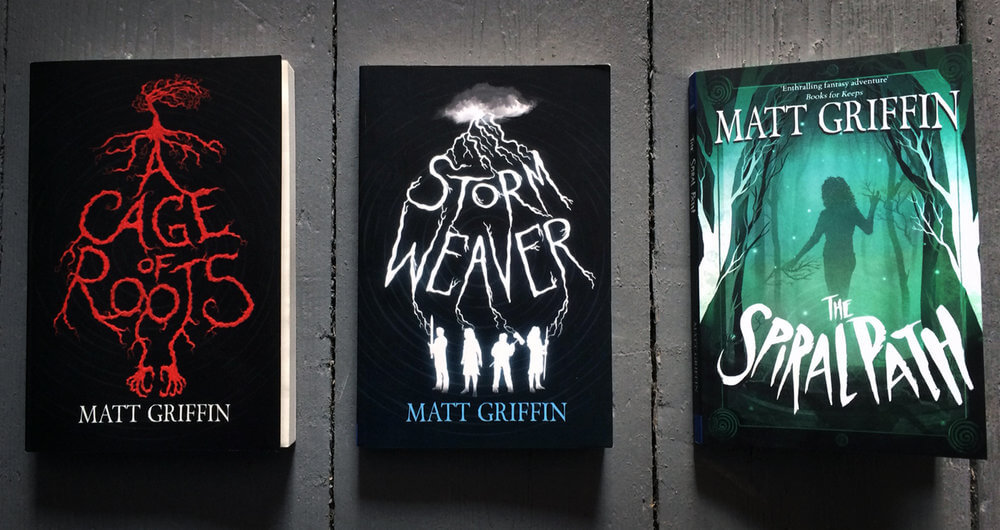
STARBURST talks with Irish writer/artist Matt Griffin to discover how he put together The Ayla Trilogy, as well as what it was like to design incredible artwork for huge sci-fi worlds such as Star Wars, Back to the Future and Dune!

STARBURST: How and when did you get into both illustration and writing?

Matt Griffin: I think like most people in my line of work, I drew obsessively from the moment I could hold a crayon. I was also always very much into stories – I read voraciously, I watched and re-watched films from a very young age – Ghostbusters 26 times in a row was my record! It tended to be the fantastical side of things, naturally for a kid – but I maintained that love of non-reality all my life, and still do. So my imagination was permanently off in other worlds.

I think I had a kind of natural thing for writing – not being the best writer, but I have always managed to be very descriptive in the way I do it, and I ‘got’ the rhythm of words. I guess I mean: I know how to put words in an order that sounds nice and describes well! And so I was always creating in that way – drawing characters, writing little stories. However, while writing a book was on a lengthy bucket list, I never thought it was something that would actually happen. That it did was a combination of luck, right-place-right-time, and grasping an opportunity when it presented itself.

It helped that my parents actively encouraged my creativity. My Dad is also a movie nut, my whole family like to read. There is a lot of creative blood in our veins! Music, art, acting – my brother Luke is an actor, film and books are all family pursuits. So illustration and writing are both something I’ve done my whole life.

The path to commercial art came much later – I was 29 when I took the plunge to become a freelance illustrator back in 2008. But I think it was inevitable long before that.

How did you get the idea for The Ayla Trilogy?

Well, writing a book, as I said, was way down on a long bucket list; not way down because I didn’t really want it as much as other stuff – more that I thought I had more chance of winning the lottery! But I have always kept notebooks full of ideas for books and films. That I got the chance was pure serendipity.

I was working for the Irish publisher O’Brien Press as a colourist on a graphic novel. The Art Director, Emma Byrne, asked me out of the blue if I had any stories of my own I’d like to pitch. I still don’t know how she knew I might be a writer. She explained that they would be interested to see if I had anything Irish-themed – being an Irish publisher – and she knew I liked Irish mythology, and also that I had a dark imagination! Maybe something for slightly older kids. So – did I have anything in those notebooks that ticked these boxes? I said I had the very thing.

That was a small fib. What I had was a scribbled sketch of an evil king made of tree roots, and a name: ‘The Red Root King’. But I went for a walk in the woods a day or two later and came up with the bones of a story. I wanted to start with my protagonist in mortal danger from the first sentence, and work back from that. And I wanted to fuse the modern world with the magic of ancient Ireland; to take present-day kids, and see what happened to their relationships and character when faced with the made-up fact that ancient Irish magic is actually very real and very dangerous.

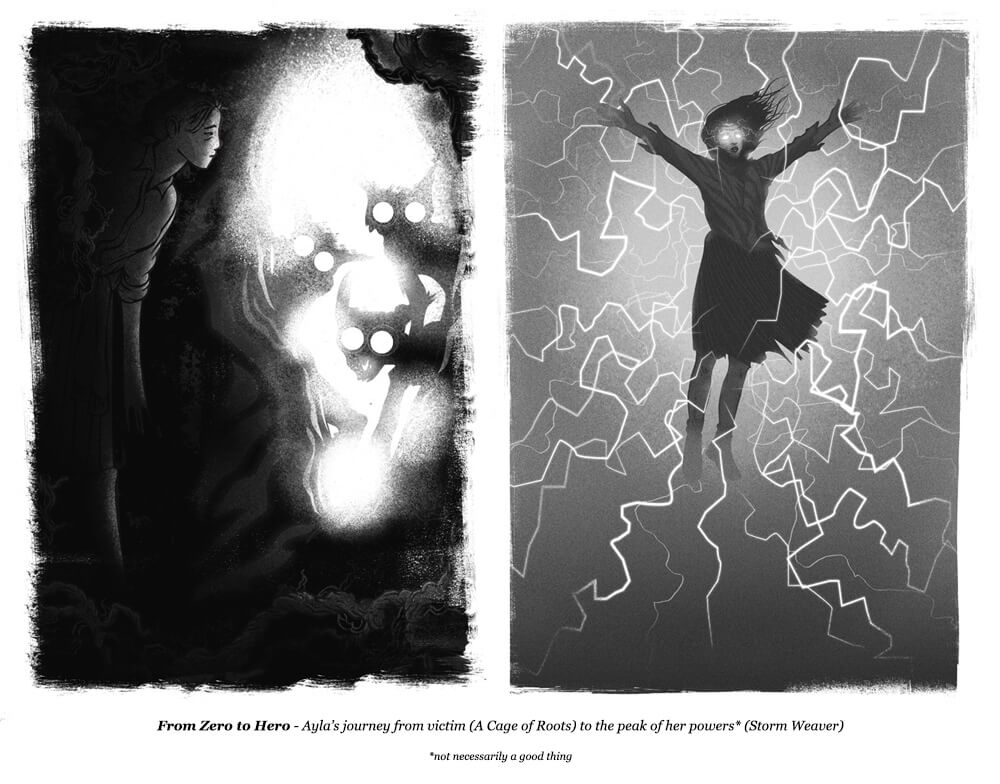
I pitched the idea, they liked it and asked me to write two chapters (being completely unproven as a writer). Based on the feedback from those, they then asked me to write four more chapters. Once I had six done, they agreed to publish it and I set about writing the rest – it’s called A Cage of Roots. I ended it on a cliff-hanger, and so pitched a second, Storm Weaver, which was published a year later. I ended that one on a cliff-hanger too [laughs] so the following year the third, The Spiral Path, came out and the trilogy was complete.

It’s currently doing the rounds on the pitch circuit for a TV adaptation – written by the amazing Will Collins, Emmy-nominated writer of The Song of the Sea and the new film Wolfwalkers so there’s another reason: if it does get made, you can be one of those people who knows more than everyone else because you read the books.

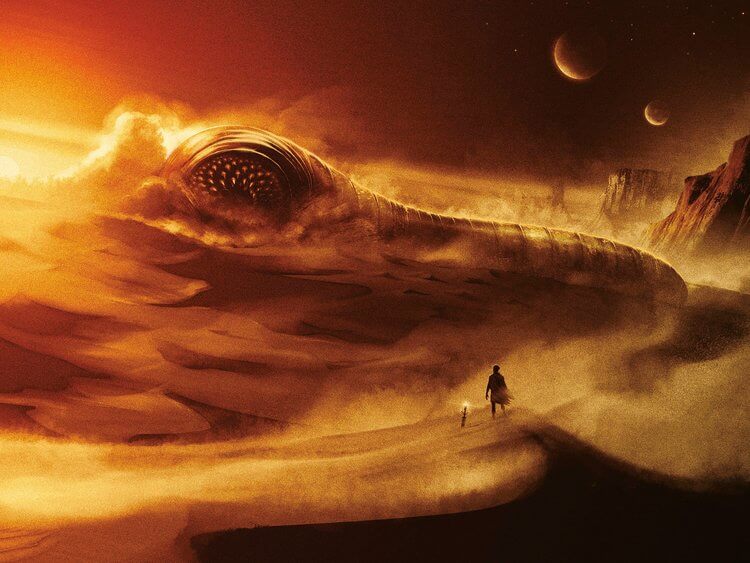
How did you get involved with the deluxe edition of Dune, and what were some of your highlights from working on this classic sci-fi book?

That was a dream come true. A couple of years ago I was experimenting with textures – I make a lot with paper, ink etc. that I use in my art. One looked to me like a kind of desert storm, so I decided to make an image of Paul, which I then posted online. I didn’t expect the reaction it got – it was shared a lot. One of the people who saw it was Adam Auerbach, a Penguin Art Director who I had worked with before. He mailed me to say they were producing a new edition under their Ace Books label and asked if they could license that piece for the cover. I don’t normally leap up and punch the air, but I did that day.

But – my dream was to illustrate the book. So I had the wherewithal to ask if I could, and while it was never intended as a fully illustrated edition, he did say that I could illustrate the endpapers and the inside of the dust jacket. I got to work and a dream was fulfilled. The highlight has undoubtedly been the fan reaction.

You also got to work on Star Wars: Galaxy’s Edge – A Crash of Fate; what was it like to work in such an iconic world?

Yes, another bucket list item! The setting for Galaxy’s Edge stories is a new one – Black Spire Outpost on Batuu – it was amazing to see how they created this rich new sandbox with deep story lines through graphic novels and novels and it was a real joy to play a tiny, minuscule part in that.

They provided me with a bunch of Black Spire concept art, and the plot of Zoraida Córdova’s book and from that I created some roughs – that tends to be how it works. They chose the one they thought most dramatic, and I got to work. Drawing a landscape from that kind of angle was quite new to me, so it was challenging but a lot of fun. And I got to draw a TIE-fighter, even though it’s tiny. I’d love to do more.

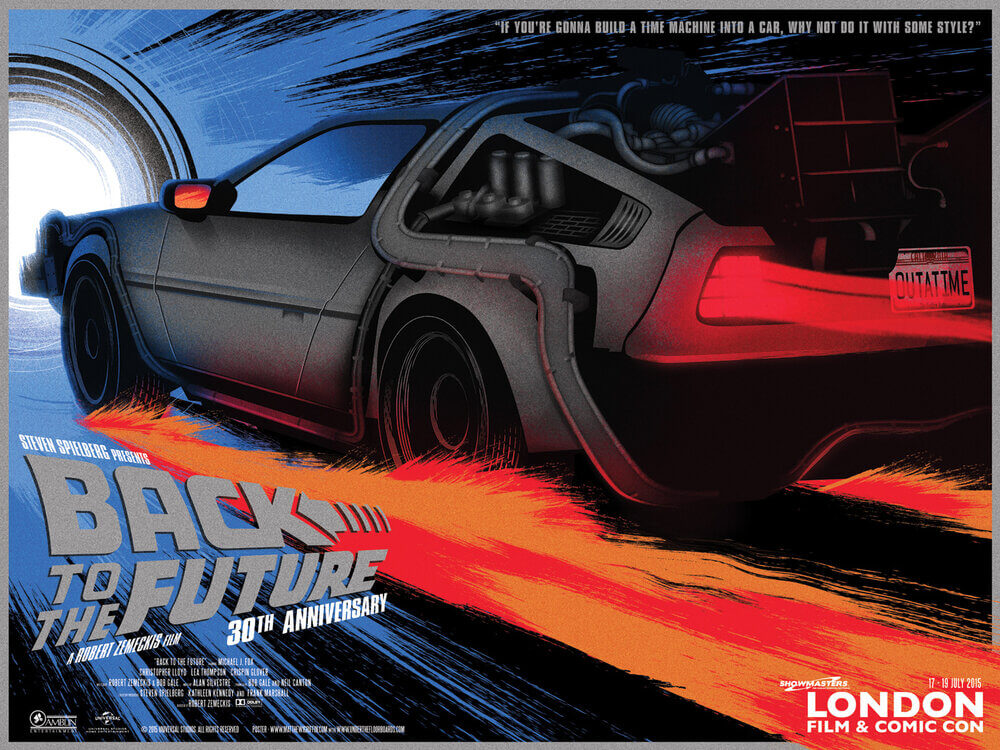
You worked with London Film and Comic Con to celebrate the 30th anniversary of Back to the Future with an exclusive print. How did this collaboration come about, and how did you approach doing artwork for one of the most famous sci-fi cars in history?

Yeah that was a great one. It started with Michael Wood and his licensing company Under the Floorboards. A good few years ago, he asked me if I’d like to make a Back to the Future poster as a limited edition screen print – and of course, I said yes. So I made a rough for him to send in to Universal for approval as that’s how these things work. But they liked it so much they decided they wanted to make it an official 30th Anniversary poster. We were on conference calls with them where they were saying things like ‘Steven loves it!’ and they were talking about Spielberg!

In the end, it was litho printed in a high edition size and given away at the London Film and Comic Con in return for a donation to The Michael J Fox Foundation. I was flown over and got to enjoy my first con experience. We were supposed to meet the cast too, but by Sunday afternoon it still hadn’t happened and I had to leave to catch my flight home. When I landed I turned on my phone to numerous voicemails – I had missed the meeting by about 15 minutes! But I did get a letter from Bob Gale saying how much he liked it, so that more than made up for it. It also caused a little stir here at home in that I had a government minister come to my studio to have his picture taken with me and the poster for the local paper! Crazy and a bit funny.

The license didn’t cover actor likenesses – but that suited me as I knew I wanted to make the DeLorean the centrepiece. And I thought a good moment to depict would be the car just before it disappears – it’s at 88mph and the ‘wormhole’ is just opening up in front of it. I thought it would make for something dynamic and exciting. I’m still fond of the poster, which is rare for old work. It’s incredibly sad news that Ron Cobb, the designer of the BTTF DeLorean has just died. He was a true legend.

You’ve worked on many other incredible projects. Which one do you think deserves a shout out right now, and why?

Yes I’ve definitely been very lucky! Another dream job recently ticked was working with The Folio Society. I worked on Arthur C Clarke’s incredible Rendezvous With Rama. Having a book with them has been a huge goal of mine so to do a sci-fi classic like that was more than I could hope for. They make such beautiful objects, and take such care over the production. It’s a real thrill to have done it.

At the moment things are evolving in what to me is a very exciting way. I’m starting to take baby steps into film and TV development – somewhere I really want to be. And the other new avenue I’m very excited about is in licensed prints. I had been in and around the fringes of that collectible scene with things like the Back to the Future poster, but in recent times have been helped to progress further by artist friends like Matt Ferguson and galleries like his own Vice Press and Bottleneck in New York.

So far, I’ve had three releases with Bottleneck that have thankfully gone down well. I have three more lined up including recently announced prints for Lynch’s Dune – I put a lot into that one as you can imagine – and Alien, and working on the next slate too. It’s very exciting. The other thing I am getting into is Crypto Art – blockchain-verified limited edition digital art. I’m very lucky to have a company called KnownOrigin partnering me in this endeavour, and we’re just plotting out the launch now – coming soon!

What else can we expect to see from you in 2020/2021?

I’ll be working on some more show development, including developing and pitching my own concepts. I’m hoping to break a little more into concept art and production design, although I’ll have to up my game! I work with a great guy called Ben Bow and his online store Uniquely Geekly to sell my artist copies of prints. We’ve just been discussing the possibility of selling little original drawings so expect more by way of art sales on that front.

I’ve started a new book that I am very excited about. It’s a big fantasy with a map and everything. The current title is High Wail Rook and it’s about a runaway on a fantasy continent, following every year of his life from 14 to 26 or so. I’m pretty pleased with it so far. Apart from that – more art! More of everything. I’m very excited.

You can find out more about Matt Griffin by heading to https://www.mattgriffin.online/ and following on the socials: https://www.facebook.com/mattgriffinillustration https://twitter.com/mattgriffinart http://www.instagram.com/mattgriffinillustrator