David Wong | ZOEY PUNCHES THE FUTURE IN THE DICK

dick

Having served as the former executive editor of Cracked.com as well as writing four beloved and acclaimed novels, DAVID WONG is a writer you’re likely familiar with – and if you aren’t, it’s safe to say that you should be. His first book, JOHN DIES AT THE END, was adapted into a STARBURST-approved feature-film in 2012 and, now, his fifth book, ZOEY PUNCHES THE FUTURE IN THE DICK, comes out on October 13th. David took the time to chat with us, ahead of its release

STARBURST: What’s the “elevator pitch” for Zoey Punches the Future in the Dick?

David Wong: It’s the future and the world is somehow even dumber than our present. A young woman from a trailer park has inherited her father’s massive criminal empire and now has to work with his old inner circle, a group of ex-PSYOPS agents who use elaborately staged lies to run the city behind the scenes. This leads to a series of increasingly bizarre disasters and also Zoey’s cat smells really bad.

A lot of people will know you primarily from your time with Cracked or via the movie-adaptation of John Dies at the End. Is Zoey Punches the Future in the Dick a good entry point for someone who wants to read your books? Or is it necessary to have read the previous Zoey Ashe book, Futuristic Violence and Fancy Suits, first?

Every book I write can serve as a starting point. They’re each independent stories, even if they have the same characters. People’s time is too valuable to require homework and I never want to write one continuing saga out of fear of dying before I finish it. No book of mine should ever end on a cliffhanger.

Again, you’re a prolific writer of many fantastic, factual articles. To what extent does writing them inform your fiction? Is there any synergy between the two types of writing that you do when it comes to research and inspiration?

Only in the sense that writing hundreds of articles trained me to do research and sift through sources, which is actually a skill that takes a ton of practice. Non-writers don’t realise how much research goes into even an objectively ridiculous piece of fiction. If you’re writing, say, a novel about a vampire who works at Olive Garden, you need to know how to quickly look up which dishes have garlic in them.

What was it like having your book, John Dies at the End, adapted into a movie?

Well, the experience was a guy working in a cubicle at an insurance company finding out that a Hollywood director wanted to make a movie out of the story he’d uploaded to the internet, then three years later finding himself at Sundance, hanging out with the cast. I’d have to have an utterly deranged sense of perspective to complain about that.

And were you happy with how the finished product turned out?

I thought it was the perfect match of director and source material. If there’s ever a chance to do another one from the same crew, I’m fully on board. The movie was the second-best thing that’s ever happened in my life – I’ll let my friends and family fight over what they think was first.

John Dies at the End is the first book in your John and Dave series. Zoey Punches the Future in the Dick is the second book in your other series following the character of Zoey Ashe. Is there any chance of Zoey also getting the movie or TV treatment in the future?

It’s in development as a TV series! I haven’t heard anything in a while but that’s how it works: source material goes into a machine and maybe it eventually pops out the other end as a show or movie… or maybe it doesn’t. If they never make the show, the rights eventually just revert back to me and I get to keep their money, so win-win.

Given the futuristic setting, did you want to use Zoey Punches the Future in the Dick to make any specific comments or points about contemporary society?

It’s definitely not like a winking allegory to specific current events; there’s no reality show host who becomes president, there’s no sci-fi version of Brexit happening. It’s really just looking at all of the broad trends in society, trying to project them forward by a few decades and saying, “Wow, we are not ready for how stupid this is about to get.” Zoey’s is a universe in which virtually everyone is live-streaming their lives. You’re always on camera from a dozen different angles, from the moment you step outside. How does that affect a person’s behaviour? How does that affect society in general? At that point, the goal is to try to find the humanity in the situation by focusing on an everyday person who suddenly finds herself at the epicentre. If I’ve done my job right, it should serve as a piece of escapism that has enough reality woven through it to make it feel like it matters.

Among other things, I’d say you’ve made a real name for yourself as an author who comes up with phenomenal, if unusual, titles for your work. Zoey Punches the Future in the Dick is no exception [as should be clear by the fact that we’ve chosen not to abbreviate it once in this interview]. Do you have a mantra that dictates how you come up with these names?

I’m always just trying to come up with a title that would make you do a double-take if you saw it on the shelf or on the Barnes and Noble website. I’m not famous enough to avoid such cynical marketing tricks.

Have you ever had pushback from a publisher because the title was too strange?

The only time the publisher has rejected one was I wanted the last John and Dave book to be titled, ‘John, Don’t Forget to Insert the Title Before This Goes to the Printer’. Apparently, I’m not the first writer to think of that joke – of making the title look like an error – and booksellers don’t find it very amusing. I guess that’s not unreasonable on their end.

What’s next? More Zoey? More John and Dave? Something else entirely?

I’m writing the fourth John and Dave book right now. That’s the last one I’m under contract for. After that, who knows? I definitely want to come back to Zoey, but it – at least partially – depends on whether or not anyone buys this one. Even in a perfect world in which money didn’t exist, I’d still be thinking in terms of what the audience wants.

ZOEY PUNCHES THE FUTURE IN THE DICK is available for pre-order below, and will be released October 13th. The fourth John & Dave book is scheduled for publication in Autumn 2022. For more information on David Wong’s work, visit his official website www.johndiesattheend.com

Jamie Bernadette | I SPIT ON YOUR GRAVE: DÉJÀ VU

jamie spit

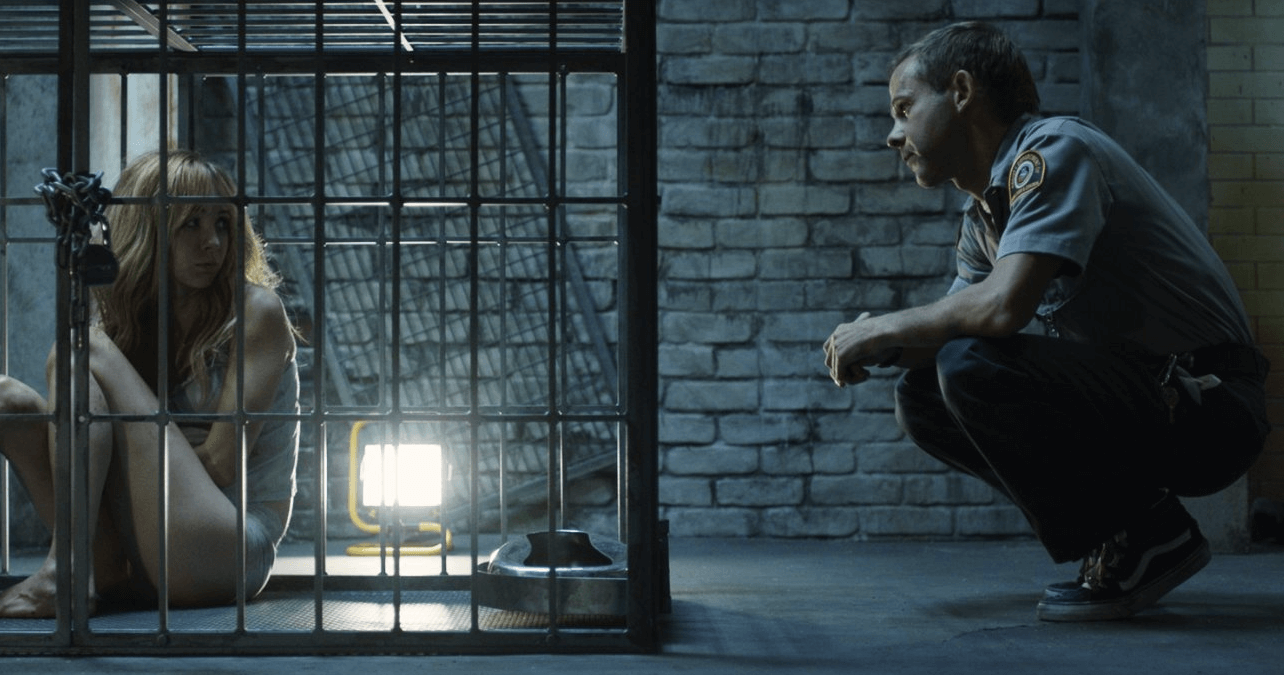
Ahead of the release of the I Spit on Your Grave 6-disc box set, which includes the original film, the reboot trilogy, the official sequel, Déjà Vu, as well as a new documentary, Growing Up With I Spit on Your Grave, we caught up with Jamie Bernadette, who stars the sequel.

STARBURST: Were you aware of the first film before you got the part?

Jamie Bernadette: Yes, I was. I had watched it maybe a year before I saw the casting notice for the sequel, so I was definitely aware of it. And when I saw the sequel, I was like, ‘Oh my gosh, I would love to do that’. I couldn’t believe they were making a sequel, I thought the 1978 original was phenomenal, very real and raw, it just feels like it’s really happening. It’s not glamorised at all. If people didn’t know better, I would think it was like a reality video. That’s how real it feels.

Were you aware of the controversy about the film?

Yes, I know the video was banned, I don’t think just in the UK, I think quite a few places if not everywhere at first. I think we’ve come a long way with women nowadays compared to the ‘70s, for sure. So I think seeing a powerful woman on screen wasn’t taken well. So it seems like that’s the part that some people were offended by, which is interesting. And nowadays that’s the part people love.

So what was your first reaction when you got the part in the sequel?

Oh, gosh, I cried. I’ll never forget it. I was going back and forth with Terry [Zarchi], the producer, for a few months – it was quite a long audition process. I had sent in a tape and then I had a first audition in person with the director Meir and Terry and then I had the five-hour third audition where I read with a bunch of other actors, and I wasn’t told I got the part until a couple months after that. It was shock, relief, and joy and a lot of emotion for sure – but I was thrilled.

What was the life like on the set? We spoke to Terry Zarchi [Meir’s son] and he said it was quite a long shoot.

Yeah, I think it was about a 30 to 31-day shoot, but it was fantastic. I had a great, great time. Everybody was awesome. I think we became like a family and the week of the rape was trying on people. Some even more so than myself. I know I had a couple people come in to me on set saying they had been raped or they know someone who had been raped and crying. So that was hard for some of the people on set, more so than myself. That week was tough emotionally for people. I think a lot of us know someone who’s been raped, unfortunately. But besides that, it was a great, great shoot.

What was what was Meir like as a director?

He was great, you know he’s a lot of fun and very encouraging. He knows what he wants. He definitely had a vision for this film for I think a long, long time. He definitely knew what he wanted, but he’s the kindest, sweetest soul. He’s now like my family, I’ve been over there for thanksgiving and we’ve become very close. Terry and I can get on the phone and talk for an hour easily, so yeah, they’re wonderful, wonderful people and they are very respectful and kind.

What was it like working with Camille? Did she give you any tips?

Yeah she did. She is great; you know when you just connect with someone right away? That’s what it was like for us the first day on set together. It was just like we had known each other forever. I consider her one of my best friends. We just talked on the phone the other day for what might have been like an hour and a half. She really is like a mom to me. But yeah, she talked about her experiences on the first film and she had a rough time as well during the rapes and the thing is when you do physical scenes with men, not just on Déjà Vu, but I’ve noticed in other films is that men are so strong are so physically strong. And sometimes they don’t realise like the strength that they’re imposing on you and they don’t even mean to hurt you or so she went through some of that like she was accidentally kicked and that stuff happens that’s part of it. That’s acting for you. You have to kind of expect that you might get hurt when you’re doing very physical scenes like that. I’ve been hurt quite a bit not just in this film.

The sequel twists things a little because there’s a female antagonist as well as the male antagonists; what was that like for you?

Oh, Maria and I get along great. We had worked together before but not in this capacity. We really got to know each other on this set. I liked bringing the female antagonist in, it was something different to the original and the 2010 the remake and the other two films that followed. I think Meir’s like that, he very much thinks outside of the box and does what he wants, and doesn’t worry about what people think. And I think that’s very important as an artist, just like the length of the film, it was like a lot of people was like, ‘This is too long’. But you know, he wanted the cut that he wanted, so it’s essentially a director’s cut. And he did what he wanted just like the first film.

What was your favourite kill in the film?

This is probably a spoiler, but when I come out of the grave and I attack the old lady with the shovel – that was just the best!

You get to do a variation of one of the kills in the first film, with the bottle. That must have been very satisfying…

Oh yeah, the bottle. Jonathan [Pearcy] was great, he had great reactions. That was a very exciting day. They didn’t show all of it in the film, but the running around and his screaming was fantastic.

There is a religious slant to this film, with the family trying to use an ‘eye for an eye’ to justify their actions. But there’s a message in the film that you shouldn’t bother because it’s never going to end.

Yeah, absolutely. I think it’s interesting to have that theme in the film, when people use their religion to justify their behaviour. I think Meir in his writing is really making a statement there. And I think there can be some truth to that, throughout our history and nowadays people like to use a religion to justify a horrendous act like that. I think religion is a beautiful thing, and faith in God, and I’m all about all religions. I think it enriches people’s lives and brings a society together in a way but it can be used in a very negative and twisted way. I don’t I don’t think violence is ever the answer.

The film’s getting its first release in the UK in this part of the box set, with all the films included. It’s interesting that Déjà Vu has passed through the BBFC uncut while the first film still missing a little bit of the footage. It’s like they still feel afraid of that first film.

Yeah right. I think with Déjà Vu, I had expected there to be more raping and stuff because of the first. I thought that Meir went easy on me to be honest! You know it’s bad, rape is always awful, but it wasn’t as horrible as the first film.

What’s next for you horror wise?

Well, I’m in the middle of a 1800s horror thriller Western called Homestead, we’ve shot part of it. We were shooting it in Northern California in March and then we were shut down from the Coronavirus. So we were all flown home and we’re starting that back up. It looks like October but with the virus, it’s like we never know, so I can’t wait to finish that. It’s a phenomenal script. The filmmakers are fantastic. I have some other films hopefully releasing soon, I have a post-apocalyptic horror film called State of Desolation. I’m the lead in that and I produced it. And then I have some others, Ash and Bone and Nicole, Her Ex, and the Killer – another horror.

The I Spit on Your Grave 6-disc box set featuring the UK debut of I Spit on Your Grave: Déjà Vu is released on Blu-ray and DVD on October 5th.


Matt Griffin | THE AYLA TRILOGY

griffin

STARBURST talks with Irish writer/artist Matt Griffin to discover how he put together The Ayla Trilogy, as well as what it was like to design incredible artwork for huge sci-fi worlds such as Star Wars, Back to the Future and Dune!

STARBURST: How and when did you get into both illustration and writing?

Matt Griffin: I think like most people in my line of work, I drew obsessively from the moment I could hold a crayon. I was also always very much into stories – I read voraciously, I watched and re-watched films from a very young age – Ghostbusters 26 times in a row was my record! It tended to be the fantastical side of things, naturally for a kid – but I maintained that love of non-reality all my life, and still do. So my imagination was permanently off in other worlds.

I think I had a kind of natural thing for writing – not being the best writer, but I have always managed to be very descriptive in the way I do it, and I ‘got’ the rhythm of words. I guess I mean: I know how to put words in an order that sounds nice and describes well! And so I was always creating in that way – drawing characters, writing little stories. However, while writing a book was on a lengthy bucket list, I never thought it was something that would actually happen. That it did was a combination of luck, right-place-right-time, and grasping an opportunity when it presented itself.

It helped that my parents actively encouraged my creativity. My Dad is also a movie nut, my whole family like to read. There is a lot of creative blood in our veins! Music, art, acting – my brother Luke is an actor, film and books are all family pursuits. So illustration and writing are both something I’ve done my whole life.

The path to commercial art came much later – I was 29 when I took the plunge to become a freelance illustrator back in 2008. But I think it was inevitable long before that.

How did you get the idea for The Ayla Trilogy?

Well, writing a book, as I said, was way down on a long bucket list; not way down because I didn’t really want it as much as other stuff – more that I thought I had more chance of winning the lottery! But I have always kept notebooks full of ideas for books and films. That I got the chance was pure serendipity.

I was working for the Irish publisher O’Brien Press as a colourist on a graphic novel. The Art Director, Emma Byrne, asked me out of the blue if I had any stories of my own I’d like to pitch. I still don’t know how she knew I might be a writer. She explained that they would be interested to see if I had anything Irish-themed – being an Irish publisher – and she knew I liked Irish mythology, and also that I had a dark imagination! Maybe something for slightly older kids. So – did I have anything in those notebooks that ticked these boxes? I said I had the very thing.

That was a small fib. What I had was a scribbled sketch of an evil king made of tree roots, and a name: ‘The Red Root King’. But I went for a walk in the woods a day or two later and came up with the bones of a story. I wanted to start with my protagonist in mortal danger from the first sentence, and work back from that. And I wanted to fuse the modern world with the magic of ancient Ireland; to take present-day kids, and see what happened to their relationships and character when faced with the made-up fact that ancient Irish magic is actually very real and very dangerous.

I pitched the idea, they liked it and asked me to write two chapters (being completely unproven as a writer). Based on the feedback from those, they then asked me to write four more chapters. Once I had six done, they agreed to publish it and I set about writing the rest – it’s called A Cage of Roots. I ended it on a cliff-hanger, and so pitched a second, Storm Weaver, which was published a year later. I ended that one on a cliff-hanger too [laughs] so the following year the third, The Spiral Path, came out and the trilogy was complete.

It’s currently doing the rounds on the pitch circuit for a TV adaptation – written by the amazing Will Collins, Emmy-nominated writer of The Song of the Sea and the new film Wolfwalkers so there’s another reason: if it does get made, you can be one of those people who knows more than everyone else because you read the books.

How did you get involved with the deluxe edition of Dune, and what were some of your highlights from working on this classic sci-fi book?

That was a dream come true. A couple of years ago I was experimenting with textures – I make a lot with paper, ink etc. that I use in my art. One looked to me like a kind of desert storm, so I decided to make an image of Paul, which I then posted online. I didn’t expect the reaction it got – it was shared a lot. One of the people who saw it was Adam Auerbach, a Penguin Art Director who I had worked with before. He mailed me to say they were producing a new edition under their Ace Books label and asked if they could license that piece for the cover. I don’t normally leap up and punch the air, but I did that day.

But – my dream was to illustrate the book. So I had the wherewithal to ask if I could, and while it was never intended as a fully illustrated edition, he did say that I could illustrate the endpapers and the inside of the dust jacket. I got to work and a dream was fulfilled. The highlight has undoubtedly been the fan reaction.

You also got to work on Star Wars: Galaxy’s Edge – A Crash of Fate; what was it like to work in such an iconic world?

Yes, another bucket list item! The setting for Galaxy’s Edge stories is a new one – Black Spire Outpost on Batuu – it was amazing to see how they created this rich new sandbox with deep story lines through graphic novels and novels and it was a real joy to play a tiny, minuscule part in that.

They provided me with a bunch of Black Spire concept art, and the plot of Zoraida Córdova’s book and from that I created some roughs – that tends to be how it works. They chose the one they thought most dramatic, and I got to work. Drawing a landscape from that kind of angle was quite new to me, so it was challenging but a lot of fun. And I got to draw a TIE-fighter, even though it’s tiny. I’d love to do more.

You worked with London Film and Comic Con to celebrate the 30th anniversary of Back to the Future with an exclusive print. How did this collaboration come about, and how did you approach doing artwork for one of the most famous sci-fi cars in history?

Yeah that was a great one. It started with Michael Wood and his licensing company Under the Floorboards. A good few years ago, he asked me if I’d like to make a Back to the Future poster as a limited edition screen print – and of course, I said yes. So I made a rough for him to send in to Universal for approval as that’s how these things work. But they liked it so much they decided they wanted to make it an official 30th Anniversary poster. We were on conference calls with them where they were saying things like ‘Steven loves it!’ and they were talking about Spielberg!

In the end, it was litho printed in a high edition size and given away at the London Film and Comic Con in return for a donation to The Michael J Fox Foundation. I was flown over and got to enjoy my first con experience. We were supposed to meet the cast too, but by Sunday afternoon it still hadn’t happened and I had to leave to catch my flight home. When I landed I turned on my phone to numerous voicemails – I had missed the meeting by about 15 minutes! But I did get a letter from Bob Gale saying how much he liked it, so that more than made up for it. It also caused a little stir here at home in that I had a government minister come to my studio to have his picture taken with me and the poster for the local paper! Crazy and a bit funny.

The license didn’t cover actor likenesses – but that suited me as I knew I wanted to make the DeLorean the centrepiece. And I thought a good moment to depict would be the car just before it disappears – it’s at 88mph and the ‘wormhole’ is just opening up in front of it. I thought it would make for something dynamic and exciting. I’m still fond of the poster, which is rare for old work. It’s incredibly sad news that Ron Cobb, the designer of the BTTF DeLorean has just died. He was a true legend.

You’ve worked on many other incredible projects. Which one do you think deserves a shout out right now, and why?

Yes I’ve definitely been very lucky! Another dream job recently ticked was working with The Folio Society. I worked on Arthur C Clarke’s incredible Rendezvous With Rama. Having a book with them has been a huge goal of mine so to do a sci-fi classic like that was more than I could hope for. They make such beautiful objects, and take such care over the production. It’s a real thrill to have done it.

At the moment things are evolving in what to me is a very exciting way. I’m starting to take baby steps into film and TV development – somewhere I really want to be. And the other new avenue I’m very excited about is in licensed prints. I had been in and around the fringes of that collectible scene with things like the Back to the Future poster, but in recent times have been helped to progress further by artist friends like Matt Ferguson and galleries like his own Vice Press and Bottleneck in New York.

So far, I’ve had three releases with Bottleneck that have thankfully gone down well. I have three more lined up including recently announced prints for Lynch’s Dune – I put a lot into that one as you can imagine – and Alien, and working on the next slate too. It’s very exciting. The other thing I am getting into is Crypto Art – blockchain-verified limited edition digital art. I’m very lucky to have a company called KnownOrigin partnering me in this endeavour, and we’re just plotting out the launch now – coming soon!

What else can we expect to see from you in 2020/2021?

I’ll be working on some more show development, including developing and pitching my own concepts. I’m hoping to break a little more into concept art and production design, although I’ll have to up my game! I work with a great guy called Ben Bow and his online store Uniquely Geekly to sell my artist copies of prints. We’ve just been discussing the possibility of selling little original drawings so expect more by way of art sales on that front.

I’ve started a new book that I am very excited about. It’s a big fantasy with a map and everything. The current title is High Wail Rook and it’s about a runaway on a fantasy continent, following every year of his life from 14 to 26 or so. I’m pretty pleased with it so far. Apart from that – more art! More of everything. I’m very excited.

You can find out more about Matt Griffin by heading to https://www.mattgriffin.online/ and following on the socials: https://www.facebook.com/mattgriffinillustration https://twitter.com/mattgriffinart http://www.instagram.com/mattgriffinillustrator

Claes Bang | THE BAY OF SILENCE

claes bang

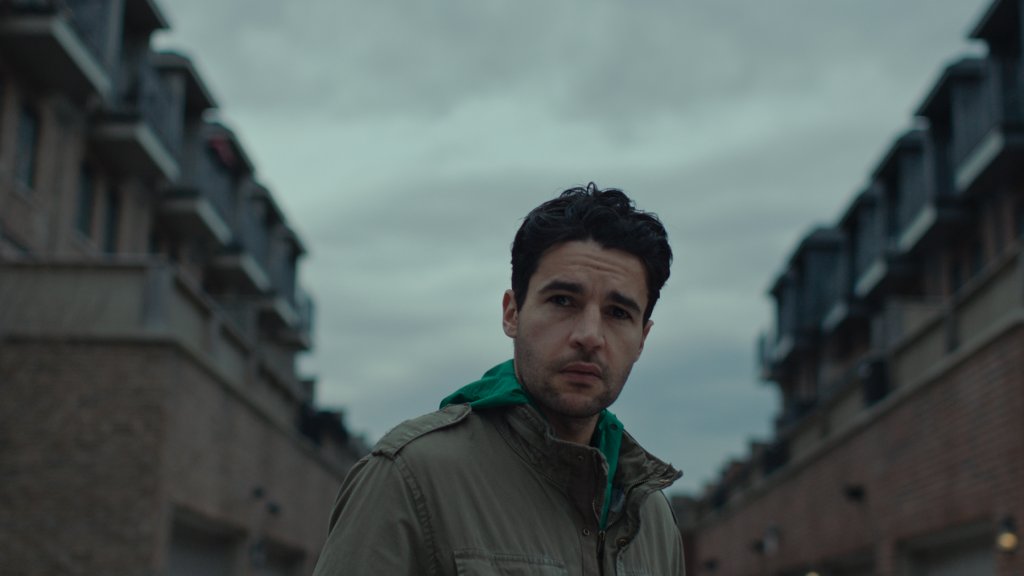
Claes Bang is a Danish actor and musician best know for playing the lead role of Christian in the Palme d’Or winning The Square (2017) and as the titular Count in the recent BBC/Netflix series Dracula. Claes took some time to talk with STARBURST about his latest film, The Bay of Silence, being a piano, playing a piano and, of course, being Count Dracula.

STARBURST: Your new film The Bay of Silence has a curious atmosphere, would you agree?

Claes Bang: Well, I hope it has an unsettling atmosphere where you’re not really sure what’s going on. That’s what I had when I first read it. And it’s important for us to establish it early on. The guy that I’m playing has a feeling that nothing is what it seems to be. I hope we’ve succeeded as that’s what drew me to it. When I read it, I thought ‘What the fuck is going on?’ My wife is totally bonkers, and she’s left and taken the kids. That is why I said yes to it.

Your character comes across rather innocent?

I tried to go for a ‘good-guy’, someone to count on. And then he has to deal with all these things and his moral compass is challenged. He ends up making some odd decisions, you know, like burying your child on a beach and so on. So, I wanted to try and embody that, but also thinking what ‘would you actually do in the situations he finds himself in?’. I like it when characters make strange and bold choices because if they always do what’s expected it can be quite boring. It’s interesting to change the dynamic.

That’s right. You never know where it’s going and even at the end, without spoilers, you’re still not sure it’s over.

Exactly. I like that. At the end it could be all be dreamt up or has he really gone through it.

You’re an executive producer on the film also. When did you get involved initially?

Caroline Goodall who wrote the script and produced it approached me in 2017, I think, but the thing about being an executive producer was Olga [Kurylenko] and I getting involved in developing it. I was intrigued from the start, just as puzzled and mystified as my character.

Do you see yourself behind the camera more?

Actually, no. I don’t see myself in a producing or directing role. I’ve never had that ambition. I find that I’m very happy and lucky to be doing what I’m doing in front of the camera.

We’ve heard you describe yourself as a piano.

Yeah, that’s my ideal. I want to be the best piano or whatever instrument they need so they can do anything they want with me. I don’t see myself as an interpreter of anything, rather something the music flows through. And the director decides how it goes. It might sound like a strange metaphor, but it makes sense to me. That’s my take on it.

Which is interesting because a lot of actors are keen to stamp their authority on a role and give their take, so with such an iconic role as Dracula, you didn’t have anything specific you wanted to add or otherwise?

With Dracula. I think the importance was in the story being told and that there was something new there. Actually, when my agent said they wanted to see me for the role I thought he was kidding. Does the world need another Dracula? There are millions out there. Then he said it was Mark [Gatiss] and Steven [Moffat] who had written it, so he got my attention. It’s great because they’ve added new things but still maintained the original’s feel. But I don’t see it as my Dracula at all. It’s our Dracula. It’s their writing that I’m embodying. I just try and fit in with what’s written. In casting me they found who they thought was right so it’s my job then to make sure their work flows through me. The one thing I did discuss with them was how funny it was, and if it was actually too funny. I think they found a balance though.

And could there be more? Dracula is fundamentally about resurrection.

I would love to do more, but that decision lies with the executives. There are so many people involved but I’ll just be waiting and hopefully one day they’ll phone me.

We wanted to ask you about your music because with everything you’ve said about being an instrument for the writers and director, your music seems entirely personal and wholly you.

Absolutely. It’s something different. When I’m an actor, I’m a performing artist but with the music I’m the one who it all comes from. That’s why I do it. After a day of being told where to be and what to do it’s lovely to come home, grab your guitar or sit at the piano, and fucking decide everything yourself. No-one tells me what chords to play. In that sense it’s an antidote. And the great thing is that with Dracula coming out around the world more people have found my music, which is very cool.

There are influences we can hear in there, and your name This Is Not America comes from a Bowie track, but are they particular artists you draw from?

I would say it’s more an era. I think you can hear that I’ve been listening far too much to New Order, Joy Division, Pet Shop Boys, Depeche Mode… all that. When you’re in your teens there is music you connect to and that was synth-pop and I listen to so much British music. Bowie, Roxy Music and so on, all from the ‘80s. That’s my DNA. I sit down sometimes and desperately try and sound like 2020 but within 5 minutes I sound like 1981. And anything I listen to today such as The XX or Tame Impala all have similar influences. I know I sound like my parents but everything now all sounds the same!

The Bay of Silence is out now


Tero Kaukomaa | MAD HEIDI

tero heidi

Following the success and popularity of the Iron Sky movies, you’d have wondered what could come next. Producer Tero Kaukomaa knows – Swissploitation! We caught up with him to find out about Mad Heidi, the film will show us that the hills are alive with the sound of screaming!

STARBURST: What was it about Johannes Hartmann’s idea for Mad Heidi that excited you?
Tero Kaukomaa: First and foremost, it was the concept of a real film first, a Swissploitation film, using famous Swiss clichés to spice the story. I have lived in Zurich for over 20 years and I love it, and I saw the potential for a great self-irony. I also fell in love in Johannes’ visual style, which is sparked by his clear vision. I think these two elements made me excited and I wanted to start making
it all real.

You worked on the Iron Sky films, how much will they influence the film?

I think the biggest influence is the attitude we have in making the film, meaning we wanted to involve our fans, for them to be part of it. We hope this collaboration will help to spread the word more widely all over about what is possible.

Producer Tero Kaukomaa

Other than Iron Sky, what sort of films influence the look and feel of the film?

Personally, I´m thinking it is like Kill Bill meets The Sound of Music, but obviously there is
more to it than that. Mad Heidi is Johannes’ vision, inspired very much by the exploitation cinema of
the 1970s, combined with the alpine setting of the Swiss Heimatfilms [Homeland films] of the 1950s and ‘60s.

Will the teaser trailer footage be in the film or is it more ‘proof of concept’ footage?

It was done as a proof of concept and is not meant for the final film. But who knows, we may find a cool way to use some of it. Time will tell.

You’ve gone a different crowdfunding route by cutting out the likes of Kickstarter,
why is that?

Actually, with Iron Sky, we started crowdfunding before Kickstarter even existed! We did
use IndieGoGo several times, and also some equity platforms. But maybe even more
importantly, we engaged the fans in so many ways like never before. Only recently, Jurassic Park actually copied our idea in their publicity campaign “Get killed by a Dinosaur”.

For Mad Heidi, we want to centre all fan engagement in one place – madheidi.com – from the
early development, financing, production, all the way to the release and beyond. We think having the platform is very important, and it is where the film will available globally and simultaneously for the fans. From day one. And I hope its success will result in cinematic Mad Heidi Fan premiere events around the world.

What is the budget that you’re looking to raise?

We need minimum of CHF 1 million to start the production, and then we will continue fundraising
with a total goal of CHF 2 to 2.6 million. The amount will vary depending on some production decisions to be made once we are underway. Also, I want to add that we treat the budget a bit different than a normal European film does, where you don’t include your marketing efforts in the budget because it’s going to be handled by the distributors. As we are doing distribution ourselves, we allocate around 25 % of the production budget to marketing. In practical terms, this means fan-powered activities. There are a lot of costs there, but it is all worth it if you compare it with normal advertising spending.

Do you have a timescale to finish the film?

We aim to shoot the film in summer 2021, and to be able to release Mad Heidi during 2022.
We will lockdown the exact date once we have started shooting, but it is most likely to be more in the autumn 2022.

There will be a launch of the unique investment opportunity for Mad Heidi at the Zurich Film Festival on September 29th. You can register your interest by heading to https://invest.madheidi.com/ – investors will get a share of the net revenue of the film and be part of the world’s first Swissploitation movie!

Find out more about how you can help Mad Heidi get made by heading to the website.

Images: click for full size.

LOST – The 20 Best Episodes

It’s been sixteen years since LOST first premiered, and over ten years since the show left our screens. One of the most influential, iconic television shows of all time, LOST has been often imitated, but never beaten. What better time to return to the island than now? Join us as we take a look at some of the show’s greatest hits, season-by-season. As a great man once said, we have to go back…

20. The End (Season 6, Episode 17)

So they were dead all along, right? Well, yes and no, but mostly no. Whatever happened, happened. Except for Season 6’s flash-sideways; revealed to be a purgatory party in which our castaways come together for one last time to mingle and say goodbye. The action on the island works too (how apt for Lost, that its big action set-piece is a fistfight in the rain). And we can’t think of a better guy to leave in charge than Hurley, the show’s heart and soul. Controversial and often misunderstood, there’s no denying that The End is flawed, but it’s an emotionally satisfying ending, and one which is entirely appropriate for the show’s themes and symbology. It may not be the ending some fans had hoped for, but it’s the one its characters deserved.

19. Ab Aeterno (Season 6, Episode 9)

While Lost wasted a lot of time on its mythology surrounding Jacob and the Smoke Monster, the one standalone episode which did stand out was the centuries-spanning Ab Aeterno. Devoted to charismatic leader of the Others Richard Alpert, it explores how Richard came by his place on the island. We also find out the origin of the Black Rock and the root of Richard’s immortality. Time well spent with one of the island’s most fascinating inhabitants.

18. The Incident: Part II (Season 5, Episode 17)

Lost’s time travel season comes to an end with a bang. Literally. When simply ‘going back’ doesn’t fix all their problems, Jack’s next big idea is to set off the nuclear bomb buried under the island. Having found a life amongst the Dharma Initiative with Juliet, Sawyer is less than thrilled with the idea. Finally, the two come to blows in a satisfying yet heartbreaking fistfight, which still ends with the island exploding and Juliet dead at the bottom of a pit. An action-packed season finale, The Incident does a great job in setting the stage for the show’s final season.

17. The Life and Death of Jeremy Bentham (Season 5, Episode 7)

John Locke was dealt a bum hand in life. Although none of our castaways have ever had it easy, Locke’s story is by far the most tragic. Screwed over repeatedly and then crippled by his conman father, Locke thought he found purpose and meaning in the island – only for that to do him dirty too, tying him in knots in a tug-of-war between Jacob, the Smoke Monster and the Others’ constant power battles. Things only got worse once he left the island; attempting suicide in a dingy motel room, Locke’s life was saved by Ben… only for the little weasel to immediately murder him anyway. The Life and Death of Jeremy Bentham does not make for easy watching, but is incredibly powerful nevertheless.

16. There’s No Place Like Home: Part III (Season 4, Episode 14)

The Season 4 finale is one of the show’s weakest, but it’s worth it for the big cliffhanger. Jack, Kate, Sayid, Hurley, and Sun (plus Claire’s baaaybay) finally get off the island; a returning Michael sacrifices himself to save his friends; the freighter explodes, with Jin still on it. What will become of the castaways, both on island and off?

15. The Shape of Things to Come (Season 4, Episode 9)

It all kicks off in Episode 9 as the intentions of those on the freighter are finally revealed. Taking Ben’s daughter Alex hostage, mercenary Martin Keamy (one of the show’s slimiest villains) demands that Ben surrender himself to Charles Whitmore’s forces. Ben refuses, resulting in one of the show’s most shocking deaths.

14. The Constant (Season 4, Episode 5)

As a rule, the Desmond episodes are some of the show’s best. On the freighter with Sayid, Desmond begins to experience his own past and future simultaneously. The twisting, turning in-and-out narrative not only predicts the show’s imminent time travel shenanigans, but also serves as a neat introduction to physicist Daniel Faraday – one of the show’s most memorable characters. Best paired with Season 5’s The Variable.

13. Through the Looking Glass (Season 3, Episode 22)

When it comes to Lost’s most iconic moments, few live up to the Season 3 finale, which delivers not one but two of the most quotable revelations in the whole show. First, the death of Charlie and “not Penny’s boat”. So, if not Desmond’s famous ex, then who? And if the demise of everyone’s favourite Driveshaft rocker (sorry Liam) wasn’t enough, we also get the iconic “We have to go back”, which reveals that the bearded Jack flashback we’ve been watching throughout the episode isn’t a flashback at all.

12. Catch-22 (Season 3, Episode 17)

Emerging from the exploded hatch with precognitive powers, Desmond desperately tries to save Charlie from the plot of a Final Destination movie. Unfortunately, his plan to keep the Rockstar out of harm’s way hits a snag when one of his premotions suggests that Charlie’s most imminent death might be integral to their being rescued from the island – by Penny, no less. Pair with this season’s Greatest Hits for maximum effect.

11. Expose (Season 3, Episode 14)

Yes, the Nikki and Paulo episode. The show’s most controversial episode takes some time off from the main story to focus on the lives – and deaths – of two characters who had only recently begun to take prominence on the island. This cheeky murder mystery is the most inessential Lost episode of all time, but also one of the most fun – ending on perhaps the show’s cruellest twist of all. It’s certainly more defensible than the episode all about Jack’s tattoos.

10. A Tale of Two Cities (Season 3, Episode 1)

Much of the show’s third season is a bit of a slog, starting with Jack, Kate and Sawyer all locked up on the Others’ other island. Regardless, Season 3’s opening episodes serve as an interesting insight as to how the Others live. It’s also the debut of Juliet, who would turn out to be one of the show’s best characters.

9. Live Together, Die Alone (Season 2, Episode 23)

Michael’s betrayal wasn’t over yet. Working with the Others, Michael talks Jack, Kate, Sawyer and Hurley into a rescue attempt on Waaaaalt, over on the far end of the island. Although the gang quickly wise up to Michael’s deception, this doesn’t prevent them from being captured anyway – in spite of the best efforts of Sayid and his sailboat. Meanwhile at the hatch, we finally find out what happens when you stop pressing the button.

8. Two for the Road (Season 2, Episode 20)

As it turns out, Anna-Lucia’s intense paranoia wasn’t so ill-founded. Captured by the Others and then blackmailed into helping free their leader, Michael returns to the camp… only to shoot dead Anna-Lucia, and Hurley’s sweetheart, Libby. Although viewers were beginning to understand that the show had no qualms about killing off core characters without warning, no-one expected them to do away with these two so soon after their introduction.

7. Lockdown (Season 2, Episode 17)

Lockdown. Locke… down, geddit? Stuck in the hatch with Ben (still calling himself Henry Gale, and fooling no-one) while the gang head out into the jungle on yet another quest, Locke is forced to turn to their weasly captive for help when the hatch starts acting up. This is a great episode for Locke, Ben and the hatch… ending with the revelation that, as suspected, Ben is not all that he claims to be. Obviously. You only have to look at the guy.

6. The Other 48 Days (Season 2, Episode 7)

Meanwhile, on the other side of the island… the back end of the plane. With Michael, Sawyer and Jin captive at the hands of the paranoid tail-end survivors, we find out how the other half lives. It hasn’t been easy.

5. Man of Science, Man of Faith (Season 2, Episode 1)

All would not be revealed in the second season’s first episode. But at least we finally found out just what – and who – is living down the hatch. Enter Desmond and his computer, opening with yet another of the series’ greatest twists.

4. Exodus: Parts I & II (Season 1, Episodes 24 & 25)

Few shows do season finales as well as Lost. These multi-part events were like mini-movies; a tradition which began with the first season’s Exodus. As Michael, Sawyer, Jin and Waaalt attempt to escape the island via raft, the rest of the gang try to open Locke’s hatch with dynamite. What follows is the most tense trek through the jungle since William Friedkin’s Sorcerer. Viewers would be left on tenterhooks with not one but two of the show’s cruelest cliffhangers. What is in the hatch? And what will become of poor Waaaaaalt?

3. Do No Harm (Season 1, Episode 20)

At this point, we had no idea what Lost’s long game was, nor how ruthless it could be. In Do No Harm, the show established its stakes. After falling from a cliff while rummaging about in a crashed aeroplane, Boone is grievously injured. While it would have been fun to see the character hobbling about the island on one leg, as was Jack’s original plan, he ultimately dies on the operating table – the island’s first serious casualty and major character death.

2. Walkabout (Season 1, Episode 4)

The first and best of the show’s many twists. Not only is it the first John Locke episode (always among the series’ best), but also blew viewers’ minds with a plot twist worthy of Shyamalan himself.

1. Pilot (Season 1, Episodes 1 & 2)

Starting at the very beginning, it’s easy to see how viewers became so quickly hooked onto the Lost formula. A plane crash on a desert island; a handsome doctor and a handful of enigmatic survivors; a dead pilot and a smoke monster. One of the most well-executed pilot episodes of all time, it plays its cards close to its chest, but slickly sets up its story and cast of characters, leaving viewers begging for more.

LOST seasons 1 – 6 are currently available to stream or buy on Prime Video.

CompTIA Network+ Certification Information You Need to Be a Winner

Nowadays, there are a lot of certification providers that you can choose from. No matter what vendor you prefer, you will certainly get some benefits. However, you still need to know that the provider you are choosing is in your best interest. Speaking of the top vendors in the world, you cannot forget about CompTIA A+ Certification Practice Test Questions – ExamCollection . It has a whole roster of certificates that you can pursue, for example, the Network+ credential that can take a worthy place on your resume. There is a lot that you need to know about this badge and here we will try to touch all the important details that you should understand.

As an IT professional, you should be very excited if you are planning to go for the CompTIA Network+ credential. During this time, you will not only learn new skills but also obtain the certification that offers great benefits. If you are still new to your career, earning this certificate will make it easier for you to find the best job. With this badge in hand, you will also be able to negotiate a Author: REECE Z .

CompTIA Network+ certification process

If you are thinking of going for the CompTIA Network+ certification, you should start with the basics. To obtain this sought-after badge, you first need to ace the N10-007 exam. This process can be difficult if you are not well prepared. This test consists of 90 questions that are a blend of multiple-choice and performance-based types. You can also meet drag and drop. The candidates will have to answer all of them within 90 minutes. Therefore, they will have to quickly attempt the questions and not waste extra time. German, English, and Japanese – the available languages for Author: FLETCHER A . The topics that you will have to cover in this test are as follows:

  • Network Operations
  • Networking Concepts
  • Network Security
  • Infrastructure
  • Author: ROBIN B

Once you explore all these objectives, it’s high time to register for your exam. Pearson VUE is here to help you with your registration process. The fee for this test is $329.

If you want to ace this certification exam with flying colors, it is important that you treat it just like any other test. This means that you have to spend as much time as possible studying all its topics. One thing that you don’t need to worry about is finding the best preparation materials. If you search a little, you will find many exam dumps that you can use during your study time. With this tool, you will get access to everything that you need to prepare for Author: SIDNEY C , including guides, training lectures, and more. Once you have studied all the objectives, you should evaluate your knowledge level with the help of practice tests.

Conclusion

Author: CHESTER D  has become one of the leading certification providers in the world and for good reason. So, if you are interested in building a career in something related to networking, you should take a closer look at the Network+ credential. Obtaining this certificate demands hard work, but in the end, everything will be in your favor.

Asy Saavedra | CHAOS CHAOS

asy

Along with her sister Chloe, musician Asy Saavedra forms the American synthpop duo, Chaos Chaos, and has been making music since her early teens. In recent years, Saavedra has become known for the inclusion of Chaos Chaos’ music in many of Justin Roiland’s projects, such as Rick and Morty. Her most recent project with Roiland is the score for his video game, Trover Saves the Universe. The game is a madcap romp through ‘a world of chaos, exploding bodies, and salty language’, but Saavedra’s score is alternately dreamy, epic, and joyously danceable. The musician has made reference to melding Ennio Morricone scores and K-pop, but the score for Trover also finds itself winding through the ethereal bops of artists like Grimes, as well.

You can get a glimpse of what this music looks and sounds like in the exclusive premiere of Hanging Out in the Sky, off the game’s soundtrack, which we are excited to share with you all, in addition to an interview with Asy Saavedra about how she came to work on the game and her creative process.


STARBURST: How did you originally come to do the music for Trover Saves the Universe? Was it because you’ve worked with Justin Roiland before – going all the way back to having Do You Feel It? on Rick and Morty?

Asy Saavedra: Yeah, it’s kind of a weird story and a weird situation that we ended up collaborating on so much stuff because it’s completely not an obvious like partnership in any way from the outside. He approached our band, Chaos Chaos, when we released our EP, Committed to the Crime, and he is a huge fan. I think it was right before Rick and Morty took off or something, but we didn’t even know who he was or anything about the show. I think one of us responded to him and were just like, “Oh, thank you so much for saying such nice stuff about the music.

He wanted to use the music in the show and then we did that and then the show like flew us out to play a premiere party and we kind of met them that way, and then just started talking more. He just asked us to do more things because he really liked our music and it worked with the show in a funny, ironic way, because our music was more emotional and deep or whatever. It worked because the show would be really funny and then have these really deep moments in it and it was kind of an awesome thing, so I think that’s sort of why it ended up working out in the show.

Then, when Justin would do some other personal projects, he started asking me to do some work. I had done like a bit of his VR game stuff in the past and then he asked me to do Trover, which was really, really awesome because that was definitely something that was out of my comfort zone – just doing that whole project. I was super excited that he asked me and I think, at that point, he’d worked with me enough to know that he wanted me to do the music and he was gonna allow me to just kind of go all-out with the creating of the sound and stuff.

He definitely had a lot of trust in the sound, which was cool, because he let me off the leash for just creating, which was awesome.


We read the piece you wrote for Talkhouse, How to Score a Video Game, and what I found really interesting is that you admitted that you’re not really that good at games.

Yeah, I’m fucking horrible. Video game music is actually really interesting because I just got into it.  I started studying it because I was like, “Oh, fuck: I need to research because I don’t know anything about game music,” and I was just realising that it’s its own thing and there’s this whole niche community that loves video game music. It’s just meditative and cool and I was like, “Wow, this is actually really cool, because I create stuff like this on my own that I just don’t use for anything, but it was natural to do it.

You bring up that that word ‘meditative’. Video game music has to be listenable even as it’s repetitive. What were the difficulties in trying to figure out how to make a piece that’s going to sound good if you’re stuck on a level for an hour?

That was kind of a hard thing to do because I guess it was easy for me to create music or – it wasn’t easy, but it was more intuitive – to create music that could kind of just go on and on in the background and like have slight changes, but then there was a point when I was creating stuff and Justin was like, “Oh, yeah – you know, all of the melodies have to be able to layer and de-layer with whatever action’s happening in the game.

It has to be this specific way of writing. so it all kind of fits into it, like a weird, Tetris way of thinking about music – and that was not how I normally think of music, so it was a bit hard at first, but it was actually fine. I just had to make sure that there were certain looping points that worked and that there could be these changes that would happen, but we’re never taking up too much space, because it has to be something that’s not going to distract the player in a bad way.

The music like has all of these different elements. There’s the single that you made the video for Hanging Out in the Sky, which is this very dreamy, vibey number but then there’s also stuff like The Man on Whom It Depends or the Battle things, which are full-on dance floor bops. Are you just sitting there, watching a game level play-through, where you get an idea and you’re just like, “This should be more dancey” or “This should sound like Swedish Blade Runner” or something like that?

I think, yeah, there were certain inspiration points I had. Everything was going to be done with synths and those kinds of instruments, for the most part, so I was listening a bit to the Blade Runner score, because it’s just super-emotional music, but it’s all synth, it sounds like it’s an orchestra or something. It’s so intense, and I felt like doing something that was just a bit over-the-top like that would be funny for Justin’s game.

I know that, with everything Justin does and the way that his characters are going to be, there’s always going to be a kind of ridiculous, really quirky element to it, so I wanted to kind of tap into that with the music and just have these really weird sounds, like these weird balloon sounds and just weird stuff. It doesn’t sound cool – it’s almost stupid-sounding, but just owning that and making it really bold was something I wanted to do. For The Man on Whom It Depends, that song was – I don’t know if it comes across at all, but I was trying to go for an Ennio Morricone vibe.

I love the fact that you name drop Ennio Morricone and Piero Piccolini, because those are both composers who made scores, which also stand on their own as listenable music. Did you also want this music to work as standalone music, not just as a score?

Definitely. I think it’s sort of impossible for me to make music that I don’t think of in that way, but I also wanted to make sure I wasn’t being too amateur about it. It was for the game, so that was the main priority but I just also wanted it to really almost be its own character or have its own persona that worked on its own, aside from the game.

You said ‘stupid but bold’, which I think can very much apply to a lot of the stuff that Justin Roiland has done but, going back to that Talkhouse interview – you put up some of the art that you consumed that helped you build the musical world for Trover. One of the things you put up there is The Moomins, which is a very great example: the music for that, as well as the show itself, is stupid but bold.

Yeah, I have a lot of respect for that kind of stuff and I think Justin definitely tapped into that. I think I’ve been tapping into that with my music, too, so it wasn’t something that felt forced. I was like, “You know, I kind of already like this type of stuff. I’m just going to try to absorb it even more and channel it into this,” and then I definitely was really inspired by a lot of visual stuff because, obviously, the game is visual. It was just more a part of the creative process, for me. I’m already a pretty visual person, but I tapped into that even more for the game. It really helped a lot

The video for Hanging Out in the Sky is fascinating in that it’s a music video for a piece from a video game, but there’s no video game footage in it. I know you wanted to show people a different kind of live performance, but were you trying to tie it into the game or make it stand apart?

I kind of knew that I couldn’t really create that game world, obviously, unless I like actually did some weird VR video thing – which actually would have been cool – but I thought it would be kind of interesting, just because I’m really a musician and composer and I was thinking that it would be interesting to show people soundtracks and that kind of stuff in a live setting.

I just felt, for this specific soundtrack, it would be cool to show it live. I just happened to be in the desert in that area and at first, I didn’t really want it to be a Joshua Tree kind of vibe. I wanted it to just feel otherworldly and weird, but I realised that there was no avoiding Joshua trees in that area. Hopefully, it has a weird vibe that’s not just a Coachella vibe or something like that.

Not at all Coachella. The crazy thing about the video is that, when it zooms out and does that wrap-around thing, it’s like very much a Little Prince thing where it’s like you’re on a very tiny planet of your own – which, I guess, is another tie-in to Rick and Morty.

I definitely liked that that vibe because I just want this to feel like its own world, so that’s good that that came across.

The score for Trover Saves the Universe is getting put out on vinyl by Mondo who are one the premier purveyors of vinyl soundtracks. Are you excited to be joining that cadre of people?

I’m definitely excited about it. I love Mondo and it’s just so cool that they do all these soundtracks and I’ve always been listening to soundtracks and to that kind of music. It’s super-inspiring to me, so it’s really humbling to be able to release something in that kind of category. I really love Mondo – everyone there is awesome and also, I’m pretty excited to do vinyl, because we haven’t done any vinyl as Chaos Chaos and I haven’t done any on my own. This is my first solo recording release thing, so I’m definitely really excited for that. I hope people buy it.

Weirdly, everything with the release sort of lined up perfectly with this horrible time that we’re in because vinyl is getting huge right now. Everyone is stuck in the virtual world and I think that’s why they’re really obsessed with old-fashioned stuff that is not virtual, you know?

The score for Trover Saves the Universe will be available on September 25th on vinyl and digitally via Mondo. You can pre-order that here.

Main image by CHARLOTTE RUTHERFORD.

Tim Sheridan | SUPERMAN: MAN OF TOMORROW

man of tomorrow

SUPERMAN: MAN OF TOMORROW is the first film set in the second incarnation of the DC Animated Movie Universe, and chronicles Clark Kent’s life in Metropolis before he became known as Superman. The major players are all present, from Lois Lane (Alexandra Daddario) and Lex Luthor (Zachary Quinto) to Lobo (Ryan Hurst) and Parasite (Brett Dalton), and led by Darren Criss as the man himself in this refreshingly optimistic return to Superman’s origins. STARBURST spoke with screenwriter TIM SHERIDAN, best known for his work on the upcoming Masters of the Universe: Revelation and Reign of the Supermen, about the original Kryptonian…

STARBURST: How’s it going?

Tim Sheridan: I’m great. I have a movie out!

Yes, congratulations! And one returning to the optimism of Superman’s roots, which is very much welcome right now.

I know, it’s a weird time for sure.

What’s cool is that Man of Tomorrow delves into a time in Clark Kent’s life that’s not often explored. What attracted you to that period?

Early on, when producers Butch Lukic and James Krieg and I all got together, we talked about where we wanted to set this story. And we knew early on that this wasn’t going to be an Act I story exploring his life in Smallville, but that we’d look at his early days in Metropolis. Once we’d nailed that down, we knew that his start in Metropolis was a part of his story that we don’t see depicted on screen a lot, or in media much at all. Then, if it’s the early days of Superman when he’s playing at being grown-up… like that time when you leave University and get your first apartment, you’re paying your bills and you’re doing all the grown-up stuff but you still feel like you’re playing a role, until one day you realise, ‘Oh, this is actually all this is’. That’s the time we wanted to focus on, that’s when the idea of him being the Man of Tomorrow really clicked for us. That wasn’t the title in the beginning, and it was only through that process that we understood we were telling the story of the man Clark was going to become, and the kind of person we all aspire to become. It’s also why Lobo appears: he represents an outmoded way of being a man, while Superman represents something better that we can aspire towards.

And that’s pretty different from one of the most prominent versions of Superman right now, which is the DCEU Superman played by Henry Cavill and which is much darker. Did that influence you to bring back the optimism of Clark Kent’s early days?

You know, I’m a guy who thinks that this great, big, beautiful multiverse has room for every possible take on all these characters, Superman included, and I love all that we see onscreen nowadays. It’s different from the stories I tell, but I think there’s room for all of it. I like it all! I like the darker stories, and I like the more optimistic, upbeat stories. In terms of this film, we knew that this was after Justice League Dark: Apokolips War and we were trying to switch the tone a bit. That movie deals with some really dark, cataclysmic stuff that’s absolutely beautiful, but if you’re going to switch it up, you want a Superman story with some optimism and, again, because of where he is in life at that point, it’s all about looking to the future and it’s inherently optimistic about the future. That’s the story we wanted to tell, but I absolutely think there’s room for all stories.

What source materials did you draw from when writing the screenplay?

Well, one of the first things that we talked about was the hope and optimism of the original Richard Donner movie. We took a cue from that and then I reread Superman: Birthright, and there are some significant mythological pulls from different books too that inspire Easter eggs throughout. There’s also stuff I looked at thematically: Alan Moore’s story Superman: Whatever Happened to the Man of Tomorrow? is a classic, and anyone wanting to embark on Superman projects should read that story. A lot has also been said about American Alien, because people have gotten the mistaken impression that we based this movie on it. And sure, it’s one of the many books we looked at, but I think people see that we used Lobo and Parasite and immediately assume that we did American Alien. Yet the truth is that Lobo and Parasite have always been major foils for Superman, and that’s why they’re in our movie. Superman has a very long history and I hope that you’ll see bits and pieces of it in the DNA of Man of Tomorrow.

As one of the oldest superheroes, what do you think it is about Superman that has invited so many reinterpretations over the decades?

I can only speak for myself, but I’ve always looked at Superman as the incarnation of the best of humanity – which of course is ironic since he’s not technically human. What we try to explore in this movie is the question of what it means to be human; what does it mean for someone from a faraway planet to be the most human character of all? I think Superman will always represent hope, and that’s the reason the character has endured.

It’s funny because Parasite is originally human, yet the people of Metropolis label him as alien before ever considering who Superman might be.

You know, it was very important to me that this story be about feeling like an outsider. And even Superman feels like he’s on the outside looking in, which is really a universal feeling we all experience at some point. To hear Superman struggle with that same thing, and to know from his history that he overcomes those feelings and rises above them, I think that is the hope which he encapsulates.

SUPERMAN: MAN OF TOMORROW is released on Blu-ray, DVD, and Digital Download from September 7th

Best Movies Based On Video Games

The crossover of video games into a film (or shows) has been a sore subject for both gamers and movie fans because it’s rarely successful. Supporters have had to keep their hopes low in order to be even a little bit satisfied by the results, but there are some entertaining films you can watch.

It’s mystifying, that translating video games into movies has proven so difficult, considering the best games usually rely on great stories. It might be that gamers are often used to driving the story, or that the filmmakers are not very familiar with the dynamic of the game, that makes it so hard, whatever it is there certainly a lot of improvement to be made.

Check out a few of the films that actually work in turning video games into cinema:

Lara Croft: Tomb Raider


It has it all: Angelina Jolie, action and humor. This was truly a great adaptation of the game, it showed most of what fans wanted to see; fighting, adventures, a lot of jokes, and a nice twist.  Jolie could have been a bit of gamble casting decision but she sells you the whole package, you end up believing she can do it all; excavate for relics, be back home in time to cash on the latest casino bonuses in UK, and charm all the bad guys.

The Resident Evil Franchise


This series of six films, some better than others, is one of the best-realized video games to film projects ever, not only is it a great representation of its genre, it also revitalized the zombie theme. Plus, it’s one of the pioneers of the female hero-centric narrative, making Milla Jovovich’s Alice the driving force behind it all.

Even though the story is a bit different from the actual video game, it’s only minimal changes and the films are entertaining, action-packed, also you actually care for the characters, definitely worth a watch.

Tomb Raider


Special mention also to the reboot version with Alicia Vikander, it doesn’t quite stand up to the original, but a great film in its genre.

Mortal Kombat


One of the biggest classics in the video game movie genre, and one of the film industries’ first attempt to combine both. The visual effects are not really anything to die for, but the concept is executed to perfection: fights scenes are well done, acting is acceptable, and it’s just plain fun! A recommended watch for sure.

Sonic The Hedgehog


This one of the most recent video game movies on this list, so the graphic will surely impress you, but it also takes itself much less seriously than other gamer films. Its additionally one of the most family-friendly out there, Sonic The Hedgehog has the right amount of humor, heart, and silliness; it also has Jim Carrey and James Marsden. A great watch for a good time with the whole family.

Other Notable Mentions


Super Mario Bros (1993)

Street Fighter (1994)

Doom (2005)


These three movies are filled with good times, and action; the best part is they mostly stay true to the spirit of the original video games and didn’t try to make the films into something they are not; entertaining and light.