DEAR EVAN HANSEN

The enormously popular Broadway musical takes to the silver screen in this movie adaptation by Stephen Chbosky and screenwriter Steven Levinson. Troubled ‘teenager’ Evan Hansen (Ben Platt) finds his life spiralling out of control when a writing exercise from his therapist falls into the wrong hands. As Evan’s letter winds up with the grieving parents of a teen who took his own life, Evan quickly becomes a fixture at the family dinner table. In dear Evan Hansen, the Murphys (Amy Adams, Danny Pino) find a way to connect with their dead child, getting to know him through Evan’s stories and anecdotes. In the Murphys, dear Evan Hansen learns to grow in confidence and kickstart a movement and a moment. The problem? Dear Evan Hansen is a fraud, and his stories are all bullshit.

Depending on how you look at it, dear Evan Hansen is either a duplicitous outsider infiltrating the ranks of a grieving family, or a well-meaning dimwit who gets caught in a lie and in over his own head. Like the broadway show, Chbosky’s adaptation is neither chilling horror movie nor farcical comedy, and plays dear Evan’s plight with a straight face. If ever The Guest: The Musical or an all-singing, all-dancing Talented Mister Ripley is greenlit, producers could do far worse than to look to Dear Evan Hansen for inspiration.

Dear Evan Hansen’s creepy vibes are only exacerbated by flat and pallid cinematography, largely refusing to give in to flights of fantasy or out-there imagery. That works for the songs, which are heartfelt, heart-breaking and human – full of a very real pain and torment – but whenever the singing stops, the creepiness returns. Platt gives it his all, but all is too much, in a role which threatens to cross the line into Tropic Thunder-style caricature.

There’s the germ of a great movie there, if Chbosky and the stage show writers (Levinson, Benj Pasek and Justin Paul) had been interested in dissecting the performative activism of dear Evan Hansen’s classmates. But there’s no self-awareness to it, even as dear Evan Hansen becomes an Internet sensation and starts making moves on the dead guy’s sister. In cutting one of the show’s best songs (“Good For You”), the film not only loses out on more Julianne Moore, it’s also missing anyone to call dear Evan Hansen out on his grotesque behaviour. Depiction is not necessarily endorsement, but in playing this out as an uplifting coming-of-age story, it looks a lot like it.

Which is frustrating, as the songs are truly great. The show’s biggest numbers, “Waving Through a Window” and “You Will be Found” are so good that it becomes easy to overlook how creepy the rest of the story is. “Sincerely, Me” injects a much-needed sense of humour, while “Requiem” gives the Murphys a chance to join in on the singing too. With the mighty “Disappear” also cut, the film doesn’t give anyone who isn’t dear Evan Hansen much of a look-in. Classmate Alana (Amandla Stenberg) gets her own brand-new-for-the-movie song, but it doesn’t hit nearly as hard as “Good For You” or “To Break In a Glove” would have.

With a songbook like that, it’s easy to get caught up in the emotion and taken in by dear Evan Hansen. Like its lead character, it’s a guilt trip, exploiting all-too-real mental health issues for its own shady purposes. It’s a dark psychological horror film repackaged as a sweet coming-of-age musical for the ‘who cares if it’s not true if it makes you feel good about yourself’ crowd. Dear Evan Hansen is the most unsettling movie musical since Cats.

DUNE

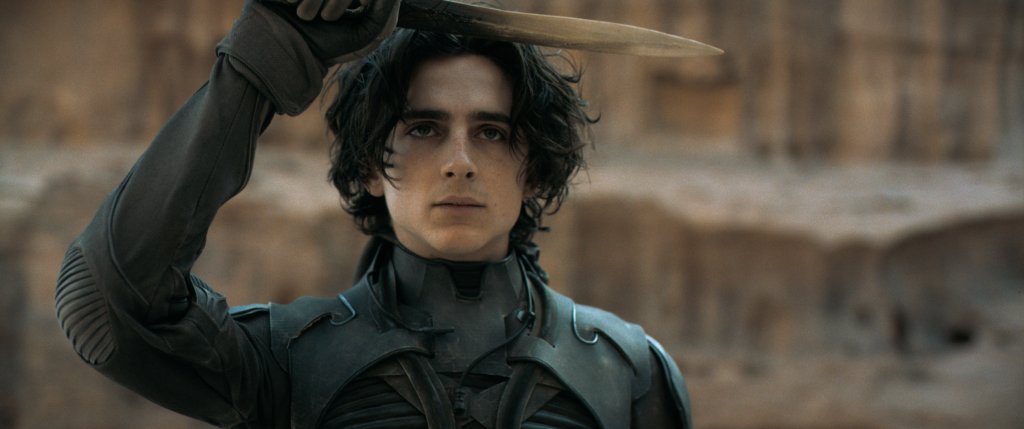
Timothee Chalamet as Paul Atreides in Denis Villeneuve's Dune

Dune: an impossible feat, a poisoned chalice, a sprawling pillar of science fiction. A lot has been written on the complexities of adapting a book like Frank Herbert’s Dune, with its mythology so steeped in detail and history that even legendary filmmakers like Alejandro Jodorowsky and David Lynch have tried and failed to bring their visions to life (the latter has gone as far as to disown his 1984 take).

Co-writer and director Denis Villeneuve – who back in 2016, made Arrival, one of the most intelligent, intimate, yet grand films in the science fiction canon – here takes a different approach: to split Herbert’s hefty tome in half. Dune is, by its title card’s own admission, merely Part I of a hopeful two-parter. It’s a risky play, considering a Part II has yet to be greenlit by Warner Bros.; whether the Canadian filmmaker’s gamble pays off will depend wholly on Dune’s box office success.

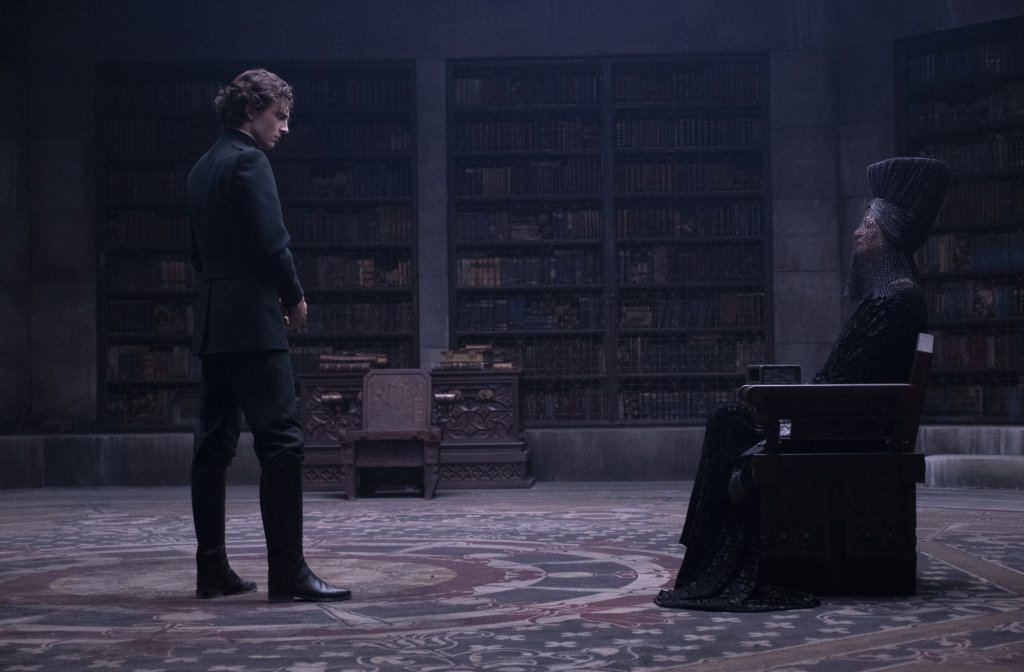
TIMOTHÉE CHALAMET as Paul Atreides and CHARLOTTE RAMPLING as Reverend Mother Mohiam in Warner Bros. Pictures’ and Legendary Pictures’ action adventure “DUNE,” a Warner Bros. Pictures and Legendary release.

However, with an unfathomable budget at his disposal, and two and a half hours dedicated solely to the book’s first half, Villeneuve is able to take the scenic route to establishing Herbert’s vision. Amidst a galactic empire fraught with political machinations, secret orders and warring factions, Dune concerns itself most with House Atreides, one of the many dynastic powers under the Imperium. The head of the House, Duke Leto Atreides (an ever-fantastic Oscar Isaac, whose repeated yelling of “desert power!” is as entertaining as it is bizarre) is tasked by the unseen Emperor to take over rule of Arrakis, a desert planet rich in the galaxy’s most valuable substance: Spice.

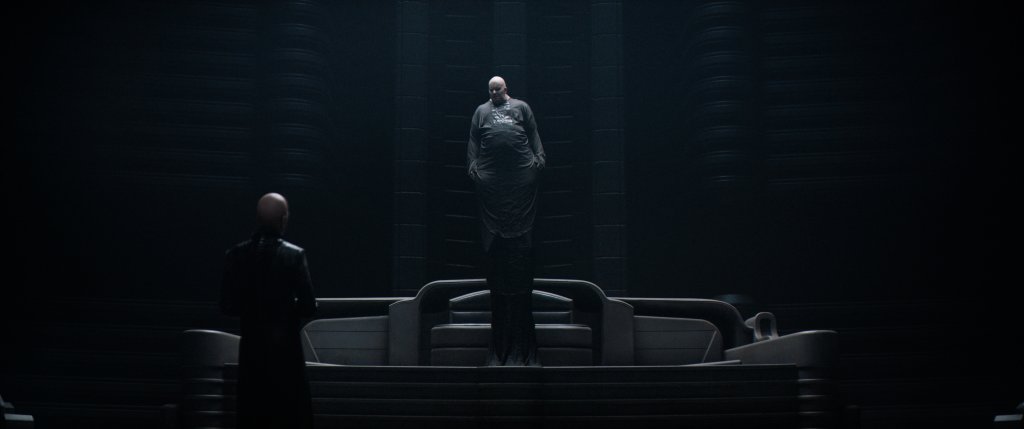
A coveted commodity that extends life and fuels interstellar travel, spice (or melange) shares its home with colossal, territorial sandworms, and native peoples called the Fremen. Prior to Atreides’ appointment, the Arrakis mining operation had been overseen by their rival – House Harkonnen, led by Baron Harkonnen (Stellan Skarsgard, ghoulish and near unrecognisable) – for over 80 years. Duke Leto senses that his unexplained promotion is a trap but, powerless to refuse the Emperor’s call, emigrates his family and their military forces to the sandy world.

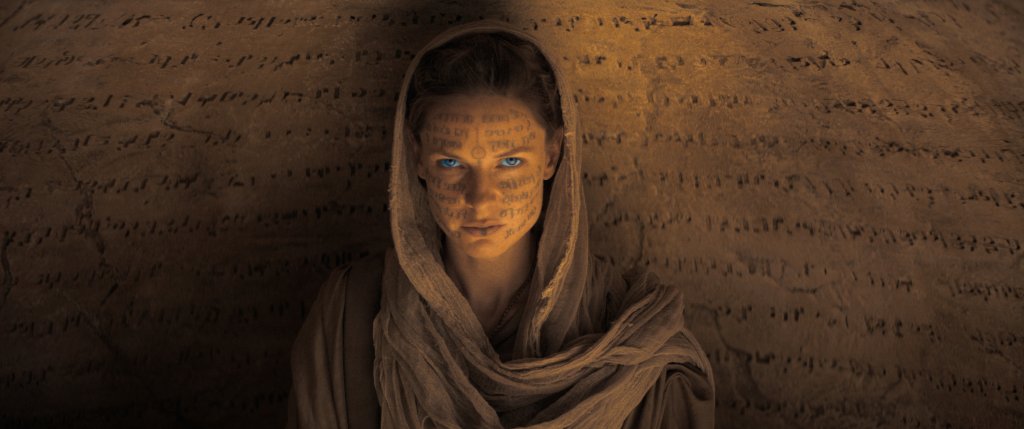
REBECCA FERGUSON as Lady Jessica in Warner Bros. Pictures’ and Legendary Pictures’ action adventure “DUNE,” a Warner Bros. Pictures release.

Paul Atreides (Timothée Chalamet, whose fine-boned silhouette cuts a lonely shape amid Dune’s vast landscapes) is the films archetypal hero and heir to House Atreides, a “chosen one” figure with strange abilities he struggles to control. Unsure of his place in the world, from the beginning Paul is plagued by strange visions of a blue-eyed Fremen girl (Zendaya, given little to do in a role that’s clearly earmarked for future development). They foreshadow death and ruin, but also hope – and though he may understand them fully, he knows enough to keep details hidden even from those closest to him.

His mother and Leto’s concubine, Lady Jessica (Rebecca Ferguson), is also a member of the Bene Gesserit, a secretive and ancient order of women who use genetic experimentation, political scheming, and religious engineering to further their own agenda. Jessica believes her son to be their long-prophesised saviour and result of a centuries-long eugenics program: the Kwisatz Haderach. It’s in how Dune paints Paul as a messianic figure that issues begin to arise.

STELLAN SKARSGÅRD as Baron Harkonnen in Warner Bros. Pictures and Legendary Pictures’ action adventure “DUNE,” a Warner Bros. Pictures release.

“The outsiders ravage our lands in front of our eyes. Their cruelty to my people is all I’ve known,” Chani states plainly in her introductory voiceover. “Who will our next oppressors be?” she then questions. These opening words promise a critique of Western colonialism, how it built its own wealth from looting indigenous resources, and its history of oppression – or at the very least, they indicate some subversion of the white saviour narrative that is otherwise set up by Dune’s choice of protagonist. Yet Villeneuve’s Dune fails to provide any kind of follow-through. The initial premise – that Paul is a messiah fated to free the Bedouin-coded (despite what Javier Bardem‘s casting would suggest) Arrakis natives – goes totally unchallenged. With a Part II, the whole may yet prove itself to be more than the sum of its parts; but alone, Dune Part I feels bitterly conservative.

Away from its problems with storytelling, where Dune thrives is in its beauty and scale. The production design does as much heavy lifting as the dialogue in its creation of signposts, by which viewers can more comfortably navigate Dune’s expanse. Each faction and setting has its own visual identity, from the oil-spill darkness of Giedi Prime and the cool palette of Caladan, to Arrakis’ rich colouring and glittering heat. Meanwhile, the film’s vastness is emphasised by Greig Fraser’s wide and largely static cinematography, which revels in the oppressive majesty of Dune’s many worlds. Together with Hans Zimmer’s dread-filled score, full of guttural howls, wailing choirs, bagpipes, and reverberating percussion, Dune is crushing. It may seem redundant to labour the film’s enormous scale – it is, after all, a Villeneuve film – but in the case of Dune, its size and beauty truly cannot be overstated.

Timothee Chalamet as Paul Atreides in Dune 2021

With all this emphasis on largeness and atmosphere however, the story and its characters are all-too-often flattened by Dune’s icy heft. Emotional resonance and narrative substance are forgone in favour of grim artistic grandeur. With all the legwork Villeneuve performs to set up a future series, Dune comes out rather top-heavy: though an immensely successful exercise in world-building, the filmmaker’s favouring of spectacle leaves room for little else. By the time Dune puts in place its disparate threads and an image begins to emerge, the credits are rolling.

Though Villeneuve’s is unquestionably the most successful adaptation the world has yet seen, once the awe for its artistic merit begins to dim, Dune is left feeling like the overture (albeit, one of astonishing splendour) to a grander opera. Now, whether Dune will go down as a science-fiction great or whether it will be remembered as a film that pushed the limits of visual artistry, depends entirely on whether a Part II ever gets made.

Dune releases in cinemas from October 22nd. 

JOHN AND THE HOLE

john hole

13-year-old John (Charlie Shotwell, The Nightingale) is a typical moody teen; on the cusp of adulthood while inquisitive and monosyllabic in equal measure. When he discovers a large hole that was part of an abandoned shelter in the family’s large wooded grounds, he hatches a plan to discover what it’s like to live like a grownup. During the night he takes his parents, (Michael C. Hall, Dexter) and Jennifer Ehle (Saint Maud), and sister (Taissa Farmiga, American Horror Story) and leaves them at the bottom of the concrete hole. He provides them with basic food and drink, and following a rainstorm, some thicker clothes but essentially leaves them while he plunders his father’s bank account and ‘enjoys’ the perks of living alone. He doesn’t find the fun he perhaps expects from this newly grasped freedom, as the abyss in his psyche continues to grow.

Despite the star-studded cast, this moody, dense psychodrama is far from Hollywood territory. Its pedestrian pace and languid narrative will put off many, but stick with it and there’s plenty to unravel. One of John’s ‘games’ involves him and a friend holding each other under the water of the family swimming pool to see if they can have a near-death experience. It’s this search for something which has meaning that is at the core of the film and how much the viewer takes from the movie depends on relating to that feeling to some extent.

The feature debut of Pascual Sisto, who directs with muted flair, and boasting a screenplay by Oscar winner Nicolás Giacobone (Birdman), John and the Hole doesn’t give easy answers and is certainly a challenging watch. Shotwell is superb as the troubled youth seemingly trapped in a life that is cosy, comfortable, and prosperous. A story-within-a-story approach has a doting mother (Georgia Lyman) telling the story of a boy named John and his hole to her daughter (Samantha LeBretton). As we discover, this loving engagement has sinister overtones itself.

John and the Hole isn’t a film you’d choose for a popcorn-munching treat, but for the more cerebral evening, it’s worth checking out.

John and the Hole is available on digital platforms now.

THE LODGER (MESSE BASSE)

lodger

The low-key French domestic thriller The Lodger is an atmospheric and unformulaic exploration of the themes of loss, grief and detachment. While it’s a small-scale and restrained film, it’s a tense tale that pivots on the experiences of two women: Julie, a young medical student looking for cheap accommodation, and homeowner and lonely widow Elizabeth, eager to rent out a spare room in return for the company.

What’s soon apparent to Julie is that there is something odd about the living arrangements in the house, particularly about the status of Elizabeth’s unseen husband, Victor. Within minutes of the film’s opening, the central conceit of The Lodger is laid bare. It appears to Julie that overwhelming grief at Victor’s untimely death some twenty years earlier has left Elizabeth in a pathological, disassociated state of denial. For two decades, Elizabeth has laid out Victor’s empty clothes across furniture in the house, as if he were sitting in a living room chair or lying at rest in bed.

Rather than fleeing from her new surroundings, Julie’s own struggles with grief and her concern for her landlord’s mental state leads her to an inspired if risky decision. She purloins one of the nursing school’s medical dummies, dresses it in Victor’s attire, and places the figure in different settings in the home. Rather than being outraged or upset at Julie’s intervention, Elizabeth assumes that Victor’s return to three-dimensional form is part of some natural evolutionary process. What then unfolds in the remainder of the film is the story of the unsettling impact of the mannequin’s presence on the mental equilibrium of the two women who both find themselves implicated in a macabre and misconceived ménage a trois.

Julie is quiet and lacking in confidence. Her faltering efforts at student romance only confirm for her how repellant the young men interested in her are. Still pained by the grief at her own father’s death, her experiences convince her that she needs a connection with a more mature and respectful man who would be motivated by truly romantic intentions.

The presence of the dummy in the house gives rise to moments of confusion, as the inanimate figure is repeatedly found in unexpected locations in the house. But it seems clear that those mysterious moves, and the moments in which Victor appears to be still more corporeal, are intended to illustrate these characters’ own daydreams and existential fantasies. They are not intended as the opening gambits of a ghost story.

Most of the action unfolds within the confines of the house, a setting that adds to the sense of claustrophobia and isolation. Neither of the main characters feels comfortable in the wider world, and they both retreat from it. What becomes apparent as the film proceeds is the extent to which the aspirations of each of these two women are surprisingly similar.

The central performances of the film are impressive. Alice Isaaz shines as the young and fragile Julie, unsure of her place in the world and longing for reassurance. Jacqueline Bisset, something of a cinematic icon and a prolific and resilient actor since the 1960s, finds both the softness and the sharp edges of Elizabeth’s deluded sense of self. There’s tragedy, deceit, melancholy and ennui aplenty as the house’s long-held secrets surface and the bizarre love triangle bends out of shape.

It’s difficult to see The Lodger as a feminist film, although the script by Ollivier Briand, Mauricio Carrasco and Baptiste Drapeau is sympathetic to the unrequited longing of both women. Director Drapeau seems clear that both leading actors should bring out the sadness, rather than the badness, of these lost souls who, distracted by an otherwordly fantasy, turn on each other in their desperate need.

The Lodger will be available on Digital Download from October 18th

HALLOWEEN KILLS

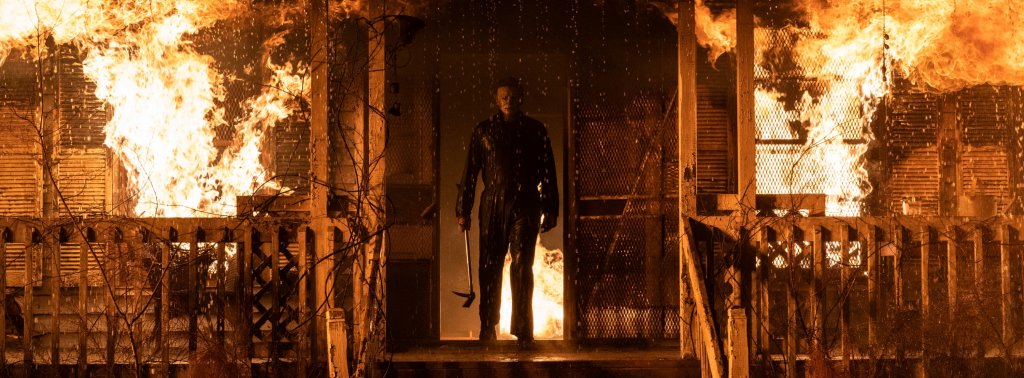
Halloween Kills sees Michael Meyers return

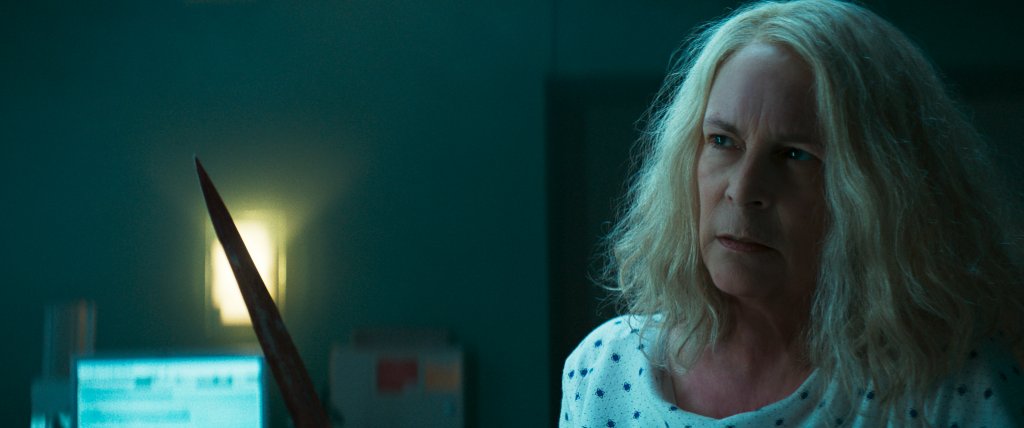
Halloween Kills picks up the moment 2018’s Halloween left off: Deputy Frank Hawkins (Will Patton) is bleeding out from a neck wound, Michael Myers is trapped in a burning basement, and the Strode women (Jamie Lee Curtis, Judy Greer, Andy Matichak) are on their way to the hospital in the back of a pickup truck – with Curtis’ Laurie trying very hard to keep her guts from spilling out.

If Halloween (2018) was about exploring Laurie’s PTSD and the Strode family’s intergenerational wounds, then Halloween Kills is about the town of Haddonfield and unpacking its citizens’ collective trauma. To do this, the film checks in with characters from the original film, including Tommy Doyle (Anthony Michael Hall, the de facto co-lead opposite Greer’s Karen Strode) and Lonnie Elam (Robert Longstreet). Other characters even see the same actor who embodied the role more than 40 years ago return, such as Kyle Richards’ Lindsey, Nancy Stephens‘ nurse Marion, and Charles Cyphers’ Leigh Brackett.

Michael Myers in Laurie Strode's burning house in Halloween Kills

Though the intent is to look at the broader impact Myers’ actions have had, the re-introduction of so many characters can’t help but feel like narrative padding, cool Easter Eggs to make up for the fact that Curtis spends most of the film bed-bound and with very little to do – though hey, Laurie Strode is a grandmother who has just survived multiple stab wounds. As much as it pains us to admit, she’s earned a break.

The second chapter of David Gordon Green’s rebooted trilogy serves as a functional and entertaining interlude between its predecessor and the upcoming finale, Halloween Ends. Halloween Kills may be a messy blend of too many elements but, considering its expected audience will be returning fans of the franchise, it offers enough to satisfy cinemagoers looking for an old-school slasher fix: what it lacks in narrative heft and cohesion, the film more than makes up for in its open-armed embrace of blood, tears, and knife-wielding rampages.

Which is good, because there’s amazingly little present-tense storytelling to sustain viewers. Between the narrative redundancies spent catching the rest of the town up on the night’s (read: 2018 Halloween’s) events or reintroducing old characters, and the many flashbacks to 1978, the story’s momentum is generated almost solely by Myers’ rapidly mounting body count (and goddamn, the man does not tire easy).

Jamie Lee Curtis as Laurie Strode in Halloween Kills

In all fairness, the flashbacks do make for very enjoyable viewing. Taking place right after the events of John Carpenter and Debra Hill’s Halloween, these scenes detail the events after Myers’ 1978 rampage (remember that, in Green’s canon, Halloween II should be entirely disregarded) in engrossing detail. Unfortunately though, this re-constructed timeline serves little purpose beyond offering up someone to blame for any and all post-’78 killings.

And so it goes for Halloween Kills’ apparent, loftier ambitions: the scenes where Haddonfield enacts its own mob justice are probably intended to make a point about the dangers of hive thinking and fear-based decision making, but it all seems – at best – cursory. In the end, the plot doesn’t really move along, the film’s greater message gets lost, and the characters don’t evolve; what Halloween Kills does offer is a bloody, creatively grisly series of murders, as well as the return of many established franchise characters and generous helpings of fanservice.

In essence, Green’s second instalment is an entertaining, effective block of filler between Halloween and Halloween Ends; fun to enjoy with liberal quantities of sweets one of these cold October nights.

Halloween Kills releases in cinemas from October 15th. 

THE MUTATION

mutation

It’s not often these days that something that purports to be a professional feature film leaves us slack-jawed in astonishment at its almost complete and utter ineptitude. There’s usually some redeeming feature in even the clumsiest cinematic enterprise. But we tried really hard to find something of worth in The Mutation and could find virtually nothing to recommend in this truly terrible, awkward, shoddy travesty. The Mutation can’t even claim to be so bad it’s good because it’s just… bad.

In a remote laboratory… somewhere… a mutated giant rat escapes captivity and slaughters the man who appears to have created it. The rat is clearly a man in an extraordinarily threadbare costume that in no way resembles a rat; it’s more like an Easter bunny recovering from a  particularly hare-raising (geddit?) night on the town. The authorities – mainly two Police officers played by a couple of gentlemen who appear to have walked past an acting school at some point and now consider that they’re entitled to appear in films – are understandably concerned and call in troubled zoologist Allen Marsh (Ricardo Freitas)  to help them track down this strange murderous beastie. He decides to spend a lot of his time drinking wine and flirting lightly with the murdered boffin’s wife Linda Rowe (Amana-Jade Tyler, dreadful) in two scenes that are virtually identical (as well as pointless). Meanwhile, the rat is embarking on a farcical rampage – you will hoot at the scene where the rat, having invaded the kitchen of a local restaurant, proceeds to tear a hapless waitress apart in full view of the restaurant’s diners who just sit and watch instead of getting up and running away, jumping through the nearest window or screaming their heads off in terror.

Eventually, in case you’re interested, the rat-thing, having offed several members of the cast in a most unconvincing manner is trapped and gassed in the house where it was created (despite the fact that most of the windows have been left wide open)  for some reason, it turns into a giant hairless CGI monster for some other reason (at least it has the decency to look more like a  rat now) before… er… exploding. The end.

Written, directed and edited by Scott Jeffrey, The Mutation really has to be seen to be believed. The film is all over the place… quite literally. Many of the characters attempt to speak in cod American accents and the film is largely non-specific about where it’s set although the appearance of an American patrol car in a handful of sequences leads us to believe that we’re supposed to be somewhere in the States.  But then in one appalling sequence where a TV news reporter is breathlessly warning the public about the danger of this escaped creature, a banner headline refers to something running amok “in the English countryside” – even though the aforementioned American patrol car is sitting in the background of the shot. Scenes establishing the Police headquarters are clearly filmed at the Two Kingdom Street office complex at Paddington in London and amateur filmmakers keen to convince their audiences that the action takes place in the USA might want to watch out for those three-pin power point sockets in their interior scenes, which tend to give the game away a little.

The Mutation is sloppy and careless – spotting its numerous continuity fluffs could be a drinking game that will help pass the tortuous time – lumbered with a dire script and hapless performances from just about everyone unfortunate enough to find themselves in front of the camera. In a last, desperate attempt to find something positive to say about this clunker, it seems that Jeffrey has some flair as a director and it’s a decently edited effort so he might be advised to leave the scripting to someone who doesn’t have a tin ear for dialogue and some idea of how to plot a story or, perhaps more sensibly, consider a career well away from film-making.  The Mutation is a real horror but for all the wrong reasons.

THE LAST DUEL

last dual

Ridley Scott’s The Last Duel transports viewers to 14th century France, when deceit, lust, and bad haircuts took people farther than they should have and honor was always second to pride. While Scott based his film on historical events, he retrofits the story for modern audiences, tweaking everything from specific turns of phrase (certainly medieval Frenchwomen didn’t use “all the rage” all that often), to personalities and proclivities.

Scott’s epic plods through choppy skirmishes, exhausting pleasantries, and patrilineal pride to arrive at its actual point: the trial and holy judgement of Jacques Le Gris (Adam Driver), a squire charged with raping the wife of his former friend Jean de Carrouges (Matt Damon).

Driver and Damon are fantastically convincing, but Jodie Comer’s Marguerite de Carrouges is the real showstopper. She stares down the culture, customs, and featherless peacocking of medieval France, refusing to bow to feeble egos and wobbly arguments. She is the hero of this story, and the filmmakers ensure there’s no mistaking it.

And then you have Ben Affleck’s Count Pierre, who spends much of his screen time partying and commanding Le Gris to stop moving the plot forward and shed his trousers. He’s clearly having a blast, even if his antics conflict directly with the overall tone.

Narrative bloat and jarring silliness aside, its quality is clear: Ridley Scott’s stand against patriarchal gaslighting is a technical and emotional triumph. It falters in its first half and rightly refuses to endear either Carrouges or Le Gris to audiences, but the duel bookending the story is astoundingly satisfying.

Getting there, though, occasionally proves just as engaging. Scott neatly partitions his interpretation into three acts, or accounts, that cover the same chunk of time through different perspectives. The structure alone is smart; by building toward the truth, Scott and his team are able to illustrate who these two men are and why the stakes are so high for the woman caught in the middle.

The Last Duel is just as effective as a period piece as it is a stab at the mental gymnastics men perform to maintain their stranglehold on society. The set designs are elaborate and immersive. The characters are overly formal and shamelessly sycophantic. It’s all absurdly absorbing and well-acted. The most striking aspect of this retelling, however, is its emphasis on the distinction between powerful men and strong men. The movie is flawed, but the way it depicts the mental and emotional fragility of men in high places is more than worthy of our attention.

Scott has a winner on his hands.

THE LAST DUAL is in cinemas everywhere from October 15th

NIGHT DRIVE

NIGHT DRIVE

Russell (A.J. Bowen) is a good-natured guy forced into being a rideshare driver after he let his business partner buy him out for an app he developed right before it blew up in popularity. When he picks up a young girl, Charlotte (Sophie Dalah), his night will certainly be different. Asking for a stop-off where she takes a small silver suitcase much to the annoyance of her ex-boyfriend. Escaping that situation will be the easiest task, however, as things get more complicated.

Taking the thought of one choice dictating the road on which travel, Night Ride is a constantly twisting, unlit highway. Like in Martin Scorsese’s After Hours, Russell’s evening gets further out of control as he allows Charlotte to take the lead. The silver suitcase is a fun MacGuffin that, unlike the case in Pulp Fiction actually has a purpose. That said, it’s certainly one of those films that benefit from going in as cold as possible and letting the surprises wash over you.

Directed by Brad Baruh and Meghan Leon (who also provided the script), Night Drive is packed with sharp dialogue and enough sudden shocks to make for one wild ride. The humour blends perfectly with the intrigue and spiralling anxiety of the lead character and there’s a reveal that you won’t see coming. Highly recommended.

BELLE [LFF 2021]

“Sing. Sing. Sing!”

Academy Award Nominated Director Mamoru Hosoda is back with Belle – a modern take on the classic Beauty and the Beast story set between the real world and the virtual world of “U”. After receiving a 14-minute standing ovation at Cannes, the film has finally had its UK Premiere.

Suzu, a young schoolgirl, who struggles with her confidence after losing her mother at an early age, joins an app called “U” – an internet-based world where the user has their biometrics imprinted into an avatar so that they can do anything that they desire. Suzu wants to sing, after being inspired by her late mother but suffers from stage fright in the real world. Under the alias “Belle”, she becomes an overnight sensation and both her real and virtual worlds change forever, especially when she meets the Beast known as “The Dragon”.

What truly stands out in this magnificent piece of art is Hosoda-san’s attention to detail – the choice to have the real world hand-drawn and the virtual world constructed with computer-generated animation helps bring each setting to life in its own unique way. Even though the virtual world looks and feels fantastical, it also has so much personality that allows the story to progress fluidly and act as an extension of the human characters.

Even though the narrative borrows beats from the aforementioned Jean Cocteau/Disney iterations, it incorporates so many other elements that still allows it to stand on its own as a unique story of a girl discovering her voice, protecting others and truly finding her place in the world.

The score, including each musical number, is utterly captivating and gorgeous to listen to and watch transpire on screen. The climax of the film especially will make sure there is not a dry eye in the house.

Whereas his previous film Mirai told a story from the perspective of a child that we could relate to in our own past, Belle cements itself as an important story for our future as technology and our reliance on it evolves – it really brings out the good in the internet and how it can help us grow.

Belle is hands-down Hosoda-san’s best film to date and absolutely deserves all of the praise it has received so far. A stunning and spellbinding reimagining of Beauty and the Beast for a modern age, with a powerful and positive message for audiences of all ages that we can all reach our potential. Full of heart, soul, laughs and tears. Simply magnificent.

Belle is released in UK cinemas on February 4th.

DEATH RANCH

death ranch

It’s 1971. Welcome to the state of Tennessee in the good ol’ US of A to celebrate the family reunion of Angela (Faith Monique), Clarence (Travis Cutner), and Brandon Cobbs (Deiondre Teagle); three African American siblings on the run from police. Brandon, having just broken out of the penitentiary, agrees to take refuge at an abandoned ranch belonging to their late grandfather, deep in the south Tennessee woods. There is no chance in hell that anyone would come looking for Brandon out here, right?

Settling in with a stashed bottle of bourbon, Clarence, Angela, and Brandon reminisce over old times and discuss some hard truths, completely unaware that they are on the hunting grounds of a bloodthirsty, cannibalistic Ku Klux Klan. Led by Grand Wizard Delmar (Scot Scurlock), the Klan believe that black folk only exist to be food for the white man, and unfortunately for Brandon, Angela, and Clarence, they are the KKK’s desired dark meat.

Written and directed by Charlie Steeds, Death Ranch is a homage to American Blaxploitation cinema of the 1970s like Blacula (1972), The Big Bird Cage (1972), and Brotherhood of Death (1976). Blaxploitation, whilst often perpetuating stereotypical characteristics (hence ‘exploitation’), is considered to be about empowerment. Strong characters, both male and female, dominated the subgenre; providing black audiences with heroes they could admire, such as Pam Grier in Foxy Brown (1974): “You’re gonna have to kill me. Or, I’ll kill you. It’s got to be one way or the other.

But every hero needs a villain, and Death Ranch delivers with the most reprehensible white supremacist hate group in American history. Like the aforementioned Blaxploitation film Brotherhood of Death, Death Ranch is a low-budget revenge flick where our heroes stick it to the Klan! Expect lacerations, decapitations, and castrations as our Tennessee trio take on the cross burning, flesh-eating, motherfuckers of the Deep South. The death of a nation.

Ashley Hammelman’s special make-up effects are crude, but oh-so-gloriously grotesque (and gooey!), whilst Charlie Steeds direction and Aaron Mirtes’ cinematography perfectly captures the golden era of Blaxploitation. Vividly shot sequences (slow-motion tracking shots, for example) are lifted lovingly from Italian spaghetti westerns like A Fistful of Dollars (1964), and revenge flicks like They Call Her One Eye (1972). Death Ranch is clearly a labour of love that, when combined with Sam Benjafield’s funk-tinged original score, wouldn’t look out of place in an American grindhouse on 42nd Street, NYC.

The concept of a cannibalistic Klan is given gravitas by the superb cast of heroes and villains; particularly Deiondre Teagle and Faith Monique’s performances that transform their respective characters from victims to vigilantes as the body count rises (and what a body count it is for us gorehounds!) Thomas Higgins, Brad Belemjian, and Scot Scurlock will also leave an impression on audiences as Klan members Jeb, Gator, and Grand Wizard Delmar respectively; the image of their blood-splattered regalia forever seared into our brain.

By following the Quentin Tarantino school of exploitation filmmaking, adding a splash of social commentary, and copious amounts of white nationalist gore, Steed has crafted a throwback flick to the bygone days of grindhouse cinema. So, grab a bowl of popcorn and pair this Blaxploitation romp with the Jack Hill-directed Coffy (1973) for a cathartic double-feature of revenge!


Death Ranch is released on DVD on October 11th.