BARBARIANS [FrightFest Halloween 2021]

barbarians film starring Iwan Rheon and Tom Cullen

A dinner party takes a sinister turn in this compelling directorial debut from Charles Dorfman (producer of films such as Rabid and VFW).

It’s a birthday get-together for filmmaker Adam (Iwan Rheon) in what will soon be his home with Eva (Catalina Sandino Moreno), set in a remote new community, Gateway, built by businessman Lucas (Tom Cullen). His day starts badly when he comes across a dying fox. Adam’s attempt to help it is met with aggression, but when it suddenly appears in his kitchen, he can’t bring himself to put it out of his misery. His wife’s handyman steps in to do the deed, putting a dent in his already fragile masculinity. When Lucas and his girlfriend Chloe (Inès Spiridonov) arrive, the testosterone levels go through the roof as Adam tries to keep up with Lucas’ slick social media savvy persona. As things progress and tensions are stretched, there’s an occurrence no one could expect.

Playing against the type of character he played in Game of Thrones, Rheon is a ‘nice guy’, a pushover, desperately trying to live up to the toxic masculinity all around him. Cullen’s Lucas is everything that is wrong with alpha male characteristics, all talk and out for himself. The ‘punch me there’ type who can’t take it when it’s dished out to him. If the film had focused on the sparring between the two of them alone, it would be entertaining and enthralling enough. That there is another element in the final act adds a cherry on the top of an already great movie.

As well as directing, Dorfman wrote the screenplay, which is astutely observed and throws enough curveballs when you think you know where it’s going. The dialogue is brilliantly natural (how many films can you think of that have a discussion about Brendan Fraser flick California Man?) and the tension builds nicely, allowing scenes to progress at a suitable pace.

Although it’s superb to watch, this is one dinner party you’ll be glad you weren’t invited to.

PARANORMAL ACTIVITY: NEXT OF KIN

paranormal-activity-next-of-kin-starburst-review

Hard to believe it has been six years since the last Paranormal Activity in 2015’s The Ghost Dimension 3D, but as horror is continually opening its arms to dormant franchises recently (see David Gordon Green’s incredible Halloween and Halloween Kills, Nia DaCosta’s Candyman and Matt Bettinelli-Olpin & Tyler Gillett’s upcoming Scream), six years is really no time at all. 

Still, much like with Jigsaw and Spiral bringing back the Saw saga of late, we’d be lying if we said we hadn’t missed seeing the yearly occurrence of Paranormal Activity. And this Halloween, the found footage frightener is back, in Paramount+ exclusive Paranormal Activity: Next of Kin.

Taking the story to a secluded Amish community, this reboot of sorts (with room to potentially link up later), sees a young woman, abandoned at birth, seeking out her biological mother to document a potential family reunion. Tracing her to this particular Amish community, once she and her crew arrive, events begin to gradually spell out some very sinister goings on behind the scenes.

William Eubank’s (Underwater) Paranormal Activity: Next of Kin is probably the strongest entry in the series since the underrated (and arguably best) instalment Paranormal Activity 3. Indeed, this new film likely won’t get those back who signed off on this franchise years ago but – in a similar vein as Christopher Landon’s (who writes here) The Marked Ones – it feels refreshing in its change of scenery and approach. 

The formula is still there certainly but given an undeniable shake at points, as the snowy, windy, isolated Amish setting works its magic, with some expanded camerawork techniques (better cameras, drone footage) meaning Pedro Luque’s cinematography is made great use of throughout. It also really helps that the acting is of a good calibre, with Emily Bader and Roland Buck III being likeable sympathetic leads, and Dan Lippert’s goofy sound man being the right side of fun (instead of being a bit of a prat like the original’s Micah).

In fact, taking this one as a Halloween night viewing with mates, it may not be as effective as the likes of Rob Savage’s masterful pandemic pant-wetter Host but it is another slow build (before an all out climax that is) offering, with some effective scares peppering its admirably personal story. Sadly, the more you think on it, the more a selection of plot points don’t quite mesh. As a few elements are left unfollowed up on, and some promising themes (this was filmed and set early this year amidst continuing COVID concerns) remain only acknowledged at best. 

Also, the action heavy finale, reminiscent of Eli Roth’s The Last Exorcism and Supermassive Games’ Until Dawn, stretches the found footage laws, and leaves us with an ending bound to divide. That all said, Landon’s screenplay thrives best in the subtleties, its mythology building and some strong scares reliant on that heard but not seen, barring glimpses.

Flaws notwithstanding, we wouldn’t have felt short changed seeing this streaming exclusive reboot/maybe sequel in cinemas (as was originally the plan – shame) and, whether it all works for you or not (there’ll be strong opinions on that either way), the Paranormal Activity series and its makers remain commendably committed to creating an ongoing lore and atmosphere.

Seven films in, and there is still activity here well worth investigating. 

Paranormal Activity: Next of Kin is available to watch now exclusively on Paramount+ and awaits its UK release.

LAST NIGHT IN SOHO

Thomasin McKenzie as Ellie Turner in Last Night In Soho, from filmmaker Edgar Wright

Edgar Wright’s Last Night in Soho feels like the pop cover of a classic rock ballad – sure, it’s diverting enough and those involved are undoubtedly talented, but it’s still just an echo of something greater.

As the film begins, ‘60s obsessed Eloise (Thomasin McKenzie, Jojo Rabbit) has just been accepted to the London College of Fashion. She’s a sheltered, too-sweet country mouse with a cookie-cutter tragic backstory: Eloise’s mother died of some nondescript mental illness when she was a child, leaving her in her grandmother’s care. Oh, and she can see her mum’s ghost.
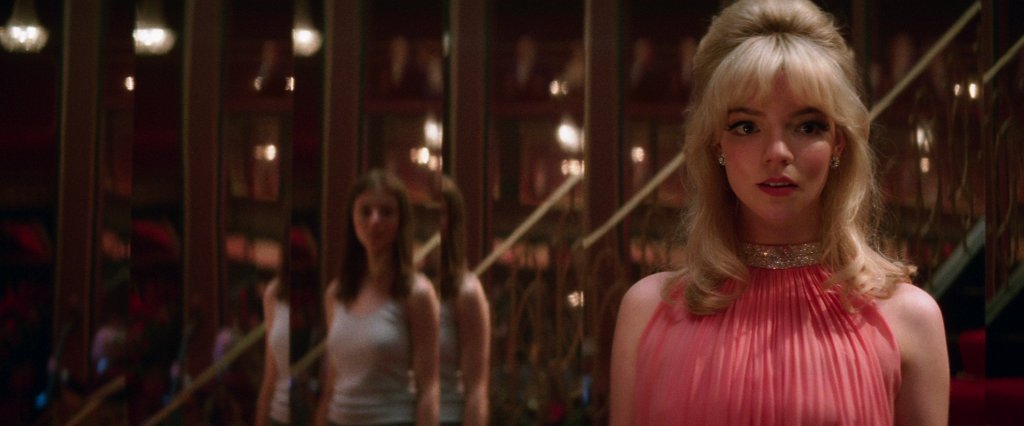
Thomasin McKenzie and Anya Taylor-Joy reflections in night club in Last Night in Soho

Soon enough, our young protagonist bravely heads to the big city… only to be roomed with apex bully Jocasta (Synnøve Karlsen), the caricature of a ‘90s high school mean girl. After a short spell of merciless bullying, poor Eloise flees her student housing and finds a room in a Fitzrovia flat owned by the terse Ms. Collins (Diana Rigg, having great fun in her last role). She’s immediately enamoured with the place, even as the lights from a neighbouring French restaurant sign flood her room with alternating flashes of red and blue. It’s one of a number of stylistic choices that give Last Night in Soho the air of a candy-coated giallo horror; sometimes it works, others it feels visually immature.

Her first night there, Ellie drifts off effortlessly. Only, she wakes in front of the Coventry Street marquee for Thunderball – it’s Soho, 1965, and Ellie wanders through the streets in her pyjamas, dwarfed and adrift in neon glitz and glamour. It’s the first time of many that Ellie enters the life of Sandie (Anya Taylor-Joy), a magnetic blonde with dreams of being the next Cilla Black.
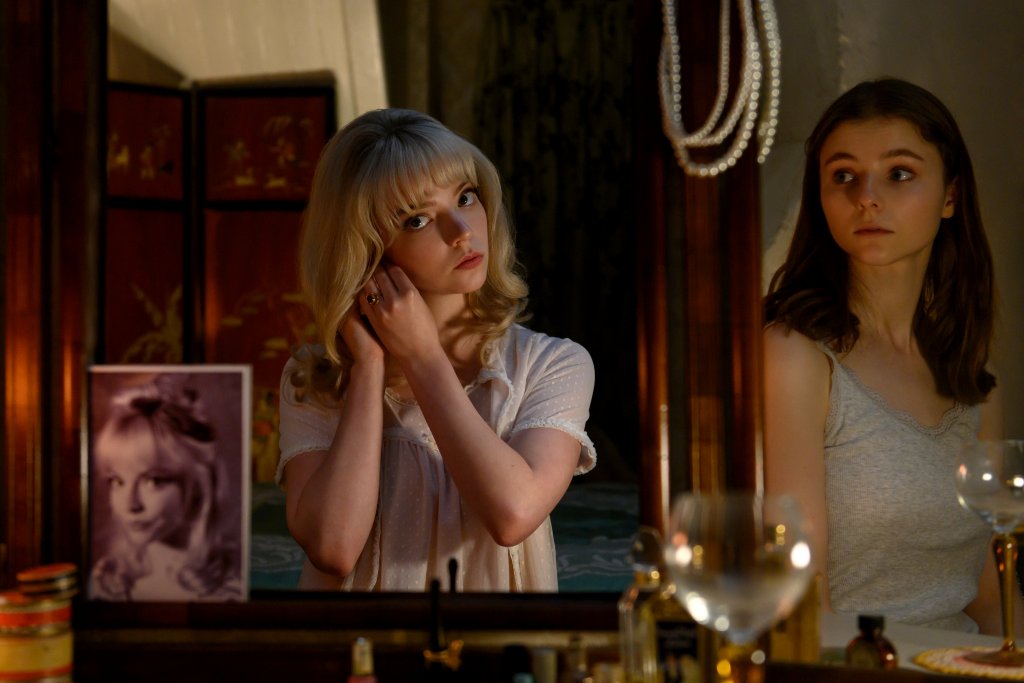
Anya Taylor-Joy and Thomasin McKenzie in Last Night In Soho

This first foray into the past gives way to the film’s best scene: a series of long takes that, thanks to digital magic, bold choreography, and lushly designed sets, show McKenzie and Taylor-Joy gliding over the dance floor, inhabiting the same space. Ellie alternates between participating in, and being an observer of, Sandie’s life; yet as she flits in and out of her beloved era, the lines between past and present inevitably begin to bleed.

As Sandie’s tale begins to turn darker and she falls prey to Jack’s (Matt Smith) promises of fame, Ellie’s dreams start to encroach on her waking hours. Haunted by memories of violence and stalked by faceless men only she can see, these visions send her spiralling deeper into hallucinatory isolation and she becomes obsessed with finding out what happened to Sandie.
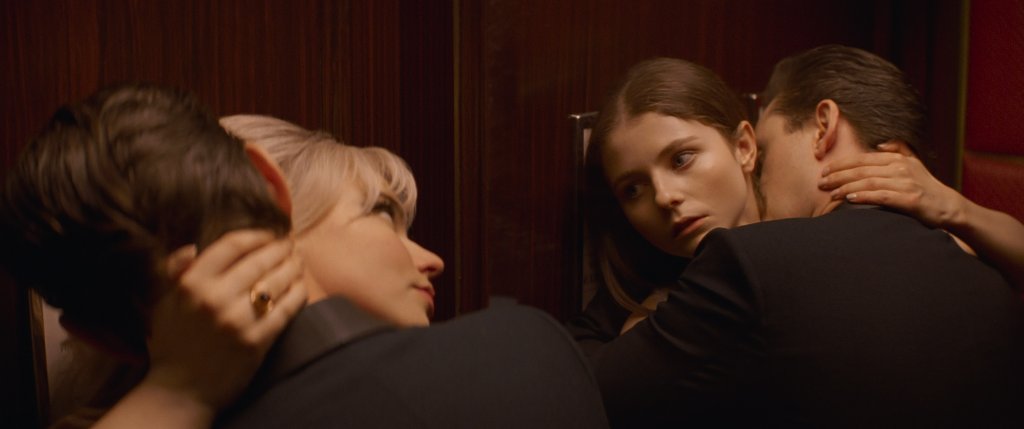
Anya Taylor-Joy and Thomasin McKenzie both embrace Matt Smith in Edgar Wright's supernatural horror Last Night in Soho

For its audience to be invested in solving this mystery, Last Night in Soho needs you to care about its protagonist. McKenzie tries hard to sell Ellie’s descent into madness but, as she’s asked to repeat the same wide-eyed note again and again, the tune turns from repetitive to grating. Meanwhile, Taylor-Joy’s character exists mostly to be brutalised by men and is, as such, near-devoid of an interior life. And even they are given more consideration than the one-tone archetypes making up the supporting ensemble (the characterisation of Ellie’s classmate and love interest, John, played by Michael Ajao, is nothing short of a crime against writing). It’s hard to care what happens to any of them when they barely feel like people.

Thematically, Last Night in Soho does not fare much better. Wright utilises Sandie to half-heartedly explore themes of female exploitation and sexual violence, and to cursorily warn against blind nostalgia for bygone eras – the latter can’t help but feel insincere, given how openly Wright worships the era’s aesthetics. Furthermore, the third act (which won’t be spoiled here) muddles its gender politics to the point where even the film seems unsure of what it’s saying.
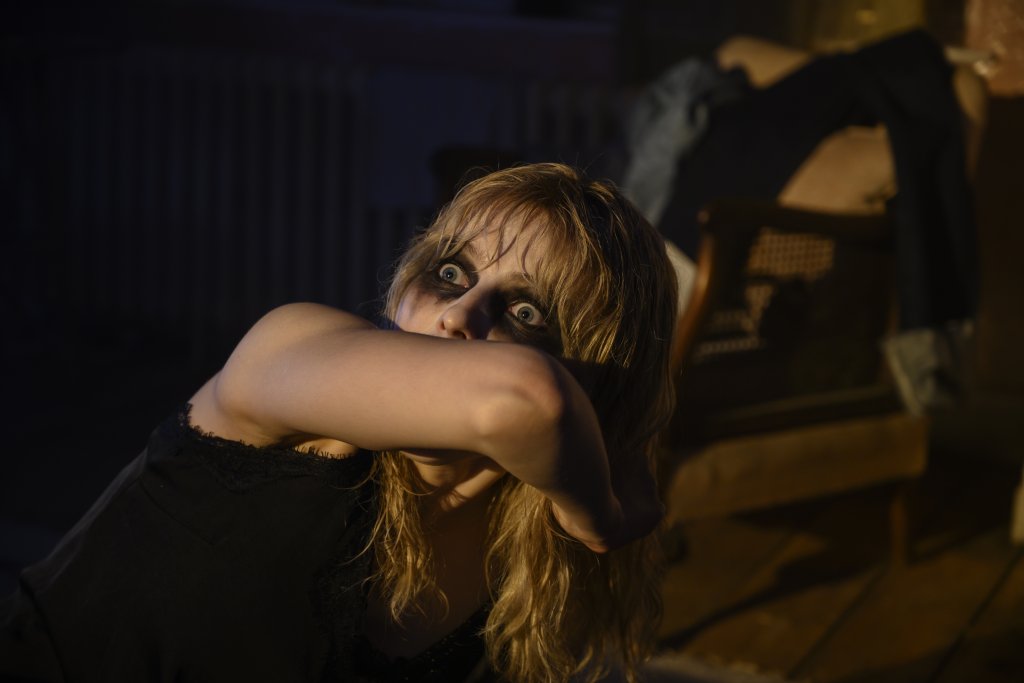
Thomasin McKenzie as Ellie in Edgar Wright's Last Night In Soho

The screenplay, co-written by Wright and Krysty Wilson-Cairns, is frustratingly unrealised. The film’s disparate elements, however attractive, spin around nothing: one can’t help but believe that a couple more drafts would have uncovered the spirit at Last Night’s core, something to bring the sum of its parts to a cohesive whole.

That said, credit where credit is due. Last Night in Soho has more than enough visual flair to keep the film from flagging. The soundtrack is consistently good, there’s great joy to be gleaned from the film’s campier moments (which you’ll wish it had leaned more into), and the cast is both incredibly talented and committed. From the sets to the costumes, the clever camera tricks to the delicious lighting, Last Night in Soho is undoubtedly a fun watch.

Edgar Wright has long since proven himself a fantastic, kinetic filmmaker, such that the promise of him doing a mix of horror and psychological thriller was reason enough to be excited. It’s because we’ve seen what Wright is capable of that this review examines Last Night in Soho under a particularly harsh light – what should have been a devilish delight, full of energy and ghoulish horror, proves instead a flimsy first pass at a script that otherwise had noble intentions.

Last Night In Soho releases in cinemas October 29th. Watch the trailer here.

MY HERO ACADEMIA: WORLD HEROES’ MISSION

MY HERO ACADEMIA: WORLD HEROES' MISSION

The students and pro heroes of UA are back, but not necessarily better than ever. My Hero Academia: World Heroes’ Mission is a colourful expansion of the blockbuster anime that manages to pack in enough high-stakes action and over-the-top heroics to appease fans. A cut above Two Heroes but markedly less focused than Heroes Rising, World Heroes’ Mission is an earnest sequel that has great fun with its premise and makes no apologies for its half-baked storytelling. The result is a fun – but thin – adventure, elevated by (mostly) gorgeous action, fun new Quirks, and a reasonably diverting story that has no bearing on the main canon.

Where the previous film, Heroes Rising, furthered the Midoriya/Bakugo friendship, this outing showcases the power and prowess of Midoriya, Bakugo, and Todoroki as a butt-kicking unit. Sadly, there isn’t much going on around that group dynamic. Sure, there’s an anti-Quirk terrorist group wreaking havoc across the globe. And yes, Midoriya is framed for crimes he clearly didn’t commit. The story quickly sets the stage for an epic conflict.

But World Heroes’ Mission brims with concepts it never sufficiently explores. These movies have a habit of churning out paper-thin villains and one-off heroes who are so immediately forgettable that even keeping up with them throughout the story is a challenge. The idea of an organisation hell-bent on eliminating Quirks has potential, but we never see enough of it for it to be of any lingering interest. Flect Turn, the mysterious man at the head of this clandestine operation, emerges with tons of promise. Sadly, very little of that promise is realised. He shows up at the beginning and again for the final confrontation, but even a crammed-in sympathy play as he’s pummeling Midoriya isn’t enough to endear him.

As underwritten as this baddie is, though, it’s refreshing to spend time with a villain who isn’t an acolyte of All For One. It’s about time, honestly. Shigaraki and his League of Villains remain the most fleshed-out opponents for the pro heroes, and Flect Turn does little to change that.

The movie’s perfunctory storytelling is somewhat reflective of Horikoshi’s absence from the writing process. Yes, he designed new looks for the characters and came up with the plot, but he left the writing and directing to the team behind the anime series. Normally, that would be perfectly acceptable. The anime adaptation is consistently excellent, and it’s only getting better. But it definitely benefits from lifting Horikoshi’s plot and character development from the manga, cementing director Kenji Nagasaki and writer Yosuke Kuroda as capable book-to-screen translators. Nagasaki and Kuroda teamed up again for World Heroes’ Mission, but without Horikoshi’s material to guide them, they seem to flounder here.

Don’t mistake these gripes as signs of poor quality, though. World Heroes’ Mission nails its dynamics, and aside from some shoddy animation halfway through, the action is exciting, frenetic, and beautiful to behold. It’s an entertaining My Hero Academia movie that delivers on its promises and makes only one request of its audience: Just go with it.

MY HERO ACADEMIA: WORLD HEROES’ MISSION is in cinemas from October 29th

THE MONSTER (1975)

monster

In the wake of hugely successful and thoroughly unholy classics such as Rosemary’s Baby (1968) and The Exorcist (1973), the horror market was swiftly inundated with a torrent of films focusing on the more cosmic side of terror: witchcraft, possession, and satanic worship. For the most part, these schlocky horror titles were weak, rote affairs – rushed exploitation that failed to capture, or even understand, the unspeakable nature of evil in its purest and most-feared form. But Peter Sasdy’s The Monster is so incredulously wide of the mark that it’s bewildering.

Joan Collins stars as Lucy, a London burlesque dancer who is taking time out from her work after becoming pregnant with her husband, Gino, played by Hammer regular Ralph Bates. Unfortunately, before leaving work, Lucy had rejected the sexual advances of a fellow performer, Hercules (George Claydon), causing him to bestow a curse upon her unborn child. And, sure enough, when the little devil finally hits the scene, the infant immediately sets about attacking his family, destroying his home, and unleashing all manner of cot-rocking, room-shaking, sub-Exorcist shenanigans.

Seeking the help of a Catholic nun (Eileen Atkins) and a local doctor (Donald Pleasence), Lucy searches for solutions, both pragmatic and spiritual, in an effort to free the hefty terror tyke from the demonic control of… Hercules? Satan? To be honest, it doesn’t seem to matter much anyway. Like most of the plot’s more crucial details, the where, why’s, and how’s of the narrative seem to be a source of ambivalence to the writers, in a screenplay that merely staggers from one scene to the next, grasping for motivation and reason at every turn.

The Monster, also known as I Don’t Want to Be Born, The Devil Within Her, and Sharon’s Baby (reminder: the mother’s name is ‘Lucy’), is an abject disaster on all fronts. Painfully dated in style, our cast dawdles around ugly locations in uglier fashions, while repetitively recounting their concerns about the demon seed over and again. “He’s a very strong baby” we’re told every other scene. Sasdy’s occasional efforts to shock only serve to elicit laughter, as what is perceived to be frightening in The Monster is, in reality, extremely funny. When the perpetrator of your set-piece murders is mere days old, you’re somewhat limited in your kill creativity, and even further limited in your ability to actually frighten your audience. There’s a reason The Omen’s Damien had a dog.

Even at a scant 95 minutes, The Monster has so little narrative to offer it chooses to pad out the runtime with impromptu travelogues of a gloomy 1970s London. Huge chunks of the movie are eaten up watching the cast simply potter around the concrete confines of Piccadilly and Oxford St. The intention appears to be to add a bit of homespun exotica to the proceedings. But, with all of its rusted cars and perpetually grey skies, it’s all so completely uninviting. In both its interior and exterior photography, The Monster presents a stark visual account of yesterday’s London – and frankly, you can keep it.

The Monster is deserving of its disastrous reputation. No one would argue against it being a schlocky, scare-free horror film. But while there are many terrible and tawdry entries in the pantheon of horror – it’s practically an occupational hazard for fans of the genre – The Monster is so staggeringly bad, so ill-equipped to deliver any effective thrill whatsoever, that it becomes oddly compelling. A cinematic equivalent of a car crash, it’s almost impossible to tear your eyes away as the calamity unspools onto the screen, consistently accelerating toward disaster before reaching terminal velocity with a stunning, nonsensical climax. While The Monster is impossible to recommend as an accomplished feature, it conversely plays incredibly well as a morbid curiosity, and, for all of its flaws, remains required viewing for all die-hard horror aficionados. Just the once.

Network has been more generous to The Monster than the film’s detractors might expect. Along with as crisp a print as you are ever likely to ever get for the film itself, the extras package includes the original theatrical trailer, an alternative title sequence, a selection of new video interviews with crew members, (including director Peter Sasdy), and a light-hearted commentary track featuring Laura Mayne and Adrian Smith of the Second Features podcast. Network’s Blu-ray also employs a fun ‘grindhouse’-style presentation, opening with old-school cinema bumpers and a few ‘70s trailers to help set a suitable mood. A nicely generous package for a modest retail price.

The Monster is out now on Blu-ray from Network.

CHUCK STEEL: NIGHT OF THE TRAMPIRES

chuck trampires

After premiering at FrightFest several years ago, this wild, profane, gory, animated action-comedy is finally getting a general release and the wait has been more than worth it.

Chuck Steel (Mike Mort) is a no-nonsense, square-jawed cop who doesn’t have much luck with his partners. That doesn’t stop his boss Captain Jack Schitt (voiced again by Mort) insisting he has one. That’s the least of his problems, however, as he’s also mentally occupied by his ex-wife – who died and absolutely, definitely didn’t leave him! – and an innate fear of clowns. Plus, the homeless winos have become vampires (trampire… geddit?) and are sucking the blood of the inebriated. Can Professor Van Rental (errr… Mort) help to save the day?

Gloriously un-PC, Chuck Steel takes no prisoners. It looks like the love child of Team America and forgotten Gerry Anderson-produced series Dick Spanner, but is certainly not a lazy copy. Writer/director/star Mort has crafted his own world, playing up the clichés of both the cop action movie and zombie subgenre. Building on his short, Raging Balls of Steel Justice, Mort uses the extending running time to load up even more bombastic Claymation set pieces and plenty of bad-taste gags.

The intervening years that the film has sat on the shelf haven’t done many favours for some of the gags, but generally, everything hits the points where it should. Despite it looking on paper as though Mort has done everything himself vocally, there are appearances from the likes of Jennifer Saunders and Paul Whitehouse. The ‘80s action cop movie has been parodied to death, even at the time the likes of Lethal Weapon were giving a knowing wink to audiences, and Chuck Steel doesn’t really bring much new to the proceedings. It doesn’t diminish how much fun it is, though.

Chuck Steel: Night of the Trampires is in cinemas from October 29th.

RAGING FIRE

raging fire

Benny Chan’s final film delivers a classic, fast-paced Hong Kong cop thriller with Donnie Yen defying his years as Cheung Sung-pong, a by-the-book ‘good cop’ whose integrity has cost him a better career. But Cheung’s not too good a cop – he will happily beat the shit out of any criminal suspect in such a fashion that you begin to think Hong Kong police departments don’t have an HR rep to deal with. When a drug bust goes horribly wrong, Cheung is forced to confront an incident from his past, and his protégé Ngo (Nicholas Tse), who has a grudge and might just be out for revenge.

Raging Fire starts strong but is let down by its overt cheesiness and occasional over-the-top clichés (flashbacks, for example, and using scenes taken from the same film). It both harks back to the nostalgic days of the ‘80s and ’90s Hong Kong cinema whilst trying to be modern, a balance that does not always work. Certain characters do things that are hard to believe, but this suspension of disbelief is necessary – as the plot is secondary – to what people are really watching this for. And that’s the incredible action scenes, shoot-outs and brutally choreographed fight scenes. As a drama, it struggles, but as an action film, it hits the mark and delivers more than a hard punch, giving serious Heat vibes during the climax. Good, cheesy fun.

Raging Fire is in UK cinemas on November 12th.

DEMONIC

demonic

Filmed in secret during the pandemic – and there is a distinct ‘project’ feel to the movie, as if everyone involved is nervous they’ll be discovered doing something they shouldn’t – Neill Blomkamp’s latest follows Carly (Carly Pope) who has been estranged from her mother Angela (Nathalie Boltt) following a violent incident many years before. With Angela now in a coma, Carly is persuaded by two men to talk to her mother using technology they have developed which allows her to enter her mother’s ‘dreamscape’. Given the title, you can rest assured something else is in there with her.

Blomkamp’s filmmaking has always been about ideas and originality. District 9 and Elysium confidently dealt with themes of social segregation and xenophobia through bold, futuristic concepts. By contrast, Demonic feels nervous, restrained somehow as if from a first-time filmmaker uncertain of his craft. The script, cast, and direction are all cautiously flat, rendering the final result blandly forgettable.

Perhaps damaged by the critical response to his last feature Chappie in 2015 or reeling from an inability to get projects moving (he has been involved in the unsuccessful development of Alien and RoboCop movies in recent years) Blomkamp seems unable or unwilling to fully commit to his concept.

Some interesting ideas remain – the Vatican’s use of technology to combat demonic possession being one – but many of the influences are too obvious, and you’ll be considering rewatching The Exorcist long before the predictable, somewhat rushed finale.

Like many before Blomkamp comes across like a filmmaker struggling to rediscover the talent and conviction that brought early success. Let’s hope he does, and we can quickly mark Demonic down as simply a blip.

Signature Entertainment’s DEMONIC is on and Blu-ray and DVD from October 25th

THE FRENCH DISPATCH

Bill Murray in The French Dispatch

Wes Anderson’s New Yorker-inspired anthology, The French Dispatch, is a habitually beautiful ode to the Golden Age of print journalism, and the textures and processes of magazine writing. Anderson’s tenth feature centres on the overseas bureau of the Liberty, Kansas Evening Sun newspaper, and the team of writers and editors behind the fictional insert, “The French Dispatch”.

Headquartered in the French village of Ennui-sur-Blasé (the film’s laziest joke, thankfully), Anderson structures his film in much the same way one would assemble a publication: book-ended by scenes of the magazine offices – past and present – and its oddball cast of journalists, critics, and correspondents, The French Dispatch eases viewers through a series of episodic vignettes that each bring an article to life.

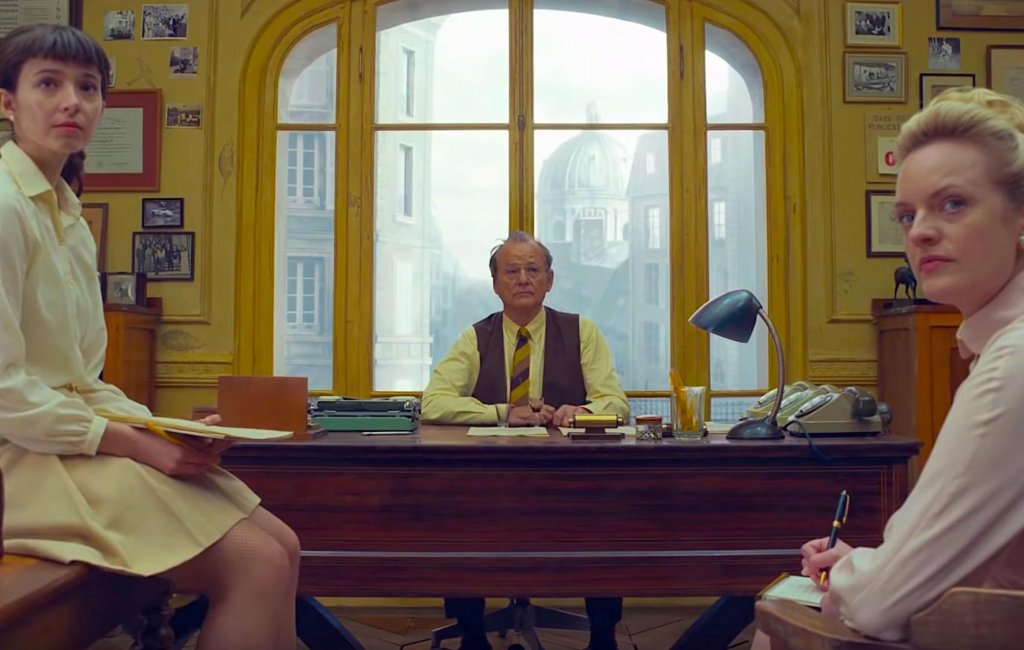
Bill Murray and Elisabeth Moss in The French Dispatch directed by Wes Anderson

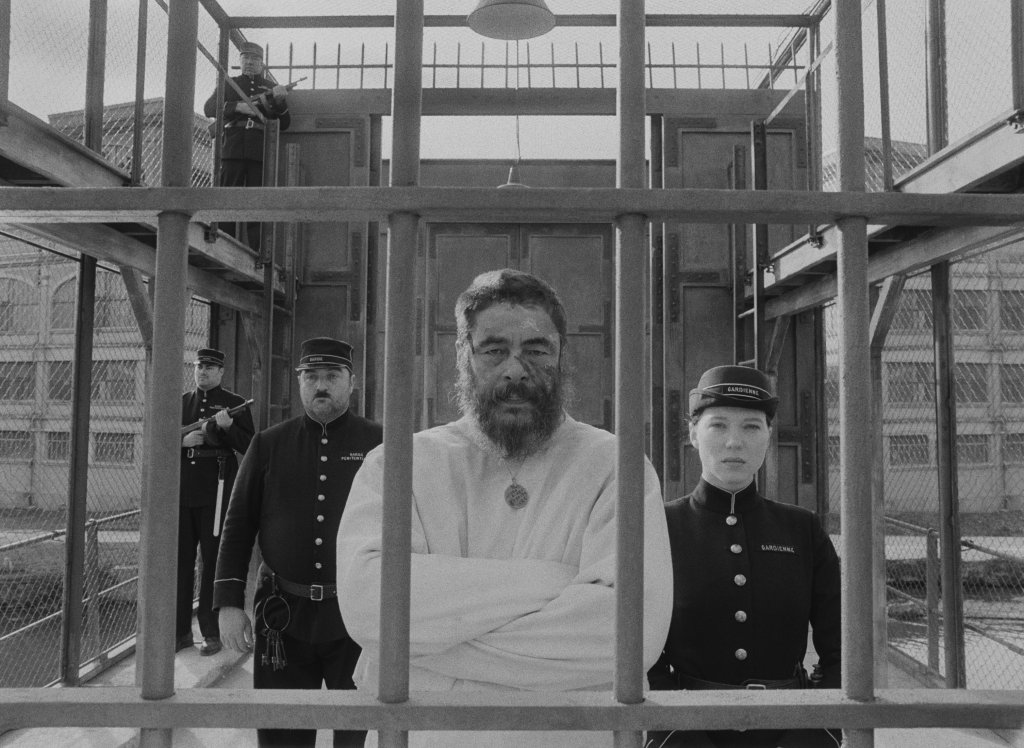
First, we are guided through the low-life beats of the streets of Ennui by cycling enthusiast Herbsaint Sazerac (Owen Wilson). Then comes an arts report from J. K. L. Berensen (Tilda Swinton) delivered via symposium, about the incarcerated artist and modern Abstract Expressionism pioneer Moses Rosenthaler (Benicio Del Toro) and his muse, the prison guard Simone (Léa Seydoux). It’s followed by a political investigation into student affairs by Lucinda Krementz (Frances McDormand), with a focus on student revolutionaries Zeffirelli B (Timothée Chalamet) and Juliette (Lyna Khoudri) in a piece based on the incredible two-part article by Mavis Gallant about the May ’68 protests.

Finally, the last segment is a gorgeous food column by Roebuck Wright (Jeffrey Wright), a character inspired by James Baldwin and A. J. Liebling, reflecting via talk show on a dinner prepared by famed police chef Lt. Nescaffier (Stephen Park) during a kidnapping plot. Connecting these disparate threads is Editor-in-Chief and founder Arthur Howitzer Jr. (based on Harold Ross and played by Bill Murray), whose quiet sadness in compiling the magazine’s very last issue permeates even the quirkiest exchanges.

The French Dispatch is the most Andersonian of Anderson’s works. Full of stylistic quirks, detail-packed compositions, and his signature dense and fast-paced dialogue, it also functions as a who’s who of Hollywood character actors: further to those mentioned above, The French Dispatch’s call sheet includes Jason Schwartzmann, Edward Norton, Saoirse Ronan, Tony Revolori, Adrien Brody, Wally Wolodarsky, Elisabeth Moss, Willem Dafoe, Mathieu Amalric, Christoph Waltz, and more. Though most get a line or two in what are mostly parodied cameo roles, such casting does add an extra touch of entertainment value to the overall film.

Benicio del Toro and Lea Seydoux in The French Dispatch, directed by Wes Anderson

It also plays into another defining aspect of The French Dispatch: the feeling that Anderson is unapologetically making this film for the pleasures it brings him, with little else in mind. And because it is so overly indulgent, The French Dispatch falls short of being great. As much as viewers can enjoy the moment-by-moment progression of the film and the truly stunning physical choreography, there just is not enough in the way of emotional connection, narrative weight, or perceived message behind Anderson’s aesthetic joys and well-meaning eccentricities.

There is so little warmth or genuine wonder to any of the stories that most scenes feel like exercises in style – this despite the fascinating subjects which inspired them.  If Anderson is trying to say something on the subject of print media, journalism, or something so broad as the appeal of storytelling, or even if it’s satirising the high-mindedness which The New Yorker came to symbolise with the American middle class, then it is lost amidst the film’s playfulness and abundance of visual tics.

For all its prettiness, delightfully written dialogue and very game cast, Wes Anderson gets lost in his own Anderson-ness. The French Dispatch might look and sound good, but it lacks the soul to leave a lasting impact with its audience.

The French Dispatch releases in cinemas October 22nd. You can check out the trailer here

Timothee Chalamet and Frances McDormand in The French Dispatch

WE NEED TO DO SOMETHING

We Need Do Something 2021

“It’s not the end of the goddam world,” insists a frustrated and short-tempered Dad as his family – hunkered down in the basement of their house, as a tornado rages outside – begin to panic. But as the plot of We Need to do Something unfolds, it becomes less and less clear what exactly is happening in the world beyond the four walls of this temporary domestic sanctuary.

When the storm passes, the family find themselves still trapped by debris blocking their exit. As they try to make their escape, most of this micro-budget indie thriller takes place within this cramped and confined setting. In fact, the only exterior scenes come in the form of flashbacks. These show the blossoming relationship between sparky, wayward teen Melissa and her new partner, the part-Goth, part-Wicca Amy.

Melissa’s fledgling love interest provides her with a welcome distraction from the miserable state of her dysfunctional family. The marriage between father Robert and mother Diane is falling apart in a welter of recriminations. Robert clashes with his petulant and determined daughter over every issue imaginable. Even her younger brother Bobby is affected by the family’s disintegration. The stress of being trapped exacerbates these long-standing familial tensions. And that’s before bizarre and inexplicable developments make the family doubt if their predicament is happening in a reality that they recognise.

Directors working with minimal funds can make a virtue out of a single-set shoot. Sean King O’Grady tries to extract the maximum atmosphere from the locked-down premise of Max Booth III’s script (adapted for the screen from his own novella). Cinematographer Jean-Philippe Bernier frames the characters’ plight through some decent enough camera work. But even as a series of unfortunate events befall the family, it’s difficult to make what is essentially an oversized bathroom feel particularly threatening.

With little else to work with, the movie relies heavily on the performances of its small cast. Pat Healy puts in a convincing turn as the tightly-wound and increasingly volatile patriarch Robert; Vinessa Shaw allows the hidden strengths of put-upon wife Diane to gradually come to the surface as the situation darkens. Best of all is Sierra McCormick’s portrayal of the conflicted Melissa, an adolescent whose emotional fragility lies just beneath the surface of her brash and confident demeanour.

Although it will be too small and oblique a film for many, what really undermines the impact that We Need to do Something could have is that its plot ultimately makes no sense. This means that the tension built up in the first hour of the film evaporates in a ridiculous final act. It’s an endpoint that explains nothing and which makes every weird and unsettling thing that happens in the run-up feel arbitrary and inconsequential.

WE NEED TO DO SOMETHING is on digital download from October 25th