THE BANISHING

banishing

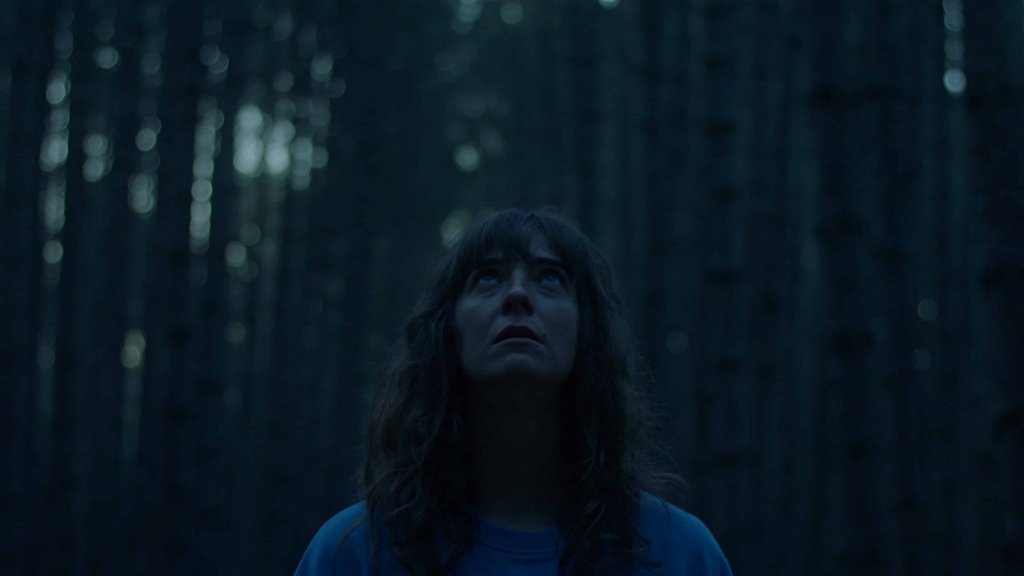
The Second World War is starting to dominate thoughts, and a priest, Linus (John Heffernan) has taken over a new parish and has moved his wife Marianne (Jessica Brown Findlay) and her daughter Adelaide (Anya McKenna-Bruce) into a grand Gothic estate. Linus still can’t bring himself to sleep with his wife due to his devout theology, and alone in her room, Marianne hears strange noises and begins having hallucinations. While Adelaide plays seemingly innocently with her dolls, the house’s past begins to envelope their lives.

Bases on the oft-filmed Borley Rectory case, director Christopher Smith (Severance) manages to bring a fresh and often terrifying edge to the familiar story. Eerie mirror images and visions of creepy monks heighten the tension and palpable level of fear, but it’s down to the acting that makes The Banishing such an engrossing watch. Finlay and McKenna-Bruce are simply stunning. It’s particularly rare for a young actor to accomplish so much to sell the scares. The ever-brilliant Sean Harris (Possum) shines as Harry Price, the oddball spiritualist who knows the problems of the house, his beliefs being completely at odds with the religious sector. The screenplay – by David Beton, Dean Lines, and Ray Bogdanovich – adds some extra flourishes meshing the story with the rise of the Nazis. It’s become a cliché, but the house itself is a striking character on its own, brought to life by Sarah Cunningham’s striking cinematography, which explores every nook and cranny and draws us deep into the chilling heart of the story.

The Banishing is one of the best haunted house films we’ve seen for a while.

VIOLATION

Madeleine Sims-Fewer as Miriam in rape revenge thriller Violation, which screened at SXSW festival 2021

Violation, a rape revenge thriller from Madeleine Sims-Fewer and Dusty Mancinelli, casts a decisively female gaze on the oft-maligned genre. This debut feature from the directing duo centres on Miriam (played by Sims-Fewer), a woman whose marriage is on the brink and whose relationship with her sister Greta (Anna Maguire) is fraught with jealousy and contempt. The only person with whom she finds a natural ease and levity is her childhood friend and brother-in-law, Dylan (Jesse LaVercombe).

To reveal much more of the plot’s details would ruin the careful construction of the story, which unfurls in non-chronological order. The result is often disorienting, but highly reflective of Miriam’s anxiety-filled and trauma-soaked memories. Despite the dreamily structured narrative, Violation also has a disturbingly naturalistic, grounded quality. The revenge sequence in particular slows to an almost real-time pace, every agonising detail and sound unflinchingly committed to the screen.

Madeleine Sims-Fewer in 2021 rape revenge thriller Violation, out on Shudder

There’s nothing gratuitous or even triumphant about Violation; it’s about one woman’s methodical, desperate attempt to destroy what devastated her. Even she knows her actions won’t soothe the hurt she feels, yet she does it anyway. Through a performance of extraordinary physical and emotional endurance, Sims-Fewer embodies the tension between Violation’s hazy narrative framing and the events’ stone-cold realism: Miriam’s wild eyes appear elsewhere, haunted, while her body cannot escape her surroundings. The outcome is a performance that is distressingly credible.

If Violation has one flaw however, it is its use of visual motifs. Taking place almost exclusively in the wilderness of Quebec, the creators make heavy-handed use of animal imagery. A dark wolf feasting on a carcass, trapped spiders flailing beneath glass, rabbits being caught and skinned, landscapes tilting and keeping the viewer off-balance. It proves too on-the-nose to function as it’s intended, but the wild landscapes and eerie music do afford Violation a further sense of otherworldliness, counterbalancing the unwavering commitment to realism. The result is a trope-defying, claustrophobic, and disturbing genre thriller bolstered by phenomenal performances. Miriam’s story is a hard one to shake.

Violation is released March 25th on Shudder.

SHORTCUT

shortcut

In what is a familiar scenario, a group of mismatched teens are on a trip in an old school bus with their fatherly driver looking after them as best he can. When the road is blocked by fallen trees, the driver decides to take a shortcut through the woods while the teens bicker and flirt with each other. During the detour, they come across a dead deer in the middle of road and the driver moves it into the woods. Unfortunately, an armed vagrant – who may or may not have a penchant for human tongues – wants to commandeer the bus to take him somewhere. The bus breaking down wasn’t in anybody’s plans, though, and something much bigger and nastier is waiting for them.

Chock-full of clichés, Shortcut is entertaining enough fare, with a twist mid-way that takes it in the territory of films like The Descent with the action moving to a labyrinthine underground shelter. It’s here that the teens break from their two-dimensional form and – dare we say it – actually become a little more likeable. The movie is not overly gory, the intended audience being younger and likely less genre savvy. There are a few decent scares though and a teen audience should lap it up.

In the end, what we have is The Breakfast Club with a bloodthirsty monster replacing the teacher. It’s fun, but seasoned horror viewers will feel the beats coming a mile off.

Release Date: March 29th

REUNION

reunion

Following the death of her grandparents, heavily-pregnant Ellie (Emma Draper) has returned to her family home before it’s sold. Her overbearing mother Ivy (Julia Ormond) and her father Jack (John Bach), once a surgeon now wheelchair-bound following a stroke. Ellie begins to feel the presence of her adapted sister, Cara (Ava Keane), who died when they were young.

The large house is a perfect setting for the creepy apparitions and sensations Ellie sees and feels. Rather than airy rooms, almost every surface has boxes piled high awaiting removal. Ellie is a lecturer who is hoping to use her stay at the house to write an academic book, and the subject matter resonates throughout the story. Abuse plays a big part of the family’s psyche, from the father to Ellie herself (she attacked her partner for that reason), and as the story unravels the tension between the mother and daughter becomes as terrifying as any apparition. At one point, Ivy – a magnificent turn by Ormond – lays some ground rules for her daughter “stop talking about dark stuff; let me take care of you; be normal; don’t get excited”, as if things are meant to be swept under the carpet, ignoring any real problems and avoiding facing facts about Elle’s childhood and the role the deceased Cara plays are to be left in the past.

Reunion is a wonderfully understated ghost story. The acting is naturalistic and the cinematography by Adam Luxton makes the most of the large house and provides some surprising moments of its own. Jake Mahaffy’s direction (from his own script) is confident and builds the story slowly but very effectively. Rather than play for cheap shocks, Mahaffy succeeds in constructing a distressing tale with an oppressive, nightmarish atmosphere. Sometimes those closest to us can be the scariest thing of all.

BLACK LAKE

black lake

Lusciously filmed, this unconventional tale of demonic possession and ancient spirits is full of atmosphere and brooding melancholy.

Aarya (writer-director K / XI) has come to her aunt’s remote cottage to gather her thoughts and get her painting mojo back. Her auntie (Aditi Bajpai) has left her a gift: a beautiful red scarf purchased in Pakistan. Unfortunately, the garment appears to be possessed by a Churail, an Asian witch, and Aarya attempts to find out more about the spirit before it consumes her.

This is undoubtedly K / Xi’s film. As well as being in front of the camera for the majority of the runtime, she did a hell of a lot of work behind the scenes too. Many of the shots are tightly framed, heightening the claustrophobic atmosphere. Many of the images in the film could easily be framed as art in themselves. There’s very little dialogue, particularly in the last half of the movie, with the visuals complemented by the music (by BurningTapes). This intensifies the otherworldly quality and is thoroughly absorbing. As in a lot of Asian horror, hair plays a big part here, although this doesn’t go the Sadako route, in fact, it’s often much more terrifying thanks to the restraint shown not to rely on jump scares or freaky imagery.

K / Xi is clearly genre-savvy and the influence of the likes of David Lynch is clear, and this inspiration is given a nod and a wink with the choice of T-shirts the character wears. Scenes of intense colour have a Suspiria-like surrealness. Black Lake is a bold, confident, highly effective film that will appeal as much to an arthouse audience as it will to discerning horror fans. In terms of the rather niche possessed garment subgenre, it’s more In Fabric than Slaxx, and has a much stronger voice than both. K / Xi proves to be a powerful director who we’ll have our eyes on in the future.

Where to watch: Prime Video 

ZACK SNYDER’S JUSTICE LEAGUE

Comic book franchises come and go. For every Marvel Cinematic Universe, there’s an Amazing Spider-Man, Dredd or Hellboy that failed to take off. Reboots and remakes are common. But it’s unique for a franchise flop to get a do-over like Zack Snyder’s Justice League. Wrangled from his hands due to a horrible combination of family tragedy and studio meddling, the film first manifested in 2017; a garbled hash of recut action sequences and reshoots by emergency director Joss Whedon. Whedon and WB’s Justice League was more coherent than anyone could have expected it to be, but reeked of studio flip-flopping and a director struggling to make the most of a bad lot.

Finally, after years of fan clamouring (and, uh, questionable social media behaviour), Snyder’s original vision is restored. Or at least, something which passes for it. Revising Whedon’s version, re-editing old action sequences and shooting brand new material, it’s hard to know what Zack Snyder originally envisioned for his 2-Part Justice League. This probably isn’t that.

What it is, however, is undeniably Zack Snyder. Cut free from the demands of the studio, it’s the most Zack Snyder of Zack Snyder’s DC trilogy, packed full of the director’s trademark Snyder-isms. It’s also the same film that Joss Whedon made, more or less. Two hours more, to be precise.

When Superman’s death screams awaken one of the Mother Boxes of Apokalips, an ancient threat returns to Earth. Steppenwolf (Ciarán Hinds), looking to terraform the planet and redeem himself in the eyes of his master, Darkseid. Steppenwolf is here reinvented, with better motivation, but much worse armour. He looks hideous (almost all of the CGI does) but his demotion to lowly stooge of Darkseid… really works.

The rest of the film’s big beats play out largely as they did in 2017. Bruce (Ben Affleck) and Diana (Gal Gadot) attempt to recruit the Justice League – Aquaman (Jason Momoa), The Flash (Ezra Miller) and Cyborg (Ray Fisher). Of everyone, Fisher’s Cyborg really benefits from the extra screen time. Justice League is Cyborg’s film, and only he and Barry get anything approaching a satisfying arc out of it. Batman? Subdued and boring. Aquaman and Wonder Woman? Lost amidst the chaos. Superman? Barely in it.

Still, the extra two hours also score viewers a little more of Jeremy Irons’s Alfred, some more Commissioner Gordon (JK Simmons) and a handful of high-profile cameos. Action sequences are rejigged, mostly to make the thing more gory and violent than it was before. Limbs are lopped off, bad guys are beheaded, and Wonder Woman murders a group of terrorists in front of a class of schoolgirls. “Can I be like you someday?” a little girl asks Diana, after watching her brutally explode a guy. “You can be anything you want to be,” Diana replies, apparently having been through a lot since 1984.

This is the Justice League that Man of Steel and Batman v Superman begets – hideously ugly, frequently confused and needlessly long. Never before has a four-hour film accomplished so little. It’s three-and-a-half hours leading up to an ending we’ve already seen, a black suit, and Batman saying ‘fuck’. Its glorified post-credits sequence – sorry, epilogue – feels insulting, like Snyder fanning the flames of the next hashtag – #restorethesnyderverse.

And yet, in spite of everything, the film is an improvement upon its predecessor in every conceivable way. It’s more interesting; more heartfelt; more sincere. The humour is warmer, the characters more rounded and more human. The action sequences have more bite, the villains more imposing.

Zack Snyder’s Justice League is not a good film, but, for all its foibles, it’s a better bad film than the one Joss Whedon tried to make. It’s the same film, but… more.

PHOBIAS

A doctor works through five patients’ worst nightmares in a series of gruesome tests and procedures. Held in his laboratory slash prison, the captives face their most deep-seated phobias again and again. Plus electroshock therapy, for good measure. And that’s just the framing device.

This horror picture tells each of their stories, a different writer/director per phobia (including the debut of Push and When a Stranger Calls star Camilla Belle!). It has an admirable handle on tone and atmosphere, flowing through and between each of the segments. Nor does it take the easy route with its phobias, tackling a lively selection of fears in fresh and largely unexpected ways. If nothing else, it sports Macy Gray as you’ve never seen her before. Where most anthology horror films are something of a mixed bag, Phobias is a largely successful experiment. It gets under the skin early, with a creepy opening credits sequence and incredible sound design by Jacques Brautbar.

Its line-up of directors (Camilla Belle, Maritte Lee Go, Joe Sill, Jess Varley, Chris von Hoffmann) may not be household names, but this is one of the most consistent anthology horror films out there. Consistently unnerving; consistently weird; consistently horrifying. Some stories hit harder than others, but there’s not a dud amongst the bunch. Those hesitant to get in on yet another mixed-bag horror anthology have nothing to be scared of – Phobias is the real deal.

Release Date: Out Now (US), UK (TBC)

SLAXX

slaxx

It’s Libby’s (Romane Denis) first day on the job at high-end fashion store CCC. Priding itself on being fair trade and ethical, the reality is the staff are treated like slaves, but with a smile and fake togetherness. Anyone who has worked retail will probably see this as a nightmare on its own. Add to it the fact that the store is in lockdown for the night while the new range of jeans are put out for the big Monday Madness reveal. The SS range of jeans have a special quality – they mould to your body and make you look your best. They also have a mind of their own and are going to kill everybody.

We’ve had dresses with a mind of their own in Peter Strickland’s In Fabric, now co-writers Patricia Gomez and Elza Kephart (the latter directing) bring us murderous pants. Presented as a horror comedy, there’s a strong message here too, which shifts the tone in the final act. It works best as a satire of big business hypocrisy and soulless, career-driven bosses. The fun aspect of the homicidal jeans loses its edge once the reason for their sentience is unveiled. Come for the crowd-pleasing gore but stay for the thoughtful message about child labour and ethics.

THE GREENHOUSE

The Greenhouse

DIRECTOR: THOMAS WILSON-WHITE | SCREENPLAY: THOMAS WILSON-WHITE | STARRING: JANE WATT, SHIV PALEKAR, KIRSTY MARILLIER, CAMILLA AH KIN, RHONDDA FINDELTON | RELEASE DATE: MARCH 16TH (BFI FLARE)

Time travel has been used for many things throughout movie history, from protecting future leaders to reversing mass genocide. Rarely, however, have we seen it used as a vehicle for exploring death and loss in as profound a manner as this. That’s what The Greenhouse offers, treating its fantastical central element with a tenderness and subtly that offers a refreshing spin on one of science fiction’s most famous inventions.

When Beth (Jane Watt) discovers a greenhouse that transports her back to moments from her past, it gives her the opportunity to rue past failures as well as reminisce about better times. Beth’s increasingly prevalent existence in her memories is the basis for a moving family drama adorned with fractured relationships and some quietly breathtaking camerawork. The greenhouse interior, with glum whites contrasting with greenery full of life, makes for an oasis that emotionally symbolises how Beth’s life has been prevented from flourishing by constraints and barriers from her past. Wilson-White’s gentle touch makes this exploration of grief a powerful and deeply personalised experience. Anchoring this success are some accomplished performances, Watt and Palekar in particular standing out when it comes to channelling emotional turmoil.

The character-driven, introspective focus doesn’t sit perfectly with the high-stakes adventure that closes the film. Yet it takes little more than another irresistibly misty landscape shot or painful flashback to Beth’s past is needed to immediately reel you back in. Time travel is used for emotive effect in The Greenhouse, astonishing you with its sensitivity and detail. Wilson-White teases out how being brave enough to step back into the past can leave lasting impacts on both your present and future.

THE WINTER LAKE

winter lake

The Winter Lake possesses all the makings of a delightfully spooky psychological thriller – a desolate rural Irish landscape, a collection of strained parental relationships and a lake that hides a terrible secret. It has the potential to be wonderfully unnerving and yet somehow it completely misses the mark.

The film opens on emotionally unstable teenager, Tom (Anson Boom) and his cold, single mother Elaine (Charlie Murphy of Peaky Blinders), who have recently moved to rural Ireland, fleeing some unspecified trauma back in the UK. The two have taken up residence in the derelict home that once belonged to Elaine’s now recently deceased grandfather. The only people around are neighbours, Ward and Holly, an overprotective father and his teenage daughter, played respectively by Michael McElhatton (of Game of Thrones fame) and Emma Mackey (from Netflix’s Sex Education). From the off, there is something not quite right about the neighbours, but Elaine ingratiates herself with Ward anyway, leaving Tom to befriend the confident and worldly Holly, who smokes and says things like “you don’t talk much do you?”

Indeed, Tom is something of a melancholy character. He spends most of his time skulking round the lake at the back of the house, collecting animal skulls with a general sense of doom and gloom. On one fateful excursion, Tom uncovers a bag containing a horrific secret, which forces him to question how much he really knows about his mysterious neighbours. It is a shame that the bag’s devastating contents are revealed almost immediately as the human remains of a baby. With so few characters, it is no great mystery who the baby belongs to and the rest of the film unfolds with one predictable plot point after another. Director Phil Sheerin disperses any sense of suspense or intrigue by giving away the film’s central mystery within its first act and once the secret is out, there is very little by the way of substance to carry the plot to its resolution.

Cinematographer Ruairí O’Brien takes full advantage of the innately haunting setting with various lingering shots of the misty lake and marshy landscape. It is certainly atmospheric, but sadly no amount of wonderfully gloomy shots can lift Sheerin’s film from its astonishingly predictable plot. What should be a twisted psychological horror falls into the equally frightening but less desirable category of bland.