[ENDED] Win Three of Eureka’s New Horror Releases

Well, how about this for a pretty stunning prize?!

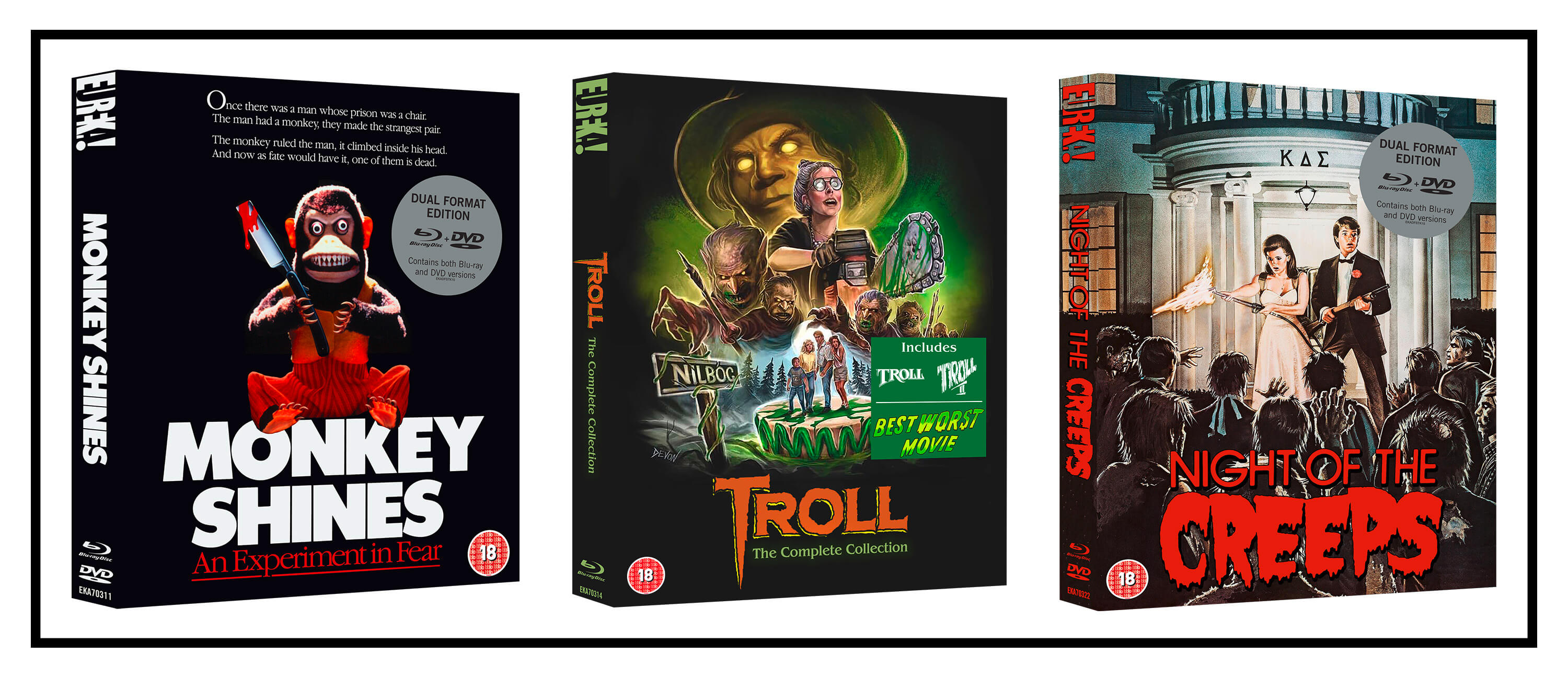
With Monkey Shines, Troll: The Complete Collection, and Night of the Creeps all getting crammed new releases from the folks at Eureka, we’ve got three sets of all three of these releases to give away.

To be in with a chance of winning a set featuring all three of these new releases, simply answer the below question:

Monkey Shines director George A. Romero famously helmed which 1968 classic?

a) Night of the Living Dead

b) Deadpool

c) The Walking Dead

Email your answer, along with your address details, to [email protected] labelled Eureka Horror before midnight on Sunday, October 21st.

To give you an idea  of what to expect from these cult favourites, be sure to check out the trailers below:

MONKEY SHINES, George A. Romero’s spellbinding and twisted thriller, is OUT NOW on Dual Format and can be purchased here.

TROLL: THE COMPLETE COLLECTION, a celebration of one of the greatest ‘bad movies’ ever made, is OUT NOW on Blu-ray and can be purchased here.

NIGHT OF THE CREEPS, a frightening, funny and essential B-movie horror, is OUT NOW on Dual Format and can be purchased here.

Jonathan Green | BEOWULF BEASTSLAYER

Jonathan Green is one of the UK’s most prolific creators of franchise fiction and adventure game books. The freelance writer’s credits include Fighting Fantasy, Warhammer 40,000, Doctor Who, and Sonic the Hedgehog. He’s also responsible for all sorts of steampunk, science fiction, and fantasy novels. His recent work has included You Are the Hero, a history of Fighting Fantasy, a Peter Pan/Lost World mash-up, and a steampunk adventure gamebook inspired by The Wizard of Oz. His latest project is the keenly anticipated Beowulf Beastslayer, and we caught up with him to find out more about this exciting Kickstarter project.

STARBURST: What’s your elevator pitch for Beowulf Beastslayer?

Jonathan Green: Beowulf Beastslayer is a brand-new take on the Anglo-Saxon epic, re-imagining the events described in the poem as an adventure gamebook. Will you follow the course of events as laid down by the scops and skalds of old, or will you choose a different path and forge your own legend? Beowulf Beastslayer! A tale of heroes… A tale of monsters… A legend reborn!

Do you think the Anglo-Saxons would have done Beowulf as an adventure book had the idea been invented back then?

I wouldn’t be surprised! Beowulf must have always been a very popular legend, otherwise it wouldn’t have survived centuries of oral tradition to make it into the written form, thereby ensuring its legacy for millennia to come. I mean, if you were an aspiring Viking warrior, wouldn’t you want to imagine yourself in the role of someone who is, effectively, a superhero?

Do we need to have studied the classics to enjoy this book?

Not at all. Everything you need to know is revealed as the adventure unfolds. However, if you have studied the original poem, you will hopefully appreciate the work that has gone into turning it into a gamebook whilst staying true to the spirit of the Anglo-Saxon epic. And even if you do know the legend inside out, that’s still no guarantee that you will successfully complete the adventure at your first attempt.

How does this compare to your other work?

The writing style is quite different, as I have tried to reflect that of the original poem in my adaptation. It’s not in Old English verse, but there is a lot of alliteration as well as frequent use of kennings. Anyone used to my adventure gamebooks, particularly my more recent ones, will recognise elements of game design as well as the high proportion of dramatic action scenes and set-pieces. So, in short, it should have a familiar feel, whilst also reading as something quite new – if that’s not a total contradiction!

Beowulf Beastslayer

This project has been in development for a while. What took so long?

I first pitched the idea five years ago, buoyed up by the success of funding my first Kickstarter, YOU ARE THE HERO – A History of Fighting Fantasy Gamebooks, but before I actually started writing it. Dave Bradley, who was editor of SFX Magazine at the time, saw my mention of it on social media and interviewed me about it, which helped raise its profile still further. However, to cut a long story short, I then set about writing YOU ARE THE HERO, took on a full-time teaching post for three years, wrote Alice’s Nightmare in Wonderland, quit teaching again, completed the quasi-trilogy of ACE Gamebooks to date (The Wicked Wizard of Oz and NEVERLAND – Here Be Monsters!), which brings us to the here and now, with Beowulf Beastslayer a third written and the Kickstarter to fund its publication launching on Monday, 1st October, at 9:00am BST.

Why are we still fascinated with the story of Beowulf?

Because Beowulf is the first superhero of the English literary tradition, but, at the same time, he is just a normal mortal man. He’s not a benevolent alien, a transhuman mutant, or even a wizard. Everything he achieves is by dint of his honour, bravery, physical prowess, and battle-hardened training. All of this means that at the back of people’s minds as they read the legend, or hear the poem recited, is the thought, “Maybe I could do that.” And Angelina Jolie redefining the popular image of Grendel’s mother didn’t do it any harm either.

It was originally told orally. Will you ever take this gamebook to the stage?

Quite possibly. Professional theatre company and audio book production house Circle of Spears is already turning Alice’s Nightmare in Wonderland into a theatrical experience, so why not do the same with Beowulf Beastslayer?

What will the art be like?

Phenomenal, because I am very fortunate to have secured the services of fantasy gamebook art legend Russ Nicholson, the man who brought the original Fighting Fantasy adventure The Warlock of Firetop Mountain to life, along with many others.

Jonathan Green

Why Kickstarter?

It’s a great way to market directly to a core of passionate fans who absolutely love gamebooks and are proud to be part of a community that helps bring such projects to life. And for me, a gamebook wouldn’t be a gamebook without the incredible illustrations, and, in these austere times of reduced publishing budgets, it’s a great way to raise the funds needed to pay for some top-notch artwork.

What’s next?

I have some other gamebook projects in the pipeline but I also want to write another of my YOU ARE THE HERO gamebook histories, but this time focusing on gamebook series other than Fighting Fantasy. I’m also writing more Scrooge and Marley (Deceased) occult detective mysteries, and I’d like to put together a new short story anthology as well.

What does the future hold for Fighting Fantasy?

That depends on whether the current generation of 9 to 12-year-olds take to the series as my generation did when we were the same age. That said, many of the original adventures have made the successful transition to the video game format, with the most recent release being Tin Man Games’ adaptation of The Warlock of Firetop Mountain, which is now available for the Nintendo Switch. What I can tell you is that Steve Jackson is currently writing his first new FF gamebook in 32 years – the last one he wrote, Creature of Havoc, having first been published back in 1986 – and that there will be another Fighting Fantasy Fest in 2019. So watch this space!

You can find out more about Beowulf Beastslayer by clicking here.

Lowell Dean & Emersen Ziffle | ATOMIC VICTORY SQUAD

Lowell Dean Emersen Ziffle Atomic Victory Squad

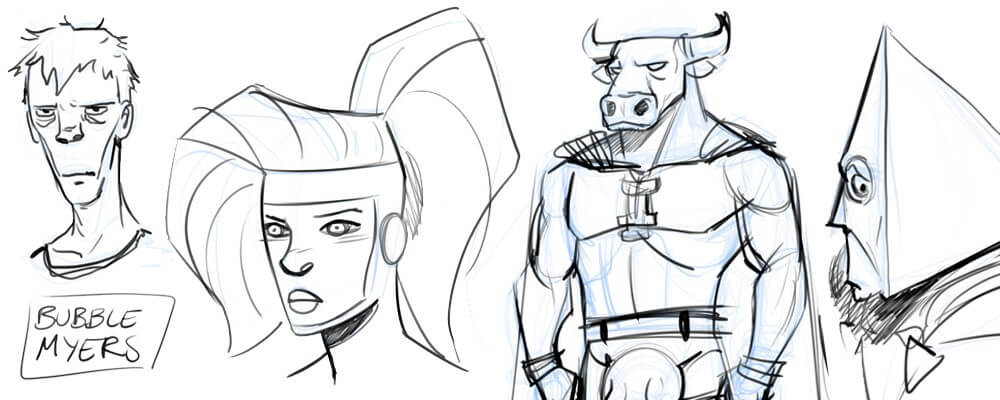
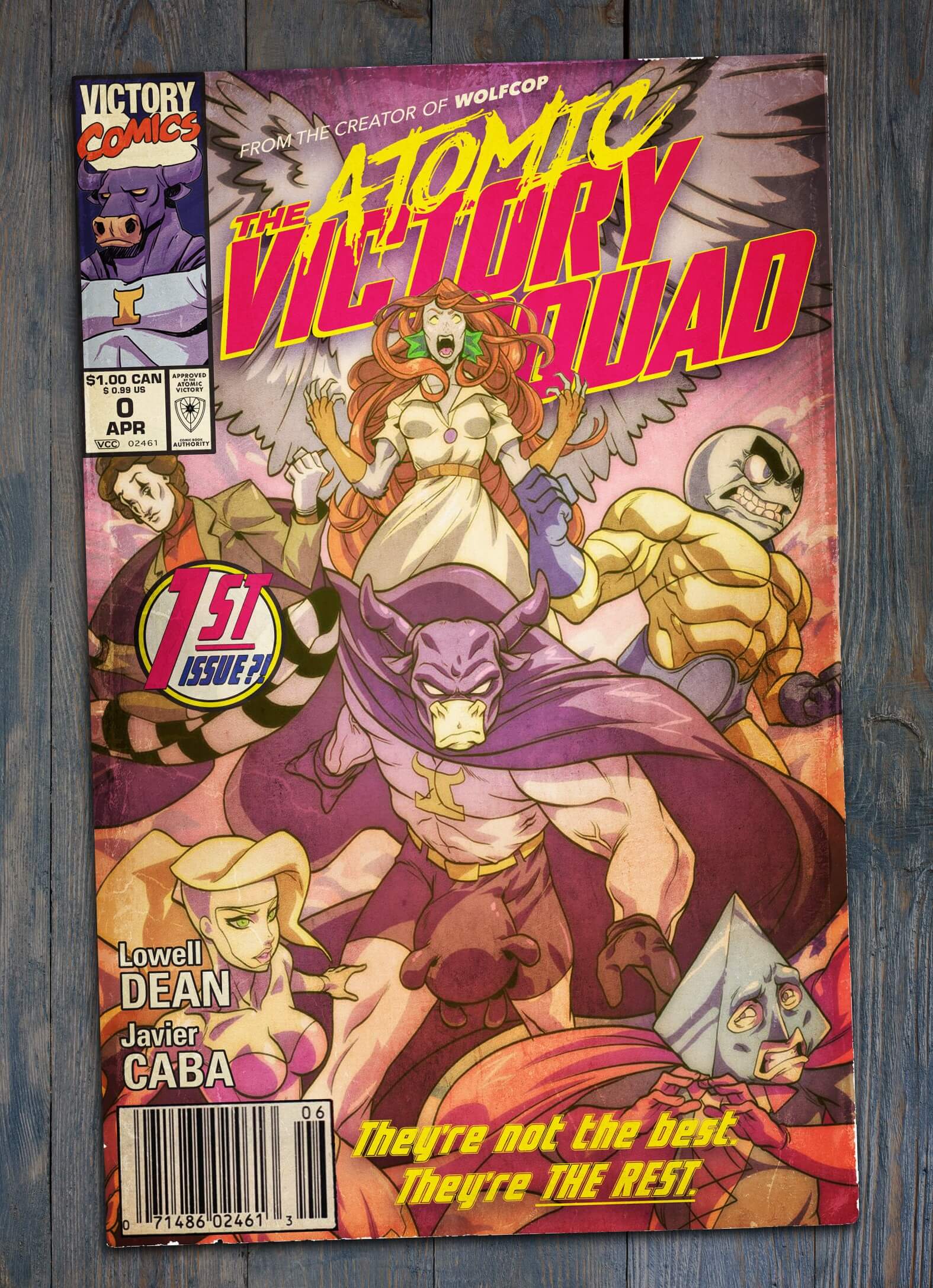
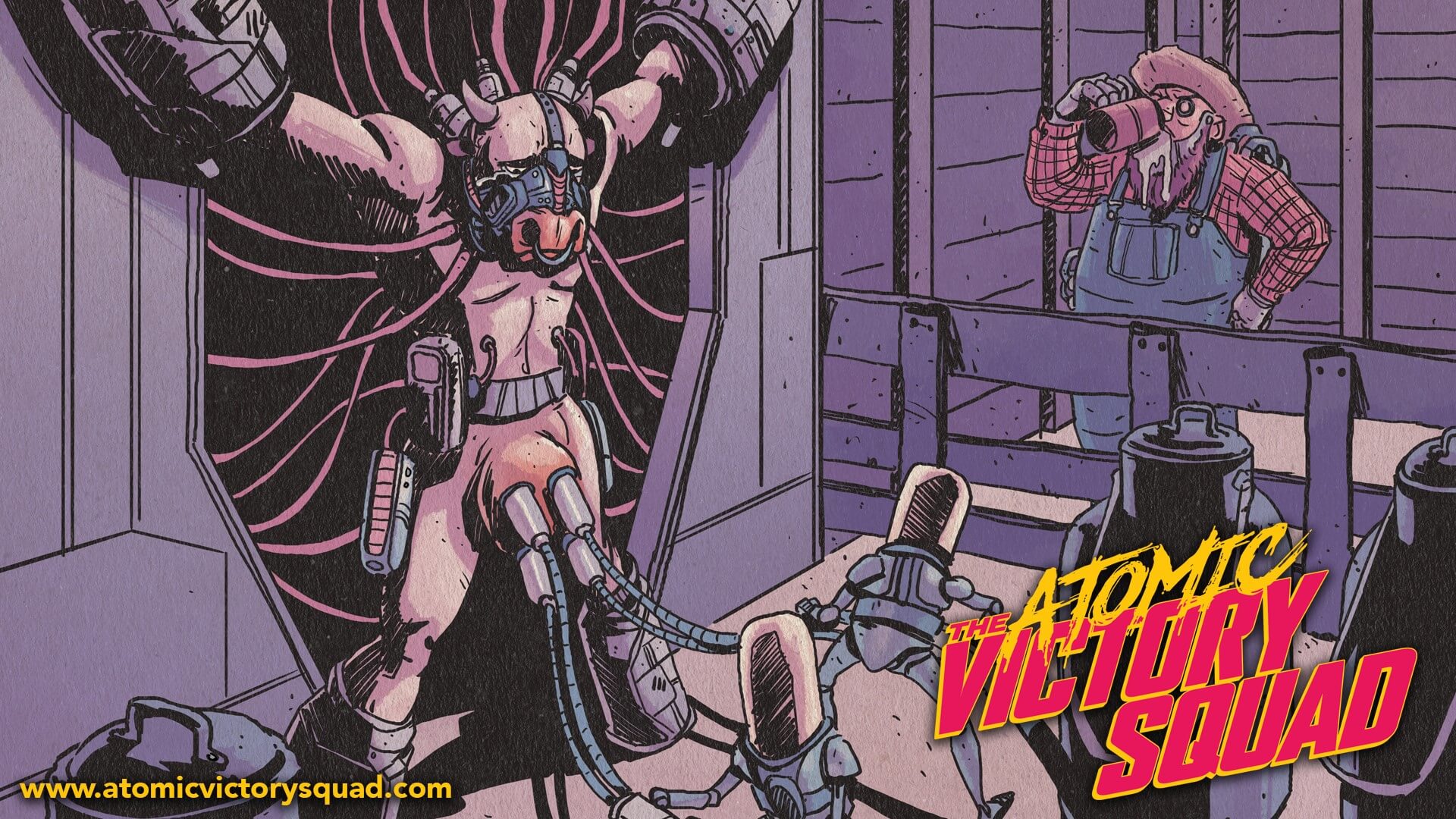
Lowell Dean marked himself out as a huge talent to keep your eye on with the brilliant, bloody, boozed-up WolfCop and its sequel, and now the impressive Canadian has turned his attention to the world of comic books. Teaming with artist Javier Martin Caba and practical effects genius Emersen Ziffle to bring readers the Atomic Victory Squad – a team of superheroes with an array of very real issues ranging from addiction, to depression, to gender identity, and more – Lowell has taken to Indiegogo for some assistance in getting this project up and running. And so, we grabbed some time with the charming duo of Lowell and Emersen to get the downlow on AVS, some of the campaign’s stunning perks, discuss WolfCop, and chat about upcoming feature SuperGrid.

STARBURST: Atomic Victory Squad sounds like such a cool concept, with a lot more going on than just the usual tights ‘n’ capes. How did the first kernel of this idea come to be?

Lowell: Well I’ve been developing these characters since high school or earlier. I’ve always loved superheroes, but there’s a big difference between the heroes I love and the heroes I make. I love Superman and Batman, but whenever I would draw something it was always a little more messed up. That actually made me think I shouldn’t make comics because I was like, “Instead of Superman I’m making a cow, but I care as much about him as much as people care about Superman.” So I was always just making really weird things and I kind of forgot about it. A few years later, Emersen and I were always working on stuff, and he really wanted us to develop something that was our thing, something completely independent. He asked what I had, and I showed him some Atomic Victory Squad.

Emersen: We had been working for other people so long, but we weren’t always in control of the properties we were working on. You invest your heart and your soul into these things and they have their own legs that you can’t control. I’m not terribly creative as far as coming up with original ideas, but I’ve always been around Lowell. I get to sort of accent the work he does. I picked his brain and said, “We’ve got to do something that’s ours. Lowell, you’ve got to finish this stuff. You’ve got to make something of this stuff.” That is ultimately where we’ve come with this. It was such a crazy, brilliant concept. It’s just so cool.
Atomic Victory Squad

While comics have undoubtedly gotten better for it over the past decade or so, was Atomic Victory Squad created as a reaction to mainstream comics not really addressing topics such as mental health and addiction?

Lowell: I guess. We’re getting a lot more fringe stuff. For me, it was more animation that made me want to do this. I’ve wanted to make these characters since I was a kid, but I never thought I could do it. You know the story where nobody thought they could make an independent film until they saw Kevin Smith make Clerks? It’s kind of like that for me, because when I saw The Venture Bros. for the first time, I was just, “What is this show?” It’s so weird, the animation is so cinematic, but it’s also not pandering. It’s very interesting and it had its own personality and sense of humour. I just thought it was so fringe, it was something I would want to make. I started pitching it as an animated series, but I didn’t get much luck because obviously I’m just a schmo who’s never made an animated series before – and I had some really bad drawings I had done. After that, I had kind of put it on the shelf. A couple of years later you get BoJack Horseman, and I was just, “This is perfect. This is a cartoon that has so much darkness in it.” It just felt there was this groundswell for mature animated characters, whether it’s a cartoon of a comic book. I think it’s a twist on it. The best comics and the ones that have lived forever have always touched on that. I mean, Marvel has created a great niche by having human flaws. Anybody who grew up with Spider-Man knows that the best part is not necessarily him fighting Doc Ock, it’s about him missing a test to do it. And then there’s the X-Men. To me, [AVS] are almost moulded on the DC ideal. But given that the disfunction is amped-up-to-11, it seems more Marvel. For me, it’s weirdness. It’s weirdness and it’s tragedy and it’s not a blanket statement about being outsiders. Each of them is facing something very specific that might not make them gel together. It’s not like they can all huddle up in a group and say, “We’re all together, we’re all the same.” No, they’re all different to each other, they all have to work out how to deal with each other first.

At the moment you have the Indiegogo campaign for the comic book, but, in an ideal world, is an animated series the perfect endgame for AVS?

Lowell: 100%, yes. When I see these characters in my head, they’re moving around in this universe. My dream would be an animated series. They constantly tell you to write and do what you can do or write what you know. I don’t just want to be sitting round for twenty years thinking I have a cartoon I want tot write. This is in our control. Emersen can create cool perks, we can afford to make a comic book and give the world a taste. It’s that age-old thing of no-one knows until you tell them. So we’re going to tell the world about these characters until they get it.
Atomic Victory Squad

Out of AVS, are there any characters that each of you lean more towards or look forward to working with more than the others?

Emersen: One of my favourites is Gary the Mime, just because he’s so unassuming and it’s a throwaway concept until you realise that whatever he mimes becomes real. That has infinite possibilities. We see a little bit of it in the first issue, but just imagining where we can go with a concept like this. We don’t know what he thinks, but it’s pretty limitless. That concept is going to be so much fun to illustrate, to draw, to figure out. And he’s silent.

Lowell: And is he actually doing it or is he just insane?

Emersen: He might just shoot a guy and his head explodes, but he’s just pointed his finger at him. I just love that character.

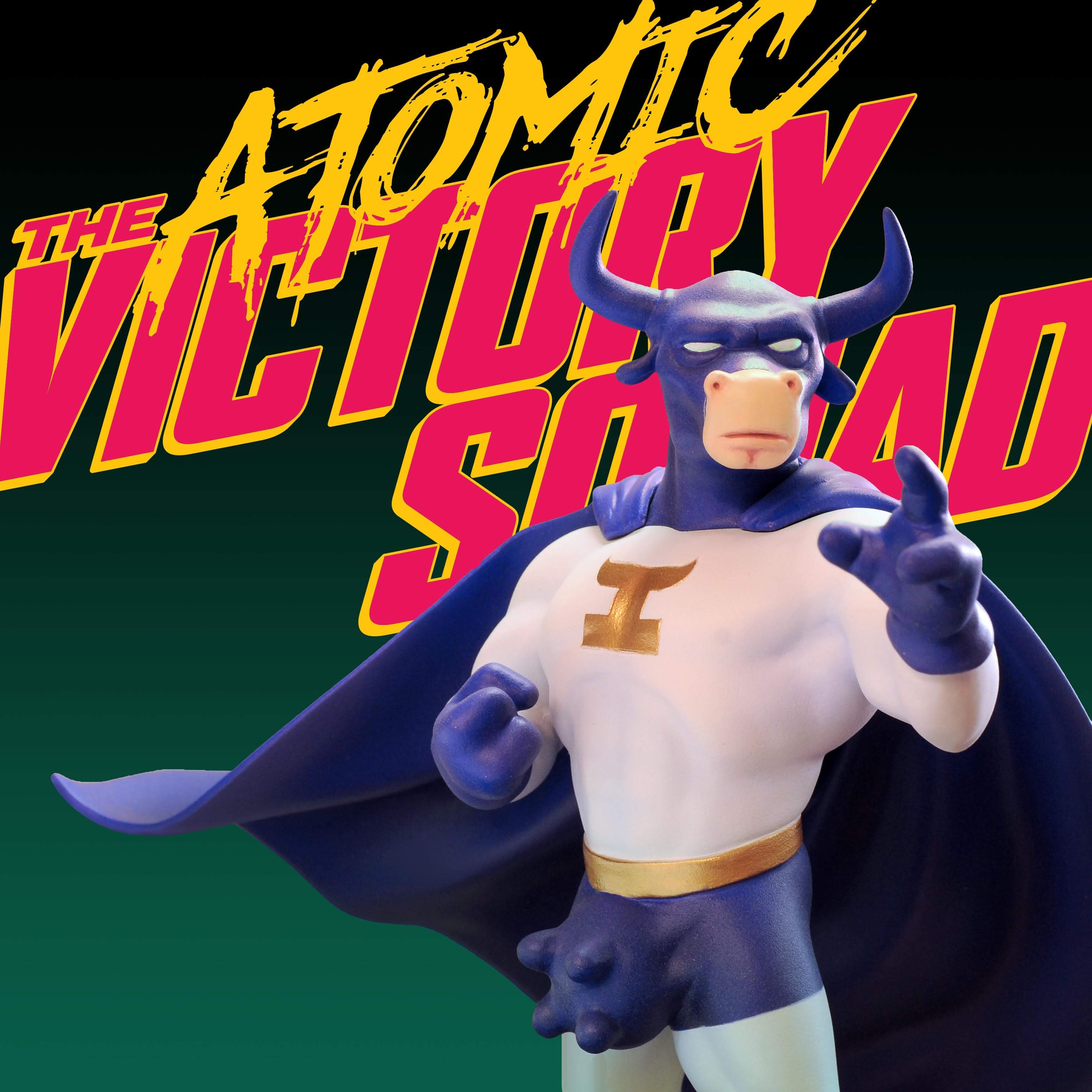
Lowell: For me it is kind of like picking one of your favourite kids, but I think right now, for me, it’s gotta be Invincibull because he’s the oldest. Actually, Bubble Myers I made up when I was seven-years-old. I think Invincibull because he’s got so much weight on his shoulders.

Bubble Myers is a character who’s a recovering drug addict, which we guess is something you didn’t think of when you were seven-years-old. So, when did you start to develop the personalities of these characters, the flaws, the very human traits?

Lowell: I’d say the flaws and traits started coming out in the last five years. When I was seven, Bubble Myers was an intergalactic explorer. He was a football player, but he’d always piss people off because he was too cocky. That morphed in to addiction issues later. Five years ago, I started thinking about how to push these characters further – the things that make them stand out, how can I make their weaknesses be strengths? For example, She-Girl is such a cliché. On the surface, she’s everyone’s favourite superhero. She’s oversexed, too tall, too blonde. To me, I just loved flipping that on the head. No, she’s not every character you heard of or thought of. She resents how you look at her. She resents how she’s been designed. Like Invincibull, she longs to understand humanity but she also kind of hates them.

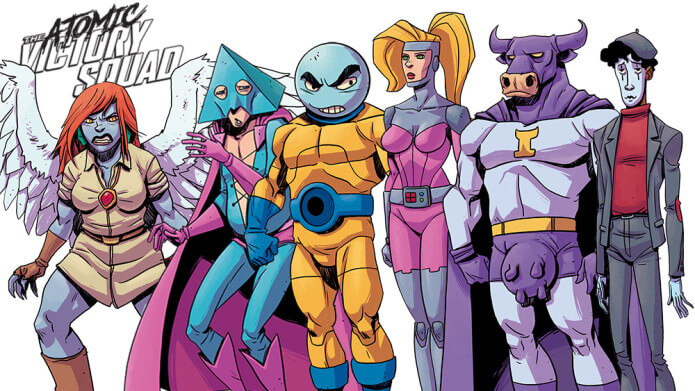
The Atomic Victory Squad itself is made up of Invincibull, Gary the Mime, Zoozanna, Bubble Myers, She-Girl, and Triangle Master, but were there any other characters that ultimately didn’t make the final cut for the team?

Lowell: Yeah, totally. The team actually had a couple of different members that I pulled out just because they were a little too redundant. Again, I had made them up when I was eight, so there were just a couple that were too derivative of something like The Flash. So you know, if we’re going down this road, I’m pulling out anyone who feels like they’re a little too close to a real superhero. I’m letting the characters be their own archetypes. There are other characters in the world, so I didn’t have to lose them – I just moved them somewhere else – and one big change was Invincibull. His actual original name was Mega-Moo. Just as we were about to launch the comic, Emersen was Googling to double-check that nothing was out there. I honestly made him up 15 years ago, but we saw this milk product that’s Mega-Moo. Okay, so let’s come up with another funny name.
Atomic Victory Squad

When you were putting the team together and looking at the personal side of each characters, was there anything you wanted to touch on that you haven’t chance to yet or that you’ve got planned for the future?

Lowell: For sure. I just wanted to create a team of characters who each have something to say. We barely scratch the surface in issue #1, but these characters, each of them is designed to represent some kind of issue. I like to say how Spider-Man’s thing is “With great powers comes great responsibility,” these characters are the opposite. They all have genuinely cool superpowers and any superhero team would be happy to have them, it’s the emotional personality side that prevents them from being true heroes. These would all be rejected from the Justice League of our world because they don’t respect human life or they have substance abuse problems or they fly off the handle because of the way people look at them. The issue isn’t their abilities, the issue is their personalities; they keep getting in their own way.

Emersen, you guys worked together on WolfCop, but how is it for you to be coming in and playing with Lowell’s baby?

Emersen: Everything I’ve ever done with Lowell, I’ve always sort of sat in the wings. Then he just pipes up with an idea and I’m just, “Yeah, that’s so great. Fuck yeah, let’s do that!” But this specifically, I was in a slump as far as work; I was just, “I just wanna make things.” I wanted to make collectible maquettes. I can come up with something, but I wanted something that was grounded in some sort of backstory. So for me, it was all about building this thing that we could market and show the world that “We’ve got a whole world behind it, so let’s take it further.” Working with him, it’s so brilliant. There’s all these sort of seeds he plants. I have a very visual sense of style, and I can suggest things, but we just kind of bounce off each other in a very productive way. We go for coffee daily and we’ll just talk about how something can be framed or marketed or what we can do with simple concepts. I’m just passionate about what he does, and I give what I can offer from SFX and fabrication and being creative in film. That lent itself to this whole thing. And especially with how crazy this project is; it’s endless creativity that you can throw around. It’s great.

To flip it then, Lowell, how is it to hand over your characters to other people? Is there a certain sense of vulnerability to that?

Lowell: God yeah! Try doing an Indiegogo. That’s the definition of vulnerability. If we don’t hit our goal, it’s like nobody cares. It’s a weird thing making things and creating things. At a certain point you’re really insecure and you don’t want to tell people the idea – it just lives in your head – then you turn a corner and all you want to do is tell people about it, put it out there, let it be what it’s going to be. It’s the same with WolfCop. I’d tell people about this wolf that’s a cop. People would laugh but then say, “Seriously, you’ve gotta make that!” It was the same with Emersen with this. He’d say, “Seriously, you’ve gotta make this!” We were drawing it, he and I just doodling, and we realised we needed to bring in someone else. For better or for worse, this had to come to life.
Atomic Victory Squad

How long have you guys actually known each other for then, and how did you first meet?

Emersen: I was approached years ago. I had done a few indie films – doing the make-up effects – and I remember getting a phone call in my parent’s basement from Lowell saying, “Hey, I hear you’re in to SFX.” He phoned collected, so I thought it was a prank call. I was like, “Who is this? What do you want?” And then I put a little demo reel together and he was, “Holy shit, you can do some cool stuff!” It was 2010, I think, that we started working together. Then we were inseparable after that. We obviously did our own things here and there, working for other people.

Lowell: We both like the same things, we respect each other, and we want to take on new things. We want to keep doing this. We’re addicted to this.

Emersen: It’s our passion. We just keep making things. We’ve done crazy make-up projects, and also simple love story things, very random stuff, and we just seem to draw off each other’s energy.

Even with the greatest friends and the greatest of working relationships, there are always at least some minor arguments or blow ups. Have you guys had any butting of heads, or is it always relatively smooth sailing?

Lowell: I’m sure throughout production we’ve had a few moments – when you’re making a movie it’s literally the moment you have a gun to your head – but I don’t think we’ve ever had anything serious. I don’t think we’ve ever yelled at each.

Emersen: I think we’ve been like, “What the fuck, dude?” I’m definitely the more sort of sarcastic jerk, so I’ll always try to rile Lowell up. He’ll be, “I’m so angry,” and his version of angry is sternly asking someone to move out of the way. I’ve never seen him lose his shit. I don’t think we’ve ever come to blows, which is quite cool.

Lowell: I think that’s why we continue to work together. I don’t come to blows with people, I just stop working with people when they drop the ball. And Emersen doesn’t drop the ball.

And what can you tell us about the perks involved the AVS Indiegogo campaign?

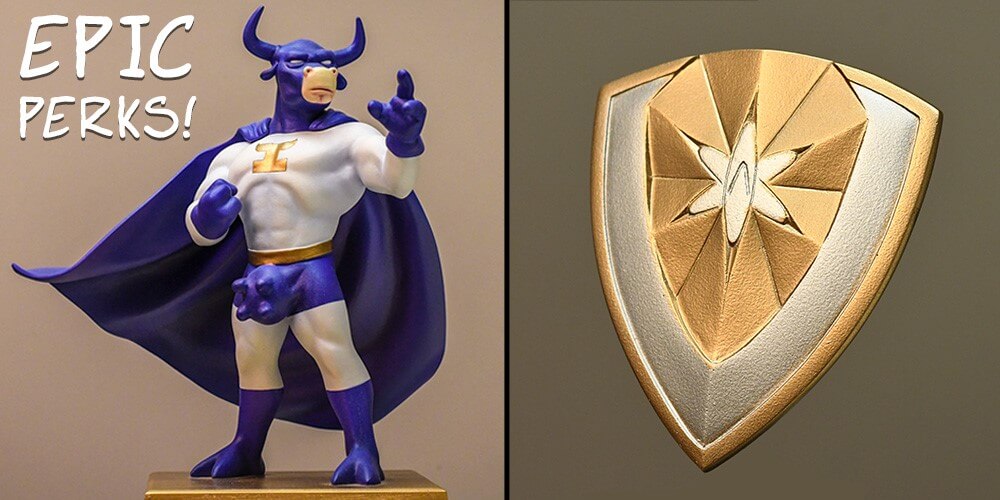
Emersen: There’s some badges, which we’ve been handing out at Fan Expos just to drum up attention, but we’re also going to be doing some goofy stuff that we haven’t even shown yet; collectibles that have some relation to what’s popular with kids but we’re going to put an old flair on it. Things called Squishies, little squishy foam things. These are just to drum up attention. And t-shirts, which were all created by myself. I love that sort of analogue artistic expression; putting my hands on something. I just love making things, so whatever I could do that’s cool and fun to people, that people respond well to, I’ll make and design. That’s my big role for this campaign.

Lowell: He’s just playing it cool!
Atomic Victory Squad

From your point of view, what would say was the coolest perk on offer right now?

Emersen: I’d say the fact that you get to be drawn in the comic and featured as an actual character that’s in more than one panel. We really like the idea of interacting with our fans and the people who are passionate with this project as they discover it. We just love the idea of working with Javier [Martin Caba] and coming up with cool ways to put in characters. And it’s not just throwaway things like we’ve seen in campaigns in the past, where people get illustrated into the comic but it’s very much just a passing thought; it’s there, they’ve ordered their perk. We really wanted to make them featured. We’re so much in to fan engagement. If you get that perk, we will engage you and say, “This is what we’re thinking, this is what we’re going to do. Send us some photos of you like this and we’ll put you in there in a really cool, badass way.” A good friend of ours, Trevor, he’s already been featured in it, he’s already been drawn into the comic. It’s such a badass shot and it looks just like him. That, to me, is my personal favourite other than obviously getting to make a bunch of cool stuff.

Lowell: It’s all cool. I think the perks Emersen’s making are just so above what you’d expect for a little campaign like this. For a first-time comic book, you don’t usually have these amazing maquettes. I’ve seen them up close and they’re so good. The only downside is that nobody really knows who Invincibull really is yet. If they did, they’d be snatching it up because it’s super cool.

You mentioned him there – on art duties you have Javier Martin Caba. How did that collaboration come together?

Lowell: I don’t know if you’ve heard of the comic Namwolf – it’s about a Vietnam werewolf – that’s by a writer named Fabian Rangel Jr. He and I were discussing, around the time that came out, of doing a crossover between Namwolf and WolfCop in comic book form. We just were flirting with the pitch or developing the idea. It never really took off, but in getting to know Fabian we’d talk about making comics and I was picking his brain. He showed me some art from Blood Brothers – a comic he was working on that Javier did – and the second I saw the style of it, “Oh, this is perfect for Atomic Victory Squad.” That was a big factor to me pulling the trigger.

With the comic itself then, what’s the tone and target audience that you have in mind?

Lowell: I’d say it depends on your kids. I would put it very firmly in the category of Rick and Morty, BoJack Horseman, and The Venture Bros. Anything you see on those shows, you’d see here. There’s no coarse language, people aren’t dropping F-bombs, there’s no nudity… yet… but I’m sure you will see Invincibull nude at some point. It’s more just ridiculous, over-the-top, cartoony violence and mature themes, but I don’t think it’s anything a 12-year-old couldn’t read.
Atomic Victory Squad

At present, how many issues are you planning for the initial arc of Atomic Victory Squad should the Indiegogo campaign go well? Are we looking at a four-issue arc?

Lowell: Exactly! I think it’s between three or four. This first issue is a little supersized – it’s 24 pages plus some other written pages – so it’ll be a little bigger than a regular comic. My dream would be to either do a similar issue #2 and #3 that are also a little bigger and put those three together as a 100-page graphic novel. Or maybe it’s four parts. We’ll see. Beyond that, I think I’ll try and really tell the full origin of the team, how they come together, and show them in action in those three or four. After that, if we’re doing good and there’s interest, I’d love to keep going. If not, I’d at least know we’ve got this artefact that shows the world this team.

Are copies of the first issue available yet?

Lowell: No, we are actually just making it as we speak. Javier has already illustrated half the comic, but we have so much crowdfunding and engagement in the first issue that every second page features someone who could be in our campaign. He’s drawn every page that doesn’t feature a possible crowdfunding person, and now he’s basically just waiting to finish once we see who donates. There’s still about four or five slots yet, and once those people put their money down and send us their picture, he’ll be drawing them in it. And Javier moves fast. He’s so good. We’ve given ourselves a lot of time, but I’m sure we’re going to be done with the comic book before we said we would.

So far, how have you found the process of making a comic book? Is it harder than you thought, maybe easier, or has it been a relatively up and down process?

Lowell: It’s been all of those things. It was so long to get here. I think that was the hard part – finding Javier and finding the way to make a comic, me bumbling around with no experience in this medium – but once we got Javier on board you just felt like you were in safe hands. He immediately understood my script. I was very nervous, I’d never written a comic script. The second I saw his first pass at the pages, I was just, “Oh my god, you’re in my head.” So that was so cool.
ANOTHER WOLFCOP

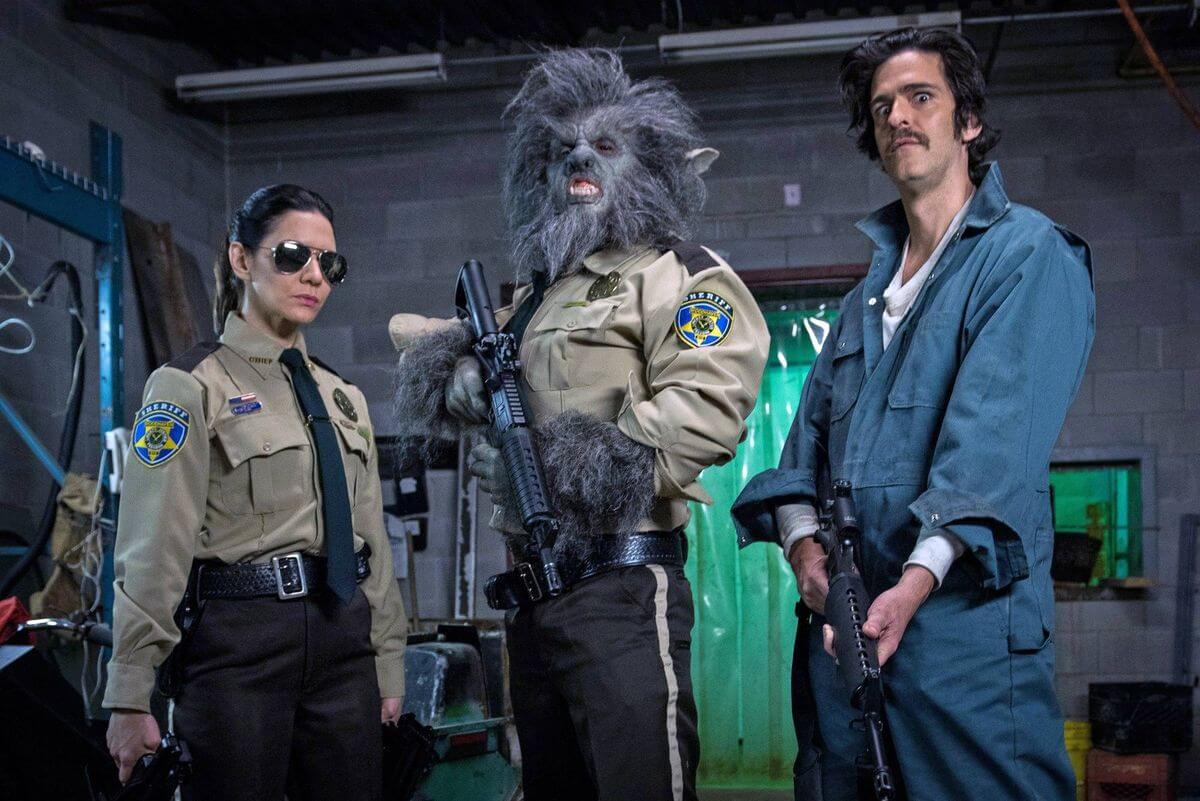
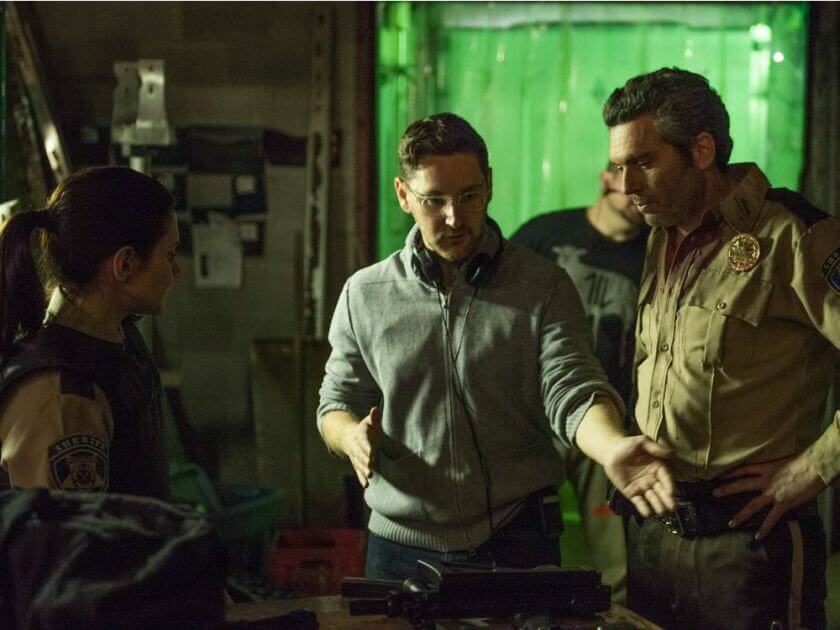
The last time we spoke, it was ahead of the release of the brilliant Another WolfCop. How has the reaction been to that movie in general?

Lowell: I think so far, so good. It’s hard for me to tell, because until a movie like that comes out on Netflix or whatever, I don’t really know. It’s kind of weird. The first WolfCop, I thought nobody really gave a shit about it until it hit Netflix. Then people were talking about it non-stop. It’s a bit of a thing where we’ve made WolfCop 2, it’s in the world, I’ve heard really nice things, but until we hit one of those major platforms I don’t think I’ll know for sure what the final verdict is. But I’m pretty happy with the way the sequel turned out. It’s a little sillier than I planned, but there’s just so much I love about it. The cast, the effects, the energy and the chaos. I feel good about it and I hope we have more WolfCop at some point.

Emersen: It’s crazy. Ultimately, we still had to cram it in to a seventeen-day shoot. We had to sacrifice some stuff, but I’m super, super happy with the work that my team did and that everybody did on the film. It was a joy, and the film is so much fun to watch.

Emersen, what was your first reaction when you heard about Lowell’s idea for an alcoholic werewolf lawman?

Emersen: I was sort of there from the beginning of it. Lowell just said, “We’re making this trailer for this contest.” We were at a point in our careers where something wasn’t happening, so we decided to just do some stuff. So I said, “Sure, where do you want me to do it? Let’s just go for it.” I love taking his ideas and bringing any skillset I have to the project. I remember doing three or four iterations of the look. The first one didn’t work with Leo [Fafard], the guy who plays WolfCop. He’s incredible, just one of the most resilient, tough, understandable, but also very talented actors I’ve ever worked with. Just thinking about it, reminiscing about it, it makes you miss it a lot. It was such a fun project to work on. It was such a big family affair, just a brilliant experience.

Lowell: It was just a joy. Every aspect of making that project was fun. It was not easy – it was really, really hard and part of the reason why I want to do a comic book now! – but I would never turn away from making more WolfCop. And the same thing with AVS. It’s pure creative weirdness.
Another WolfCop Lowell Dean Amy Matysio Leo Fafard

We guess we have to ask then. Should Atomic Victory Squad prove to be a success, is there a chance that we may see Lou Garou/WolfCop turning up in that world at some point?

Lowell: That’s a really funny question. I won’t lie, it’s not like I haven’t thought about it. I would love to do a WolfCop comic. I was really sad that I didn’t get to be a part of the WolfCop comics. One of our buddies, Max Marks, wrote them because they were coming out at the same time that we were shooting the sequel. I love all things WolfCop, so it’s “No, I wanna get in on this. I wanna be writing a WolfCop comic!” To me, that’s a reward. In the real world when you’re making a movie, I have all these rules of what I’m allowed to do because of reality. I would love nothing more than to tell a WolfCop story where there are no restrictions. Just things would be blowing up left and right, he’d be surfing on jets, it’d be crazy.

And you’ve also now finished on your next feature film, SuperGrid…

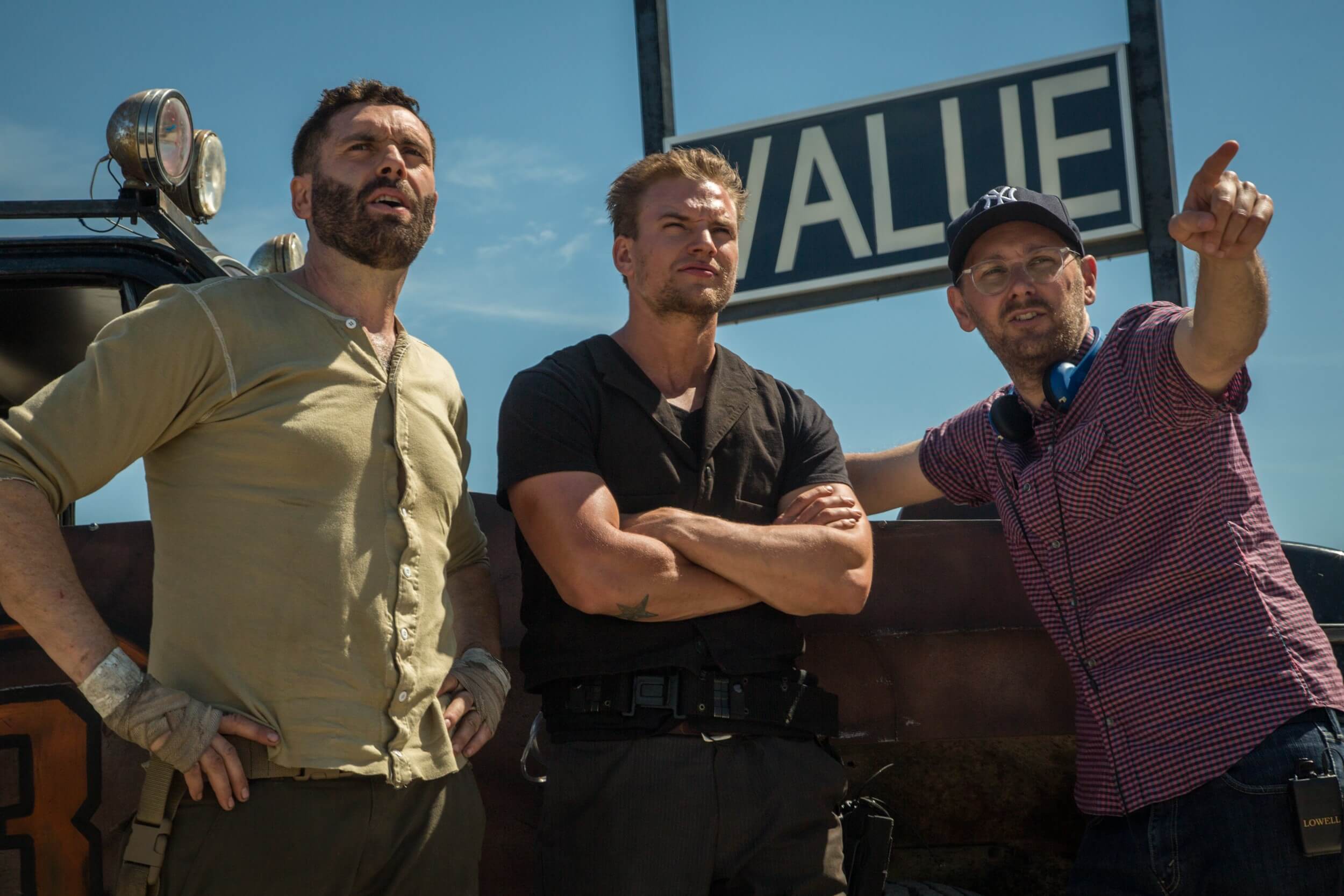
Lowell: It was a great experience. We had two nice screenings last week. I’m pretty sure it’s going to come out in December, but beyond that I don’t know. I can’t wait for the world to see it. It’s a lot of the same family as WolfCop, a lot of the same cast. It’s definitely different to WolfCop, a little more serious, a little more heartfelt, but still lots of guns and actions and chaos and weirdness.
SuperGrid

And Emersen, how was it for you working on that and knowing that you didn’t have to do the make-up and effects for a drunken werewolf that likes to slice up bad guys?

Emersen: It’s interesting you say that. On that, I was on board as a production designer. I was doing everything I’d normally do on a Lowell movie, but that was my official title. It was weird having everybody asking me questions. I quite enjoyed that. I surrounded myself with a couple of really talented working artists from the film industry. For me, it was interesting not having to stay up and run moulds and do sculpting, just barely demould something that was going to go on someone’s face the next day. It was just a really fun experience for me. It was different but I really enjoyed that aspect. Usually when I work with Lowell, I just sort of turn up and go, “Do you like this?” “Well that’s really cool, but can you do more blood on it?!” Then I have to go back and build the next thing for tomorrow. Whereas this time I got to hang out, make some suggestions, and I actually got to have nice, relaxed conversations with him about how to set stuff up – which is a bit of a dream situation for us. That’s what we always want to do but I really can’t afford that when I’m constantly building a bunch of crazy shit for killing people.

For the WolfCop movies then, what was the most challenging sequence that you’ve had to put together in terms of the SFX?

Emersen: WolfCop himself was a huge challenge. Out of the seventeen days of the second film, he played thirteen of those days. So we always had to have a fresh set of appliances, claws – he destroys this stuff with our encouragement – but to chase that never-ending cycle of always having WolfCop ready was a huge challenge. All of his appliances are made of foam latex, so that has a full 24-hour turnaround period. You can’t just quickly whip one it. Bad Willy – the weird sort of phallic monster – was designed early on but then quickly got shelved. We love the way it looks on film, but it was a challenge designing it. We went through about three or four versions before we got something that vaguely resembled Jonathan Cherry. That was a big challenge, and that was delivered the day it was needed. We walked on the set, stuck it on his belly, and the rest is history.
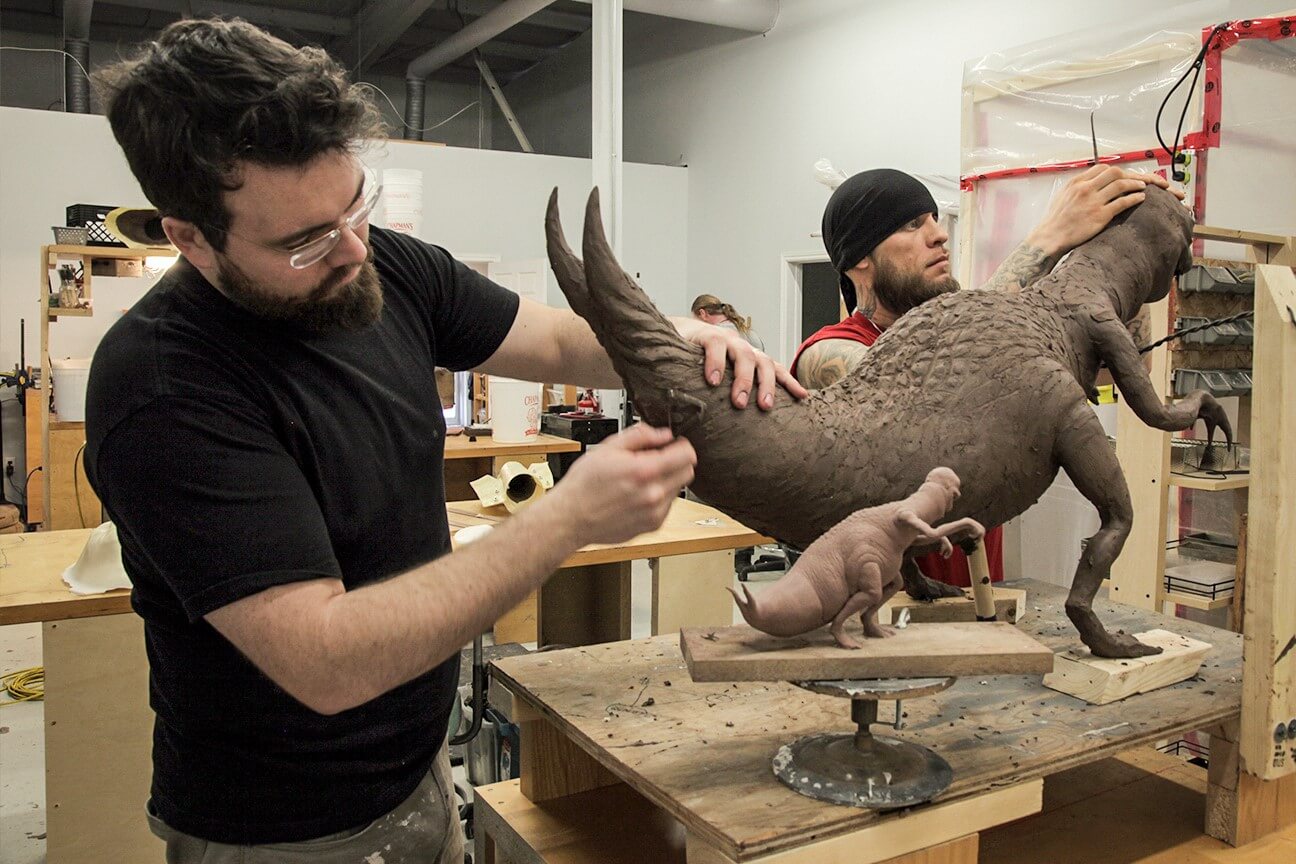
Emersen Ziffle

The last time we spoke, you said you had plans for a whole lot more WolfCop stories. How are things looking on the chances of seeing him again?

Lowell: To be honest, there’s nothing yet right now. We’ve got to see how the world reacts to WolfCop 2, but if there’s enough support I’m hopeful we have not seen the last of WolfCop. Whether it’s in a TV series or a feature film, I’d really love to bring the character back. I think his finest hour is still yet to happen.

To wrap things up, any final words on Atomic Victory Squad?

Lowell: For me, I’m just excited to do it and I hope people will give it a shot. Just know, this is a pure passion project. There’s no big corporation behind it, just a bunch of artists busting their ass to make something really cool and original.

Emersen: I just love making the cool shit Lowell comes up with. Anything I can do to make the world see his world, I’m game for.

For the full details on Atomic Victory Squad or to help out in any way, be sure to head on over to the project’s Indiegogo campaign or to www.atomicvictorysquad.com.
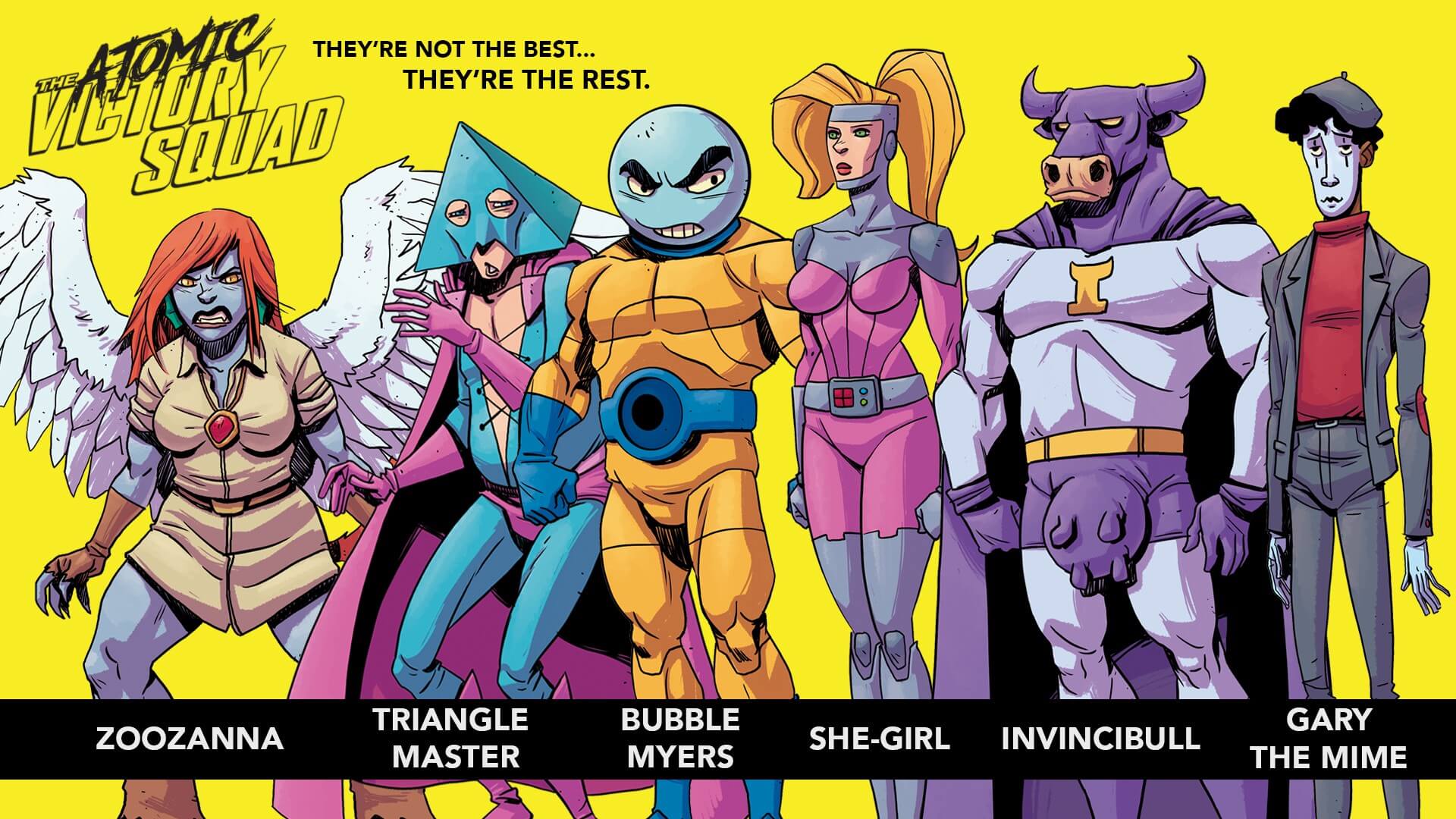
Atomic Victory Squad

ART OF DARKNESS | An Interview with GRAHAM HUMPHREYS

humphreys

Legendary poster artist GRAHAM HUMPHREYS talks horror, his long career, influences, the evils of Photoshop, and more!

STARBURST: One of your most celebrated earliest works was the iconic UK theatrical poster for Sam Raimi’s The Evil Dead, a film which was soon to be dragged unfairly into the whole Video Nasty controversy. Do you think that the notoriety the film gained during this time helped or hindered your career?

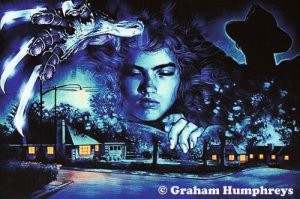
Graham Humphreys: The Evil Dead got its UK distribution in 1983, two years before the Video Recordings Act came into law in September 1985. At the age of 23, two years seemed more like ten years at the time and I don’t recall any significant impact on my career during that period. This was for two main reasons, the first being that I was not particularly aware of most of the films that had become a target for the silly and hysterical tabloids, and thus oblivious to how their removal and savage editing might impact on choice or, indeed, the morality of an infantilised nation. Secondly, The Evil Dead had already been censored with a significant number of cuts for the theatrical, and therefore, simultaneous video, release. Mostly, these were simply to reduce the running time on particularly graphic scenes, although I think the eye gouging was almost entirely removed from the original version I’d been shown at a screening. So as far as I was aware, censorship was already in place for VHS. Of course I hadn’t really been introduced to the many European films and the rarely seen, contentious US art-house films that had begun to flood the shelves in the burgeoning VHS rental shops. As we know, many videos were pulled simply because of the titles themselves. It was enough that they sounded as if they might offend! My real introduction to, for instance, Argento and Fulci films came through Richard Stanley, whilst we storyboarded his first feature, Hardware. My film knowledge had been UK/US centric until that point, with the exception of televised European Cinema. If I had to identify any impact on my career, it will presumably have been positive. A Nightmare on Elm Street was released in the UK around the time of the Video Recordings Act coming into law. So if The Evil Dead gave me my first entry into horror marketing, Nightmare’ cemented my position within the genre. It’s important to add that the majority of my freelance work at the time did not fit into the genre category. In order to earn a living I was working on a whole raft of other illustration commissions, completely non-horror related. It’s only in the last ten years that I’ve been working almost exclusively in the genre.

It’s heartening to see that you’ve routinely revisited the Evil Dead franchise many times over your career, including the recently sold out vinyl reissue of the original’s score, The Evil DeadA Nightmare Reimagined; is there anything in particular about that series that inspires you to keep returning?

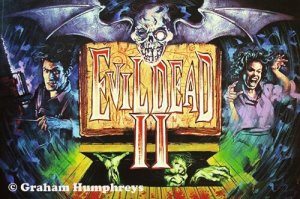
In truth, it’s not my decision. I am reliant on being commissioned for any job. Although I rarely turn down work, and only do so because of deadline or budget issues, it is always a thrill to return to an earlier title that has been so formative in my career. As with most artists, I perceive only the weaknesses in my work and each chance to make amends is welcome! I have to work within the limits of my ability and experience, returning to a title like The Evil Dead gives me a chance to experiment with ideas and techniques that I didn’t have at the time. The soundtrack you mentioned is an interesting example because the art is not promoting the film as such but rather an appendage, albeit an important one. My personal challenge involved not simply creating a cover for the film, but using it as visual resource. I wanted to use the four panels of the gatefold as a picture book. The cover is thus a rather restrained image compared to the blood drenched final panel within. The discovery of the taped recording is not an explosive gore-filled scene, but the moment where the horror begins, thus Ash is still looking clean and fresh faced. The tape reel is a direct reference to my original poster. A film poster has to capture the essence of a film in a single panel. The gatefold LP format is four such ‘posters’, two double spreads, each a separate chapter. My second version of the Evil Dead 2 poster, the licensed screenprint, was another chance to create a poster from scratch, as if seeing the film for the first time, yet also acknowledging that which had gone before. I suspect I’ll be returning to the woods again!

humphreys

Speaking of that iconic Evil Dead 2 poster, how did it feel to see that piece so lovingly referenced by Edgar Wright and Simon Pegg in the debut season of Spaced?

I didn’t see the original run of Spaced, so was unaware of the poster’s use. In fact, I think I was only made aware whilst preparing some ultimately unused concepts for a Shaun of the Dead cinema poster. Naturally, it was a thrill to finally see the series and how the poster was featured so prominently. When Tim inadvertently recreates the pose on the poster, it reminded me of how I’d photographed a friend posing in the exact same way to provide my reference for the original painting! I used a lot of Polaroid photographs in the eighties. Whenever you see a hand in a piece of my artwork, it’s usually mine. Even in the recent Blu-ray cover for Arrow films Blood and Black Lace, that’s me dressed in black! I used a camera on a 10 second timer!

Moving away from Raimi’s franchise, which other genre properties have been favourites to work on?

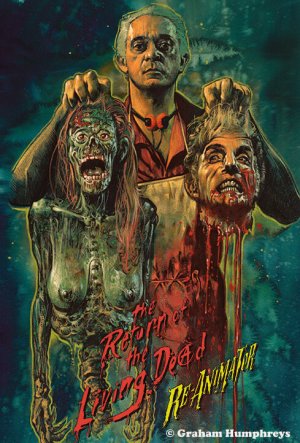
Aside from The Evil Dead, only A Nightmare on Elm Street provided a number of sequential commissions. I was a fan of the first film, after seeing a preview screening at London’s Scala Cinema. This was some months before being asked to illustrate the eventual UK poster campaign. I appreciated the risk Palace Pictures took by returning to my services. Nightmare’ was completely different to The Evil Dead and the last thing they required was the crude punk rock exploitation look of the 1983 artwork. Most clients pigeonhole artists’ work; I can’t imagine any other client would have had the foresight to make the decision. I then worked on each of the four sequels – the third was my work, though not an illustration – plus a number of Nightmare’ related jobs. Another film I’ve returned to – pun intended – is The Return of the Living Dead. I was unhappy with my original VHS cover, simply because I felt I didn’t have the skills to pull off what I’d intended – this despite the fact that people clearly liked the sleeve – so I recreated the art for a dedicated Blu-ray screening event, really as an experiment. Since then I’ve painted a book cover – Cult Screenings’ 245 Trioxin – and a Shout Factory US Blu-ray release. There was also a hybrid Re-Animator/Return of the Living Dead poster for the Cult Screenings Don Calfa event.

humphreys 

It’s probably safe to say that the vast majority of our readers miss the days of artwork posters and sleeves; why do you think that the studios and distributors moved away from the medium in the ’90s? 

Easy answer – Photoshop! It wasn’t an available tool until then. Photocomposition was an expensive process prior to the ‘affordable’ introduction of the software. The skills involved in splicing large format transparencies, re-photographing them and retouching using bleaches and dyes to hide the joins, made it the work of highly skilled artists. Even the early version of computer ‘comping’ involved using specialised facilities, desktop computing was still unaffordable for most designers… the expense was enormous. But I realised very quickly that unlike the tradition of transparency retouching, new computer ‘comping was entirely technology-led and often lacked the artist’s eye. Unfortunately, this is still often the case. High definition has replaced suggestion. I also suspect that as film studios found their talent ever more demanding of obscenely large fees, the need to make full use of an expensive face took over from merely expressing the film’s subject matter. Photography took over. It is slightly disappointing that in a market awash with Photoshop portraiture, there is also a new visual illiteracy. The beautiful posters created by Saul Bass are a prime example of how film marketing moved away from his symbolism to a new literalism, becoming infantilised by Photoshop. As Quentin Tarantino observed, contemporary film posters look more like ‘Vogue covers’. Pouting, overpaid actors retouched in high definition. Painted images are a springboard of suggestion and imagination. A photograph, no matter how beautiful, is simply that.

humphreys
Conversely, the rise of home video distributors specialising in cult & classic reissues like Arrow and Eureka has created a hunger for newly commissioned artwork. Do you feel that the trend may ever come full circle and return to the mainstream at all?

That’s doubtful. Illustrated images are mostly used for reissues, ancillary campaigns or independent films with limited distribution, but rarely first run releases. However, I think that’s fine. In many ways, there will always be more freedom of expression where the reductive, corporate needs of accountants, executives and moneyed interns are factored out. Modern film marketing is led by money people, not art directors. It may always have been a ‘business’, but it often seems there is little encouragement for true mavericks or creative outsiders right now. In the same way that major releases tend to be franchises, sequels or star vehicles, the campaigns are reflective of a homogenised business where risk is discouraged. But hey, never say never!

Which artists would you say have influenced your style and, or, career?

It’s a mix. I take inspiration wherever it arises. From my early childhood, visits to the local library – I was fascinated by religious depictions of demons and hell – all easily accessible images of horror! And of course, the Bible is full of gratuitously shocking imagery. I didn’t have a particularly religious upbringing, though like many of my generation, Sunday school was just one of those things that you went to as routine. The promise of Sunday school outings to the coast was the biggest draw. It’s curious to look back and see that I was ‘confirmed’ as a Christian in my early teens – before I really understood the contexts and realities of ‘faith’. I’m now atheist. As an amusing aside, my nose bled during the confirmation! I also served at the altar in the local church. I consider it an induction into the world of ‘gothic’! I then found myself becoming aware of book covers and film posters; the magical touchstone for many was Dennis Gifford’s A Pictorial History of Horror Movies. Tom Chantrell’s cover was easily the biggest catalyst for everything that followed. Some film posters stood out more than others, but many of the US posters seemed to be painted by jobbing artists with their own specialist areas – US civil war, cowboys, landscapes – and quite how they ended up providing some of the most memorable ‘disaster movie’ posters is something I’ve always thought was rather odd. I’ve named Chantrell, but in the UK, Vic Fair created some amazing work. From the US – Drew Struzan, Bob Peak, Richard Amsel and J.C. Leyendecker. The printed posters of Jules Cheret, Toulouse Lautrec and Alphonse Mucha. The new generation of British illustrators that emerged during my college years. The work of Saul Bass and graphic artists too numerous to catalogue… Sometimes it might only be one particular piece of work from an individual’s entire output. But I also take inspiration from the abstract and tribal… and a particular love of Tibetan sacred art.

humphreys

Many of our readers, and writers for that matter, will have grown up with at least one of your movie posters tacked to their bedroom walls; who or what adorned yours?

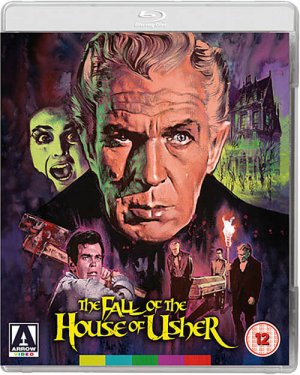
I should have added both Bruce Pennington and Roger Dean to that last answer. They both adorned mine! Now it’s almost all vintage posters – the Universal monster films, Corman’s Poe films and many of the Hammer Horror – there seems to be a lot of Christopher Lee and Vincent Price! But yes, back then I had a copy of Jaws, Earthquake and The Hindenburg as my first collected film posters.

How long would you say on average commission takes to complete?

Depending on the complexity, a painting might take anywhere between two and four days, maximum five. The fee often decides what time you can allow. If I spent two weeks on a job that was only covering the fee of one day, I’d be out of business pretty fast. The preliminary process – viewing a film, making grabs, the sketching etc. – can often be completed in a day. This time is generally not covered in the fee; I tend to quote on the painting process!

A studio or distributor gets in touch – can you walk us through the process of creating a piece?

It’s often been different in the past, but the process has been whittled down to a fairly simple set of stages. 1) The initial contact and acceptance of a job – once a budget and deadline has been mutually agreed. 2) Viewing the film, or materials, to get a measure of the subject and an understanding of how best to approach the project – the client will usually indicate upfront any particular requests… ie. required imagery or portraiture. 3) Selecting the imagery I feel works best, usually screen grabs, and sketching the various elements – portraiture is almost always traced from the photographic source using printouts – it’s the most efficient way of ensuring a likeness. Sometimes I’ll supplement the images with my own photography and web searches, or composite the grabs with other poses, or perhaps add a close-up to a wider body shot, to keep the best portrait reference. 4) Scan the pencil sketch elements into Photoshop and play around with compositions, exploring focal elements or key ‘moments’, always searching for the most impactful or meaningful combinations. 5) Email the layouts to the client and – all being well – agree on the preferred option. 6) Reintroduce the original photographic sources over my pencil layout, creating a crude photo-comp in Photoshop. 7) Print out the comp to the size I intend to paint. 8) Trace onto the paper – I generally use Bockingford 190gsm, ‘not’ surface – a pitted effect that allows for more texture when painting. 9) Use masking tape to secure the paper to a wooden board I use for the purpose. 10) Cover the paper surface in a wash of colours that will form the base of my colour theme, using splashes of additional colour or clear water to particular areas – always having a rough version of the finished item in my head. 11) During the previous process, the paper will buckle, forming ‘valleys’ where the paint will run into shapes and forms that will add a spontaneous look – the paper dries flat because of the taped edges – so once dry I’ll usually start by defining the darkest areas, the basic shadows and contours, almost a drawing rather than a painted image. 12) Then I’ll concentrate on the key portraiture, moving around the painting, most often from top left to bottom right, so as not to disturb the painted surface resting my hand as I paint, or using bits of clean paper to protect the surface. 13) Take constant breaks to keep reviewing with fresh eyes… one of the most important devices I also use, a piece of mirror that I constantly check the progress with. It has a two-fold purpose: to see the reflected painting as if for the first time, but also to keep in check the tendency to skew imagery. If you’re right-handed it’s easy to find a bias of angles from bottom left to top right, and in reverse if left-handed. Using a mirror to check this will quickly reveal the bias. 14) Complete the painting by ensuring important detail is included, portraits are as good as the paint will allow, and that there is a cohesion and balance to the overall layout. The addition of a few carefully administered splatters using a worn brush is the final stage. 15) A quick photo is often taken for the client to see the results and identify any glaring issues. Fortunately, these are rare. Then the final scan and any necessary final tweaks in Photoshop, usually adding a bit more extra bleed, but generally retaining the integrity of the original item. 16) Invoice and get paid!

It’s probably akin to picking a favourite child, but which piece are you most proud of?

Once a job is complete I tend to dislike it – it’s part of the natural process where you keep re-evaluating what you do, always striving to improve. Of course budgets and deadlines conspire against ideal results. For this reason it might take a year or two for me to regard a job as something I can feel comfortable with. I’m always trying to look through the eyes of a stranger, judging my work and finding fault… it’s the only way to move forward! So I can’t really identify favourites, just successes. My easy copout is always the same… the job I’m most proud of? I’ve not painted it yet!

If fans want to get their hands on your work, where can they point their wallets?     

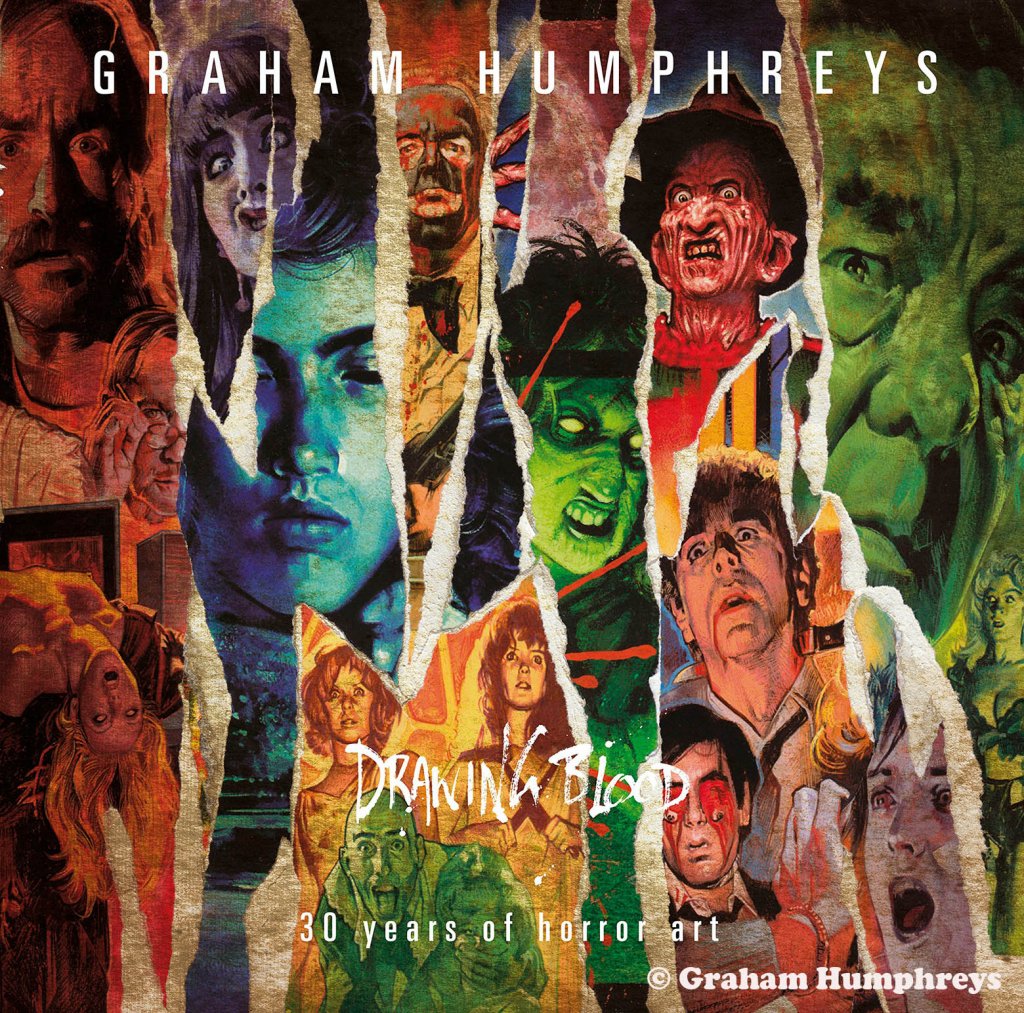
The best place they can spend that money is on the final product – Blu-ray, LP or whatever – that way I’m more likely to be recommissioned by the client! However, my website has a section which shows what folio prints are currently available. There is no online shop, but my email address is easily found on the site and I can respond with prices etc. Very easy! The large format book Drawing Blood, published by Proud Gallery, is still available, though I have no access to stock. The gallery – proudonline.co.uk – will sell you one, as will Amazon. It’s a bit pricey – sorry, out of my control – but it comes in a special box and with a limited edition giclée print. People seem to like it! And any convention where I’m a guest, I’ll always have prints, booklets and posters. As my work is paint on paper, rather than digital, I have originals that I’m also happy to sell. Prices are set according to the amount of work and subject matter.

humphreys

Are you able to tell us about any upcoming projects that our readers should be excited about?

Not without compromising the confidentiality of the client! But there are some fun items I’m currently very excited about personally. Perhaps a favourite film, a favourite TV series… I’ll say no more!


For more on Graham Humphreys’ incredible work, be sure to visit www.grahamhumphreys.com. To contact about prices and/or commissions, reach out using [email protected]

ISSUE 453 – OUT NOW!

453 NS

STARBURST returns to Haddonfield and catches up with Michael Myers for HALLOWEEN. Not only do we preview the new movie, we take a look back at what’s gone before and chat to some of the key talent behind the films.

We also look at the history of the SLASHER FILM with an in-depth guide to the subgenre.

Elsewhere, we take a look at some of the most hilarious BOND spoofs in anticipation of JOHNNY ENGLISH STRIKES AGAIN and catch up with the DC superheroes of THE CW, namely ARROW, THE FLASH, SUPERGIRL, the LEGENDS OF TOMORROW, and new addition BATWOMAN.

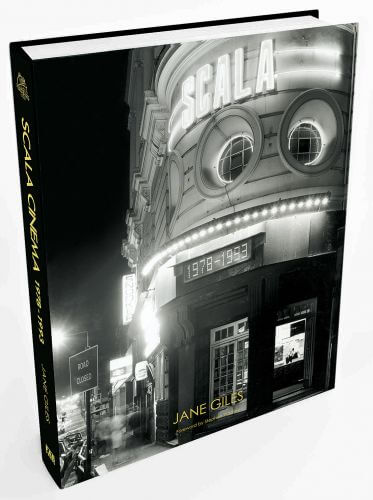
If that’s not enough, we talk to Caspar Noé, controversial director of CLIMAX, and find out about the new book that delves into the history of London’s infamous SCALA CINEMA.

In our regular features, we take a look at ADAM GREEN’s backwoods shocker HATCHET and look forward to the new series of DOCTOR WHO.

Plus all your favourite COLUMNS, NEWS, REVIEWS and much MORE from the worlds of SCI-FI, HORROR and FANTASY!

Jane Giles | SCALA CINEMA 1978-1993

scala

STARBURST readers of certain age and location will have fond memories of London’s Scala Cinema Club, which was a pre-Internet shrine to every cult movie imaginable. Twenty-five years since its last all-nighter, we get nostalgic with programmer-turned-historian, Jane Giles…

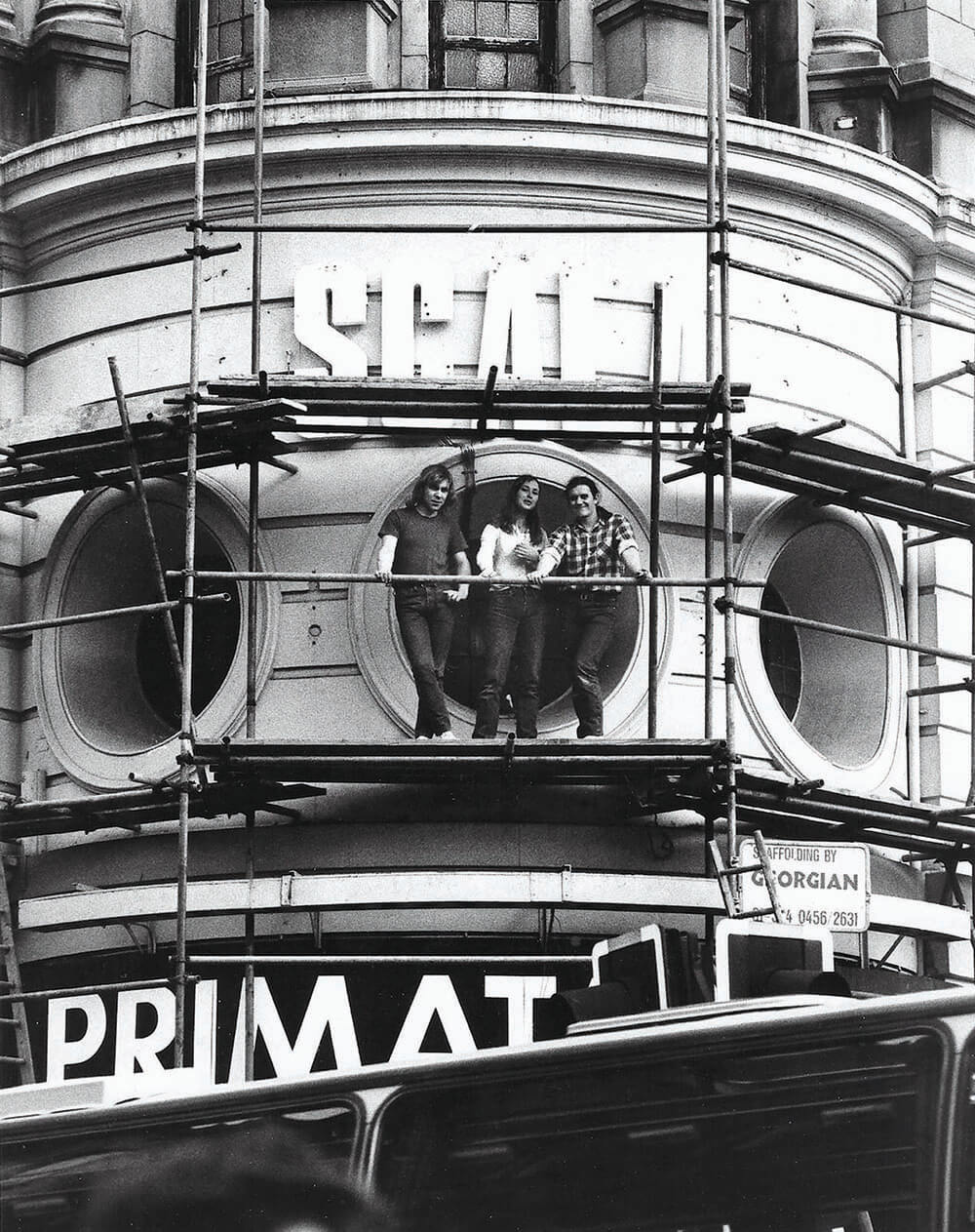
The Scala was the UK’s most notorious repertory cinema. Throughout the years of Thatcher and fear-mongering film censorship, it stuck two fingers up to the establishment with a mind-bogglingly eclectic menu, from Hollywood classics to arthouse obscurities to extreme gore. The brainchild of Stephen Woolley (who went on to run Palace Pictures), it was originally at the site of an old concert hall in Tottenham Street, Fitzrovia, before moving three years later to its legendary second home amid the grindhouse squalor of ‘80s King’s Cross.

2018 marks a double anniversary: the 40th birthday of the first Scala show and 25 years since it closed in a storm of controversy. Former Scala Programmer Jane Giles, who was personally prosecuted in the notorious A Clockwork Orange illegal screening case in 1993, has marked this auspicious occasion by writing Scala Cinema 1978-1993, which lavishly showcases every one of the cinema’s famous fold-out monthly programmes, alongside a month-by-month history that lifts the veil on a unique venue that Scala favourite John Waters described as “a country club for criminals and lunatics and people that were high… which is a good way to see movies.

STARBURST: How did you discover the Scala?

Jane Giles: Well, I was born in 1964 in Crawley, which is near Gatwick Airport so there was not much going on there. When I left school, I fell in with a bunch of boys at Sixth Form College, and they’d go up to London every other weekend on some adventure, usually to see a band like The Cramps or The Birthday Party. My parents were quite strict about what I could and couldn’t do, but for some reason they thought it was OK for their 16-year-old daughter to go off with a bunch of punks from the local school band; they were called the Split Beavers… yeah, I know! One time it was to go an all-nighter at the Scala because the guys had been going there since the Tottenham Street days, where it started in 1978. By this time the Scala had recently moved to King’s Cross. That night I certainly remember Cronenberg being part of it, The Living Dead at the Manchester Morgue, Martin, and other things… it was a fantastic all-nighter, I couldn’t believe it. The guys I was with were quite snooty about it, ‘Oh, Tottenham Street was better’, but the minute I saw the King’s Cross cinema I just thought, wow. It was like a sort of gone-wrong version of the beginning of a Walt Disney film where you get the logo of the enchanted castle, a real kind of palace of dreams. I was amazed, I didn’t know such a thing existed. I had discovered repertory cinema at the Duke of York’s in Brighton, but there were such riches at the Scala. Every day there was something that you wanted to see. And the fact that you could stay up all night watching films. VHS was too expensive then, it wasn’t a staple in every student home like it became. So to be able to go and see five films for three quid was an amazing thing. It was a way of educating yourself about film. I really love film and I love music.

You became the programmer for the Scala in 1988 – how did you get the job?

The only thing I was good at school was art, but having done a foundation year, I was told I wasn’t good enough for art school. So in a fit of pique, I applied to study in Reading in 1982, where it was really easy to get in – nobody wanted to go to Reading! I did this thing called a BA in Combined Studies, which is basically film, drama, and art. What I didn’t know was that the film teachers were (acclaimed film theorists) Laura Mulvey, Jim Hillier, Stuart Cosgrove – big names. After that, I did an MA in film and wound up on a BFI placement in Regional Film Theatre Management in Ipswich. I was based at the Corn Exchange there, which is a haunted cinema, by the way! I was there for a year, just learning everything from projection to programming to box office, being paid literally tuppence, but it was fine because I was learning. In the course of that year, I saw a tiny ad the size of a postage stamp in the Guardian with the Scala logo on it that was so familiar to me from going there for several years, and it said ‘Programmer Wanted’ and I thought ‘That’s my job’. I applied for it, Stephen Woolley interviewed me, and I got it. I thought this was the way of the world. I thought work was that you saw your ideal job advertised in the newspaper, you applied for it and you got it, regardless of the fact I was 23 years old. It was effectively my first job – I’d only ever done things like cleaning toilets before that – apart from my training placement. But this was the way that Stephen Woolley was. He was only 19 years old when he set up the Scala. He employed people who were very young; it was a young person’s thing, it needed that energy. Maybe it was the stupidity of young people as well because we took risks that maybe older, more conservative, more conventional industry people wouldn’t take.

How would you describe the audiences at the Scala?

It was always very mixed, it just seemed to be everyone. People dressed to the nines, absolutely in the full Goth regalia, there were very eccentric old-age pensioners as well as very young people who bunked in because they had a burning desire to be there. And the Scala would take their money not out of a cynical desire to get an extra three quid, but because if a young person turned up at the Scala, they were kind of meant to be there – unless they were a rent boy in which case one would keep an eye on them! But young people had a sort of pull towards that place, and the reason why I talk about age is that obviously a lot of the films were 18 certificate, so some people were legally too young to be in the venue.

King’s Cross was very different back then, wasn’t it?

It’s quite posh now, but what was funny for me at the time was that I didn’t really see the vice around me in King’s Cross. I think I was blinkered, as sometimes you are when you’re a young person. I just saw the Scala glowing like a fairy palace in front of me, I didn’t see the prostitutes and the junkies. But by the end, it was very bad. By 1993, we had people shitting on the doorstep. There were crack dealers. There was a knife fight one night where the dealers burst through the doors to try and take refuge in the foyer. It was awful by that point, so bad. It was disgraceful what happened to King’s Cross in the name of re-development. They had to bring it really low in order to get all of the small businesses out. It was strategic and it was horrible.

The Scala prided itself in presenting hard-to-find movies uncut where at all possible. What were the challenges in getting this material onto the screen?

Pretty much everything at this time was on 35mm film or 16mm film, and this was actually really liberating because there were big collections of 16mm material. One of the unique things about the Scala was that it had an amazing 16mm projector fitted with a Xenon lamp, so it was almost as good as 35mm. The 16mm film catalogues were very, very rich both with Hollywood movies but also the highways and byways, because film societies and the educational sector were very strong before home video, so 16mm prints would routinely be made for a really interesting range of material. And 16mm prints tended not to get worn out in the way that 35mm did, and it was a smaller gauge so it was smaller to store. There was an organisation called FilmBank, which was set up by the studios to handle their non-theatrical 16mm collections. So one of the things that the Scala did that was not strictly ‘regular’ was to book 16mm film prints into a commercial cinema. We stood behind our ‘club membership’ status to argue that we weren’t commercial in the way of the Odeons and chain cinemas. It was a grey area to say the least, and mostly distributors turned a blind eye to it because nobody really cared so long as we paid our bills, which we did.

In the late ‘80s, the Scala hosted the Shock Around the Clock all-night horror festival, organised by former STARBURST writer Alan Jones, which was the predecessor to FrightFest. What are your memories of it?

Shock Around the Clock was intended to be a one-off event, as Alan told me, in 1987. And it was such a rip-roaring success that it was repeated in 1988 and ‘89. My first experience of it was in 1989 and I was amazed by it. It was not unusual for the cinema to be completely full, but what was unusual about Shock Around the Clock was that it was the first time I’d seen such a vocal audience. The audience could usually be quite noisy, interacting with the films, but with Shock Around the Clock it was a really special atmosphere. It also seemed to be very hot! There was literally sweat running down the walls, people passed out on the floor… I think it was a sense of people being so happy just to be there. Tickets were really in demand so people felt a real sense of achievement even getting into the building and being able to watch 20 hours of film, or whatever it was. There were horror films and there was gore, but it was not a reverent environment. People would cheer and whoop and make signs of distress, so it wasn’t an uncritical audience.

The Scala pulled off some great coups, such the being only place to see David Lynch’s Eraserhead in the UK upon initial release…

Oh yes, I’d completely forgotten that and it was a surprise to me when I did the research to find that it opened exclusively at the Scala. Critics really struggled with Eraserhead, they couldn’t find the language. It genuinely was something really different. The Scala programmed a whole ‘Cinema of the Bizarre’ season to contextualise it and to help prepare the audience. It included double bills of Nosferatu and Vampyr for a week before Eraserhead. But then, when it was into its run, to put on the Devo music film with it (In The Beginning Was the End: The Truth About De-Evolution), that really helped, because it was kind of a post-punk rock, New Wave audience. One of the brilliant things that Stephen Woolley did in the early days of the Scala was to make that music connection, because he was a huge punk fan. By inviting bands in, by working with Tony Wilson of Factory Records and getting bands like Throbbing Gristle, New Order, and Spandau Ballet in, he made that connection with the music crowd. The music press was very strong then. You were always at the mercy of Time Out, there was no other way of marketing apart from through the print media so they gave a different angle, a different audience, and that was something that continued at the Scala all the way through to the end. When I was there, we had people like Nick Cave, Lydia Lunch, and Gallon Drunk. There were lots of music films shown as well and by the end, there was the ‘The Grey Area’, which was programmed by Chris Bohn from Wire magazine, showing Industrial Noise movies.

1981 Scala by David Babsky

The press often cites the famous A Clockwork Orange breach-of-copyright legal case as the reason the Scala closed down in 1993, but that wasn’t the real story was it?

The Scala moved into the King’s Cross cinema in 1981 on a 12-year lease. So in June 1993, the lease ran out and the landlord wanted to triple the rent. But Palace Pictures had gone bankrupt in 1992 and with Steve Woolley and Nick Powell being directors of the Scala as well as Palace, we couldn’t raise the finance to re-develop the cinema in order to pay the landlord’s elevated rent. Plus, there was still a compulsory purchase order on the building relating to the high-speed rail link. So it was those factors that ultimately conspired to end it. The thing with A Clockwork Orange is the legend that gets printed, but if the lease hadn’t expired, the Scala wouldn’t have closed down in 1993.

The book tells the story of the Scala as a historical narrative but also with a vast number of photographs and by reproducing all of the famous photo montage fold-out programmes. How did the book concept evolve?

The Scala programme was based on the American ‘Calendar Houses’ such as the NuArt in LA and the Roxie cinema in San Francisco. These programmes washed up in London in the hands of Stephen Woolley so he gave them to the designer and said ‘do this’. The Scala had been experimenting in its first year with different formats, but nothing really captured it until that concept. Suddenly, everything made sense, it was an absolute work of genius and people pinned them up on their walls, they collected them. I always wanted to write a cultural history and film history of the Scala. Then I met Harvey Fenton of FAB Press and he’d always wanted to publish a book of the programmes. I thought this was an impossibility because it’s very expensive and very difficult to do highly illustrated books; printing is very expensive. But Harvey had this mad vision to reproduce them legibly, so we had this huge conversation on what the book could be like and we just basically put my idea for a history book and his idea for a book of programmes together and did both. It’s huge, it’s enormous – as big as your forearm at least. It flattened me, this book. It’s like a sort of Victorian folly to have created it. Nobody has ever done this: to gather every single programme from a single venue. It was made possible by the Internet. We knew that crowdfunding was an option because Harvey had just done that with an update of Stephen Thrower’s epic Lucio Fulci compendium Beyond Terror, releasing it as a very lavish edition. I knew the Scala had a fan base because I’d set up a Facebook group for former staff and friends. People were swapping memories but also, crucially, swapping materials and photographs. So it suddenly became possible to gather all those things together and create this book. We had some help from famous people, like Jonathan Ross, in the film industry who put some money towards the production costs, which was great but it’s been a really foolhardy enterprise that has nearly bankrupted Harvey and nearly crippled me!

Arriving at the Scala back then, it always felt very exciting, almost ritualistic, signing up to your ‘membership’ status for the evening…

Absolutely right, there was something ritualistic about signing in and a sense of privilege to being a member of the Scala. You had the NFT or Everyman Cinema-type people who kind of looked down on us, but it was somewhere that anyone could become a member, whether you were a boy in an anorak or whether you were Boy George, literally. All of those people were members, it was really something that I think doesn’t exist anymore. It was a club that anyone could join, but not everyone wanted to.

Scala Cinema 1978-1993 is released by FAB Press on September 26th and is available to pre-order here. For information on programming and events UK-wide in September 2018 visit scalarama.com.

[ENDED] Win Network’s New Blu-ray Release of WHO KILLED TEDDY BEAR

Who Killed Teddy Bear

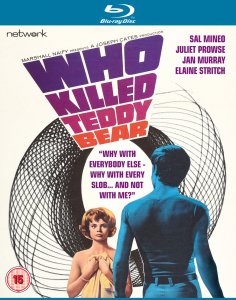
With Network having now released 1965’s Who Killed Teddy Bear on Blu-ray for the first time ever, we’ve got two copies of this impressive new release to give away.

To be in with a chance of winning Who Killed Teddy Bear on Blu-ray, simply answer the below question:

Which actor won a Best Actor Oscar for battling a bear in 2015’s The Revenant?

a) Ted Danson

b) Leonardo DiCaprio

c) Bruce Willis

Email your answer, along with your address details, to [email protected] labelled Teddy Bear before midnight on Sunday, September 30th.

While waiting for the results you can sign up with Genting casino promo code and further test if luck is on your side.

Who Killed Teddy Bear

The official word on this new release of an old favourite reads:

A grim police detective embarks on a one-man crusade to track down a depraved sex maniac when a nightclub dancer receives a disturbing series of obscene phone calls. Finding himself getting far too close to the victim for comfort, the hard-boiled cop must track down the unbalanced pervert before he can carry out his sick threats…

Refused certification on its original theatrical release due to its sleazy, taboobreaking nature, this psychological crime thriller features strong performances from Sal Mineo as a bodybuilding, pornography-addicted bus boy and Juliet Prowse as a victimised nightclub hostess. Showcasing Oscar-nominated cinematographer Joseph Brun’s breathtaking imagery of pre-clean-up Times Square and 42nd Street, this forgotten neo-noir masterpiece of American independent cinema still retains the power to shock, and crackles with energy from its smart dialogue, electrifying performances and groovy dance sequences.

Previously available only on DVD, Who Killed Teddy Bear has been newly scanned from one of the few surviving 35mm prints in its original theatrical aspect ratio of 1.85:1. The restoration carried out involved careful grain WORLDWIDE BLU-RAY DEBUT 17th SEPTEMBER DIGITAL 15th OCTOBER management, both automated and manual removal of film dirt and damage, and correction of major instability, warping and density fluctuations. Missing frames/sections have been re-instated from a 16mm print and the image matched as far as possible but a difference in visual quality may be occasionally noticed.

 SPECIAL FEATURES • Trailer • Court Martial episode • LSD: Insight or Insanity? • Stills gallery • PDF material

WHO KILLED TEDDY BEAR is now on Blu-ray for the first time ever.

The Best 3D Movies Ever Made

3D is a technology that’s been around for a while now, but in the last few years, it’s become much more widespread. No longer relegated to grand-scale cinematic experiences alone, it’s been used in video games, live casino events, and even concerts.

But the silver screen is still the place where it truly shines. Creating a transcendental viewing experience for those lucky enough to don that special pair of glasses, it has given us some of the best movie marvels of recent times.

For those who want to relive the action, here are four of the best 3D movies ever made…

Avatar (2009)

Source: Facebook via Avatar

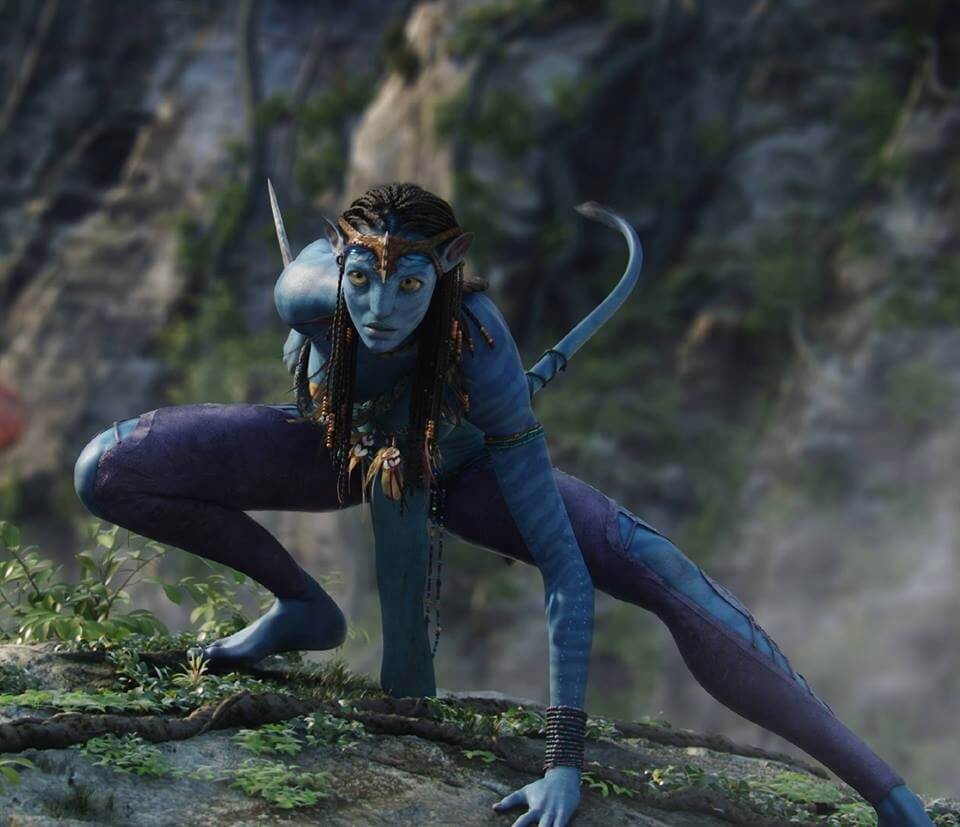
No list of magnificent 3D movies would be complete without the inarguable lynchpin of the genre: Avatar. A sci-fi flick par excellence, this tale of two planets became the most successful film ever upon its release – the second time a James Cameron screenplay had laid claim to such an accolade. More than a decade in the making, the final result gave cinema-goers a glorious ride, taking them from the backs of beautifully coloured aerial behemoths to the devastating destruction of a war zone. It was enchanting, unprecedented, and truly one-of-a-kind, and the 3D absolutely made it.

How to Train Your Dragon (2010)

Okay, it was aimed at children, but How to Train Your Dragon was a film enjoyed by people of all ages. Bringing to life the magic of DreamWorks’ brightest minds, it mixed tangible emotion with heart-stopping adventure, to create a film that captivated audiences everywhere. The tale of an outcast teen who befriends a dragon and in doing so saves his people, it’s a charming treatise on unlikely friendship and the power of overcoming prejudice. Plus, its aerial antics in 3D are the closest you’ll ever come to actually riding a dragon.

The Nightmare Before Christmas 3D (2006)

Source: Facebook via The Nightmare Before Christmas

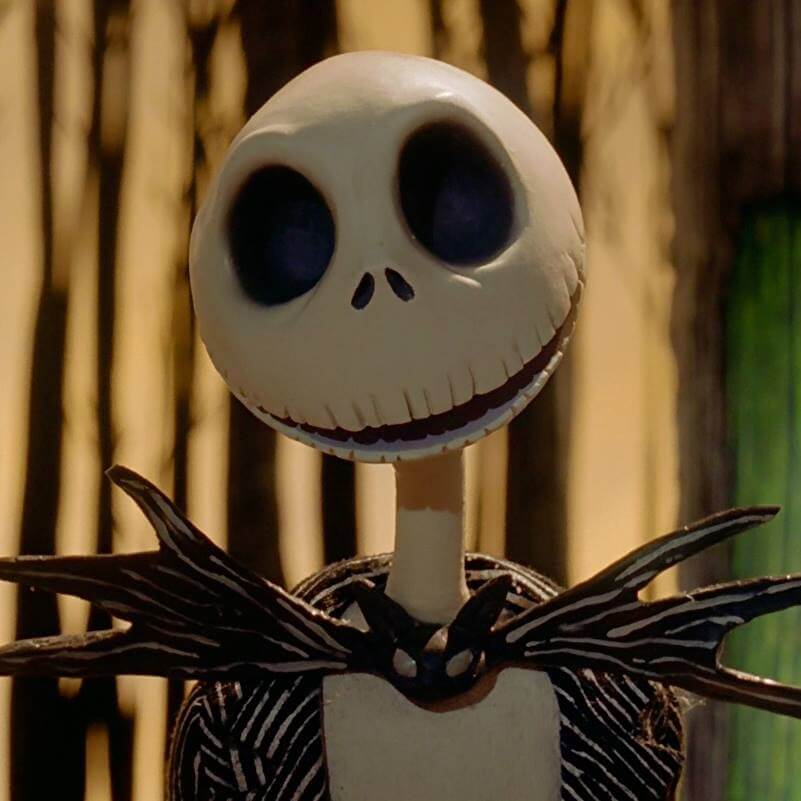
Mr Green is currently utilising 3D tech to return to existing properties and produce an innovative take on the thrilling world of casinos and gambling, and this Tim Burton re-release adopted the same tactics back in 2006. Taking an old classic and giving it the 3D treatment, Henry Selick created a stop-motion masterpiece, with characters who leapt (quite literally) off the screen and a story that was guaranteed to captivate. With catchy music, witty one-liners, and the same old magic it had always enjoyed, the film was a true treat for cinema-goers everywhere.

Alice in Wonderland (2010)

With the exception of Avatar, this might seem like a list of much-loved children’s movies, but we prefer to think of the flicks we’ve included as ageless, especially this 2010 take on Alice in Wonderland. Converted after it was shot, Tim Burton’s adaption of the Lewis Carroll classic nonetheless enjoyed a flawless transfer to 3D, with the final effect like a pop-up book come to life. Twisty, trippy, and dizzyingly dark and dangerous, it quite literally leapt off the screen, delighting and thrilling erstwhile film aficionados everywhere.

Isn’t it time to enjoy a re-watch? Personally, we wouldn’t know where to begin!

JENN WEXLER, HEATHER BUCKLEY, CHLOE LEVINE, GRANIT LAHU | THE RANGER

wexler

The opening film at Frightfest is always the pacesetter for the rest of the festival, which in 2019 will be celebrating its 20th anniversary as it becomes ever more popular amongst both old and new fans. The Ranger, directed by Jenn Wexler, tells of a group of punks wanted for the shooting of a police officer during a drug bust, who retreat to a cabin only to find themselves the target of a resentful park ranger.

STARBURST had the pleasure of talking to director Wexler, co-producer Heather Buckley and cast members Chloe Levine and Granit Lahu during the festival.

STARBURST: How many drafts of the script were there? And given the film’s surprisingly short (77 minute) running time, is there a “Director’s Cut” of the film?

JENN WEXLER: There were about two drafts written, and by March 2016 the final draft felt right and is similar in content to the version you saw. We did have a cut that came in at around 85 minutes, but my co-editor (Abbey Killheffer) felt some of it was indulgent. We then cut it down to the running time as we wanted it to be more like a roller-coaster ride for the audience.

The longer version fleshes out the relationships. There is an alternate scene in the Ranger’s basement which is in the “X” version, but the version we have released is the R-rated version. My producer Heather felt that this should have more of the feel of a punk song, three chords.

You used natural locations. How did you come to select them and did you construct any sets?

JW: We built one set so we could get the tax credit from the New York Film Office. The club sequence was shot at the Don Pedro Club, which closed shortly after we finished filming there. Heather and I went location scouting in up-state New York and found my dream cabins around Woodstock.

The make-up and gore effects are as effective as anything we have seen in other horror films. Tell us about your team and their background.

JW: We had a great team, led by Brian Spears.

GRANIT LAHU: I was in prosthetics for around 12 hours during one scene in particular. It’s rather uncomfortable and I was half-naked during that.

What were your filmic influences on The Ranger?

JW: I wanted to mash up 1980s punk films like Class Of 1984 and Return Of The Living Dead with other classics from the time like The Evil Dead and A Nightmare On Elm Street.

As actors, did you have much time to rehearse and did you improvise at all?

CHLOE LEVINE: We didn’t have a lot of rehearsal time whilst on location.

GL: There was one scene we did improvise, when I was chasing Amber (Amanda Grace Benitez) in the woods and I stood on this stone formation made by the ranger. We also added some New York-influence to the dialogue.

In terms of finance, how long did it take to put the package together?

JW: Well, it began with Larry Fessenden, another of our co-producers. Heather was my second.

HEATHER BUCKLEY: Another of our key players was Andrew Van Den Houten, who is a good friend of mine and had produced previously The Woman and Jack Ketchum’s The Girl Next Door. We then put together a teaser, and Andrew called me. Then Glass Eyed Pix and Hood River Entertainment came on board. Jenn is somebody who knows how to make a film of this type of budget.

As you reflect on your first visit to FrightFest, what key things will you take away from the experience?

GL: The community of it.

CL: It’s my first time in London as well, so it’s been so awesome to absorb both London and the festival itself.

HB: It’s been great to hang out with some great punk-rock people who love the horror genre.

JW: I would say the Frightfest community is incredibly loving, open and passionate about horror, and I do gravitate towards people like that.

How has digital film-making enhanced production on a film like The Ranger?

JW: We shot on the Alexa Mini, which gives a great cinematic quality to the images, but it is also lightweight enough so we can do great shots. I have shot on Super-16 which I did for The Most Beautiful Island, but for The Ranger, one thing I didn’t want was the 1970s look.

Finally, is there a particular genre you would like to tackle, or is horror the thing for you now?

JW: Horror is my thing.

HB: I like noir…

CL: I love horror!

GL: Similar with me, and I also like layered characterisation.

See www.theranger-movie.com for screening information.

Andrew Lee Potts | THE INNOCENTS

potts

We caught up with former Primeval star Andrew Lee Potts to discuss his role in the new Netflix show The Innocents and the future of this web series Wireless

STARBURST: For those who haven’t caught it yet, tell us a little bit about The Innocents.

Andrew Lee Potts: The premise of the show is kind of a Romeo and Juliet runaway story but with this added twist of shapeshifting. That really simplifies it because it’s very complex. In my opinion, it’s a touch of class what they’ve done with it. I had a feeling from the get-go it was going to be something good and obviously Netflix agreed because I don’t think I’ve been in a show apart from Band of Brothers with so much advertising. They took over Waterloo station with a massive board, on Twitter they were posting stuff around the world as it came out on the same day, so it’s pretty cool. It’s exciting to be involved with a show that’s that big!

It’s a drip-feed show for sure, but the payoff is enormous in it. They do shapeshifting in a way you’ve never seen before. It’s the implications of what that actually would mean without being Mystique in X-Men. It’s the emotional stuff that comes along with that. The people that she shifts into are so far between each other; it reminds me a little bit like Quantum Leap, but a really dark version of it.

After my episode [3], it really kicks into gear, so obviously they did a lot of work on establishing the relationship of Harry and June (Percelle Ascott and Sorcha Groundsell) – who are played so well by the two lead actors, they really get you to care about them. They don’t apologise for just taking it at their own pace and going ‘you’re going to need to know when we want you to know’. It’s so easy with big shows to cut corners, put a bit of funky music on it and jazz it up because you’re frightened of people getting bored. I’m a big fan of Better Call Saul, which has been a slow burn right from the start and now they’re on Season Four, and he’s still no closer to being the lawyer we knew in Breaking Bad. I think it’s brave and intelligent television, really.

I don’t want to give too much away as the show twists and shifts so many times and in so many ways that it’s a bit of a journey. It’s seems to be going down well though.

So tell us about your part in Episode 3…

I play a kind of a Fagin-type role. The runaways need somebody and I’m there at the right time and right place. I guess he’s a charming kind of friendly chap but with The Innocents, you never really know anyone’s motives until they become clear. So I get the two youngsters involved in drug dealing in London. It’s their first time in London, obviously not the wisest move for them! So I take advantage of their vulnerability and their innocence and it ends pretty catastrophically!

One of the best bits about working on it, obviously I got quite close to Percy who plays Harry. He’s a young actor but he’s so earnest; just my cup of tea a person. So honest and took it all in his stride. He was listening a lot – I like both of them as actors, but I had more to do with him. I think he’s going to be a big star – he deserves to be. Once you watch the show, you’ll realise how huge of an emotional challenge he’s taken on, because obviously, when she shifts, the only other person who’s stable is him. So he’s having to cope with it.

So he’s having to shift with the way he deals with things?

Mentally shift all the time, yeah. There’s a brilliant line where Harry calls his mum, going: “I don’t understand, June’s changing so much, she scares me” and his mum goes, “That’s love darling”. Obviously, they don’t know what’s going on, so that’s funny.

I was happy with my part from the get-go. When I went in and met the director Farren Blackburn – who did Daredevil, The Defenders, and Iron Fist so he’s big with the Marvel stuff, but this is totally not like a Marvel show at all – he was just cool as fuck, basically. I really liked him, really respected him and he just gave off an air of calmness and we kind of just really connected. You don’t often get that sometimes, you’re one of many names and many faces that they see. I walked out of there thinking I don’t only want this job because it’s a really cool show, I wanted to work with him! I think he’s a really good egg, and super talented. So I hope I get the opportunity to work with him again.

Funnily enough, even though it’s only a lead in one episode, it took the entire time of the shoot to film. Because of Guy Pearce’s availability and things like that, and part of it’s not set in England, they had to split my filming in half. So I literally started on Harry and June’s first day of filming, and I was there on their second to last day. Which is crazy, because you feel like a real part of it. I saw how they were at the start and how they were at the end, so it was a nice job like that.

I was surprised at how big it’s come out. It’s nice when the company get behind the show that you’re in.

It’s normally just the reality garbage that gets all the publicity…

Exactly, and this is a totally unique type of show. For all the people who like X-Men and things like that, there’s something in it for them, but it’s high drama as well. You know, if you were some sort of mutant, what would be the emotional cause of that on you? It’s an interesting thing, and that’s what they explore in it. It’s also a coming of age story; going through your teens is hard enough, imagine if you can’t keep the same face and body? So they explore every part of it.

A lot of times on jobs, you come away with friends at the end, I met Sabrina Bartlett, who plays my girlfriend, on it. We really bonded; she watched some of Wireless, and there’s a character coming up that she would be perfect for so she’s going to be in it! When stars align and all that…

I’m coming to the end of editing Episode 14 and that just leaves two more episodes and it’s done. Three years in the making!

So you’re looking to end around March time next year?

I’m going to put 14 out, then 15 is another cool episode, which answers a lot of questions and then we’re into the big finale. I don’t think I’ll be shooting that until the beginning of next year because I’m shooting it differently. It’s going to be cool to do; it’s all planned out. It’s been a crazy journey doing it.
I guess getting to the end, which I will and which I promised, even though it’s taken quite a long time to do, it makes me proud that I’ve stuck with it and hopefully told the whole story. The end is going to be satisfying, let’s just say that. Everybody’s been so patient with it, I want to give people the ending they deserve.

So when do you shoot next?

Soon! I’ve got a pre-title scene to do, like I say, this one’s nearly done, I’ve just got to do the sound levels on the next episode. Which, funnily enough, is the one set at MCM, but there’s quite a lot of different things that happen in it so it’s been quite complicated to put together.

The whole next episode is finished and out to the actors, and I’m just waiting for a location and the actor’s availability. The next one’s less of an action episode, and more ‘get some answers’.

What’s next for you when Wireless has finished?

Sitting down and having a cup of tea I think [laughs]. I’ve got ideas… I’ve always said to myself that I want to direct a feature, so that will be the next step for me. But in the vein in which I’ve done a lot of my things, I want to direct it in my own way. Which would be not big budget, trying to be clever about it but do everything properly, with a crew and this, that, and the other. If I can do Wireless with a GoPro on my own, hopefully with a bigger crew, I might be alright! I’ve got the imagination and I’ve got the drive to do it, so we’ll see. I don’t want to rush it though, I want to have everything in place and planned. It’s all about putting the story and script together. You can put all the bells and whistles on later.

The Innocents is streaming now on Netflix. You can view past episodes of Wireless on YouTube now, and find out more about the exciting web series at www.keychainproductions.co.uk.