[ENDED] Win Eureka’s New PROJECT A & PROJECT A PART II Boxset

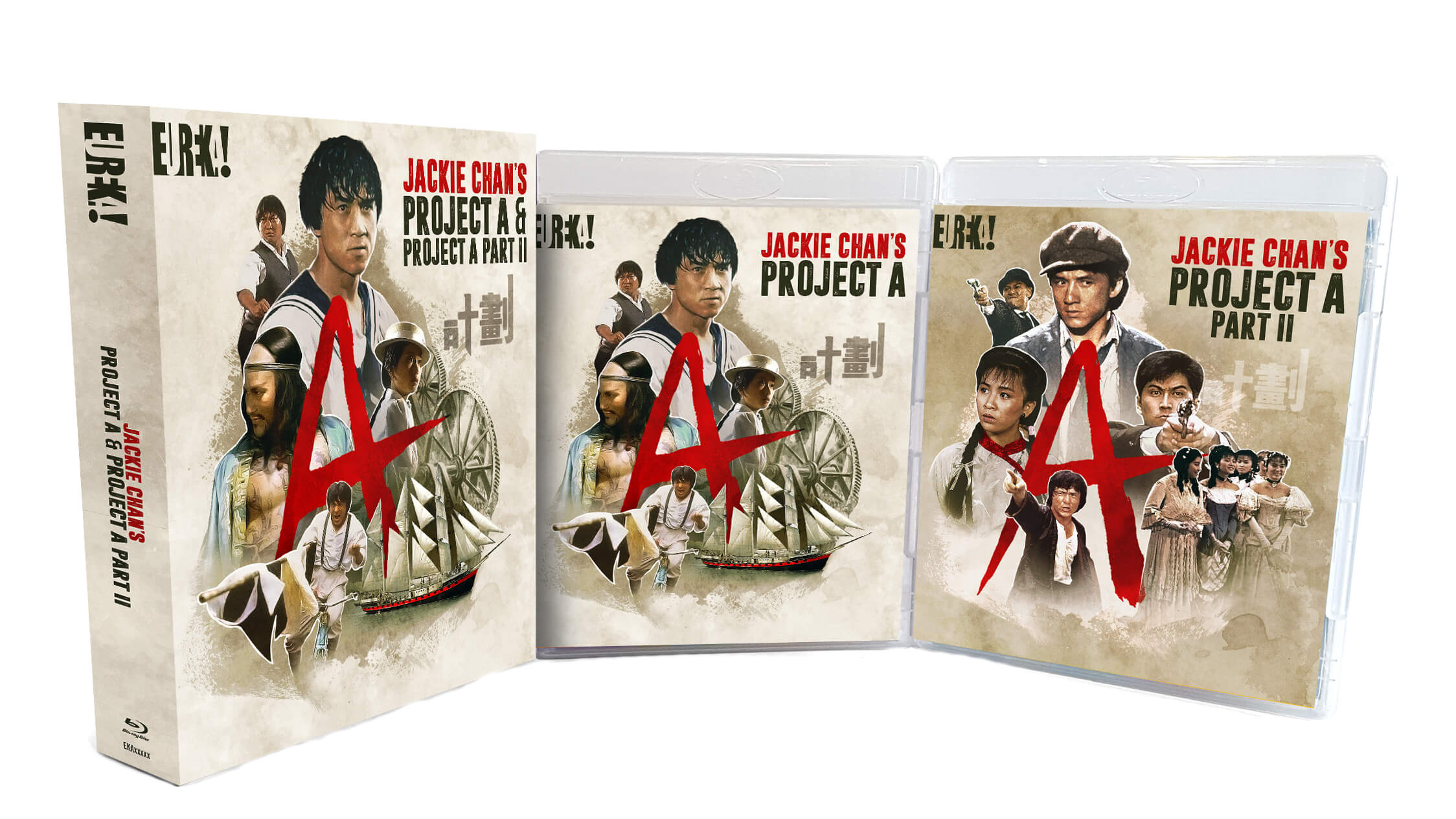
With Eureka Entertainment’s stunning new Blu-ray boxset release of Jackie Chan’s Project A & Project A Part II now available, we’ve got our hands on three copies of this fantastic set to give away!

To be in with a chance to win one of these prizes, simply answer the below question:

Jackie Chan famously starred alongside Chris Tucker in which 1998 movie?

a) The Big Lebowski

b) Rush Hour

c) Saving Private Ryan

Email your answer, along with your address details, to [email protected] labelled Project A before midnight on Sunday, November 11th.

To give you an idea of what to expect from Project A & Project A Part II, be sure to check out the trailer below:

The official word on this new release of two of Chan’s most beloved movies reads:

A pair of incredible action-adventure extravaganzas from the legendary Jackie Chan, Project A and Project A Part II make their long overdue debut on Blu-ray in the UK from brand new 2K restorations. Starring three of the greatest martial-arts action stars of all time (Jackie Chan, Sammo Hung and Yuen Biao), the Project A films blended unparalleled martial artistry, death defying stunts and physical comedy in a way that has yet to be matched.

Project A – Jackie plays Sergeant Dragon Ma, a turn-of-the-century coastguard, hot on the trail of a ruthless band of cut-throat pirates, intent on spreading a trail of blood and mayhem across the South China Seas. Project A features some of the most dangerous stunts of Jackie’s career, including homages to Buster Keaton’s Steamboat Bill, Jr. and Harold Lloyd’s Safety Last!.

Project A Part II – After the events of the first film, Dragon Ma is given a new assignment, to clean up crime and corruption in the roughest part of town. The pressure was on to top the first film in terms of sheer spectacle, but Project A Part II rises to the challenge and delivers one of the most stunt-packed, rip-roaring action-adventures of all time. 

Presented from brand new 2K restorations and fully uncut, Eureka Classics is proud to present Jackie Chan’s Project A and Project A Part II for the first time on Blu-ray in the UK in a special Limited Edition Box Set packed with extra content. 

BLU-RAY SPECIAL FEATURES

  • Special Limited Edition Box Set
  • 1080p presentations of both films, sourced from brand new 2K restorations and making their UK debuts on Blu-ray
  • Original Cantonese audio tracks for both films (mono for Project A and stereo for Project A Part II)
  • Restored 5.1 Cantonese and English audio options
  • Optional English SDH subtitles
  • A new video interview with Tony Rayns
  • Archival interview with Jackie Chan [30 mins]
  • Interview with actor Lee Hoi San [22 mins]
  • Interview with actor Yuen Biao [18 mins]
  • Interview with actor Dick Wei [14 mins]
  • Interview with actor Michael Chan Wai-Man [20 mins]
  • Interview with composer Michael Lai [17 mins]
  • Interview with writer and producer Edward Tang [30 mins]
  • Interview with stuntman Anthony Carpio [29 mins]
  • Interview with stuntman Mars [15 mins]
  • Someone Will Know Me [13 mins] – an archival featurette which includes interviews with stuntmen Mars, Chris Lee Kin-Sang and Rocky Lai
  • Alternate outtakes for Project A from the Japanese version of the film.
  • Archival behind-the-scenes footage [24 mins]
  • Deleted Scenes

Box set exclusive – Collectors booklets for each film, featuring new essays and archival content

JACKIE CHAN’S PROJECT A & PROJECT A PART II, a pair of effortlessly entertaining action-comedy adventures, is OUT NOW on Blu-ray and can be purchased here.

10 OBSCURE HALLOWEEN TREATS VIII

Greetings children of the night, it’s that time of the year again to deliver spine-chilling thrills for your eyes to feast on, so bring your zombie drool cup, stock up on Burke and Hare finger foods at your local graveyard, and enjoy!

THE CRAWLING HAND. 1963. Directed by Herb Strock

An astronaut returning from space is taken over by an alien entity, self-destructs his spacecraft with only his arm surviving through re-entry and landing on a California beach. Soon, the arm goes on a killing spree, mentally taking over a local teen that continues the heinous crimes. It’s up to Sheriff Townsend (Alan Hale, Jr. from Gilligan’s Island fame) and two scientists to stop the creature. Great pop music, good effects on a budget, the world’s worst paramedics (loading up the possessed body on a gurney only to then search the refrigerator for beer), flesh-eating alley cats, and a mean old man who hates kids dancing in his restaurant, but has a hot Swedish girlfriend. Go figure!

HalloweenThe Crawling Hand (1963)

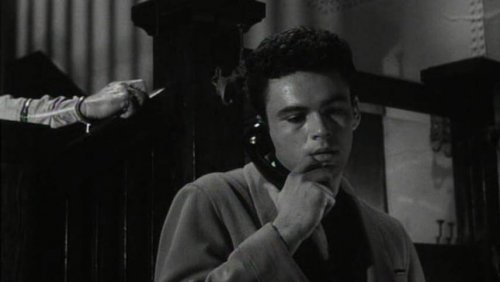
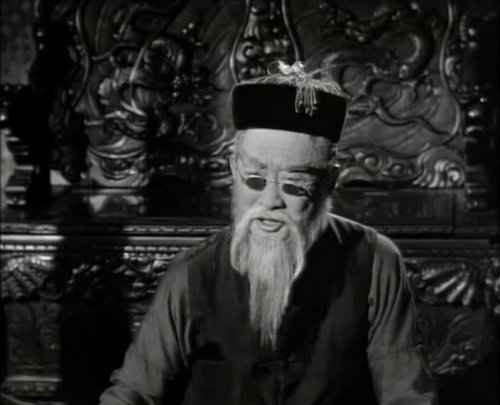
CONFESSIONS OF AN OPIUM EATER. 1962. Directed by Albert Zugsmith

A surreal film that has to be seen to be believed! Part horror, part Raymond Chandler, part adventure. Thomas De Quincy’s grandson, Gilbert De Quincy (Vincent Price in a superb role!) gets involved in big trouble in San Francisco’s Chinatown in the 1880s which in reality is the cleverly, re-dressed Allied Artists western back lot that was in Hollywood. De Quincy shares Confucius colloquialisms, breaks up a slave ring, fights creatures, gets involved in a Tong war, discovers secret passages and teams up with a wise-cracking little person while falling in love! Albert Glasser’s hypnotic, electronic score adds to the weirdness. No doubt John Carpenter saw this film as the template for his Big Trouble in Little China.

HalloweenConfessions of an Opium Eater (1962)

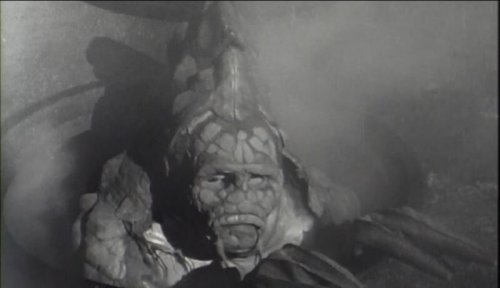
THE SLIME PEOPLE. 1963. Directed by and starring Robert Hutton

Creatures from the sewers of Los Angeles lower the temperature to accommodate their needs, encasing the city in a shroud of fog. Pilot Robert Hutton somehow penetrates the area only to find the city deserted except for a scientist, his two daughters and a Marine that ban together in order to defeat the creepy looking slimy monsters. Filmed at the defunct KKTV Channel 11 Studios in Hollywood on a rumoured $50,000 budget, it’s a B-movie treat!

Halloween

The Slime People (1963)

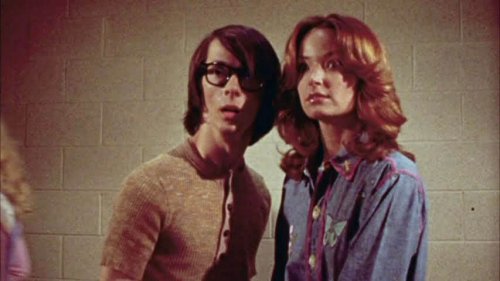
HORROR HIGH. 1973. Directed by Larry N. Stouffer

Teen Dr Jekyll and Mr. Hyde! Vernon Potts (brilliantly portrayed by Pat Cardi) is a shy, high school science nerd who gets picked on and abused by his classmates, teachers and even the demented, cackling janitor who loves to give beatings, develops a serum that he tries on his guinea pig, the loveable Mr Mumps, only to discover its terrifying results. Yet, there’s a ray of shining hope that one girl in the school likes him, seeing him for who he is. Having had enough abuse, he’s forced to take the serum himself and becomes a Hyde-like creature taking revenge on his tormentors in some very vengeful ways as an inept police detective (Austin Stoker who was in John Carpenter’s Assault on Precinct 13) tries to solve the murders. Shot on 16mm with a meagre budget, the acting, cinematography and story are quite good along with the film’s ‘70s guitar score.

Halloween

Horror High (1973)

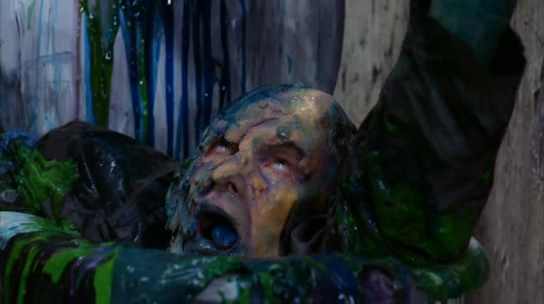
STREET TRASH. 1987. Directed by James M. Munro

A liquor store owner finds a case of ‘Tenafly Viper’ in his cellar and decides to sell it for a dollar a bottle to the local homeless population, causing anyone who drinks it to dissolve from the inside out. Morally wrong and offensive on so many levels, it’s as if National Lampoon magazine made a horror movie! It’s horror/comedy exploitation at its best, with outrageous scenes such as the one with the cop beating a suspect then throwing up on him, one of the funniest animal reactions committed to screen, and a transient who dissolves on a filthy warehouse toilet while flushing himself down the drain. There is no political correctness in this film, nothing is sacred, and Munro keeps the quick pacing of the story filled with snappy dialogue from the ensemble cast. Munro went on to become one of Hollywood’s most sought-after Steadicam operators, working on a selection of James Cameron films, as well as Point Break.

Street Trash (1987)

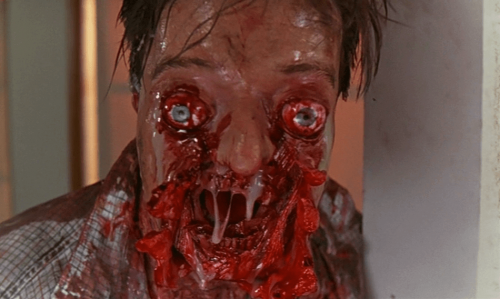
BODY MELT. 1993. Directed by Phillip Broady

This Australian horror/comedy has it all! An experimental vitamin supplement called Vimuville is tested on the small, health-conscious community of Pebbles Court with horrifying results with chemical imbalances in their bodies that cause people to explode or implode in some pretty gross scenes. Then there’s the two mentally deficient Australian hillbillies who have their own agenda as the film progresses. Filled with dark comedy and a twisted sense of humour, Body Melt pokes fun at itself regarding the health craze. FX are quite impressive, and the cast were all professional actors from daytime soap operas on Australian television.

Body Melt (1993)

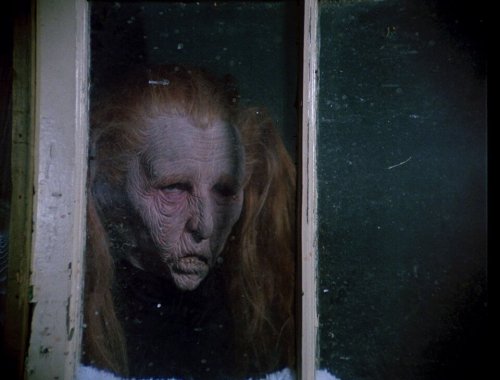
CURTAINS. 1983. Directed by Richard Ciupka

Six actresses that include Sondra Currie (Runaways band member Cherrie Currie’s older sister) are invited to the director’s (John Vernon, stock company player in Clint Eastwood films and the dean in Animal House) country home to audition for the part in a movie (sounds suspicious already!). Turns out he gave the role to an older actress (Samantha Eggar) who researched the part by checking into a mental institution where the director abandoned her there. Faster than you can say, “Chi-Chi-Chi-Cherry Bomb,” each of the ingénues are being stalked and killed by a maniac wearing a creepy hag mask. Lots of atmospheric creativity, unique plot twists, a red herring, and there’s a few spooky, jump-out-of-your-seat shock sequences.

halloween

Curtains (1983)

THE ALIEN FACTOR. 1978. Directed by Don Dohler

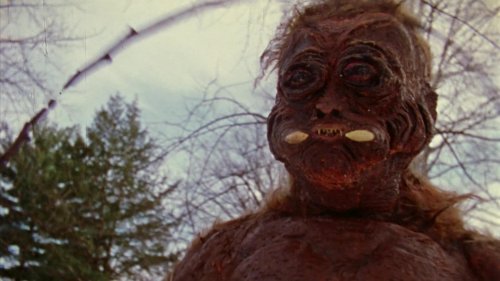
An alien spaceship crashes in the mountains near Baltimore, where three intergalactic zoo animals escape reverting to their predatory behavior. These include a Bigfoot wearing Gene Simmons’ Kiss boots, a cockroach-like creature, and an invisible monster that finally materialises in an impressive stop-motion sequence. It’s up to Sheriff Cinder (Tom Griffith) and a mysterious stranger (Don Leifert) to stop the rampaging beasts. For a first time effort shot on 16mm, there’s something charming about this film despite its quirkiness and slow pacing. Dohler filmed a sequel 25 years later entitled: Alien Factor II: The Alien Rampage.

halloween

The Alien Factor (1978)

NIGHT OF THE EAGLE (aka BURN, WITCH, BURN). 1962. Directed by Sidney Hayers

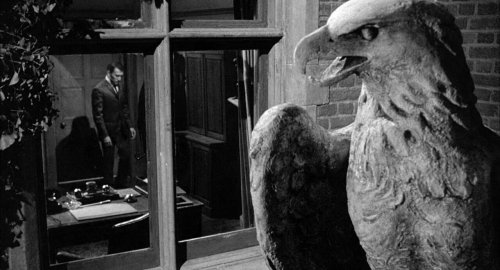
Based on the book The Conjure Wife by Fritz Leiber and a screenplay by two of the greatest writers in film history, Charles Beaumont and Richard Matheson, this is one of the best British occult/horror movies ever. Psychology teacher Professor Norman Taylor (a great performance by Peter Wyngarde) debunks the occult as hocus-pocus nonsense as he strangely begins his rise to success in the university. Unknown to him, his wife Tansy (another great performance by Janet Blair) is a practising witch casting spells and helping his career. Once he finds out, sceptic that he is, he has her burn all the magic artefacts declaring it nothing but a silly ancient superstition, and this is where the trouble begins as evil forces begin to hatch their plans against him. As Taylor tries to rationally explain the weird events that surround him, he soon becomes a believer, but is it too late? Superior in every aspect this is a movie not to be missed!

halloween

Night of the Eagle (1962)

HAPPY HALLOWEEN, EVERYBODY!

[ENDED] Win a Stunning John Carpenter Prize Bundle

With four of John Carpenter’s most beloved movies getting new 4K releases, we’ve got our hands on some fantastic prizes to give away.

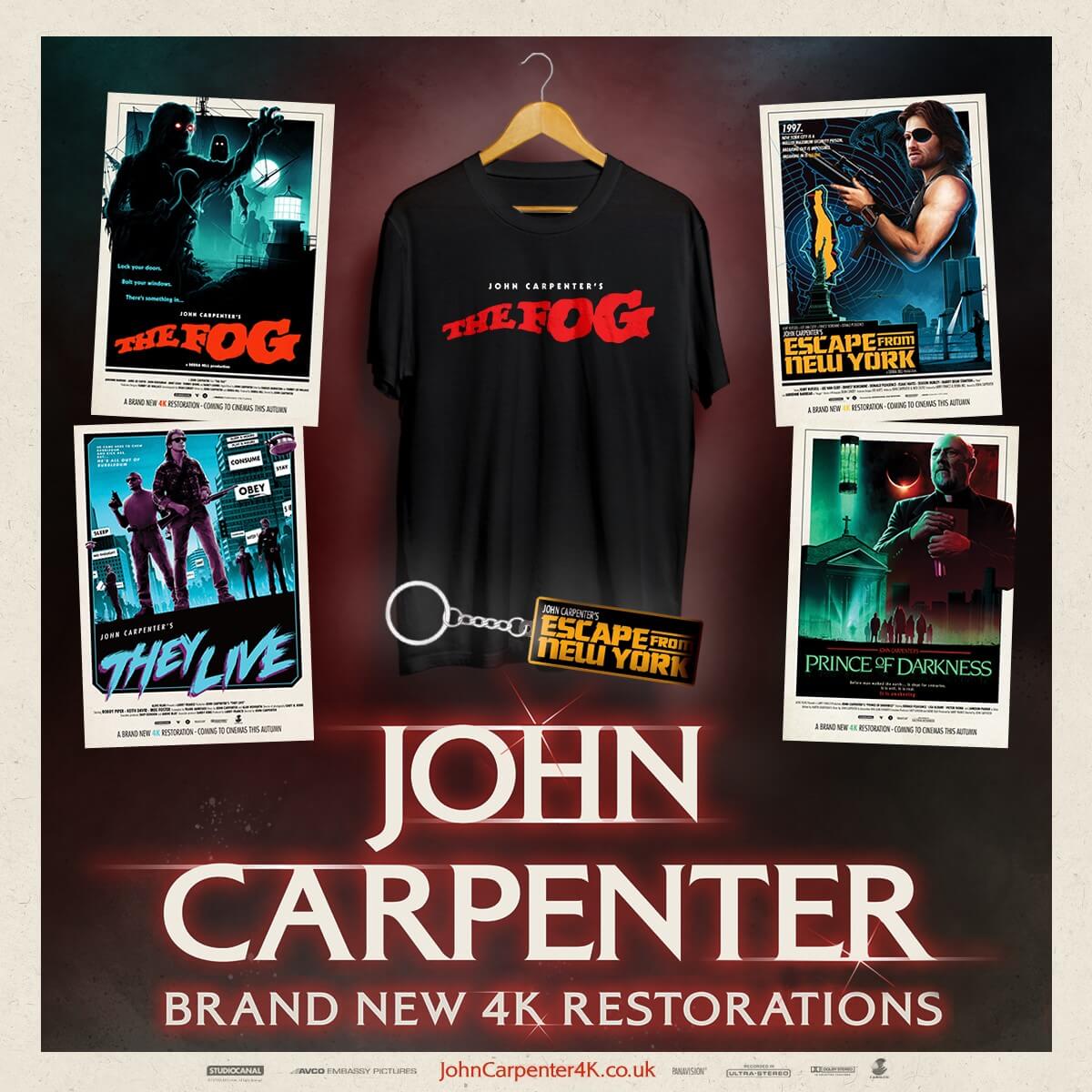
Two lucky winners will nab themselves a Carpenter prize bundle that features four A3 prints, an A6 concertina postcard set, an Escape from New York keyring, and a swanky The Fog t-shirt.

To be in with a chance of winning one of these marvellous prize packs, simply answer the below question:

Jamie Lee Curtis famously starred in which 1978 John Carpenter film?

a) A Nightmare on Elm Street

b) Friday the 13th

c) Halloween

Email your answer, along with your address details, to [email protected] labelled John Carpenter before midnight on Sunday, November 4th.

John Carpenter Competition

In addition to 4K Ultra HD Blu-ray releases of The FogEscape from New YorkPrince of Darkness, and They Live over the next few weeks, all four of these beloved pictures are heading back to the cinema screen. Full details of when and where these movies are screening can be found at https://www.johncarpenter4k.co.uk.

The official word on these new releases of some old favourites can be found below:

STUDIOCANAL is delighted to celebrate the work of the master of ‘80s sci-fi, fantasy and horror, John Carpenter, with the announcement of brand new 4k restorations of some of his most iconic titles: THE FOGTHEY LIVE, ESCAPE FROM NEW YORK and PRINCE OF DARKNESSAll four brand new 4k restorations were done using the original camera negatives, with the colour grading approved for the new restorations and UHD versions by the films’ Cinematographers: Gary B Kibbe and Dean Cundey.

This Autumn, audiences will have the rare opportunity to experience the spectacle of Carpenter’s much-loved cult classics on the big screen looking better than ever.

THE FOG will receive its restoration premiere at The London Film Festival on October 15. From October 26THEY LIVE and PRINCE OF DARKNESS will screen as a precursor to the big Halloween one-night special of THE FOG. Ticket booking information will be announced soon. ESCAPE FROM NEW YORK will be screened for one day only on November 22nd.

Celebrated UK based artist Matt Ferguson has created exclusive brand-new artwork for each film and audiences will be able to appreciate the new 4k restorations at home when all films, complete with new brand new and ‘best of’ extras material, are released across Home Entertainment platforms including UHD for the very first time. A very special, 4-disc Collector’s Edition will be available of THE FOGTHEY LIVE, and ESCAPE FROM NEW YORK, that will also include a copy of the film’s seminal soundtrack composed and performed by Carpenter himself.

John Carpenter has maintained his place as one of the most loved and highly lauded directors in the realm of cult, fantasy and horror filmmaking for over 40 years. From the moment that HALLOWEEN broke through to audiences worldwide in 1978, Carpenter has created some of the most intense, imaginative, influential and successful films in cinema history.


THE FOG (1980)

Antonio Bay, California has turned a hundred years old and is getting ready to celebrate its centennial year. But as the residents of the tightknit community begin to prepare for the festivities, a mysterious cloud of fog appears upon the shore and begins to creep its way across the town, leaving a trail of horrifying slaughter that hints at a deep, blood-soaked secret from its past.

Theatrical release: From October 26th  – special Halloween screenings October 31st

HE Release: October 29th


ESCAPE FROM NEW YORK (1981)

The year is 1997 and in a police state future the island of Manhattan has been turned into a maximum-security prison. The rules are simple: once you’re in, you don’t come out. But when the United States president (Donald Pleasance) crash lands an escape pod into the centre of the city after fleeing a hijacked plane, a ruthless prison warden (Lee Van Cleef) bribes ex-soldier and criminal Snake Plisskin (Kurt Russell) into entering the hazardous Manhattan and rescuing the stranded President from the twisted underworld and the demented clutches of its criminal overlord The Duke (Isaac Hayes).

Theatrical release: November 22nd

HE Release: November 26th


PRINCE OF DARKNESS (1987)

Deep in the basement of an abandoned church, once run by a sinister religious sect, lies a strange bottle of green liquid being investigated by a group of local theoretic physics students.  But as the night draws on the students soon realise that the strange relic holds a dark and powerful force beyond their control. A force that could well be the essence of pure evil: the remains of Satan himself. Starring Donald Pleasence, Jameson Parker and Victor Wong.

Theatrical release: October 26th

HE Release: November 26th  (Steel-book Oct 29th)


THEY LIVE (1988)

WWF wrestler “Rowdy” Roddy Piper plays John Nada, a homeless, unemployed construction worker who discovers a pair of sunglasses that when worn suddenly reveal a world run by yuppie aliens intent on keeping the human race brainwashed and sedate with subliminal messages fed through advertising and the media. Luckily for us all John Nada is a man of action and so begins the fight-back (including perhaps the longest fistfight in cinema’s history) to save humankind.

Theatrical release: From October 26th

HE Release: October 29th

Dwight H. Little | HALLOWEEN 4: THE RETURN OF MICHAEL MYERS

Following the initial poor response to the Shape-less Halloween III: Season of the Witch, the decision was made to bring back Michael Myers. The person tasked with overseeing Michael’s revival in Halloween 4: The Return of Michael Myers was Dwight H. Little, who was at that point beginning to make a name for himself as a director to keep your eye on. As part of our continuing look at the Halloween franchise so far, we caught up with Dwight to talk about what many view as one of the very best offerings in the series, how he approached Michael’s resurrection, why that movie stood out from the similar pictures of the day, his time working with Robert Englund on The Phantom of the Opera, and a whole lot more.

STARBURST: How did you end up involved in Halloween 4: The Return of Michael Myers?

Dwight H. Little: The Akkads were looking for a director, and my manager at that time was aware that they were looking and submitted my director’s reel. The thing was, I’d just shot a small movie in India [Bloodstone]. [Producer] Moustapha Akkad was very taken with the fact that this had been a very gruelling overseas shoot. He had done Lion of the Desert and a couple of movies as a director, so he was very interested in that. Interested enough to at least have me come in for a meeting. They sent me the treatment that they had – which I didn’t understand, it didn’t make any sense – so I pitched something very different. I had a writing partner I’d been working with on other things – Alan McElroy. The director’s reel just cracked the door open, but honestly I think it was the pitch on the take of the movie that really got them intrigued.

What was the story like when you first discussed the picture and how to go about bringing back Michael Myers?

We were trying to decide how to bring Michael back. At the end of Halloween II, there had been this big explosion. We felt that the only way to realistically release Michael Myers into the world was to do a prison transfer. If he’s in some sort of insane asylum – even if he survived the blast – how are you going to get him released? We always wanted to be realistic and not just part of some horror movie trope. The reason he got out of the ambulance is because we needed to get him free. The reason he goes to the diner and kills the mechanic is so he can get his outfit, his coveralls. The reason he blows up the gas station is so that we can take the telephone lines down. The reason he goes to the drugstore is so that he can get his mask. The reason he throws Bucky into the powerlines is so that we can knock the power down in the town. So, we wanted to make everything about his slow approach to Haddonfield. We wanted everything to be believable, we didn’t want it to be tongue-in-cheek. I think that was the main difference; they were doing something that was tongue-in-cheek and a bit self-referencing about Halloween and horror movies in general. We didn’t want to wink at ourselves. Let’s just tell a real thriller – almost like you’d do a Silence of the Lambs sort of thriller – where it’s really happening, Donald Pleasance is taking this seriously, and the town is in real danger. I think that the tone had a lot to do with it, and I think our story, we always wanted to drive it by decisions that were realistic and not just there as a movie device.

Halloween 4 Dwight Little Donald Pleasance

Moustapha Akkad was famously the biggest champion of Michael Myers, so how easy was it to convince him on your vision for the film?

Well, it went very well. They listened and said they’d get back to us, and I think he and his team really looked at a number of different presentations; we certainly weren’t the only one. I think there was a respect to the fact that we were taking Michael seriously – not just as a movie monster, but as this storm coming to Haddonfield. They liked the logic of it, and I know that was part of it. Every time we would build to a sequence – the rooftop sequence, the locals on the hunt – everything grew from a place within the realms of a horror movie but with a logical explanation.

And that was a key component of why Halloween 4 was different to the similar movies of the time; the fact that it tried not to go too tongue-in-cheek, too referential, or too gory for sake of being gory.

That was important, I think, because we did want to do a suspense thriller. There’s a scene where Donald meets the old man driving the truck early on. We had to figure out a way to get him to Haddonfield as well. That scene was there to help set up the mythology of Michael Myers. Even though Michael isn’t in the scene, we’re really talking about him and thinking about the face of evil. You really get a sense of the weight of things. There’s a wonderful scene where Donald Pleasance goes over – the ambulance has crashed in the river – he goes out from behind the ambulance, and he knows what’s happened. He’s the only one that knows what’s coming. It’s acting, it’s nothing campy, it’s just good acting.

Throughout the Halloween franchise as a whole, Donald Pleasance as Sam Loomis is vital to conveying why we should all be terrified of Michael. Particularly here in reintroducing The Shape and the threat that he brings. How was it to direct a figure as legendary as Donald Pleasance?

I was very keenly aware, as a student of film, of The Great Escape and that indelible performance. I was a little bit in awe, honestly. He held his own with James Garner in a Steve McQueen movie. Even here, he was Donald Pleasance. He carried a lot of film history and he carried a lot of weight as an actor. I was excited, a little intimated, but once I started to work with him those trepidations fell away. I found that he was open to direction. With working with stars, you have to find out what is their comfort level. Do they want a collaboration and really talk through everything, or do they want to just be left alone? Each one is different. I felt like he was very open to a collaboration, even though it was his signature character. He wasn’t, “Oh, I know how to do this, just leave me alone.” He wasn’t like that at all. He wanted to talk about the scene, what we could do better, how we could approach it. He was an actor, and he wanted to dig in. I did notice that after about four or five hours he would get quite tired. I don’t know if that was age or he was suffering with something. I started working with the AD to make sure we would do anything demanding in those first four to six hours, then for the last few hours just take it easy with him. As he got more and more tired throughout the day, he’d start to get a little more impatient, a little cranky. But he was not a young man. He was artistically interested, he wasn’t just phoning it in.

Halloween 4

On the other side of the fence, while Donald Pleasance was a veteran of the industry, so much of Halloween 4’s key cast was made up of younger actors – especially an eleven-year-old Danielle Harris as the lead. They say to never work with animals or kids, but how was that experience for you?

A few years later, I did a project called Free Willy 2. It was hysterical, because it was whales, dogs, kids. But on Halloween 4, we had gone to New York and found her [Danielle Harris] in an audition. We weren’t finding her in Los Angeles. There was a casting director in New York, and she put a session together with New York actors. We were looking outside the pool of talent here. There were some candidates, but we weren’t over the moon about them. Then we got to New York, and Danielle and her mom came in. Quite honestly, we knew the minute she walked into the room. We knew right away. I have to say, as much as being her director, I just needed to be her parent. She was so smart and so precocious and so aware. If you explained something clearly, she got it. I wish I could say it was a big struggle, but honestly it wasn’t. She really just got it right from the beginning. She understood the technical part of it, she learned how to find her marks and how to work with the camera, she was tireless. No whining, no tears, no tantrums. It was quite unbelievable, honestly.

One of the stories out there online and amongst fans is that Melissa Joan Hart was up for the Jamie Lloyd role with Danielle. Is there any truth to that?

I do not have that memory. I don’t remember Melissa Joan Hart at all. I know for Ellie’s part [of Rachel Carruthers], it was really down to the wire. There was another candidate for Rachel, and it was down to Ellie and one other that the studio was very keen on. I was really pushing for Ellie. I persuaded Moustapha to have a screentest because I thought it was a very hard decision to make. We did a screentest on 35mm film, the full thing, and then projected it on a screen – it wasn’t just a video – and when we looked at the screentest, that’s when Ellie really shined. A lot of the more subtle things that she was able to do with her eyes and with her empathy came through. That really helped us make that decision. To me, in my memory, Jamie Lloyd was always Danielle.

There was reportedly an extra day of shooting added to Halloween 4 in order to add more gore. Was that the case, and what scenes were added to or tweaked?

That is absolutely true. There were three. There was the sequence where Kelly [Kathleen Kinmont’s character] is impaled against the door. We were running out of time, and they way it was shot made it hard to understand exactly what had happened. It was partly my fault, but the way the edits came together made it a little confusing. So, we went back and we shot from the other side of the door and just did some pick-up shots. When that came together, it was crystal clear, and the impact was much better. That was just a fix. There is a scene where Michael’s hanging on to the top of the pickup truck, and one of the townies is driving. The close-up of his neck being torn apart, that was a pick-up to make it a little more graphic. We had done it in a wide shot, so we didn’t really have the gore. That was then embellished. Then, the final one, we did a shot of the thumb in the forehead. We shot the original version, but we didn’t have the right prosthetic yet. It’s a very simple device, just a retractable thumb like you’d have a retractable knife or a retractable sword – but when it’s done properly it’s hugely effective because your mind does it all for you. So, we had to go in and do close-ups of that to really show the thumb entering the forehead, which is shocking, but it throws the audience off at the beginning of the movie because they’re shocked. I guess that maybe enhanced things as we were able to do it in a much better way. Those are the three scenes that I remember being involved in to enhance the gore, to make things work better.

The ending of Halloween 4 is one of the very best in the franchise and stands out as a truly great horror movie finale. And Donald Pleasance conveys the fear so well of “oh no, this has happened again.

We did Jamie’s coverage first at the top of the stairs, and when we were trying to shoot Donald down below – and this is one of the few things I asked him to do – he came to the bottom of the stairs and played this look of absolute horror. It was very good, but in a sense it was a very internalised moment; it was his own nightmare coming back. I think he had thought this through as Loomis’ nightmare coming back. It was late at night, we were all tired, as we always were, and I took him to one side and said, “I don’t think it’s enough, Donald. I think it’s good for your character, but I don’t really think it’s going to be enough for the audience.” I could see him resisting a bit. He had clearly worked this out in his head, he clearly had a plan. I said, “Let’s see if we just do one take, let out all the stops, just give me something outrageous. If it’s too much, we’ll just put it away and say it’s too much.” If I said that to an actor early in a movie, I don’t think they’d have believed me or trusted me. But he trusted me by then. He came around to the bottom of the stairs and let out an almost primal scream. I said, “Cut!”, and he kind of, not collapsed, but he sort of sat down. I was just stunned, everybody in the crew was stunned. I said, “That’s enough, let’s just call it a night.” I think it was hard for him, because that’s a very difficult place to go to as a human being to really make that work. But I knew when he did that we had something very special. It was just good fortune, a little bit of good instincts on my part, but also just him being willing to take a chance.

Halloween 4

Was it yourself that came up with that ending?

It was primarily myself and Alan. We felt like we’d given it away when she touches Michael’s hand near the end. She walks over to him and they touch hands before she walks back. He gets up and they shoot him into the mining pit. We were worried because of that close-up of the touching of the hands, “Oh, well the audience is going to see this coming a mile away.” But oddly enough, they didn’t. It didn’t ruin the gag. I was thinking about not having that scene of her holding her uncle’s hand like that, so that we could preserve the shock of the end. Oddly, it didn’t hurt the situation for some reason.

You weren’t involved in Halloween 5: The Revenge of Michael Myers, but did you have any plans on where you’d have liked the story to go following the ending of Halloween 4?

Moustapha did ask me to do that one. It was difficult for me, for a couple of reasons. One, I thought we’d really kind of ‘hit it’ and that lightning doesn’t strike twice every time. This is why great directors make bad movies all the time. It’s a combination of great cast, great scripts – all of these things have to come together. Alan and I did talk about it, though. What we would have done was to work on the relationship between the sisters – between Danielle and Ellie – as I do think that was the core of the movie then. We clearly would’ve gone in a very different way, but it really wasn’t up to me to decide at that point because I didn’t have time to participate. Plus, I was given an offer to do a very interesting project with Robert Englund.

Phantom of the Opera?

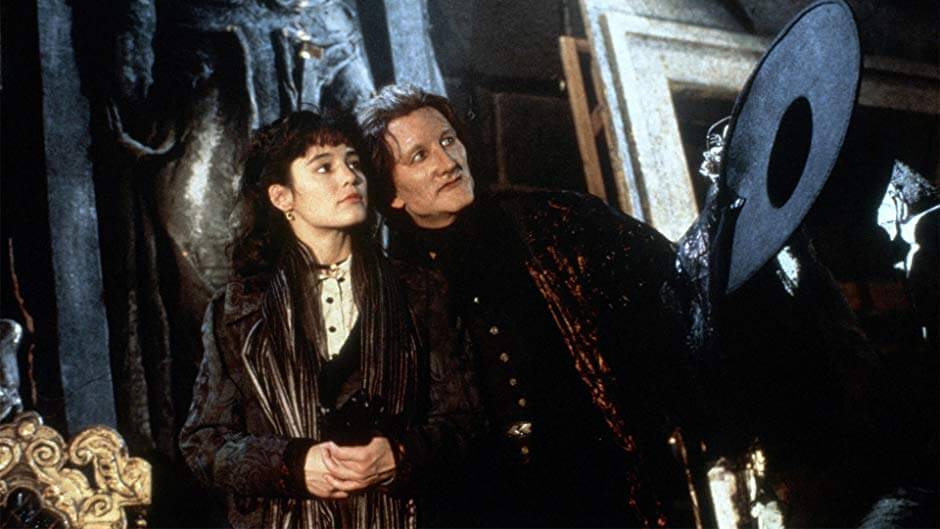
Yeah! It was a very intriguing movie and, of course, it’s Robert Englund, so that was a big draw. We had a little more money and a little more time. It’s like a Hammer movie, and it’s very well produced, a very big, grand-looking movie.

From interviewing Robert a few times over the years, he seems like such a nice guy. How was it to work with him?

He really is a great guy. And like Donald Pleasance, he’s really an actor’s actor. With him, you really have to know your stuff, you can’t just phone it in. You really have to be working at his level. He’s thinking at every moment. He’s a classically trained proper actor. The movie, as you know, has huge fans and has huge detractors, so it’s a very polarizing movie. There’s a lot of Phantom aficionados who just hated it because it’s not the Andrew Lloyd Webber movie. But I actually get more comments about Phantom than any other movie I’ve made. The people who liked it, loved it. I don’t know why it’s so polarizing. I guess it’s because it’s a brand that’s been so known for so many years, so many decades. By the time they were thinking of really moving forward on Halloween 5, I was kind of involved in this other thing – so it was hard for me to do both.

The Phantom of the Opera

As well as Robert Englund headlining The Phantom of the Opera, Jill Schoelen was also starring. At that time back in 1989, they were both huge names in the horror world. When it got to the early ‘90s, Jill just seemed to stop doing as much, which seemed like a real shame as she was a major favourite of so many genre fans.

She had a great screen presence, and she had this very husky, interesting voice, and she was certainly a very pretty girl. I don’t know exactly what went on there, why she didn’t keep going. I know that she went down to do some movie called Popcorn that wasn’t a great experience for her. She might’ve been getting married or maybe she had some personal things that were going on. I agree with you, I thought that she could’ve had a bigger career. She may have stepped away, I’m not sure.

Bringing things full circle and back to Halloween, as someone who’s been directly involved in the series, why do you think this franchise is so special to so many people?

I do think it’s because it’s set in a real and very recognisable world. It’s not as out-there as Jason or Freddy, it’s not sci-fi, it’s not Hellraiser. A lot of people recognise these streets and houses. The characters live in an actual town, people recognise this world. There’s problems with dating, there’s problems with popularity, there’s all kinds of teenage problems, but not in a goofy way. Michael, you can’t see his eyes, you don’t know what he wants, you don’t know why he’s there. It’s like a small-town drama, and then you add this boogeyman to it. I think people recognise the world, and it’s something that when you see it in a theatre or on TV, you kinda remember that. A lot of the horror movies now – and they are wildly successful – are concept movies. So you have a larger hook, like Lights Out or A Quiet Place – which is so good – but here you had a bunch of people in a small town and this thing shows up.

It’s such a basic concept, yet brilliant in its simplicity. A lot of the terror comes in what you don’t see, or in the tension that’s slowly crafted. And it shows in how after Halloween 4 the franchise seemed to lose that element a little, which ultimately saw the series falter.

I think the new one will be great. They’ve gone back to basics. You know, nobody really knows what happened with those two Rob Zombie movies, no one knows what that was. That was a really strange approach. Not to be too much of a prude about it, but it was way too vulgar. It was so vulgar and so over the top. I don’t think people are comfortable with that level of language, and I didn’t think the tone was right. If you look at the first Halloween, it’s just Jamie Lee and her friends. It’s not trying to be some super edgy, fifty million F-bombs film. It’s not supposed to be super dark and edgy in that way.

Halloween 4

While the first of Rob Zombie’s Halloween movies certainly had some good moments, nobody really wanted or needed to know the origin story of Michael Myers or the reasons for why he is like he is.

In Halloween 4, we had to answer this question at some point. Alan and I were talking, and I said, “Well, what is it?” Alan said, “I think he’s just evil on two legs. We’ll just say that.” There’s a scene in the police station where Loomis is talking to a cop, and Donald Pleasance finally says it, that he is just evil on two legs.

One other interesting film you were involved in was Free Willy 2. How was it direct and oversee a shoot with so much water and mechanics involved?

Well, it was incredibly difficult. But I had the resources of the studio. The one thing about a studio film different to an independent movie, you’re serving so many masters but you do have this massive army of technicians and hugely professional people. We had barges and ships, it was an unbelievable production. You had to picture a boy and a whale, the simplest picture in the world, but if you look just outside the frame there’s hundreds and hundreds of people; there’s divers, animatronic operators, safety people. It was just a huge production. But you don’t feel that when you watch the movie; it’s just a kid out with a whale. And Michael [Madsen] was great, so patient. There were scenes where you’d have to do take after take after take, and the actors are just standing there in the background. It’s very boring for them, but they knew the drill, they knew what was going on. There’s one scene where the boy, Jesse, comes out on the edge of the dock and he has to feed this whale some fresh salmon. It looks simple enough, but the whale was a legitimate 20-foot animatronic, mechanical beast that’s tethered to the ocean floor. The sound of them operating this mechanical whale is deafening! So, all the dialogue is replaced. It was just brutally difficult to do, because you’re throwing a fish into the mouth of an unreal thing but it has to look life-like. That was a very challenging movie, but it’s a very sweet movie. It really plays well, it has a good environmental message, and it came together just fine.

In terms of TV, you’ve been involved in so many genre favourites. From Freddy’s Nightmares, to Millennium, to Sleepy Hollow, to From Dusk Till Dawn, to Arrow, to Marvel’s Agents of S.H.I.E.L.D., to The X-Files. As a director, how is it going from one show to another?

It really does take some getting used to. I was brought to television really with Millennium, and Lance [Henriksen] was so great, and the people involved, in making that were so welcoming to help me figure out that universe. I had a wonderful experience with that, then I was very lucky to work with Dave Kelly on a show called The Practice, which was an Emmy-winning show. It’s funny, but it all comes down to how my experience was with the lead actor. That’s the marriage, that’s your essential relationship. The one that I really am very fond of was Sleepy Hollow, and that’s because Tom Mison is such an astonishing actor and a complete gentleman. When you show up to work and you have a collaborator who’s not only wildly talented but is also a gentleman, it just makes the whole thing so creatively great. That’s why Millennium was great, because of Lance. I’ve had experiences where the lead is talented but maybe not my type of person, and then there’s tension, there’s disagreements, and then it becomes more of a chore because you’re not really loving your day, you’re just sort of fighting. And there’s a lot of that. Hopefully, there’s more of the good than the bad.

What can you tell us about what you’re working on at the moment or have in the pipeline?

The one that I want people to know about – it wasn’t widely released – is a movie with Robert Patrick and Heather Graham called Last Rampage. It hasn’t come out in the UK yet as far as I know, but it’s on Netflix in America. When it does come out in the UK, I’d love people to check it out. We made it really for next-to-nothing, but it’s a fascinating story. It centres on Robert and Heather and the late John Heard. We had really good actors, and it’s a fascinating true crime story. Because of that film, I’ve had some opportunities. I’m really working on scripts right now, and one of them is a horror thriller. Then, I have another one that’s an action piece that I’m trying to get casting for right now called The Hardest Place. That’s the same writer, that’s Alan McElroy again. We’re planning to shoot that in Louisiana. We’ve got all of our ducks in a row, we’re just waiting for that last piece of casting to come in. I’m just honestly moving now from television back to independent features, and that’s sort of where my heart is. As you know, it’s more for the director, whereas television is a little bit more for the writer. Movies are still a director’s medium.

For more on Dwight’s work and his upcoming projects, head on over to https://dwightlittledirector.com.

ISSUE 454 – OUT NOW!

454

STARBURST goes all temporal with our TIME TRAVEL ISSUE, in which we countdown the Top 50 time hoppers. We also take a look at DOCTOR WHO’s importance in the history of fantasy time travel.

There’s the second part of our HISTORY OF HALLOWEEN, and the first instalment of some spectacular interviews with the creators of BATMAN: THE ANIMATED SERIES, including creator PAUL DINI. With FANTASTIC BEASTS: THE CRIMES OF GRINDELWALD hitting screens, we present the complete history of HARRY POTTER.

Looking forward to new releases, we get the skinny on Netfix’s CHILLING ADVENTURES OF SABRINA as well as delving into the history of the channel.

If that’s not enough, we talk to PANOS COSMATOS, director of MANDY and TONY NEWTON tells us about his love of old video tapes that led to his documentary VHS LIVES!

In our regular features, we take a look at Horror Channel’s Haunted Halloween season and Independents Day focuses on TYLER SAVAGE, director of INHERITANCE.

Plus all your favourite COLUMNS, NEWS, REVIEWS and much MORE from the worlds of SCI-FI, HORROR and FANTASY!

Daeg Faerch | HALLOWEEN

Daeg Faerch

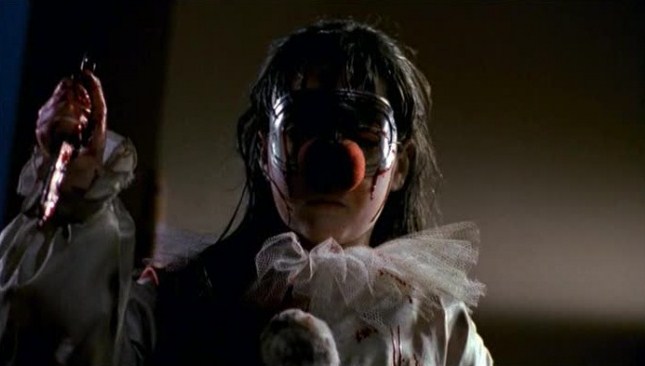
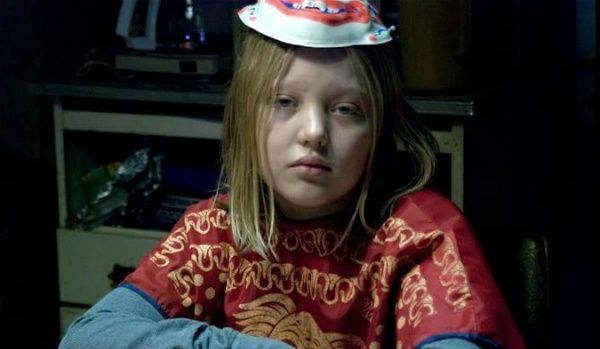
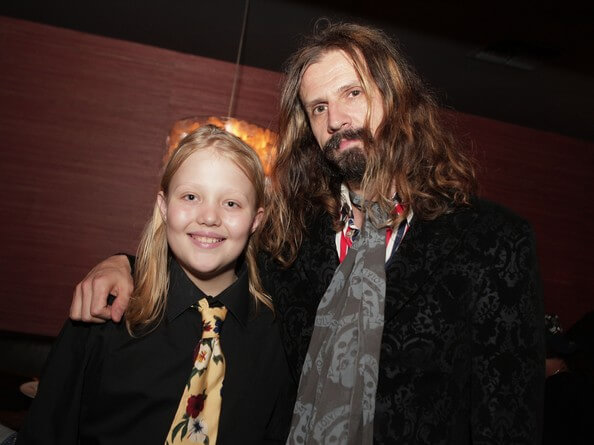
As we continue to celebrate the Halloween franchise ahead of The Shape’s return to the big screen, we caught up with Daeg Faerch to discuss his time playing the young Michael Myers in Rob Zombie’s Halloween, his memories of that movie, and just why the famed series is loved by so many.

STARBURST: How did you end up landing the role of young Michael Myers?

Daeg Faerch: After several years of acting in smaller roles, my mom got me this audition that I booked without a callback.  At the time we did not understand that this was an important role in a big movie.

Given your age at the time, were you truly familiar with how much of a big role Michael was? And if so, was there any trepidation?

I was not familiar with the franchise or any horror. I feel like that was probably a good thing.

It seems like Rob creates a family-like feel on all of his sets. How great was he in making you feel comfortable on the movie?

He is a great director and he let me improv a lot with the role. That is something I really enjoy in acting.

How much fun was it to play a kid who just snaps?

Awesome! As a kid, and even as a kid at heart, actors acting is a great opportunity to… play!

Daeg Faerch

Is there any scene that stands out as a favourite for you?

Killing the bully with Styrofoam sticks in the woods was fun for everyone.

How was it working so closely with Malcolm McDowell?

We hit that improv scene on point. Awesome!

How was it dealing with all of the attention that the movie brought you at such a young age?

I was eleven for filming, and for the release as well, and I had a ball.

From the stories out there, you were unable to return for Halloween II due to having had a growth spurt by the time that film was to start shooting. How frustrating was that at the time?

I mean, I’m chillin’, to be honest. I am blessed to have been able to deliver in 2007.

Has there been any talk of you teaming with Rob again at some point?

We are going to make a track together sometime, and I look forward to working with Rob again as an actor.

Daeg Faerch Rob Zombie Halloween

Why do you think the Halloween franchise is so special to so many people?

Michael Myers is gangster AF.

You’re currently working on an anti-bullying campaign. What can you tell us about that?

I made a movie with Noel G who is involved with anti-bullying campaigns. All the way, fuck bullies.

What projects are you currently working on or have in the pipeline that you can tell us about?

I’ve just wrapped a movie called Killer Therapy. Some modelling work. I also rap, compose and produce as GreatDaeg – available on all music streaming platforms.

Be sure to subscribe to Daeg’s YouTube channel to keep up with his work and upcoming projects.

Ellie Cornell | HALLOWEEN 4 & HALLOWEEN 5

Ellie Cornell

While Jamie Lee Curtis was famously stalked by The Shape in the first two Halloween movies, one of the poor souls in the crosshairs of Michael Myers upon him resurfacing in Halloween 4: The Return of Michael Myers was Ellie Cornell’s Rachel Carruthers. As part of our look back through the Halloween franchise, we caught up with Ellie to discuss her time working on the fourth and fifth Halloween movies, working with Donald Pleasance, what makes the Halloween series so special, and a whole host of other topics.

STARBURST: How did you end up involved in Halloween 4 in the first place?

Ellie Cornell: My agent in New York sent me to Los Angeles for pilot season, and it was one of my auditions. It was at the same time that they were casting A Nightmare on Elm Street, so I actually read for the both of them. I’d read for Halloween on the Friday. So Dwight Little, the director, and Alan B. McElroy, the screenwriter, were both there. They screen-tested me on the Friday and they cast me on the Monday. Then Danielle Harris and I went to Salt Lake City for six weeks, where we worked a ridiculous amount; I think we worked 39 out of the 40 days. It was an insane amount of work, but it was a great training ground.

Back then, was there ever a chance to do A Nightmare on Elm Street as well?

No, I think they wanted someone like my type – I think at the time my type was very popular – the girl next door. I got Halloween and they went in a different direction. It definitely was not a choice between the two, but I liked the Halloween franchise more because I was much more familiar with it. I knew the Freddy Krueger series, but I’d not been to see them, whereas Halloween was much better known. And I loved my character, Rachel Carruthers. For that genre, it was well written, and she was smart, she was a fighter, and she didn’t die – that was the best part!

At that time, how familiar were you with the three Halloween movies that had preceded The Return of Michael Myers?

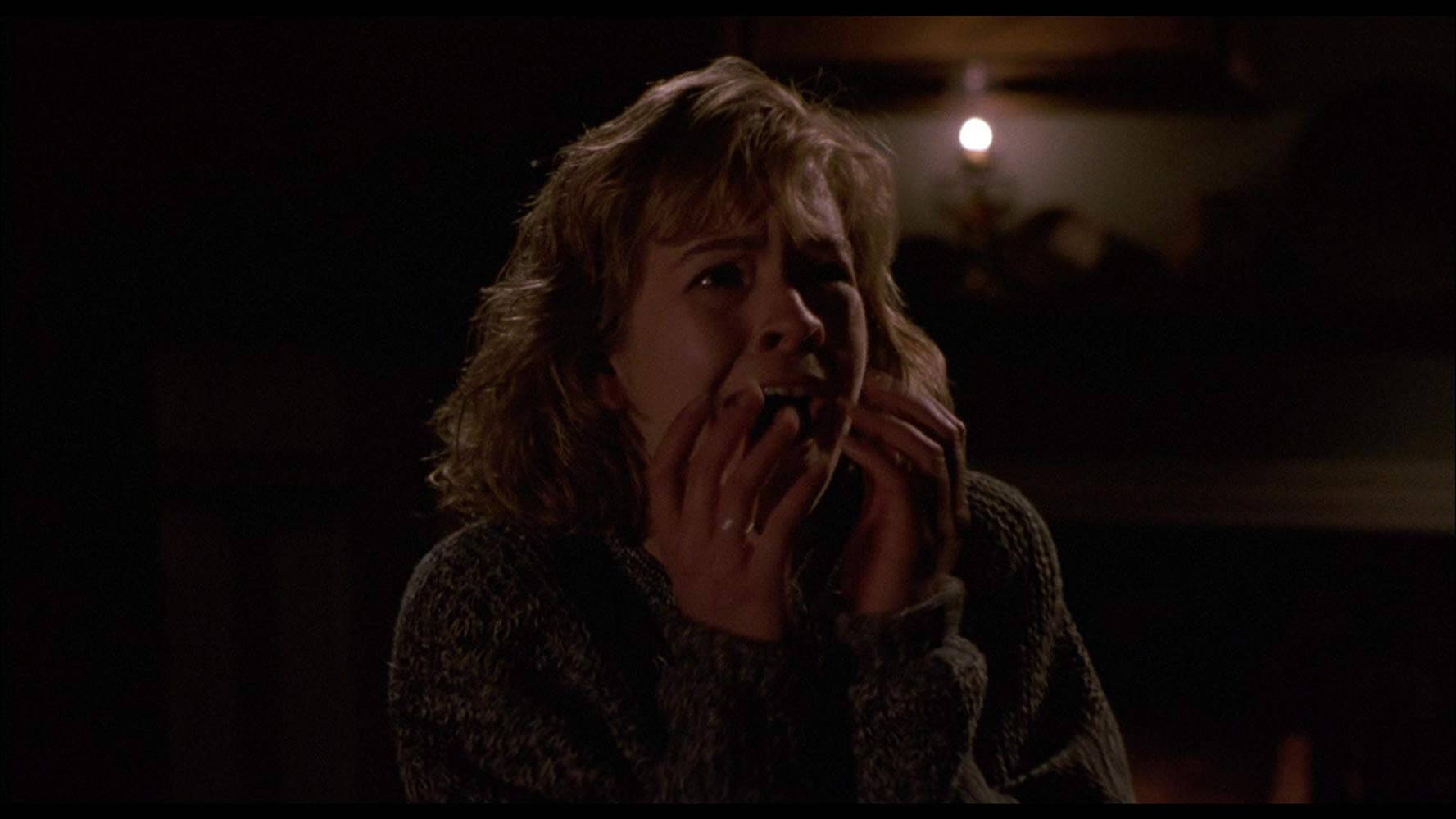
I saw bits and pieces of the first one. I knew it was well done, I knew it had done very well at the box office. I did not see Halloween II, but I had actually seen Halloween III kind of by accident. That was so far off base, so I could tell by the script [of Halloween 4] that they were going back to the original storyline. It was really well written, and I thought that if it interests me then it’ll interest the audience. They didn’t dumb it down. I wouldn’t have done it if I didn’t like the story, put it that way. It’s too much hard work, too much of a personal investment to do a project but not be behind the writing. And I loved, loved, loved Dwight Little. Both Danielle and I had to put a lot of faith in his corner because we were relatively inexperienced for the amount of work that we were doing. So, we trusted him and his vision. And of course, we got to work with Donald Pleasance. That was phenomenal!#
Halloween 4

Are we correct in thinking it was Dwight who was really pushing to cast you?

I just read that when he wanted to cast me – I think he really liked me – Moustapha Akkad, the late producer, wasn’t so sure. I don’t know what it was that he pictured, but it kills me that I wasn’t the producer’s first choice. So Dwight went to bat for me. I think he screen-tested two of us, and I got the part. I was so lucky.

Obviously Laurie Strode is a character synonymous with the Halloween franchise, but many people often view Rachel as their next favourite protagonist in the series. Why do you think that is?

I think it’s because of her characteristics. You get behind her, you know? Kathleen Kinmont played such a good bad girl. Not to feel sorry for Rachel, but you want her to get ahead. She fights like a dog to save Jamie, and that whole rooftop scene… I mean, c’mon, that’s great stuff!

That rooftop scene is certainly one of the most famous ones in the franchise. How much of that was you, and how much was a stunt actor?

Are you kidding?! That was all us. There was only one thing that they wouldn’t let me do. That was all Danielle and I. There was the original house in Salt Lake City – which is this old ginormous house – and they went out in to the canyons outside of Salt Lake City and built this fake rooftop for us to work on. It was still really high up though, all things considered. They had medics and staff and all of that. When the leads start doing stunt work, you have to be careful. The only thing they wouldn’t let me do was the free-fall. They had a stuntwoman come in with a cable. The climbing around, sliding down, all that stuff – that was us. I have to say, it was really fun. That was my last night on the shoot. There’s this great thing that happens on every actor’s last night. It’s always “That’s a wrap for Ellie” and everyone gives you a big round of applause. I dunno, it was just such a tight set because we were all working so hard. Everybody is important, especially when you’re on location. You live, eat, and breathe these folks. It was a tight bunch and it was a hard set to leave. I made a lot of friends. We all did. Dwight and I ended up flying back to New York together, which was great as we got to come down from the whole experience. It was awesome.

It sounds like a pretty surreal experience. How is it to do an intense forty-day shoot and then just return to normal life or move on to the next job?

Especially night shoots. Night shoots are so weird because you’re getting driven to this set when everyone’s going home from their day. It’s really kind of discombobulating. You’re on a completely different schedule than the rest of the world. It doesn’t matter whether you’re a driver, a caterer, everyone is equally as important as the actors or the director.
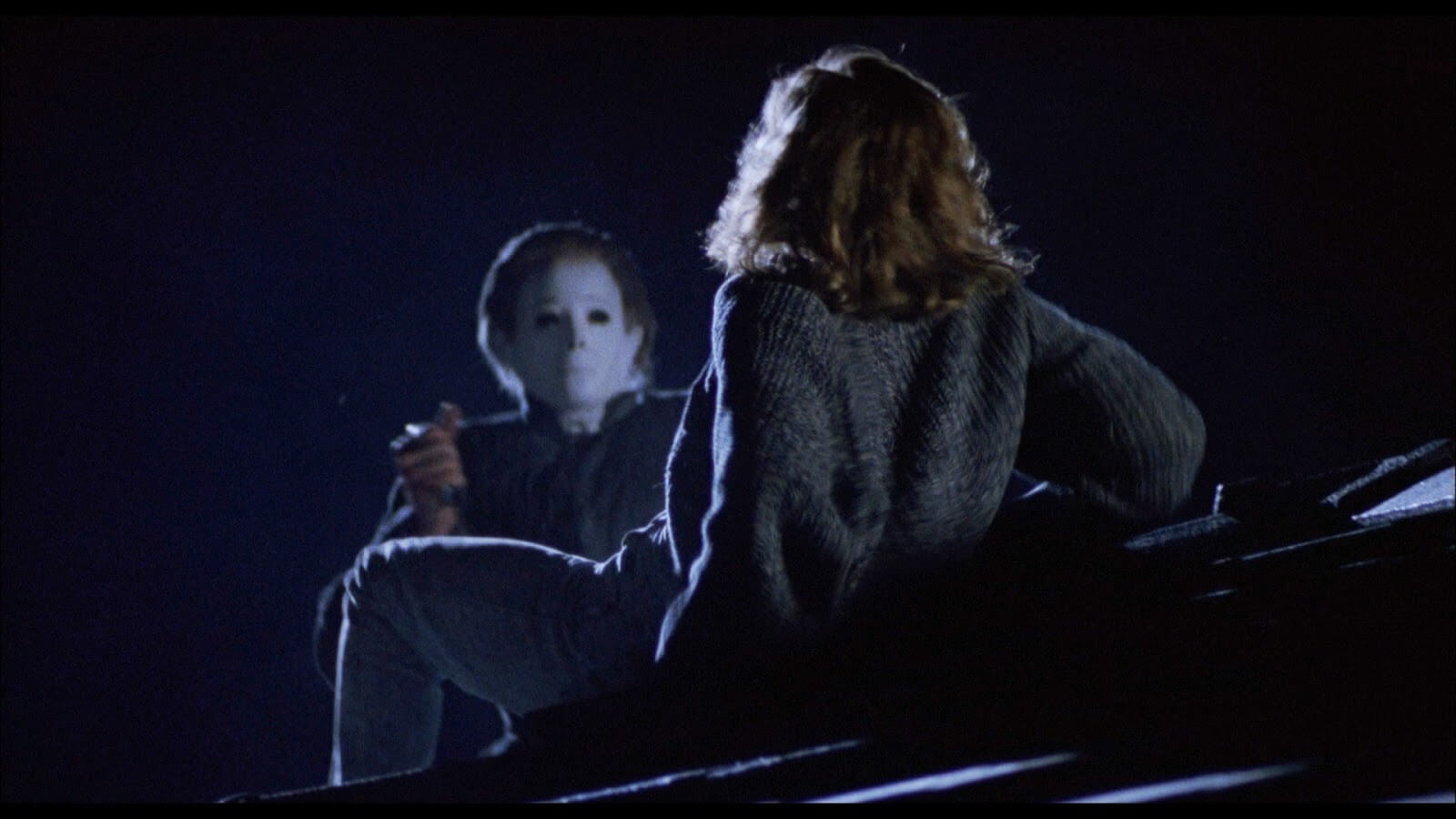
Halloween 4

Upon the first watch, many might think that the Rachel character is there to end up as just another victim of Michael’s. Rachel surviving was so different to what other similar movies were doing at that time.

Different from the formula, I agree. I couldn’t believe it. You know what happens, after that fact. Okay, so we did Halloween 4 and then I knew, obviously as I’d lived through 4, that there was going to be a sequel. I had heard that Dwight was not going to do it, so they hired this French director [Dominique Othenin-Girard], and they sent me the script – and I knew. I was like, “What page is it on?” You know it’s coming, you know they’re going to knock her off. Screen-time, it was about twelve minutes in when they kill Rachel. I didn’t like the way she was killed, so I had them rewrite it; it was too undignified for her character. It wasn’t thought-out, and it wasn’t honourable, so they re-wrote it. Years later, I was at a show with our producer Mustapha Akkad, and he said he really regretted killing her off. I thought that was really sweet. He didn’t realise there would be a backlash. It was kind of a cheap shot. But it is what it is, and that’s the nature of the whole genre.

Where’s there ever any talk of you making it through Halloween 5: The Revenge of Michael Myers, or was it always a case of just which page you’d die on?

No, there was never a discussion with me. I think, in retrospect, I would’ve said to at least leave it open-ended; at least there’s a possibility. These things are really about the fans and how many tickets are being sold, and it’s kind of enticing to have a teaser – did see die, could she have lived? Michael Myers, you think he’s dead. Like when I hit him with the truck, there’s no way he could have survived through that, but of course he did because he’s Michael Myers. If I had been more seasoned and braver, I would’ve said, “You guys, be careful. Once she’s gone, she’s gone.”

And especially when the franchise itself often has so much ambiguity involved when it comes to the fates of Michael Myers and Sam Loomis. They had something with the Rachel character that, even if she didn’t get through to the next movie, she could’ve been better utilized in Halloween 5.

I agree. But it was nice to get that shout out from Mustapha. I’m no saying it was the Rachel Carruthers character, but that film re-lit the franchise. 4 did really well at the box office, people got back on board. I just thought with Halloween 5 it took a step backwards, I guess.

When you first got the script, what was the original plan for Rachel’s death?

Oh, the original thing was basically the same storyline – Michael Myers gets into my house, he stabs me with scissors, but he stuck them down my throat. And I’m like, “No, I’m not doing that. It’s too phallic, that’s not what we’re going to do.” It’s too graphic, it’s too ridiculous. It was undignified, it’s gross, I didn’t want to do it. So he just ends up stabbing me in the chest. The angle was fine, it wasn’t that gruesome, it was just done-and-done.
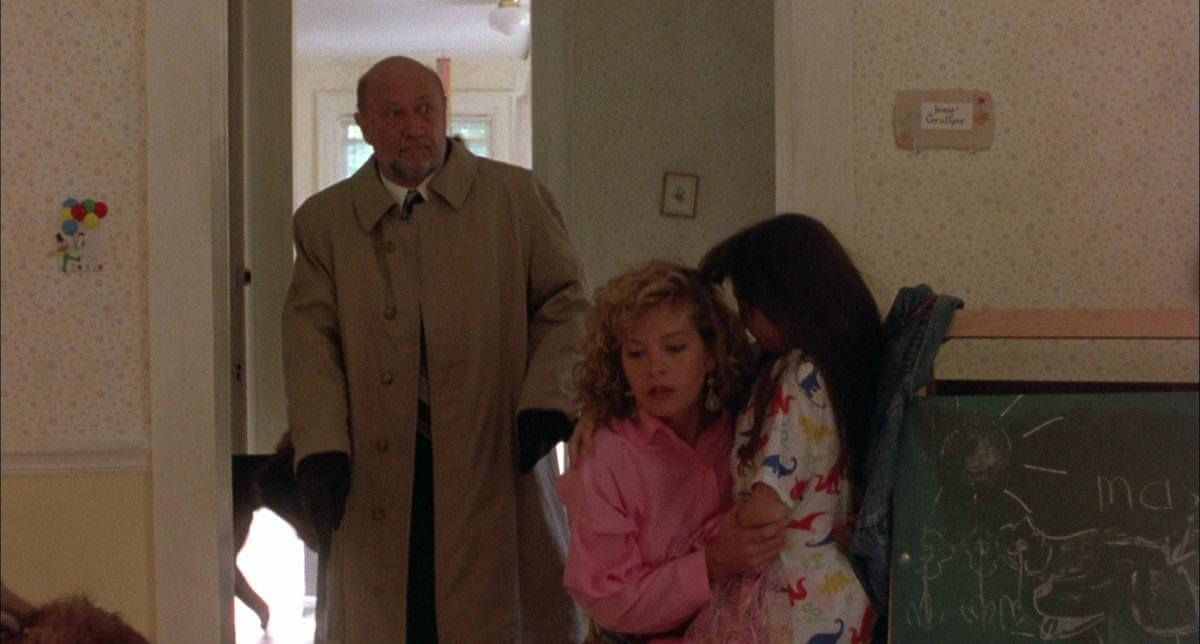
Halloween 4

The stuff you were auditioning for during pilot season before Halloween 4, were they similar roles to Rachel – as in, smart but kickass – or, given the landscape of the mid-late ‘80s horror scene, was that character a rarity?

I think so. I think it’s still pretty rare. I just did a film that hasn’t come out yet, but there’s a crazy-good fight scene in that, too. And it just cracks me up, because I’m not very big; I don’t know how I get myself in to these situations, but it sure is fun. People need to see that women aren’t victims all the time. Most of the roles I read for in the past, there was no horror at all except for the Halloween series. Afterwards, of course, I did more horror. But it was Disney, afterschool specials, it was girl-next-door, kinda smart, doesn’t get the guy but she’s nice. And that’s okay too, you know. I would much rather be in that realm than kinda the bimbo, the dumbed-down character.

At that point in your career, was there an ideal role that you were looking for, or was it a case of work is work and working as much as you can?

I got so lucky. It sounds so cliché and I have absolutely no regrets with the way my career turned out, because I actually got to be a stay-at-home mom. I started getting really, really close to huge rules. Elisabeth Shue got the role in this film called Cocktail with Tom Cruise. I was in the audition room with Jeff Daniels on my way in. Just huge stuff. I got to read for Sean Penn – he did a film called The Indian Runner – then Leonard Nemoy for the lead in a Gene Wilder movie [Funny About Love]. It was me, Kelly Preston, and Mary Stuart Masterson – and Mary Stuart Masterson got the role. There was a casting director called Amanda Mackie who just kept bringing me in. And it was such a thrill. It was a really substantial training ground. Then finally I got asked to audition for a film called A League of Our Own with Rosie O’Donnell and Madonna. They called me up and said, “We want to see you play softball in front of USC coaches.” A who’s who of young Hollywood women were playing softball on camera so they could see how they play. I don’t play softball, but I played the game of my life because I had nothing to lose. Penny Marshall, the director, and the casting people brought me in. They said, “Do you know why we’re calling you back?” I said, “Because I’m right for the role?” “No, because you play really good softball.” They ended up not making the film at that time for whatever reason – probably financial reasons – and then I started a family, so I couldn’t do it if I wanted to because I was pregnant. It was a really fun time in Los Angeles. It’s hard to explain, but it’s really fun to be getting that close to stuff. You know eventually something is going to happen, something is going to give. The high stakes were just a huge thrill. It’s so scary but it’s so exciting. I think there’s even more pressure now because there’s so much at stake in television for casting; you can’t hire an actor that’s gonna choke, that gets nervous, or doesn’t show up, or is not prepared. It’s not brain surgery, but it’s not easy either. There’s just a tremendous amount of pressure in the audition room. And the closer you get – when you have your second or third call-back, or the final call-back – you just want it so darn bad. You start to kind of own it. You have to be really disciplined, I think.

In a way, is it worse to get to the final two or three and then not get the role?

Oh, totally. But the thing is, I’ve always been taught that if you are natural and you’re good, they’ll remember you. That’s all you can do is do the best you can. If you don’t get it, it’s for any number of reasons. You have to learn to not take it personally.

You talked about how with A League of Our Own you had decided to start a family by the time that film eventually came around. Do you think that people can find it hard to just step out of the spotlight like that, even temporarily, and that at times people are left constantly chasing that next big role?

Right! For me, I was really lucky because I got to a point where I was ready to take a step out. I had just gotten married, I was just so unbelievably happy and focussed on that, and I just felt this natural shift of gears. And I was also aware of older actresses that had worked all through their children’s lives and were now slowing down in order to be with them – but their kids would be sixteen or 18 years old. You can’t go back, you’ve missed so much of the good stuff. I was lucky; my husband was happy to support me no matter what I wanted to do. It wasn’t a hard choice for me, and I’ve never regretted it. I feel like it was a blessing in disguise. I think no matter what, if it doesn’t make me happy and feed my soul, then I’m not gonna do it. I’m careful, I’m choosy. I love to do theatre. Theatre feeds my soul rather than doing commercials that feel like you’re phoning it in.
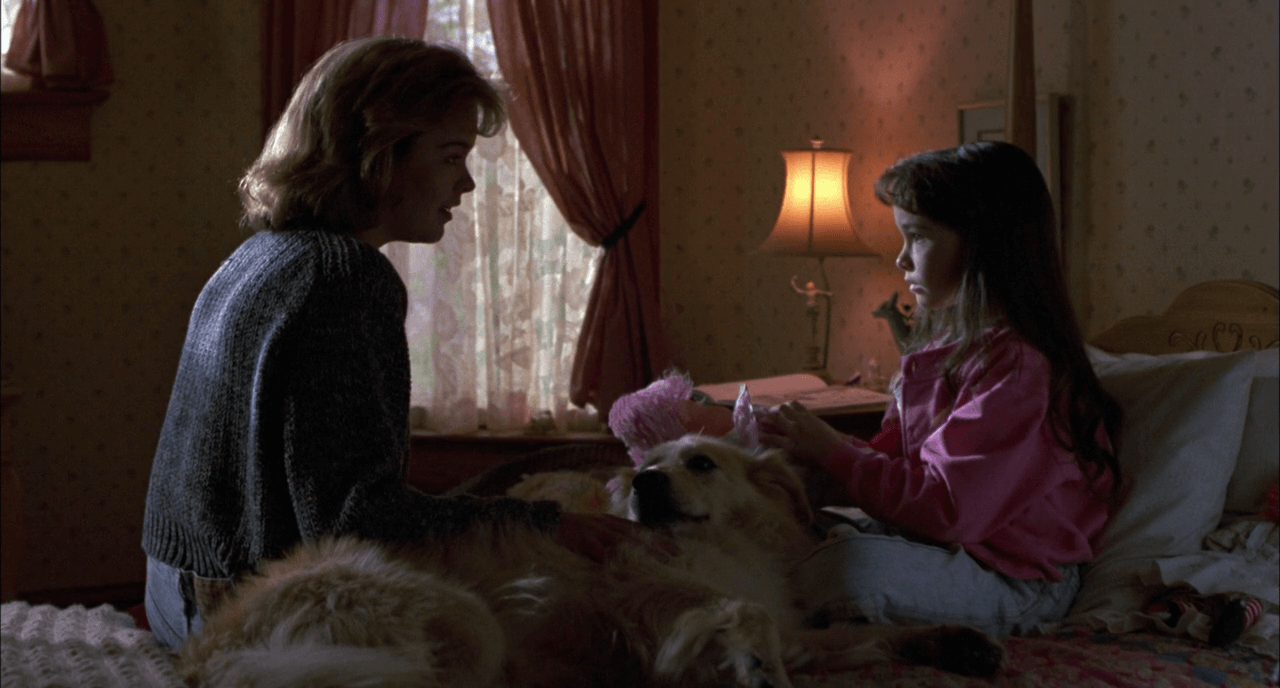
Halloween 4

You are still active to this day, but was there any time afterwards where you wanted to get back involved in the business in a big way?

I think I definitely chase it again. I remember when our second child got to a certain age, I was like, “Now I remember what I used to do!” The closest I probably got to something really big – and it was a while ago – but I was actually a zombie in a zombie movie, which was amazing because I think we had Greg Nicotero – who’s one of the best make-up guys in Hollywood, crazy good, and he worked on Halloween as well – but we had these crazy prosthetics and contacts and all this fun stuff going on, and we were shooting outside of L.A. They wrapped me at about 3am. In all my make-up, all this zombie make-up between my fingers, I’m driving home, and as soon as I got cell coverage there was a message from my agent saying, “You need to be down at the studios for a final call-back for a series at 10am.” So I had no time to prep, very little sleep, and I had grey knuckles. It was just so typical. The thing that was so cool about that was for that it was for Aaron Spelling Television – which is like the gates of heaven, it doesn’t get any better than that – and for whatever reason I had skipped over the initial process. Obviously I didn’t get it, but it is so much fun, it is such an adrenaline rush to get that close to stuff. Just even for those two minutes that you’re in the room for your audition, you own it; it’s yours, you can do whatever you want with that time.

You have appeared at certain conventions over the years. How have you found your experience of those?

I guess I’m private, I guess that’s part of it. I’ve enjoyed the ones I’ve done, I just haven’t done that many of them. You know, there’s so many actors that love, love, love doing them and do the whole circuit, and power to them. It’s just not particularly my cup of tea. It has nothing to do with the fans, it’s more to do with my time and things like that. I haven’t done many conventions, but it’s fun to share your knowledge and to be with people that appreciate what you do. It’s always such an honour. They know my lines, they’re so sweet – they’re like, “You’re my favourite babysitter!” It’s lovely to see their eyes light up. And it has nothing to do with me, it has to do with the storytelling and the writing.

You have to take some of the credit there, for how your portrayal of Rachel connected to so many people…

I think there’s a relatability to it, and I think there’s something cool that you can go to a convention and be face-to-face with people that you really enjoy watching on screen and hearing them talk about their experiences. It’s a cool thing. This one guy in particular – I think it was at the last one I did – he was mentally challenged. His brother brought him to the convention, he wanted his picture with me, we did all that, I signed his picture. He was so excited, and then the next day when I was flying back out of town, I saw him at the airport as a baggage handler and we got to wave at each other. That to me, that makes it all worth it. You kind of feel like you improved someone’s day. You just made a little bit of a difference in someone’s life, even if it was just for a couple of minutes. I felt like I was the one who had the privilege.

There are always great, and sometimes not so great, times to be had at conventions.

The people who are on the ‘business’ side of it, that creeps me out a little bit. The thing that’s fun about the Q&A is that we get to share behind-the-scenes stories. For instance, the truck scene. I’m driving in the middle of the night, Michael Myers is on our roof, Jamie’s next to me. When we were shooting that, there was the guy who got his head ripped off. He wasn’t there, that was all added later. So, you have to imagine what it’s like to be sitting next to someone who’s had their head ripped off. That’s part of the movie magic. Also, they have giant 2x4s under the truck and there were prop men jumping on them so it looked like we were bouncing around. It’s so basic, fundamental filmmaking, but it’s such a blast to go to the movies with the audiences – which I did – and there was a line around the block. I asked them, “What are you guys in line for?” and they were just, “Halloween 4!” “Oh my god!” When you see all the elements together – the music, the effects – it’s crazy. You just can’t believe what they can make out of very little.
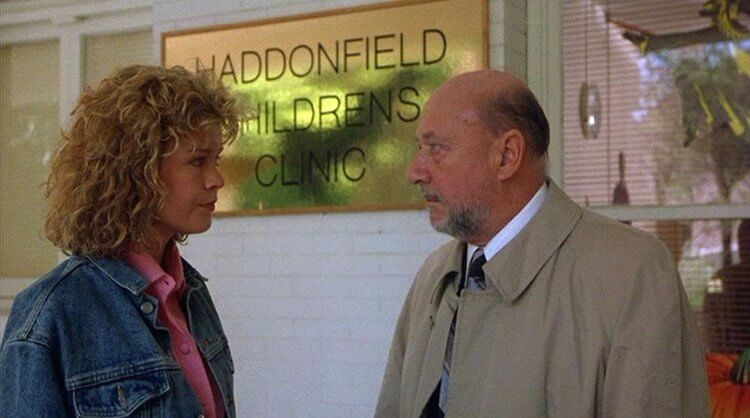
Halloween 4

And, of course, you got to work with the legendary Donald Pleasance on the Halloween series. How was that?

Amazing, a huge honour. He could just come in, nail his scenes, then he was gone again. He stayed at a different hotel, so it wasn’t like we would go out at night for a beer together. He was kind of on his own, but he was just tremendously professional, just so supportive. I didn’t really appreciate the gravity of being on screen with him, only because I was so in my head about getting my lines and hitting my marks, and the whole thing was such a new experience. In retrospect, it was really an honour. I feel lucky all the way around for the whole experience. It was tremendously positive. And just his body of work alone, that’s phenomenal. I really respect actors that have that kind of track record; I think it’s tremendous to have made it. I have friends that have been actors their whole lives and they just plod away, and I just think that’s so admirable.

They always say never work with animals or children, but it sounds like you and Danielle Harris – who turned eleven during the Halloween 4 shoot – got on very well. Did you ever have any nerves over working so closely with someone so young?

She was very precocious, very grown-up, very centred, and her mother was there. Danielle was awesome, we got along extremely. The thing that is so weird is that over the years, a couple of times we’ve run in to each other completely randomly. One time I was at a Lakers game, I was in the middle of a crowd, and she walks by. Big hugs! It’s crazy how our paths continue to cross from time to time. She’s a lovely lady, and we try to line up appearances together whenever it’s possible. If she’s not gonna be there, there’s no chance that I’m going. That’s half the fun for me, just seeing her. But yeah, we got along famously – and boy, does that make a difference! It really is a partnership – we had so many scenes together – and she made it easy.

You got killed off early in the movie, but what did you think of the decision to make Danielle’s Jamie Lloyd character mute for Halloween 5?

[After a long pause] It wasn’t written for me, that’s for sure. Okay, here’s the deal, the cool thing about being a director is that they get to make it their vision, and that’s what Dominique did. It was a choice they made. I’ve always believed this, I think horror fans, science fiction fans, these guys are smart. And when there’s too much implausibility, something just disconnects. So why not keep it semi-plausible and keep us guessing? Who doesn’t want to hear Danielle talk? It’s like silencing someone we want to hear, so I just thought it was an odd choice. It wasn’t good or bad.

It almost felt unfair on tasking someone so young with just mumbling the majority of their lines.

There was an uncomfortability to it that wasn’t inherit in the plot. It was hard to watch.

You said you were more-or-less familiar with the Halloween franchise before, so did you feel any pressure of having such a key role in the movie that brought back Michael Myers, or as a young actor did you just see this as a great opportunity?

I was not that familiar with the series. Obviously I’d heard of it, it was really well known, and I really liked the script. I trusted Dwight’s vision of the story; there was an intelligence to it. That’s what I put my trust behind. Again, it’s the plausibility factor. If I’d have read it and thought it wasn’t ringing true, I would’ve said no, because I said no to a lot of things that I just didn’t buy. I was just glad, honestly, that they didn’t go off of Halloween III. I knew inherently that was an intelligent decision to go back to the plotline, to bring Michael back. If it’s not broken, don’t fix it. I feel like they took the storyline and improved upon it and made a really scary movie at the time. And you don’t have to see everything. Some of the gags are so silly but at the times they really worked. Like when all those Michael Myers comes out of the bushes, that’s preposterous! The whole scene where he’s in the sheriff’s house, that was just pretty cool the way he gets Sasha Jenson on the stairs. It was like an old-fashioned horror with the suspense. You know he’s there and you’re on the edge of your seat – it doesn’t have to be super, super gory.
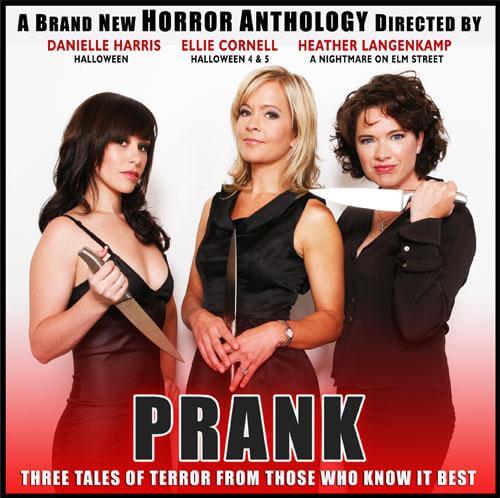
Ellie Cornell

From the perspective of somebody who’s been directly involved in the series, why do you think that the Halloween franchise is so special to so many people?

If you think about the time that the Halloweens picked up. It was the same time as A Nightmare on Elm Street, and A Nightmare on Elm Street really raised the bar. The Freddy Krueger glove with the knives on? That was something nobody had seen. So I think about Halloween as being in line with Friday the 13th. They were kind of neck and neck. I just think it started with the original; John Carpenter, Jamie Lee Curtis, it was lightning in a bottle. If you look at her character – smart, doesn’t get the guy, but she’s not a victim – I think there’s a relatability to that whole story. I think there’s something really nostalgic about it that people remember. It’s about your babysitter, it’s on Halloween, it’s the guy that comes after his own family. How scary is that, just in and of itself? I think it’s good horror in that it’s based on suspense and so much of what you don’t see; just the fact that he could be there. That’s what makes it fun. It’s not so gruesome that you’re disturbed by it.

What are your fondest memories of being involved in the Halloween franchise?

I think it was working with Dwight and Danielle. Dwight was really, really funny. The scene where I have to kiss Sasha Jenson in the drugstore, we were starting to rehearse, and Dwight was, “This has to look real, there needs to be chemistry, so you guys go off and practice. Whatever you need to do.” He just had this really basic way of directing his actors, but it was so respectful and I feel like he got effective performances out of us without it looking too over-the-top. And the thing that was so cool about Sasha Jenson is that right after Halloween we got cast again as co-stars in an afterschool special for ABC. That doesn’t happen! That was such a treat, so we got to do two projects together. My fondest thing about the whole Halloween experience is the love and support that Danielle and I felt. It sounds crazy, but it’s not always this way. It can be an isolating experience to be on location, living in a hotel. It sounds glamorous, it can be really lonely, truly. You’re away from your family, you’re away from the things that are familiar to you, and we just become this giant family in a really cool way.

Are you still in touch with any of the cast or crew?

Yeah! I saw Dwight pretty recently, and he’s always sweet. We get together from time to time. He’s always really supportive. And I had the honour of speaking at Moustapha Akkad’s funeral. Oh my goodness, that was something. So yeah, we see each other from time to time. I’m not on the West Coast as much as I was, but yeah, we’re all such huge fans of each other. And if we do conventions, it’s fun when that happens. We have such a good time. We’re all huge fans of each other, all hugely supportive.

Moustapha Akkad was such a fundamental part of the Halloween franchise, especially in championing Michael Myers. Are there any memories you wish to share about your time working with Moustapha?

He was just always really quiet, in the background but not. He was very hands-on but quiet about it. He was important to the whole franchise, but he never pushed his weight around. He would watch things being shot, but he was always extremely respectful of the process. Even in Halloween 5, when we had a closed shot for the shower scene. He adhered to the rules like everybody else and left the room. And his kids were always around, Malek was always around. It’s like he was there a lot but he was never, ever disrespectful. He just was always really quiet and lovely, and it was great seeing him years later when he said how much he regretted killing Rachel’s character off. I don’t think he would’ve done it any differently – he was following the formula – but it was just nice to have him say that. I think Malek has taken it over, his son, and he’s a super nice guy. They’re all good people.

What are you able to tell us about the projects that you’re currently working on?

I have a film coming out. I don’t know when it’s coming out. It’s still in post-production and it’s taken forever – that’s called Altar Rock. It’s like a suspense thriller, it’s about heroism and I guess a response to the whole Boston Marathon. Andrzej Bartkowiak is a fantastic director, and again I was really, really lucky to get that call. So we’ll see, I’ll keep my fingers crossed that it comes out.

Tommy Lee Wallace | HALLOWEEN III: SEASON OF THE WITCH

Tommy Lee Wallace

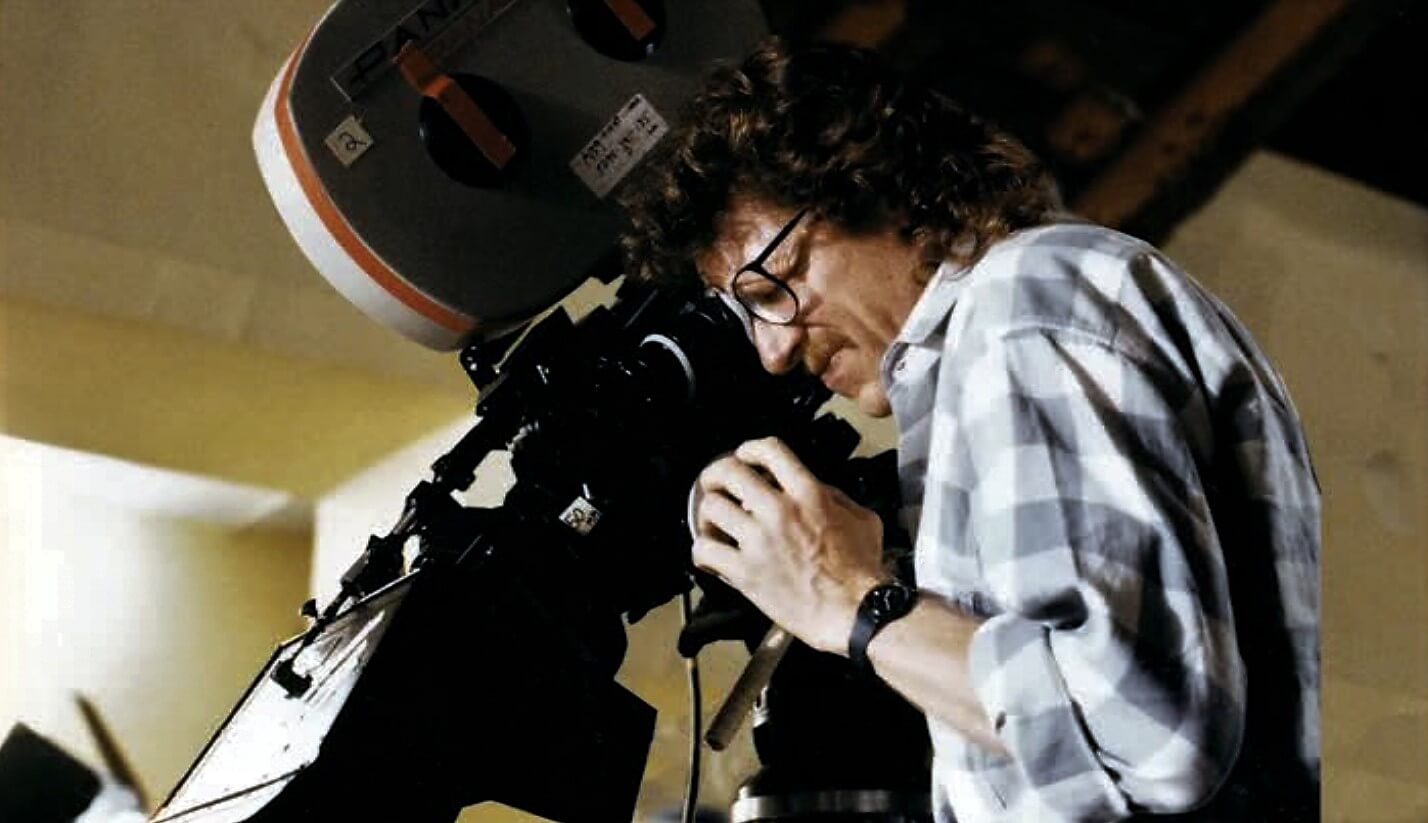
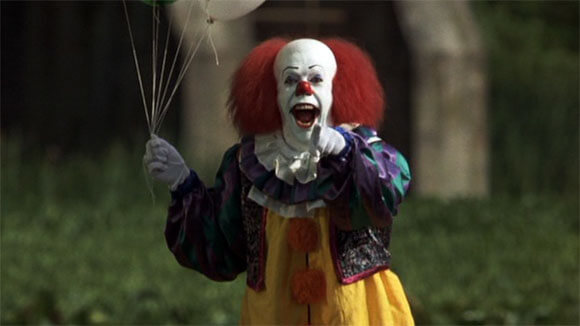
Tommy Lee Wallace is a huge favourite of many a genre fan. Having worked with childhood friend John Carpenter on Assault on Precinct 13, Halloween, and The Fog, Tommy famously made his feature film directing debut with 1982’s Halloween III: Season of the Witch. In addition to that picture, he also directed beloved efforts such as The Twilight Zone, Max Headroom, Fright Night Part 2, and the 1990 It miniseries. With the Halloween franchise now stalking back to the big screen, we caught up with Tommy to discuss this iconic series, why he turned down Halloween II, the initial negative reaction to (and redemption of!) Halloween III, and a whole host more.

STARBURST: When was it that you and John Carpenter first became friends?

Tommy Lee Wallace: John and I grew up in the same town – Bowling Green, Kentucky – and we knew of each other since childhood, became close friends as teenagers around music, our own attempts at singing and playing guitars, and certainly our appreciation of rock ‘n’ roll, particularly the British invasion – The Beatles at the top of the list. When John went west, I went north to Ohio. I went to Art School, John went to Cinema School. We remained in contact, and I went to visited him at a very critical point. I liked what I saw, so when I graduated I went west as well, and we continued our friendship.

When did you first realise there was the potential of a career in filmmaking for you?

Obviously, USC is a feeder school for the movie industry, so I couldn’t help but notice that. The people who had gone before – perhaps most vividly George Lucas – were making their way as filmmakers. It hadn’t really occurred to me until I was in film school that that might be a career path. John was deeply, highly motivated since he was a youngster. He knew exactly what a film director was and what a film director did. He had towering ambition in that direction from an early age. I was learning more all the time about that, as I took some cinema courses at Ohio University. I was getting a great grounding in the arts, the visual arts – graphic design, specifically – so I was bringing a little different perspective. It didn’t go unnoticed that everyone was referring to cinema as the art form of the century. I was seeing the creative possibilities, at first of animated film – which is what landed me at USC – but very quickly after that live filmmaking really captured my attention and I fell in love with it.

You famously turned down the chance to direct Halloween II, instead deciding to make your feature film directing debut with Halloween III: Season of the Witch. What prompted you to make that decision?

Well, I had established myself – in my own mind, at least – as a director long before that, at University of Southern California. Sequel thinking and sequel-it is, and the good and bad that went with that, hadn’t really hit yet, so immediately following Halloween came The Fog. I was really, really getting rounded as a filmmaker in general thanks to my editing experience on Assault on Precinct 13, Halloween, and The Fog, and so I was ready. It was obvious to everybody I was ready, and John and Debra [Hill] knew that I was ready. It was kind of natural for me to inherit the director’s chair for Halloween II. Unfortunately, when John and Debra turned the script in, I just hated it; I thought it was the anti-Halloween, it was everything Halloween was not. Halloween was about suggestion and shadows and ideas, whereas Halloween II was a lot more about guts and gore. I just didn’t like it, and I selfishly thought this would be a terrible way to try and start a film career – on a movie that you don’t like or respect. Moreover, it would’ve been a disservice to John and Debra to give them a director whose heart wasn’t in it. I knew I was passing up a marvellous career-starting opportunity, but it just wasn’t the right thing to do – so I said no. I was delighted when they returned to me again on Halloween III, because that was an open ticket, that was an altogether different idea that had no script at that point. [Quatermass’] Nigel Kneale was preparing a script, but I knew it would be very, very different. Knowing Nigel’s reputation, I knew it would be well written, so I jumped at that chance.

Tommy Lee Wallace

When you got offered Halloween II, how similar was it to what we ended up seeing on screen in the final film?

Exactly is too strong a word, but it was pretty much that script they went with. John’s idea was a five-minute-later kind of sequel. I had been advocating an idea that was more a five-years-later kind of sequel that actually came to fruition more-or-less if you saw H20 – the one Jamie Lee Curtis returned for. I thought that was good stuff, it was really interesting to come to a person who’d be traumatised that way years later. I can’t fault John and Debra’s choice on Halloween II because it went out there and made a tremendous amount of money. It was a success, there was an audience for it. There was a kind of an arms race that had happened in the meantime. After Halloween came out, it had several imitators – including Friday the 13th – and there was an escalation in each one as to the size of the bad guy, the size of the knife or the axe or the chainsaw or whatever weapon of choice, and the amount of blood and guts and gore. I think John had his ear close to the ground on that and was very sensitive to the fact that if Halloween II wanted to make an impression then it would have to keep up with those other guys.

To this day, Halloween II has one of the most brutal deaths in the entire franchise, when Michael scolds off the face of Pamela Susan Shoop’s character.

It was a result of that arms race I was referring to. I did movies with some pretty grizzly things happening in them, but somehow Halloween – the making of Halloween, the way it was done – it meant a lot to me, as I’m sure it did to John and Debra as well, and that film is really a classic, as it’s proven to be, and it had the kind of style to it that did not involve pandering to guts and gore. Coming on the heels of Halloween, it just rubbed me completely the wrong way. So I just held my breath and said no.

You said Halloween III: Season of the Witch was essentially a blank slate, a blank canvas. The story we actually got to see, how much influence did you have on that?

No, that was built on a script by Nigel Kneale, a writer John had admired for all of his career, notably for his work on Quatermass. It was a really interesting script, really original. I’d say 60% of what Nigel wrote is still there. Unfortunately, in my view, he took his name off of it because he felt that we’d fooled around too much, desecrated it in some way – so he didn’t want to have his name on it. John had rewritten Nigel, John did not take any credit for it. I rewrote John, and I was the man left with the credit. It’s not an accurate credit, but that’s the way these things go. I certainly wrote a lot of the movie, but I’d still say Nigel’s work was 60% of what you see.

Halloween III: Season of the Witch

You and John were very keen to take the franchise in an anthology direction – a different film, a different setting each Halloween – whereas Moustapha Akkad was more about Michael Myers. Was there any time during your early involvement on Season of the Witch where there was talk of Michael being a part of the movie, or was Michael always out?

No, John and Debra were sick of Michael Myers and the Halloween legend as of Halloween III. The only reason they did it was because the agreement was it would not involve the old icons, which at that point weren’t exactly icons yet. As I said, sequel-itis hadn’t struck everyone yet. When we first heard the news, we were kind of like, “Why would we do a sequel? That was a perfect movie! What else is there to say?!” And yet, they understood that that train was leaving the station whether they were on it or not. So they agreed to do it. In hindsight, Halloween III should never have been called Halloween III. It should’ve simply been called Season of the Witch. But then, you see, it never would’ve gotten made. So it was a kind of a pact with the devil. What could’ve saved the day is if the powers-that-be – including ourselves – had had the will and the foresight and the drive to advertise it properly. To let the audience know what we had in mind, which was, as you say, an ongoing series of movies on the subject of Halloween, one per year, any of which could’ve spawned their own set of sequels. I still think it’s a great idea. There must be a thousand stories you can tell, but I don’t think Universal even got it or liked the movie. So it didn’t get any sort of support. It also developed a terrible backlash of people going into the theatre rightfully expecting The Shape and the knife and Jamie Lee [Curtis], and getting instead this whole new story. It has taken all this time to develop its own audience. It has a ferocious following of loyal people who love the movie, but many of them had to get over the fact they felt shanghaied. And at the beginning, sure, it wasn’t what it was advertised to be. That was just a fundamental error, just a mistake. But it could have been remedied simply by good advertising that set the table properly, and that just didn’t happen.

How tough was it to receive such a negative response to your feature debut?

It was crushing. I wasn’t ready for the rejection and the negativity around it. Although, as I say, I think all of us were naïve. We should’ve been able to see that coming. However, redemption is sweet, and after all these years it’s all better. I go to these festivals where they celebrate horror movies and fans come and like to chat, and it’s overwhelming – the t-shirts, the hats, the support. All the fans just love it! And they all sort of have a chip on their shoulder about it, and I say, “You can relax now. Anybody who puts it down at this point in time, all you have to do is look ‘em in the eye and say, ‘Did you not get the memo? This is a good movie. Sorry about the title.’”

Stacey Nelkin Tom Atkins Tommy Lee Wallace Nick Castle Adrienne Barbeau

You talked about Halloween II being quite gory, but Halloween III certainly has its intense moments.

I can’t preach too much about the gore of Halloween II because I, you know, pull the guy’s head off and all this grizzly stuff. To me it was different because it wasn’t Halloween. For me, Halloween was a sacred territory that shouldn’t be messed with. John and Debra had every right do everything they wanted to, and they did and it made money – end of story – but I didn’t respect it.

Was there anything you wanted to do in Season of the Witch that was flat-out shot down?

Oh, no. Let me give a real tribute here to John and Debra. They were a director’s dream in terms of support. For a first-time director, the freedom I had was unheard of. Right down to the final cut, John respected my opinion to the degree that it was as if I had final cut on the movie. He was that permissive and lenient and trusting of my own vision. The best example I can give you is, after we had the movie put together – it was all ready to go – I got a call from John and he said the people upstairs had a problem with the ending. They wanted us to change the ending somehow and make it softer, give the world a little hope that this problem had been solved or mitigated. He said, “I’ll do whatever you want. If you want to keep it the same, keep it the same. If you want to change it, I’m with you.” Now that’s serious creative support. My hat is off to John forever and my gratitude endures. By the way, that ending was more than just the ending I wanted for Halloween III – it was the ending that Don Siegel wanted for Invasion of the Body Snatchers, but the studio made him tack on the sort of little extra ending in the police station when we learn help is on the way, it’s going to be alright. Bullshit! I hated that. I hated it on Don Siegel’s behalf. So, in my own modest way, I felt as though I was setting things right by giving Halloween III its proper ending.

With Michael or without Michael, there never tends to be a happy ending to a Halloween movie. It’s either doom ‘n’ gloom or ambiguous at best.

After the first one, for sure – which was almost accidental. The shot of Donald Pleasance looking back down at the ground and The Shape is gone, that was an afterthought. That was an editing room decision. It was, “Okay, there’s the guy dead. The end.” Just by adding a bit of bare ground after Nick Castle walked out of the frame – I shot that shot by the way, unofficial second unit while John was shooting more important stuff across the street – whimsically I got Nick to walk out of the frame so we had an empty frame if we wanted it. All of this, The Shape living on, it’s somewhat an afterthought. He’s everywhere. And by the way, all those empty streets at the end were also afterthoughts. None of those were planned shots; they were shots that we gleamed in the editing room before slates, before actors walked into frame to do the scene. They were stolen shots that we just conjured up in the cutting room to provide that extra oomph of empty streets, fear, to generate this legend. Totally an afterthought.

Halloween

And Donald Pleasance conveys that fear so well. If he’s scared, then we all should be.

Yeah, it doubles up on it and helps provide momentum. Remember, the saying is a film gets made three times; when you write it, when you shoot it, and when you edit it. And we certainly added a layer in the cutting room.

Was there every any talk – with or without Michael – of you coming back for Halloween 4?

No. I think that in Hollywood, if you have a failure then the phone does not ring. You really have to dig your way out of a hole like that. It was tough there for a while afterwards. There was no talk of another Halloween movie involving me, and not to sound like sour grapes or anything, but I wouldn’t have gone near it. You get pigeonholed so quickly in the movie business that what you want to do next, if you can, is a comedy or a mystery or a western or something – just to keep from getting hounded down into a pigeonhole. You really have to be strong and you also have to say no, if you can, to some opportunities that could pay your bills in order to wait for maybe a role or a job that expands your horizons and takes you out of the pigeonhole. That’s very difficult if you’re in it to make a living and try and pay your bills while raising a family or whatever. I found it terribly difficult. The phone would ring for me, but it would ring mostly for horror. How many times would I have to say no before something else would come along? Well, you know, after a while you say yes simply because maybe you like the project, but you’ve also got to pay some bills.

You mentioned how Halloween III really knocked your confidence. When do you feel you really got that confidence and belief back?

I was back on the horse immediately looking for work, but it was quite a bit of a struggle there for a while. I got a call from a guy who wanted to make a coming-of-age movie in Hawaii – that was in 1984 – and boy, rock ‘n’ roll? 1959? It was like somebody handed me a ticket to paradise, it was just great. I’d say by then I was back on the horse fully. That movie became Aloha Summer, which is still out there. Not quite a great movie, but a pretty fun and interesting picture about a culture clash in Hawaii in 1959.

On the anthology topic, you also got to work on some episodes of The Twilight Zone. How much fun was that?

It was terrific. At the time I was leaving television. It wasn’t the way it is now, where I think television is to some degree where the real goods are. It’s just golden and wonderful with so many fantastic shows, especially longer-form series. At that time, you had to be careful not to get categorised. TV sounded like a cheaper thing, like a lower creative form. So I was very reluctant to take on television in the beginning – I was a real snob, honestly – but Twilight Zone, and later Max Headroom, those were amazing television opportunities that I just jumped out. I like and respected them, and they seemed to have a real resonance to the original Twilight Zone. It was clearly people who knew what they were doing and who had some pull to get quality talent. I jumped at the chance. It was a ball, it was so fun to work on, it was a pleasure.

While TV is booming these days, do you think that the concept of anthology television has been lost a little bit over the past few decades?

It seems to me that the models have been turned inside out. You can do a true anthology, where it’s a different story every week or even two or three different stories in one week, or you can do a running series that at the other end of the spectrum attention pays. If you miss the first one you might as well not watch. Then there are in-between permutations, where it’s a running series where there’s a new story every week or the A story changes every week but the B and C stories continue. It’s thrilling for me, and I think it’s a fertile field.

Yeah, they really had the right people at the right time, and they did something original and fascinating, really hypnotic at times. In television, unlike motion pictures, the hierarchy is divided up. In stage plays, the playwright is king. In feature films, for the most part, the director is still king. In television, the writer tends to become the producer, and the producer is most certainly the king. So all of a sudden in television, you get all these productions where the writing is splendid, it’s tremendously good, and yet it doesn’t get screwed up or confused or reedited beyond comprehension, because that writer is producing their own show. That’s a good way to have it, creatively speaking. I think most people have figured out that movies that get made by committee are generally not very good. You need someone in charge whose vision is worthy of respect. If you’ve got the wrong visionary, you’re not likely to be very good. If you’ve got the right visionary and they don’t get interfered with too much by too many people or too many executives who think they know what they’re doing, you can have a good product.

Following The Twilight Zone, Max Headroom, and Aloha Summer, you’d go on to direct Fright Night Part 2 in 1988. After your experiences on Halloween III, was there any trepidation about tackling another existing property?

By then, I did feel I knew a thing or two about how you make a horror movie. It was the situation that led me to step in to it. It was with friends for a small company, and it was clear that if I jumped in to this I would have a lot of control and a lot of support. These folks knew what they were doing around film directors. By this point, I’d had some brushes with television that weren’t so much fun because you had people who treated the directors as like an island, just somebody to direct traffic. I didn’t enjoy that at all. And here was a feature experience. A sequel, if you’ve got good support, can turn out to be a good movie. I’m proud to say Fright Night Part 2 turned out to be a good movie.

Fright Night Part 2

Fright Night itself is one of the many horror movies to get the remake treatment in recent years. Are you a fan of remakes in general, or do you have to take each film on its own merit?

I think you have to take them one at a time. The phenomenon of remakes is understandable from a business point of view. The film business doesn’t like to take risks, but what business does? If you have a successful risk taker, that’s great. But then there are three or four next to them who’ve taken a risk and crashed and burned. I get it, but it still mystifies me when people remake movies that were good the first time. It just seems that the odds are that you couldn’t possibly match the first one. That seems to be what happens. Fresh faces, fresh eyes are being born every day, so the original, in a way, doesn’t matter if enough time has gone by. It’s a whole new audience getting something meaningful out of this whole new experience. Having said that, I do think that it’s gotten ridiculous to the point that Hollywood is devouring its own tail, consuming itself. There are so many worthy, interesting movies that go abegging because nobody will finance them, whereas they’ll jump at the chance to finance the next comic book movie or the next sequel or prequel or remake. It’s really got ridiculous. It just creates a wasteland for new material. That new material is the lifeblood for any business, for any genre. It’s incalculable the loss of talent from Hollywood. There aren’t enough film projects being picked up, writers have quit writing original material because nobody will buy it. You can’t just get that back. It’s very short-sighted. I think we have a dearth of visionaries in the movie industry. And where the new visionaries are going to come from, it’s clearly not the Hollywood establishment. Like I said, they’re consuming themselves. It’s not just about the film business, it’s about our culture at large. I think the hope of the movie business is in the independents. The fact that you really can take your cell phone and a couple of lights in the trunk of your car and make an interesting picture without all of the dead weight that a studio simply has to carry with it in this new century, I think the independents is where it’s at for the future.

In 1990, you famously helmed the It miniseries that is so beloved by so many genre fans, which UK fans were treated to over the space of two Saturday evenings.

My experience at these festivals is people will walk up to my table and say, “Oh, you just scared the pants off of me when I saw your movie.” That’s usually Halloween III or It. I’ll ask them how old they were when they saw it. Usually it’s, “Err, about six…” and their parents weren’t aware that they’d watched it.

Were there ever any plans to have It be more than just a two-part tale?

I came in to this project rather late. I don’t know how many hours of television they were planning, but it was much, much more than two nights. It all got whittled down and an awful lot of the original budget had been taking by at least one set of producers who didn’t stick around for the movie. They were replaced by another set of producers, Green/Epstein, friends of mine, and they proved to be really supportive on the picture. But yeah, a lot of the budget had gone by them. We were working on my usual low budget scale. We had to pull it out of the air with cardboard, chewing gum, and tape.

It

Had you read Stephen King’s novel before you were involved with the feature?

Before I got the call, I had not read It. Of course, when I got the job I immediately sat down and read it. I was a Stephen King fan but not a massive one. I had read Firestarter and Carrie and enjoyed them. But just the script, it was evident this was going to be extremely special. It was extremely well written by Larry Cohen, so I jumped at the chance.

Was there anything from the novel that you wanted to include but couldn’t?

I wanted more out the second night. It seemed that Larry, and presumably Stephen, had decided to not even try for the comprehensive, colossal climax of the novel, which involved metaphysical reality and a battle in inner space. It was kind of bigger in scope than you could ever hope for, certainly on our little budget and schedule. However, they abbreviated it so early I felt readers of the novel would feel short-changed without a little bit more. Larry Cohen’s night one was just a brilliant piece of writing, with a lovely coincidence that a night of commercial television involves seven ads. You were going to have seven different chunks of storytelling interspersed with commercials. The fact that Larry very deftly turned those seven acts in to seven character points – there’s seven main protagonist characters in the book – and that really, really made it sail. My hat’s off to Larry for how he crafted that. I would’ve loved to add a bit more, to somehow tackle the good vs. evil cosmic battle. That was beyond me. What I did not care for in the book and made no attempt to include in the movie was the idea that six of the seven were boys and Beverly the only girl, and in the book they all have sex with her. I thought that was trashy, I didn’t like it at all. It didn’t click for me. I thought it was especially tasteless because the entire subtext of that book is about child molesting, it’s about unprotected kids being vulnerable to somebody taking advantage of them. It’s just sitting there under the surface. I completely accept that and think that’s a worthy subject, but then I thought Stephen King undermined it by what can only be described to me as an adolescent fantasy on his part – that all the boys have the girl. That’s a strange idea of bonding.

And was it yourself who brought Tim Curry in as Pennywise?

I can’t claim credit. Jim Green and Mark Bacino, my producers, had the most to do with that. Most of the casting for It’s adult parts were telephone casting. We didn’t need to audition Harry Anderson or John Ritter or Richard Thomas for their parts. It was clear that if they said yes then they’d be an asset to the show and do the part really well. I think Tim’s name came up, and I don’t think anybody said, “Oh, that’s a bad idea.” I think everyone was thrilled. It was a couple of phone calls to an agent, and he was on board.

Online rumour suggests Roddy McDowall and Malcolm McDowall as being other names in the frame to play Pennywise. Is there any truth in those stories?

Either of those names would’ve brought something special to the role, but I don’t really recall anyone else being considered once Tim’s name came up. That was an obvious yes.

To bring things back full circle then, what do you think makes the Halloween franchise so special to so many people?

Well, John Carpenter has always insisted on simplicity; keeping things simple. He tells a simple story, and he tells it well, and it’s a really basic story. It’s not so much about Halloween as it is about fear and isolation and a helpless situation – in this case the original title of the piece was The Babysitter Murders. It’s a simple story, that’s one thing. Another thing is one of John’s favourite notions is the idea of someone, like the bad seed, who isn’t just “If you only understood this person, you’d see blah blah blah.” He doesn’t believe in that at all. He believes that it’s possible to encounter pure evil. And that’s a pretty compelling concept, considering religions are founded on it. You put a D in front of evil and you have devil, which is religion. It’s pretty fundamental and goes pretty deep. I’ll also put an Asterix in for my own creation, the look of The Shape. When we tried that mask out, none of us were ready for the power of it. Before you even come to a story or a situation, just take a picture of that look and it’s innately, deeply, tribally terrifying – and I don’t know why to this day. It has played a big, big part and I only wish I had a penny for every image of that mask.

Halloween

While it is a mask of a face – Captain Kirk – it’s so emotionless and so simplistic. Then there’s the performances over the years, the movement…

I want to put in a plug for my buddy Nick Castle. Nick is the son of a famous dance choreographer, and although Nick wasn’t a particularly vivid dancer, he certainly knew how to move and to move slowly. In subsequent films, the trend seemed to be to hire bigger and bigger stuntmen for the role, but Nick and I are both about the same size and we both knew about moving in kind of a grooved way that’s very deliberate; that’s not in itself threatening, it’s just there, it moves, it slopes. And he really, really was a tremendous asset to creating that character.

At the moment, you’ve got Helliversity in pre-production. Where are things up to with that right now?

Helliversity has been retitled The Gate, although we’ll probably retitle it again because The Gate is already an established movie that was in theatres ages ago. We’re hoping for a title with a little less grindhouse. Helliversity says what the movie’s about, but it’s also pretty grindhouse. The financing has been set up twice now, and we’re experiencing what all independent filmmakers go through – “Oh, the deal fell through” is a much bandied about phrase. I’d also ask fans to watch for Scaryland, a feature film, and a TV series which is called Midnight Motel.

Be sure to keep up to date with all of Tommy’s upcoming projects by heading over to his Facebook page.

Tommy Lee Wallace

[ENDED] Win a Fantastic HALLOWEEN Prize Bundle

halloween

To celebrate the release of Halloween in cinemas 19 October, we are giving away an incredible prize bundle to five lucky winners.

Jamie Lee Curtis returns to her iconic role as Laurie Strode, who comes to her final confrontation with Michael Myers, the masked figure who has haunted her since she narrowly escaped his killing spree on Halloween night four decades ago.

Master of horror John Carpenter will executive produce and serve as creative consultant on this film, joining forces with cinema’s current leading producer of horror, Jason Blum (Get Out, Split, The Purge, Paranormal Activity). Inspired by Carpenter’s classic, filmmakers David Gordon Green and Danny McBride crafted a story that carves a new path from the events in the landmark 1978 film, and Green also directs.

Halloween will also be produced by Malek Akkad, whose Trancas International Films has produced the Halloween series since its inception, and Bill Block (Elysium, District 9). In addition to Carpenter and Curtis, Green and McBride will executive produce under their Rough House Pictures banner.

The prize bundle includes a film poster, T-shirt, jacket, beanie and torch.

Halloween is in cinemas 19 October.

Watch the trailer below:

To be in with a chance of winning one of these fantastic prize bundles, simply answer the below question:

What name was Michael Myers referred to in Halloween (1978)?

  1. The Shape
  2. The Grape
  3. The Tape

Email your answer, along with your address details, to [email protected] labelled Halloween before midnight on Sunday, October 28th.

Halloween Prize Bundle

[ENDED] Win Bryan Bertino’s THE MONSTER on DVD

The Monster

With Bryan Bertino’s impressive The Monster now available on DVD and digital download, we’ve got two DVD copies of this gripping horror to give away.

To be in with a chance of winning yourself a copy of The Monster, simply answer the below question:

Which of these names starred in Bryan Bertino’s The Strangers?

a) Liv Morgan

b) Liv Tyler

c) Tyler Bate

Email your answer, along with your address details, to [email protected] labelled The Monster before midnight on Sunday, October 21st.

The Monster

To give you an idea of what to expect from The Monster, be sure to check out the terror-tastic trailer:

The official word on The Monster reads:

From the director of horror smash-hit The Strangers comes The Monster, a terrifying new vision of claustrophobic terror.

Kathy (Zoe Kazan) and her 10-year-old daughter Lizzy (Ella Ballentine) are trapped and tormented in a pitch-black forest by a screeching creature. It is unlike anything they have heard before. Not human. Not animal. A monster.

With their relationship at breaking point, Kathy is on the edge while Lizzy is all out of faith in her mother but tries to stay brave and fearless. To survive the night, Kathy must summon her most primal instinct to protect herself and her daughter from what’s lurking in the darkness.

The Monster is available now on DVD and digital download.