Bernhard Pucher | RAVERS

To celebrate the release of horror-comedy RAVERS which is out now on VOD, we sat down with director Bernhard Pucher to talk about the film, the idea for the story, practical effects vs CG and upcoming projects.

STARBURST: Congratulations on the film, it’s a crazy, blood-soaked thrill ride. After debuting at Frightfest over a year ago, how good is it to finally have the film released to the public? 

BERNHARD PUCHER: Thank you so much. It’s fantastic. It’s really nice to finally be able to show the film and as a filmmaker, it’s always a bit of a mixed bag – on the one hand, you’re glad it’s out for people to see and on the other, you are nervous that people can see it [laughs]. The most nervous moment is always the first screening to the public.

You co-wrote the story with Luke Foster – where did the idea for this come from?

Luke is probably the biggest horror fan I know – he thinks about horror movies for about ninety per cent of the day [laughs]. After we had done our first film together which was a comedy, we had talked about various other project ideas that he had including one called “Poppers” which was about these ravers that would take poppers which would cause their heads to explode – I thought that in itself wasn’t much of a horror movie but I loved the idea of ravers getting infected with drugs and other stuff to make them go mad – a new spin on the infected genre. We went from there and Luke did the majority of the writing and I helped refine the ideas with my years of experience as a DJ and raves in general.

One of the strongest aspects of the film is that it has a compelling lead character in the reporter Becky that grows personally and professionally over the course of the film – how was it working with Georgia and what was it about her that made her perfect for the role?

Having a germophobe journalist was Luke’s idea – he had a clever way of making going to a rave scary and to make Becky empathetic. Much credit must be given to Georgia for making the character so approachable. When Georgia auditioned, I hadn’t watched Vikings – when she sent her tape through the first thing I fell in love with is the fact she has big defining eyes – a big thing in the movie too. I wanted to have somebody who has compelling eyes on her own and Georgia had that for sure. After that, I went and watched all of Vikings to see her work [laughs]. Working with her was brilliant. Because she came from TV, she is extremely efficient to work with. For her preparation, she spent time with her sister who suffers from OCD and mimicked her behaviour to enhance the role which was amazing.

Another stand out aspect is the use of some truly terrific practical effects for an indie film. Was that something you always wanted to focus on?

I’m always of the opinion that good effects are the ones that you can’t see. There are ways to do both CGI and practical that you can’t see. We have a healthy hybrid of both in the film – especially all the makeup that is practical with a blend of CGI. We worked with brilliant designers and artists that brought it all to life especially that crazy ending. We wanted to make sure that the story was good enough that you were invested and couldn’t tell the difference between practical and CG.

Can you talk about any projects you have coming up soon?

Yes, I’ve been writing a lot myself lately – although none of it is horror. I’m pretty busy with existing projects including a thriller that I’m writing which is set at the Mexican border about a Mexican rancher who has to defend his ranch from US border police. A couple of other projects too but nothing immediate, I’m still looking for that next immediate project. I’m producing a lot of motorsport at the moment which is keeping me busy.

RAVERS is out now on VOD in the UK.

Georgia Hirst | RAVERS

To celebrate the release of horror-comedy RAVERS which is out now on VOD, we sat down with lead actress Georgia Hirst to talk about the film, her experiences and how she prepared for the role.

STARBURST: Congratulations on the film, it’s a crazy, blood-soaked thrill ride. After debuting at Frightfest over a year ago, how good is it to finally have the film released to the public?

GEORGIA HIRST: It’s great – there is something quite scary about it becoming public knowledge, with everyone able to see it and talk about it. But obviously it’s a labour of love, in such a short amount of time we had so much to do. So I think I’m excited for people to finally see it. A lot of my friends and family came to the premiere and their reactions were generally really good so I’m looking forward to the public seeing it and I can’t wait to watch it again myself – it’s been a while!

What was it about the story or character that drew you to the project?

Well, I remember the first thing that I was drawn to was really the fact that Becky characteristics are the opposite of mine in real life. She’s a neat freak, she’s a control freak, she hates to party, she’s a workaholic – all of these traits are the opposite of me. So I thought “how am I going to do this?”. I saw it as a great challenge. My sister is a little bit of a clean freak herself too so before I did the audition tape, she did it with me. I would ask her how she would wash her hands, how many times and stuff like that so I could build up this character – when I got the role I put into place of the things I had learned and I loved that she was completely different to me. Becky has so many levels – she is gay and has a romantic interest in the story. I thought it was so important to play her with that not being a defining fact – it’s just who she is. It was really cool to play someone who has all these different levels – it’s unlike anything I’ve done before. Polar opposite [laughs].

One of the strongest aspects of the film is your character’s growth and performance. When we spoke to Bernhard, he briefly mentioned your preparation for the role, could you elaborate on that?

I just played her honestly first and foremost. In terms of preparing for the role, the first thing I needed to do is go to a rave, which I had done at University, but it was a long time ago. I’m certainly not a party animal now so I can relate to Becky on that level. I was a bit unsure about going to a rave so I knew exactly what the character felt like. The OCD aspect of Becky was the hardest to grasp because I didn’t want it to be over the top or a joke, I wanted it to look like something so suffers with – I wanted to master it. I asked all of my friends and built up this sort of dance with the way that she moves and reacts to things. I tried to make it as polished as I could and it was important for me to achieve that. It was a great and inspiring journey to play this character.

What was the biggest challenge as an actor during the production?

The first few days of filming were comparatively really tame as it was just me. I actually worked every single day of the production so it was an exhausting but amazing experience. The office scenes at the start were lovely and clean and then when we moved to Pinewood for the rest of the movie and the fun chaos began. Everyone was running around trying to stick to deadlines but they were all having a wonderful time. Some of the things I saw were pretty scary too in terms of the mutant makeup and everything – some proper crazy days but it was so rewarding and the finished film looks amazing.

What was your favourite scene or set piece to shoot?

Well, I loved the way that the office scenes look at the beginning of the movie considering we were in Wales with miserable weather. The way that it managed to make it look like America was really cool. My favourite was some of the stunts we got to do – I got to do some stuff myself including sliding down a broken bridge all hooked up which was scary but super cool. I can now say that I have done some stunts! An amazing experience all around.

RAVERS is out now on VOD in the UK.

Sam Liu | SUPERMAN: RED SON

sam liu

STARBURST was lucky enough to talk with producer and director Sam Liu about his career, headshots, and Warner Bros animation’s latest release; Superman: Red Son, based on the Eisner award-winning comic mini-series of the same name, which imagines the Man of Steel crashing in Soviet-era Russia, instead of the rolling fields of Smallville.

STARBURST: you went to the University of California and studied illustration, did you always want to work in comics, or did it just work out that way?

Sam Liu: It’s weird, I was a fan of comics, but didn’t realise you could make money in comics. I just liked to draw, Image comics, was blowing up at that point (founded in 1992 by Todd McFarlane and several other artists, famous for producing Spawn and The Walking Dead), that craze only lasted about 3 years. Big companies like Marvel were almost going bankrupt and I had a friend from school who was a head colourist for Wild Storm [an imprint of DC Comics also founded in 1992] and we would call each other, as we were drawing at 4 in the morning, as comic work can get kind of brutal, we discussed how this was a hard life and he had a friend who was an animation director, and she got me into animation.

So at the moment you work as a producer and director on DC animated movies, is this your full time job, or do you have anything on the side?

It is sort of my full time, right now, it is a lot of work! It is very time consuming. I am overlapped so much, with this last movie [laughs], when we were editing Red Son, I was working on another movie and doing the animatics on my time off. So I am with two different editors, and its bouncing back and forth, so what story am I working on right now, what is the story for this one? [Laughs] So the last 2 years have been absolutely brutal. It’s fun though.

It seems amazing from the outside.

It is going to get easier, I am having a break after Red Son.

Who decides what to make next when it comes to the DC animated films, is there a committee?

It is weird because there are three parties, there is home video, DC comics and us [Warner Bros Animation], and when it’s us, it’s whatever producer is up next. So James Tucker and Bruce Timm are the executive producers, and they will come up to you and say, “Hey, I have this project, do you want to work on it?” It is a loose committee. It is a loose committee, sometimes one party will push an agenda. It just kind of works itself out a little bit.

Do you get a good say yourself?

Yeah, as a comic book fan, the height of my fandom was the ‘80s and ‘90s and most of that stuff has already been done. So the material out now is all new to me. There are certain things I’m not good at, like comedy, so I usually turn those things down, I like dramatic heartfelt stories. So a lot of the time, I will like the premise and I get an opportunity to sit in during the scripting period, sometimes they will want to write ideas down in the first half, then I will come in, mix things up a bit and we will go from there. I have a lot of fun building. As long as it seems cool, let’s build it!

OK then, so why do Red Son now? Mark Millar’s story was first published in 2003, what made 2020 the right time to tell this story?

It is kind of a weird process, these big name stories, are always on the table. We were going to make Red Son five times already! It is usually to do with theatrical releases or what is happening in society that will determine if it is pushed forward or back. Sometimes it is an act of attrition, we have made all these other films, what is left? With Red Son, the producers felt like it was time to push it, as they felt I could build something great. On a side note, when I made the DC Showcase short: Death [featured on the Wonder Woman: Bloodlines disc] it was using the Sandman characters from Vertigo comics, which we have had legal issues with in the past, but the idea was on the table, so I snatched it up immediately, as I love the characters and have wanted to use them for a while.

When you are adapting an existing property like Red Son, do you collaborate with the original writers, like Mark Millar?

Very rarely do we do that. Sometimes they will reach out, Grant Morrison was kind enough to speak with Bruce on a commentary track for All Star Superman in 2011. I’m not sure if there is a protocol for it. Sometimes we change it so much, I’m sure the original writers will hate it [Laughs].

They may not speak to you again.

Exactly.

Superman: Red Son is such an epic story. Do you think the character of Superman needs that kind of story surrounding him? People often accuse him of being boring, do you think they haven’t seen the right stories, does he need something epic to make him shine?

The fanbase of comics like superpowered people, huge fights, big explosions, epic visuals. Superman is odd that way, what’s so great about Grant Morrison’s All Star Superman is because most of the story is not about his big muscles, it is about his humanity and how he views things, his patience almost. Those are the core elements of Superman and that is what Christopher Reeve tackled so well. My introduction was 1978’s Superman, as scary as this person can be, he is a boy scout, he is polite and that takes the edge off how powerful he can be. It can be hard to tell stories like that, you need something to contrast that. He can be too predictable in his moral compass, so you have to put him in the right situation. Like in Red Son, we tried to play with his belief system, he starts and he is young and pure, he wants to fight for the people and do what is right and Stalin tells him of the pure ugliness of what is about to happen, and Superman is an idealist and says we can do it different, until he realises he has become Stalin.

It is probably one of the darkest Superman tales.

Right, he is trying to hold his moral compass, to lead these people [of Soviet Russia] but the people don’t want to do it, so he has to force them somehow – by lobotomising! [Laughs] it is like: I’m not killing anyone. Until he realises he can’t force people into a utopia. Again, it makes an interesting Superman, this dilemma.

Do you prefer to adapt a classic story like this, or make something original?

It just comes down to the sweet spot, a good plot and good characterisation, hopefully you get one or the other. Whether it is original or a famous story, some stories are interesting visually, nowadays some movies try and hold it together with an A-list actor and all these explosions, but there is no real story. What I care about are the characters. There has been a lot more of those type of movies, I need a good plot, good characters, something to work with.

What is your favourite aspect of making an animated movie like Red Son?

There is a lot about the process I enjoy and a lot I hate [laughs], the best is when it all comes together. In the beginning, hopefully the script is strong, or I can see what I am trying to build and I can see the heart of it, these are the moments I can use to make the characters stronger. These moments I enjoy, then it can be up and down. It is a weird thing because with All Star Superman, I was so happy with it and I was getting compliments from co-workers and I was thinking this is my masterpiece. When it came out it was so polarising, some people loved it and some people hated it. Even with The Killing Joke, this wasn’t Adam West, it was a dark, dark world, so the script made sense in this context and we thought this kind of works, we were happy with it. Then it came out and the one thing we did against character, in the regular world, people couldn’t get past it [the film added a prologue, which culminated in Batgirl sleeping with Batman]. I’m starting to go off on a tangent, but yes the totality of it, is what I love. So when I did Suicide Squad Hell to Pay in 2018, I was head-shotting everyone, just so there was no mistake that this was a family movie. Head’s are going to explode and people will be sliced in half.

That movie did seem especially violent and contains sex and drug references, were you deliberately trying to move away from your normal PG-13 (12A in the UK) rating?

That comes down to the producer, James Tucker loves B-movies, that’s his thing, Suicide Squad is his thing. I was just coming off Killing Joke and we normally start with a PG-13 template. But I thought that we needed to hit these tones harder, we need to set the tone of what this movie is we are watching, so I had a bone to pick. Even in the editing, they thought it was too violent, and I was like really!!

SUPERMAN: RED SON is on digital download now, and Blu-ray and DVD On March 16th.

How Accurate are the Depictions of Blindness in Cinema?

As cinema has developed over the past century, we have been shown stories of lives that we otherwise would have no idea about. Latest Best Picture Oscar winner Parasite (2019) showed us what it’s like to be in the underclass in South Korea, while previous successful films have depicted what it’s like to live in the slums of India in Slumdog Millionaire (2009), or to be mute as per The Shape of Water (2017). But how are we understanding blindness as depicted in films, and how accurate are these representations of how blind people actually live?

Ray Charles biopic Ray (2004) starring Jamie Foxx showcased the life of the music legend. While elements of the film were fictionalised, the film dealt well with the star’s onset of blindness after glaucoma aged seven. The film was praised for showing both the moments of joy in the lives of blind people, as well as the trials and tribulations that we might not even realise they face in day to day life. Being a recognisable figure gave context for the blindness depicted in the film.

At First Sight (1999), starring Val Kilmer in the lead role, showed the suffering that blind people have to face on a daily basis, while also weaving in elements of the true story of Shirl Jennings, who recovered her sight after being blind. In the film, Kilmer’s character Virgil regains his sight and has to adapt to a new world. The film focused on Virgil’s blindness as being the only thing people saw in him and were all desperate to cure, rather than appreciating him as he was, a feeling many disabled and blind people have to contend with every day.

Depictions of blindness in cinema help those with sight to understand how blind people might feel but should also be cautionary tales. Anyone could become blind following an accident or illness and we should be mindful. Often blindness is used as something for the hero to overcome, or as a narrative device that ends up being helpful to the plot. Films such as Daredevil (2003), Scent of a Woman (1992), and The White Countess (2005) depict accidents leading to blindness, which shows viewers that blindness can befall anyone. Other times, blindness is used for shock – such as the film Don’t Breathe (2016).

This may encourage people to appreciate their sight and consider how blind people in their direct environment have to deal with things. As the charity set up by Tej Kohli shows, many cases of needless blindness could be eradicated with enough support. Depictions of blindness in film could direct people’s attention to this in the same way that Blackfish (2013) attempted to stop SeaWorld’s cruel treatment of orcas, and Food Inc (2008) showed the true extent of meat production from animals.

The power of cinema is apparent when it causes us to look beyond our own lives and what we know to understand how other people might live. Blindness might not be something that people consider in day to day life but will understand how difficult it can be for those who are afflicted after seeing it in a film. Films help us experience things we otherwise wouldn’t and hopefully give us a greater understanding of the many different facets that make up human life.

Enough to Give You the Creeps…

creeps

This month, we’re taking you into the realm of the truly terrifying – the thing of nightmares for many of us: spiders and other creepy crawlies and slithering nasties. Let’s get ready to be freaked out by four giant-sized creature features that you can check out soon.

One film that every self-respecting STARBURST reader should have seen (or have on their watch list) is Tremors. The 1990 film brought the ‘50s giant creature feature bang up to date with great humour and stylish panache. Directed by Ron Underwood (City Slickers), it stars Kevin Bacon and Fred Ward as a pair of hillbillies who have to step up to come when their small town of Perfection, Nevada, becomes the target of some underground creatures. It not only rejuvenated the comedy horror genre, it spawned four sequels, a prequel, and a TV series. A 2018 reboot series, once again starring Bacon was planned by Syfy, but was cancelled after the pilot was made. This disappointed all involved, including Bacon, who thought there was more life in tale as it wasn’t a big box office hit, but did gangbusters on video before becoming a recognised cult classic now. The Graboids, the giant worms that reach the surface and destroy everything in their wake, are a fantastically terrifying sci-fi horror invention and the original film is perfect popcorn entertainment; if you’re one of those who have yet to catch it, make sure you remedy that.

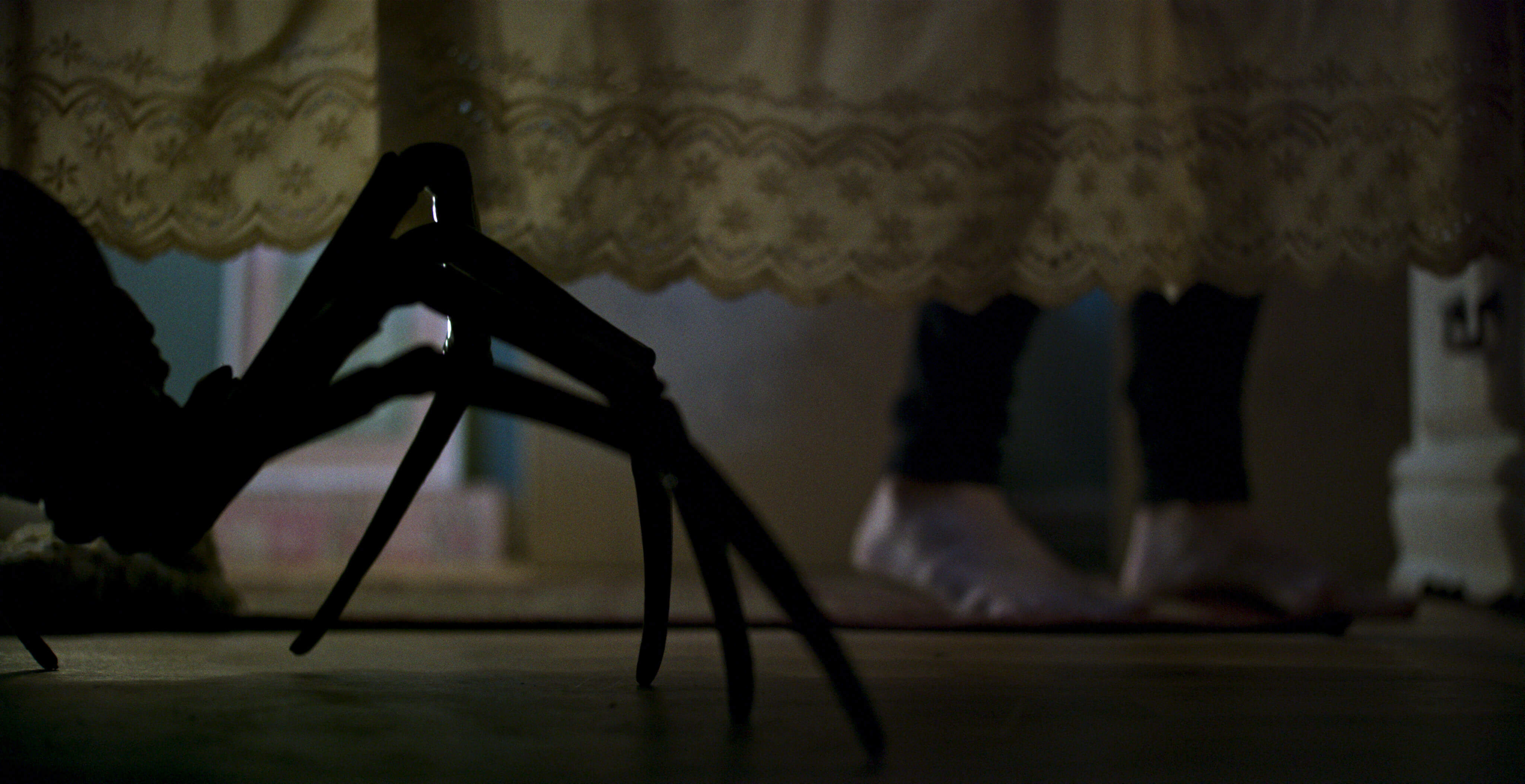
A completely different type of beast is centre stage in Itsy Bitsy (2019). As you could expect from the title, the critter in question is a spider. It’s no normal arachnid, though; it’s not only as big as large dog, but also happens to be an ancient vengeance-seeking goddess. As such, this is as much a complex family drama as it is a skin-crawling nightmare. Don’t get us wrong, there are enough nightmarish images and imposing atmosphere to give anyone the willies but there’s also a human story going on too. Kara (Elizabeth Roberts), along with her son and daughter, are moving to the country following the death of another son so she can work as an aide for an ailing antiques collector Walter (Bruce Davison). He’s just acquired, rather dubiously, a rare, tribal egg. After a disagreement, the person who brought the egg to Walter returns and smashes it open, unleashing a terrifying creature that has laid dormant inside.

Away from the cutesy, pulpy title, Itsy Bitsy is a remarkably tense, atmospheric piece. The mother’s mental plight plays well against the oncoming threat of the goddess spider, and there are enough moments to send shivers down the backs of any arachnophobia sufferers. Unfortunately, though, your slipper won’t be the best line of defence against this bugger! The spider effects are really well handled, too. A mix of physical and CGI brings the critter to life, and raises the production values far above the familiar ‘old school’ spider films that relied on oversized props (sometimes over the frame of a Volkswagen car as in 1975’s The Giant Spider Invasion – interesting aside: the rusty framework that made up the star spider and car chassis was stolen from the director’s home and sold as scrap in 2013) or unconvincing pipe cleaner models (Lucio Fulci’s otherwise brilliant The Beyond can take a bow).

Based on a cult Amiga video game released by Cinemaware in the ‘80s, there’s a different type of creepy crawly at large in It Came from the Desert. Citing a biblical curse, the critters here are giant ants – well, ant-tarantula hybrids to be exact. Made in 2017 by director Marko Mäkilaakso (War of the Dead), it’s an affectionate homage to both the game and the atomic horror B-movies of the ‘50s, particularly the brilliant Them! (1954).

The film follows a pair of ‘dudes’ – dim-witted wise-cracking dirt bike racer Lukas (Alex Mills) and his only slightly more sensible mechanic Brian (Harry Lister Smith) – who stumble across an abandoned military base in the middle of the desert when they should be partying at Lukas’ victory celebration. In there, they discover the remains of a project that sought to create supersized ants by splicing alien DNA from a meteorite with them and spiders. Ironically, they were created as defence rather than weapon; something that has majorly backfired! A bigger problem comes when they discover the ants need ethanol to reproduce – and their massive kegger party is taking place just around the corner.

The CGI is akin to movies made by mockbuster specialists The Asylum, but that just adds to the fun. Stick around through the end credits and you get a complete run through of the original video game, which is a joy for those who remember playing it back in the day. Forget the big budget flops, It Came from the Desert is a video game adaptation that actually serves its origin well. Sure it’s cheap-looking and hockey, but it’s a lot of fun. Some of the slacker humour falls flat, but for every ‘woah dude’ moment, there’s a gem such as a guy getting kneed in the nuts and then emitting a very high pitched voice, or giant ants being subtitled to reveal their thoughts. The leads also have a favourite film series – starring a character called the Eradicator, essentially a pastiche of almost every macho ‘80s bike-riding action hero – which opens up plenty of scope for parody of other low budget action movies and numerous rye references to some cult classics.

Finally, we trade multi-legged beasts with a giant snake. Anaconda (1997) is a bigger budgeted affair and boasts a star-studded cast and was directed by Peruvian Luis Llosa (who also helmed ‘90s action classics The Specialist, Sniper). This fun shocker follows a film crew making a documentary about a lost tribe. Headed by Terry Flores (Jennifer Lopez), the crew includes the cameraman (Ice Cube), a doctor (Eric Stoltz), prissy actor (Jonathan Hyde), production manager (Kari Wuhrer), and sound guy (Owen Wilson), not long into their trip they come across a stranded boat and rescue the only passenger, Paul Serone (Jon Voight). It turns out he’s a former priest who is now hunting snakes. Big snakes. We’re told in the opening crawl that anacondas can grow up to 40ft and when they’ve eaten their prey, they regurgitate and eat them again. Lovely. These creatures are almost as terrifying as Serone, who comes across as though he can’t be trusted and he somehow knows the boat’s captain (Vincent Castellanos), but manages to save the doctor’s life with a makeshift tracheotomy when he is stung in his throat by a deadly wasp. It’s not long before Serone is taking the lead on their journey and seemingly putting them in further danger.

Anaconda was a hit when it was released – grossing $136 million from a $45 million budget – and it’s a fun and absorbing romp in the tradition of Jaws and the many other giant predator/man vs beast flicks. The location is fantastic and is captured amazingly by cinematographer Bill Butler, who just so happened to be the DP on Steven Spielberg’s 1975 masterpiece – there’s even a version of the superb dolly zoom, although it’s nowhere near as effective. The special effects are executed by a mix of physical (just wait for the POV shot from the snake’s mouth!) and no-so-great CGI. This was still fairly early in the genesis of computer generated effects, so I guess we can be a little more forgiving. Although it spawned four sequels (three that were straight-to-video), it’s the first film that holds up the best.

Check out the Creature Feature season on Horror Channel throughout March. Tune in via Sky 317, Virgin 149, Freeview 70, Freesat 138.

Graham Humphreys | HUNG, DRAWN AND EXECUTED

hung drawn

Artist Graham Humphreys has done posters for some of your favorite movies, home video sleeves, and album covers. His instantly-recognisable, incredibly lifelike, watercolor illustrations are gorgeous and fascinating collages which capture the heart and soul of the medium within. His art pops up in books of horror movie art, with his poster for The Evil Dead being a touchstone for horror fans of a certain age. While Proud Gallery published Graham Humphreys – Drawing Blood: 30 Years Of Horror Art in 2015, that book was extraordinarily limited and very hard to come by, so it was particularly exciting when Korero Press released Hung, Drawn and Executed: The Horror Art of Graham Humphreys late last year, making much of that work available to the general public. We were lucky enough to speak with the artist to discuss the book, art, music, and more.

STARBURST: Do you find having like a place that is away from your home helps you work?

Graham Humphreys: Oh, I think so, yes. It’s very much about discipline. I mean, I have worked from home before, and you kind of tend to look for distraction sometimes. I have to take breaks, obviously, because you lose sort of sight of what you’re doing – you can get kind of bogged down and stuff – but I find it’s really good just to get away from my home and go into an office and actually sit there and do stuff.

It’s kind of convenient for other reasons, as well. There are technical people there, should I have any issues with my computer, for instance and, also, it’s just convenient for other facilities around. There’s a swimming pool nearby. I like to take an afternoon swim just to clear my head.

We imagine, as busy as your career is, and as many things as I see come through my in-box that have your art – be that be it Blu-ray releases or album covers – you seem to be working as much as you ever have been, probably.

Most likely. It’s a good thing.

We’ve noticed that the clients you work with quite a bit are companies that we are quite fond of, like Arrow Video and Mondo/Death Waltz. Does having a client base that comes back to you again and again like help you in creating, because you get a better idea of what they want?

Definitely. I mean, you learn well. I have to say – with Arrow, for instance, most projects come through project managers, so with I work with the same people for a period of time. Inevitably, you find stuff working. There’s a sort of healthy turnover of people that I work with there, but there is very much an understanding which is all based on color. We understand what the budgets are, and what could be achieved within those and, I guess, they also pick projects which they probably think are better-suited to me.

Sometimes, it’s about how you approach the lack of material, for instance. On a job, sometimes you’re working with a very old film, and everything’s kind of quite blurry. You’re looking at the unrestored version of what will become a remastered Blu-ray and it’s just how you approach those difficult circumstances.

Reading through your book, you mentioned a couple times that you’ve had to go and watch certain films three or four times to get an idea because you’re not familiar with them. How often does that happen?

Probably most times, and the reason is that it’s first my duty to try and find images that aren’t the familiar publicity images or the stills everybody else has seen over and over again, and to do that means going to the film. If it’s a film for the first time, obviously, you want to know what the film’s about, and who does what, and how it ends, and everything else, but even if it’s a familiar film, I have to go through it really looking for those little moments where you get a great expression. Also, of course, it’s got to be about the quality the image is, because you’re making screen grabs, generally. Even if in a scene, you think everything looks in focus, you’re trying to get a single frame and the images can be too soft to use.

Seeing your style change – like, some of those covers were like much more cartoony than the work you’re known for now – what’s it like when you get to return to something like Return of the Living Dead several times? Is it nice to be able to sort of correct past sins?

Absolutely – and in fact, I’ve just been given that job once again for somebody else. That job has returned many times. Incredible, really, but I think in the ’80s, what I was doing was addressing things in a different kind of way that I understood the requirement for me at that point was different to what it would be now, and that’s partly because I think that my style was more cartoony at the time, simply because I was doing a lot of cartoon work and concentrating on the more humorous side of things and partly I think because the skill set I had at the time wasn’t as polished as it is now.

I want to say polish – that don’t mean trying to be as slick as possible. It’s all a question of the technical ability. I just didn’t have that at the time to render great portraits, and perhaps the techniques I was using to render those portraits were different at that time, as well, so I think that’s calmed down, really. When I first returned to Return of the Living Dead, I tried to match the original in its content and the way it come across or was stylised. When I did the Scream Factory version, for instance, I was probably doing something more akin to what I would like to have done at the time had I had the skill set.

In the book, you have a very detailed walkthrough of how you go about creating your art, and it’s fascinating. We’ve often looked at your work and wondered how you get to where you do. We love the starting point and, most of all, the wash you put on the page. How long did it take you to come to this sort of process, in order to get a very distinctive style?

Over the years, as budgets have got lower, I guess, and workers need it faster, you have to learn to come up with a technique that allows you to work very fast and deliver something which looks like a complete accomplished piece of work, but in a minimal amount of time. It’s not like I rush things: I try not to do that ever, but you know how much time you have, and because of the budget, it’s just unrealistic to spend you know something five days on something where, realistically, you know you’re being paid for about a day and a half’s work. Inevitably, I always ends up working longer on some things than the budget allows, because I want to do something that’s good for the client.

But, also I do remember many, many years ago – my technique was different at the beginning – and I’d start from a white page and just build up layers of dark, and then work to light. I find that, occasionally there’d be little specks of white still showing through. For me, that’s the nature of the paint work, but I had a couple of clients saying, “Well, we can still see some like this,” and you know, they’re tiny, tiny little specks, but I had to go back and just fill in those tiny little specks for them, and it just seemed like, “Well, why should I ever have to do this again?

So I kind of got this technique, where I put down a wash of colour that there would never, ever be white specks, and that’s really how that developed, but also, it does allow me to have a background and a sort of texture to the overall thing, which doesn’t need further work in some parts. By creating a textured background, you’ve already filled in substantial parts of the painting, allowing you to just concentrate on the bits where the focus will be for the viewer.

Given that you’ve done so many music-related projects, especially in recent times, how much is music an important part of your creative process?

I like to work with as few distractions as possible, because I used to work with music on all the time, and especially when I was working from home. Occasionally, I’ll put on earphones when I’m working. To be quite honest, all I’ve been playing what I’ve been working it from home over the last sort of three months is – I’ve got one sort of a compilation of Hammer things. It’s on a loop, virtually, and I never tire of it, and it just it just seems to fit all the work on technique. There’s bits of music I know so well that I’ll go for the afternoon swim, and that’s all I can hear in my head is all these Hammer things.

Certainly, in the early days it was a big inspiration when I was looking for ideas – you know, the lyrics and the music I was listening to was such an important part of what I did, and actually helped shape the way I worked, as well. A lot of the music was quite raw and aggressive, and and I think the technique kind of reflected that and, to an extent, still does now. Really I’ve never been somebody who’s been attracted to the slick and the highly finished look, because to me, I don’t think life is like that. I don’t think anything should be slick and finished, really, but the music really did play an important part of the way the work was shaped.

In fact, we mentioned Return of the Living Dead earlier on: that came to me, purely because of the music connection. The person who had commissioned me was actually a friend of mine I knew from a different job. She had as a publicity agent she knew professionally, in video, and the film came up. We’d been to see The Cramps many times together, and she knew I liked the Damned, as well. Of course, those were the two featured artists they wanted to sell and that’s why I ended up with that job, probably with the Cramps in mind.

You know, they always had a slightly cartoony come up look to them, and I think that’s probably what shaped that particular job. So, yeah: music did have a big influence on everything I was doing. I mean, the original Evil Dead poster I did for the UK? That was purely fueled by the Cramps and the Gun Club.

While there is some older material, the new book is very much focused on a lot of the things since the 30-year compendium from a couple of years back. In terms of putting it together, because it’s such a shorter time-frame did you notice any themes that surprised you?

I wouldn’t say necessarily that, but what I did find was that, with that first book and the 30-year work, I struggled, to be quite honest, because over that period of time, I was doing a lot of other work – design and work and illustration which was not horror-themed at all. A lot of educational projects and sort of very sort of standard design kind of stuff, which was not involving illustration, so a large bulk of my work over that period wasn’t illustration. So, there was a struggle to try and find enough to fill Drawing Blood, whereas in the period since that, it’s all the illustration work – and a lot of it, as well – so, I did feel that I had enough to fill a new book. The previous book was rather expensive, and I wanted people to access the work without having to pay large amounts of money, so I thought certain key pieces should be in the new book, as well.

HUNG, DRAWN AND EXECUTED – THE HORROR ART OF GRAHAM HUMPHREYS is on sale now and reviewed here.

Max Pachman | BENEATH US

Congratulations on the film, it’s a brilliant thriller that’s gritty, raw and hard-hitting.

I really appreciate that. It was always important for us to get the day labourers right – they are the entrance to the story, and I wanted the first twenty minutes of the movie to feel very realistic so that we are right there with them and it’s almost like the audience are joined with these characters that are then thrust into a horrific scenario. We saw the movie as two things – a slice of life character portrayal of these struggling workers and then meeting with the big bad villains who are out to get them.

Without spoilers, can you tell our readers what to expect from Beneath Us?

It’s the story of four undocumented day labourers who are living job to job, standing outside of hardware stores kind of begging for work. One day they get picked up for a job of a lifetime that’s much higher paid than anything they’ve done before and everything seems too good to be true and when they get to the house and begin working they slowly begin to realise that things are not what they seem.

Beneath Us is your feature directorial debut – how proud are you as a filmmaker to see your creation come to life?

I’m thrilled. I’ve been a film lover for my entire life, and I made several shorts along with a few screenplays. It’s always been my ambition to make a feature – so I’m very proud that this is my first one. It was a bit surreal being on set making the movie after remembering the initial spark and inspiration for the story. Seeing how far it has come has been a thrill for me and I look forward to allowing the world to see the film and hearing what they think of it.

You co-wrote the film with Mark Mavrothalasitis, where did the idea for the story come from?

So, funnily enough, I was at a Home Depot and I noticed this interaction (that happens at hardware stores all across America) between a woman in a nice SUV lowered her windows and a swarm of day labourers all offering their services and asking for work. They were all bigger men and I instantly thought I should be nervous for this woman and then it struck me – the level of trust in this arrangement of these undocumented workers getting into a car with a complete stranger being taken to their home. No one really knows where you are and there’s no official record of you even being in the country – so I started thinking of the possibility of a story like that working as a film. So I rang my co-writer Mark Mavrothalasitis, who I’ve worked with a lot since college and who is half Mexican, and told him this idea as he would be a perfect collaborator and that very day we started working on the script. The idea too gave us the chance to take these day labour characters and show them in a new light as the protagonists.

A particular shot towards the end of the film was very evocative of The Texas Chainsaw Massacre. Are films of that genre and ilk some of your inspirations?

Absolutely. I think that in terms of the villains what we are doing with Liz and Ben is similar to what they did with the villains in Texas Chainsaw Massacre – it’s larger than life depiction of, in that case, it was people that you might meet if you wander off the wrong street living in the middle of Texas, whereas here it’s larger than life version of the doting housewife and upper-middle-class white couple. We were certainly inspired by that movie for sure amongst others such as Funny Games and Misery.

Throughout the film, there are some very clever instances of framing and character actions that really elevates the fact that Liz and Ben are “above” the other people around them – again, was that a stylistic choice that you always wanted to pull off?

Yes, we tried to show that Liz and Ben are in control in their environment and that the protagonists are stepping into this foreign world when the gates close and then they are trapped in a maze. Whenever possible we wanted to showcase that.

Lynn Collins does a terrific job as Liz, a proper posh psychopath of a character – what was the audition process like with her and how much fun was it to work with her?

It was extremely important to get the antagonist role perfect and we spent a long time searching for the perfect Liz. I couldn’t be more thrilled with Lynn’s work and how she played the character. She immediately got it and understood what we were going for – she was very generous with her talent and time and was willing to do anything. Making a larger than life horror villain with her and that requires really pushing yourself and she nailed it every single time. She was amazing.

At the heart of the story there is a real emotional connection between the two brothers Memo and Alejandro, how was it finding the important balance between character progression and the thrills?

We always saw them as two sides of the same coin – where Alejandro the older brother represented the hard-working man who is embracing the American Dream and Memo the younger brother is very sceptical and is a foreigner and there’s a natural conflict between the two that plays out throughout the story. By the end of the film, I think that both characters learn something from each other and incorporate their strengths and weaknesses – Memo is a tough guy who is not willing to make any concessions or suck up to anyone whereas Alejandro is willing to encroach to provide for his family. The two of them at the end begin to understand why the other is the way that they are.

Can you tell us about any of your upcoming projects?

So, I’ve recently been writing a few screenplays and a couple of them are almost ready to go so I hope to have another movie to show you fairly soon! It’s still keeping in the horror and thriller genre – I think that the stories I tend to gravitate towards are movies that are within that genre but are using the genre to have a discussion about a topic that is socially relevant.

Beneath Us is out now in select US cinemas

Eunyoung Choi | KEEP YOUR HANDS OFF EIZOUKEN!

Anime is a huge passion of ours at STARBURST so we were thrilled when Eunyoung Choi; the lead Producer and Co-Founder of one of the most popular Anime studios in Japan, ScienceSARU, agreed to sit down with us to talk about the studios latest mega-hit show, Keep Your Hands Off Eizouken!, her history in the industry and what’s next for the legendary studio.

STARBURST: Congratulations on the success and popularity of Keep Your Hands Off Eizouken! – it’s our favourite anime of the season.

EUNYOUNG CHOI: Thank you so much for the kind words. The team is doing great work, and we honestly didn’t expect all this feedback from the audience. We decided to work on the project because it was a very interesting story and we all related to it – it’s not a typical anime or conventional anime, so we didn’t expect this kind of amazing feedback from the fans. We are very happy about that.

In your own words can you briefly describe to our readers what Eizouken! is about?

It is a story about three high school girls that establish a school club to make animation, but to receive the budget they need to make the club, they have to go through a lot of trials and hard work. It’s a story about them trying to achieve their dream through animation and art, which is what they’re most passionate about. Each of the three girls have different roles – an animator, a producer and a director. It’s kind of exciting and very fulfilling as a production team to bring these characters to life.

What was it about the manga that appealed to you and Masaaki Yuasa that made you and your team want to turn it into an anime?

When we finish a project, we take a lot of time to think about what we want to do next. Our pipeline is very limited – our time is very limited, and our staff is still somewhat small compared with the very big studios, so we carefully go through all of the possibilities, including TV series or feature films. One of the discussions we had before we did Eizouken! was that, when we found the manga and read it, we found it really suited us. There are other TV shows about animation, like Shirobako, which are very popular with fans since they like to see characters making anime. Eizouken is a little bit different as it’s more about what they are making and imagining, and follows the struggles of making it as amateurs rather than professionals. It’s about them evolving from the beginning and becoming a team. Also, the manga gives a very positive message via the story and characters about moving forward, solving problems, and how to bring your ideas to life. And we think it’s good to show the audience how much we enjoy the process through the struggles – it contains all these aspects and elements.

The story is about three girls making an anime at school. Is School where your love for animation began?

Actually not. It was a long journey to get into the animation industry. Before this, I studied fine arts and sculpture, and I was also very into art and literature, philosophy and music, and all sorts of other things. Animation didn’t start off as my interest until I went to school in London. I went to animation school in my late 20s. I hadn’t watched Ghibli films, or even Disney, at that time. So I decided to educate myself in animation and I watched a lot of movies and shows. It took a while to get to the place where I wanted to be. But I got there eventually after I turned 30. It’s not that I wasn’t interested; I just didn’t have the knowledge at the time.

The three main characters: Asakusa, Mizusaki and Kanamori are three wonderful characters that are unique, funny and loveable. Who is your favourite and why?

I like all of them [laughs]. To be honest, I’m a producer at the moment, but before that, I was a director, and before that an animator, so I kind of know all the aspects of each role and character. Asakusa is the lead in the story – I really love her because of her imagination. She’s trying to put that vision forward to share with the audience, and she’s very charming as well. I share a lot of feeling with Kanamori too, because at the moment I’m doing the Kanamori role in real life. These two definitely are closest to me. Of course, Mizusaki is amazing too – the way she loves animation is amazing. Episode 8 covers her backstory and that was very emotional and moving.

The story is a love letter to making anime and creating to achieve your dream – how do you personally connect on an emotional level to the themes in the narrative?

This is a good introduction for the audience to our work at Science SARU and all the individuals who work here, including myself and Yuasa-san. We all connect to the characters, and I hope that the audience connects to them too, as well as to the animation industry. If we can contribute in any way to making people interested in animation, then we will be very happy.

The opening song “Easy Breezy” by chelmico is a brilliant song and is incredibly catchy. How fun was it to have them do the theme?

So actually we had a list of potential openings but we desperately wanted chelmico to work on our opening for Eizouken! as their style was the best fit for the show – they are two girls doing what they love and we have three girls in our show doing what they love. They are both very open-minded and charming, and also talked about how they started doing rap and decided to give it a go, simply because they wanted to. The animation of the opening was done by our animator Abel Gongora and he did an amazing job – we certainly didn’t expect all of this fantastic feedback from our fans! He definitely brought his sense of humour that blended well with the opening – it is the key to Eizouken!.

The animation style of ScienceSARU projects has always been some of the most unique and stylistic in all of anime. Is that another reason why adapting Eizouken! was something you wanted to do?

Yes, that was one of the reasons why we wanted to adapt this manga into anime. Science SARU wants to express animation with more movement and unique expression through detailed characters. We like personality and action to shine through – characters who are simple, where we can express their characteristics and emotion, suit our style. And the story of Eizouken! is so strong that it helps us achieve that.

Are there plans for a Season 2?

[laughs] We don’t know if there is going to be a Season 2 but we hope so! [laughs]

ScienceSARU is continuing to go from strength to strength with Eizouken! still airing and your new film Ride Your Wave making its debut in the UK recently. What can audiences expect from that film?

It is a love story about two characters but it’s very emotionally charged – you go from very happy to very sad constantly, but you see the characters develop and move forward through the hard times. Through all the events, the main characters are always evolving. For people who enjoy animation or romance, this is a perfect story for them. We wanted a dynamic female character to lead the story, so we went with having her be a passionate surfer. We are also happy that there are many scenes in the film that are more suited to anime over live-action.

Obviously, there is a live-action film coming out for Eizouken! that you’re not involved with, but as a fan of the source material, are you excited to see what they do?

Yes, I’m very curious to see how it turns out and I’m very excited to see how they approach it.

Can you tell us about any of your upcoming projects?

We have a feature film coming out next year directed by Yuasa-san. We also have a show called Japan Sinks 2020 coming soon on Netflix this year. Lots more surprises are coming soon which we can’t talk about yet, but it’s a very exciting time for all of us.

Keep Your Hands Off Eizouken! airs exclusively on Crunchyroll every Sunday at 6.30pm GMT

Leigh Whannell | THE INVISIBLE MAN

The Invisible Man

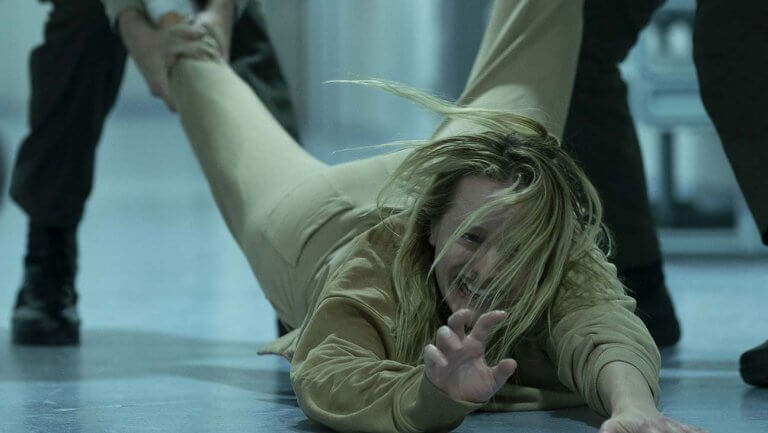
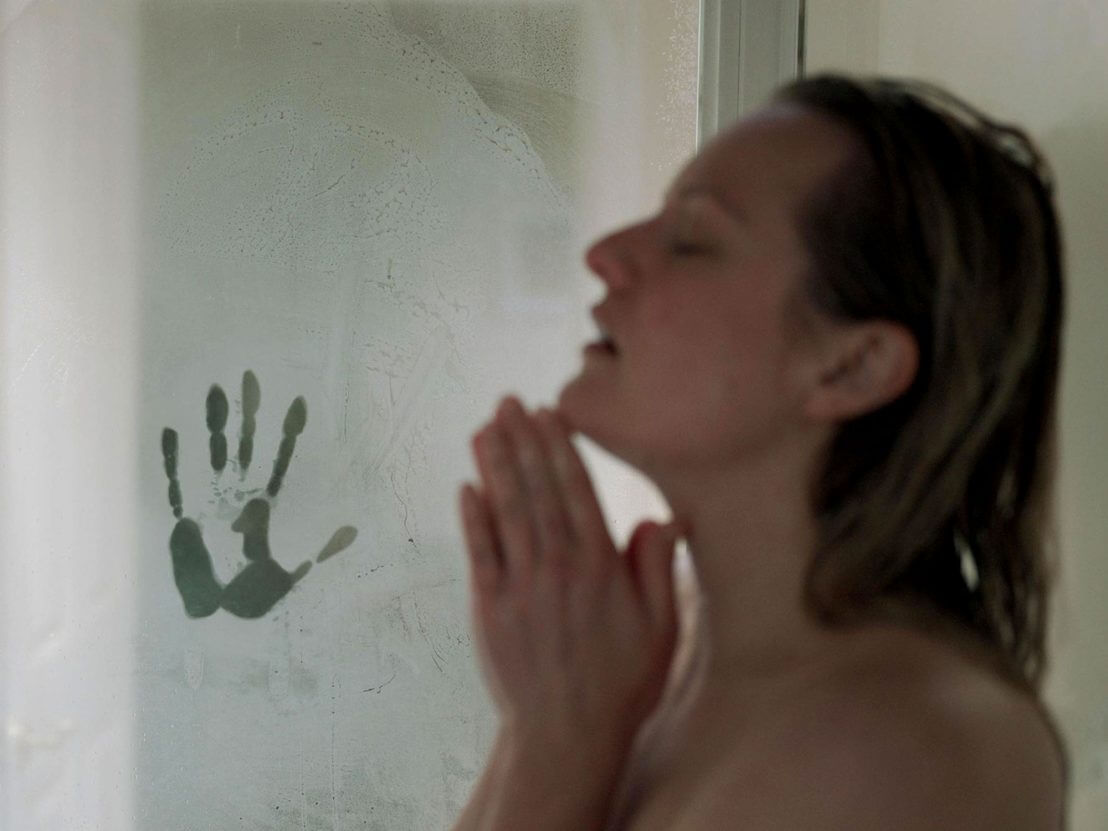
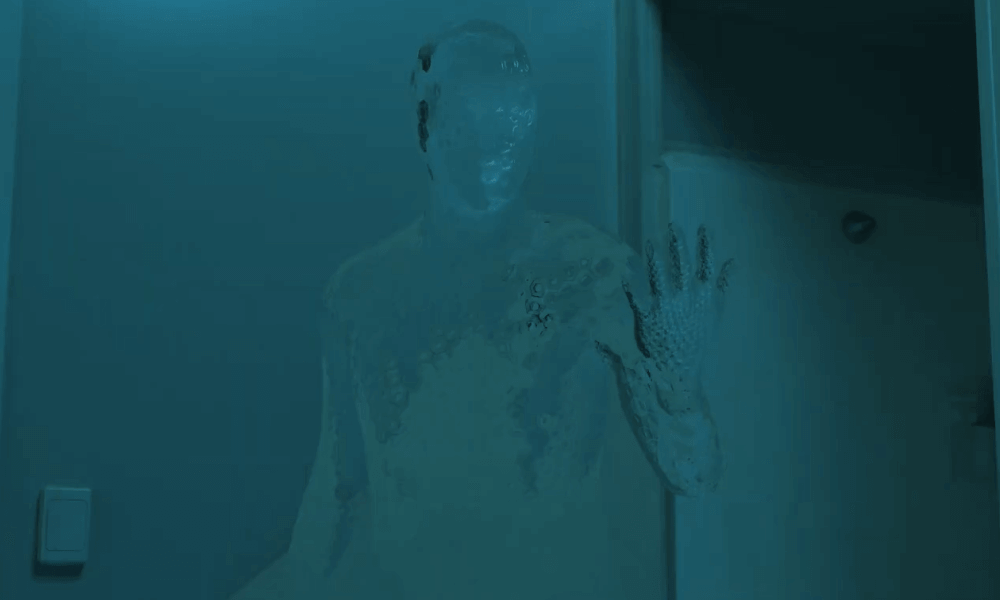
Leigh Whannell has long been a favourite of many a genre fan. From modern-day classic horror franchises such as Saw and Insidious, to horror comedy Cooties, to stunning sci-fi actioner Upgrade, Whannell has impressed as an actor, a writer, and as a director. And in a writing and directing capacity, up next for the hugely talented Australian is a fresh new take on The Invisible Man. As that hotly anticipated reinvention of an iconic property gears up to hit the silver screen, we caught up with Leigh to discuss making this character once again a terrifying proposition, how he himself has grown as a filmmaker, whether he’d be interested in tackling any other of Universal’s famed monsters, and much, much more.

STARBURST: Having seen so many different incarnations of classic Universal monsters over the decades, it can be said that these characters have long lost the ability to truly scare. With The Invisible Man, you’ve managed to bring back a sense of genuine terror for audiences. How was it to tackle that challenge of making the property frightening again?

Leigh Whannell: That was the main thing that attracted me to doing it. I certainly wasn’t hankering to make an Invisible Man movie. I love the character of the Invisible Man, the same way that I love the other classic monsters like Dracula, Frankenstein’s monster, or any of these monsters based on older literary works. I love them all, they’re part of horror history. I’m a horror fan and a student of horror, and so as a student I respect and revere these characters. But they certainly weren’t at the forefront of my mind. After I finished Upgrade, I had been well and truly bitten by the action bug. What I was excited to do next was something with a bit more action, maybe a bit of a bigger budget. Shooting things like car chases and fight scenes, it’s very addictive. Once you do it once, you want to do it again. So that’s where my mind was at. Then Universal Pictures were the ones who floated the idea of The Invisible Man – or at least put the name in my mind. The thing that diverted me away from making another action film and going back to horror was the idea of making this character scary. As you said, some of these characters are really old and there’s been a lot of adaptations of their work. They’re not modern monsters – they’re written in a different time and framed in a different era – and so dragging it into the modern world was what excited me about it.

From the footage seen so far, the reaction has been hugely positive across the board – and that’s a rarity these days! How nervous were you before that trailer went out, and how’s it been to see such a positive response?

Yeah, whenever you unleash something into the world that’s been your own secret for a long time, it’s nerve-wrecking. For me it is, anyway. Making a film is like working behind closed doors for a long, long time, toiling on something, and then you rip away the curtain to reveal the portrait. The moment that you unleash it onto the public, it feels very naked. You’re so exposed because you’ve had all this time to toil behind closed doors and now the outside world controls it. So it was very nerve-wracking, but I loved the response. In the current age we live in, you know that you are going to get negative opinions, but you just hope the positive opinions outweigh them. That’s the best you can hope for. You can’t avoid negative opinions in the era of Twitter. You know as well as I do, the best you can hope for is percentage points – let’s hope the pie chart is more favourable than unfavourable.

The Invisible Man

The last time we spoke, you said you were initially open to the idea of doing The Invisible Man because there hadn’t really been a great Invisible Man movie since that first 1933 film. As well as going back and watching the old movies or reading the original novel, was there anything else you particularly revisited as inspiration for this picture?

Whenever I’m writing a film, the first thing that happens is I’m just working with a notepad and pen for quite a while. I’m sort of stringing together different fragments of the idea, and the hope is that after a few months of working like that you’ve assembled a general vision and outline for the whole movie. It starts in a very fragmented way. It starts, for me, with jotting down images and coming to a head. When I sit down on the couch and think about this movie, what are the very first things that pop into my head? It’s important for me to jot down those instinctive thoughts. I’m definitely somebody who’s very suspicious of the first idea – if it’s something I’ve thought of, it mustn’t be any good – but what I’ve found happening when I’ve been making films, is that the very first thoughts that you have are the best ones. It’s kind of like a musician recording a song in one take and then going, “Look, this is how it is, this is raw, this is it in its purest, most raw form and I don’t want to labour on it too long.” The other thing I do is I put together music, and it’s really just kind of a real cornucopia of different things – music, sound, images. Part of that is thinking about films that are in the vein of what I’m thinking about. For this movie, I was watching films like Gone Girl, Fatal Attraction, Rosemary’s Baby. The reason I’m watching those films might not be obvious. For instance, if I say to you and your readers that I watched Gone Girl, they might think, “Well, clearly there’s something Gone Girl-esque about this film.” Really, I might be watching Gone Girl purely for the way that it was shot. It doesn’t have anything to do with the plot, but something about the way that film was photographed speaks to what I want to do with this film. It’s a very random, fragmented process that goes on. It’s actually the most fun part of screenwriting for me. The hard part is when you actually have to sit down at a desk and put your fingers to keys and actually type something. Yeah, the part where I’m making a collage of the ideas and music and images is really the fun part.

This is the third movie that you’ve directed. Without making this too much of a heavy, loaded question, what do you think you’ve learned from this particular movie that maybe you didn’t know when you were helming Insidious: Chapter 3 or Upgrade?

Oh wow, that’s a really interesting question. There’s so many things. And I think a lot of the things I learned, I think I’ve already forgotten. Sometimes they just disappear into the ether. One of the things I learned on this film is just really do your homework on people. I had great crew, I had a great cast, but I think on this movie I really learned that going forward I want to sit down with each and every person. Not just the stars of the movie, but the supporting actors. Not just the key members of the crew, but the supporting crew members and the people who are further down the call sheet. I want to be sitting down with the assistant to the make-up artist. Every single person, I want to sit with and I want to tell them my mission statement. You can never, ever be clear enough as a director about your mission statement. When I say mission statement, I’m talking about everything. Not just what you want to achieve with the tone of the film, but how you want the set to run, how you want people to behave, what is important to you. All of that stuff really has to be clear from the outset. That was something that I really learned on The Invisible Man. I had a great time shooting the film, and I had a very talented cast and crew, but I found at times that I was scrambling to remind people what the mission was. So that is something I’m going to do going forward, is just overcommunicate. I’m a bit of an overcommunicator on set, I like to labour the point because you only get one shot at something. I’ll tell someone the same thing four, five, six times.

The Invisible Man

While you’re eager to do more action, Universal obviously has a complete library of classic characters at their disposal. The Dark Universe concept has seemingly been dropped, but would you be keen to tackle any other famed monsters should the offer come your way?

It really depends on what the project was. I judge movies on a case-by-case basis. I have a vague plan in my head of where I want to be as a director in 20 years, 30 years, but I’ve found that you can plan as much as you want but just still end up making the universe laugh. Often at times, things find you. The Invisible Man is a perfect example. I had no desire or passion to make an Invisible Man movie until someone presented the idea to me. This is a character that crashed into my life – I wasn’t seeking it! It’s been such a gratifying and fulfilling experience making this film. Another thing I’ve learnt from this experience – going back to your last question – is I should be more open to things. Don’t be too rigid in your plans as a filmmaker. You’ve got to let things find you and be open to them. I don’t want to be closed off to opportunities. I’m really, really picky when it comes to what I make as a filmmaker, and any filmmaker should be. I’m no different to anyone else, but I’m so picky because it has to mean everything to me. I never make a movie for strategic purposes. For example, I’d never say, “Well, I’m not too interested in making this sequel to Cutthroat Island, but it’s a Disney movie and I really want to work with them.” I never want to make strategic business decisions, and for me it’s entirely based on what’s going to make me excited for the next year of my life. Sometimes the people around you – agents, managers, producers – they can think in a more strategic way. They’re seeing everything on paper and saying, “This would be a great opportunity for you. You should do this!” My response to that is that I just don’t care whether it’s a great opportunity. I just want to know whether this will keep me awake at night because I’m so excited about it that I cannot sleep. That’s the level I want to be at when I’m making a film. In answer to your question, it would have to be something that excited me that much for me to do it. I certainly wouldn’t direct something just because it made business sense.

Your name’s attached to Chris Rock’s new Saw movie as an executive producer, but we’re guessing you’ve got no direct involvement on that project. What can you tell us about any upcoming projects that you might have in the pipeline?

I haven’t been involved directly with the Saw movies for a long time. Of course, I’m friendly with a lot of the people who are involved in those films still, but I don’t have anything to do with them. I actually don’t have anything coming up. It’s kind of freeing to have that open road in front of you. It’s exciting for me. If I’m being honest, the thing that excites me the most is still original stories. Sitting down and creating a world out of thin air is really the most exciting thing to me. You know better than I do that we’re living in a time when original stories are becoming rarer and rarer. It’s a strange time for cinema. Obviously streaming has crashed the party and taken a bit of the power away from the movie theater business, and that’s okay. Things change. I have Netflix at home, I have Apple TV, and I love them. I love being able to watch movies in 4K in my house – it’s great! But as someone who wants to make films for movie theaters, it does make you think about what type of film will attract people to theaters. There are a lot of franchises and sequels that are getting made because they’re getting people off the couch and into a theater. I’m going to see the new Star Wars film along with everyone else, but as a creator it’s not necessarily what interests me. Adding to the canon of some other universe isn’t really what excites me. When a film like Knives Out comes out and it’s a hit and gets people’s attention, it’s truly exciting because I think it prolongs the lifespan of original films for a couple more years. It’s like, “Phew, it looks like we get another couple of years thanks to Knives Out. It looks like the life support is going to carry on thanks to Baby Driver.” It’s really up to filmmakers to just keep pushing. I don’t know what’s going to happen next, but I think I would love to do an original film and get it out into the world and get people to see it in theaters.

The Invisible Man

The Invisible Man was largely filmed in Sydney, which is where you shot your small role in The Matrix: Reloaded so many years ago. What was it like to go almost full circle, from a minor acting role to now returning to the same place as the director of such a major movie?

It was incredible. My last film, Upgrade, I shot that in Melbourne, which is my hometown. That was a really great experience to be back in my hometown. There was a real full circle moment there, because there was a big, empty building in a city area of Melbourne that we used as a mini-backlot. I think we shot four or five different locations in this abandoned school. It had been a school for 100 years, and now it was lying empty and decrepit and probably filled to the brim with asbestos. We used it as a backlot for many of the scenes, and it just so happens that this building was next-door to this old pub that had been open for a long time. It’s kind of famous for its live music, it’s kind of a rock ‘n’ roll pub, kind of the CBGBs of Melbourne, and it was where I shot a student film. It was the world’s worst student film, but it was my student film. If somebody said that they’d made the worst student film ever made, I would say to them, “I give you my student film!” When I showed that to them, they would admit defeat and walk away. It was far and away the worst pile of shit that’s ever been put in front of a camera. It’s really interesting, as one day I got to the set early and I went to the pub for a drink. I was just sitting there thinking, “My god, 20 years ago – almost to the year – I was in this pub, making the worst student of all-time. Now I’m in the building next-door shooting my sci-fi feature film.” It was kind of a misty-eyed moment of me going full circle. And I had the same sort of moment on The Invisible Man. This time I was in Sydney – which is not a city I was familiar with before this film, but it’s a city I fell in love with on this film – and when I was in my 20s I had a very small role in The Matrix Reloaded. I had three lines, which I think was cut down to just one line, but it was just incredible to be at Fox Studios in Sydney and to see these sets. Just the sheer amount of money they had spent and “Oh, there’s Keanu Reeves in the corner, practicing martial arts movies.” It just blew my head off. So to be shooting this film in that same studio, it was very similar to that moment back in Melbourne. Obviously our sets were not as good as they used in The Matrix, but it was still a full circle moment that kind of struck me hard.

The Invisible Man is in cinemas now.

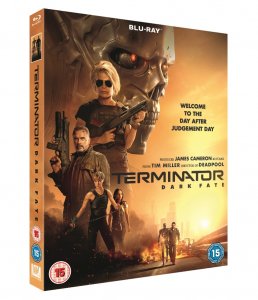
[ENDED] Win TERMINATOR: DARK FATE on Blu-ray

TERMINATOR DARK FATE

To celebrate TERMINATOR: DARK FATE releasing on 4K Ultra HD, Blu-ray and DVD on 2 March, we have three Blu-ray copies of the film to giveaway for three lucky winners!

Original franchise stars Arnold Schwarzenegger and Linda Hamilton come together with Oscar®-winning filmmaker James Cameron for the first time in 28 years in the thrilling new action-adventure TERMINATOR: DARK FATE. The story picks up where Terminator 2: Judgement Day left off, recapturing the riveting tone of the original Terminator and its follow-up.

More than two decades have passed since Sarah Connor prevented Judgment Day, changed the future, and re-wrote the fate of the human race. Dani Ramos (Natalia Reyes) is living a simple life in Mexico City with her brother (Diego Boneta) and father when a highly advanced and deadly new Terminator – a Rev-9 (Gabriel Luna) – travels back through time to hunt and kill her. Dani’s survival depends on her joining forces with two warriors: Grace (Mackenzie Davis), an enhanced super-soldier from the future, and a battle-hardened Sarah Connor (Linda Hamilton). As the Rev-9 ruthlessly destroys everything and everyone in its path on the hunt for Dani, the three are led to a T-800 (Arnold Schwarzenegger) from Sarah’s past that may be their last best hope.

To be in with a chance of winning, just answer the question below and email [email protected] with the heading ‘TERMINATOR’. Entries must arrive before 11:59pm on MARCH 10TH.

Who directed TERMINATOR: DARK FATE?

A) TIM MILLER

B) STEVEN SPIELBERG

C) JAMES CAMERON

TERMINATOR

TERMINATOR: DARK FATE on 4k Ultra HD™, Blu-ray™, DVD and VOD from 2 March


Terms & Conditions:
STARBURST does not accept any responsibility for late or lost entries due to the Internet or email problems. Proof of sending is not proof of receipt. Entrants must supply full details as required on the competition page, and comply with all rules to be eligible for the prizes. No responsibility is accepted for ineligible entries or entries made fraudulently. Unless otherwise stated, the Competition is not open to employees of: (a) the Company; and (b) any third party appointed by the Company to organise and/or manage the Competition; and (c) the Competition sponsor(s). This competition is a game promoted STARBURST. STARBURST’s decision is final in every situation and no correspondence will be entered into. STARBURST reserves the right to cancel the competition at any stage, if deemed necessary in its opinion, and if circumstances arise outside of its control. Entrants must be UK residents and 18 or over. Entrants will be deemed to have accepted these rules and to agree to be bound by them when entering this competition. The winners will be drawn at random from all the correct entries, and only they will be contacted personally. Prize must be taken as stated and cannot be deferred. There will be no cash alternatives. STARBURST routinely adds the email addresses of competition entrants to the regular newsletter, in order to keep entrants informed of upcoming competition opportunities. Details of how to unsubscribe are contained within each newsletter. All information held by STARBURST will not be disclosed to any third parties