Just a Numbers Guy – An Appreciation of NO ONE LIVES

one lives

In 2012, WWE Studios added to their considerable output with a twisted, brutal, action-packed, gore-soaked thriller in which nothing is as it seems and a palpable tension is felt from the first scene. No One Lives was directed by Ryûhei Kitamura, who had previously helmed Godzilla: Final Wars (2004) and the Vinnie Jones-headlined The Midnight Meat Train (2008), which was based on a short story by Clive Barker. Firstly, we must warn you that we can’t discuss the film without revealing some spoilers, but we’ll be sure to keep some visceral surprises for you to enjoy when you check it out.

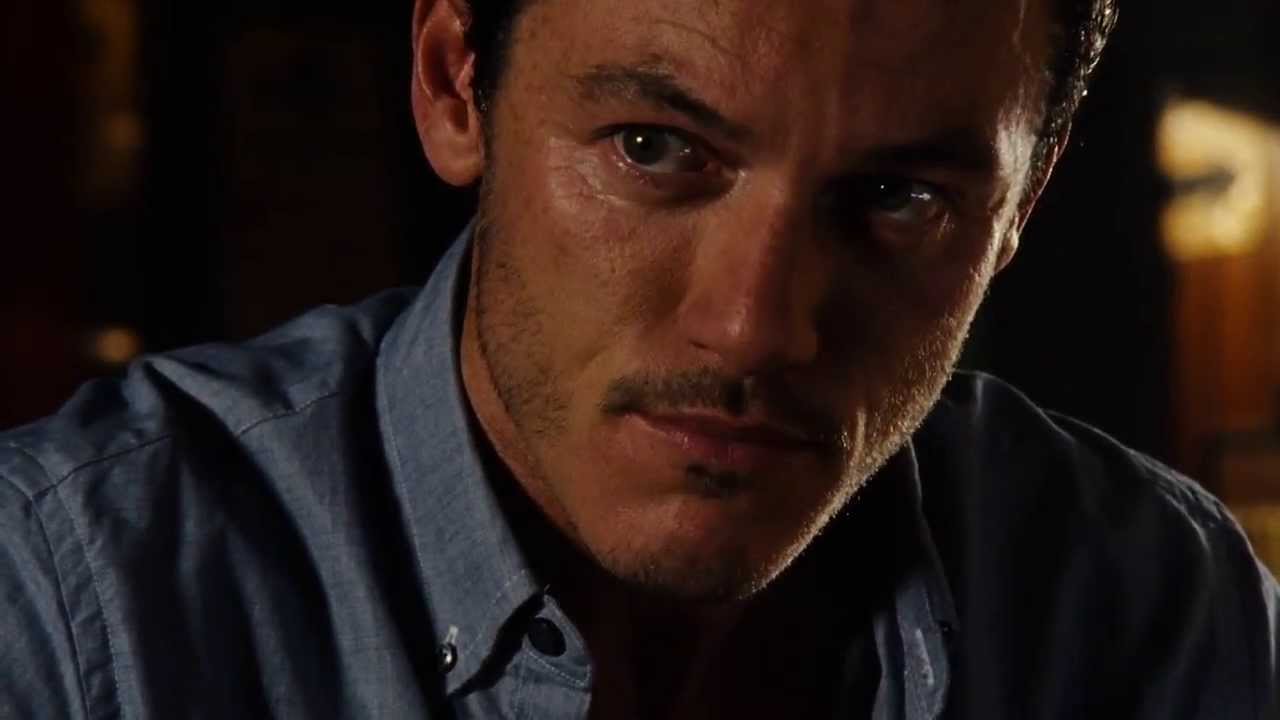
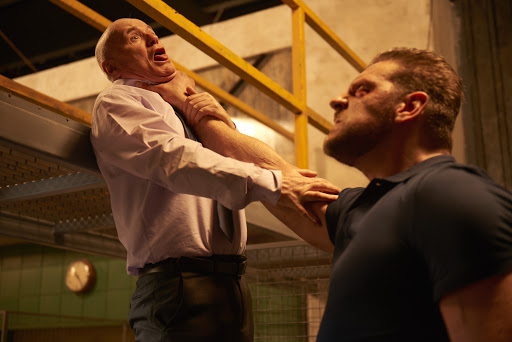
Then-on-the-rise leading man Luke Evans plays an enigmatic, unnamed man (referred to only as Driver outside of the film’s world), driving across country with his girlfriend Betty (Laura Ramsey). Stopping at a rundown motel for the night, everything seems alright between them. They watch TV reports of a missing heiress and make love. There’s an atmosphere between them later though, when it’s inferred that he’s seeing someone else. Things get even tenser when they go for a bite to eat and attract the attention of the local ‘bad boy gang’. Their leader, Hoag (Lee Tergesen) wants to keep a low profile (“Don’t shit where I eat!”) but the impetuous Flynn (Derek Magyar) wants to score some thrills since their earlier house raid was aborted when the owners returned home unexpectedly, causing Flynn to get trigger happy and kill them. Flynn sidles up to the pair and attempts to intimidate them. The girl seems more concerned with antagonist’s safety than her own, giving glances to her stone cold partner. Hoag’s protection of the scene doesn’t last long, as when they are back out on the road, they are ambushed by Flynn, who takes them back to their ranch in the hope of getting their account numbers. Hoag’s brother Ethan (WWE wrestler Brodus Clay) assumes his imposing figure and enormous hunting knife is enough to get what they need. What they don’t count on is the man with no name is a force to be reckoned with and has no fear and is more than resourceful enough to deal with an in-fighting group of criminals who think they’re indestructible. They don’t realise they have gotten themselves involved with a human Terminator; a psychopath so driven that he won’t stop until… well, you know the name of the film, right? To let you into that much isn’t a massive spoiler since the promotional art depicts Evans brandishing weapons and covered in blood. However, Evans’ Driver isn’t the stereotypical psycho, he’s motivated by love – a terribly skewed version, admittedly – and his obsession and possessiveness towards his ‘romantic’ interest is what guides his (lack of) moral compass.
At one point, Evans’ character says “I must admit, I did not see that coming”, and it’s something that could easily be repeated by the viewer throughout the rollercoaster 90-minute running time. No One Lives is shot brilliantly, with moments of dazzling cinematography that brings to mind the early work of Dario Argento and has several nods to Quentin Tarantino. The practical effects are suitably grisly and stomach-churning, rivalling the best, most graphic horror output.

At the time of the original release, STARBURST spoke to a couple of actors involved in No One Lives. Derek Magyar, who so effectively plays the renegade member of the gang, Flynn has a great take on the scenario: “What was so interesting to me, is it’s a story that in the end is about evil versus evil, and when we are put in that situation who do we root for? What side of yourself do you find yourself gripping to? I thought that was amazing for the audience.” It’s very true; they are all bad guys. Even the one person you feel sorry for has a streak of nastiness. Magyar’s character is particularly nasty. He has an over-inflated sense of himself and a callousness to other people. “For me, Flynn is a character that couldn’t be further away from who I am,” Magyar told us. “I tried to find one piece of the character I could tap into, and from there I just let it go and let myself unfold within the character. So I certainly let go of a lot of pent up aggression and anger from who knows where in my life.” That was something that was hard for the actor to deal with, “I definitely went deep into it. It was a long shoot and it was tough to wrap and put the mask back on the next day.

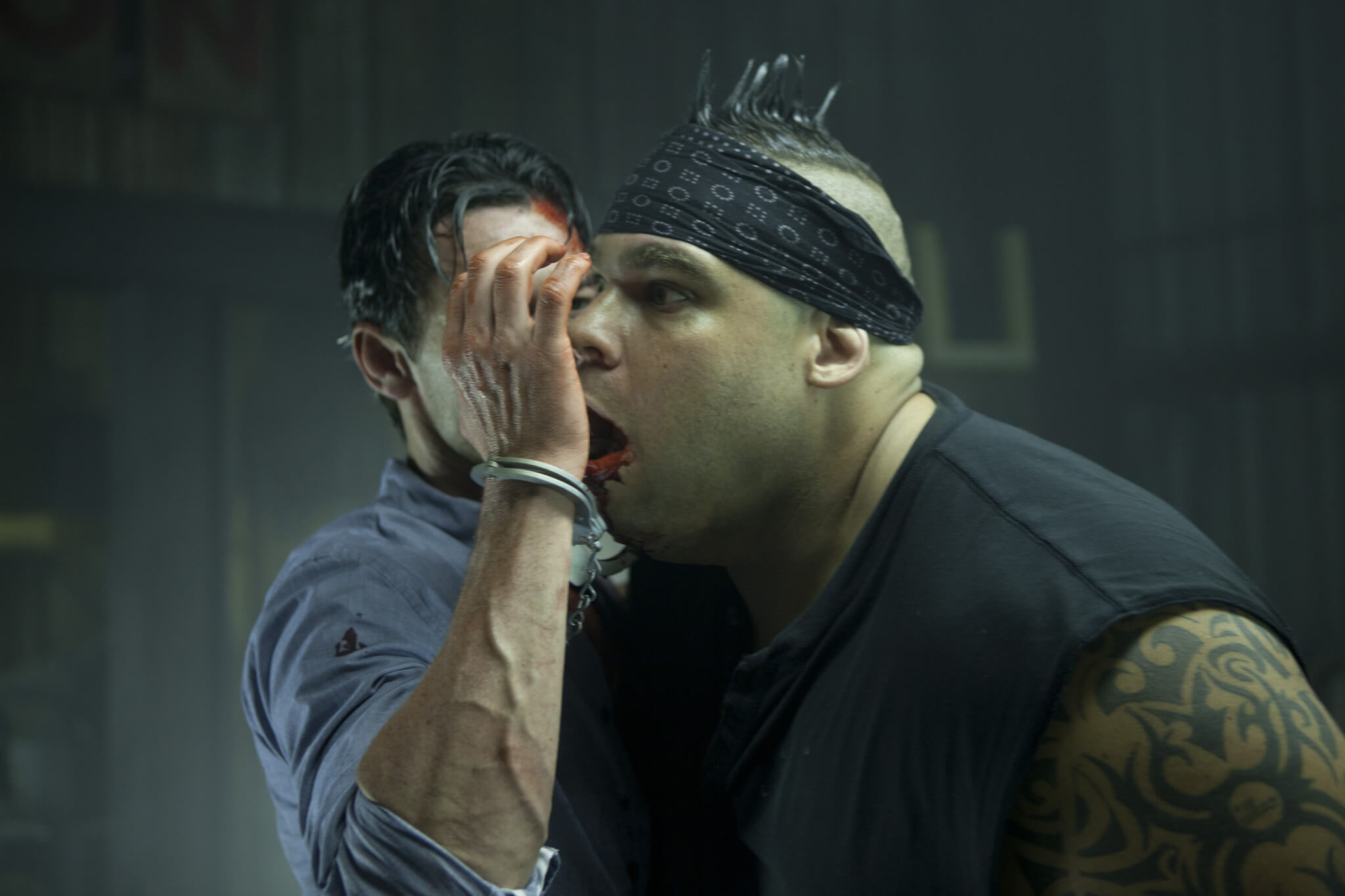
Being a WWE Studios production, one would expect some actors from the roster of wrestlers. Here, there is only one – Brodus Clay, whose real name is the less threatening George Murdoch, or Tyrus as he is now known. A behemoth of a man, he came on board following a bust up in the ring left him needing staples and being on the shelf for a few weeks. “He’s loyal to a fault but not very smart, unfortunately, and not a tremendously gifted fighter either.” Clay told us of his cinematic character. “Then he’s face to face with Luke Evans’ character, who is quite possibly the most sadistic human being on the face of the planet. So even though I play a very tough mean man, I’m at the absolute worst spot for being faced with a psychopath.” We see the results of his encounter in graphic detail, which includes an ingenious use for handcuffs. “I hadn’t seen it until I actually saw it in the movie theatre,” he revealed “I didn’t realise how badly I had been murdered until I saw it.” He was pleased with the gory payoff for his character, which provides one of the most resourceful and bizarre moments of the film. “If you’re going to go out, go out big.” Clay jovially recounted, “I think I was the first male caesarean birth in a movie and I’m very proud that I gave birth to a 5′ 10″, 135lb English male. I mean, that’s not an easy task to accomplish.” It needs to be seen to be believed.

Luke Evans, of course, went on to bigger things thanks to his addition to the Fast and Furious ensemble from the sixth instalment. Going into the production, he apparently read up on psychopaths and managed to get into the mind-set extremely well, worryingly. As he pointed out at the time, it’s difficult not to scream at someone while you’re killing them, but that’s not what a psychopath would do, and Evans pulls off that demeanour spectacularly.

Although it may follow some of the same beats, No One Lives is a slasher movie like no other. Once seen, it’ll never be forgotten, just avoid the trailer first!

You can catch NO ONE LIVES on Horror Channel. Sky 317, Virgin 149, Freeview 68, Freesat 138.

Raving Mad – On the Set of RAVERS

ravers set

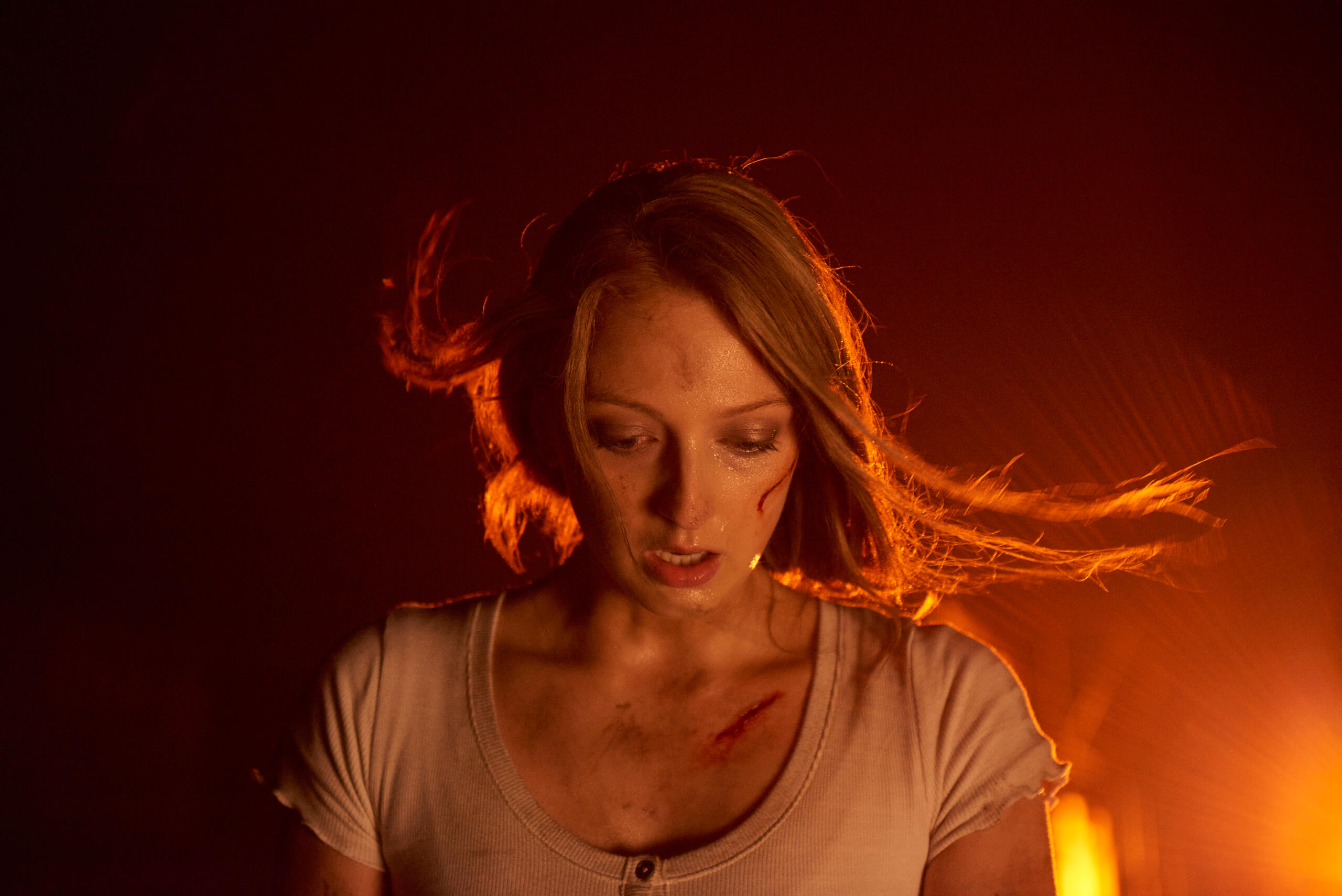
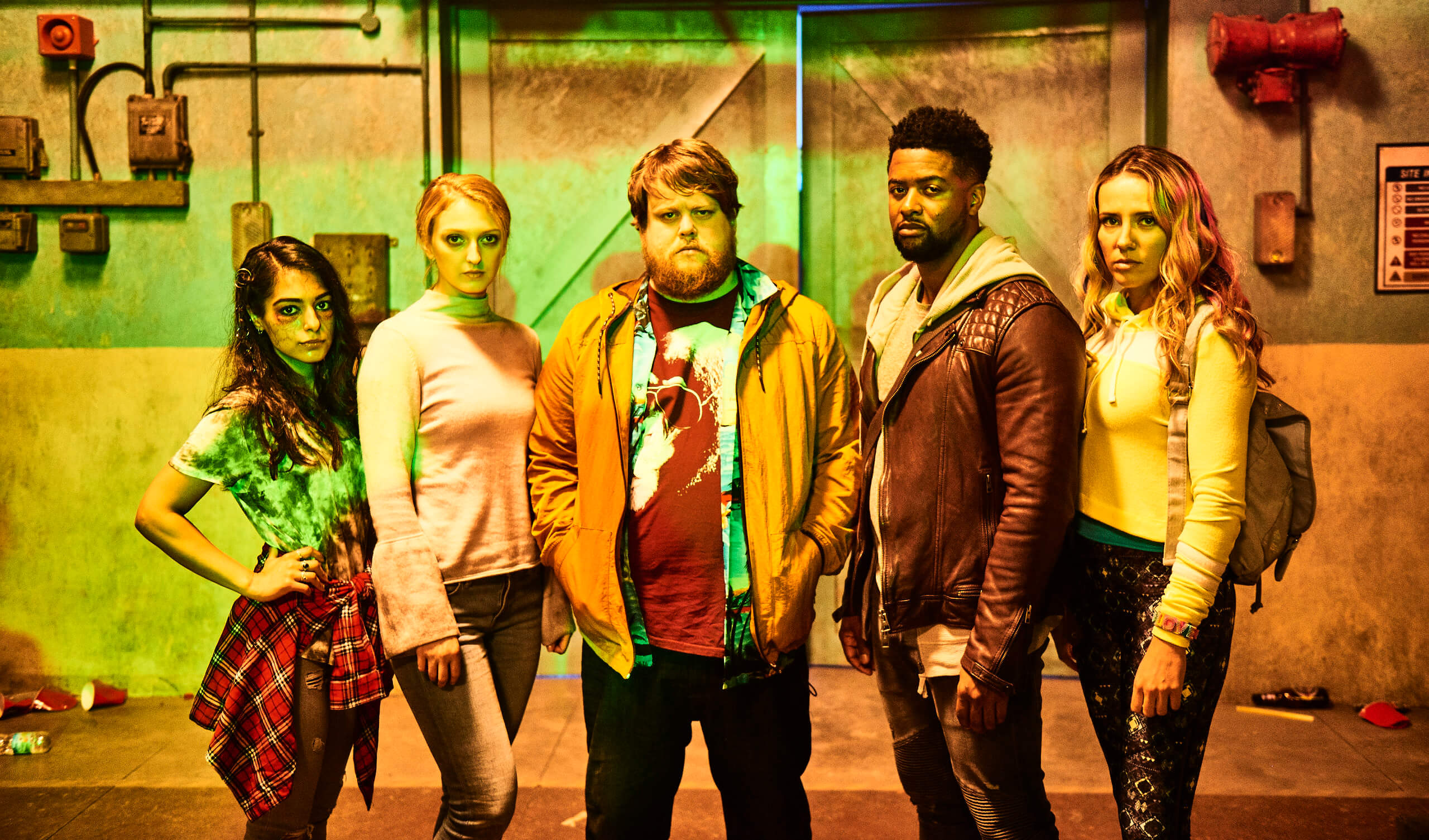
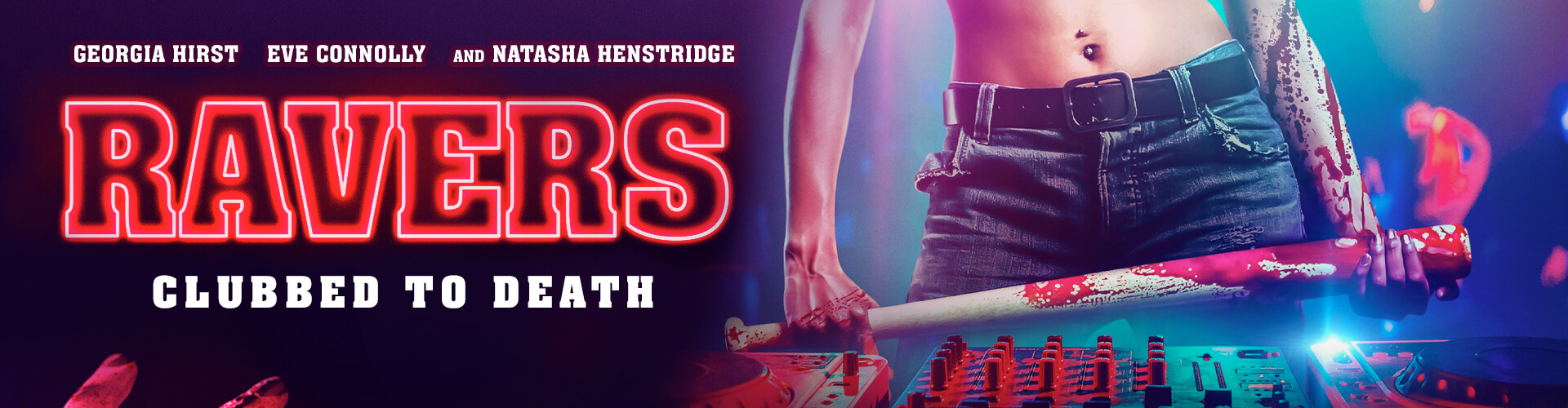
In Ravers, a new horror comedy directed by Bernhard Pucher, a contaminated energy drink turns an illegal warehouse rave into a nightmare and an idealistic young germaphobic journalist has to step up to the plate and overcome her greatest fears to help her friends get out alive. STARBURST put on its dancing shoes and visited the film’s set at Pinewood Studios in Cardiff to find out if Ravers is really worth raving about…

It’s the last few days of filming for Ravers at Pinewood in Cardiff and the production is slowly winding down although the film’s production offices are still buzzing and FX designer Dan Martin and his team are still hard at work designing gory prosthetics and eye-popping props for Bernard Pucher’s debut horror feature film. Down in the studios a sequence is being shot where one of the film’s lead characters is attempting to escape from a burning room.

What on Earth is going on here? In a break from filming, Bernard Pucher explained how Ravers came about and how his own background led to him helming his first feature film. “I was a DJ for many, many years,” he explained. “Back in 1996 when I was a teenager I got into DJing when I started clubbing and back then it was all trance music. I got into techno stuff when I moved to the States when I was 18 and then it became much more serious; I was the only one of my friends who took DJing seriously. I started my own label in 2001 and ran that until 2008 when I moved to London so it was always part of my background. One day my co-writer Luke Foster came to me with this idea called ‘Poppers’ where basically you take a drug and it makes your head explode! There wasn’t really a good premise for a story but I loved the idea of a horror film set amongst ‘ravers’ who take something that makes them dangerous. We evolved the idea over the years; it took us about five years to get from that original core idea to the script we have now.

Bernard explained that he wasn’t initially expecting to actually direct Ravers. “We were actively trying to find someone to do it. But then more and more as we were developing it more and more my stamp was put onto the project. We were starting to write specific scenes and more of my imprint came into it so the time came when I say ‘Why shouldn’t I direct this? What isn’t that a bad idea?’ I never thought that this would necessarily be something that I would be up for, we were thinking we’d get someone who is much more of a horror director. I’m not a horror lover like Luke is – he watches anything and everything, good or bad it doesn’t matter, he’ll watch it all! I’m much more selective, I have a much broader taste when it comes to the movies I like and the movies I want to make. But I always wanted to try a feature film and the more we worked on this the more I thought ‘Well, if I’m gonna do it, this is exactly the movie I should do it with’ It started making perfect sense just to try and get everything off the ground.

What can we expect from Ravers in terms of its style and its themes? “Thematically Ravers is about hedonism, about doing what you want to do,” said Bernhard. “The premises that the rave takes place in is an abandoned energy drink plant and the beginning of the movie explains how the drink that used to be manufactured there becomes contaminated. The ravers host their illegal rave and find this contaminated stash which produces an extreme reaction to the drugs they’re taking. People on cocaine become hyper aggressive, people on weed become so stoned they pass out and become really hungry, people on ecstasy give extreme hugs so you get various different levels of threat and the core thread is that whatever they want they have to have and if they don’t get it they become aggressive and they want to make sure that they get it. You can’t aggravate them in any way, shape or form and if the music stops they want more and they always want more of everything. They’re also not dead so they’re not ‘zombies’; they’re infected but they can also be turned back and they can be saved. Our lead character Hannah is a  germaphobe; she’s afraid, she doesn’t like going out, she doesn’t like risking contaminating herself, she doesn’t like mess so her OCD and her germaphobia get in the way of her leading a life that has many more experiences than the ones she’s willing to experience. The ravers are the exact opposite to that; they are free thinking, they take their drugs, they dance, they party, they sweat, whatever…it doesn’t matter to them. The film isn’t saying that either/or is a bad thing, it’s just that Hannah doesn’t feel comfortable in that environment but she goes to a rave because she falls in love and takes a really big risk – not for the first time in her life – but probably the biggest risk in her life to go into an environment she’s uncomfortable with to pursue someone she falls in love with. But then of course all Hell breaks loose and she’s now trapped inside the rave where all the ravers are becoming a real threat and she has to overcome her fears and her germaphobia to save the day.

We caught up with actor Manpreet Bambra who told us a little more about Hannah. “She’s just  a typical girl who works Monday to Friday in a restaurant and on Saturdays she likes to let loose and go to parties and go to a bit of a rave. She’s got a bit of a thing going on with Becky [Georgia Hirst], she has a bit of a crush on her and that pushes her to do things she might not normally do. I was really attracted to the script because it deals with so many interesting concepts and real-world issues that many people have to deal with like OCD and mental health problems as well as all the fun and comedy and horror. I have a bit of OCD myself with hygiene and stuff and even though my character doesn’t have OCD in the film you have to understand the issues around someone who does have it and the film deals quite sympathetically with them.

Manpreet is best known for her TV roles in Russell T Davies’s Wizards vs Aliens and the Netflix series Free Rein, but Ravers gives her the chance to play a more adult character for the first time. “It’s been a great experience so far, very different to what I’m used to doing,” she said. “I normally play a child on TV so it’s my first time playing an adult – well, an 18-20 year-old – so that was fun and working with people around my age has been great. I’ve learned a lot because it’s completely different making a horror film; it’s a real learning curve working in a studio because I’ve never realty worked in a studio before. I’ve been doing my own stunts too which has been great fun.” Manpreet is full of praise for first-time feature director Bernhard. “When I had my first meeting with Bernhard we discussed the character in detail and if I am ever stuck on anything or want to discuss anything he’s always there to be hands-on with me and he says ‘Please discuss it with me’. One day I was struggling with the accent slightly because sometimes you can overthink an accent and it doesn’t come out even though you can do it and I had that one day when I had a lot of dialogue and he wanted to make sure I was okay so we discussed it and worked on it and that’s what you want from a director who wants to get the best out of their actors, they don’t want to see you struggle. There have been opportunities to give input into the character and the way she talks if there are things I think she might not say in a certain way. The best thing about working with this team is that everyone is open to that sort of input.

Also in the cast in Danny Kirrane, a familiar face in TV series as diverse as Trollied, Poldark, Game of Thrones, Utopia, and films such as Pirates of the Caribbean: Salazar’s Revenge. We found him relaxing in his trailer between scenes covered in fake blood and grim prosthetics. “I play Ozzy, who is the cousin of the protagonist Becky,” he explained.  “He is a scientist but a bit of a stoner. He works in a laboratory and that’s how he ends up taking Becky to the rave where all the horror takes place. I think at the beginning of the film he’s quite laid back and quite chilled and he has to work really hard to survive. You wouldn’t describe him as a fighter but he has to really learn to fight and he saves everybody because he comes up with an antidote to what’s happening to all the ravers so he saves Hannah and he becomes quite the hero by accident. He has to fight for his life, he finds the strength somewhere within himself and it’s an arc you wouldn’t expect from someone so chilled and stoned!” Danny agreed that Bernhard has really powered the film along. “We’ve changed a lot and found different things we can do and attempt and he’s really open to that and he has a great energy about him, he really believes in the project. He’s not like a director who’s been just given a script to direct – he’s co-written it and he really believes in it.

We spent some time with effects designer Dan Martin in his prosthetics department. Dan has worked on a multitude of feature films such as Ben Wheatley’s Free Fire and A Field in England, shark thriller 47 Meters Down and, more recently, the crazed H.P. Lovecraft adaptation Colour Out of Space. We asked him about the specific challenges he encountered during Ravers and what sort of creatures the script demanded bearing in mind that they’re very definitely not zombies. “It always comes down to the detail in the script but they’re really mutants rather than zombies or the undead. With the general crowd stuff we’ve been doing it’s been very difficult to move away from the ‘zombie’ look especially when you think that the very vague terms ‘zombies’ covers everything from slow shambling living dead through to infected rage monsters. Demonic possession, Deadite Evil Dead stuff often counts as ‘zombies’ so I think a lot of stuff falls into that area and you get a crowd of those things together and it’s much harder to be unique with your visual look. So the places you can be unique are in the gags and the deaths so obviously your creatures have giant swollen eyes then you have to have those eyes pop on camera so we got to do this pastiche of Fulci with the double-eye pop and I made sure we had a real nasty custardy aqueous humus mix that ran down the hands during the eye pop. There’s a fair amount of gore. One of the luxuries of the sort of heavily compressed prep schedule we had is that you get left to your own devices as there isn’t a lot of time for feedback. We did have one round of feedback with Bernhard and he liked it. We had a few notes and changed a few bits but by and large it was allowed to pour out of my mind and into the clay which was satisfying. The mutants were described in the script, it’s not like it just said ‘general monsters’ but it still left me with a lot of space to be imaginative and creative.

We were keen to pin down the tone of Ravers as we were getting a vague Shaun of the Dead vibe from everyone we’d spoken to. “There are bits that are quite funny, but it takes itself more seriously than Shaun of the Dead but in a way I think that’s quite funny as well,” offered Danny. “I would say it’s a bit like the first Blade film as the whole film is in the mode of that’ raver’ sequence that opened the film.” Bernhard Pucher said: “It’s an action horror film, very action-drive. The gore ramps up as the film goes on. In terms of my approach to it as a director  I was far more inspired by The Terminator and films that are action-packed suspense thrillers but still use the things that we know in the genre to combine those things together. It’s supposed to be fun. We’re not making Shaun of the Dead or anything like that; those films have very much their own approach to what they think horror films are and how to work it  and what’s funny about them and we’re not making a tongue-in-cheek  self-aware horror movie. There are a few subtle nods here and there but nothing to sort of go ‘Hey, look, we’re making fun of horror movies’. We want it to be fun like Die Hard is fun; the threat of serious and the situation is serious for our characters and certain things are pretty funny and I feel like you can augment the threat and the fear and the suspense  with humour but without completely screwing the tone or anything like that. It’s about waking that balance.” Dan Martin felt that the tone veers a little more to the comedic. “It’s definitely going to be in the Shaun of the Dead camp,” he told us. “I think the problem with this particular genre is that if you don’t hit one end or the other you can get lost. If you’re not fun, rompy horror but you’re also not like super-grim, dark, misery horror then you can’t quite appeal to either audience. There are people who like both and those people are more likely to like the middle ground also but you don’t want to fall between the two stools of Shaun and Martyrs! We’re probably more at the Shaun end; of course these things find their tone in the edit because of what the actors bring to it and our actors have all been fantastic. It’s been a really good cast and they’ve interacted with each other really well and that kind of camaraderie, especially when you have people playing a group of friends, just lends itself to a good atmosphere with all the stolen winks, nods to each other and if that stuff’s left in the edit, which it very usually is, then that adds to the warmth and depth of those characters.

As we prepared to leave the crew to return to the set to resume filming, we wondered what audiences could expect from the film and what everyone involved hoped an audience would take from the finished product. “I want the audience to get excited by it, to understand the concepts, to have a laugh, to get scared,” said Manpreet Bambra. “It’s just an all-round fun film with great ideas, a beautiful romance story and hopefully it’s as realistic as horror film can be. There’s so many individual characters and they do get a chance to develop. It’s nice to have that.” Danny Kirrane added: “I think it’s fun. I think it’s visually arresting. It’s dramatic in places and funny, it’s escapism and above all it’s entertaining. There’s so much stressful stuff going on in the world at the moment  and this is nothing like that; it’s not political, it’s a standalone genre film with likeable characters and you can just lose yourself in it yourself in it.” The final word should go to director Bernhard Pucher. “I have brought my DJing experience into Ravers. I don’t have the social commentary of someone like Jordan Peele but I have taken my experiences of DJing in legit places and non-legit places over the years and tried to make sure that the film feels reasonably authentic whilst still being a heightened action movie with a few laughs and some real scares and jumps.

Ravers is available now on VOD.


BLOODSHOT Origins: The History of Valiant Comics

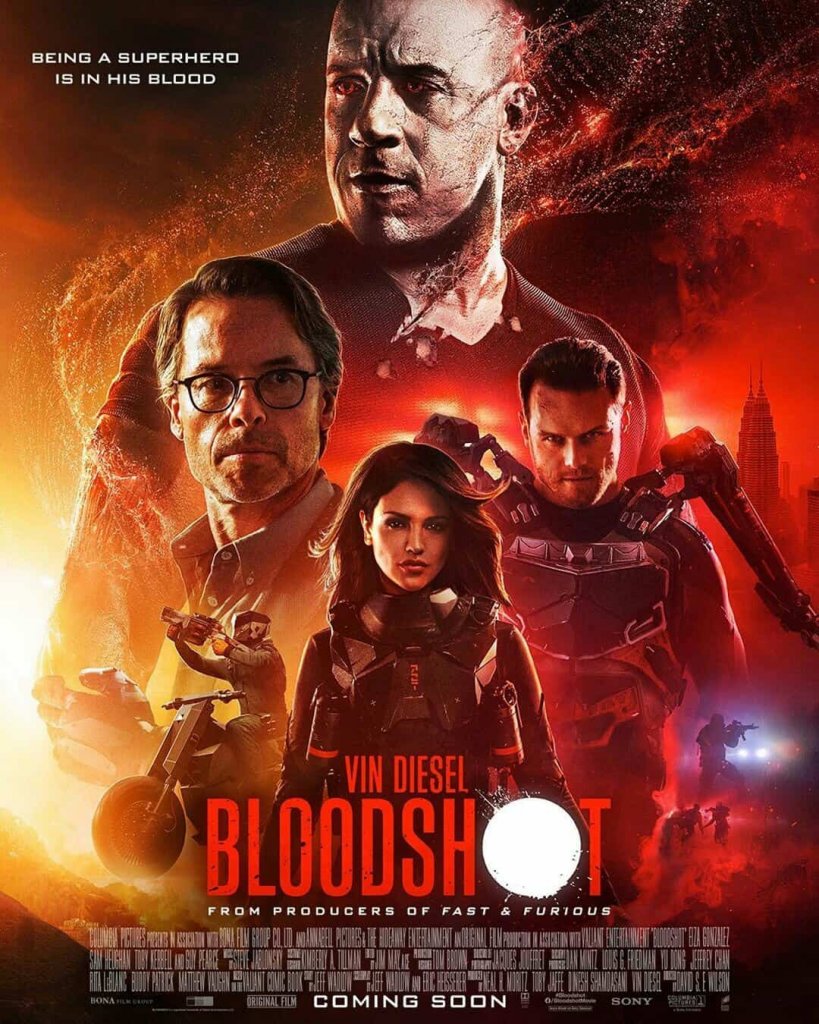
With the movie BLOODSHOT out now to buy via Digital Download, many may be surprised that this action-filled Vin Diesel movie is based on the VALIANT comic character of the same name. Who are Valiant anyway? Let’s take a quick look at where they come from and what to expect from what could be the start of the next cinematic universe…

It all started back in 1987, when Marvel Comics fired their editor-in-chief at the time, Jim Shooter. He had been in the role since 1978 and oversaw projects such as Frank Miller’s Daredevil and Chris Claremont’s run on X-Men, so it’s fair to say he knew a thing or two about comics. Shooter was also responsible for Dazzler, a disco-based superhero who was the first step in a plan to begin a movie franchise. It didn’t work. Projects such as this, combined with his draconian approach to editorial control, meant he parted ways with Marvel. In 1988, Shooter and investors former Voyager Communications and tried to buy Marvel. (Marvel’s own financial woes are another story and a long one at that.) Shooter and chums failed. By 1989, the same team had launched Valiant Comics.

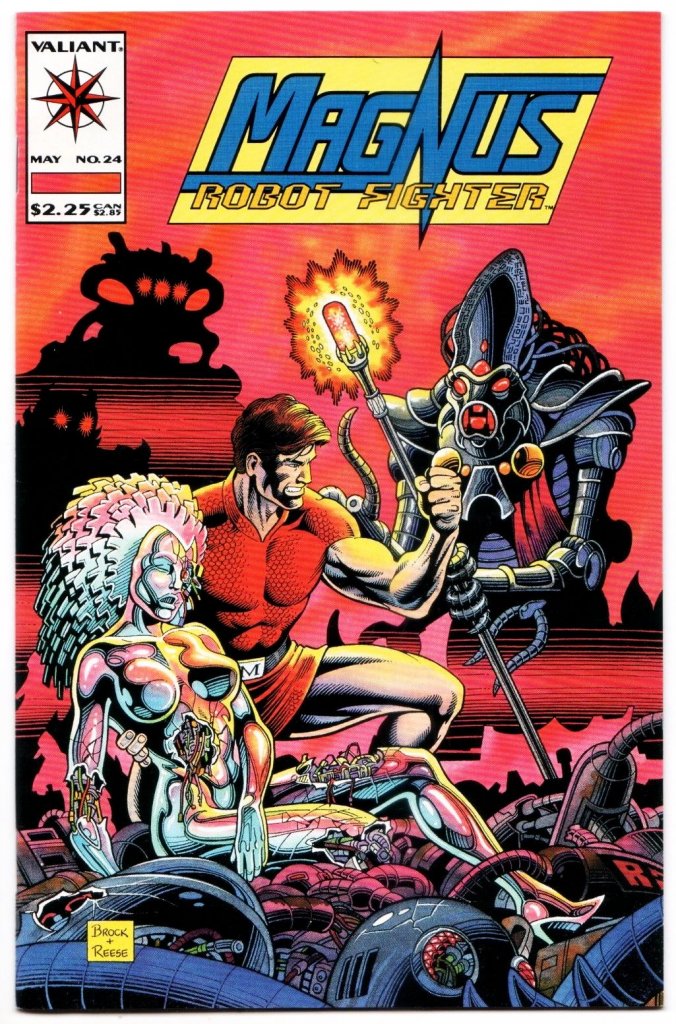
The plan was to do everything Marvel did, but better. Valiant’s first title was Magnus, Robot Fighter, a revival of the Gold Key Comics 1963 series set in a world where mankind has become ruled by machines. Magnus was soon joined by Solar, another Gold Key hero. Whereas Magnus hadn’t been altered much by a reboot, Solar’s backstory had been radically changed. Rather than a man who got god-like powers from a nuclear accident, the new Solar had a convoluted plot that involved the old ‘60s storyline and time-travel. It was very well received, and Valiant was well on its way to comics stardom.

Of course, a comic book company can’t live in the past for too long, that’s what back issues are for. The first wave of ‘fresh’ characters bear all the hallmarks of ‘90s comic books. They’re big, muscled, bold and oh-so full of angst. They’re also very much targeted at a male adolescent audience and look very similar to Marvel and DC heroes of the time.

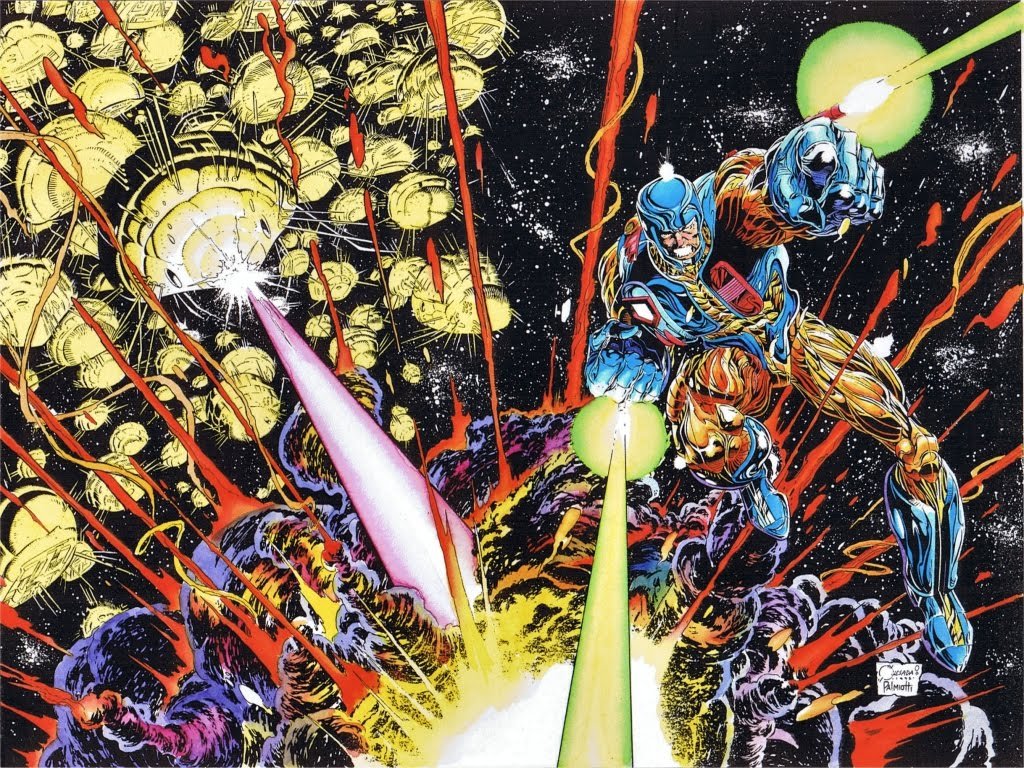
Still, they did have some fun twists. The first original hero was Rai, a Japanese guardian spirit from the 41st century. His name literally means ‘Spirit’. Set in a super-advanced version of Japan, this series has always been a mix of the usual superhero crime-busting hijinks and a more high-concept ‘techno-fetish’ approach, mixing Samurai myth with vigilante action. In one version of the comics (since retconned), Rai was the futuristic version of Bloodshot. The next characters in the Valiant stable were The Harbingers. If you’re thinking that sounds a little X-Men, you would be right. Teenagers with classic psionic-style powers such as telepathy and telekinesis, trying to survive in a world that’s scared of them and their newly emerging abilities. Around this time, Shooter also brought us X-O Manowar. This is a tale of a Visigoth who is plucked from battling the Roman Empire by space aliens. He rebels against his alien keepers, bonding with a legendary suit of hi-tech armour and leading a revolt but ultimately failing. He returns to Earth which, thanks to time dilation, is now in its 21st century.
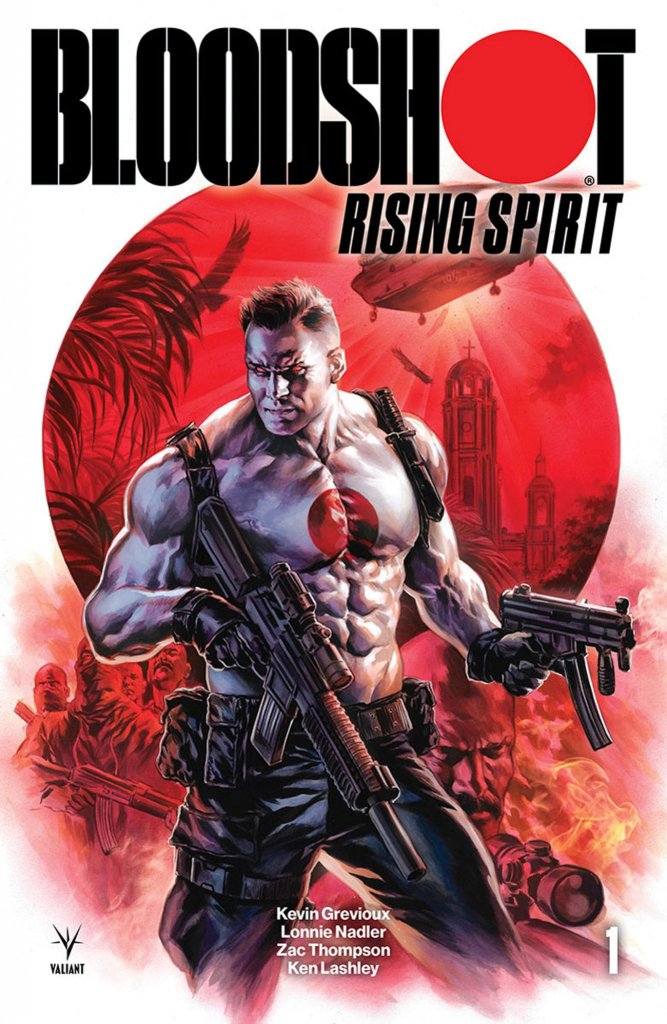
This isn’t the only time Valiant would publish a man-out-of-time-style book. Eternal Warrior came out in 1992, following a brief cameo in Solar. It’s the tale of Gilad, a super-strong, regenerating immortal who protects the Earth alongside his (similarly immortal) brothers. Because Gilad is so old and skilled at warfare, he gets around everywhere. For example, Bloodshot first appears in Eternal Warrior. Bloodshot’s own origin story is frankly ridiculous, as well as an interesting blend of The Bionic Man, The Punisher, and Captain America. Our protagonist is Angelo Mortalli, a mafia hitman who has gone into witness protection. He is betrayed and has his mind wiped. Experimental nanites are used to turn him into an unstoppable killing machine. Blessed with enhanced strength, dexterity, healing and the ability to control machines, Angelo renames himself Bloodshot and goes on the rampage against those who stole his memory (as well as his former masters in the Mafia). Later we discover the nanites themselves are sentient and have a culture of their own, which is rather fun.

Another early Valiant character is Ninjak, who first appeared in Bloodshot. He’s a mix of James Bond and a ninja. Yes really. Created by Mark Moretti and Joe Quesada, the book sold close to a million copies and catapulted Valiant to the top of the comic sales list. Similarly, we have Shadowman, the story of saxophone playing jazz musician Jack Boniface who fights crime thanks to the ‘Darque Power’. So far, the 80 issues of this book have sold over five million copies. By 1992, Valiant was the hottest thing in comics. This was also the year that Shooter left due to ‘creative differences’. He moved on to form Defiant Comics. As this was the early ‘90s, one of Valiant’s big ‘sells’ was that these were new comics, which meant lots of first editions.  Many characters slated for their own series first appeared in books like Eternal Champion and X-O Manowar. An inevitable crossover series (called Unity), cemented all the heroes into one universe. The further exploit collectors, Valiant came up with the concept of Issue Zero, a comic book that explained each of the hero’s origins.

By 1994, Voyager Communications had been purchased by Acclaim Entertainment, a company best known for its licensed video games. Acclaim’s plan was simple: buy a comics company and use all the lovely intellectual property to make games out of. One such success was Shadowman, a Nintendo 64 action-adventure game that the critics hated but still has a cult following. Acclaim’s stewardship would see X-O Manowar team up with Marvel’s Iron Man is a side-scrolling platformer. 

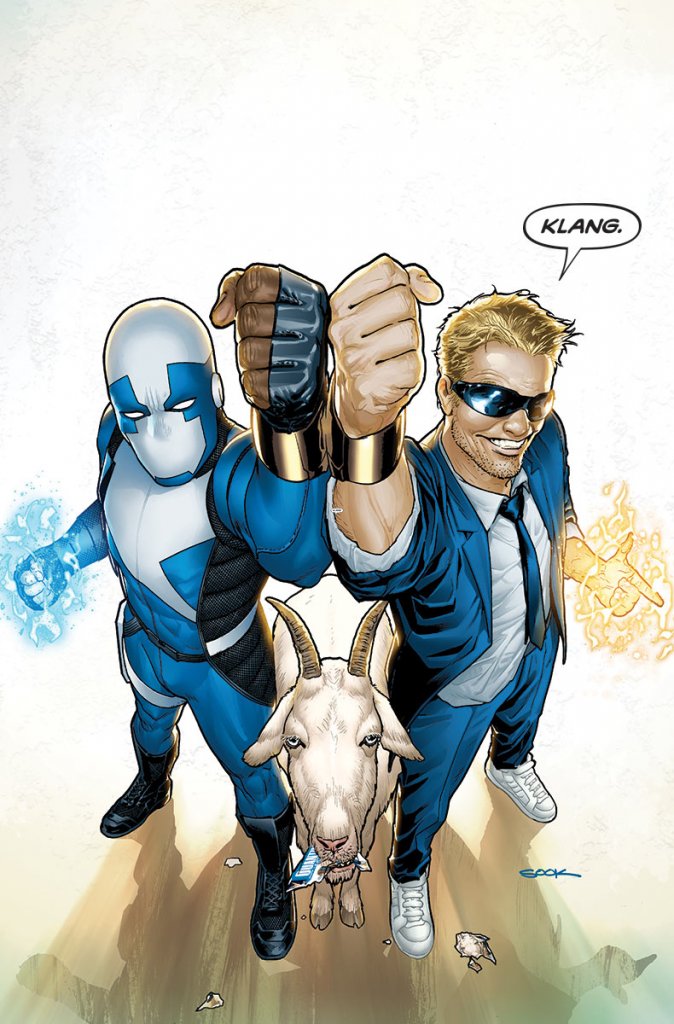
Of course, the ‘90s also saw the comic speculators crash. Comics from the ‘60s and ‘70s sold well on the collectors market, especially those with first appearances of iconic characters. Under Shooter’s command, Valiant had leant into this trend. Alas, first edition Valiant comics were pretty common and not as valuable as speculators hoped. This caused a decline in sales. Acclaim responded by going for more interesting, quirky content that captured the imagination of a lot of readers looking for something new. During this time, we got things such as Quantum and Woody, a quirky superhero buddy series. Two brothers (they’re both adopted), team up with a goat to fight crime. Their powers require the pair to work together, and much humour comes from this. Described as ‘White Men Can’t Jump with superpowers’, its blend of superhero action and buddy comedy has remained popular.

Acclaim also retooled another buddy series, Archer & Armstrong. Though it first came out in 1992, it came into its own under Acclaim’s management. It’s the story of a talented young man with very little common sense teaming up with an immortal drunk to take on a sinister cult of assassins. It’s an interesting blend of Batman and Nuns on the Run. Acclaim boosted the slapstick up a fair margin and took away an element of brooding. Alas, by September 2004, Acclaim Entertainment had filed for bankruptcy. This was nothing to do with Valiant. The collapse of Acclaim is mostly attributed to the loss of the license for the World Wrestling Federation video games, as well as the loss of other sports-related licenses. Enter Dinesh Shamdasani and Jason Kothari. Childhood friends who had grown up in Hong Kong reading American comics. Who also happened to love Valiant (and have access to healthy investment funding). The two comics fans picked up the rights to Valiant and formed Valiant Entertainment. (Kothari would later go on to be a tech- entrepreneur of some renown). They rang a series of much-needed changes but also re-hired Jim Shooter to correct the course of Valiant’s future. Shooter spent a year fixing Acclaim’s tired storylines before going off to work on other projects.

Valiant at this point was better known for its art rather than story, so they got some fresh writing talent together and decided to deliver not only brilliant images but engaging story.  They’d also taken a tip from Marvel’s Ultimate series and made sure that the newly relaunched books were written with movie rights in mind.

This new era came with a series of reboots. 2012’s The Summer of Valiant event revived the Valiant Comics universe with five ongoing titles: X-O Manowar, Harbinger, Shadowman, Bloodshot, and Archer & Armstrong. Fans demanded the return of Quantum and Woody also. Valiant’s brand at this point had coalesced into its own thing. It had the grand ideas of DC with the consistent worldbuilding normally found in Marvel but managed to attract a level of enthusiasm and talent that you only really find in Image Comics. This ‘best bits of each’ approach has helped cement Valiant as a firm favourite for fans of hero comics. This new era also saw the introduction of Ivar, Timewalker. The third immortal brother mentioned in Eternal Warrior, we finally meet Ivar, the mad-professor of the trio. 

Though it’s hard to argue that Valiant isn’t anything more than a superhero comics producer, it’s a perfect example of the business model. Valiant has kept their heads down while DC and Marvel slugged it out, regularly finding new talent and delivering the sort of stories fans are looking for. As the years have gone by, the clichés and tropes have fallen by the wayside, and the books’ main heroes have become their own thing. Valiant has always carefully managed their roster of heroes, keeping it small with a consistent world and vision. Which, of course, makes it easier for new readers to get involved. It also makes it easier to pitch to moviemakers.

In January 2018, Chinese-owned DMG Entertainment took control of Valiant Entertainment. You will have seen DMG’s logo on the front of features such as Looper and Iron Man 3. The company is said to have strong connections to China’s state-owned China Film Group Corporation. DMG seems determined to pick up where Acclaim left off, by producing video games, comics, and movies all based on the Valiant Universe.

Of course, much of this hinges on if the new Bloodshot movie is any good. Vin Diesel is a strong draw after all, and the Valiant Universe is every bit as detailed as its rivals, being filled with ancient immortals, religious conspiracies, sinister outer-space corporations and the like. Marvel tried for years before Iron Man built them an empire, and DC has had more than one false start to its attempts to do the same. Will Vin Diesel and chums get it right first time? Is Bloodshot, perhaps one of the most clichéd and stereotypical heroes this side of Ninjak, a good place to start? Time will tell. 
BLOODSHOT is available to buy now in Digital HD and 4K.

Top 15 Characters THE CLONE WARS Introduced to STAR WARS Canon

Clone Wars

The STAR WARS canon is rife with classic characters, and the hit animated show THE CLONE WARS has more than its fair share. Here’s our pick of the 15 best that have been introduced over the last six seasons….

15. RIFF TAMSON

The primary antagonist in Season 4’s Mon Calamari trilogy, the short-lived but memorable Karkarodon separatist commander was a ferocious baddie that took the fight not only to royalty but Jedi masters!

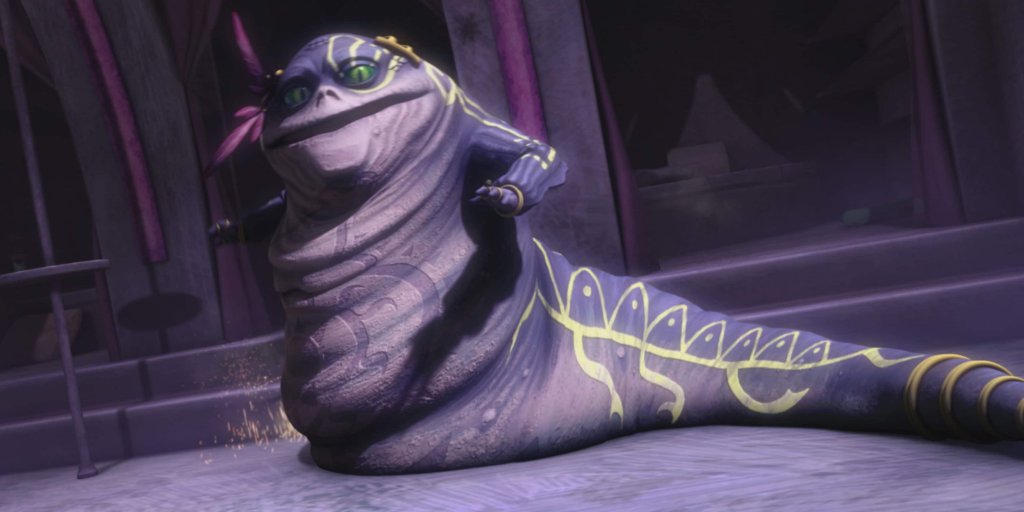
14. ZIRO THE HUTT

Jabba the Hutt’s uncle Ziro Desilijic Tiure is one heck of an odd addition to his family – and in the Hutt clan that is no easy feat! Brought down by his lustful ambitions of power and the documents in his possession… not to mention love, it really was beauty that killed this beast… well, a scorned Pa’Lowick anyway!

13. ADMIRAL TRENCH

Ahead of his apparent return, the devilishly clever strategist and naval commander Admiral Trench has evaded death almost as much as he has caused it, eventually leaving him part-cybernetic. Seemingly unstoppable to his foes, Trench was an innovatively designed and fearsome character who we are only too happy to see more of.

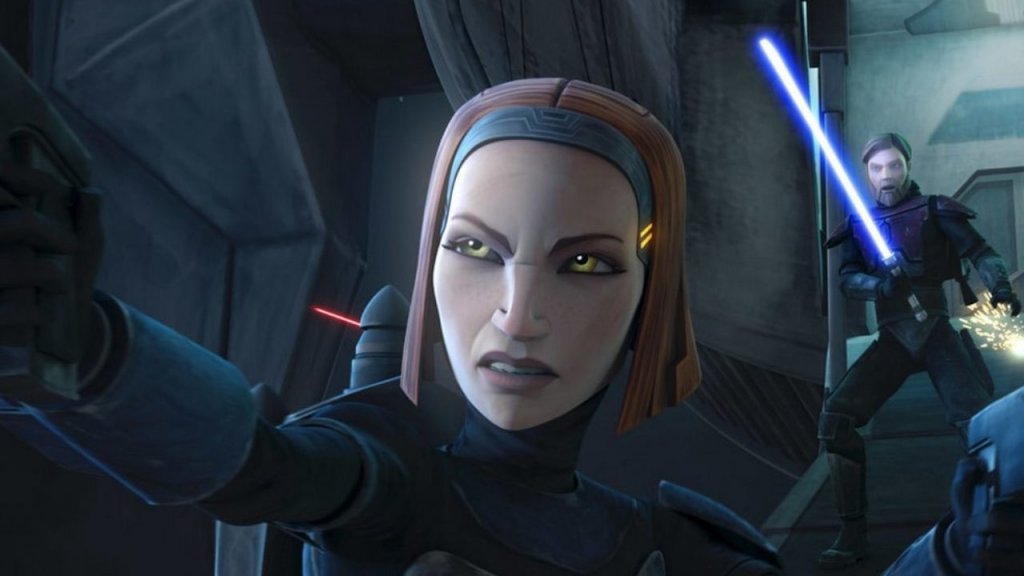
12. BO-KATAN

Her family connection is but one string to her bow of many. Commonly seen as a lead lieutenant of terrorist group Death Watch (and later the Shadow Collective) next to Pre Vizsla, Bo-Katan Kryze was a fiercely loyal Mandalorian warrior, and even stood up to Maul! Bad. Ass.

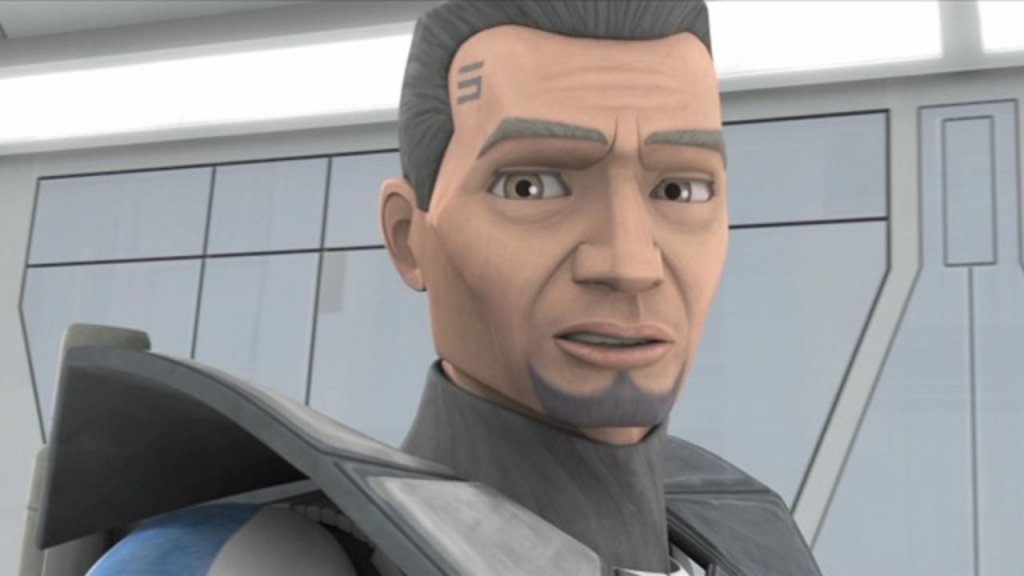
11. FIVES

The Clone Wars created a few superb clone trooper characters and Fives was one who not only stood out but very nearly accomplished what nobody else could, lifting the lid (or rather cowl) on Palpatine’s insidious plot. CT-5555 featured in the best arcs for Trooper characters and turned up throughout the series, but it was his lead role in the Season 5’s Biochip Conspiracy arc that packed the greatest – and deadliest – punch.

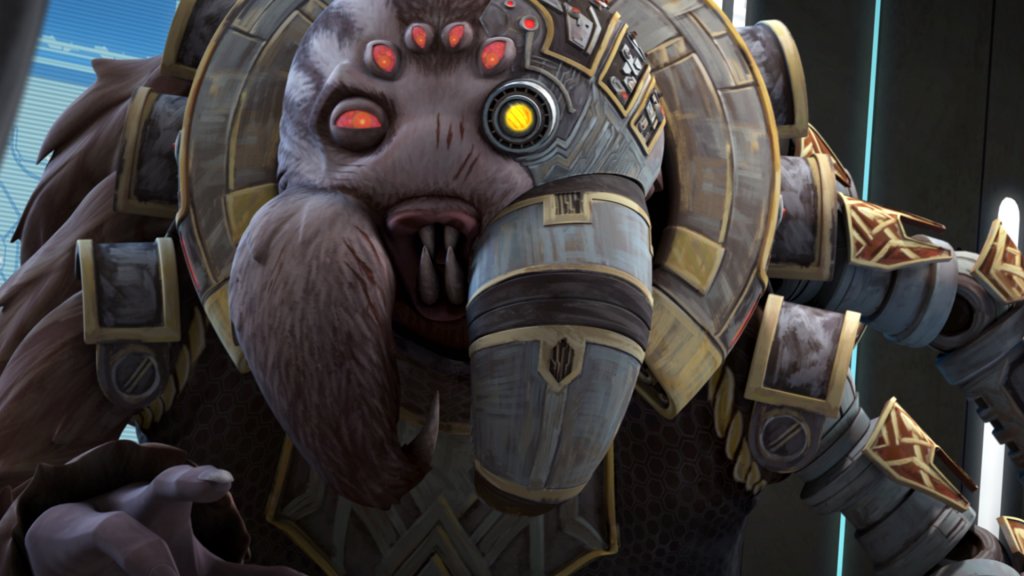
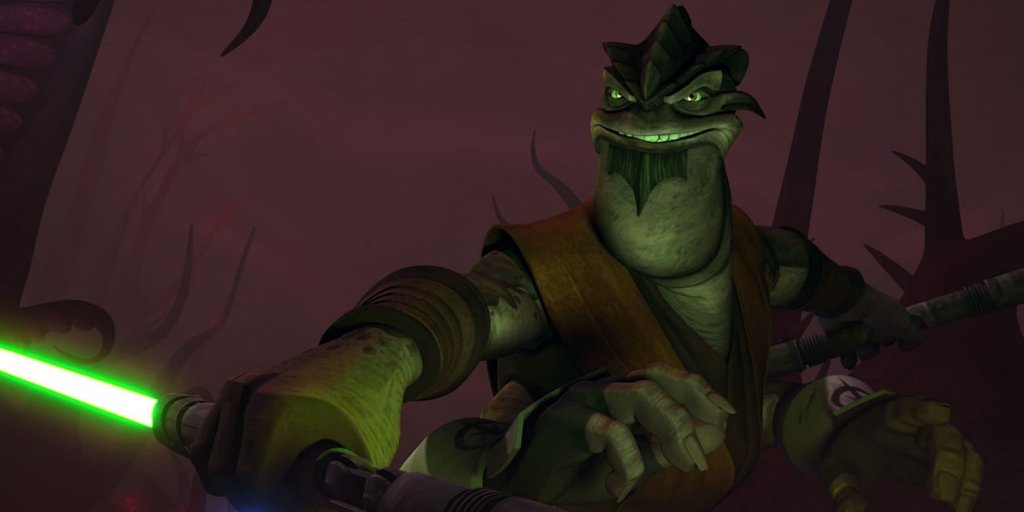
10. PONG KRELL

Despite his sole involvement in Season 4’s Darkened World of Umbara arc, Jedi master Pong Krell was a ruthless creation, one that pushed the limits of the Jedi way before rolling over entirely into the dark side. Make that the Lost Twenty-One.

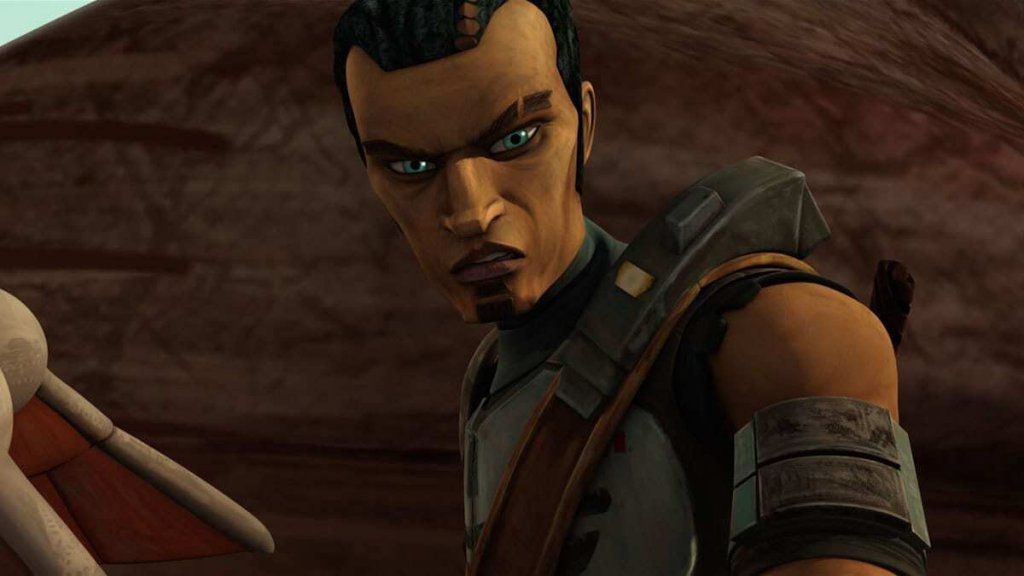
9. SAW GERRERA

Saw Gerrera has to be one of The Clone Wars’ most successful introductions after making the jump to live-action stardom since (in 2016’s Rogue One), but even before all that the character was an impactful one. His later advancement towards extreme measures of rebellion was spelt out from the word go.

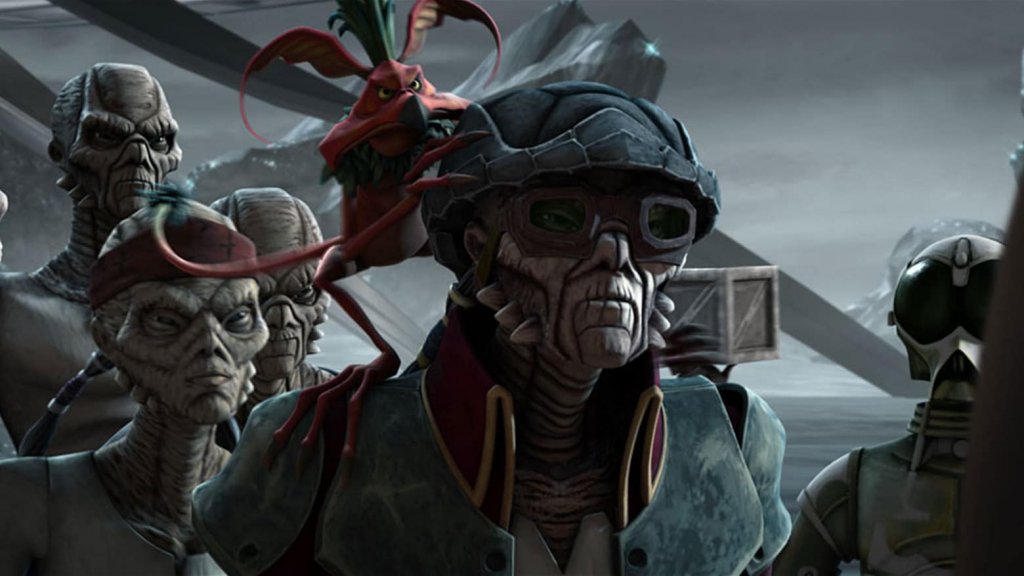
8. HONDO OHNAKA

Few other characters in the show have been as charismatic as Hondo Ohnaka, since the series, he has also appeared in Star Wars Rebels, and it isn’t hard to see why he is such a hit with audiences. The Weequay pirate has formed uneasy alliances with Obi-Wan Kenobi and Ahsoka Tano, detained Count Dooku, shown defiance in the face of General Grievous and nearly killed Maul and Savage, all while cracking wise alongside his pet Kowakian Monkey-Lizards Pilf and Pik Mukmuk. Legend.

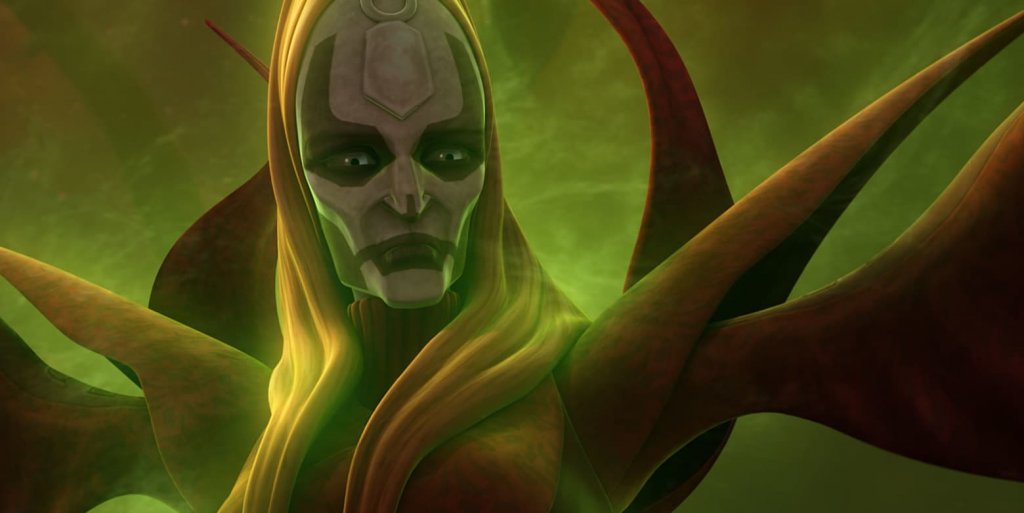
7. MOTHER TALZIN

Talk about unlimited power! Mother Talzin is one of the most powerful beings in the entirety of The Clone Wars – she created Savage Opress, as we know; resurrected Maul to his full potential; came within a hair’s breadth (were it not for Grievous) of killing Dooku; and even faced off against Mace Windu. More than that she even battles and nearly betters Sidious in the canon Darth Maul: Son of Dathomir comic series! Oh, what could have been…

6. DUCHESS SATINE KRYZE

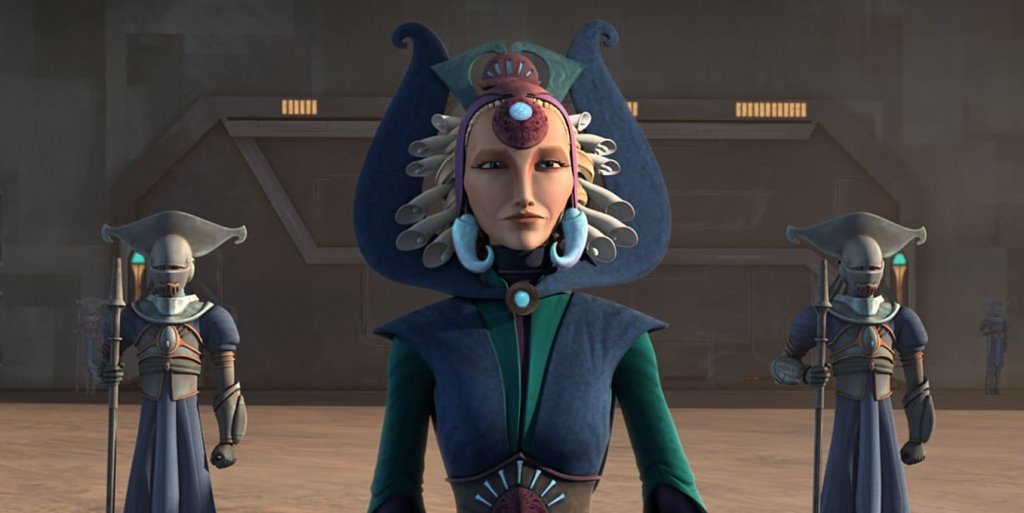
Mandalore’s war-torn past was set to be a thing of the past under the pacifist leadership of Duchess Satine, who is one of the show’s purest characters. Her imprint on some vital arcs was very much felt, in particular, her backstory with Kenobi which resulted in one of the series’ most heartbreaking moments in Season 5.

5. PRE VIZSLA

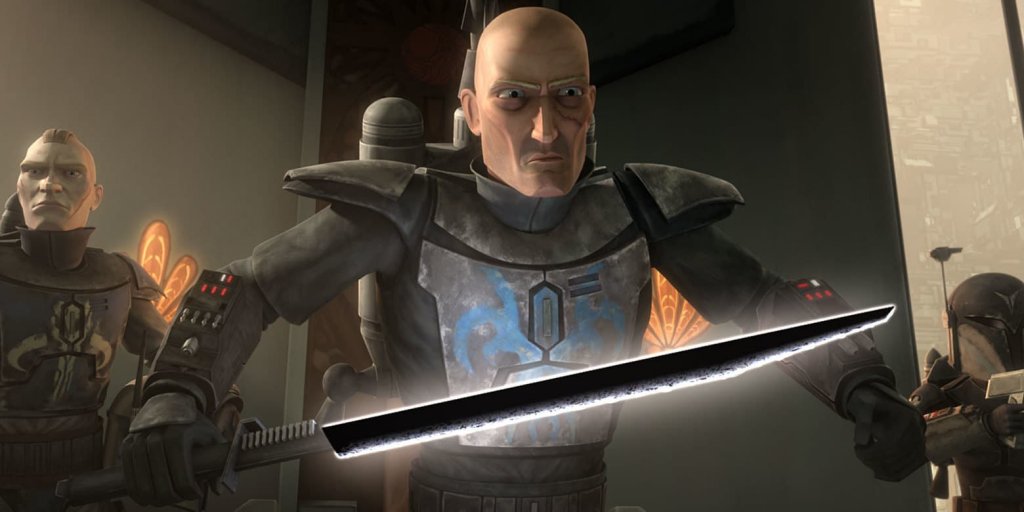
The head of Death Watch, Vizsla was a part of some of the series’ best battles, but he became intertwined with the ancient darksaber that he wielded in said battles, which of late has seen an even greater prevalence in Star Wars lore. A skilled warrior, noble to the ways of old Mandalore, Vizsla ultimately became vital in Maul’s rise to power, as the two uncomfortable allies fought for Mandalore’s future.

4. SAVAGE OPPRESS

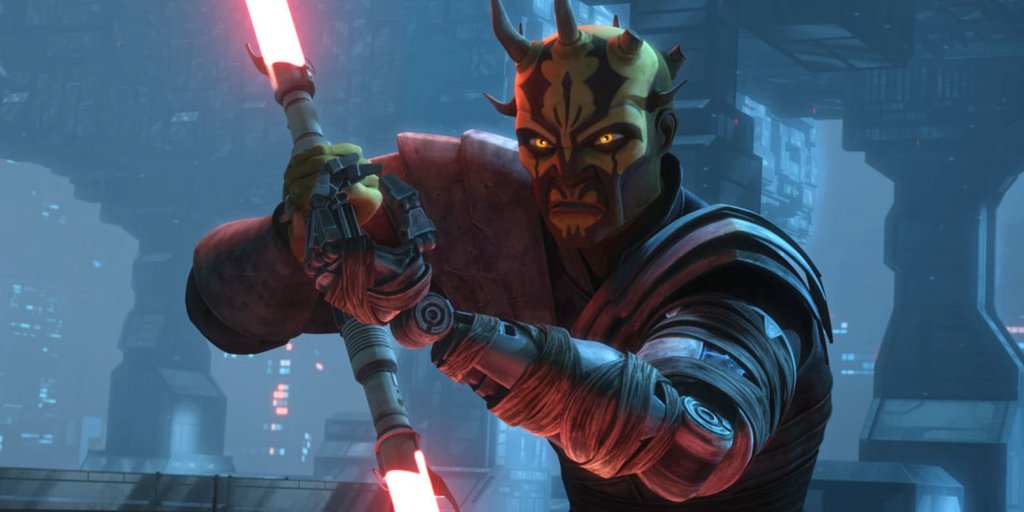
Savage is often forgotten about in the debate for the show’s best characters, and that is an absolute crime, voiced imposingly by Clancy Brown, Savage is a monstrous and yet tragic character. His roots are actually quite noble and rather heroic, but he soon became something far more rage-fuelled and dark, as he was used as a tool by Ventress and Dooku alike, only finding eventual solace in the company of his equally angry and hate-filled thought-dead brother Maul.

3. CAPTAIN REX

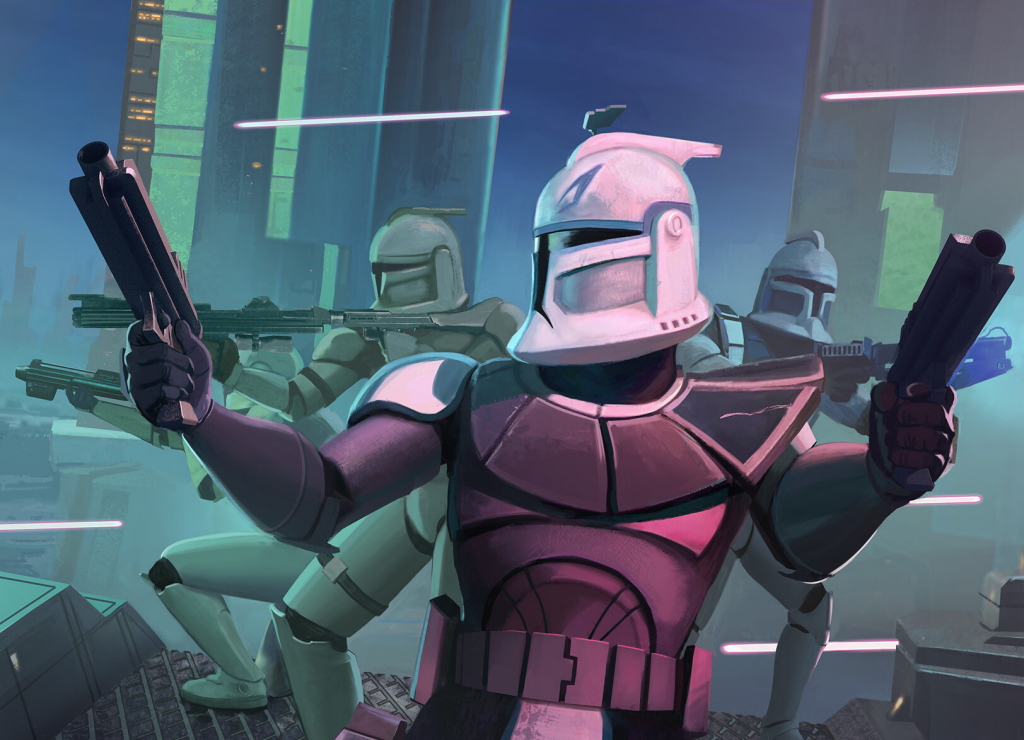
CT-7567 or Rex is one of The Clone Wars’ biggest characters, to the point that many actually thought he was a part of the live-action films but he is in many ways the helmeted face of this show. Appearing in well over 50 episodes and being a part of some huge arcs (most notably in his confrontations with the aforementioned Krell), Rex is a superb character and one whose story has expanded beyond the show itself, thanks to his older and wiser role in Star Wars Rebels and select Star Wars literature.

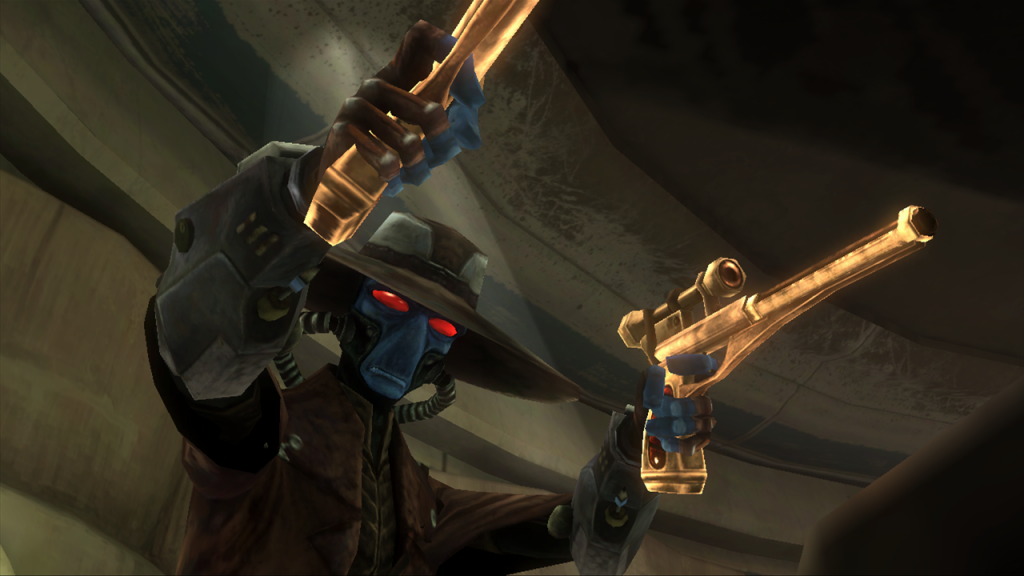
2. CAD BANE

An endlessly cool tribute to western outlaws, Bane is an intelligent and proficient bounty hunter who – with any justice – would only be too welcome in the live-action lore of the franchise. Since his debut at the climax of the first season, he has been embraced as one of the show’s greatest faces, and with his enigmatic ways, cool dialogue, and ‘Man With No Name’-esque aesthetic, Bane is certain to endure as one of the show’s best cross-over characters.

1. AHSOKA TANO

Really, who else could it have been! From her introduction in the 2008 film as a rebellious little Padawan to her later role in Star Wars Rebels, Anakin’s apprentice has proved to be an inspiring and immensely successful creation. Before our eyes, this young lady has grown up, and her eventual leaving of the Jedi order was one of the show’s most powerful scenes. Tano has appeared in and inspired countless other works from games to comics to books, and it seems that this Togruta warrior’s future is set to be as big as her past, if not bigger. Fans love Ahsoka not because she is all-powerful or all-knowing but because she represents one of the main things Star Wars has always been built upon: hope.

STAR WARS: THE CLONE WARS is available to stream in full on Disney+

Pod Pick: LORE

lore

The choice of podcasts to subscribe to in 2020 is truly phenomenal. Naturally, you already listen to STARBURST’s own output (right?), but what other audio pleasures await your ears? May we recommend…

LORE

We all like stories, the more bizarre and disturbing the better. Hosted by writer Aaron Mahnke, Lore takes a look at weird and unsettling historical tales collected from all over the world, with a tagline of “sometimes the truth is more frightening than fiction.” Originally created as a way of marketing Mahnke’s self-published supernatural thrillers, the podcast quickly spiralled in popularity to become its host’s full-time job. The extent of its success is such that some episodes have been adapted into a TV series for Amazon Prime Video, the events of the stories being dramatised while retaining the mesmeric intonation of Mahnke’s narration.

Released every fortnight (with a double dose during October), the typically 30-40 minute episodes sometimes feature common and popular topics, such as vampires, werewolves, zombies, ghosts, or aliens. Some have a more folklore slant, telling stories of the likes of lake monsters, tricksters, changelings or skinwalkers. Some episodes involve well-known historical figures such as Typhoid Mary, “Countess Dracula” Elizabeth Báthory, America’s first serial killer H.H. Holmes, or witchfinder general Matthew Hopkins. Many more feature little-told events of people barely even a footnote in the history books, but each have secrets to relate that engage and enthral in different but equally compelling ways.

Whatever the episode’s focal point, its tales are always told in the context of historical events rather than sensationalised yarns, relating the narrative matter-of-factly regardless of how fantastical it might have seemed at the time. The narrative also gets inside the heads of the people featured to relate their thoughts and beliefs and explain what might seem, to our modern perspectives, some ignorant and backward thinking. It’s also not always centuries-old tales being related. Some stories take place as recently as the 1990s, while one episode’s introduction references that story from 2012 about a Russian ghost ship crewed by cannibal rats.

Quite often, the closing moments will relate a detail about the story that doesn’t add up, something that even the passage of time and greater understanding of how the world works can’t quite explain. There is never an overt suggestion of anything genuinely supernatural, but rather a reminder to the listener that there still remain things that humanity’s continued advancement is yet to fully comprehend, and that hidden in the shadowy nooks of reality we briefly glimpse out the corner of our eye, there might still be some magic left in the world.

HIGHLIGHT EPISODES

Episode 11: Black Stockings

Tales of the folklore surrounding changelings, faeries left in the places of children stolen away by the fair folk and the parents unwittingly raising them as human. The main story deals with Bridget Cleary, a woman who was murdered by her husband in 1895 because he believed her to be a changeling.

Episode 24: A Stranger Among Us

Stories and folktales involving visitations by outsiders that involve the giving of rewards or the doling out of punishments in accordance of one’s behaviour, such as the anti-Santa Krampus, and the Pied Piper of Hamlin.

Episode 40: Everything Floats

A collection of stories about New Orleans, including the Voodoo queen Marie Laveau, the murder of a mysterious Arabian sultan, and the ghosts said to haunt the narrow gaps between the above-ground tombs of Saint Louis Cemetery, as well as the bloody history of the city itself.

Episode 45: First Impressions

The bizarre story of Mary Toft, a woman who in 1726 managed to convince numerous people, including many professional doctors, that she was regularly pregnant with, and giving birth to, rabbits.

Episode 79: Locked Away

The story of the life and history of Sarah Winchester, the wealthy widowed heiress to the company producing the famous rifles. She believed herself to be haunted by the ghosts of people killed by the weapons, and ordered the constant construction of a haphazardly designed mansion as a trap for the spirits.

For more on LORE, head to www.lorepodcast.com

Pod Pick: TALES FROM THE ALETHEIAN SOCIETY

The choice of podcasts to subscribe to these days is truly phenomenal. Naturally, you already listen to STARBURST’s own output (right?), but what other audio pleasures await your ears? May we recommend…

The serialised audio drama TALES FROM THE ALETHEIAN SOCIETY has been a top pick in STARBURST Towers recently due to its perfect mix of comedy and creepy. We caught up with one of the show’s creators, Jude, to find out more… 

STARBURST: How would you describe Tales From the Aletheian Society to the uninitiated?

Jude: It’s a comedy-horror audio drama about the adventures of a society of bickering occultists in Victorian Glasgow. If you imagine the sort of thing that Terry Pratchett, Muriel Spark, and Edgar Allan Poe would come up with after a night on the town, you won’t be far from the truth.

Where did the idea for the show come from?

It was originally conceived as a background for a Victorian LARP that never ran. Then when we ran a WWII LARP for several years, we snuck the Aletheian Society stuff into that as background.

Why Lovecraft?

It isn’t exactly Lovecraft – it’s definitely Mythos-adjacent, but you won’t find Cthulhu or Yog-Sothoth. I think we’ve had one reference to the Necronomicon in one of our written stories, but that’s it so far. We have a cosmology, and the viewers have seen parts of it, but not the whole thing.

Why are we so fascinated with Victoriana?

It was the beginning of the rational, scientific age. Enormous social changes, huge empires rising and falling. The principles of the world were being discovered and utilised at a speed that had never before been seen. There’s a mystique to that idea of taming a world with science, industry and religion. Even though to today’s eyes we can see how much of it was terrible, the scope of achievements and ambition still enthrall us.

How would you pitch the show to a beloved elderly relative?

“Like an old fashioned radio show crossed with a Radio 4 comedy. With Victorians. And swearing. And monsters. You’ll love it.” Reader, our beloved elderly relative did not love it.

What has been your favourite show so far?

That would have to be the penultimate episode of Season 2. We had a lot of fun recording that one, and the big reveal towards the end is one of the standout moments of the series.

What is the most fun part of putting the show together?

Mucking about during recordings – ad-libs and mistakes.

Which character would you most like to go drinking with?

Dr Cadwallader and Banjo would try and cadge money and get drunk. Jessie would probably start a fist-fight. Gillespie hates pubs and Cressida’s insane. I’m not sure Sophia would drink with me – she’s a bit of a snob – which really leaves Arthur who is nice, but would probably talk my ear off about the finer points of architecture.

Which character really needs a word with themself?

They’re all pretty dreadful! But if I had to pick one, Reverend Stuart – you’ll meet him in Season 3 if you haven’t got there yet – would probably benefit from a sit-down and a stern talking-to about some of his more questionable life choices of late. But let’s face it, none of the characters are prone to making sensible decisions, so I don’t see him changing his ways – or his intimate companion – any time soon…

How has the response from the community been?

It’s been lovely. We were absolutely blown away by the welcome we received from podcast creators and fans and the reviews we got for Season 1 did a lot to build our confidence. The learning curve for Twitter was pretty steep, but it became apparent early on that’s where the podcast audio drama community lives and breathes.

Where did all this come from?

Myself and Chris are writers, Stoo is a writer, musician and programmer. All of us live in Glasgow and play D&D together. We got the idea after doing some voice acting for Ritch Keeling’s Tales of the Free Cities Guild Ball podcast and started to think we could have fun putting together a show of our own. Things sort of snowballed after that, and before long we were writing a full-cast audio drama, and recording it in Stoo’s spare room.

What are you reading at the moment?

The Art of Dying by Ambrose Parry – highly recommended if you like Victorian Edinburgh, crime, medical history and smart-arsed protagonists.

What ways can we get the show?

For direct download of episodes – and loads of bonus website content – you can find us at www.hunterhoose.co.uk, or you can find us on iTunes or Stitcher. Alternatively, you can just search for us by name on your favourite podcatcher.

How can we support you?

Listen, rate and review, or drop us a line to [email protected] if you want to tell us how much you like us. If you’re considering supporting the show financially and getting some sweet bonus minisodes as a reward, you can take a look at our Patreon at www.patreon.com/aletheiansoc, or you can buy branded merchandise at our www.cafepress.co.uk/hunterhoose. We don’t make much money on it, but we LOVE to see photos of people wearing or drinking tea out of our stuff!

Sacrilege | WORLD PREMIERE HIGHLIGHTS

Bristol-based film studio Bad Blood Films celebrated the launch of their first feature film Sacrilege in London’s Leicester Square at Cineworld on Thursday 5th March 2020. Director David Creed and Producer Mark Kenna were in attendance along with the cast, crew and members of the filmmaking community.

The evening started at 6 pm and comprised of a digital experience with Sacrilege branded content on the digital stairs, Rotonda and digital boards. A drinks reception with a red carpet step and repeat before a Q&A with the writer, director, producer, cast and crew hosted by The Soho Media Club and attended by 300+ cast, crew, extras, competition winners, press and VIP. The film was screening in the super-screen playing in 4K and mixed in the immersive sound format, Dolby Atmos. The evening was completed by an after-party at the Boulevard Theatre until 1 am.

The story follows four lifelong friends head to an idyllic cabin for some much-needed fun and respite, but after drunkenly dabbling in a local Pagan ritual, their bond is tested to its limits when their own personal fears begin to manifest and they discover that their friendship will either cure them or kill them.

The highlights of the event can be seen in the video below:

Pod Pick: HOW DID THIS GET MADE?

The choice of podcasts to subscribe to these days is truly phenomenal. Naturally, you already listen to STARBURST’s own output (right?), but what other audio pleasures await your ears? May we recommend…

HOW DID THIS GET MADE?

Ever seen a movie so bad that it’s awesome? How Did This Get Made? is the question that even the most forgiving defender of cinema has asked themselves at least once, and this hilarious podcast from comedians Paul Scheer (The League), Jason Mantzoukas (The Good Place), and June Diane Raphael (Grace and Frankie) aims to answer just that.

The series launched in 2011 and like any long-running show it doesn’t take many listens for the hosts to start feeling like old friends. The banter is razor-sharp and filled with in-jokes (Scheer and Raphael have been married since 2009), with episodes being a mixture of studio-sessions and live shows. HDTGM usually includes guest comedian co-hosts to great effect, and the weekly releases of either a full show or 45-minute preview episode means fans never have to wait too long to get their fix of witty and topical insight into the world of very, very bad films.

Five Essential Episodes:

CATWOMAN

December 2011

I knew we were in trouble from the beginning when faux-Enya music played over the credits”, Paul Scheer laments within the first minute of this standout episode dedicated to Halle Berry’s infamous box office flop. Mantzouka doesn’t miss a beat. “I knew we were in trouble when the director only had one name.” The earlier episodes were shorter in duration (this one clocks in at 45 minutes) but no less enjoyable. A perfect introduction to the series for new listeners.

SPIDER-MAN 3

July 2012

It doesn’t take long for our hosts to deduce the problem with Sam Raimi’s 2007 blockbuster: there are more dance sequences than fight scenes. The team launch a staunch defence of Mary-Jane’s failed Broadway career and ponder Harry Osborn’s very plot-hole specific amnesia. Even sympathetic fans of the movie will enjoy this light-hearted dissection.

SPICE WORLD 

April 2013 

June Diane takes the screenwriters to task for not providing the five gifted actresses material suitable to their capability, while the guys ponder the meta-ness of it all. The team debate whether the Spice-Bus is actually a Tardis, if Meatloaf may have died off-screen, and whether the film earns the right to call itself Spice World when 99% of the scenes take place in London. Standout line goes to a bewildered Scheer – “This movie looks like it cost nothing”.

BEASTLY – Live

Episode 197

HDTGM is never better than when one of the hosts takes it upon themselves to defend a genuinely terrible film, and in this episode, June Diane takes up the mantle while outing herself as an admirer of the much-maligned movie. Scheer questions why Alex Pettyfer would antagonise a school rival who is clearly a witch to begin with, and the gang review a highlight reel of all the best insults (“it feels like an eight-year-old wrote this”) the movie has to offer.

SERENITY – Live

Episode 216

When an episode opens with a tailor-made reading of the Serenity Prayer, you know the hosts aren’t going to hold back. Scheer kicks off by describing the movie as “Moby Dick with Sims”, Mantzoukas declares that “Jumanji did it better”, while June Diane recalls the trauma of watching the film without headphones on an aeroplane during a scene of an adult nature. Nick Kroll guest hosts.

How Did This Get Made? is available on your usual podcast platforms. Find more information on their official page on earwolf.com

Issue 471 – Out Now!

471 NS

In the new issue of STARBURST we look forward to Black Widow headlining her own MCU movie. Not only do we preview the movie, we look at the comic book history of the character to get you up to speed. We also take a look at what we delights we can expect from Marvel in the coming years.

We also speak exclusively to director Niki Caro about helming the live-action Mulan for Disney, Neasa Hardiman opens up on directing the eagerly awaited Sea Fever, Bryan Woods and Scott Beck break their silence on A Quiet Place Part II, and anime legend Eunyoung Choi Talks Keep Your Hands Off Eizouken!

If that’s not enough, we celebrate the 40th anniversary of the oddball sci-fi classic A Boy and His Dog, and a preview of the hot video game The Last of Us Part II, plus much more…

Plus all your favourite COLUMNS, NEWS, REVIEWS and much MORE from the worlds of SCI-FI, HORROR and FANTASY!

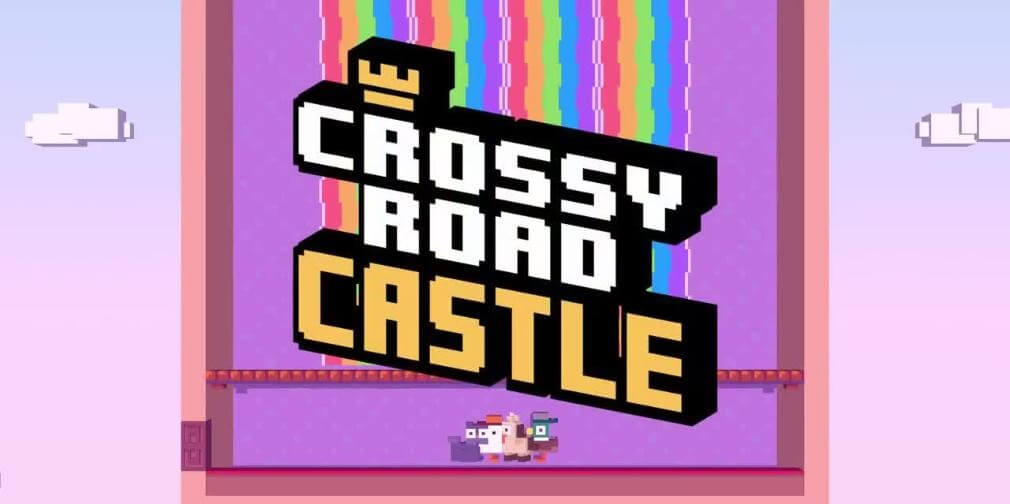
Apple Arcade Brings Us Goofy Laughs Through Hipster Whale’s Crossy Road Castle.

Hipster Whale are well known worldwide for their quirky, fun mobile arcade games that will leave you playing them for hours upon hours. They’re known most for their two  biggest launches, Pac Man 256 and Crossy Road, two of the most played games on mobile to this day.

Crossy Road Castle was released recently by the Australian company. It’s played with a 5$ a month subscription service called Apple Arcade, which is Apple’s new system for paid arcade games. Although, this system is still in testing, meaning we’re not sure if it will stick or not. The Apple Arcade makes these games playable on IPad, IPhone, Apple TV and Imac. Nowadays we are seeing more and more of these gaming subscription services, for example Sony have released PS NOW, while XBOX also have their own subscription feature called the XBOX Game Pass.

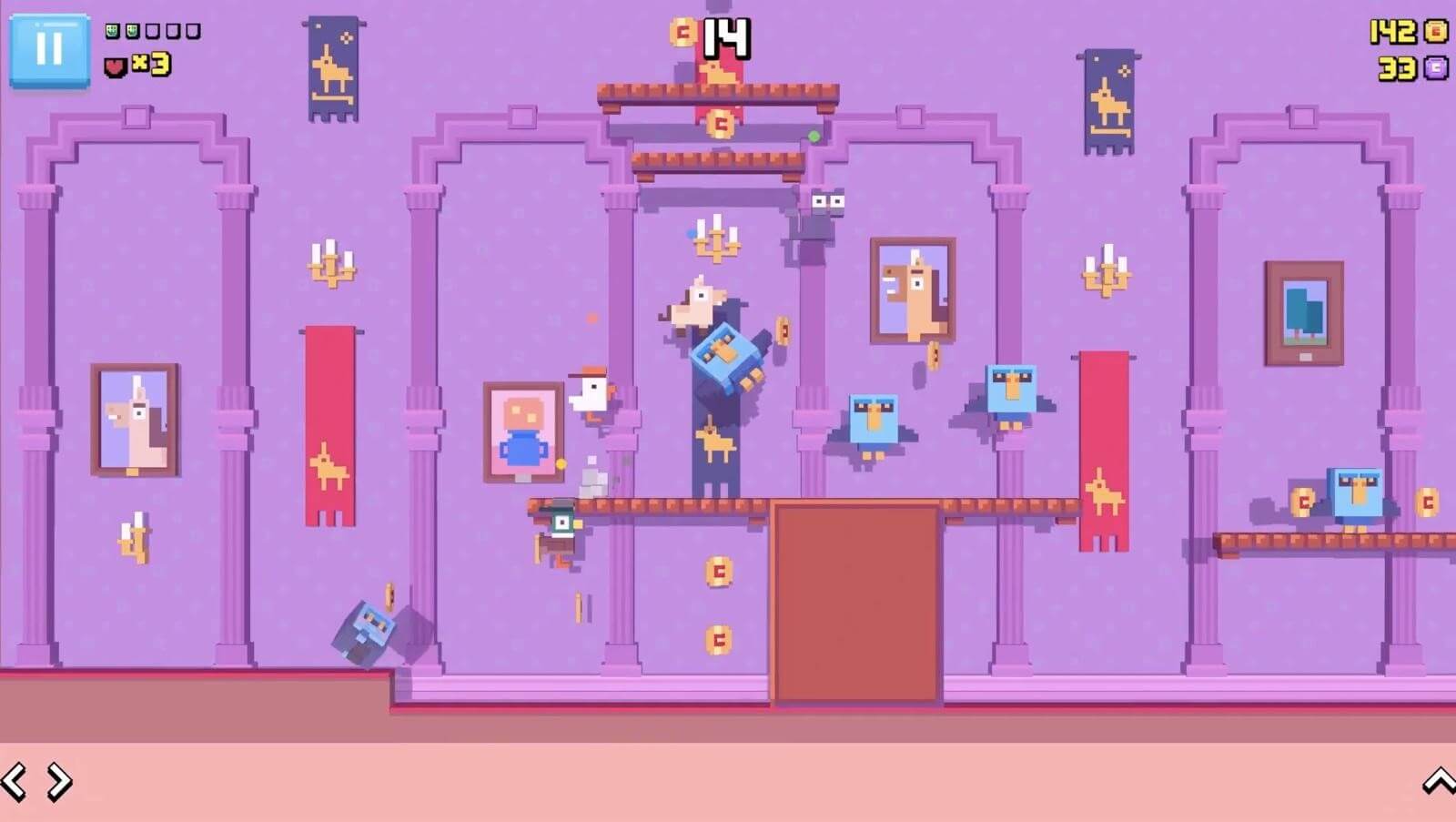
Crossy Road Castle  is a co-operative old-school game played by up to 4 players at a time, sequeling to the original, world famous Crossy Road, which got over 200 million downloads. The new title features a super mario style – 2D adventure setting themed similarly to its predecessor, using the same original crossy road characters and even more.

About the Gameplay:

The 4-player co-op is a thrilling level by level game where players have to fly through particular obstacles to reach the next level. It has a big arsenal of unique obstacles and themes, where we are sure they will keep updating and adding more to keep the player interested for a considerable amount of time. Players can either race to the finish or work together to pass levels together. And if for example 3 players die and one passes the level, they all pass for the next one. As we can imagine, as an arcade game it comes with plenty of arcade-style beeps and noses- which are a crucial part of any arcade game. Players can connect together via a Wifi Connection, bluetooth, or multiple controllers connected to a single device. Passing levels will earn you coins which you can spend on new characters and customizations.

Click here to view Gameplay Video.

Crossy Road’s bright colours, fun characters, high accessibility and ease to play is what made the game one of the biggest in the world. They still have an enormous number of players enjoying their old game, and with the first ever release which features the same characters, they’re bound to make great success.

Apple Arcade has hundreds of games available, and Crossy Road Castle is anticipated to lead them by becoming as famous as it’s predecessor did back when it was released in 2014.

Arcade mobile games have certainly become a very big part of our daily lives, whether we want to play a few times to pass our free time or devote ourselves to beating the game as soon as possible. Another interesting type of arcade games is arcade WMS slots, where one can enjoy casino style arcade games on mobile devices.