Timothy Williams | WE SUMMON THE DARKNESS

williams summon

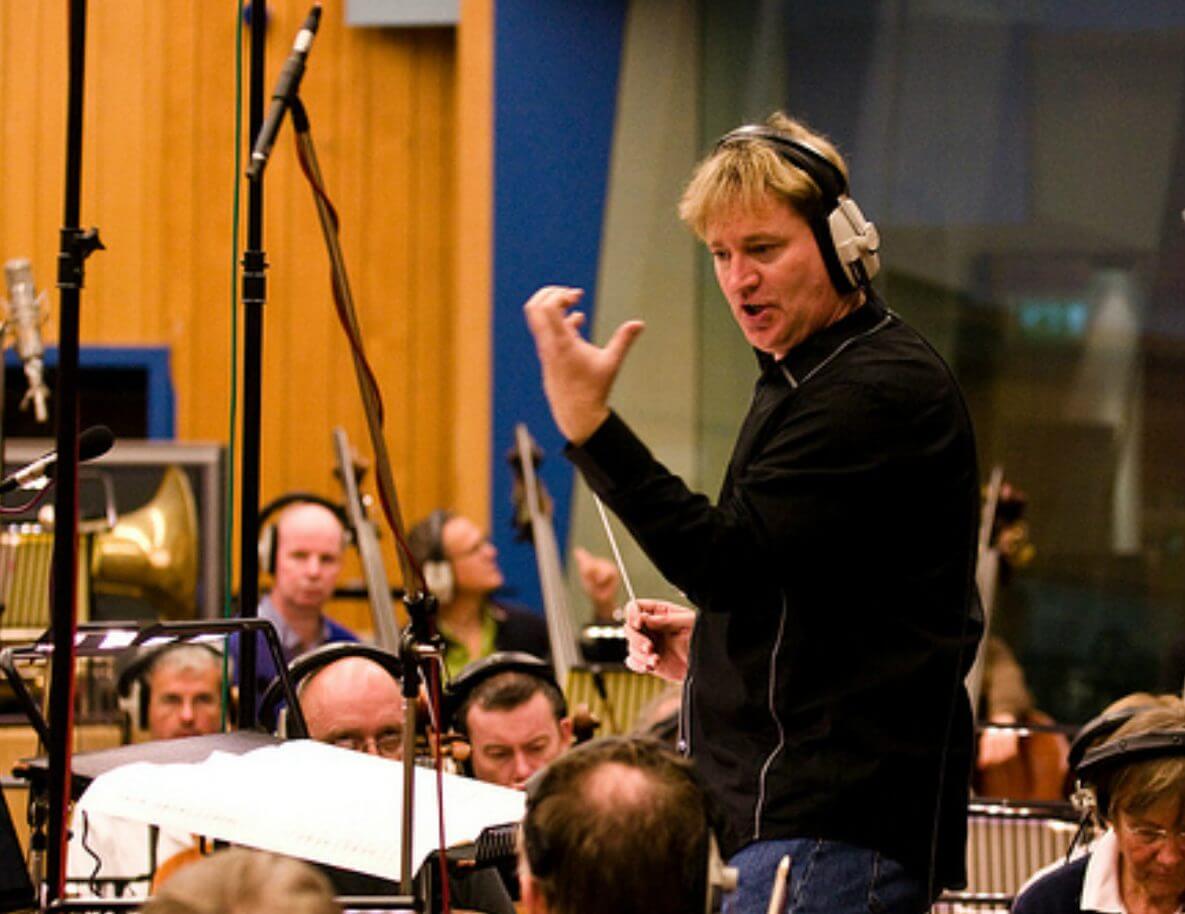
Composer Timothy Williams’ latest score is for the ’80s-set heavy metal horror of Marc Meyers’ We Summon the Darkness and in it, he leans heavily into the retro sounds of the era. Williams, whose previous composition work includes the superhero horror film Brightburn, has also worked as an orchestrator and composer for many other genre films, including both chapters of IT, Deadpool 2, and the Guardian of the Galaxy movies, among many others. We spoke with him about how he came to the sounds of We Summon the Darkness, as well as his vast back catalog.

STARBURST: We Summon the Darkness is the second horror film in quick succession that you’ve done as the primary composer and you’ve worked on a lot of genre entertainment here and there, as well. Was there something really appealing about being able to work in a retro mode for We Summon the Darkness?

Timothy Williams: Yeah. The interesting thing with horror is that it’s one of those great genres to score because you’re having to set up – ‘life normal’ is what I call it – you want to create music for people, so that you get to know and enjoy the characters. Then there’s ‘fucked up’, which is where things go horribly wrong. Trying to build that empathy into a character is really good because then, when things go wrong, the horror is much more intense because you really want the person to try and survive.

With Brightburn, what was what was really cool was it was a twist on the horror story. You had the typical elements of horror, but you also had the superhero side of things that need to be covered. Doing Brightburn was a lot of fun of trying to find a language to create horror, but also superhero, so When We Summon the Darkness came along, what was really exciting for me was, ‘how do I take those same elements of creating ‘life normal,’ but you’re in the ’80s? Then, when things go sideways, how do you create a horror language?’

The other thing that really appealed to me about We Summon the Darkness is that it’s actually a very funny film. It’s one of those films that is horror, but it’s primarily a dark comedy. When I watched it, it was that aspect that really appealed to me: that the music needed to not only be horror, not only be retro, but also needed to have some ability to very subtly support the comedy of the absurdity of the scenario.

As far as doing a retro score, what was really cool was I have a bunch of amazing synths from the ’80s. I have the the Korg Mono/Poly – one of the first early synths that came out. It’s so old, it doesn’t even have MIDI. MIDI is how you can connect computer to a synth and send the notes. This doesn’t have that. It has nothing that recalls anything, so you’re creating a sound by turning knobs and once that sound is what you want it, you have to record it right away.

That was very exciting: to do a score where, the moment you turn the knob, the sound has gone forever. It’s a very organic process and very experimental process, and this was the first opportunity I’d really had to score a film using vintage synths. The other synth I have is a Juno 106, and both these synths have those sort of classic ’80s sounds, so for me, being able to score something with a bit of a nod to John Carpenter and maybe even sort of Peter Gabriel – that kind of really interesting, dark ’80s feel – was exciting and something that you kind of dream of as a composer, you have that opportunity to just use different colours and different tones.
When we spoke with Junkie-XL for the release of the original Deadpool, he was very excited about getting to go back and like delve into sounds that he wouldn’t have any other reason to use sort. The specific one I’m thinking of is the Synclavier sound. He said, ‘once I’ve used it for this, I can’t use it in anything else because it’ll just seems so throwback and nodding to this specific sound’.

There’s something very wonderful about having a chance to use something you’d have no other reason to use. I think what’s also exciting about these synths is, that as you’re turning the knobs, it manipulates the sound. You can filter the sound and it’s so specific to that period of time. There are just so many sounds that you hear, where that kind of filter coming in and coming off impulses, and all that kind of stuff – that immediately evokes that period of time.

With the percussion: again, there’s nothing in this film that I can use again, because you’re dealing with the Synclavier. You’re dealing with the LinnDrum. These very, very specific percussion sounds. It was really fun, because I just don’t get to use these percussive sounds in current scoring, so it’s nice to be able to kind of go back. I grew up with these synths and this, for me, was such a great way to go back to what made me fall in love with writing music, which was the ability to manipulate sound and find really interesting, cool sounds. It was kind of a bit of a full circle, because I started on the Juno 106. That was the first thing I ever bought, so to go back and kind of relive that was a lot of fun.
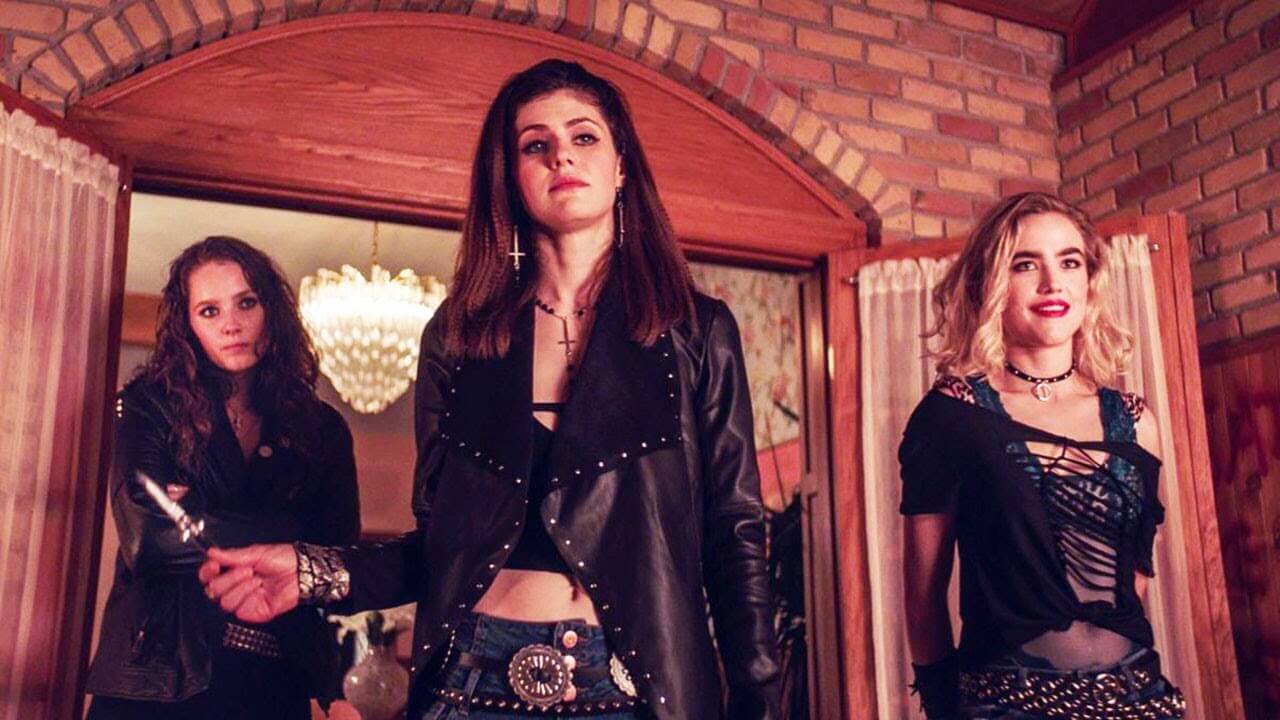
We Summon the Darkness, at the outset, has this very heavy metal tone. They use some very specific metal songs as part of it, such as Mercyful Fate’s Black Funeral. I know you’ve worked on some other films, such as Deadpool 2 and both of the Guardians of the Galaxy films, which are films that are very much built around pop song needle drops. What was the experience of working on We Summon the Darkness like – where there is this heavy metal tone, but there’s not a lot of heavy metal music, per se, once you get past the first like 10-15 minutes?

I think the premise of them going to the heavy metal concert is really to kick off the film. That was one of the things that Marc Meyers and I discussed, in terms of the tone of the score. You’ll notice, at the beginning of the movie, there’s this sound. I describe it as almost like a shark or some kind of predator stalking and I want to use ominous sounds. You hear it right at the beginning, and it’s a sort of rolling sound. It was one of the first sounds that I created and again, it’s sort of a throwback to this ’80s feel.

I said, “I just want the synth constantly, because you never know who the predator is and you want that sense of the predator right from the get-go.” There’s something stalking and, as you get more into the film, you start to realise there twists and turns, and you start to realise that the predator is closer than you think. Then, it starts to move more into – not to give away too much of the plot, but basically they’re not very good. The killers are not very good, so you get into this rather funny scenario.

Imagine if you had Jason being someone who really wasn’t a great serial killer. That, for me, was really the essence of the dark comedy – “What happens when you have a bad killer and it goes wrong and devolves from there?” We wanted some kind of a language that would hearken back to that kind of ’80s film score, but still be able to maintain some of the comedy in the later parts. If you think of Beverly Hills Cop and some of these other great ’80s films, there’s something inherently comedic sometimes about the pulsing, plucking sounds that you can create and so that, for me, was just making sure that we could keep that shift: going from keeping that kind of dark, predatorial feel but then, starting to inject comedy.

There’s a scene where two of the characters who are badly injured are basically trying to escape and they’re grabbing things from the kitchen, like cookie trays and whacking the attackers with those and it’s a really, really funny scene. I wanted a sense of this with bizarre little synth motifs that are almost like popcorn – just very straggling atonal sounds – to create the comedy of them just trying to escape, but not in a not in a very effective way. They’re just kind of grabbing whatever they can to get out of the situation.

That is what I loved about the film: it’s a really fun film. It’s not it is not the film you expect and what drew me to it was, I just I had a big smile on my face once I realised what was going on it. Also, thank you for phrasing it that way. I think that is a very perfect way of acknowledging a question I wasn’t quite sure how I’d be able to ask, because phrasing it wrong gives away the plot of the film. However, the fact is that, for the better part of the first 15-20 minutes, the viewer is not quite sure who the bad guys are or who are the villains in this piece. I was really kind of curious as to how you walk that line: how do you foreshadow, but you not tip your hat musically?

I said, “How much how much are we tipping the hat?” and Meyers said, “Not at all.” We’re setting the movie up as really not knowing what’s going on until there’s a great twist and I’m sure most people can probably guess what it’s going to be, but the twist is great and it just sets the movie up as something completely different.

One of the things that I loved about the film – and I just have to say it right up front – is the acting is out of this world. Alexandra Daddario, Keean Johnson, Maddie Hasson, Amy Forsythe, Logan Miller, and Austin Swift. It’s like a little ensemble piece and it’s really just the six people, plus obviously Johnny Knoxville and some great walk-ons.

Amy Forsythe is great in everything we’ve seen her in, but Maddie Hasson steals this movie so much.

Without giving stuff away, but just the hair product scenes and the fire and everything? Over the top. My favourite, of course, is the whole weedwacker scene. I watched the film and my mouth was on the floor. I was just howling hysterically for the back half of the film, just going, “This is brilliant! She’s so much fun,” but I thought the acting was so good. It’s just amazing, with really amazing turns.

Again, that was a part of the emotional journey. There’s a scene where the stepmom comes home and she’s basically trying to get her coat and her money and her passport upstairs. This was one of the funniest scenes I got to score, because you had so many balls in the air: you had killers in the house, you had the two guys in the pantry with an arm bleeding out and all of that, and then you have this clueless stepmom, coming to the house and heading up to grab her passport and do her lines of coke. For that, I just had this sort of ostinato that just kept going through the whole thing. It was percussion, 808s sort of drumming percussion and this ostinato riff on the synth.

You went from things that made you laugh to the dire circumstances of two guys in the pantry to Amy Forsythe and her emotional journey of just trying to work out what she was going to do. Within the space four or five minutes, there was a lot of different intercuts of different emotions, and I just wanted to keep this ostinato going through all of this, and just color each scene differently as you come to it: making it lighter for the mom, making it darker and more emotional for the other characters, and still keeping and building suspense through to the very end because it has a fairly gruesome outcome so building that suspense through the whole thing. It’s a lot of fun to try and juggle all the different colours while still keeping that this ostinato going through the whole queue one of the things.

We Summon the Darkness is out now on DVD and VOD.
David Gregory | BLOOD & FLESH: THE REEL LIFE & GHASTLY DEATH OF AL ADAMSON

david gregory

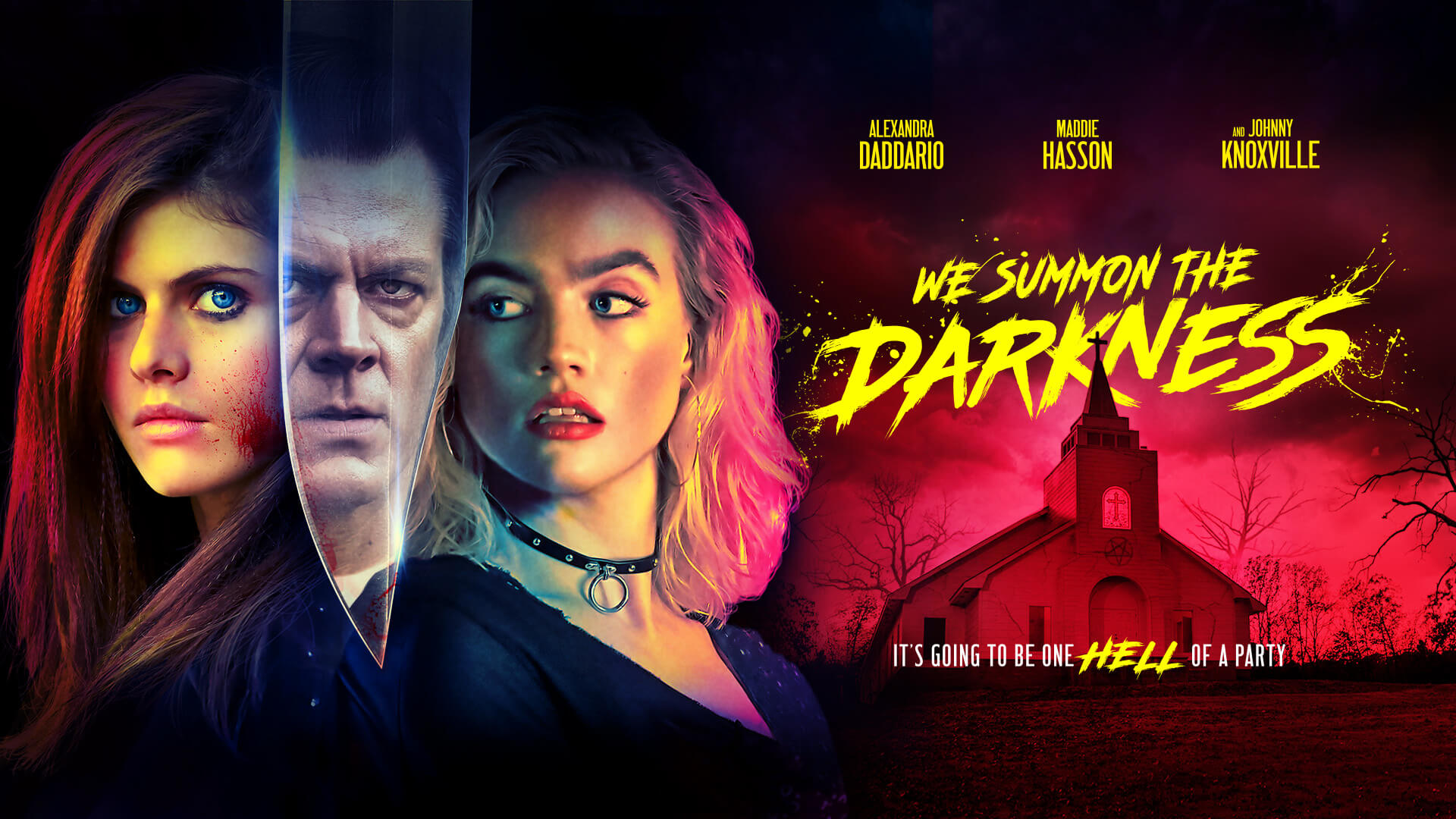
Fans of exploitation and cult movies might know some of the work of Al Adamson, his films Dracula vs Frankenstein, Blood of Ghastly Horror and many others have become midnight movie favourites for lovers of low budget independent cinema. A new documentary highlighting the work and sad fate of Adamson is released soon and we spoke to the director, David Gregory, who also directed Lost Soul: The Doomed Journey of Richard Stanley’s Island of Dr. Moreau, and as one of the heads of Severin Films is also releasing the definitive box set of Adamson’s movies…

STARBURST: What was it about Al Adamson that drew you to his story?

David Gregory: I was interviewing David Konow, who wrote the book Schlock-O-Rama, for an extra for Al’s film Carnival Magic, which was going to be a standalone release originally. And about halfway through the interview, it became pretty obvious that this was the story that would be would be worthy of a feature – you know, it was a proper story with a beginning middle and end that I thought was worthy of making into its own standalone piece rather than featurette. That’s not just because it has a true-crime aspect, although that is unique to stories about being movie makers, but also just because of the very colourful cast of characters that came in and out of Al’s life journeys career.

There’s a lot of stuff in it the film that could resonate with the filmmakers of today.

Yeah, and I think that’s something also that made it very interesting. I mean, we don’t necessarily think of independent filmmakers so much when you go back in time. You think of low budget filmmakers at that time, but you don’t necessarily think of the concept of the indie filmmakers – that seems to be something that’s fairly contemporary. And so the idea that this was a person who was using his own money, or his own contacts to get the money, to make the film and then gathering the people together and by hook or by crook getting a film made was something that resonated with me. And I think anyone who’s done their best to make a low budget horror movie or whatever can relate to a lot of the stories of just getting a film to the finish line come what may.

What was the hardest part of getting the documentary together?

I guess the hardest part was trying to find the people to do with the crime. Because the rest of it was really similar to how I do all the other documentaries and features. You’re basically finding people who are film industry people, so there are ways to contact them. A lot of them were retired and a lot of them had left the industry a long time ago. So that means that there’s certain amount of legwork involved in tracking them down. But with police, it’s different. Once they’re retired, they don’t generally have a profile online or anything like that, where you could just find them – there’s not a database of retired police. We had to get a private investigator involved. It was the same with the housekeeper, actually tracking her down took some time. She doesn’t speak English, so we had to get somebody to tell her what we were doing and get her confidence that what we were doing was worthy of being a part of. But that also made it kind of interesting for me because I hadn’t done anything in in that realm before. And it was important to me that will we went deep into his life and work so that it wasn’t just a true-crime story. It wasn’t a sensationalist piece on this B-movie maker who was murdered spectacularly, or whatever the headlines were at the time that didn’t really give a shit about what he did, he achieved, or what he had done.

So I wanted to start our documentary with kind of a teaser of that stuff. But then it goes back into and spends a lot of time with his life and his work. So by the time it comes back and it’s about to get sad and grim, you actually know the person, so hopefully, it’s a little more resonant.

You certainly get to love the films, even though they’re hokey! You get a whole new respect for them.

That certainly happened with me! As I was making it, we hadn’t planned the box set or the collection. That grew as we were making the documentary. It evolved into us doing a bunch more of the films once we’ve got Sam Sherman [Al’s producer on many of his films] involved. We licenced the big two – Dracula vs Frankenstein and Satan’s Sadists. And then as we got deeper into it, it was like well, we may as well do a handful more of them. And then we needed to get clips for the documentary. So then it became about doing a lot of legwork and archaeology to actually find film elements for these films, which had been left in storage for decades at this point. So once we were doing that, it just got to a point where we thought we might as well actually scan the entire movie rather than scan just the clips and licensed more. So then when it got to that point, we needed to find the ones that aren’t Sam Sherman productions – so we may as well just try and do everything that he’s ever done into this massive set. It looks impressive!

Which of Al’s films is your favourite?

Dracula vs Frankenstein just because it was the first one that I saw and I still find it highly entertaining. It’s funny, because Carl [Daft, co-owner of Severin Films with David] and I actually saw it when we were very young. It was one of the first ones we ever picked out of the video shop when we were about 10, I think. We didn’t notice that the story didn’t make sense or anything like that. We just saw all those elements that were in there that made it like this really unique horror movie. And, of course, at that time you were you were reliant on things like Dennis Gifford’s book and the House of Hammer magazine and stuff like that. So you were really only going by images, which were usually the makeup on the monsters and things like that. This had it all as far as we were concerned, even though even at that age, we could tell that’s not what Dracula’s supposed to look like. That’s not what Frankenstein’s monster is supposed to look like. You could tell that and it was confusing, but it didn’t matter because the movie itself was going along with it, so we had to go along with it too. I’m still very fond of it. I have to say that because I’ve seen them all now a few times, I did really enjoy Horror of the Blood Monsters this time. It’s got such a terrible reputation because of what it is – a patchwork job – but it is just so fun to watch and know how they and just going with story behind it of how they actually tried to put together this feature which wasn’t meant to be together. It has such audacity that it’s hard not to admire it.

A lot of Al’s films are available in unauthorised versions on the Internet, and they don’t really get the respect they deserve…

That’s right. And our box set, while I am reluctant to say it makes the films better, but it certainly gives them a fighting chance. They look the way that they’re supposed to look, or at least not the way that they looked in previous incarnations. Particularly in the case of something like Five Bloody Graves, which was shot in Cinemascope by Vilmos Zsigmond and, as you know, scope used to be cropped to a square, so you’re getting such a small percentage of the actual frame as it was framed by this brilliant cinematographer. Go back and see that these bums did actually have an eye behind the lenses as a good starting point.

It’s good that exploitation and B-movies films like that are now been respected…

Yes, I absolutely agree. I mean, they are the movies that I grew up on a lot of our audience grew up on. And, for me, they absolutely deserve the treatment that Criterion will give to some European art-house film. There’s nothing wrong with that either, but we actually one step further, certainly more than other studios would with their catalogue. With their so-called B-movies, once we get hold of them, we have absolute admiration for the filmmaking process and the films themselves. So you want to put a historical context on the best.

How did you get the interview with Fred Fulford, the guy who killed Al?

That was difficult, we were actually well into post-production when we got that phone interview with the murderer, and we had actually debated throughout whether we should even approach him and involve him. I’ve read all the court transcripts and all the articles in the media at the time. There was a pretty cut and dried case. It wasn’t like I was going to go in and do this investigative documentary and find out that he was innocent.

But it became the most frequently asked question: did you get the murderer? So it became pretty obvious that we should at least make the effort, and that led to a whole different journey! We had to find out what the rules are with getting an incarcerated person into a documentary, and in California, you can’t take cameras into prisons and interview inmates on-camera. Technically, you shouldn’t be interviewing them at all. But there are ways to do it that aren’t really particularly policed. And in this case, it was they’re allowed phone calls. So basically all we had to do was record a phone call. We did have to gain Fred’s trust, so to speak. It was my co-producer, Heather Buckley, who managed to do that. She actually became his pen pal for a while, receiving these strange rambling letters from him about how he’s innocent, you should look into these other people. Not actually explaining how he had cement on his hands, and that he’d admitted being the guy who filled in the Jacuzzi. She was the one who called him she called him twice. The first time she said ‘do you mind that we’re recording this?’ and he said he did mind, and he wanted to talk to her again about his innocence. But the next time, he agreed and had a person sitting with him to make sure he was answering things correctly. He didn’t really again give much in terms of detail when she asked other than he was railroaded by the courts and the judge didn’t like him because he looked at his girlfriend funny and stuff like that. So anyway, across an hour of recording we got we had two minutes of usable stuff, which is in the film.

Can you talk about what you’re doing next? We know there’s a Cliff Twemlow feature in the works…

There are several documentaries that I’m a producer on, including the Twemlow one, which is growing – once a I saw the rough cut, I was like, ‘okay, we need to go back and get more because this is a fascinating story’. Which is often the way these things happen – that’s ultimately what happened with Lost Soul and Adamson, they started as something much smaller and grew into what they became. We’ve got one, Kier-La Janisse is doing one on folk horror and Josh Johnson, who works with me, is doing one on Andy Milligan for a box set we’re doing later this year. And then my next one is about Bruceploitation – about all the fake Bruce Lees that came out after he died in the ‘70s. I’m in post-production at the moment, but it was shot a couple of years ago now. I was making it concurrently with Al Adamson and the Dark Shadows one that I did for MPI.

Blood & Flesh: The Reel Life & Ghastly Death of Al Adamson is released on Blu-ray on June 1st. Al Adamson: The Masterpiece Collection, a limited edition, 14-disc Blu-ray set is available to order now.

You can find out more by heading over to the Severin website. Follow Severin on Facebook and Twitter for more announcements.

Ernie Altbacker | JUSTICE LEAGUE DARK: APOKOLIPS WAR

justice

ERNIE ALTBACKER knows his way around the DC mythos. From spotlighting B-listers to giving Golden Age heroes a modern polish, Altbacker writes a DC Universe that’s as familiar to the faithful as it is fun for budding fans. And now, with JUSTICE LEAGUE: APOKOLIPS WAR, he has penned a story that’s chaotic, surprising, and emotionally resonant, all while reminding us why we hold these characters and their adventures so close to our hearts. We’re lucky Altbacker pulled out all the stops, not only for the sake of memorable storytelling but for the sobering fact that APOKOLIPS WAR marks the end of DC’s animated continuity. STARBURST recently caught up with Altbacker, who reflected on his time writing the movie, how the process challenged him, and why he emphasised certain characters and relegated others to tertiary roles. We were not ready for this shocker of a conclusion. You’re not, either.

STARBURST: How would you pitch Apokolips War to a new DC fan? 

Ernie Altbacker: If you’re talking about a new fan and they’ve been in a box and don’t know what a superhero is, it will be a little more difficult [to follow]. If they’re aware of Superman, Wonder Woman, Batman, and the Justice League, I would say the Justice League’s mightiest foe, a New God called Darkseid, attacks and conquers Earth. And then the remnants of them and the magical community of Justice League Dark and other superhero groups join together to try to take back the earth and beat Darkseid. 

What were some challenges or narrative obstacles that were unique to crafting Apokolips War? 

Luckily, we had James Tucker’s “Tuckerverse.” He knew all the elements that had to be in there. “I want this, I want this, I want these characters, don’t forget to have that character say something from that movie.” Through that we kind of made this tapestry, this worldwide fight to the death to try and save the planet. The hard parts were wishing you had more screen time for everything. Now you’ve gotta share with everybody. So I kind of centered it around Constantine. It’s going to be Justice League Dark, and I was like, “What if Constantine was the lynchpin, the key member in all of this?” I’ve seen the Justice League go fight a monster or a horde of aliens or something. I’ve seen that story. This one I hadn’t seen before and I kinda approached it through that. When I pitched that part of it, people liked it. 

Piggybacking off that – how did you decide which characters to focus on? How did you decide that it needed to be a Justice League Dark movie? Was it through the relationships you wanted to highlight? Was it through a pure plot perspective? 

Usually, what happens is we get into a room and Jim Krieg is the guy who oversees the writers on all of these (taking over for Alan Burnett). And you’d sit down and start hashing out the story. And James, with that view of the entire continuity, is like, “I wanna get this person in and I think we can get him in through this.” And that’s a big mess. It’s a pile of stuff. And then Mairghread Scott writes a first draft and then I take over after that and make it more Justice League Dark-y. 

Something we were really intrigued by was its emphasis on consequences. You get almost 90 minutes of our heroes messing up in these pretty significant ways. You’ve got Damian Wayne doing something pretty horrible to Dick Grayson. You’ve got these characters messing up for most of it. How do you, as a writer and storyteller, balance this triumph with these tragedies in a way that makes the victories feel hard-won and the losses more devastating? 

That’s kinda the whole thing. How do you make people care? And you wanna do something different. Sometimes, there’s a little bit of magic involved. It becomes apparent after several drafts that the screenplay is leaning toward this. And then during the notes session we would talk and go, “You know, this thing might be a little bittersweet at the end so let’s amp up some of these last-call moments.” On this bittersweet, hopeful note, which was kinda hard to do. Luckily, most people think we stuck the landing on that part but we’ll see five, ten years from now. [laughs]

It’s fascinating how you do that, and the key seems to be the relationships between the characters. The Damian/Batman dynamic, for example, was a really strong aspect of the film. 

We got Batman crying! Where else are you gonna see that? 

What was the most rewarding part of seeing those relationships play out in such a profoundly stressful crisis? 

You figure out – and they approve – who the main characters are gonna be. Constantine from Justice League Dark, Superman’s gonna be our proxy for the Justice League, Raven’s gonna be our proxy from the Titans, and then Suicide Squad—everyone gets an ending that they go to. And writing those, doing the Constantine stuff… Constantine and Zatanna only talk twice in the movie but I sweated both of those conversations because I was setting up these little things that you’ll probably only notice if you watch it twice. Some of the inventive things, some of the people coming back, without getting too spoilery, a lot of it was, “Wouldn’t this be a cool twist?” rather than writing myself into a hole. Writing that stuff was really cool because you usually only get one per movie and in those ones, I’ve got like a half a dozen!

JUSTICE LEAGUE DARK: APOKOLIPS WAR is available now on digital download and on DVD, Blu-Ray™, Blu-Ray™ Steelbook & Blu-Ray™ Minifig.

Matt Ryan | JUSTICE LEAGUE DARK: APOKOLIPS WAR

You would be hard-pressed to find an actor as passionate about a role as MATT RYAN is about portraying John Constantine. It’s a shame that hopes for a multi-season CONSTANTINE show were dashed early on but luckily, good news wasn’t far off. Following CONSTANTINE’s cancellation in 2015, Ryan only had months to wait before returning to the character, this time in the CW’s popular ‘ARROWVERSE’ continuity. He appeared in an episode of ARROW  and was later bumped up to series regular on LEGENDS OF TOMORROW, giving him ample room to explore and enjoy the fan-favourite character. His live-action turn as the chain-smoking occult detective eventually took him into the DC Animated Universe (DCAU), where he portrayed Constantine in JUSTICE LEAGUE DARK and now its series-capping sequel, JUSTICE LEAGUE DARK: APOKOLIPS WAR. We chatted with Ryan about the new film, Constantine’s role in it, and how the character evolves after the world goes to shit… 

STARBURST: Tell us a bit about what John Constantine is up to in Apokolips War for our readers who haven’t seen it yet. We’re also interested in how he’s challenged as a character and as the leader of Justice League Dark. 

Matt Ryan: So John is obviously the leader of Justice League Dark and he’s in a relationship with Zatanna, so that’s sort of what pulls him into this situation and he’s there to help out with this world-threatening situation. And what’s interesting is that all of the Justice League and all of the other heroes in the whole canon of the DC world are up against this terrible, terrible power. And ultimately they need John Constantine to help them but John’s not as reliable as most people. So he goes through a little bit of an emotional struggle before he can really, really get involved. 

Constantine is definitely the highlight. He kind of takes over the whole Justice League. He’s kind of the one who leads the charge. 

What I like about it is you look at all the different superpowers and all the heroes in the DC world and it’s little John Constantine who really gets things going. John Constantine was a blue-collar, working-class street magician, and you’ve got all these superpowers, Batman, Superman, Flash, he’s the one they need. And I really like that. 

Do you think he changes or grows during the movie? What kind of evolution does he go through here? 

A huge one. He really does go through a transformation with the world being what it is. The world is in complete disarray and John definitely does best in those circumstances. He turns to the bottle and he needs a real kick in the ass to get him going again. But I really do feel that he goes on a huge journey with loss and love and a struggle to save the world and overcome his own inhibitions to team up and join with these unlikely companions to save the world. 

Something that’s really different about this movie is its emphasis on consequences and how the heroes have to deal with them. And Constantine doesn’t do well with consequences. He tends to drown them. Like you said, boozin’ it up and chain-smoking and stuff like that. Do you think he rises to the occasion and meets these consequences head-on? 

John is not good with consequences at all. But there’s something that I absolutely love about this character. When you take him to the edge, he will stand up. There’s something about him that even when he’s in the depths of hell, sometimes literally, or when the world has literally gone to shit, that I love. There’s that spark of humanity in him that will drive him to save the world. He deflects, he drinks, but eventually he gets there and rises up to the occasion. He’s just this blue-collar guy and we need him to save the world.

There’s a moment in the film where shit’s kinda hitting the fan and there’s a moment where Constantine goes, “Well, it’s too late to turn back now so we might as well see it through.” And that kind of encapsulates what you’re saying. He changes by the end. He’s in it to win it. Or give it his best shot, at the very least. 

Yeah, totally. He does things off the cuff but if he focuses his attention on you and really goes after you, his adversaries better be quivering in their boots. 

Can you expand a bit on what appeals to you so much about playing Constantine? You touched on it earlier but I’m really curious about it and kind of what goes through your head when you play him. 

He’s so three-dimensional and he’s got all these complicated, human, normal kind of things going on, as well as all the demon shit. And that’s something I love digging into and navigating that and playing the character in all these different mediums and scenarios. It’s been great to flesh out the character across the board, really. He’s a normal guy and the closest character to him in the DC world is Batman. They just share something in common there and there’s something that attracts me to his humane kind of quality. Working class, normal guy quality. How he deals with torment and with the world how it is. His courage is questionable at times on the surface but below, the character is full of courage. I love playing John and working through scenes where he struggles with that. 

JUSTICE LEAGUE DARK: APOKOLIPS WAR is available now on digital download, and on DVD and Blu-Ray

Lucky McKee | THE WOMAN

lucky woman

With the Arrow Video release of The Woman (packaged with the prequel Offspring) due soon, we caught up with director Lucky Mckee to discuss the film nine years on…

STARBURST: How did you get round to co-writing The Woman with Jack Ketchum?

Lucky Mckee: I was pitching a project with this producer Andrew van den Houten. It was an adaptation of a Jack Ketchum novella called The Passenger. I pitched that hoping that maybe he could help get it financed, and he didn’t think he would get the budget that we thought was necessary to make that film, but he had just finished this his movie Offspring, which he directed from a Jack Ketchum book. He was curious if I was interested in doing a sequel to it and I was like, I don’t know, maybe. But I read the book, and I went up to New York, and I looked at the film that they had made, and I was really impressed with Pollyanna McIntosh did, and I gave Ketchum and Andrew my spin on where I thought the story should go. I was saying ‘you know we could do like what Kubrick and Arthur C. Clarke did with 2001 where we come up with a story together and then you go off and write the book, and I’ll make the movie’. He said why don’t we just write both together so on that night in a restaurant in New York, it was this amazing collaborative relationship started with Ketchum. We ended up writing two, we wrote the script in the book together and then a couple more novels and a bunch of short stories and stuff, and it’s just really special.

Did you have any idea of how different you wanted it to be at the time?

Yeah, I have my specific kind of style, I guess, and a very specific sense of humour. And also I didn’t want it to be Offspring continued. I wanted to do something different with it. Polly was the best thing about that movie. The ferociousness that she brought to that character, and that’s hard to do, without being worried about coming off as silly. She just completely committed to it and it’s a powerful, powerful force. I loved her character so much I was like well I’d like for her to the hero in the second movie. She didn’t know me when she read the script, so there’s no trust there. She was looking at it as if it was going to be made with the same style and tone as the previous film, She was like, ‘I don’t know if I can do this’, so we had a lot of conversations about it, and I told her how I like to handle that kind of material. I’m the kind of person who would like to be able to look myself in the mirror every night before I go to bed. So there are certain lines that I won’t cross with the subject matter. We built a mutual trust with each other early on, and she finally felt comfortable.

Now with Angela [Bettis], it always takes convincing with Angela to do anything. You know she wants to get to the core of why are you doing this – why do you want it? Why do you want to go to these places? Why do you want to go through the dark and this and that?

The young daughter, Lauren [Ashley Carter], who plays Peggy, I met in New York. She’d worked on a previous film with a producer, and I thought she was a really good match for being Angela’s daughter. We just got along instantly, and she really can be dark – she’s done really well for itself.

In terms of the male actors, Sean Bridgers was an old friend of Angela’s. She’d been trying to convince me to work with Sean, ever since we first met when we were making May. And, boy, what a joy to work with that guy. I’m worked mostly with women in my career, director to actor wise. So, this is the first time it has like a full experience with a dude. He’s amazing. That is the hardest part to play, especially if you’re a decent guy really, and he is that kind of person, and it’s fun to jump in those wicked roles and try to figure out how people get to a place where you think you could act like that.

I feel like this movie’s like even more appropriate now – even more on the button than nine years ago or whatever.

How has it been looking back at the film with the upcoming reissue?

Working with the people at Arrow Video has been the best experience I’ve ever had working with a distributor, they completely understand the movie. The artwork is beautiful, the presentation of the Blu-ray is beautiful, and they get it, you know? The trailer that they cut together just blew my mind it was like ‘wow they get it’.

Is it strange for you to have it paired up with Offspring?

Oh yeah, I’m totally fine with it. In the UK, it’s coming out in that double bill with Offspring, but in the States, The Woman is just coming out down alone – possibly because they’re waiting for the rights to turn back around on Offspring for North America. One of the most special things about The Woman being paired with Offspring is that my wife, Vanessa, got to do the cover for both, and it’s just beautiful. I love the colours that she painted for The Woman, and the one for Offspring also is just gorgeous. It’s really special that we get to do this stuff together, it’s pretty neat. I think it’s cool and I hope that when people see those two films that it leads them to Polly’s film Darlin’. It’s a very bizarre trilogy!

What was the most challenging thing about filming The Woman?

The subject matter – honestly – it’s not fun to shoot a rape scene. It’s not fun to shoot people being violent, trying to do that in a way that’s on it, you know, because the fucking terrifying, you know, like, there’s a scene where the parents are fighting in the kitchen. And towards the end of the film, the dad’s hitting the mom and the kid is just sitting right there, and you see this truly monstrous behaviour. That’s hard, man. My way of directing is getting in the mood with the actors and getting down on the ground with them – being as close to them as possible when we’re filming a given scene. I don’t like to just look up at the monitors, you know, I like to be close to them going through it with them.

It was hard to shake what it’s like writing the material. If you’re going to a very dark place psychologically and then acting it out with people, you go to a super dark place. And then you edit it for a year after that, and I had to go on the road and talk about it every day, it really wears on your soul, so the subject matter was hard – also the food. The food was terrible on the movie every day. The food was horrible so that that makes people pretty grumpy. The thing is, about halfway through the shoot, I figured out to get a friend of ours to go pick me up a hamburger every day, and that’s that got me through the rest of the shoot. It was a gritty four weeks in a super low budget movie.

One of the great things is you get to the end, and then it throws in something brand new that you’ve not seen throughout the whole film, just little references of dogs…

Yeah if you go back a second time, you can hear her the whole time, it’s all there, but yeah that was a really fun surprise. We call the character Socket – the girl that played her, Alexa Marcigliano, was really trying to get into the stunt world, and that movie really launched her, and now she is doing stunts on all these big shows and stuff like that, so that’s great.

When the film played at Sundance, you had some adverse publicity due to a member of the audience – did that help or hinder you at the time?

It ultimately helped the film. I mean, to go through it when it happened was not enjoyable! We did all the post-production in a house in Oklahoma in the middle of nowhere, like in the woods. It was three other guys putting the film together and me, so we’re really in a bubble making that movie. You know, I get really nervous before showing a film the first time, so going from that bubble to the Sundance Film Festival with hundreds of people sitting there watching your movie, I could barely stand up I was so nervous! Towards the end of the movie when stuff started getting more intense, this girl got up and started to walk out of the theatre and just completely tapped out and fell into the seats. They took care of her, and I was trying to get them to stop the movie, but they didn’t. Then when the movie was done, a guy walked up and just started railing on me and my team. Someone caught it on tape, and it ultimately gave us some more attention than it probably would have gotten, because it really, really pushed his buttons. I don’t think he knew what kind of movie he was in for! And then people were getting upset at him, yelling at the guy and defending me and filmmakers – it was crazy, man, it was very surreal because I’m already going through the anxiety of showing a film for the first time, and have that happen! But it’s a good memory, you know, funny when it wasn’t at the time.

What do you have next on the horizon?

I’m working on a very special project that I can’t talk about it yet, but it’s something that I’ve been wanting to make for a very, very long time. It’s something deeply personal in the way that May is really personal to me, and even The Woman actually is really personal to me. So, yeah, I’m very lucky that I get to work on this project, I just can’t talk about it.

Arrow Video’s release of The Woman and Offspring is available from Monday, May 25th. You can read our review here and order here.


Main photo credit: Chelsea

[ENDED] Win a Copy of SNOWPIERCER the Movie on DVD

win snowpiercer

We’ve teamed up with Lionsgate to give you a chance to win a copy of the amazing Snowpiercer on DVD.

Snowpiercer is on Blu-ray™ and DVD May 25th 2020 from Lionsgate UK

We have 3 copies to giveaway, and to be in with a chance of winning, just watch the trailer below and answer the question.

What percentage of people will die?


A) 50%

B) 10%

C) 75%


Email your answer with your details with ‘Snowpiercer’ in the title to [email protected] to arrive before 23:59 on May 31st.

From the visionary mind behind 2020 Oscar-winner Parasite, Bong Joon-Ho’s star-studded dystopian sci-fi thriller Snowpiercer is making its way to Blu-ray™ and DVD for the very first time in the UK.

 Set in 2031, the entire planet is frozen and the world’s only survivors live aboard the Snowpiercer: a train that’s been hurtling around the globe for the past seventeen years. Within the carraiges the remnants of the human race have formed their own divisive economic and class system.

This is all set to change when Curtis (Chris Evans) leads a group of lower-class citizens, who live in squalor at the back of the train, on a fight to the front of the Snowpiercer to share the food and wealth equally among the inhabitants. Each section of the train holds new surprises for the rebel group as they battle their way from carriage to carriage. A revolution has begun…

Full of action spectacle and plenty of biting social commentary, from acclaimed director Bong Joon-Ho (Parasite, Okja, The Host) this exciting dystopian thriller finally makes its way to UK Blu-ray™ and DVD in an extras-packed edition for fans and first time viewers alike.

ON UK BLU-RAY™ & DVD FOR THE FIRST TIME 25 MAY

Snowpiercer’s A-list cast includes: Chris Evans (Captain America: Civil War), Song Kang Ho (Parasite), Tilda Swinton (Dr. Strange), Ed Harris (Apollo 13), Octavia Spencer (Hidden Figures), Jamie Bell (Billy Elliot), Ewen Bremner (Trainspotting) and the late John Hurt (Alien).

A Netflix series based on the film and the original graphic novel is due for release in May 2020.

Blu-ray special features • Transperceneige: From the Blank Page to the Blank Screen • Chris Evans and Tilda Swinton on Snowpiercer • The Birth of Snowpiercer • The End of the World, and the New Beginning (animated prologue) • Characters

You can buy Snowpiercer on Blu-ray or DVD here

Terms & Conditions:
STARBURST does not accept any responsibility for late or lost entries due to the Internet or email problems. Proof of sending is not proof of receipt. Entrants must supply full details as required on the competition page, and comply with all rules to be eligible for the prizes. No responsibility is accepted for ineligible entries or entries made fraudulently. Unless otherwise stated, the Competition is not open to employees of: (a) the Company; and (b) any third party appointed by the Company to organise and/or manage the Competition; and (c) the Competition sponsor(s). This competition is a game promoted STARBURST. STARBURST’s decision is final in every situation and no correspondence will be entered into. STARBURST reserves the right to cancel the competition at any stage, if deemed necessary in its opinion, and if circumstances arise outside of its control. Entrants must be UK residents and 18 or over. Entrants will be deemed to have accepted these rules and to agree to be bound by them when entering this competition. The winners will be drawn at random from all the correct entries, and only they will be contacted personally. Prize must be taken as stated and cannot be deferred. There will be no cash alternatives. STARBURST routinely adds the email addresses of competition entrants to the regular newsletter, in order to keep entrants informed of upcoming competition opportunities. Details of how to unsubscribe are contained within each newsletter. All information held by STARBURST will not be disclosed to any third parties

10 OF THE BEST NEGLECTED SCIENCE FICTION FILMS

Films hold a special place in our hearts and when one that you love sinks without a trace, it only makes them even more special. The films on this list aren’t necessarily underrated, they’re simply not on enough peoples’ radar. You might have heard of them but each film on this list deserves far greater attention… 

STRANGE DAYS (1995)

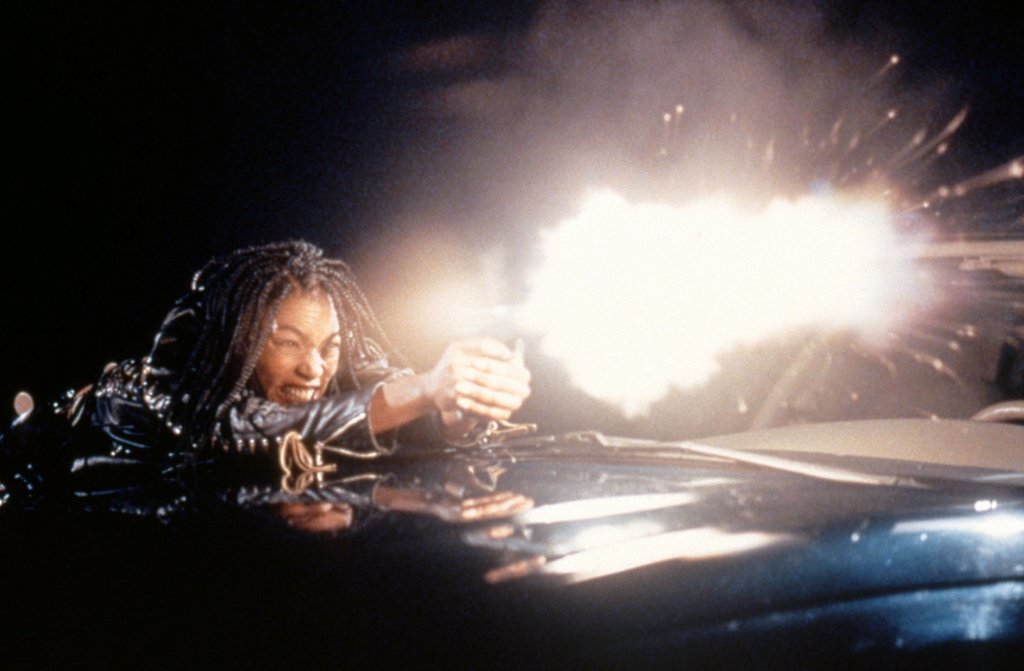
Criminally overlooked, Kathryn Bigelow’s paranoid vision of LA on the eve of the new millennium is a powerhouse of a movie. Part thriller, part conspiracy theory, part love story, part sf dystopian nightmare, its failure at the box office and neglect since is a mystery. We know how good Bigelow is at action and Strange Days doesn’t disappoint on that front, but its heart lies in the love triangle of Ralph Fiennes, Juliette Lewis, and a stunningly kick-ass Angela Bassett. As you’d expect with a script from James Cameron, it’s not exactly subtle, but in its execution, Strange Days is a compelling visual and aural assault on the senses, especially during the ‘SQUIB’ scenes, a device which allows the wearer to experience someone else’s senses. All this plus a fantastic soundtrack, Strange Days demands better recognition.

Best bit: The climax set during the biggest party in the world.

Where to Watch: Chili

ALTERED STATES (1980)

You wouldn’t think that Ken Russell, the mad genius behind cinema as sublime as Women In Love and The Devils, as well as cinema as ludicrously fun as Lair of the White, would be responsible for one of the all-time great pieces of science fiction cinema. The story of a scientist convinced that isolation chambers and hallucinogenic drugs can unlock primal consciousness shows the director at the height of his powers, carefully balancing restraint and all-out hysteria, sometimes within the same scene. As the lovers at the heart of the story, William Hurt and Blair Brown are quite brilliant, grounding the ever more fantastical elements to a very human story of love and redemption. The groundbreaking effects still amaze. Why isn’t this film everywhere?

Best bit: The devastating climax in the hallway where Hurt’s transformations externalise, which was copied so blatantly in the Aha video for Take On Me.

Where to Watch: Chili, Apple, Amazon, Google Play, Microsoft, YouTube

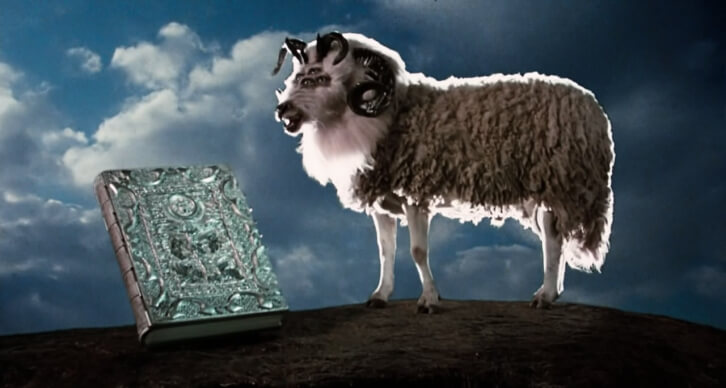
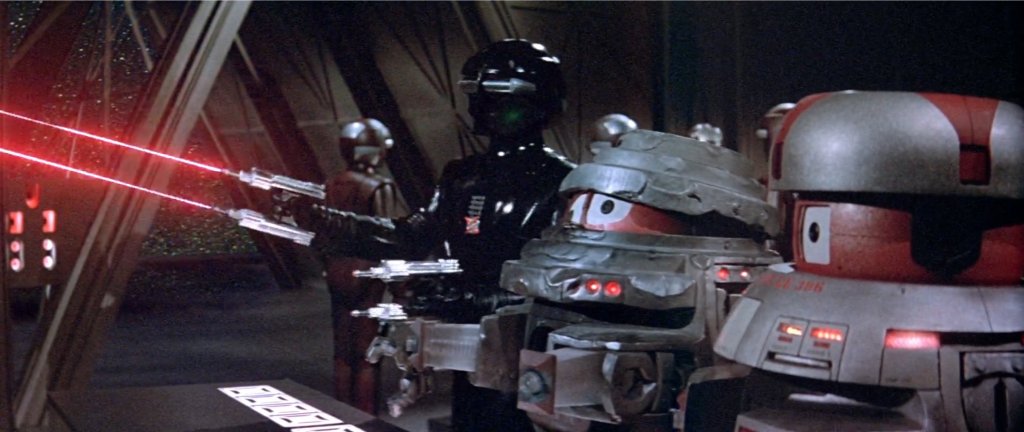
THE BLACK HOLE (1979)

In an attempt to join the cinematic space race of the late ‘70s, Disney’s rival to Star Trek The Motion Picture tells the story of a research vessel finding a long lost spaceship at the edge of a black hole. And it’s a real curate’s egg. On the one hand, the script offers no exposition or character development, very little sense of threat, questionable motivations and scenes which make absolutely no sense whatsoever – breathing in space anyone? But on the other, the production design as astonishing, the black hole itself is beautifully rendered and the Cygnus is one of cinema’s greatest space ships, and in Maximilian, we have a truly great robot. The cast is wasted, Ernest Borgnine and Maximilian Schell aside, with both Anthony Perkins and Yvette Mimieux dialling it in. And then there’s the ending, a surreal quasi-religious hallucinogenic trip into the black hole which takes us to hell and heaven and is both ridiculous and compelling. Like the film itself, it’s pretty baffling but there’s something hypnotic about it which deserves to be seen.

Best bit: The trip to hell.

Where to Watch: Disney+, Google Play, Microsoft, YouTube

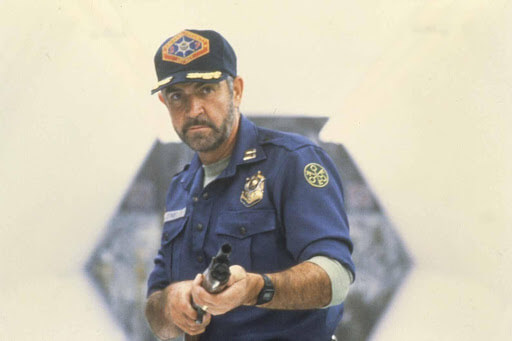
OUTLAND (1981)

Outland sees Sean Connery playing a federal marshall keeping law and order going on Jupiter’s moon Io, where a mining colony has some criminal gongs on going on. As written and directed by Peter Hyams (Capricorn One, 2010, End of Days), it was the result of him wanting to make a western and that sensibility runs right through the film, but shifting the milieu from the wild west to outer space works brilliantly. The film’s design is heavily influenced by Alien so looks amazing, whilst the plot is basically High Noon with Connery taking on the role of the man trying to do the right thing in a corrupt city (or space station). There’s a wonderful chemistry between Connery and the one person he can trust, the colony’s Doctor played beautifully by Frances Sternhagen, and this tense, atmospheric thriller deserves to be better known.

Best bit: Every scene between Connery and Sternhagen.

Where to Watch: Chili, Apple, Amazon, Google Play, Microsoft, YouTube, Rakuten, Sky Store

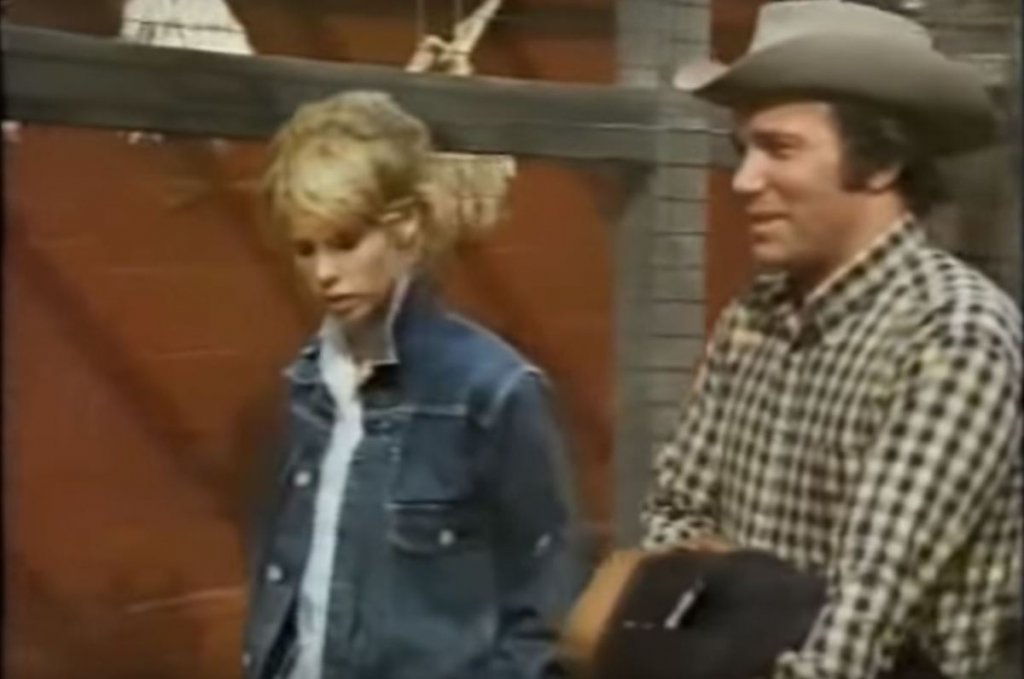
THE PEOPLE (1972)

People of a certain age may remember seeing this one late night in the early ‘70s and being haunted by what turned out to be a much better than average made for TV movie. In it, Kim Darby plays a teacher hired by a remote rural community. Cult-like, the inhabitants display no signs of pleasure, shuffling along, with no interest in the outside world. But when Darby follows some children into the woods one day, she sees that lifting their feet off the ground sends them floating into the air. And that’s because they’re stranded aliens… A superior and atmospheric TV movie co-starring William Shatner, this slow, thougthful, character-driven film had a big impact on those who saw it, but just try seeing it today! 

Best bit: The first time the children lift their feet off the ground.

Where to Watch: Good question…

SATURN 3 (1980)

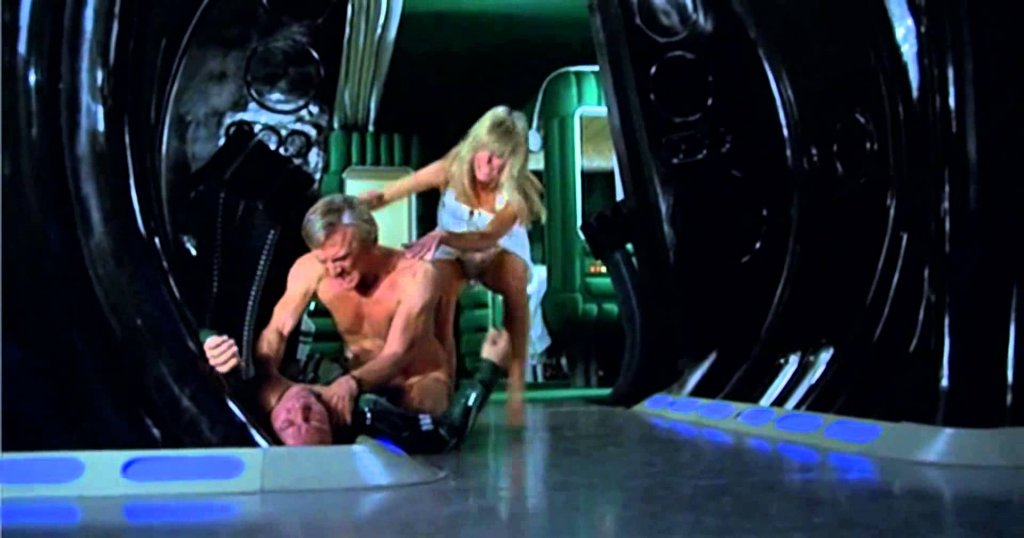
A real oddity, Saturn 3 tells of a couple living in remote bliss on a base in the asteroid fields of Saturn. A sociopathic administrator from Earth arrives with a very threatening 8-foot tall robot, Hector, threatening to disrupt the couple’s perfect existence. In some ways Saturn 3 is a real lost opportunity of a film – dodgy dialogue, odd performances from Farah Fawcett and Kirk Douglas, and a ridiculously dubbed Harvey Keitel (he refused to do post-production dubbing). And yet, within this mess there’s a script by Martin Amis with some great ideas, (can a robot experience love? jealousy?) superb production design with some outstanding sets and, in the menacing Hector, one of the very best robots ever. It’s not a great film by any means but it has just vanished.

Best bit: Keitel’s hilarious introduction to a very scantily clad Fawcett.

Where to Watch: BFI Player, Amazon, Apple

BRAINSTORM (1983)

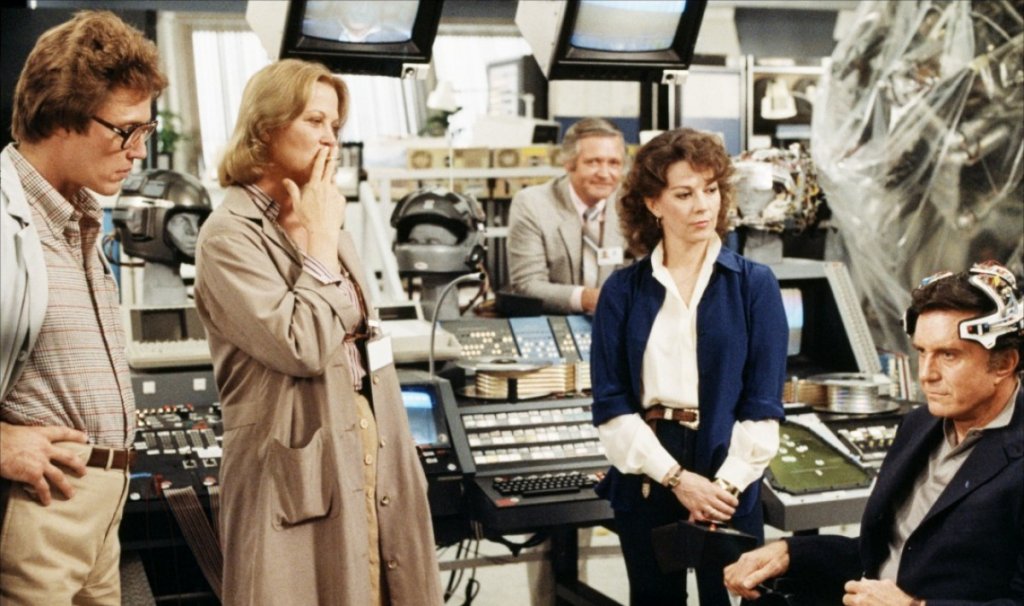
Beset by problems brought about by the tragic death of star Natalie Wood before production had ended, Brainstorm is sfx maestro Douglas Trumbull’s second and, so far, only other full-length film since his debut Silent Running. Like Strange Days, it deals with a world in which the ability to experience the feelings and senses of another person have been developed. On the brink of blowing communication out of the water, one of the chief scientists has a heart attack whilst recorded her mind, and what she experiences after her death gets recorded… A fascinating premise is wonderfully realised by Trumbull and beautifully performed by Wood, Christopher Walken and Louise Fletcher. As you’d expect given the man at the helm, the effects dazzle and there’s a wonderful James Horner soundtrack. Critics said that the film felt unfinished as a result of Wood’s death but now, with distance, it’s hard to know why it isn’t so much more popular.

Best bit: Seeing the tape.

Where to Watch: Chili, Apple, Amazon, Google Play, Microsoft, YouTube


DREDD (2012)

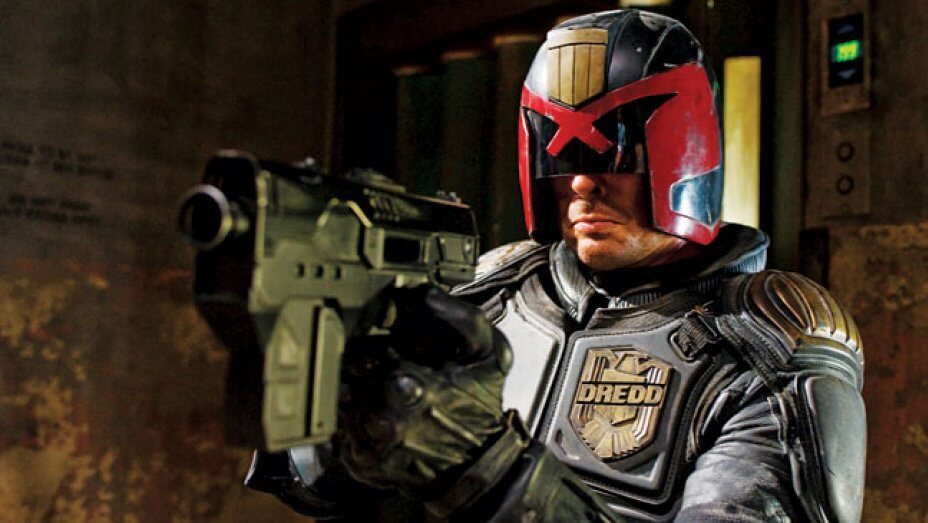
Why did this film flop? Looking at it today, and it’s one of the few films on the list that’s relatively easy to access, Dredd is a superbly rendered view of a future where crime is out of control and law enforcement is somewhat more heavy-handed than it is now. Director Pete Travis created a stunning looking backdrop to the intense action on display, as ‘Judge’ Dredd and his rookie partner have to battle for their lives, and justice, in a drug gang controlled 200-storeys high rise. Their route to the top is breathtakingly realised. The cast gets it pitch-perfect with Game of Thrones star Lena Headey showing that Cersei Lannister wasn’t the only absolute monster in her acting canon. Travis must still be shaking his head in dismay at this film’s lack of popularity.

Best bit: Bye-bye Ma Ma

Where to Watch: Apple, Amazon, Rakuten, YouTube

COMMUNION (1989)

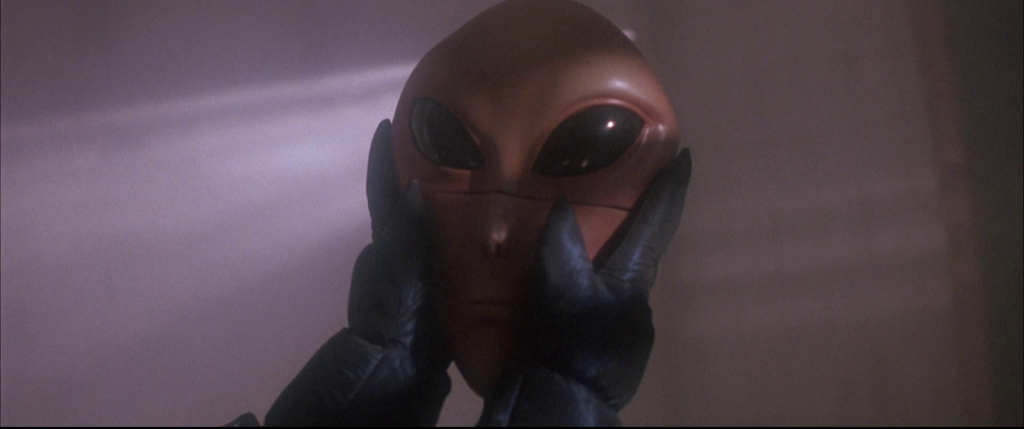
Like another film which nearly made it to this list, Fire In The Sky, Communion is a tale of alien abduction, in this case, that of the supposedly real-life encounters of author Whitley Streiber (The Hunger, Wolfen). As played by Christopher Walken, the Streiber character is a fascinating role for the actor, who puts in a performance that’s committed and emotionally charged. Director Philip Mora ties in an almost philosophical edge to the narrative too. But, ultimately, like Fire In The Sky, Communion deserves to be seen because of its stunningly odd presentation of what happens when the aliens come a-knocking, the onboard hallucinogenic encounters being not just of the third kind, but the fucking weird too. And whilst Fire In The Sky outdoes Communion in the onboard UFO scenes, this film has an oddness running throughout.

Best bit: Walken

Where to Watch: StarzPlay, Apple, Amazon, Google Play, Microsoft, YouTube

EXPLORERS (1985)

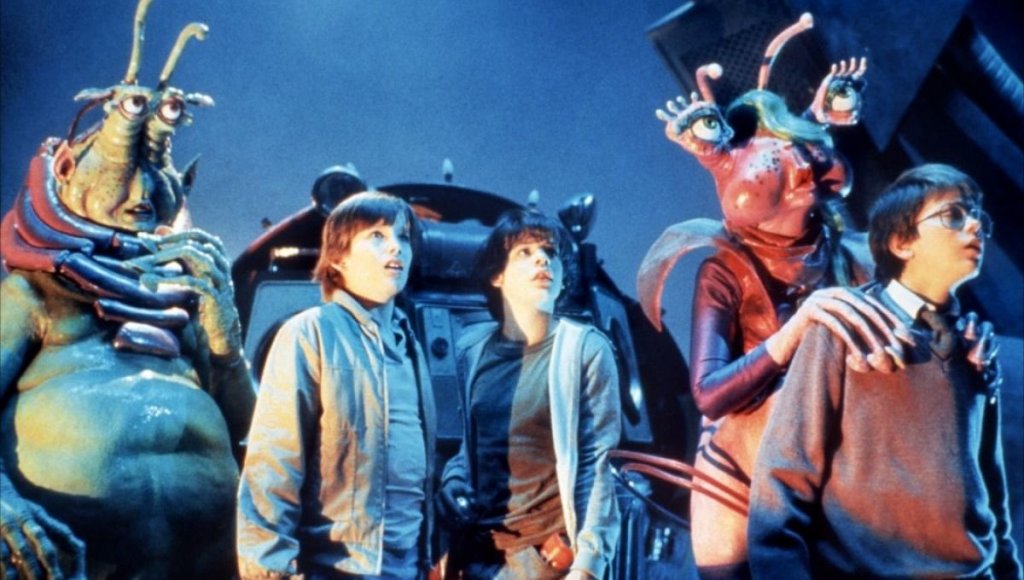
Joe Dante followed up Gremlins with Explorers, as big a flop as Gremlins was a hit. Sharing similar sensibilities to much of Dante’s work, Explorers stars a young River Phoenix and Ethan Hawke as science fiction obsessed kids who find a way of creating a device which will transport them onto an alien craft. So off they go. While Explorers isn’t quite as consistent as Gremlins or Matinee (so underrated) it still has a genuine sense of wonder and playful delight. The boys are tremendous, the Jerry Goldsmith score is wonderful and, once we’re onboard the alien craft, Rob Bottin’s creature effects are superb. The fact that the aliens know of us only through old TV signals means they converse like game show hosts or film stars. Wonderful. It kind of felt nostalgic even back then. Much more so now.

Best bit: The aliens’ parents turning up…

Where to Watch: Apple, Google Play, Microsoft, YouTube, Rakuten

1990s Fashion: Iconic Female Outfits From The Movies

While many of us are currently stuck at home during lockdown, either working from home or chilling out, our regular fashion choices have had to be neglected. Instead of our usual daily wear, many of us have opted for selecting loungewear to make you love working from home such as comfy sweatpants, cosy cardigans, and warm jumpers. However, if we are sat indoors there is actually a lot of fashion inspiration that we can gain from our favourite films. As popular fashion trends came and went during each decade, so did outfits that were seen on the big screen.

One decade that was classic for both fashion and movies was the 1990s. Some of the popular trends during the 90s included the rising popularity of casual chic such as t-shirts, jeans, trainers, and hoodies. Other trends throughout the decade also included jelly shoes, knee high boots, miniature backpacks, leggings, turtle-neck sweaters, and the return of the little black dress. While we might currently be on our sofa gaining inspiration from the best celebrity stay at home loungewear outfits right now while we are stuck indoors, there are also plenty of actresses who have worn some amazing outfits in movies too. If you want to look through some 1990s movie fashion inspiration, then here is a major throwback for you.

Pretty Woman, 1990

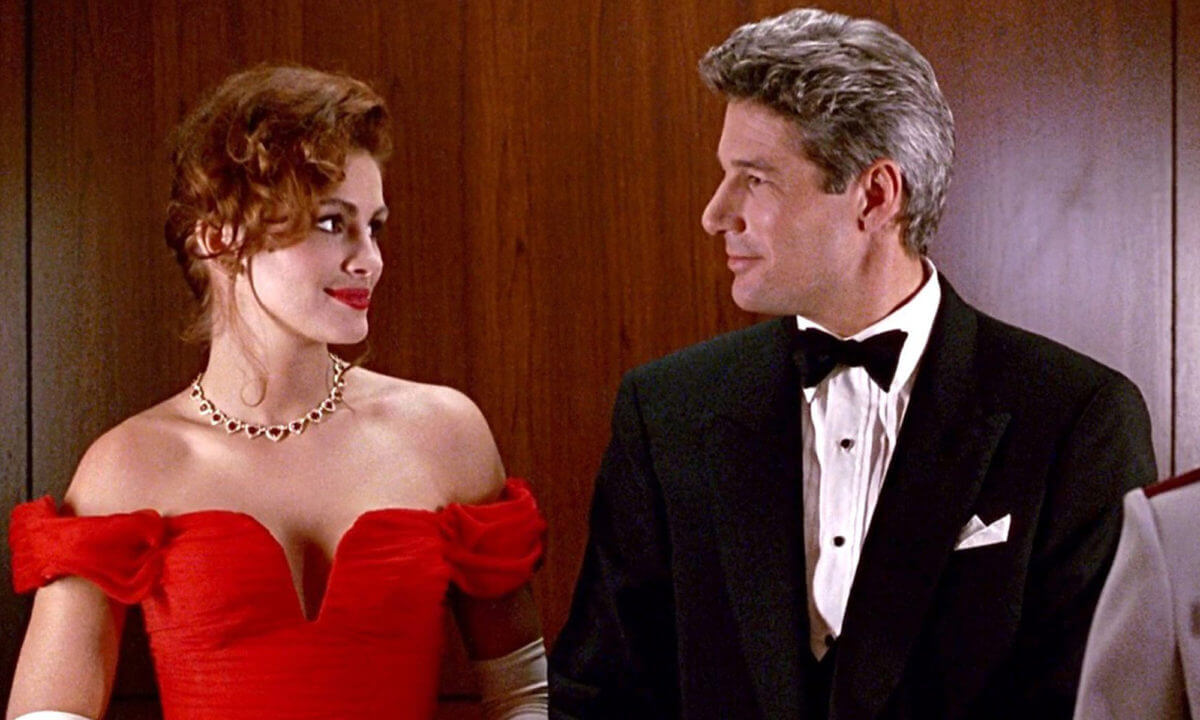
In Pretty Woman, Vivian Roberts (Julia Roberts) looked like a Cinderella from the 1990s with her knee high boots, short blonde wig, and a cut-out dress and the various other outfits she wore in the movie. Throughout the movie, Vivian’s wardrobe underwent transformations each time she headed to Beverly Hills to do some clothes shopping. The ruby red gown, for instance, showcased a true style transformation and features as number one on Vivian’s ten best outfits in Pretty Woman list by Screen Rant. In the movie, her knee-high leather boots were also iconic and left an indelible mark on the fashion industry for years following the movie’s release.

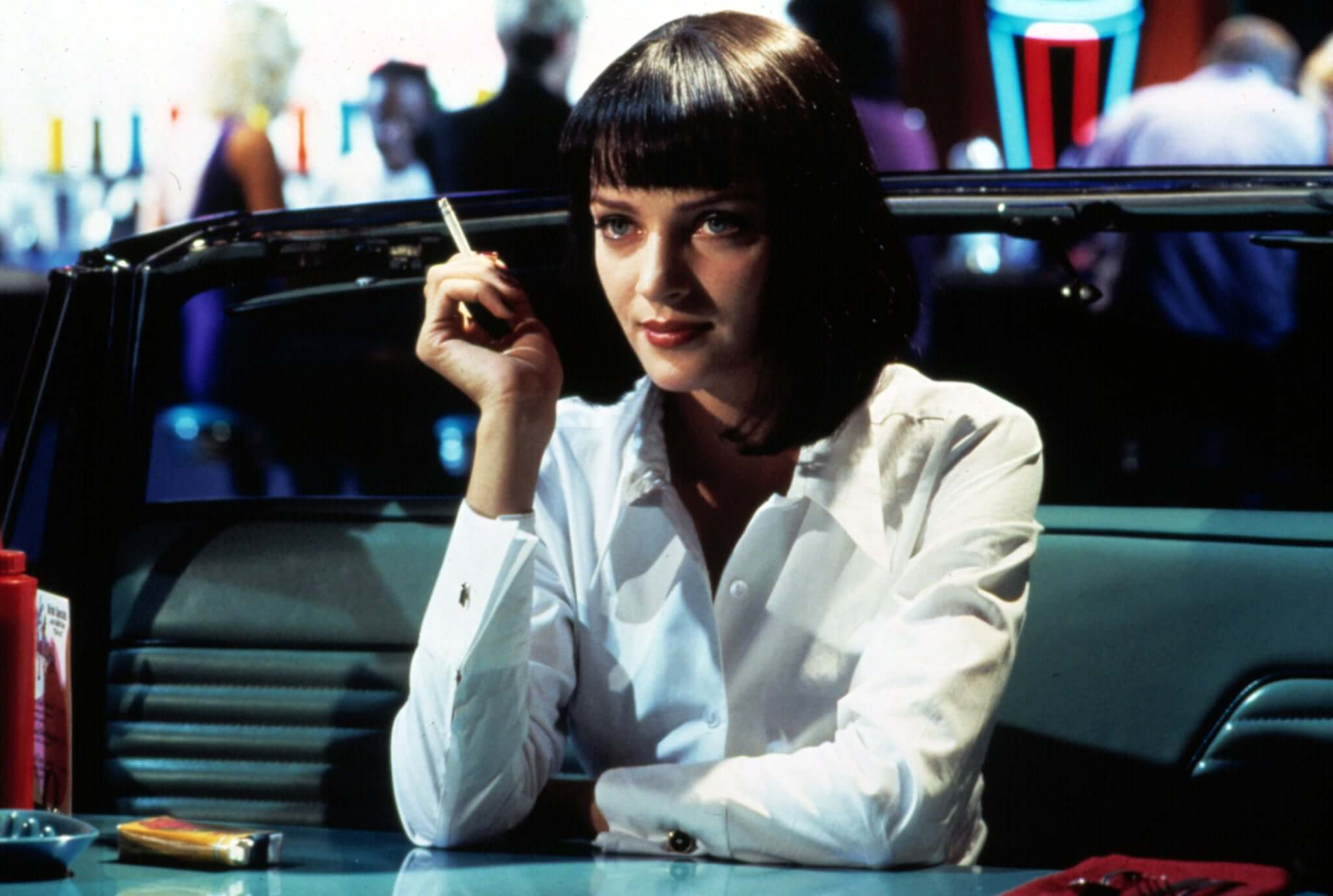
Pulp Fiction, 1994

If any 1990s film female film character embodied casual yet fashionable, it’s Mia Wallace in Pulp Fiction. The character’s crisp, button-down white shirt and her black bob hairdo with bangs was supposedly the femme-fatale look for the decade. According to Betsy Heimann, the movie’s costume designer, dressing up Thurman was a challenge. It was difficult not just because Thurman is tall, but also due to the movie’s limited budget. The short pants, which look like a fashion statement now, were originally intended to be lengthy and conventional. But getting the pants long enough for Thurman was a task and, therefore, the executive decision to cut the pants off was taken. Which actually helped create a memorable iconic film look.


Casino, 1995

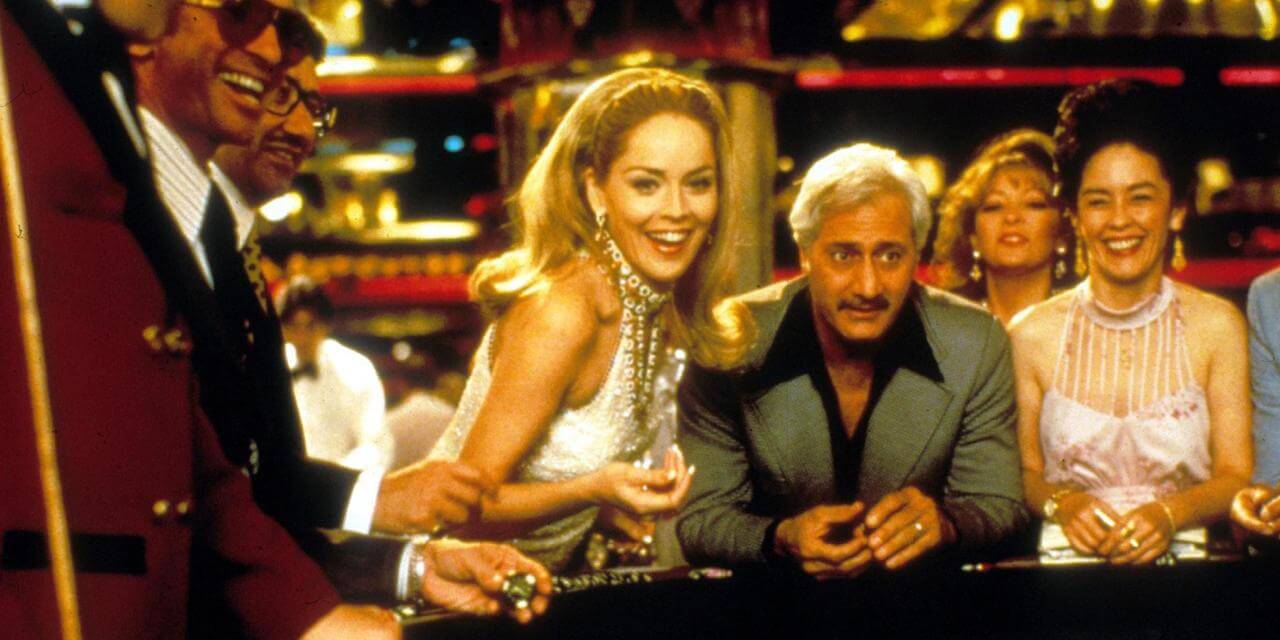
Directed by the great Martin Scorcese, Casino is a story about power, greed, and deception between two friends. The friends (Robert De Niro and Joe Pesci) compete against each other not just over a gambling empire but also over a beautiful woman too (Sharon Stone). Sharon Stone stands as her own as the love interest of both men and she wears many fabulous and sparkling outfits throughout the film. Her incredible 1970s-inspired wardrobe was zeroed in after Rita Ryack, the costume designer, created more than 30 different costumes just for Stone’s character. The sequined gowns, glamorous furs, and go-go boots were a complete fashion treat for the viewers. Many shooting locations for the film, or course, also included Las Vegas locations such as the Riviera Hotel & Casino. If you’d like to place a bet on a game of roulette or Texas Hold’em without going to Vegas, then take a look at the live casino games available at Slot Boss.

Clueless, 1995

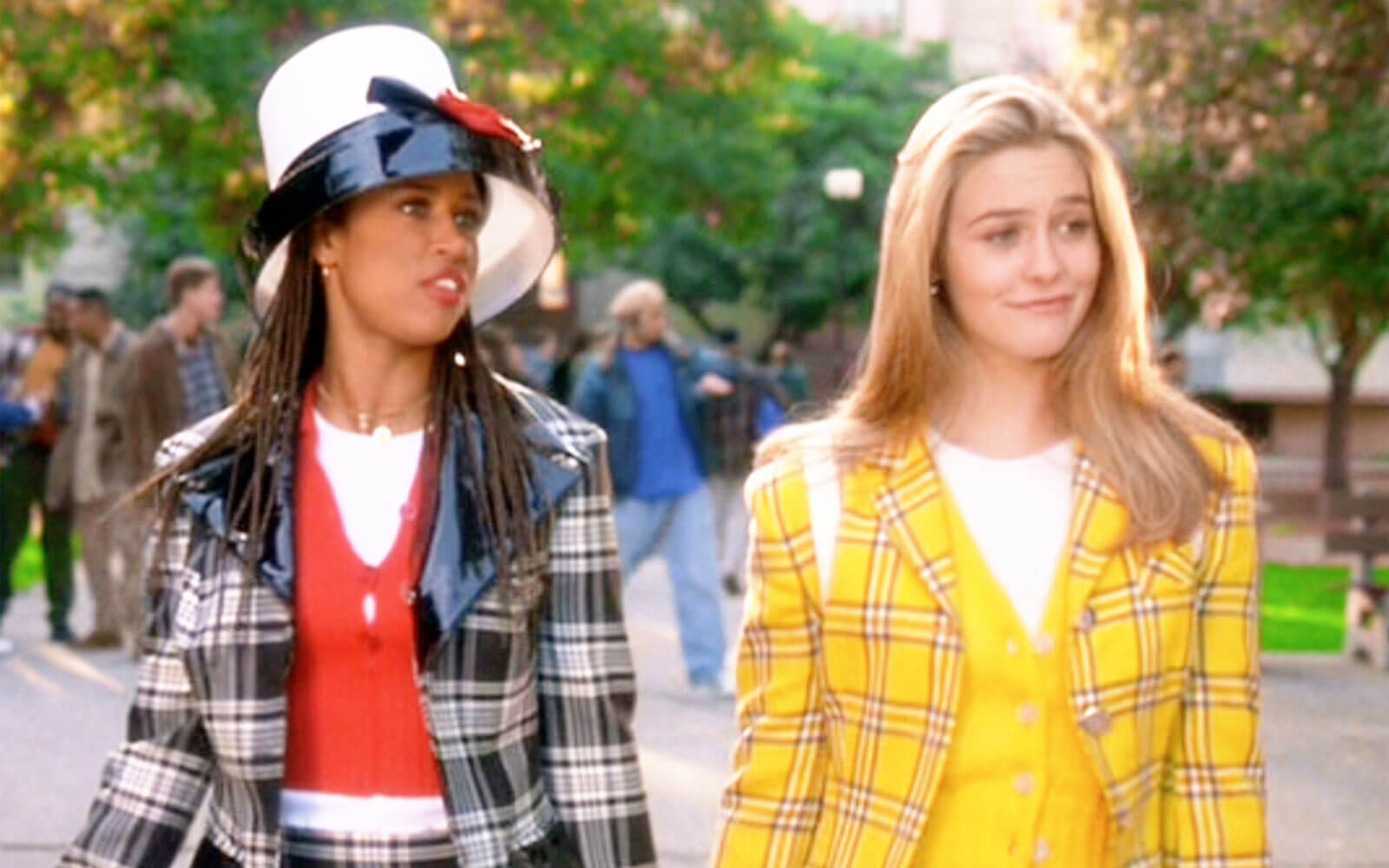
Clueless was quintessential 1990s in terms of its style palette. The happy, colourful fashion from this 1995 movie was a much-needed breather from the grunge the movies during the early ‘90s displayed. As number seventy-six on BFI’s list of ninety great films of the 1990s, Clueless was an entertaining rom-com that featured many great iconic outfits. The costume choices were a major departure from the baggy jeans and flannel shirts that youngsters used to wear in the early 1990s. The entire film was a fashion bonanza with stand out outfits from characters, including the iconic Dionne and Cher coordinating plait suits.

Basic Instinct, 1992

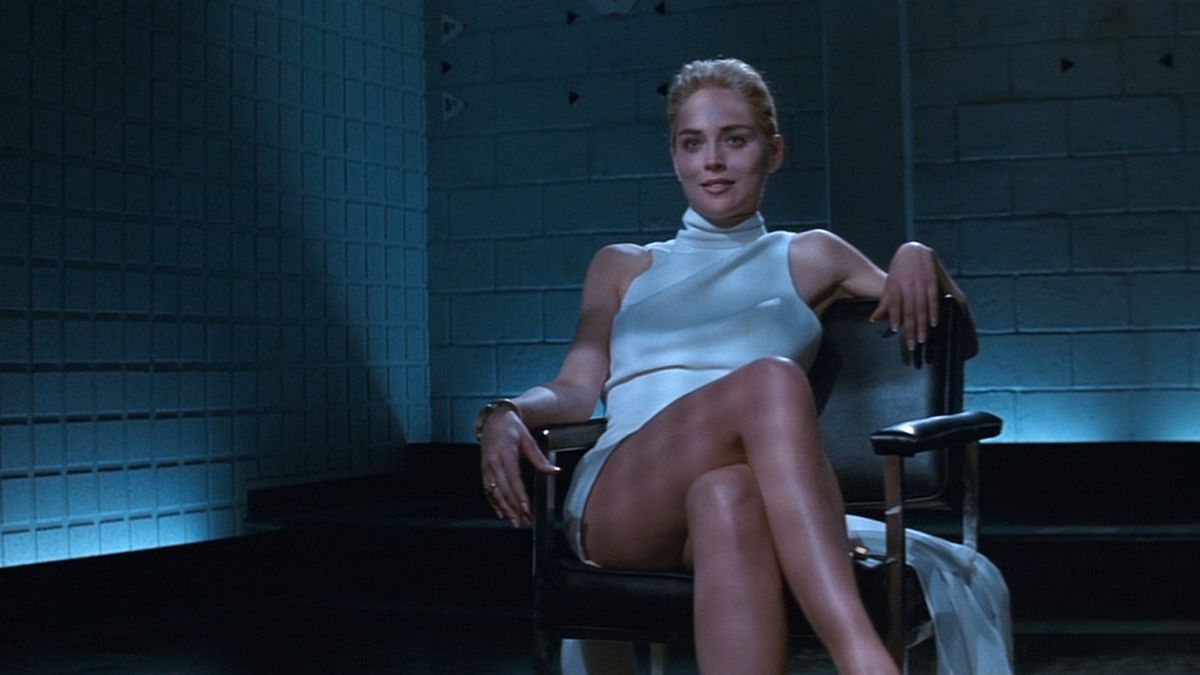
Sharon Stone is back again on this list, this time with her 1992 thriller Basic Instinct. In the movie, she played the role of a crime novelist who is under probe for her former boyfriend’s murder. Through her character, Stone brings the right amount of sex appeal, sultriness and style to the table and strikes the right balance between the three. Her minimalist wardrobe from the movie is still talked about and referred to, thanks to the all-white, iconic sleeveless turtleneck outfit she wore during that famous interrogation scene. Her slicked back hair and one colour outfit is the epitome of minimalist style that looks both fashionable and sophisticated, making her a memorable film character.

Four Of The Best Female Superheroes In The MCU


Over the years Marvel has become a popular franchise and has sold merchandise, cinema tickets, and video games all over the world. There are even many casino games from online casinos that have been inspired by superheroes, Marvel, and DC too. With the Phase Three of the Marvel Cinematic Universe (MCU) finally ending with Avengers: Endgame, you probably thought that was the last film for a while. However, of course Marvel studios wouldn’t want to stop now! Phase four was eventually announced to feature films such as The Eternals and the long awaited Black Widow. At the current time, whether it is their release dates or their production, more movies are pushed back because of the current covic-19 pandemic. MCU films such as Doctor Strange In The Multiverse Of Madness and Thor: Love And Thunder have been postponed. Many Marvel fans were also looking forward to seeing Natalie Portman return as Jane Foster as, according to Fandom, Portman is set to become the goddess of Thunder in the film.

The Marvel Cinematic Universe is full of amazing great characters, from Iron Man and Captain America, to Thor and Spider-Man. As well as strong male superheroes, there are also strong women who have starred in many MCU films battling against their foes, alongside the men, and some are even more powerful than their male counterparts. There are many female superheroes that have inspired young girls to be braver and more powerful and even introduced audiences to the wider comic book universe. There are many powerful female characters that have featured in Marvel films over the years and here are just a few that are awesome female warriors.

Black Widow

From Russian spy to a member of the Avengers, Natalia Alianovna Romanova (or Natasha Romanoff) is as tough as they come in the MCU. She has risen up through the ranks of SHIELD, and ended up as a leader of the Avengers in the movie Endgame. She is more relatable than some of the other superheroes, because she’s a normal person with no special powers as such. Instead of superpowers, she is a trained assassin, an expert in martial arts, and has a whole armoury of weapons at her disposal.

Arguably, her most memorable moment in the MCU is from Iron Man 2, the movie that introduced her. When she comes up against a hallway full of guards and bad guys, she incapacitates all of them with ease, except one, that she leaves for Happy Hogan to deal with. It’s this scene that shows the viewers how tough she is and what she can bring to the MCU.

Scarlet Witch

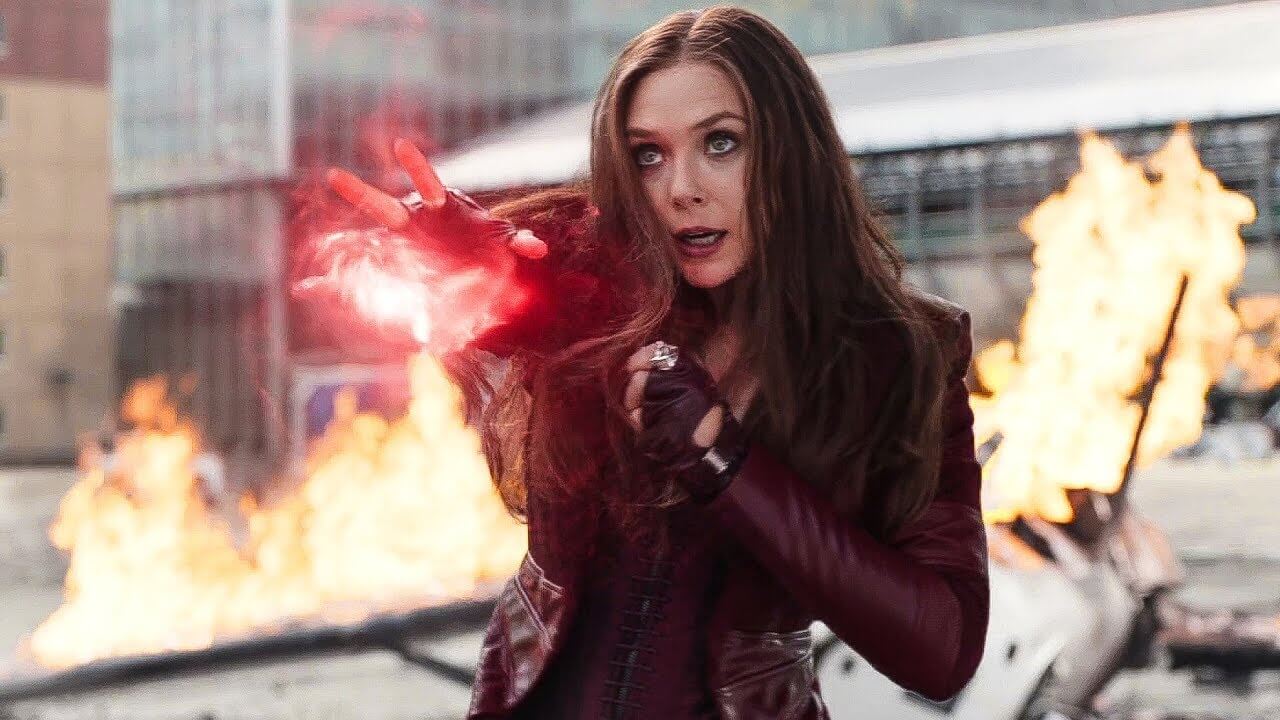
Wanda Maximoff completes the transition from bad woman to part of the Avengers in the movie Avengers: Age of Ultron. Experimented on by HYDRA, along with her twin brother Quicksilver, she developed super powers, such as energy manipulation, telepathy, and telekinesis. Some fans say that these powers make her one of the most powerful people in the MCU. However, in Age of Ultron, it’s also seen that her weakness is her lack of confidence when it comes to her superpowers. It takes Hawkeye to convince her to join the fight against Ultron.

One of her most memorable scenes is in Infinity War. She faces the heartbreaking responsibility of killing the love of her life, Vision, to stop Thanos getting one of the Infinity Stones as no other Avenger is powerful enough to do it. She does this, whilst holding off Thanos, but her efforts are pointless, as Thanos just reverses time to get the stone anyway. Another great scene she has is later on in Endgame where she fights Thanos in the end battle, truly showing him what her powers are capable of.

Captain Marvel

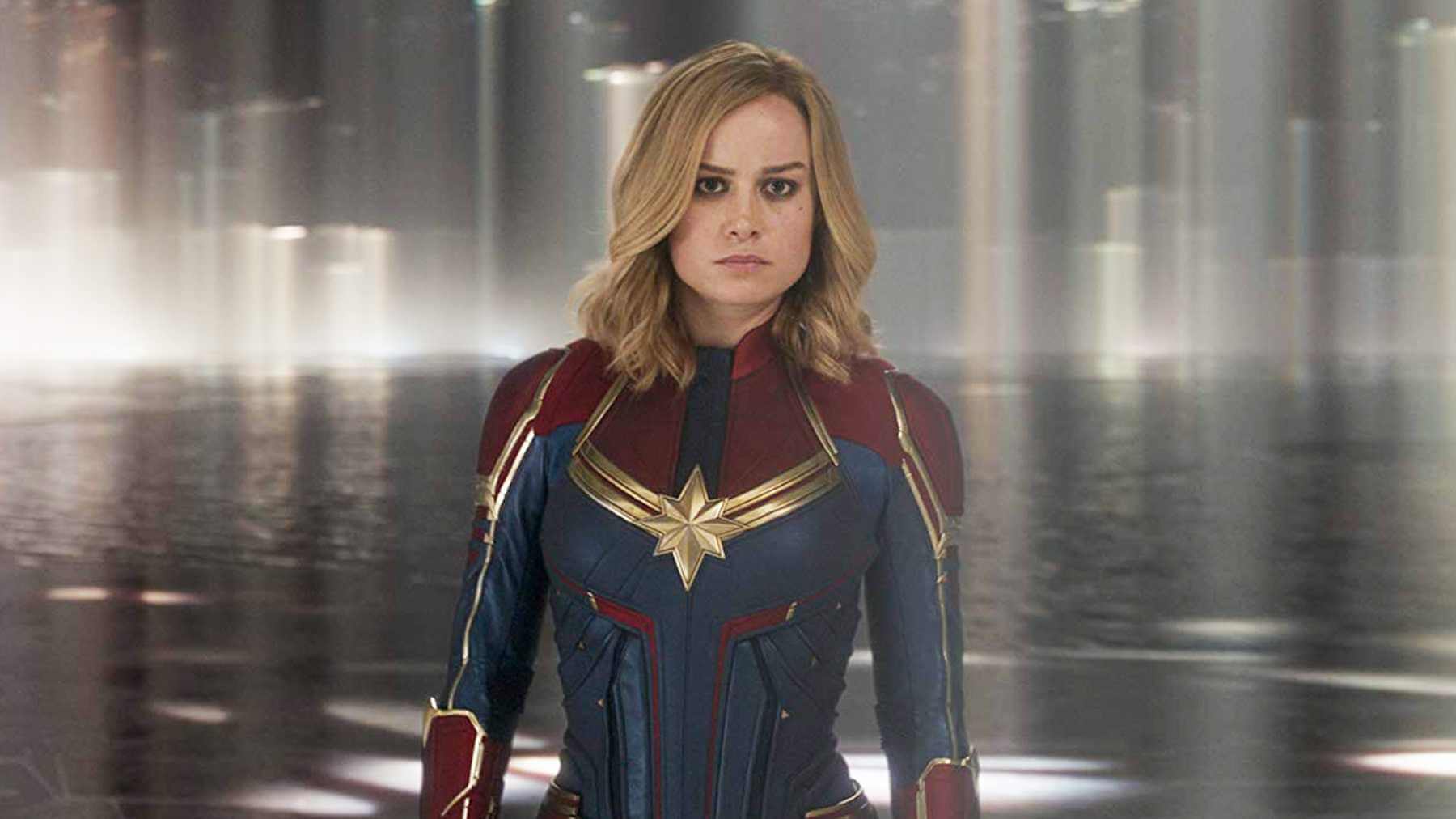
Towards the end of Phase Three, the MCU released Captain Marvel and brought a new character addition to the films with Carol Danvers. Carol was a former fighter pilot who was exposed to the Tesseract’s energy, causing her to develop cosmic powers. She was then given a blood transfusion by the Kree, and became part Kree part human. She has superhuman strength and abilities, and can manipulate and absorb energy. She doesn’t really have any weaknesses, but she can’t deal with magical powers as such.

Apart from her standalone movie, her most memorable moment is saving Iron Man from space in Endgame. Ultimately, she was the only one that could do this, and had she not, the world wouldn’t have been saved from Thanos. Also, coming through in the big battle at the climax of Endgame, and destroying Thanos’s spaceship, was pretty spectacular too.

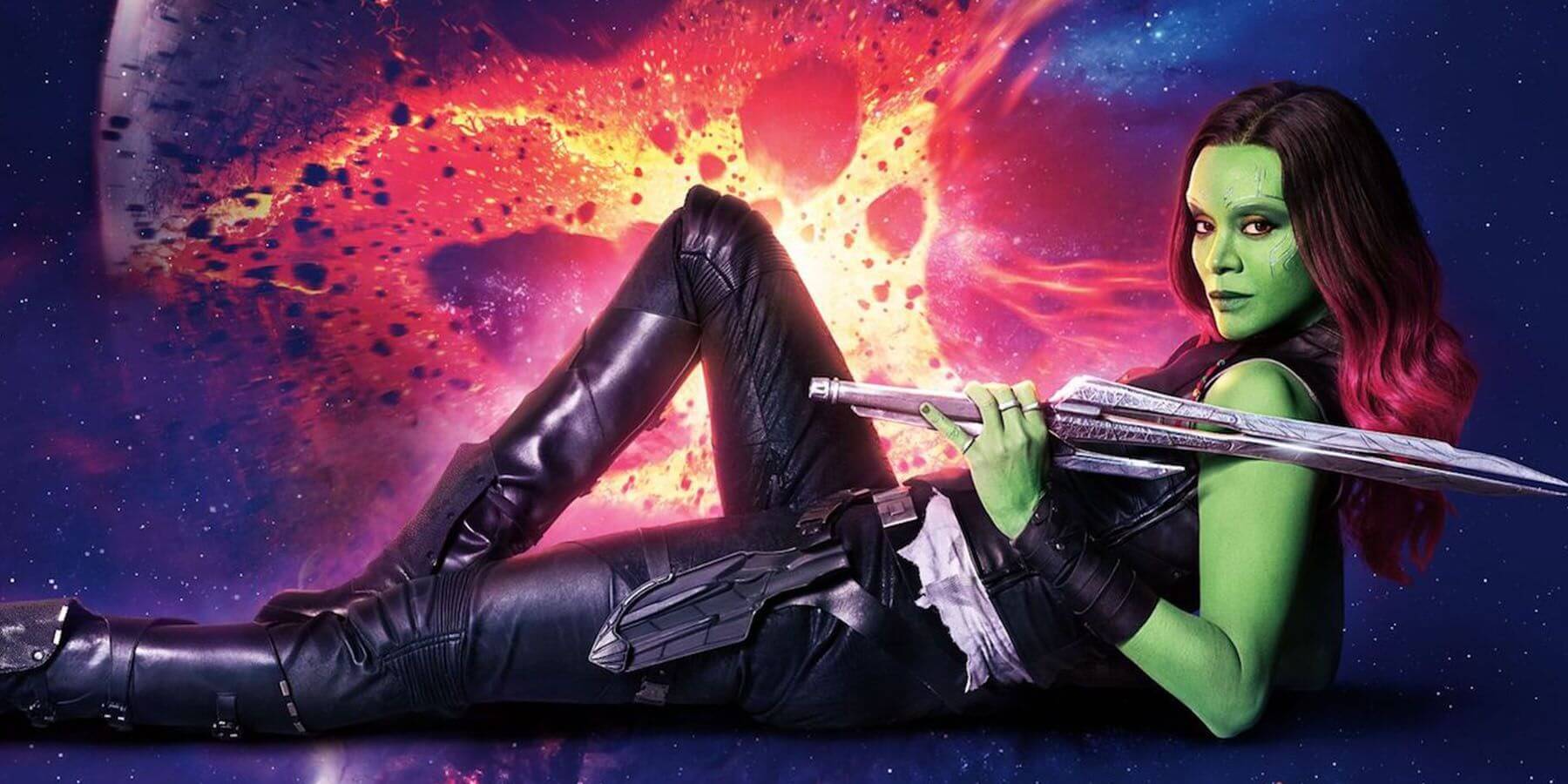
Gamora

Part of the Guardians of the Galaxy, and known as the deadliest woman in the galaxy, Gamora is the adopted child of Thanos, and is another superhero that went from bad to good. Whilst Thanos was destroying half her world, and her parents with it, he took a liking to her and came to think of her as his daughter. He trained her to become a warrior and assassin, giving her superhuman strength, along with agility, meaning she can leap to great heights. She’s also highly skilled with a sword.

In Avengers: Infinity War, fans got to witness heartbreaking scenes as Gamora is sacrificed by Thanos, so he can get the Soul Stone for his gauntlet. He is told that he must kill someone he loves to obtain it, and Gamora is the only person he actually has feelings for. However, she does return in Endgame, as her past self, and assists the Avengers in fighting against Thanos.

Simon Spurrier & Bilquis Evely | THE DREAMING

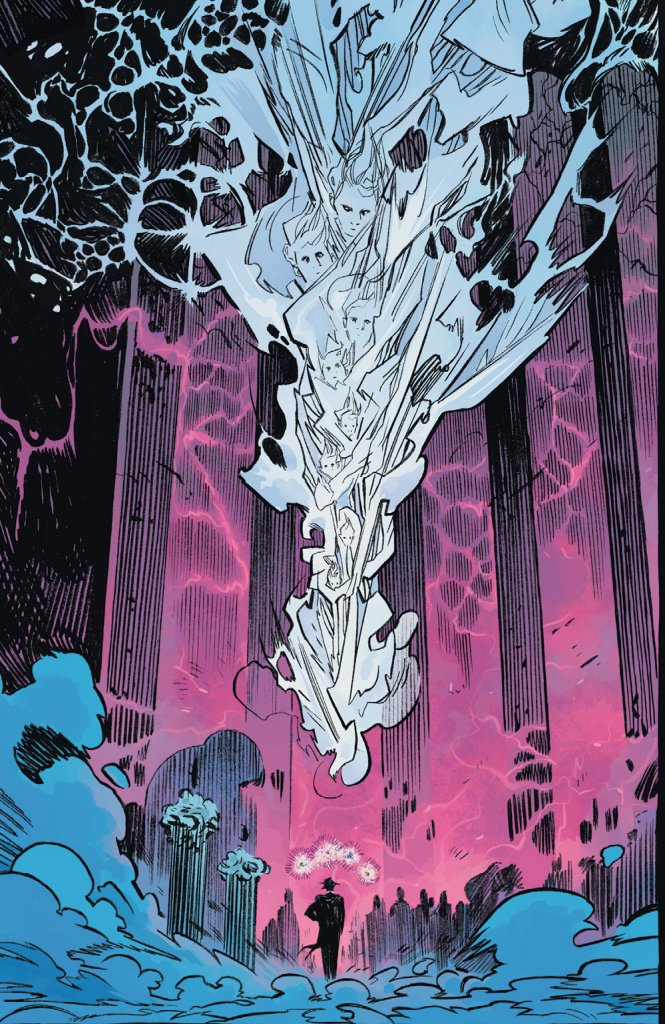
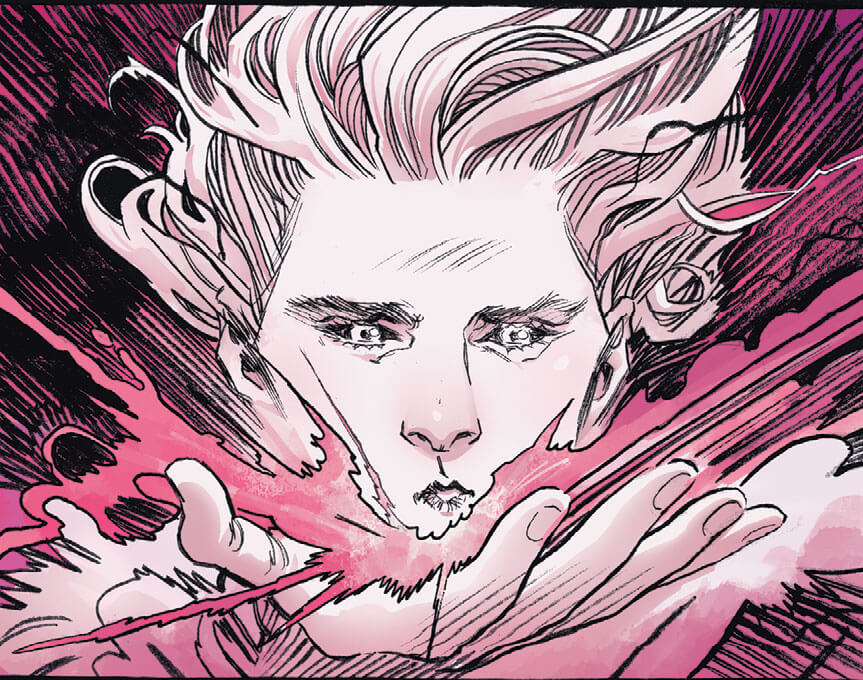
With works ranging from SIX-GUN GORILLA to STAR WARS: DOCTOR APHRA, writer SIMON SPURRIER has demonstrated a range that, even amongst his fellow heavy-hitters, is remarkable. Now, he’s winding down from THE DREAMING, a 20-issue, SANDMAN UNIVERSE-set series he worked on with Brazilian artist BILQUIS EVELY. THE DREAMING is as gripping and mystery-filled as it is profound, a richly told, gorgeously drawn story brimming with the weird, the wonderful, and the wildly imaginative. We caught up with the duo to discuss their wildly successful time spent in Neil Gaiman’s sandbox…

STARBURST: How do you feel, now that the final issue of The Dreaming has hit shelves?

Bilquis Evely: It’s hard to tell. It seems a sense of awe. I still can’t believe I’ve been working on this project for two years! So many things happened, I matured a lot as a professional and as a storyteller. All the study, all the images and layouts, seems endless now and somehow a bit far from me. Maybe it feels like a dream? I hope all the readers enjoy our last chapter. I enjoyed every minute of it. And I couldn’t be more thankful.

Something we’ve noticed about The Dreaming is how effectively it conveys the craziness and the confusion of the subconscious. How difficult was it to blend all of this fantastical, otherworldly stuff together in a way that felt seamless and comprehensible?

Simon Spurrier: Certainly not easy, but it comes with its own set of benefits. When your storytelling canvas is as wide and pluripotent as the shared human unconscious – which, after all, is what the Dreaming ultimately is – it pays to see the endless possibilities as a positive rather than a source of anxiety. You want to tell a tale about a self-help group for troubled monsters? Do it. Want to do a bottle-issue about a comatose girl’s mom grieving? Sure. Or an all-out demonic assault on a fairytale kingdom? Get involved. Like any story, at any scale, as long as you define the rules of the game and make a point of focusing on the human drama rather than getting lost in worldbuilding, you won’t go far wrong. It helps – no, that’s an understatement; it’s critical – that I shared this journey with Bilquis, among a few other exceptional artists. It’s one thing for me to mischievously mash genres and go racing off on flights of narrative fancy one simply couldn’t get away with in any other context, but it’s down to Bilquis’s unparalleled capacity to parse and humanise everything I threw at her that the book works so effortlessly well.

Bilquis, what was the most difficult part of putting this world onto the page? How did it challenge your process?

Bilquis Evely: The most difficult part of drawing The Dreaming were the big montages for the double-pages spread, undoubtedly. It was a different experience for me and took me a while to figure out the best process. Throughout the series, it got more comfortable, but it was always a fun challenge, like a puzzle.

It must have been daunting…

Bilquis Evely: I was very aware of my responsibility, but honestly, no, I wasn’t too intimidated, even knowing the enormity of this universe. Mainly because, since the beginning, I knew the project would match with my art style. Also, I had a couple of months to study everything I could and to develop the line art for the series. So I started the series feeling very comfortable. I felt like I was at home. I didn’t change my process, but as any other project, I changed the art style a little bit according to the atmosphere of the story. The lines are looser, dynamic and more organic than on previous projects, I guess.

Which characters are your favourites to draw? Who were you most excited to draw when you sat down to work on a new issue?

Bilquis Evely: I believe it’s Lucien. He’s an amazing and rich character with an emotional role on, therefore it gave me ample space to explore a range of emotions, which is something I love to do. Besides this, his design is perfect for my taste! Pointed ears and a bow tie. I’ll miss him.

How closely did you stick to Simon’s original script? Was his script super specific about what he wanted, or did he give you room and time to experiment and see what worked?

Bilquis Evely: There are specific descriptions of the script for crucial elements of the story, for example. Still, Si gives me a lovely space to create things, especially visual elements, and also to add my percentage on the storytelling as any good relationship between two creators. Simon has a brilliant imagination, and his visual ideas are incredible, always coming up with new great suggestions throughout the series and also pushing me to bring some innovation. The double-page spread was a bit different from the rest of the pages, with a long description mapping and explaining the whole concept. Then I started with the layouts, adding my visual ideas to make it work properly. But the principles were the same for every page, with a lot of addition from both sides. 

What would you say the thematic through-line of The Dreaming is?

Simon Spurrier: I mean, there are a lot of big chewy themes at work here – each different character has their own, frankly – but I guess, if I had to boil down the central trunk of the tree,  it’s a contemplation of the importance of mystery, irrationality and wonder, no matter how ridiculous, frightening or infuriating they may be.

When writing the last issue, what thoughts, feelings, fears, etc. ran through your head? Were you intimidated at all? 

Simon Spurrier: Oh, hugely intimidated. By definition the world in which it takes place has infinite possibilities, so it really would have been very easy to just keep going forever. But… always leave ‘em wanting more, right? I could see a way to close the main arc I’d been telling which felt honest and powerful, and which ended on a real rock’n’roll magical high, so I took it. Actually, I don’t think I was ever most worried about managing to close-out the big long-running mystery, namely: what happened to Lord Dream, and is there any way to get him back? I was far more nervous about the more human-scale stories, especially for Dora and Lucien. I think in the event they both end the series in a profoundly different, and, for me, more emotionally rich place, than they started it, which I’m taking as a win. Dora, in particular, feels like a character whose journey, through trauma and self-hatred, feels like an important and optimistic road to walk. The only other thing which gave me pause during the project was how the Sandman fanbase would react to the more science-fictiony elements I folded-in. In particular the notion of an artificial sentience which, through no fault of its own, comes to rule the Dreaming in the absence of its proper master. I’ve been really touched by how well that thread has been received. It never ceases to delight me how far you can push the boundaries of fantasy and sci-fi into one another without coming unstuck. They are, ultimately, the same thing: creative contexts in which to tell human stories.

Given the scope of the project, did you have to think, organise, or write differently to produce the book?

Simon Spurrier: Not really. As I’ve said, it’s a matter of context. I tend to believe that as long as a story-world feels functional it doesn’t matter whether it’s a small town in the Bible Belt, a mineral-mine inside the eyeball of a gigantic fish, a super-positional matrix, or a fantastical kingdom that exists in the sleeping minds of humanity. As long as it has internal logic, the characters are what truly matter. Oddly enough, in plot and structural terms, my approach to the series was to mentally position it as a Western. Specifically, it’s the story of a frontier town whose sheriff has disappeared. Seen in that light it doesn’t really matter that the sheriff is in fact an omnipotent anthropomorphic personification who’s been deposed, or that the bad guy is a silicon valley billionaire with a pet A.I. in the shape of a giant moth, nor that the scared townsfolk are the hard-working creators of all human dreams. The story, and the way in which it unfolds, are the same either way… just with a few more demonic sexytimes and the occasional foul-mouthed pumpkin thrown in too.

Do either of you plan on returning to the Sandman Universe?

Bilquis Evely: Oh, yes. Absolutely. The Sandman Universe is a great place for an artist to be. There’s vast space for imagination and artistic freedom and The Sandman Universe has a wonderful editorial team.

Simon Spurrier: Abstractly speaking I’m already there. One of the reasons I chose to wrap-up my run on The Dreaming rather than spinning it out further – and risking overstaying my welcome! – was because DC, and Neil, thought me the right fellow for the job of bringing back John Constantine to a mature audience. Hence the new Hellblazer series. We’re calling it a Sandman Universe title only in as much as it utilises a few hanging threads from Neil’s past oeuvre in order to get John back on his feet to where we need him, but old-school Vertigo Hellblazer fans will immediately recognise their guy. It’s been an absolute joy to bring one of my favourite characters back to his roots: as a surly, swindling, foul-mouthed magician who rarely relies on anything as tawdry as magic – preferring to outsmart opponents – who’s tormented by his many mistakes. The Constantine we present in Hellblazer is that most compelling of archetypes: a bastard with a conscience. We’re taking that story into some very dark – and very surprising – places.

Anything you can tell us about that or any of your other future projects?

I’d urge everyone to check out Alienated from Boom! In essence, it’s a story that asks “what if E.T. had been found not by a well-intentioned kid but three angry teenagers?” Oh, and “what if E.T. turned out to be an extremely hungry super-predator?”

Sold!

All individual issues of THE DREAMING are available through your favourite digital comics platform, with the final trade paperback collection coming July 14th.