Neville Kidd | AMAZING STORIES

kidd amazing

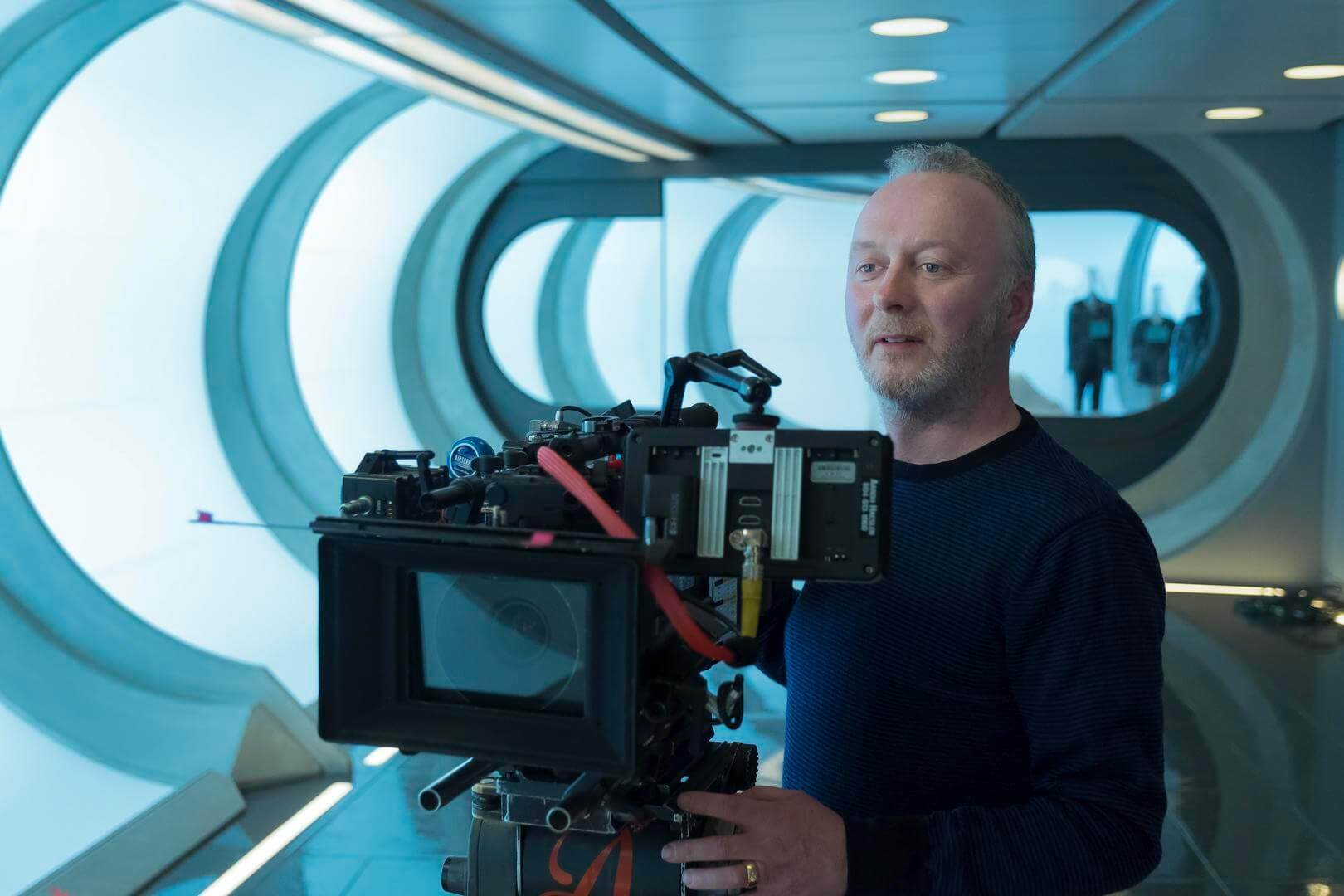
Neville Kidd might not be a name with which you’re familiar, but you certainly know his work. The Edinburgh-born cinematographer and camera operator has served as director of photography on such instant-classic genre fare as Netflix’s Umbrella Academy, the first two seasons of Starz’s Outlander, the Day of the Doctor episode of Doctor Who, and the His Last Vow episode of Sherlock, which won him a Primetime Emmy in 2014.

Kidd’s work is some of the most fascinating, mesmerizing shots in recent genre history, so it was a real treat to speak with him about his career, as well as his latest work, the recent reboot of Amazing Stories for Apple TV+.

STARBURST: Could you, for the benefit of our readers, briefly explain the difference between a director of photography and a cinematographer?

Neville Kidd: Basically the two have married. It used to be that the director of photography was more television and then cinematographers were more for film and cinema. What’s happened, as streaming services popped up in the last five years – where you’re making high-end television at the same quality – the television DPs and your cinematographers are now both working in the streaming industry, so there’s a little bit of a merging of the two.

That makes a lot of sense because series on which you’ve worked recently are definitely more than just your typical drama.

They’re big budget, you know? It’s funny, because when you’re on a Netflix show, you’re not making a television show. You’re basically making a product that people are expecting the same high production value as cinema and I think that’s what people are getting. Game of Thrones started that ball rolling, where you’re getting a kind of binge television drama that’s basically a film that never stops.

It is a very interesting thing to think, but the idea that with streaming, you have television or episodic hour-long programs sitting cheek-by-jowl with Hollywood big-budget movies.

Yep, and the VFX is the same standard, and what’s happening is, again, the crews are crossing over, so when you’re working on series like Altered Carbon the quality of the crew are the guys that shoot the Star Trek movies, Mission: Impossible – all that kind of stuff. To get the standard of that kind of streaming service, you need to bring in the high standard crew, so I think it’s been fantastic to kind of come up through TV ranks. You’re used to working a fast pace, where the big thing about television is you’ve got to complete your date. I know you’ve got to make it on budget, on time.

The majority of your catalog involves so much documentary work before you started to really come to the things I think most of the folks reading this will know like Doctor Who, Outlander, and Sherlock, but it seems that your work in documentaries like would really lend itself especially well to the period piece work that you’ve done. Did you find that that was the case?

I think, living in Scotland, we DPs can cross discipline, you know? Because it’s such a small cottage industry in Scotland, if you were just doing drama, you would starve. We would do drama. We do commercials between documentaries. We would have a foot in each camp to just basically be able to make money, and so I spent a lot of time doing documentaries and always trying to feed the drama side. That’s what I wanted to say in my career, but there just wasn’t enough work in Scotland.

Then, I managed to get on an indie film called Solid Air that was like a show reel for the TV drama directors. After that, I started to get on BBC dramas and that managed to get me into Doctor Who, which then opened the gates to Sherlock.

All of those programs have very distinct visual styles, many of which are very different from one another. Doctor Who is different from Outlander is different from Sherlock is different from the Umbrella Academy. That last one, especially, is almost another thing entirely. How do you like coming into a program that already has a distinct visual style; how do you adapt how you work for these various programs?

Well, I think Doctor Who was quite good because it was almost like an anthology. It was like they were little movies within their own rights so you could put your own style on it, obviously with collaboration with the director and Steven Moffat. It was always going to different times. It was going to different places, different planets, or whatever, so you could go pretty out there with your style and lighting. I think that’s one thing I’ve always tried to do, is try and be different.

The same with Sherlock, which was, at that time, the best looking show in the UK, so really, you’ve been given the prize of British television and you’ve got to keep standards going up. I think that’s always a challenge. And that’s what was fantastic about working on Umbrella Academy. From a DP’s point view, you’re in heaven when your own style is at the beginning of a show and it ties on to the whole season.
The thing that we were most intrigued about with Umbrella Academy is because you’re taking not just storyboards or director’s vision. There is already a pre-existing visual style with Gabriel Ba’s artwork from the graphic novel. What is that like for you?

You’re taking something that’s so weird, and that world where one of the characters is a gorilla with a human head. You have these crazy, fantastic characters and you have to make that believable and that’s the challenge I love. I think we kind of – hopefully – we got it right. The success we had is the second biggest drama show on Netflix, but I think we just managed to get something that people believed could be possible. For the hour that they sat and watched an episode, they bought it and they went inside the world that we created and they stuck with it.

As a DP, you’ve got to try and grab people’s attention and keep it for that hour or however long they binge on the show. They never have to leave your world.

We feel everything you just said is almost equally applicable to Amazing Stories. Were you familiar with the original series when you began working on it and the pedigree that it had?

Because we didn’t have that in the UK, I did my homework and I watched all the older episodes and really enjoyed it, but I think we were kind of slightly reinventing Amazing Stories. We were kind of updating it into the world which exists now. I think that was one of the challenges for each director and DP: to tell a new amazing story in 2020.

Do you find yourself attracted to genre work or is that just how it has happened for you?

I think I’m always attracted to the challenge and I think I’ve probably slipped into that kind of genre of work because I like to kind of do something different. I think if you look back on my work – from Doctor Who to Sherlock to Outlander to Umbrella Academy to Altered Carbon – you know these are wildly different styles.

Very true. We imagine something of the appeal of Outlander is that you’re getting to do essentially a period drama but it has these little sprinklings of ‘other’ in there.

It’s two degrees to the left. Umbrella Academy‘s a world that we’re kind of familiar with, but it’s not quite right, in the same way that Doctor Who was always a world that didn’t exist or on a non-planet. Sherlock was a world where the main character was so clever, the camerawork had to kind of match it. That was the great challenge of Sherlock: you had to make the camera match the genius of Sherlock. I think with Amazing Stories, my job is to give the vision of the director, the writer, and the showrunner and put that into visual form. I always love to be intimate with my storytelling; to make it feel as natural and real in the environment as the story setting.

AMAZING STORIES is available now on Apple+.


Three Great Movies They Should Never Attempt to Reboot

It’s generally accepted now that we live in an era of the Hollywood reboot – remake, prequel, not-exactly-a-prequel, and sequel. Critics and movie journalists seem to have all but given up in criticising the trend, knowing that it is like trying to hold back the tide. If you take any previously popular film, there is more than a fair chance that you’ll find rumour reporting that it is being considered for a reboot.

From a business standpoint, it’s difficult to argue with; who wouldn’t be excited to hear Taika Waititi was set to direct Back to the Future 4? Or, that someone like Jordan Peele was going to have a crack at bringing The Lawnmower Man to the big screen, and we could then all forget the 1992 adaptation of Stephen King’s short story? The market has spoken, and the deep mining of nostalgia seems more likely than not to strike gold.

But we can argue that some movies should not be rebooted. Not because they are perfect, or that they represent some kind of hallowed artistic output. Instead, it’s a sense that certain films had a zeitgeist-like quality; they arrived at a particular point in history, and they worked because they said something that resonated with the audiences of that time. Here are five such movies we believe fit that bill:

The Breakfast Club (1985)

In truth, we could have picked several of John Hughes’ coming-of-age teen flicks, but the Breakfast Club seems most suitable for our purposes here. Watching back 35 years later, you can see that the characters were – or have become – stereotypes. But the film works because of its clichés, not in spite of them. For Hughes’ mid-80s audience, there was a strong reaction to seeing certain character traits blown up 10×10 on screen.


People like Judd Nelson’s Bender did not exist in real life, but parts of the character did. And, that needed to be underscored with caricature-like portrayals of The Rebel, The Jock, The Nerd, and so on. The dynamics of those stereotypes would no longer resonate with a modern teen audience. Without them, there is no longer much of a film to remake. There are still jocks, nerds, and beauty queens in high schools, but they have different stories to tell. It’s not this one.

Grease (1978)

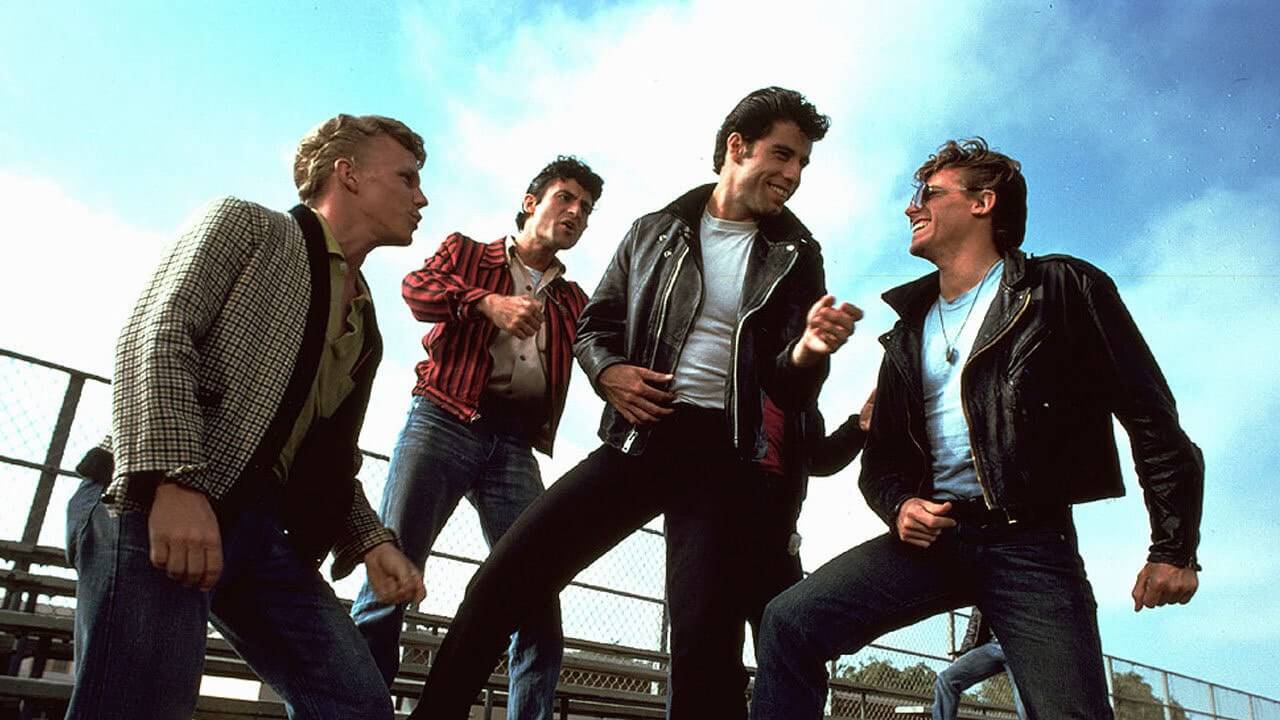
You can’t always judge a movie before you’ve seen it, but the news that Paramount is working on a Grease prequel – a movie about the summer romance between Sandy and Danny – seems like a terrible idea. Like Breakfast Club above, Grease relied on caricature and stereotype, but, in this case, it did not hold up a mirror to the audience. Instead, it looked at the previous generation, perhaps the parents of the target audience. It took aim at the 1950s in a way that could only be fully appreciated in the 1970s. That’s not to say modern teenagers don’t get Grease, as they most certainly do. But there is still a disconnect from some of the elements that made Grease special.

There is also a lack of fandom surrounding Grease. The movie is incredibly popular, sure. But it’s not as if you would see posters of the Thunderbirds adorning college dorm walls. We found a Grease slot machine at a casino games website in Canada, but it’s difficult to find much in the way of fandom outside of the movie itself. And, that’s part of the point. Grease feels like a timeless movie – it is a timeless movie. However, it was also a way of saying, “we are here at this point, and we are looking back to this point”. Maybe we will all fall in love with Sandy and Danny when Summer Nights hits cinemas, but Grease was more than a romance with some catchy singalong tunes.

A Clockwork Orange (1971)

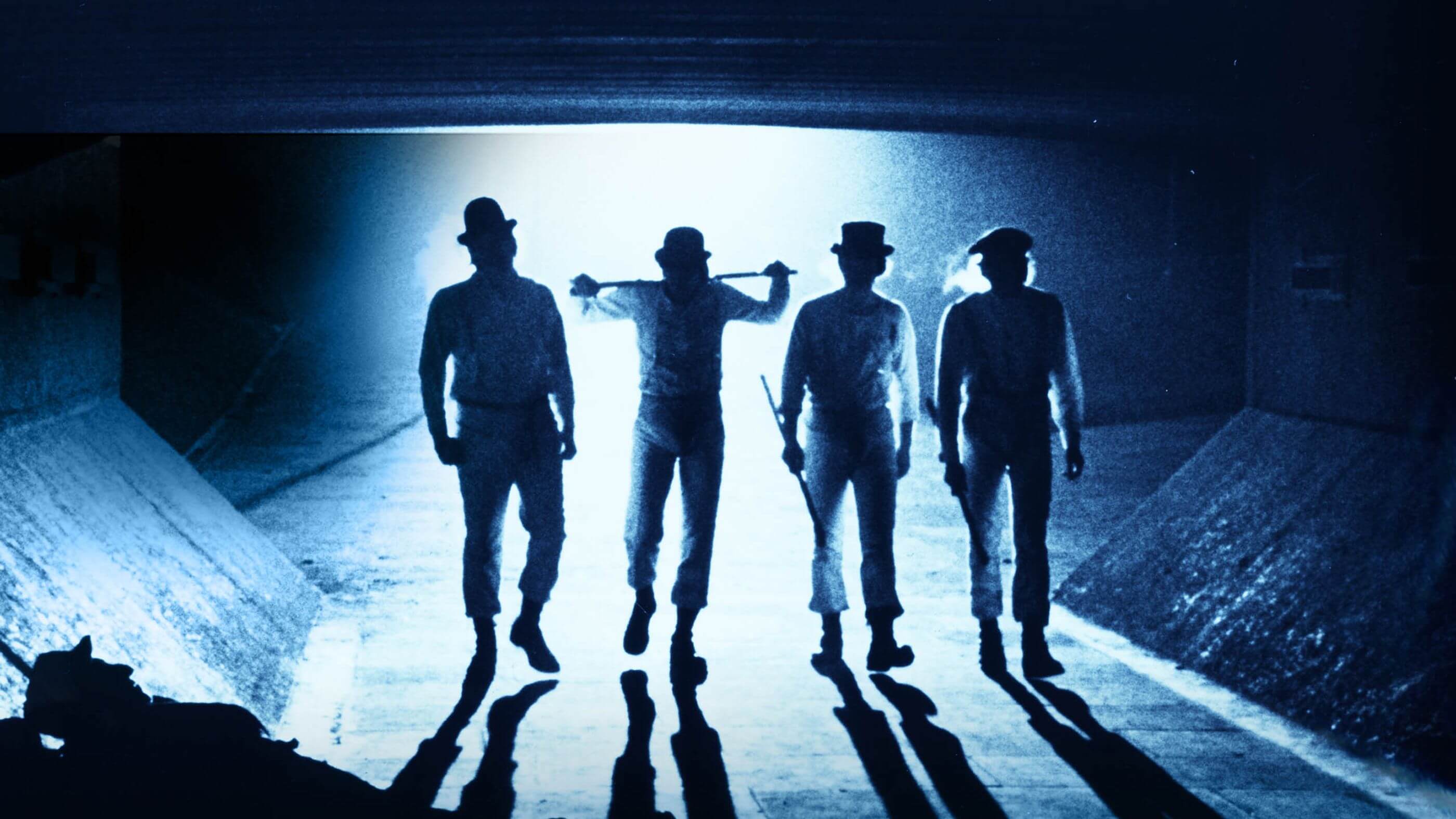
You would have a tough time pitching the ultra-violence of Anthony Burgess’ masterful novel to Hollywood execs now, and it’s really difficult to picture anyone but Stanley Kubrick at the helm. Moreover, it’s one of the few major films that gets overlooked for the remake buzz within the internet’s churning rumour mill. Why is that the case? It’s hard to say, but one feels like A Clockwork Orange is a tale that only needed to be told once in cinema.

We can go a little further here, though, and say that there was something of right place at the right time element to it. Kubrick could have made the movie ten years later, sure, but the cinematography of a decaying London emerging into the 1970s seemed to fit Burgess’ vision more than any other era. Like so many other great movies of the period, many of which could have made this list, it captures that gear shift from the optimism of the ’60s to the weariness of the 1970s. At almost 50 years old, it still remains a rough diamond in no need of polish.

Top 5 Movies About Gambling Every Gamer Must Watch

As a responsible gambler, you understand the need for regular breaks from gaming. Watching movies is a great pastime when away from gambling to consider.

Here are some of the best gambling movies that you have to watch;

  1. Ocean’s 11 (2001)

If you are looking for a movie that comes with the A-list characters and a great storyline that falls in place, then Ocean’s 11 is your stuff. The film is about a smooth operator from prison through parole. Instead of keeping a low profile for reforms, he sets to rob not one but three casinos.

Starring George Clooney and Brad Pitt, this movie makes you feel upping your slot game the next time you are in one.

  1. Molly’s Game (2007)

Most successful people have stories about their turning points in life. The same applies to the movie’s protagonist, whose point comes after a horrible accident while training for the Olympic qualifiers. Instead of heading to the law school later, as was the plan, Molly moves to Los Angeles to become the queen of the underground poker world.

Based on the real story of Molly Bloom, this award-winning film shows some of the best acts in Idris Elba, Jeremy Strong, and Kevin Costner.

  1. Casino (1995)

No significant casino movie list is ever complete without the Gambler. As one of the most popular casino movies, the film stars Robert De Nero, Joe Pesci Star, and Sharon Stone.

The film is all about the mob-controlled gambling scene in Las Vegas. De Nero runs the casinos on behalf of the mob bosses, while Joe Pesci is the trouble maker through his reckless stealing and murder.

The film manages to hold you through the memorable scenes and the high stakes.

  1. The Gambler (2014)

One of the top concerns that come with gambling is the prevalence of gambling problem. Even though most legislations are in place to help curb the menace, it is a significant challenge for most gamers. If you are looking for a movie that tackles problem gambling, there is none better than The Gambler.

The film explores the world of panic gambling, where the character loathes losing a game. It goes deeper into the world of chasing losses until it becomes an obsession. Watch this movie as a reminder for the need to keep a check while gambling.

  1. Casino Royale (2006)

No James Bond movie lover does not appreciate the great work that is Casino Royale. Starting Daniele Craig in one of his earliest roles as James Bond, the movie is all about a rookie agent following a high flying terrorist financier. The plan is to defeat him in a poker game he is using to raise money for the organization. The film comes with all the thrills and emotions due to the all-stake nature that keeps you rooting for James Bond without even realising it.

Bottom Line

Your time away from gambling does not have to be any gloomy. Use this list of movies to keep you glued to your screens.

Erica Lindbeck | FINAL FANTASY VII REMAKE

To celebrate the recent release of Final Fantasy VII Remake on PS4, we had the absolute privilege of chatting with Erica Lindbeck who portrays Avalanche member Jessie Rasberry in the masterful retelling of this incredible story. We talked with her about her character, the reaction of the fans and her incredible career in voice acting so far.

STARBURST: Congratulations on the launch of the game! It’s an absolute masterpiece and a big part of that is the voice casts performance including your own!

ERICA LINDBECK: Thank you so much! It’s so amazing to see the game get overwhelmingly positive reviews from every corner of the world. I’ve been on this project for over five years so to see the game not only finally come out but also receive such incredible reviews it feels like a dream.

Final Fantasy VII is arguably the biggest game in the history of gaming – with millions of fans the world over. How proud are you to be a part of the continued legacy of this beloved franchise by playing Jessie in Remake?

I remember the PlayStation experience in 2015 when the first trailer containing dialogue came out and I actually had the first line of English dialogue in the trailer which just blew my mind (Gideon Emery as Biggs and myself as Jessie were the first to be cast because of the trailer). I truly can’t even properly express how grateful I am to be involved with this amazing project. I could’ve never imagined as well how much people were going to love Jessie! [laughs] I mean, you’ve already got Tifa and Aerith as the two big female characters and then for Jessie to come along and steal the spotlight if you will is amazing to see. Back when I booked the role, I wasn’t super familiar with the original Final Fantasy VII. My experience with Final Fantasy is pretty weird as I’ve never played the games but I watched Final Fantasy VII Advent Children and was super confused with what was happening – and before too long I was on YouTube watching all of the Crisis Core cutscenes and that’s how I become obsessed with the lore and knew everything I needed to know about the main characters and their story.

When they first started to release screenshots for Remake and I first saw Jessie I had no idea who she was, but someone said to me that she had never had a voice. So when I booked the role I expected her to be a super small role but when I started working on it, it was so much more than that – and the fact she had the first voice lines in the trailer. In the original, she is a side character, but still well-loved, and in Remake with Avalanche’s story being expanded upon, I was still shocked to see how much of Jessie you actually get to experience.

You play Jessie Rasberry (which is the best surname ever in gaming). In the original game she was classed as a minor character but in Remake she has been incredibly well fleshed out (thanks to the writing and your performance) and now, in a lot of people’s eyes is seen as such an important part of the story. How does that make you feel?

It’s a dream to hear from people how much she is loved – so so positive. What’s also really cool is that I got the chance to originate her by being the first person to voice her – it’s also a relief as there’s no one for anyone to compare me to [laughs]. It’s one thing to be a part of a game that people love but it’s a whole other animal to be a character that people love within that game. Her story is so interesting and to be a part of that is just a total joy and honour. I still can’t believe it happened really! [laughs]

Before we properly get onto Remake, I wanted to talk a little about your career and your history. Where did your love of acting begin?

My goal was always to do film and/or theatre. I majored in Theatre at UCLA, it’s pretty much all I did throughout Middle School and High School. I grew up in North Carolina and it’s kind of the only thing I felt any sort of passion for. The voice-over gigs were always running parallel to theatre – that all stemmed from my love of video games and anime. I adore anime. Always will. I would come home from school every day and I’d put on Bleach or Hellsing or Naruto or whatever was on at the time and I just loved it because it understood me in a way that nothing else did. I remember my little brother actually had gaming consoles and I remember picking up Modern Warfare 2 and loved it – I started to play that online – and Assassin’s Creed. I loved all of those but I never thought that I wanted to do voices in games. Bioshock was the first game where the voice acting really stood out to me.

As I said, I’m a huge fan of Hellsing, so in my sophomore year at college I went to a class run by Crispin Freeman, who voices Alucard – if I must admit it, I went not because I wanted to learn voice acting but I just really wanted to meet Crispin! [laughs] So I went and read – he’s a fantastic teacher – and then took his other classes and got really interested in everything I was learning. At first, I wasn’t very good because I was trying to dub with these preconceived notions of these character tropes in Anime but then in my senior year of college UCLA brought in some alumni including Fred Tatasciore, who voices the Incredible Hulk and Soldier 76 for example, and he came in to talk to us and I was so fascinated with what he had to say and share. I ended up at the end of my senior year to make voice over demos as well as on-camera demos just because I had learned all these skills and it could open up so many more opportunities for me, which it did.

What are some of your favourite games that you’ve played?

When I was much younger, I would play Sims and Zoo Tycoon and Sid Meier’s Pirates – I love Naval Warfare games [laughs]. After COD and Assassin’s Creed, I moved onto Bioshock, those were really the games that shaped my taste as far as games go. A lot more recently I’ve gotten super into indie games.

Can you tell us about some of the other fantastic roles and projects you have been a part of?

When I started off with my agency I actually booked some anime by myself and then after a while, I booked incidentals in The Division, I was so incredibly stoked to play, you know, Vendor 1 and Civilian 3. And then the month after that, I booked the voice of Barbie – and because they were overhauling the brand, I got put on every single Barbie project. And because of that, I was able to pay my rent and most importantly I was able to adopt a cat [laughs]. The vast majority of my work is games, I still do anime from time to time, but games are the focus. I’m the voice of Futaba Sakura in Person 5, Miriam in Bloodstained: Ritual of the Night, Cassie Cage in Mortal Kombat 11 and Black Cat in Marvel’s Spider-Man – it’s crazy because I still feel like such a student yet so many people have said to me “You’ve done so much”. I also recognise how lucky I’ve been too.

I also want to mention the YouTube animated series I’m involved with called Helluva Boss where I voice Loona – we shot the pilot and it instantly became insanely popular so now we are working on more episodes which is very exciting.

Back onto Final Fantasy VII Remake, what drew you personally to the character of Jessie?

Nothing really stood out to me at the very beginning – a lot of the time we audition for parts and take what we can get. Nothing quote-unquote drew me to the character when I booked the role, but I remember when we did the trailer way back when and by then I knew exactly what Jessie’s journey in the game entails and just seeing everything come together made me very emotional as by then I had fallen in love with the character.

Cloud and Jessie’s relationship growth throughout Remake is simply wonderful – how did you approach bringing this to life during your performance?

Cody did an amazing job as Cloud – capturing the awkwardness about his character and his reactions to the people around him, especially when he’s with Jessie. I was reading a lot of hot takes on his character on how he doesn’t know how to handle a lot of stuff [laughs], I love it. He doesn’t know to handle Jessie and that’s something that I truly relate to as I think that a lot of people don’t know how to handle me [laughs]. That’s what I brought to it and that’s something that helped me connect to Jessie even more [laughs]. Their relationship is just such a blast for me as a performer to see evolve and for the players as well.

What were some of your favourite moments as Jessie when voicing her?

For me, anytime I got to yell “Cloud”, I just freaked out. Those moments just made me think “how did I even get here?” [laughs]. It’s like when I booked Futaba in Persona 5 and I got to yell “Joker” and “Persona” – just the idea of that was so crazy. I love the banter with Cloud throughout the game – she’s just so light-hearted and warm, I love her so much.

Have you become friends with the rest of the cast?

I’ve met Cody, John, Gideon, Matt, Briana, Britt – all of these people are just incredible and wonderful and the loveliest people ever. There’s not a diva amongst them [laughs], they are just so, so lovely and I’m so glad to be a part of this Final Fantasy family. We were all planning on hanging out around launch but with the lockdown, we haven’t been able to do that yet, but we will as soon as we can.

We’ve seen people posting online that they want a spin-off game or movie featuring Jessie, Biggs and Wedge. Would you be up for that?

Absolutely, that would be super, super fun! [laughs]

Can you tell us about any of your other upcoming projects?

I just did a game called XCOM: Chimera Squad where I voice a character called Torque – the funny thing was that I didn’t know she was a freaking snake until the game came out! [laughs] I’m also involved with DONTNOD’s latest game called “Tell Me Why” that comes out later this year and the cool thing is that the main character is transgender and that’s so great to see in gaming. As previously mentioned, I’m also working on more of that YouTube animated Helluva Boss which is incredibly fun.

To Baldly Go… Looking Back on STAR TREK: THE NEXT GENERATION

next generation

Purists may argue that The Original Series is the only offering in the franchise worthy of merit; however, the next time you’re in Ten Forward and some misguided soul tosses off TNG as a watered-down, family-oriented space opera, throw some of these facts at them before you down your shot of synthehol and saunter away. Of all of Star Trek’s incarnations, TNG was the longest-running, spanning seven seasons and 178 episodes. It received 19 Emmy awards and is the first and only syndicated show to be nominated for the Emmy for Best Dramatic Series.

If that isn’t enough to silence any naysayers, how about gently reminding them (read: shove it in their faces) that TNG is the only version of Star Trek to receive a Peabody Award for 1987’s fantastic ode to film noir, ‘The Big Goodbye’. Not too shabby for a show that Roddenberry was initially reluctant to take on.

After being bolstered by the success of 1986’s Star Trek IV: The Voyage Home, Paramount executives were looking for a way to cash in on the series’ popularity without having to pay the now hefty salaries of stars William Shatner and Leonard Nimoy. Roddenberry declined to be involved at first, recalling the strain TOS put on his family. But when Paramount dangled the first-run syndication carrot in front of his face and offered him total control, he came around.

Roddenberry assembled a team of Star Trek veterans and requested that Paramount executive Rick Berman be brought in to co-produce. They then set about imagining what kind of Starfleet would exist for the Federation of Planets 100 years after Kirk and his crew set sail on their five-year mission. In this reimagined world, the Klingons were now our tenuous allies, and the Enterprise wasn’t just on an exploratory journey – they carried a message of peace as well.

In this new Star Trek, deployments could be indefinite if ships carried all the trappings of home. Given that level of comfort, Roddenberry believed officers would no longer engage in petty power struggles or crabby banter. The bridge crew would become more like family – a creative point he insisted on that frustrated writers who wanted to mine personal strife for dramatic plotlines.

But despite their initial misgivings about his vision, the result was that this family-friendly, peaceful direction served to open the characters up to viewers. It allowed us to look at the bridge crew as people like us. These were friends who loved and laughed together. We could identify with them and see a little of ourselves inside each one.

Behind the gruff exterior of Security Chief Lt. Worf, we saw a man struggling to reconcile his Klingon roots with the love he had for the human race that adopted him when he was abandoned. There was pure goodness and honour in Lt. Cmdr. Geordi LaForge. Our hearts broke to watch his struggle with sight – appreciating his gift of infrared vision but knowing that deep down all he wanted was to see a sunset.

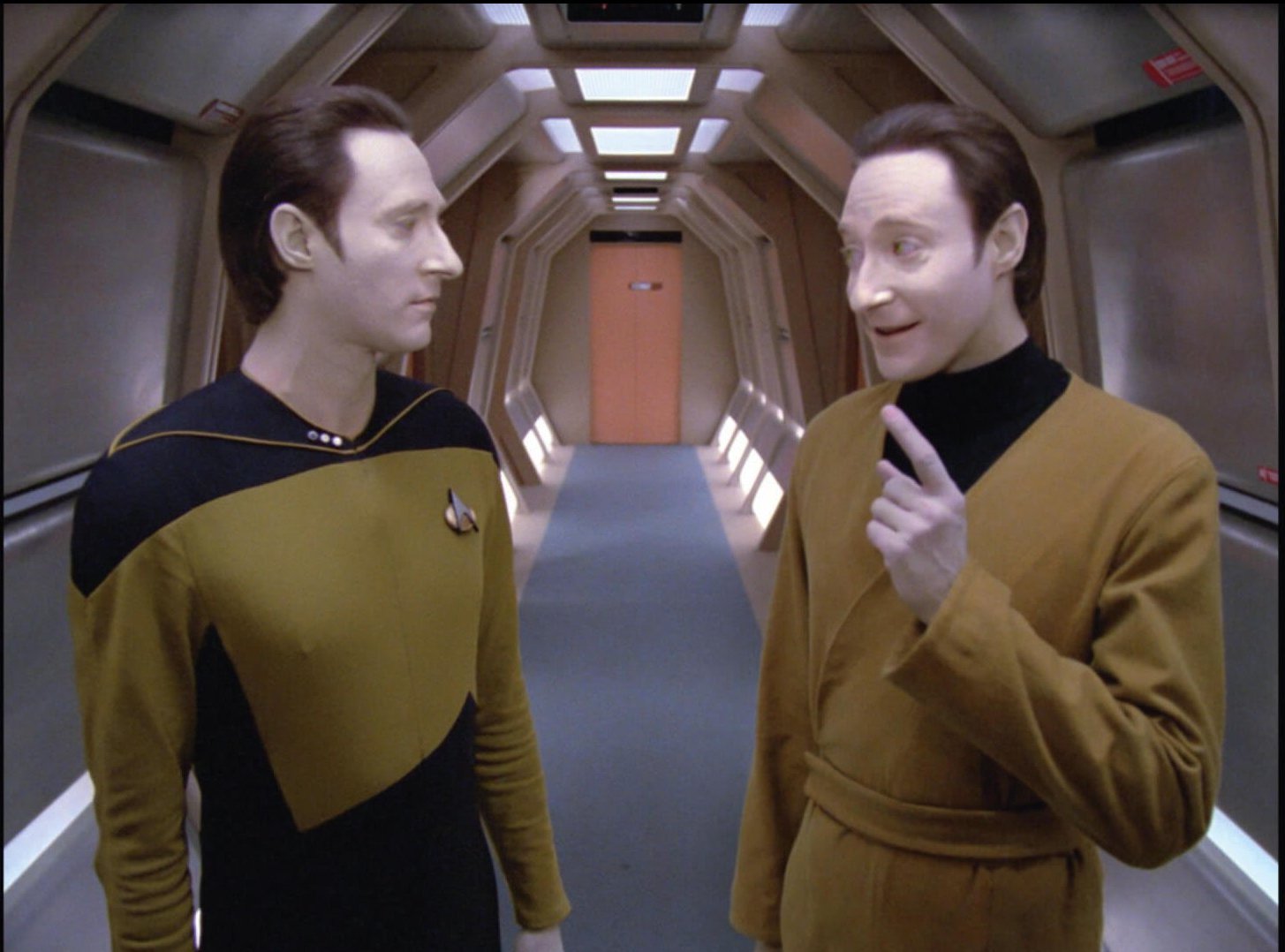
We laughed as Geordi struggled to explain humanity to his best friend, Lt. Cmdr. Data. His programmed devotion to pure logic coupled with his inability to lie carried the ‘straight man’ torch of Spock over to this new show. But Data’s child-like quest to learn what it means to be human mirrored our confusion as we grew up and learned of complex concepts like humour, deceit, and lust, and how to convey those feelings.

In the crew of the Enterprise, Data found a family that loved him and patiently tried to teach him the intricacies of humanity. The dashing, ‘coolest guy in the room’ older brother charm of Riker and sisterly empathy of Deanna helped guide him towards a better understanding of relationships. Dr Crusher wasn’t just a figurative mother-figure; she was a mother of her son as well. Her experiences as a single parent struggling to raise a teenage son while holding onto her career was a direct reflection of the lives of many TNG viewers, this writer’s own home included.

This makeshift family (and in the case of the Crushers, real family) all rested on the shoulders of our Captain. Fans can argue forever which Captain was superior, but in making TNG a show that focused equally on adventure, drama and relationships, we were given an insight into Jean-Luc Picard we were never afforded with James T. Kirk.

Here was a Commanding Officer who was flawed – a leader with a troubled past who grew into his command. Picard wasn’t a mythical, swashbuckling charmer. He made mistakes. He led with his heart and tried not to take it personally when his crew questioned his motives. He was cultured, learned, creative – and only rarely did he get the girl. But when he did, she was quality.

There is such a difference between Kirk and Picard that arguing over which one is the better Captain is irrelevant. Yes, we believe in a world where fans can love both men equally, see them both for their own merits, their strengths and weaknesses.

Ah, the strengths and weaknesses – that is what many believe made Sir Patrick Stewart’s performance as Jean-Luc Picard so electric. He portrayed Picard as a brave leader whose courage influenced his character just as much as his flaws did, and it made him instantly identifiable. Not bad for an actor that Roddenberry was initially completely against casting.

It was early TNG (and TOS) producer Robert Justman who discovered Stewart at a UCLA reading of Shakespeare. He only needed to utter his first line, and Justman was sold. But getting Roddenberry on board proved to be incredibly difficult. Justman recalled in an interview with the BBC: “He wouldn’t have him and he wouldn’t tell me why. But I knew why. I knew he had conceived of a Frenchman who was masculine, virile and had a lot of hair. Patrick didn’t fit that at all. Patrick was not so handsome, he was distinctive, and he was quite bald. Quite bald.

After Rick Berman saw Stewart on film, he was sold as well, and together they finessed Roddenberry until he eventually came around. Stewart himself spoke with Deadline Hollywood about how he initially couldn’t believe he had been cast as such an iconic character: “Why would they cast a middle-aged, bald English Shakespearean actor in this iconic role as captain of the Enterprise? It made no sense – it all felt borderline lunatic back then.

It took Stewart some time to grow into his role, but the resulting seven seasons of TNG live on as one of the best dramas ever created for television, which is why it is so frustrating for fans that the TNG era films never entirely delivered. After four films that failed to live up to expectations, the crew of the Next Generation was retired, and the franchise was to be reborn with J.J. Abrams’ reimagining of the original characters.

We want a future where poverty and hunger are things of the past. We know that we will never lose our love for exploration, or our desire to promote goodness throughout the universe while still being badasses about it. We love Star Trek because it reflects everything great about humanity. So no matter what happens, we still have hope in Roddenberry’s vision of the future, and we keep trekking because we believe in it with all our hearts.

STAR TREK: THE NEXT GENERATION will be screened from the begining on Horror Channel from May 6th. Sky 317, Virgin 149, Freeview 70, Freesat 138.

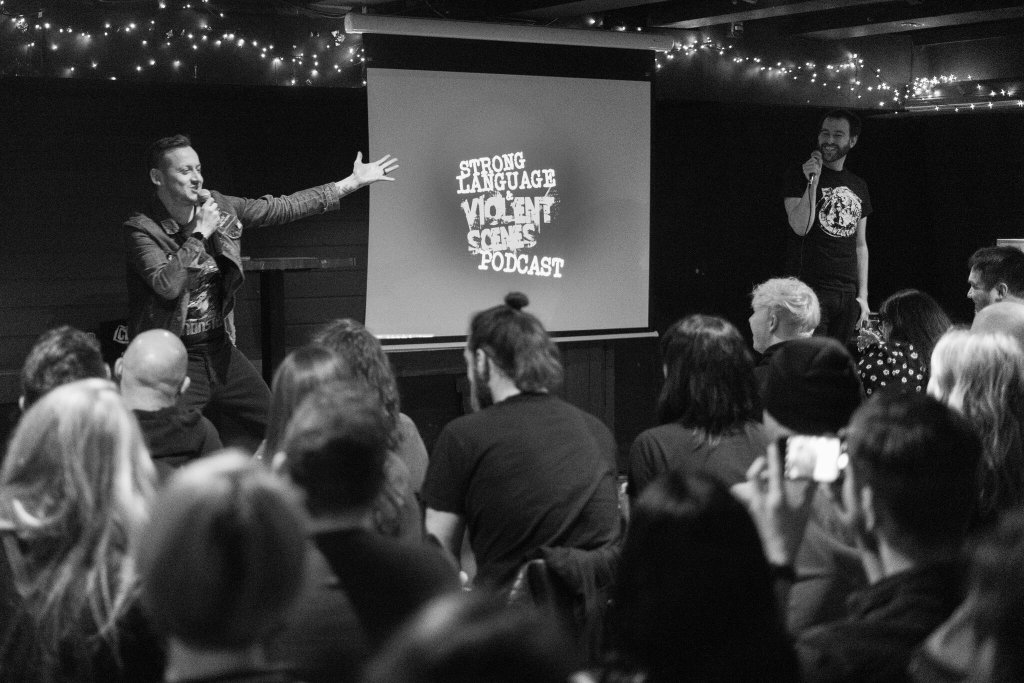
Mitch Bain & Andy Stewart Talk STRONG LANGUAGE AND VIOLENT SCENES

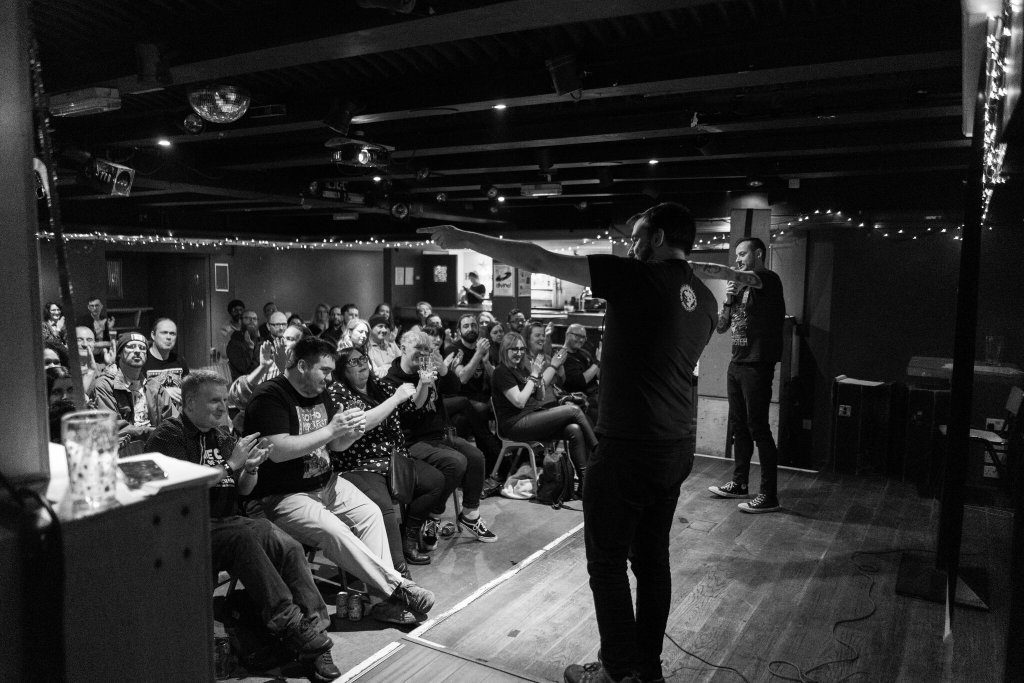
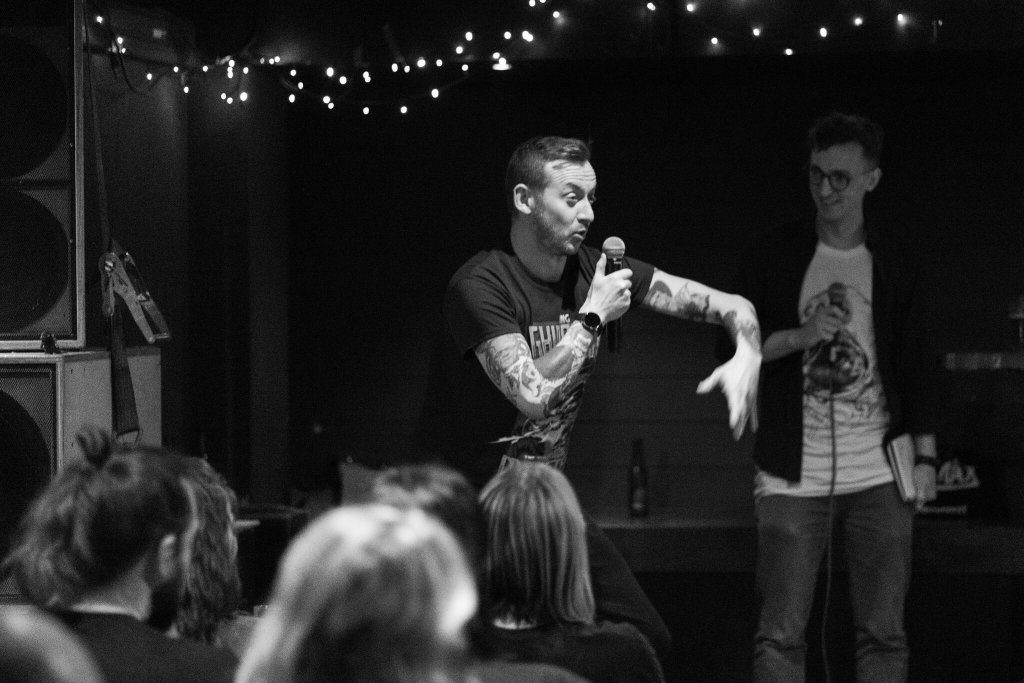
STRONG LANGUAGE AND VIOLENT SCENES is “the podcast giving a second chance to films that might not deserve them.” Hosted by filmmaker ANDY STEWART and musician MITCH BAIN, each episode sees them joined by a guest who defends a favourite horror movie with a poor reputation, and hilarity ensues…

STARBURST: How did the idea for the podcast come about?

Mitch Bain: When I first moved to Glasgow I didn’t really know many people, although I kind of knew Andy from general horror circles. We’d loosely become friends before then and we fell into a routine where I’d go to Andy and his wife Jackie’s house each week.

Andy Stewart: We wanted to make sure you were getting at least one hot meal a week. We’d also put on generally shitty films and as we were watching we’d talk shit about them.

MB: It eventually got to a point where, I think it was while watching Slugs, we were a couple of bottles of wine in and one of us wondered if there was room to do something with it, which makes it sound like ‘We started watching this and both realised we were hilarious!’ We spent about three months working the kinks out of the idea and coming up with some stuff, making it sound good, and lining up a few guests. We were really lucky after we started, with a bunch of people we had no business getting being very willing to come on and talk shite for a couple of hours. 

How do you decide what films are talked about?

AS: That is always the guest’s choice. Sometimes we’ll receive a selection and we’ll pick something from the choices. For the most recent live show with Graham Hughes, Godzilla topped his list and we decided that would be the funniest to talk about. Sometimes it comes down to what we think has the most value, but then in the case of other films like The Ninth Configuration with Heather Buckley, we’ll decide a film deserves to be talked about, despite it not being the easiest to laugh and joke about. We don’t always go for the daftest film where I can get in the most dick jokes.

MB: The Ninth Configuration is probably a really good example of what we’re trying to do. The film was really well regarded, but it winning a Golden Globe was so controversial that it damaged the awards’ credibility to the extent they almost didn’t televise it the following year. We decided everyone needed to see this and hear it talked about. We try to give the guests as free a reign as possible, but we’ve vetoed things in the past because they were wrong for the format.

AS: We had someone wanting to do Men Behind the Sun, which I didn’t think was appropriate.

MB: I’m not an expert, but I think we might have had a fight on our hands mining that for lols.

You’ve had some illustrious members of the horror community on as guests. Is there ever any shortage of people who want to defend their personal favourites?

AS: We’ve been pretty lucky in the guests we’ve had, but there have been times from a production standpoint that it’s been a bit of a scrabble to get someone. Filmmakers spend a lot of time on the press circuit talking about their own work, and we try to get people on when they’ve got something to promote and give them scope to do that at the end. I also think sometimes it’s just nice for them to come on and talk about something separate from that, something that’s a little bit more about themselves.

MB: A lot of the time, especially when somebody picks something that was a big deal for them when they were growing up, it’s a nice insight into what shaped them as filmmakers and creators.

One running joke is the truly staggering lack of films Mitch has actually seen. How much of an education has this been for you?

MB: Massive. I don’t mind playing up to the fact that I’ve seen basically fuck all in terms of classics. The areas I know the most about are post-2000s or maybe ‘90s onwards, but we don’t get that much of a window to talk about that stuff. There are things I have no idea how long it would have taken me to come across, if at all, had I been left to my own devices, with The Ninth Configuration and House of Mortal Sin being two that spring to mind, and I’m always just so grateful to the people who flag them up.

Andy, have you enjoyed educating him?

AS: That’s an interesting question. I have, but it’s always frustrating. Sometimes I’ll be waxing lyrical about how great something is and he’ll be nodding along despite not having a fucking clue what I’m talking about. Even away from the show a lot of our relationship is essentially what you get in the show, including my amazement at what he has and hasn’t seen. He’ll have not seen The Exorcist but has seen this really weird indie film that played the smallest screen of FrightFest. It’s a baffling list, but it seems to be balancing out, and certainly those episodes of me sitting with my head in my hands are less.

MB: The episodes of me sitting with my head in my hands are far more frequent, but for different reasons.

AS: That’s another thing I love about the show: just watching Mitch cringe into himself when I say something inappropriate.

MB: Sometimes he’ll say something that I know is going to get cut out in the edit and he’s just saying it to get a rise out of me. The annoying thing is it always works.

One of the most popular segments is Mitch’s Pitches [where Mitch invents a title and synopsis for a movie based on just a poster image]. How did that start?

AS: It came from our friend David Malcolm, who did an episode on Feast and whose short film Mannequins I produced. It was his idea to show Mitch a poster and get him to guess what the film is about. 

MB: The first couple of times I was taking them quite seriously, which I don’t do at all any more, mostly due to the listener submissions. The tone shifted from being something quite inward-looking that I mumbled my way through, to looking forward to seeing what people come up with week to week. I don’t brief Andy beforehand, so his reactions to the pitches being read out are genuine. It’s more fun for all of us if I keep the element of surprise.

One amazing aspect of the podcast is the high volume of listener interaction and the community that has built up around it. Do you find this makes for a better experience?

MB: It’s my favourite thing about the podcast. It blows my mind that we can go into every minisode on a Monday and confidently know that we’ll have a decent-sized feedback section.

AS: I’m happy to echo that sentiment. We never knew if anyone would listen when we started doing this. I don’t think anyone does when they start a podcast, unless they’re famous and people already give a fuck. When people started listening that was nice, but when people started to engage we were like, fuck, that’s a really lovely thing. Then they started to engage with one another. When we do live shows people meet up who have never met before, it’s just a really lovely heartwarming thing that we couldn’t have anticipated.

MB: The most gratifying thing about it is when you see that translate to real life. Before the live show at FrightFest, people were putting out feelers to meet up with one another. It’s the kind of thing we could never have expected, and we’ve made a lot of great friends through it as well.

AS: More than anything else, it’s the listeners who keep me coming back to do it every week. It’s also why I beat myself up so much on social media if for whatever reason we occasionally have to miss an episode or we’re going to be late putting one out. I just don’t want to let anyone down. 

MB: People are always exceptionally sound when that has to happen. One that sticks out most in my mind was the Final Destination 3 episode with Gabe Robertson. I was up at 5am to get in a couple of hours of film score composing before work, and the minute my alarm went off I got a text from Andy telling me his son was about to be born, meaning I’d have to edit the episode. That was the first time I’d ever done so, and my message was ‘We’re going to be late this week, but honestly, there’s a really good reason!’

AS: Since we started doing this we’ve had house moves, bereavements, babies, job changes, and all manner of crazy stuff, but we’ve managed to keep to the schedule, which just hearing the words come out of my mouth is wild. 

Do you have any specific films you’d like to get around to covering?

AS: I really want to do Tammy and the T-Rex and Riki-Oh: The Story of Ricky.

MB: I’ve not seen fuck all so I’m the wrong person to ask.

The standard or gore cut of Tammy?

AS: It’s got to be the gore cut. I’ve got the Vinegar Syndrome Blu-ray with both versions. I would prefer to do it live because it’s the kind of film that would get a much bigger response from the audience face to face. Hearing people laughing at a live show is my next favourite thing after the community that’s built up.

MB: My nightmare scenario is someone putting on a recording expecting laughs and sitting stone-faced for a 45-minute train journey. So when you do a live one and you get the laughs it validates everything.

Is there anyone, in particular, you’d like to have as a guest?

MB: I’d really like Lucky McKee. I’m a big fan of his work, in particular May, which was a big one for getting me into indie horror and looking past the likes of Paranormal Activity and Saw, as good as they are, and trying to find what else was out there. Joe Begos would be also be good.

AS: I’d love to get on Travis Stevens, Elijah Wood or Brea Grant. A lot of time we try to approach people who we think might be fun and not take it too seriously, who would get the format and we’d be able to have a laugh with. 

Do you have any plans to develop the format further?

MB: I think the format is fine, but we’re looking into the possibility of doing a Patreon that would see us trying a few extra things and see where that takes us, so the chances are you’ll see more stuff rather than any change. We’d also try and get out to do more live shows.

AS: If anything does change it’ll be the individual segments in the minisode. We’re also toying with the idea of a live podcast, where people can chat to you while you do it. In this weird time we find ourselves in where there are viruses lurking on every surface and around every corner, we’re quite keen to do what we can to just give people something to distract themselves from how fucked up everything is. A hundred main episodes down the line and over two hundred recordings in total and we’re doing what we did when we started, just picking out the ludicrous stuff in films that makes us laugh.

Strong Language and Violent Scene is released on Mondays and Fridays, and can be found on Stitcher, iTunes, Spotify, Google Podcasts, Podbean, Podchaser, Acast, TuneIn, and PlayerFM.

Lukas Feigelfeld & Mariel Baqueiro | HAGAZUSSA: A HEATHEN’S CURSE

To celebrate Arrow Video‘s stunning Blu-ray release of Hagazussa: A Heathen’s Curse, we here at STARBURST sat down with Director Lukas Feigelfeld and Cinematographer Mariel Baqueiro to talk about the film that they shot over four years ago finally getting a UK home disc release, the ideas behind the story and what makes it stand out from other modern horror films.

STARBURST: Congratulations on the film, I loved it – it’s incredibly atmospheric and poses a very unique approach to narrative. How proud are you to finally have a home disc release coming courtesy of the powerhouse that is Arrow?

LUKAS FEIGELFELD: Very, very happy. To be honest, we didn’t expect to be able to release it all over the world in the way that it has and especially getting a UK release is a huge deal as the English-speaking market is massive. When Arrow came to me and worked alongside me to create such a beautiful limited-edition version for people it was really great. I can’t wait to get my hands on it [laughs].

Lukas, you also wrote the film. Have you always been inspired by Gothic folk tales?

LUKAS: I wouldn’t say always, I think the source for the whole story came from folklore stories and traditions that come from the area where parts of my family are from in Austria which is also where the film was shot. When I was a kid I was confronted with a lot of these traditions, these kinds of horned masks and old pagan festivities and rituals that people still perform today. I was always terrified by stories of witches that were written in these woods around me so I just dove into my old nightmares to write the film. It kind of naturally evolved that it would be set in the middle ages and set in nature and didn’t turn into a horror film until later on.

I think we can both agree the Aleksandra’s central performance was absolutely inspired. How important was it to have someone that talented and captivating in the lead role to sell this character of Albrun?

LUKAS: I knew her before from a short film that we shot together, and she was a discovery by chance. She’s a Polish actress so her German is limited, she’s actually from Polish theatre. What I’ve seen is that she really brings a physical intensity to her performances. I discovered when shooting the short with her that she has a wide range of acting style in terms of physical performance and that she doesn’t shy away from doing weird shit [laughs]. She did everything with passion. You could put a camera in front of her and she would convey so much with limited or no dialogue by just using her eyes and face. She is amazing. I was so lucky.

Mariel, another standout aspect of the film was its cinematography. Every frame was oozing with atmosphere. How did you approach finding the perfect shots to truly capture the tense and mysterious elements of Lukas’ script?

MARIEL BAQUEIRO: Well I guess it was a long journey of discovery. Lukas and I worked together to really find the best places to shoot as we went scouting twice along with Aleksandra too. Lukas knew the area quite well so he had plenty of ideas of where we should shoot. For me, I didn’t grow up with any kind of folklore or fairytales, so it was really Lukas who had great ideas and I just used those to find the beauty and atmosphere in these locations. We also used a storyboard a lot during production and spent a lot of time together doing research which helped prepare for everything.

Lukas, it’s safe to say that the film is most certainly not your typical modern horror film. How important was it to create something that was ambiguous and treated the audience as intellectuals rather than hand-holding them through the experience?

LUKAS: I think it naturally evolved into this throughout production. The style and way that I approach anything aren’t entirely plot-driven anyway, there’s a lot of mood involved. I was listening to the music of Mohammad who did the soundtrack whilst writing so the whole bubble of everything had to be a complete package so of course the story is there but it didn’t dictate and I think that the way you remember a movie is similar to how you remember a dream. It may not be as exciting for other people but for you, it is an experience that stays with you. I like to trigger some kind of experience for the viewer and that they come out of the film with a certain feeling – it could be through the plot, or sound, or a particular shot.

Mariel, what other cinematographers inspire you?

MARIEL: It’s difficult because there are so many different styles and many cinematographers have many different styles themselves, it depends on the movie or project. Probably those who are very versatile and those who aren’t overly flashy and more human in the way that they work rather than ultra-technical.

What was your favourite shot in the film?

MARIEL: It’s a hard question but I’d definitely say that I remember that when we were shooting the swamp scene and she gets into the water it was really magic because everything was there from the frogs jumping around to natural lighting and colours – we just placed the cameras and everything came naturally! It was perfect.

LUKAS: We did that in one take, it was amazing. We scouted the location and it was full of mosquitos at the time, so we were lucky when we shot it. I’d say my favourite is the very last shot which I won’t spoil for those who have not seen it [laughs].

Lukas, another thing that we love about non-English horror films is that they are typically able to push the boundaries of gore – and this film certainly pushes the boundary. What shocking horror moments throughout history defined you as a horror fan?

LUKAS: I don’t know if I can state any particular film but we were trying to get a base of realism for sure. I tried to add that realism to the gory scenes without making them cheesy. I can say that more realistic films can be truly shocking that your typical horror movies in that regard. Michael Haneke is a good example of that.  They seem to go too far because of how real it is – it’s less of a gimmick essentially. This film in particular plays on that real fear of witches being women who eat children.

Are either of you able to talk about any upcoming projects?

LUKAS: There are a few things that I’m working on – some that I can talk about, some that I can’t. I have an English speaking script in development and a German Horror series in development but I can’t say too much more than that right now, unfortunately.

MARIEL: Same for me really, I’ve got a proposal for a few projects that are at various stages but as of right now with the current worldwide pandemic, I’m unsure when or if these projects will happen.

HAGAZUSSA: A HEATHEN’S CURSE is out now on VOD and May 11th on Blu-Ray via Arrow Video.

Moon – Where Humans are Really Just a Particle of Space Dust

The science fiction movies these days have been produced in a very lavish and spectacular way. They are delivering the thrills of interplanetary travel and uncovering new out of this planet territories. They even go a step beyond, by creating scenarios that destroy and create worlds in a matter of seconds. Space has been a frequent theme and inspiration not just in the movie industry, but also in gaming. Designers develop themes and scenarios where planets collide, spaceships fly, and stars burst in small particles like in this Starburst slot game.  However, sci-fi movies don’t necessarily flourish in deep space. The best ones blossom and mature over time, somewhere between the fertile grey matter, and that’s precisely where Moon is shot.

In films like J.J Abrams’s Star Trek or series like Battlestar Galactica, outer space can seem crowded and disturbing. Moon, on the other hand, offers another alternative, presenting a vision of a life beyond Earth that emphasises claustrophobia and isolation. This is a self-conscious drama of human loneliness, directed by Duncan Jones, the son of the late pop legend David Bowie.

The plot is set in a future world that has solved its energy crisis by mining fuel from the moon. Sam Rockwell plays Sam Bell, a guy that works as a lunar station keeper. He is the single human host in this mechanised moon-mine, where he spends his 3-year timeline of duty. His only companion is the AI voice of a computer named Gerty portrayed by Kevin Spacey. His chilling and mysterious voice fits perfectly with the mood of this movie.

Sam comes to the very end of his job contract, a duty which seems that has driven him round the bend.  But then, something strange starts to happen while he counts the last days in the lunar station. He has visions of a dark-haired woman that follows him around the lunar station. Even when he is driving across the gloomy moon surface in his big-wheeled truck, he can’t escape the feeling of being followed and supervised. Later, he overhears the space robot talking to the corporate controllers about a problem with the human employee.

We know Sam Rockwell as the ultimate Hollywood villain, but in Moon his character is very engaging and relatable. So engaging in fact that he may very well convince audiences that Duncan Jones’ film is a brainteaser for the sci-fi fans. He is pretty charismatic, as he holds the attention for two hours all by himself. In this film, he successfully illuminated a vulnerable and fractured personality that is both at war with itself and its own best friend. The actor proves capable of embodying all sorts of contradictory impulses as his character becomes self-aware for the situation.

 If you are familiar with the genre, you can see why Jones might have decided to film this movie and fill in a gap. In that time there haven’t been a lot of films to offer a lurk of the future that does not involve aliens or mutated humans adapted to survive in space. The story in Moon represents a throwback to an earlier breed of science fiction- a psychodrama with sceptical, isolated-in-space episodes.

The form of psychodrama blossomed for a time after Stanley Kubrick demonstrated a comforting dystopia in 2001: A Space Odyssey. Think about Silent Running (1971) with Bruce Dern trying to return the normal flora on the Earth, keeping what is left of the Earth’s plant life in pressurised geodesic domes out near the rings of Saturn. There is Tarkovsky’s Solaris, when a distraught space-station crew experienced hallucinatory episodes, slowly realising that they’re being caused by the planet they’re orbiting.

The strength of Moon is also its weakness – the summons of loneliness and the vast, silent reaches of outer space. The daily routine of Sam is more than fascination – doing the same routine for three consecutive years. You feel the need for another character to show up, apart from the disloyal computer voice. However, Sam does get to talk to someone, but we won’t reveal the secret here, as you’ll probably figure out very early in the beginning.

Like many science fiction movies, Moon is a reflection on the conflict between the technological progress and feelings that can’t be tamed by utilitarian imperatives. Rockwell’s intense introspective performance gives this dreary movie a beauty that’s more than skin deep. Shot in 33 days with a $5 million budget, this is a Sundance movie in outer space. With no giant explosions, no monstrous aliens and recalling flashbacks to sci-fi classics, Moon delivers a story about a profoundly isolated man in space, living through many unpleasant circumstances. This movie asks proper stimulating questions about what it means to be human, without being cold, distant or boring. If you are for a portion of brainfood that has a perfect visual presentation, this is the movie for you.


Jeff Schine | RESIDENT EVIL 3

To celebrate the recent release of the remake of Resident Evil 3 on consoles and PC, we had the absolute privilege of chatting with Jeff Schine who portrayed the charming U.B.C.S member Carlos Oliveira in this reimagining of the classic Survival Horror game. We talked about the amazing response of the RE community, how much the character means to him, working in mocap and his big upcoming superhero role.

STARBURST: Congratulations on the game. You and the rest of the team did an amazing job of capturing the spirit of the original whilst also being its own thing.

JEFF SCHINE: I’m so glad to hear that – as a performer that is so wonderful to hear.

How has the response been from the very vocal and passionate Resident Evil community?

I think as fans of anything, when there’s a project when you love the original, anytime you hear that they are going to be revisiting that story or property there’s always that moment of doubt because you are equally excited but worried, so I’m glad to hear that people loved it. The overall response has been really pleasing and gratifying because you put a lot of work into these projects that you love and then throw it out to the world and you never know what the reaction is going to be – you are always hopeful and it’s been so nice to get the feedback from the fans who seem to universally enjoy it. They’ve also been so welcoming to me into the Resident Evil family – I call it a family because the Resident Evil fans are incredibly passionate and very dedicated, they are simply awesome. I particularly love the massive amount of fan art that’s been sent my way. I try to engage with the community as much as I can as a way of repaying their generosity. The game also came out at a perfect time to allow people to escape from reality.

Before we get onto the RE3 Remake, let’s talk a little about your history as an actor. Where did your passion and love of acting begin?

Right from a super early age, I had an interest in performing and telling stories. When I was younger I would torture my family doing funny voices and things like that, you know, trying to make them laugh [laughs] – and I remember when I started watching movies that I wanted to keep a list of every single movie I watched. So I started the list and it got to something like five or six hundred at a very young age – I just loved the ability to escape into these worlds that could feel so real. But I didn’t realise that this was something you could do for a living until much later when I was in high school – that’s when I started taking it seriously. I just really enjoyed it and that’s where it really began.

Have you always been a video game fan? If so, what were some of your favourites growing up?

I’ve been a gamer since I was very young – I was always fascinated and just obsessed with games. I remember we used to go to our local video store called GoVideo just to rent a SNES. We used to have a babysitter that used to bring over his consoles and we would spend hours playing them. My mum and dad would restrict the amount of time I could play so I would cherish the time I would get with games. I loved so many games as a kid – Jackal, Contra, the original Zelda – one of my favourite games of all time is The Legend of Zelda: Ocarina of Time, Goldeneye, Bump ‘n’ Jump, Burger Time – all of these games were incredible. And then when I got hold of Street Fighter, it just blew my mind when it first came out. As I got older, I got super into shooters – Tom Clancy’s Rainbow Six was a personal favourite and then Ghost Recon. Halo was another moment when I realised that gaming is getting better and better. I’m a huge gamer. I actually took a stab at playing semi-professionally at one point too! Games have not only become a great vehicle for storytelling but also a demonstration in ability and skill and dedication. It’s a great art form in visual design and performance design. It’s an incredible medium.

Back onto Resident Evil 3 Remake, you play the charming Carlos Oliveira. What drew you to the character and what was the casting process like?

My agent got the audition for me – I believe the first part of that was a self-tape that I did at home. And then after that, we went into some producer sessions before going in with the director Steve. I liked Carlos immediately on the page. There was something about him that I identified with very quickly. The first of which is that I felt that he was very capable – but I also liked that amongst this capability was that he also didn’t take himself too seriously, I think he’s got this nice roundness to his character – he has a great sense of humour and is a shameless flirt but he’s not even particularly good at it [laughs]. I also liked that he was a good guy – he was doing things for the right reason. It was those attributes that I connected to and allowed me to play him how I wanted to. The team really allowed us to put our own spin on the characters which really helped everything flow naturally and ultimately it was a collaborative effort, but that freedom really helped.

You also did the mocap for Carlos too – have you ever done mocap work before? How much fun was it to take that extra step to get into the character?

I’ve had a number of mocap experiences prior to this – I worked on various Call of Duty titles and Mafia 3, so being on a mocap stage is very comfortable to me, but I think where a lot of that comfort comes from is that it’s not too dissimilar to film and television which is my background. The only real difference is that mocap is kind of a blend of theatre and tv where takes are long but it’s different that you can just play in this huge space. Getting into character for me never feels different whether I’m in the booth or on stage or on a volume doing mocap – I’m always using my body to move around when performing, well, as much as I can without causing issues if I’m in a small booth for example [laughs].

One of our favourite aspects of the story is Carlos’ relationship with Jill – can you tell us more about the development of that relationship over the course of the production?

What was really nice about the production is that we were all on location in Japan. There was a connection between myself, Nicole and Neil at the audition process – none of us knew each other but we managed to instantly find our chemistry even at that early stage. So during call-backs, we would be out in the parking lot and Nicole would come up to me and say “Hey, there’s some weapon handling stuff in our next scene, could you give me a couple of pointers” and stuff like that which was super cool. The same we Neil, he and I had a long conversation outside whilst we were waiting to go in about upcoming scenes – so we all found that early connection. By the time it got to actually shooting the game, we all knew each other so well that everything fell neatly into place and felt organic from the first take – being in Japan also helped our relationship grow as an acting family. All of that helped too with elevating Carlos and Jill’s relationship on screen. One of the big things when thinking about their connection is Jill never occurs as and therefore should never be treated as incapable – Carlos is a capable guy and after their first encounter, he begins to see how capable she is and that resonates with him.

You did an amazing job as Carlos and your performance really elevated the character to new heights! Do you see much of yourself in Carlos?

I think there’s some for sure. I think in a lot of ways, a lot of the characters you get to play over the course of your career, they all have bits and pieces of your personality that you get to play around with – some of that playful sarcasm that Carlos has, that’s definitely me. If you ask Nicole and Neil what I was like on set, then they would definitely agree with that [laughs]. His easy-going nature and capability as well, there’s a lot of parallels with me.

How was it working as part of the Resident Evil family? What was your favourite moment on set when doing the mocap and working directly with them?

It’s nice when that kind of relationship with your fellow castmates happens organically. It’s not always the case but you always hope that you have at least a professional relationship during the job but it’s so great when it turns out to be more than that and Neil and Nicole are like family to me now. The days when we looked at each other at the end of the working day and said “I think we did something special today” really stay with me and mean the world to me.

Favourite line of dialogue for Carlos?

“A cold, cruel, Carlos-less world” – I love that line. I also loved “Hey, fuckface” of course. I just loved whenever I got to say “supercop” to Jill – just the different ways I was able to say it throughout the story. What that word meant was different every time I said it – in the beginning, it was a bit of a jab, and by the end, it was a term of endearment. Just so many amazing lines.

Jill recently joined the survivors in the 4v1 online game RESIDENT EVIL RESISTANCE and Nicholai will soon be joining as a Mastermind. Is there any chance do you think that we will see Carlos make an appearance?

I would love for Carlos to make an appearance in the future, I can tell you truthfully though that I do not know if that’s going to happen as I haven’t been asked to record anything as of yet.

If given the opportunity to portray Carlos in the new set of live-action adaptations of Resident Evil that are currently in development, would you love to return to the role?

I’d be so happy to! Live-action is my true home, so getting the chance to get back into this world in any capacity would be truly awesome – it’s really a fun place to play.

Can you tell us about some of your upcoming projects including Marvel’s Avengers?

I did all of the mocap and performance capture for that role – that includes all body movements and facial movements, so the same as what I did on Resident Evil. I’m very excited and proud of it but I can’t say too much more than that, unfortunately. What I can talk about is that I’m involved in a game called Disintegration which is from Marcus Lehto who is one of the original creators of Master Chief from the Halo series – this is his first big game with his new company. It’s a cool story and universe and I’m excited for people to get the chance to see more very soon.

Nicole Tompkins | RESIDENT EVIL 3

To celebrate the recent release of the remake of Resident Evil 3 on consoles and PC, we had the absolute privilege of chatting with leading lady Nicole Tompkins who portrayed S.T.A.R.S member Jill Valentine in this reimagining of the classic Survival Horror game. We talked about the amazing response of the RE community, how much the character means to her and working in mocap.

STARBURST: Congratulations on the game. I loved it – as someone who considers the original Resident Evil 3 to be one of my favourite games of all time, you and the rest of the team did an amazing job on capturing the spirit of the original whilst also being its own thing.

NICOLE TOMPKINS: Thank you so much! That means the world to me. We thought of it as a reimagining in a way too when we shot it. We weren’t going in to copy or mimic anything, we were looking at these iconic characters and a story that is riveting and exciting and adding our own ideas – and clearly everything that Jill goes through before we see her in RE3 is something we were privileged to draw on as a backstory. In this game, I felt that we were able to explore the characters emotionally in a way that may not have been seen before.

How has the response been from the very vocal and passionate Resident Evil community?

I feel so grateful for being on the receiving end of so much enthusiasm and love for this game. I was warned that the Resident Evil community was pretty darn awesome and it’s definitely exceeded my expectations. I’ve just received such a warm welcome and so many comments on social media expressing how much this game and my performance means to them. I love that, you can’t ask for more than that as a performer really. I’m really proud of everything we did, it’s so rewarding. I love talking with people about it [laughs].

Before we get onto the RE3 Remake, let’s talk a little about your history as an actor. Where did your passion and love of acting begin?

I started at a really early age, I loved performing and storytelling from day one pretty much. I was a musical theatre nerd and did lots of shows and sang constantly. As much as I was an entertainer, I was also very introverted in some ways. I found performance was a way for me to connect with people and really get to know them through exploring the inner workings of someone else – acting provides the opportunity to live so many lifetimes in one and it’s really a study of humanity which something that I love. I’m fascinated with people and how they work and communicate with each other.

So as someone who loved narratives like that it was an easy transition into film and TV – I’m from Texas originally and I moved to LA because I decided at one point that this is what I wanted to do. When I got out to LA and had had some booth experience doing local commercials and being a singer, so I auditioned for a few voiceover jobs and someone clued in that I was good at it and I loved doing it – so I started developing the craft and I was very lucky to have my first video game role with voice and mocap in Middle-Earth: Shadow of War, and I was thrown in with the amazing talent of Troy Baker, Travis Willingham and Laura Bailey – all of these incredible voice actors who are big in the industry with a wealth of experience so I had amazing mentorship with all of them. It set the standard of video gaming acting super high for me and I was definitely up for the challenge. The mocap stage was such a wonderful blend of everything I’d done up to that point so it made a lot of sense to me and I loved it.

Have you always been a video game fan? If so, what were some of your favourites over the years?

I’ve always played games at some level – I have a very techy family; we love exploring all kinds of entertainment and narrative devices in some way. Recent I’ve played through the Uncharted series – it’s amazing and so much fun, also Horizon: Zero Dawn and I think that Ashly Burch is just awesome in it. And I’ve definitely been hitting it hard on Animal Crossing [laughs].

Back onto Resident Evil 3 Remake, you play the badass Jill Valentine. What drew you to the character and what was the casting process like?

Jill is such an iconic character that almost everyone knows because she was one of the early female characters that took the world by storm in gaming. I feel grateful that I had the chance to come into this character as Jill and step into those shoes of such a badass woman and be trusted with this beloved character that is such a strong woman but also a woman – she gets into a multitude of scenarios that shows so much of her character (she gets thrown around, A LOT!) yet keeps getting back up [laughs]. Being in survival horror, it really allows the audience to see who people can become in these horrible scenarios too which is amazing to be able to play around in and help tell the story of Jill.

In terms of the casting process, it was a pretty standard audition process – they were looking for something specific as they had a strong vision for Jill was going to look like. I knew the character and I knew the game, so I got to come in and give my version of how I see Jill on the basis of the script and that’s where a lot of the character was, in the writing. The script was so strong which was such an advantage, a great story that was handed to us – so it was super easy for me to pick up the character based on that. I was very lucky to hit it off so early with the creative team and with Steve Kneibhily, our cinematics director – we had a shared vision on what everything was going to look like. I read with tons of other actors during the early process too but I knew early on that they were happy with my version of Jill. I also thought straight away that Neil (Nicholai) and Jeff (Carlos) were the obvious clear choices for those roles too.

You also did the mocap for Jill too? How much fun was it to take that extra step to get into the character?

Technology has advanced so much which allows us to add so much to a character compared to days gone by. With mocap, it’s such a great tool to pick up those subtle moments that you feel when on the stage performing – from body language or a slight raise of the side of your mouth – and that just really lends itself so perfectly to this medium. It makes everything feel so natural – it’s very exciting from a performance perspective.

You did an amazing job as Jill and your performance really elevated the character to new heights even though she’s been around in the franchise since Day One! Do you see much of yourself in Jill?

Everything is coming out my body so I don’t think I can’t say that I see much of myself in Jill [laughs]. When performing I put myself in the moment and add how I would react to these situations. The reason it feels so natural is because we are working with what’s in front of us and using our imagination. I would love to say I see all of myself in Jill in terms of characteristics and strengths – don’t we all strive to as resilient as Jill Valentine? [laughs]. I’m nowhere near as cool as Jill but I sure as hell can pretend to be [laughs].

How was it working as part of the Resident Evil family? What was your favourite moment on set when doing the mocap and working directly with them?

Neil, Jeff and everyone else were just absolute pros – we got together and had instant chemistry and ended up becoming a family by the end of it all rather than just co-workers. Jeff Schine is a total gem – he does such a great job of taking lines that if you just read them on the page you’d be like “sorry, what?” and he makes them seem so charming and lovable the way he delivers them. And Neil, oh Neil, he is such a legend, one of the best ever.

Favourite line of dialogue for Jill? Ours was either the iconic “You want STARS, I’ll give you STARS” or “Next time, take the fucking hint”.

Nooo, don’t make me do it! [laughs] That’s such a difficult question! [laughs] She’s got so many good one-liners, I’d actually pick a Carlos line instead, as that’s easier to pick [laughs] – “a cold cruel Carlos-less word” is an instant favourite of mine. If I had to pick a Jill line, a lot of people love “Bitch, can’t even swim” – that’s definitely been made a meme already [laughs]. Jill is just incredible and her dialogue with Carlos is the best.

Jill recently joined the survivors in the 4v1 online game RESIDENT EVIL RESISTANCE – how was it returning to the character for that fun role? Did you get to improvise any lines?

We recorded the dialogue for that not long after wrapping the main game – it was a slightly different process. I remember getting in with that dialogue and being like “oh, they are having so much fun with this” – we had a blast with that.

If given the opportunity to portray Jill in the new set of live-action adaptations of Resident Evil that are currently in development, would you love to return to the role? What about if they do a RE-Remake of Resident Evil 1?

I’m so excited to see what they do! And of course, yes! Absolutely, 100% – I love Jill so much. I’ve been told my face matches one of her original looks so yeah, directors give me a call! [laughs]

RESIDENT EVIL 3 is out now on PC, PS4 and Xbox One.