Tim Sheridan | SUPERMAN: MAN OF TOMORROW

man of tomorrow

SUPERMAN: MAN OF TOMORROW is the first film set in the second incarnation of the DC Animated Movie Universe, and chronicles Clark Kent’s life in Metropolis before he became known as Superman. The major players are all present, from Lois Lane (Alexandra Daddario) and Lex Luthor (Zachary Quinto) to Lobo (Ryan Hurst) and Parasite (Brett Dalton), and led by Darren Criss as the man himself in this refreshingly optimistic return to Superman’s origins. STARBURST spoke with screenwriter TIM SHERIDAN, best known for his work on the upcoming Masters of the Universe: Revelation and Reign of the Supermen, about the original Kryptonian…

STARBURST: How’s it going?

Tim Sheridan: I’m great. I have a movie out!

Yes, congratulations! And one returning to the optimism of Superman’s roots, which is very much welcome right now.

I know, it’s a weird time for sure.

What’s cool is that Man of Tomorrow delves into a time in Clark Kent’s life that’s not often explored. What attracted you to that period?

Early on, when producers Butch Lukic and James Krieg and I all got together, we talked about where we wanted to set this story. And we knew early on that this wasn’t going to be an Act I story exploring his life in Smallville, but that we’d look at his early days in Metropolis. Once we’d nailed that down, we knew that his start in Metropolis was a part of his story that we don’t see depicted on screen a lot, or in media much at all. Then, if it’s the early days of Superman when he’s playing at being grown-up… like that time when you leave University and get your first apartment, you’re paying your bills and you’re doing all the grown-up stuff but you still feel like you’re playing a role, until one day you realise, ‘Oh, this is actually all this is’. That’s the time we wanted to focus on, that’s when the idea of him being the Man of Tomorrow really clicked for us. That wasn’t the title in the beginning, and it was only through that process that we understood we were telling the story of the man Clark was going to become, and the kind of person we all aspire to become. It’s also why Lobo appears: he represents an outmoded way of being a man, while Superman represents something better that we can aspire towards.

And that’s pretty different from one of the most prominent versions of Superman right now, which is the DCEU Superman played by Henry Cavill and which is much darker. Did that influence you to bring back the optimism of Clark Kent’s early days?

You know, I’m a guy who thinks that this great, big, beautiful multiverse has room for every possible take on all these characters, Superman included, and I love all that we see onscreen nowadays. It’s different from the stories I tell, but I think there’s room for all of it. I like it all! I like the darker stories, and I like the more optimistic, upbeat stories. In terms of this film, we knew that this was after Justice League Dark: Apokolips War and we were trying to switch the tone a bit. That movie deals with some really dark, cataclysmic stuff that’s absolutely beautiful, but if you’re going to switch it up, you want a Superman story with some optimism and, again, because of where he is in life at that point, it’s all about looking to the future and it’s inherently optimistic about the future. That’s the story we wanted to tell, but I absolutely think there’s room for all stories.

What source materials did you draw from when writing the screenplay?

Well, one of the first things that we talked about was the hope and optimism of the original Richard Donner movie. We took a cue from that and then I reread Superman: Birthright, and there are some significant mythological pulls from different books too that inspire Easter eggs throughout. There’s also stuff I looked at thematically: Alan Moore’s story Superman: Whatever Happened to the Man of Tomorrow? is a classic, and anyone wanting to embark on Superman projects should read that story. A lot has also been said about American Alien, because people have gotten the mistaken impression that we based this movie on it. And sure, it’s one of the many books we looked at, but I think people see that we used Lobo and Parasite and immediately assume that we did American Alien. Yet the truth is that Lobo and Parasite have always been major foils for Superman, and that’s why they’re in our movie. Superman has a very long history and I hope that you’ll see bits and pieces of it in the DNA of Man of Tomorrow.

As one of the oldest superheroes, what do you think it is about Superman that has invited so many reinterpretations over the decades?

I can only speak for myself, but I’ve always looked at Superman as the incarnation of the best of humanity – which of course is ironic since he’s not technically human. What we try to explore in this movie is the question of what it means to be human; what does it mean for someone from a faraway planet to be the most human character of all? I think Superman will always represent hope, and that’s the reason the character has endured.

It’s funny because Parasite is originally human, yet the people of Metropolis label him as alien before ever considering who Superman might be.

You know, it was very important to me that this story be about feeling like an outsider. And even Superman feels like he’s on the outside looking in, which is really a universal feeling we all experience at some point. To hear Superman struggle with that same thing, and to know from his history that he overcomes those feelings and rises above them, I think that is the hope which he encapsulates.

SUPERMAN: MAN OF TOMORROW is released on Blu-ray, DVD, and Digital Download from September 7th

Best Movies Based On Video Games

The crossover of video games into a film (or shows) has been a sore subject for both gamers and movie fans because it’s rarely successful. Supporters have had to keep their hopes low in order to be even a little bit satisfied by the results, but there are some entertaining films you can watch.

It’s mystifying, that translating video games into movies has proven so difficult, considering the best games usually rely on great stories. It might be that gamers are often used to driving the story, or that the filmmakers are not very familiar with the dynamic of the game, that makes it so hard, whatever it is there certainly a lot of improvement to be made.

Check out a few of the films that actually work in turning video games into cinema:

Lara Croft: Tomb Raider


It has it all: Angelina Jolie, action and humor. This was truly a great adaptation of the game, it showed most of what fans wanted to see; fighting, adventures, a lot of jokes, and a nice twist.  Jolie could have been a bit of gamble casting decision but she sells you the whole package, you end up believing she can do it all; excavate for relics, be back home in time to cash on the latest casino bonuses in UK, and charm all the bad guys.

The Resident Evil Franchise


This series of six films, some better than others, is one of the best-realized video games to film projects ever, not only is it a great representation of its genre, it also revitalized the zombie theme. Plus, it’s one of the pioneers of the female hero-centric narrative, making Milla Jovovich’s Alice the driving force behind it all.

Even though the story is a bit different from the actual video game, it’s only minimal changes and the films are entertaining, action-packed, also you actually care for the characters, definitely worth a watch.

Tomb Raider


Special mention also to the reboot version with Alicia Vikander, it doesn’t quite stand up to the original, but a great film in its genre.

Mortal Kombat


One of the biggest classics in the video game movie genre, and one of the film industries’ first attempt to combine both. The visual effects are not really anything to die for, but the concept is executed to perfection: fights scenes are well done, acting is acceptable, and it’s just plain fun! A recommended watch for sure.

Sonic The Hedgehog


This one of the most recent video game movies on this list, so the graphic will surely impress you, but it also takes itself much less seriously than other gamer films. Its additionally one of the most family-friendly out there, Sonic The Hedgehog has the right amount of humor, heart, and silliness; it also has Jim Carrey and James Marsden. A great watch for a good time with the whole family.

Other Notable Mentions


Super Mario Bros (1993)

Street Fighter (1994)

Doom (2005)


These three movies are filled with good times, and action; the best part is they mostly stay true to the spirit of the original video games and didn’t try to make the films into something they are not; entertaining and light.

Michael Caissie | HUNTER’S MOON

Michael Caissie

To celebrate the UK release of new horror, Hunter’s Moon, we spoke to writer, director, and producer Michael Caissie about his directorial debut, what’s coming next, and his advice for new writers and filmmakers.

In Hunter’s Moon, three girls throw a party in their new country home when their parents leave town. After a group of dangerous local hoodlums show up, the women are forced to defend themselves from a predator, as well as a mysterious evil lurking in the orchard outside!

Caissie himself penned the Al Pacino thriller Hangman, and Hunter’s Moon stars Thomas Jane (The Punisher, Deep Blue Sea), Sean Patrick Flanery (TV’s Dexter, The Boondock Saints), Katrina Bowden (TV’s 30 Rock, The Bold and the Beautiful) and genre favourite Amanda Wyss (A Nightmare on Elm Street, TV’s Highlander).

STARBURST: How did the idea for Hunter’s Moon come to you?

Michael Caissie: I see it as a female empowerment movie. I was raised by my mother and grandmother and all the women I know are strong. I don’t like seeing weak women on screen, and I try to write strong female characters in all my stories.

Back when I wrote the script, I was running restaurants in Los Angeles, working ridiculous hours, with no free time to write. However, my script for Hangman was optioned so my wife and I talked about it and we took a leap of faith and I quit the day job. I decided to invest the same hours into writing that I had done for my job. I wrote script after script, blasting out first drafts in seven days, and out of that process one of the scripts was Hunter’s Moon, originally named The Orchard.

After developing it with my other producers, Christopher Sherman, Clayton Turnage and exec producer Arnold Rifkin, who is a huge mentor for me, I felt it would be a great first-time directing project. However, after a few months of hitting hurdles with financing and other issues, we decided to just go and make it our way. It would be harder, but it would be made on our terms. Fortunately, we still had financing in place.

What was the experience on set?

We started filming in Kentucky and were shooting back in 2017. The plan was to shoot what we could and cut a pitch trailer to show the production value. In that process we also ended up re-casting the sheriff role (which went to Thomas Jane) and when we totally finished filming, back in LA, the majority of the scenes had been re-shot.

It was a great, hugely educational experience but it was hard work at times. Even though it was quite a long process, the cast got to know each other really well and grew as a family unit, so it helped the film. The main family, played by Jay Mohr and Amanda Wyss as mom and dad, bonded a lot with their daughters, Katrina Bowden, Emmalee Parker and India Ennenga. That was an unforeseen benefit from having all that extra time.

Can you talk about the werewolf?

I didn’t want to push it too much within the film, and it’s a bit of a spoiler. In my mind, he’s one element in the story but not the main focus. However, the biggest inspiration for the werewolf was Jaws. I didn’t want to show much of the creature, which I know was a random thing for them since they didn’t want to show their mechanical shark. As we know today, that strategy turned out to be so iconic. So, while I’m not comparing my movie to Jaws, I really loved using that idea to show less and build tension. Our effects guru, Vincent J. Guastini, recommended a great stunt performer called Lucky who walks on stilts. So, we had him in the movie wearing the werewolf suit, all made practically with no CGI, and the werewolf stands 9 feet tall! It’s pretty cool and old school.

How do you develop new ideas, especially in horror, sci-fi, etc?

I’ve had a relationship over the years with a website called InkTip which is a platform for writers, where writers post their work and producers can connect with them. Recently, I was telling them what I was looking for, as a producer, and wanted something more skeletal which we could work on when it’s safe to do so.

One night I was up late, and it hit me, instead of trying to do just one movie, why not help shepherd multiple projects? My friend Clayton Turnage and I talked about a creative co-op where we pair five filmmakers with five up-and-coming writers on InkTip, we produce the five projects and I’ll direct one. I know a lot of filmmakers and know how much of a struggle it is in the indie world, no matter what genre you’re doing.

We’ve found some great filmmakers now, so we’ve just been working on budgets, schedules and putting together packages for financiers and distributors, with a goal of being ready to shoot once we’re able to get back to work.  One big inspiration was to make the process fun for filmmakers and the way I wish it had been for me as a writer early in my career, because I’ve got horror stories – and not in a good way! The co-op aspect means we’re each bringing our experience to the table and helping each other.

For another creative outlet, I always wanted to write a novel and I have a screenplay that lends itself to that, so I’ve been adapting that which has taken up most of my writing time. I think if you’re any kind of creative, you just need to work at your craft. That’s my biggest advice.

What’s coming next?

Before the pandemic, I was in Armenia filming a new TV show called Purgatory with Clayton Turnage. I wrote 16 episodes and was co-directing but we had to stop half-way, so we’ve turned it into two seasons of eight episodes in order to get our first eight episodes out. We’ll go back to finish season two. The first season of Purgatory is streaming now on Popstar! TV which is available online and on Apple TV and Amazon Fire TV Stick. Hopefully people will enjoy checking that out.

A script I wrote even before Hunter’s Moon also got bought and made into a movie called Sin Origen and translated into Spanish. Rigoberto Castañeda is a cool horror director from Mexico and that’s supposed to be coming out in a few months, so people can look out for that. It’s about vampires whereas Hunter’s Moon is obviously about werewolves, so it’s fun to play with those conventions.

I love horror and I’m a lifelong fan. Stephen King is one of my heroes. In Hunter’s Moon, we wanted to create something fun, and even if you guess the twist, it doesn’t really matter. I just hope people have fun with it!

Dazzler Media presents Hunter’s Moon out now on DVD & Digital Download

Amy Seimetz | SHE DIES TOMORROW

amy tomorrow

Writer/director AMY SEIMETZ has been making genre films as an actor and director for several years now, but her latest, SHE DIES TOMORROW, is a massive leap forward. The indie film sees a slow contagion begin to spread out from a woman named Amy (Kate Lyn Sheil), who might be suffering a relapse into alcoholism or actually becoming cognizant of the fact that she will, in fact, die the next day. As the idea takes hold in Amy’s mind, she begins voicing it aloud, and it starts spreading out among her friends. Watching the contagion take root in the minds of everyone in the film is quiet, but nothing less than paralysingly terrifying. We spoke by phone with Seimetz about her process of writing and directing this stellar film.

STARBURST: We talked to you last year ahead of the release of Pet Sematary, and one of the things that you had said, regarding directing, was that it’s very important to have a grounded and emotional experience in horror. Was the reason so many people on She Dies Tomorrow were ones with whom you’ve worked before due to wanting to have a small and honest performance from every actor?

Amy Seimetz: Yeah, the reason I work with all of them so much is because – well, they’re great, but also we have throughout the years developed a shorthand. And that’s not just with the cast but with my cinematographer Jay Keitel. He and I have known each other for 17 years so, when you have that shorthand and that base of friendship and then also, collaboration over the years, you can go much deeper, in a way. There are a lot of things that you can reach or you can execute without having to say too many words. You have this trust and this understanding with these people that really get you on an intrinsic level. It’s almost like you don’t have to really over-direct them.

There’s a level of acceptance in all of the characters in this film. What led you to go with that? Jane (played by Jane Adams) is essentially the only character who really has a super freak out about this. Everybody else seems to be very accepting of their situation.

I guess we’ve already seen the apocalypse movie where everyone’s running from it. There’s this really great story by Ray Bradbury [The Last Night of the World]. It’s just a short short story in Esquire, and it’s about this couple who both realised that they had a dream that the end of the world is coming and they don’t really do anything but make tea and go to bed. What’s weird is that I had read that when I was younger and it wasn’t until we were well into the middle of shooting that my assistant, Alex, was like, “This reminds me of this short story.”

I reread it and I was like, “I have read this before and it’s somehow stuck in my subconscious.” It’s so overwhelming, you know – that feeling that I was trying to like have them express is that there is no arguing. It’s just a fact to them. The feeling is so overwhelming that it’s just become effectively like there is no argument of the feeling. It’s just going to happen. There is no fighting it. Once it comes, it’s like, “This is just a fact. There’s no refuting it. We can’t run from it. No matter where we are, even if we run, we might run and get hit by a car. It doesn’t matter.” It’s not the how: it’s just going to happen.

Jane has the hit her own freak out because she’s just trying to connect to people that understand the feeling and she wants to be with people that understand the feeling and then, with Katie Aselton – who plays Susan – her response is to blame Jane, as opposed to completely accepting it. It’s like, “We need to we need to blame Jane. It’s Jane’s fault.” Which happens a lot, in fact.

I feel like I’ve really responded to that Ray Bradbury story but, also – again, I forgot I had read that until well into shooting and I was like, “Oh good. If it’s good enough for Ray Bradbury, then it’ll be great for a movie,” because there is the temptation, if you’re making something like this – a contagious movie or apocalypse movie – to really push it into territory that you’ve seen before. I just was interested in watching, in a darkly comedic way, what if everyone’s kind of failing at having their last day, in a way?

It’s interesting you say that because it feels like the performances are so much more honest, because it’s things that hadn’t been in film before, but it’s things that are seen in real life. When people accept that something is over, their false front drops and there’s just this honesty. The conversation between Tilly (Jennifer Kim) and Brian (Tunde Adebimpe) is just refreshingly honest, while at the same time being absolutely brutal.

Oh, god, yeah. I want to say that was completely made up, but somebody actually said that to me when my dad died and I actually – this is really fucked up – I actually really appreciated it when he said to me, “I was waiting to break up with you until your dad died.” If you haven’t gone through it, on the surface it sounds so cruel, but it actually was telling me, “I know that you felt that this relationship was bad for a while, but like I was trying to be nice and not bring it up.” It was actually kind of kind.

Exactly. They were being honest but they weren’t being unnecessarily cruel.

Right? It would be different if it was like, “You’re a nightmare. I’m glad your dad’s dead” or something but it’s not what it was. It was like, “Now, we can breathe. Now, it’s time.”

Considering the use of sound and colour in the film, it seems as though ‘psychedelic’ is getting thrown around a lot regarding the light seen by the characters as they become infected, as well as the photographs that Jane takes of the bacteria under the microscope. Where did you pull this idea of using color for communication? It seems like light and color and flashing lights does seem very Close Encounters but where did you pull it from, particularly?

There is a little bit of that way otherworldly: whether it’s being abducted by aliens and being implanted with this knowledge, being probed with light, but also just based off of people having near-death experiences and trying to express visually – and sonically, with the sound design – what would that feel like, to be flooded with every single emotion.

The performances and what the actors are doing – I never said, “It’s purely fear.” While they’re so scared, what I wanted them to perform and they did a fantastic job doing is there’s a curiosity to the feeling. There’s a sadness. There’s an elation. There’s these ecstatic, really conflicting emotions that they’re feeling, so trying to reach that ecstatic state with the flashing colours was overwhelming the senses in the best way I could for a movie, because I only have sight and sound. If I had smell-o-vision, I don’t know, but they say people smell burnt toast when they’re having a stroke?

But, yeah: just trying to reach what I interpreted from reading near-death experiences or also physiologically what happens to the body, which is your body – when you die – it’s flooded with all of your hormones right. I wanted to think about how wild that would feel: it’s your serotonin, of course, and then they have this theory that DMT gets released from your perineal glands in mass quantities when you die, so it’s like all of the hormones essentially being released.

What would that look like? What would that sound like to you? What would it feel like to you?

Speaking of sound, was the Lacrimosa movement from Mozart’s Requiem that Amy listens to – where she’s just lifting the needle up and dropping it back down again at the beginning of that record – was that written into the script?

I wrote it into the script and I wanted to keep it. I wanted it so bad that I filmed it live with her listening to it, but then I had the Mondo Boys cover it and we replaced it, but I always wanted that. I double-checked and knew that we could get it if we covered it. That was the song that I was listening to over and over and over again, thinking that I’d go through some sort of metamorphosis and realise like, “Oh, I’m not scared of death anymore, because Mozart confronted it.”

I guess you could say in some ways, this would be my Requiem, but I didn’t really approach it that way. At the same time, I think it’s a fascinating sort of endeavour to really confront your own death with composers but then also just in writing. Johnny Cash had all those cover albums that he came out with. That, to me, would be a requiem.

The other song that I thought maybe would go in there, but it’s too sentimental and not the right thing, was Claire de Lune, which I listen to be really indulgent. Obviously, because the movie is confronting death or my way of confronting death in some way, I was like, “Oh, yes: this is perfect for this movie,” and also just the relationship of wanting to be so indulgent, too. I find myself doing that. Where, when I’m feeling sad – and everyone does this – I just want to listen to really sad music or really dramatic music.

Blue Finch Film Releasing presents SHE DIES TOMORROW on Curzon Home Cinema, BFI Player, and Digital Download on August 28th. Read our review here.

FIVE FILMS NOT TO MISS AT FRIGHTFEST 2020

frighfest five

Arrow Video FrightFest Digital Edition takes place between August 28th and 31st, and is accessible to anyone in the UK. While we might miss the social aspect, there are still plenty of films, shorts, and panels to enjoy from the comfort of your own crypt… err… home.

Here are STARBURST’s hot picks – the movies you shouldn’t miss:

THEY’RE OUTSIDE (WORLD PREMIERE)

Screening as part of the ‘First Blood’ strain, this mock-doc is directed by Airell Anthony Hayles and Sam Casserly and stars Tom Clayon-Wheatley as Max, a YouTube psychologist who is determined to cure agoraphobic Sam (Chrissy Randall). A glorious pagan nightmare featuring genre legends Emily Booth and Nicholas Vince. Horror Channel Screen, 7pm, August 29th.

THE HORROR CROWD (WORLD PREMIERE)

This enlightening documentary, directed by Ruben Pla (who you might recognise from films such as Insidious) chats to his friends – filmmakers, producers, and actors – about what it means to be part of the horror community, and more. Genuinely engaging. Arrow Video Screen, 3pm, August 29th.

THE SWERVE (UK Premiere)

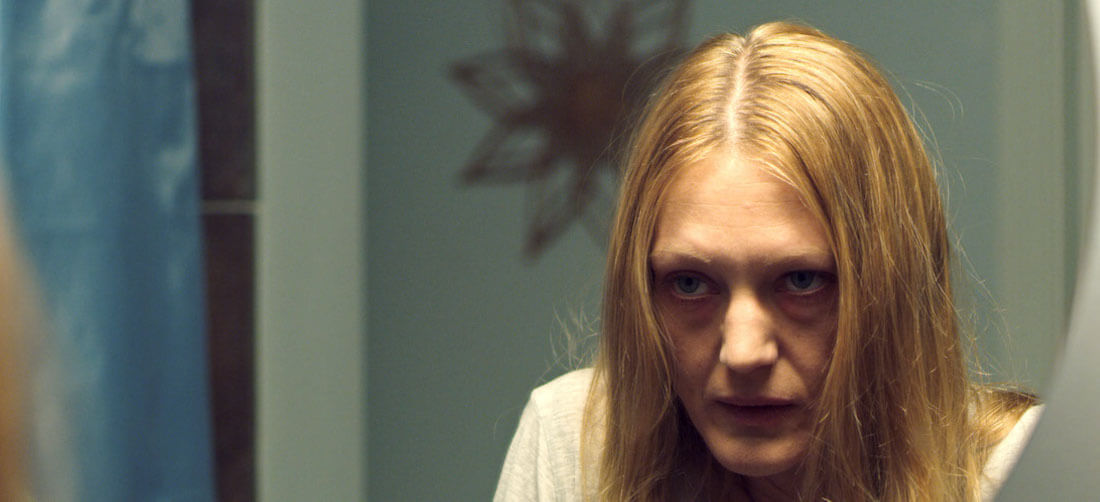
The debut feature from Dean Kapsalis is a disturbing insight into one woman’s descent into deep depression. It might not be a barrel of laughs, but it’s a film that will stay with you for a long time. Horror Channel Screen, 7pm, August 31st.

THE COLUMNIST (UK Premiere)

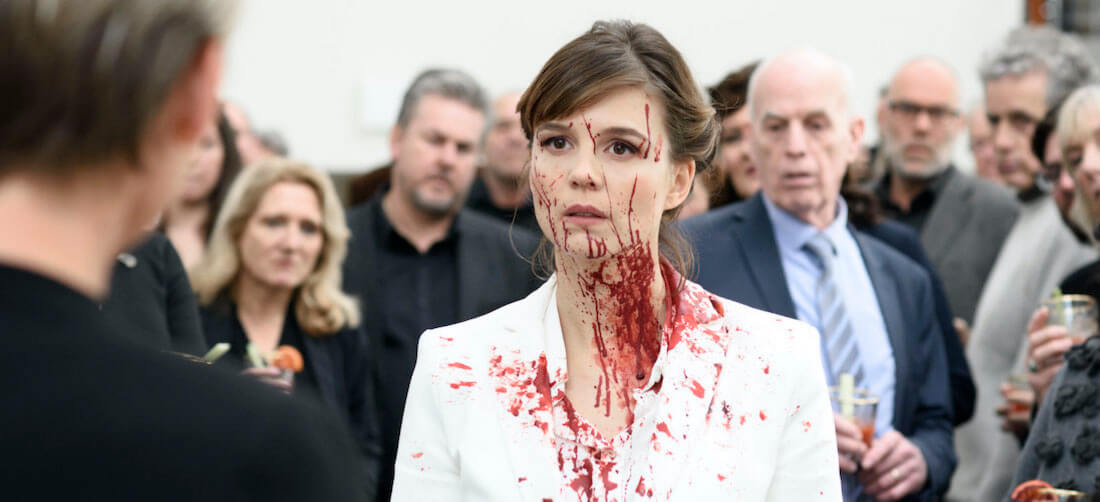
Directed by Ivo van Aart, this fabulous Dutch comedy horror has a newspaper writer and author take matters into her own hands when cyber bulling and offensive Twitter comments get too much. Katja Herbers (Westword) is superb as the beleaguered writer tracking down those who taunt her – and finds she gets inspiration from the deeds! Arrow Video Screen, 12pm August 29th.

SKULL: THE MASK (UK Premiere)

This Brazilian bloodbath concerns an ancient artefact that drives the wearer to kill and collect hearts. Boasting impressive, almost non-stop gore and brilliant choreographed fight scenes, it’s a mix between slasher and giallo with just a smidge of Indiana Jones.  Arrow Video Screen, 12pm August 30th.

Tickets for individual films and full festival passes are available here: https://frightfest.co.uk/2020FilmsDigitalEdition/tickets.html

Keith David | PITCH BLACK

keith david

This month, Arrow Video is releasing a lot of its titles in 4K ultra HD. Among them is the 2000 classic Pitch Black, celebrating its 20th anniversary this year and which has since spawned a multimedia franchise centred on its antihero, Riddick. To celebrate, STARBURST had the chance to talk to Pitch Black star – and legendary actor – Keith David, who reprised his role of Abu ‘Imam’ al-Walid in the sequel The Chronicles of Riddick. With 320 acting credits spanning over 40 years, David is one of the most prolific figures in genre entertainment, making his name in John Carpenter’s The Thing and They Live, as well as lending his voice to an array of animated characters. We borrowed a brief moment of David’s time to talk about his memories working on Pitch Black, how he feels it compares to roles he has had since, and why he thinks it continues to have such an appeal.

STARBURST: We’re here talking about the 20th anniversary of Pitch Black. Looking back, what’s your fondest memory of making the film or watching the film?

Keith David: Oh well, I have great memories of making the film. I remember that there was so much of the film that was done in post. I never saw what the monsters looked like. When you’re making that kind of sci-fi, there’s a lot of simulations and things that you know definitely get taken care of after the movie after the main photography has been shot. So seeing it all put together was exciting. It really was. That’s one of the things that still fascinates me about the movies – angles. It only has to appear a certain way. It doesn’t have to necessarily be that way. And the way people do their movie magic never ceases to amaze me

Did you approach your role in any particular way? Did you go in with any particular mind-set for it?

Well, I’ve played many priests and preachers, but I’d never played an Imam. An Imam… I guess he’s like a bishop in the Muslim community. So I started doing a lot of research on Islam, and it was quite wonderful a lot of the things that I discovered. Of course all the major religions share a commonality; and that’s one of the things that I discovered was the commonality of our different belief systems. It was very interesting to me that both in Pitch Black and in the sequel, the enduring religion in the end was Islam. That’s the one that went out into space. Which only goes to show you how dangerous and wrong it is to lump a people into a generality, because you’ve had some bad experience with Muslims and whatever society, then you know you blanket them as all bad people because most Muslims are very, very peaceful people.

Why do you think the film, which has went down as a classic as many of your films have, has retained such a loyal following? What do you think fans of the film continue to get out of watching it? 

I mean it’s a great ride. The one thing I learned doing The Thing… Kurt Russell, Richard Masur, and Charlie Hallahan – they were all quite big sci-fi buffs. I think if I remember correctly, Kurt might have done some script doctoring at some point. They knew craft-wise about scriptwriting and especially with science fiction, it’s the case of ‘I’ll believe anything you tell me as long as you keep with the premise that you set up’. You have to be honest to the story. Once you’ve set up a promise then, as long as you’re true to that, we’ll go along for the ride. The movie only starts to break down when you start saying ‘well, the monster does this, this, and this’ and then all of a sudden he starts doing other things. And sometimes even that can work depending again on the premise that you set up. In a bad hokey movie, it just falls apart and you say ‘ah that’s not what you said in the beginning.’ But other times, if you see the way they can make adaptations, you kind of go ‘oh, wow. That’s why he was able to do that’ and you get that feeling. But here, I think we stuck pretty much with what the premise was and that was it. That’s a good thing, you know.

Movies we enjoy the most are those like you were just talking about, that manage to take something that on paper can feel so fantastical and unbelievable and managed to convince you that not only is it genuine but it matters. Coraline, where you voiced the Cat, was one of this writer’s favourite films growing up. And that I think is a really good example. It took something that on paper seems so wildly imaginative and it makes you care deeply about it because it only goes as incredible and out there as it needs to, to keep you on board with it. At least that’s how I’ve always looked at that film. Is that why you think Pitch Black still has a lot of fans? They keep getting something out of it and appreciate its fantastical elements?

Yeah. It’s like when you read a book again, and when you see the movie the second, the third time, you always see something that you seem to have missed the first time. In your periphery, in your mind, you’ll say ‘I remember seeing that, but I didn’t realise it meant that’. It’s quite a wonderful feeling. When you can look at it and still get something else out of it.

How do you think the role compares to others you’ve had in the past. We know you said you’ve played a lot of preachers of the equivalent of preachers in your career – Greenleaf recently finished up – so how does it compare?

Well, first of all, I got to explore what it was like to speak English as a second language. That was a task I set for myself because I think Abu’s native tongue was Arabic. So in Pitch Black, I got to experiment with a little bit of Arabic. And it’s funny because I had an uncle who I think he was stationed in Morocco when he was in the air force. So when he came back he spoke a little Arabic. So I enjoyed that part of it. Whenever I hear Arabic spoken now, I keep my ears tuned and sometimes think ‘oh, I can say that’ or ‘I know that.’

Has much of it stayed with you?

Some of it has. I’d have to go back and review my notes!

You were, of course, in the follow up as well, The Chronicles of Riddick, which was in terms of the scale anyway a much bigger film since Pitch Black proved to be a hit; bigger budget, more visual effects… how is it taking the same character back, knowing that you have the success of the first film to build on and that the new film had a lot more weight and money thrown behind it?

It was great to see how they expanded the story; people growing up, people growing older, you know? I understand that they [Vin Diesel and David Twohy] are coming up with another one. I don’t know if I’ll get a chance to be in it except maybe like Obi-Wan Kenobi coming back as a ghost or memory or something, which would be nice. I love the way they fit him back in, and keep him woven into the story. So it would be interesting.

Looking ahead, as we mentioned earlier Greenleaf has finished up recently. Will we get to see that show in the UK?

If you haven’t seen it yet, it should be coming soon. It’s on Netflix.

Some other things you have coming up include The Seventh Day and Horizon Line. Are you able to tell us anything new about that?

I’ll have to keep The Seventh Day closer to the vest right now. What I can say right now is that it’s coming. Horizon Line… that one should be coming out soon too. So just look out for it, it’s coming out.

Lastly, what do you think the most important thing about Pitch Black is now it has been rereleased? If someone was to watch it now for the first time, what would you want them to think?

That there are more things out there. To quote Shakespeare, ‘there are more things in heaven and earth… than are dreamt of in your philosophy’. So, be aware. Because there could be things out there that you didn’t count on.

That’s the joy of a science fiction movie.

Yeah, that is the great joy of science fiction, because it is as real as your imagination.

The Ultra HD 4K and Blu-ray of Pitch Black are available now. Check out our review here. All five seasons of Greenleaf are now available on Netflix UK.

Retro Reviews: True Story (2015) and the Real-Life Lessons It Taught Us

Certain films remain with us long after we’ve finished watching them. In some instances, this is because of the tragedy at their heart; in others, because they impart valuable and long-lasting lessons. On other occasions again, it’s because they are, in some way, relatable.

When you consider a movie about a disgraced journalist and a child killer, it may be hard to imagine how it falls into the latter category. Most of us will never be guilty of such heinous crimes, nor will we fabricate convoluted lies to progress our careers.

However, what we will all, on occasion, do is err in some fundamental and regrettable way. This is what makes this not only a true story, but one that is also, in some respects, all too easy to understand and sympathise with.

An unholy alliance


At its core, True Story turns on a simple concept: the relationship and unlikely alliance between two very different characters, both of whom have fundamental credibility issues. Starring James Franco and Jonah Hill, the gripping psychological drama originally began its life on the stage, and it makes for a macabre tale of friendship.

Its primary protagonists are an inarguably strange pair: one is a sociopath beyond redemption; the other, a journalist who fabricated a character to star in one of the biggest and most high-profile stories of his career.

It’s an undeniable example of truth being stranger than fiction. The real-life Michael Finkel, played by Hill, was a New York Times’ journalist, while Franco’s Christian Longo was a cold-hearted child killer. The two met following a twist of fate, when the latter went on the run and chose to impersonate the former, whose writings he had long admired.

Rather than being incensed by this act, Finkel, who by the time of this deception had himself been disgraced, chose to get to know Longo, a man whose notoriety far exceeded his own. Making the decision to cosy up to the compulsive liar, he went on to build an odd and enduring bond with a killer who had brutally murdered his own wife and children.

It’s a strange concept to swallow, but it’s the real-life source material behind the film that perhaps make certain parts of it easier to get to grips with. For example, while Longo is arguably irredeemable, Finkel is not. He’s made a mistake, but so too have many professionals.

In fact, so common is it for employees to err that most real-life companies have policies in place to protect them against this. One only has to search online, for example, to find providers that specialize in this type of errors and omissions insurance, which has been specially designed to guard against the consequences of any less-than-gold-standard behaviour.

It is therefore Finkel who acts as the human heart of the film, even if his fascination with his fiendish friend is often difficult to understand.

A glimpse into the confessional


What’s particularly interesting about this film is that what begins as an inexplicable alliance soon becomes much easier to grasp. While most people would be horrified to come face-to-face with a criminal as heinous as Longo, Finkel instead sees in him a potential confessor – one who cannot be horrified by the crimes he has committed for his own sins are so much greater.

It’s an odd idea to get to grips with on the surface, but the exceptional acting in the film effortlessly carries the difficulties of its opening moments. Indeed, as long-time friends off-screen, its two protagonists have an easiness between them that translates well into their onscreen interactions, making it much simpler to swallow their casting as unlikely allies.

The work they deliver is some of the finest of their careers. Franco’s criminal, for example, oozes a sinister disregard for his crimes, which include the murders of his wife and children, aged four, three, and two. Hill’s less-than-truthful journalist, on the other hand, is more likeable but no less intriguing.

The method of shooting the two characters in close-up works well too, with much revealed through body language alone. Along with the well-scripted dialogue and fascinating facts at the story’s heart, it makes for incredibly compelling view, with its grand tragedies and inconceivable horrors staying with the audience long after they’ve finished watching.

As far as indie psychological thrillers go, this may very well be one of the finest films that the genre has ever seen, before or since.

Tania Raymonde | DEEP BLUE SEA 3

raymonde sea

An experienced film and television actor, Tania Raymonde is most noted for her roles in the J. J. Abrams series Lost and alongside Billy Bob Thornton in the Amazon drama Goliath. With her new movie Deep Blue Sea 3 out for release Tania sat down with us to discuss all things shark related.

STARBURST: How do you feel about the water now after making this movie?

Well, we had to learn how to scuba dive and get certified for this film. And I thought that because I was scared of flying and being all the way up there, how am I going to feel being all the way down there? But I absolutely loved it. I don’t think I’ve ever felt such a state of peace and tranquillity as I did under the water. It’s incredible; the light, the sound, it’s almost trancelike. You feel so calm underwater that it was hard to act in a panic for the film.

We presume you didn’t encounter anything underwater close to the size of the sharks in your film?

[Laughs] No, thankfully nothing like that. I’m sure if I did, I might feel differently about the water now!

The Deep Blue Sea franchise has always had strong female characters. Your character Emma is driven but there’s also a humanity to her. How would you describe her?

Emma is very motivated by her work, a true marine biologist and she cares deeply about climate change and the environment. And she carries a guilt because she can see how important sharks are for the eco-system. And she’s more comfortable around sharks than humans. So, at the beginning she’s firmly rooted in her belief of science and conservation, but she feels she’s fighting a losing battle. As the film the progresses she must figure out how to save her team and the sharks they protect from the bull sharks that come in and start killing.

Does the overall message within a film or series have a bearing on how you select a role?

I think it’s a combination of many things. It always starts with the script, though, as it must be entertaining. There was something in the writing here that was very direct and wasn’t winking at the audience in anyway. There was an earnestness in the way the film and the character were written and that made me invested in it. If I end up caring what happens then the choice becomes easy.

Is there something in the action or shark subgenre that’s enticing to an actor?

Yeah, sure. You know, this was one of the best sets I’ve been on in my life. I remember watching Waterworld with my Dad when I was a kid and this set looked exactly the same. As a little girl, I went to the Waterworld theme park ride and I remember thinking ‘there is nothing cooler than this’. And so when I walked on set it and it was the same it was amazing. It was such fun, like an adult Jungle Gym.

You did a great Instagram video from the set.

Yeah, that was my first day there. It was amazing, but it was cold. They couldn’t heat the water as it would change the colour or something, but it just felt so real.

Did you film in sequence as, without giving away spoilers, there are some explosions?

We sort of did; the third act was all filmed last. It was a shame because this amazing crew built this set and aged it, and then we destroyed it. I remember the first day things started blowing up we were all a little sad.

Why do you think shark films remain so popular?

I think it’s because it’s something that provides a universal, common fear. I think human beings are innately terrified of these prehistoric creatures under the surface of the water. The ocean is such a mystery and perhaps we feel at such a disadvantage in their world.

DEEP BLUE SEA 3 is out now. Read our review here.

[ENDED]WIN a copy of THE MAN WHO LAUGHS on Blu-ray!

man who laughs

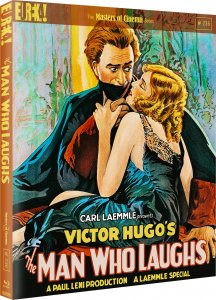
We’ve got three Blu-ray copies of THE MAN WHO LAUGHS  to give away in our competition.

Eureka Entertainment to release Victor Hugo’s THE MAN WHO LAUGHS; one of the most iconic and influential silent films of all time, starring Conrad Veidt and Mary Philbin. Available from 17 August 2020 for the first time on Blu-ray in the UK. Presented from Universal’s 4K restoration, as part of The Masters of Cinema Series, featuring a Limited-Edition O-Card Slipcase (First Print Run of 2000 units only].

.

MAN WHO LAUGHS


To be in with a chance to win a copy, just send your answer to the question below to [email protected] with the header ‘MANWHOLAUGHS’ to arrive before 11:59pm on Sunday, August 28th, 2020


The Man Who Laughs is a novel by Victor Hugo, originally published in April 1869 under what  French title ?


A) L’Homme qui rit


B) Da Da Da ich lieb dich nicht du liebst mich nicht aha aha aha


C) 99 Luftballons


One of the most visually striking of all the later silent films, The Man Who Laughs reunites German Expressionism director Paul Leni and cinematographer Gilbert Warrenton from their horror hit the previous year, The Cat and the Canary (1927). Both films are often considered to be among the earliest works of legendary horror classics from Universal Studios, yet the undeniably eerie The Man Who Laughs is more accurately described as a Gothic melodrama. However, its influence on the genre and the intensity of the imagery—art director Charles Hall and makeup genius Jack Pierce would go on to define the look of those 1930s Universal horror landmarks—have redefined it as an early horror classic, bolstered by one of the most memorable performances of the period.

Adapted from the Victor Hugo novel, The Man Who Laughs is Gwynplaine (an extraordinary Conrad Veidt), a carnival sideshow performer in 17th-century England, his face mutilated into a permanent, ghoulish grin by his executed father’s royal court enemies. Gwynplaine struggles through life with the blind Dea (Phantom of the Opera‘s Mary Philbin) as his companion – though she is unable to see it, his disfigurement still causes Gwynplaine to believe he is unworthy of her love. But when his proper royal lineage becomes known by Queen Anne, Gwynplaine must choose between regaining a life of privilege, or embracing a new life of freedom with Dea.

The startling makeup on Veidt was the acknowledged direct inspiration for The Joker in the 1940 Batman comic that introduced the character, and film versions of The Joker have been even more specific in their references to Leni’s film. While The Man Who Laughs contains powerful elements of tragedy, doomed romance, and even swashbuckling swordplay, its influence on horror cinema is most pronounced. Leni died suddenly at the age of 44 a year after this film (with Veidt also unexpectedly passing away too soon in 1943), and The Man Who Laughs endures as one of the most haunting and stylish American silent films, made just as that era was coming to a close. The Masters of Cinema Series is proud to present the film on home video for the first time ever in the UK.

BLU-RAY SPECIAL FEATURES:

  • LIMITED EDITION O CARD (2000 UNITS)
  • 1080p presentation on Blu-ray from Universal’s 4K restoration
  • Uncompressed LPCM 2.0 (stereo) score by the Berklee School of Music
  • Uncompressed LPCM 2.0 (mono) 1928 movietone score
  • A brand new interview with author and horror expert Kim Newman
  • A brand new video essay by David Cairns
  • Paul Leni and “The Man Who Laughs” – featurette on the production of the film
  • Rare stills gallery
  • A collector’s booklet featuring new writing by Travis Crawford, and Richard Combs

THE MAN WHO LAUGHS, one of the most iconic and influential silent films of all time, is OUT NOW on Blu-ray and can be purchased Here https://amzn.to/3fOy9xM

Terms & Conditions:
STARBURST does not accept any responsibility for late or lost entries due to the Internet or email problems. Proof of sending is not proof of receipt. Entrants must supply full details as required on the competition page, and comply with all rules to be eligible for the prizes. No responsibility is accepted for ineligible entries or entries made fraudulently. Unless otherwise stated, the Competition is not open to employees of: (a) the Company; and (b) any third party appointed by the Company to organise and/or manage the Competition; and (c) the Competition sponsor(s). This competition is a game promoted STARBURST. STARBURST’s decision is final in every situation and no correspondence will be entered into. STARBURST reserves the right to cancel the competition at any stage, if deemed necessary in its opinion, and if circumstances arise outside of its control. Entrants must be UK residents and 18 or over. Entrants will be deemed to have accepted these rules and to agree to be bound by them when entering this competition. The winners will be drawn at random from all the correct entries, and only they will be contacted personally. Prize must be taken as stated and cannot be deferred. There will be no cash alternatives. STARBURST routinely adds the email addresses of competition entrants to the regular newsletter, in order to keep entrants informed of upcoming competition opportunities. Details of how to unsubscribe are contained within each newsletter. All information held by STARBURST will not be disclosed to any third parties

[ENDED]WIN a Merch Bundle of BILL & TED’S EXCELLENT ADVENTURE

bill & ted

Strange things are afoot at the Circle K in San Dimas…

The beloved 80s classic BILL & TED’S EXCELLENT ADVENTURE has – for the first time ever – been gloriously restored in stunning 4K! This treasured time-travelling comedy stars Alex Winter and Keanu Reeves as Bill and Ted respectively – a hopeless but lovable duo who have since become cult icons after gracing our screens for the first time more than 30 years ago.

Fans can relive the original, first instalment in the hilarious comedy series when BILL & TED’S EXCELLENT ADVENTURE releases on 4K Ultra HD, Blu-ray™, DVD, Zavvi Exclusive Steelbook and digital download 10th August.

Ted “Theodore” Logan (Keanu Reeves) and Bill S. Preston, Esquire (Alex Winter), are in danger of flunking school most heinously if they fail their history exam, and if they do they’ll have to break up their totally bodacious band, WYLD STALLYNS. No way!

They meet Rufus (George Carlin) – an awesome dude in a phone booth that can travel through time, who informs them that the fate of the excellent future he comes from is in their hands and in the songs they will write together, so brace yourself amigos for a most unusual day! Bill & Ted crash from Ancient Greece to the Wild West, from 19th Century Europe to the distant future, meeting famous figures and medieval babes along the way. The boys bag a bevy of historical heavyweights from each stop to take back for their presentation, but will they make it back in time to save not only their grades, but the fate of the world? History’s about to be rewritten by two guys who can’t even spell.

To celebrate the release of BILL & TED’S EXCELLENT ADVENTURE in stunning 4K restoration, we have an exclusive Bill & Ted themed merchandise pack to give away, alongside a copy of the film on Blu-Ray™. For a chance to win, answer the question below –

Just send your answer to the question below to [email protected] with the header ‘BILL&TED’ to arrive before 11:59pm on

Sunday, August 26th.


What vehicle do Bill & Ted use to travel through time in Bill & Ted’s Excellent Adventure?


A) A Car


B) A Phone Booth


C) A School Bus

Terms & Conditions:
STARBURST does not accept any responsibility for late or lost entries due to the Internet or email problems. Proof of sending is not proof of receipt. Entrants must supply full details as required on the competition page, and comply with all rules to be eligible for the prizes. No responsibility is accepted for ineligible entries or entries made fraudulently. Unless otherwise stated, the Competition is not open to employees of: (a) the Company; and (b) any third party appointed by the Company to organise and/or manage the Competition; and (c) the Competition sponsor(s). This competition is a game promoted STARBURST. STARBURST’s decision is final in every situation and no correspondence will be entered into. STARBURST reserves the right to cancel the competition at any stage, if deemed necessary in its opinion, and if circumstances arise outside of its control. Entrants must be UK residents and 18 or over. Entrants will be deemed to have accepted these rules and to agree to be bound by them when entering this competition. The winners will be drawn at random from all the correct entries, and only they will be contacted personally. Prize must be taken as stated and cannot be deferred. There will be no cash alternatives. STARBURST routinely adds the email addresses of competition entrants to the regular newsletter, in order to keep entrants informed of upcoming competition opportunities. Details of how to unsubscribe are contained within each newsletter. All information held by STARBURST will not be disclosed to any third parties