Dominic Brunt & Joanne Mitchell | ATTACK OF THE ADULT BABIES

adult babies

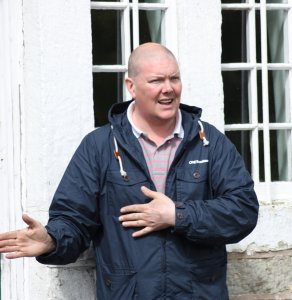
Following the huge success of his first two feature films as director – the searing BEFORE DAWN and the brutal BAIT – EMMERDALE star DOMINIC BRUNT is back this year with his third full-length movie. We spoke to Dominic and his wife, actor/co-producer JOANNE MITCHELL, about their latest project – prepare for the ATTACK OF THE ADULT BABIES…

STARBURST: Zombies, ruthless debt-collectors… and now Adult Babies! How? Why?

Dominic Brunt: Well, I was hired by a company called Radar Pictures in America to do their next film in Puerto Rico. I got all the visas sorted out and two weeks before, a few problems arose so they said ‘look, we’re going to put this one back a little bit’ – and I’d taken four or five months off work! We already had the idea of Adult Babies and the script was ready to go and a producer we knew really wanted to do it so we thought ‘why don’t we go with that?’ and as I had the time, rather than being a mad rush, it just fell perfectly so we had three and a half to four months to prep it and film it.

Joanne Mitchell: Dominic and I came up with the idea, we went away and worked on the story back and forth and then we gave it to Paul Shrimpton and he did a fantastic job and we were very happy with what he came up with. Because Paul did Inbred – amongst other things – he just suited this type of horror.

DB: I really like Paul’s way of working and I know he can deal with that side of things. It’s more Jo’s story, actually; I did little bits of it but Jo really broke it down scene-by-scene and then we passed it to Paul Shrimpton. He stuck rigidly to the storyline; he changed some of the ending and the dialogue, he put a few jokes in. He brought a fantastic pace to it and a shape that was far better than it had been. He wasn’t just a ‘writer for hire’; putting his dialogue over the top, he very much coloured it in.

So what’s the story behind Adult Babies?

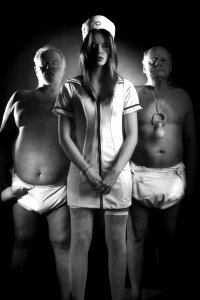
JM: The actual story is about a group of white, middle-aged businessmen who go to this beautiful big mansion in the countryside – almost Masonic, in a sense – which is where they relax and take refuge from the world and their high powered jobs. It’s a very stress-free environment, they’re looked after by nurses and they regress into adult babies. The story kicks off when three intruders disturb their peace and tranquillity because they’re searching for a top secret document that is being held in the mansion and from then on, the chase begins and it tumbles towards this rollercoaster of bizarre and horrifying events, which basically goes from the sublime to the ridiculous. But the babies are determined to make sure that no-one leaves alive!

DB: I wanted to tell a wider story about the banking system and the people in charge; the corrupt politicians and MPs and people in authority who seemingly have the power to tell us and everybody else what to do whereas they’re actually human beings too and more often or not, they are where the stories are because they’re corrupt. I’m sure there are good people in these positions, but they’re still human beings and it’s just a question of whether they should be there to tell everybody else what to do. It’s all to do with poking fun at that, not being too serious, trying to make a political point but putting it across satirically because nobody wants to listen to a political point anymore, certainly not over an hour and a half in a film. So we get to do it within the genre that we love, telling stories in the way that we know with loads of gore and special effects, which I love! Adult Babies is really about bringing very important men down to that level and poking fun at them that way. The imagery of an adult baby is great; once you’ve got the image across that it’s big fat men running around dressed in nappies chased by sexy nurses in suspenders – that image would carry me through an hour-and-a-half of any movie, to be honest with you!

Memories of The Benny Hill Show comes to mind and they really probably shouldn’t…

DB: It’s really dark. There may be humour in there but it’s as dark as anything. It’s very sombre, not farcical in any way, it’s the opposite of any Benny Hill you’ve ever seen so I’d get well away from any notion of it being anything like Benny Hill! It’s pretty gory and pretty serious. It’s not a Shaun of the Dead-type thing. There’s humour in there but it’s not presented as humour, it’s not like comedy actors acting in a comedy way or anything like that. Everyone plays it absolutely straight. In tone, it’s a bit like The Lobster where everything’s very strange and the funny things are ignored; it’s not played for laughs at all.

How difficult was it to find a cast willing to perform as ‘adult babies’?

JM: It wasn’t the easiest thing to cast as you can probably imagine because not many people want to be an adult baby – not that there’s anything wrong with being an adult baby – but it was difficult to entice actors to walk around in nappies all day! But the cast we got were all fantastic and all really up for it, which is so important in an indie film. We’d used Andy Dunn in Bait; he’s a great team player, which is great because there’s quite a big cast in this one, much more so than Bait and Before Dawn. Then we had Sally Dexter on board and when we saw her name we thought ‘we’ve got to have her’ because I know of her. She does a lot of stage work and I really respect her acting so we managed to get her which was fantastic – she loved the script and she’s outstanding in it. We had to go through the auditioning process for the two youngsters; we saw a lot of young actors and it was really hard because there are some great actors out there but for this sort of scenario, as with every film or production, you’ve got to get the chemistry right between the characters, so Mica Proctor and Kurtis Lowe hit it off together, they looked right so we chose them and it all worked out well.

DB: Casting eight men who would be willing to run around in nappies was the toughest challenge! We got Laurence R. Harvey, who just went ‘yeah, of course, I will!’  He looks great in a nappy! But we auditioned loads of people and then we asked directly for a lot of people we’d worked with before like Andy and Charlie Chuck and as Jo says we wanted to get Sally Dexter in anyway, so it was sort of half-and-half between people we auditioned and people we asked specifically to be part of it.
Would you say that Adult Babies is a step up in the scale of your films as Bait was a step up from Before Dawn?

DB: Definitely. The scale of this one is enormous, just bringing in all the different ways of telling the story with animation and Claymation, and I think that’s exciting. It was great because it was all in one location, so it was just a joy to do. I think we realise what we’re doing now and we’ve learned from our mistakes. There was a lot of pre-production because there’s a large cast in this one. It’s set in a massive manor house so we had to find one that we could all stay at and film in every day. We found one about sixty miles away called Broughton Hall, so we managed to live there and eat there as well so we could just get up in the morning and start filming and stop when we dropped. It was a relief because Bait was twenty-six locations and it was a nightmare dragging these massive lorries and seventy-three crew around.

JM: We’ve learned a lot more from doing Bait, which was itself a massive step up from Before Dawn in terms of scope and scale. But even though this is another step up it seemed a lot easier because we’re all reading from the same page now, we all know what we’re about. Dominic knows his cinematographer, he knows his ADs, his camera operator and all that gives you extra confidence, too. You want it to be a happy ship and I think it was and that’s a credit to Dominic as well. As a director, he’s very friendly, he gets on with everybody but at the same time he commands respect as a director and I think he did incredibly well with only three weeks to shoot it in!

There always seem to be ‘themes’ to your films, something a little bit deeper than the usual stalk-and-slash horror fare. Are you keen to make your films ‘about something’ rather than just random blood-letting and cheap scares?

DB: I was asked to do something where there was a monster after a group of kids staying in a house and I said ‘look, this is about a monster getting some kids in a house, the monster doesn’t represent anything, the kids don’t represent anything.’ I wouldn’t be interested in doing a straight story; even from seeing Romero’s stuff very early on I was thinking ‘Yeah, that’s really multi-layered and clever’ and I’d rather intelligently tell a story and put a point across within the genre where the monsters aren’t just monsters and the people aren’t just people and you’re not just telling these awful tales  and showing off the next piece of neck being cut. It’s got to be cleverer than that.

JM: It’s the same sort of approach as with Bait and Before Dawn in that we wanted it to be more than just a horror film, we wanted to tell a sort of political story without being wanky about it! I do think this does have that. Running alongside all the ridiculousness of what’s going on, we have a social commentary in the film.

But still with plenty of blood being spilt! How gory is Attack of thAdult Babies – on a scale of one to ten?

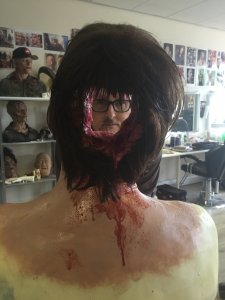
DB: I’d say an easy nine; yeah, it’s bonkers. The story’s really twisted, very unusual with some very odd imagery and the tone is very unsettling at times in what people are saying and doing but it’s not spiteful in any way. I’ve never liked films like Saw or Hostel, which look like they’ve come from some perverted 15-year-old’s mind – let’s torture people and kill women! – it’s not like that at all.

JM: I think I’ve said before that Dominic is the king of blood and gore, much more than I am, so he and Paul had lots of fun thinking up those sorts of scenarios and how far they could take them. I think it’ll really appeal to fans of the genre who like that kind of thing. It’s not nasty, though, it’s not torture porn; it’s very tongue-in-cheek.

We’ve still got a while to wait for the movie so how would you sum it up at this point?

DB: It’s about people getting out of their depth and it’s about tradition. It’s about greed and hypocrisy and I would say it’s very British in its outlook and maybe playing on what the world sees as British with its many traditions and the way that white, fat, middle-class or upper-class men rule from afar and these cabals that are running things. Although there are a lot of themes, I think it has its own identity and it does make sense with a very satisfying arc from beginning, middle to end. Without trying to be highbrow at all, we just had fun with it!

ATTACK OF THE ADULT BABIES is released on Blu-ray and DVD on June 11th.
Could Modern Tech Ruin Your Favourite Films?

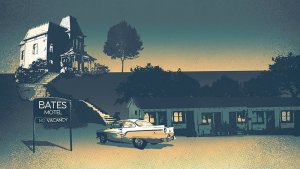
Ever wondered how Norman Bates would carry out his psychotic rampage if his mother’s motel had been reviewed on TripAdvisor? Although it may have helped spare poor Marion Crane, Alfred Hitchcock’s 1960 classic would have been decidedly duller.

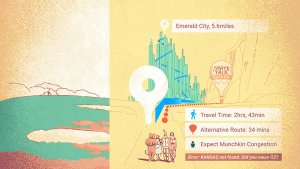
Now, film fans can see how all the best films of the last century would have been altered irretrievably with 21st century technology. A new tool from SunLife shows how modern technology ruined classic movies of yesteryear, with often hilarious consequences. For example, musical fantasy film The Wizard of Oz was nominated for 6 Academy Awards and is often on lists of films to see before you die, but SunLife point out that the 1939 classic would have been considerably shorter if Dorothy and her travel companions had access to Google Maps.

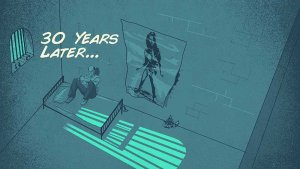
Other old films that would be ruined by new technology include Shawshank Redemption and Casablanca, and although modern technology may destroy these cinematic masterpieces, it probably would help the characters themselves. Rose and Jack’s budding but ultimately tragically short romance may well have gone from strength to strength if the Titanic had a decent radar system!

It makes you think, what other famous movies would have been completely ruined by technology? The invention of camera phones would surely have hampered Gregory Peck and Audrey Hepburn’s anonymity in Roman Holiday and Cary Grant’s unfortunate case of mistaken identity in North by Northwest could be solved by taking a look at his social media accounts.

Although imagining how modern technology would alter classic films is fascinating, what about contemporary movies? Cinematic scenarios that would have been feasible a few years ago have become outdated now everybody has access to a phone, camera, computer and GPS map all on one device. Hollywood directors must be faced with an interesting predicament, do they ignore this huge part of modern life to maintain the drama of a film, or do they try and use technology to create new plot-lines? The latter has been seen in modern films such as Unfriended, a social media-based horror where a group of teenagers are stalked online by the ghost of their deceased friend, or 2017’s The Circle, a film starring Emma Watson and Tom Hanks where a tech giant turns sinister when it starts exploiting user’s privacy. Who could imagine such a thing?

Andrew Niccol | ANON

niccol anon

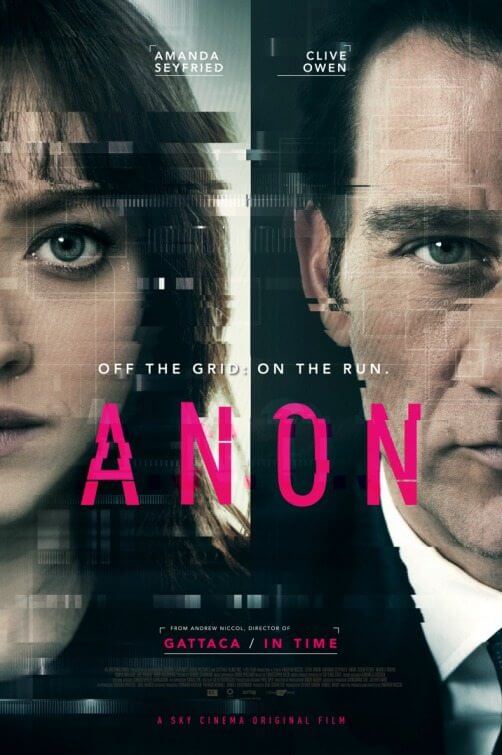
Since his debut movie GATTACA (1997) warned over the use of advanced eugenics, writer and director Andrew Niccol has continued to question the human and moral implications of advancements in technology with movies including THE TRUMAN SHOW (1999 – as writer), SIMONE (1992) and IN TIME (2011). His latest is ANON, a remarkably timely SF noir thriller about a society where everyone’s point of view experience is recorded and anonymity is a dirty word. Clive Owen – a detective on the verge of a nervous breakdown if ever we’ve seen one – stars as Sal Friedland, on the trail of a mysterious stranger played by Amanda Seyfried who  has found a way to opt out of this tyrannical system and use the power of her anonymity in a unique and profitable way…

STARBURST: Like most of your writing, this feels like a very short jump into the future.

Andrew Niccol: That’s what I call a parallel presence. You’re going to go out on the street right now and you’re going to see people looking down at devices. You’re going to go to a concert and you’ll seeing nothing but people videoing the concert. They’re never going to look back at those videos, by the way, but it doesn’t matter, they still have to have evidence. We are life-logging.

In line with your previous work, there’s a very explicit warning message in this movie, but you’re also looking to tell an entertaining story. How do you walk that line?

I think you can see this film on a number of levels. On one level, it’s a serial killer film, if that’s what you want. There’s also sex, drugs, and violence! But if you go for ideas, that’s always my aim. Just in researching it, this word ‘de-anonymising’ [data mining in which anonymous data is cross-referenced with other sources of data to re-identify the anonymous data source] is such a horrendous concept.

A key part of ANON’s futurism is the POV text and graphics we see from Clive Owen’s bio-implanted viewpoint. How did it evolve?

It was a nightmare for me because I had to write all of it myself, but for once in my life, I won’t mind if someone freezes the film because a lot of work went into writing it! All of it is legible and all of it makes its own sense in terms of biography. So, for example, the prostitute’s biography is very interesting because she gives a ‘military discount’, amongst other things. So when you just look at her for a second you can freeze the frame and find out. There are lots of nuggets in there.

Another cool aspect is the futuristic cars. We do love futuristic cars!

I love cars, too. It all goes back to Gattaca because on that I never had enough money, you know, I didn’t have the budget to build my ideal car of the future. So here, I thought, well, I’ll take the best of the past and drag it screaming and kicking into the future and just update it. My favourite vehicle in this is a Facel Vega, which now has a hydrogen cell in it and other updates. Again, that’s all POV information seen that you can freeze-frame.


The movie has a very specific, stylised visual look to it.

I went with two different aspect ratios. Interestingly enough, nobody really seems to have minded. I thought that might be jarring to some people, but it’s not. So, when it’s a subjective point of view it’s more square, its 16:9, full of clutter and shot with spherical lenses. And then in that same scene, when I look at it from an objective point of view, it’s 2:40:1, which is much more cinematic, the camera doesn’t move as much and there’s no clutter. I had to do some very weird things to make it work. He’s walking down the street, there’s a parking lot there with a physical sign, so I have to remove it. I removed all signage from the film, physically and digitally, because I knew that from a story point of view, it’s absolutely superfluous. Why would you have street signs when people get street signs automatically popping up in their mind’s eye?


How is your relationship with technology these days?

My relationship with technology is as it’s always been – dysfunctional. But I do think there’s hope. You just need to find the right countermeasures.

ANON has a limited theatrical release and can be seen exclusively on Sky Cinema from May 11th and Netflix in the US. You can read out review here

anon poster

K.M. McKinley | THE BRASS GOD

brass god

K.M. McKinley is the author behind the popular fantasy series, The Gates of the World. Her latest book, The Brass God, is out now. We caught up with her to find out more.

STARBURST: What’s the elevator pitch for The Brass God?

K.M. McKinley: An epic, multi-character fantasy set in a world undergoing a rapid, magically fuelled industrial revolution, where ancient gods sit uneasily alongside fantastical machines and a terrible evil stirs.

How would you describe the entire series to an elderly relative?

If I were as good a writer as either of them, Dickens meets George R. R. Martin.

Why is Fantasy making such a come back?

Did it every really go away? I’m not sure it did. Like all the elements of the speculative fiction family (horror, fantasy, and science fiction), its undergone peaks and troughs of popularity, but as far as I’m aware fantasy novels have always had the strongest sales. What’s changed in recent years is that the three genres are no longer treated with the contempt they once were. They have become more mainstream, or more accurately, all those thousands of people who read and enjoyed are no longer embarrassed to say so. That’s down to a loosening on the monopoly of opinion by cultural elites thanks to the Internet, but perhaps more important is the ageing and coming to influence of the generations raised on this stuff. The renaissance in TV has really helped all the fantastical genres. It’s a confluence of attitude and technology, in my opinion.

Which of your characters would you want to go lunch with?

The unkindly named Hag of Mogawn. She’d be a great lady to go out with. Though I suspect lunch wouldn’t finish until 4am the next day.

Which of your characters would you want to give advice to? What would it be?

All my characters are as real as I can make them, so none of them are perfect. They all need advice. Guis probably needs a kick in the backside to get over himself most though.

How important is world building to story?

I’ve read lots of books that other people love that I’ve hated because the world seemed unreal. I do tons of world building. There are perils aplenty around it though. Explain too much, it derails the story. Explain too little, people get lost. It’s probably not as important as I think it is, but let’s just say if you like ‘whole cloth’ settings, then you’ll like The Gates of the World (I hope. Ah, the terrible task of balancing publicising one’s fiction while being British).

What’s your favourite part of The Gates of the World series?

Again, another opportunity for me to cringe inside. I don’t like to say. I really believe that’s up to the reader. But if I had to pick, I’d have to say I’m pleased with the roundedness of both the characters and the world. It all feels satisfyingly real.

Which writers inspire you?

Adam Roberts, Richard Morgan (his fantasy stuff more than the SF), Neal Asher, JRR Tolkien, Ursula Le Guin, Michael Moorcock, Fritz Leiber… Too many to say!

If you had the change to write in someone else’s world, what world would that be?

That’s a tough one. I have written shared world fiction under, ahem, other names. But another writer’s private world? Hmmm. Middle-earth, maybe, or Moorcock’s multiverse. Perhaps Asher’s Polity. Yeah, the polity.

What are you reading (and enjoying) at the moment?

Haha! I have so little time to read, as I’m always writing. I really enjoyed the Dragon Round last year, by Stephen S Power, and I’ve got Adam Roberts’ The Real Town Murders lined up to read this weekend.

What are the most fun scenes to write?

Honestly? I don’t know. Every kind has something to recommend it. Every kind can be the most immense pain to write. I enjoy writing, and I hate it at the same time. I think a lot of writers are the same. Some scenes come easier than others. The best ones are those that pop into your head whole, and, if you’re lucky enough, when you get them down on paper they are as cool as you envisaged them being.

What’s next for you?

More words, every day. I’ve been pitching ideas to a couple of publishers, and have novels on the go that unfortunately I cannot speak of yet…

The Brass God is out now.

They’re Back and It’s About Time – The Return of the Target Books

rose

If you roll back and mix the decades to the 1970s, Doctor Who fans had no streaming, no Blu-ray, DVD, VHS, Betamax; these were all things of the future with which to relive old episodes of Doctor Who, to watch again and again. If you had a tape recorder there was always the audio recordings; remember sitting with a microphone right up against the TV speaker, all family members told to be quiet for those 25 minutes on Saturdays? This was soon to change when in 1973, the newly formed Target book imprint republished three Doctor Who novels that had been originally released in the 1960s. They sold and sold well; so well in fact that Tandem, the publishing company, wanted their Target imprint to produce more – and more they did produce. From 1974 through to the early 1990s another 153 novels were published. Sales were in the millions. However, all good things come to an end and eventually all the TV stories that contractually could be novelised had been. Time moves on, and Doctor Who fans moved on – to the aforementioned Betamax, VHS, you know the story.

Target books became, for a while, a fond memory and a series of items to be found in charity shops and propping up car boot sales countrywide. When in 2005 Doctor Who in a new incarnation literally exploded back on to the TV screens, DVDs followed – but as for books of the televised stories? No, not a chance it seemed; no Dalek, no Silence in the Library, no The Girl in the Fireplace and no prose resolution as to whether The End of Time really was The Parting of the Ways; none were In preparation.

davies and moffat

The return of Doctor Who to our TV screens has created a hitherto unspoken nostalgia for times past and the glory days of those wonderful pocket-sized books, often published monthly, a fix that was difficult to contain. It’s not impossible when attending a convention or comic con, to spy a fellow Doctor Who fan of a certain age, amble up and say the word “Kklak!” or “A wheezing, groaning sound”; the instant looks of recognition between pleasant open-faced new friends is a deep mutual understanding of the word novelisation and what can be achieved in 128 pages.

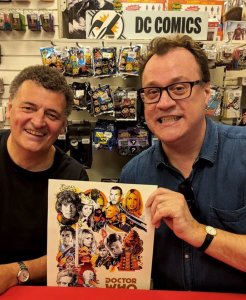
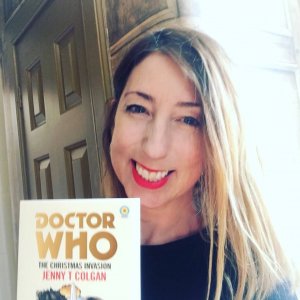
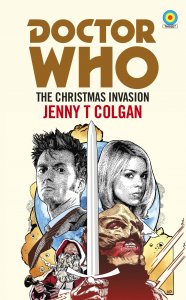
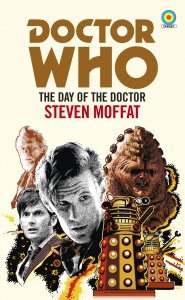
Doctor Who book fans were universally surprised and delighted when it was announced that in April 2018 five new Target books were to be published – and that two would be written by ex-showrunners and original scriptwriters Russell T Davies and Steven Moffat, Rose and The Day of the Doctor respectively, helped along by Jenny T Colgan novelising The Christmas Invasion and Paul Cornell the most recent episode Twice Upon a Time, plus James Goss reworking his 2015 novel of City of Death into a novelisation that fits effortlessly into all things Target.

For Target book enthusiasts, having two of the original scriptwriters tackling their own works can only be good news and in a recent Q&A session conducted on behalf of BBC books, both Russell T Davies and Steven Moffat eloquently spoke about the joys of Target Books in those wild and crazy penny chew days of the 1970s.

I loved them!” enthuses Russell. “I’ve still got them all on a shelf here in my office! They were the only official records of an adventure. And they were so mysterious detailing stories we thought we would never see again. I can probably tell you where I was, which shop I was in when I bought it, for every single one of my Target novels.”

Steven agrees. “Every time I’d go to a bookshop – and I was a keen reader – I’d head straight to the Doctor Who book section. Because I’d stared at all the book covers I already owned with such intensity, they were carved into my brain like wounds – so I could tell from right across the shop, by the tiniest variation in colour or artwork, if there was a new one on the shelf, and if there was my heart would leap. Going back a bit I longed for there to be Doctor Who books! One year I was on holiday in Cornwall, in a little town called Mevagissey, and in a shop called Dunns there was a solitary rack of books which I’d always walk round and round, looking for something to read – then one day my Dad grabbed my arm and pointed to the bottom row of paperbacks. Doctor Who and the Daleks, Doctor Who and the Zarbi and Doctor Who and the Crusaders. I was so happy!

jenny colgan

paul cornellPaul Cornell, Jenny T Colgan and James Goss also reminisce about all things Target.
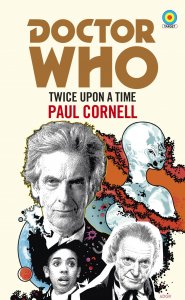
The Target range was tremendously important to me,” explains Paul. “My local Librarian would hold the hardbacks for me without asking. I’d take my Book Tokens; my most precious presents every Christmas and birthday and cash them in on the newest paperback. I’d also use the form in the back of the books to send off for others. Actually the Target Brand also had other books that sounded exciting like Tim Dinsdale’s Story of the Loch Ness Monster and I read all of Agaton Sax. Target and especially Doctor Who got me into reading, everything else I did comes from that.

Jenny picks up the tale. “I don’t remember the first Target book I read, I do remember my favourite, which is State of Decay, I borrowed it from the library again and again. They were the only access to Doctor Who I had. It’s almost impossible to explain that to my kids and to overstate their importance to me.

James Goss

James Goss continues the positive theme. “We live in a world where all the books and video you need is on your phone but there is still something magnificent about the Target novels, they can fit in a jacket pocket, they can go anywhere … they’re so much bigger on the inside. My first book was The Visitation, found at a seaside postcard shop on a hurdy-gurdy along with views of Porlock Weir. Read it a dozen times, amazed that such a thing existed. I went back two days later and discovered The Monster of Peladon which I read a dozen times or more. When I discovered there were others, even more titles than the Narnia series, they became vitally important. The local bookshop had a permanent order on the new books for me; I went in all the time to check if new titles were in. In those days,” remembers James, “you had no real idea what the cover was, maybe a blurry black and white picture in Doctor Who Magazine. So, each cover would be a surprising riot of madness, a juggling harlequin on Black Orchid, a giant crab on The Macra Terror, those Cybermen marching through those stars in The Wheel in Space, they do that a lot the Cybermen, often on some of the covers stopping mid-space walk, to point out an object of interest to each other!

From Targets past to Targets present, when the initial idea was mooted and the world novelisation was uttered, surely no one thought about saying no?

Steven remembers, “I knew nothing of the plans as this all started around the time I was preparing to leave as showrunner. The biggest surprise was that I actually wanted to novelise The Day of the Doctor. I had a hell of a time on that script, I had no idea I wanted to revisit it!

I was very excited!” continues Russell. “I wanted to test myself. I was interested to find out what the process would be like and to look back on a piece of work after a gap of thirteen years was fascinating.”

It was too lovely an offer to say no to,” says Paul, “and Steven asked me specifically if I would novelise Twice Upon A Time.” Jenny elaborates further, “I had one of those ‘I don’t know how busy you are at the moment’ emails from BBC Books which is always exciting and when I found out what it was I was just delighted, the easiest Yes ever.  I was specifically asked to do The Christmas Invasion which I totally adore.” James Goss has a slightly different take on it; “I’d already written mine so I thought ‘Ha! Money for old rope, I’ll be done by teatime…’.”

DOCTOR WHO: TWICE UPON A TIME Christmas Invasion

Both Russell and Steven had their own scripts to work from and the novelisations were born.

It was tricky,” Russell begins. “I wanted to capture the essence of the TV episode but I didn’t want to repeat it, anyway I’d long since lost the scripts! I found a transcript online, and someone found me a copy of the very first draft. I didn’t always look at them. I was a bit more freefalling, or rather, I wanted to add stuff to most of the dialogue because I knew fans would know a lot of it off by heart already, so there had to be new things to discover. A novelisation means new stuff, sheer newness, new action, new dialogue and new insights. A fan these days might have seen Rose a dozen times so I felt honour bound to add things that could only be found inside the pages of the book. And I know what fandom feels like, there’s nothing we love more than discovering something new about something old!

I just sort of started,” says Steven. “I had a few ideas of how it might translate, but really, as with any writing, I just sort of dived in. I found the shooting script on the hard drive, and was shocked to see how much I’d altered it during filming. Quite often, I’d have to watch the DVD and transcribe useful bits of dialogue, because I found I had no written record of really quite important scenes. Then of course, you find parts that don’t quite work in prose. The shock of seeing David and Matt together, John Hurt as the Doctor, surprise appearances by Tom Baker and Peter Capaldi, you have to find a way to make those moments work in a book, without surprise guest stars, which is a challenge.”

Jenny T. Colgan continues. “With The Christmas Invasion, I worked from an early draft script, the shooting script and the transcript, taking what I liked from each of them and adding my own scenes and takes on things. I found it much easier than writing an original novel, it’s writing with all the hard work taken out as Russell had already done the plotting, storyline and monsters! I got to play with the relationships between the characters. It was absolutely a joy.

Paul concurs. “I worked from the original script which had about half an hour more of material than ended up on TV though no more The Tenth Planet material. In the book there are quite a few more character scenes, and there’s even a poem by Steven!” As for the differences between original novel and novelisation, “In some ways it’s easier because you have material in front of you to work with, in some ways it’s harder because there’s a responsibility to the original writer and to the TV version.”

And James and his teatime deadline? “Several weeks later and by then the tea was stone cold, I discovered cutting it down and reformatting it was really difficult. I re-read a few Target novels and realised just how good a job Terrance Dicks, Malcolm Hulke and everyone did in being so vivid and brief. I made sure I followed the unities, twelve chapters, and three chapters per episode. I went through a stack of Target books and grabbed chapter titles from them.” James elaborates on the eventual Target novelisation of City of Death.  “I did toy with writing it from Count Scarlioni’s point of view but it just didn’t work well enough. A shame really, as he’s spent thousands of years planning very carefully and then a lunatic in a scarf turns up, steals his best ideas, the Mona Lisa and his wife, while a schoolgirl builds him a much better time machine in the cellar. It’s all so unfair. Scarlioni really put the hours in. However,” James concludes, “with a novelisation when all the hard work has already been done for you by Douglas Adams, everything else is really very easy and when I originally wrote the book I worked from a slightly longer rehearsal script that proves that a lot of the brilliant, mad beauty of the story really is there on the page, but the polish to the witty dialogue came in the studio. The rehearsal script proves that the thing really was written in a weekend, its all about how the Mona Lisa is a canvas. Between then and recording, someone has gone off and checked an art book and realised the Mona Lisa is painted on wood!

The five novelisations are now published and on the shelves of bookshops up and down the land. As for the future?

That’s me done, I am now a Target author,” Paul Cornell is adamant. “I don’t need to be one again. I’d like to see someone else tackle Father’s Day or the novelisation of the adaptation of Human Nature.

Oh, God, I want us to do them all!” exclaims Jenny. “I have set out my stall. I would love to do Silence in the Library. It is my favourite of Nu Who and I love writing River so much. Russell should do The Stolen Earth, Steven The Eleventh Hour, Paul The Family of Blood (again!) and they should get Richard Curtis to do Vincent and the Doctor and sell it for Comic Relief. You can see I’ve done my research!

James? The Pirate Planet? “I had no trouble with The Pirate Planet novel coming in at 90,000 words as there was so much new material in Douglas Adam’s first draft. Getting that down to 30,000 would be a real challenge, but, I suppose, you could do something that much more resembled what you got on screen. That might be great fun.

I really loved writing Rose,” concludes Russell. “It was the first episode that aired back in 2005; I think it’s more important to consider something new now.”

day doctor book

Hugely enjoyed writing the book,” Steven sums up. “So, yes, I hope to get another go at prose in whatever form.

The Target range of Doctor Who books continue. The novelisations like the TV show are now into their fifth decade and somewhere the grand master of the 128-page story, Terrance Dicks will be watching Buddha-like over the latest additions.

If he doesn’t have them already, it’s a national scandal!” laughs Jenny. Paul agrees. “I hope he’ll be getting sent them by BBC Books! But if he doesn’t I’ll make sure!

As for the contribution Terrance Dicks made, the final word goes to Steven. “Back then, Terrance Dicks would give us perfect, prose replicas of the originals scene by scene, line for line, brilliantly done.”

Absolutely celebrate the old but Target the new. Fantastic!

City of Death, Rose, The Christmas Invasion, The Day of the Doctor and Twice Upon A Time are published by BBC Books at £6.99.

With thanks to James Goss, Jenny T. Colgan and Paul Cornell for taking the time to answer our questions.
The quotes from Russell T. Davies and Steven Moffat are taken from a Q&A that was conducted to accompany the press release of the novelisations on April 7th and are reproduced with kind permission of BBC Books.
With special thanks to Sarah Garnham and Tess Henderson at Penguin Random House.

Johannes Roberts | THE STRANGERS: PREY AT NIGHT

The Strangers: Prey at Night Johannes Roberts

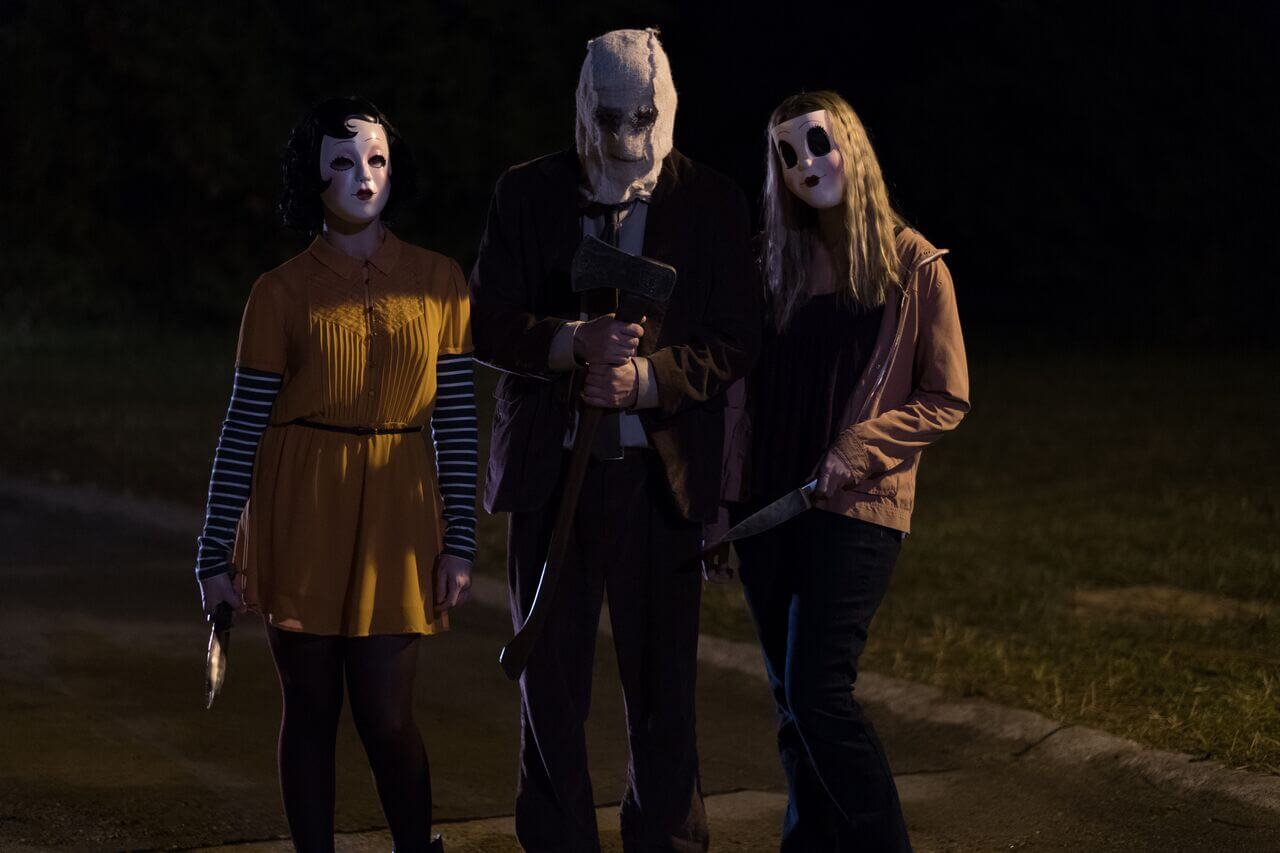
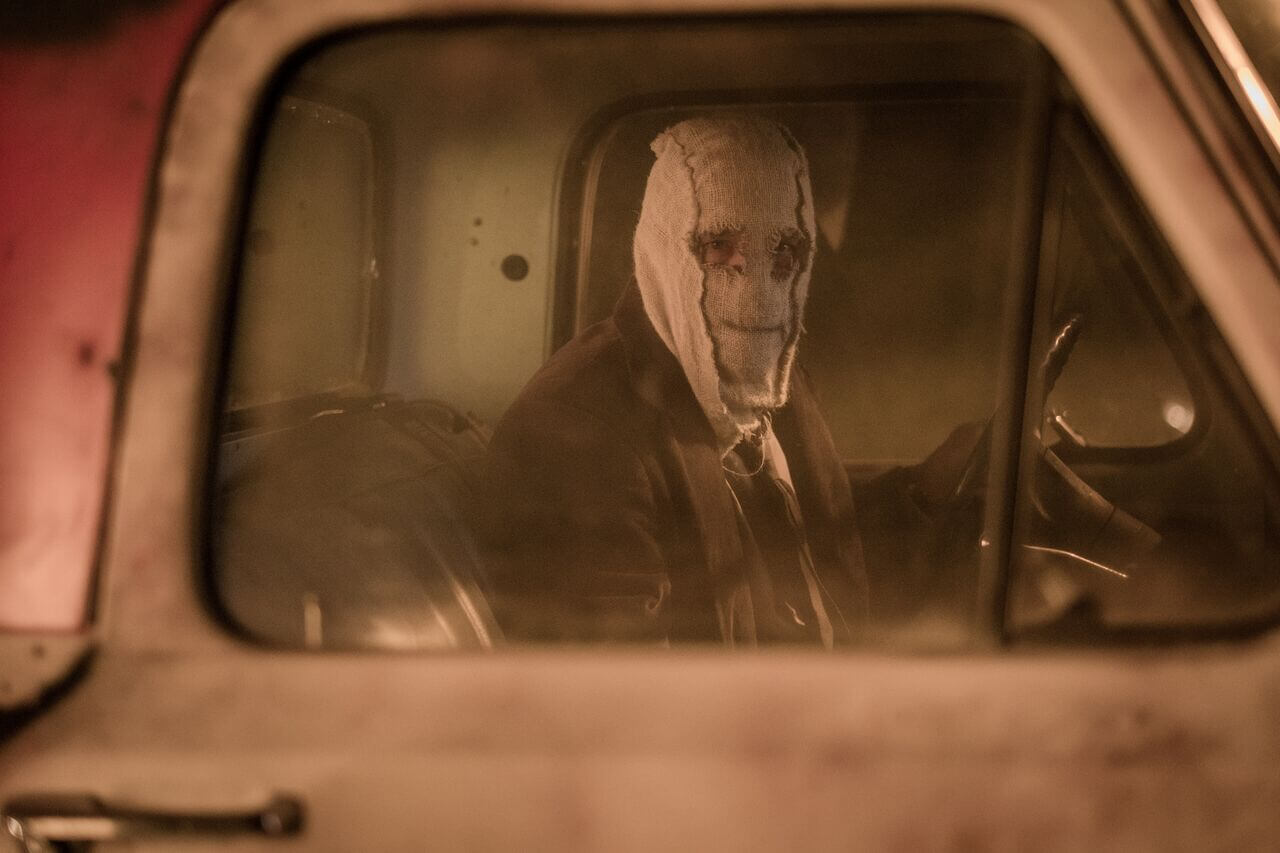
Over the past decade or so, Johannes Roberts has quietly been making quite the name for himself in the horror genre. With the likes of F and Storage 24 under his belt, the past two years has seen Roberts continue to impress with The Other Side of the Door and 47 Meters Down. And now, Roberts is the man tasked with directing The Strangers: Prey at Night – the hotly anticipated follow-up to Bryan Bertino’s 2008 horror favourite, The Strangers. We sat down with this fascinating fella to discuss Prey at Night, putting his own stamp on the sequel, his love of John Carpenter and Stephen King, what to expect from his upcoming 48 Meters Down, and a whole, whole lot more.

STARBURST: Give that the original film has such a strong following, was there any trepidation of tackling a sequel that has been anticipated for a decade now?

Johannes Roberts: Yeah, for sure. There was already a pre-built weariness inside of me waiting for the “it’s not as good as the first movie”. As if I don’t have enough to worry about with bad reviews, there’s now an extra layer that I have to deal with [laughs]. I was particularly worried because nobody quite knew what we were doing. Ten years is a long time in the landscape of cinema, especially horror. Obviously The Purge had come, You’re Next, a lot of these movies had come and taken what was fresh about The Strangers. There was a whole new audience who had never even seen the first movie, so I was like, “Are we rebooting it? Are we remaking it? What the hell are we actually doing with this project?” So there was this huge trepidation there. I think you can see with the movie it kind of evolved through the making of the film. I really sort of felt my way through that film. I loved the first movie, and this fit very well within that universe. It sort of works as a sequel, but then you can see that as the movie progresses it become its own beast that’s kind of crazy, fun, and much more my sensibilities; burning cars, Jim Steinman music. So yes, I was very nervous is the very long answer to your question.

How did you go about trying to put your own stamp on the movie?

It was one of those movies where I got to do stuff that I’d never done before. That was also because I hadn’t written it, I think. So you’re slightly divorced, you have this slight distance to the material that I wouldn’t have had with, say, The Other Side of the Door. I got to do stuff that I’ve wanted to do since I got in the industry. So the zoom lens is out of the box, and I got to direct the movie like I was doing a John Carpenter movie or a Brian De Palma one. It was great fun. Some of that stuff I was terrified of when we were doing it. These kind of shots, nobody’s done in forty years and for good reason. It was kind of like, “Well fuck it, let’s try it.”

The Strangers: Prey at Night

There’s clearly a lot of influences on display here, particularly John Carpenter and Christine, but was there anything maybe a little less obvious that you went back and watched beforehand to inspire you?

You know what, when I took the movie on I was like, “I wanna make Christine!” To be honest, it was as simple as that. I keep going in to Sony to ask them to let me do Christine. Nobody’s letting me do it. So I got the script and just thought it was perfect. I love that truck so much, and it just became a character throughout the movie. The more I filmed it, the more I just fell in love with it. The movies that I had on my desk in Kentucky during prep, I had Christine, I had Duel, I had The Car – which I’d never seen before and is a terrible movie – and then I had a lot of movies with crazy zooms in; so I had The Images, which was a Robert Altman movie I’d never seen before; I had Don’t Look Now; I think I had The Graduate because that had some great camera work. I had plenty of movies that were not the references you would necessarily jump to. The slasher side of it was inbuilt in me, that was already there. Duel was a massive influence. That movie’s great, I’ve not seen it in ages, and the fucking photography on that is insane! Those were the kind of things I looked at. So it was really retro, and I tried to really embrace it.

Like Liv Tyler and Scott Speedman’s characters in the first film, here we have a core group who had their problems long before the killers turn up. As the film opens, the family at the centre of this have their own issues and chips on their shoulders. Was there ever a concern that these characters might come off as unlikeable rather than sympathetic?

Oh god, yes. The script trod a fine, fine balance, to say the least. Yeah, I was very worried because you could hate every single one of them. I think we worked it as much as we could to make sure that didn’t happen, but really that’s the magic of casting. It was just a great cast. You end up caring about them – Bailee [Madison], Lewis [Pullman], Christine [Hendricks], and Martin [Henderson]. But that was a big worry for me.

The Strangers: Prey at Night

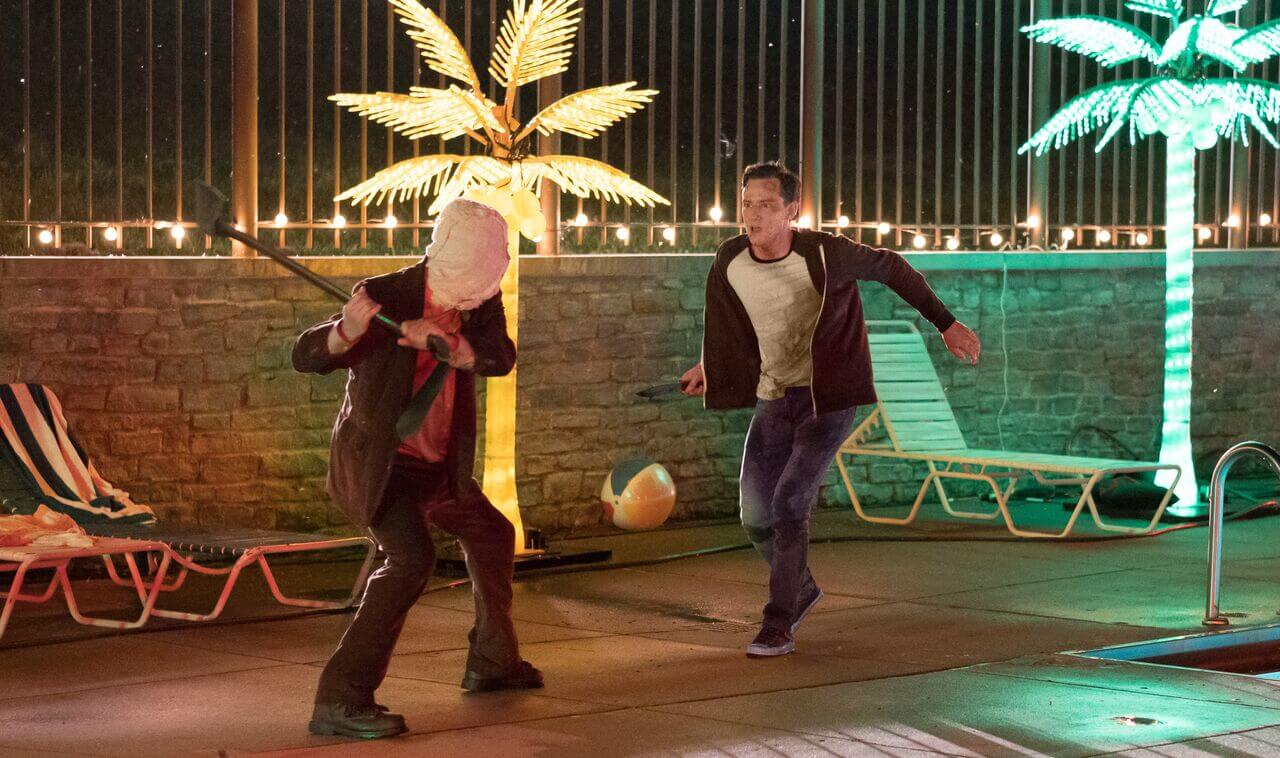
As the film plays out, there’s one of the great horror set pieces we’ve seen in many a year as Total Eclipse of the Heart blasts out over a neon-lit swimming pool. Was that sequence a particular challenge to put together?

If I had to tell you the hardest thing to shoot in that movie, I would say it was that fucking scene where the four of them were in the car and they were chatting, driving along.

The opening scene?

Yeah. It’s the first time I’ve ever down a low-loader, which is putting the car basically on a trailer and driving along. I’d never done one before, and people told me to do a green screen. And I thought that was terrible, I just wanted to do the low-loader thing. But fucking hell, man, I’m never doing that again! You’ve got police cars guiding you through traffic, technically you’re not in the car, you’re in a van in the front, there’s no way to communicate. It was just a fucking nightmare. It was on our second day of filming, and I was thinking that the actors were going to just hate me throughout this film. That was a fucking nightmare, whereas the pool sequence was a weird one. It was shot nowhere near where the whole trailer park was. It was shot in a totally different place. There was a pool sequence written in the script, but it was like a kind of motel pool, like you’d see in some Americana show. I can’t remember what the area was called, but it was in a higher tax break because it’s a slightly depressed area. I was introduced to this place, which is where we shot the playground as well, and I saw this swimming pool which was three times bigger than an Olympic pool. I just thought, “What the fuck am I going to do with this?!” It was insane but it just kind of came together.

Dealing with water, I’d done a whole movie – 47 Meters Down – so I wasn’t particularly freaked out by that. It took us ages to get all of the equipment there. We didn’t have a lot of money on this movie at all – that’s an understatement – so we didn’t have many toys to play with. There’s this beautiful shot in that sequence, where the camera goes up and over the Man in the Mask. We didn’t have the technical equipment to do that, so the Grip was actually sort of bolting stuff together to make that. On The Other Side of the Door, I had all of these technical things. Here, we had nothing, we were just making stuff up. While all of this was happening, I just went around with the doubles and cut the scene together on an iPhone, and then we went out and filmed it for real. It just kind of worked. I mean, that zoom shot in it is my favourite shot that I’ve ever done – where Pin-Up Girl runs out. That was my tribute to Exorcist III, which is one of my favourite movies. That was another movie that was on my desk, and that’s always a big influence on whatever I do. It’s a beautiful, beautiful movie, and I’d argue it has one of the best shot sequences in horror cinema – down the corridor when the guy goes to the nurse. And I wanted that sort of thing for this, for the zoom lens to create this dreamy horror sequence. It’s very subliminal. There’s something about it that really gets you, that you don’t quite know if it’s dream-orientated. But it just kind of worked. It was a weird one.

We were shooting at the other side of the swimming pool, shooting down and across. If you look across at the other angle though, there’s actually a river there. Literally, as soon as we turned the lights on we had the entire fucking insect life of Kentucky! It’s one of those things that you could never have thought about ahead of time, so I had to have ten, twenty people in between takes rushing around. By and large you can’t see them, but there are definitely some of the wider shots where water is absolutely bubbling because there’s so many creatures there. They were huge and just sort of landed in the pool! But you know what, it was not a hard sequence to film. I think probably for the DP and those on the technical side it was tricky to put together, but the low-loader sequence was way tougher.

47 Meters Down

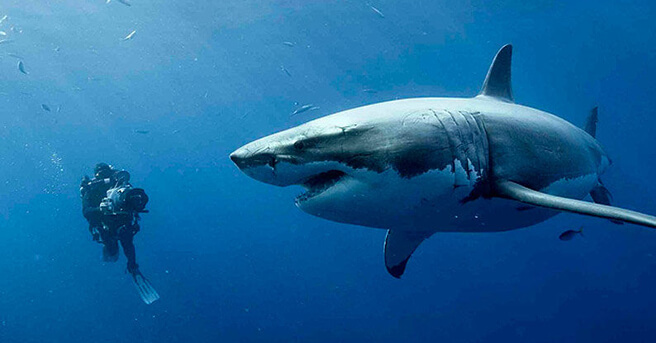
In recent years, it’s been a refreshing change to see some quality, serious shark movies out there. One such film is your 47 Meters Down, which has already been confirmed for a sequel. What can you tell us about 48 Meters Down apart from there’s an extra meter?

48 Meters Down is basically The Descent under water. So it’s a group of girls in Mexico and they are exploring an underwater iron city. The tunnels collapse and they’re trapped inside the city, and the sharks have come into the city. It’s going to make you feel pretty queasy. I learnt to cage dive when I was doing 47 Meters Down, and it’s the most terrifying thing in the world. I thought, “Yeah, if we ever go back to do a sequel then we’re doing this.” That kicks off reasonably soon.

You’ve mentioned Christine already, but are there any other dream properties you’d like to get your hands on?

I’d just love to do a Stephen King movie of some ilk. I keep circling around stuff, and I have the rights for Hearts in Atlantis, which we’re going back and forth on. It’s not horror, and I’m the horror guy, and he’s the horror guy, so people are asking where’s the clowns. And every month I seem to have dinner with Jeremy Bolt, who’s the producer of the Resident Evil films and Event Horizon movies. I always ask how can we make Event Horizon again, because I’d love to do a movie like that. It’s such a cool movie.

In your career to date, your films tend to have a lot more depth to them than simply being horror for the sake of horror, and it comes across that you really care about these pictures and the genre. Do you think that is something that’s particularly helped endear you to horror fans out there?

Truthfully, I don’t know. I definitely love the genre, and I wake up in the morning and either want to be John Carpenter or I want to be Stephen King, depending on which day it is. And that’s the kind of thing that keeps you going when you get battered on a movie or a movie does badly or things aren’t going your way. If you remember why you got in to this, you’re a nerd, you love the movies you love. I would hope that that comes across. You always get people that just attack stuff for whatever reason. Like The Other Side of the Door just because it had the Fox logo at the beginning. Some of the reviews for that labelled it a soulless studio thing. With The Strangers: Prey at Night, this is a cash-grab. And that always gets me a little bit because you don’t have to like the movie, that’s fine, but it’s never soulless. It’s done with just real, real love, and that always annoys me when I see that. I just hope this movie connects with the fans in the way that I would’ve connected with it if I’d watched it. Chatting to you, I think we have the same film references.

The Strangers: Prey at Night

To close things out, would you be up for doing another Strangers movie if there happened to be a third entry in the series?

You know what, they’re talking about it. I certainly would want to be involved. My sensibilities are that I’d love to guide the franchise. The first movie is very bleak, and my sensibilities aren’t so bleak. The first movie takes Texas Chain Saw as its sort of god, whereas mine takes John Carpenter. And within Carpenter you have movies like Big Trouble in Little China, so there’s a slightly lighter feel. I’d love the franchise to explore more those sorts of things. But we’ll see what happens. It’s done pretty well here in the States, so let’s see how it does in England and see if it happens.

The Strangers: Prey at Night hits UK cinemas on May 4th.

Kid Koala | FLOOR KIDS

Kid Koala

STARBURST catches up with the talented Canadian DJ and scratch artist who also dabbles in graphic novels to find out about his latest project – scoring a video game!

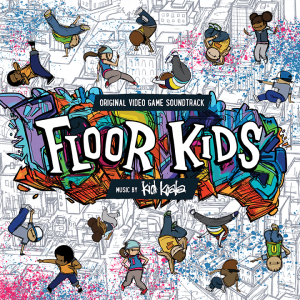
To his parents, he’s known as Eric San, but to millions of fans, he’s the astonishingly adept master of beats and turntables, Kid Koala. With six full-length albums, appearances on albums from Gorillaz and Deltron 3030, and more remixes than can be counted, where else could this talented man go?  Digitally, it appears. Working with animator JonJon, Kid Koala created the soundtrack to Floor Kids, one of the most well-regarded games for the Nintendo Switch. The breakdance battle game does for b-boys and b-girls what Tony Hawk Pro Skater did for shredders and thrashers, and while the gameplay and JonJon’s hand-drawn art are a big draw, Kid’s beats are just as much a part of Floor Kids.

STARBURST: How much did you and JonJon work on Floor Kids together; whose idea was it originally?

Kid Koala: I met him at the National Film Board, here [in Canada]. He was working on another film, and I was working on music for another animated film, and we just met and realised that we both had the same – well, he had the b-boy connection, and I had the scratch DJ connection – so, we hit it off right away.

He showed me, like, a pad of paper that he started flipping through, like an old-school flipbook, and it was Noogie, one of the characters doing a six-step or a swipe – something like that. I couldn’t believe what I was seeing. These awesome drawings that literally had that rhythm: the way he timed it and flipped it, this kid was dancing, and he was on-beat in these drawing. I was amazed by that. That might’ve been ten years ago…

Floor Kids is absolutely his baby. He’s the creator. But, when he showed me that first flipbook, I was like, ‘You got to make this a video. I’ll throw some beats behind it!’ and we started making little animated videos that sometimes I would screen on tour, and people always dug it. So, over the last ten years, there was this idea, we like working with each other and it’s a fun concept, but where do we take it? Do we make it a feature-length or a bunch of shorts?

So, we’re thinking about all these things, and then Rhyna, my manager, actually said ‘Maybe we should take it more into video games and the interactive sphere, somehow.’ That’s how that coalesced, and then I kind of cold-called the universe. We didn’t know any game developers. I reached out and I just said, ‘Are there any game devs out there who want to talk about maybe making something from some music and some art assets we think could turn into an interesting… thing?’

We didn’t know exactly what that was at the time, but that’s when we met the Hololabs kids. We all banded together and became MERJ, and then we produced Floor Kids, and that’s what we’ve been doing for the last three years, pretty much.

You produced so many genres for this game. What was the process like, in terms of visuals inspiring sounds?

Recently – I guess, in the last four or five years – I’ve been doing more film score work. Just trying to harmonise with the visual and the tone and stuff like that. Jon’s stuff, like I said, immediately already has this raw, sketchy drawing style and a lot of personality. When he showed me the concept drawings for some of the venues that he wanted to see in the game, like the corner or the arcade, or even the peace summit at the end of the game, it was for me this opportunity to get into the studio and just treat it like the video sandbox that it was.

I have this landfill of all these audio gadgets. Like, for instance, in the arcade, [Jon] really made it look like this ’80s arcade with all the consoles and the neon lights and stuff, so I was like, ‘I have to bring out the SID chip and 8-bit synthesisers.’ I’ve actually got a cartridge that turns your old NES into a MIDI-playable keyboard. Using its voice chip. It was just fun, for each venue, to dive into that world and just live in it for a couple weeks and make tracks for each one, and just have it exist.

There’s a lot of back-and-forth, too, where Jon would hear a track I was doing, and then that would inspire him, too, and he’d start adding things into the background, but it’s very much a collaborative process – with the game developers, too. Jon and I always consider ourselves like Dumb and Dumber because we don’t know anything about the process of making a game, but we were just excited to be a part of it.

When the game developers are telling us that you need main menu music here, and you need a sound when you scroll through the menu, a sound for this – they’re kind of educating us on all the requirements for that. It was just a fun project.

floor kids

How do you sort all of this music out, in terms of gameplay?

It’s interesting; the way the game is formatted, we decided to keep the rounds to just over two minutes. There are two ‘A’ sections, or verse sections, which are the freestyle sections, where it’s kind of like when you play Tony Hawk, and you can sequence a bunch of moves together, but it’s totally up to you, what you’re going for, and there are certain combos you can make to go for bigger points and stuff like that.

Then, that’s like a freestyle cypher throwdown, where I know from my DJing at break events that eventually someone’s going to hop into the cypher and start with the top rock and spin into some down rock and power moves and combos, and then end on some crazy freak. There’s a certain time for that, where it felt natural, like where you’re at a break battle, and it felt like that was how long someone would jump in.

Then, maybe, it might jump to the hook in the song, where everyone starts Brooklyn rocking – stabs or hits in the music that everyone synchronises to – basically, you just needed to break up the tracks like that, and it turns out for this purpose, that to have these tracks at this duration, where you have two freestyle sections, and then another where you have like, a rhythm target, it was a nice sort of balance there. They built the game engine to work like that, and I just had to make sure that the tracks could fit the format.

FLOOR KIDS: ORIGINAL VIDEO GAME SOUNDTRACK is out on Arts & Crafts on April 27th. Read the full interview in Issue 448 of STARBURST.

Main image credit: Corinne Merrell.

Latest Issue 448 – Out Now

448 NS

STARBURST celebrates the anti-hero with previews of both SOLO: A STAR WARS STORY – the early years of everyone’s favourite scruffy-looking nerf herder – and DEADPOOL 2, which sees the Merc with a Mouth return to his foul-mouthed and bombastic best. To complement that, we also look at other loveable rogues of cinema.

We also look forward to the animated THE LITTLE VAMPIRE 3D, and interview former DOCTOR WHO PAUL MCCANN and the designer of the upcoming HELLBOY table top game from MANTIC GAMES.

There are also celebrations in order as we look back at 2001: A SPACE ODYSSEY as it turns fifty and the fortieth anniversaries of seminal TV series BLAKE’S 7.

In our regular features, we take a look at TOBE HOOPER’s THE FUNHOUSE, heading to HORROR CHANNEL, and Independents Day talks to the man behind some of the most intriguing UFO documentaries.

Plus all your favourite COLUMNS, NEWS, REVIEWS and much MORE from the worlds of SCI-FI, HORROR and FANTASY!

Sam Liu | SUICIDE SQUAD: HELL TO PAY

Sam Liu Suicide Squad: Hell to Pay

Over the past few decades, Warner Brothers and their animated DC output has regularly won plaudits and praise from fans and critics alike. One of the key figures of such work is Sam Liu, who’s previously directed a whole bunch of movies, such as Justice League: Crisis on Two Earths, All-Star Superman, Batman: Year One, Justice League vs. Teen Titans, Batman: The Killing Joke, Teen Titans: Judas Contract, and Batman: Gotham by Gaslight, and has been involved in a whole lot more of Warners’ iconic animated DC outings in some capacity. We were lucky enough to grab some time with Sam to discuss his latest directing gig, the impending Suicide Squad: Hell to Pay.

STARBURST: The whole world of DC animated movies is always ever-expanding, but when did you first hear about Hell to Pay coming together?

Sam Liu: It’s strange, because I feel like I’m more of a studio director working for Warner Brothers. It was just the next script I had. I’d known for a little while than Alan [Burnett – legendary wrtier/producer] was to retire, that this was to be his last one. So I’d heard about it, and I was pretty excited to do it, and I wanted to do it justice because it was his last one.

Given how the whole cast – bar Doctor Fate – is made up of villains, did you find it hard to try and find a figure for the audience to sympathise with or root for?

I think there are certain emotional things that are in place. In the story they had enough history; with Deadshot it’s his daughter, with Bronze Tiger it’s his code. So I think that just in the story, I think they gave enough for each character – well most of them, anyway – for you to empathise with them because you can understand where they come from.

There’s definitely a case to be made for sympathetic villains across comic books, but how hard is to get that balance in distinguishing between ‘bad’ bad guys and those bad guys who have a more sympathetic edge. Is it hard to establish those two distinct sides who are also kind of similar in so many ways?

I think it’s fun actually, to be honest. The production on this movie was more one of entitlement. There were some things that I wanted to do with it, like music-wise I wanted more variety, but the cycle was so short, and I was also working on another film at the time, that there was this other texture I wanted to bring to it. While we were filming it, I would refer to it as like a Quentin Tarantino film. As it got towards the end, it was more like a Robert Rodriguez film. There was a certain amount of artistry or poetry that I wanted to get in, but we didn’t really have enough time for that, so we went ‘basically it’s this, so let’s go with what we’ve got’. But again, for me it was a little bit more of the heart of it. Going back to your question, the whole thing of making a movie and trying to guide an audience through it, there’s this thing that, you know, how do you make an interesting journey? And a lot of it is who are these people and does this journey change them somehow, or does this journey change their nature somehow. This is great because, yes, they’re these homicidal killers, but if you get a shot at redemption would you take it? I think that’s a very powerful motivator. At the beginning, they are who they are, they’re these nasty characters, but at the end the ‘good ones’ help each other out, which is kind of against their nature. Like Copperhead, he gives his life to help them out. I think it’s harder with villains because they’re never going to say exactly how they’re feeling. They’re hardened criminals, y’know? So you have to do it through the visuals. I think it’s fun and it’s different.

At times, the film does certainly have a grindhouse-esque vibe while also feeling like a road movie. And it’s in those ‘road movie’ moments where the interaction between the characters shines. Was it hard to make sure that none of the key players were left feeling short-changed, though?

Given the time limit that we had, I think it was important to showcase the characters but without sacrificing the story. We tried to get everybody, but the story is really about two or three people. Harley [Quinn] is probably the most famous of the characters but she has a very, very small part, and Boomerang is maybe the second smallest. Harley is the least important in terms of story. I kind of feel, for the story, you still get a sense of who all of the characters are.

The opening five minutes of the film sets the tone, being pretty brutal. In terms of the violence involved in the movie, was there anything that you wanted to do but was ruled off limits?

No. The producers I worked with, the creative ones, most of them were all story people. We didn’t want to be excessive just for the sake of being excessive. We wanted it to be appropriate, in our eyes at least [laughs]. My mindset now, I want to make sure that I try to set the tone of the movie and what it’s about. When you make a movie and when you don’t do that, the audience just thinks it’s just a regular movie. In this one in particular, for sure, a lot of the beginning cycle was concoctive. Because of the location and the script, there was too many people and too many locations, so we wanted to keep it as an espionage mission. We wanted to show them being total badasses, being experts at what they do, which at times can be killing people.

You’ve been working on similar projects – be it DC or Marvel – for nearly two decades now, and we know it’s like asking you to choose a favourite child, but is there one project that stands out as your favourite to date?

That’s tough! On the one hand they’re all my children, but on the other hand – and this is gonna make me sound like a bad parent – there’s problems with all of them. It’s funny because I’ve spoken to some of the editors, but there are certain things… the highest profile one is The Killing Joke. That’s so short, and that was so problematic. I feel like I’ve never had one like that before, where the writing is just such a great plot. I think [Batman: Under the] Red Hood, the way structurally the story is. It’s almost a guaranteed hit for a fan. It had everything a fan would want. It’s raw, it’s heartfelt, it shows you a different side of that relationship. If I’m being sentimental though, I think it’s All-Star Superman. I love the psychology of that. There’s some things I wished we had more time for, but story-wise my sentimental favourite is All-Star Superman.

Suicide Squad: Hell to Pay is released on Blu-ray and DVD on April 16th.

[ENDED] Win an A QUIET PLACE Goody Bag

A Quite Place

One of the most hotly discussed movies of 2018 so far is the stunning A Quiet Place. With the film now in UK cinemas, we’ve got an impressive prize on offer for some lucky readers.

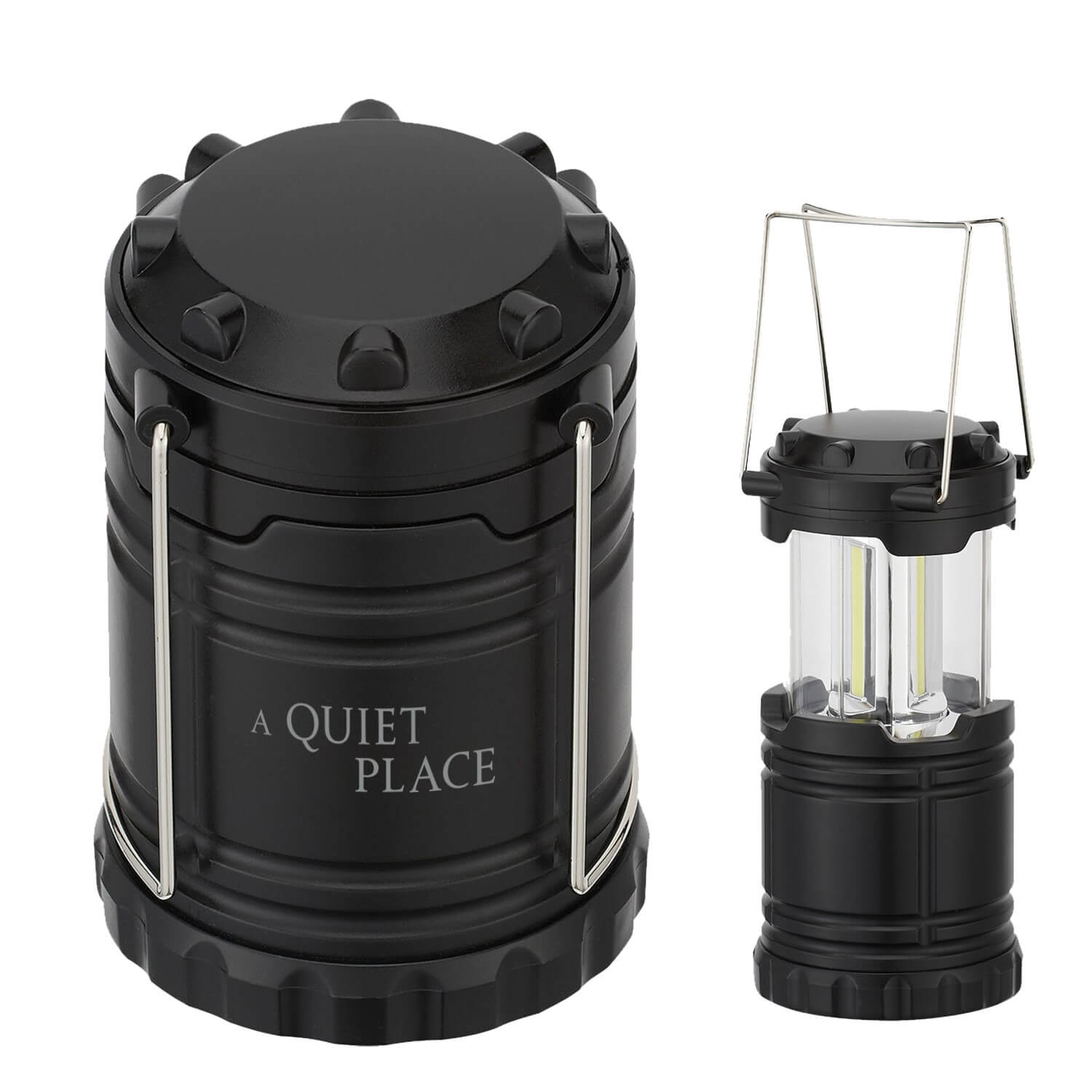
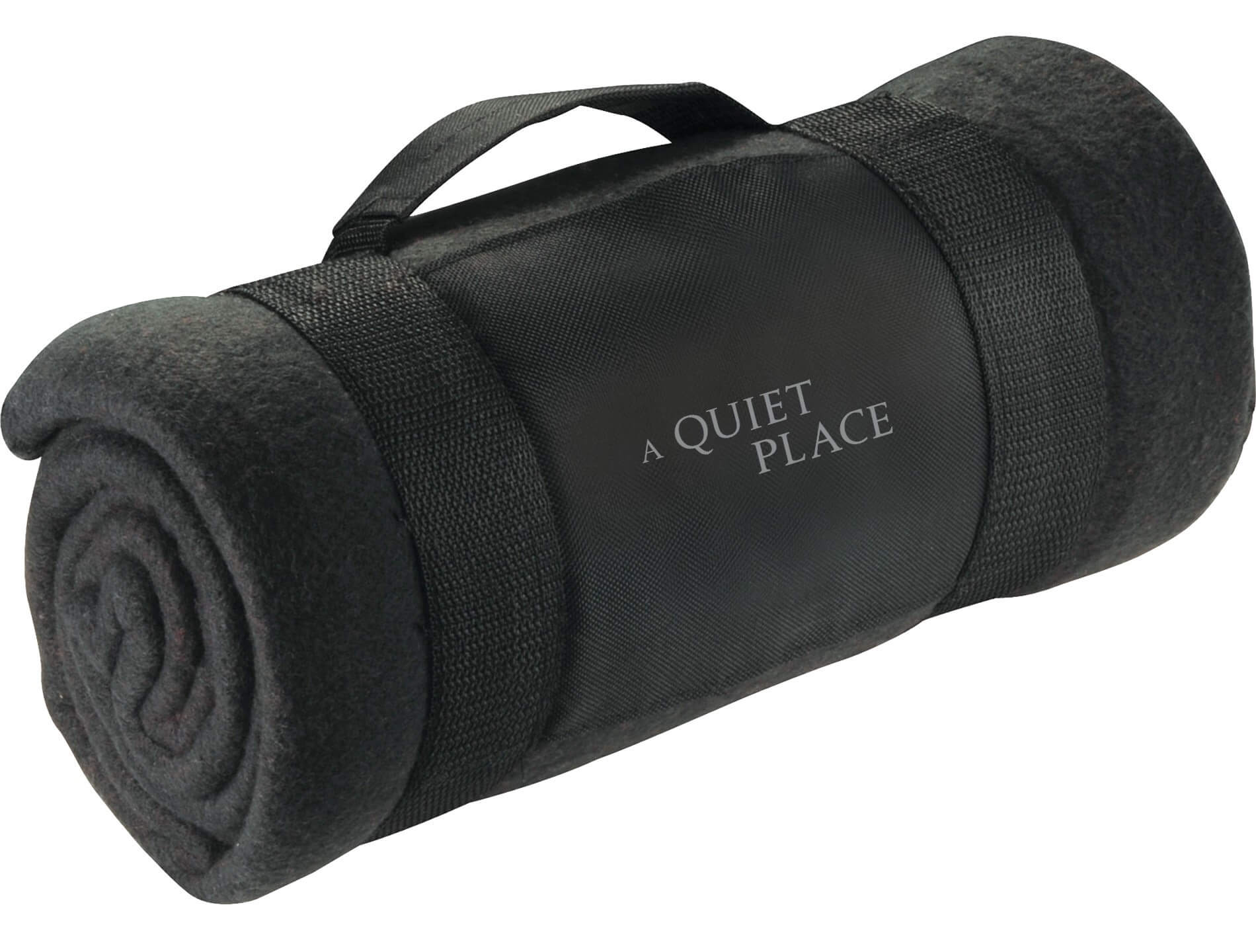
To celebrate the release of A Quiet Place, in cinemas now (cert 15), we are offering you the chance to win one of three goody bags, containing both a limited edition A Quiet Place branded lamp and fleece.

For a chance at winning one of these goody bags, simply answer the below question:

A Quiet Place star Emily Blunt starred opposite Tom Cruise in which movie?

  1. Top Gun
  2. Cocktail
  3. Edge of Tomorrow

Email your answer, along with your address details, to [email protected] labelled A Quiet Place before midnight on Sunday, April 22nd.

A Quite Place lamp

A Quiet Place bag

If you’ve yet to check out this mesmerizing, tense tale, be sure to check out the trailer below:

The official synopsis for A Quiet Place reads:

In the modern horror thriller A Quiet Place, a family of four must navigate their lives in silence after mysterious creatures that hunt by sound threaten their survival. If they hear you, they hunt you.

A Quiet Place is in UK cinemas now!