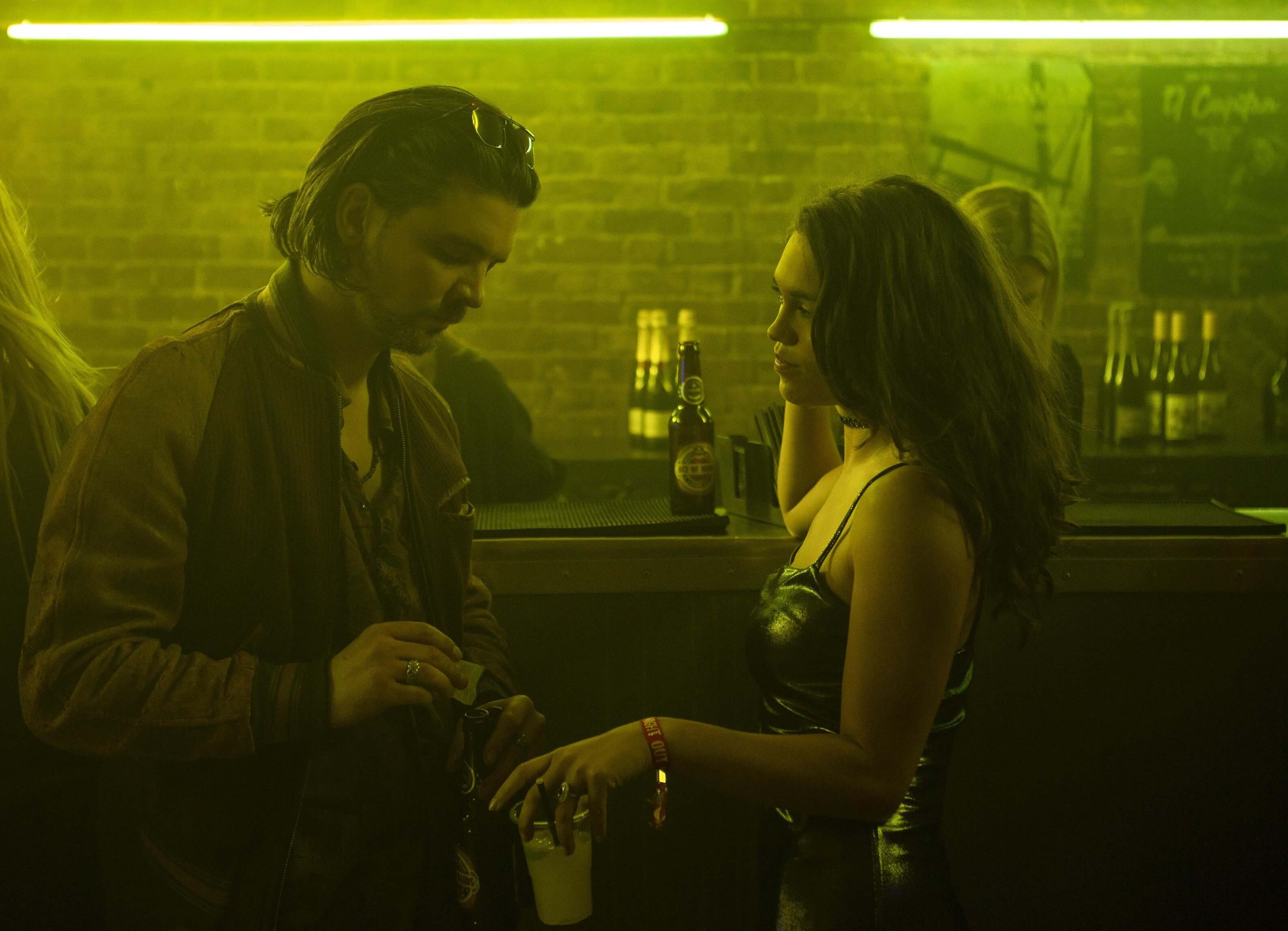
Andrew Lee Potts | THE INNOCENTS

potts

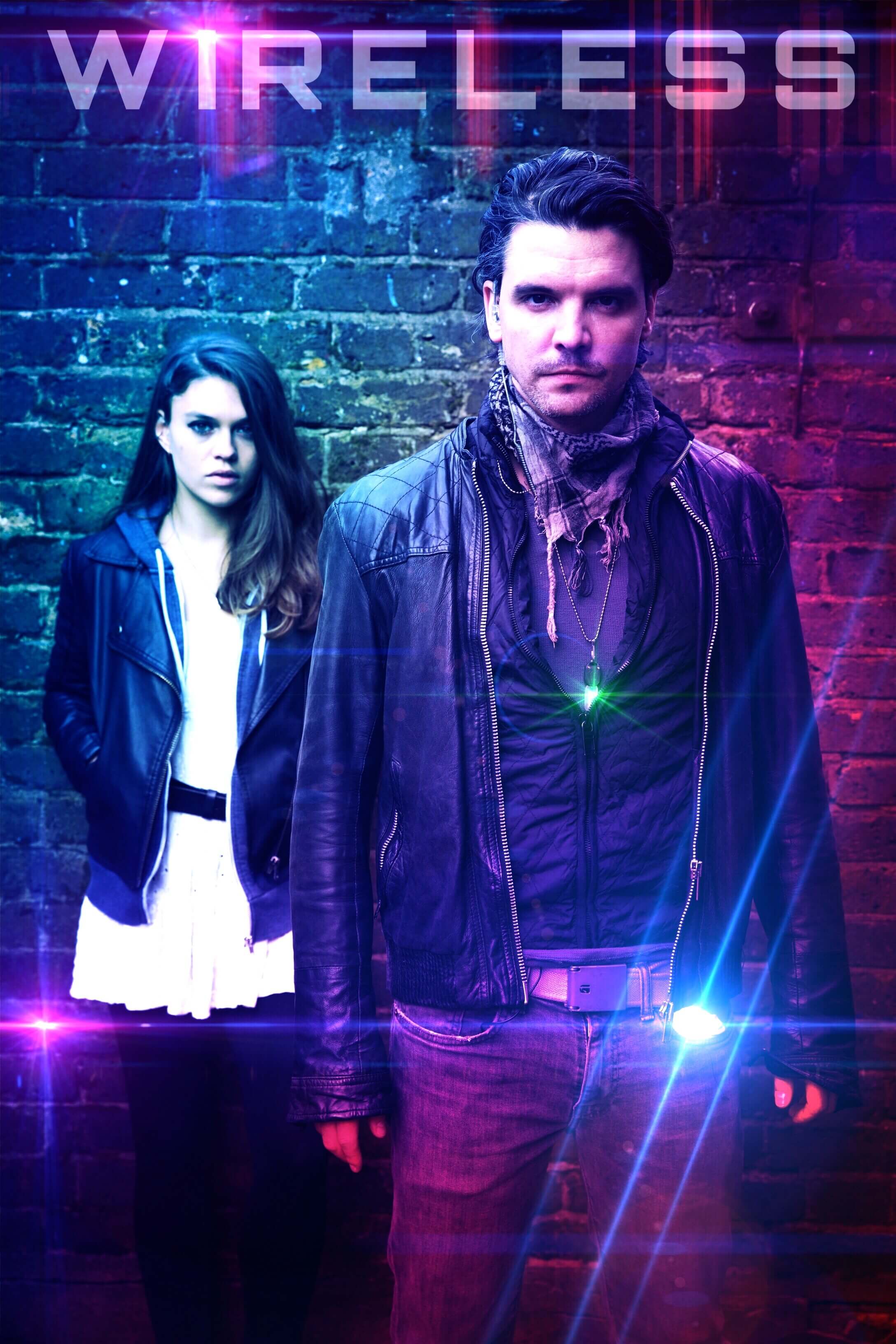
We caught up with former Primeval star Andrew Lee Potts to discuss his role in the new Netflix show The Innocents and the future of this web series Wireless

STARBURST: For those who haven’t caught it yet, tell us a little bit about The Innocents.

Andrew Lee Potts: The premise of the show is kind of a Romeo and Juliet runaway story but with this added twist of shapeshifting. That really simplifies it because it’s very complex. In my opinion, it’s a touch of class what they’ve done with it. I had a feeling from the get-go it was going to be something good and obviously Netflix agreed because I don’t think I’ve been in a show apart from Band of Brothers with so much advertising. They took over Waterloo station with a massive board, on Twitter they were posting stuff around the world as it came out on the same day, so it’s pretty cool. It’s exciting to be involved with a show that’s that big!

It’s a drip-feed show for sure, but the payoff is enormous in it. They do shapeshifting in a way you’ve never seen before. It’s the implications of what that actually would mean without being Mystique in X-Men. It’s the emotional stuff that comes along with that. The people that she shifts into are so far between each other; it reminds me a little bit like Quantum Leap, but a really dark version of it.

After my episode [3], it really kicks into gear, so obviously they did a lot of work on establishing the relationship of Harry and June (Percelle Ascott and Sorcha Groundsell) – who are played so well by the two lead actors, they really get you to care about them. They don’t apologise for just taking it at their own pace and going ‘you’re going to need to know when we want you to know’. It’s so easy with big shows to cut corners, put a bit of funky music on it and jazz it up because you’re frightened of people getting bored. I’m a big fan of Better Call Saul, which has been a slow burn right from the start and now they’re on Season Four, and he’s still no closer to being the lawyer we knew in Breaking Bad. I think it’s brave and intelligent television, really.

I don’t want to give too much away as the show twists and shifts so many times and in so many ways that it’s a bit of a journey. It’s seems to be going down well though.

So tell us about your part in Episode 3…

I play a kind of a Fagin-type role. The runaways need somebody and I’m there at the right time and right place. I guess he’s a charming kind of friendly chap but with The Innocents, you never really know anyone’s motives until they become clear. So I get the two youngsters involved in drug dealing in London. It’s their first time in London, obviously not the wisest move for them! So I take advantage of their vulnerability and their innocence and it ends pretty catastrophically!

One of the best bits about working on it, obviously I got quite close to Percy who plays Harry. He’s a young actor but he’s so earnest; just my cup of tea a person. So honest and took it all in his stride. He was listening a lot – I like both of them as actors, but I had more to do with him. I think he’s going to be a big star – he deserves to be. Once you watch the show, you’ll realise how huge of an emotional challenge he’s taken on, because obviously, when she shifts, the only other person who’s stable is him. So he’s having to cope with it.

So he’s having to shift with the way he deals with things?

Mentally shift all the time, yeah. There’s a brilliant line where Harry calls his mum, going: “I don’t understand, June’s changing so much, she scares me” and his mum goes, “That’s love darling”. Obviously, they don’t know what’s going on, so that’s funny.

I was happy with my part from the get-go. When I went in and met the director Farren Blackburn – who did Daredevil, The Defenders, and Iron Fist so he’s big with the Marvel stuff, but this is totally not like a Marvel show at all – he was just cool as fuck, basically. I really liked him, really respected him and he just gave off an air of calmness and we kind of just really connected. You don’t often get that sometimes, you’re one of many names and many faces that they see. I walked out of there thinking I don’t only want this job because it’s a really cool show, I wanted to work with him! I think he’s a really good egg, and super talented. So I hope I get the opportunity to work with him again.

Funnily enough, even though it’s only a lead in one episode, it took the entire time of the shoot to film. Because of Guy Pearce’s availability and things like that, and part of it’s not set in England, they had to split my filming in half. So I literally started on Harry and June’s first day of filming, and I was there on their second to last day. Which is crazy, because you feel like a real part of it. I saw how they were at the start and how they were at the end, so it was a nice job like that.

I was surprised at how big it’s come out. It’s nice when the company get behind the show that you’re in.

It’s normally just the reality garbage that gets all the publicity…

Exactly, and this is a totally unique type of show. For all the people who like X-Men and things like that, there’s something in it for them, but it’s high drama as well. You know, if you were some sort of mutant, what would be the emotional cause of that on you? It’s an interesting thing, and that’s what they explore in it. It’s also a coming of age story; going through your teens is hard enough, imagine if you can’t keep the same face and body? So they explore every part of it.

A lot of times on jobs, you come away with friends at the end, I met Sabrina Bartlett, who plays my girlfriend, on it. We really bonded; she watched some of Wireless, and there’s a character coming up that she would be perfect for so she’s going to be in it! When stars align and all that…

I’m coming to the end of editing Episode 14 and that just leaves two more episodes and it’s done. Three years in the making!

So you’re looking to end around March time next year?

I’m going to put 14 out, then 15 is another cool episode, which answers a lot of questions and then we’re into the big finale. I don’t think I’ll be shooting that until the beginning of next year because I’m shooting it differently. It’s going to be cool to do; it’s all planned out. It’s been a crazy journey doing it.
I guess getting to the end, which I will and which I promised, even though it’s taken quite a long time to do, it makes me proud that I’ve stuck with it and hopefully told the whole story. The end is going to be satisfying, let’s just say that. Everybody’s been so patient with it, I want to give people the ending they deserve.

So when do you shoot next?

Soon! I’ve got a pre-title scene to do, like I say, this one’s nearly done, I’ve just got to do the sound levels on the next episode. Which, funnily enough, is the one set at MCM, but there’s quite a lot of different things that happen in it so it’s been quite complicated to put together.

The whole next episode is finished and out to the actors, and I’m just waiting for a location and the actor’s availability. The next one’s less of an action episode, and more ‘get some answers’.

What’s next for you when Wireless has finished?

Sitting down and having a cup of tea I think [laughs]. I’ve got ideas… I’ve always said to myself that I want to direct a feature, so that will be the next step for me. But in the vein in which I’ve done a lot of my things, I want to direct it in my own way. Which would be not big budget, trying to be clever about it but do everything properly, with a crew and this, that, and the other. If I can do Wireless with a GoPro on my own, hopefully with a bigger crew, I might be alright! I’ve got the imagination and I’ve got the drive to do it, so we’ll see. I don’t want to rush it though, I want to have everything in place and planned. It’s all about putting the story and script together. You can put all the bells and whistles on later.

The Innocents is streaming now on Netflix. You can view past episodes of Wireless on YouTube now, and find out more about the exciting web series at www.keychainproductions.co.uk.

ROUNDERS: The Greatest Gambling Movie of all Time?

rounders

It’s 20 years since Rounders was released to widespread critical acclaim. The film, starring Matt Damon and Edward Norton, focused on the dirty side of underground poker. The name ‘rounder’ referred to someone who travels from city-to-city seeking high-stakes poker games.

Box Office takings were slightly underwhelming for the film on its initial release – only $22.9 million – but just like the Shawshank Redemption and other mainstream flops, Rounders went on to become a cult classic years after its release.

Let’s take a look at what made Rounders a well-known and well-loved American drama on the 20th anniversary of its cinematic release.

The story

rouncers

Rounders centres on Matt Damon’s character Mike McDermott, a law student who’s a gifted poker player. Mike dreams of competing in the World Series of Poker in Las Vegas.

However, he goes down the wrong path to quest for glory and starts playing Texas Hold ‘Em in underground poker rooms. Inevitably, things take a turn for the worse when Mike gets over-confident and risks his entire bankroll of $30,000 on a risky hand.

As a result, Mike quits playing poker and commits himself to earning an honest living – partly to placate his parents and his girlfriend. Then, when his childhood friend Worm (Edward Norton) is released from prison, Mike helps him to pay off an outstanding debt – returning to the shady poker tables to fund his benevolent gesture.

Worm wins $10,000, but decides against paying back Mike. The film develops around the relationship between Mike and Worm, and the impact this has on Mike’s family and girlfriend.

How does Rounders compare to other great gambling films?

Rounders has the perfect blend of lows and highs to keep the viewer intrigued and emotionally invested in the tension and drama – which are sustained throughout its two-hour screen time. One factor that sets it apart from other gambling movies is its cinematography – it juxtaposes a noir look, which captures an edgy underworld perfectly, and a sports picture that evokes the elation of winners.

Ocean’s Eleven and 21 are perhaps the only other films made after Rounders that rival it – however, neither have the same gritty drama as Rounders. While they’re both entertaining films that hold their weight in the gambling genre, it’s unlikely there’ll be any eulogies written about them two decades from now.

How would a Rounders sequel look?


The gambling landscape has changed dramatically since 1998. Firstly, the legalisation of a plethora of gambling activities in the US has reduced the prevalence of underground betting cells.

Plus, there’s been another seismic change over the past 20 years: the internet. If a law student were looking to make it big in poker in 2018, then they would probably just log into an online casino site on their MacBook rather than embarking in the gritty world of underground poker.

Players across the world can now play poker against some of the best in the world from the comfort of their own home.

There are so many online gambling operators offering run-of-the-mill online casinos. Then others have taken it to the next level. The Mr Green online casino has surpassed other online casinos by providing customers with their Live Beyond Live feature – immersing players in a real casino environment where they’re playing with real-life dealers and other players in a stunningly engaging live online casino powered by virtual reality.

It’s this shift to online gambling that’s got Matt Damon interested in rebooting Rounders for the modern age. Of course, a sequel of Rounders would look very different to the original – and a reboot would most probably lack the noir vibe that gave the film its initial appeal.

[ENDED] Win a Copy of Network’s New ASSAULT Blu-ray Release

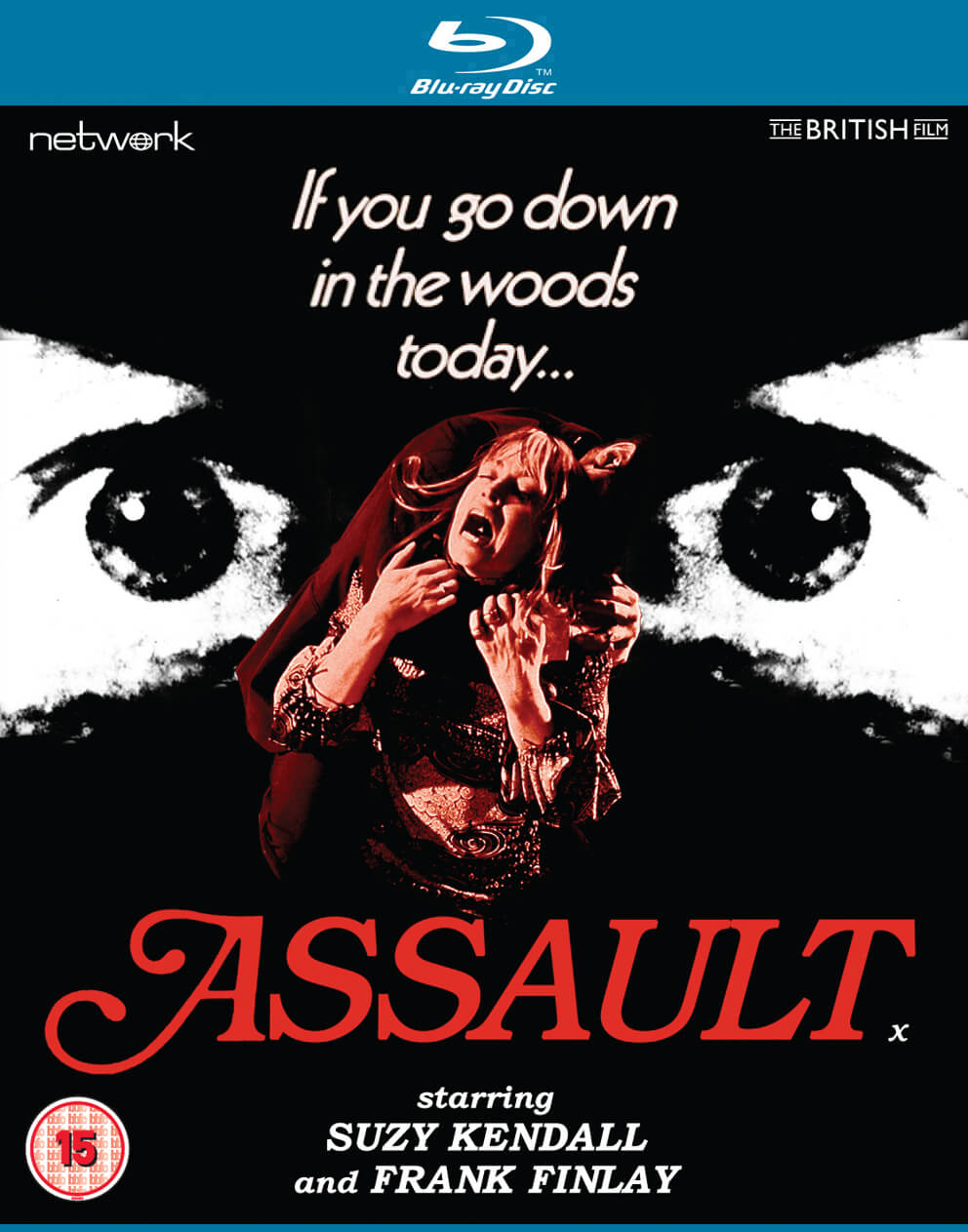
With Network releasing an impressive new Blu-ray edition of 1971’s Assault (aka In the Devil’s Garden), we’ve got three copies of this new release to give away!

To be in with a chance of winning this impressive new 2K restoration of an old favourite, simply answer the below question:

Which of these movies did the legendary John Carpenter direct?

a) Assault on Precinct 13

b) Assault on Wall Street

c) Batman: Assault on Arkham

Email your answer, along with your address details, to [email protected] labelled Assault before midnight on Sunday, September 2nd.

Assault

The official blurb on this new release reads:

A hard-hitting psychological thriller, Assault (aka In the Devil’s Garden) stars Frank Finlay as a career policeman willing to employ unorthodox methods to catch a sleazy murderer and Suzy Kendall as a plucky teacher willing to put her life in jeopardy to help him do so. Tautly directed by Sidney Hayers (Night of the Eagle), this controversial drama is presented here as a brand-new High Definition transfer remastered from the original 35mm camera negative.

When a schoolgirl rapist escalates to murder, Det. Chief Supt. Velyan (Finlay) faces an agonising choice when the girl’s teacher – who saw the maniac in pursuit of his second victim – offers to put herself in harm’s way in an effort to catch the killer.

Assault has been newly scanned to 2K resolution from the original 35mm camera negative in its original theatrical aspect ratio of 1.85:1. The restoration carried out involved careful grain management, both automated and manual removal of film dirt and damage, and correction of major instability, warping WORLDWIDE BLU-RAY DEBUT 27 AUGUST and density fluctuations. Remastered from original film materials preserved by the BFI National Archive.

SPECIAL FEATURES • Theatrical Trailer • Image Gallery • Limited edition, collectable book

Assault is available on Blu-ray August 27th.

[ENDED] Win Eureka’s 4K POLICE STORY and POLICE STORY 2 Box Set

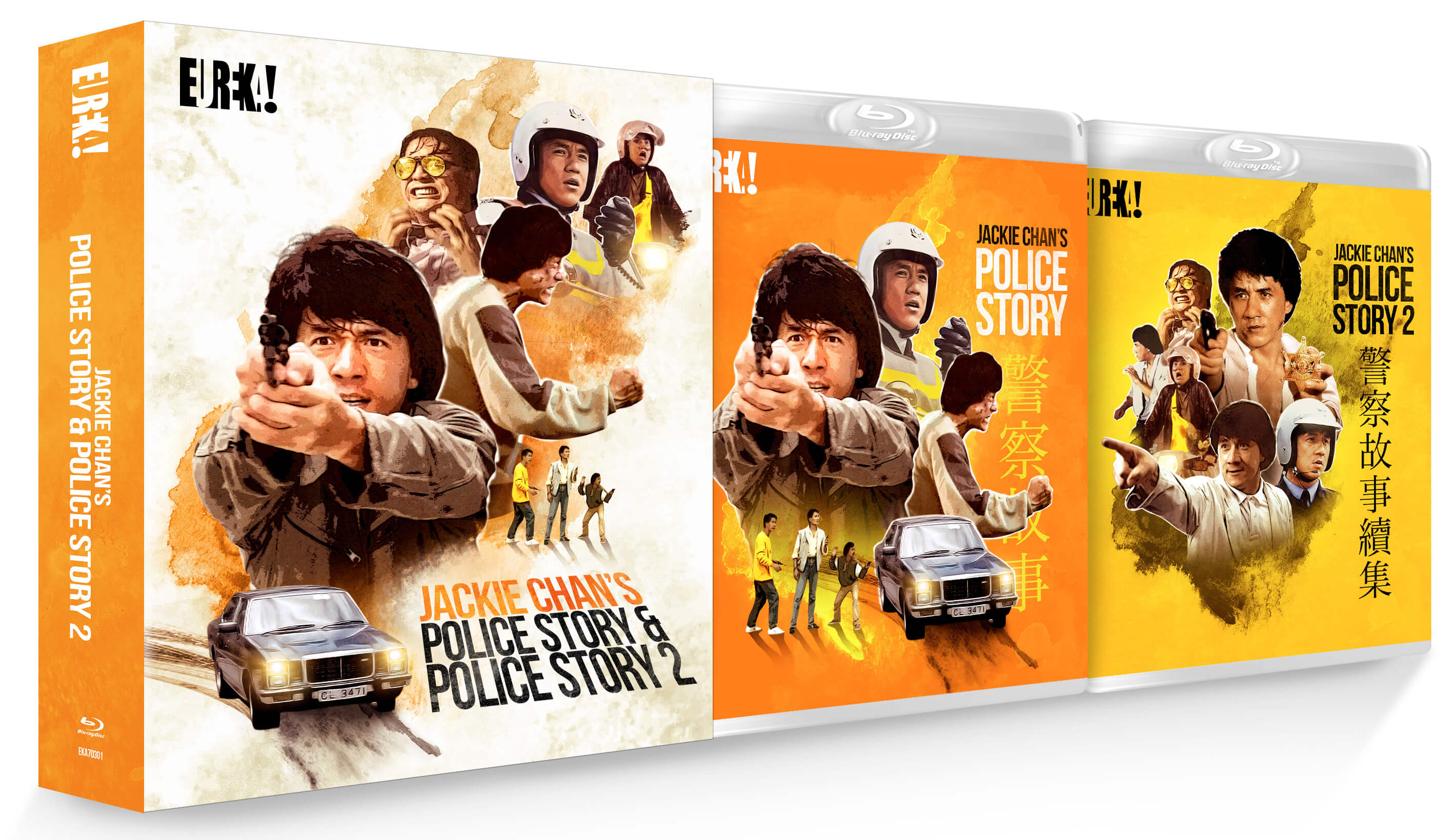
We’re pretty sure we can all agree, Jackie Chan is an absolute icon of martial arts cinema, and his Police Story movies truly are the stuff of legend. So, with Eureka Entertainment have now released an absolutely crammed two-movie box set that sees Police Story and Police Story 2 given brand new 4K restorations, we’ve got our hands on three copies of these double-packs to give away!

To be in with a chance of winning one of these fantastic prizes, simply answer the below question:

Which blockbuster Hollywood franchise famously centres on Jackie Chan and Chris Tucker?

a) Die Hard

b) Lethal Weapon

c) Rush Hour

Email your answer, along with your address details, to [email protected] labelled Police Story before midnight on Sunday, September 2nd.

Police Story

To whet your appetite for this stunning new release, be sure to check out the trailer for this double-pack.

The official blurb on this must-have new release reads:

Eureka Entertainment to release JACKIE CHAN’S POLICE STORY & POLICE STORY 2, two of the finest action films ever made from cinema’s reigning martial arts king, for the first time on Blu-ray in the UK on 20 August 2018, in a Limited Edition (3000 copies) Hard Cased Box Set.

Two of Jackie Chan’s most iconic films explode onto Blu-ray from incredible new 4K restorations! Featuring some of the most dangerous stunts ever performed on camera, Police Story and Police Story 2 are a dazzling blend of gritty action cop drama and impeccably choreographed martial-arts sequences that revitalised the Hong Kong action genre and established Jackie Chan as a worldwide superstar.

Police Story – considered by Jackie Chan himself to be his best film in terms of pure action, Police Story stars Chan as “super cop” Chan Ka-Kui, who goes up against a notorious crime lord in a series of escalating set-pieces that resulted in many of Jackie’s stunt team being hospitalised.

Police Story 2 – Demoted to traffic cop after the events of the first film, Chan Ka-Kui is reinstated to the detective unit when a deadly gang of explosive experts blow up a building and threaten to blow up more if their demands are not met. Featuring yet more bravura stunt work, and even more injuries to its cast and crew, Police Story 2 is to this day considered one of the best action films ever made.

Presented from brand new 4K restorations and fully uncut, Eureka Classics is proud to present Jackie Chan’s Police Story and Police Story 2 for the first time on Blu-ray in the UK in a special Limited Edition (3000 copies) Box Set packed with extra content.

BLU-RAY SPECIAL FEATURES

  • Special Limited Edition (3000 Copies) Box Set
    • 1080p presentations of both films, sourced from immaculate 4K restorations including Police Story 2 in its full 2 hour version for the first time ever in the UK
    • Original Cantonese mono audio track for Police Story
    • Restored Cantonese 5.1 audio presentations for both films
    • Optional English audio tracks
    • Optional Mandarin audio tracks
    • Optional English subtitles
    • The Police Force version of the first film, originally re-edited for the US video market and featuring its own electronic score by Kevin Bassinson
    • Police Story – Deleted and extended scenes, including alternate opening and ending sequences
    • Police Story 2 – Outtakes
    • Jackie Chan (40 mins) – A documentary on Jackie Chan’s early career from cult film documentary series, Son of the Incredibly Strange Film Show
    • Archival Interview with Jackie Chan (20 mins)
    • Interview with Benny Lai (15 mins)
    • Jackie Chan stunts promotional trailer
    • Box set exclusive – Collectors booklets for each film, featuring new essays and archival content

JACKIE CHAN’S POLICE STORY & POLICE STORY 2, two of the finest action films ever made from cinema’s reigning martial arts king, is OUT NOW on BLU-RAY and can be purchased here.

The Real Reason Why Adults Love the Fantasy Gaming Genre

fantasy gaming

From video games to LARPing, find out why an entire generation of fantasy gaming lovers still continue to enjoy the genre they grew up with today.

Escaping the mundane: Why Adults Continue to Love the Fantasy Gaming Genre 

Today, the fantasy gaming genre is more popular than it ever has been before. Since its early roots of board games like Dungeons and Dragons, card games like Spellfire and Magic: The Gathering, and the first video game consoles like Atari, the gaming genre has evolved with the internet and mobile, attracting new younger players and continuing to warm the hearts of its more seasoned fans.

Fantasy games have and continue to offer players an escape from day to day life. Whether they are playing single-player RPGs (Role Playing Games) like God of War, MMORPGs (Massively Multiplayer Online Role Playing Games) like World of Warcraft, MOBAs (Mutiplayer Online Battle Areans) like League of Legends, multiplayer social games like Dawn of Titans, fantasy-themed slot games like Snow Leopard, board games like Talisman, etc., players love the thrill of immersing themselves in the genre. This is especially true of adults who grew up with fantasy games as children.

In fact, Square Enix’s iconic Final Fantasy series, first launched in the late 1980’s for the NES, is arguably close to the heart of many adult RPG video game fans. This is particularly true in the case of Final Fantasy VII, the most popular and innovative game of the franchise, which redefined the series and video game RPGs as a whole when it was released for PC and PlayStation in 1997. It continues to have a massive fan following today, resulting in both game and movie spinoffs, as well as an upcoming video game reboot (with no release date announced yet), much to the delight of an entire generation of game players.

Still, it’s not just fantasy RPGs that adults crave. They also enjoy the fantasy gaming genre via other gaming channels including, believe it or not, online casinos. For some players, this might mean playing fantasy casino games, such as interactive slots based on popular fantasy themes featuring their favourite superheroes, mythology figures or a unique storyline. On the other hand, it might mean downloading a game from Steam like CasinoRPG, an MMORPG that lets you immerse in character as you build, run, and play in your own casino world.

Beyond diverse digital styles of fantasy gaming, nowadays, the love for this genre also extends into the real world with live action role playing games, better known as LARPing. In this style of game, the participants actually physically portray their characters, from their clothes and weapons right down to their personalities, and act out quests. This is a growing trend among adults, with LARP events occurring all over the world, including the UK.

Speaking of getting into character, let’s not forget cosplay. Popular comic, sci-fi and fantasy fiction conventions, such as the MCM London Comic Con, are the perfect arena for attendees, young and old, to dress up as and honour their favourite fantasy characters for fun, and sometimes even as a career. This growing trend gives adults the chance to socially share their interests with other nostalgic fans and even their children.

fantasy

Whether it’s playing video game RPGs, old-school board games, MMORPGs, MOBAs, fantasy slots, LARPing, or simply cosplaying, there are a variety of ways adult fantasy fans continue to enjoy their favourite gaming genre and show their love for it.

Ultimately, the real reason the fantasy gaming genre remains popular today among adults is simple: Its nostalgic fun. Therefore, regardless of how adults might enjoy their fantasy escape, with nostalgia as a strong driving force, it’s unlikely their love for the genre will wane any time soon.

ISSUE 452 – OUT NOW!

452 NS

STARBURST goes hunting and takes a look at THE PREDATOR as well as various other iterations of vicious but sporting character.

We also preview VENOM, in which Tom Hardy portrays Marvel’s arch Spidey villain-cum-anti-hero, and THE HOUSE WITH A CLOCK IN ITS WALLS, the latest from Eli Roth, starring Jack Black and based on the popular children’s book.

Elsewhere, we take a look at the story behind the terrifying SLENDERMAN, and encounter some other vestal evils ahead of the release of THE NUN.

If that’s not enough, we go on location of the new Paul Hyett film HERETIKS, count down the most outrageous JACKIE CHAN stunts, investigate the US government’s secret UFO program with expert NICK POPE, look into INCIDENT IN A GHOST LAND, and chat to the director of HOW TO TALK TO GIRLS AT PARTIES.

In our regular features, we take a look at the FRIGHTFEST season that’s heading to HORROR CHANNEL, and Independents Day talks to SAM MASON-BELL, who runs the TRASH ARTS PORTSMOUTH production company.

Plus all your favourite COLUMNS, NEWS, REVIEWS and much MORE from the worlds of SCI-FI, HORROR and FANTASY!

No Clues. No Hope. No Escape. WAKE IN FEAR

wake fear

Let’s cast our eyes back to 2016’s Wake in Fear, a nifty abduction shocker starring Caitlin Stasey (All Cheerleader’s Die) and Markus Taylor (Deadheads). The début feature film from Dylan K. Narang, Wake in Fear is a surprising blend of contemporary horror ideas split across two simultaneously running storylines, one following an abducted girl, the other a troubled man desperate for work.

Originally titled All I Need, you can see why the film went under the radar. From the outside, it looks like your average grimy exploitation thriller. The so-called torture porn subgenre was a relatively brief bubble. It started with Hostel, hit peak gross with A Serbian Film in 2010, and from there, drifted out of the spotlight. Once it was defined by its biggest hits, it went the way of found footage and became a tough place to carve new ground.

Narang clearly had his eyes on that new ground and pretty much picked a perfect time to release. For most of the crew, and Narang himself, this was their first feature and a decent place to prove their skills. Think about the most significant horror films of 2015, movies like The Witch and It Follows, and how they shifted the bar. Horror has been reinvigorated over the past few years to the point where audiences aren’t starved of solid A-grade scares and high-quality production. Monsters and our expectations of them have also changed. We demand smart new stories or at least savvy reiterations of classic themes as modern threats.

In the modern horror landscape, there’s little room for run-of-the-mill features or retro-stupidity. We like our ‘80s nostalgia and shameless old-school schlock, but they need to be savvy, sharp, a few steps ahead of an audience eternally ready to scream ‘I’ve seen that before!’ Wake in Fear delivers an underdog punch a lot of subgenre enthusiasts could really appreciate, and plenty of thrills to keep you on edge throughout.

wake fear

Killing Her Softly

So 2015 introduced us to new threats, and 2016 continued the trend with bold new voices in Indie filmmaking singing out loud and proud, boasting fresh-faced ways to give us nightmares. And though Wake in Fear doesn’t exactly crack the mould, it does offer smart thrills for folks jaded with the relentless nihilism and gore-centric thrills of torture porn.

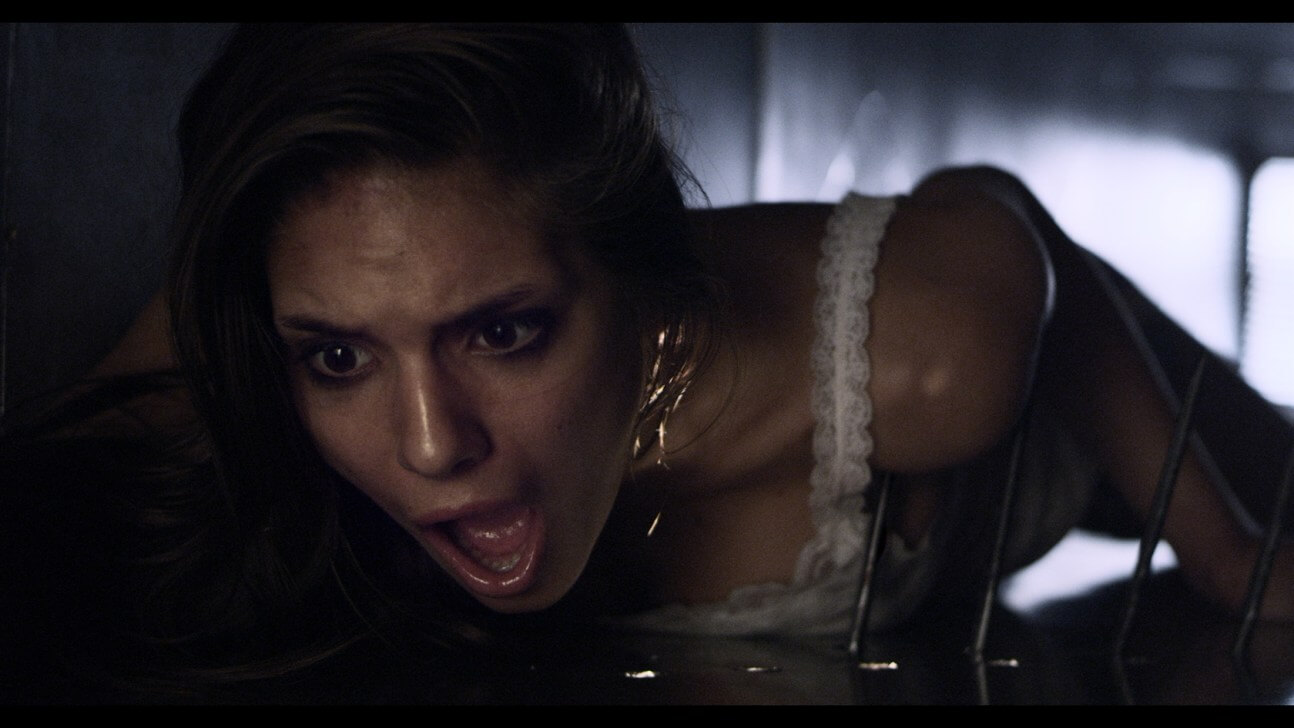
One of the first things that really hit home when settling into Wake in Fear is how slow and steady it is. The film opens in darkness then slowly picks out the dozed, waking eyes of Chloe. It’s an intimate introduction carried by some incredibly tight shots and wide, startled eyes; we glimpse her skewed view, the camera pulls back to reveal her gagged mouth. Sure, opening the film with an eye isn’t exactly groundbreaking, but it actually serves a real purpose and nicely sets up the film’s more intimate introverted approach to some pretty extroverted stuff. It’s a smart way to totally disarm the audience and put them in the same position as Chloe.

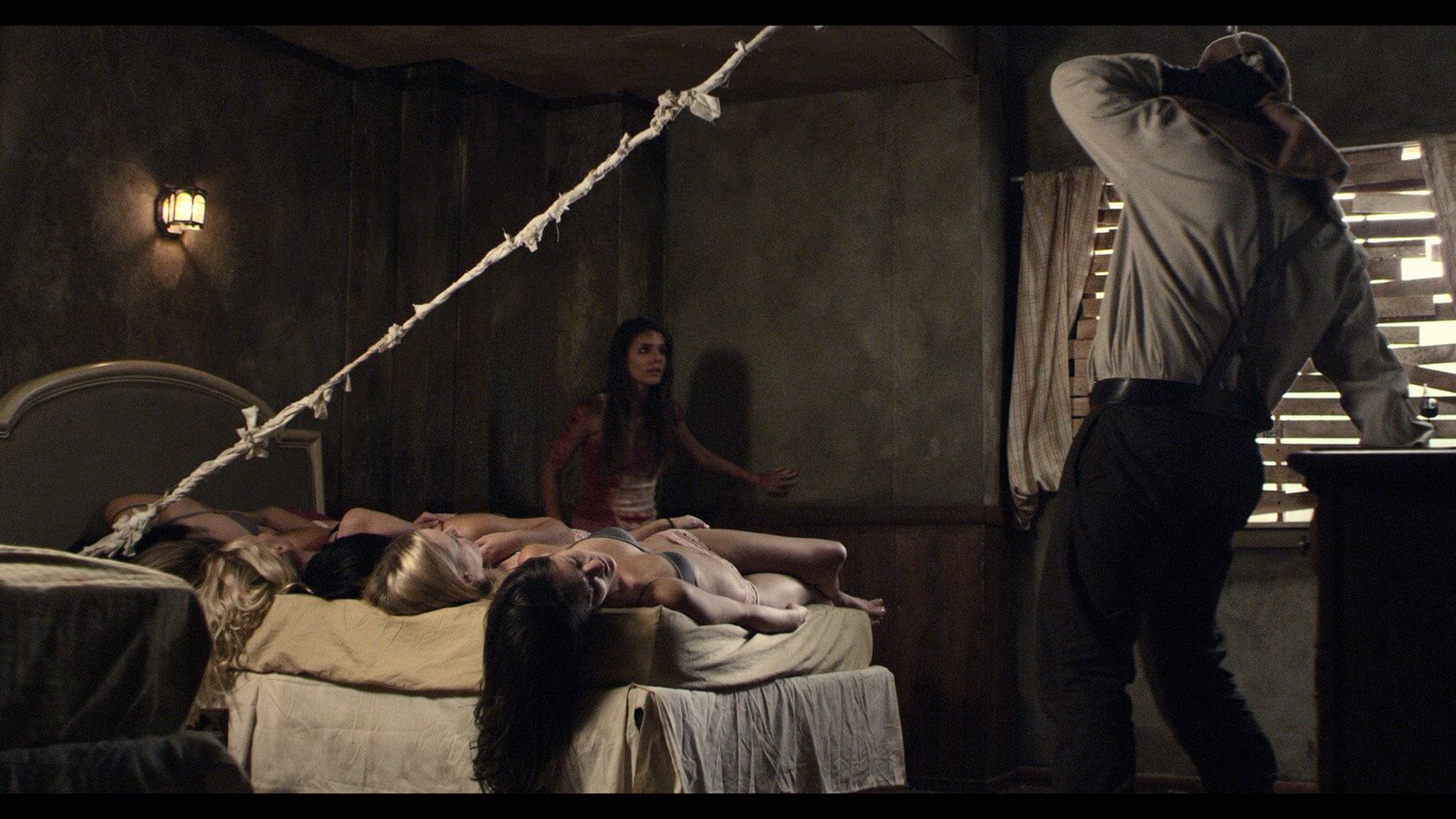
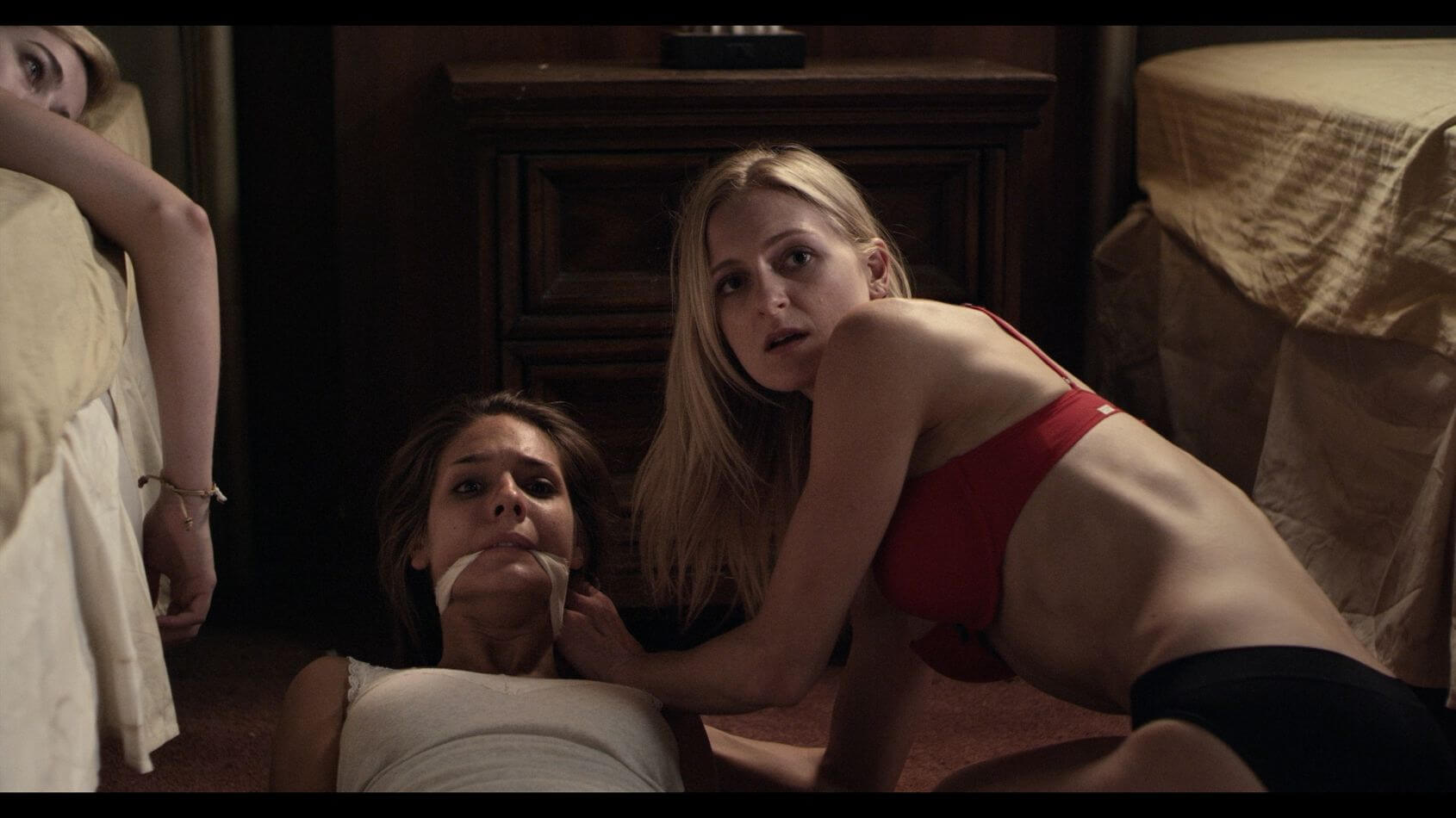
As she comes around, she realises she’s not alone, the small room is crammed with unconscious young women in their underwear, bound and gagged. She starts communicating with the girl next to her and the conversation, entirely through eye movement, is pretty disturbing. The killer arrives, yanks her off to the bathroom, and Chloe is left to hear the muffled violence next door. Soon after, the girl’s bloody body is dragged out and away. These moments are brief and never clear. The scares are often more sensory than they are visual, with sound playing a huge part in the films scares, much as Don’t Breathe would utilise later that same year.

Narang always goes for these details over the sheer nastiness. It’s one of Wake in Fear‘s greatest strengths: its ability to refrain. While the hits of torture porn got their rocks off via gross-out practical effects, exploitative sexualisation, and shameless degradation; Wake in Fear plays a different game. Sure, there’s shocks and twists, but the specific violence is never really spelt out. Even when Chloe is caught by the killer, she is befuddlingly thrown back into the room, it’s a head-scratcher that makes the scenario even more mysterious. There’s no teeth-pulling or hair-burning, just bloody-aftermaths and glimpsed corpses. The shock of a body suddenly whisked off into the bathroom hits harder than the film’s gorier moments later on. And it definitely has them.

wake fear

One of the most intense sequences follows Chloe as she investigates the blood-soaked dingy bathroom; the music drops, and the stark, wide camera shot lets our imaginations combine the scene with the screams heard earlier. She spots an earring in the drain and freaks the hell out. It’s chilling and does more than the shameless hacking of scantily clad bodies ever could.

When you look at the synopsis or even the original poster, expectations could be high for something pretty unrelenting. Narang knows that audiences have seen everything by now and without a decent practical effects crew, there’s no point going for gore. So much more can be done with a decent sound designer and a great lead, of which he clearly has both. So, even if he indulges in the pitfall of tropes, he’s often able to dig right under us and turn an eye-roll into a smile. There’s nothing more pleasing than having your expectations smashed when it comes to horror.

You might think that the secondary narrative is there to placate a dull single-set horror film but, rest assured, Wake in Fear fully exploits its boundaries; every movement, be it the creak of a floorboard or the rattle of a doorknob carries so much weight. Barricading the door against the sequential serial killer seems a smart idea, but we know it will make a racket. So much of the film exploits the hide and seek mentality to perfection, keeping you on the edge of your seat and popping you into Chloe’s point of view when you least want it. A racy attempt at escape sees Chloe and another girl attempt to flee via the air ducts. What ensues is the only truly graphic – perhaps bordering on daft – bit of bloodletting. Chloe, in a desperate attempt to throw the killer off and prove she has crawled to her death, crams her fingers inside one of her wounds so that the blood will drip down from the vent. It’s an odd plan, and the reasoning doesn’t seem altogether sound, but it’s the only shameless bit of torture in the whole film so it could be forgiven for its stupidity. It’s also carried perfectly by the film’s lead.

First and foremost, this is Caitlin Stasey’s film. From literally the first frames to the very last, she is such a great performer and easily carries many of the film’s highs and lows. The young actor has barely any dialogue and yet from that opening shot, we’re sold. She’s tough, smart, and inventive: three qualities that go hand-in-hand when it comes to dealing with psychopathic horror movie threats. And for the record, Wake in Fear has one of the most perfect heroine revenge moments we’ve seen in ages, a drop-dead perfect final twist in Narang’s cat and mouse game that you won’t see coming. But again, it is another one of those moments that prove a bit outlandish when considered alongside the rest of the film, but so deliciously dark one can’t help but laugh.

wake fear

All I Need

Stepping aside from the trapped-in-a-room narrative, Wake in Fear has a whole other story to offer. Andrew (Taylor), is a troubled man who receives a mysterious call offering him work as a courier. Since he’s unemployed and desperately trying to keep up with child welfare payments, he takes the job, and things slowly get grimmer from there. If Chloe’s story takes inspiration from films like Captivity, then Andrew’s side lifts from things like 13 Game of Death and its American remake 13 Sins, though tamer and with a better resolution. It’s the story of a disenfranchised white American man, unable to find work, unable to support a family, and preyed upon by a mysterious organisation. It’s a story we’ve seen a hundred times and pales in comparison to the adrenaline rush of Chloe’s story, but it does build to something pretty interesting.

The unassuming plain packages he carts for an unseen boss are purely MacGuffins; narrative bait placed to prove and illustrate Andrew’s mindless desperation to care for his daughter. He gets ridiculous sums of money for taking ‘books’ around town until a new, shadier offer comes up. You get the gist of what Narang is doing fairly early on, and kudos to him for pulling it off so intriguingly. What starts out as a potential exploitation film, becomes a nicely layered postmodern cat and mouse flick with some scathing social commentary tacked on for good measure. As one half of the film plots Chloe’s struggles captured, the other reveals Andrew’s slow corruption under the system. Usually, it would be an issue, ramping up the tension in a dingy Hostel environment, only to slam on the brakes for a somewhat bleak rags-to-riches story. But the innate intrigue proves a potent hook leading to a great final act.

Like any great horror movie, the film doesn’t exactly resolve. By the time we reach that third act, with a morally precarious Andrew and exhausted blood-spattered Chloe, the film changes again. Chloe decides to face off against her assailant, while Andrew finally meets his shadowy employer for a sit-down chat. Exposition can suck, but the yarn spun by Holly Twyford’s Elizabeth, the wealthy grieving widow of a dead war veteran, is exquisitely left-field. Her reasoning is bonkers and Narang’s finale positions the film as a post-Iraq class-commentary take on common contemporary themes. If anything, the title change could be an attempt to distract from Andrew’s storyline, since the original title is entirely bound to his narrative. All I Need is part of Elizabeth’s mantra, her way of persuading people to take on the very particular, and peculiar, role she requires. Again, we don’t want to give too much away, but the reasoning for this whole scenario is a hoot, one that might even stray too far into camp sensibilities Narang flirts with a couple of times.

The killer’s mask, for instance, doesn’t feel like the sleek or creepy kind of thing we’ve been treated to in films like Sinister or The Collector, it’s a big cumbersome scarecrow/gasmask thing that reeks of ‘80s slasher excess – think along the lines of My Bloody Valentine. It’s daft when you really think about it, but keeping the camera on the killer’s legs is a nifty way around this for most of the film.

The most recent poster and the new title have a retro vibe to them, so inevitably highlights the ‘80s influence more clearly. It looks like someone doesn’t quite know how to sell Wake in Fear. It has brief nods to past styles but is very much a cocktail of modern concepts. It might be that it’s too ambitious for its own good, desperately conjoining ideas to provide fresh experiences, while also indulging in some hokier moments that throw it off. But then, it could just be that this is a Russian Doll of a film. The killer is wearing the costume of ‘80s horror, in the same way, you could say this is a conspiracy thriller wearing the costume of a serial killer thriller.

Basically, what we’re saying is this film is a surprisingly on-the-ball offering. By the climax, it’s a remarkably ambitious film which cleverly undermines torture porn, exploitation, and stalk-n-slash tropes, while delivering a genuinely emotional story. It’s not a surprise it went under the radar, low-budget horror films are ten-a-penny, and it takes something truly special or truly ridiculous to get noticed. Wake in Fear is neither, but it is a solid thrill ride made with ambition and a fresh approach to tired ideas, and that doesn’t happen often enough.

WAKE IN FEAR screens on Horror Channel. Sky 317, Virgin 149, Freeview 70, Freesat 138.

James Lavelle | THE MAN FROM MO’WAX

James Lavelle The Man from Mo'Wax

James Lavelle thrust himself into the musical spotlight in the early ‘90s with his game-changing style that infused a whole slew of musical genres and got the toes tapping of many a listening ear. At the age of just eighteen, Lavelle founded the Mo’ Wax record label and would then go on to found UNKLE with DJ Shadow. It wasn’t all smooth sailing for Lavelle, UNKLE, or Mo’Wax, however, and some hard and devastating lows were around the corner; themselves to eventually be followed by some further highs. Chronicling these peaks and valleys, Matthew Jones’ stunning The Man from Mo’Wax goes in-depth on both the most successful and the most testing of times in Lavelle’s career and life, complete with input from a host of the key players involved in that period. With the documentary in select cinemas from August 31st ahead of a September 10th home release, we caught up with the truly fascinating Lavelle to discuss all of this and much, much more.

STARBURST: First and foremost, how did The Man from Mo’Wax even come about?

James Lavelle: It’s a weird one. It started with my ex-wife – my wife at the time – and it sort of started as a series or documentaries or blogs. That’s what the idea was. Suddenly, I was presented with the idea of making a documentary. It was one of those things where, “Yeah, cool, sounds like a good idea.” Then it took on a life of its own; it became a bit of a snowball, grabbed momentum and started rolling. Before I knew it, there was a documentary being made about me. Mack [producer M.J. McMahon] and Matt [director Matthew Jones], who were also involved, wanted to finish it. This is like eight years ago, nine years ago – it started ten years ago – and I sorted of said on the basis that I wouldn’t work with my ex-wife on it. If it was something that they wanted to continue then I’d look at that. They sort of came up with that scenario where it could continue, and I didn’t feel at the time it was being made it was a documentary about what was going on at the time, which was the War Stories and Where Did the Night Fall time. I didn’t feel that that would make a very good documentary, so I then gave them access to a massive part of my archive. That’s when it really started to take more shape. That was probably about seven years ago, and here we are now. It was finished a couple of years ago, to be honest with you. That’s the nature of films and film festivals and funding and distribution and all that stuff. It’s not my film, I didn’t direct it, I’m not producing it or financially involved in it. I just felt that there was a point where this beast is going to come out one way or another. Do you want to try and be more creatively involved and shape it with hopefully more of the right subject matter? Not shaping it in the sense of me saying what can’t be in the documentary, hence why it is what it is. For me, it’s quite difficult as it’s not a film I’d have made. But maybe that’s part of what’s interesting to other people about it.

It is very much warts ‘n’ all, as in it’s just you laid bare and very vulnerable at times. There must be some sort of trepidation involved in putting yourself out there like that, especially with how blunt and open the film is?

Yeah, I found it very difficult. I think I’m more at ease with it now. You can imagine, when I started to really see the rough cuts about four years ago, there were certain things I wasn’t happy about being in there, which I did change. I think there has to be an element of alluding to but not actually always seeing, because actually it then becomes rather boring; certain things on a personal level or on a factual level that I felt were inappropriate or we needed more work on. Again, like I said, it wasn’t something that I could dictate; I just tried to navigate it in a way that I could support this if you wanted me to. Therefore, if I do then we need to find some sort of common ground. I like the film, I think the film has some amazing moments, I think the beginning of the film – the ‘90s stuff – is very good. The third quarter, I don’t like. That’s the Night Fall period, which I think they still didn’t get right, but it is a lot better than it was. I just think it gets a bit boring. And I think there’s a lot of stuff that’s not in there. When people talk about it being the definitive Mo’ Wax documentary, it isn’t; there are many people who aren’t in this documentary. It plays on the fact that there’s these constant broken relationships, but yet I still work with people like Trevor Jackson, Fraser Cook, Ben Drury; many people who were very involved with Mo’ Wax but who aren’t in that documentary. It’s a documentary that basically shows from the perspective of me and [DJ] Shadow, and that isn’t what Mo’ Wax was about. Shadow was part of it, but he didn’t define Mo’ Wax. And he also didn’t define UNKLE. I find sometimes that it’s very centred around Shadow. That’s not really for me personally the journey that it’s been for a very, very long time. But, I think in the sense now, going through it, where it’s got to, the reaction to it, and we live in a very different world… In the last few years, mental health, people are looking at DJs and what’s happened to DJs. Recently, what happened with Avicii really touched a nerve with me. I didn’t know him, I wasn’t a fan particularly of his music, but what I went through as a kid and what people go through now, I went through that without any support, without any mental support. I sort of look at that and think, without trying to sound too morbid, but I’m alive, I’m here, I’ve managed to come out of the other side. There’s a lot of things I find difficult, and there’s a lot of things factually that aren’t in there as well.

People don’t talk about how when I left XL, I signed Nick Huggett who signed Adele. They don’t talk about the fact that the person I worked with on War Stories is now in prison for ten years for £200 million tax fraud. There were things for me factually that I would have liked to have had a bit more… it’s easy finding a pie graph of the failure of things, but people don’t know that you can do a pie graph of War Stories not selling as many copies as Pysence Fiction, but actually War Stories is a much more successful record. What it doesn’t talk about is that the record industry changed, no physical records are being sold. War Stories became one of the most licensed records in the world that year! But that is part of the story, I suppose. Part of the mythology. They want to show it in the sense of the ups and the downs of the roller coaster. For me myself, there are a lot of things, a lot of people that aren’t in that documentary. On a positive note, I think it does show a lot of the madness of the record industry at that time and what I went through. Some of that is my own fault, but what people don’t really know, and I think this maybe shines a bit of a light on it, is how it was brutal. I was put through quite brutal things. You look at now, people are able to talk about these things. When I started in the music industry, it was very male and very laddy. Dance music culture was very aggressive, it wasn’t like how it is now. It was a very football and rubeboy-led thing. It was very urban and street, very football. To be in the middle of that was very difficult. That’s something that you will never really understand. When I used to dye my hair, the abuse you’d get. Or trying to play house music when you were considered to be a hip-hop DJ, the abuse you’d get. I had to have a bodyguard at one point because people would throw bottles at you for playing house records.
James Lavelle The Man from Mo'Wax

That seems to be one of the major reasons why you’ve got such a huge and varied fan base, because you’re not just pinned to one genre of music. At that time, people were used to a relatively narrow range in that regard. How do you think that’s changed over the years, and what effect has the rise of digital media had on the industry from your perspective?

I’m lucky that we have a fan base that’s still engaged in the physical product. I’m lucky that I’ve also managed to navigate between other things to keep my career hopefully relatively fresh and interesting; having a career outside of a typical music arena by doing curation of soundtracks and all of the other bits and pieces that have allowed me to maintain a creative life. But it’s not easy. I didn’t have the success that many other people around me did. Unfortunately, that’s very frustrating; it’s frustrating that I have a history of being very “part of things” that have actually become hugely successful. I never made a penny off Pysence Fiction. I hired people like Nick, who signed Adele and transformed Xl, but I didn’t get anything from that. I sort of got hit with most of the failures rather than the financial benefits of some of the things that I’ve been involved with. It’s a rock ‘n’ roll business and, unfortunately, to quote Hunter S. Thompson, that’s the nature of the beast.

The Man from Mo’Wax is certainly constructed like a traditional three-act movie, highlighting the highs, the lows, and then the highs once more.

It is, and that’s what they wanted to do. They wanted to do the highs and the lows, take you up, take you down, take you back up there. Through the periods of where it’s showing everything being down, there were also some incredibly positive things going on as well. But I think that’s the nature of it being a film. I don’t think something like this, would people be interested if it was all about how amazing I was? Maybe it wouldn’t be that interesting. Most documentaries now, if they’re made by an artist, most people are very in control of every element of their careers. You look at something like the LCD [Soundsystem] documentary [Shut Up and Play the Hits], that’s a documentary about how great you are. It’s not something that I particularly care about. I care about watching something like Hearts of Darkness or Some Kind of Monster. Of course, it’s incredible to watch a documentary about how amazing somebody is, but usually you want to see somebody that is beyond amazing. When you’re watching a documentary about, say, James Brown or Pavarotti or whatever, you’re watching somebody who is the greatest in the world at what they do. You don’t watch a documentary like that to see their life or break ups of their marriages, you’re watching it more in the sense of the great things that they’ve created. This is about rock ‘n’ roll. And when I say rock ‘n’ roll, I mean the term of being in the music industry. I think it works for that reason. For me, it’s quite hard to have to see your failures and your insecurities and choices. It’s all very raw, which I found quite hard to deal with. I do feel in the last year, for various reasons and especially with what’s been going on with the change in the entertainment industry, with #MeToo, with male suicide awareness, all these horrific things – I’ve had eight people in the last eight years kill themselves – in that respect, I do sort of feel that this is kind of cathartic; it puts an end to a period of ones life. In many ways, I never want to feel like that again. I never want to do what I did. There’s many things I wish I could do again – the idea of going back to the beginning of Mo’ Wax, I would chop my own right arm off to do that! – but that time has gone. The other stuff, I don’t want that in my life. It’s a hard pill to swallow, but it has a positivity in the sense that that was then; it’s gone now, I’m not that person anymore.

Getting into the industry at such a young age, how hard did you find it to gain the trust and respect of those already established at that point in time?

It really was hard. You’re a kid, you know? So you’re treated like a kid, you have to fight your way through it. Everyone is ten years older than you, most of the people you’re around are bullies. There’s a lot of money flying around. Well, not a lot of money now. If I had Mo’ Wax now, I’d have probably sold it for £20 million, not £250,000. We live in a very different world, financially. Also, the record industry. If you’ve got a major record company now, then they’re run like an accountancy office. That wasn’t what it was like then. It was cocaine for lunch. It was great fun, but to be taken seriously was difficult. Unfortunately for me, it was all so quick. I had a window of four or five years at Mo’ Wax where it was incredibly amazing, but once the bubble burst and the relationships started breaking down, it just never really stopped. It was very difficult, very sad in some ways, but again it was just this snowball that became massive and didn’t give you chance to catch your breath. In many ways, that had a massive impact on my childhood, on my life. Since I was eighteen, I never had a childhood, I never had any time out. I had amazing experiences, but that amount of responsibility at that young an age, I wouldn’t wish it on anyone, I don’t think it’s healthy. Whilst it tells a great story and it was fun, at eighteen, nineteen, twenty, 21, you’re not an adult. You don’t know the consequences of your actions, you don’t know it’s going to end, you don’t think about the future. All you think about is the day after. Therefore, this is a great way to show young people that get involved in any creative industries, to be very mindful, to protect yourself.
James Lavelle The Man from Mo'Wax

Your debut album, Pysence Fiction, was massively well-received by fans, yet the music press seemed at the time weren’t so kind.

It was slammed critically. The NME review was horrific, it was awful. It was, like, one out of 10 stars. They said it was the worst collaborative record ever made! It was awful, it was horrific. Pysence Fiction was the beginning of it. Never, Never Land was okay, but they could never follow on from the idea of Shadow. So yeah, I’ve never had the best of relationships with the press in that respect. It was a very different period, a very different age. The idea of a young guy in a record company, making a record with collaborative people was seen as blasphemy. Now, it’s the foundation of pretty much every pop record in the world.

Melody Maker seemed a little bit kinder with their reviews at the time.

Yeah, we had a really good review in Melody Maker. The reason the review in NME was terrible… there’s a section of me on Jo Whiley in the film. I basically diss the fact that NME had put Robbie Williams on the front cover. I thought that Robbie Williams should be on pop magazines. There were no boundaries! And I was right, because it did destroy the music press. Once The Face put the Spice Girls on the front cover and NME put Robbie Williams on the cover, their sales went through the roof. But after that, it meant that they could never break things again. The sales would never be the same again. I think it ruined the music press, that period, the end of the ‘90s and the beginning of the 2000s. You being a journalist, if you’re working for an underground magazine that reviews films that are science-fiction, suddenly Harry Potter becomes the front cover when you’re really about Blade Runner. You’ll sell a million copies of the magazine, but then people will want that the next time. And that’s what’s happened to the music industry and creative industries in general. It became more of an industry than it did about the relevant information, breaking things.

When everybody’s got The Avengers on their front cover, things no longer have their foundations, their space. I think that was the beginning of it. NME basically destroyed me because of the reasons why I’d criticised them over Robbie Williams. And that stupid cunt in the fucking movie that they interview, telling me that I can’t be an A&R man. People forget, I set my label up to be able to put out my own records also. That’s not abnormal.

While The Man from Mo’Wax flows well, it maybe at times does lean a little too much on DJ Shadow, as if everything all fell apart because of his departure.

But that’s Matt, and he’s a fanboy of that story. That’s okay, that’s his story. That’s why to me it’s not a definitive story of my life or Mo’ Wax. It’s a snapshot and it shows a certain aesthetic, and in a certain way that’s very raw. But that’s why we’re talking now, so I’m trying to embrace it. I have a habit of the glass is always half-empty rather than half-full, and it is getting a really positive reaction. I think that it does maybe engage, it touches a nerve with people who were there at that time and who experienced that side of things. It touches a nerve that they don’t see the negativity, they just see that you can create and that you just kept trying to create. So that’s the positive I look at. But to me, it’s not like the ultimate be-all and end-all of my career, because it misses a lot of things. That’s because those things aren’t telling the story that they necessarily want to tell.
James Lavelle The Man from Mo'Wax

It pegs it as almost a redemption tale of sorts by the end, with you getting to direct Meltdown 2014 and then DJ Shadow returning. How big was that Meltdown exhibition for you?

It was one of the most wonderful experiences that I’ve ever had. There was a lot of anxiety about it, where I felt that I was in that chain of people that had been involved before. Again, I think that what had always been part of it, not necessarily out of choice, but I always seemed to be a bit of a guinea pig. And thank god for Jane [Beese] and Meltdown, that they saw me in the way that they did. It was definitely the first time that they’d tried to do it in the sense that it wasn’t about a traditionally incredibly successfully celebrated artist. It was about somebody that was more a sort of cultural curator. But, I think that’s why it was fucking good, because it wasn’t about me, it was about the people that were involved. It’s partly about my choices, but the reason that that Meltdown I think for me was one of the best experiences that I’ve had at Meltdown, is it just encompassed a lot about London and what’s great about London. Even though it was international and it wasn’t all London artists, it was about music that had had an influence on London and the UK. I think it created a very good social experience in London, and I have been to the various Meltdown events since and I don’t think it’s been the same vibe on that level. That’s not about me being egotistical, I just think it needed to happen. Something needed to represent that time, both of past, present, and the future. There was a lot of things in there, so it wasn’t all retrospective. It was a mixture. It was also going back to Grandmaster Flash and stuff like that. Having that going on, the whole site was alive. DJing, there’s 5,000 people outside the Houses of Parliament, Higher State of Consciousness playing. There’s nothing quite like that.

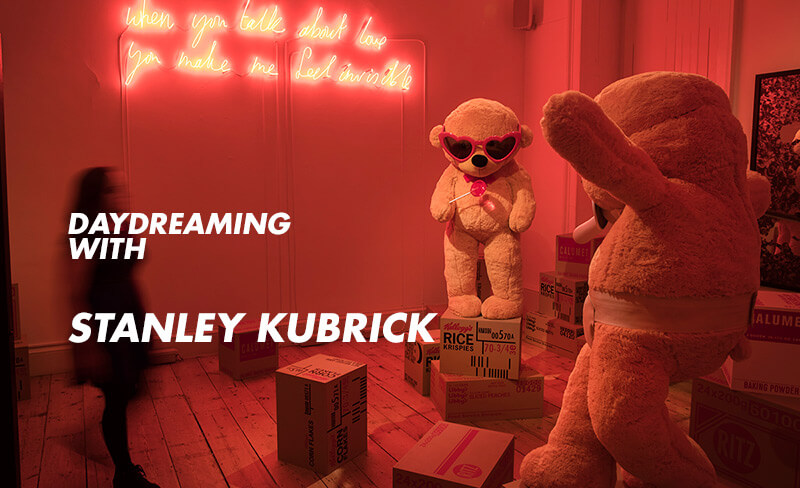
We’ve talked about the 2014 Meltdown exhibition, but you also did the Daydreaming with Stanley Kubrick exhibition. How much of an honour was it to be asked to oversee that?

It’s one of the greatest accolades of my life, to be able to work with his family on that exhibition. It was amazing, mind-blowing. When I was younger, I wrote a letter to him to try and get him to direct the video for Lonely Soul. And they remembered, and they wanted that spirit for the exhibition. To work with some of the artists that I did, it was unbelievable. Some of the biggest artists in the world, from Thomas [Bangalter] from Daft Punk, to Anish Kapoor. It was pretty incredible for me. To have that and to do each side of the Southbank over a period, that was pretty special to me.
James Lavelle The Man from Mo'Wax

We have to put you on the spot then. Have you got a single favourite Kubrick film?

[Without missing a beat] 2001: A Space Odyssey.

You’ve recently worked on a new TV show, Trust. How was that as an experience?

Just working with Danny [Boyle] was amazing. He’s an amazing, amazing guy, who was again really incredible. It was the end of last year, the autumn of last year into the beginning of this year. He’s a very wonderful and special man, and I’d love to work with him again. It was an incredibly brilliant experience, and yeah, it’s coming out here in the autumn on BBC 2, I think.

Over the years, your music has been featured  on a whole load of movies, video games, and TV shows. Some of it is simply using your songs, while for other projects you’ve composed new material. How different is it to create new songs tailored to such a particular project?

You’ve got to direct the motion that you’re reacting to. So when you write a song or a piece of music for a record, you’re sort of creating a motion. It’s a different way of making music. You’re sort of creating something in your head. Whereas with this, you’re creating something based on the picture. So it’s a much more direct way of working, because you’ve got an emotional sense of style or a period, whatever it may be, that you’re setting it against. The reference is much clearer.

One final question. If you could go all the way back to visit young James Lavelle, just setting up Mo’ Wax, what advice would you have for him?

Oh man, get a good lawyer! And just slow down, just take care of business, man. Pace yourself. And drugs are a bad thing [laughs]. Well, they’re not, but they can be. Everything in moderation. As the famous line on the Temple of Apollo, “nothing in excess, everything in moderation.”

The Man from Mo’Wax is in select cinemas from August 31st, with a home release to follow on September 10th. For further information, head on over to www.themanfrommowax.com.

David Tennant / Dean Devlin / Brandon Boyce | BAD SAMARTIAN

Tennant

The cast and crew of Bad Samaritan, from director Dean Devlin starring David Tennant and written by Brandon Boyce, took time out from their busy schedule to talk about this new psychological, horror film to STARBURST.

STARBURST: David, your character, Cale Erendreich, is very dark and a departure of some of the roles you’ve played before what attracted you to the story?

David Tennant: The character is tactical and calculating in his methods. I wanted to explore the dark side of human nature. When I read the script, I jumped at the chance to play him.

How did you prepare for the role?

DT: He’s a psychopath without guilt or remorse. I read a lot of books on psychopaths to see how they functioned and in that, you have to find your character. What would it be like to live a psychopathic life?

Dean. How did David come about in casting for the role?

Dean Devlin: Being a big Doctor Who fan, I watched all his episodes and there are some actors you just want to work with because of their quality of work. David is amazing in all of his roles. When David got the script, we were Skyping over the Internet and I geeked out telling him how much I loved Doctor Who and I even wore my Who t-shirt when we talked!

DT: Yes, but you were wearing the Eleventh Doctor logo T-shirt, not mine and I was ready to hang up!

The technology in the film is interesting, but it seems more plausible in the future.

Brandon Boyce: Yes, you’re right. It doesn’t exist. When we screened the film in Silicon Valley everyone cheered that we got the technology right in our film, yet it was all made up. We had to laugh about that.

David, how do you decompress after portraying this type of dark and sinister character?

DT: You play a role that you dabble in and get intoxicated with it then you have to back away from it. It’s the Scottish guilt of shame going down that rabbit hole. Bad guy versus worse guy. Meaty stuff there.

Brandon, did you want to combine the two elements of crime and horror in the beginning when you wrote the script? How did it come about?

BB: Yes, as the writer I had the ending already written in my head. When I began the script, I took the characters on their journey traveling down this dark highway to see what avenues they would follow.

Dean, was shooting the majority of the film at night difficult?

DD: I’m a night person myself and I don’t get going until 10 PM. Night shoots are vampire moments and it was so damn cold when we filmed in Portland, Oregon where I live. We had five snowstorms during the filming.

DT: We did get that gorgeous snow scape at the end of the film that we didn’t have the budget for. The snow covered the background in the end scene that we got for nothing.

The horse sequence is a bit disturbing and frightening at the same time. How was that filmed?

DD: We never had any horse on the set, nor could we afford them in our budget. They are 100% digital. The sequence came about in the script by Brandon.

And it works quite effectively. David, what is Cale’s backstory?

DT: He doesn’t have one, but you know he’s damaged goods. He has a lot of unanswered questions and self-awareness himself, but he’s a broken man who doesn’t know who he is as he’s psychopathic and nomadic in his actions.

What villain from childhood affected you the most?

DT: The only character I can think of is the Child Catcher in Chitty Chitty, Bang Bang. Even now, I have to look away when I watch that film, so if you see Cale on the screen, you decide if there’s a bit of the Child Catcher in me on the screen.

Bad Samaritan hits UK cinema screens on August 24th.

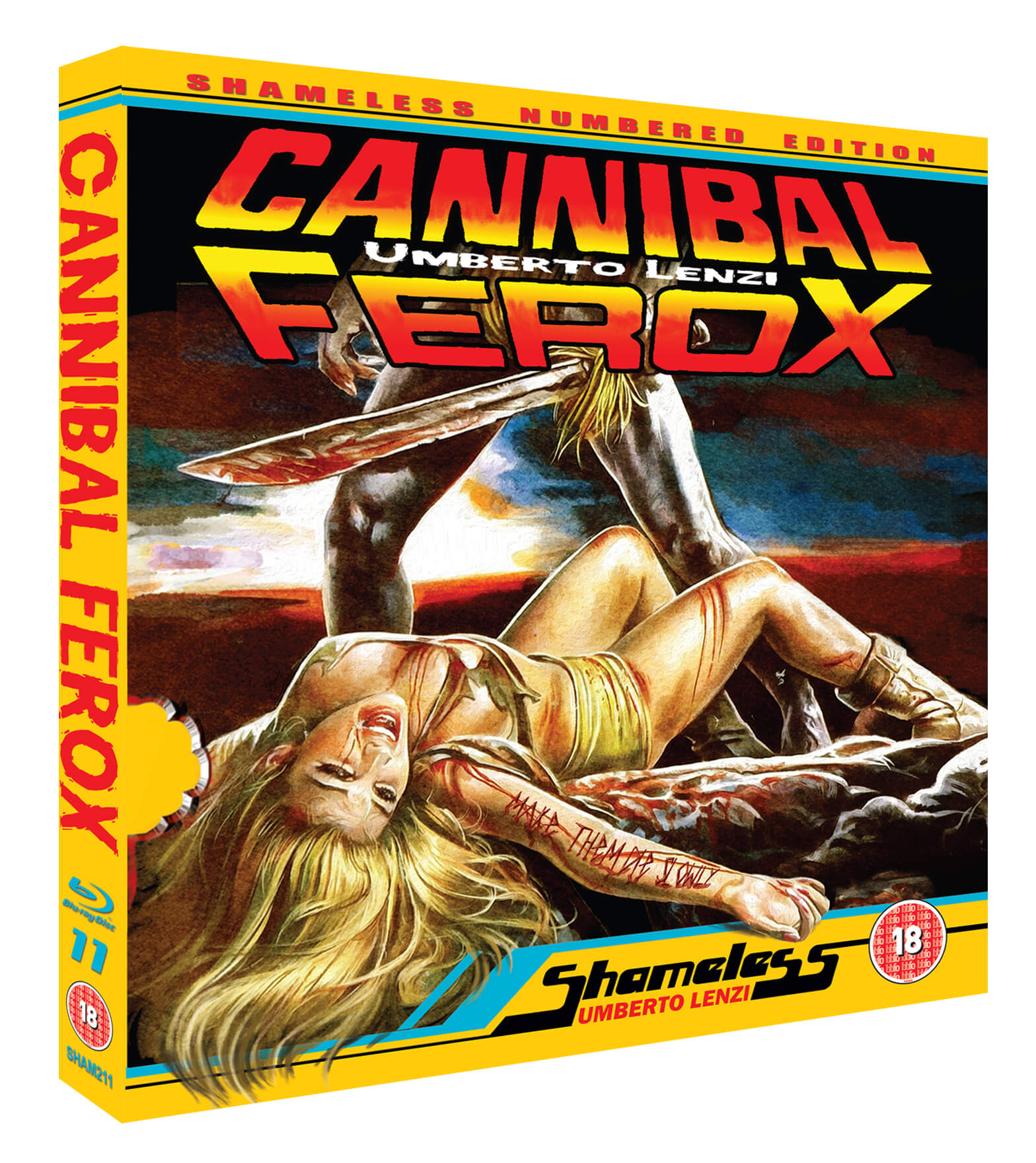
[ENDED] Win CANNIBAL FEROX on Blu-ray!

Cannibal Ferox

With Shameless Films having now given a stunning new Blu-ray release to genre fave Cannibal Ferox, we’ve got our hands on two copies of this impressive new release to give away to some lucky readers.

To be in with a chance of winning one of these fantastic prizes, simply answer the question below:

Sir Anthony Hopkins famously played a cannibal in which of these movies?

a) Surviving Picasso

b) The Silence of the Lambs

c) Thor

Send your answer, along with your address details, to [email protected] labelled Cannibal Ferox by midnight on Sunday, August 19th.

Cannibal Ferox

To give you an idea of what to expect from this notorious video nasty, be sure to check out the trailer:

The official word on this new release of an old favourite reads:

Nearly a decade after initiating the genre with Man From Deep River, director Umberto Lenzi gives the final word on the Italian gut-muncher with his ferocious flesh-feasting masterpiece Cannibal Ferox.

To lay to rest the ‘myth’ of tribal cannibalism, PhD student Gloria (Lorraine De Selle) journeys to the Amazon jungle but things soon go awry when her party encounters sadistic cocaine cowboy Mike (Giovanni Lombardo Radice). Mike is on the run from the hungry locals but all is not what it seems – as the travellers venture into the heart of darkness, they soon discover what it means to be hunted. Cannibal Ferox questions the nature of human atrocity, pulling no punches with its visceral depictions of murder, cannibalism and torture.

Sink your teeth into one of Italian cinema’s most shocking and controversial films, with this tantalising 2K restoration, which features new grading and revives for the first time the original look of the 16mm film stock it was shot on – finally presenting the film as it was originally conceived.

SPECIAL FEATURES

– UK Blu-ray debut

– Limited numbered edition

– A Taste of the Jungle: an interview with director Umberto Lenzi

– Hell in the Jungle: An interview with Giovanni Lombardo Radice

– Restoration Process for Cannibal Ferox

– Cannibals and Carpet Fitters – a short film from 2015

– Lenzi photo gallery

– Limited edition ‘Barf Bag’

Cannibal Ferox is out now on Blu-ray, and can be purchased from Shameless-Films.com.