[ENDED] Win THE TIME TUNNEL on Blu-ray

The Time Tunnel

With Koch Media and Revelation Films now giving a stunning new Blu-ray release to Irwin Allen’s iconic The Time Tunnel, we’ve got a copy of this fantastic boxset to give away.

To be in with a chance of winning this brilliant prize, simply answer the below question:

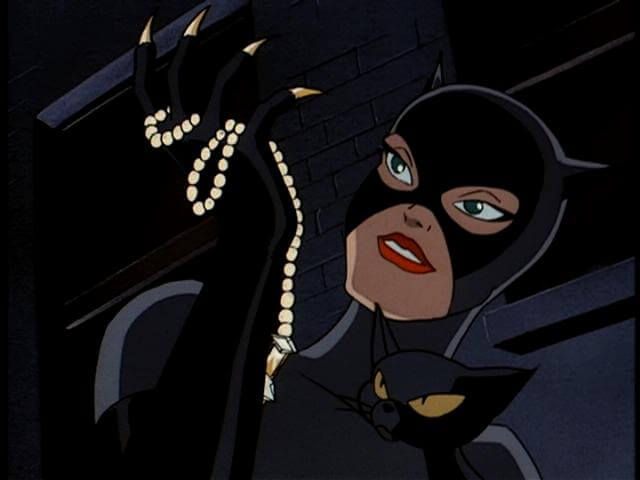
The Time Tunnel’s Lee Meriwether famously played which character in 1966’s Batman: The Movie?

a) Bat-Mite

b) Catwoman

c) Robin

Email your answer, along with your address details, to [email protected] labelled Time Tunnel before midnight on Sunday, November 18th.

The Time Tunnel

The official word on this new release of an old favourite reads:

This stunning new release of The Time Tunnel is produced from HD digital restoration masters created from the original negatives to ensure the best visual experience available. The seven-disc collector’s Blu-ray edition comes packed with special features and a brand new 5.1 surround sound mix, alongside the original mono audio.

From the creative genius of Irwin Allen comes one of the most popular and original sci-fi shows of the 1960s, starring James Darren and Robert Colbert! “The control of time is potentially the most valuable treasure that man will ever find.” Or so believe the scientists of Project Tic Toc.

Located beneath the Arizona desert, the ten-year project’s focus is the feasibility of time travel. But when the government reconsiders the project, the scientists have only 24 hours to prove their untested ‘Time Tunnel’ will actually work. Determined to save the project, Dr. Tony Newman and Dr. Doug Phillips go through the tunnel – and quickly find themselves catapulted from one historical event to another, barely escaping with their lives as their colleagues back in Arizona race to figure out a way to bring them back home.

SPECIAL FEATURES

  • Original Unaired Pilot Episode (HD Version)
  • 2002 Unaired TV Pilot
  • Time Travelers TV Movie
  • Cast Interviews
  • Irwin Allen’s Behind-The-Scenes Home Movies – UK Edit (No Audio)
  • Promotional TV & Radio Spots
  • Visual Effects
  • Camera Test (No Audio)
  • Stills Galleries
  • New 5.1 surround sound mix and original mono audio

The Time Tunnel: The Complete Series is out now from Koch Media.

Terms & Conditions:
Koch Media and STARBURST do not accept any responsibility for late or lost entries due to the Internet or email problems. Proof of sending is not proof of receipt. Entrants must supply full details as required on the competition page, and comply with all rules to be eligible for the prizes. No responsibility is accepted for ineligible entries or entries made fraudulently. Unless otherwise stated, the Competition is not open to employees of: (a) the Company; and (b) any third party appointed by the Company to organise and/or manage the Competition; and (c) the Competition sponsor(s). This competition is a game promoted STARBURST. STARBURST’s decision is final in every situation and no correspondence will be entered into. STARBURST reserves the right to cancel the competition at any stage, if deemed necessary in its opinion, and if circumstances arise outside of its control. Entrants must be UK residents and 18 or over. Entrants will be deemed to have accepted these rules and to agree to be bound by them when entering this competition. The winners will be drawn at random from all the correct entries, and only they will be contacted personally. Prize must be taken as stated and cannot be deferred. There will be no cash alternatives. STARBURST routinely adds the email addresses of competition entrants to the regular newsletter, in order to keep entrants informed of upcoming competition opportunities. Details of how to unsubscribe are contained within each newsletter. All information held by STARBURST will not be disclosed to any third parties.

Dynamic Music Partners | BATMAN: THE COMPLETE ANIMATED SERIES

Dynamic Music Partners

One of the many spectacular facets of Batman: The Animated Series is undoubtedly the absolutely stunning musical beats that accompany the adventures of the Dark Knight. These days collectively known as Dynamic Music Partners, Michael McCuistion, Lolita Ritmanis, and Kristopher Carter were three of those involved in producing these magical, tone-setting notes, often under the stewardship of the legendary Shirley Walker. We were lucky enough to grab some time with Michael,  Lolita, and Kristopher to discuss all things Batman, working work Shirley, their coming together as DMP, striking a work/life balance, and a whole host more.

STARBURST: Starting from the beginning, then, how did you each end up involved in the world of Batman: The Animated Series?

Lolita: It actually started with the brilliant Shirley Walker contacting industry professionals about the idea of her starting a sort of apprenticeship, mentor program for Batman: The Animated Series. She was looking to hire emerging composers to work with her, work for her on that project. To get recommended to her first of all was just a thrill within itself, but to then actually receive a phone call from her to ask if I’m interested in working on something called Batman: The Animated Series… it pretty much floored me to get that phone call! Michael and I were two of the first ones that participated in her grand experiment, which ultimately led to a long, flourishing collaboration working for her, with her, and then Kris also joined in towards the end of Batman: The Animated Series, because he’s a little bit younger than us. That’s basically how the story goes. There’s a lot of details, but that was the basic start of it.

How early on did you realise just how special the show was?

Michael: Gosh, I think from the beginning we knew it was something special. The interesting thing is that it was one of the very first projects that each of us ever did. So, we got spoiled very early on because we thought, “Wow, this is our first real composing gig and getting credit,” because Shirley was adamant that we should get screen credit for everything we did. It felt very professional. Nobody knew it was going to become the phenomenon it became. When we were doing it, it was pretty obvious to us that the show itself just had so much depth, and the characters were just so likeable and interesting and really lent themselves terrifically to the music. There was such personality to each of the villains and the heroes, so it was pretty obvious early on that we had a lot to draw from. It was very inspiring to work on something that had so much depth.
Kristopher: I can actually say from my end – because my experience with the show was watching it, I was still in college when it debuted – I can say from the fans and viewers perspective that this was a tremendous hit, that we loved it. So, to get to join it near the end of the run was a real privilege.

Dynamic Music Partners

Given that the music was tailored individually to each episode and scene, how much fun was that to tackle?

Lolita: I’d been orchestrating for other composers and writing music outside of film music, but just the idea that each episode was a little gem with scenes, light motifs – some that Shirley came up with, some that she entrusted us to develop – it just felt like they were little masterpieces, little paintings. I mean, the artwork was fabulous, the voice acting was amazing, the writing was brilliant. Everybody involved, it was just a real golden era to be involved in something so unique, and it was never, “Oh, we’ve got an order for this many episodes. Crank ‘em out, get ‘em done!” Every minute of music I was privileged to write, it was just so precious, and I wanted to make the most out of it. Right across the board, the artists, the voice actors, everybody knew that this was something really unique.

How was it to be taken under Shirley’s wing back then?

Michael: It was an amazing experience, probably more amazing than we realised at the time. I say that, because years later I’m still using so many things that I learned from her. It’s remarkable how much I absorbed just being around her and working within her system of dealing with orchestrators and composers. She had a very interesting way of going about working with people on the series, in that she would first hire somebody to maybe orchestrate one of her cues or a couple of her cues. And then, if that went well she might ask them to write a cue or two on a show or maybe split a show with her or another composer. Then, if that went well, we might get our own show eventually. And that’s what ended up happening for all three of us. We went through that entire process and ended up with a show of our own to do, so that the whole episode was our music. Then of course we would use her themes and everything. My first show was Be a Clown, which was a Joker show, so I used her Joker theme a lot. It was kind of intimidating to have my first show being a Joker one, but hey, it got me going, it got my blood pumping that’s for sure. In the process of doing all of this, she kind of imparted her years and years of experience working with Danny Elfman and Hans Zimmer, and she was pretty much their right-hand gal for all the things that they were doing at the beginning of their careers, and she was an amazing orchestral conductor in the studio and knew how to run a session like nobody’s business. All these little things that we just absorbed by osmosis, it was so fantastic. She was really tough in terms of her standards – they were very high – and I always had this feeling after I finished a project with her, whether it was a cue or a split show or my own show, I always had this feeling that I was a miserable failure and I’d never work in this town again, because I always felt like, “Oh my god, she’s so brilliant! I don’t think I’ve even come close to matching her standards.” But then she would call me back and I’d feel like, “Okay, so there was something there, so I guess I did a good job.” I just always felt propelled by her and her standards and her encouragement, and I think we all felt the same way.

With such high standards and you being relatively new to the business, did you feel the pressure of working on such a project?

Kristopher: I think Shirley kind of shielded us from the greater scheme of things. We were really working for her, so there really wasn’t the pressure of the comparisons to anything else. But, like Michael said, she had her own very, very tough standards. We had our hands full trying to meet the standards that she set herself.

Could you run us through an average day’s recording session?

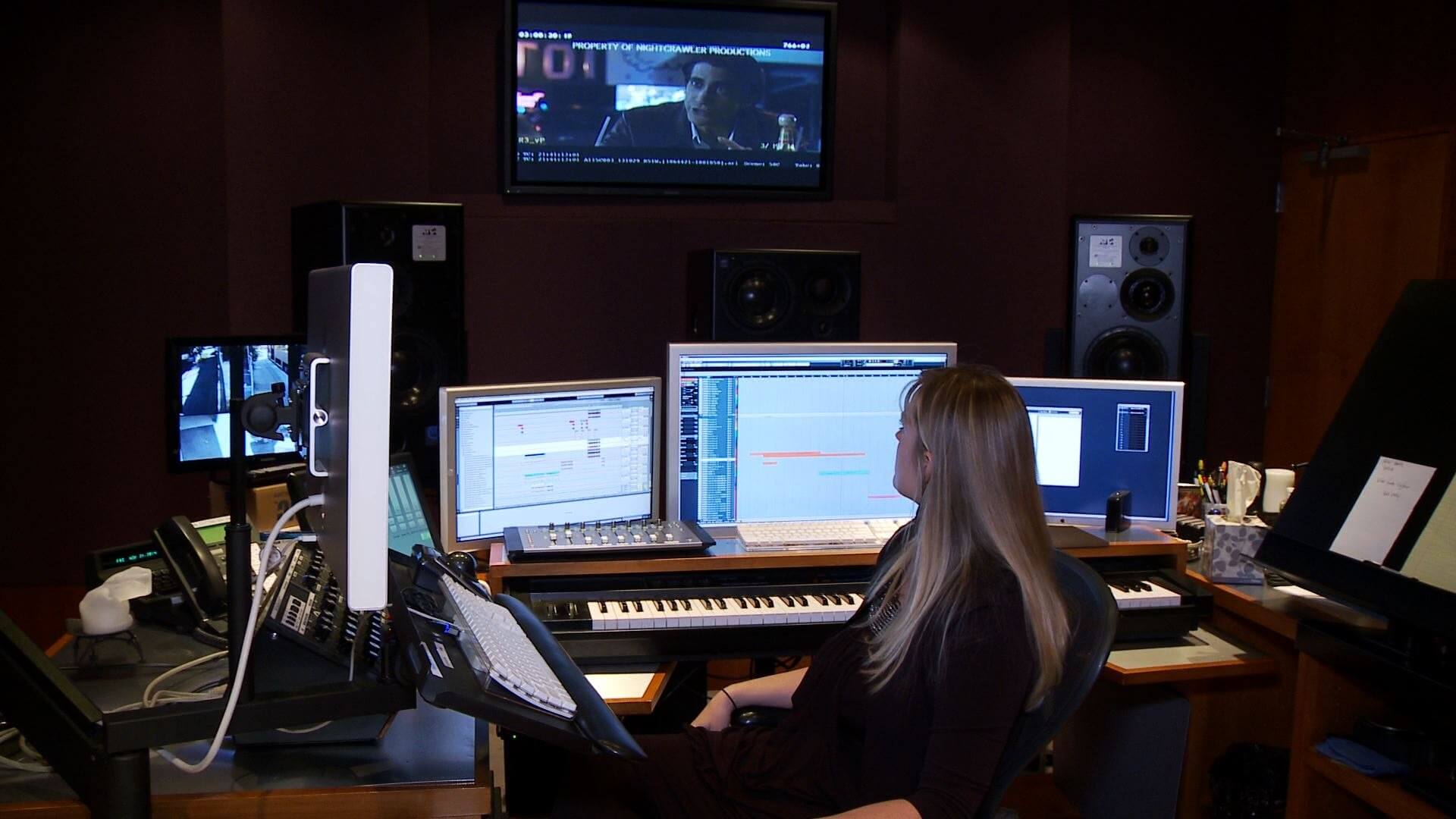
Lolita: For Batman: The Animated Series, Shirley would pick who was doing which episode, or it would sometimes be shared – sometimes two composers on one episode – but the first thing that happens is that when the picture is locked, meaning hopefully there’s no more changing in the timings, there’s something called a spotting session that happens where you sit with the producer – and it was Bruce Timm – and sometimes others were present as well. But Shirley was in charge. Whoever was composing was present, but she was basically taking the lead in terms of where the music would go, what the purpose of the music would be, what emotion was needed to be evoked, when to start and stop the music. It was really, really her show to what the music was doing, what the purpose of it was. I have to say, in this era, if you have a 22-minute of content for a half-hour episode with commercials, often producers want to have music wall to wall. In The Animated Series it was often twelve minutes, 15 minutes, because when it came in it really had a purpose and a real specific purpose. So, we spotted the episodes to see where music would go. Back then, there wasn’t an actual music preview for the producer. After we would write the music, we would show it to Shirley. She would then make some changes or finesse things. Then you have the wonderful thing where you have the recording session. We were privileged to work with Los Angeles’ finest musicians, amazing studio musicians that brought each score to life. And a recording session is just very much like many of you have seen on pictures – a big screen, you have musicians, and there’s a booth. At that point, sometimes the producers would show up. Often times not, just leaving Shirley to make the final decision on things that would have to be changed or altered. Usually once the music left her, it usually ended up being the final music that would be in the picture.

In your careers to date, what do you find to be the hardest emotion to convey with music?

Michael: Gosh, that’s a really interesting question. I’m gonna twist it around a little bit just because I think it depends on the scenario, it depends on the film, it depends on the director and producer and what they’re asking of you, whether that makes sense, whether you’re connecting to the material. So there’s lots of variables involved in that. But I think one of the most interesting ways that music can add something to a project that might not already be obvious is when the music is actually playing against picture. A lot of times what you’re hearing in the music is what’s on screen. If you see a fight, you hear fight music. If you see somebody who’s sad, the music is sad. But I think one of the most challenging ways of using film music in a project is to have the music say something that’s not on the screen. So, if somebody’s walking through a dark alley and the music is kind of happy or it doesn’t feel like a dark alley, if feels more like you’re in a nursey with babies, then all of a sudden you don’t feel happy and you don’t feel dark. You feel scared. There are ways that music can add something more to this picture than what’s already there, and I feel that that’s the most challenging and most rewarding way of using music in a picture; when it really has a voice that’s adding another dimension that’s not even present to begin with.

How did you guys come together as Dynamic Music Partners?

Michael: We’d all got to know each other as part of Shirley’s team. At a certain point – for the Justice League animated series – Shirley wanted to focus not on animated television anymore, but the feature films. She was developing that part of her career. So she told Warner Brothers that these three people have been writing all of this music for you for years. She gave her endorsement of us, so Warner Brothers said, “Okay, we can work with you.” But we didn’t really have a formal partnership. So, one of us could be working, but the other two of us could be sitting idle. At a certain point we realised this could be better, we could work together and combine our forces and get us to a goal of a better work/life balance. That’s really one of our founding ideas, that we’ve got to have a balance between the work that we do and the life that we’re leaving. The industry – the film industry, in particular – is one that can suck up all of your mental resources if you allow it. We thought a more formalised partnership could allow us to help each other, to support each other, to make great music, and to hopefully live a better quality of life that we could all enjoy.

Dynamic Music Partners

Was it a constructed effort with The New Batman Adventures to take a different musical approach given the slightly lighter tone of that revamp?

Kristopher: The New Batman Adventures and Batman Beyond were still under Shirley’s supervision.

Lolita: Pretty much Justice League was our main first solo venture. It wasn’t like Shirley was standing with a ruler over her fingers and saying, “You will write this!” We were given a great amount of creative freedom in the sense that she wanted us to use our creativity because of who we were as composers. Each episode really evolved us. Each show had a uniform, but different sounds from episode to episode. She very much embraced the creativity of all the composers involved. And it wasn’t just that, there were 25 composers that filtered through for that – for the original series.

The résumés that you guys have are ridiculous, with shows such as Justice League, Justice League Unlimited, Teen Titans, and Spectacular Spider-Man just a few of your non-Batman credits. It’s a tough ask, but you have a favourite project that you’ve worked on to date?

Lolita: Oh gosh, no. That’s an impossible question. You’re correct in your assumption. We probably have favourite moments, I would think. I know that, for me, my favourite moments have much more to do with where I am in my own creative development and in my life. Certain things that just meant the world to me writing them or getting recognition for something that I really, really embraced and really, really worked especially hard on. Maybe to be recognised, an award or a nomination, those moments are really special. When you really work hard on something and then it’s recognised, it means a lot. We’ve really had the great fortune to work with quite a few really brilliant, brilliant artists that have stories to tell and that allow us to contribute to their storytelling and encourage our creativity. We’re very fortunate in that sense.

How is it to tackle the tone, the tongue-in-cheek humour of something like Batman vs. Two-Face, where you got to embrace that whole ‘60s Adam West and Burt Ward era?

Michael: That was crazy. We had such a good time with that. We’d done Batman: The Brave and the Bold, so we’d already got our feet wet with that series – having that other take on Batman, the non-serious take on Batman. Well, he was serious, but the show wasn’t that serious. He’s always serious. We tried some things out with that series and had such a ball. We had the opportunity to do Batman vs. Two-Face and Batman: Return of the Caped Crusaders. It was great. We decided to hire some live musicians for that, because we just really felt the style was so rooted in the ‘60s and with the original live-action show with Adam West and Burt Ward. One of my teachers was Neal Hefti, so he was somebody that I studied with back in the ‘80s. I felt like I had this lineage to that whole sound, and we all love Nelson Riddle and all of those orchestrations and arrangements. So, we just had a blast. We fully committed to the sound and the style, then with the help of these wonderful studio musicians in Los Angeles we were able to record some pretty great stuff.

Dynamic Music Partners

Young Justice is coming back for a third season as part of the streaming DC Universe service. Having worked on that show previously, are you going to be involved in the return?

Kristopher: We are, yes. Brandon Vietti and Greg Weisman, the producers, have got the band back together.

Michael: That’s a great way of putting it.

Kristopher: The original team, we’re all back. The artists, the music, the same voice cast. We couldn’t be more excited. The tremendous support of the fans is getting the show to continue. It seems so often when these shows end they’re kind of done, and this is one of the very rare times that the fans said they wanted more and the studio went with it. So, we’re thrilled to be on board.

So, you’ll be back for Young Justice: Outsiders, but are there any other upcoming projects that you can tell us about?

Lolita: We’ve been working on Marvel’s Avengers Assemble, which has a new incarnation – Black Panther’s Quest – which should be starting to air soon. We are also very thrilled about working on Marvel’s women empowerment series, Marvel Rising, which is some long forms and some shorts, which is really, really wonderful. And then we’re working with Warner Brothers on quite a few things, but we can’t really discuss them because they haven’t been announced officially. But I think people will be kind of excited. I’m excited, we’re excited!

Michael: We want to have a big shout-out to our fans that are listening to the music. It’s wonderful to know it’s connecting people. In this genre, in television, it’s not like you get to hear the reactions of everybody watching the show. So, it’s just wonderful to be connected people who are involved and listening to what we’re doing.

For more on Dynamic Music Partners and their upcoming projects, be sure to follow them on Facebook and Twitter, and head on over to www.dynamicmusicpartners.comAnd be sure to check back here over the next week or so as we talk to some of the other key figures involved in Batman: The Animated Series.

Batman: The Complete Animated Series is out now on Blu-ray.

Tara Strong | BATMAN: THE ANIMATED ADVENTURES

Tara Strong

Undoubtedly, Tara Strong is voice-acting royalty thanks to her stunning work on a ridiculous array of favourites such as The Powerpuff Girls, My Little Pony, Rugrats, Fillmore!, Ben 10, Drawn Together, and of course several different roles in the world of the Dark Knight. The voice of Barbara Gordon/Batgirl, not to mention a certain Harleen Quinzel from Batman: Arkham City onwards, we were lucky enough to grab some time with Tara ahead of the Blu-ray release of Batman: The Complete Animated Series.

STARBURST: Having been involved in the industry since your teenage years, when did you first realise that this could be your career and that you had such range?

Tara Strong: Well, I definitely always did silly voices as a child. I had a fake radio station with my sister. I always copied people, I was this sponge. I knew from the age of three or four that I wanted to be a performer. I would perform in front of my kindergarten class. I always knew that I wanted to perform, but I didn’t realise it was primarily going to be voiceover. I grew up in Toronto and my family got me an agent when I was thirteen. One of my first auditions was for the voice of Hello Kitty, for the title role, and the rest is history. My parents were really supportive. They encouraged me no matter what. They were at every audition, every show. They were just the greatest.

That’s very different to your normal thirteen-year-old. How was it to grow up and balance that burgeoning career with normal teenage school life?

It was a little challenging in regard to education. I was very conscientious about being docked grades and losing marks just because I was away. I kept my grades up, so that was frustrating. Sometimes schools were accommodating, but often they weren’t. Finishing high school was really challenging because I was acting pretty much full-time from the age of thirteen. In Toronto, I had a very well rounded career doing TV, film, theater, I had my own sitcom. Everyone would tell me, “You don’t need to go to high school!” It was such a fun environment. It wasn’t the easiest thing to do, but I did know that I wanted to finish high school. I would have a lot of on-set tutors. I graduated at the same time as everyone else, thankfully, but I did switch schools several times.

You’d then move to Los Angeles in the early ‘90s. Was that move prompted by a specific job, or was it a case of just moving to LA to see what was out there?

From the time I was very little, I always wanted to move to Los Angeles; I always wanted to move to the United States, to California. I loved the idea of being in the hub of Hollywood. Often for on-camera parts, the large parts would be cast there. I remember thinking, “I just want to go to LA and do a ‘movie of the week’.” I just wanted to go and do other productions. I would’ve moved earlier except that I really wanted to finish high school. Right when I finished high school, I got into a few colleges for performing arts. One was in New York, one was in Toronto, and I chose Toronto because I’d booked a few films. I would’ve lost them if I left at that time, and they were good films. One was with Anjelica Huston and Sam Neill. I just didn’t want to give up those opportunities. The first day of school in Toronto, I ended up teaching there! I was like, “I think if I go to school it’s to be educating myself about things I don’t know about it.” I decided that I was going to make the big, scary move. I didn’t know that many people very well. The guy who played my dad in the sitcom that I did invited me to stay with him and his wife. He was very sweet. He’s actually just passed away this year. I stayed with them through the ’94 earthquake, so it was lucky that I had someone. My mom was like, “You’ve gotta come home! There’s no food, there’s no water!” That was all based on the news.

Tara Strong Batgirl

When The New Batman Adventures came around, you landed the role of Barbara Gordon/Batgirl. How was that process?

When I first moved to town, it was actually quite challenging to get my footing. I had had a very successful career in Toronto, so that helped me, but I was still the new girl on the block. They like to stick to the people that they know, and I remember literally crying in my apartment going, “I don’t know if I can do this.” I’d had two eviction notices, I was broke, my parents were trying to help me but I was feeling guilty. I really didn’t know what I was going to do. I got a call from Marsha Goodman, who said, “Would you come and play my Heather in the new Gadget Boy and Heather?” I burst into tears! And ironically enough, Marsha Goodman was the person who gave me Hello Kitty. So, she started my career and she saved my career; because of her I could afford to eat. Not shortly after that, I switched agencies and I booked one hundred episodes of 101 Dalmatians, which is unheard of. Then Powerpuff Girls and Batgirl all in the same year. People were like, “Who is this girl?!” That was me putting myself on the map. When I walked into the audition for Batman it was full of top tier voice talent as well as celebrities. A-list, D-list, you name it, everybody wanted to be Batgirl. It was quite an intimidating room. I went in and just did my best. I remember Andrea [Romano] and Bruce [Timm] saying something about how much they liked my natural personality and how I just seemed to be Batgirl. When I walked in, it was just very natural to me. In truth, Batgirl is the only job I do that’s really my own voice. When I got the call that I’d booked it, my agent left a voicemail on my answering machine at the time, and he goes, “Oh my god, you’re her! You’re the girl with the Bat, you’re Batgirl!” He was freaking out. Let’s just say that was a very good day.

When you get the chance to reprise that role, is it a little easier to do given that it’s your natural voice, or does that make it even more difficult?

I love every time I get to go back to it. I get really excited every time I look at a script and see Batgirl. It’s just a wonderful, exciting, nostalgic thing. When I first booked the job, I was sitting between Mark Hamill and Kevin Conroy – and I pinched myself! Whenever you get the opportunity to revisit that, it’s pretty extraordinary. I get excited every time. Not that it’s easy because it’s my voice, because truthfully, it’s quite challenging from an acting perspective Any time you’re taking on a new role, as the actor you really envision yourself in all of these scenarios. You do some very deep stuff when you do Batman. My favourite iteration of Batman is always the darker ones. They take you to very dark places. So, I never go, “Oh, it’s gonna be easy.” I go, “Wow, I’m excited to take this on!”

Were you a fan of Batgirl or the Batman mythos before you got involved in The New Batman Adventures?

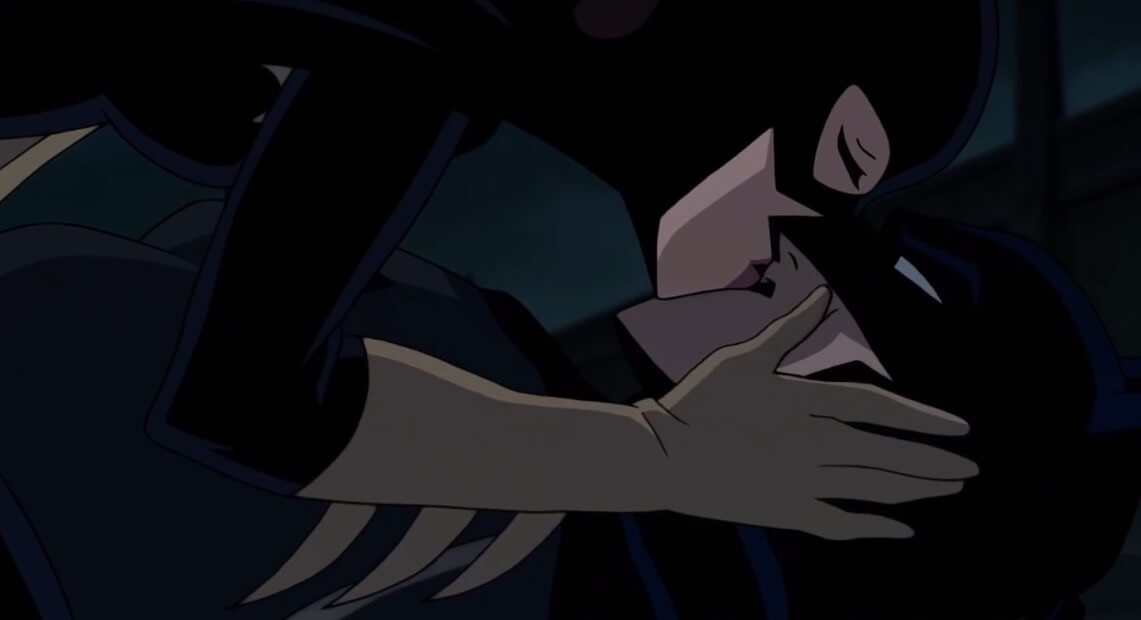
My father collected World War II memorabilia – he’s a big collector – and we grew up going to antique markets. My sister began collecting Wonder Woman and I wanted to collect something, too. I didn’t want to do what she did, so I chose Batgirl. Very young, I wanted everything that I could find that was Batgirl. And my father had the early editions of almost every comic you could think of. So, I definitely grew up in that world and was familiar with it. I haven’t read every single comic – certainly, fans know a lot more about every single story than I do. In fact, when we started The Killing Joke, I hadn’t read it before I saw that we were doing it. When I found out we were doing it I bought it and I found it so fascinating, even afterwards, to watch The Killing Joke and have the comic in front of it. You see how similar they are. You look like you’re watching the comic. There was the additional scene, which I was grateful that they gave to me. It was quite exciting.

Tara Strong Batgirl

How is it to tackle something as dark as The Killing Joke or Batman Beyond: Return of The Joker, in comparison to the more balanced tone of The New Batman Adventures?

It was shocking and interesting, and I figured there’d be some backlash but not to the degree that I saw. People freaked out. I just remember thinking, “Just relax. She’s a grown woman making a grown decision. She’s not Batman’s sister or daughter or anything.” I just loved how beautifully it was done. I thought the acting was extraordinary. When you watch those moments with Mark Hamill and the origin story in The Killing Joke, there’s some really incredible moments.

With some of the scenes added to the animated take on The Killing Joke, there was a backlash amongst some fans. Given how so much of what you’ve done throughout your career has had a hugely positive fanbase, what was it like for you in the aftermath of The Killing Joke?

It was really hard, because you put your heart and soul into something and you hope that people like it. Any time you hear negative stuff about anything you’ve done as a performer, it’s not a good day. You try to ignore it and not let it affect you. I think more people need to teach their children about how to not attack people online. When my son was maybe four or five years old, he really hated Justin Bieber. He just had an aversion to him. He put out a new video and he goes, “Oh my god! Mom, watch this.” He was very young and he was basically saying how terrible it was. I said, “Well, it is what it is. Some people like that.” And he said, “I’m gonna write something.” He was writing underneath the video what a piece of garbage this video was, and it was poop. “You know what? That’s not a good idea to do, and I’ll tell you why. Just because you don’t like it doesn’t mean other people won’t like it. I guarantee that this performer really likes it. He wouldn’t put it out if he wasn’t proud of it. So rather than bang on it and bash it, that’s not good karma. Put your energy to someone and something else. If you want to create your own music, do that. But if you don’t like it, you don’t have to say something negative.” And I taught my son that and he’s never done that. He’s sixteen now. I think people need to teach their children more about doing that, other than to keep going in to your adult years thinking it’s okay behind a computer to say something totally nasty about someone.

When you first landed the Batgirl role, when did it dawn on you that you were playing such a huge role model of a character?

Oh, I always knew that. I knew the second I booked it that it was going to be a huge, important role and a huge, important role for young girls everywhere to have a female role model to look up to. I take the responsibility pretty strongly, about strong female characters that can inspire other girls to be strong and stand up for themselves and do the right thing. It was always something I knew was important and I felt very blessed to be playing her.

Tara Strong Raven

You’ve played so many characters over the years, so many of which have meant so much to different people. Which one do people lean towards the most in terms of which has meant the most to them?

I hear a lot of Raven at cons, I hear a lot of Batgirl, too. Mostly at cons I hear that Raven helped people through depression or she’s someone people can relate to. Harley, people are always happy about. And Powerpuff Girls. Yeah, I’ve been really lucky. All of the roles have been quite iconic roles. I mean, not many people get to say that they’ve played these characters like Batgirl and Harley and Poison Ivy and Raven. Over my career, I’ve had the opportunity to play such extraordinary characters.

Drawn Together was risqué at time, but was there ever anything over the years that you’ve been offered but turned down due to it being too out there?

Oh, I loved Drawn Together so much. I miss that show. I said no to a cartoon that was basically an anti-Jihad cartoon. It was a weird sort of ISIS comedy. It was kind of at the height of the beheadings and everything, and I just said, “You know, Charlie Hebdo was really serious and devastating, and we need to be conscious of what we’re putting out there. I’m not going to do a Jihad cartoon.” I just passed, I didn’t even submit an audition.

And was there anything on Drawn Together that maybe went a bit too far for your liking?

There was one thing that I told the guys I was not going to do. There was an Anne Frank joke, and it was really harsh. I was just, “Guys, I think we can do this without going here.” The truth is, on a show like Drawn Together – similar to South Park – there’s a racist element making fun of racists. Basically, showing how ridiculous racism is. From that viewpoint, I’m completely fine with it. And if they asked me to do that show again I would be back in a heartbeat.

You’ve mentioned Harley Quinn, and that was a role you took on originally in Batman: Arkham City. Taking over that role from Arleen Sorkin, was that a nervous moment or was it just seen as another challenge?

Definitely very nervous. I used to work in the studio alongside Arleen Sorkin, and she’s just the loveliest human ever and incredibly bright, beautiful, intelligent. When they said they were going in a new direction, it scared me. People love their signature voices, and I was terrified that people wouldn’t like what I did. When I came in and they were trying to explain the different area that they wanted to go, I understood it and I wanted to make sure it wasn’t a money thing. Once I knew it was a creative choice, they told me that they wanted it based on her but with my own spin on it and to be completely out of control crazy. We were definitely just jumping in, and I hoped people liked my version very much. It was scary!

Tara Strong Harley Quinn

Batgirl is this strong symbol of hope and fighting the good fight, and then you’ve got Harley Quinn who’s on the other side of that. Is there a favourite side of the fence for you?

No, they’re both really fun. I mean, it’s always fun to play the bad girl. But like I said before, it’s very special to play Batgirl. Harley kind of becomes my therapy when I get in the studio – to scream and shout – but they’re both equally fun. It’s always fun to play the bad girl but there’s something very special in my heart about Batgirl.

Across the board, which is the role you find yourself getting most animated about in the studio?

Probably the craziest right now is Unikitty. She’s pretty crazy, she’s all over the place.

In Rugrats, how much of a challenge was it to voice a literal infant in Dil Pickles?

It was really fun, but it was challenging. All of my lines would be stage directions, like, “Baby Dil grabs Tommy’s toy and throws it at Angelica’s head, throws up and poops, then goes to sleep.”

How great is it to see the Bronies fan movement involved in My Little Family?

It’s extremely rewarding. I love the My Little Pony fans, they’re the cutest fans ever. They’re the first to give to charity and be there for each other. They’re very strong on anti-bullying stuff, and I just love them so much. I call them my Army of Kindness. I had no idea that Pony was going to have that level of fandom, so it was sort of this unexpected, brilliant, extraordinary world of people just being there for each other all over the world.

Tara Strong My Little Pony

What are you working on at the moment that you’re able to tell us about?

Well, I’m working on a lot of stuff. A lot of the DC Super Hero Girls, still doing some Rocky and Bullwinkle. I love that so much, and I encourage people to check in for this new season; it’s really, really fun. And more Ben 10, more Teen Titans. Yeah, I work every single day. Just follow me @tarastrong and I usually post career stuff along with my frustration with politics.

Be sure to check back here over the next week or so as we talk to some of the other key figures involved in Batman: The Animated Series.

Batman: The Complete Animated Series is out now on Blu-ray.

Paul Dini | BATMAN: THE ANIMATED SERIES

Paul Dini

When it comes to icons, Paul Dini is somebody who so many genre fans hold on the highest of pedestals. Where Batman and his world is concerned, Dini has been writing adventures for the Caped Crusader for decades now, be it for TV, for animated movies, for video games, or for comic books. If anybody knows Batman, it’s Paul Dini – and we caught up with him to discuss Gotham’s famed protector and a whole lot more ahead of the new Batman: The Complete Animated Series Blu-ray release.

STARBURST: To start right from the beginning, how did you end up getting involved in the world of animation?

Paul Dini: Well, I’ve always been drawn towards film and television, and animation in particular. I guess I just honed in on cartoons because they were always the most intriguing and enchanting for me. I knew that animation itself took a lot of discipline and drawing talent – which I frankly felt I never had – but I always felt l was very good at coming up with stories and could supplement that with the sketches that I could do. It was something I just gravitated towards in college, and I was lucky enough to have a meeting with one of the heads of Filmation Studios, which would later produce the He-Man and the Masters of the Universe series. He liked my writing and my cartooning, and said, “It’s not the animation we do, but it shows that you can think visually, so by all means show us some stuff.” So, while I was in college, I basically deluged the studio with ideas and they wound up hiring me for about a year. I was able to get my feet wet in doing animation, and later on, when I moved down to California full time, they had a job for me helping develop the Masters of the Universe series that was just coming around at that time. I’d grown up on comic books and science fiction and Star Wars and all that, so I was able to apply that love to things like Masters of the Universe, and a year or two later I got to work on Star Wars itself; we developed the Ewoks and Droids series. I moved back up to the Bay area, which is where I was from, and went to work over in Marin County for George Lucas to do those first animated shows they did back in the ‘70s. Then, eventually I went back to Los Angeles where I met up again with Tom Ruegger, who I’d known briefly at Filmation drawing Masters of the Universe. We were all friends, and he brought me in to work on Tiny Toon Adventures, and that was the start of the Warner Brothers years. I booked Tiny Toons, that led to Batman, which led to Batman Beyond, to Justice League, to Looney Tunes and everything else.

Paul Dini

How exciting was it getting to work with George Lucas at such a relatively early stage of your career?

I was the ultimate fanboy, so I was dazzled by it all. I thought, “Oh man, this is really great.” Working at Skywalker Ranch back then, it was all new. He had just wrapped up doing Star Wars and the last of the Indiana Jones movies that he was going to make for a while, and so he was taking some time off to devote time to opening the ranch and to doing other projects, such as being an executive producer on movies like Labyrinth, Tucker: The Man and His Dream, the notorious Howard the Duck, and a few others at that time. The only Star Wars things happening were the Ewoks and Droids shows, and we were the ones keeping that alive. Star Wars had gone through its first and maybe only downtime. People had seen it – a generation had embraced it for their childhood – then it was sort of taking a nap for a while. It wouldn’t be revived until they did the special editions, then the prequels. So it was a good time to concentrate on other things, to work on new projects. He was around if we needed him, and he certainly was there during the development stage, but mostly he let it be known that as far as the other companies that Lucasfilm was creating at that time – which included his games’ division, the animation division, and a little upstart cartoon division called Pixar – they were running their selves. It was a very interesting time, because Pixar was its own unit there, and even though we did not really work together on the Ewoks and Droids series, we were aware of each other. Pixar was just getting up and running, so they couldn’t be doing anything on a regular basis for the animation we were doing. I would go over there and watch them making those first Pixar shorts, and I just knew that it was going to skyrocket, it was going to take off in probably ten years – which it absolutely did. And then, years later when George began series like The Clone Wars, he got even more involved with the animation and the stories and he would work very closely with a lot of the story writers on developing stories that were set in the Star Wars universe. I think at that time animation had broken free of the shackles of Saturday morning. When we were doing Ewoks and Droids, we were definitely part of the Saturday morning line-up and subject to a lot of the thoughts and theories about children’s programming at that time. The shows were fun to work on and it was a great way to get my feet wet, but later on when I got the chance to write some of The Clone Wars episodes, I found it much more creatively fulfilling because I could be, “Yes, finally real Star Wars! The real action, life and death stakes!” And that’s really what Star Wars is all about.

Batman: The Animated Series managed to work brilliantly for both children and adults. Would you agree that the show is one of the founding fathers when it comes to having cartoons viewed as not being purely for kids?

100% I agree with you as far as that goes. It really was not just a show for kids. It was a show that took quite a lot of people by surprise. I think there were a lot of things going on at that time that really made cartoons take a step forward. It wasn’t just Warner Brothers, although I’d say they were a key part of it, but there were other superhero shows like X-Men and the ‘90s Spider-Man. One thing that gave Batman a bit of an edge was that there was such a cinematic feel to it. The directors and the storytellers were encouraged to take a very filmmaker-like approach to the creation of the stories. You’d see things that other action shows weren’t doing. There wasn’t wall-to-wall music – the music was always composed differently per episode – and occasionally the soundtrack would drop out all music and sound to let a sequence play silently, with more drama; reminiscent of a Hitchcock movie or a thriller. And tonally, we were encouraged to tell stories from different places. Not every story began and ended with Bruce Wayne becoming Batman. Some stories began and ended with villains, some stories began with side-line characters or one-shot characters you’d never see again, but they all – we felt – were an honest depiction of elements of Batman’s world. It created this identity of Gotham City that was very unique. As long as we felt we were being true to Batman and his world and what he is, we had this liberty to tell stories in a different way, to reconfigure the rules of what makes a superhero show. You can throw those rules out the window and just tell interesting and amusing stories. And I’d say it was also something that they did all over Warner Brothers – shows like Animaniacs, Tiny Toons, Freakazoid!, the Looney Tunes cartoons. Most of them at that time were affectionate call-backs to what had worked before. I just think you had an amazingly talented group of people working on a variety of different characters and series, and the corporate line at the time was, “There are the toys you loved all your life, now’s your chance to have fun with them.” That really was the only rule: treat the characters well, have some fun, stay on budget, and will stand by you with what you want to do. Like I said, it was a very creatively stimulating and encouraging time.

Paul Dini

Do you think we would’ve seen the same tone and style to Batman: The Animated Series if it wasn’t for Tim Burton’s Batman movie in 1989?

It’s interesting. I think things would’ve definitely been different. I think Tim’s movie really changed, in a very positive way, the perception of Batman. Up until his movie, even when they’d seen trailers for the coming movie with Michael Keaton and Jack Nicholson, I think 80% of the audience were expecting at some point to hear the Batman theme from the ‘60s show or to see call-backs to it or for it to have some sort of goofy element from the series. I don’t think they were expecting Tim to make a really serious movie about Batman, and I think that because it was cool and it was dark and it was very much his artistic vision – and yet very true to the comics at that time – I think that a lot of people embraced it as almost something new. And we did have to step up in a way. We had to repeat what Tim had done, but also, “Okay, he had his chance to do his vision of Batman – here’s ours! We hope you accept it as a true vision.” And they did. I think the two coexisted very comfortably together, and I do think that the fact that he had made that artistic statement worked well for us. I also think one of the things that worked in our favour was the effect Steven Spielberg had with shows like Animaniacs and Tiny Toons. He came in and said, “This is how I always imagined cartoons.” He’d just made Who Framed Roger Rabbit, and he liked his cartoons to be zany and to stretch reality. With a creator like Mr Spielberg, he demands a higher quality. That’s why the fuller animation came back, that’s why the jokes worked on both levels for adults and kids, and that was also why the music was so lush and so important to the animation process. He’s really a director who gets it and he knows how music can move a scene, how it can affect it, how it can work with the visuals to really carry the emotion of the scene. Very, very few Saturday morning television producers know or fully realise why music plays in a scene or they just don’t care or they just see it as another expense; something they’d rather not pay for. “Yeah, you know what, we can just do track music. Here’s the funny cue. Here’s the action cue. And here’s the music you just place in from wall-to-wall.” The cartoon begins, we hear music, it’s like carpet you just lay down. I worked on some shows where I’d say, “Hey, wouldn’t it be fun to do this type of riff? We have this character in this new location, why don’t we do music that’s more evocative of this scene?” and they’d just stare at me and say how expensive it was. Good music is always a participant in the scene.

There’s a strong argument to be made that the music is just as important, if not more so, than the action that you see on screen. The FOX X-Men and Spider-Man shows of the time were great in their own ways, but the music of BTAS was just one of several factors as to why that series stood out above the rest.

Forgive me for sounding a little cranky here, but I feel like within animated adventure shows, a lot of them are not making such a commitment to enduring quality. I feel like it’s an entertainment form that only requires the average, and a lot of people feel that if you do something superior no one will notice, or you’ll go over budget, or what difference does it make. And that was something I would run in to in my career at other studios at various times. It’s like, “We made a deal with a guy to do sound effects and Foley and he’s also doing the music.” “Well, does he have an orchestra?” “No, but he’s good on the electric keyboard so he’ll give you whatever you want.” You’re just pasting it in there. But then again, they didn’t have what we had on Batman, which was a unit that really worked well together and really brought every element. It’s the difference between bringing a lot of elements of your own creative personality and artistic passion to something as opposed to just doing a job. A lot of places just do a job, and they do a fine job and their stuff gets on TV and kids watch it – mission accomplished. With Batman, we just wanted to make something that we ourselves would enjoy watching from year to year and showing our kids and our grandkids and just saying, “Boy, did we have a lot of fun making that!”

And that’s part of the reason why Batman: The Animated Series is so beloved to this day and that the show has a whole host of Emmy Awards to its name.

I feel very blessed to have been a part of that. The work endures, the people enjoy it, and we were able to make something that – so far – has stood the test of time as something that people have embraced and grown up with.

Paul Dini

One thing that the X-Men and Spider-Man shows of the day had that BTAS didn’t, was they both had overarching, season-long arcs, whereas BTAS was, for the most part, standalone episodes. Did you ever have any talk of stringing out longer arcs on BTAS, or was the plan always to keep the majority of the stories as one-shot deals?

At the time, there wasn’t. I don’t exactly know why, although I would hazard to guess that part of the reason was that the shows, especially the first couple of seasons, were very labour intensive. Occasionally things would go wrong. I don’t think we ever started over, but occasionally episodes needed more attention in animation or they might have a lot of reshoots, and certain episodes were a little more elaborate with set pieces. So, I think that they worked better as standalone episodes because if you’ve got a big three-parter or a week-long story or you’re doing a story that does an overarching story, then there are two episodes in that batch that are just not coming together, you don’t want to run anything out of sequence, so it actually helps if they are standalone episodes. However, there is a loose character continuity where the characters all know each other, have interacted, and they’re not strangers to each other, where you can see it’s all part of an extended world. I think that when they got it down a little bit more than they had been doing, the idea of an overarching season of continuity became more of a reality. I remember them weaving it into the Justice League shows. They could have a bit more of a theme with Luthor and Darkseid, and carry that through the season and do a big two-part finale. So yeah, I think with time they got it down – the production hazards went away because they figured out the more effective way of doing it – whereas with Batman everything was new and it just worked out better to do standalones.

Whether it was on Batman, The New Batman Adventures, or Batman Beyond, was there a particular favourite character that you loved to write for?

I liked them all. I really liked writing the Joker stories. I thought he was a fascinating character because so little is known about him. It’s always fun getting a little window in to his weird and twisted psyche. I think I kind of took him over because I didn’t want him just as a gagster. He’s a character that’s very easy to get wrong. When you write him, the jokes – the best ones – are funny in a morbid, ironic way instead of him just spouting catchphrases or telling gags out of a joke book or something. There’s a bitter, dark, humourous quality to him that you laugh at almost because it’s naughty; because he said something about killing somebody or he made a double entendre. He was a challenge, but he was also fun to write. Then we added Harley to the mix and that continued the merriment in a deeply bizarre way. Suddenly in the world of Batman, we had this weird sort of newlywed couple doing wildly dysfunctional, outrageous things. And I felt that that gave The Joker a shot in the arm as a character; it stretched him in other ways, because he’s not only a gang leader he’s also in this weird one-sided relationship. It was fun putting that on him and seeing how far we could go. With The Joker, you don’t know a lot about his history or his origins. Whereas somebody like Mr Freeze or Two-Face, originally they were very sympathetic people. Joker, you don’t know anything about. That’s what gives him this magic; that he’s so unknowable, so unredeemable. But giving him the relationship with Harley – who certainly is a sympathetic character – brought out things in him that I thought were amusing or that made the world new in a different way.

Paul Dini BTAS

To many, one of the very best episodes of BTAS is the ‘Christmas with the Joker’ episode.

It was a lot of fun. Something like that, he recognises Christmas for what it is. In a lot of ways, it’s a sham. And he is poking his finger in the eye of the tradition and twisting it gleefully.

And how impressed were you with what Mark Hamill brought to the Clown Prince of Crime?

Oh man, where do I begin! I just felt that he had a knowledge and an understanding of that character in an intuitive way that I think only an incredibly gifted actor has. I think he could explain it pretty well, but I think once he performs the character that all comes out. Once he’s got the character’s lines in front of him, he knows instinctively where that character is inside him. He captures him so well. It’s the insanity, the craziness, the cruelty, and just a little bit of – I don’t even want to say humanity – this twisted sadness. Every clown has that little bit of sadness to him, and I think The Joker has this tiny little bit of a lost soul in him, and Mark brings that out in his dialogue and his laughter in all the ways he plays him.

You and Bruce Timm famously created the character of Harley Quinn for Batman: The Animated Series. Obviously, Harley is a hugely popular figure these days, but when did you realise that you had lightning in a bottle with her?

I think when the footage came back and we saw how well she worked with The Joker. The voice was fun and it was a call-back to the tradition of the 1960s show where The Joker or The Riddler or the villain-of-the-week would have a colourful group of henchpeople and one of them was usually a girl-gone-wrong. Also, Arleen Sorkin gave her a kind of classic, old style gun moll voice. It was fluttery and a bit airy, but underneath there was this tough, gun-cracking broad. The fact that she would get laughs from the gang and The Joker wouldn’t, then he’d get upset over that, “Why are you laughing at her? She’s just a girl we brought in for one caper?!” We didn’t really think beyond that point other than The Joker needed a henchwoman and she fit the costume and was willing to be a part of it. She was a good lieutenant and respectful of him. I wanted to bring her back because Arleen’s a friend of mine, she’s fun to work with, she brought a lot to the part, and a henchperson is always fun for The Joker to act off of and to help set up some plot points. Also, we had some really gruesome story where Joker is trying to poison people one after another. You needed a little bit of comedy to offset the menace of that, to give some lighter moments. There were these grotesque moments where he’s trying to kill someone, then he puts a giant fish head on Harley and you get the laugh there. Bruce Timm and I started to talk about her, who she was, where she came from, and we got this twisted idea that she’s actually his therapist and he had turned her to this. That gave us a whole new spin on her. With any new character you’ve taken a shine to, you want to do a little bit more with them. We ended up pairing her with Poison Ivy and, before you knew it, she was as part of the Batman mythos as Robin, as Batgirl, as Alfred, and now she’s around to stay. [DC Comics Chief Creative Officer and Publisher] Jim Lee talked recently about there were three pillars of the DC Universe – Superman, Batman, and Wonder Woman – and he said now there’s a fourth and that’s Harley. And that might not be too far off. Anybody could be Harley. I always think of her like Peter Pan; there’s a bit of Harley Quinn in all of us and that’s where our goofy side resides.

Harley Quinn Batman: The Animated Series Paul Dini

Wherever you turn at conventions these days, there’s literally hundreds of Harley Quinns to be seen – whether that’s girls, boys, young, old.

I think she’s an incredibly liberating character for everybody to embrace – male or female. I always give triple candy out on Halloween to anybody dressed like Harley. I’ve seen little girls dressed as Harley with their dads dressed like Harley. That’s, “Here you go, you get the whole bag. You win!” A few years ago, I was at the Paris Comic Expo at one end of this big hall. I was there for Urban Books. And Bruce Timm was there. So I’m able to see him at his booth way at the other end of the hall, and between us is a sea of baseball bats and mallets sticking up in the air, and there’s a Harley under each one of them. So there’s Steampunk Harley and Bombshells Harley and traditional Harley and Suicide Squad Harley. It was amazing, it was like Harley Con or something! I hope she’s around for a while. I hope people find stuff to do with her and they enjoy her, that she doesn’t wear out her welcome. I just wrote a novel [Harley Quinn: Mad Love] about her and about her origins where I get a little more in to what her childhood was like and what her family was like. I wrote that with Pad Cadigan, who’s a very renowned Hugo Award-winning science fiction writer. I had a lot of fun doing that.

Given how certain parts of any fan base are often very vocal these days about any and all changes, how do you think fans would’ve reacted if social media was around when you created Harley Quinn and gave The Joker a sidekick?

Well, everybody has an opinion, and everybody has preconceived notions about what they like. A lot of people have the attitude of taking a negative attitude until you convince them otherwise. I don’t think that’s the majority of fandom, but I definitely think people have that attitude. But I also think that people can embrace change or they can find something to like. It’s hard to say, because I don’t think that would have stopped us from doing anything. I think the only negative really is when a creative person is stopped from doing something out of fear that maybe somebody won’t like it. Well you know what, not everyone’s going to like it no matter what you do. So you might as well go out and do your best and just not pay attention to the chatter. If they like it, they’ll like it. If not, sooner or later you’ll hear about it. But I think, for the most part, I’m extremely grateful to the fans and I really love talking to them and seeing them when I do an event, but I’m not somebody who spends a lot of time on the forums other than just to announce things I’m working on that they might be interested in. Because that’s really for them, for them to debate and to talk about and express opinion. Had we been around, I probably wouldn’t have paid that much attention to it, because my attitude is that I have a job, I have to do this, and I’m going to do it to the best of my ability. People will either like it or they won’t.

Even the greatest of movies or TV shows these days end up with some sort of vocal backlash, which is a little sad to see.

I don’t like most of the movies I see. I go and see them, and if I’m entertained by them then that’s one thing. Am I going to buy the movie and watch it again? Likely not. I might buy the animated movie where I liked the technique or I liked the art design. I might study that or go back and watch certain segments again. Overall, I’ll see a movie once. It has to be a really special movie for me to buy it, take it home, and watch it several times a year like a favourite book. On the other hand, I’m not going to be out bellyaching about my opinion on something. If you have that much time to devote to the analysis of someone else’s work, you probably have the time and the passion to create something on your own. That’s where I’d rather be.

Paul Dini

On the topic of movies, how much fun was it to sink your teeth into a full Batman feature with the stunning Mask of the Phantasm?

This is speaking strictly personally, but it was a lot more fun when my involvement was over and I could see the elements coming together, to see the footage come in. I did open up on the time I worked on the movie – I wrote a book, A Dark Knight: True Batman Story – and that details what was going on in my head. I’d gone through surgery to have my face reconstructed. I was almost agoraphobic after that. Alan Burnett was calling me all the time to see if my pages were in yet. “Maybe tomorrow…” as I’m firing up a video game and playing that. “Here’s a scene where Bruce starts a mugging then gets beaten up.“Really? Do I have to write that? Can Martin Pasko take that?” But I kind of worked through it, and writing on Phantasm really helped. More than that, Alan Burnett was such a supportive leader as being the head of the writers. He was very supportive to all of us, and he in particular knew what I was going through and was getting me inspired to work on the series again. I probably wouldn’t have done it without him. I wouldn’t have done the series originally unless he had encouraged me to come back and do a few episodes. At that time, he was rather stern but in a very kind way to getting me focussed back on writing my segment. Once I had done that I wanted to come back full-time and do more episodes. Once I was over that hump, the storyboards started coming in and I started getting really excited. And Alan was very insistent that it be a Bruce Wayne story and a strong one about him. It was probably the best one we could’ve done, because the villains are fun but they’re all so easy. You can eat up a lot of time with The Joker or Mad Hatter or Bane or somebody like that and make the story about them, but with Phantasm the emphasis was on Bruce, the choices he made, and how those choices continued to haunt him to the present day. And I think that’s the strongest type of Batman story you can tell. Once you have that figured out, then you can have all of the fun you want with the gangsters and the villains and the criminals.

What are your memories of the transition from Batman: The Animated Series to The New Batman Adventures in 1997, and was that simply a case of Warner Brothers wanting to freshen up the feel of Batman?

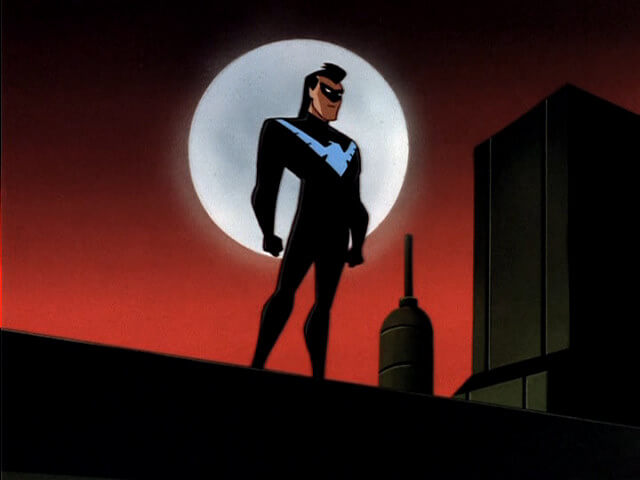
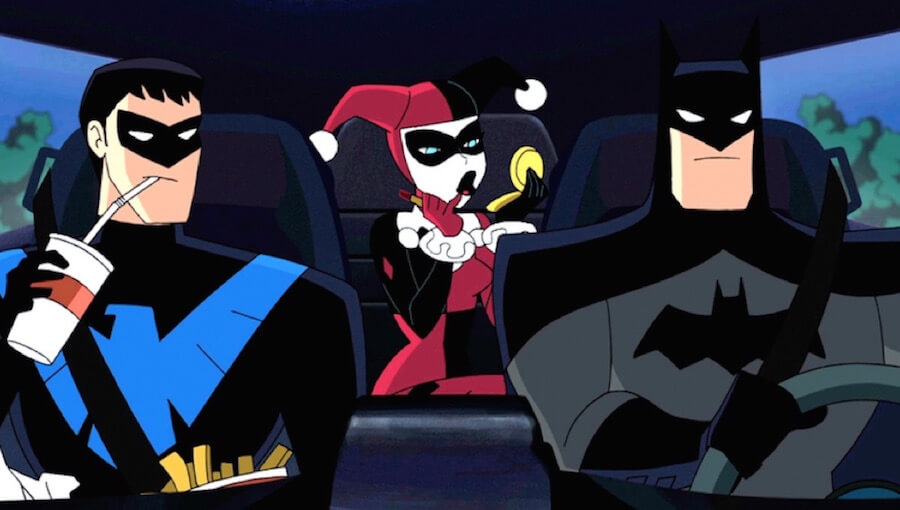
That’s always the case. You always have new executives coming in – whether it’s at the studio or the network – they’ll come in and say, “You’ve got a great show here now. What’s new? What can we do to change?” “You know, we don’t want to change it.” “No, no, no. What’s new? What can we do to change it?” With The New Batman Adventures, I think what had happened was we hadn’t done Batman: The Animated Series in a couple of years. I think it was a good decision to freshen it up a little bit, especially as Bruce and his crew had done the Superman series. Superman was designed with a deliberately lighter palette than the early Batman episodes. It was more traditional, the backgrounds were not painting on black paper like Eric Radomski had done originally, and the designs were a little more streamlined. It was a brighter world and we knew that we wanted to incorporate Batman into part of that world to bring Superman and Batman together as characters. So Bruce and his crew redesigned the characters with that in mind and gave them a more streamlined look. You could see that there were call-backs to Batman: The Animated Series. They were essentially the same characters, but this is something that’s done traditionally in animation for years. The Bugs Bunny of 1938 is not the Bugs Bunny of 1948. Animators throughout the years would refine them or streamline them or maybe there’d be a little less budget next year for The Loony Tunes, so let’s give Bugs and Daffy a makeover and don’t have them do as many big, elaborate music numbers. It can still be fun and engaging, but you look at something like the early Bob Clampett Bugs Bunny cartoons compared to the late-‘50s Chuck Jones cartoons. They’re radically different in terms of direction and design, but they’re both a lot of fun. With Batman, we had done the Superman series, we had gone in a different direction with design and sometimes with story, and the series reflected a lot of that. It was still Batman and we were still having a good time with it, we were still experimenting with different ideas, but you know, in some instances things change for the better. Bruce Wayne got more cut, the design was a little trimmer, yet the stories were still challenging to tell. We had, for the most part, the same cast back, and it was just telling more interesting stories within that world. And also I think we had built up a little bit of cred between the first couple of years of Batman and the later adventures, so people were interested in the stories and the character dynamics. We were able to deepen the relationship between Batman and Nightwing now that there was a new Robin and there was some old ground to cover, some old wounds to heal. It made it interesting to go back and take the characters on again at that point.

Batman: The Animated Series Tim Drake Robin

As alluded to there, you brought in the Tim Drake version of Robin as Dick Grayson transitioned to Nightwing. Was there ever any talk at any point of including Jason Todd in the series?

Not really. Where we were at the time, I don’t know if the crew liked Jason Todd all that much. I think we looked upon him as the Robin that didn’t work out too well when they did that whole Death in the Family thing in 1988. When we did The Animated Series in ’92, Jason kind of spoke to us as the Robin who didn’t work out and who got himself killed, so let’s not do him. So Tim came along, and there were elements of Jason. They hadn’t done the redo on Jason yet or figured out the Red Hood. We looked at Jason, he’s a circus performer also, and Dick Grayson done over again with a different name. So when Tim came along, we said, “Let’s do Tim instead. He seems to be brighter, younger, a more engaging character.” It just seemed to work out better for us.

The Tim Drake character would be key to bringing The Joker back when you did the Batman Beyond: Return of the Joker movie in 2000. That’s a pretty brutal picture in certain places, particularly during the flashbacks to Tim being tortured by Joker and Harley. How was that experience?

An odd thing to happen with that is that when we were given the go-ahead to make Return of the Joker, there was a company-wide edict that this movie was going to be a major release for Warner Brothers, it was going to be a big step for them in video and home entertainment. There were several very public meetings where we were encouraged by the heads of the company at that time to make the Batman movie we’ve always wanted to make; to treat this as if it’s a theatrical feature. If you want to take it to a dark place, take it to a dark place. Basically, the limitations are off. Don’t go bloody or grotesque with it but, on the other hand, if you want to tell a dark and intense and moving story by all means do. So we proceeded with that in mind. And, as sometimes happens in the entertainment business, a lot of things changed in the subsequent year that we were making the movie. It came to be seen internally as more of a kids’ movie, which meant it had to be made appropriate to promote and show on kids TV. Consequently, that brought us under the scrutiny of the kids TV censors, who insisted we had to make significant changes to the finished film. Ultimately, we released the cut with the changed sequences. Then they came out with the one that was the original uncut version, which I always felt was the best one as that was what we were all working for. I don’t think it hurt the overall story that much because it’s a story of Terry McGinnis and his role as Batman. It was just one of those things we had to do at the time, and we got through it as best we could. I think the movie’s still a pretty good effort.

You would go on to work on the first two Batman: Arkham games. How enjoyable was that, and how much freedom did you have with the story you chose to tell?

The first two were terrific because the whole thing was brand new. With Arkham Asylum it was a chance to take some elements of the Batman world and the animated world and play them a lot darker, a lot more serious, and a lot more realistic in the terms of the stylisation of the characters. To me it feels like the same world, but the look is radically different and the intensity of some of the action is much different. We had Kevin [Conroy], we had Mark [Hamill], and we had a lot of the cast members back to do the voices, so I felt it was a very easy fit to flip back into that world and to work with the game designers to come up with a take on Batman that felt very naturally. Not only is it an extension perhaps of the animated series, but also the better elements of Batman’s world from the comics and the movies and the mythos in general. Arkham City I felt was a change from that as far as “Okay, now we’re making things bigger. We’re doing a whole outside world and we’re taking Batman off the Asylum, off the island, and into the city itself.” And I just felt the scope got bigger, a lot more dangerous, a lot more interesting with the places we could take him and move him around. The idea that they would actually wall off part of Gotham and give it over to the criminals, I thought that was a bold choice to make as far as story goes because that really shows the affect of crime on Gotham City. Basically, half the city is just giving up and saying “Okay, we’re just going to live behind closed doors here, and the villains get to destroy each other.” Again, it was fun, it was great playing in that arena with those toys.

Batman Arkham Asylum

Those Arkham games, particularly the first two, are just absolutely beautiful games that are so well paced and played out. You mentioned that there were several of the key voice talent of Batman: The Animated Series involved in those. Is it almost like a second family when you all get together again?

Yeah, it’s always nice to see them again and it’s always fun to work on a new project. A couple of years ago, we did a VR game – it was a cross between a game and a toy – where you got these VR goggles and it basically put you in the middle of an Animated Series episode. It was something that I recall working on – my last stint over at Warner Brothers – about four years ago. They were going to do this VR walk through the Batcave, and Bruce Timm and I were working together on what that would be like. I wrote Batman’s dialogue. You’re his guest in the Batcave for whatever reason – we came up with a reason why that worked – and you could go over and investigate the crime lab or go over and see the Batmobile, walk around it, see it from all different angles. And you could hear Batman talking from a remote location because he could check in on you from time to time. It didn’t go much farther than that and then I left to take another project. A couple of years later, this was still in the works and I worked with a company called OTOY, which were developing it for View-Master. They were adding a lot of animation to it, so I worked with them to add sequences with Joker and Harley and Batman talking directly to the camera. Then they did a CG confrontation between Batman and The Joker at the end. It was fascinating to work on that as a first step in to VR, and we brought back the original cast – as many as we could – to record voices. It was great. We were working with Kevin and Loren [Lester] and Tara [Strong]. I was out the day Mark came in, but he came in and did The Joker. It was terrific, it was fun being in the recordings. And Andrea [Romano], of course, was directing it all. I thought, “Boy, it was fun to do this. It’d be good to do this again on a regular basis with these people.” But it’s always like that. That summer, Kevin and Loren and I did some promotion for the game and we were all on a panel together talking about it, and we did that just this last year at Comic Con – talking with the cast and the crew. It’s always fun to see them, to hang out a bit. You never say never. Maybe we’ll do some more at some point.

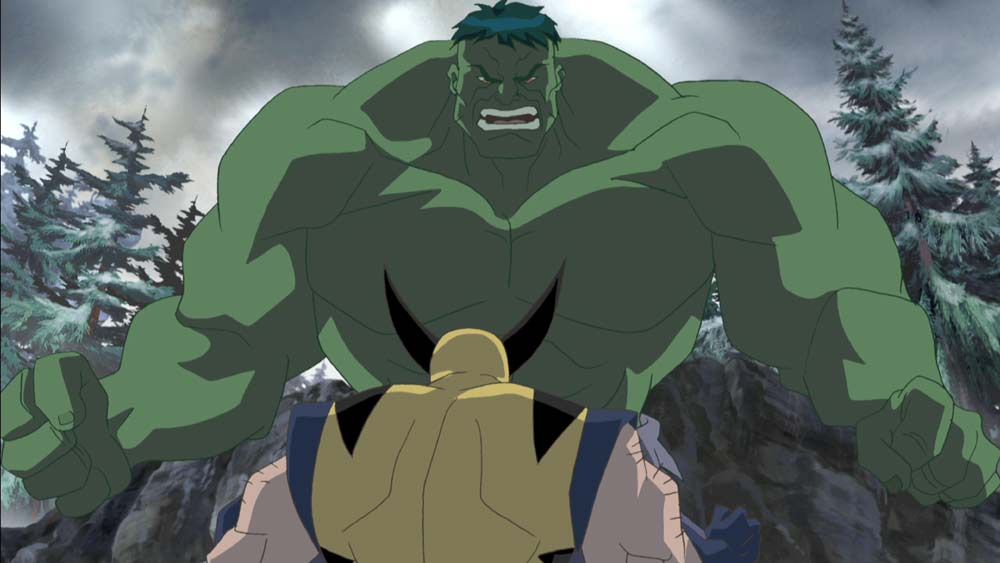
You’d eventually leave Warners and work on Marvel properties such as Ultimate Spider-Man and Hulk and the Agents of S.M.A.S.H. Had you always wanted to work with some of Marvel’s finest characters, or was it more a case of feeling like this was a natural time to move on?

Well, Warners was a very unique place to work in the ‘90s and the early 2000s. After that, there were some changes in management and changes in vision, and then it just became a job the same as any place else. People came and went, the business of kids TV changed, and for writers it became more about what the company needed at that moment. That was sort of the attitude. It was a pretty solid unit of people for about ten to 15 years, the reality of business got in and it was more, “Okay, this show’s ending, this group goes. This show’s starting, we’re hiring all new people.” In my case, when I left initially there was a lot of that attitude and I’d been offered a position on the show Lost, which had not been officially greenlit. I was going over and developing the show and also working on a couple of projects for Warner Brothers at the same time, and when Lost went into full production I went over there full-time. It had become much more interchangeable as far as most of the talent went. And it was like, “Stay or go, whatever you wanna do.” Then I would come back occasionally to work on projects, freelance or to do things here and there. The Marvel shows came around that time. It was great fun working with Eric Radomski again, and many of the writers and crew people I had worked with on the DC shows. Also the Marvel characters bring a whole different energy to it. Spider-Man, Hulk, Dr. Doom, all those great characters I had down on my personal bucket list to write someday.  It was very cool being at that new iteration of Marvel Animation as it was starting up. The last time I worked at WB was on Justice League Action, then some other opportunities came up and I decided to go with those.

Justice League Action

From working with Batman and his supporting world for so long, how was it tackle a larger ensemble group of heroes with something like Justice League Action?

Oh, it was a lot of fun. Initially with Justice League Action, I was developing the show with Alan Burnett early on and nobody was sure if the show was going to sell or not. It was sort of like, “We think we’re going to be doing another superhero show. We think we’re going to go in this direction. We think we’re going to do shorter episodes and really focus on sharper stories that have a funnier skew.” I think the DC characters can lend themselves to that very well, so it was challenging not to think in the 22-minute format. It was also kind of liberating that you could basically take an incident between Superman and Wonder Woman, or Joker and Luthor, or Batman and Zatanna, and just mine that for a lot of comedy, a lot of character, a lot of action, and just see where that led you. And also, there were no restrictions to who we could or couldn’t use. Suddenly, characters who had been off limits – like Swamp Thing – it was more, “Sure, use him, make him part of the group. You wanna bring in Firestorm? Great! He’s kind of a wise-ass, he’d work well with Batman.” Most of the episodes were tremendously fun to do as we had that access to the entire DC world and you could bring in literally any character, even the most obscure ones, and write something interesting for them. I just thought the show was very refreshing, and it was fun working with Kevin and Mark again. Creatively it was very stimulating. It actually felt like The Animated Series again because I could go into Alan Burnett’s office and be, “You know what would be really funny? Let’s do Ferris Bueller’s Day Off with Joker and Luthor. Joker’s gonna take his pal Luthor out for the best day ever and they’d just have a day off.” And Alan was just, “If we can have it by next Tuesday, great!” Then we’d spend a few minutes discussing the plot, what’s the story, and then we’d go off and write it. It was just fun. We wrote fast and fun, and we did a bunch of those. Then at some point in the production I just sort of felt, “I’m having some fun, but it’s time to go.” And then I left to take another project.

Over the years, are there any particular characters or stories you wanted to do on Batman or Justice League that you ultimately never got the chance to?

Yeah, there were a few that I wanted to do. There are a couple I’d like to do now, that if we ever go back in to production I’d love to do. I’m not going to be specific because I feel that if I talk about specific ideas then I diffuse the energy. But yeah, there were other characters I’d like to work with, other villains that I don’t think we got everything we could out of them. If I could go back, if I could do more, I’d probably do a lot more Catwoman stories. I would probably do some more Mad Hatter stories. I can think of a couple of good Riddler stories that have occurred to me over the years. Although it’s fun to see how other creators have built, not only on The Animated Series, but in terms of other stories that have come in to existence since Batman 26 years ago. Other creative writers and artists have taken characters that might have been sideline characters or old favourites, and they’ve redeveloped them in new ways. And you look at that now and you go, “Oh man, I hadn’t thought of going that way with The Penguin. I’d sure like to do an animated story like that.” It’s a medium that really builds on itself; we’re always inspired by what goes on or what other creators are doing with the characters.

Batman Heart of Hush Paul Dini

One new character who wasn’t around during BTAS is Hush, but that’s someone you’ve gotten to write in the comics. How different an experience is it from writing for an animated series to writing for a comic book?

It’s a bit different. You have to be the entire director when you’re writing a comic book. You have to do a lot of the staging and plot it out. It’s more on the writer to describe the location, the setting, the tone that you and the artist might be working towards. So I find it’s a lot more labour intensive to write a comic book strip than in animation, but it’s also very satisfying to see it come out months later in printed form. It’s exciting to have that regular job to go to where you’re continuing the story for twelve to 24 months. Like when I did Heart of Hush and some of the other Batman stories I did in the comics, I knew that I was plotting a big story so I’d map it out on a board or on legal pads. I’d make sure all of the pieces fit. Some weeks were spent just plotting out an outline, the others were spent scripting. It’s always thrilling to see the artist’s roughs, the pencils. Ultimately the inks come in and you get to see the whole process of it. I’d say comics are a bit more labour intensive, but they’re still a lot of fun to do. And the good news is, when they collect them as a volume, you’re able to have it all together and put it on your bookshelf. I think in regards to Hush in particular, if I was going to develop that character I would probably do it differently to how it was in the comics. It’s a classic Batman story and everything, but it’s a mystery almost without any mystery. The second they bring the character in and polish him off – Tommy Elliot – you know he’s the bad guy. Why would you make such a big whoop-de-do about this new character? Here’s Bruce Wayne’s best friend from childhood, never heard of him before. I guess if I was doing it in animation, I would put out that Tommy Elliot is out in the world. It’s like when we did Two-Face, we put him in a few episodes before he became Two-Face. So I’d at least establish that Tommy Elliot exists and not make any mention of Hush for at least a year, then gradually give Bruce a reason to like the character and warm to this character other than the fact that he appeared and died in one issue. Right away you know that Hush is Tommy Elliot. If I was doing that, I’d stack the deck in my favour. I would do a Batman story that has nothing to do with Hush or Tommy Elliot or anything, but I would have some sort of flashback to Bruce as a kid or going through a photo album. I’d use some flashback scene to show Bruce as a kid with Tommy Elliot over at his house. I did that in the books where it’s Christmas morning, Tommy Elliot’s coming over, oh and Zatanna’s there too. All the kids are there and Tommy hates everybody and is being rude to Zatanna. Now, thirty years later, that pays off. If I was doing that, I would make sure that he existed in that world to some degree and then two years later we do Hush.

On Zatanna, do you feel that that’s a character who often gets a little short-changed in terms of mainstream popularly, given how she’s such a key part of some huge stories in the comics?

I think she’s a very hard character for a lot of people to write or to wrap their heads around. Talking to other creators, they’re never sure how to play her or what the limits of her magic are – what can and what can’t she do, and how does that properly fit in to a bigger story? If she can literally do anything by speaking backwards, is she more powerful that Superman? She does have to talk backwards and that takes a lot of focus and will and concentration to do that correctly, and it’s not always the best solution. There are times she has to rely more on her wits and her fists than the magic. That’s what I worked hard on, developing her as a person and a person with some flaws, then adding the magic on top of that. And also, she’s easy for me to write because I’ve always had performers in my family. It was easy for me to see their point of view – whether they were acting or singing or whatever – and to give me a little bit of a window into the performer’s psyche and to see why they’re out performing. My wife’s a magician and I get to see what she goes through. It does not involve a wand or snapping her fingers – it’s all hard work. There were elements of that I could bring to it, so I think I have this unique perspective I can bring to her that other creators don’t have. There’s just some characters that are easy for me to write for whatever reason. She’s a character that I always find something interesting to say about her. Whenever I’m able to use her in a story, I’m always able to think of something fun for her to do. Whereas, at one point, I laboured over a Green Lantern script that I was given to write. I just sort of threw my hands up in frustration, “I can’t make this work, I’m sorry.” It was developing a direct-to-video with the Green Lantern character in it, but after I while I just said, “I’ve got nothing, I’m sorry. It’s too big for me to wrap my mind around. The whole cosmos thing, it’s beyond me.” He’s a character that I don’t have it for. If it’s John Stewart in a bar with Hawk Girl, having a barfight, yeah, I can do that because it brings it down to a very personal level. But this was another character as Green Lantern, it was this cosmos-spanning adventure, and – it was my fault – I didn’t have anything for it. I couldn’t find the person I wanted in Green Lantern. He’s just not a character I’m suited for.

Batman: The Animated Series - Zatanna

Given your success with writing so many of these characters over the years, did you ever find yourself becoming one of the go-to guys for some of the big-screen superhero projects that have been in development?

No. At one point Warner Features asked Alan Burnett and myself to work on a Batman Beyond project but it didn’t go far. My connections to that world have always been fleeting. They don’t need me. They’ve got their own people who they’re paying to write scripts. I’d rather put that passion and energy in to writing something of my own.

Is there still an ultimate passion project out there for you, that great white whale?

Oh man, the ocean is full of white whales. But I’m not going to talk about them because I’m spending all of my energy out hunting them. I’m not going to talk about anything I’ve got in the works – whether or not it’s a set thing or it’s something I’m developing – because there’s nothing really to talk about at this point. When the deal is made and when the cast is set and when we’re actually in production, at that point I think I’ll be ready to announce something. I’ve learnt through painful experience that if you talk of something long in advance of it coming it, it will either go away, vanish to nothing, or people will take it and blow it out of context. All I can say is I’m working on a lot of stuff. All I can say is I’m working and I’m happy and I’m very creatively inspired and excited about what’s coming next on a lot of different levels. I’m busy and I’m happy.

You have been a key part of the Gotham City Sirens books over the years. Has anyone reached out to you about the upcoming Sirens movie at all?

As I said, that’s a world that I have no connection to and people that I don’t know, and I think it’s best I don’t knock on those doors because I don’t want to be perceived to be a pest. I don’t think there’s any reason for me to do that.

Not so much you knocking on their door, but it would just seem logical for them to knock on your door given your past with these characters.

I’m certainly not hard to find, but they have their talent in place.

Batman Robin Batgirl

To bring things full circle then, what do you think makes Batman: The Animated Series, The New Batman Adventures, and Batman Beyond so special to so many people still to this day?

Because it doesn’t speak down. It is something that by the nature of it being a cartoon, by being an animated series, it has a lighter feel to it or lighter look to it than a Tim Burton or Christopher Nolan movie. I think people see the deceptively simple style and think it’s for kids. Once they watch it, they realise this is all-ages entertainment that appeals to you on a level both as an adult and as a kid. I think that a lot of it goes over a kid’s head on first viewing. They just know that it’s Batman and there’s a lot of Robin and Batgirl, and a lot of colourful villains, and they’re really intrigued by the world that they see. I think the tone of the series is such that it just lends itself to a lot of that fan appeal, and they’re willing to embrace it for that reason.  It’s the same as why really good comic book stories get embraced from one generation to another; there’s something they can reach for beyond the age they read it. And with The Animated Series, a little kid can reach up to it as far as something that they’re maybe not ready to understand but something they’re intrigued by. The stuff that’s been around for a while – like the Disney classic movies, the Looney Tunes, the best Hanna-Barbera cartoons – those will always be there. And hopefully Batman will always be there, too.

It feels like an impossible ask, but if we had to pin you down, is there an episode, a movie, a scene, or a certain moment that stands out as your favourite during your time involved with the Caped Crusader?

Oh, I couldn’t pick one. I’ve had so much fun and I’ve enjoyed them all so much over the years. It’s hard for me to select just that one key moment. There are a lot of them. I would have to spend a day reviewing little snippets of what I thought were the best Batman moments or the ones that mean the most to me. It’s like an embarrassment of riches. Ultimately, I’d say it’s either the final moment between Batman and Catwoman on the rooftop at the end of Almost Got ‘Im, or, I don’t know,  Harley skating down the street with the hyenas and blowing bubble-gum. Your choice.

To keep up to date on all of Paul’s current and upcoming projects, be sure to follow him on Twitter. And be sure to check back here over the next week or so as we talk to some of the other key figures involved in Batman: The Animated Series.

Batman: The Complete Animated Series is out now on Blu-ray.

Harley Quinn Batman: The Animated Series

The Marvel Shows We Want To See On Netflix

netflix

With both Iron Fist and Luke Cage being cancelled in a double-whammy this month, there’s a big hole in the Marvel Netflix Universe. Obviously, Daredevil, Punisher, and Jessica Jones will continue, but what heroes could join them in the gritty corner of the Marvel Cinematic Universe that Netflix has carved out? STARBURST takes a look at some of the contenders…


Moon Knight

There’s been talk of a Moon Knight TV series for a while, but nothing ever comes of it. James Gunn tweeted in 2016 that he’d pitched a Moon Knight movie to Marvel but we all know how things have turned out for him lately. Moon Knight is Marc Spector, a former mercenary left to die and saved by the Egyptian god of the moon, Khonshu. He becomes an avenging angel, a creature of the night, using the billions he’s accumulated to fight crime. As well as Spector, he poses as wealthy philanthropist Steven Grant and streetwise cabbie Jake Lockley. He’s Batman, basically, only more openly psychologically damaged. Perfect Netflix fodder, especially the Warren Ellis version of the character from the 2014 reboot.

Shang Chi, Master of Kung-Fu

The son of legendary Chinese superbad Fu Manchu (although the Sax Rohmer estate would say otherwise), Shang Chi was trained to be an assassin but rejected his father’s evil ways and became an agent of MI6. A master of his own chi – or life energy – Shang Chi has used his considerable martial arts skills to fight numerous superpowered threats, always thwarting his father’s master plans. A Shang Chi movie was one of the proposed features that was part of the deal between Marvel and Paramount in 2006, but that deal ended in 2012 as Marvel took control of their own cinematic destiny. Like Iron Fist but, you know, actually Chinese, Shang Chi could scratch that Marvel Netflix kung-fu itch.

Werewolf by Night

Jack Russell (quiet at the back!) is struck by his family curse to become a werewolf on the three nights of the full moon, and travels the US in search of the mystical Darkhold, a book of chaos magic (as seen in the Agents of SHIELD TV show) linked to his Transylvanian ancestors. Although Jack can transform into a werewolf at will – with full control of his actions – the full moon transformations cause him to lose his human intellect, with rampaging repercussions. With a comic book history tied up with Moon Knight, Dracula, and the Jessica Drew Spiderwoman, there’s plenty of scope for an action-packed series full of superheroics and horror.

Hawkeye

But Hawkeye’s one of The Avengers and there’s no way Jeremy Renner would do a TV show, right? Well, yes, but Renner’s Clint Barton isn’t the only Hawkeye in town these days, with Kate Bishop – a disenfranchised heiress – also running around shooting arrows in a purple costume. Barely out of her teens, Bishop is not quite the archer that Barton is, but also has martial arts and other weapons skills to make up for it. Her most recent comics run saw her setting up as a private eye in Los Angeles, with an intriguing subplot featuring Madame Masque, the head of the Maggia, Marvel’s thinly-veiled version of the Mafia. Think Jessica Jones but more glamorous, less gritty, and maybe with some smiling.

Foolkiller

The success of The Punisher proves that there’s an audience thirsty for an anti-hero. They don’t come more anti of a hero than Foolkiller, whose mission is – simply – to kill fools. The original incarnation of the character would leave his targets a message, reading “”You have 24 hours to live. Use them to repent or be forever damned to the pits of hell where goeth all fools. Today is the last day of the rest of your life. Use it wisely or die a fool.” He was killed by Man Thing but since when did that stop a decent character? Being a Steve Gerber creation, the next Foolkiller targeted people without a poetic nature, but the most recent man to wear the costume is an extreme Punisher, taking down not only violent criminals but also those guilty of neglect, such a drug-addicted mothers and slumlords. Walking that fine line between insanity and righteousness, it’s perfect recommended for mature audiences material.

Son of Satan

The offspring of a mortal woman and, well, Satan, Daimon Hellstrom was trained by his (undercover!) father in the dark mystic arts, alongside his sister Satana. When his mother discovered who her husband really was (honestly, their daughter’s name should have been a huge clue), she was driven mad and Satan was banished back to Hell. Satana became her father’s daughter but Daimon took the side of good, becoming an occult investigator and defending humanity against devilish threats. He later joined the original Defenders and married Hellcat (aka Pasty “Trish” Walker, from Jessica Jones), and his recent history has been one of subtle greys rather than the black and white of good and evil. Providing an overtly mystic twist to the street-level Marvel Netflix Universe would go further than Iron Fist and Defenders did, but not so far as to not be recognisably in the same world. And he has a sweet inverted pentagram branded into his chest!

Night Nurse

Yeah, you’ve got that Gregory Isaacs song in your head now, haven’t you? For that I’m sorry, but Night Nurse occupies an intriguing little corner of Marvel’s New York that – when you think about it – is actually really very important. The Night Nurse is where you go when you’re a costumed vigilante and you get hurt. You can’t go to a hospital, because paperwork, so you go to the Night Nurse. In the comics, her role is taken by Linda Carter (no, not that one), whose history is entwined with Daredevil and Doctor Strange, but we’ve already seen a perfect candidate in the Marvel Netflix Universe in Claire Temple, the thread that tied the first half dozen Marvel Netflix series together. Just imagine ER but with superheroes and less helicopter crashes…

White Tiger

There have been two White Tigers, and the current occupant of the costume – and owner of the Jade Tiger amulet which grants enhanced strength, agility, reactions, and stamina to its wearer – is Angela Del Toro, an FBI agent who inherited the totem from her murdered uncle, Hector Ayala, the first White Tiger. In her short comic book history, Del Toro took up as a costumed vigilante, teamed with Daredevil, fought the Yakuza, was killed and resurrected by The Hand, and then was freed from their control by Hector’s daughter. It’s a story that neatly fills a Netflix arc, and brings in the considerable Latin American flavour of the New York setting of these shows. Plus you could also feature the Sons of the Tiger, the original owners of the Jade Tiger, who rather coincidentally resembled Bruce Lee, John Saxon, and Jim Kelly from Enter the Dragon, and thus were COOL.

Echo

John Krasinski’s A Quiet Place not only made silence suspenseful, it also made it marketable. Echo is a woman who lives in silence, profoundly deaf since birth. Echo has ‘photographic reflexes’, and is able to copy any action she observes, making her the equal of anyone whose fights she’s been able to study. She was also raised by Wilson Fisk after the death of her gangster father, and sent away to a school for gifted prodigies. Sent to spy on Daredevil by The Kingpin, Echo fell in love with Matt Murdoch, and turned against Fisk, blinding him in an ironic twist. With a half-Japanese, half-Native American background, Echo is ripe for cultural exploration, and a deaf protagonist would be a novel, but welcome addition to the Marvel Netflix Universe.

The Shroud (and the Night Shift)

After witnessing his parents being killed as a child, The Shroud decided to dedicate his life to fighting crime. So far, so Batman. But the man who would become The Shroud took a different path to crimefighting, joining the Cult of Kali (the Hindu goddess of destruction), spending seven years studying various styles of martial arts. Upon graduating from the temple, he was branded with the Kiss of Kali, an imprint of the goddess on his face, which also blinded him. However, he discovered that his sight had been replaced by a mystical extrasensory perception and he had been granted access to the darkforce dimension. Fighting organised crime in Los Angeles, The Shroud often posed as a villain, and recruited a team of misfits into doing good under the auspices of committing crimes. These included the telekinetic Gypsy Moth, 60-second precog Tick Tock, twin conjurors the Brothers Grimm, hypnotic exotic dancer Dansen Macabre, and the money-dissolving Tatterdemalion. Less Defenders, more offenders, but with an offbeat flavour that appeals to a Netflix subscriber base thrilled by Stranger Things and Breaking Bad.

William Fichtner and Aaron Harvey | THE NEIGHBOUR

fichtner

The Neighbour, released on DVD in the UK on November 5th, is a controlled and deliberate psychological drama telling the story of Mike, a quiet, awkward middle-aged man who works from home, and whose world is rocked when the young and beautiful Jenna (Jessica McNamee) and her new husband move in next door. It’s the second feature from independent writer and director Aaron Harvey, and stars William Fichtner (Crash, Prison Break) as Mike. We caught up with star Fichtner and co-writer/director Harvey to talk about the film.

WILLIAM FICHTNER

STARBURST: How did you first see the script, and what did you think when you read it?

William Fichtner: You know, to be honest with you, I don’t quite remember how the script came to me. It might have been through my agent at the time, I don’t know; I don’t have an agent now. Or maybe Aaron [Harvey, director and co-writer] was friends with somebody. But however it got to me, Aaron wanted to sit down and have a cup of coffee. I read the film, and I have to tell you, when I first read it, I said ‘No’. I was just not sure, if there was enough of a journey, if there was enough of a pivotal moment, if [Mike’s] life and what he’s going through, his intimate journey, is enough of a story for a film. I just didn’t know if really the interior journey of one person, if the elements were there in a storytelling way that would be strong enough to literally carry a film, to make a movie about. So I ultimately said, ‘It’s not for me.’ But I did meet Aaron, and we had a cup of coffee, and I said, ‘It’s not for me.’ Actually, at the time, I was living in Prague in the Czech Republic for about three years, and I met Aaron while I was home in LA, but I had to go back to help pack up my wife and son because after three years we were moving back to LA. And so I went back to Prague, and when I came back, I thought that Aaron had gone on and just hired someone else and made the film. But he called me like six, eight weeks after that and said, ‘Listen, I didn’t want to make the film. It didn’t come together,’ for whatever reason, and he said ‘But I want to do it in September now.’ Because this was spring, when I first met him. And he said, ‘I would like to do it in September? Can you do it now?’ And I don’t know whatever shifted inside, but I said, ‘Sure.’ And that’s when we shot the film, so it didn’t happen originally but then it happened maybe three or four months later.

Your performance as a technical writer, who works from home and rarely leaves the house is spot on.

There are times when as an actor there are things that I want to explore. What I didn’t feel it was necessary to explore, was what it means to be ‘a technical writer’. To me, that’s someone who spends time and works with a computer. To me that wasn’t the important thing. But the important thing about the guy, was that he works from home, and that his life was built around living alone with his wife, and being inside this place. His whole world operated within the grounds of his house. So he knew everything around there; the vegetables in the back yard, what he saw out the window every single day; I mean, he would recognise different birds, whatever. That’s the stuff that I started to think about, and I wondered, ‘What is that? How does that show up in somebody’s life? What are you like when, you know, you don’t have that much contact with people? What are the things you think about?’ My brain goes that way. So that’s the stuff that I truly wondered about, the specific-ness of his existence, and how things had a certain order. And what would shake that order. But mostly because, you know, he really did spend a tremendous amount of time alone, and then when he does have contact, it just happens to be with a neighbour, and it’s a very unique circumstance and it doesn’t come into his life that often, if ever. I mean, I could go on and on but I tended to gravitate towards that, about these physical things in his life and what he did for a living, how it would manifest in somebody emotionally. What I cared about was, where that would take me. To me that was more important in the journey of what he does.

The ending manages to be both expected and unpredictable…

I knew that eventually, emotionally the character of Mike had lost himself – or his balance, let’s say, about his life; he was holding on as best he could, to reassemble it. And at that point, he had put himself in a position, emotionally, that was a train that couldn’t stop. And it was real, for him, and what he felt for Jenna. When the danger came to her through her husband, there wasn’t going to be anything that could stop him. I still think, in the end, that what happens was really never meant to be that way, it was really more of a self-defence thing. Everything that had gone wrong…

I remember when I read that the first time, that I thought, ‘You know, I oddly kind of believe this.’ Because when you make choices that are really not meant to be, you can set off a series of events in life, that are going to take turns that are almost ‘meant’ to go that way, because everything is so off-track. And I personally always wondered about the end of the film, and when Mike walks back to his own back yard, and I found that to be oddly true. And just to hear sirens at the end… I don’t know, I just thought it was so raw and just, flat-out sad that I bought it.

But I have to tell you, as I’ve said from the beginning, there were a lot of elements in this movie that I was unsure of. And we shot the entire film and I still wondered about some of those elements. But I ultimately felt that there was a journey that, if I could find it, if I could find this real emotional thread – of an event like this happening to someone like this – that ultimately if I could find that little road that he went down, that I believed it. I believed it, and that kept me as interested in doing this as anything. That alone right there. And for lack of a better word, it was a leap of faith – that I felt that I believed Mike’s journey. Now, to whatever degree that I realised that as an actor or Aaron did as a director, that’s for others to wonder about. But it was a bit of a jump off the springboard, let’s say.

There’s an ambiguity about whether you’re supposed to feel sympathetic to Mike or not, was that deliberate?

Absolutely, like one thousand per cent. And I’ll tell you what it was. I went to see a rough cut of the film. I remember when we shot the film, that I had said to Aaron many times, ‘It has to be crystal clear for Mike, what it is about this neighbour, this beautiful woman who’s moved in next door, what it is about not just her but about him, and about all of it. When does he look out the window? When does he see her? You know, when does he not want to look out the window?’ These were specific sort of things that I literally tracked, because I said, ‘Let me tell you something, this film could be dangerously close to being about a creep, a voyeur.’ And I didn’t want that, it was not that. It’s not that, or we’re not finding a real story here. I worried about that very much.

So I remember the first time that I saw a rough cut of the film, and I asked Aaron to come in and sit down and take a look at it, and several times I said to him, ‘Listen, I hope that you’re hearing me right now. I’m going to point them out to you, there are several places in here, where he’s looking at her, and it could be a matter of a beat or two – but if it goes on too long it’s something else. The scene where they sit on the couch and they kiss, how does he look at her when she walks away? Is that moment really about watching the shape of her body when she walks away? Or is it really the breath that he takes when he sits back and wonders, what is he doing there? Because it’s a fine line, and you have to find it. And if you don’t find it the right way, it’s going to say something else.’ I did worry about how that would be perceived and as I say, there were a lot of conversations, with our director Aaron and his co-writer and editor Richard [Byard], about those very things. Because I took a very deep interest in the needle and that piece of thread and which direction they were going to take, because if they went left or right just a little bit, your message is wrong, and it’s something else – and I didn’t want it to be something else. I wanted it to be a real journey of somebody that truly got lost.

It’s thirty years now since you first appeared on-screen, and you’ve appeared in some amazing films and TV shows. Is there a particular project that stands out as something special for you?

You know, I have to tell you, my two managers tease me sometimes, they say to me, ‘Your impulse is always to say no. And then you get around to yes.’ The reason I share that with you is because, I rarely don’t have a great time. There were a few in my life that were difficult, but when I want to do something – and believe me, everything I want to do I don’t get to do – but when I go to work on something it’s for no other reason than I really want to be there. Sure I want to get paid, but I don’t take jobs for money. There has to be more, or I have a deep fear that I’m really going to suck if it’s for any other reason than really wanting to be there.

So, you know, when you take that into account, I’ve had a great time on just about everything, and I really mean that. I mean, I look back on The Lone Ranger; that was not received well critically but was one of the greatest experiences of my life. I did a little film with Jeff Bridges called The Amateurs, I think it was called The Moguls over in the UK, and I look back at that as just one of the most fun experiences. And you know, I’ve worked on a couple of things in the last few months that I’m excited to see.

But most of all, a project that I’ve been working on for about ten or twelve years, a film that I co-wrote and I produced and directed and played the lead in, I shot it last summer. It’s called Cold Brook and we just took it to our first festival, the Woodstock Film Festival in upstate New York, and then we’re going to be at the Napa Film Festival in California in a couple of weeks. Out of everything I’ve ever done, I could roll everything up together and I don’t care about anything as much as I care about that movie that I finally got to the point of doing, and hopefully someday it’ll see the light of day and you’ll be able to see it. Loved it. We won an award at the Woodstock Festival, and now we’re going to go to the Napa Valley Festival and we’ll see what happens. But there’s an awful lot of things I’ve worked on when I look back, and a lot of people that I’ve got great memories from, and very, very few, less than the fingers on my hand, that I could say, ‘That wasn’t a great time.’ I usually have a pretty great time, but that’s kind of who I am anyways, you know. I’m not a drama guy, I like to collaborate. Life’s too short man. I can’t have drama.

You give a great performance in Go, a fantastic film that you totally steal.

Isn’t it funny, though? I was flipping around a couple of months ago, and it was on some late night cable station, and that film is still just as good, it’s not dated. It’s Doug Liman, it’s a really good movie. I loved playing that, I loved everything about that. The only thing that’s disappointing about Go is, you know, it just seemed like at the time they were really shooting for a teen audience, and it’s a Rated-R film, but it felt like they were going for a younger audience. You know it’s not like teens didn’t like it, but if you were in your twenties and thirties and forties and remember what it was like to be eighteen and absolutely fearless, that was your audience. But it’s a wonderful film, and thank you for saying that, it makes me smile, I have a great memory of the whole thing.

AARON HARVEY

Was William Fichtner your first choice for the film?

Aaron Harvey: Yes – absolutely. When trying to think of a solid, long-term, recognisable working character actor who would be down for a smaller film like this, and who’s also over fifty years old, there’s a very finite list… When we put a few names on paper, William was easily our number one choice and we were very lucky to get him, as fortunately for us he loved the material. Once we spoke for the first time about the film and the role, it was apparent that we’d chosen correctly and I think it’s reflected in the film through his performance. He absolutely crushed the part and I was very, very happy with how it turned out. William is an amazing actor who brings a wealth of experience to a role that was a dream to see him play. He brought a real humanity to the character and created something in Mike that we all could identify with and understand, especially considering the challenging nature of who Mike is and the moves that he ends up making. He allows us to understand how things can spiral out of control when you lose the scope of the bigger picture.

It seems like a lot of work went into getting the physicality and temperament of this technical writer just right – even down to the gardening; how much of that was deliberate?

The role was written in the script with Mike being both a technical writer and a gardener. So both of those components of the character were very deliberate, but William brought everything else and amplified what we’d put on the paper. We talked a lot about who Mike was and he really created something wonderful with how he portrayed the character – riding that line between obsessive and inappropriate, and genuine and oblivious. We wanted to make sure he didn’t come across as creepy per se, but rather unaware that he was maybe stepping over the line with his neighbour and it was only when everything started falling apart around him that he’d realised what he’d done – realised the scope of what he’d lost.

The character initially came about from myself and Richard [Byard, co-writer] having a number of conversations when we were editing another film, talking about what would happen if given this particular situation. We both loved the idea of doing a domestic drama and considering both Richard and myself are in long-term relationships and slowly creeping up on middle age/mid-life crises, ha, it seemed like a pretty natural film to write and a fun one to do. We both sort of thought it would be interesting to explore what could happen if given the same sort of set-up that Mike finds himself in – considering he’s in a normal, loving relationship when this shiny new thing appears and he becomes infatuated with it. How it could go bad if given the right circumstance, without creating some overly dramatic, false situation that feels too ‘movie-ish’. We wanted it to feel real and just unfold naturally, as if this could (and does) happen – and in turn see how Mike processes and deals with the situation.

A funny anecdote from making the film is that when we found the house that we ultimately ended up using in the movie, the actual home owner’s name is Mike, he works from home, he actually has that little room that looks down over the pool at his neighbour’s house, and he actually gardens… It was quite trippy to find almost exactly the situation we’d written on the paper in real life. Just a crazy coincidence. But unlike our film, his neighbour is ninety and he didn’t [spoilers] or [spoilers], ha.

Was your approach influenced any particular films? The premise isn’t too dissimilar to that of, say, American Beauty or Manglehorn, but this is very different from either.

Funny you mention Manglehorn, not a lot of people have seen that film, but I love it. Probably more so because I love David Gordon Green, but I thought that film was great even though a lot of people missed it. That film though didn’t have any bearing or influence on this one; to be frank the biggest influence was probably the Truffaut film The Woman Next Door. I was on a big kick of revisiting some of my favourite foreign films and that one and Swimming Pool by François Ozon sort of propelled my brain into the idea of doing that almost voyeuristic, observational drama. It’s like those films meets Rear Window I suppose, ha. But that got the gears moving and then the story came from myself and Richard putting our American point of view on it and trying to keep it as grounded as possible. American Beauty and Little Children I suppose also have that back-of-the-mind reference as well as they both do wonderful jobs of showing the discontent of the families in each of those respective films… Speaking to that, the one thing we didn’t want to do was paint it like Mike was unhappy with his current life. He’s not unhappy per se, he’s just stagnated in his marriage to Lisa and when this new element comes into his life, Jenna, we watch what happens as it unfolds and sort of takes over his mind. But he’s not looking for it and there’s nothing sinister about how it happens. We wanted to make sure it felt almost confusing to Mike that he ends up in the place he ends up – like he starts losing scope of things around him, but totally outside of his own mental control, so that when he hits the bottom it’s like, “What the fuck did I just do?” He accidentally gives up all these great things (loving wife, normal life, son, etc) because he becomes enamoured with this new thing that shows up in his life.  She’s like a shiny ball that appears – and at the same time, she uses him as well to fill an emotional void that perhaps she has in her relationship with Scott, only she’s smart enough to see when it’s gone beyond what’s acceptable as neighbours, whereas Mike just continues down the rabbit hole… So we wanted to make sure and stay away from the convention that he’s in an unhappy place. He isn’t – which I think is more dangerous, because a lot of people in real life are in the same situation and can easily find themselves in a similar spot as Mike is, if they let their mind run away with them. That’s more of a scary thought than the man living in a terrible marriage and looking for a way out.

What was your experience like making it? It seems very different to Catch .44, your feature debut.

In terms of making the film, I couldn’t have had a better time! We had very little money and time, but the experience itself was amazing and creatively very freeing. And as you pointed out, yes, this film is very different than the first one. The first film I made was really, ultimately made for someone else. I didn’t get to make the film I intended when I set out to and I was young and a lot of the creative power was taken away from me once we got into the production of it. So that film was a bit of a bummer because I went into it very idealistically, yet I really got the short end of the stick and it was a constant battle all the way from start to finish. I realised very quickly that a lot of times there’s producers and financiers and people of influence involved in a film that really don’t have your agenda or the best interest of the film at heart. They’re just looking to market the thing and make a buck, so they don’t give a shit about the creative component of the film as much. That was the situation with my first film – and while incredibly fortunate and glad I got to make it – I learned a lot of what not to do and how to really fight for the integrity of what it is you’re making. So The Neighbour was almost a knee-jerk response to that film in terms of approach and execution. The first film was a much larger budget, this one was very small, purposefully. We kept it contained so I’d be able to keep a lot more creative autonomy and actually execute the film the way that I envisioned it, without a lot of compromise. It was very different in terms of story and genre as well, which also helped in terms of making the film we had on paper. We all went into it knowing it was a slower-burn dramatic film, so when we finished it, we were very happy with how it came out because we were able to keep intact what it was we set out to do. I had a great time making the film, had great partners on the film and everyone that was working (both actors and crew) were all there 100% for the film. No one was there for just the pay check and I think it shows in the final film, as we left pretty much everything on the screen. It’s not a film for everyone, but we made the film for the specific audience that’s really going to appreciate it and I think the film represents that.

So what’s up next for you?

I have another film I’m finishing now called Into the Ashes. It’s sort of an homage and throw-back to the lonely man revenge/redemption genre. Films like Rolling Thunder or the original Death Wish or Hardcore… I absolutely love those kinds of films, so it’s my entry to that genre I suppose. It’s a film about two men who share a mutual tragedy and have to rectify their relationship with each other, all while chasing down the guys who committed the act in the first place. It takes place in the south where I grew up, so it’s got a nice regional flavour to it as well which is nice. We’re very close to it being completed and I’m very excited to get it out into the world. Keep an eye out!

The Neighbour is released on DVD in the UK by 101 Films, on Monday November 5th.


[ENDED] Win a Werewolf Bundle Courtesy of THE SNARLING

Snarling

To celebrate the release of Pablo Raybould’s wild new werewolf comedy THE SNARLING, we’re giving readers the chance to snag themselves an exclusive merch bundle containing a hat, T-shirt and DVD!

All you have to do to be in with a chance of winning is answer the following question:

In classic werewolf mythology, what is said to be lethal to a lycanthrope?

a) Garlic bread

b) A Gillette Ladyshave

c) Silver bullet

E-mail you answer, along with your address details, to [email protected] labelled SNARLING COMP before midnight on Sunday November 11th.

THE SNARLING is out now on DVD, and will be available on VOD from November 5th. Check out the trailer below and read on for more details…


Synopsis:

A quiet English village is taken over by a film crew making a zombie movie, but the horror soon becomes real when something starts tearing people to shreds.


Terms & Conditions:

Left Films and STARBURST do not accept any responsibility for late or lost entries due to the Internet or email problems. Proof of sending is not proof of receipt. Entrants must supply full details as required on the competition page, and comply with all rules to be eligible for the prizes. No responsibility is accepted for ineligible entries or entries made fraudulently. Unless otherwise stated, the Competition is not open to employees of: (a) the Company; and (b) any third party appointed by the Company to organise and/or manage the Competition; and (c) the Competition sponsor(s). This competition is a game promoted STARBURST. STARBURST’s decision is final in every situation and no correspondence will be entered into. STARBURST reserves the right to cancel the competition at any stage, if deemed necessary in its opinion, and if circumstances arise outside of its control. Entrants must be UK residents and 18 or over. Entrants will be deemed to have accepted these rules and to agree to be bound by them when entering this competition. The winners will be drawn at random from all the correct entries, and only they will be contacted personally. Prize must be taken as stated and cannot be deferred. There will be no cash alternatives. STARBURST routinely adds the email addresses of competition entrants to the regular newsletter, in order to keep entrants informed of upcoming competition opportunities. Details of how to unsubscribe are contained within each newsletter. All information held by STARBURST will not be disclosed to any third parties.

JD Fennell | SLEEPER: THE RED STORM

fennell

Brighton-based JD Fennell is the author responsible for Sleeper and its sequel Sleeper: The Red Storm. We caught up with him to find out more about these fast paced spy thrillers with fantastical elements set during the Second World War.


STARBURST: How would you describe Sleeper: The Red Storm?

JD Fennell: It is the second part of a spy thriller trilogy set in Europe during the Second World War. The series follows the correct historical timeline yet in this world mysticism, the supernatural and sophisticated period technology exist on the fringes of reality. Will Starling and Anna Wilder are MI5 agents who are tasked with infiltrating VIPER, a wealthy criminal organisation, to prevent the development of a super-weapon. Will is the last remaining member of his family, who were murdered by VIPER. He is focused on his mission and wants revenge at whatever cost, however, things don’t quite go to plan.

Why 1943?

Without giving away any spoilers I wanted Red Storm to climax in Rome, when the allies bombed the city. As with the first in the series, Sleeper, which is set in 1941 London during the Blitz, the adding of fantastical elements to the dramatic backdrop of a city mid destruction was fun to write.

How would you pitch it to a beloved elderly relative?

I’m thinking of my granny here in this instance, who’d have no interest in reading it, or any books for that matter, but would like to know what it is about, at least. Here goes – “So granny, remember we watched The 39 Steps together? We saw a few different versions of it, you might recall. And then there’s James Bond. I know you don’t like him but… and that Indiana Jones fella. I know you like his movies. Well, the Sleeper books are bit like a combination of them all. Sort of…”

How does this compare to the previous Sleeper book?

The Will Starling in the first book is uncertain of who or what he is. As the story unfolds we discover he is a damaged young man with a head injury, memory loss and a rage burning inside him that he cannot explain. In Sleeper: The Red Storm, Will has a clearer understanding of who he is. His rage has a focus and he does not hold back. Prepare for a darker ride.

Why do spies and special powers mix so well?

For me there is something just so appealing about fantastical elements crossing over into reality. Add in the murky world of spying, deception and revenge and you get quite a heady combination.


Why do you torture your characters so?

My characters face jeopardy from all four corners in the race to achieve their goals. It would be remiss of me to not make them suffer, or indeed, kill one or two off. It would be a very boring book if no one got hurt, or died.

If you weren’t writing, what else would you be doing?

I already have a full-time job, so that would not change. In my spare time, if I wasn’t writing, I might take on another degree. Who knows?

How have you found the journey into print?

That road has been twisty and bumpy with lots of stops at red traffic lights. You need to hold your nerve, believe in yourself and just keep going. It has taken some time to get here, but it was worth the wait. I’ll never forget the moment I held my first book. It was an eye-welling moment.

What would you do differently?

I would have done more networking. Despite not being a natural I have come to appreciate how important it is. Getting out and meeting other writers, agents and publishers at events is crucial for getting ahead these days. For example, agents want to put a name and manuscript to a face. They want to meet you and ensure they can work with you.

Would you describe it as a thriller?

Both books in the Sleeper series are thrillers. They have been described as ‘fast paced, breathless actions thrillers’, which I’d say was about right.

How useful do you find genre classifications?

I’m not a fan for the simple reason that people are quick to judge, myself included. Classifications stop people from exploring titles out of their comfort zone, which is a real shame. Who cares if a book has been categorised as Crime, Horror, Romance or Science Fiction. If it is a well told story that keeps you turning the page then why would you want to miss out?

Where’s the best place to start with your work?
You could start with Sleeper: The Red Storm, as I have drip fed small amounts of back story to explain certain things. However, I’d probably recommend starting with Sleeper to get the full impact of the twists in the second book. Also, Sleeper is a short book and a very fast read.

What’s next?

I’m currently writing a dark detective novel set in Central London. When that is done I will complete the third in the Sleeper series. Before that (possibly summer next year) I will release a one off short ebook featuring a new character in book two.

Is the genre publishing community more accessible these days?

I believe it is. Go into any bookshop and library and it is filled with genre titles. Agents and publishers are hungry for more genre books. Crime is always in demand. There also seems to be trend at the moment for ghost stories, which I am very happy about because I love them.


Sleeper: The Red Storm is out now (£8.99, Dome Press)

[ENDED] Win Eureka’s New PROJECT A & PROJECT A PART II Boxset

With Eureka Entertainment’s stunning new Blu-ray boxset release of Jackie Chan’s Project A & Project A Part II now available, we’ve got our hands on three copies of this fantastic set to give away!

To be in with a chance to win one of these prizes, simply answer the below question:

Jackie Chan famously starred alongside Chris Tucker in which 1998 movie?

a) The Big Lebowski

b) Rush Hour

c) Saving Private Ryan

Email your answer, along with your address details, to [email protected] labelled Project A before midnight on Sunday, November 11th.

To give you an idea of what to expect from Project A & Project A Part II, be sure to check out the trailer below:

The official word on this new release of two of Chan’s most beloved movies reads:

A pair of incredible action-adventure extravaganzas from the legendary Jackie Chan, Project A and Project A Part II make their long overdue debut on Blu-ray in the UK from brand new 2K restorations. Starring three of the greatest martial-arts action stars of all time (Jackie Chan, Sammo Hung and Yuen Biao), the Project A films blended unparalleled martial artistry, death defying stunts and physical comedy in a way that has yet to be matched.

Project A – Jackie plays Sergeant Dragon Ma, a turn-of-the-century coastguard, hot on the trail of a ruthless band of cut-throat pirates, intent on spreading a trail of blood and mayhem across the South China Seas. Project A features some of the most dangerous stunts of Jackie’s career, including homages to Buster Keaton’s Steamboat Bill, Jr. and Harold Lloyd’s Safety Last!.

Project A Part II – After the events of the first film, Dragon Ma is given a new assignment, to clean up crime and corruption in the roughest part of town. The pressure was on to top the first film in terms of sheer spectacle, but Project A Part II rises to the challenge and delivers one of the most stunt-packed, rip-roaring action-adventures of all time. 

Presented from brand new 2K restorations and fully uncut, Eureka Classics is proud to present Jackie Chan’s Project A and Project A Part II for the first time on Blu-ray in the UK in a special Limited Edition Box Set packed with extra content. 

BLU-RAY SPECIAL FEATURES

  • Special Limited Edition Box Set
  • 1080p presentations of both films, sourced from brand new 2K restorations and making their UK debuts on Blu-ray
  • Original Cantonese audio tracks for both films (mono for Project A and stereo for Project A Part II)
  • Restored 5.1 Cantonese and English audio options
  • Optional English SDH subtitles
  • A new video interview with Tony Rayns
  • Archival interview with Jackie Chan [30 mins]
  • Interview with actor Lee Hoi San [22 mins]
  • Interview with actor Yuen Biao [18 mins]
  • Interview with actor Dick Wei [14 mins]
  • Interview with actor Michael Chan Wai-Man [20 mins]
  • Interview with composer Michael Lai [17 mins]
  • Interview with writer and producer Edward Tang [30 mins]
  • Interview with stuntman Anthony Carpio [29 mins]
  • Interview with stuntman Mars [15 mins]
  • Someone Will Know Me [13 mins] – an archival featurette which includes interviews with stuntmen Mars, Chris Lee Kin-Sang and Rocky Lai
  • Alternate outtakes for Project A from the Japanese version of the film.
  • Archival behind-the-scenes footage [24 mins]
  • Deleted Scenes

Box set exclusive – Collectors booklets for each film, featuring new essays and archival content

JACKIE CHAN’S PROJECT A & PROJECT A PART II, a pair of effortlessly entertaining action-comedy adventures, is OUT NOW on Blu-ray and can be purchased here.

10 OBSCURE HALLOWEEN TREATS VIII

Greetings children of the night, it’s that time of the year again to deliver spine-chilling thrills for your eyes to feast on, so bring your zombie drool cup, stock up on Burke and Hare finger foods at your local graveyard, and enjoy!

THE CRAWLING HAND. 1963. Directed by Herb Strock

An astronaut returning from space is taken over by an alien entity, self-destructs his spacecraft with only his arm surviving through re-entry and landing on a California beach. Soon, the arm goes on a killing spree, mentally taking over a local teen that continues the heinous crimes. It’s up to Sheriff Townsend (Alan Hale, Jr. from Gilligan’s Island fame) and two scientists to stop the creature. Great pop music, good effects on a budget, the world’s worst paramedics (loading up the possessed body on a gurney only to then search the refrigerator for beer), flesh-eating alley cats, and a mean old man who hates kids dancing in his restaurant, but has a hot Swedish girlfriend. Go figure!

HalloweenThe Crawling Hand (1963)

CONFESSIONS OF AN OPIUM EATER. 1962. Directed by Albert Zugsmith

A surreal film that has to be seen to be believed! Part horror, part Raymond Chandler, part adventure. Thomas De Quincy’s grandson, Gilbert De Quincy (Vincent Price in a superb role!) gets involved in big trouble in San Francisco’s Chinatown in the 1880s which in reality is the cleverly, re-dressed Allied Artists western back lot that was in Hollywood. De Quincy shares Confucius colloquialisms, breaks up a slave ring, fights creatures, gets involved in a Tong war, discovers secret passages and teams up with a wise-cracking little person while falling in love! Albert Glasser’s hypnotic, electronic score adds to the weirdness. No doubt John Carpenter saw this film as the template for his Big Trouble in Little China.

HalloweenConfessions of an Opium Eater (1962)

THE SLIME PEOPLE. 1963. Directed by and starring Robert Hutton

Creatures from the sewers of Los Angeles lower the temperature to accommodate their needs, encasing the city in a shroud of fog. Pilot Robert Hutton somehow penetrates the area only to find the city deserted except for a scientist, his two daughters and a Marine that ban together in order to defeat the creepy looking slimy monsters. Filmed at the defunct KKTV Channel 11 Studios in Hollywood on a rumoured $50,000 budget, it’s a B-movie treat!

Halloween

The Slime People (1963)

HORROR HIGH. 1973. Directed by Larry N. Stouffer

Teen Dr Jekyll and Mr. Hyde! Vernon Potts (brilliantly portrayed by Pat Cardi) is a shy, high school science nerd who gets picked on and abused by his classmates, teachers and even the demented, cackling janitor who loves to give beatings, develops a serum that he tries on his guinea pig, the loveable Mr Mumps, only to discover its terrifying results. Yet, there’s a ray of shining hope that one girl in the school likes him, seeing him for who he is. Having had enough abuse, he’s forced to take the serum himself and becomes a Hyde-like creature taking revenge on his tormentors in some very vengeful ways as an inept police detective (Austin Stoker who was in John Carpenter’s Assault on Precinct 13) tries to solve the murders. Shot on 16mm with a meagre budget, the acting, cinematography and story are quite good along with the film’s ‘70s guitar score.

Halloween

Horror High (1973)

STREET TRASH. 1987. Directed by James M. Munro

A liquor store owner finds a case of ‘Tenafly Viper’ in his cellar and decides to sell it for a dollar a bottle to the local homeless population, causing anyone who drinks it to dissolve from the inside out. Morally wrong and offensive on so many levels, it’s as if National Lampoon magazine made a horror movie! It’s horror/comedy exploitation at its best, with outrageous scenes such as the one with the cop beating a suspect then throwing up on him, one of the funniest animal reactions committed to screen, and a transient who dissolves on a filthy warehouse toilet while flushing himself down the drain. There is no political correctness in this film, nothing is sacred, and Munro keeps the quick pacing of the story filled with snappy dialogue from the ensemble cast. Munro went on to become one of Hollywood’s most sought-after Steadicam operators, working on a selection of James Cameron films, as well as Point Break.

Street Trash (1987)

BODY MELT. 1993. Directed by Phillip Broady

This Australian horror/comedy has it all! An experimental vitamin supplement called Vimuville is tested on the small, health-conscious community of Pebbles Court with horrifying results with chemical imbalances in their bodies that cause people to explode or implode in some pretty gross scenes. Then there’s the two mentally deficient Australian hillbillies who have their own agenda as the film progresses. Filled with dark comedy and a twisted sense of humour, Body Melt pokes fun at itself regarding the health craze. FX are quite impressive, and the cast were all professional actors from daytime soap operas on Australian television.

Body Melt (1993)

CURTAINS. 1983. Directed by Richard Ciupka

Six actresses that include Sondra Currie (Runaways band member Cherrie Currie’s older sister) are invited to the director’s (John Vernon, stock company player in Clint Eastwood films and the dean in Animal House) country home to audition for the part in a movie (sounds suspicious already!). Turns out he gave the role to an older actress (Samantha Eggar) who researched the part by checking into a mental institution where the director abandoned her there. Faster than you can say, “Chi-Chi-Chi-Cherry Bomb,” each of the ingénues are being stalked and killed by a maniac wearing a creepy hag mask. Lots of atmospheric creativity, unique plot twists, a red herring, and there’s a few spooky, jump-out-of-your-seat shock sequences.

halloween

Curtains (1983)

THE ALIEN FACTOR. 1978. Directed by Don Dohler

An alien spaceship crashes in the mountains near Baltimore, where three intergalactic zoo animals escape reverting to their predatory behavior. These include a Bigfoot wearing Gene Simmons’ Kiss boots, a cockroach-like creature, and an invisible monster that finally materialises in an impressive stop-motion sequence. It’s up to Sheriff Cinder (Tom Griffith) and a mysterious stranger (Don Leifert) to stop the rampaging beasts. For a first time effort shot on 16mm, there’s something charming about this film despite its quirkiness and slow pacing. Dohler filmed a sequel 25 years later entitled: Alien Factor II: The Alien Rampage.

halloween

The Alien Factor (1978)

NIGHT OF THE EAGLE (aka BURN, WITCH, BURN). 1962. Directed by Sidney Hayers

Based on the book The Conjure Wife by Fritz Leiber and a screenplay by two of the greatest writers in film history, Charles Beaumont and Richard Matheson, this is one of the best British occult/horror movies ever. Psychology teacher Professor Norman Taylor (a great performance by Peter Wyngarde) debunks the occult as hocus-pocus nonsense as he strangely begins his rise to success in the university. Unknown to him, his wife Tansy (another great performance by Janet Blair) is a practising witch casting spells and helping his career. Once he finds out, sceptic that he is, he has her burn all the magic artefacts declaring it nothing but a silly ancient superstition, and this is where the trouble begins as evil forces begin to hatch their plans against him. As Taylor tries to rationally explain the weird events that surround him, he soon becomes a believer, but is it too late? Superior in every aspect this is a movie not to be missed!

halloween

Night of the Eagle (1962)

HAPPY HALLOWEEN, EVERYBODY!