As of late April 2020, the Marvel Cinematic Universe is the most profitable film franchise in history. Bringing in more than $22.5 billion at the box office, this means more than Harry Potter, James Bond, and even Star Wars. While the idea of franchising is hardly new, this unprecedented success has set the stage like never before. Combined with the growing success of media in other mediums one thing becomes clear, the age of the unavoidable franchise is here. The only question is, how will companies best take advantage of franchise potential?
Focus or Freedom
One of the biggest benefits of franchises comes the possibilities of cross-medium potential. In the Marvel example, the films grew from comic books, but this starting point only acted as a base. Comics, while long popular in certain communities, don’t have the mass-market appeal that films have. This has led to the MCU becoming far more popular than the comics, with many enormous fans never once having picked up a comic book.
This creates a tricky situation, however, on where the rest of Marvel’s franchise efforts want to place their attention. Their films have raised awareness of their properties to new heights, but this might have resulted in undue confidence. For a better illustration of this in action, we could turn to gaming.
Adapting to the Medium
On the 14th of August, 2020, the action role-playing game Marvel’s Avengers released on the PlayStation, Xbox, and PC platforms. In development for years, the game was estimated to have cost somewhere in the range of $170-$190 million according to Comic Book. Enormous hope was placed on the game, bolstered by the success of the MCU.
Yet three months after launch, the game sold only around 60% of what it needed. Despite being developed as a title user would keep playing, TheGamer notes that the amount of players has dropped to that below of many old games, which is concerning, to say the least.
Essentially, the answer comes from a misunderstanding of another medium. Marvel expected too much from goodwill, and not enough from the quality of their gameplay. The game cost too much to make, it cost too much to play, and it didn’t hold interest for what it was. Consider examples on the other side of the spectrum. In video games, probably the best relevant illustration of success is from the Arkham series of Batman games. While these costs as much to buy as Marvel’s Avengers, they weren’t so much leveraging name recognition alone, with the unique Arkham gameplay going on to set new standards on its own.
On the other side of the equation, we have franchise titles like those on online casinos. If you visit Space Casino, games like the Jumanji slot perform extremely well among their collection of other slots, table, and live casino games. In this case, success was found through not overextending, by focussing on giving players exactly what they want while not demanding too much from them. Success doesn’t come from the brand name alone, but by producing a product of high quality that stands alone, such as with this slot and many other crossover slot games.
Trying for Balance
As Marvel and so many other franchises have shown, success in a franchise means using name recognition as only the first step. The films are popular because they take inspiration where they can but ultimately rely on the quality of the writing, acting, and directing. Therein lies the challenge of building a franchise, knowing where to find the balance. So, will Marvel get back on track following their film success and game failure? It might be some time before we know, but at least they should now have a better idea of what not to do
To save you getting lockdown blues, we’re going to be giving you our picks of what to watch on Horror Channel each week. Here’s some of our favourites this week:
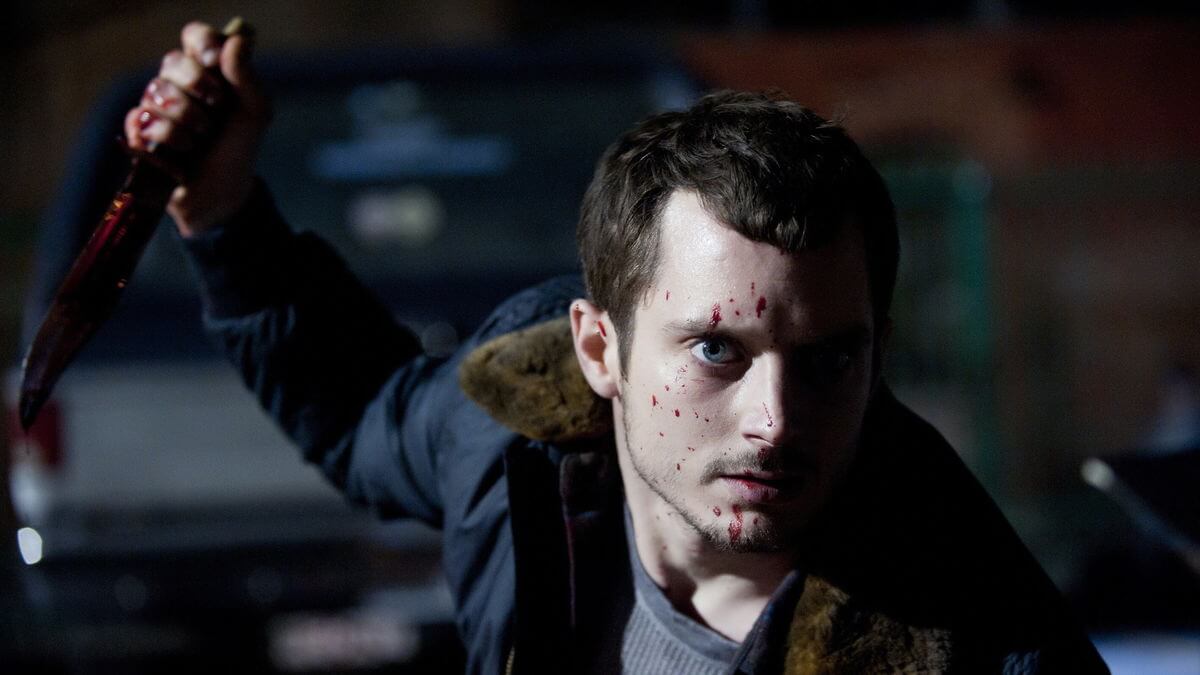
Wednesday November 25th, 10.50pm – Maniac (2012)
Franck Khalfoun’s remake of the gloriously sleazy 1980 classic is an impressive effort. Starring Elijah Wood as the mannequin and scalp obsessed loner is filmed entirely from the killer’s point of view. This heightens the tension and makes the viewer complicit with the crimes. Unmissable.
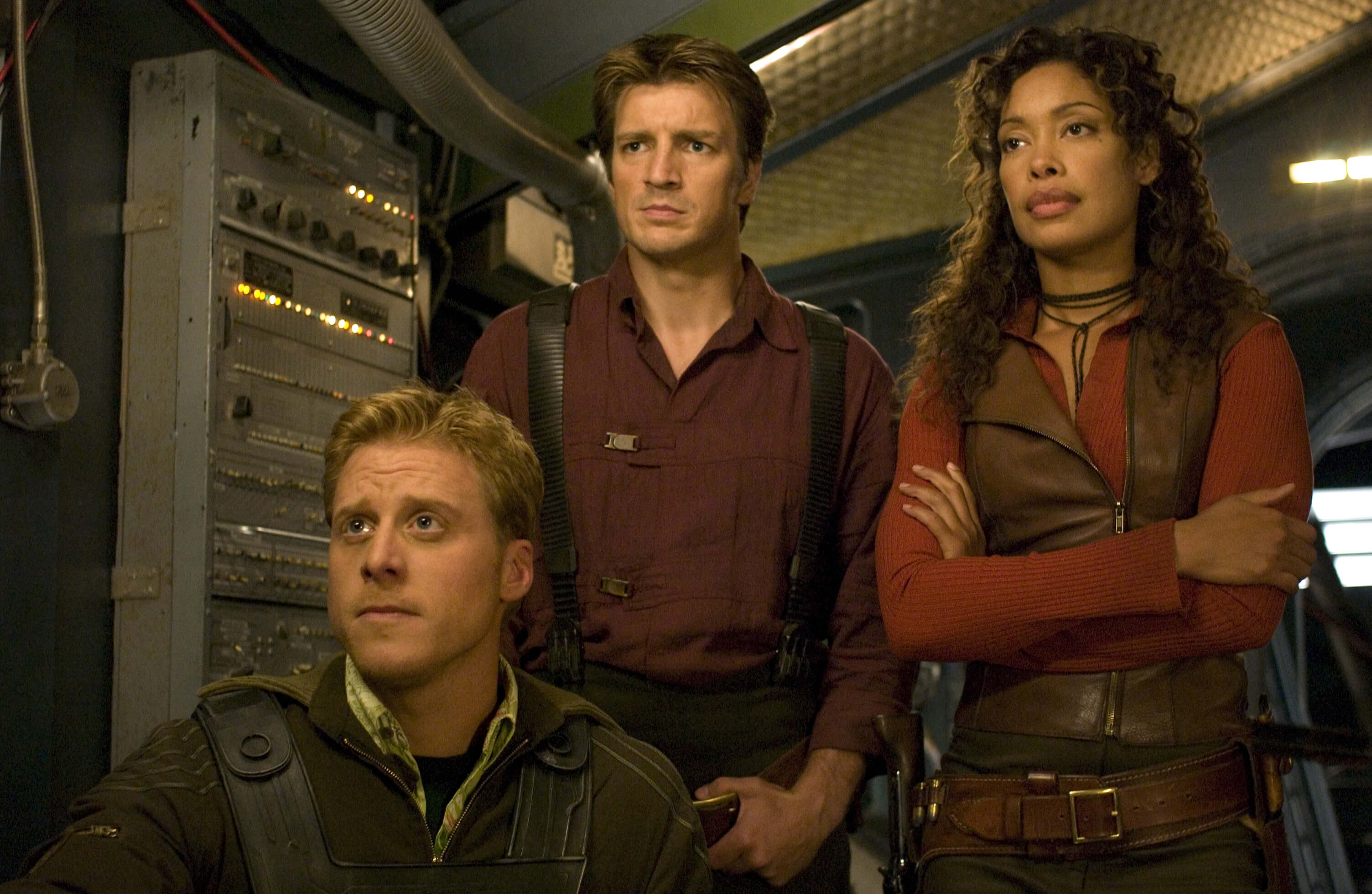
Thursday November 26th, 9pm – Serenity (2005)
When the TV series Firefly was cancelled, there was rightfully an outcry from fans. Creator Joss Whedon has always looked after the fans, however, and we got this fun continuation of the story as a big budget feature film. Join Nathan Fillion, Alan Tudyk and all the crew on another adventure!
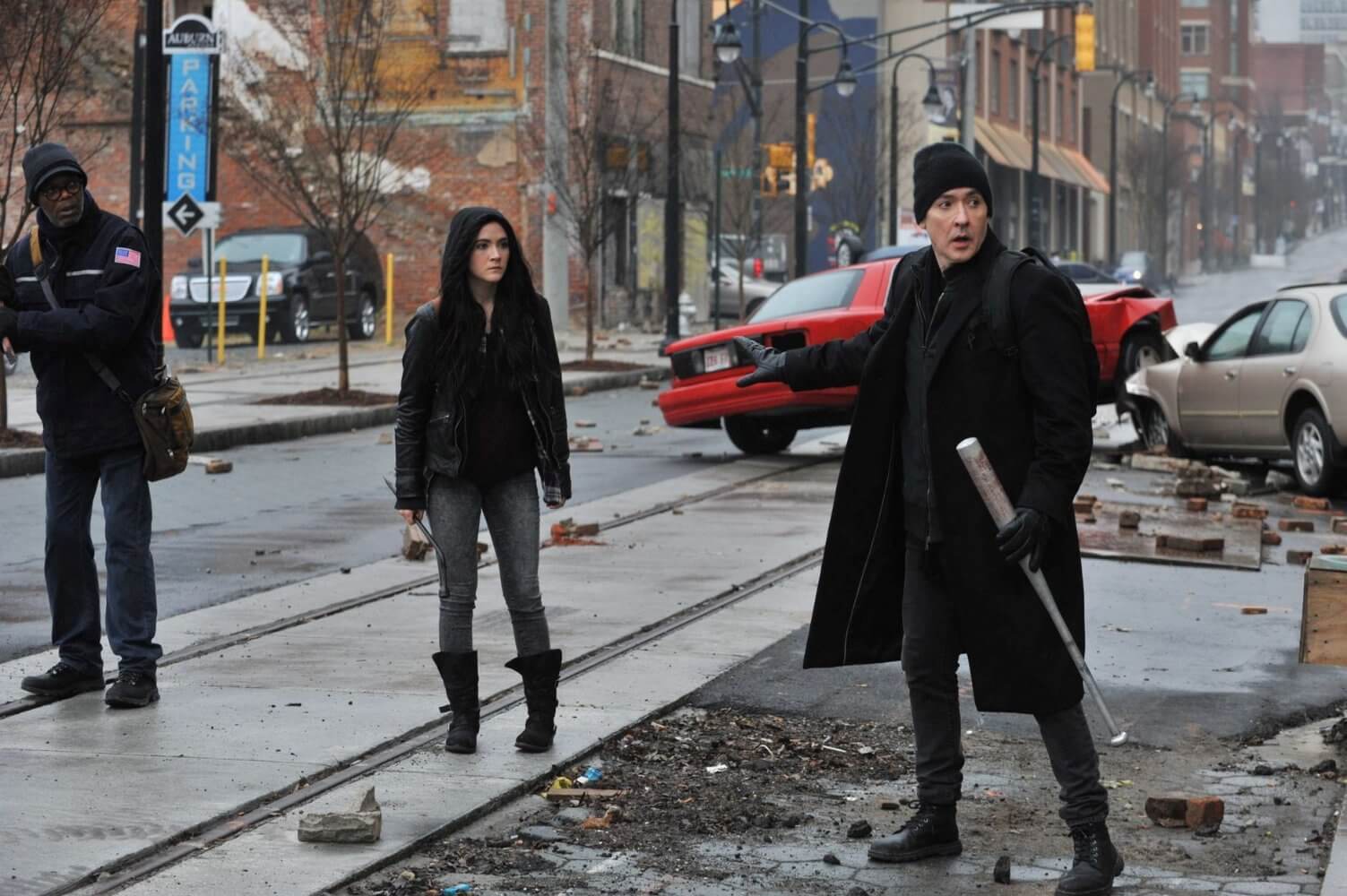
Friday November 27th, 9pm – Cell (2016)
John Cusack and Samuel L. Jackson star in this adaptation of the Stephen King novel. The premise – that a signal broadcast over mobile phone networks turns people into crazed murderers – probably isn’t as outlandish as it sounds, especially considering all we’ve been through this year!
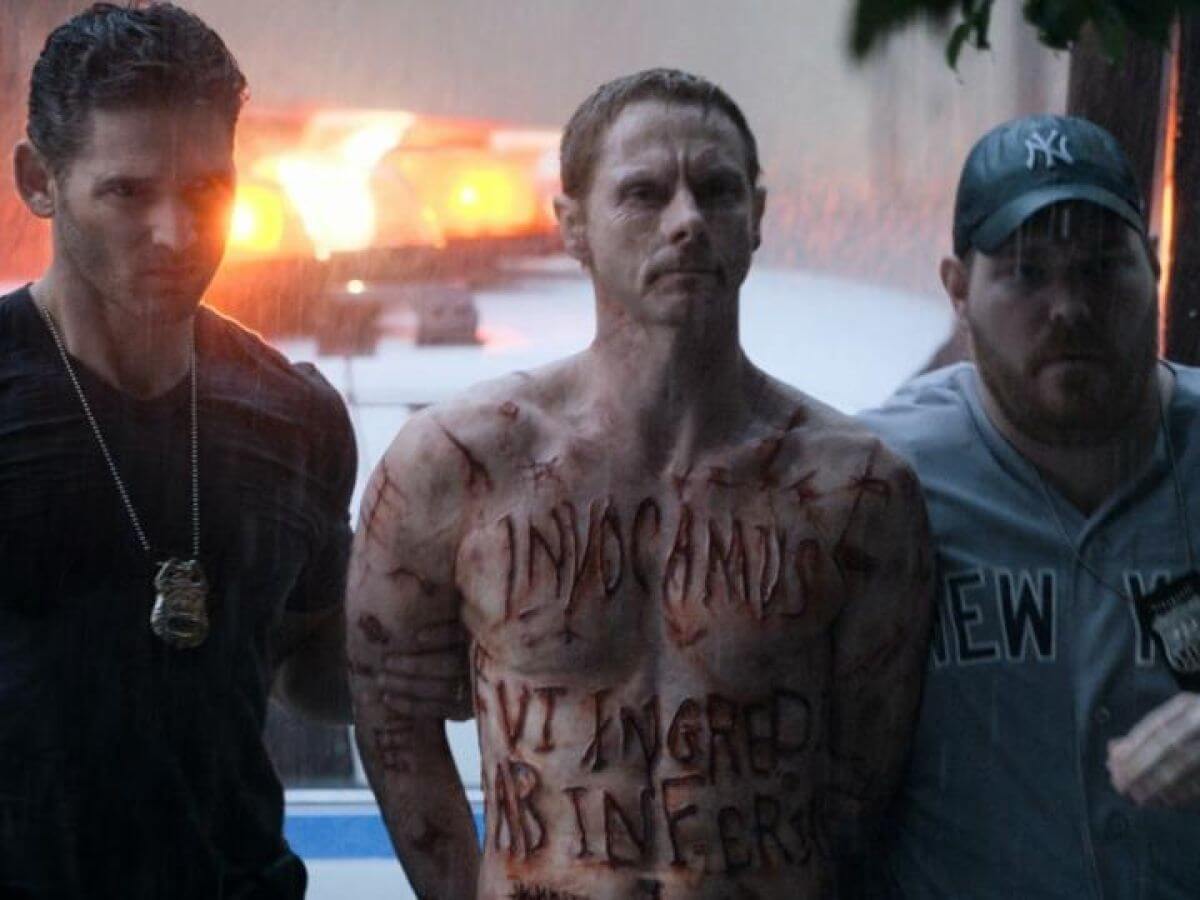
Saturday November 28th, 9pm – Deliver Us From Evil (2014)
Based on the ‘true events’ covered in the book Beware the Night by Ralph Sarchie and Lisa Collier Cool, this was director Scott Derrickson’s follow-up to the massive horror hit Sinister. Eric Bana plays Sarchie, a cop who teams up with a Spanish priest (played by Édgar Ramírez) to fight the forces of evil. The always brilliant Sean Harris is the possessed soul in desperate need of an exorcism.
Sunday November 29th, 10.45pm – Howl (2015)
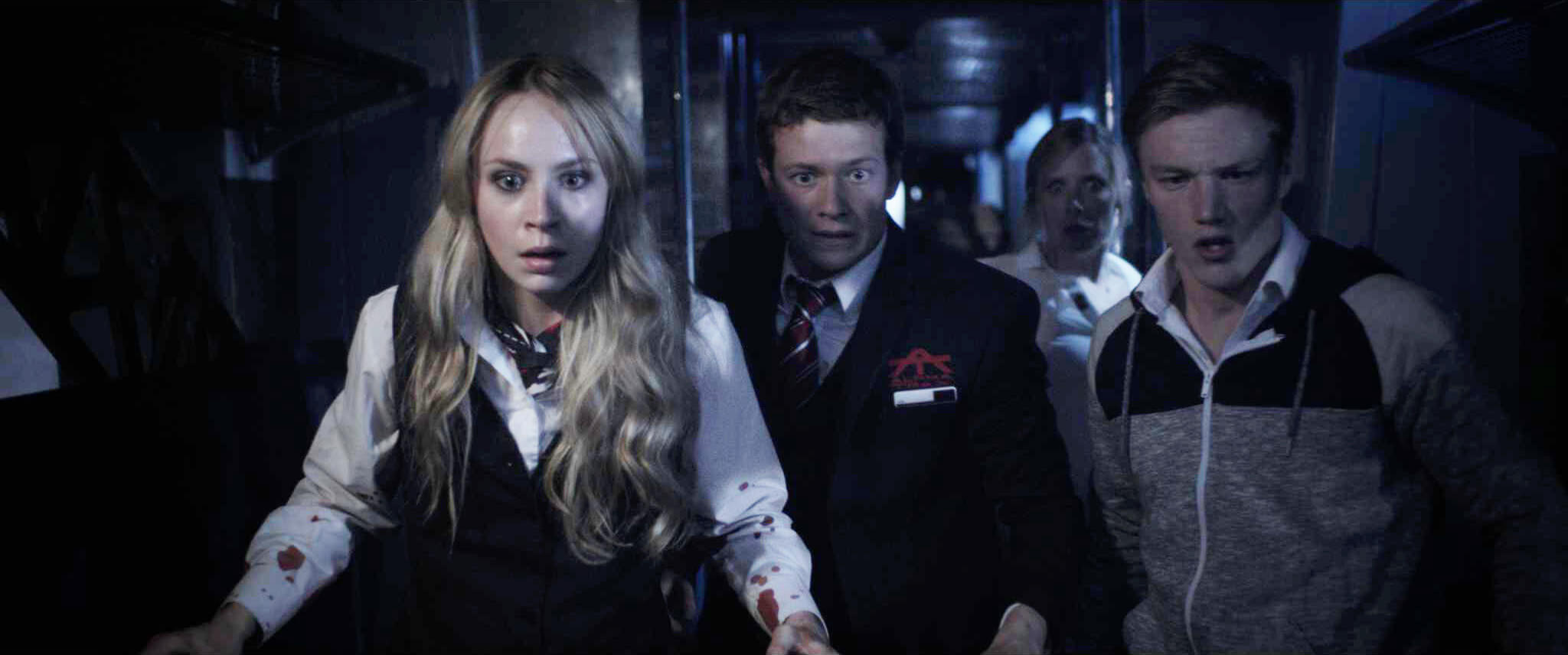
Director Paul Hyett knows how to pull off low budget scares. Set on an overnight train that becomes derailed, the passengers have more to fear than stale sandwiches and overpriced beer as they come under attack from a pack of werewolves. Expect things to get hairy!
Tune into Horror Channel on Sky 317, Virgin 149, Freeview 68, Freesat 138.
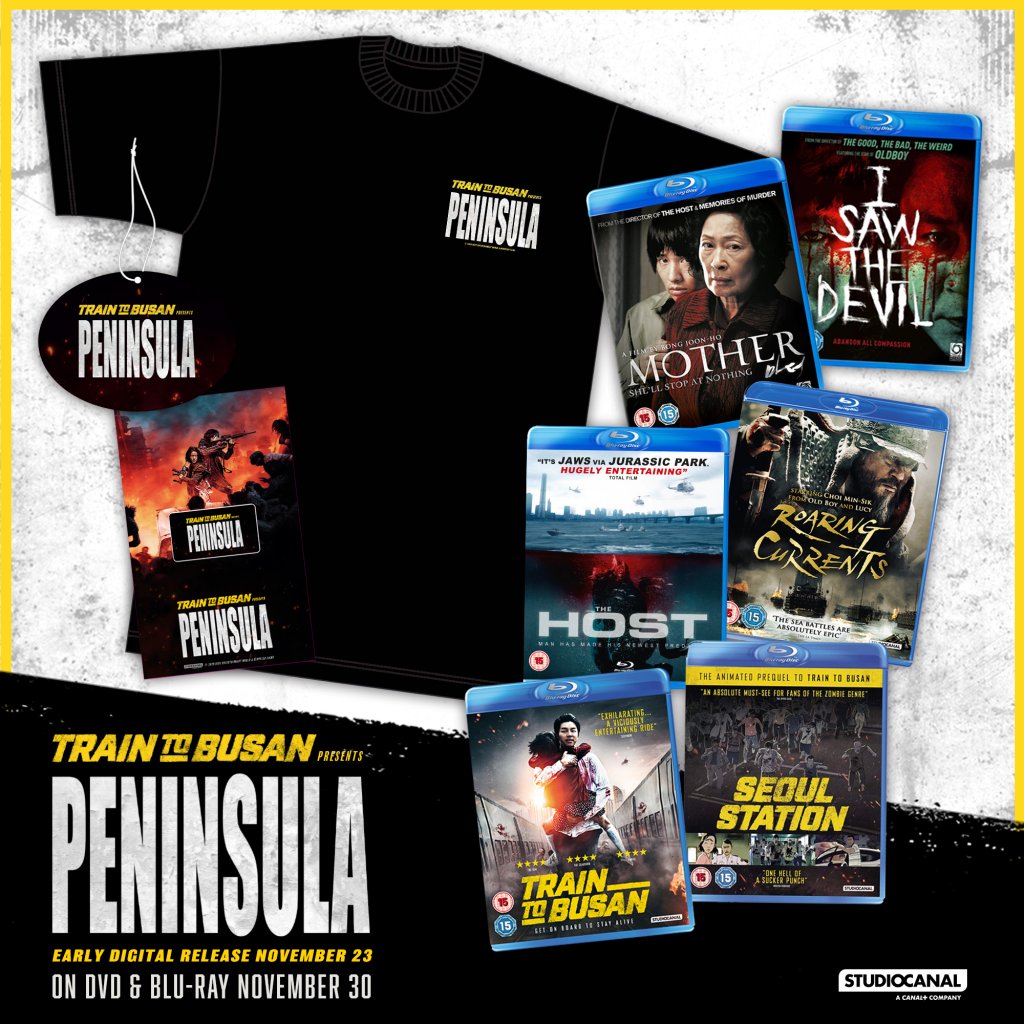
To celebrate the release of TRAIN TO BUSAN: PENINSULA – coming Nov 23rd on digital followed by a Nov 30th Blu-ray, DVD, SteelBook drop – we’ve teamed up with our friends at STUDIOCANAL to give one lucky reader the bumper bundle pictured below!
To be in with a chance of winning, just answer the following question:
What type of monsters are the main antagonists in the TRAIN TO BUSAN series?
A) People who leave their bags on empty seats forcing you to stand awkwardly in that bit by the doors.
B) The folk whose job it is to announce your train has been delayed by another fifty flippin’ minutes.
C) Zombies
Email your answer labelled ‘Train to Busan’ to [email protected] to arrive before 11:59pm on December 7th.
For more on TRAIN TO BUSAN: PENINSULA, read on:
Four years after South Korea’s total decimation in TRAIN TO BUSAN, the zombie outbreak thriller that captivated audiences worldwide, acclaimed director Yeon Sang-ho brings us PENINSULA, the next nail-biting chapter in his post-apocalyptic world. Jung-seok (Gang Dong-won), a soldier who previously escaped the diseased wasteland, relives the horror when assigned to a covert operation on the quarantined peninsula with two simple objectives: retrieve and survive. When his team unexpectedly stumbles upon survivors, their lives will depend on whether the best—or worst—of human nature prevails in the direst of circumstances.
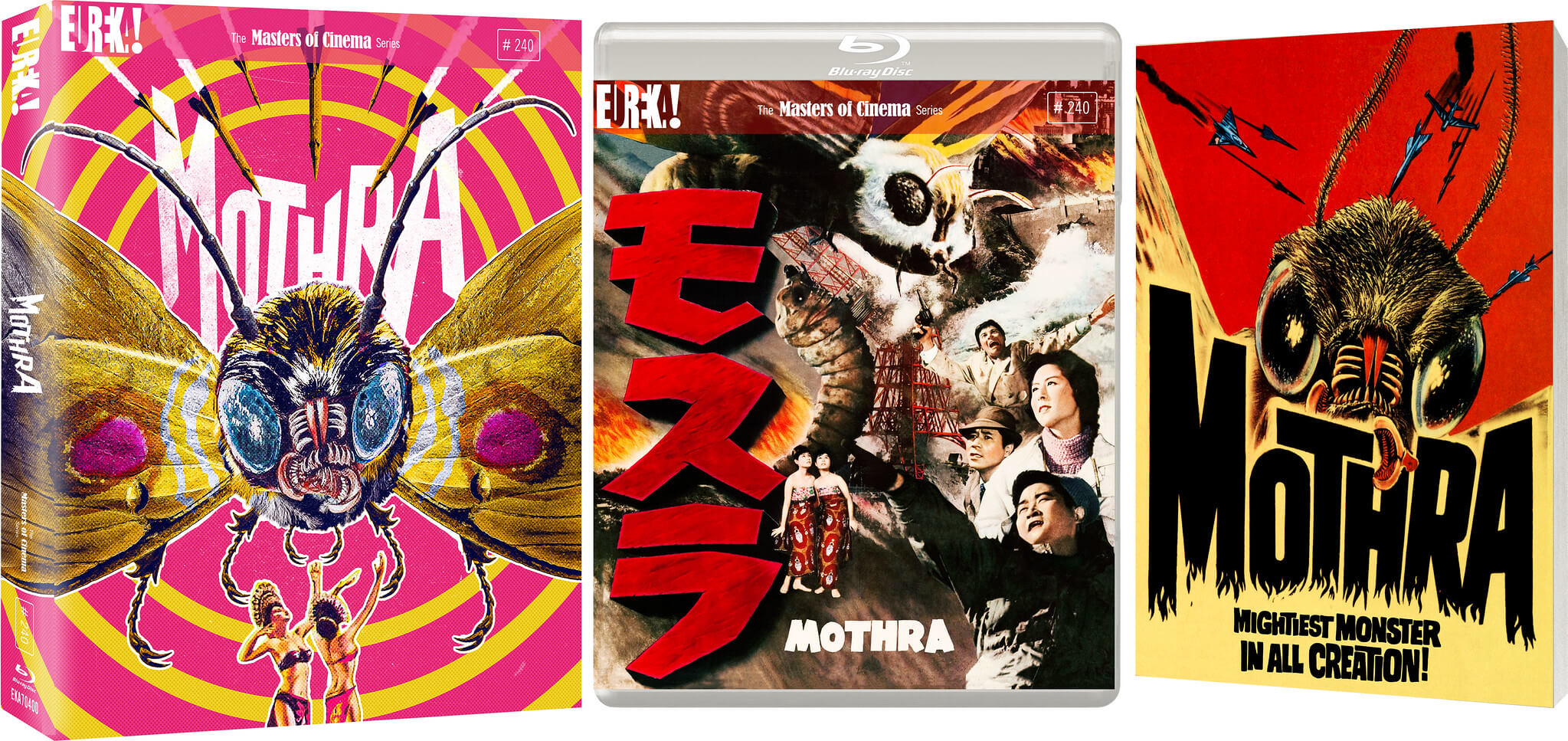
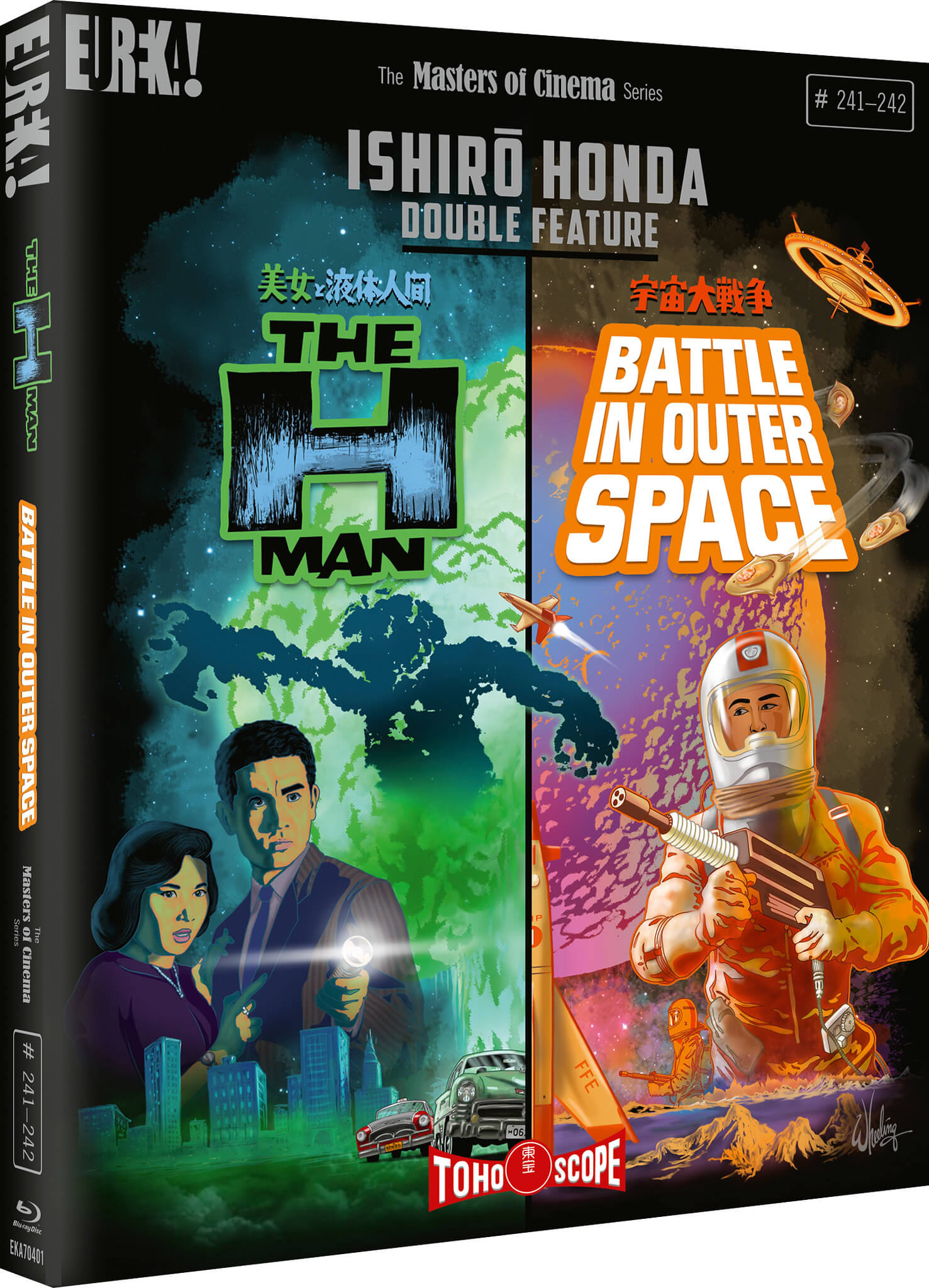
We’ve teamed up with Eureka! Entertainment to bring one lucky reader a chance to win two great new releases: MOTHRA and ISHIRŌ HONDA DOUBLE FEATURE: THE H-MAN & BATTLE IN OUTER SPACE. Read on for more info!
Mothra, Ishirō Honda’s stunningly inventive monster adventure-fantasy, is available on home video for the first time in the UK. The Blu-ray is out now as part of The Masters of Cinema Series in a Limited Edition set of only 3000 copies, featuring a Hardbound Case, 60-page Perfect Bound Collector’s Book & Reversible Poster.
One of the most iconic Japanese kaiju, Mothra has appeared in over a dozen feature films. Presented here is her debut, a gloriously vibrant piece of filmmaking that forever changed how kaiju eiga would be produced in Japan.
Following reports of human life on Infant Island, the supposedly deserted site of atomic bomb tests, an international expedition to the heavily-radiated island discovers a native tribe and tiny twin female fairies called “Shobijin” who guard a sacred egg. The overzealous expedition leader kidnaps the Shobijin to exhibit in a Tokyo stage show but soon they summon their protector, hatching the egg and releasing a giant caterpillar. When Mothra arrives in Japan and transforms into her final form, the nation and its people face their destruction.
Ishirō Honda Double Feature: The H-Man & Battle in Outer Space are two classics of Japanese sci-fi cinema, on Blu-ray for the first time on home video in the UK. Out now as part of The Masters of Cinema Series, featuring a Limited Edition O-Card Slipcase (First Print Run of 2000 copies only].
In Tokyo, a mysterious radioactive liquid is dissolving people into slimy, sentient, seemingly indestructible, blobs of destruction! Part-Japanese gangster noir, part-gooey body melting horror, The H-Man (Bijo to Ekitai-ningen – ‘Beauty and the Liquid People’)is one of the most unique sci-fi films of the 1950s.
A series of mysterious catastrophes sweep the globe, causing the world’s scientists to conclude that beings from another planet are attacking Earth, and the world must unite to defend itself in a gigantic battle in outer space! With wonderful special effects sequences by Eiji Tsuburaya (Godzilla, Ultraman), and a rousing score by Akira Ifukube (Godzilla), Battle in Outer Space is a glorious sci-fi extravaganza.
To be in with a chance of winning, just answer this question:
What classic kaiju film did Ishirō Honda also direct?
A) Godzilla
B) Godzuki
C) God Only Knows
Email your answer labelled ‘Mothra’ to [email protected] to arrive no later than 11.59pm on November 29th.
You can buy Mothra here and Ishirō Honda Double Feature: The H-Man & Battle in Outer Space here.
Terms & Conditions:
STARBURST does not accept any responsibility for late or lost entries due to the Internet or email problems. Proof of sending is not proof of receipt. Entrants must supply full details as required on the competition page, and comply with all rules to be eligible for the prizes. No responsibility is accepted for ineligible entries or entries made fraudulently. Unless otherwise stated, the Competition is not open to employees of: (a) the Company; and (b) any third party appointed by the Company to organise and/or manage the Competition; and (c) the Competition sponsor(s). This competition is a game promoted STARBURST. STARBURST’s decision is final in every situation and no correspondence will be entered into. STARBURST reserves the right to cancel the competition at any stage, if deemed necessary in its opinion, and if circumstances arise outside of its control. Entrants must be UK residents and 18 or over. Entrants will be deemed to have accepted these rules and to agree to be bound by them when entering this competition. The winners will be drawn at random from all the correct entries, and only they will be contacted personally. Prize must be taken as stated and cannot be deferred. There will be no cash alternatives. STARBURST routinely adds the email addresses of competition entrants to the regular newsletter, in order to keep entrants informed of upcoming competition opportunities. Details of how to unsubscribe are contained within each newsletter. All information held by STARBURST will not be disclosed to any third parties
Short films have become a popular staple of film festivals but SHORT SHARP SHOCKS, the 41st release from BFI Flipside, shows us that the format has been used for much more commercial means previously…
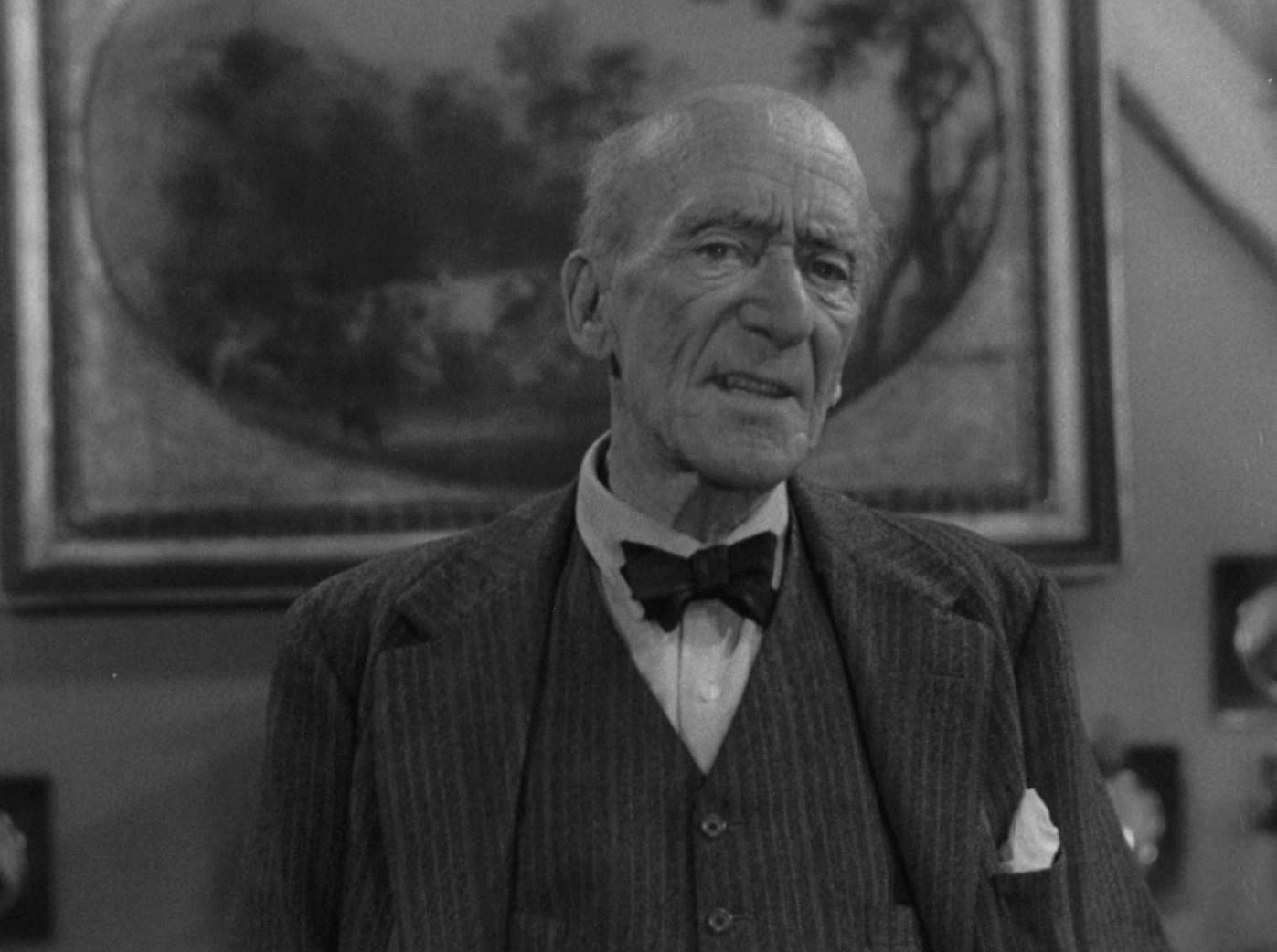
The new collection, Short Sharp Shocks, released by BFI Flipside – which deals with releasing British movies that have been neglected; the seedier, more sleazy films that tend to interest us more than the populist classics – features seven shorts that have been lovingly restored and transferred in HD. They range from experimental narrative works to straight-faced ghost story recitals. In the latter category, they are practically quaint by today’s standards. Lock Your Door and The Reformation of St Jules were both made in 1949 and are perfect examples of fire-side ghost tales. They are told, with no narrative cutaways, by the writer Algernon Blackwood. His stories, particularly The Wendigo, are still be adapted today and at the time he would tell his tales on the radio and television. These two filmed versions would have Blackwood recollecting from his parlour. The effect is like sitting down with a great grandfather. He appears awkward in front of the camera, but this adds to the eeriness. The stories are not those of surprise or horror, but more quiet apprehension with notions of the uncanny. It’s hard to imagine a modern audience getting much out of them at the local Odeon, but no doubt at the time they would be enough to send some shivers down the spine.
Another stagey-but-brilliant inclusion is the 1953 version of The Tell-Tale Heart. Edgar Allan Poe’s story has been brought to the screen many times and suits the short form. Directed by J.B. Williams, it has the great Stanley Baker asking us: “Why would you say that I am mad?” Poe’s prose is presented as a monologue and works perfectly as such here, with Baker showing the promise that his career proved.
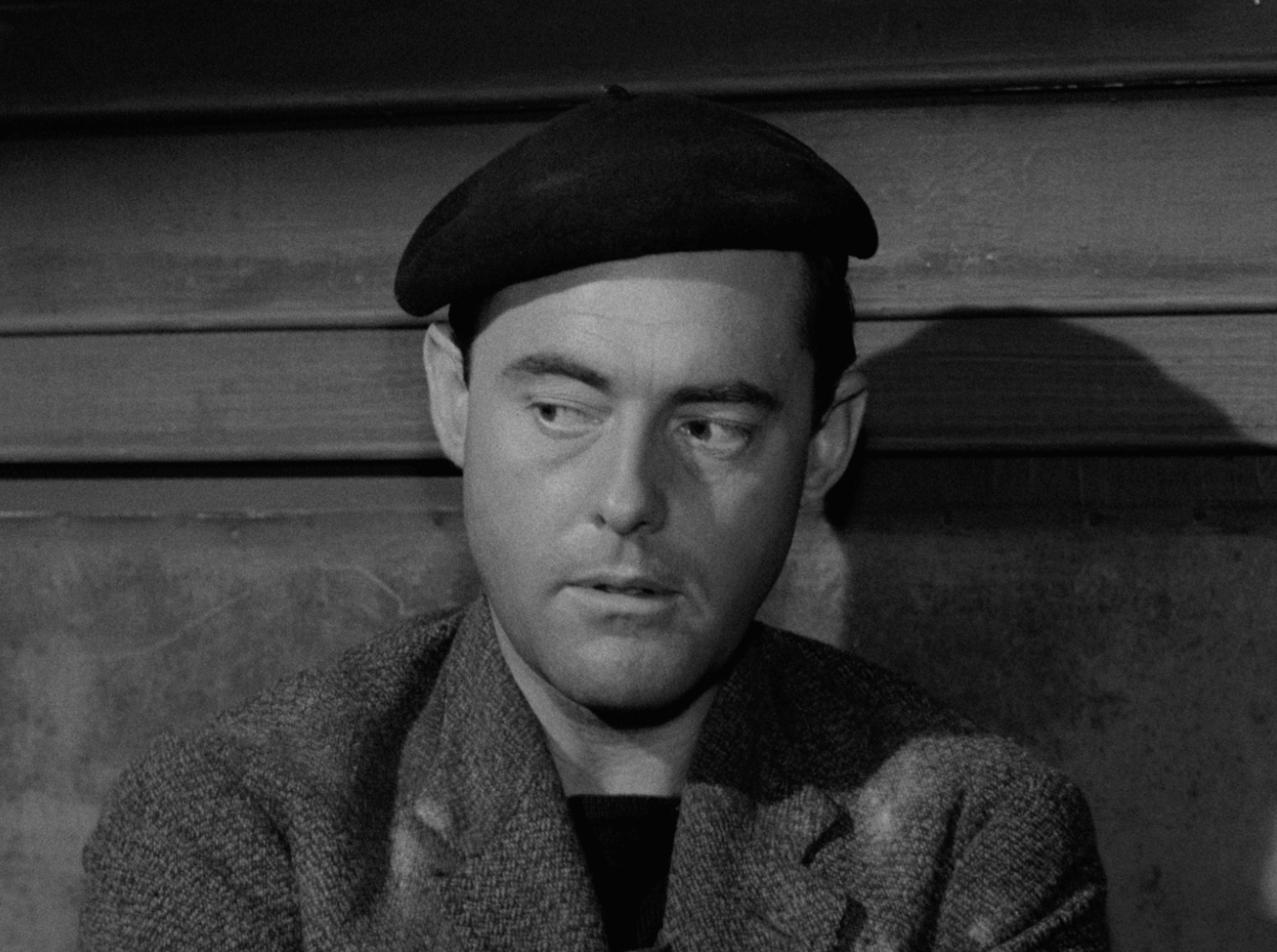
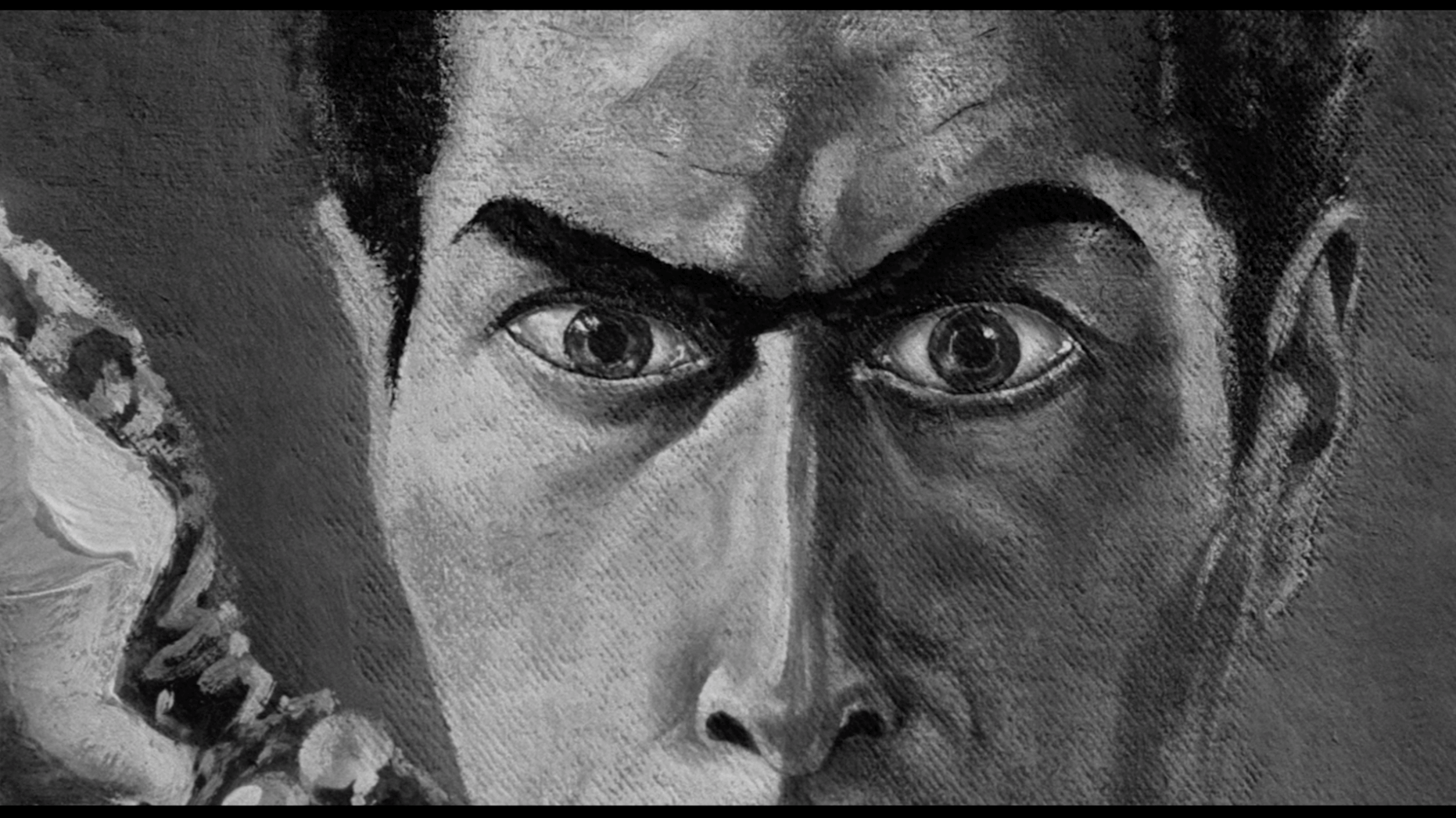
The collection also contains some shorts presented as traditional narrative tales. Death Was a Passenger and Portrait of a Matador (both 1958) are two intriguing stories directed by Theodore Zichy, who was perhaps better known as an actor, appearing in Powell and Pressburger’s The Life and Death of Colonel Blimp (1943). The former has ‘know-his-face’ actor Terrence Alexander recounting a lucky escape he had while trying to escape the Nazis on a train at the start of WWII. The latter is a more genre-friendly affair in which an artist is tormented by the arrival of a portrait he painted a year earlier – that of a bullfighter. The subject hated it and was killed in the ring soon after, and the artist is convinced the canvas bears a curse.
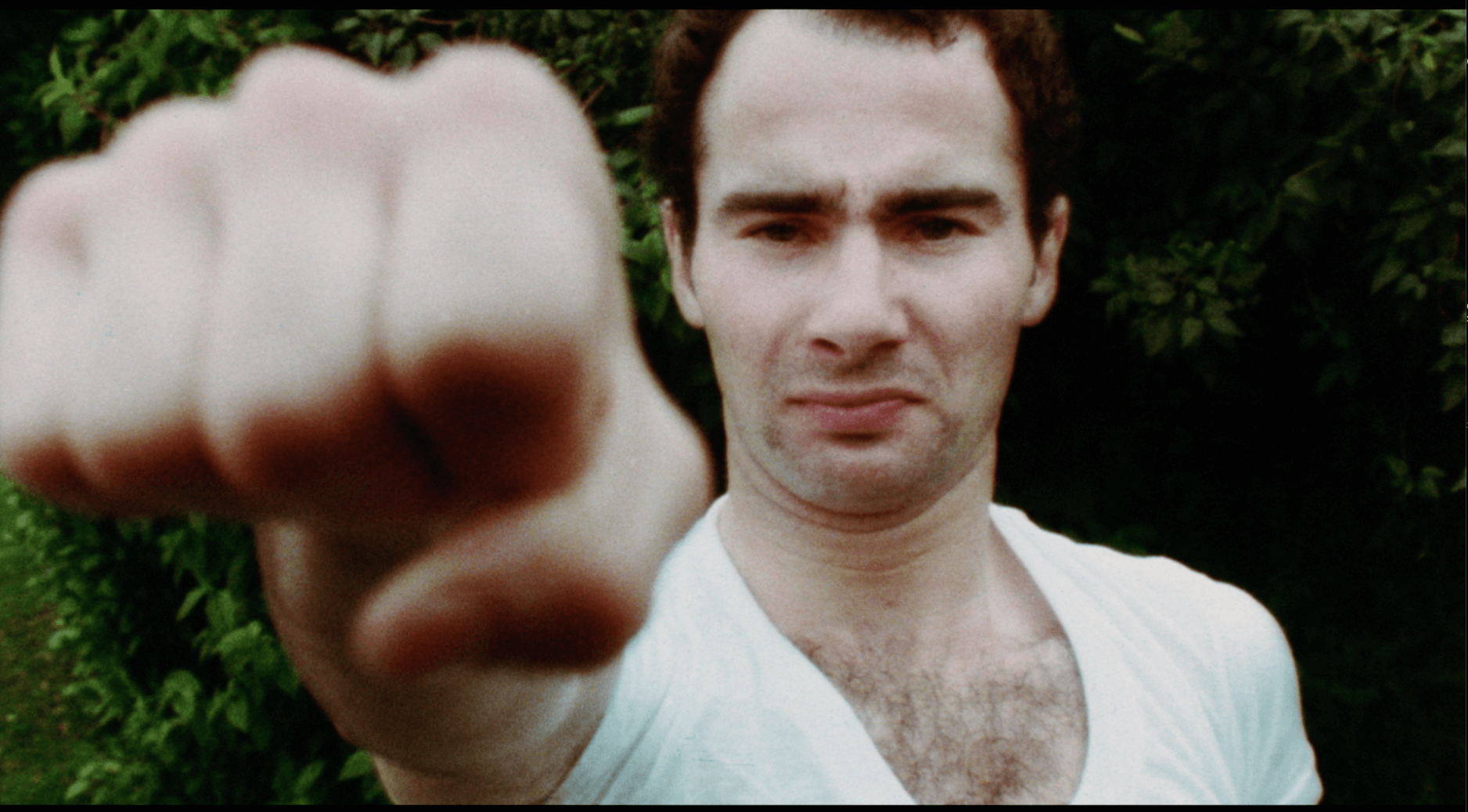
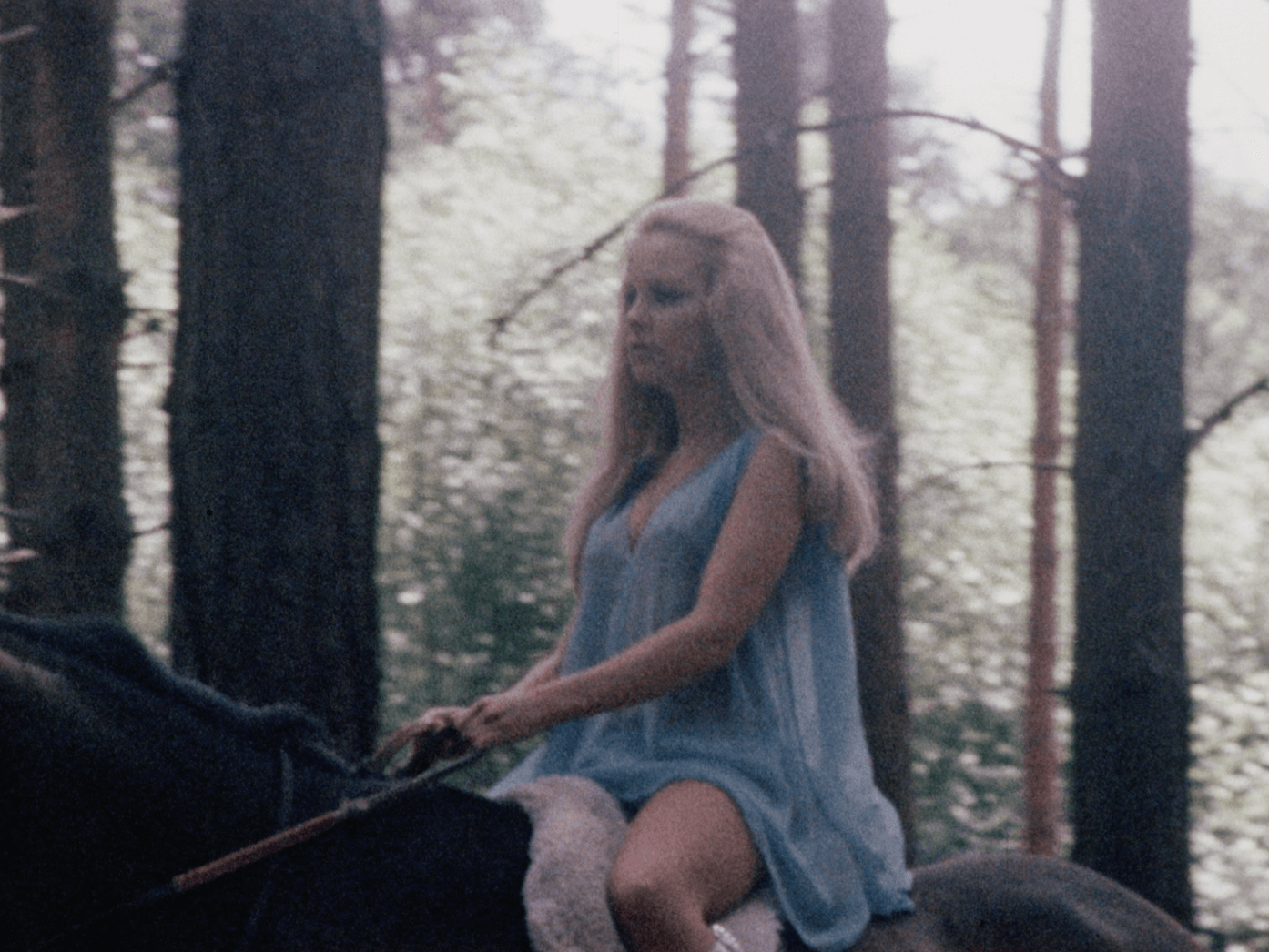
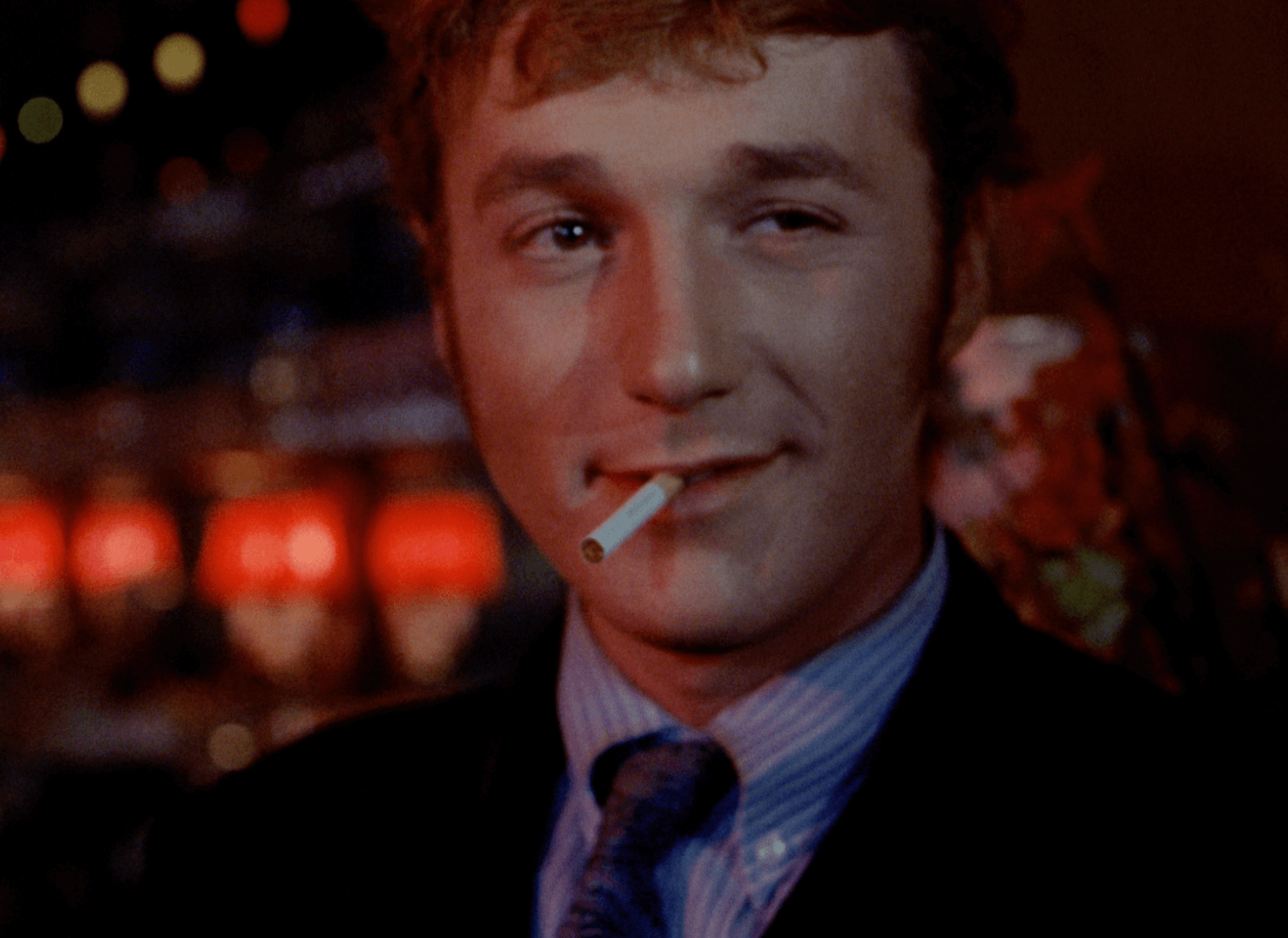
The release features a brace of shorts that are more akin to the ones that we recall seeing in the flea pits. Twenty-Nine (1969) sees a man (Goodbye Gemini’s Alexis Kanner) awaken in a strange apartment, unaware of what had occurred the previous night. Trying to put the pieces of his fractured memory together – and keep his wife from finding out whatever it was. Like an episode of Tales of the Unexpected, this has a lovely little twist, and a surprising appearance from George and Mildred’s Yootha Joyce, as well as giving us a small glimpse of Soho in the sixties. The Sex Victims (1973) has a modern-day Lady Godiva (Felicity Devonshire) leading a trucker astray only to have him and his friend (Alun Armstrong) come to a sticky end. The Lake (1978) is an atmospheric tale in which a couple (Gene Foad and Julie Peasgood) enjoy a picnic in the grounds of a farmhouse, where previously the owner had killed his family and livestock. It was written and directed by Lindsey C. Vickers, who was an assistant director on several later Hammer movies, and it’s a beautifully shot, eerie tale. Finally, there’s The Errand (1980), which follows a soldier tasked with retrieving a message and coming off worse for it. This one has significant genre credentials as it was written by David McGillivray, best known for his screenplays directed by Pete Walker and Norman J. Warren. A keen eye might be able to spot FrightFest supremo Alan Jones, too.
The popularity of the feature-length double bill, and then the abandoning of the continuous performances at cinemas spelt the end of the short as a theatrical treat. As mentioned, they now tend to only get festival-only screenings before being released to YouTube and the like. It’s becoming increasingly popular to repackage them into anthology features, which at least gives them more exposure.
Acknowledgements and thanks are given to Vic Pratt from BFI Flipside for providing insight when putting this feature together.
BFI Flipside’s SHORT SHARP SHOCKS hits Blu-ray on November 23rd and is reviewed here.
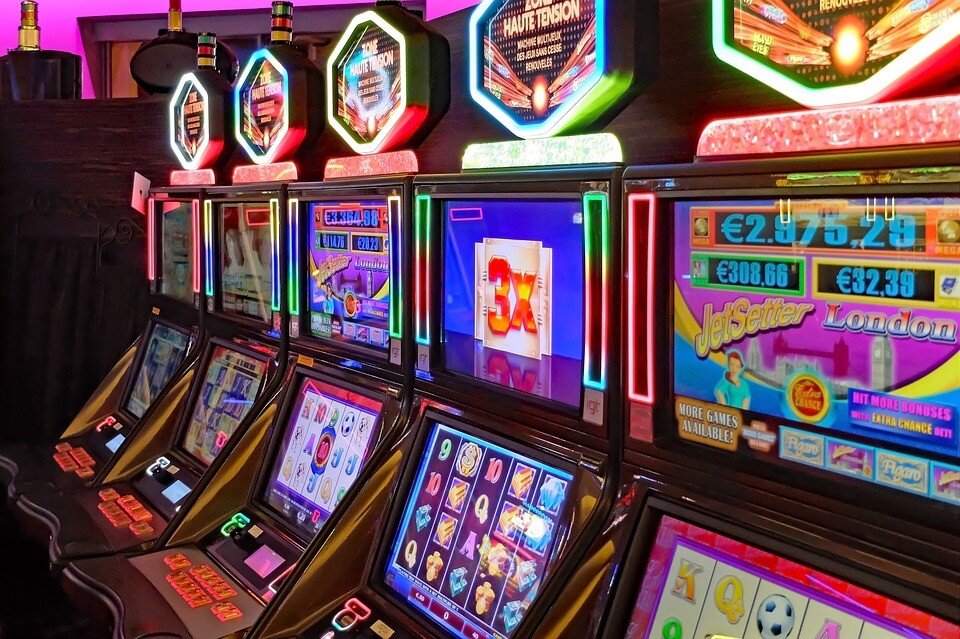
With so many slot games now available online, and the popularity of slots in land-based casinos continuing to thrive, there seem to be slot game themes to cater to almost every taste. But which slot machine themes have been the most popular over the years? Let’s take a look.
Slot machines are also called fruit machines for a reason. Early machines displayed fruits like cherries, lemons, and berries, and those sorts of fruit machines are still incredibly popular today. The origins of fruits being used as symbols on slot machines come from the very first machines that cropped up in the early 20th century in the US. Rather than paying out cash prizes, early slots gave winners chewing gum. So, if you got three cherries in a row, you would win cherry-flavoured chewing gum, and if you matched lemon symbols, you would win lemon gum.
Egyptian-themed Slots
Walk into any brick-and-mortar casino or visit any online casino, and you are sure to find slot machines with an Egyptian theme. When slots began to become popular in the early 20th century, Ancient Egypt was all the rage in popular culture. Egyptian artefacts were starting to be displayed in museums around the world, and numerous Egyptian-themed films were produced by Hollywood, such as multiple mummy horror films and epic Biblical pictures. The magic and mystery surrounding Egyptian icons like mummies, pyramids, and gold have continued to make its mark on popular culture over the years, and the themes perfectly match the feelings of wonder you get playing slot games. Of course, gold is also associated with wealth, so it is no wonder it is used to promote slot jackpots. If you are looking for the best Egyptian-themed slot games or slots of any other theme, check out a site where you can compare different online slots and read reviews.
Movie-themed Slots
Tying-in slot games with things from popular-culture has been all the rage for decades, and movies are no exception. You will find a variety of slot machines with specific film themes that use symbols based on key elements of the film as well as soundtracks and dialogue. Video slot machines sometimes take things even further by showing scenes from the movie it is based on. You will find numerous film-themed slot machines online and in land-based casinos. Popular slots include ones based on Jumanji, The Hulk, and Planet of the Apes.
Band-themed Slots
Just like movie-themed slots, there are numerous slot games available that are based on popular bands. Many come from rock and heavy metal. For instance, you can play slots that are based on the likes of Guns N’ Roses, Spinal Tap, and Jimi Hendrix. By playing band-themed slot games, players get to listen to some of their favourite artists’ songs while feeling like a rock star, so it is no wonder such games continue to be incredibly popular.
Horror-themed Slots
For decades, slot machines have been designed with horror themes. With the genre being popular with movie-goers since the early days of cinema, and the present-day popularity of vampires, werewolves and gothic themes, horror slot games are some of the most enticing games available. Horror slots like Gothic, and Blood Suckers II are guaranteed to get your heart racing.
Fantasy-themed Slots
Vampires, ghosts, and things that go bump in the night are no longer only popular in the horror genre. They are also loved by fantasy fans. And with popular culture phenomena like Harry Potter, Twilight, and The Lord of the Rings, it is only natural that many of today’s most successful slot machine games are fantasy inspired.
So, whatever theme floats your boat, you will be able to find a slot machine game to suit your taste.
To save you getting lockdown blues, we’re going to be giving you our picks of what to watch on Horror Channel each week. Here’s some of our favourites this week:
Tuesday, November 17th 11.20pm – Night of the Creeps (1986)
Fred Dekker’s feature debut is a doozie – a mix of alien invasion, slasher, fraternity romp, and B-movie homage. Tom Atkins is superb as always as the police detective and keep an eye open for a cameo from Dick Miller! Note also, many of the characters are named after horror directors!
Thursday, November 19th 9pm – The Tall Man (2012)
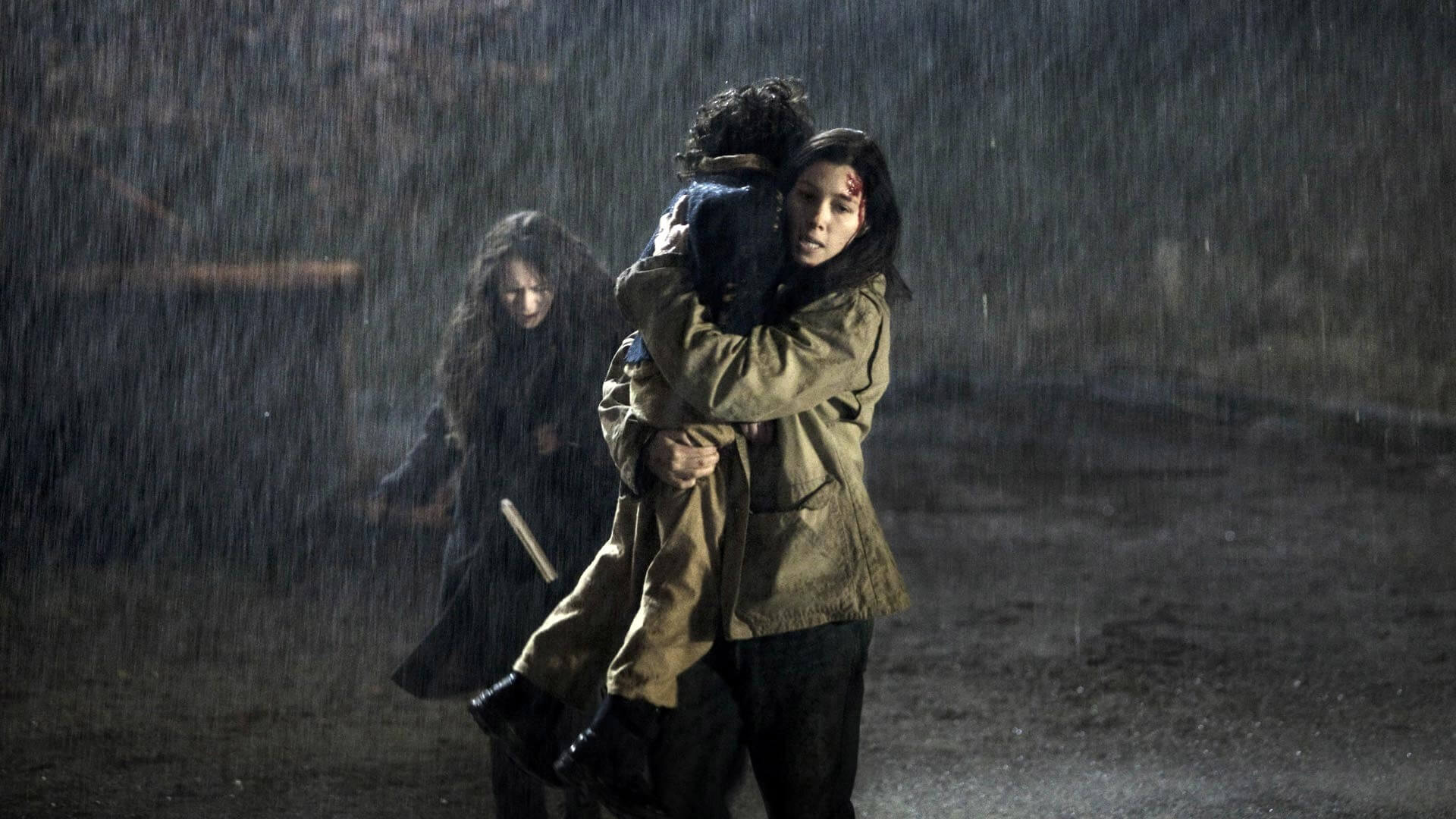
Following the success of Martyrs, director Pascal Laugier made this, his first English-language film. Starring Jessica Biel, it’s a terrifying mix of folk legend and disturbing child abductions. Contains a hell of a curveball!
Friday, November 20th 9pm – The Arrival (1996)
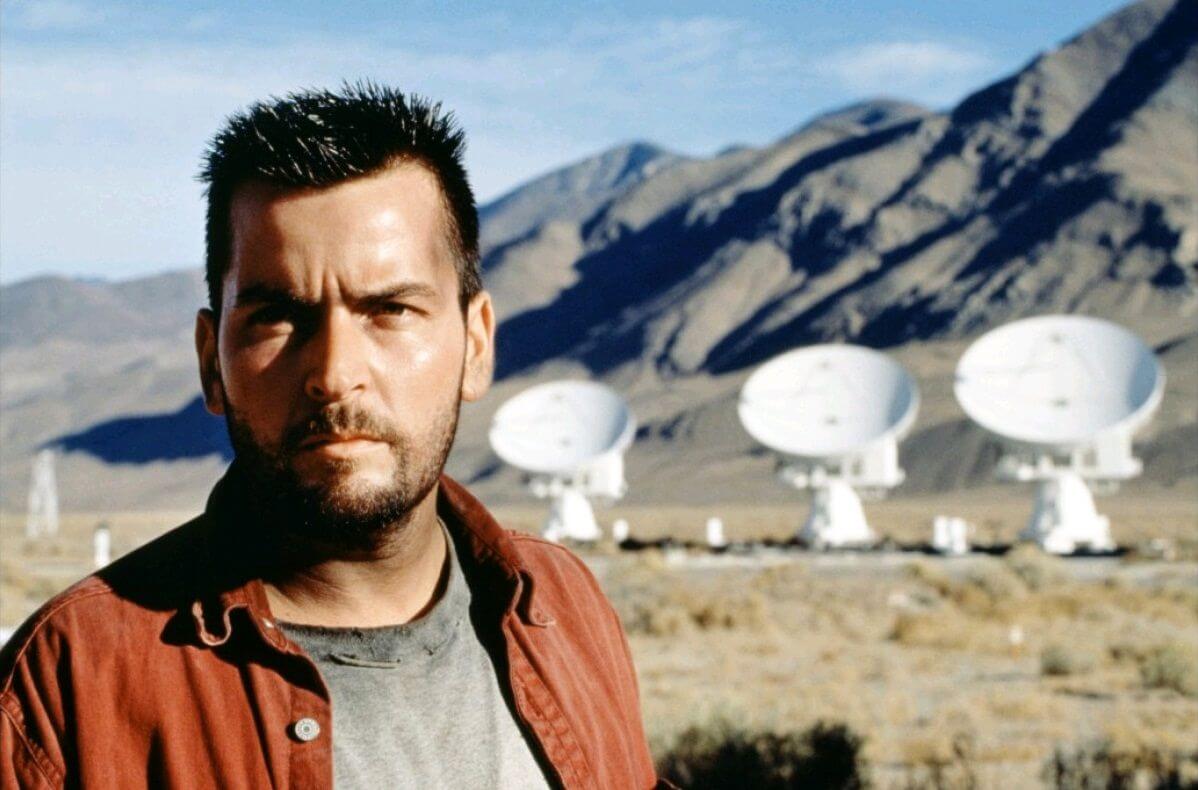
Charlie Sheen is an astronomer who discovers a radio signal that he thinks is proof of intelligent alien life. This leads him into a rabbit hole of conspiracies and strange occurrences. Director David Twohy (Pitch Black) includes plenty to enjoy and think about (climate change is one of the subjects), although the story has aged better than the effects.
Saturday, November 21st 9pm – The Heretics (2017)
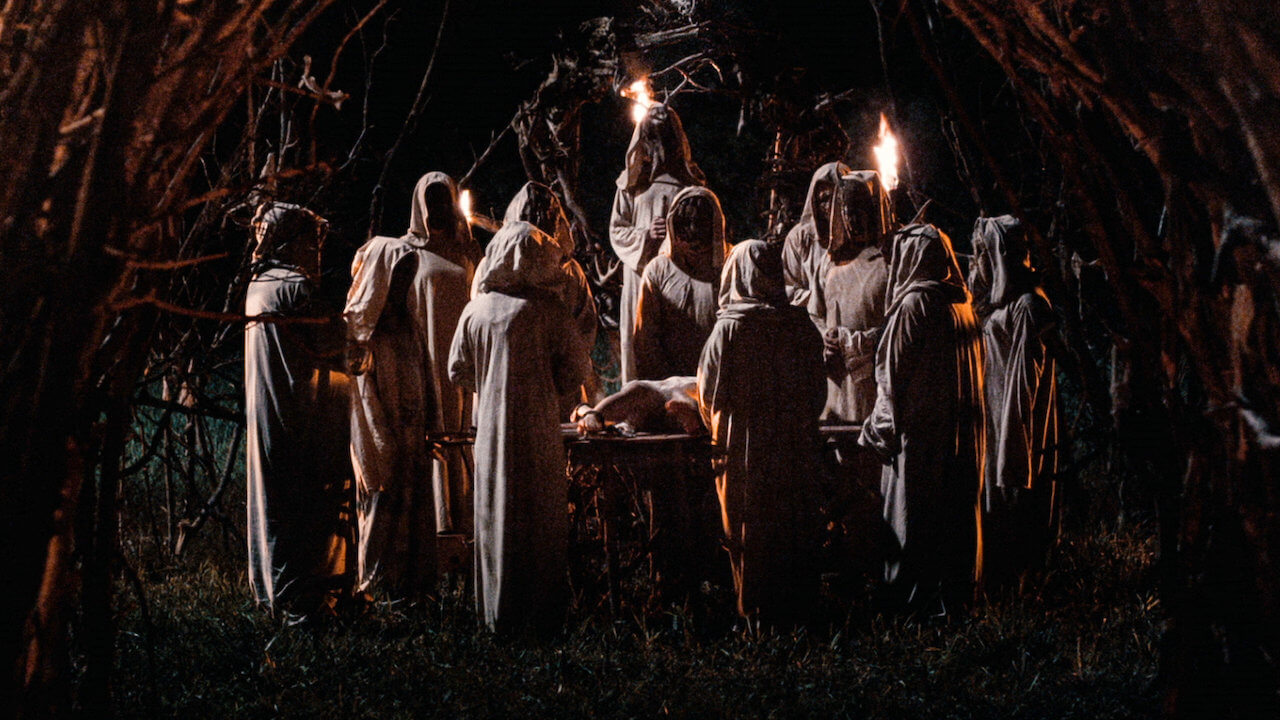
The Possessed season continues with this mix of body horror, demons, and secret cults. A young woman, who escaped a satanic suicide cult when younger, is abducted once more and begins to transform into something terrifying. Directed by Chad Archibold (I’ll Take Your Dead).
Sunday, November 22nd 11pm – The Grudge (2004)
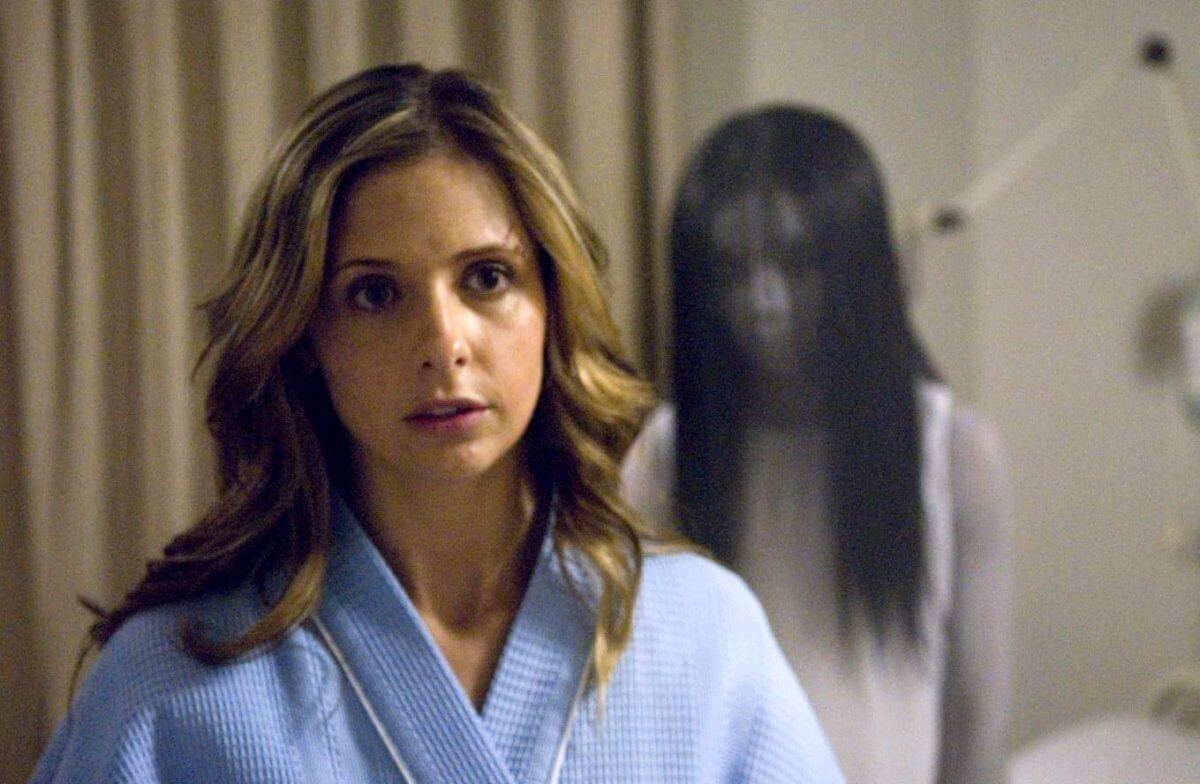
The creator of the original J-horror, Takashi Schimizu, remakes his story for the western market and perfectly transposes the terror to the English-speaking world. Starring Sarah Michelle Gellar and Bill Pullman, it’s just as creepy as the original.
Tune into Horror Channel on Sky 317, Virgin 149, Freeview 68, Freesat 138.
We’ve teamed up with BFI Flipside to bring you a chance of winning one of five Blu-ray copies of their latest release – the short horror film collection Short Sharp Shocks.
To be in with a chance of winning a copy, simply answer the following question:
Which American writer authored the short story The Tell-Tale Heart?
A) Ray Bradbury
B) Stephen King
C) Edgar Allan Poe
Email your answer to [email protected] with the header ‘FLIPSIDE’ by 11:59pm on Sunday, November 29th, 2020.
Synopsis:
The latest in the critically acclaimed BFI Flipside series – continuing its ongoing mission to curate an alternative Brit-screen history of overlooked rarities in deluxe home-entertainment editions – Short Sharp Shocks is a compelling compendium of strange, striking, thrilling, horrific, eerie and eccentric short subjects from the heyday of the British cinematic supporting programme.
This carefully-curated collection – the first of its kind anywhere – includes a plethora of sought-after titles, some newly remastered in HD for the very first time – and showcases an eclectic range of delights spanning the second half of the 20th century from the 1940s right through to the 1980s.
A lavish double-disc limited edition set, it comes complete with over two hours of newly recorded interviews and an illustrated booklet with full credits and new contextual writing on the films by devotees of the field. Expect strange, spooky stories, odd twists in the tale, imaginative low-budget weirdness and oodles of atmosphere in these juicy bite-size morsels of cult film delight from decades gone by.
Featuring the following films:
Lock Your Door (Anthony Gilkison, 1949)
The Reformation of St Jules (Anthony Gilkison, 1949)
The Tell-Tale Heart (J B Williams, 1953)
Death Was a Passenger (Theodore Zichy, 1958)
Portrait of a Matador (Theodore Zichy, 1958)
Twenty Nine (Brian Cummins, 1969)
The Sex Victims (Derek Robbins, 1973)
The Lake (Lindsey C Vickers, 1978)
The Errand (Nigel Finch, 1980)
Short Sharp Shocks is released on BFI Blu-ray on Monday November 23rd and can be ordered now via the BFI Shop https://bit.ly/35mTXgG
Terms & Conditions:
STARBURST does not accept any responsibility for late or lost entries due to the Internet or email problems. Proof of sending is not proof of receipt. Entrants must supply full details as required on the competition page, and comply with all rules to be eligible for the prizes. No responsibility is accepted for ineligible entries or entries made fraudulently. Unless otherwise stated, the Competition is not open to employees of: (a) the Company; and (b) any third party appointed by the Company to organise and/or manage the Competition; and (c) the Competition sponsor(s). This competition is a game promoted STARBURST. STARBURST’s decision is final in every situation and no correspondence will be entered into. STARBURST reserves the right to cancel the competition at any stage, if deemed necessary in its opinion, and if circumstances arise outside of its control. Entrants must be UK residents and 18 or over. Entrants will be deemed to have accepted these rules and to agree to be bound by them when entering this competition. The winners will be drawn at random from all the correct entries, and only they will be contacted personally. Prize must be taken as stated and cannot be deferred. There will be no cash alternatives. STARBURST routinely adds the email addresses of competition entrants to the regular newsletter, in order to keep entrants informed of upcoming competition opportunities. Details of how to unsubscribe are contained within each newsletter. All information held by STARBURST will not be disclosed to any third parties
Matthew Ward is a fantasy author who impressed pretty much everyone with his debut fantasy novel, Legacy of Ash. With the sequel, Legacy of Steel out now, we asked Matthew to write a piece about the difficult second novel, which we are delighted to share.
Rightly or wrongly, middle books in trilogies have a reputation for being detours on the way to the finale. Once a trilogy is done and dusted, it’s easy to look at the story as a whole and break it down into ‘exciting start’, ‘rousing finish’ and the ‘bit in the middle’. It’s an old idea. It’s also not entirely without merit.
Patient Zero for this, as in so much of Fantasy, is probably The Lord of the Rings. The Two Towers, while containing memorable stuff, never really feels like its own book. The fact that Minas Morgul, Cirith Ungol and Barad-dûr all have worthy claim to being the second of the titular towers (the first is clearly Saruman’s Orthanc) gives some idea of the structural issues. Fair enough, given that The Lord of the Rings was originally intended to be a single volume. But a trilogy is how it’s most commonly sold, and The Two Towers is forever to be known as the ‘bit in the middle’.
That said, when we’re talking about middle books, human nature skews things a little. Psychologically – he said, with all the authority of a man without any qualifications or background in the field – I suspect we’re instinctively drawn to beginnings and endings.
For all the talk of the journey being the important bit, we love promise and payoff more. If we love something enough to dissect its component parts, it’s because the start of the tale enraptured us and its conclusion rewarded our dedication. The ‘bit in the middle’ often does a lot of heavy lifting, but it’s never quite going to outshine its bookends.
(Yes, yes, yes. Empire Strikes Back. But let’s just accept it’s forever going to be the exception that proves the rule.)
Start at The Beginning, Unless You Can’t
This was all very much in my mind going into the writing of Legacy of Steel – the middle book in the Legacy Trilogy (and yes, the third book, Legacy of Light, is now also complete). However, the curse of being ‘the bit in the middle’ wasn’t the only issue I wanted to tackle. In fact, it wasn’t even the main thing I wanted to tackle.
You see, when I was finally stretching my literary legs as a teenager, my main resources were the local library and W H Smiths – neither of them allies to reading a series in order. The library, in particular, seemed drawn to carrying only the middle book of a trilogy (maybe book three as well, for quadrilogies). Sure, you could try to order books in at either venue, but that meant wrestling with an archive of microfiches, putting in a request and waiting to see whether the book was available at all.
(For anyone under the age of forty reading this, a microfiche is essentially a sheet of film containing miniaturised photographs you can read with a bright light, a magnifying lens and, before long, a splitting headache. It’s the same principle as behind microdots in a certain era of spy thrillers, only much less sexy.)
Eventually I learned that anything labelled with a 6-8 week availability in W H Smiths was essentially a lie, and the library was no better. No surprise that I seem to remember reading plenty of series from the middle outwards. (I think I started reading Shannara with The Elf Queen of Shannara.) Not something I’d recommend.
A Pact with Past Me
The internet has largely done away with the mercurial and deceitful horror of microfiche catalogues, and a quick Google can get you caught up to speed with the plot of even the densest series. However, the memories (the scars?) linger. From the very start of writing Legacy of Steel, I had my younger self in my mind’s eye. Wouldn’t it be nice if you didn’t need Book One to fall in love with Book Two?
Happily, the solution to this and the ‘bit in the middle’ problem was pretty much the same: make Legacy of Steel stand by itself.
Now, I’m not going to pretend that this is some magical revelation. It’s been done plenty of times before … but it is something that’s easy to overlook when you’re slaving over a hot keyboard. Point of fact, it’s something that I was tempted to overlook through talk of recap pages and ‘the story so far’ content at the beginning of the book. But my younger self wouldn’t have read those (to this day, I don’t think I’ve ever read ‘Concerning Hobbits’ at the start of The Lord of the Rings) so I didn’t want to rely on them.
What does that mean in practical terms?
Containment Protocols
Well, first and foremost, it means that Legacy of Steel’s core narrative is its own. No setting up of grand plotlines to be resolved only in Legacy of Light. No story threads that come out of nowhere from Legacy of Ash, pop their heads up for a couple of chapters, and then vanish again, their importance reserved for Book Three. Plot lines and cliff-hangers that do arise out of Legacy of Ash are reintroduced early on, getting readers up to speed in plenty of time for the denouement … but they’re always impactful and relevant to Legacy of Steel’s story.
Sounds like a lot of work, doesn’t it? Well, it was. But the joy of a character-led story is that those characters can do a lot of the heavy lifting, if you let ‘em. And the characters are the story of Legacy of Steel, just as they were Legacy of Ash before them.
Luckily, I realised that very early, and was able to focus on ensuring each of the protagonists and their core supporting casts had arcs that begin, develop and conclude within Legacy of Steel, while building towards larger arcs across the trilogy.
Every character gets re-established as if we’re meeting them for the first time, offering a refresher not just on them, but on their place in the world. That, in turn, leads to the characters’ ongoing stories rising organically out of Legacy of Ash’s events, strengthening the bridge between the two books for those reading them in sequence, if they’ve been lucky enough to escape the time-distorting library loan paradox.
This meant making a few changes along the way. I practically cut one new character from Legacy of Steel altogether. Another had their ultimate fate pulled forward from Legacy of Light because I realised just in time that I otherwise risked undermining the satisfaction I was trying to build. I turned up the fires under other bits and bobs of drama that I’d originally intended to leave bubbling through Legacy of Steel’s conclusion, which had the happy side-effect of accentuating the crisis points.
Am I happy with the result? I really am.
Standalone & Saga
Legacy of Steel is its own story while still being (an important) part of its trilogy. I’m not saying I want you to read it as a standalone. Skip over Legacy of Ash, and you will miss out on character beats, story points and the like. But the important thing is that having read Legacy of Ash enhances Legacy of Steel, rather than not having read it detracting from your experience.
Promise and payoff all in the same book. Everything ‘past me’ would have wanted from a second volume, and hopefully enough to spare Legacy of Steel the curse of being the ‘bit in the middle’.
And it’s all down to W H Smiths and their tantalising lies about 6-8 week availability.
So … thanks, I guess?
Cat-servant and owner of more musical instruments than he can actually play (and considerably more than he can play well), MATTHEW WARD is also the author of LEGACY OF ASH, architect of COLDHARBOUR, and Creative Consultant on VERMINTIDE 2. He’s afflicted with an obsession for old places – castles, historic cities and the London Underground chief amongst them – and should probably cultivate more interests to help expand out his author biography.
After a decade serving as a principal architect for Games Workshop’s Warhammer and Warhammer 40,000 properties, Matthew embarked on an adventure to tell stories set in worlds of his own design. He lives near Nottingham with his extremely patient wife – as well as a pride of attention-seeking cats – and writes to entertain anyone who feels there’s not enough magic in the world.
Legacy of Steel is out now and can be pre-ordered here.
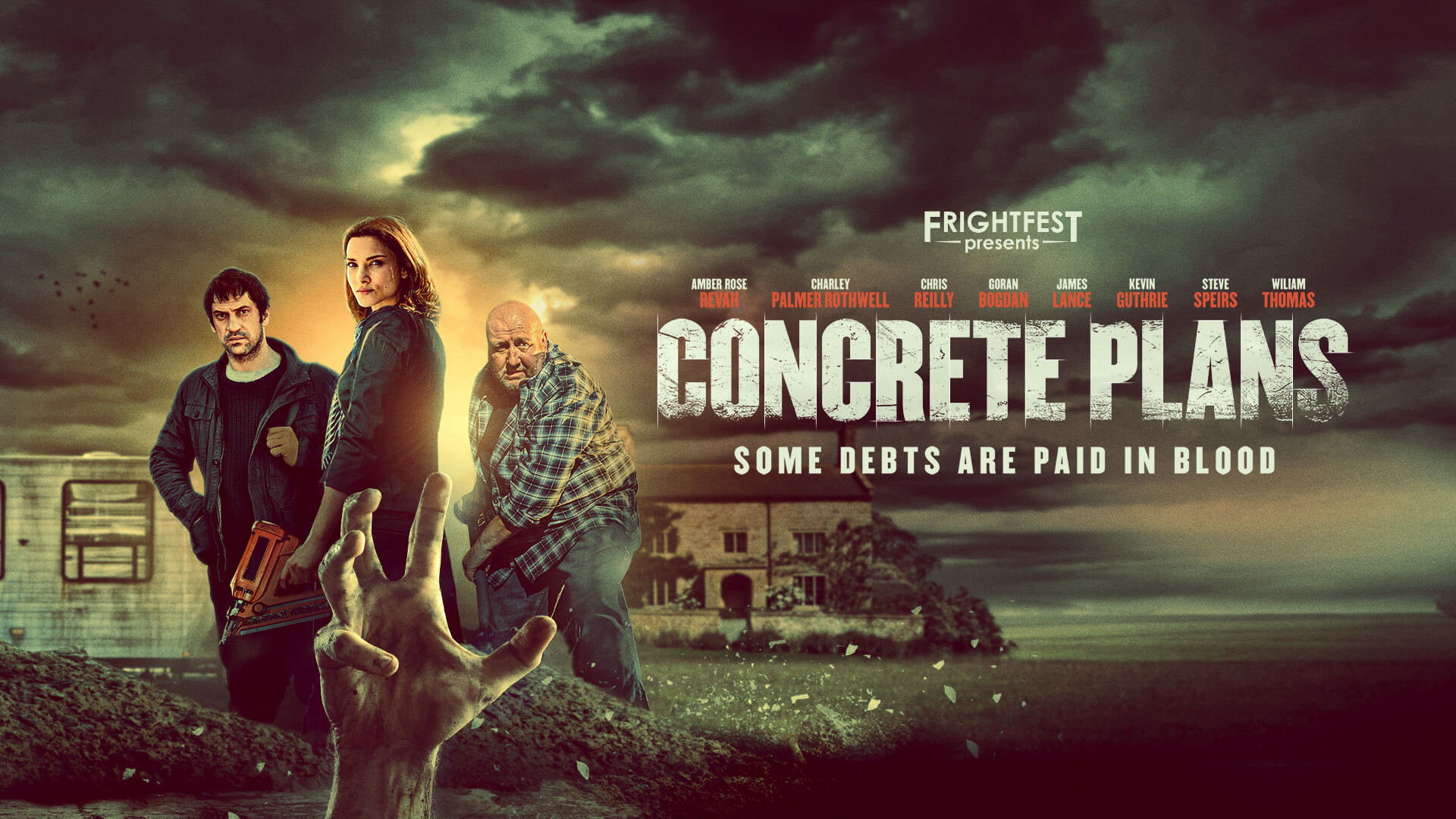
From 1989-2004, musician Paul Hartnoll was one half of the legendary electronic music duo, Orbital, along with his brother, Phil. While the pair have reunited several times in the intervening years, since that time, Paul Hartnoll has released a pair of solo albums – The Ideal Condition and 8:58 – and has begun scoring various films, documentaries, shorts, and even the second season of Peaky Blinders. His latest work is the score for the Welsh crime thriller, Concrete Plans, directed by Will Jewell. STARBURST’s Nick Spacek spoke with Hartnoll about his scoring work and how Orbital’s music found its way into many, many different areas of entertainment.
STARBURST: We’re curious as to how you got in contact and came to work with Will Jewell on Concrete Plans because it is a fascinating movie.
Paul Hartnoll: It came about through a mutual friend of ours – a guy called Iestyn George who used to be a music journalist that works with the Welsh tourist board, I think. He was somehow involved with some of the Welsh people involved with the funding of the film. He lives in Brighton and he bumped into me and said, “Do you think you’d be interested in doing a score? A local Brighton guy’s working on a film and I think you’d be a great person to score it,” and I said, “Yeah, I would,” and we just went from there, really.
Will got in touch at one point. I think it was a good year or so after we got in touch, before the film even got made, but we just kept in touch. We’d go meet up for coffee and that kind of thing and discuss what was going on and just kept in touch. So often, with lower-budget films, so much of it’s spent trying to get the funding together and that kind of thing but I just hung in there, patiently, and waited for it to happen. Lo and behold, it did – which was great.
We always find it fascinating when composers come on before a film has even started lensing anything because it seems like it allows you to start a little more ephemerally in that you get to read the script early on?
Yeah, you get to think about it. It’s kind of there in your head so, when you do finally start, you hit the ground running because you’ve already got an idea. Sometimes, you might have built a few sort of themes or ideas in the background that you may or may not play to the director, but you can build it up like that.
I’m trying to think if I had started kind of collecting sounds and things like that with this one – just little bits and pieces that I thought, “Oh, if we get a moment that that’s like this that this kind of sound will work well,” and just kind of thinking it through a little bit.
How did it change once you saw how it looked and it came out like on-screen?
I don’t know if it did change that much because I knew Will was quite keen for some kind of guitar element, which I was really happy to do. I’m not much of a guitar player, but I do like guitar-led scores, which are quite unusual and quite different because, normally, it’s keyboard players writing scores.
For me, it was that I like a lot of folk music and that kind of thing and so I was thinking things like guitars and flute-like sounds to try to capture an element of the countryside – of the remoteness and that folksy feel that’s quite comforting around all the sort of bloodshed and horror that goes on – just to bed in with the landscape.
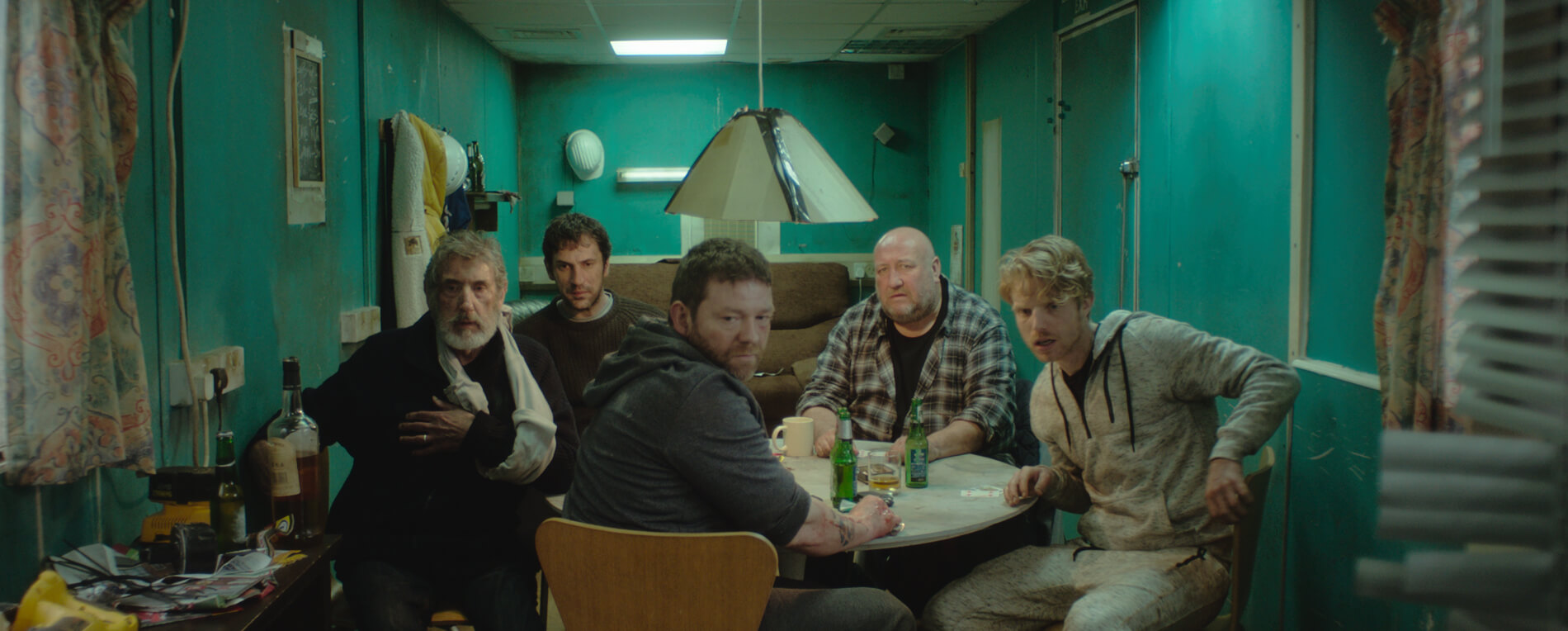
One of the interesting things about Concrete Plans is that it’s set in in the countryside and it has a working man, physical labour feel going on to it and yet, it gets progressively more violent, which seems to stand in stark contrast to the imagery that’s going on. Were you trying to not lean into the more physical aspects of it, and more the visual ones?
I can’t say I thought about it in that kind of way. I just watch it and I tend to react to scenes and films when I’m writing. It’s just a gut feeling: “Oh, this is the right thing. Oh, that’s the right thing.” It just sort of happens but I find also the idea is leapfrogged. Generally, I work from beginning to end so, by the time you’re halfway through, you’ve got a palette and a set of sounds that are working.
In this film, the whole atmosphere changes halfway through so then, you’ve got your palette, so you try to turn that on its head as you add new colours and sounds to it, to develop the horror aspect and the frightening, nasty stuff while still trying to keep and retain aspects of the earlier parts of your storytelling. You keep plucking bits out of it and use it. I don’t know if that answers your question, but that’s how it worked for me!
How do you approach a feature versus a short subject or television show?
That’s an interesting point, but I’m not sure because each job feels different. Having only ever done one six-part series – scoring Peaky Blinders – with six hours of scoring, that’s much more of a marathon and it feels like it’s a funny one because I would imagine a lot of the time you fall back on repeated themes and that kind of thing but we had quite a good visionary director on Peaky Blinders and he kept saying, “No, I’m bored of that. I don’t want to hear that again. I want to hear something new,” and he kept everybody on their toes developing themes and that kind of thing as it went along, which meant you could use repeated themes, but you had to kind of disguise it a bit from him and it was a bit of a game of cat-and-mouse.
With something like Concrete Plans, you’re just definitely seeing the whole thing in one go and it feels more akin to sort of scoring a long episode of a TV show. I mean, each TV show – even though you’ve got six episodes and you are thinking ahead, you have to really stay in the moment of the episode you’re on and then, hopefully, that will spin out into the next one.
With really short things – I just did a thing called One Last Dance and that’s essentially one, two pieces of music. It’s because it just feels like one theme is all it needs and I just extrapolated from it. It’s got a central kind of piece of music and then everything else is a ghost of that, spreading out in either direction, and that was for me was the concept: that’s the solid piece of music. Everything else needed to be a ghosty kind of thing because it’s a ghosty kind of film.
With Concrete Plans, it starts gentle and just gets brutal in the middle. How do you reconcile those two halves?
I know the film isn’t a folk horror film but, because of the countryside aspect, and because of my love of The Wicker Man and folk horror things, I tried to treat it with a little aspect of that, to give the landscape some air of mystery to it all. That also means when you get into the horror stuff, you can still conjure the landscape with your folk horror atmosphere and ideas. That’s how I thought of it. As long as it works, I don’t mind how it translates from the screen, but that’s the starting point in my head.
It’s quite interesting that you mentioned folk horror because the really notable films in that subgenre, like The Wicker Man or TheBlood on Satan’s Claw have this element wherein the group drives every individual into this horrible thing that happens at the end of the film, and that’s very definitely Concrete Plans.
Well, yeah – they had to make a blood sacrifice in the name of money. I didn’t even think of that at the time.
Your work with Orbital has been featured in many, many films and television programs and, as Orbital, you and your brother have reworked two very notable themes. You reworked the theme for The Saint for that film in 1997 and you also reworked the theme for Doctor Who. What was it like, tackling these very well-known pieces of music: did working on those particular elements of score affect what you did when you started scoring things yourself?
I don’t think they did really affect how I score things because they’re themes. They’re very different. That Doctor Who was easy for me because it’s like, “Wouldn’t it be fun to do a sort of rave-y, dance music version of the Doctor Who theme tune?” and change its time signature, so that it’s absolutely a different thing but yet, really familiar and so, giving it a different swagger and making it very much almost like a happy hardcore version of the track? It was just great fun.
The Saint: that was a funny one because they said, “Oh, we don’t want the theme tune. We don’t like it – we don’t think it’s cool,” so that was the challenge. It was like, “Okay, I’ve got to make it cool,” so I thought, “Well, what’s cool from that era?” It’s people like Lalo Schiffrin, so we’ve got to lay low, shifting it up a bit. It’s not that far from the original, but then it’s like, “If you’re going to go for that, what else is it you could do?” and it was trying to channel that whole kind of drum and bass kind of thing that was going on at the time, as well – which I loved – so it’s got elements of those kind of things, while trying to keep true to a version of the same theme tune that, to this day I don’t know (and I don’t really care, actually) if it was the original version. It was a version that I liked that I had on a record that I’d had since I was a kid and so that was the one that I imitated and tried to do my own way.
To be fair, tackling those two tracks was so much fun because the hard work was done. Someone had already written the fantastic tunes so, all I had to do was produce it and re-purpose it for what people wanted. In terms of The Saint, it was to give a bunch of Hollywood people the feeling that it was cool again and for Doctor Who, it was to revive the Doctor Who theme tune, which was dead in the water at that time.
In the mid-’90s, everyone had forgotten Doctor Who. It finished and it was a thing of the past. No one knew it was coming back with a vengeance or anything like that. It was like, “I don’t want the Doctor Who theme tune to finish!” I want to play it – it’s trippy, it’s about space and time, and what a great way to end a rave. That was my reckoning for that, so that was good fun, really.
I ask every musician who has had their music featured in in television and in film what it’s like having hearing your music in a visual context, removed from how you originally put it together?
The track Halcyon + On + On has ended three different films, right, and it started another one. How about that? Do you know what I mean? You think it was this great ending piece and all of a sudden, someone goes and puts it at the start of a film and it works there, as well. For me, it’s a collaborative sort of thing and it’s really interesting to see what a director does with it when they decide, “I want this piece of music and I want it here in my film,” and you watch it and you go, “Wow! I wouldn’t have thought of that,” or you think, “Oh, that works. That’s really nice.”
It’s an interesting collaboration because it’s once-removed. You’re not actually involved in the collaborative process: someone else is doing it out of time. You’ve done your bit and then they’re taking it, running with it. That’s more like a relay race of collaboration, rather than actual working with someone. I always find it fascinating and interesting. Nine times out of ten, it works really well because, if a director has decided they want your piece of music rather than a piece of score, they’ve made their mind up. They’ve got a very strong idea and that’s that it’s going to work well.
Because Orbital and you, solo, have played so many raves and festivals and things like that, we have this idea that composing is similar to responding to the crowd, wherein you’re making music that responds to a thing, as opposed to working just in a vacuum.
Yeah, absolutely. When you work on a film it could be akin to that, but the intention is already set. The thing that is there has happened and it’s your job to then say what hasn’t been said by the actors or the visual content. For example, if it needs to be scary, it might not be scary on-screen and nobody might be saying anything so, it’s your job to surround the audience with some scary chords that conjure up that feeling or to make people cry. How many times have you cried in a film, where if you didn’t have the music, you wouldn’t have cried?
It’s the tipping point: the music just shoved you over the edge beyond where the actor and the director can. It’s just that little extra push and it’s a weird thing. Why should it even work? Why should music be playing in the background of some drama? It’s a really odd thing that comes from the silent movie era and it’s still there and we love it and it’s become a cultural composite that’s happened. I think it was Bernard Herrmann that said it’s the job of the composer to say what the actors can’t and that says it all, really.
Concrete Plans is out on digital release from Signature Entertainment from November 23rd. Read our review here.