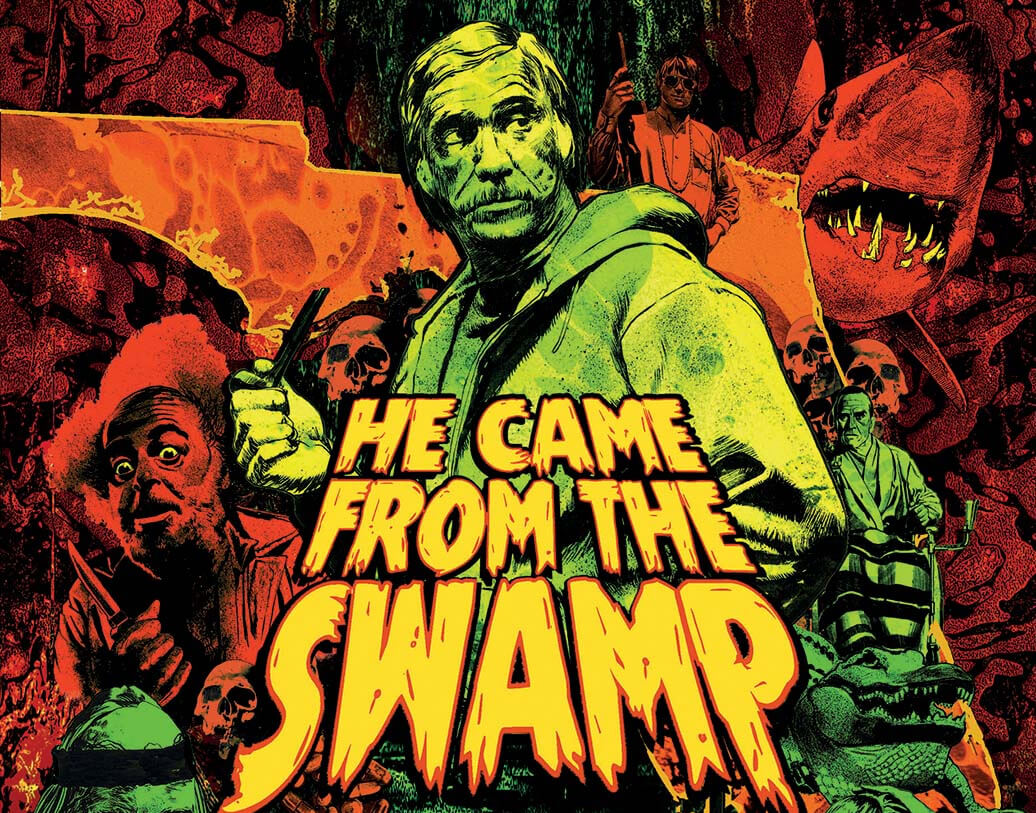
STARBURST caught up with exploitation legend William Grefé to talk about his career, which is celebrated with the Arrow Video release He Came From the Swamp: The William Grefé Collection…
STARBURST: Did you ever think that people would still be enjoying your films 50 years plus later?
William Grefé: No, not really. When we made those films, they went in the local drive-ins. The sad part about all of this is the laboratories threw away a lot of stuff. For example, I met someone at one of the film festivals up in New York, he called me about three four years later, he said, ‘Listen, I was going by the LOX laboratory and they were throwing all these big cans in a dumpster. I crawled in and I found The Naked Zoo – which is the Rita Hayworth movie – are you interested?’ I said sure! He said, ‘I don’t want anything, just pay the freight’. So I sent him a check for $70, and that’s the way I got The Naked Zoo, which is insane. What really makes me sad as well, I did Impulse – that William Shatner movie. They threw the negative away. So we are in the process of trying to put together the best existing prints. It’s so interesting now that Arrow is putting out all the seven films on Blu-ray. I mean this is a big unbelievable that people are getting in touch all the world.
How did you get started in the film industry?
Well, ever since I was a kid, I love the movies. When I was like 11 years old, I wrote a play. I was in grammar school, and I wrote a script and we performed at the school. My script, which I directed at 11 years old! Anyway, I used to go up to New York to visit my aunt in Long Island. And back then, on 42nd Street, they had maybe a dozen theatres that played three feature films for 25 cents. I would just go over in the morning and I lived in the theatres. After high school, I did Summer Stock in Woodstock, New York, which later became quite the famous Cape Town Woodstock. I was in the Summer Stock at The Maverick Theatre with a guy named Lee Marvin. Anyway, I guess I’d seen too many John Wayne movies and I joined up for the Korean War. And when I got out, I got married.
After I got married, I said boy this acting is not too secure. My wife got pregnant, so I joined the Miami fire department and I was a fireman. When I was at the fire department, you have a lot of spare time because we worked 24 hours on and 48 off. So I ended up writing screenplays. And I wrote probably five or six screenplays – I had the rejection slips to prove I wrote them anyway! I finally sold one called The Checkered Flag, which was about automobile racing up at Sebring. I took a 30-day vacation from the fire department, and they bought me on set for rewrites. The director ended up having a nervous breakdown the first day. All of the investors panicked. Back then in Florida, there were absolutely no directors. The film business there was in its infancy. So they said we got to get a director from California. The cameraman said ‘look, by the time the guy gets here, the races will be over – what the hell, make the writer the director’. So they drafted me at one in the morning to direct the movie. I knew zilch about the mechanics of it, so the cameraman sort of carried me through. Fortunately, the movie made money.
You were pretty much the person who invented the Miami film scene…
Well, Florida, actually, yeah. Orlando was nothing because Disney wasn’t there at that time. When Castro took over Cuba, all of the Cuban film community fled Havana and they came to Miami. My sister spoke fluent Spanish, so I found all these Spanish filmmakers and Julio Chávez, who became my director of photography – he probably did at least 10 of my films. There was only one mixing facility in Florida. So I went to them and told them I have a limited budget. The place closed at five o’clock, so I asked if I could mix my film at night. And so the guy said I can give you my mixer, Henry Lopez, who was the office boy. Henry is like 18 years old. So we would stay up all night till nine in the morning. It took two weeks to mix the film.
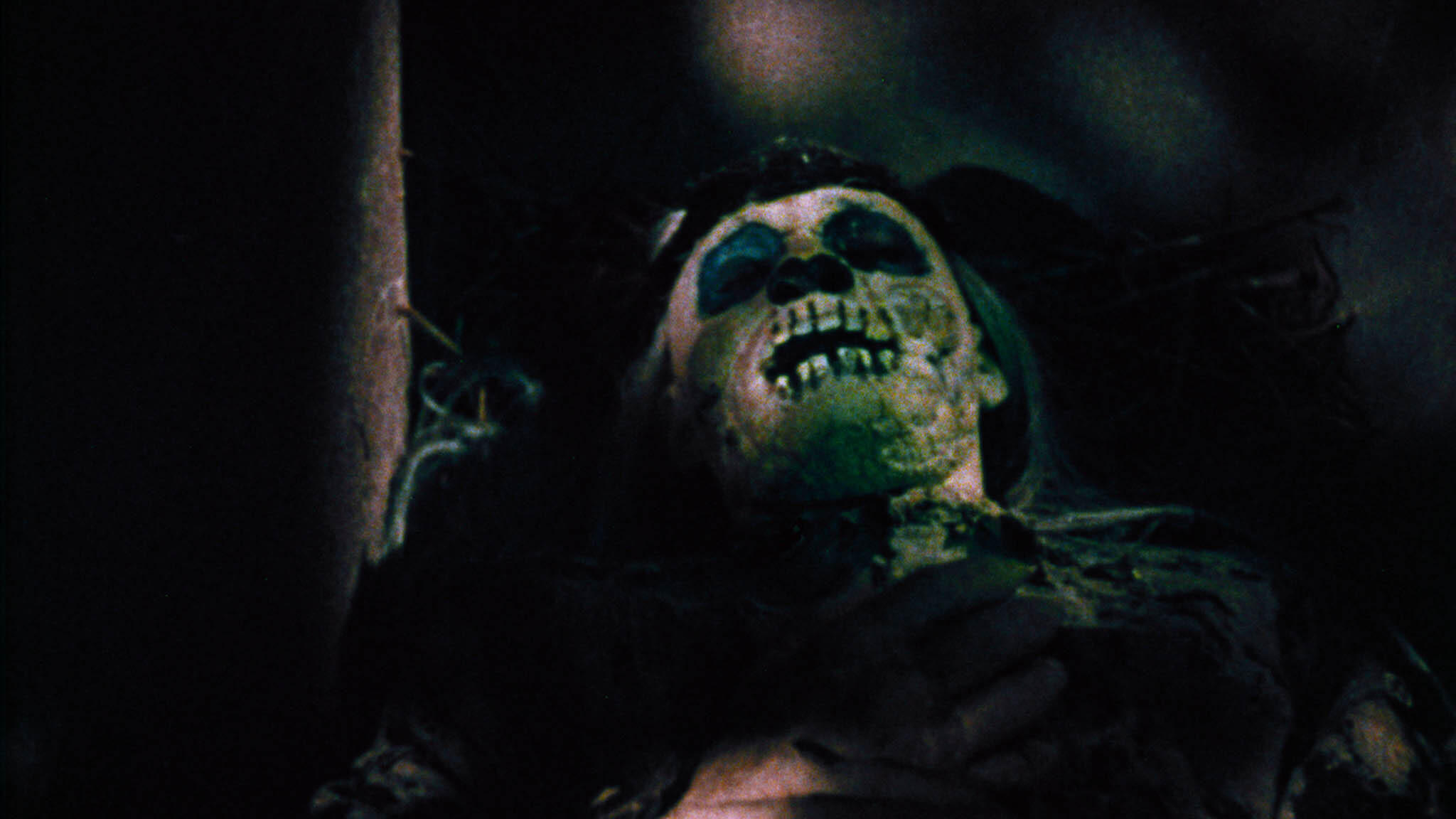
Was it true that you made Death Curse of Tartu in seven days?
Yeah, the way that came about was I had directed Sting of Death, and back then, all of the various drive-ins always wanted to horror movies as a package. The distributor had a stake in the film, but he couldn’t find another horror movie. So he said the magic word – if I could get a horror movie, he would finance it. This was like December; back then, making movies took forever. He said ‘the only monkey I’ll put on your back is I’ve got to have the movie April 15th’, because that’s when all the drive in theatres open up after the winter. I wasn’t about to turn the deal down, so I said no problem. I had to start shooting immediately, so I stayed up all night, and I wrote Death Curse of Tartu in one day. I shot the film in seven days, and of all the films I’ve made, Death Curse of Tartu will not die, it keeps coming back to life.
You also followed the lead of Willard, the famous rat film, by making Stanley, how did that come about?
I had become president of Ivan Tors Studio, which was the studio that did Flipper and Gentle Ben, and all those series. So I was the executive in charge but I loved independence, so in my contract, I was allowed to make one film independently from the studio, but I had to give them first crack. So I was out in Los Angeles on their business, and I pick up Variety and it says ‘Willard – biggest grossing independent film’. And I thought, boy, animal horror movies – that’s the next trend. You see, if you jump on a bandwagon, you’ve got to be the second guy out, maybe the third, and you’ll make money. If you’re a fifth or sixth guy, you won’t make money. So, I don’t know what I ate that night, but I went to sleep and I dreamt Stanley. I went by Crown International, a studio that had handled one of my films, The Wild Rebels. The distributor was an old crusty guy named Red Jacobs, and so I said I’ve got a great idea for a movie. ‘Okay, leave me the screenplay, I’ll read it over the weekend’. I said I don’t have a screenplay. He said, ‘Well, give me the synopsis then’. I don’t have a synopsis. ‘Get the hell out of my office!’ [Laughs] He smoked these big Havana cigars that were about a foot long and I reached out and grabbed one. ‘Put that back!’ I said, look, calm down, bring in Mark Tenser – who was the vice president – and Paul Joseph – publicity – and let me tell you the story. I told him the story. And afterwards he said, ‘how much will you make this movie for?’ I said $125,000, we shook on it and when you shook hands with him, it was better than any written contract. He said ‘I’m only gonna put one monkey on your back, Grefé, I’ve got to have it April 15th’. [Laughs]
Anyway, I was taking the red eye back from Los Angeles to Miami. So I thought, ‘What can I do? I’ve got to start shooting next week. And I thought, Gary Crutcher, the writer. Gary was a pill-popper, he was a druggie with uppers and downers, so I told him to meet me at LA airport. So I sat down with a yellow pad and I wrote down all the characters and the story. This was a Friday night, and I said, ‘Gary, I got to have a screenplay Monday morning in Miami’. Back then, there were no faxes or emails, so Sunday night, he had to put it on the red eye plane to pick it up at the airport. So Gary just popped the pill and rolled it like a day and a half. That’s the way Stanley came about. The last thing on Stanley, we opened in Los Angeles, against the most expensive, biggest film Hollywood had that year, called The Godfather. The Godfather in Los Angeles took $181 thousand. Stanley pulls $175 thousand. We’re only $6000 under The Godfather.
That’s something to be very proud of! You actually had the jump on Steven Spielberg with Mako: Jaws of Death, because you had already written that, is that right?
Yeah, but I couldn’t get arrested! Nobody was interested. Then, when Universal came out with Jaws, every major magazine, Time Magazine, Life, everything was shark, shark, shark. So my phone rang off the hook with distributors and people that I’d shown the story to them. So I wasn’t stealing Jaws, I rode on the publicity of Jaws.
He Came From the Swamp: The William Grefé Collection is out now from Arrow Video.