THE SPARKS BROTHERS

sparks brothers

What do you get when Edgar Wright – the man behind some of the most iconic movies of the last decade or so – gets together with the cult band Sparks to document their career? The answer simply is a stunning, revelatory film that appeals to both the group’s fan base and acts as an introduction to the band you likely thought a one-hit-wonder. If you hear the hypnotising keyboard intro to This Town Ain’t Big Enough for Both of Us and wonder ‘who sung that?’, then now’s your chance to find out everything.

Told by the Mael brothers – Ron (the stolid-looking synth player) and Russell (the flamboyant, falsetto vocalist) – themselves, the film is both deeply personal and inviting. The band, as are all the talking head commentators, are shot in black in white, which contrasts wonderfully with the often colourful archive footage. The other interviewees range from those who worked with the band, were in the band at one point, and high profile fans. The artists giving kudos are as diverse as Beck, Patten Oswald, Neil Gaiman, and former Sex Pistols guitarist Steve Jones (who is the first to remark that Ron looked like “Hitler playing the keyboard”). Anecdotes are accompanied by simple animations and the movie is bookended with cool stop-motion recreations of the brothers.

The Sparks story is as full of highs and lows as any band, with the exception that no matter how bad things got for them in the fickle pop world, they always came back fighting with new material and a fresher sound, even if that sound was several years too early to make any impact. With 25 albums, the band don’t rely on their heritage to keep their audience engaged. Even this year, they have another film to be released, Annette, directed by Leos Carax (Holy Motors) and written by Ron and Russell (who, naturally, also provide the soundtrack). It’s this constant forward momentum that makes the band such a rewarding listen, and this is clearly represented in Wright’s documentary. The director is undoubtedly a fan, but he makes sure the movie has more than enough visual flourishes to keep non-Sparks fans involved.

If you weren’t a Sparks fan before spending well over two hours with the Maels, their history, and musical output, then we guarantee you will be afterwards. Like 2018’s Being Frank: The Chris Sievey Story, The Sparks Brothers paints a portrait of cult performers and makes their story accessible and completely engaging.

The Sparks Brothers has its UK premiere at Sundance Film Festival: London on July 29th and is in cinemas everywhere on July 30th. 

SHE DIES TOMORROW

dies tomorrow

Genre fans will already be familiar with Amy Seimetz through her performances in films like Upstream Color, Pet Sematary, and Alien: Covenant. Here, as the writer and director of She Dies Tomorrow, Seimetz demonstrates what a singular talent she is behind the camera too.

A young woman, Amy, becomes convinced that she will die tomorrow. She tells her friend Jane, who dismisses the notion, suggesting she’s had a relapse back into alcoholism. But later on, Jane too becomes convinced that she will also die tomorrow. As both characters react in different ways to this certainly, they pass on the contagion to those around them who also react in different ways.

Inspired by the different ways that people reacted to Amy Seimetz’s discussions around her own anxieties, She Dies Tomorrow is a contagion film that sees an idea become virulent. We don’t know the why, the how or the what of the spread of the infection – Seimetz is more interested in examining its impact to go into logistics – leaving us with more questions than answers, something which great science fiction often aims for.

And whilst She Dies Tomorrow isn’t a great film, it’s a very good one. It spends a lot of time with the infected before we get any kind of insight into their pasts and, in a pivotal flashback, Amy is seen telling her ex about regrets she’s had. It’s a moment that lets us, the audience, in on what Seimetz is really doing. If you knew you were dying tomorrow, wouldn’t you want to, well, live?

And so for these people whose lives are in stasis, who regret not having lived, who go through the motions of dysfunctional relationships, addictions, meaningless dinner party conversations, infection becomes a kind of cure, releasing them from their unsatisfying lives.

It’s a clever idea, one which isn’t resolved but which is explored enough to keep us thinking long after the film is over. That’s thanks in part to a terrific cast, in particular a superb Jane Adams, and direction that is certain of itself, unafraid to throw in horror, humour, pathos and mystery. It’s a little Cronenberg at times, in his earlier years anyway, and is certainly taking a look at how society deals with mental illness, giving us an insight into the ambition Seimetz carries.

Remarkably made before the pandemic, the experiences of the last 18 months give the film an added pertinence.

She Dies Tomorrow is available on Digital in the UK.

OCEAN’S ELEVEN

oceans eleven

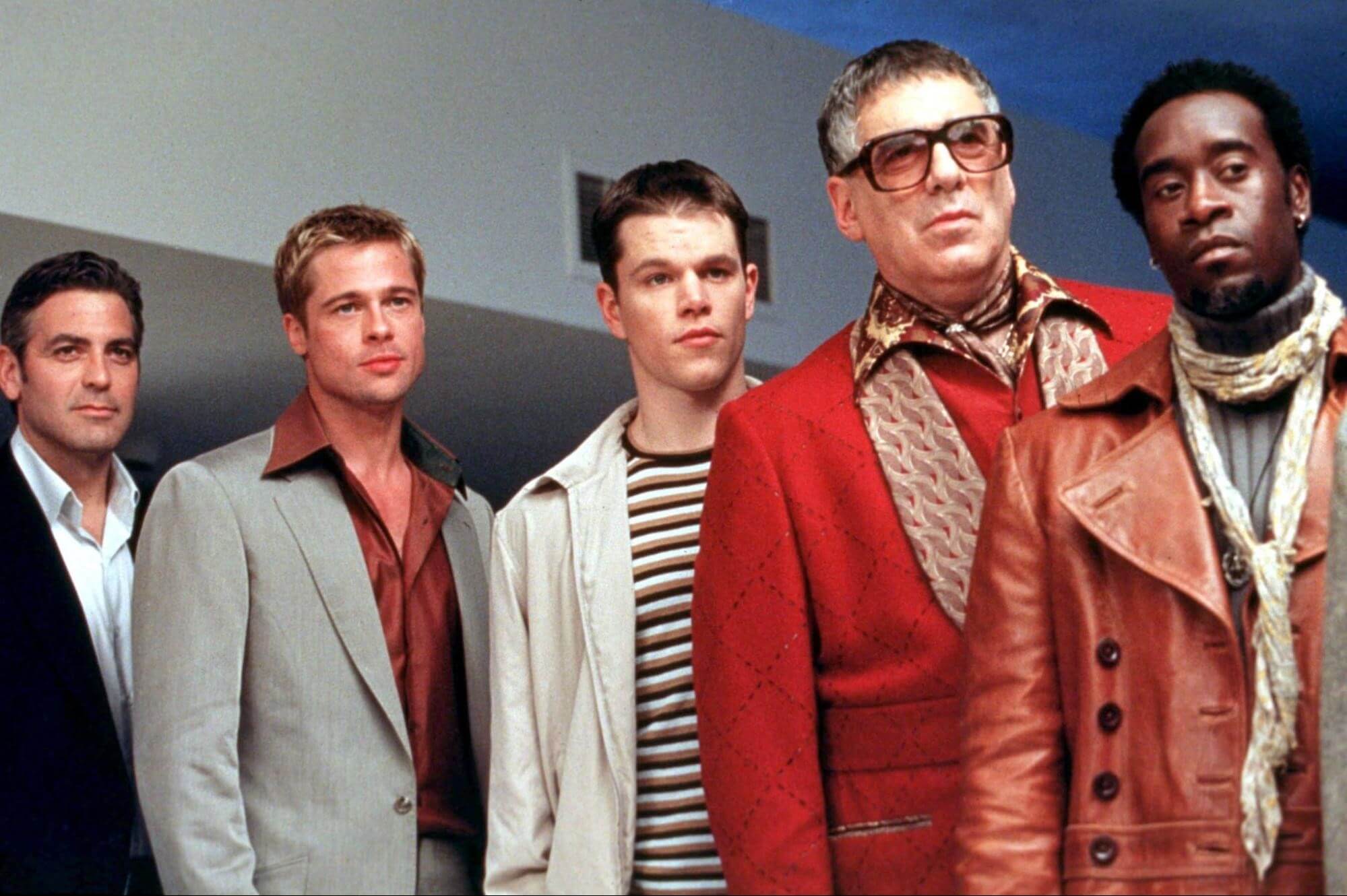
If you’re also passionate about movies with plot twists and big hits themed, then you’ve certainly seen Ocean’s Eleven. It’s one of the most popular movies recorded at the Bellagio casino in Las Vegas, located at the MGM resort. If you want to visit this iconic casino, then their online casino section, BetMGM, is worth a try as it reflects the physical casino, where the movie was recorded. If you’re still not sure whether to head over to BetMGM, read their positive review by OLBG.com.

oceans eleven

Danny Ocean is a man of action. Just 24 hours after leaving the New Jersey penitentiary, he’s already putting his latest plan into practice: to rob three Las Vegas casinos in just one night, in the midst of staging a world heavyweight title fight. To do so, Ocean brings together a team of 10 experts to help you with your plan, always following three basic rules: don’t hurt anyone, don’t steal someone who doesn’t really deserve it, and follow the plan as if you had nothing to lose.

The film is a remake of one of the main films produced by the Rat Pack in the ’60s. The Pack was an extremely cool authors/entertainers club, founded by Humprey Bogard, but taken to its ultimate consequences by Frank Sinatra, Dean Martin, Sammy Davis Jr., Peter Lawford, and John Bishop. In fact, the original from 1960 is quite different from this one. Soderbergh’s film only retains the title, the protagonist’s name and the background of the story.

Therefore, we can say that the film was remade, not re-shot. In the story, Danny Ocean (George Clooney) comes out of prison with a plan that is both suicidal and ingenious: to rob three of the main casinos in Las Vegas. To help carry out the theft, Clooney meets partner Dusty Ryan (Brad Pitt), who makes a living teaching young actors to behave like real cheaters at a poker table.

Together, the duo summons the remaining nine and outlines the plan for the robbery. Behind all this setup, Ocean is also willing to retrieve his wife, Tess (Julia Roberts), who happens to be the girlfriend of Terry Benedict, the owner of the three casinos targeted by the robbery. The gang chooses when all attention is turned to another event, and the vault is complete to make the plan work. That said, the blow will be during the fight of champion boxer Lennox Lewis. And as is mandatory on a fight night, the casino’s safe must have enough cash to guarantee every penny wagered in its hall. By Ocean’s accounts, at least $150 million.

Veteran Carl Reiner is the perfect embodiment of an old pickaxe, starring in some of the best scenes in the film. Matt Damon is also doing very well as Linus Caldwell, a talented and brash rookie who wants to prove to his hack dad’s old pals that he can measure up to the old man. Don Cheadle, Casey Affleck, Shaobo Qin, Bernie Mac and Scott Caan complete the team. A team worthy of the ’00s, when smartness, elegance and dissimulation win every single thing. It recovers the subtlety of crime, from a time where the brain reigned, not the bloodbath and carnage that surround the main bandits movies of recent years, from the Quentin Tarantino school (at the time of “Pulp Fiction”, the world was dominated by shrill and nervous guitars, which called for a certain amount of rawness).

But the trump card of “Eleven Men and a Secret” is in the Clooney/Pitt table. The interaction of the two is symmetrical. Translating into the Breton sport: a fit worthy of a Pelé/Garrincha or Edílson/Luizão. The dialogues between the two seem pure improvisation, the feeling is as if the character knows what the other is thinking. Congratulations for a smart, objective and streamlined script. Soderbergh also excels at directing, mixing quick cuts with long shots, making the film much more linear than American cinema is used to..

After watching the original Oceans Eleven, Clooney had a great idea but couldn’t translate it on screen. Willing to change that, he bought the rights to the film for his production company, Section Eight, which he maintains in partnership with Soderbergh. After convincing the director, Clooney used all his lips to cast a dream cast. Rumours say, during the ninety days of shooting in Las Vegas, right after each day of shooting, everyone got together to drink and play basketball – including Julia Roberts.


BLOOD RED SKY

blood red sky

A bunch of terrorists hijack a plane bound for New York. Unbeknownst to them, there’s a vampire on board. As irresistible high concepts go, this one’s right up there with – possibly even higher than – the unforgettable Snakes on a Plane. Running for about two hours, Blood Red Sky is slightly too long for its own good but this German production (with a smattering of English-speaking cast and sequences) is a rollickingly good no-holds-barred film that artfully marries together action movie and horror movie tropes and does exactly what you want – nothing less and nothing more – from a film about terrorists hi-jacking a plane with a vampire on board.

We open at a remote airfield in Scotland where the airport supervisor (Graham McTavish) watches as an unscheduled passenger liner lands on the runway. There’s no sign of life until a young boy emerges from the passenger hold and a desperate-looking man appears in the cockpit window. The film now flashes back a few hours where Nadja (Peri Baumeister), apparently suffering from leukaemia and on her way to visit a doctor in  New York who, she hopes, can provide treatment that will relieve her condition, appears over-protective of her young son Elias (Carl Anton Koch) as he innocently befriends fellow traveller Farid (Kais Setti) in the airport waiting area. Not long after the plane takes off a group of men dispose of the three air marshalls on board and their burly leader Berg (Prison Break’s Dominic Purcell) informs the passengers that he and his gang are now in control of the plane, the black box has been sabotaged and the plane is being set on a course towards London where they will carry out a 9/11-like atrocity… but not before vacating the plane themselves. Elias slips away from his mother and, in following him, Nadia is brutally shot down and left for dead. But she isn’t dead, of course. She’s soon awake again and she has a lust for blood that can’t be satiated by the animals down in the cargo bay. Despite turning into a wild, pinched-featured monster, Nadia’s maternal instincts are still very much alive and she sets off on a spree to save her son whilst inadvertently putting the lives of everyone on the plane in even greater danger.

Netflix ‘original movies’ have a tendency to be slightly anaemic affairs – you’ll pardon the pun, of course? – but Blood Red Sky is a big, blood-drenched extravaganza packed with well-choreographed action sequences, a genuinely scary-looking vampire and a sense of tension and terror that rarely lets up once its undead cat is out of the bag and the carnage and the blood-letting begins. Well-placed flashbacks explain Nadja’s tragic backstory and, for once, these are flashbacks that add welcome colour, depth, and lost humanity to the story rather than distract from the action underway on the plane.

The star of this particular gory show is Baumeister as the cursed Nadja. Once transformed, she’s genuinely animalistic, a monster struggling to hang on to some vestiges of her humanity for the sake of her son and she will do anything in her considerable power to protect him. In doing so, she unleashes an even greater terror as, in one useful twist on accepted vampire lore, her condition is transmitted almost instantly to her victims so before long the plane is awash with terrorists-turned-vampire and the terrified passengers have more to worry about than an unexpected crash landing somewhere in London.

Blood Red Sky is a welcome blood-red treat, a proper horrific vampire story whose supernatural protagonists are more in line with the savage beasts of 30 Day of Night than the lovey-dovey saps of the Twilight saga. Strap yourself in; Blood Red Sky is bloody good fun and it successfully puts vampires back on the horror map where they belong.

Blood Red Sky is streaming now on Netflix

OLD

old

Old represents a case of one step forward and two steps back for M. Night Shyamalan, now firmly established as one of Hollywood’s most frustratingly inconsistent directors. Split and Glass went some way to successfully rehabilitating his fragile reputation after a handful of howlers – Lady in the Water and The Last Airbender, in particular – but Old wastes an intriguing concept thanks to Shyamalan’s haphazard grasp of character development and motivation and a preponderance of clunky, ham-fisted dialogue allied with some frankly bizarre visuals more likely to elicit sniggers of derision from the audience rather than gasps of horror and revulsion.

Old is based on the acclaimed Swiss graphic novel Sandcastle by Pierre Oscar Levy and Frederik Peeters and we can only assume that the damage was done by Shyamalan in its transition to the big screen. It’s an eerie and pleasingly solid idea. A  group of tourists staying at a too-good-to-be-true tropical resort visit a beautiful, secluded beach recommended by the resort’s oleaginous manager. One member of each group, intriguingly, is suffering from a troublesome medical condition.  Already on the beach is a famous rapper known as Mid-Size Sedan (I beg your pardon??), whose female partner’s body suddenly washes up on the beach. The thrown-together group become understandably distressed but they find that they can’t leave the beach, surrounded as it is by mountains and accessible only by a path in the cliff. Anyone attempting to cross through the path blacks out and finds themself back on the beach, a fate that also befalls one unfortunate who decides to climb up the cliff. Their situation quickly deteriorates when three of the children suddenly start to age and it appears that some strange and unnatural force is accelerating the effects of the passage of time. Can the group find a way off the beach or will they succumb to their own weaknesses and paranoia – and why are they being quietly observed from the top of the cliff by the resort employee who drove them by coach to the beach in the first place (played by Shyamalan himself)?

Old probably has some cogent points to make about the nature of life and how it can seem to pass by in the blink of an eye and how, at heart, we are all afraid of the ageing process and its inevitable consequences but Shyamalan fudges it all by lumbering his game cast – Rufus Sewell, Gael Garcia Bernal, Vicky Krieps, Ken Leung, and Nikki Amuka-Bird amongst them – with graceless dialogue that tumbles like timber from their lips and plot inconsistencies that will leave you scratching your head until it bleeds. No one here really talks or behaves like real, believable, or relatable people so there’s an immediate distance between them and any sympathy we might struggle to engender for their admittedly troublesome and unnerving plight. These are people being made to engage in awkward, rambling conversations by a writer who feels the need to keep has cast talking. An attempt to depict Rufus Sewell’s Charles’ schizophrenia by making him obsess over a half-remembered film starring Jack Nicholson and Marlon Brando is too obscure to properly land and the response by Prisca (Kriepps) on discovering that her six-year-old kids have suddenly become teenagers – “it must be some sort of virus” – is so ludicrous that it’s laughable. For a film centred on the ageing of the human body, Old is curiously coy in the body horror department until it decides it’s time to takes the gloves off, and one scene in particular with a character ageing to death and suffering a lifetime of broken limbs in the space of a few minutes just ends up looking comical. Then there are a handful of moments that are either extraordinarily stupid or horribly misjudged; one ad hoc medical procedure carried out on the beach is screamingly implausible and the union between two six-year-olds who are suddenly teenagers (but still mentally six-year-olds, remember) that results in an unnaturally-rapid pregnancy can’t help but feel slightly ill-advised.

Old isn’t a tragically bad Shyamalan film but it sails worryingly close to the likes of The Happening in terms of its eyebrow-raisingly idiotic dialogue and plot progression, delivering a resolution (not exactly the anticipated ’twist’ ending) that raises more questions than it offers answers. Life really is too short for films as clumsy and hokey as Old.

Old is in cinemas now. 

PETER RABBIT 2: THE RUNAWAY

peter rabbit 2

It’s fair to say that 2018’s Peter Rabbit was a crime against humanity. It was a crass, cynical attempt at modernising Beatrix Potter’s source material for the current generation while failing spectacularly at what made those books so beloved. However, it was inevitable that a sequel should arise, once again written and directed by Will Gluck, he of Easy A and Friends with Benefits fame. It’s fair to say that this reviewer was not looking forward to it at all and, unsurprisingly, expected the absolute worst. So it comes as a complete shock to say that Peter Rabbit 2: The Runaway is not just an improvement, but an enjoyably decent one at that.

What makes this a superior film is that Gluck appears to have listened to the criticism that the first film received and tried to address this in any way possible, and, for the most part, he succeeds. In the first film, Peter came across as arrogant, irritating, mean-spirited, and just plain bad. So the film’s central plot sees Peter going on a character journey, learning what it means to be selfless after discovering that he is being marketed as the ‘bad seed’. Seeing his journey of feeling hurt by this, then falling in with the wrong crowd, and finally learning from his mistakes was a very welcome development. The subplot involves Rose Byrne’s Bea getting involved with a greedy, big-name publisher, who’s attempting to update her books by having the characters wear T-shirts and sending them to outer space. It’s here where the meta-gags come into play, with Bea even saying that she’d be spinning in her grave seeing her work “adapted into some sassy hipfest purely for commercial gain, probably by an American”. There’s even a nudge-nudge-wink-wink moment from Benjamin Rabbit breaking the fourth wall immediately after that! Rose Byrne and Domhnall Gleeson (who was one of the few good things about the first film) are a winning combination who still provide plenty of charm whenever they appear. David Oyelowo is also hugely entertaining as the greedy business publisher.

That’s not to say the film’s perfect as there are still issues to be found. The first half of the film, while decent, lacks pace and momentum until the resolution, which feels a bit rushed as it scrambles to resolve all the situations as quickly as possible. James Corden is still miscast as the titular rabbit, although there is a good gag about whether his voice is annoying or not. Peter Rabbit 2 is still not faithful enough to Beatrix Potter and doesn’t reach the heights of the Paddington movies. However, it’s more fun than expected, and it’s abundantly clear that Will Gluck is trying to atone for past mistakes, which is something to be commended. Who knows? Maybe the teased third film will be a masterpiece!

Peter Rabbit 2: The Runaway is in cinemas and premium VOD now. A 4K/Blu-ray/DVD/digital release follows on August 2nd

THE FOREVER PURGE

forever purge

The purge is back, both on the streets of America and the big screen. As the franchise continues it sadly becomes even more a case of art imitating life.

With the New Founding Fathers back in control of the country, the annual purge recommences. Twelve hours in which everything is legal, including murder. In fact, mostly murder. The action focuses on a ranch town not too far from the Mexican border. Working as a cowboy, illegal immigrant Juan (Tenoch Huerta) rubs the boss’ son, Dylan (Josh Lucas), up the wrong way by besting him with a rowdy horse. When the purge comes around, the workers are given a bonus to help keep them safe, something a few of the farmhands take as a slight to their ‘poor’ status. The 12-hour killing spree passes without too much incident for our lead characters. That is until the following day when they discover there’s a groundswell movement that has decided the purge should last forever and are bent on using their self-imposed ‘rights’ to do away with anyone who happens to be of a different colour. Dylan – a character you’d have put money on being on the side of the renegade purge groups – has more than a few reasons to accept and follow Juan and his wife Adela (Ana de la Reguera) and change his attitudes.

While the film series has always been taking a broad swipe at American gun culture and values, The Forever Purge is even more potent following the events of January 6th. It’s now very easy to see how fast the country can devolve into all-out anarchy and the failure of Marshall Law to control the bloodthirsty masses. Add the racial incentive and the premise errs further towards troubling ground, it runs the risk of appealing to the audience it should be satirising.

This entry into the series continues to invoke fear in a ‘what if…?’ kind of way as it’s very easy to see the world (America especially but not exclusively) heading down the terrible path the films and TV series have gone. It’s still a white-knuckle thrill ride, but the sentiment is a little too close to home to be thought-free entertainment. Which is good, as violence should provoke thought. The reversal of fortune angle is predictable but handled well and, for once, we’re hoping the bad guys don’t win.

Yes, we’ve seen it all before, but sadly, it was on the news.

The Forever Purge is in cinemas now.

SPACE JAM: A NEW LEGACY

space jam legacy

Ever get the feeling of déjà vu? Well you can be forgiven with this new sequel/remake/rehash of the 1996 Warner Bros hit that featured basketball legend Michael Jordan teaming up with the company’s cartoon characters to battle aliens on the court. A New Legacy is more of the same, only with current b-ball star LaBron James in the spotlight.

The story’s given a modern twist, too, as James and the ‘toons face a side put together by Don Cheadle’s Al G. Rhythm (geddit?) a rouge artificial intelligence that lives in the ‘serververse’, the vast computer system put together at Warners so they can come up with the best ideas for movies. Well, there’s nothing like being self-aware, as this manipulative piece of software is set to take over from the suits when it comes to greenlighting projects. Rhythm is put out when James refuses to sign up to his idea of being the studio’s new go-to face of upcoming films, so he kidnaps his son, Dom (Cedric Joe), who his having his own conflict with his father. Dom’s a wiz with coding and has created his own basketball-based video game but his father wants him to concentrate on his hoop game. So Rhythm uses the boy’s game against James by challenging him to shoot some b-ball. Meet the new boss… same as the old boss.

While Space Jam: A New Legacy is a film that no one wanted – the original has pretty much been forgotten – Warner Bros has at least embraced the ridiculousness of the idea. The Meta references go overboard as almost every part of the studio’s history is thrust into the mix, including having the characters interact with clips from some of the classics of yesteryear (we’d like to think this will move the kiddies to discover the likes of Casablanca, but can’t see it happening). Likewise, the crowds during the tournament are a who’s-who of WB – the droogs of A Clockwork Orange rubbing shoulders with Pennywise from IT and (we assume) a nun from The Devils. These moments are clearly there for the parents that Warners hope will be dragged to see the film.

The thing is, though, are the Looney Tunes characters relevant to youngsters today? Sure, they get a CGI makeover when it comes to game time, but as the classic cartoons are absent from modern TV schedules, do they know Bugs and co.? If they don’t, there’s a hell of a lot of gags that’ll be going over their heads.

Ultimately, the story – a father being too pushy and not seeing his son’s talents for what they are – works well and keeps the inspiration going for the less sporty types. James himself just about manages to scrape through the acting side of things without too many cringe moments, but he’s naturally upstaged by Don Cheadle, who appears to be having a lot of fun as the disgruntled AI. There’s also a pretty good Michael Jordan gag, even if you can see it coming. It’s great to see Bugs and the gang back in action, although a rapping Porky Pig is a step too far. In fact, the whole soundtrack makes us yearn to be watching the ’96 film at times, and underlines how bad music is these days. Oh, and get off our lawn.

If you take this iteration of Space Jam as a satire of the entertainment industry, you’ll enjoy it more than you’d imagine and realise it’s not a complete misfire. While it isn’t a slam dunk, it grabs a few rebounds, forces some turnovers, and strings a few outside shots.

Space Jam: A New Legacy is in cinemas now.

FEAR STREET PART 3: 1666

Prequel, sequel, and standalone story all at the same time. There’s a lot riding on the third film in Leigh Janiak’s Fear Street trilogy. Can it stay true to itself while also wrapping up the events of 1994 and providing further context to 1978? And is it even a Fear Street movie without the constant needle drops and millennial nostalgia-bating?

Picking up where 1978’s bookends left off, Deena (Kiana Madeira) is thrown back in time – Quantum Leap style – to experience life through the eyes of Sarah Fier. Here she’ll learn the cautionary tale of a witch, her lover, and the community that persecutes them both. Naturally, there’s more to Sarah Fier’s story than meets the eye, and what Deena learns may prove key to defeating the witch’s curse, back in 1994.

Like the previous film in the series, 1666 largely stands on its own…. until it doesn’t. It’s the story of a woman, accused of witchcraft, and the small-minded men who would do her harm. The slasher movie vibes are done away with in favour of a darker, more folksy kind of horror. This is still R.L Stine’s Fear Street, though – and feels more like Goosebumps: A Night in Terror Tower than The Witch. Despite the 17th Century setting, everyone still walks and talks like modern teenagers, save for the atrocious Oirish accents the cast have been stuck with.

Still, period horror is a relative rarity, and Janiak uses it to tell a compelling story. It’s the first film in the series with a proper theme – not a particularly original one, granted – and a story which is more than just homages to other, better stuff. This mystery clumsily collides with Deena’s story in 1994, both halves of the film battling for supremacy. On its own, 1666 is probably the strongest film in the trilogy, but when combined with its bookends, it suddenly becomes the most uneven. It’s loaded with painful exposition dumps to justify the jumbled narratives, and a rushed race to the finish line. What a return to 1994 does net us is extra Gillian Jacobs (always a good thing) and a reasonably exciting denouement.

Prequel, sequel, and standalone story all at the same time. Fear Street: 1666 is a movie pulling every witch way, occasionally to its detriment. Regardless, its core story is the strongest of all three, the bookends closing out the trilogy in a fashion that should satisfy most viewers. With 1666, Leigh Janiak closes out our trip to R.L Stine’s Fear Street. It’s been a bumpy, uneven ride, but never anything less than a fun one.

BAPHOMET

Baphomet

When a proud father is visited by a strange young man who offers to buy his land for a ridiculous amount of money, he is resolute that the home he built with his bare hands would not be for sale. Unfortunately, soon after this, his family is beset with tragedy after tragedy. It starts with the death of his daughter Rebecca’s boyfriend and progresses, but it’s only when a local white witch gets involved that they realise there’s something more sinister at play.

You can be forgiven if you’re expecting a full-on orgy of demonic sacrifice and shenanigans when watching the first few minutes of Baphomet. Legendary Italian actor Giovanni Lombardo Radice (best known under his anglicised name John Morghen in films such as Cannibal Ferox) is the head of the satanic cult we’re introduced to, and he’s desperate to get his hands on the farmland to open up a gateway to Hell. Now, Giovanni’s thick accent does make his lines a little hard to understand, but his presence is imposingly effective if a little underused. Writer/director Matthan Harris also plays the role of the dead boyfriend, who’s brought back from the grave by Charlotte Bjornbak’s witchy Marybeth. She’s given tips by a (literally) phoned-in Dani Filth, who is the right sort of stunt casting the film needs.

The rest of the world are surprisingly accepting of the dead boyfriend being around, and this all leads to an impressive climax that provides enough thrills to help you overlook the occasional lacklustre acting. The cinematography – by Pedro Avila and Andrew Scott Baird – gives this low budget effort another kick. Harris does a decent job of bringing everything together, keeping things entertaining and tight (the movie runs less than 75 minutes).

This US Blu-ray release of Baphomet boasts a few extra features that are worth delving into. While the deleted and extended scenes bring nothing to the story, the interview with Cradle of Filth frontman Dani Filth is fun and adds to the value of the disc.

Baphomet won’t win any awards for originality or skill, but for fans of indie movies, it’s a decent enough satanic shocker that delivers what it promises… eventually.

Baphomet is available on Blu-ray and DVD in the US and digital in the UK.