THE HANDS OF ORLAC (1924)

orlac

Maurice Renard’s macabre story has been adapted several times, notably in 1935 as Mad Love starring Peter Lorre and Colin Clive. Not long after it was first published, the director and star of The Cabinet of Dr Caligari, Robert Wiene and Conrad Veidt, brought the tale to the screen for the first time.

The story follows noted concert pianist Paul Orlac (Veidt), who is involved in a train crash that robs him of his hands. Thanks to ground-breaking surgery, Orlac receives a new pair of hands but discovers they once belong to an executed killer. Orlac is plagued by visions he believes are brought on by his new extremities and when his wealthy but stingy father is found dead, the fingerprints on the murder weapon are that of the dead convict. Have his hands forced him to kill?

This silent Austrian film has a great legacy, Veidt’s acting – while not a career best – is worth the purchase alone. Those expecting Caligari-esque expressionism will be somewhat disappointed at the lack of the surreal flourishes that the production department gave that classic, but there is still some impressive imagery here. From the opening train crash – the actual impact is off screen but the aftermath is depicted spectacularly – to the eerily sparse sets, there are plenty of visual treats. Although this isn’t this writer’s preferred version of the story, it’s an impressively atmospheric affair.

Eureka’s Masters of Cinema release boasts two versions of the film, alongside a comparison feature highlighting some of the differences. The picture is fantastic for a movie almost a hundred years old. Kim Newman and Stephen Jones’ commentary is full of background information on the picture as well as comparisons to the book and other adaptations. A great video essay (narrated by Jessica Martin) is also packed with info. The obligatory booklet that accompanies Eureka’s limited editions adds a different perspective, with Philip Kemp looking at the work of director Robert Wiene and Tim Lucas focusing on how author Maurice Renard used what we now term body horror. This all adds up to a suitably packed release for a silent classic that deserves the attention.

The Hands of Orlac is released on June 14th.

SCARFACE (1932)

scarface 32

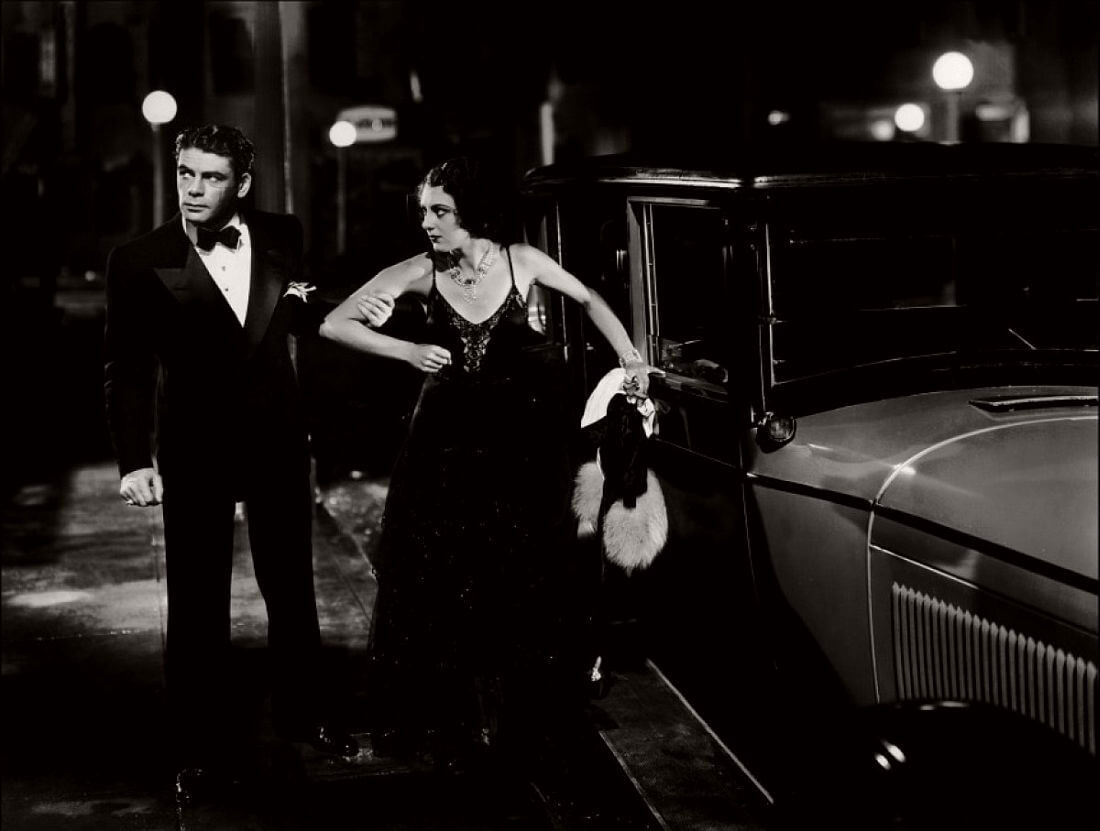
Directed by Howard Hawks and produced by Howard Hughes, this early talky was the blueprint for all gangster movies to come and was famously remade in 1983 by Brian De Palma. You won’t find a mountain of cocaine nor say hello to any little friends in the original Scarface, though. We do, however, rediscover a masterpiece of cinema that has aged like a good whiskey.

Tony Camonte (Paul Muni) is an ambitious Italian immigrant hell bent on becoming the king of the underworld. Characterised by the cross-shaped scar on his cheek and his ruthless nature, he also shows a passion for personal growth and need to be seen better educated than he is (as depicted when he enjoys a night at the theatre with his ‘boys’), although he gets a little too excited at the thought of owning a Tommy gun. He’s possessively protective towards his sister Cesca (the stunningly provocative Ann Dvorak) feelings that come across as incestuous. Starting as a right-hand man to bootlegger Johnny Lovo (Osgood Perkins), he works himself up the ladder of corruption to become the top dog he desires. He finds that being on top makes him a target for the police and those below.

Almost everything about Scarface is wonderful to behold. In particular, the cinematography by Lee Garmes and L. William O’Connell. Working with shadows to great effect, under Hawks’ direction, the film is visually stunning, pulling off set pieces that will be emulated for years to come. The letter X is prominent throughout the film, often appearing whenever someone is killed (if you were to use the motif as a drinking game, you’d be drunk well before the final reel). Muni was one of the greatest stage actors of the period, and here he excels on screen, giving Tony a flawed side that he’s too proud to show. Also in the cast are a coin-tossing George Raft (in one of his first major roles) and Boris Karloff who, despite being second billed on Imprint’s slipcover, plays a supporting role as a thug dispatched by Tony’s men while bowling. If there’s a flaw to be had with the film, it’s the stereotype Italian accents that would make the Dolmio puppets facepalm.

Evidence of the studio’s worry about the film’s subject matter (it was based on Al Capone, who was still a famous figure at that time) forced a jarring introduction, in which the audience is told they are to blame for the rise of the gangster as they voted for politicians that are doing nothing about it. Later in the film, moralising about gun control and immigration is directed straight at the viewers, which we imagine would have been startling at the time.

Australian label Imprint has given the film a glorious release. Not only is the image stunning (it’s hard to believe the film is almost 90 years old) but it sounds much better than any previous release. Extras-wise, the commentary track from Drew Casper is passionate and informative, as are the video interviews with Matthew Sweet and Tony Rayns. The movie itself is presented in both the theatrical release and a cut-down censored version, a result of the controversy the film caused in pre-code Hollywood. An essential movie.

THE CHALK GARDEN (1964)

chalk garden

Deborah Kerr returns to the role of governess following her brilliant portrayal in The Innocents (1961) in this intriguing mystery drama based on a play by Enid Bagnold (National Velvet).

Miss Madrigal (Kerr) is the last applicant for the role of governess to Laurel (Hayley Mills), a tough-talking feisty teen who is outspoken and is predisposed to arson. The butler, Maitland (John Mills) takes to her instantly and the matriarch of the house Mrs St. Maugham (Dame Edith Evans) approves of her when she shows and interest in her beloved garden that won’t grow. As Madrigal watches Laurel she recognises something of herself in her and wants to put her on the straight and narrow, and believes Laurel’s absent mother (Elizabeth Sellars) should take part in her upbringing.

Laurel, on the other hand, goes from wanting to break Madrigal – she boasts that she went through three governesses in a week – to trying to discover what her secret must be, since Madrigal is closed about her past.

The Chalk Garden is a stunning looking movie. The producer was Ross Hunter, who was behind classics such as Pillow Talk and Airport and his final cut didn’t please director Ronald Neame (The Poseidon Adventure) but the result is an absorbing story and impeccably acted by all the cast. Hayley Mills, in particular, does great to shake her Disney pure image, something she’d continue to do with The Family Way and Twisted Nerve. There’s a touch of Hitchcock in some scenes as the tension is built as Laurel, who having poking around in Mrs Madrigal’s room and taking her painting case to try to uncover a secret, has to return it via the window when the door has been locked. The denouement, with the revelation of Madrigal’s past is equally thrilling and unexpected.

This Australian release, from Via-Vision’s boutique label Imprint, contains some unique features inside the hard slipcase. An informed commentary by Kat Ellinger provides some background, and a pair of featurettes add some more flavour.

LAKE MUNGO (2008)

lake mungo

A serious mockumentary isn’t something that’s attempted very often. It’s a challenging style of film to nail, and a comedic one (in the vein of What We Do in the Shadows or Popstar: Never Stop Never Stopping) is often easier. There’s also the fact that no serious mockumentary could be any better than Joel Anderson’s Lake Mungo. This tiny Australian flick never quite got the love it deserved back in 2008, but its brand-new Blu-ray release from Second Sight is everything it deserves and so much more.

The film itself is one of the scariest to ever come out from Down Under. It follows the Palmer family after the death of their daughter Alice as they try to come to terms with what happened to her in the days and weeks leading up to her death and whether or not she may be still alive.

To say much more would be unnecessary, as Lake Mungo is a film best experienced with as little foreknowledge as possible. Not much needs to be said about it that hasn’t been said already: it’s a harrowing watch, as realistic and heartbreaking as any true-life documentary of this sort, grounded by fantastic performances and talking-head stylistic approach, yet given an ethereal spin by its ghostly inclusions.

It’s the perfect film to get a glorious physical release. As detailed in an interview with producer David Rapsey, its international marketing was poor, and it rarely screened anywhere outside of a select few festivals. It never got a proper home video release, either: this new set is currently the only way to watch the film in the UK legally – and it’s more than worth your money.

Not only does the film itself look incredible, having been fully restored where appropriate (though all of the old phone footage remains superbly dark and grainy to add to the sense of mystery), but it’s packed with a mass of extras. It’s so complete that the only thing missing is any input from Joel Anderson, the film’s director. Lake Mungo was Anderson’s debut, but he hasn’t made a single film since and has been off the grid for years now – which, if we’re honest, only adds to the film’s unsettling cult status.

The extras included more than make up for this, though: there’s an archive commentary from David Rapsey and director of photography John Brawley, and the rest are entirely new. A second commentary featuring film critic Alexandra Heller-Nicholas and author Emma Westwood is a great listen. Although, the standout is a new interview with John Brawley, whose insights into the film are incredible. It’s a long feature, clocking in at a hefty 45 minutes, but it’s endlessly fascinating and more than justifies the runtime.

Elsewhere, there is an interview with actors Carole Patullo and James Lawson (it’s nice to hear some insights from people who were in front of the camera), Rob Savage (director of Host) on the film’s legacy, filmmakers Aaron Moorhead and Justin Benson (directors of such cult fare as Resolution, The Endless, and the more recent Synchronic) on how the film has inspired their works. There are also two separate video essays: one by Josh Nelson on the relationship between technology and the supernatural and one by Joseph Wallace on the purpose of the family home.

Also included in the release are three art cards with brand new illustrations and an 80-page book with new essays by Sarah Appleton, Simon Fitzjohn, Rich Johnson, Mary Beth McAndrews, and Shellie McMurdo with James Lawson by Alexandra Heller-Nicholas, and a bunch of behind-the-scenes stills.

It’s thrilling to see a film such as this given a proper home video release. Though Lake Mungo certainly has its fans and has more than earned its cult status, this gorgeous release is sure to bring the film to a whole new generation of moviegoers. The new set is a must-own for physical media fans, but for anyone else who fancies a trip to Lake Mungo, do so. You won’t regret it.

It’s a dark and mysterious film, endlessly fascinating and meticulously unsettling – it might not be as out-and-out scary as other genre fare, but have patience. Lake Mungo is a film that’ll creep up on you in the night and then vanish, leaving you breathless and tear-stricken like few movies can. Joel Anderson might not have made another movie since, but this is something very, very special – so let’s cherish it.

Release Date: June 7th.

ALFIE (1966)

alfie

One of the most iconic films of the sixties, and the role that made Michael Caine a star, Lewis Gilbert’s Alfie is a comedic drama that raises above its success to be as relevant now as it was at the time of release.

Caine’s titular character is the epitome of the cheeky Cockney chappie. Promiscuous and sexist, he’s brash, opinionated, and a hard character to like with modern eyes. Breaking the fourth wall throughout, he makes us complicit in his infidelities. We see him charm himself into the lives of various women without a thought to the consequences – that is, until real life catches up with him.

Viewed with modern eyes, Aflie’s actions and language is incredibly shocking. We’re not just talking about his vernacular, such as calling his women ‘birds’, but there’s a whole scene in which his then-partner is only referred to as ‘it’. This brashness makes the character very much an antihero but also heightens his ‘downfall’ as such, which comes in the climax. Despite the misogynistic language, there’s still a lot of humour to be had from Caine’s portrayal. That said, the infamous abortion scene remains as disturbing and horrific as it was in 1966. It delivers a massive gut-punch without actually showing anything. While Alfie gets a taste of his own medicine from the fantastic Shelley Winters, we get the feeling he’s not completely reformed, leading to one of the most famous final lines ever: “What’s it all about?

Impact’s Blu-ray presents the film looking fresh, but still boasting the grim colours of the sixties. Alongside a fabulous commentary by Jo Botting and Melanie Williams, who give an enlightening perspective on the film, there’s Matthew Sweet providing his thoughts and a video essay from Kat Ellinger. Perhaps best of all is an archive recording of an interview with director Lewis Gilbert conducted at the National Film Theatre in 1995. This gives us a chance to see him chat openly about his work and includes a funny introduction from Caine. Presented in a hard box, there’s an addition disc containing the brilliant 2017 documentary My Generation, which takes a look at the Cultural Revolution that took place in London during the sixties and is the perfect accompaniment for Alfie.

Despite the outmoded language and attitude, Alfie is still a stunning film that deserves all the praise that has been heaped upon it over the years.

MANDY

Anyone thinking this is a film inspired by the Barry Manilow song of the same name is in for a very nasty surprise.

Nicholas Cage (Red) and Andrea Riseborough (Mandy) are a couple of damaged people who have found love with each other through a shared connection to implied troubled pasts (she has a facial scar and a haunted look, he comes across as unsociable apart from when he’s with her and also has a haunted look), and a desire for isolation from the rest of the world. He’s a lumberjack and she serves in a rundown shack of a store, reading fantasy fiction until interrupted by shoppers. They live in a house which seems to be made almost entirely of window frames. Their life is simple, remote, dedicated and gentle.

But when Mandy catches the drug addled eye of a religious cult leader who is used to getting everything he wants, she becomes his coveted prize. He summons a cenobite style biker gang from hell to get her but, when things don’t go to plan, Red sets out on a violent journey of hallucinogenic revenge, one well worthy of the 1980s video nasties this film so beautifully pays homage to.

Mandy is such a hard film to review because it’s the experience of watching it that makes it so special. Phrases spring to mind like ‘fever-dream’ or ‘hallucinatory trip’ but they’re not enough to convey the absolute single-minded, relentless perfection of the vision and craft that this film presents. Writer/director Panos Cosmatos has created something at once familiar in its reverence towards classic ’80s heavy metal and something new in its majestic artistry.

Stunning to look at and with incredible performances from all the cast (Cage’s underwear-clad destructive downing of a bottle of vodka as he descends into despairing madness in a bathroom is astonishing) and with a great villainous turn from Linus Roache, the film also boasts the final and superb score from the late Jóhann Jóhannsson. It throws animation into the mix, messes with your head during some particularly drug-fuelled visions, rewards gore-hounds aplenty and would, had it been released back in the early 80s when it’s set, have certainly been banned on video.

It’s not perfect. It’s a little too long but that’s a minor gripe. The exclusive HMV edition delightfully comes in a VHS style box with postcards and a poster too. The Blu-ray is as good as it can be given that much of the film is supposed to look grainy with haze-filled lighting, and there’s a nice documentary on the behind the scenes making of the film plus some deleted scenes. Buy it.

MANDY / CERT: 18 / DIRECTOR: PANOS COSMATOS / SCREENPLAY: PANOS COSMATOS, AARON STEWART-AHN / STARRING: NICOLAS CAGE, ANDREA RISEBOROUGH, LINUS ROACHE / RELEASE DATE: OUT NOW

DINO KING: JOURNEY TO FIRE MOUNTAIN

dino king

This Korean CGI animated film has been given a western redub and is sure to please the younger members of the family.

The story follows a young tarbosaurus, Junior, who is kidnapped by a group of raptors. His overbearing father, Speckles (yep, a terrifying name we know), sets out to find his son and hopefully make up for his tough love.

It’s a simple tale – one not dissimilar to many other animated films – but as such, it works on an emotional level for children. There are elements of The Lion King, The Land Before Time, and Finding Nemo, but this familiarity will give the little ones even more to latch onto. For the grown-ups, who will no doubt have to sit through the film many times, the animation style is bearable. The CGI dinosaurs appear to be placed in a real-world surrounding (if the backgrounds are CGI, they’re bloody good). They do occasionally feel out of place, but on the whole the animation is good. The style changes for some scenes, which adds a surreal edge, like some of the early Disney masterpieces. What lets the film down is the English dub. There’s not enough character and the translated dialogue no doubt loses something. The kids won’t have a problem with it, and there’s even a little bit of lavatory humour in there when Junior attempts to seek solace in a cave the other dinos use to poop in.

While there is some violent fights between the various dinosaurs, the peril and its depiction doesn’t get into Watership Down territory, but younger tikes might have a hard time with it. This also applies when it comes to the sadder moments, so expect a few sniffles. They might have a confused look too when the end credits appear and they’re all in Korean.

Journey to Fire Mountain is a sequel to a 2012 film Speckles: The Tarbosaurus, but you don’t need to have seen that (and we can bet anything that you haven’t) to enjoy this. While it might not be Pixar level entertainment, Dino King is a decent enough distraction for those wet days of the school holidays.

Release Date: Out Now (DVD) – You could win a copy here.

TOM & JERRY

tom jerry

The new film, Tom & Jerry, might not be the first time the titular animated cat and mouse have interacted with live-action people – that honor goes to 1945’s Anchors Aweigh, which saw Jerry Mouse tap-dancing with Gene Kelly – nor their first feature-length picture – that being 1992’s Tom and Jerry: The Movie – but it might be the first feature featuring the pair to really get things right.

Notably, the 1992 film saw the pair speaking, with Tom and Jerry voiced by Richard Kind and Dana Hill, respectively, a choice not at all well-received by critics. In this latest incarnation, director Tim Story and writer Kevin Costello seem to be going for a format inspired by the live-action versions of The Chipmunks or Garfield, wherein the longtime characters behave as they have since their first appearances, but inserted into a modern context.

Actually, ‘formula’ may be a more accurate word than ‘format’, because the plots of these films are essentially interchangeable: the animated characters do their thing, the situation goes awry, the real-world people learn some things, the animate characters help fix the problem that they’ve cause, and everything ends with a happy song. Hooray.

Tom & Jerry does manage to one-up everything, because when it comes to the cat and mouse duo, the film keeps it true to the characters’ roots. The live action Tom & Jerry movie is exactly the 100% dumb comedy worth watching after a long, stressful day, as it is stupid and violent and full of bad jokes. Tom and Jerry beat each other up, cause massive amounts of chaos and damage, with a general aspect of mayhem pervading their every interaction together.

That said, they are animals. The rest of the film is filled with main characters who constantly fuck everything up with lies and/or self-indulgence: Kayla (Chloë Grace Moretz) lies to several people in order to get her job at the Royal Gate Hotel and actively gaslights Terence (Michael Peña), who then tries to ruin the wedding of Preeta (Pallavi Sharda) and Ben (Colin Jost), the latter of which doesn’t seem to care much what his soon-to-be bride wants in her own wedding.

The only good people in the film are tertiary characters who try their hardest and manage to be smart, good folks who know what they’re doing and have good ideas, like Joy the Bell Girl (Patsy Ferran), doorman Gavin (Daniel Adegboyega), and bartender Cameron (Jordan Bolge). Not for nothing are they the only human characters who aren’t exasperating.

That said, the animation is good, and the idea to have every single animal – be it the pigeons flying in the city, butterflies, or the two massive elephants – as animated characters is a really clever stroke, which lends a bit of world-building to any otherwise silly comedy aimed at kids. There’s also a Droopy the Dog cameo that ought not be spoiled in its details, but will leave those who get it gasping for breath with laughter.

While not perfect, it’s perfectly serviceable entertainment for a weeknight post-dinner couch viewing, and will leave kids and adults alike satisfied.

Release Date: out now (Digital), May 24th (Blu-ray/DVD)


ZACK SNYDER’S JUSTICE LEAGUE

justice

For many reading this review, you’ll probably already know the backstory behind how this director’s cut came about. However, for the uninformed, here’s a quick recap: while filming the initial Justice League, Zack Snyder had to rightly leave due to personal reasons. Taking over at this point was Joss Whedon (Avengers Assemble). Sadly the film went on to receive a mixed response from its audience, and even some of its own actors/crew. Fans rioted in a digital style, which eventually lead to Zack Snyder unearthing his intended vision.

With the devastating events at the end of Batman v Superman: Dawn of Justice bridging the gap into the intro of Zack Snyder’s Justice League, we see Superman accidentally activate three Mother Boxes, which go on to alert villain Steppenwolf of their location. With these destructive boxes, Steppenwolf is not only a threat to humanity, but to the entire universe. The only way to stop this evil force in time is to unite some of the most iconic DC superheroes to date. Enlisting, and convincing a legendary team to fight is none other than Batman (Ben Affleck).

This cut makes so many right changes, which you’ll notice instantly due to a 4:3 aspect ratio. This is the original way Snyder shot the movie, and hoped for the film to be shown, so don’t play around with your TV settings trying to change it! We get expanded backstories for the majority of the main characters – quite notably with Cyborg (Ray Fisher) and The Flash (Ezra Miller) – and are even introduced to new ones. (How cool is Darkseid!)

All of this extra plot construction brings a needed sense of importance to any fight scene – it feels like there’s something at stake for both sides. Fresh, exciting elements have been poured into many scenes, and to get a better idea of this you can just take a look at the updated bank robbery confrontation with Wonder Woman (Gal Gadot). In addition, there’s a freaky, alternate take on Jared Leto’s Joker, more detailed CGI, and just a darker, grounded tone in general.

The crucial change though, that made this Justice League take so much better, is the way that it now comes across as a team effort. For example, some may remember that in the 2017 finale, Superman turns up and ends everything instantly. In this version, you are going to need every single member to make a difference. With a glorious sequence from The Flash right through to combat mayhem from Batman, we finally get to see on screen what numerous fans have wanted from a Justice League venture. What we view over the four hours, is in contrast, a vast improvement to the original.

Positives aside for a moment, the disappointment with this Blu-ray release must be noted, as there were no special features for us to view and only a single featurette listed on its pre-order pages. Bringing Zack Snyder’s Justice League to life was such an ambitious idea; there will have been an epic journey behind the scenes to make it happen, and fans would have loved to have seen it documented appropriately. Keep a lookout for a more in-depth release later down the line.

Ultimately, Zack Snyder’s cut is like a whole new movie. It makes you think about not only the amount of control the director/editing team actually has, but also the fact that there could be so many other great cuts out there of poorly received movies that we will never ever see. The current DC Extended Universe can be a bit messy at times, but this is proof that when it’s backed by the right minds, then it can be a hell of a show. This is by far, the best comic book interpretation from Zack Synder since Watchmen.

Release Date: May 24th (DVD/Blu-ray/4K)

INITIATION

Initiation

Like any university, Whiton University has its share of frat houses, sororities and dark secrets. The main premise of what, on the surface, appears to be a by-the-numbers slasher, is that an exclamation mark has a murky tradition of being used on social media to potentially shame those that are deemed to be worthy of this ignominy.

When Kylie has no memory of what happened at a frat party, where she may or may not have been sexually assaulted, it puts into motion a chain of events that creates a serial killer on campus who appears to be out for revenge. As the frat house brothers start to turn up dead, a mystery unravels up until a final reel reveal where we find out that the campus has been hushing up instances like this in the past and the killer turns out to be a left-field choice, albeit one that makes total sense once you know all the facts.

What could have been a societal commentary of the misuse of social media and how white males are protected by the faculty in situations like this, actually turns out to be a bit of a mess. It takes thirty minutes for the film to decide that it wants to be a horror film, the preceding twenty-nine playing out more like a drama. Even then, the killer turns up out of nowhere, with no buildup and no tension being offered until the last ten minutes or so.

The exclamation point – which during promotion was used so prominently, especially the trailer – is only used once on screen and mentioned only once or twice more. The pacing is awful, the opening act is slow to get moving, and you never feel any real connection to any of the characters. So when they start to turn up dead, you can’t really seem to care.

Even the mystery of the killer’s identity is botched, with the final reveal only making sense due to flash-backing and giving us extra information that wasn’t made available to the viewer earlier on. Yancy Butler (remember her?) shows up only to look quizzical and surprised for every minute of her screen time. The cinematography is pretty decent but, aligned with a story that looks like it’s been written and directed by those who have seen a couple of ’80s slashers and thought they could easily pull it off, it doesn’t make up for the shortfalls elsewhere within the production.

We’d literally kill for a good old ’80s slasher throwback right now – but this is not that film.

Release Date: May 24th