DONNIE DARKO [4K UHD LIMITED EDITION]

There’s not much anyone can say about Donnie Darko that hasn’t already been said. Director Richard Kelly’s debut feature, a mind-bending story of time travel, alternate universes, a troubled teen and a giant rabbit, is still the subject of countless fan theories and, despite the film’s initial luke warm reception, has gone on to become a bona fide cult classic. Now, 20 years after its original release, Arrow Video has come up with a full 4K UHD remaster which updates both the theatrical and director’s cuts of the film with a shiny layer of polish.

It hasn’t been possible to check out the theatrical cut yet (more on that shortly…) but the picture quality of the director’s cut is markedly brighter and richer than the previous Blu-ray version. It does still look a bit rough in places, most notably during the opening bike ride scene, but it appears this is due to the original source material rather than any sort of transfer mishap. We’re looking at the best version of the film that technology will currently allow, and fans will certainly be pleased with the effort that has gone into the audio and visual enhancements.

Over on the extras, a lot of bonus content from previous releases have been carried over (going all the way back to the DVD era), with an abundance of archive cast interviews, audio commentaries, featurettes and deleted scenes, but there’s also a brand new 90-minute documentary that goes into exhaustive detail about how the film came to life. Taking the form of “talking heads” interviews with writer/director Richard Kelly, producer Sean McKittrick, editor Sam Bauer and various members of the cast and crew, it covers everything from casting and costume design to the actual production, the film’s critical reception, refinements and eventual mainstream release. Possibly more information than anyone could need, but an enjoyable source of information for anyone with a keen interest in the film itself.

It’s a great package in terms of overall content, and unquestionably contains the definitive versions of the film yet in terms of audio and visual quality. However, an issue with the first disc means that the theatrical cut has an extremely juddery framerate on certain players, making it pretty much unwatchable for many viewers. At the time of writing, Arrow Video has confirmed that an announcement should be made within the next week or so, presumably involving disc replacements, and has removed the item from their online store, but the set is still available elsewhere. If you’re thinking of picking it up right now, be aware that you may well find yourself waiting for a new disc to arrive in the post over the coming weeks… Fingers crossed Arrow will be able to rectify the problem, giving this one of a kind movie the treatment that it very much deserves.

WEIRD WISCONSIN: THE BILL REBANE COLLECTION

The folks at Arrow follow up last year’s tremendous He Came From The Swamp William Grefé-themed box set with a four-disc collection of films by Wisconsin’s Bill Rebane, another regional director / outsider auteur who might not have experienced the most success or recognition but made up for it with enthusiasm and… erm… well, enthusiasm’s enough, isn’t it? Six films are on offer, (almost) all produced in Rebane’s home state of Wisconsin, newly-restored and appearing here on Blu-ray for the very first time.

Possibly Rebane’s most well-known film, 1965’s Monster A Go-Go, kicks off disc one. Starring the world’s tallest man as an astronaut who returns to earth as… something else… it’s a cobbled-together mess of a movie that, at 68 minutes, is at least 30 minutes too long and very much deserves its reputation as one of the worst films ever made (something that Rebane readily but wearily admits to in the extras). This monstrosity is followed by Invasion from Inner Earth (1974), an exposition-heavy sci-fi / horror in which a group of stranded college kids have to contend with evil aliens (a torch covered with red cellophane shone against the wall) while getting patchy radio reports about entire towns and cities being overcome by a mysterious deadly virus.

The sci-fi theme continues on disc two with The Alpha Incident (1978), where a group of people have to stay awake as they’ve been infected by unidentified space organism that attacks humans’ nervous systems when they fall asleep. Staying awake isn’t just the main challenge for the characters in the film – it might be your biggest test as well, as nothing much happens until the last 10 minutes. Make it that far, though, and you’ll be rewarded with a few seconds’ worth of eye-poppingly good practical effects…

The second feature on disc two sees the genre change from sci-fi to full-on horror, and there’s also a noticeable increase in the overall quality of the rest of the films in the set. A cursed piano causes great upset to the residents of a small backwoods town in the surreal and unsettling Demons of Ludlow (1983) and, moving on to disc three, a troupe of cruel and twisted millionaires offer nine people the chance to win a million dollars by facing their greatest fears in The Game (1984). “It’s kind of a favourite for some people… I don’t know why”, says Rebane, who also describes the film as “a brain fart”, but its haunted house vibe, complete with campy seaside fairground sound effects and delightfully gleeful performances from the aged millionaires, definitely marks the high point of this collection.

Lastly, in another genre shift, we’re treated to Twister’s Revenge (1988), a goofy comedy about three useless crooks who hatch a half-baked plan to steal a monster truck and the super-powered computer that controls it. Dumb one-liners, exciting shoot-outs, massive (ish) explosions and scenes of Mr. Twister smashing its way through buildings are the order of the day, and the cast go all-out to make the whole thing as enjoyable as possible in the daftest ways.

Disc four offers a two-hour documentary by film historian David Cairns, featuring tons of behind the scenes footage and photos alongside interviews with fans, filmmakers and people who worked on Rebane’s films. Superfan Stephen R. Bissette (known to DC Comics fans from his work on Saga of the Swamp Thing) talked so much during the making of the documentary that his entire two-hour conversation is included in the extras, and he also gets a separate half an hour to talk about what it was like to see Rebane’s films at the time they were originally released (and how difficult they were to track down in the pre-internet 1970s and 80s).

Elsewhere, there’s a hefty amount of extras to wade through. Each film is given its own individual 5-10 minute featurette where Rebane gives the kind of behind the scenes info you’d expect, but in a refreshingly honest way – he isn’t shy about the fact that his films weren’t likely to win any awards… We’re also given three short films that Rebane made to fund his features: Twist Craze and Dance Craze, in which people dance like lunatics for no reason, and the very important public information film, Kidnap Extortion: Robbery By Telephone, which teaches you how to tell the difference between a standard kidnapper and a kidnap-extortionist. Trailers, image galleries, a lively 15-minute visual essay by critic Richard Harland Smith and 35 minutes’ worth of outtakes (quite amazing that these exist, all things considered) round off the special features.

It’s likely that none of the films are what a modern mainstream audience would consider “good”, and the audio / visual quality varies wildly from film to film (as you’d expect, with source material such as this), but fans of lo-fi independent productions from the fringes of 70s and 80s filmmaking should be able to easily find the charm in most of the films included in this set. It’s true that one or two of the films might prove hard work for even seasoned viewers of such fare but, nevertheless, Weird Wisconsin is a real treasure trove of rarely-seen (or even talked about) lunacy from a bygone era.

Release date: May 24th

THE MOTHMAN PROPHESIES (2002)

mothman Prophesies

This brooding, absorbing thriller did well enough on its original release but didn’t quite score with the horror fans. Now, thanks to the Australian boutique label Imprint, The Mothman Prophesies emerges from its chrysalis but doesn’t quite prove itself to be a beautiful butterfly.

Two years following his wife’s death, Washington Post reporter John Klein (Richard Gere) finds himself in Point Pleasant, West Virginia. Quite literally, as he has no recollection of getting there and wasn’t planning to go there either. Klein uncovers a strange phenomenon – an apparition that acts as a portent of disaster. Along with the local sheriff (Laura Linney), he attempts to discover the mythical ‘Mothman’ truth.

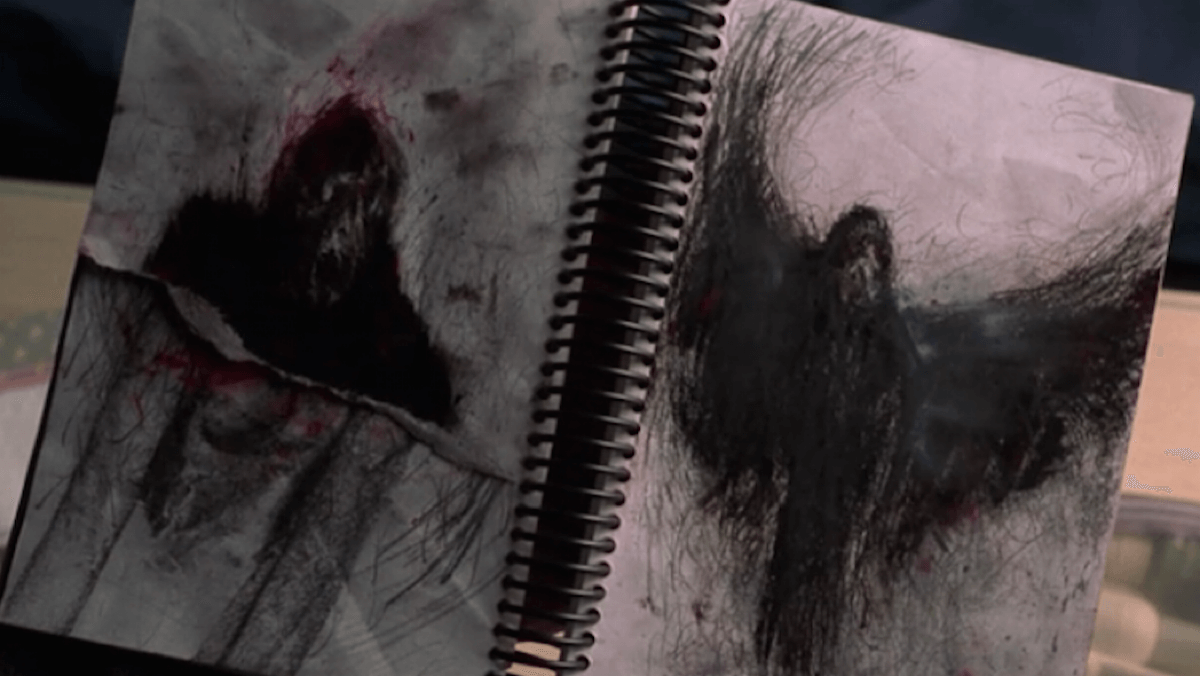
With the emphasis on atmosphere and eerie images, director Mark Pellington (Arlington Road) builds an intriguing tale – based on an urban legend from Point Pleasant – into a visually stunning movie that needs a better screenplay. The titular character is mostly unseen, save for a few flashes and some scrawled drawings, but its presence is felt, bearing over the town and characters ready to bring death and destruction. Gere and Linney are at their best here, the former particularly displaying a more nuanced performance than we have grown to expect. Standout, however, is Will Patton (recently seen in the Swamp Thing TV series), playing a local hick to whom the Mothman is drawn with its predictions of doom. The script ventures too much into X-Files territory at times, appearing small screen instead of giving that cinematic experience we should expect, and if the story is a little too talky for those seeking horror thrills, the climactic bridge collapse makes up for it.

Imprint’s Blu-ray is packed with so many extras; making up for any shortcomings the film may have. As well as some features ported over from previous DVD releases, there are brand new interviews, commentaries, and featurettes that shed more light on the film’s production. The supplementary material alone makes this a worthy purchase.

ONE ARMED BOXER (1971)

one armed boxer

Jimmy Wang Yu’s Kung Fu classic violently announces itself on Blu-ray this month, with all the subtlety of a Victoria Secret fashion show. Eureka Entertainment’s latest release is a little light on extras but makes up for it with a solid transfer of a hugely entertaining film.

Originally released in 1971, the plot is a simple one. After Yu Tien Lung (Jimmy, who also directs) humiliates his rival Kung-Fu school, they hire a team of mercenaries to get revenge, severing Tien Lung’s arm in the process. With the help of an old herbalist and his daughter, he must learn the ‘Crippled Fist’ to exact his revenge. The film stands out for two reasons; the first being the fantastically silly mix of global fighters, hired by the villain. These include Shaolin Lamas, Thai kickboxers, and a Japanese judo expert. Diversity isn’t the name of the game here, with an Indian yoga master played by a Chinese actor brandishing grey face paint, while the delightfully evil Japanese karate supremo has fangs! The second is Wang Yu’s kinetic direction – the title sequence thunders into gear with the music from Shaft and Tien Lung’s recovery is shown via a series of stills.

One Armed Boxer is relentless, with large set-piece fights (especially those with our eclectic fighting practitioners) taking up much of the runtime. This does present the film with its only weakness – the choreography is messy. As mentioned in the commentary by Asian film expert Frank Djeng, they were trying out a more realistic style, but with a film that contains such a rich tapestry of fighting arts, having actors wildly flailing across the screen feels like a missed opportunity. A stills gallery, original trailer, and new vibrant artwork round off the disc. Overall a hugely entertaining piece of cinema to share with friends, while laughing late into the night.

THE SPY WHO CAME IN FROM THE COLD (1965)

spy cold

The Spy Who Came in From the Cold, a  monochrome espionage classic, came several years after James Bond had blasted across the silver screen. This adaptation of the John le Carré novel couldn’t be further from that depiction of a spy’s life, but has more than enough subtle fireworks to keep the audience engaged.

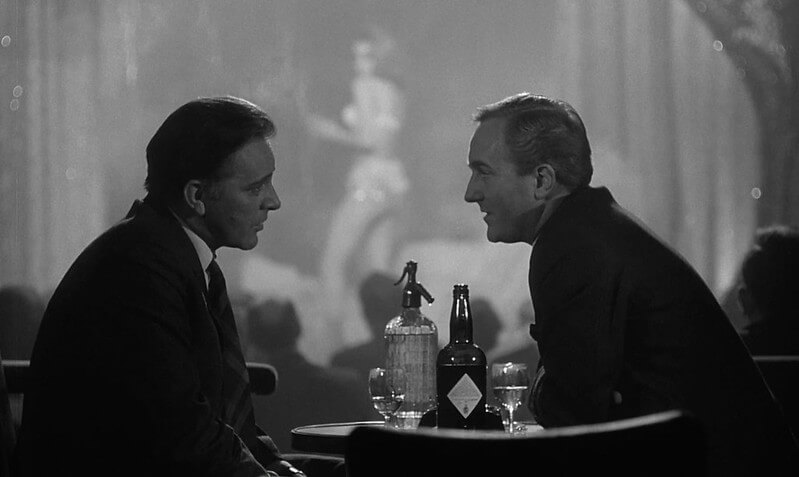
Alec Leamas (the ever-brilliant but understated Richard Burton) is a weary British agent ready for a retirement of boozing and working in a library. It’s all a cover, though, as he’s tasked with one last mission: to defect to the East and ‘give up’ some information; to go back ‘into the cold’

Throughout his novels, le Carré depicted the mundane face of espionage, the complete antithesis of Ian Fleming’s 007. Arguably his most famous creation, George Smiley, is relegated to a small but important role in this story (he’s played here by Rupert Davies). It’s this ordinary, run of the mill type of spy that makes le Carré’s stories so fascinating. Atmospherically filmed in black and white – which looks stunning on this Eureka Blu-ray – this is the spy equivalent of kitchen sink drama that’s directed with confidence by Martin Ritt, the former blacklisted filmmaker who would later make The Front (1976) with Woody Allen.

Claire Bloom (The Haunting, 1963) co-stars as the communist librarian who steals Leamas’ heart and is just one of the numerous fantastic actors who appear alongside Burton. Even the blink-and-you’ll-miss-them supporting cast is impressive: Bernard Lee (M in the Bond movies), Robert Hardy, Michael Hordern, Niall MacGinnis, Warren Mitchell, and Michael Ripper are among those who pop up at some point.

Although played in a sombre and matter-of-fact manner, you can’t fault the quality of the production and earnestness of the players. Eureka’s Blu-ray contains some newly commissioned extras, namely a commentary and a video essay, and both are informative and worth checking out for more background to the film. The limited edition booklet makes for good reading, too.

Release Date: May 17th 

OVER THE EDGE (1979)

CERT: 18 | PLATFORM: BLU-RAY| RELEASE DATE: MAY 31ST

Though its 1979 release was hampered by the negative publicity around other youth in revolt films like The Warriors, Jonathan Kaplan’s Over the Edge has built up enough of a cult following to get a new Blu-ray release from Arrow.

It centres around New Granada, a ‘planned community’ town in Colorado designed to appeal to the stuffy middle classes and wealthy developers. But the town’s kids are forgotten about; isolated and alienated, they’ve little to do but cause trouble. Michael Kramer stars as Carl, a kid from a ‘good’ family who reveals a rebellious side after he begins hanging out with the wild Richie (Matt Dillon, in his first on-screen role).

The film starts out as a coming-of-age charmer, with authentic portrayals of kids hanging out, having awkward crushes, pushing against their parents’ rules, and so on. There’s some anarchic humour – one kid takes acid before going to an art class on Hieronymous Bosch – and a great punky soundtrack featuring The Ramones, Cheap Trick, and Van Halen.

But when an aggressive cop tries to clamp down on the young delinquents, events spiral out of control, leading to a dramatic stand-off between the generations. Over the Edge becomes an angrier, more radical movie; it doesn’t pull its punches when it comes to shock value, but nor is it limited to shock, as Charles S. Haas and Tim Hunter’s astute script digs into why kids turn to crime, and how the patronising attitudes of the establishment exacerbate the problems.

The range and quality of the extras here is seriously impressive, with highlights including: Wide Streets + Narrow Minds, a new documentary in which cast and crew reflect on the film’s inception, production, and legacy; the ‘rock operetta’ album it inspired, Welcome to New Granada by DRATS!!!; and Destruction… Fun or Dumb?, the educational short excerpted in the movie, newly remastered.

GREAT WHITE

Great White

CERT: 15 / PLATFORM: DVD, DIGITAL (REVIEWED) / RELEASE DATE: MAY 17

The shark movie subgenre is often a murky one, with the misses most certainly outweighing the hits. Now, from director Martin Wilson, comes another ominous dip in the ocean in the form of Great White – and it’s time to see whether this toothy feature manages to keep its head above the water.

After an opening that is very much the standard tone-setter for such movies, Great White introduces us to the core five characters upon whose back this tale will be carried. When Michelle (Kimie Tsukakoshi) and Joji (Tim Kano) need a pilot to take them to a remote island locale where they can pay their respects to Michelle’s deceased grandfather, they turn to Charlie (Aaron Jakubenko) and Kaz (Katrina Bowden) to help them get to where they need to be. Throw in Charlie’s buddy and colleague Benny (Te Kohe Tuhaka), and away we go.

You just knew it was never going to be plain sailing for this five, and the dead body of a shark attack victim is immediately spotted as soon as they make it to their destination. Deciding to explore the waters for possible survivors, things quickly take a turn for the terrifying as a Carcharodon carcharias – or, y’know, a great white shark – makes its presence known. With their seaplane swiftly out of commission, our protagonists are left with nothing but a raft and their senses as they find themselves stranded in the middle of shark-infested waters in a battle for survival.

Great White is an effective, tense thriller that finds itself drenched in claustrophobic dread once the shit hits the fan. And that’s not just down to the shark element, for Wilson’s picture does a great job of clearly establishing animosity between certain characters, which only further ups the stakes when the bickering parties are thrust into this gnarly situation.

Performance-wise, all of the main cast deliver when called upon, with Te Kohe Tuhaka and Kimmie Tsukakoshi particular highlights when on-screen. As for how the film is framed, Great White – like other similar pictures – very much shines when the ‘less is more’ principle is adhered to. That’s not to say that the sharks themselves don’t look solid, but more that the suspense of what lurks below or what has just swam by works better for Great White. As such, the film maybe starts to dip a tad as we get more close up and personal with this offering’s apex predators, especially when some of these close ups don’t look quite as impressive as the sharks seen in other recent releases. But hey, we have to remember that Great Whtie was put together on a pretty minimal budget, so some leeway can be given here.

For those with a penchant for shark movies, Great White is well worth taking a bite out of. And even for those who aren’t all that keen on shark flicks, there’s still plenty to enjoy with this one.

THE TWO WORLDS OF JENNIE LOGAN (1979)

jennie logan

The folks at the Australian boutique label Imprint bring us The Two Worlds of Jennie Logan, a fondly remembered made-for-TV movie that no one would have expected to see the light of day in such a exquisite release.

Jennie (The Bionic Woman herself, Lindsay Wagner) and her husband Michael (Alan Feinstein) buy a massive old house to start afresh following Michael’s infidelity. It’s a beautiful period dwelling with plenty of character and history. While exploring the attic, Jennie finds a vintage white dress that she decides to keep and fix up. However, when she wears the garment she is transported back decades and meets the troubled artist (a pre-Beastmaster Marc Singer) who previously lived in the house. Discovering what happened to him, she is determined to change the course of his history, but finds herself falling in love.

The Two Worlds of Jennie Logan comes from that era of great TV movies that could have easily been cinema movies. Think Duel or Gargoyles and you get the idea. Directed and adapted for TV by Frank De Felitta (who wrote the novel upon which The Entity was based and also directed possibly one of the best TV movies ever, Dark Night of the Scarecrow), it’s a story that could have been bogged down by its schmaltziness but manages to remain both charming and intriguing. Somewhere in Time might have done the romantic time travel concept better, but Jennie Logan is an impressive runner-up for that subgenre. Wagner excels as the housewife trying to deal with her philandering husband and the emotions raised from her own dalliance with the long-dead artist.

Imprint’s Blu-ray looks stunning. The 1.33.1 image is pristine, and it’s hard to imagine how we enjoyed these films on a cathode tube back in the day. The only extra feature of note is a very informative commentary by Kevin Lyons from eofftv.com, who gives a relaxed insight to the film’s production and the people involved (he even points out Hollywood legend Gloria Stuart in her blink-and-you’ll-miss-it appearance). This is one for the romantics out there with its blending of soap-style drama with whimsical fantasy.


PORTAL

portal

Portal reaches for the stars – or at least the upper reaches of the sci-fi stratosphere – by ploughing a furrow not dissimilar to recent ‘hard’ genre titles like Denis Villeneuve’s Arrival and Alex Garland’s startling Annihilation. But, as with so many of these straight-to-physical media/streaming titles, its ambition is frustrated by its budget (and, in the case of Portal, a too-brief running time) that allows it to do little more than present an intriguing and potentially thought-provoking scenario and then find itself unable to explore it satisfactorily.

Portal is an anthology movie – three short tales connected by the film’s overarching theme – connected by a radio presenter commentary that attempts to fill in the gaps inevitably caused by a film with big ideas way above its capacity to fully explore them on screen. The central conceit is that one million ‘doors’ (the original US title of the film) have appeared randomly all over the world. These shimmery, amorphous, and ugly-looking doorways are actually ‘portals’; no-one has any idea where they have come from or why they’re here but they become responsible for the disappearance of half the world’s population, which has vanished into them and not come back. The three stories here explore the idea of these ‘portals’ with varying degrees of interest. In ‘Lockdown’, the first and perhaps most traditional of the three, a group of high schoolkids in detention at the moment the portals actually arrive (off screen but to a soundtrack of screaming sirens and passing helicopters and jets) are trapped in their school as one of the portals appears in the corridor outside their classroom and exerts a strange and baleful influence over them. The second story, ‘Knockers’ (stop that!) chronicles the events that befall a group of safety-suited volunteers (called ‘knockers’ because they… well, knock on the doors?) who travel into a portal for a regulated 12 minutes to gather data. But what happens inside the portal makes little sense; it’s just a weird fever dream, their grip on reality challenged and their inner psychoses rising to the surface. It’s a pretty, effects-heavy psychedelic trip (man), nicely directed by Saman Kesh, but it doesn’t really come to anything  beyond giving us a vague idea of what may lurk in the strange places beyond the portals. ‘Lamaj’, the third story, is probably the most satisfying of the bunch, touching on Arrival’s themes of communication and first contact but fudging its point by introducing a gun-toting cop into its quiet, thoughtful mix.

Despite its faults and its wilful sense of vagueness, Portal is to be commended for at least trying to be a little more cerebral than many of its genre bedfellows and it occasionally delivers some richly-imaginative and startling imagery. However, there’s a frustrating ambiguity in its storytelling with none of the short tales really amounting to much. There’s a better film lurking here somewhere but it needs more than Portal’s meagre eighty-minute runtime – and a more focused script – to really make it anything other than a colourful, sometimes bizarre, curiosity.

Portal is available now on DVD and digital.

FORGET EVERYTHING AND RUN

forget everything

We’ve waited over a year now for the eagerly-anticipated sequel to the chilling apocalyptic thriller A Quiet Place and it’s now so close we can almost feel the encroaching terror. If you still can’t wait though, you might be tempted to take a punt on Forget Everything And Run (FEAR, geddit?) to tide you over, a film that wants to be AQP so hard it almost physically hurts to watch it going through its rather sluggish motions.

The whole scenario is eye-rollingly familiar. End of the world, zombies, grubby civvies struggling to survive in a hostile environment. Bingo. Forget Everything And Run has very few unique selling points and, in truth, not a great deal to recommend it. An undoubtedly low budget necessitates an introductory voiceover that sets the scene, such as it is; the world has been struck by a deadly virus and in a sealed-off environment survivors fight to stay alive ‘hiding… scavenging… clinging to hope’. Not much hope of anything especially interesting here though, despite a visually-attractive snowscape setting and an opening sequence in which a drooling zombie lunatic attacks Ethan (co-director and co-writer Jason Tobias) and his young son Josh (Danny Ruiz). The pair return home and we  discover that the family – including mother figure Joe (Marci Miller) – are protecting an infected teenage daughter who is strapped to a bed and on life support, the family wating for access to a rumoured cure. Inevitably their sanctuary is attacked by a handful of tooled-up marauders  and an impasse between the groups sees Joe keeping the invaders’ sneering matriarch figure Desiree (Susan Moore Harmon) at bay while Josh and Desiree’s murderous brother head off to collect medicine and fuel from the invaders’ camp.

Sadly, nothing much of any consequence or excitement ensues. Bereft of hideous aliens or even zombies (who appear to have been forgotten until the last couple of scenes) we’re just left with a fairly mundane and visually-drab story of a couple of small groups of people shouting at each other and being a bit violent occasionally. The pace sags horribly in the middle of the film and the whole scenario fails to convince, presumably because the budget doesn’t really give us a chance to get any real perspective on how widespread this apocalyptic event actually is (a pathogen has been released into the water supply, apparently). The resemblance to AQP is heightened by the last couple of scenes too in a moment of self-sacrifice that carries little dramatic weight because we really don’t know much about the core characters much less care about them. With little to really recommend it beyond its stark landscape locations and some decent acting that occasionally lifts a dreary script, we can’t really recommend that you Forget Everything And Run. In fact, our advice is more likely to be WISE – Watch Instead Something Else.

Forget Everything And Run is available now on DVD and digital