BLAKE’S 7 PRODUCTION DIARY SERIES B

The BBC’s cheap’n’cheerful late ’70s/early ‘80s space opera Blake’s 7 seems to be having a bit of a moment in the sun lately. Last year, Big Finish released a hardback box set of brand-new novelisations of each of its first-season episodes. The show is finally getting a Doctor Who-style bells-and-whistles release on Blu-ray, its ‘official magazine’ has been resurrected as a fan publication, and now fans can explore the making of the show’s second season in extraordinary, forensic detail in Cult Edge’s latest entry in the Blake’s 7 Production Diary series. Running to a chunky 300+ pages, this lavish, beautifully-designed and lavishly-illustrated book follows the format of the edition covering Series A and is not only the last word on how the second series of Terry Nation’s popular space adventure series was brought to the screen, but it’s also a fascinating and valuable historical document chronicling just how low budget BBC dramas were made in the 1970s and even into the 1980s.

The level of research and detail presented in this book is genuinely staggering. Writer/researcher Jonathan Helm has put together a chronological diary (hence the title) of the genesis, development, filming, and recording of the show’s second batch of 13 episodes. With so many of the core creatives involved in the series – creator Terry Nation, producer David Maloney, script Editor Chris Boucher, actors Gareth Thomas, Paul Darrow, Jacqueline Pearce – no longer with us, Helm has gone above and beyond to source quotes and comments and commentary from everyone – absolutely everyone – involved in the making of this show. The provenance of these quotes isn’t referenced (although there are clearly new contributions from actress Sally Knyvette – Jenna in seasons one and two – and FX staffers Mat Irvine and Andy Lazell, amongst others), but Helm has assembled them into an ‘unfolding story’ of the making of season two. It’s often warts’n’all stuff, too, with tensions and disagreements and pressures candidly discussed. Stars Gareth Thomas and Sally Knyvette were keen to leave the series and move on to pastures new but the production team hoped they’d be able to change Thomas’s mind at least and persuade him to stick around for season three – Thomas’s quotes make it quite clear that this was never on the cards. Elsewhere actor Brian Croucher, drafted in to replace the unavailable Stephen Grief as Blake’s tireless enemy Travis from season one,  talks of his discomfort in taking over the role and how he clashed immediately with director Vere Lorrimer who helmed his first episode and took an instant, inexplicable dislike to him. Script problems are openly discussed – the famously dilatory Terry Nation was keen to shape the direction of the series but not so keen to actually write the scripts he had been commissioned to provide, necessitating often last-minute replacements by the script editor. It’s a genuine, rich treasure trove of facts and details, gossip, grumbles and gripes laced through with anecdotes that show how well the cast gelled, how frustrated some of them – the often sidelined female members of the cast in particular – were and how sometimes ruthless decisions had to be made (the axing of actor David Jackson as the group’s genial giant Gan in the fifth episode of the season) to keep the series ticking over. The illustrations are extraordinary, too: behind-the-scenes shots of the actors between takes, images from photoshoots, newspaper cuttings, special effects sequences being filmed, and candid pictures from location filming in one of the numerous quarries so often chosen to represent alien landscapes in the show. There are dozens of deleted and amended scenes, an aborted script from Pip and Jane Baker; every page seems to offer up some new visual treat to complement the engrossing text as the show trundles through its production process, its second season starting to air even as the last few episodes were in production – something that seems pretty unimaginable in today’s fast-paced, high budget, perfectionist TV world.

And this is perhaps where the book excels above and beyond being “just” the story of the making of 13 TV episodes in 1978. It’s a reminder of a way of producing TV that now seems positively prehistoric – props and costumes made out of bits and pieces (Mat Irvine is rightly apologetic for the spaceship in the series finale, famously made by glueing two commercially-available hairdryers together!), hurried location filming blocks, studio sessions that had to finish by 10pm or all the lights would be turned on in a ferociously union-dominated TV landscape. Fans of Blake’s 7 will rightly adore this fantastically revealing and beyond-thorough deep dive into how it was made but more than that, students of the history of TV in the UK will relish the incredible level of intricate detail presented in Helm’s no-nonsense text, topped off by Grahame Robertson’s stunning and gorgeous design aesthetic that makes the book a beautiful presentation in its own right. Utterly sensational and, of course, essential for B7 aficionados.

BLAKE’S 7 PRODUCTION DIARY SERIES B is due for release in November from Cult Edge


IT BELONGS IN A MUSEUM: THE SECOND DOCTOR – SEARCHING FOR TREASURES FROM CLASSIC DOCTOR WHO

Officially licensed books about TV’s Doctor Who – particularly, sadly, those issued by the BBC itself – have fallen into a bit of a rut recently. Aimed, obviously, at the widest possible demographic, these titles tend to be fairly generic rehashes of material that’s now become achingly familiar – the history of the Doctor’s numerous incarnations, the history of the Doctor’s televised adventures, the history of the Daleks and/or the Doctor’s other formidable enemies, the stories of the Doctor’s companions etc. ad infinitum. Generously budgeted and lavishly illustrated, these glorified picture books look nice on the shelf, but there’s nothing much going on between the covers, and there is certainly very little interest for the hardened, long-time fan. Aficionados looking for some a little more unusual, a little more niche, are often drawn to unlicenced independently-published books and even self-published books, and Neil Cole’s fabulously immersive and nostalgic It Belongs In A Musuem – The Second Doctor (the first, excitingly, in a proposed long-running series of books) is a terrific new publication aimed squarely at those whose adoration of Doctor Who goes deeper than just watching the TV episodes and embraces the stuff that made the show – the props and costumes and paraphernalia and the genuine production history of the show stretching back, in this particular instance, fifty years or more.

Neil Cole is the creator/curator (and quite possibly the madman) whose life’s dream was to build a museum dedicated mainly to artefacts from the classic days of Doctor Who, but also, it now transpires, bits and pieces accrued from a plethora of classic films and TV shows made in the UK and in the USA. This first volume of It Belongs In A Museum – a lavish, glossy, slickly-illustrated 132-page treasury of delights and glorious memories – chronicles Neil’s obsession with Doctor Who, his determination to build his own museum in the quaint and picturesque village of Allendale in Northumberland and how in 2015, after nearly three decades in the teaching profession, he decided that it was ‘now or never’ if he was ever going to realise his dream. The book is split into three distinct sections; in ‘Welcome to the Madness’ Neil explores ‘the insanity of collecting’ and exactly how he went about setting up a museum in the cellar area of the family’s ramshackle new home, a Grade-2 listed four-storey Georgian townhouse in Allendale. Quite aware of the impractical lunacy of the project, Neil nevertheless set to work refashioning the house’s cellar and collecting the random items that would eventually find their ‘forever homes’ in his extraordinary Museum of Sci-Fi.  The book’s second section presents Neil’s stunningly researched look at every serial from Patrick Troughton’s three-year tenure aboard the TARDIS, explaining the provenance of what (frustratingly little) original prop and production material still exists five decades on.   It’s a painstaking section as Neil tracks down the odd Cyberman chest unit, surviving Ice Warrior claw or fibre-glass robot; much of this stuff is either lost to the mists of Time (although Neil is hopeful that some of it has found its way into the hands of very private collectors) or else in the hands of collectors who have kindly allowed Neil to print photographs of items that would otherwise continue to remain unseen. Section three of the book is the ‘Virtual Museum’ where Neil displays close-up photographs of these legendary iconic creations, many of which are now, happily, nestled away in Neil’s museum.

It Belongs In A Museum is, in itself, a spectacular achievement, albeit a tome aimed at an audience who will thrill at the sight of crumbling, cheaply-produced props often knocked up in a few days by hard-pressed BBC designers or outside contractors tasked with making something that would pass muster for a cheap half-an-hour teatime sci-fi adventure series that no-one involved could ever imagine would become a global phenomenon. This lovely, warm hug of a book is a tribute to those men and women who worked at the BBC coalface with precious little money to play, and it’s a delightful window into the past for the fans who have come to cherish this very special period in the history of Doctor Who. Unlicenced Doctor Who books are very often unlicensed for a reason; the writers are enthusiastic about their subject matter, but very often, they’re unable to articulate it professionally. That’s not a problem here. Neil’s an assured, enthusiastic writer with a wry and witty turn of phrase and his passion for his work and his museum explodes from every densely packed page of text. Full of Neil’s own evocative illustrations (drawn in biro…how can one man be so bloody talented?), It Belongs In A Museum belongs on the bookshelf of every serious Doctor Who fan. In its own way, it’s as much a time machine as the Doctor’s trusty TARDIS. We can’t wait for future volumes.

Find out more about the Museum of Sci-Fi at museumofclassicsci-fi.com, and copies of the book can be obtained by contacting Neil at [email protected]

ELEMENTAL FORCES

Short horror stories aren’t just for Halloween, but they seem to suit autumn and winter evenings, a time of darkening skies, shortened days and slowly worsening weather. Edited by prolific horror writer Mark Morris, Elemental Forces is Flame Tree’s fifth collection of contemporary horror stories inspired by Morris’ love of the 1980s New Terrors horror short story series. Older readers though might well be stirred to remember Pan’s legendary and long-running 1960s Book of Horror series (edited by Herbert Van Thal!) whose lurid covers would send shivers down the spines of a generation of schoolboys too young to enjoy their bloodthirsty tales of terror.

Elemental Forces contains twenty new horror shorts of varying length, several by new writers and several by established names like Paul Tremblay, Poppy Z Brite, and Tim Lebbon. Naturally enough, they’re not so much concerned with the Gothic horror staples of decades past, but they’re much more rooted in today’s world, reflecting the very real concerns of an edgy, jittery, paranoid 21st century. But there’s quite literally something for every horror taste here. Fans of Lovecraftian monsters will revel in the likes of  Laurel Nightower’s ‘Call of the Deep’ in which a ravening creature rises from murky depths to confound those tasked with keeping it at bay and in ‘Nobody Wants To Work Here Any More’ by Christina Henry something nasty and voracious lurks in the dark corners of a fast food restaurant’s freezer. There are subtler terrors too; the opening story ‘The Peeler’ by Poppy Z Brite is a bittersweet tale of an act of self-sacrifice that goes wrong, and Nicholas Royle’s ’The Entity’ is an atmospheric story in which a frustrated writer’s house-sitting break is bedevilled by a mysterious presence. Lovers of body horror will enjoy the short, sharp grit and gore of  Luigi Musolino’s post-Covid cautionary tale ‘The Plague’ and Paul Finch’s ‘Jack-o-Lant’, a confessional tale set in 1980s Liverpool. Tim Lebbon’s elegiac ‘Unmarked’ in a sorrowful, bittersweet tale of a restless spirit who hears the cries of the spirits of murder victims and communicates with an old man who can sense its presence. Not everything hits the spot, though – Tim Major’s ‘The Scarecrow Festival’ is a Wicker Man homage too far, a story too short to bring anything new to that particular genre classic.

All in all, it’s a rich, diverse and satisfying collection of yarns. Like most short story collections, though, it’s not one that needs to be devoured in order or in one sitting. Elemental Forces is an ideal book to take down from the shelf on a cold winter’s night in front of a roaring fire with the wind howling through the trees outside and maybe… just maybe… the hint of a strange, half-shadowed face at the window?

Elemental Forces is available now from Flame Tree Books.


RED DWARF DISCOVERING THE TV SERIES VOLUME 1: 1988 – 1993

Red Dwarf is the cult science fiction comedy classic that just will not die. Birthed – reluctantly – at the BBC in 1988, the show went on to become a ratings monster that the Corporation never really valued or understood. Missing and presumed extinct after its eighth season in 1998, the show eventually migrated to non-terrestrial channel Dave, where it has returned intermittently since its initial revival in 2008 with the mini-series Back to Earth. A new 90-minute special is promised for 2025.

Where the creation and making of most sci-fi shows have been chronicled to death, the history of Red Dwarf – although well-known by its hardcore fans – is a story lost in the mists of time to most of its audience. The immaculately researched new book – entirely unauthorised but commendably comprehensive – tells you everything you might reasonably need to know about how Red Dwarf came to the screen, how it very nearly didn’t and all points between – well, up until Season Six as the show has been around for so long that there’s a second volume planned to bring the story right up to date.

Discovering the TV Series Volume 1 is presented in two dovetailing sections. The most interesting and best-written sections provide useful background context for the creatives – particularly Rob Grant and Doug Naylor – who found themselves in a position to pitch a daring new sitcom to the BBC. Red Dwarf was turned down by the BBC three times and finally found its way, under the aegis of legendary TV producer Paul Jackson, to BBC Manchester, where it appeared to have found a sympathetic home – until industrial action at the BBC torpedoed the planned recording of almost the entire first season. The episodes were remounted, and found an appreciative audience almost immediately. Similar chapters in the section go on to outline how the uneven first season was improved upon and refined in subsequent series and how the show eventually found its groove and became a phenomenon, even if the BBC never quite knew what to do with it. The other sections of the book contain “impressions of” material which investigates and explores every episode in near-microscopic detail, pointing out flaws, continuity errors, classic moments, etc, in a style reminiscent of many of the unauthorised ‘episode guide’ books published about shows such as Buffy the Vampire Slayer, Farscape and even Doctor Who. Tom Salinsky is playing to the gallery here, shamelessly displaying his in-depth fan knowledge of the series but, in fairness, also displaying a clear understanding of the strengths and weaknesses of the show; no rose-coloured space-specs here, he dishes out the brickbats when they’re needed just as he’s effusive in his praise when the show hits the sweet spot.

It’s tempting to suggest that this is a book aimed squarely at the converted – and it probably is. Beyond the front and back covers, there’s no photographic content here (not even a pic of the titular giant space mining vessel); this is determinedly text-heavy, but that’s because it has a story to tell. But there’s enough interesting behind-the-scenes stuff to intrigue anyone fascinated by the machinations of the notoriously sci-fi-averse BBC in the 1980s and 1990s, as well as the army of smegheads amused by the antics of the Red Dwarf crew for an extraordinary 36 years. It seems like there’s plenty of life left in the Boys from the Dwarf yet.

RED DWARF DISCOVERING THE TV SERIES VOLUME 1: 1988 – 1993 is available now from White Owl/Pen and Sword Books.

NIGHT AND DAY

Steam train with smoke that looks like a ghost

It’s the season of the Witch. The nights draw in. The shadows lengthen, and John Connolly’s third anthology, Night and Day, is upon us. The timing is exquisitely perfect.
Night and Day quite literally is a book of two halves, so the title is perfectly apt. The first half is a collection of short fiction. The second half is an extended and updated edition of John’s monograph about the cult classic film Horror Express. So, let’s begin with the first half.
There are nine stories which are quite simply masterclasses of the form. It’s a genuine case of ‘all killer, no filler’. As with John Connolly’s previous anthologies, Nocturnes and Night Music, this volume also includes not one but two whimsical tales of The Caxton Private Lending Library and Book Depository. The first tale is an origin story, and the second is a commentary about how literary failures can become future classics.
Abelman’s Line is a uniquely different time travel story in which scientists dispense justice to Nazi war criminals that escaped trial. The Bear could be an allegorical tale of the death of a parent or of a marriage dissolved. Either way, the sense of sadness evoked is palpable.
The remainder of the stories are of the ghostly variety. Connolly, who is well versed in classic literature, has expertly created spine-chilling tales that conjure the works of E.F. Benson as in the case of The Mire at Fox Tor and M.R. James. The Flaw wonderfully conjures James’ The Mezzotint. The highlight must be The Evenings with Evans. It’s a beautiful, poignant, heartbreaking study of grief. If this story isn’t included in the best ghost stories anthologies, the universe is severely off-kilter. Also deserving a special mention is Our Friend Carlton, a darkly comic tale concerning a corpse that refuses to know its place.
As mentioned, the remainder of Night and Day is a monograph originally written for PS Publishing. Horror Express: Extended Edition details Connolly’s first encounter with the film and its significance in his life. And in true Ronnie Corbett style (older readers will get the reference), John meanders his way through the making of the film while including mini-biographies of Christopher Lee, Peter Cushing, and Telly Savalas. It’s all done in such a conversationally witty manner that it’s like you’re in pub having a pint with him. It’s an absolute pleasure to read. It could also prove to be a financial drain due to references of other films that will have you reaching for your wallet.
John Connolly is Ireland’s Richard Matheson and the foremost purveyor of the genre mash-up, but as Horror Express demonstrates, he has a flair for biographies, too.

stars

Out October 31st from Hachette UK.

THE BOG WIFE

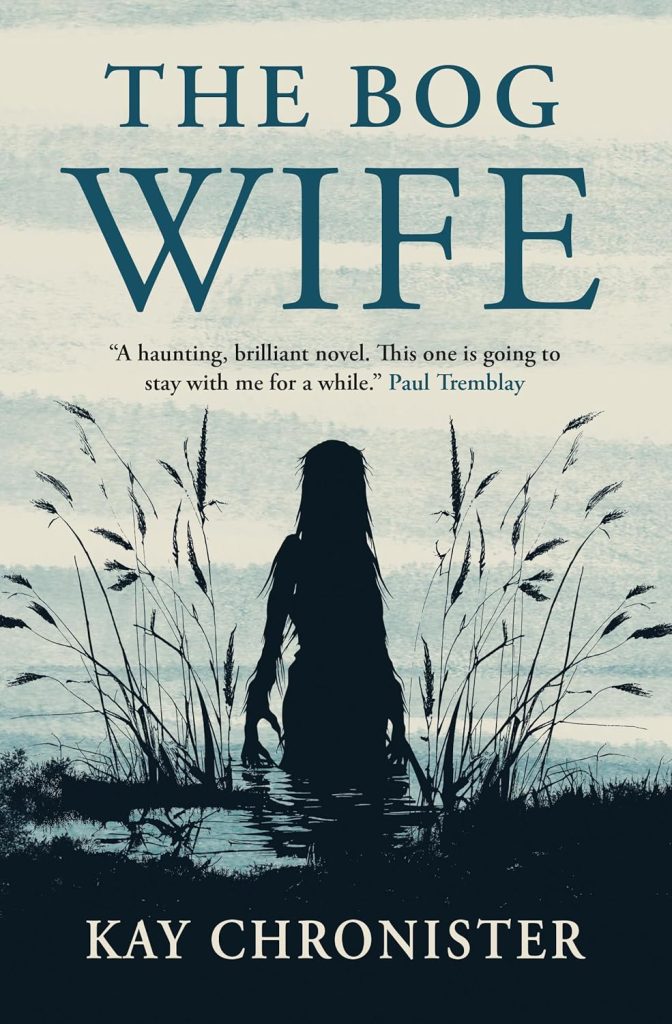
Kay Chronister’s genre-defying new novel The Bog Wife is a heartfelt and haunting exploration into the intersection of the occult and the mundane, the supernatural and the familial, and the blurred line that attempts to separate humanity from the wild nature in which we live. The novel, set in the impenetrable Appalachian wilderness, follows the five reclusive Haddesley siblings – Charlie, Eda, Percy, Wenna, and Nora – following the death of their father and patriarch. Living in a crumbling stone manor on ravenous bogland to which they have made an ancient blood compact, the siblings prepare for Charlie to take a wife from the bog that has wedded itself to countless generations of Haddesley men; in the form of a woman hewn from plant matter and mud, pulled from the wild and brought into their human family.

Chronister’s creation of the Haddesleys is strange, almost ephemeral. Cut off from the outside world and tethered to nothing but the bog that they must care for, the five siblings are oddly childlike, unaware of the realities of real modern life until their estranged sister Wenna returns for the burial of their father, having lived in the city for the past decade. As the claustrophobia of the Haddesley life collides with the possibilities that Wenna has seized for herself, the arcane and wild core of this shut-off way of living rises to the surface as surely as the bog threatens to flood. These strange, quietly desperate characters and the heavy, heady density of the setting combine into an intoxicatingly charged prose, a narrative voice that seems to imbue every subtlety and sensation of this wild world into the most mundane of occurrences. There is a deep, inherent strangeness to this novel – the prose style, the character creation, the tantalisingly open-ended mysteries that Chronister weaves into the fabric of their existences; it elevates the mundane horror of the bog wives into something almost tangible – an existence that a reader has come to inhabit without realising, one that has settled over them like a mist.

The balance struck between the Haddesleys and their land is striking – a co-dependent set of demands ensuring one cannot function without the other. In exchange for their dead patriarchs and the removal of invasive species, the bog provides the family with fuel for their cruel winters, with mothers for their children. It is an interesting, oddly refreshing look at an older, more symbiotic way of living – a deep and intrinsic connection between human and nature. Chronister’s characters are so at one with the wilderness, so unsocialised as to be barely a step away from wild creatures themselves. The novel paints a convincing, thought-provoking portrait of a human existence more in tune with its basest self – strange and alien because it is closer to a true nature from which the modern human being has become woefully estranged.

The Bog Wife is masterfully paced. Divided into four sections – each one a season with suitably shifting colours, plants, problems – the novel does not deviate from the stately, thudding pace of the natural world, and the Haddesleys seem to swirl around within, untouched by the passage of time. And yet the problems grow – Wenna’s old life threatens to come knocking, the Haddesley fortune is dwindling, an heir is needed, strange documents cast shadows of doubt onto the very history of these wild Haddesley generations, winter is closing in and Percy is missing. Each ruinous possibility piles quietly into the cramped, leaking manor house and sits around the table at dinnertime. The real horror here is not the bog wives, is not the arcane knowledge or the occult rituals, but rather the poisoned human core at the centre of the family. Never comfortable, building under a steady pressure and bowing to the demands of the seasons, the narration allows the horror elements of this novel to lurk in the background, in the corner of an eye – while the casual cruelty of a family forced together, and the intolerant attitudes of the outside world threaten to shatter the fragile lives that the Haddesleys have forged around their bog. Gendered expectations, warring ideals, dark sibling rivalries – the novel is at its heart a character exploration, a deep-dive into the myriad and minute ways that people do not just watch as the rot sets in, but feed it, cultivate it; even at the expense of everything they’ve ever known.

The novel also subtly explores the roles of women in these kinds of antisocial families, in this folky, mouldering style of horror writing. Pulled from the earth, forced to bear human children and endure the abuses and indignities of violent men, The Bog Wife draws subtle allusions to the ruinous, imposed demands that human society makes of the Earth. The Haddesley children barely knew their distant, inhuman mother – instead sensing only the misery she exuded at being dragged from the land, and yet they can only watch as the brothers attempt a series of increasingly bizarre rituals in order to resurrect a Bog Wife for Charlie. The novel questions the demands that tradition, expectation, and gendered roles make of women, and the choicelessness that often rears its head in horror and yet is rarely questioned down to its core. When the Earth becomes a currency, so do those bodies which live upon it, within it – those which care for it and mother it. Is the poison at the heart of the Haddesleys some inner darkness seeping into the surroundings? Or is it the result of generations of obscure, unforgiving tradition that forces the bodies of its family into increasingly constrictive and cruel positions. The Bog Wife, then, becomes a question not only of what we would do for the iron fist of tradition and generational trauma, but of how much we are willing to force our bodies through for the collective good of the things around us.

A visceral, bodily-focused novel with such rich writing style that a reader can almost smell the Haddesley land, strange warped imagery and striking symmetries to city living, The Bog Wife is a dense and rich connection made to the very roots of the earth. Steeped in the subtle mysteries of an obscure family history, plagued with loss and threat, woven tightly around the full, fleshed-out characters that inhabit it, The Bog Wife employs a delightfully subtle, sinister strangeness; a bizarre, ancestral familiarity that throws a reader into the Haddesley life and unmoors them there – Charlie needs a wife, and the bog is shrinking.

stars

THE BOG WIFE is out now from Titan Books

THE NARROWS

Ronald Malfi became ‘one to watch’ in the horror world following the arrival of his excellent 2021 novel Come With Me, his breakthrough bestseller following the publication of a number of other works, which saw him honing his craft and developing his own unique style. The Narrows was one such work, originally published in 2012 and now reissued through Malfi’s current publishers in a new and expanded edition – “The Boy in the Lot” prologue was originally released as an e-book ‘teaser’ and is included here as it has fundamental links to the unfolding narrative of The Narrows itself. As Malfi himself explains in his introduction, his attention was to write a vampire book without any vampires…

The sleepy town of Stillwater, Maryland, is dying a slow death. Many of its inhabitants have moved away, its businesses are closing down, and it’s in thrall to a weather system that sees its streets constantly flooded when Wills Creek, the nearby river and its basin-like ‘narrows’ burst their banks during the many storms that bedevil the town. Stillwater is dank, gloomy, wet and unwelcoming. But something has come to visit, and it’s waiting in the dark, recruiting its harbingers and sending them out into the night to terrorise a community already battered and bruised by its unforgiving environment. A series of strangely-connected events – a missing boy, a road traffic accident with no victim, the gruesome slaughter of local farm animals…and the strange disappearance from a nearby town of the corpse of a young, hairless boy fished out of Wills Creeks a few weeks earlier – thrusts jaded Stillwater Police Sergeant Ben Journell into a maelstrom of mystery. He soon finds himself dealing with something beyond his comprehension lurking out in the darkness and preying on the embattled citizens of Stillwater.

Ronald Malfi’s books are often slow-burns, and The Narrows is no exception; he takes his time introducing his cast of characters, outlining their lives and their backstories with enough detail to ensure that his readers are sufficiently invested in their lives (and deaths) and incrementally introduces the ‘weird’ into the equation. The innocuous arrival of a stray bat in a local classroom in chapter one is the forebearer of things to come, and Malfi deftly ramps up the tension and the sense of dread as we meet his dramatis personae. Maggie Quedentock hits what she thinks is a young boy as she drives home from an ill-advised assignation with the best friend of her brutish husband, Evan, and then sees a strange figure flitting around her house in the night. Young Matthew Crawley goes missing after seeing a vision of his father, who abandoned the family a year or so earlier, in the crumbling ruins of a nearby plastic factory. His sixteen-year-old sister Brandy is also aware of a small, strange figure lurking around the house at night. Ben Journell, tied to the ailing town out of loyalty to his recently deceased father, is quickly out of his depth when faced with the unimaginable truth of the horror that has descended upon the town. Once the pieces are in place, Malfi sets about slowly dismantling them, and the horror that unfolds is genuinely nasty, ugly and grotesque, with a number of stomach-churningly visceral body horror set pieces.

Malfi has indeed created a vampire story without a vampire in the traditional sense; there are no urbane cape-swirling Dracula stereotypes here nor, indeed, the fey, sparkly blood-suckers of the Twilight series. The creature that sits in the book’s web of evil is an abomination worthy of HP Lovecraft, and The Narrows is a book resurrected in time for the so-called Halloween season; a book that pretty much encapsulates the spirit of cold, wet winter evenings, perfect for curling up in front of a roaring fire with something spicy to keep out the chill. The text occasionally betrays its origins as a breathless early work, but overall, this is another mesmerising Malfi masterwork.

stars

The Narrows is available now from Titan Books

BOOTLACE CINEMA

Before video recorders were commonplace in homes, the only way to watch films at your leisure in the comfort of your own home was to wait for a TV broadcast – which could be 3 – 5 years after its cinema run – or purchase or rent an 8mm version. There were two versions available – Standard 8 and Super 8. These were often condensed versions of the movies, but many were available in complete editions. The drawback would be running around five reels of 400ft cine film to watch it fully.

People of a certain age will recall reading magazines in the ‘70s with garish ads for classic horror or even Star Wars, which got a high-profile edited release on Super 8 before it even played in UK cinemas! As a youngster, it felt like magic to be able to project these films at home. If only we knew what would be around the corner…

Former projectionist at CIC and Paramount UK, Mark Williams’ book takes a look at how our favourite genres was represented in the Super 8 format. Meticulously researched and gloriously illustrated with box covers and adverts, this is a wonderful celebration of a bygone age. While there are still many avid collectors all over the world, Super 8 is the ultimate tactile format that was and is accessible to people in the home. Surprisingly, reels were still being made into the mid-‘80s, with the likes of Aliens (1986) getting the cine film treatment.

As well as the movies, there’s information about the companies that licensed and released the films, making it an impressive read all round. Whether you’re a collector, have an interest in ‘dead’ formats, or are merely fascinated with film history, Bootlace Cinema is a valuable resource and entertaining read. While full features are harder to find these days outside of specialist film fairs, condensed digests pop up regularly on auction sites. It’s the perfect time to start a new obsession hobby. Just don’t bid against me!

stars

BOOTLACE CINEMA is out now. Order here.

BROKEN GHOSTS

J.D Oswald’s atmospheric coming-of-age novel Broken Ghosts provides a haunting exploration of the everlasting impacts left behind in the intersection between humanity and the supernatural. Set in the foggy witchiness of rural Wales – where twelve-year-old Phoebe is sent to live with an eccentric and distant aunt and uncle following shattering personal tragedies – Broken Ghosts is the sprawling, untethered collision of folklore, history, drama, mystery, and the fundamental human forces that tie together these initially unconnected threads of life across the decades.

Densely descriptive and with a non-linear narrative style spanning forty years and changing between the two, Oswald’s novel is an impressively handled and far-reaching creation that allows the stories surrounding Phoebe and the buried mysteries of the tiny Welsh village she is moved to. Flitting between the present day and Phoebe’s arrival in 1985, Oswald’s narrative allows these tenuous and mysterious links to wind themselves around the action of its story and skilfully blurs the lines between the times in the same way the events of his novel do. Initially dark and depressing, with a wintry and obscured narrative direction, Broken Ghosts sets itself up immediately to deal with the fundamental darkness of death and isolation in the present day, and with long-buried murder mysteries and strange implacable acquaintances in the past. Without ever expressing too explicitly the directions and discoveries that Phoebe will follow, the novel becomes a meandering, open space in which Oswald explores the ideas that nothing is ever truly lost or forgotten – it sinks into ancient land and slumbers there until someone comes along to uncover it.

This intrinsic melancholy is highly atmospheric – Phoebe spends an entire wet summer roaming the fields and forests, avoiding the strange villagers she encounters at the river, learning the deep and dark lore of this old land, and devouring a series of romance novels by a mysterious author nobody seems to know anything about. These mysteries – some dark, some less so – weave into one overarching feeling of delicious strangeness and foggy misunderstanding – highly enjoyable for its deep atmosphere and gripping, sprawling histories. Phoebe’s eccentric aunt is comedically odd, the villager’s issues with the teenage goth telling stories of the ghosts in the forests seem realistically spooky, the aging rockstar with the dark backstory living in a house that is falling down in the forest is a highly original inclusion. Despite its density and stately pace, Broken Ghosts remains entertaining, questioning and searching – it comes to feel as though a reader actually has spent an entire strange and haunted summer with Phoebe and her implacable forest friendships. The otherworldliness and full embrace of the dark histories of the land is woven into each character, each scene – ghost stories told over dinner, in the pub, at the river.

The novel, however, isn’t a ghost story in the traditional sense – there are no real spooks here, no jumpscares or gore. Oswald allows simple human nature to fuel the novel’s supernaturality – the people’s connection to the land and to each other, the acceptance of secrets and the unreal, the inexplicable strangeness and damage of the people that Phoebe comes into contact with. The supernatural is no evil entity – it is a connection to a deeply human and damaged past, a way to heal around the gaping wounds of the present. Broken Ghosts is a deeply and intentionally strange novel, simultaneously creepy and yet undeniably cosy, with an almost classical or vintage construction of an incongruous protagonist travelling around strange locations, learning the land’s history, and fighting to connect it to the strangeness and difficulties of current existence. Phoebe blossoms over the course of the novel with several quintessential teenage high-dramas, with a satisfying tying up of the many strands of plot by the end – painting a melancholically beautiful and thought provokingly difficult picture of the full facets of human darkness and suffering, as well as the beacons of light that can be found in even the gloomiest corners so long as you look for them. Generational trauma, small mundane magic, and the majesty of nature inform and showcase this fundamental idea that the past never sleeps, and the land never quite lets go.

stars

BROKEN GHOSTS is released on September 12th by Wildfire

1984 [Edinburgh Fringe]

George Orwell’s dystopian tale of hopelessness and oppression (which is also a thinly veiled critique of 1940s global politics ) is perhaps one of the most influential stories of modern times. The title 1984 has become a byword for totalitarian practices, and words such as Big Brother, Room 101, and Doublethink have entered the common lexicon – so much so that Orwell’s stark warnings of a possible future have been watered down by pop culture.

WithinTheatre’s interpretation of the novel brings Orwell’s original intent through clever staging and powerful physical performance. For a start, this production does not attempt to adapt the entire novel; Orwell’s book might be a significant cultural milestone, but it’s not exactly a great story, eschewing structure to present a grittier and more realistic tale.  WithinTheatre’s approach is to start the story in the middle; our protagonist, Winston Smith, has been captured, and his interrogator is showing him the ‘highlights’ of his life.

This is done by having in-universe actors re-enact scenes. These actors are, like Smith, ‘Thought Criminals’, people dragged into interrogation by IngSoc, aka Big Brother. This adds an extra layer of hopelessness to the tale; the actors are themselves victims of the system.  It also means we only get an abridged version of the story with its most relevant story beats; this is cleverly done. The ending is unchanged.

Another layer is added thanks to a back projection; at key parts of the show, text explaining real-world examples of oppressive government practice (mostly from Belarus and Russia) appear, adding poignancy to the show.  The cast is from  Belarus, Ukraine, and Russia, adding further poignancy to the performance.

The adaptation of 1984 is accessible, important, and thought-provoking, and also suitable for persons who may be studying the book at GCSE or higher level.  Brilliant and serious.

Find out more about Within Theatre here.