Every fan has one.
Not necessarily the biggest hero, the most marketable mascot or the character who gets the most screen time. Sometimes it is the one who arrives in the story damaged but determined. Sometimes it is the awkward outsider, the doomed romantic, the final girl, the masked monster, the space captain holding everything together with duct tape and denial. Sometimes it is simply the character who makes a terrible fictional universe feel oddly survivable.
That is the essence of the “comfort character”: a fictional figure fans return to not just because they are cool, funny or iconic, but because they feel steady. In the frequently unstable worlds of science fiction, fantasy and horror, that steadiness can come from surprising places. A comfort character does not have to be cosy. They only have to mean something.
Genre fans have always understood this. The best fantastic storytelling gives us characters who are larger than life but emotionally close enough to keep. Starburst’s own celebration of the Top 100 Sci-Fi Films of All Time is full of those figures: rebels, robots, monsters, dreamers and survivors who have followed audiences out of the cinema and into everyday life.
Part of the appeal is repetition. We meet these characters, lose them, rewatch them, quote them, defend them online and discover them again years later with fresh eyes. They become part of the furniture of the imagination. The comfort character is not just someone we admire from a distance; they become a kind of emotional shorthand. They can represent courage, chaos, grief, resilience, awkwardness, rage, kindness or the very useful ability to crack a joke while the universe collapses.
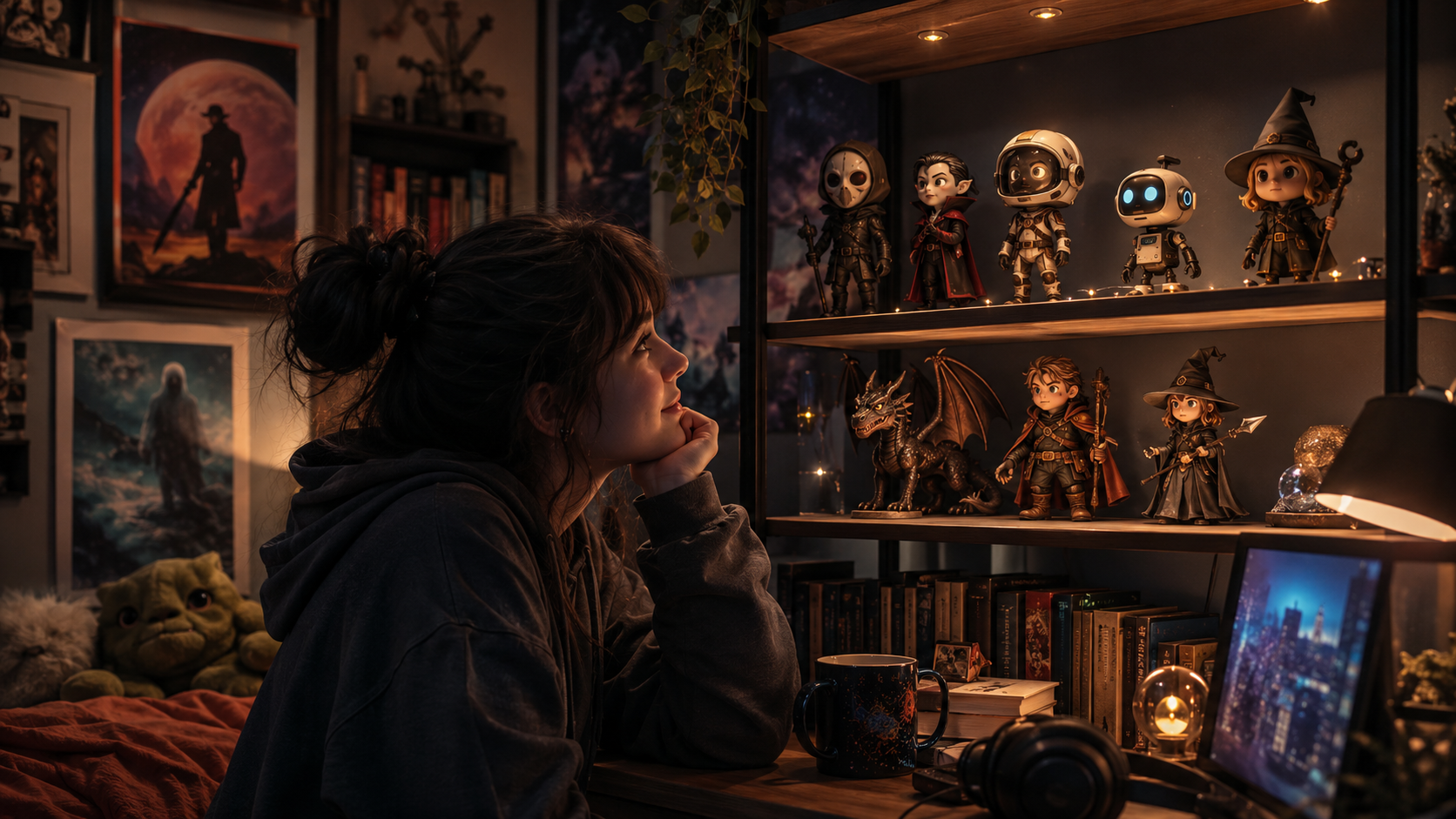
That emotional pull is one reason Pop! figures have become such a recognisable part of modern fandom. They allow fans to keep a small, stylised version of a beloved character close, whether that character comes from horror, fantasy, anime, gaming, comics or a galaxy with suspiciously dramatic lighting. A desk, shelf or bedside table becomes less of a display space and more of a tiny personal multiverse.
The interesting thing is that comfort characters are not always the characters designed to comfort us. In horror especially, affection often grows in strange soil. The final girl who refuses to stay down can become a symbol of endurance. The tragic monster can feel like an avatar for loneliness. Even villains, once repeated across sequels, posters, memes and midnight screenings, become familiar presences. Horror fans know that comfort does not always look soft. Sometimes it wears a mask and carries a theme tune.
Fantasy does something similar through myth and moral struggle. The chosen one, the reluctant knight, the witch, the rogue and the cursed wanderer all speak to different versions of the same feeling: life is impossible, but onwards we go. Science fiction, meanwhile, gives comfort through scale. When a character can face time loops, alien invasions, dystopias or the cold indifference of space, our own anxieties can feel a little less unmanageable by comparison.
This is why comfort characters often arrive at very specific moments in a fan’s life. A teenager might cling to an anime protagonist who refuses to give up. A young adult might find themselves weirdly moved by a battered spaceship crew that keeps choosing each other. Someone going through loss might return to a ghost story, a vampire romance or a monster movie because genre has always known how to dress pain in spectacular clothing.
And once that attachment forms, fans rarely leave it on the screen. They build rituals around it. They rewatch the same episodes. They wear the T-shirt. They collect the soundtrack, the poster, the Blu-ray, the art book, the figure. They quote the line at exactly the right moment. The character becomes portable: something carried between private memory and shared culture.
There is a reason lists like Starburst’s 80 Best Genre Films of the ’80s still spark such affection. Genre cinema is never only about plot mechanics or special effects. It is about the faces we remember, the monsters we secretly root for and the heroes who looked terrified but stepped forward anyway.
Psychologists have a useful term for some of this: parasocial attachment, the one-sided emotional connection people can form with media figures or fictional characters. The British Psychological Society has discussed how relationships with fictional characters can, in some cases, support self-development by giving people models to reflect on. In fandom terms, that tracks. A comfort character is often less about escapism than recognition. We see something in them that helps us understand something in ourselves.
Of course, the internet has intensified all of this. A comfort character no longer lives only in the film, game or series where they first appeared. They live in GIFs, edits, fan art, memes, cosplay, convention photos, reaction images and lovingly arranged collection posts. Fandom turns private attachment into public language. One person’s favourite character becomes another person’s “literally me” moment, and suddenly a whole community is speaking through the same fictional face.
There is a difference, though, between nostalgia and comfort. Nostalgia looks backwards. Comfort keeps working in the present. A character from childhood can become a comfort character, certainly, but so can one discovered last week on a streaming binge or in a game played at 2am. What matters is not age, but use. Fans return to these characters because they still do something: steady the nerves, raise a smile, offer catharsis or make the weirdness of being alive feel slightly less solitary.
The shelf, then, becomes a map. Not a neat one, perhaps. More like a wormhole with dusting issues. A vampire beside a superhero. A space marine next to a cartoon cat. A cursed doll near a wizard. To the uninitiated, it may look like clutter. To the fan, it is autobiography.
That is the quiet power of the comfort character. They are not simply favourites. They are signal flares, survival tools, private jokes, emotional bookmarks and, occasionally, tiny guardians watching over the desk. In the strange worlds of sci-fi, fantasy and horror, fans keep finding impossible figures who somehow make reality easier to face