Kevin Smith | JAY AND SILENT BOB REBOOT

Kevin Smith

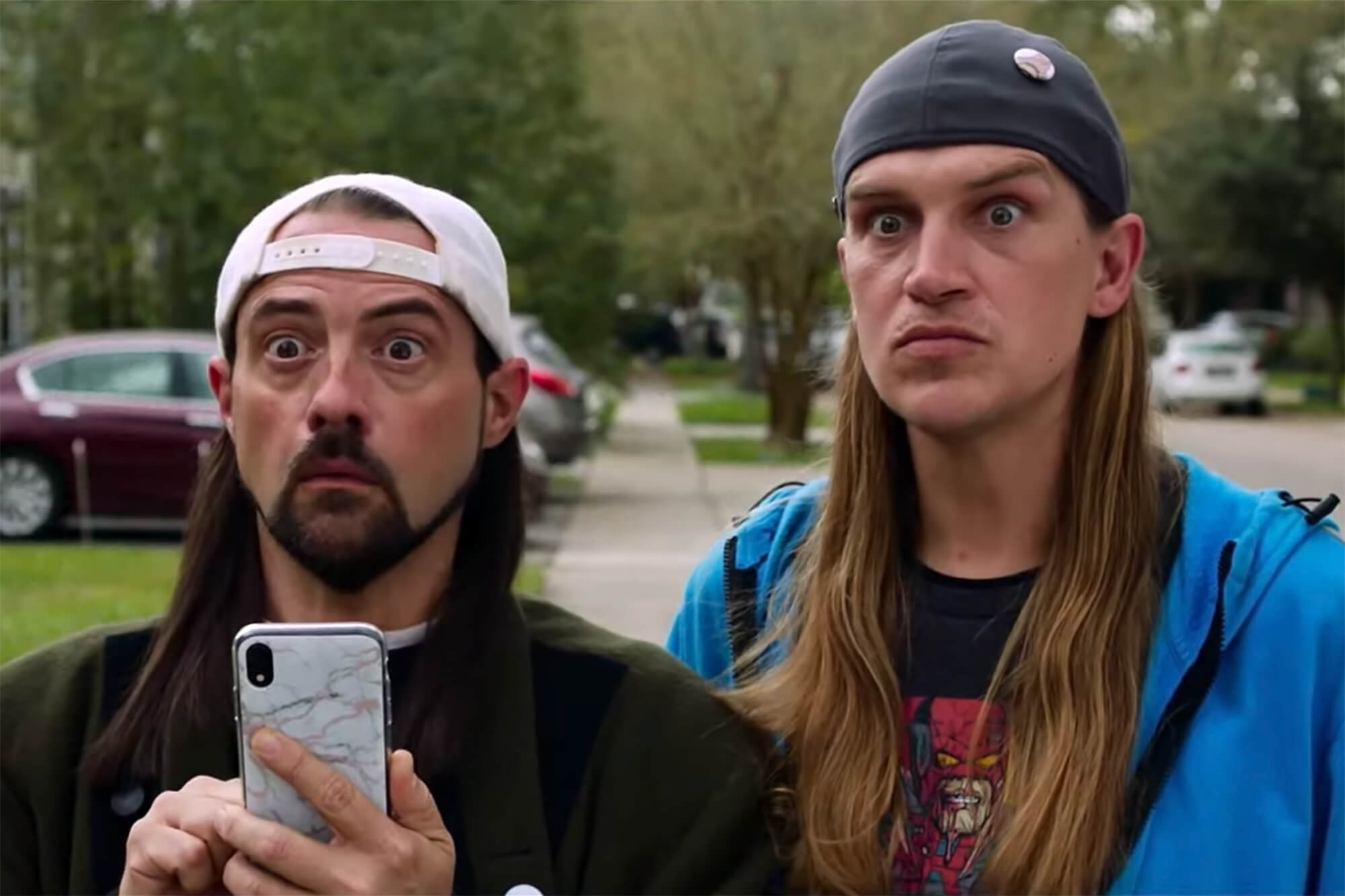
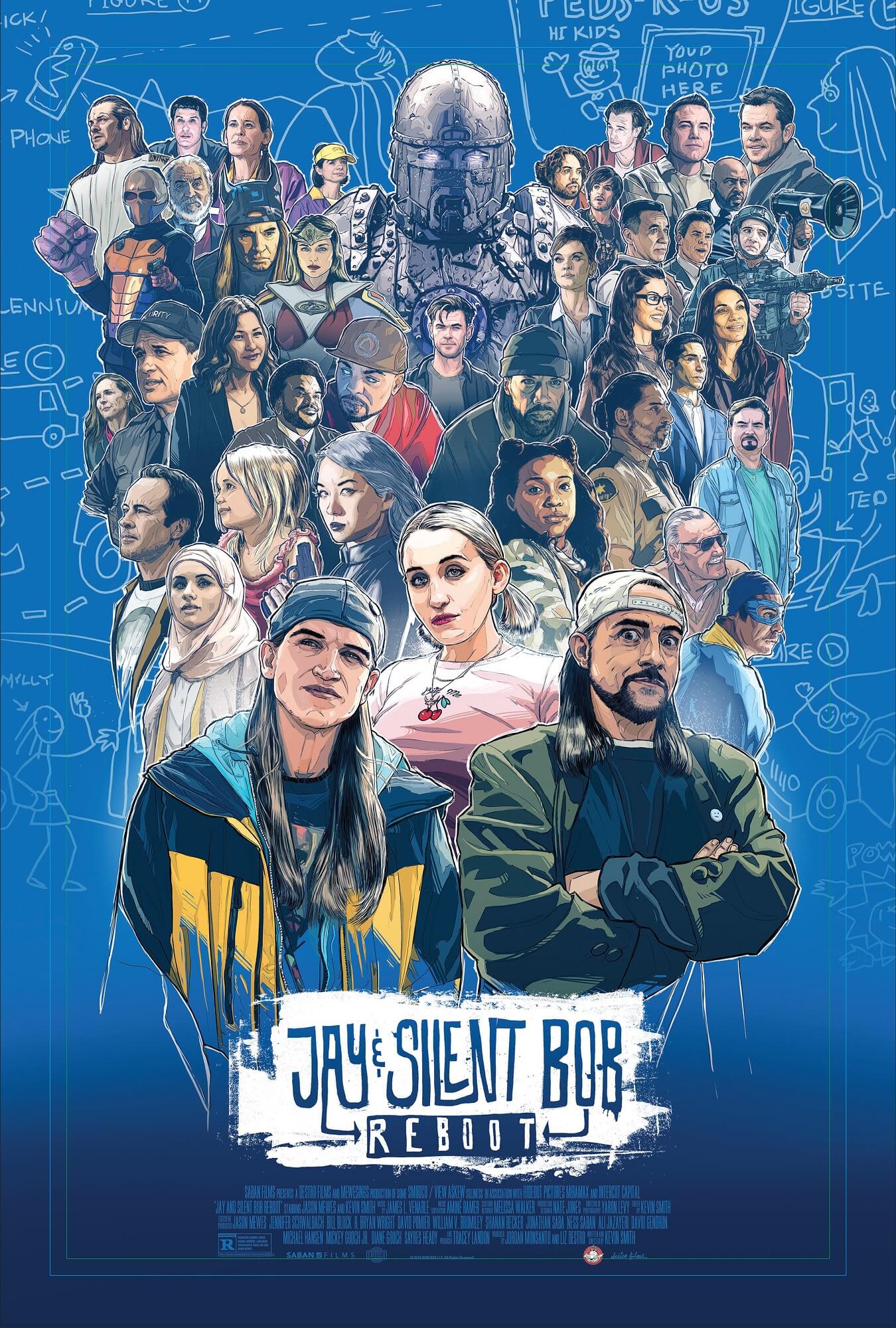
As Kevin Smith’s heartfelt ‘n’ hilarious Jay and Silent Bob Reboot gets set to hit home release, we caught up with this major genre fave to discuss his latest movie, his decision to revisit the View Askewniverse world of characters, making Reboot a sequel to all of his previous VA pictures, how he reconnected with Ben Affleck, his advice for 21-year-old Kevin Smith, and what lies ahead for Clerks III and Mallrats 2.

STARBURST: Firstly, as fans of the View Askewniverse and its array of characters, thank you for making this movie.

Kevin Smith: Oh my goodness, thank you for watching it. I’ve been on the road with it, on the Reboot road tour. We’ve done New Jersey, Chicago, Detroit, Grand Rapids. Every audience is full of hardcore fans. It’s not just a movie crowd going, “Hey, what’s playing this week?” It’s people who grew up with these movies, who know the dialogue and the characters. Watching it with them every night, it’s like being basked in absolute adulation. It’s so lovely. The movie is made for that audience. Chiefly, it’s made for me, as I’m the biggest Kevin Smith fan. But if you’re a Kevin Smith fan, this movie is made for you. It’s a dream come true for me.

The last time we saw this world in live-action was back in 2006 with Clerks II, so how long has this film been gestating for?

It’s something we’ve been trying to do for three years as Reboot, but technically this goes back five years to when I was trying to make Clerks III. Then that didn’t happen, so I was just, “Wait, we’re gonna make Mallrats 2.” When that didn’t happen, I was a little frustrated so just thought, “Why don’t we work smarter not harder?” We own Jay and Silent Bob, me and Jay, and we want to do it, so let’s pursue Jay and Silent Bob Reboot. And in that, I started doing sequels to everything else. I felt like it was the only View Askew movie I was going to get to make, so I put a Clerks sequel in there, I put a Mallrats sequel in there, a Chasing Amy sequel in there, and a Dogma sequel in there. For me, it was like, “Let me take the best parts of the two projects that I couldn’t make happen, throw them into this as starter courses, and see what comes of it.” Jason Mewes being a dad, that really put us on the right track. He’s been a dad for about four and a half years, and he’s this amazing father. You wouldn’t think it, because he’s this guy you wouldn’t trust with a carton of eggs, let alone a human being, let alone one that’s tiny and fragile. He turns out to be the greatest dad I’ve ever seen, including myself in the equation, including my father.

I was a parent who was like, “Don’t fall off that, you’re going to get hurt.” I was protecting the kid, keeping her out of harm’s way. Jason has a relationship with the kid where they relate to one another. It’s weird because he’s 45 and she’s four, but it’s this really beautiful dynamic. As I watched it, I was, “Go figure. The guy turns out to be the most adept at nurturing. Imagine what his character would be like. If Jason’s a great dad, what would Jay be like?” I started thinking in that direction, but it was, “I’m not going to give him a child, but giving him a long-lost daughter with Justice from the first movie…” It just started to click. We were making a comedy equal to Jay and Silent Bob Strike Back, and the premise I would tell anyone was, “This is movie that makes fun of reboots, remakes, and sequels, while being all three at the same time. This is literally the same movie all over again.” Secretly, we were building a real movie. It starts off exactly like Strike Back and gets us on the road, and then about 25 minutes in we show our hand – and the real story is here’s this dude who finds out he’s got this long-lost daughter.
JAY AND SILENT BOB REBOOT

For those maybe expecting plenty of chuckles – of which there are many – there’s also a strong sense of poignancy to the picture, too.

It’s funny throughout, but it takes on these weird, touching moments. Not that we’ve not got nostalgia all over the place – so if you’re aching for the ‘90s, you’re well serviced by this movie – but at the same time all of us are getting older. I’m 49, I’ve had a family. Most of the people who like this stuff have kinda grown up with me and can identify, because they’ve got kids, too. So suddenly this storyline is more affecting than just, “We’re doing the same movie”.

Post-heart attack, it took on an even bigger significance. When the doctor was like, “You have an 80% chance of dying tonight.” I was laying there and examining my life, and I was happy, I was content. I was, “Well, if it ends tonight it’s my fault because I used to drink two gallons of milk a day, so fuck me.” I’d had a great life, a great wife, a great kid, great parents, great friends. To me, it was just, “If it ends, it ends. Be grateful and graceful.” In that pool of zen, suddenly I was hit by the only regret that I had as I shuffled towards the grave – which was, “If I die tonight, Yoga Hosers is the last movie I ever make!” Suddenly, I had to live. Jay and Silent Bob Reboot was so close, and I was, “Man, that would be the one to go out on, because that really encapsulates my entire career.” The doc saved me, thank the Lord, and I went to work double-time on a) getting Reboot made, but b) making it even more substantial. I was like, “Look, my dad had two heart attacks. The first put him on warning, and the second one took him out.” I apparently have my dad’s heart, but my mom’s heart has got a bunch of stents in it as well. So I could change my life and eating habits and my health and lifestyle, which I did when I went vegan and lost a bunch of weight, but at the end of the day I’m at the mercy of genetics.

There’s a part of me that’s thinking if my dad had two and the second one took him out, then if I had another one then maybe it’s the second one that takes me out. I want to have something that I leave behind that’s, “This is what I thought about all of it. Life, movies, being a person. This is the stuff that mattered to me.” I kept referring to the movie as, “This is one big cinematic gravestone.” To me, it’s “Here lies Kevin Smith. This is what he did.” The movie really encapsulated this. I’m done with it and I love it to death, but I haven’t died yet, which really fucks with the plan. Now, everything I do I have to pour in this like, “Well this could be the last thing now! It has to mean something!” I’m working on Masters of the Universe for Netflix, and people are like, “Bro, it’s Skeletor. It can’t mean that much,” and I’m just, “No, it has to say something about who I am!!!”

The movie’s taken that dimension as well, post-heart attack. I wear my heart on my sleeve, but I’ve just flat-out ripped off the sleeve and just put the heart on my arm. The movie’s just one giant, beating heart, while still being this dirty little movie. It has one of my favourite cum jokes that I’ve ever made in my entire life, the one that Jay makes in the third act. You should see it play with an audience – it’s religious, dude! Every night I watch it with the audience, I feel so clever. I’m like, “Oh, all the stuff I wrote years ago, it turns out it worked.” Then I feel clever because I designed this tour, so that I get to go and watch this movie with an audience that loves it, who it was made for, 63 dates in a row. Sometimes there’s three shows a night, sometimes it’s one show a night. And I watch it! It’s not even like I watch 10 minutes then go outside to smoke. I love watching it with the audience. This is what it’s all about for me. As a filmmaker, you dream about putting the movie up on the silver screen like the movies you saw when you were a kid. If you’re the Avengers, you get a month at the box office. If you’re Kevin Smith, you barely get a weekend. You get a day before it all collapses and falls apart, because I don’t appeal to a mainstream audience. Early in my career, I’d watch the box office on Friday, Saturday, and Sunday. That’s how we spent opening weekend, rather than, “Holy shit, we did it! We made a fucking movie, we did something very few people in this world will ever do!” Instead, we were always focussed on how much the movie made, who was going, how we could get more people to go. This part of the process, developing the approach of “I’m just going to take it out myself…” anybody could do this. [David] Fincher could do it, Spike Lee could do it, Quentin [Tarantino] could do it. Quentin kinda did do it when he toured The Hateful Eight. You just have to be willing to spend the time doing it. For me, making the movie is great, but enjoying the movie with the audience? That’s why I made it! I want to be in the room and hear them react and see whether I got things right and whether it worked. I jerry-rigged the system for myself. Now that we’re living in that model, it’s so gratifying to me as I don’t have an opening weekend anymore and I don’t have that one day. I got 62 days where every time I walk in that theatre I feel fantastic. The dream literally comes true. It used to be, “Oh man, theatrical fell apart. I hope home video works.” Home video would work out for us, but this, doing it this way, I have loved it. It’s a little frustrating for some people who just want to go and watch it in a movie theatre, but we’ve tried to tailor it that way so that wherever we tour the movie, the movie then opens behind us.

JAY AND SILENT BOB REBOOT

You’ve toured several of your movies now, but did this one feel a little more personal due to how it was a return to a world that people have been invested in for over two decades?

The aim here – and it’s nice to make money, don’t get me wrong – is to just sit here and enjoy this movie with everybody. Again, I’m the world’s biggest Kevin Smith fan, but being in a room of other Kevin Smith fans, I’m right there with them. When they laugh at every old reference, I’m just, “Right?!” I was hoping that if I just referenced the C.L.I.T. terrorist organisation from Strike Back that it would get a massive reaction!” If you just took this movie and put it in a normal theatre, it’s not the same experience. These screenings that we do are distinctly in my favour, the tables are titled, and I get to enjoy it. Every night so far, it’s been 1,500 people who were there for me from 1994 and they come out. It’s so beautiful and cathartic and fun. I sit there going, “Why would I ever do it any other way?” Jordan, who runs our company, who’s married to Jason, is just, “Look, next movie we’re not doing this tour stuff. Let’s get it to a place where they release it like they release other movies.” I’m just, “You don’t get it. I’ve been doing this for 25 years now. I don’t wanna do it that way, it’s fucking wasteful.” It’s one thing to spend millions of dollars, but then to spend double whatever you spend to just sell the movie to people and let them know it’s coming… we’ve got social media, man! Anybody that gives a fuck about Kevin Smith will find out about it from Kevin Smith, and that way we don’t have to spend that money. I love it, because it feels good and the movie works. Even when we toured Yoga Hosers, it was fun, but it didn’t work like gangbusters like this one does. And it spoils me to the point of, “Well, maybe this is the way that I want to do it forever.”

I love this world and model. For me, it’s insanely gratifying. It’s also economical. We haven’t spent anything in marketing, which means the money that comes in is real money. It’s fun, and it puts me at ground level with the folks – which is what I’m in it for, man. I don’t do this so that I can sit in Hollywood and hear from somebody how the movie did. I make these things for the same reason I did in the beginning. I just want to share it with people and hear what they think. Whether you like it or not, it’s all about expression. For a while, the movie business often became about the business. Now I look to square away the business right away so we can just concentrate on the self-expression and the joy, man.

Clearly Reboot relies on a level of nostalgia initially, but how was it for you to balance that nostalgia and the greatest hits element whilst also allowing this fresh story to breathe?

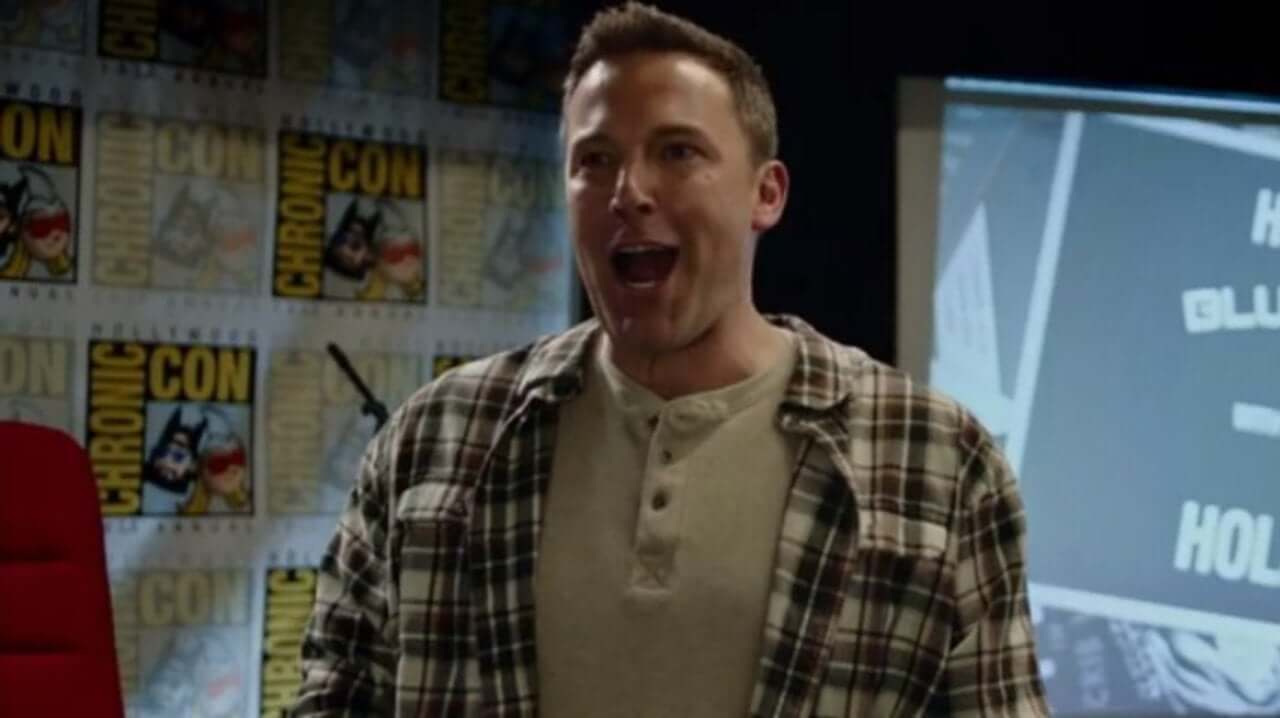
It’s weird, because when I watch the movie I’m like, “It’s not really a reboot, it’s not a remake, it’s not a sequel. It’s a requel!” We’re following up on breadcrumbs and storylines that were established years ago, and adding another generation. It’s very much the J.J. Abrams Star Wars reboot, where it’s, “Hey, here’s your legacy cast, but then here’s your new kids.” Finding the balance was tricky, and I was always scared of the new kid. I knew anyone coming to Jay and Silent Bob anything know what to expect, but then you’re going to introduce them to the next generation. When I made Yoga Hosers with Harley [Quinn Smith], some cats were really shitty about it. Then I was worried on some level that there’d be backlash towards Harley about this, so I was cautious about how to balance it out, how much old stuff to include in there, and how much new stuff to include. As I watch the movie with people, every night there’s still this moment like a trapeze act – where I’m waiting to swing from one bar to the next, and there’s this moment between bars where I’m like, “I could fucking fall and faceplant! This whole thing could die!” Really, I just got lucky with the blend, man. I did ten drafts of the script. This script was my best friend for three years. Whenever I was sad, lonely, happy, looking for something to do, bored, I would always turn to the script. It was like, “You know what, I’m gonna dive back into Jay and Silent Bob Reboot and maybe tighten the screws, maybe add a few more parts.” For a goofy-ass movie, it had the benefit of me drafting draft after draft. Even right up until production, the Ben [Affleck] scene didn’t come into the movie until way late. I didn’t include that in the first draft because I hadn’t spoken to Affleck in almost a decade – so I wasn’t going to presume to put him into the flick. That whole scene, the Holden and Chasing Amy 2 scene, was written in the last week of production of the movie and shot on the absolute last day. It was not a part of proceedings when we got started, and never in the back of my mind was I, “Man, I hope Ben decides to make the movie.”
JAY AND SILENT BOB REBOOT

Given the significance of Ben’s presence in the film, it’s nearly impossible to think of the movie without that scene being included.

We were making the movie without Ben, and when you think about the movie and you think about that scene, you’re just like, “What would’ve been the fucking point without that scene?” That scene really sums everything up. Like any good situation or any good thing that’s ever happened to me, so much of it just contained luck and timing. The luck of Ben being interviewed about Triple Frontier, the movie on Netflix, and Kevin McCarthy was interviewing him and said, “Hey, have they called you about Reboot yet,” and Ben saying, “No, they haven’t. And I’m not busy.” That started the spark. Jason was like, “You have to reach out to him,” and I was just, “You’re out of your mind. He didn’t mean it, that’s just some shit you say at the junket. What’s he supposed to say – fuck Kevin Smith?” So I didn’t call him, I didn’t reach out. Jason and Jordan [Monsanto – SModCo executive and Jason’s wife] kept bugging me about it and going, “It might be a coded message, man. He might be wanting to reach out to you.” Finally I thought, “You know what? I’ll shut you guys up, I’ll fucking Tweet him.” Jordan said not to Tweet him as it was so fucking impersonal, and that I should text him. I text him saying, “This you?”, and he said, “This me, who’s this?” and I said, “Who you?”, he was just like, “I’m BA, I’m your father.” Right there, I knew it was him as that’s the type of shit we’d say, so he asked who I was. I text back, “The conversation might end right now, KS.” Then he writes back, “Kevin?” and I was just, “Yeah.” It just started this thing with, “Hey man, how are you? We’re having a blast from the past down in New Orleans making Jay and Silent Bob Reboot, and we wish you were here. Since the heart attack, I don’t wish anymore, I just ask. So will you come and play with us? It would be amazing, we would have such a good time, and I quote the good king Osric from Conan the Barbarian when I say, ‘There comes a time, thief, when the jewels cease to sparkle, the gold loses its lustre, the throne room becomes a prison, and all an old director wants is to make pretend with his old friend’.”

I waited for a response, which didn’t come for five minutes, and I thought my stoner heart on my sleeve had scared him off. Then he wrote the most Ben thing I could imagine when he replied, “It’s so telling that you still think of yourself as the king.” Happy accidents like that, man. If Kevin McCarthy doesn’t ask that question, that doesn’t happen. That scene in the script is represented by a one-line moment where Jay and Bob are running around ChronicCon, and Jay looks over and sees a dad dressed like Silent Bob putting a lanyard around the neck of a little girl dressed like Jay. Jay would’ve looked at Silent Bob and said, “I haven’t been there for Milly her whole life, Silent Bob.” Because we got lucky, I got an eight-page scene where I got to sequalise Chasing Amy. I got to write a one-page monologue for Ben that he knocked out of the park. We get to make Batman/Bruce Wayne jokes, for heaven’s sake, and he gets to deadpan at the camera about Martha. All of this was a gift. None of it planned, nothing to do with creative genius, it was all luck and fucking timing, man. That’s the magic of the movies, that’s the one ingredient you can’t plan for.

These days, Kevin Smith is a filmmaker who’s been doing this for 25 years, who’s got 13 full features under his belt, has written comics for Batman, Green Arrow, Spider-Man, Daredevil, who’s the healthiest he’s ever been, who got to become friends with Stan Lee, who for better or worse got to work with Bruce Willis, and who saw Ben Affleck become Batman. What advice would this Kevin give to the Kevin who made Clerks in 1994?

Wow, what a great question. I don’t know if I have advice for that kid. I’m gonna get emotional. I don’t think I’ve got advice for that kid. I would love to go back and thank him. It was just so uncharacteristic of him to be like, “I’m gonna make a movie.” It was the weirdest fucking decision of that kid’s life. I grew up with that kid, I know exactly who he is, and everything leading up to that moment did not point to that. So in a completely uncharacteristic moment, that 21-year-old kid made a decision that made the rest of my life so much fucking better. I get to be Kevin Smith. To some people, it’s like, “Why’s that cool?” It really works out for me. It’s been absolutely amazing. When people meet you, they meet a friend. I’ve seen people where their face lights up when they meet you. It’s not like, “Oh, look at this piece of shit I’ve gotta deal with.” No, they’re happy to see you. And all that happened because that kid made a choice, because that kid was like, “Yeah, I think I can do this.” And he couldn’t. He didn’t have the wherewithal, he didn’t have the experience. I don’t know how the fuck he pulled it off, except that he was surrounded by friends who were like, “Alright, let’s give it a shot.” So if I could go back in time, I would thank the shit out of that kid. I’d be, “You have no idea how fucking brave you are. It’s going to change everything. It’s going to change your family. You’re going to have a kid because of this stupid fucking decision you made. One day, you’re going to put your hands in the cement at the Chinese Theatre in Hollywood because of the decision that you made. So thanks, motherfucker.” Believe me, I got no advice for that kid. That kid knew exactly what he was doing in that moment of time. I could use some fucking advice from him, I can tell you that much.

JAY AND SILENT BOB REBOOT

To circle back to Reboot as we wrap up, Reboot is a perfect ending for this universe but you’ve got Clerks III now announced. What can we expect from that, and are there still any plans for a Mallrats sequel?

The good folks at Universal, who were the other half of this equation with Saban Films, thanks to them we had money to make the movie. I think they were very brave to actually throw in, and there was a lot of sentimentality as to why they liked Jay and Silent Bob. There was no real reason for this movie to be made – it’s not like this is a Fast & Furious movie that’s going to print money. This one was made by the skin of our teeth, and the folks at Universal are a big part of that. So they were like, “What do you wanna do next?” I was just, “Well, I wanted to do Mallrats 2, and that’s how we got to Jay and Silent Bob Reboot. You guys have Mallrats. If we could do that, it’d be amazing if Jay and Silent Bob Reboot was the doorway to the two movies that we couldn’t make before that led to Jay and Silent Bob Reboot.” It would reverse engineer the process. They just asked me to do a two-pager, so it looks like we could be doing Mallrats 2. Then two weeks after that, I met with Jeff Anderson to talk about making Clerks III. I told him that we wouldn’t do the old script that we were gonna do, because it was just too morbid. I’ve got this new idea that I wanna do, and I need Jeff, I can’t do this without him.

I saw the Michelle Williams speech where she won an Emmy recently, and she talked about how she won her award because she could do her job because she was not worried about being paid less. And payment was a big part of what went wrong with Clerks III. So I told Jeff, “Look man, we will find the number that makes you feel comfortable, validated, and what makes you feel like you can just step onto the set and do the magic that you do.” It went very well, and he asked me about the story. I told him, “The story of Clerks III is Randall has a heart attack at the top of the movie. In recovery, he tells Dante about how he has nothing to show for his life. He has no spouse, he has no kids, he has nothing. All he did was sit around and watch people’s movies his entire life, and now there’s not much life left. Goddammit, I’m gonna make a movie about my life.” So he recruits Dante, and Randall and Dante make the story of his life. Essentially, they make Clerks but it’s called Inconvenience. We bring everything right back to the beginning, and I get to tell all the stories of the making of Clerks, of the true characters who made it possible. I’ll be honest with you, this is the one I’m actually going to try to win an award with. You can’t plan for that sort of thing, but it’s a really strong, wonderful script. I feel like, “Alright, it’s been a while since I’ve ever shown interest in getting validated by my peers and stuff, but I feel like this one could be it.” I feel like this could be the script that gets a few nods or something like that, so I’m amped to do it. It’s weird, because I haven’t cared about that shit for so fucking long. I love the story so much. Maybe if you love it as much as you do, you should put some more skin in the game. Never mind protecting yourself, just put yourself out there, man. Clerks was a movie that won a couple of awards when I started my career. I ain’t gonna win those awards anymore because those awards were more, “Hey, where’d this guy come from?!” I’ve got 25 years of experience now, so maybe there’s a way for me to win an award like my other peers do. I guess it’s a weird way of saying I’m gonna try really hard with Clerks III.

Jay and Silent Bob Reboot is released on Blu-ray and DVD January 20th – and you can find our review of the movie here.

An abridged version of this interview appeared in STARBURST Magazine #467 to mark Kevin’s UK tour of Jay and Silent Bob Reboot.
JAY AND SILENT BOB REBOOT

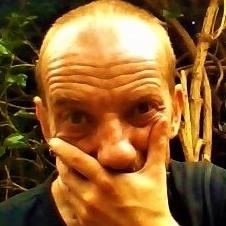
Nathaniel J. Harris | ACCIDENTAL ANTICHRIST

As one of the UK’s foremost writers and authorities on magic and the occult, Nathaniel J. Harris’s life has run the gauntlet of the ‘80s Goth explosion, goblins, creepy clowns, vengeful poltergeists and dodgy hippy festivals – an extraordinary existence that led to him being mythologised in the pages of 2000 AD comic. As he publishes Accidental Antichrist, the first volume of his controversial autobiography, we dabbed ourselves in holy water, entered his chamber and dared ask him a few prudent questions…

STARBURST: Why have you decided to tell your own story now?

Nathaniel Harris: I wrote Accidental Antichrist to reclaim my past after losing my family to an abusive mind control cult. As the process continued, it grew to become a book. Like its author, it was conceived by accident and acquired purpose as it went along. Plus, I heard it is almost impossible not to love someone if you know their life story, so it seemed like a good tactic.

Why is it subtitled ‘A Survivor’s Grimoire’?

I think the grimoire is an under explored literary art. If you make a study of the classics, like The Testament of Solomon, or The Black Raven, they read as much like dramatic novels as books of rituals. I’ve written a few theoretical and instructional works, but they’re kind of abstract if taken out of context. For myself, magic was something I grew up with, coming from an old Essex witchcraft family and living in a place so rich in history and folklore. It wasn’t a game, or something to be disrespected. If you wanted to learn the practice, and you didn’t come from a hereditary lineage, you’d have to join a coven or an order. There weren’t all the occult bookshops, workshops, and online courses there are today, and it wasn’t something the middle classes took up as an interesting hobby. It was also my survival strategy. Many of those who come to me are also survivors, and we work together to reclaim identity and a sense of agency. The best healers often have to heal themselves first.

How did you come to know the writer Pat Mills and end up as a character in 2000 AD comic?

I met Pat’s daughters in the street and they took me and my gang of teen punk friends round to meet him. This was in 1986. You can find us in Book Four of Nemesis – brothers Nathaniel, Ivan, Owain, and John, the renegade terminators. Pat was also in the early stages of creating Slaine, whose appearance was inspired by our spiked hair and tartan trousers. Our friendship has continued since then.

How has science fiction and fantasy influenced your writing?

Science fiction and fantasy deal with archetypes, at least when done well, and so does magic. Plus of course magic is allowed in science fiction and fantasy. They provide a space where the possibility can be discussed without anyone having to worry about whether they believe in it. The relationship between them often produces surprising hybrids, too. Lovecraft’s Cthulhu mythos, for example, inspired Kenneth Grant, and many other magicians.

Chaos Magic was massively popularised in 2000 AD comic during the 1980s – 1990s, which I am perhaps partly responsible for. Nemesis the Warlock made many references to it, and it was my idea to put Deadlock in charge of the ABC Warriors. I have appeared in it as a character quite a few times. I stopped buying it for a while, to my shame, and when I found it in my local newsagents, I was amazed to see the archangel Nathaniel, wearing armour stolen from Dr Dee, flying over East Anglia in Defoe, so got back in touch and haven’t missed a Prog since. Alan Moore and Grant Morrison were also writing for 2000 AD in those early days, and both now openly admit to practising magic. Plus, my biological father, who you meet briefly in Accidental Antichrist, was a set designer and special effects man who worked on Superman the Movie [1978], The Hitchhiker’s Guide to the Galaxy [BBC 1981], and Knightmare [ITV 1987-94].

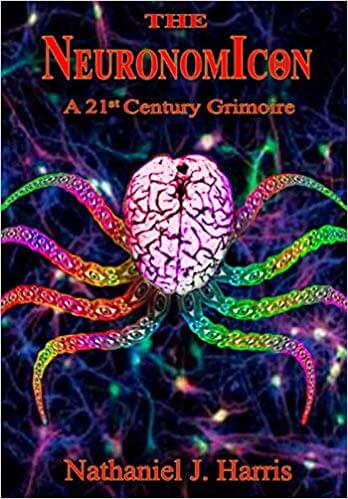
So, science fiction and fantasy has influenced me a lot, and been a big part of my life. My book The Neuronomicon deals with neuromancy, a term borrowed from William Gibson, although my theories draw from neurology, quantum physics, and noetic science, as well as traditional occultism. To some people it probably reads like Gibson’s crossed with Lovecraft, with elements of Wilson and Shea’s Illuminatus!, but while my style may be whimsical, I’m confident it’s a genuine advance in the technology of magic, perhaps the first in 100 years.


Was revisiting your ‘70s and ‘80s childhood for this book, while living in 2019, a Dr Manhattan-like experience?

It definitely gave me a sense of being outside the circles of time. The places I write about are all kind of timeless, too. Rural Essex, the town of Colchester where Old King Cole and Humpty Dumpty come from, and the wilds of the Pyrenees mountains, these are places where past and present are simultaneously present, and I was writing in the present about my past. And, of course, it made a kind of psychic call to the people I had grown up with, many of whom I’d lost contact with over the years. It was amazing how many of them came back into my life. Getting involved with international occult conspiracies, alleged Illuminati orders, coven networks, and the voodoo underground, it can uproot your sense of self. But that’s all for the follow up books, some of it I’ve written about already although not so descriptively.

You’ve had more than your fair share of run-ins this with black magic cults, what have they got against you?

I used to run a London-based temple of the Illuminates of Thanateros. I resigned in 2001 because I found Chaos Magic to be a cul-de-sac, which embarrassed them, considering my previous status. They’ve spread the worst kind of libel and tried to write me out of their history, but it hasn’t worked. Chaos Magic’s nihilistic ultra-relativist pseudo-philosophy seemed cutting edge in the ‘80s, but in my honest opinion, it was all over long before it got popular with nerds, and long before the IOT’s leadership brought it to such shame. If one wishes to become one thousand, one merely has to attract enough zeroes.

After resigning, I wrote Witcha: A Book of Cunning, which I self-published in a hand-bound leather volume. This was before the craze for luxury occult books. And just before Owen Davies’s Cunning Folk came out, the first academic study of the Britain’s genuine magical tradition. This got me into a squabble with Andrew Chumbley, who was trying to pass himself off as the Magus of East Anglia. There were all kinds of rumours when he tragically died, which didn’t help my reputation. I like to think that if he had lived, we would have gotten over our differences.

Shortly after I published the first edition of Witcha, Kenneth Grant encouraged a Pythoness of his Typhonian Order into attempting to seduce me to join. She was an author, and wrote an erotic novel with a character in it she said was based on me, and who ends up being horribly killed. I also have a flattering deconstruction of my name by gematria included in a letter Grant sent to her, which she cheekily photocopied for me. It didn’t work, as I found the whole situation manipulative and sleazy. I mean, why not just write to me with an invitation?

Then there are the Satanists, with their big campaign to point the finger at anyone but themselves, so they don’t like that I wrote about ritual abuse in The Neuronomicon. We’ve had a serious problem right here in this city where I live. That’s not to say all Satanists are involved in brainwashing child sex slaves, but the case has similarities with others here and abroad that to my mind don’t seem to have been investigated properly. I’m not up for defending anyone’s image if it means covering up that kind of thing. And despite the protestations, it is well known that Jimmy Savile thought he was some kind of Satanist. It might sound like conspiracy theory, but it was right there in the paper and there is nothing the Temple of Satan can do to make this publicly available evidence go away. It doesn’t make me popular when I point these things out. If I was the Devil, I’d be embarrassed by these people and would refuse to turn up to their rituals, so it’s no wonder they’re atheists.

So most practitioners of ‘real’ magic are just charlatans of one kind or another?

These days, most of what masquerades as magic, with or without a ‘k’, is just sleazy sex cults, or an excuse to abuse drugs and make believe you’re some kind of shaman, or both. The same goes with witchcraft. The popular ‘occult scene’ here in the UK is riddled with dangerous charlatans and worse. As far as I can tell it’s the same in America. It’s only those in denial of such uncomfortable truths that have any problem with me, plus the guilty few. Dupes, basically, like back when the Catholic Church could still deny its shameful side. Plus, there is money to be made. Call me arrogant, narcissistic, whatever, but that’s been my experience. The sheep may be black but they bleat all the same.

So, I have a long history in magic, and have rubbed a lot of people up the wrong way, but as far as I’m concerned, it’s been for all the right reasons, even if my books are no longer in the major outlets. So thanks for asking. It’s good to get all that off my chest.

Death stalks your story, with many participants dying or disappearing in mysterious circumstances. Would you consider yourself dangerous to know?

I hope not. I’d like to think I’m safe to know, and that I help to keep others safe. But not everyone I knew survived to the end of the book, not everyone I write about survived to see the 21st century, and one dear friend in the book read the manuscript but died before it was published. Life can be cruel, and death can be arbitrary…

Some readers may scoff at your tales of magical happenings. Others will read about your vengeful curses on people and fancy themselves to do likewise…

Yes, there is a lot of magical cursing in Accidental Antichrist. There were a lot of bullies in my childhood and curses were my way of dealing with them. I’m open-minded in my account, rather than making any definite claims, though. I was just a kid, and it was perhaps an immature reaction to my situation. And if any kind of magic might backfire, curses are it. I don’t recommend anybody starts there. Moving forward with your life and doing well despite what others might wish on you, that’s the best revenge, if revenge is needed. Why can’t we all just get along? Which isn’t to say that justice against transgressions should ever be denied or avoided. Justice means preventing further transgressions, not satisfying our bruised ego by committing further transgressions. More recently, I’ve been accused of cursing reviewers who don’t give me five stars, but none of that is true. Promise.

A key figure throughout your early years was your violently abusive stepfather. How does any kid cope with that?

I had to. Psychologists might conclude my tough childhood explains my involvement in sorcery, assuming it is an overcompensation. Perhaps it was at the start, but as a survival strategy, it worked. I can’t pretend I wasn’t damaged, though, even if many people refused to believe my stepfather was anything but an easy-going hippy. Abuse during formative years hampers a person’s whole life, but there are plenty of kids who have to survive much worse.

You quote Alan Garner who said “if you think where you live isn’t interesting enough to write a book about, take another look”. You have certainly taken another look at Colchester.

Every place has a history, and every person a story. It is often more about how the story is told than how important or famous a person or place is. Bukowski wrote a novel about being sacked from the post-office, a fairly normal story but told with style. With Garner, it was the way he explored the folkloric, magical elements of place that enchanted me as a child, and I hope I have managed something similar with Colchester. Garner and Bukowski were masters, I’m not comparing my style or skill to theirs but they are an inspiration. Colchester, the folklore of witchcraft and Black Shuck, the weirdness that went on, and the people who lived there in the time I write about, all deserve to be remembered and celebrated.

What’s up next for you?

I’m currently teaching a course in sorcery, 21st Century Urban Voodoo. I’m also working on a treatise of the Yi-King, relating it to Obi and Ifa, all at least 5,000-year-old binary codes, which I hope to have ready some time in 2020. It’s a follow on from the Neuronomicon, essentially, but will also stand alone as a device of divination, capable of answering almost any question, like some kind of extradimensional Artificial Intelligence.

At the same time, I’m working on Book Two of Accidental Antichrist, but I’m taking that slowly. I have to wait for certain people to be prosecuted or to die, whichever happens first, before I can tell the whole story…


Accidental Antichrist: A Survivor’s Grimoire is out now

Makoto Shinkai | WEATHERING WITH YOU

Following the worldwide success of YOUR NAME in 2016, legendary Japanese filmmaker MAKOTO SHINKAI brings the world his newest masterpiece WEATHERING WITH YOU. We received the highest of honours to spend time talking to the man himself about his new film, the inspirations behind the story and the importance of human relationships.

Below is an extract of the interview – the full interview will be available to read in STARBURST Issue #469

STARBURST: Congratulations on the film. It’s an absolute masterpiece. How has the reaction from the fans been for you?

MAKOTO SHINKAI: Simply amazing. It’s the number one Japanese film at the box office in 2019. I didn’t expect that and I’m really happy that it has reached that height. We’ve had a lot of young support too which is great to see.

As with Your Name (and your other films), you also wrote the screenplay as well as directing. Where did your inspiration for the story come from?

There are a few inspirations – the biggest is the fact that climate change is becoming a reality and every year in Japan we are getting these really heavy rains that are causing flooding and they are becoming more frequent along with other natural disasters so I thought it was a good time to make a film on the theme of weather.

Music in film is such a huge aspect and one of our favourite parts of the film is the music. Just like with Your Name you’ve worked with RADWIMPS again on Weathering with You. How important was the music to you and what was it like working with RADWIMPS again?

I think music can move and audience more than the visuals. I wanted to work with artists who understand that role that music can play and RADWIMPS get that and understand what they can do – understand the power that music has, and I think that brings something truly special to the film.

Hodaka and Hina are both wonderful and interesting characters – both from completely different backgrounds. Who was your favourite to write and develop and did you draw any inspiration from yourself or people that you know for those characters?

Well, Hodaka as the narrator is maybe closer to me – he’s the one moving the story along but Hina, she’s the unknown. She is something that Hodaka is trying to figure out but can’t because she is the sunshine girl and she has these powers that normal people don’t have, and it was fun to write that sense of the unknown. I wanted her to be a character that the audience couldn’t predict. One minute she’d be crying, the next she’d be laughing, and it was fun to write that character. She wasn’t really inspired by anyone that I know, it was more like I was imagining someone that I’d like to meet.

The animation in your films is easily some of the best in anime today – arguably THE best. Every single one of your worlds feel full and alive and feels like a character itself – is that something you always try to achieve whenever you make a new film?

With Weathering with You, I feel like Tokyo itself is a character – Hodaka goes Tokyo, meets Hina and gets to know her and at the same time he’s getting to know Tokyo, so it is as important as the characters and I wanted to draw it in as much detail as possible.

WEATHERING WITH YOU is released in UK cinemas on Friday 17th January 2020.

Our full review of the film can be found here and to find the nearest cinema to you that is showing the film and to book tickets, please visit https://weatheringwithyoufilm.co.uk/

Poppy Roe & Staten Cousins Roe | A SERIAL KILLER’S GUIDE TO LIFE

We here at STARBURST are proud supporters of independent filmmaking – especially when it comes from right here in the United Kingdom. So when we were offered the chance to sit down and talk with talented filmmaking couple Poppy Roe (Actor/Producer) and Staten Cousins Roe (Writer/Director), we were absolutely thrilled to do so. Staten’s feature-length debut A SERIAL KILLER’S GUIDE TO LIFE, which tells the story of Lou (Katie Brayben) and Val’s (Poppy Roe) road trip of self-discovery (and violence) through the medium of self-help, releases on VOD in the UK on January 13th 2020 and we got to ask them all about the idea for the film, the tough shooting schedule they endured and much more including a special story about the premiere!

STARBURST: Congratulations on the film. It’s a wonderful mix of dark comedy and the drama of internal struggle.

Poppy & Staten: Thank you so much – it’s fantastic to hear that people have enjoyed the film and totally get the core meaning.

Poppy, what was your initial reaction when reading the script for the first time?

Well, honestly, as Staten and I are a couple and I served as a Producer on the film as well, I’ve known about the ideas and narrative of the film since pretty much day one. It’s an idea that stemmed from all the way back when we did our short film called This Way Out – so it’s always been in my mind, but Staten served as the main writer for the script so seeing the progression through the drafts was really interesting to see where these characters were heading in the story.

Staten, can you tell us more about the core idea of the story?

It was definitely born through our short film as Poppy mentioned – fun fact, we actually shot that in our living room which just epitomises independent filmmaking. Poppy and Katie’s characters were extensions and developments of their characters in that short (which was about a failing Euthanasia clinic). I wanted to take that idea of satirising this target-driven world and apply it to something that would work as a feature film. I came across the epidemic like situation of people consuming self-help from unprofessional and ludicrous sources that also felt like a cult – so I thought that that was ripe for a satirical take whilst also being respectful and that’s where the basis of A Serial Killer’s Guide to Life came from. I also wanted to make sure, after having a lot of meetings with various production companies and household names in film, that we made our first feature film ourselves so that we could experiment and let our wings spread, so to speak.

What was the shooting schedule like?

It was really tough but extremely rewarding and a very unique experience. We shot over two weeks and had to travel to 28 or so different locations – and because of that short time frame, a lot of the scenes were literally one or two takes. That’s when being an actor and a producer can be seen as the worse thing because as an actor I was saying “I think I can do better, can we do another take?” but as a producer, I was like “No, we have to move on” [laughs].

Shooting it so fast over two weeks, as Poppy said, it was one or two takes maximum – and pretty much what you see in the film was on the editing table. I wanted to give the actors a little to do as possible in the sense of having to constantly get back into a particular frame of mind for the role so shooting it so rapidly helped everyone stay focused and made things easier in that respect. It gave everyone kinetic energy and worked wonders with Poppy and Katie when they set out to play these characters and embark on their road trip of violence. [laughs]

You could say that the intense schedule gave the film even more of a raw charm and natural feel to it.

Absolutely yeah, myself and Katie (who played Lou in the film) really embraced that and even though it took us a while to get into it once it clicked we truly embraced the chaos. We also shot in order as well which in a way is really lucky – so you can see us, as the film progresses, get more tired and chaotic towards the end. The road trip element really embodies the production as well because we were all crammed into these vehicles and then jumping out and shooting the scene. I also assisted Staten in the edit as well, and when we sat down to edit, you could see that in every scene, every actor brought 110% in each take.

Staten, we mentioned Lou and Val’s journey of discovery (and violence) – they are both really interesting characters with a fantastic dynamic. How did you approach writing these characters?

Because of the short film, I knew the basis of the characters and worked from there. Poppy and Katie were the two who I wanted to play them from the very beginning so I developed them in mind which made the natural progression of the development a hell of a lot easier. It was a really lovely thing to do because I wrote them and then at certain points in the writing process I would get Katie round to the flat to do a read-through with myself and Poppy. This allowed us to compile ideas together for the characters and the story so they were directly involved as well which was a wonderful thing.

There are plenty of twists and turns in the story, including a terrific ending (which we won’t spoil) that is left to just the right level of ambiguous and a lot of the revelations are hinted at throughout the film through observation and performance. Poppy, what was your favourite moment of the story that you think defined Val as a character and her impact on the narrative?

It was definitely important that the reveals in the final act were not the biggest twist – we wanted it to be part of the development of the film and not the core part. For me, I have two different answers to my favourite moment of Val’s. During the shoot, I found my feet with Val during the nature therapy segment because it was the first time that they were surrounded by believers and she was the odd one out. I got the sense of her and her evil ways and it was a lot of fun. In the edit, I really liked the ending for Val – that moment was near the end of the shoot and it was very emotional after being through so much shooting the film. Katie and I wanted to get it right and I felt like we nailed it.

It’s a really interesting character-driven story that is very refreshing.

Exactly and it’s important that the audience connected with them and that seems to be the response so far after our premiere at FrightFest 2019. During the writing process, I said to Staten, “are people not going to like her? If people don’t like her are they not going to connect to Val or Lou?” but thankfully it was absolutely fine because people can get behind the both of them.

Also as well, the other characters in the story including Lou’s mum have a bigger role in the background of the lead characters, more so than you might think.

A SERIAL KILLER’S GUIDE TO LIFE is firmly rooted in British culture and state of mind. The locations, as well as the cinematography, was stunning. Did you shoot a lot of the film local to where you are based and how did the locations impact the story?

Yes, in fact, the sound therapy segment was shot in Poppy’s parent’s house! Similarly to our short film being shot in our flat, it’s such a bizarre but funny thing to see places you know so well and so personally on the big screen. We sourced almost all of the locations ourselves, in fact I drove for about 1000 miles to find around 60-90 locations in order to give us plenty of options for the 28 or so that we needed. Throughout the writing process, I would spend days travelling up and down the country to see places and the places themselves actually assisted in the creative process because I was able to visualise a lot that would help shape the scene or even directly impact the direction of the story.

Val is definitely a devil on the shoulder of Lou but also a guiding light – Poppy, how did you approach the role and how easy was it to embody the character?

That’s absolutely right, Val is the one person that Lou can turn to. Staten’s writing and my previous working relationship and friendship with Katie definitely helped make sure that things all fell into place smoothly. I also found that some of Val’s characteristics were within me already which helped [laughs].

Did you both attend the premiere at FrightFest?

Fun fact, it was the 24th of August when our film premiered (which was sold out) and the night before I went into labour with our first son – and even though we were about to welcome our son into the world I was also kind of gutted that I wasn’t going to be able to make the premiere of the film! [laughs]. I gave birth hours before the premiere and told Staten, who stayed with me in the hospital that he has to go and introduce the film which he was able to do. It was wonderful to hear that people at the festival loved the film and responded in such a positive way.

It was a pretty crazy 24 hours and definitely a story that won’t fall out of the memory banks anytime soon. When I shared the story with everyone in attendance at the screening, they all stood up and cheered and it was so lovely to hear and see. It was also fabulous to see that the notion of the FrightFest family was actually real – I’d heard about it before and was graciously welcomed in with open arms and the response to the film itself was fantastic. What also made it truly special was that the screening was at the Prince Charles cinema in London – a true bucket list moment when you take into account all of the other iconic filmmakers that have visited that cinema and had their work screened there.

Can you tell us about any upcoming projects?

We are actually in the process of writing our next feature film which we are co-writing together.

It’s a supernatural horror which is really exciting!

A SERIAL KILLER’S GUIDE TO LIFE is released on VOD in the UK on January 13th 2020.

You can pre-order the film on iTunes here which will also give you access to a behind-the-scenes featurette and their short film This Way Out that was mentioned in the interview.

CAL DODD [Wales Comic Con 2019]

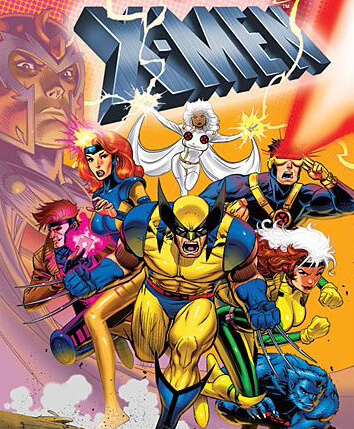
There’s no denying that the cultural impact of X-MEN: THE ANIMATED SERIES, a show which has gone on to become something truly special since its debut in 1992. With that in mind, it was a pleasure to speak with voice actor CAL DODD, who tells us what it was like to be a part of this cult classic cartoon with his influential take on Wolverine, and how that experience changed his life…

STARBURST: How and when did you first get into voice acting?

Cal Dodd: I was a singer for years in Toronto, doing commercials. I was a session singer, doing jingles etc, that’s what I did — about 2-3 a day for around twenty years. I was quite busy. I did a commercial for Chrysler, we were the background singers, and I was the voice of the sergeant. A year after I did that commercial, a woman called Karen Goora, who was a casting director asked me if I’d be interested in using my voice for a future cartoon called ‘Project X’. I said, “I don’t know. I’ve never done one!” This was 1992, and I had been in Toronto for about twenty years at that point. She said that she’d heard what I’d done before, and thought that I might be interested. I went to the audition, they showed me pictures of this guy, and I said: “Who’s this guy?” They explained it to me, and I loved the way that he looked. They explained what his character was, how they figured that he should sound. I said OK. To be honest, before going into this, I had studied a little bit for it. My girlfriend at the time got me some Wolverine comics. I knew what I wanted him to sound like. I grew up in a small town, and there were guys like Logan around, it was a tough little town. I read the script, and the first line was “You like picking on people smaller than you? Well, I’m smaller than you so pick on me!” The guys behind the studio glass just freaked out, and got me some more lines. I finished, and said “Thank you!” then, they called me the next day…they said, “You are our Wolverine.” That’s literally how it started. After this I got major cartoon roles, all my life I had been doing impersonations of people and animals, etc. So it was just a natural thing for me. I had five years of unbelievable joy with Wolverine, he’s just a great dude. 

What actors influenced you the most growing up, and why? 

I was mainly into music. I toured with Joe Cocker, we went to New York and recorded our first album there. Being a singer, I just loved going to Elvis Presley movies and watching him sing. I love Steve McQueen, who I sort of brought into Wolverine’s character. He is very into himself; he is strong but quiet. Of course, John Wayne, everyone loves him. Growing up, I liked Chuck Connors from The Rifleman series back in the early 60s. 

How much freedom did you get when you got to play Wolverine in X-Men: The Animated Series? 

They worked for about two hours with each one of us before we did the first episode. To nitpick, like “What’s Wolverine going to sound like when he’s not screaming, yelling, arguing etc” So, we had to come up with that voice. There wasn’t a lot of that, but we arrived at a solution. I had total freedom, because he was the only Canadian. I would add little things here and there, and they’d ask me for feedback. They’d say, “Perfect, do it!”. It was a riot to do him, and he became like my right arm. He became another part of myself. Very much like me – according to my wife!

Cal Dodd

Can you tell us a little bit about what the cast was like to work with?

I was brand new. I would see them every once in a while, but not that often. Although I had been doing voice work for about twenty years, I was actually still the new kid on the block. They were wonderful to work with, we had a great rapport, almost immediately. For the first 4-5 episodes, we worked in a circle in the studio, but the engineer wouldn’t let us carry on doing it. He said that there was spillage (leakage into the microphone) from my microphone to the one across from me, into Gambit’ s/Rogue’s mic for example. As a result of that, they stopped that altogether, and we would just go in one at a time. I would get a call, and they’d say from 2 pm we are doing Wolverine’s voice, until 3:30 pm. Then I’d be done; I wouldn’t see anyone else. The director, Dan Hennessey (who is very good) would explain everything that was going on, so it was still wonderful. It was great to create this character, and have them really like what I was doing. The writing was so superb; it was hard not to succeed with this. It was also very funny. Wolverine had all of the funny and stupid lines! They were all very professional. I was welcomed aboard. 

The reason this cartoon went on to be so huge is that it had serious themes within it. So, when did you first realise just how good the writing was for the show?

When I first saw him, in the first episode on Halloween night 1992, I freaked out because I finally got to see the guy that I had been doing the voice of. To see what he was like, how he moved, and what he looked like. The animated drawings, etc. I said, “Oh dear, this is going to be good!” We all thought that. For the first nine months, we didn’t know if we were going to go another year, there was no feedback. Then all of a sudden when the FOX network took off, someone within the company said to the president of the company that they can’t do the series with the way that they’re writing it. She put her job on the line and said: “We are doing it this way” she went out on a limb, and then FOX was the top Network after six months, because of the Saturday morning X-Men series. After that, we all knew that this was unbelievably a lot of fun. It was just great to watch it. 

The show was obviously highly praised, and adored by fans, but for you, personally when you look back on it why else do you think that the show went on to have such a huge cultural impact?

It’s made a huge impact. I started doing comic cons about a year ago. They finally talked me into doing it. I just wish that I had done it earlier. It was the 25th anniversary of the X-Men series, so I said “OK”! I went by myself, and I couldn’t believe it. I couldn’t believe the knowledge and the love that these fans have. It astounds me every time I go out. Half of them are in tears when they come up, it breaks my heart. They tell me that I’m an iconic character, I’m the same with Wolverine as Kevin Conroy is to Batman. I say “Thank you so much!” I just can’t believe it, and I don’t know what to say to them, they come up to me and say that I’ve made their childhood. Then, of course, some of them have their own children with them, who they’re just starting to show this series to, and they just love Wolverine. One little boy, who was about 4 or 5, had a picture with his family and me, and the kid’s name was Logan! So many people come up telling me that they’d named their child after Wolverine. So yeah, the cultural impact is amazing, and it blows me away. 

You got to play Wolverine in numerous video games over the years including Marvel Vs. Capcom, what was that like for you, compared to what you did on the TV show?

No comparison. They were just very strange. There was no real dialogue for Wolverine or any of us. It was just these ridiculous sounds or noises. Yelling weird things! Fans do come up to me at comic cons and ask me to do those parts! It was just different. You’d be done in 2-3 hours, something like that. I wasn’t that into it.  

How did you end up meeting Hugh Jackman, and also, have you seen any of the X-Men movies? 

In 2000 he was in Toronto to shoot X-Men. I was invited to this function where we were to meet. The only reference for Wolverine’s voice for five years was my voice from the series. So Hugh had to study my voice, to get it as close as he could to the way that I did it, because when people read comic books they hear my voice in their head (they tell me this at comic cons). When we met, I said “It’s a pleasure to meet you Hugh”, and he said, “G’ day Cal, it’s good to meet you, but I’m sick and tired of listening to your voice mate!” I said “Oh, OK then!” he said that he meant it in a good way! It was just that he was tired of listening to it. He had to listen to it months. I said “You be good to him!” and he said “OK, I’ll do my best”, “I’m sure you will”. I watched about ten minutes of the first movie after he first came on, I just couldn’t do it, because the character was still so close to my heart. It wasn’t me. So, I haven’t seen any of the movies. As it went on, no one else could do it any more after what he’d done with it. He has just been superb. Myself, I couldn’t watch it. 

How excited are you for your upcoming appearance at Wales Comic Con, and what can attending fans expect?

I can hardly wait to get there. Donna, my wife, goes with me (the agent/manager). Hopefully, a lot of my friends will be coming to Telford to see it. We are so excited for getting there because it’s the first time that we’ve (cast members) ever gone across the ocean together. George Buza (Beast) is beside himself, he just loves the idea, and he can hardly wait. I had to talk him into doing this about six months ago. Beast had never even seen the show; he hadn’t seen one episode of the five years that the show was on the TV. He was busy doing other work. I lent him some of my X-Men DVDs and said: “George, watch this!” For Beast it was just his natural speaking voice. Very rhetorical, and sharp-minded. He said “Oh, this is wonderful!” and I said, “Yes, it is!” He loves every second of it, and it’s great to see the excitement from the fans. Of course, at comic cons I like to talk about Slappy as well! It actually confuses people, because they see the picture of the dummy, and they say, “Wait, what? You did that voice as well!” they go “Oh My God!” 

What else can we expect to see from you in 2020? 

I’m working on 2-3 animated series. I just finished a Paw Patrol movie, then other cartoons, like Corn & Peg. Then the other voice over work that is here and there.   

For more information on CAL DODD and his work, visit his official website www.caldodd.com. To meet him in person, head to the next WALES COMIC CON on December 7th – 8th.

MARC SILK [Wales Comic Con 2019]

From STAR WARS: THE PHANTOM MENACE right through to recent work THUNDERBIRDS ARE GO, voice actor MARC SILK has had a diverse and fulfilling career. So with WALES COMIC CON on the horizon we thought it would be a great time to discuss this incredible journey with the man himself…

STARBURST: When and how did you first get into voice acting?

Marc Silk: My heroes were people that did that. Ever since I was a kid watching cartoons, I was fascinated with the idea that there was someone voicing my favourite characters. So when you see the very rare behind the scenes shows on TV, it blew my mind. There was a documentary on TV when I was 9-10 years old, and it was called Of Muppets and Men. You saw behind the scenes of The Muppet Show. My jaw hit the floor, because you go “Oh my God, those are the people who make what you see come to life!” I remember seeing Jim Henson performing Kermit the Frog, Frank Oz doing Miss Piggy, and Dave Goelz performing Gonzo. I just thought that it was the coolest thing in the world. I remember on Blue Peter once, they had a guest called Don Messick, and they said “What do you do, Don?” and he said, “Well I’m the voice of Scooby, Scooby, Doo!” Again, I kind of fell off the sofa. These were my heroes, they were the biggest stars in the world, but you never really knew who they were. So, it was kind of that. Even as a kid I was taking all of this in, being inspired by people who were behind the scenes. People like Steven Spielberg, George Lucas or even people like Robin Williams and Kenny Everett, a great TV comedian who was also a great producer. As a short cut back to your answer, I did work experience at a radio station in Birmingham. I taught myself really how to run a studio by watching people who I thought were the best at what they did. When no one else was there, late at night I would go into the studio and teach myself how to do it. I would get a microphone out, teach myself how to do character voices, and just experiment. I started out as a producer, making other people sound good. I was the button guy, the pair of hands you see on a mixing desk making other people sound like Hollywood. Bit by bit I needed voices for what I was doing, and I did it. I learned that way, I’ve got no formal training. Being inspired by people behind the scenes, I thought I’d rather be there creating characters, doing it that way opens up a whole new world of character creation that I don’t think you could do if you were in front of the camera, or on a stage. There are hundreds of characters that I’ve performed character voices for. I just don’t think you could do that if you were seen in vision.

What was your first major acting project, and what do you remember the most from this experience?

Things just went well really early on. The first big break was Chicken Run. They’d already cast all of the main characters. Right at the end, I got a call saying that Aardman are making this movie called Chicken Run, they need extra chickens! Basically Aardman needed extra cluckers. So I had to put a showreel together showcasing that I could do really good chickens! I thought, this isn’t just sounds, this is voice acting. So I gave them a whole load of different examples. To show that you understood yes it’s funny, but they might be larger than life characters. In the end it’s still acting. You’re creating these characters, and you’re bringing them to life. So I put this showreel together, showing what I would do, but just to leave them remembering me a bit more, to put my stamp on it, I did a five-part chicken harmony to an instrumental recording of Frank Sinatra’s New York, New York, right at the end! I got the gig. When I was in the studio, any time they needed me, I heard someone say “Can you bring in the Sinatra chicken please!

You went on to work on the Chicken Run video game! What was that like, and what did you contribute to the game?

Yeah, after we did the movie, I ended up being brought in to work on the game. I was Mel Gibson’s character, Rocky the Rooster for that. I was basically replicating Mel Gibson’s character voice for the actual game. As well as other bits and pieces, again that was very early on, and it opened up the games world for me. I’ve done a lot of game work, and I’ve been fortunate enough to work on some incredible titles.

You’ve worked on a stack of video games over your career; as time has gone on, and the graphics/technology within games has, of course, become better, how has that sort of helped you accomplish what you do as an actor?

At the core of it, where you start it’s exactly the same. In the end, we are telling stories. Any piece of entertainment will have great characters, stories, and performances. So whether the quality of the actual animation is more, maybe cinematic/realistic, that can end up making it a more immersive experience for you. In the end, funny is funny, and dramatic is dramatic. It doesn’t matter how good technology will get, with reading a book it’s still your imagination and great writing that make that thing come to life. I’m a huge tech-head, I love going around a studio, and seeing how technology can help us tell a story. Or make something even more magical. What I love with the advances in it, is like I said, the way it can make it more immersive. There’s a real landmark game that I worked on called Black & White, by Lionhead Studios. I was all of the main characters in that. We recorded that over a series of months. Thousands upon thousands of lines. The scripts were like a printed version of Wikipedia. I was the voice of the conscious of this game, it was the first real, big, God game, where you chose to be good or evil. I was the voice of your conscious, of good and evil. We recorded character dialogue that covered every single permutation of what you could do. For its time, it was ground-breaking. So that is where technology becomes your friend and helps as a game-player. With animation, the computing power now is so much that you could perform an animated character live. You have every possible movement that the character could do. It’s almost like a puppet, and you could talk to someone live, with that character voice performing it live at the same time. We did that when I was performing Johnny Bravo. There’s also a great show on the BBC called Go Jetters, it’s on CBBC’s and I play the kind of bad guy, who is just misunderstood. His name is Grandmaster Glitch, again what we’ve been able to do in terms of being interactive with that show, it helps in terms of education. In the end, it’s just fun. It’s just really great fun, as an audience you like the characters based on the strength of the story, and the performances. That’s what it all boils down to. Brilliant writing, great characters, and great performers. A clue to what is at the heart of something that’s timeless, if you go back to something like The Muppets, if that was great CGI, it wouldn’t have been any funnier. That’s still as funny now. At the heart of those great characters were brilliant performers with Jim Henson, and Frank Oz. It just stays with you.

As you briefly touched on, another huge world that you got to be in was the cartoon classic Johnny Bravo – how did this opportunity come about, and what did you love the most about voicing him?

He is such a larger than life character! Johnny was a big male himbo who loved himself more than anything else. He was put into his place by everyone around him. What I loved was almost going back to the technology side of it. We actually performed Johnny Bravo live for the entire day between shows. So Johnny Bravo becomes the host of Cartoon Network, for twice a year, for about three years. It was a huge technological feat. We did it live in the UK, and it was seen as far as South America. In-between Cow and Chicken, The Powerpuff Girls etc. Johnny was actually the live in-studio link guy, but it was all performed using high-end computing power, and me performing the voice live. Talking to kids live on the phone. Doing competitions and all kinds of stuff. That’s taking something to a whole new level. It’s the first time that an A-list Cartoon Network character had ever been performed in that way. I only found out about it afterwards when I saw a feature about it in a magazine. We were too busy doing it. It was a hell of a thing to do it, and when that microphone opened, the trust in you was enormous. It’s a huge privilege and responsibility, you’ve got to be funny, professional, keep it going, stay in character, do it on time, and listen to what the kids are saying that are phoning you. It was an amazing thing to do the voice for.

Did your background in radio help you with achieving the voice of Johnny Bravo in a live situation?

Yeah, so I hosted a radio show for a few years before I went full time doing voice work. I think that was incredible groundwork, for knowing how to get through anything. Working in local commercial radio, you know that at some point, everything will just fall apart around you. It did. Things would stop working, technical things wouldn’t work correctly. As the host of it, you had to make it carry on. Often when things went wrong, it was almost better because of that. So having that experience was an incredible starting point for performing this character, or any other character live. Because they knew that if something went wrong, you’d make it OK. That moment could end up being more exciting or more thrilling for the viewer, because you know that it’ll be OK. It’s a lot of fun to see how you’ll get out of it.

How did you end up becoming a part of Star Wars: The Phantom Menace, and what do you remember the most about working on this sci-fi giant? 

I got a call saying, “Are you free? on Tuesday to meet with a casting director of a brand new Star Wars movie?” I said “Give me a second… yes!” and this was of course for The Phantom Menace. I’m a huge Star Wars fan, and it had been 16 years since Jedi. In fact, I’ve still got a STARBURST Magazine from around that time! It’s got Darth Vader, C-3PO, R2-D2, and I think Leonard Nimoy was on the cover as well. I was reading STARBURST in school, I was a fan of it! Anyway, long story short. I ended up working with George Lucas on Star Wars. Talk about a triple whammy. I’m a Star Wars fan, it’s the first Star Wars film since Jedi. I’m working at Abbey Road Studios, and being directed by George Lucas. It was incredible. I played a character called Aks Moe, and he was the ambassador of Malastare, he was in the senate scene. Within the Star Wars universe my role was relatively small, but it was still a role in Star Wars! It’s something that I’m entirely grateful for, and I’ll remember every single moment of it, forever.

It seems like George Lucas was a very interactive and hands-on director?

He was! He was very hands-on. He directed me, and people from Skywalker Sound were in the control room at Abbey Road Studios. Rick McCallum the producer was there, Robin Gurland the casting director, and then George actually directed me. He was such a lovely guy to work with. I walked into the studio, and the first thing he said was “Would you like a potato chip?” so at that point, I thought, “This is going to go OK!” Also, when you work on something of that scale, it’s a really good short-cut for future work, because they think, if they trusted you, then we can probably trust you as well. I think that was the project that opened so many doors. It’s taken me to places that are just wonderful. I now host Star Wars Symphonies, a couple of years ago we did Symphonic Star Wars, and it was the Royal Philharmonic Orchestra and myself live at The Royal Albert Hall! We did two shows in one day, and we had over ten thousand people come to play. To be asked to be the person to front that, is a hell of a thing. I go back to, “I’m a Star Wars fan” and a huge fan of John Williams, so to share that with other people that like the same stuff that I do, is incredible.

Going back to cartoons, you got to play both Scooby-Doo and Shaggy, how did you go about doing your own approach on these characters, especially as they’ve been around for a very long time?

I grew up, watching the original Scooby-Doo, and a tip of the hat to Don Messick, the original voice. Scooby-Doo started in 1969, and it celebrated its 50th anniversary this year. I did interviews for the BBC a few weeks ago, just celebrating, and talking about the history, and my love of it. I got to meet Don Messick as a fan, at a gallery event for original Scooby-Doo artwork, before I was doing this professionally. I’m a fan. I actually collect original animation art from my favourite shows and animation artists. I’ve got a huge archive. My love of this, is more than just what I contribute. I’m still a big fan of the craft that happens behind the scenes. When it comes to my involvement with Scooby, I’ve just always been able to do it. I think that when you really love something, art, music, whatever it might be. It’s just in you. Like if you’re learning how to play the guitar, you learn the tunes by your favourite musician/band. So when doing character voices, I was learning how to perform my favourite character voices, and two of them were Scooby-Doo and Shaggy. You figure it out. So just from playing around in studios for other recording sessions, people got to know that I could perform these characters. But also, more than that. I could perform them accurately. It wasn’t just copying what someone else had done, it was understanding where these characters had come from. How to make them live and breathe. If all you do is copy what someone else has done, you can’t really go anywhere. If you understand why they did it that way, and what made it work. Then that’s the most healthy starting point. Just playing in studios, I would sometimes just do it, for no other reason than it being funny, to entertain people that were in the room. Then word got around that I could do it. Then about ten years ago I got brought in to start doing the voice of toys, games, commercials and things for Cartoon Network, and CITV. It’s a hell of a thing. These characters are such icons, they’re not just another character, they’re something that you’d see on a T-shirt! That’s the level of epic that these characters have reached. So the first day I found myself in a studio with a script, and the first line says “Yikes!” you realise that this is going to be a fun way to spend the day.

Talking of well-known cartoon characters, Danger Mouse got rebooted back in 2015 – how did you become a part of it?

Danger Mouse was a huge favourite of mine, and it still is. The very first cartoon that I ever worked on was created by the people behind Danger Mouse, Cosgrove Hall Films. When I found out that they were rebooting it, I spoke to one of the people behind it and said that “I’d love to be a part of it. There’s a whole bunch I could bring to it.” Then they went, “Alright, leave it to me!” Then a few months later I got a phone call asking me to come down and perform these characters. In the first season of Danger Mouse I’m the voice of 31 characters.

What can you tell us about another one of your latest TV shows, Go Jetters?

It’s an incredible show. That’s now showed all over the world, it’s got its own magazine. They’ve actually just released the Grandmaster Glitch plush toy! So there are a lot of people getting Grandmaster plush gifts this year. That’s an amazing show. It has that Sesame Street, Muppets sensibility, where, it’s really exciting, really funny, but you might just learn something along the way? It’s that. Anyone of any age could watch Go Jetters. It’s a terrific show.

Thunderbirds Are Go is still going strong, especially as it’s a new approach that also respects its roots. What can you tell us about working on it?

Yeah, I’m the voice of the incredibly handsome Captain Rigby. He has the greatest eyebrows on TV. It looks like they’re freshly baked. It’s Weta Studios that have done all the live background and models for it, and CGI characters. In Season 3 it’s gone from being a great new animation show, to something that is truly cinematic. Ben & Nick Foster, their soundtrack is a full orchestral score. It’s like something from a movie. Lee Majors is the voice of Jeff Tracey! It’s absolutely incredible. I’m Captain Wayne Rigby, a super tough guy that works with international rescue, but in terms of heritage it’s so wonderful what they’ve achieved. They brought in David Graham, who was the original voice of Parker in Thunderbirds. He is still the voice of Parker now. They know all of those little bits of detailed spice that fans will love. I’m a fan, so I just get excited watching it. You’ve got Rosamund Pike as Lady Penelope and David Graham as Parker. It means the world to me, just being in that room. Forget work for a second, to be in that room, when we’re recording. To walk in there and the original voice of Parker goes “Morning Marc!”, you go, “Yeah, this is it!”.

Two Point Hospital went down a storm with gamers. What can you tell us about your role within the game?

It’s incredible. It was a smash hit for Two Point Studios and Sega. Within 48 hours after it came out it became the number 1 game worldwide on Steam. It was up for a BAFTA this year at the BAFTA Games Award. When you’re playing the game, I’m the voice of the diverse presenters on the radio in the background. It’s become such a big deal now that these characters have a following. We keep on releasing new add-on packs that feature these presenters having new adventures.

How excited are you for your upcoming appearance at Wales Comic Con, and what can attending fans expect?

It’s kind of as good as it gets. The guests that they get at Wales Comic Con are up there with the absolute best that you’ll bump into. The atmosphere is terrific. I love meeting the people that walk through the door, because I think I love the shows as much as they do. So for anyone who is coming to do Wales Comic Con, come over and say hello. I’ll make sure that they are thoroughly looked after, I’ll give them as many voices as they want. Whether they want to bring pictures for me to sign, or if they get something from me, I’d love to do that for them. It’s a great and really exciting day.

What else can we expect to see from you in 2020?

There’s a couple of new shows that I’m working on right now that haven’t been announced yet. I’ll tell you about those when I can. There’s more Thunderbirds to come next year, more Go Jetters as Season 3 continues. I think that it will go to infinity and beyond.

For more information on MARC SILK and his work, visit his official website www.marcsilk.com. To meet him in person, head to the next WALES COMIC CON on December 7th – 8th.

PETER WELLER

robocop

The award-winning actor PETER WELLER has appeared in more than seventy films and television series including STAR TREK: ENTERPRISE episodes ‘Demons’ and ‘Terra Prime’. He is also well known for the cult 1984 science fiction film THE ADVENTURES OF BUCKAROO BANZAI ACROSS THE 8TH DIMENSION, and for starring in Manny Coto’s 2002 cable television series, ODYSSEY 5. More recently he played Admiral Alexander Marcus in 2013’s STAR TREK INTO DARKNESS, but he is arguably best known for his iconic role as the title character in the 1987 classic ROBOCOP and its 1990 sequel, ROBOCOP 2. We caught up with the veteran actor ahead of his appearance at December’s FOR THE LOVE OF SCI-FI fan convention to talk about his ROBOCOP recollections, his varied career, art, and more…

STARBURST: Is it correct that you turned down a higher paid role in Dino De Laurentiis’ 1986 film King Kong Lives to play the RoboCop character?

Peter Weller: Yes. I had not received the Robo offer, but my dear friend and agent, Rick Nicita, were hoping it was going to come in that day; thus we took the meeting with ‘The Great Dino’; for whom I later did Leviathan, along with his brother Luigi and nephew, Aurelio who was the hands-on producer and who, along with his family, are still friends. Dino had the most entertaining and mesmerising energy. He stood up, came around his desk and immediately demanded, as Rick and I were barely in the door “how much money, you want, not to do this ‘robot’ movie?” I was instantly thinking of Ferraris and such. We got the Robo offer that afternoon, from the great Mike Medavoy for much less loot. Who cares. Money isn’t everything.

The film was highly prescient: despite being set in 1991, it correctly visualised a future of runaway consumerism, movies recorded onto disc, ‘data strips’ – which were basically USBs – and the concept of a privatized police force whose central agenda was profit. Did you think such things were plausible when you read the script?

As a child of the ‘60s, meaning the most influential music, protest, social revolution of the century; by 1986, I was buried into the fallout of the ‘me decade’ ‘70s, thus politically asleep, more or less. Although the script was a powerful and funny read, and the entire adventure was endemic to my life on more plateaus than I could begin to iterate, I did not see the prescient sociology in the script; inclusive of ‘privatisation, trickle-down eco justifying post-modern greed, identity theft, 3rd world exclusionism; crime-cops ownership, media mind-swamp; death by atomic bomb made commercial.’ On and on. I do now, but did not then. I prefer to call my lack of awareness of how profound this film would be… ‘movie-guy myopia’.

Moni Yakim, the mime you’d engaged, originally envisaged a more fluid, Tai Chi-style of movement for the character. How did you both cope with the restrictive weight of the suit and develop RoboCop’s unique physicality?

For years I had practiced – and was still practicing – Iaido or Iai-Jitsu, which is the art of katana fighting or, simply put, the live blade, or to dumb it down, ‘samurai fighting,’ from which Aikido, Jodo, and Karate derive. Living in New York, after interviewing several mimes for coaching – I had taken mime and years of dance – I interviewed with now dear friend Moni and he started moving in a fluid, legato idea with heavy staccato accents at the end of movements, just like Iaido. I loved it. And him. The framework of the movement remained, but the tempo changed when Rob Boutin’s genius suit arrived. The suit transformed previous ideas or concepts about the physicalisation of Robo. The entire physicality was slowed into a ‘largo’ power that bridged humanity and beast. Moni worked with me over a weekend and had me watch Nicolai Cherkasov in Sergei Eisenstein’s Ivan the Terrible; wherein I saw the same thing; huge legato-largo movement with big staccato punctuation. Brilliant. He looks phony and operatic… for about 5 minutes… after which one becomes mesmerised.

Were you comfortable with the third draft of the script, which incorporated Paul Verhoeven’s suggestion that Murphy should have an affair with Nancy Allen’s Lewis?

Never read it. So do not care now, nor ever did.

Whenever production halted during filming, is it correct that you passed the time playing the trumpet? Were you already performing with Jeff Goldblum at Le Petit Four at this point?

Production never halted. There were no stalled moments. The shooting went like a tornado thanks to Paul, Jost Vacano, the script and crew and especially the Robo make-up/costume team. Yes, I played the trumpet; but I was up every morning at 3:00 AM running four to six miles a day, prepping for the New York Marathon. Jeff and I started at Le Petite Four in 1993 I believe.

You were very focused on set and reportedly stayed separate from the actors playing the villains. Did you workshop any scenes with them? And did you ever get the impression that Kurtwood Smith’s character Clarence Boddicker knew that RoboCop was one of his own murder victims?

I was never kept separate. I stayed separate on set because the character was alone in a bubble called ‘machine.’ Thus I rarely spoke to anyone except Paul or the Robo team on set; they referred to me as ‘Robo’ on set if they needed to address me. Understand that I warmed up vocal cords to drop intonation, and was also saving my voice. However, off the set, I would hang with Kurtwood and Joan Smith; Ray Wise, Calvin Jung, Jesse Goins. The bad guys were my buds; Kurtwood and Paul McCrane still are. I never considered if Kurtwood knew Robo was Murphy. I assumed he knew; as we were both set up.

You produce some horrific screams during the film, most notably when Murphy is executed, and again when RoboCop’s chest is pierced during the finale. Which painful experiences did you return to hit those notes?

Any of a thousand pains, emotional and physical, since infancy.

Peter Weller on the set of RoboCop (1987)

Did you think RoboCop would go on to become such a prominent part of your acting career?

I knew a) that Paul Verhoeven was gifted; and I had worked with Mike Nichols, Sydney Lumet, Richard Lester; been inducted into the Actor’s Studio by Elia Kazan with whom I had only done improvisation, but that was enough to reveal his genius; studied with the great Uta Hagen, etc and had seen all of Paul’s films. RoboCop, as brilliant as it was penned by Michael Miner and Ed Neumeier – who wrote it, by the way, right next door to where I now live – would have never been that film without Paul’s infusion of loss, identity, myth, empirical value. I knew it would be terrific, but there is no guarantee of success or classic legacy until the audience sits in front of it. My career? I never think of ‘my career’. I only move from one gig to the next… by choice. 

You’ve said before that Paul Verhoeven’s involvement in the project is what led you to lobby for the part of Murphy. Were you happy to commit to the sequel despite his absence?

The sequel lacked a third act. I said this going in. Had a ball making it. Loved Irv Kirshner and Frank Miller. No third act, alas.

Were you proud to support the 2011 Kickstarter campaign for a statue of RoboCop to be erected in Detroit?

I did not support nor denigrate it. I only supported Martha Reeves move when she was, I believe, on the city council, to line the Detroit greats from music and sports along the waterfront by the arm of Joe Louis, the bronze icon by renowned figurative sculptor, Robert Graham, who is a great friend and influence. The statue of Robocop is on its own.

Are you happy that the film is now part of the Criterion Collection, alongside such classics as Seven Samurai and Naked Lunch?

…and Sweet Smell of Success, possibly one of the three most poignant and brilliant American movies about America ever made. Yes.

How did you transition from directing and starring in movies/TV to qualifying as a Renaissance art scholar?

A long series of events, beginning with the wonderful, beautiful, mind-blowing intelligent Ali Macgraw taking me by the hand through five floors of the largest ever Picasso retrospective at MoMA before sending me to Italy, where I now live part-time. And then seminal director of photography, Vittorio Storaro, sending me to see Giotto’s Capella Scrovegni [Arena Chapel] possibly the single most influential piece of western art in the early modern era. It is all visual information and entertainment, one way or another, n’est pas?

The impact of RoboCop has not dimmed in 32 years. Does it feel strange to have been part of art history, as well as studying and teaching it today?

Strange? No. Immensely satisfying, yes. I just, in October of this year, while directing Magnum P.I. for CBS, took a Friday-night flight from Honolulu to Salt Lake City to connect to St. Louis, just to give a 25 minute paper and answer an hour’s worth of questions at the Sixteenth Century Society of 2019, one of the larger and important academic yearly events on the Renaissance. The panel of papers addressed ‘Why the Renaissance Matters’. My paper was ‘Giotto, Caravaggio, and Storaro: Renaissance Narrative Art to Modern Film’. This paper journeyed from that very Giotto fresco cycle, to which Storaro sent me, through futurism, modernism, post-modernism – Carrà, Rothko, Mondrian – to Storaro’s cinematography. Then I had a steak with some scholars; and jumped a 6 AM flight back, 15 hours, to Honolulu to continue shooting. Most people I know didn’t consider that ‘strange’. They voiced it as down-right lunacy! But I have been blessed with my father’s gift of tenacity. And my mother’s gift of passion. As she would say: “do it all. All of it… and do not quit.” 

PETER WELLER will be appearing at the world’s biggest Sci-Fi fan convention FOR THE LOVE OF SCI-FI, December 7th and 8th at Bowlers Exhibition Centre Manchester alongside the legendary WARWICK DAVIS, THE BOYS and DREDD star KARL URBAN, THE PUNISHER’s Jon Bernthal, UNIVERSAL SOLDIER’s Dolph Lundgren, LETHAL WEAPON’s Danny Glover, STRANGER THINGS’ Charlie Heaton, FLASH GORDON’s Sam Jones and Brian Blessed, STAR WARS’ RAY PARK, SPENCER WILDING, and UK exclusive MARK DODSON, and martial arts legend AL LEONG. For more information and tickets visit www.fortheloveofsci-fi.com


Nick Frost | STARDOG AND TURBOCAT

We caught up with STARBURST favourite NICK FROST to talk about his new animated sci-fi movie STARDOG AND TURBOCAT…

STARBURST: What attracted you to the project?

Nick Frost: The chance to make a film that my kids can see. I don’t think there’s anything I’ve made up until this point that my kids are allowed to watch! I have a seven-year-old who’s constantly badgering me to watch things that usually involve beheadings, or someone being eaten, or swearing, or “daddy, why are you in bed with another lady that isn’t mummy?”, so it was a nice opportunity to do something that I could be proud of my children watching!

You voice StarDog in the movie, how do you prepare for this kind of role?

I come in with an idea of what I think the character is and meet with the creatives on the other side and between us, we find a voice that suits the character and is true and honest and easy to reproduce. It’s fine to do a crazy voice but you run the risk of tearing your throat to pieces and never being able to work again.

What was your biggest challenge with this role? 

I’ve never done an American accent before. I’ve been reticent and afraid of doing an American accent because people just judge you on the accent rather than the performance but I thought ‘well why not’? So I just had a go. I think time will judge me… and Americans, but I enjoyed doing it.

What qualities do you like about your character?

He’s a tryer who works hard and is very enthusiastic about life. He’s a good egg who’s been hurt and wants to try and find out the truth about a man he loves and I can really relate to that.

Who’s your favourite superhero?

There’s one by Image Comics about a boy called Invincible that I really love. It’s about a 14-year-old boy who suddenly realises his father is a god and his mother was human. He’s a kid at school and suddenly starts to get these amazing powers. Out of all the superheroes, that’s the one I’ve read front-to-back and loved forever.

If you could have a superpower what would it be?

Flying is fine but imagine you could re-arrange items down to a molecular level. To just be a god would be it.

Are you a cat person or a dog person?

I have had dogs and as much as I love dogs, I’m a cat man. I have a cat called Eric. He’s the bane of my life and one of the loves of my life. He’s the boss of the house and he’s very naughty.

If you could be an animal what would it be? 

I’d have to say a domestic cat. I think they have lovely lives if they have nice owners. Or something in the Fjords like an Osprey or something.’

How do you think the movie will be received? 

I think people will really like the film. The world’s in a kind of mucky place right now so to get a film which is so full of light and hope and comedy and friendship is the thing we need right now.

STARDOG AND TURBOCAT opens in UK cinemas on December 6th

CLIVE MANTLE [Wales Comic Con 2019]

Clive Mantle

Ahead of this year’s WALES COMIC CON, we caught up with CLIVE MANTLE to discuss his beginnings as an actor, ROBIN OF SHERWOOD, ALIEN 3, and GAME OF THRONES, as well as his latest time travelling books THE TREASURE AT THE TOP OF THE WORLD and A JEWEL IN THE SANDS OF TIME…

STARBURST: How and when did you first get into acting?

Clive Mantle: Well I’ve always done school productions. The first sort of serious foray into acting, was when I was lucky enough to get into the National Youth Theatre when I was 17. A notice went up on the school noticeboard, and I applied because I knew that I enjoyed doing it. It was something to do during that summer holiday. I was lucky enough to get in, because thousands of people applied from all over the country. They took a hundred new people for the summer, I was one of them. From that moment on my life absolutely changed. It was literally like a light switch going on. I was suddenly amongst people who were all interested in the same sort of thing. I fit in for the first time in my life. I’d always been a bit of an “odd bod” at school. Not terribly weird, I just didn’t fit into any particular group/gang. I was just randomly walking around myself a lot of time. Acting rescued me.

What was your first major acting project, and what do you remember the most about this time?

Well around about that time, I was lucky enough to go to Kimbolton school, where part of Shakespeare’s Henry VIII is set, Catherine of Aragon, was actually imprisoned for a large part of her ending years in Kimbolton Castle. One of the scenes in Henry VIII is set there. Every year the school would do a production of Henry VIII in the courtyard of the castle. I was there at the right time. I had a false beard stuck on, and just managed to learn my lines in time, by the skin of my teeth. I played Henry VIII in the Kimbolton courtyard. So I think that was the first time that I realised the weight of responsibility of playing a huge part in something. Having it be all eyes focused on you. It was up to you to deliver the goods. That was a huge milestone. Then various parts of the National Youth Theatre that followed. You were just building confidence, and you get to work with wonderful playwrights. I was privileged. I got to around the age of 21, and then your life clicks on another couple of gears, as you are honed, and ready to be thrust out into the profession. To be honest, you’re never more capable than when you leave drama school, as you’ve been rehearsing and playing three or four plays at a time. Your mind is never crowded with that many roles again because you tend to be tackling one thing at a time. At drama school, your mind is split into so many different ways, and you’ve got to be brilliant at them all to stay there.

Robin of Sherwood

How did you get involved with playing Little John, in Robin of Sherwood, and what do you remember the most about working on this series?

I was very lucky. Talking of the National Youth Theatre, an amazing woman called Esta Charkham who was the casting director, was in the country at the time. She was part of the National Youth Theatre, and she used to come back to watch our productions. She was casting Robin of Sherwood, and I was the only name in the frame. She only put me forward to the producers. Had they not been happy with me, they would have obviously looked elsewhere. So she brought them down, and I was playing Little John in a wonderful production of Robin Hood at the Young Vic Theatre. A lovely treatment of the Robin Hood legend by Dave and Toni Arthur. Esta brought Paul Knight and Richard Carpenter down to the Young Vic to see me play Little John, and then a couple of weeks later I was called to a meeting at Pinewood. For all intents and purposes, it was a casting session. I walked in and Paul Knight, who is about the same size as me, got up from behind the desk and gave me a great big hug, and more or less said welcome aboard. I’ve never ever had an audition like that before, I was just given the part. It was absolutely wonderful. Again, that changed life dramatically. To have a solid run in a TV show, and not only that but a brilliant and high profile TV show, was just obviously a fantastic leg up. Still to this day, it’s probably one of the things that I’m best known for. Being in touch with all of the Robin of Sherwood fan groups, as I think most of the cast is. We are reminded on a daily basis what the show meant to thousands of people. It still does, and they’re showing their children, and their children’s children now. I think it’s 35 years ago this year that it was transmitted, which means that we were making it 36 years ago! That’s a long, long time. People still love and remember it. They’re watching it to this day. I’m a little scared to watch it, just in case it’s dated. I watch it very sparingly; I watch clips, tiny little bits. I just want to remember the memories that I have from making the series. The effect it’s had on people is good enough for me.

It’s a role that you’ve considered to be “one of the most enjoyable in your whole career?” Why do you think that is, and just what did you love so much about playing this character?

Without a doubt. It’s fantastic to be part of a group like that. Each of us very distinct and different. Each of us served a different purpose within the group. Richard Carpenter, who wrote the bulk of the series and whose vision it was, he was clever enough to come down to Bristol and go out for drinks with us. He’d just watch how we joke with each other, and how we responded with each other. He’d use that in his writing, and played up to it. He knew that they were our strengths. The important thing for me was to try and create a fully rounded character. He was headstrong, wonderfully powerful, a brilliant fighter, a close and loyal, right-hand man of Robin Hood. It was also important he was fallible, that he was wrong, and could make wrong decisions. He could make headstrong decisions that lead them into trouble. I didn’t mind the fact that Little John made mistakes, and that he was terribly sorry about it all afterwards. Or would rectify his mistakes. I wanted to present as many facets of the character as I could, and I was allowed to do so. 

Game of Thrones

You got to play Lord Greatjon Umber in Game of Thrones – can you tell us a little bit about what this was like, and how it compared overall to anything else that you’ve done before as an actor?

Yeah, so you enter into all of these things with great goodwill. With the hope and belief that they’re going to be wonderful feasts for the audience. I have to say that that rarely happens. You are lucky enough in your career to be a part of one series that fulfils all of those criteria, and Robin of Sherwood had certainly done that. With Game of Thrones, I was in the first series, and at that point no one really knew what kind of effect it was going to have. They had certainly thrown a pile of money at the production. It was amazing to be a part of that. There were over 300 speaking parts in the first ten episodes, and it was a huge undertaking. It was like throwing mud at a wall and seeing if it would stick. You just never know if these great endeavours are going to take off. Obviously Game of Thrones did, maybe more than any other show has in the history of TV. With a lot of hard work and expertise from hundreds and thousands of people, they did something right. They created something absolutely wonderful and lasting. It can be watched again and again for decades. It’s not just a one-hit-wonder. People will be able to go back to it in 20-30 years, in the same way that people are going back to Robin of Sherwood now. It was an amazing thing to be a part of. It wasn’t necessarily the most comfortable filming experience that I’d ever had. It ended up being -22 temperature-wise. I was on the edge of Strangford Lough, out there in Northern Ireland. The most beautiful location. It was cold, I can tell you that. I had just got back from Everest, and the coldest I had got there was -15. Which is plenty cold enough. So for it to be colder in Belfast than it was high up in the Himalayas was a source of great joy! I can remember having a chat with some of the Night’s Watch. It was their first major TV experience, and I was saying to them how they should just grab it with both hands. Enjoy the ride, like we enjoyed Robin of Sherwood all those years ago. Enjoy the work, the scripts, and make the most of it all. As it’s gone on, I think the performances throughout the series are universally pretty brilliant!

STARBURST, of course, loves to cover sci-fi, so you weren’t going to get away without us asking you questions about Alien 3! So, first off, how did you get involved in this classic franchise?

Again, there’s so much luck involved in getting work. When I was at my drama school, I was part of a wonderful production called East by Steven Berkoff. I played a middle-aged man. I had my head shaved for the part. A mate of mine said, “While you’ve got your head shaved, let me take a couple of photos, you never know when they’ll come in useful.” So he took a couple of me walking through the street with my head shaved, then a couple of me looking through a chain-link fence, looking like a prisoner. When I left drama school I went to my agent and said look “Just in case these ever come in useful, here are some bald photos” she said “Oh yes, thank you very much!” and put them at the bottom of a filing cabinet somewhere. Cut to years later, David Fincher is looking for a whole cast of bald actors to play the most desperate villains in the universe. My agent dusted off the photos, took them out, and sent them off to Fincher. When I went into the casting at Pinewood, there was my picture up on the noticeboard. He turned around smiled, pointed at it and said: “I told the casting department, get me 20 more like that!” That photo literally got me the part in Alien 3. Well, had I messed up the interview, it would have been curtains of course. It just shows the amount of luck, the tenuous strings on which our careers hang, and the decisions that people make. It’s so far out of our hands at times, but it doesn’t really bear thinking about. Rejection, there’s no rhyme or reason why you don’t get the part. You can’t torture yourself for weeks or months after you get turned down for the part that you are absolutely right for. You just can’t trace back the root in regards to why one person gets the part and one person doesn’t. Anyway, that was Alien 3 which was a glorious experience, just a whole load of British actors sitting around getting our heads shaved at 7 in the morning. A whole lot of sitting around playing scrabble I seem to remember. Having a very good laugh with the wonderful Sigourney Weaver. She threw herself into it, and it was very fun. We had a lovely time. 

Alien 3 

So leading on nicely from that, can you tell us a bit about what director David Fincher – who was just 28 years old at the time – was like to work with?

It was incredible. You’re right, I think that it was his first major film. He had the whole of 20th Century Fox on his shoulders, watching every penny that he spent. He had banks of monitors in front of him, computer units, main units, etc. It was like a technological exercise more so than anything else. He was very funny, calm, cool. He got excited about acting performances. He could have a laugh, a smile. I had a line where it says “I don’t give a fuck what she says!” and I was staring at Sigourney in front of me with her shaved head. For some reason, on the last camera rehearsal I said “I don’t give a fuck what Shirley Temple says!” and the whole set just stopped. Sigourney Weaver looked at me with a slight sort of look in her eyes, and I thought “Oh dear, have I overstepped the mark?” People started scuttling around for a minute or two in a brief hiatus. Fincher just came up and gave me a great big thumbs up. He was obviously checking to see if it was OK for me to say Shirley Temple, and he came back and said “Yes!” so it was in. Fincher was excited by that, he loved extra stuff. Also, because we all looked the same, Peter Guinness and I, for example, kept calling each other by our names, otherwise no one would have known who we were when the credits went up. Fincher looked at us one day, and he said “Guys, I know what you’re doing! Stop calling each other by your names!” We were like “Okay!” [Laughs] He could spot the tricks. Even Sigourney Weaver’s picture to me, looking at it now on the wall of my study, it says To Clive, a rapist, a convict, a swell guy all in all. Much love, Shirley Temple. I had a great time.

For those who haven’t checked them out just yet, what can you tell us about your books The Treasure at the Top of the World and A Jewel in the Sands of Time?

They are time travelling stories. My time-traveling hero gets a map for his 13th birthday through which he can disappear, or he is actually called through to various places in the world, at various points in history. He lives an adventure while he’s among real, historical events. He comes back to report to his friends; it’s obviously partly set in present-day where he’s facing trials and tribulations, bullies, the nightmare scenarios that kids are faced with day to day in our present time. But also juxtaposed with historical events. I’m halfway through writing book three now, which is Freddie and Me, The Great Plague, and the Great Fire of London. I can put him anywhere in history, and report back. It’s a fantastic thing to do, and each book takes me about a year to write because I have to research them thoroughly, as I have to weave an adventure around real settings. Also, they’re going down very well. They are on recommended reading lists, and the first one won the Peoples Book Prize. That’s great, and it supplements my acting work. You’re never 100% busy as an actor, so it’s great when I’m not working, I just disappear up to my study and work on the book. 

It seems like the story has been a lifelong passion of yours? With your father telling you many tales of Everest, so that must of been very rewarding for you to work on?

Yeah! In fact, the idea came as I was walking away from Everest. Your head is cleared, by the simplicity of walking in the Himalayas, your life becomes about keeping warm, fed, and keeping watered. Looking after the people around you. They’re the things that life actually revolves around. You get rid of all the rubbish in your head like, when car insurance is due, have I sent an email to so and so, etc. All of that gets put in the junk file, and it gives you wonderful freedom in your head to realise who you are, where you are in your life, and what you’re going to do when you get back. So yeah, the idea for Freddie going through a map to anywhere in history came to me as I was walking away from Everest. It was 4-5 years later when I actually had time to sit down to start writing it. I was in South Africa, working on a long job, and I had many days off between filming days, and it just took too long to go home and come back again. So I was out there, and I sat and started writing the book. It was a long time after Everest that I did that, but it meant so much to me. When I was born in 1957, it was only four years after Everest had first been climbed, by Edmund Hillary and Tenzing Norgay. The more you read about Everest, the more you found out about Mallory and Irvine in 1924, being spotted less than a thousand feet from the top, dressed in tweeds, and stout walking boots. It’s incredible really, to think of them up there. Your mind goes to all the possibilities, I had read a lot of books about Everest, and I had to go to Everest myself, go and touch it, and hug it. Pay my respects to the brave men and women who had been there and not come back. Also, the brave people who have got to the top. Now, I’m passionately involved in it not becoming a circus. It’s a holy mountain really. It should be treated with great respect. Every year now people are buying their way to the top, and that’s not what I approve of. I approve of the expeditionary force, the amazing spirit of man and woman pitching themselves against the elements, against themselves to achieve something. Standing at the top of the world seems to be quite an amazing thing to do. However, buying your way into doing that seems to be a slightly distorted way of doing things.

You recently took on voice acting work for the game Anthem! Can you tell us about what this sci-fi adventure was like to work on, and maybe how working on video games differs for you as an actor?

It’s very different. You do have to throw yourself into the hour-two hour session. They give you a few quick notes about the character that they want you to do. Obviously, there are non-disclosure agreements that you have to sign. So no one tells you a lot about the part, characters, or even what the game is. You just have to throw yourself into it, and rely on their feedback. Luckily because I’ve done a lot of voice work in my time, for adverts, audio-books, dramas, etc, you get a very quick shorthand about what people want. You can’t sit down for half an hour and discuss the character, you have to give an immediate reading, and then if it’s not quite what they want, you just slightly adjust it. I’ve not seen or played the game yet, and I haven’t heard the result of my work, but I hope it’s OK and that people are enjoying it! It’s not something that you get involved with, because I don’t think that you’re allowed to. They’re so scared that the premise of the game will get out into the world before they’re ready to launch it. I’ve just dubbed a series for Netflix, but I don’t know the title! So, people say to me “What are you working on?” and I say “I’ve just done a series for Netflix that I’ve just dubbed, but I’m not allowed to know the title!” This is the world in which we live.

How excited are you for your upcoming appearance at Wales Comic Con, and what can attending fans expect?

I’m very excited! It’s a big one. It’ll be delightful to see people and have a chat. I always enjoy that. You can always tell the mega fans of Robin of SherwoodGame of ThronesVicar of Dibley, because they’ve got a look in their eye, and talk about the project in a completely different way. The devoted fans are just glorious, and I’ll give them as much time as possible. If there’s a large queue then that limits that time. I always say to people, “Look, come back later when the rush is gone, and we’ll have a proper chat.” What’s lovely is that I’ll have my books with me, and be able to talk to people about those, it’s very handy for Christmas, getting a signed copy of the book for their loved ones. It couldn’t be better timed. I’m looking forward to seeing a lot of the Game of Thrones people. Quite a lot of the gang are there, like David Bradley. It’ll be lovely to catch up with some old mates. We are a very tight-knit bunch, all of the people that are lucky enough to get invited to conventions. In the evening we’ll have a beer and reminisce and then in the day we’ll chat to anyone who presents themselves for a picture, autograph, whatever. It’s going to be a very happy couple of days, and I’m looking forward to it.

What else can we expect to see from you in 2020 as an actor?

I’m going back to the English National Opera, later on in 2020. A wonderful production of Iolanthe that I was involved with a couple of years ago is coming back into the repertoire. That’s very exciting. If you spoke to me last week, I would have said that I was taking part in a theatre tour from February – June, but I think that’s folded, as is the way at the moment. In the old days, if you were contacted about a theatre tour, and you said “Yes”, that was it! However, now theatre tours can fold very quickly and last minute. So I’ve been left with a gap in my diary for the first part of the year, but, to be honest, I’ll be finishing this third book, over Christmas, and early into the new year. I’ll send that off to my publishers, where they’ll sit on it for a week, or six weeks while they all make notes, and then it’ll come back to me so I can do the amendments. Then hopefully it gets published in June. So I won’t be sitting on my hands waiting for things to happen, I’ve got plenty of things to keep me busy!

For more information on CLIVE MANTLE and his work, visit his official website www.clivemantle.com. To meet him in person, head to the next WALES COMIC CON on December 7th – 8th. 

Leigh Whannell | UPGRADE

Leigh Whannell Upgrade

With Leigh Whannell’s stunning Upgrade now receiving a new limited edition Blu-ray release, we caught up with Leigh to discuss this modern-day sci-fi classic, how he’s finding life as a director, staying grounded, and even touch upon what we can expect from his upcoming new take on The Invisible Man.

STARBURST: Where did the initial nugget of an idea for Upgrade come from?

Leigh Whannell: Well, it came from somewhere in my mind. I don’t know enough about the mind, but I’m fascinated by it. I think I rely on magical thinking rather than scientific knowledge about how my brain works. I imagine my subconscious as this big swamp filled with all of the ideas that I’ll ever have. I subscribe to the theory of David Lynch, that our ideas are swimming around in our subconscious, then every now and then one idea bubbles to the surface. Ideas are the most mysterious and frustrating part of the creative process, for me. Writing a screenplay is very hard, making a film is very hard, but easily the hardest part of all of it is the idea. A lot of filmmakers make films based on true stories, or they have an issue that they want to talk about, or maybe they made a film based on somebody else’s idea, like a book or a remake. In that case, the idea is not hard to come by. The films I like to make are original ideas, and waiting for them to arrive is really frustrating. Upgrade is one of those. I was sitting in my backyard one day, and this image just popped into my head uncalled for, uninvited. It was the image of a quadriplegic person being controlled by a computer from the neck down. The computer bridged the neural gap between their brain and their nerve endings. It just wouldn’t go away, it just kind of got its hooks into me and I couldn’t stop thinking about it – so I started engineering an idea around it.

So often people like to hate on things simply for the sake of hating on things, yet Upgrade has largely received praise across the board – which is rare these days. How has that been for you?

It’s fantastic. I know that the response to a film is completely out of my control. You can try to control as much of the writing process and the filmmaking process as you can, but once it gets out to the world then it’s not yours anymore. It’s basically like selling a car. When you sell a car to somebody, you can’t go over to their house and start telling them what to do with it and what colour to paint it. When someone buys a ticket to a movie, it’s now their film and you can’t control their opinion on that. When people like a film that you’ve made, it feels like a happy accident. It doesn’t feel like something you’ve engineered in any way. I sit back and enjoy it, and it’s definitely a pleasant feeling to see a good reaction to a film you’ve worked on. I feel that Upgrade is the little engine that could. That contrarian culture that you’re talking about, where people hate on things, I think that it applies to popular things. When something is taking up a lot of attention, there’s always going to be a subgroup on the internet who’ll say that they don’t like it. The benefit for Upgrade was it was the little engine that could. It was not a huge budget flashy movie that opened in thousands of theaters and spent a ton of money on advertising. We didn’t have much of a marketing budget. So, mostly the people who talk about Upgrade are the people who’ve seen it and liked it. The people who saw it and didn’t like it, maybe they thought, “Why bother commenting on it? It’s not important enough for me to put my opinion out there.” But it’s been really good to see that response.

upgrade

In the movie, there’s the serious narrative of solving the central McGuffin, there’s some moments of sheer brutality, but there’s also some lighter moments in there at times, too. How was it to balance all of those elements?

It all felt part of a whole, to me. When I make a film, I like to let go. The initial stage is the idea, and there’s this germ of an idea that’s exciting and it keeps you up at night. At a certain point, you know that you’re going to commit to this and see it through. I have a lot of ideas, but 99% of them go in the Terrible Ideas Drawer. The 1% that stick around in my head, I make a commitment to them and I start to sit down to flesh them out. When I do that, I think a lot about what type of movie this is, what is required. If it’s a horror film, it’s pretty simple to work out the requirements. The requirement is to frighten people, to fill them with dread, suspense, or terror, and so you have this really clear goal. With sci-fi, the goal is less clear. Comedy and horror have very clear aims, whereas sci-fi is a bit more open-ended as to what you’re supposed to do for the audience. Even with horror, at a certain point, once I’ve fleshed out the story and start writing it, I let go of what the movie is and I stop thinking about whether it needs to be funny or scary or any of that. I take my hands off the wheel and close my eyes to see where the car goes. If it crashes against a wall, fine; I just want to see where it takes me. It may sound pretentious, but I think at a certain point films become their own living organism and you’re no longer the puppeteer of this thing anymore. You’re now more the owner of a pet. It’s like you’re taking care of this pet, because it takes on a life of its own and you need to see where it wants to go rather than pushing it. So, when it comes to the humour of the film, it came out naturally and I didn’t fight against it. It felt like STEM, the computer chip that’s at the very forefront of technology, would be arguing with a self-professed luddite. There’s a certain type of movie that I love from the VHS era. I’m going to take a guess that you loved that era, too – the ‘80s and ‘90s. Do you remember that period when you would bike down to the video store, and you’d browse for ages trying to find the perfect movie? I think that because those are our formative years, we look back on them with a lot of affection. There’s a certain type of movie that got made during that time, and it’s almost like all the movies I loved in that era got put into one big blender. I think one of the films that was strong during that late ‘80s, early ‘90s period was the buddy cop movie. I think there were some aspects of that that wanted to come out here – some aspects of these people bickering and wanting to get along. I think that’s where the humour came from.

This is the fourth time that we’ve talked over the past few years, with the first of those being to discuss Insidious: Chapter 2. At that point, you said how you were looking at getting into directing, and you’ve since directed Insidious: Chapter 3, Upgrade, and most recently The Invisible Man. How are you liking the director’s chair so far?

I’m loving it. I feel like it’s the thing that I was already driving towards. It just took me a longer time to get there. I always wanted to be involved in the film industry before I even knew there was a film industry. I just loved movies. When I was a six-year-old and watching Star Wars, I just wanted to climb into the television and be in that world. Then, when I was in high school, I learned that there were people who actually made these films and that made decisions on how these films looked. When I went to film school, I think I had a crisis of confidence. I made a couple of student films that were absolutely terrible. Simultaneously to that, I met James Wan, who was very talented. His student films were high quality stuff. I guess I ended up becoming James Wan’s partner, because he didn’t like writing and that was something he didn’t enjoy. We kind of made a good duo, as I was the screenwriter and he was the director. We would make shorts together, then when we finished film school we’d pursue projects together. We were a good team, and I was really happy in that role. When Saw happened, then Insidious, I was thanking the universe that James and I came together. Who knows, if I never met James then Saw might not have ever happened and I might not be talking to you right now. But I realised that that wasn’t the end of my journey. That was just me getting to the place where I was ready to direct. And James, he really passed the baton gently. He was there when I directed for the first time, and he encouraged me. He really wants me to do this, and he really wants me to do well. It’s something that I really am passionate about, this is what I want to do, and I cannot wait to do more films. Even if I got a bit of a later start than James and some other directors I know, I feel like I’m just raring to go.

Leigh Whannell

It must be a bit crazy to think of these two kids who met in film school, and now one’s directed a huge budget Aquaman movie for Warner Brothers, and the other’s been tasked with handling this legendary Universal property, The Invisible Man. That must be a bit surreal, no?

I’ll tell you what was really trippy. When I was 23 or 24 years old, I got a really small role in The Matrix Reloaded. I was a huge fan of the first Matrix, so to get a role in the film was the best thing that ever happened to me. I actually went to the audition with some of my favourite lines from the first film written on my shirt, if you can believe that. For those out there who may have laughed at me and thought that was the dumbest and nerdiest thing ever, they can suck eggs because somebody saw it and said, “That’s the guy!” I ended up flying up to Sydney, and I couldn’t quite believe it. First of all, I couldn’t believe that I was in a hotel room that was free. The production assistant who showed me to my hotel room had to stand there while I said, “You’re telling me that this room is FREE?!” I remember going to Fox Studios in Sydney, and the Wachowskis were there, Keanu Reeves was there. It was this huge deal, and the sets were awe-inspiring. To my 23-year-old eyes, it was incredible. And The Invisible Man, which I’ve just directed, was shot at the same studio on one of the same sound stages. That was a real full circle moment for me. I remember being on set one day and just thinking, “I remember being here when I was so young, and I was so in awe of this movie. Now, I’m here directing a film at the same studio.” Granted, it doesn’t have the same budget as The Matrix or doesn’t have the same sci-fi-tastic sets, but it was a real full circle moment in life. It was pretty amazing.

Obviously, you can’t say too much about The Invisible Man at this stage, but is there anything you can tell us about the new movie?

It does come out very soon [February 2020], so it won’t be much of a wait before you get to see it. I will say that I tried to forget about how the Invisible Man had been depicted in the past. I’m a fan of the Universal monsters, and I have been ever since I saw the film Mad Monster Party when I was a kid. That was the Claymation film about all of the monsters gathering for a party. I love these monsters, but I realised the wrong thing to do was to try to make a complete homage to that time and that depiction of the character. I felt like I needed to drag it into this century and this time. I really tried to make it feel completely fresh and modern and new. I’m not 100% sure if I’ve achieved that yet, but that’s what I’m going for.

Elisabeth Moss

Given that those Universal monsters are on such a pedestal amongst horror fans, was it a daunting prospect to tackle that character, or was it more of an exciting challenge to take on?

It wasn’t really daunting. I think that you have to look at each monster on an individual basis. I think if I was making a Dracula movie, it would have been daunting. The great Dracula movies of the past would have been sitting on my shoulder, from [Francis Ford] Coppola’s Dracula, to the original, to vampire films like The Lost Boys and Let the Right One In. All those films would have been looming over me, just looking at me like, “Don’t cock this up.” With the Invisible Man, he’s kind of in the background. I remember talking to James about Aquaman, and he felt the same way. He felt that with Superman and Batman there was all this pressure from people, but Aquaman is a less-known character where he felt there was a freedom there to really mess with this character. I had the exact same feelings as James had with Aquaman on this film. I feel the Invisible Man has not been done in the way that he should’ve been done for a long time. Obviously, the original Invisible Man is a classic that has a firm place in the history of horror. It was a movie that was made decades and decades ago, and it’s not a movie that would be viewed today by a younger audience too often. It’s a museum piece, it’s a great relic from an older time, which I love. I’m fascinated with the history of early Hollywood monsters and how they came about, but I felt that the Invisible Man was a bit of a blank slate as opposed to Dracula, to the Wolf Man, to Frankenstein’s monster. I just didn’t have that pressure of people in the past making great versions of the Invisible Man, looking right over my shoulder.

As somebody who grew up as a fan of all things genre, how it is now to be viewed as one of those go-to names that fans look out for? Is that a little bit surreal or are you just enjoying it?

It is surreal, and it’s also something I’m really aware of. Human beings have a capacity to adapt to their environment very, very quickly. We get used to things. You take someone and you give them what they’re asking for, very quickly they’re over it. I see this with my children. My daughter begs me for a puppy, I give it to her, she’s happy about it for an hour, then she’s complaining about something else that she wants. The novelty of the puppy wears off pretty quickly. And I think adults do that in their life, too. We quickly adapt to our surroundings and we want more. One thing that I’m really happy about it in my life, is I’ve never gotten over this whole ride that I’ve been on. The novelty of being a filmmaker, of living in Hollywood and making films, has never worn off. I’m not sure why it hasn’t worn off or why I’m not jaded or used to it now, but it hasn’t. Just this morning, a few hours ago, I was standing in my backyard thinking, “Man, this is amazing. I get to go and edit my movie.” It’s just really not lost on me. And I’m aware of the fragility of it, too. The window might only be open for a small amount of time, and you just don’t know where this road is going to take you. As well as a feeling of happiness and contentment that I’ve managed to achieve this goal of making films for a living, there’s also a nervousness and a fear that it may be taken away from me at any moment – and that keeps the fire under my arse, for sure! I never put my feet up, flex my fingers behind my head, and start thinking I’m a genius. I know that the rug can be pulled away at any second. So, I would call it a mixture of happiness and fear.

Upgrade receives a new limited edition Blu-ray release on November 18th – and you can find our review here.