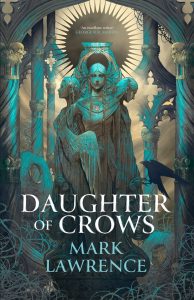
Mark Lawrence is a novelist best known for The Broken Empire trilogy. He also won the David Gemmell Award for For Fantasy. His latest novel, Daughter of Crows, is the first of his new series, The Academy of Kindness. We caught up with him to find out more.
How would you pitch Daughter of Crows to someone who loved The Book That Wouldn’t Burn?
I would say that it starts a trilogy that, like all my trilogies, is pretty different from my others. Give it a go if you enjoyed my writing – don’t go in expecting more of the same.
It shares a somewhat literary edge with TBTWB and has some thoughtful moments on the themes it has in focus – in this case a person’s whole life, and how the years change us and how they don’t. It also looks at how experience shapes us and how we resist shaping.
On the other hand, it’s a much darker and more violent book with far less charm and whimsy on display. And how would you pitch it to someone new to your work?
I am allergic to pitching. Yet here I am. There’s the surface level excitement of a badass old lady with a background that could be described as ultra-dark academia, getting pulled back into conflicts she thought she had escaped. And there’s the somewhat deeper examination of a life and how age changes us, not just physically, but at the core.
Which character would you want to avoid being trapped in a lift with, and why?
Being trapped in a lift sounds so unappealing that the question of “with whom?” becomes secondary. I guess I would want to avoid being trapped in a lift with someone skinny because if we were trapped for a long time someone with more meat on their bones would be more likely to sustain me until rescue arrived.
How long does it take you to get to a first draft?
I generally only do a first draft, and that typically takes between 6 and 9 months.
Sunshine or Lollipops?
Dragons or Death Stars?
Truth or Beauty?
I was a research scientist for 20 years, my first degree was in physics and my Ph.D in an area of statistical mathematics. Truth or Beauty makes me think of quarks. Sunshine or lollipops, here I’m too busy trying to work out the connection to answer the question. Dragons or Death Stars reminds me that I’m always being asked why a scientist chose fantasy over scifi. But it’s dragons every time. Though I don’t really like dragons in my fantasy books that much.
The synopsis for the show is “Vash the Stampede is a joyful gunslinging pacifist, so why does he have a “$$6 million bounty” on his head? That’s what is puzzling rookie reporter Meryl Stryfe and her jaded veteran partner when they look into the fugitive only to find someone who hates blood. But their investigation uncovers something heinous.”
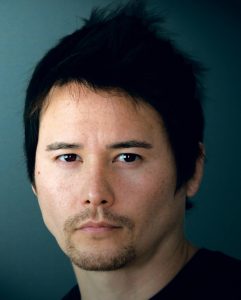
We caught up with the show’s English dub stars, Johnny Yong Bosch who plays Vash (Mighty Morphin Power Rangers, Demon Slayer: Kimetsu no Yaiba Infinity Castle ) and Sarah Roach who plays Meryl Stryfe ( the actor is also known for You and I Are Polar Opposites, My Dress-Up Darling) to find out more.
How would you pitch the show to a beloved elderly relative?
Sarah: Dystopian Space Western, with a lot of heart.
Johnny: Vash is a pacifist in a world that is very crazy and violent, and his twin brother is part of that violence, and he is just trying to bring peace to this world. And there are many adventures, meeting many friends along the way, and they end up working together to try to, you know, achieve that same goal. And it’s fantastic, and the animation is great, and the music is amazing.
But what was your first day on this project compared to your most recent last day? What were the two like?
Sarah: I mean, for me, I was really nervous and excited to be stepping into this series, and so I’m still very excited every time I go in, just a lot less nervous now
Johnny: I feel, I mean, I’m very comfortable with the character. We show up and the script is right there, but it’s not like we can turn the page, it’s electronic, so we’re finding out what’s happening in the story as we’re going along. Or if we ask Jeremy, our director, would feed us what’s happening in the story. And I think, earlier on, I was just kind of curious where things are going to go. Now I kind of see the direction of where we’re going so I am more comfortable
What happens when you’re in that like you’re in the zone. You’re in that role, you’re going through the script, and suddenly there is a huge surprise. How do you essentially keep your characters cool during those moments?
Johnny: Well, sometimes you want to react to those surprises appropriately, you know. So if you’re seeing something for the first time and you’re saying something, a line or whatever, you might get a natural reaction off of, like, Whoa. Okay. A lot of times, though, with this sort of thing, with anime, specifically, there’s, you’ll have previews and stuff.
So this is a far future space apocalyptic story. What do you that’s very different from, you know, living in LA, what do you do? What do you do to get into the role to like, get into behind the wheel of the characters?
Sarah: For me, anytime I play a character, I like to listen to music beforehand that either kind of reminds me of the world that they live in or that I think the character would like. And so I like listening to kind of, like that Western, like whistly kind of stuff. Sometimes, sometimes, yeah, spaghetti western. I like to listen to kind of music to get me in that space.
Johnny: Typically, I try to find what’s the heart of the character? Like, what is their main goal? Like, what do they want to achieve? And it doesn’t always happen right away. Sometimes you find out through a few lines or an episode or two, but once you find that piece, then you just sort of lean into that.
Why do we marry science fiction and Westerns together so often? What is it about those two genres that inspire that kind of merge?
Sarah: Something about it just really works. I don’t know. I. It’s always really cool. I mean, a Western in space, just saying that, it’s like, that sounds awesome.
Johnny: It’s Pretty cool. I don’t know. I really just in anime there’s, there’s a huge variety, so you can find just about anything. But yeah, there is something fascinating about it, for sure.
If you could grab one thing from the show, one piece of technology, one power, one ability from the show and bring it into your everyday, day to day life. What would it be?
Sarah: I love the birds that they ride on, like horses. I would love one of those to be my pal. I don’t know. They’re really cool.
Johnny: I’d take Vas’s Arm. Or Wolf Wood’s Cross. You can catch the show on Crunchyroll here.
Based on the original popular manga created by Yasuhiro Nightow, TRIGUN STAMPEDE and TRIGUN STARGAZE are produced by Studio Orange (BEASTARS, Leviathan). TRIGUN STAMPEDE was directed by Kenji Muto (Land of the Lustrous episode director), and TRIGUN STARGAZE is directed by Masako Sato (HAIKYU!! TO THE TOP). Additional credits for both include scripts based on Takehiko Oki’s concepts and concept art and character designs by Kouji Tajima (GANTZ:0 character artist).
Official TRIGUN STARGAZE Synopsis
It’s been two and a half years since the Lost JuLai tragedy laid waste to an entire city and engulfed the whole planet in chaos. Meryl continues her search for Vash with her new younger sidekick, Milly, and runs into Wolfwood along the way. Meanwhile, Vash has taken the new name Eriks and is living in hiding in a backwater town. When he receives an abrupt visit and SOS from the third ship they call home, he acts swiftly in order to protect those dear to him. However, as soon as the planet receives good news from the far reaches of outer space, the one-winged angel returns to wreak havoc and despair. Fates collide to forge a final conclusion for the panicked planet. TRIGUN STARGAZE is the second season and final journey of TRIGUN STAMPEDE.
The synopsis for the show is “Vash the Stampede is a joyful gunslinging pacifist, so why does he have a “$$6 million bounty” on his head? That’s what is puzzling rookie reporter Meryl Stryfe and her jaded veteran partner when they look into the fugitive only to find someone who hates blood. But their investigation uncovers something heinous.”
We caught up with the show’s English dub stars. Alexis Tipton plays Milly Thompson (the actor is also known for Chainsaw Man – The Movie: Reze Arc, Fire Force) and David Matranga plays Nicholas D. Wolfwood ( the actor is also known for My Hero Academia, Attack on Titan) to find out more.
What is your elevator pitch for the show?
David: Space Battle Western. Humanity is trying to survive, and the characters that are at the forefront of trying to help them survive are dealing with their own morality that bumps into each other and gets in the way as they try to save the planet.
Alexis: if I was going to add anything, I might just mention, like, great music, great animation, yeah, right, timeless themes that anybody can, can be entertained by and or relate to. There’s a little something for everybody. So it would be a good show for anybody to check out, because it stands to reason that there is something in it for everybody.
What was your first day recording compared to your last day of recording this show?
Alexis: We actually don’t really get any time to prepare. Sometimes we know we’re coming in to record. Sometimes don’t even tell us what we’re coming in for. They told us for this. But when we come in, everything we do is what’s called cold reading, which means that we’re seeing the script for the very first time. And there’s a lot in that process that helps us find the character, find our performance, figure out what the scenes need as we go through them, but yeah, the first day, it was just, it was that that just like nervous excitement of, oooh, new project, and I know what this is, and this is really fun. As the show and the title progresses get to learn more about these characters.
David: If you watch, you know, your favourite television show, let’s say, and you watch the pilot, and then you watch the season finale, or a series finale, you can see that the character almost deepen with the actor’s relationship to that character. Seamless transitions, those things deepen as it goes for me. You create the voice right there in that first session. And I’m a pretty physical actor, just in general. When I’m working with Wolf, would you know, my posture changes a little bit. My shoulders are held a little differently just because of who he is and his kind of aura. And so that you know that first session you’re trying those things on, you lock something in, but then you know, all to the last session, all of that stuff is second nature. It’s not even you don’t even know you’re doing it anymore and the performance is just right at your fingertips. What do you draw on as actors to get into the zone?
David: I think no matter how, and I’ve seen this with other media, no matter how futuristic something is, it comes down to those basic human needs of validation and love and friendship and community, and those things are so apparent in this show.
So, you know, it’s, it’s not like I have to imagine myself or something in a futuristic world. I think, I do think about, you know, what would it be like if things were more dire than I feel they are for me now. It really is about how you take on those given circumstances of the world, whatever those are, and then you play the truth of the character in those moments. And if you do that, I feel like the journey will always sort of calibrate itself well
Alexis: And we’re also very lucky with this title, that there are so many amazing storytelling elements present. And so when we preview all the lines in Japanese first, before we lay down the English track, and we get to hear the music, and we get to hear what the Japanese has done, like if there’s a big action sequence happening and or there’s a bunch of people screaming, or there’s something really emotional happening. You can really lock into those emotions of the preview, and it really does translate to feeling it in your own body.
If you could take one thing from the show, like it’s a power or a piece of technology or something like that, and have it for yourselves, what would it be?
Alexis: I mean the space travel is pretty great. I mean being able to travel farther in space than we can currently,
David: Being able to operate with like, acrobatic ease. That or a gun that is in the shape of a cross that’s got like, two different ends to it. That would be really cool. That would be really cool. I don’t think you could take it to a traditional shooting range or anything.
Based on the original popular manga created by Yasuhiro Nightow, TRIGUN STAMPEDE and TRIGUN STARGAZE are produced by Studio Orange (BEASTARS, Leviathan). TRIGUN STAMPEDE was directed by Kenji Muto (Land of the Lustrous episode director), and TRIGUN STARGAZE is directed by Masako Sato (HAIKYU!! TO THE TOP). Additional credits for both include scripts based on Takehiko Oki’s concepts and concept art and character designs by Kouji Tajima (GANTZ:0 character artist).
Official TRIGUN STARGAZE Synopsis
It’s been two and a half years since the Lost JuLai tragedy laid waste to an entire city and engulfed the whole planet in chaos. Meryl continues her search for Vash with her new younger sidekick, Milly, and runs into Wolfwood along the way. Meanwhile, Vash has taken the new name Eriks and is living in hiding in a backwater town. When he receives an abrupt visit and SOS from the third ship they call home, he acts swiftly in order to protect those dear to him. However, as soon as the planet receives good news from the far reaches of outer space, the one-winged angel returns to wreak havoc and despair. Fates collide to forge a final conclusion for the panicked planet. TRIGUN STARGAZE is the second season and final journey of TRIGUN STAMPEDE.
An overwhelming buzz has surrounded Undertone since its premiere at the Fantasia International Film Festival in 2025, where it enthralled and terrified genre fans alike. The journey of Ian Tuason’s directorial debut since then has been nothing short of incredible, going on to screen at Sundance and be picked up by acclaimed production company A24 for its theatrical run. The single-location horror flick follows Evy (Nina Kiri, a woman who hosts a paranormal podcast), where she is the skeptic to his believer. Evy records the podcast with her friend, Justin (Adam DiMarco), from her childhood home, where she has moved to act as caregiver to her dying mother (Michèle Duquet). The film begins as Evy and Justin are sent recordings of a married couple (Keana Lyn Bastidas and Jeff Yung) experiencing terrifying noises and phenomena in their home. Ahead of the film’s release, STARBURST MAGAZINE spoke to Tuason and Kiri about Undertone’s overwhelming success, filming in Tuason’s childhood home, and the film’s unique sound that has gripped viewers.
STARBURST: Undertone follows two podcasters who are hosting a supernatural show. How familiar were both of you with shows like that before making the film?
Ian Tuason: I was pretty familiar with these YouTubers that just spoke, so they weren’t on camera or anything, and they would just talk about creepypastas. Their videos were kind of like the beginning of the Undertone podcast with the creepy music. I’m a big fan of creepypastas, but I haven’t really listened to a podcast where a sceptic and a believer are debating. I do listen to a lot of other podcasts where there are two opposing belief systems debating each other. I used to listen to a lot of sports podcasts, Yankee fans versus Boston Red Sox Ball, or stuff like that.
Nina Kiri: I don’t listen to horror podcasts as much. I listen to a lot of podcasts, but the way I listen to things is just to have them in the background. I listen to more real-life stories from people. Jonathan Goldstein’s Heavyweight is one of my favourite ones. But they’re not horror. I have enough horror!
In the narrative, there’s a lot of the occult. How much research went into crafting the lore of Undertone? Is it something that you’d found that already existed, or was it something that came from an idea elsewhere?
Ian: I was always afraid of demons because of The Exorcist and growing up Catholic, so I wanted a demon. I didn’t know which demon I was going to use. Once the story started forming about Evy being pregnant, I needed a female demon who wanted her baby. Then I found Abyzou, and it was perfect, so thank you, Abyzou!
Nina, what was it about the role of Evy that attracted you to Undertone?
Nina: Reading the script was a crazy experience because that feeling of claustrophobia that you feel when you’re watching the movie, you really feel that when you’re reading the script. I almost experienced that more when reading the script than when I watched the movie. It really impressed me because it’s so rare to read a script that you just can’t stop because the tension is so natural. You’re with one person in one place, and suddenly you’re looking over your shoulder. But it also scared me, and I was kind of like, if this isn’t the right people, then I don’t know if I can get through this. When I met Ian the next morning, I was like, “Okay, they’re so cool. I feel so safe around them. I know I can go to these places and do this in this type of environment”.
The themes Undertone deals with are very heavy. Nina, how did you handle that, and did you do anything while filming to get out of Evy’s mindset?
Nina: I had my room upstairs, which was my lair. Natalia [Andrea Pozo, makeup artist] and I would just hang out there, not even talking. She’d be watching Netflix on her phone, and I would be reading my book. We all had such a great rapport. It felt so fun, and to me it was really light, but I think that’s because it’s the middle of winter, we’re all going to be in the same space. Everybody had the same feeling of “let’s just have a light, fun attitude in between so that we can get this all made in the best way possible”. It was such a positive environment, and I think everybody felt that they could say their piece. Anybody on the crew could be like, “I have this idea, maybe we can try this”. And people would listen. That’s all because Ian set up that environment of trusting everybody enough to do their jobs, and there’s a huge freedom in that.
It was very effective to film in just one location, and that location was your parents’ home, Ian. What were the pros and the limitations of this?
Ian: I wrote it in the house! So I was taking photos of every shot, putting the storyboards together, all in that house. It was very intentional, every single shot. And I had a lot of time to craft the movie because of that. Because it’s my childhood home, I think people felt at home there. There was my Banana Splits light switch thing still up, and then some of my Highlights magazines were on the bookshelf. Some of my friends who knew me before, like Graham Beasley [director of photography], would be curious and ask if this was where I would write or read my comic books. We had a chef come in every day, Mama Kay, who cooked up some home cooking. So it did feel like a family.
The use of sound is amazing; Ian, you’ve worked extensively in sound design. How did you craft the unique sound of the film?
Ian: I worked in virtual reality for a bit, so I used to create 3D soundscapes in 360 degrees. I was very intentional with the direction of each sound. When I got into the post sound studio, I was really specific with the sound mixer and where all the sounds would be to create that soundscape around the viewer. That was the intention from the start, just because I was already experienced in it, and my experience gave me the ideas behind the film and why I wanted to make it.
Something that makes Undertone so scary is the fact that we never see the demon. Ian, why did you choose to do that, and Nina, what was it like to act around and react to something that isn’t there?
Nina: For me, it felt like the unravelling of Evy was super real, and it felt a lot more internal. In the movie, you see the exterior of that with the panning into the empty spaces and what that does to people’s imagination. But being in that situation, I think I was in a heightened state of getting freaked out by everything. When I could hone in on what exactly she’s going through moment to moment and day to day, that felt really powerful. It had nothing to do with external, it was really an internal breakdown, which was scary to me anyway.
Ian: I’m always scared of things I can’t see. Definitely imagination. Paranormal Activity scared me, and The Blair Witch Project. The Exorcist scared me more before we saw her possessed. What the demon was doing to her in bed when she was doing sit-ups, and her face was slamming onto her sheets. I remember lying in bed at night as a kid thinking, “When’s my bed going to shake?” The imagination is the scariest thing that I could use in Undertone.
The reaction people have had to the film has been overwhelming, with Undertone being branded the scariest film of 2026 by several outlets. What has that been like for you? Did you ever have an inkling that it would take off the way it did, or has it come as a complete surprise how people have really taken to the film?
Nina: Ian did, but I didn’t know to what extent. I remember being at the screening at Sundance and a woman going, “Oh”. Like a guttural moan. It was so visceral, and there were so many things like that. That was a really interesting, anthropological experience to see everybody go through watching this movie for the first time.
Ian: I was living, breathing this movie for a few years, and I knew exactly what it was. I felt like it would’ve scared me if I didn’t make it, so then I knew that it was going to do well. I didn’t know exactly how well until things started happening one by one, like the right people coming on board, Nina just nailing every scene, even our gaffer. He had this app that controlled all the lights, and he had gotten that right before we hired him. I was ready to hide in the corner and use a dimmer for the lamp, but we didn’t have to do that. So when I saw everything lining up, I was like, “Wow, okay. So, pretty much everything that I imagined is happening perfectly. I wouldn’t be surprised if everything that I imagined would happen afterwards, happens”. And then it did. A24 was the favourite in my head to win. And then Sundance was where I thought we would premiere. I’m glad we premiered Fantasia because if we didn’t, then none of this would have happened. A lot of strange things happened. I met Eli Roth on the street a couple of days after we premiered at Fantasia, as he was texting his friend that he was about to watch Undertone. I said, “I just premiered my horror film”. And then he goes, “What is it?” And I told him, Undertone. And then he shows me his phone. And at that point, that’s when I had him. He was under my spell at that point.
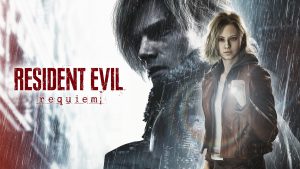
With over six million copies of Resident Evil Requiem sold, alongside the 30th anniversary of this legendary survival horror series, it’s the perfect time to catch up with Nick Apostolides (Leon S. Kennedy) to dig into the latest Resident Evil instalment. Resident Evil Requiem is a celebration of every Resident Evil game that bloodily paved the way through slow-moving doors before it, that also pushes the series in an exciting new direction. Split into two main sections, between Grace Ashcroft (Angela Sant’Albano) and Leon S. Kennedy, Requiem sends our two main characters right into the heart of a mysterious nightmare that’s nostalgically comforting for fans. Resident Evil Requiem is horrific, action-packed, and showcases superb storytelling, and is a worthy addition to a monumental gaming legacy…
STARBURST: When did you get the call to confirm that you were involved with Resident Evil Requiem, and what were some of those initial conversations with Capcom like? What did they initially tell you about the game?
Nick Apostolides: I remember them getting in contact sometime in late 2023, and those conversations began. I didn’t know anything about this project until probably about February 2024, and that was the first session of filming in London. Learning about the broad strokes of the plot, even back then, was really cool for me because of what they were planning. They were always wanting to go back to Raccoon City, for me that meant quite a bit for my character, so I knew we were going to have a lot of fun with this. And then over time, the story evolved a bit. But I’m really happy now that I’ve played it, I’m really happy with the reception and the final product.
You’re playing an older version of Leon, what was the creative discussion like with Capcom, other than just being older, like, how did they really want to see him be portrayed on-screen?
That was going through changes as well, that was evolving throughout the whole shoot really. The conversations of “Do we want to keep him, kind of dad jokey? Do we want to make him more serious and brooding in this one?” We just kind of found, a really nice balance, I feel like. Yes, there’s the body, the age, and the way he moves in cutscenes. Just feeling like the miles on the vehicle. That’s kind of what we shot for, and I’m really happy with the version of the character that has come out. I’m really happy that people are enjoying this version, and understanding the journey that he has been on for 30 something years, and that they’ve enjoyed his arc in this game as well.
Do you remember what it was like to see this version of Leon for the first time?
Well over a year ago I saw a finalised cutscene, and that was the first time I had seen the actual model for the game, and he had that, scruff, the stubble, the hairs, the cracks in his face, and then his outfit. I was just like “Damn, that’s pretty cool!” old man Leon!
This is the first Resident Evil game where you really get to bring your own take on the character, how did you prepare for that, and what else did you want to see from Leon in the game?
It was important for me to show the effect that returning to Raccoon city would have on him. That needed to come out right for me, because that’s the pivotal point in the story, and it’s a pivotal point in his life as a fictional character. I just wanted to make sure that I kept in mind all of the canon, and all of the lore that he had been through, in his fictional career, and then I had to fill in a couple of blanks, because I think the oldest version of Leon that we had seen was probably around 38-39, in Death Island actually, a CG Resident Evil film that came out in 2023, and then there’s this whole ten year gap, where we don’t know exactly what he has been through. So, I kind of had to come up with some things on my own, and just be respectful, to his story, and then, take some liberties, suggest a lot of things with Capcom and we just built this version of the character together.
In Requiem, you visit a lot of legendary locations from Resident Evil 2, did that bring a sense of responsibility or pressure to you as a voice actor, making sure you captured those moments in iconic locations in the best way possible for the fans?
Absolutely, I thought the biggest sense of responsibility I had was connecting this version of Leon and his experiences in this game to his experiences in Resident Evil 2 remake, in ways this game felt like a soft sequel to that game, for obvious reasons. I just wanted to make as many connections as possible. There were a few moments where I said “Hey, if we are going to see this, he might say a line like this to call back the original.” So that was really important for me, and I’m really happy with when I played that section of the game, I had goosebumps the whole time. I was sitting right next to my little brother, and I had my hand on his shoulder playing this. I was like squeezing it, I was like “Oh my god!” It was really special for me to see that, and they really knocked it out of the park with how they presented it.
Can you tell us about some of the voice training that you did with Paul Mercier [Voice of Leon in the original Resident Evil 4]?
I was training with him generally, for voice over coaching, many years ago, before Resident Evil 4 remake. We didn’t really talk much about the project at all, we didn’t talk about the character. It was more, really general training, just to become a better voice actor, how to utilise this instrument more effectively. We did a lot of breath work, a lot of exercises, stuff like that. It was very general actually. I was just very familiar with his performance so I didn’t need to ask him about that, it was more just, “How do we become a better performer ourselves.”
Yourself and your brother have played through every single Resident Evil game together, that’s an awesome tradition, that fans can relate to. So, what was Requiem like, and what were some of the moments that really stood out to you both?
When you’re a 20 something year fan, like my brother is – he has been playing these games since 2005 – it’s always special, whether I’m in the game or not, just playing a new Resident Evil title, you have to learn the characters, you have to learn the fighting styles, the combat systems, the puzzles, the plot, the maps, everything! Just experiencing everything for the first time, it’s always mind-blowing to us. What we did, in this game, because you play as Grace for about half the game, and you play as Leon for about half the game, and we thought it was fair to flip a coin, so I said “Dave, if you get heads, you play as Leon. If you get tails, you play as Grace.” He got Leon, and I actually thought that was fitting, because I knew a bit more about Leon’s story as the actor. A lot of Grace’s section, I knew was going to be a surprise to me, so I’m glad, I went in first-person, I played all of Grace’s parts. For the first half of the game, he largely just watched, he was just sitting there, eating popcorn, snacks, as I tried to get through the Rhodes Hill Chronic Care Centre. Then when he was playing as Leon, I was sitting back, enjoying watching my little brother playing as my character. So, it was a really special thing.
As you’re such a huge fan of Resident Evil, it must feel quite rewarding to create memories like that for other fans, by playing Leon?
Yeah! And then, when we play, my brother and I, even if it is one of my games, we really experience it as fans, because, although I filmed all of the cutscenes, and I’ve seen a lot more stuff than the average joe, still so much of the game came as a surprise to me. So much. So, I thoroughly enjoyed it as a fan, just trying to beat the damn game, and I died quite a bit. I can’t wait to go back and play the whole thing selfishly as myself.
You took on motion capture once more. Can you tell us about the process this time around, and also, maybe how the motion capture style has grown/changed over the years?
The process of motion capture and full performance capture is always the same, the only difference is if you’re filming in a different location with a different team, sometimes they have their own systems in place, their own processes, their own way of doing things. You’re always working with a different cinematic director, a different performance director, and so it’s really just learning how to work with this new creative team. That’s all. It’s all the same stuff though, and, it’s always fun because I love it. I love full performance capture.
Can you tell us about what Angela Sant’Albano [Grace] was like to work with, and maybe what Capcom really wanted to see from the dynamic between Grace & Leon?
Angela was fantastic. She brought so much realism to Grace Ashcroft. The scenes that she was thrown into, so many of them were just extraordinary situations, and she’s playing a character who has never seen something like that, she’s not even used to being around a lot of people period, let alone zombies and monsters, and hideous creatures. So, she just brought so much real, raw emotion, take after take. Sometimes I’m acting with her, sometimes, I’m on the sidelines, on a couch, just watching the scenes play out. The whole time, I’m eating popcorn and snacks, like, I’m watching a damn movie. I think Capcom play with a really interesting dynamic. It’s a stark contrast between this version of Leon and Grace. However, if you were to put Grace in say, Resident Evil 2, they’d probably feel more like brother and sister. So, I think that just shows a bigger contrast with how Leon has progressed in his fictional story, over about three decades of lore, and when they’re matched together now, I feel like, it is a bit more of a mentor mentee kind of relationship.
Grace’s POV is in first-person, and Leon’s is in third person! We know you can change the view, but why do you think these default settings work so well?
I always trust Capcom with what they say because they designed these games, and sections of the games with that in mind. They like to give the option, just for flexibility and variety for the player, which is great, but they designed Grace’s parts to be in first-person so you feel like you are that character. It’s the same thing that they did with Resident Evil 7: Biohazard and Resident Evil Village. Ethan was a bit plainer as a character in RE7, because they wanted the player to be able to reflect themselves on to the character, and I thought that was a brilliant move, and that’s what you feel like, because you’re in this claustrophobic situation, you can’t really see the character, so you feel like the character, because everywhere you look, it’s just the mansion, and you’re trying to get out of this old manor style house, and this family is just stalking you down. I think it’s a brilliant mechanism for horror, is what I’m trying to get at. So that’s why I chose to play Grace’s part all in first-person, and it was terrifying.
That was a genius idea by Capcom, and it really feels like it is you playing the game.
Ethan can be anybody! He can be you as well. It’s like a different level of immersion.
Dr Victor Gideon is such a cool villain! What was Antony Byrne like to work opposite in Resident Evil Requiem?
Anthony is just a fantastic character actor. So lovely to work with, and also terrifying, because he scared the bejesus out of me. While they’re playing with a lot of physicality, trying to find this character, they just wanted him to be off-putting. Really unsettling in subtle ways, and so, Anthony was implementing a lot of reptilian animal movements. They kind of subtly hinted that he had snake like features, very reptilian. Maybe from a mutation, I don’t know. But Tony would be doing these little twitches, these little like, sensory twitches, and smells and sniffs that you might see out of snake or a lizard, or something. He was doing that in these scenes, and the first time I saw it I was so uncomfortable right next to this actor, in front of the whole team. I was so uncomfortable that when they would yell cut, I would start to giggle. I was so uncomfortable that I’d just be like “Ha, Tony! That was pretty good man! You’re killing me!” I’m thinking to myself, “If that makes me uncomfortable in this setting, with all of the lights on and everything, when we’re playing the game it’s going to be that much more effective. So kudos, bravo, it’s Tony and he is awesome.
Leon is known for his legendary one-liners, which ones did you really enjoy working on in Requiem, and why?
I need to play it one more time to really start to get into those lines, and feel which ones I like the most, but there are some bangers. We were laughing at a few while we were playing it for the first time. I mean, a lot of fans have told me so far “That line was great!” One in-particular that has grown on me is when Victor was interrogating Leon in a chair, he leans into Leon’s face and says something. Leon says, “You know, I do have a question, when’s the last time you brushed your teeth?” In that situation it just shows you that Leon is just unphased and it’s the same old guy. I thought that was pretty funny. There are a couple of really good ones… Do you have any favourites yourself?
“Should’ve worn a helmet!” from the motorbike fight sequence with Victor!
Yeah, that’s funny too! I think that’s kind of ironic because Leon isn’t wearing a helmet either. It’s a good Leonism!
You’ve voiced Leon over multiple Resident Evil games. Do you now feel like you’ve been able to give him like, a full story arc, and how rewarding is that for you as an actor?
I wouldn’t take credit for the story arc, that’s on the storytellers. That’s Capcom, the scriptwriters, the cinematic producer. We all worked together, we all collaborate. I think, what I get to chime in on most, is little bits of his personality. We are never going to change his DNA and what makes Leon, Leon. That’s always going to be the same. He has got the same spine throughout his entire fictional career, for thirty years. He is a good guy, he just wants to help people, he has got a good heart all the time. His only regrets are that he can’t help more people. So what I can inject a little bit, is my cadence of speech, the way that you move. Little tricks with guns when you’re doing mocap. One-liners, zingers like that. It’s subtle little influences that I’ve had on the guy but that I’m really happy with where he is because again, he is the same person, but with a little bit of Nick injected in there.
This is quite a broad question, but as it’s the 30th anniversary of Resident Evil, I thought it would be a good time to ask why you think the franchise has had such an incredible run? Like, what do you think makes it stand out?
I’ve spent some time thinking about this, because we just celebrated the 30th birthday of this franchise, just the other day. It’s so nice to know that a franchise I fell in love with 28 years ago is still going strong. There are a lot of zombie games out there, a lot of horror type games, but not many of them see their 30th birthday, and are still making games, and I think it’s because Resident Evil has always had this really fine balance of being terrifying but also fun to play because they’re slightly campy. They don’t take themselves all too seriously all of the time, so these are these action adventure, survival horror, mix match of games, and people are just loving them. They have great, memorable characters, that are written by amazing people, and people get attached to their stories, I’m pretty sure Resident Evil created survival horror, and so, growing up, you’re playing it on the couch with friends, and you’re just trying to get out of these awful set pieces together, just trying to get out of this mansion, or this police department. You’re trying to get out of there alive, kill all of the bosses, and then you get attached. These people grow up, people like my age, they have kids, and they’re like “Hey, you should play this Resident Evil series that I grew up with!” it’s just multi-generational, and I think it’s this beautiful cyclical thing, and I think pretty soon we will be celebrating their 60th. It’s 30 years from now, but I think that’s going to happen, because I just think this franchise will be going on forever.
Finally, why should Starburst Magazine readers play Resident Evil Requiem?
Why should you play? It’s quite a ride. It’s scary, it’s funny, action packed. Good characters, good bosses. It’s just a good time! You should totally play it!
The 1978 mondo horror Faces of Death presented the viewer with various ways people can die – including shocking real-life footage. It’s the inspiration for a new movie of the same name, in which an online moderator (Euphoria’s Barbie Ferreira) comes across a group re-enacting the original film’s murders. Director-co-writer Daniel Goldhaber and co-writer-producer Isa Mazzei told us about updating the notorious ‘shockumentary’ for the age of social media…
STARBURST: Why reboot Faces Of Death now, and what was your approach to it?
Daniel Goldhaber: We were approached to make this movie by Legendary. They said, “Hey, we have the rights to remake Faces Of Death, are you interested?” And we asked what it was because we’d never seen it. We sat down, watched it, and realised that we had actually seen bite-size pieces of it on websites like eBaum’s World, Rotten.com, LiveLeak and whatnot. That was the jumping off point for the movie itself – essentially we wanted to tell a story about where Faces Of Death is today, and about how the attention economy has habituated a lot of us to both accept and commit acts of violence.
Do you think audiences’ perceptions on shockumentaries have changed since the original film, especially with today’s culture of social media and its moderation?
Isa Mazzei: I think their perception has absolutely changed. We talked to people who are just a few years older than us, who remember seeking out the original video. They would ask someone’s older brother to go rent it for them, and you couldn’t rent it everywhere – you kind of had to bribe someone to get it. It became something that you really had to seek out if you wanted to see it. I think that now, if I go to Google and type in ‘dead bodies’, boom, it’s there; there’s no barriers to entry anymore. And we’re also getting served this content when we don’t want it and when we don’t seek it out – it’s still coming up on our feeds on social media. So I think our relationship with those images, our ability to be shocked, has been greatly altered.
So do you think there’s been an increase in the violent content people see due to social media algorithms and new technology such as AI?
Isa: The social media algorithm wants us to be engaged, right? That’s what it wants. It wants our attention. Arthur [played by Stranger Things’ Dacre Montgomery] says exactly that in the movie; that it’s an attention economy. They want us to pay attention. And I think the algorithms, whether they’re controlled by AI or not, have figured out that things that are violent, things that make us angry, things that make us feel sick, that is what keeps us engaged, that is what keeps us clicking, that is what keeps us sharing and commenting. So our feeds have been trained to show that content more and more, because that’s what keeps us on the platform.
The film has quite a strong message about the attention economy and the scrolling mentality. Are there any other underlying messages that you want people to pick up on?
Daniel: I think ultimately what we’re trying to demonstrate in the movie is how sinister the digital world can be. What makes social media and digital technology so insidious is that there’s this convenience beneath it, this kind of smokescreen of the user interface design that removes us from the actual feelings, sensations and experience of communicating with another person. We don’t necessarily realise how alienating that is. Human beings are supposed to be in a physical space with each other, we’re supposed to smell each other and be able to experience the entirety of somebody’s body. We’re not supposed to engage with each other as floating heads on a computer screen – I feel exhausted after a day of Zoom meetings. There’s a lot in the visual language and in the thematic and narrative structure of the movie that’s meant to get people to recognise, hopefully not in a terribly didactic way, the ways that the alienation of modern society and technology drives us towards anger and violence.
Do you think the original Faces Of Death is going to see a resurgence after people watch this reboot?
Daniel: I definitely think it could.
Isa: I think it definitely informs this film in a way where seeing both is an interesting experience. We didn’t remake Faces Of Death, we just made a movie in which Faces Of Death exists in the real world. So anyone who’s curious about the original can go seek it out, and it will inform the watching of this film as well.
FACES OF DEATH will be released in US cinemas on April 10th.
Director Vicky Jewson’s new film, Pretty Lethal, is an action-packed thriller where five ballerinas, on their way to a prestigious dance competition, are barely on speaking terms when their bus breaks down in a remote forest. With no other options, they reluctantly seek shelter at an unsettling roadside inn run by Devora Kasimer (Uma Thurman), a reclusive former ballet prodigy. From the moment they arrive, something feels wrong—and their worst instincts prove right. As the situation turns deadly, the fractured team must set aside rivalries and weaponise years of brutal training, turning grace, discipline, and even pointe shoes into tools for survival.
The score is from composer Paul Leonard-Morgan, which “combines lush orchestral textures with driving electronic elements, reflecting the film’s blend of high-stakes action and dance-driven storytelling.” It’s the second big score from composer Leonard-Morgan, fresh on the heels of his work on Louis Theroux’s Netflix documentary Inside the Manosphere, currently going viral everywhere. We were excited to once again speak with BAFTA Award-winning, Emmy and Ivor Novello-nominated composer Paul Leonard-Morgan about his work on Pretty Lethal and so much more.
In writer/director Addison Heimann’s new movie, Touch Me, “Two codependent best friends become addicted to the heroin-like touch of an alien narcissist who may or may not be trying to take over the world.”
Starring Olivia Taylor Dudley, Lou Taylor Pucci, and Jordan Gavaris, along with Marlene Forte and Paget Brewster, this new movie is sticky and weird and horned-up in a way which feels like a monster movie dropped into the world of a ’90s erotic thriller. It’s by turns hilarious, touching, and gross, and we were beyond excited to hop on Zoom with Touch Me’s Jordan Gavaris about his role as Craig, one of the two besties, as well as his fascinating career.
TOUCH ME EXCLUSIVELY IN NY March 20th, LIMITED IN THEATERS March 27th, ON DEMAND AND ON DIGITAL April 7th, 2026
K.A. Linde is the number one Sunday Times bestselling author of The Oak and Holly Cycle. Their new series, The Royal Houses, launched to an excited fan base and is currently grabbing the attentions of fantasy fans all over the world. We caught up with them to find out more.
How would you pitch House of Dragons and House of Shadows to someone who was a fan of Dungeons and Dragons?
For anyone who enjoys Dungeons and Dragons, my Royal Houses series would be a fun adventure. The main characters, Kerrigan and Fordham, go on many quests throughout the books to discover who murdered Kerrigan’s friend as well as entering into a dragon tournament. And in the second book they travel to a new land that has been forbidden entry for a thousand years and the spell around it is weakening and Kerrigan may be their salvation or their doom.
Why should I read this book?
The Royal Houses appeals to anyone who loves a good dragon story, a good slow burn romance, and good magic learning. There’s also fights for the rights of those who are not Fae. There’s an underground fighting ring, dragon tournaments, spies, a magical academy type setting, regency era Season events with dancing, an arranged marriage, a murder mystery, and so much more. It has a little bit of everything for those who love the fantasy genre.
Why has fantasy and romance suddenly become huge as genre?
While romantasy itself is a new term, it has been big for a long time. We can look back at Jacqueline Carey’s Kushiel series, Karen Marie Moning’s Fever series, and C. L. Wilson’s Tairen Soul series which were all massive New York Times bestselling series. They were already out there in the 90s and early 00s. Then with the rise of Sarah J. Maas and Jennifer L. Armentrout, we could see the shift that more readers wanted it. And it really boomed with Fourth Wing by Rebecca Yarros.
Part of that is because for so long most women were relegated to writing young adult, because if there was romance in your fantasy then it wasn’t for adults. Partly it is because readers demanded it. The self publishing boom helped shape what readers wanted more of and romantasy became it! What is the most interesting fantasy element in your books? Why?
I have a personal love for magical artifacts. The book opens on an underground magic fight where the heroine beats someone who shouldn’t and he comes after her in retribution. He gets away with it by using a magical artifact that would knock her out. Throughout the books you get introduced to new artifacts like the Ring of Endings which is immune to magic and the Collector which can take a trace of magic from every user who touches it and then used by other people. And all the artifacts build up each other as you read.
How long does it take you to get to a first draft?
I’ve been a fulltime writer since 2012 and have always been very fast at drafting. I can write more first drafts in 6 weeks.
What’s your favourite joke or pun in the book?
In House of Shadows, Kerrigan and her dragon, Tieran, don’t get along. So the entire book they are overly sarcastic and poking at one another. Tieran’s sense of humor is so clever and witty. But most of it makes sense in context.
What sort of fantasy setting do you enjoy?
Personally I love almost all of them when I’m reading. But I really loved getting to explore writing in a city in the Royal Houses. I have another series, Ascension, which was a typical journey fantasy, where each book is a different country or city they go through. But the majority of the Royal Houses are set in the city of Kinkadia. It was interesting to see how much more you had to dig deep into one world rather than getting fun new things to play with every book.
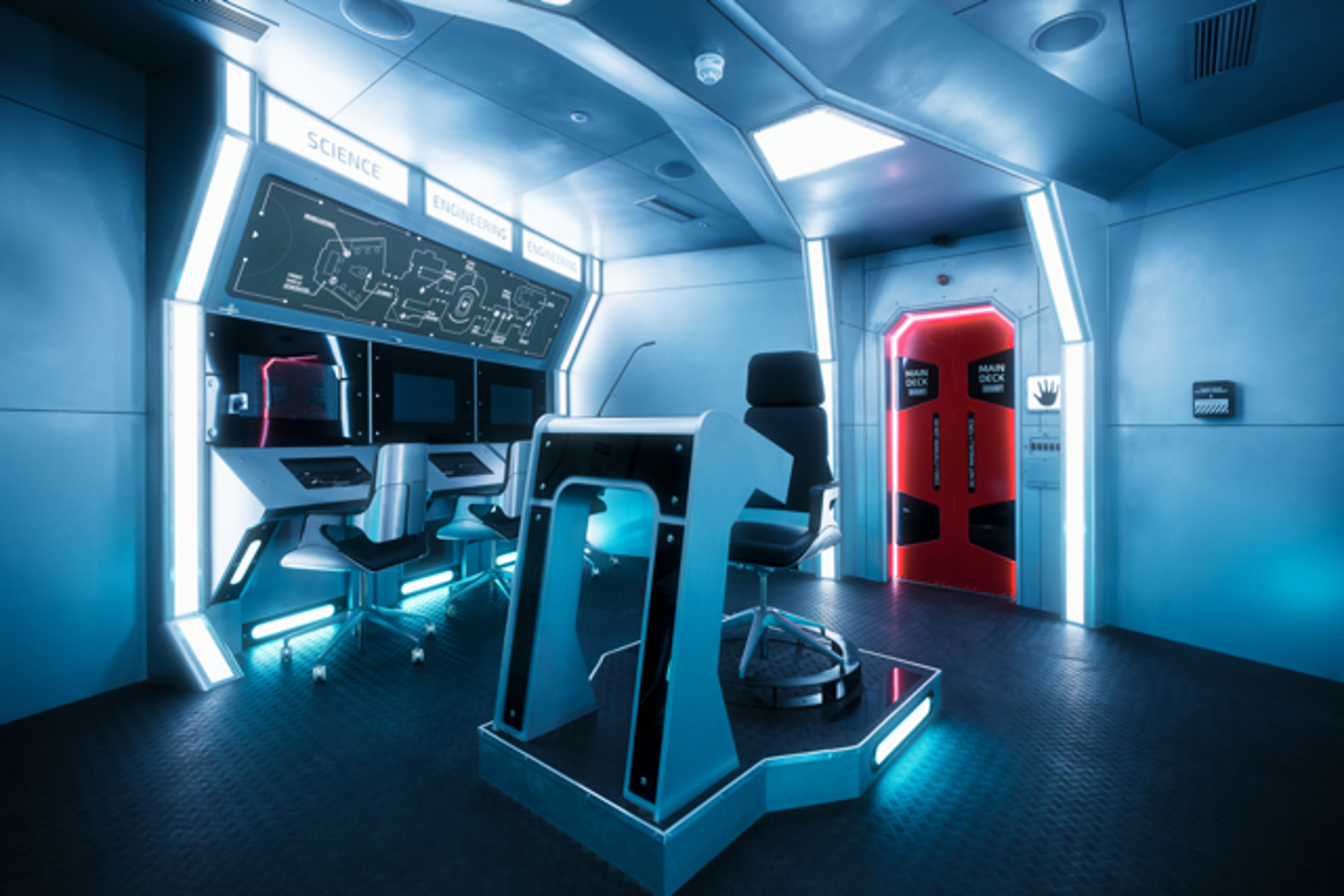
Emily Carding is an actor, theatre-maker, writer and artist. They are best known for their award-winning interactive solo Shakespeare shows, as well as the role of Dara 2026’s Return to Silent Hill. Their award winning work immersive experiences such as The Key of Dreams and, of course, Bridge Command, where they play the dour and disciplined Captain Athena Hamilton. We caught up with them to find out more.
How did you end up working for Bridge Command?
Owen Kingston (artistic director of Parabolic Theatre) is very careful about who he hires and thankfully I was recommended to him by a couple of people on the immersive scene whose opinion he trusts. As a lifelong fan of Star Trek and sci-fi in general as well as specialising in responsive immersive work, it’s a dream!
And how would you pitch it to someone who can quote Wrath of Khan?
Live your dreams of being part of a real starship crew and be the hero of your own adventure. We don’t believe in the no-win scenario- at Bridge Command we know you’ll succeed.
What is the trickiest part of your job?
One of the extraordinary things about the company is how every aspect is run by the actors, including the bar, admin, video editing…everything! I can find working in the mess pretty stressful when it’s loud and busy but we all muck in and get the job done and remember how lucky we are to essentially play pretend in space for a living.
Why science fiction?
Genres like science fiction allow us to view humanity through an alternate lens and look at real issues in a revelatory and insightful way as a result. The possibilities of immersive adventures in this environment are not just escapist but allow us to explore facets of ourselves that the everyday may not allow for or support.
How does it compare to other, similar shows?
Tricky to say what’s out there that is similar, but in terms of other immersive shows it’s incredibly responsive and remembers your progress. For example, you can be promoted and that’s the rank you’ll be when you come back. There are now around 25 different missions running and we always do our best to make sure you won’t do the same mission twice. For our most committed regulars who have been even more times than that, we do our best to put unique spins and twists in when we can. Outside of the missions there is a constant, unfolding and developing world in which your actions have consequences, and ongoing relations between our characters in that world that you become part of. It’s truly unique in that sense.
Is this the future of entertainment?
I think people are hungry for something that feels real in a world that is too often virtual and detached, yes. Video games are obviously incredibly popular as they give you agency and put you at the centre of the action. At Bridge Command you really get to live that experience and interact with the world in a physical way which is beyond anything virtual reality can achieve, along with an incredible community-building social experience.
How similar is this to other projects you’ve worked on?
It’s very unlike anything else, but in terms of immersion, responsivity and audience agency it has some crossover with Key of Dreams, the 24 hour luxury Lovecraftian experience by Lemon Difficult which is my other main gig. It’s a very, very different show for many reasons but the personal interactions and consequences are special in both. You never know what extra magic or challenges audience members will bring and it’s a privilege to co-create their experience with them in this way.
What is your favourite moment in the show?
Every show is different, but the moment when you can create real magic and wonder for someone- that’s my favourite.
What’s next?
More Bridge Command, more Key of Dreams, and I have a small role in the new Silent Hill movie, Return to Silent Hill, which is out in January. In the new year I’ll look into touring possibilities for my new solo show with Brite Theater, Timonopoly, which had a great run at Edinburgh fringe this summer (2025).
Doctor Who or Doctor No?
Always the mad individual in the blue box.
Death Stars or Dragon?
Why not both? Imagine riding a dragon down the trenches of the Death Star!