Avengers: Endgame Sets a New World Record

avengers record

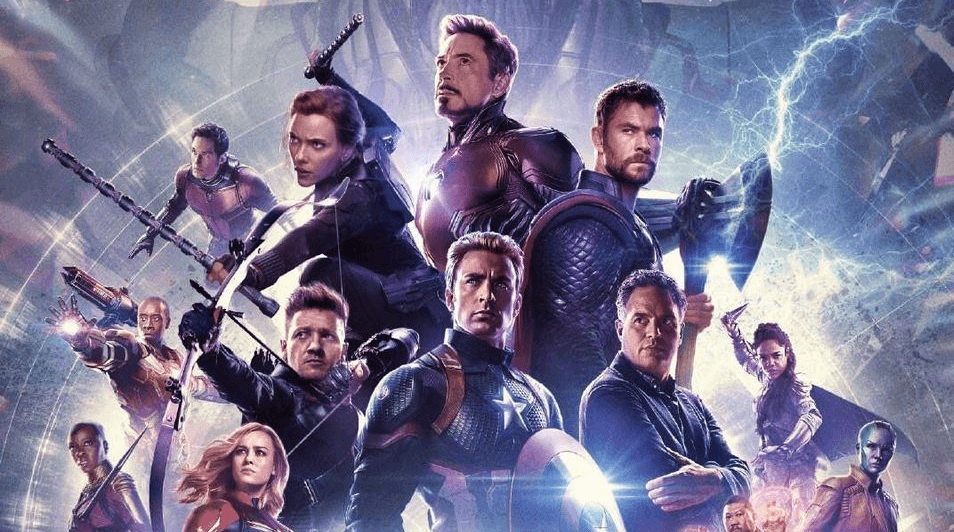
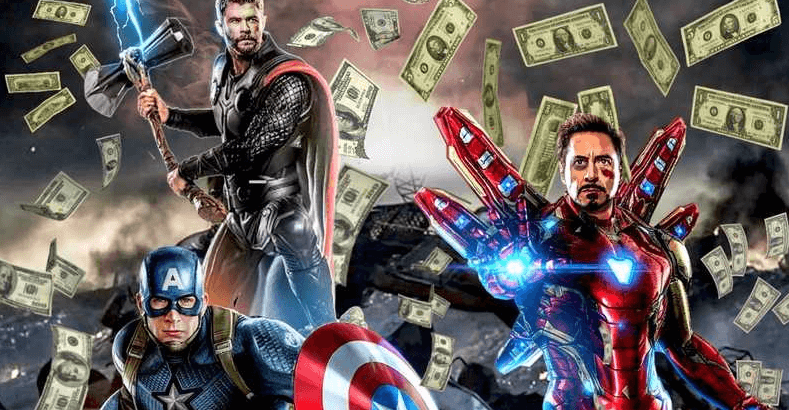
The long-awaited release of the final part of the saga about the team of superheroes, Avengers: Endgame was marked by a real victory based not only on the results of the home box office but also on its international rental. According to the official data, a fantastic blockbuster from directors Anthony and Joe Russo collected $ 1.2 billion worldwide on the first weekend. The previous record was set by its predecessor, which earned $ 640 million in the world box office.

As for the American box office, on its first weekend, the movie raised $ 350 million, which significantly exceeds the revenue of the previous part in 2018 ($ 257 million). What is more, this is not the only one record, on the premiere day, the blockbuster earned $ 157 million. Just for you to understand the main scale of the happening, the seventh episode of the famous Star Wars: The Force Awakens saga, directed by J.J. Abrams, collected $ 119 million in 2015. It is only possible to get such amounts by gambling in online casinos in Canada for real money; there hardly be an alternative.

It is noteworthy that China is in second place after the USA, where the final part of the Avengers managed to gain $107.2 million on the day of this release. The final part of the superhero saga, Avengers: Endgame, has set a new record; the movie has brought around two billion dollars in 11 days after its launch. The information about the success appeared on the website of the Walt Disney Studios distributor.

According to data published on the site, the exact amount of profits gained in 11 days after the world premiere, held on April 22, is $2.2 billion. The previous record was set by James Cameron, who shot the picture Avatar, the revolutionary movie released in 2009. At that time, the film earned two billion dollars in 47 days.

In the world history of cinema, it is only five films that have ever reached such a financial success. In addition to the above-mentioned Avatar and the final part of The Avengers, this list includes the previous part of the epic Avengers: Infinity War as well as Star Wars: The Force Awakens and Titanic.

According to the results of the first day of the movie rental, the film has earned 156.7 million dollars. According to this indicator, it has bypassed the past leader – Star Wars: The Force Awakens, which earned 119 million dollars on the day of the premiere in 2015.

In total, for the first weekend, the movie raised $ 350 million in the United States and Canada, and it brought $1.2 billion on worldwide markets. On April 27, it was reported that a cinema visitor in Hong Kong was beaten because of the Avengers spoilers. The man left the hall after the session and began to loudly tell what happened in the film. The spectators standing nearby, who were just about to watch the final part, decided to “punish” him.

Daniel Brodie | MORGAN’S ORGANS #3

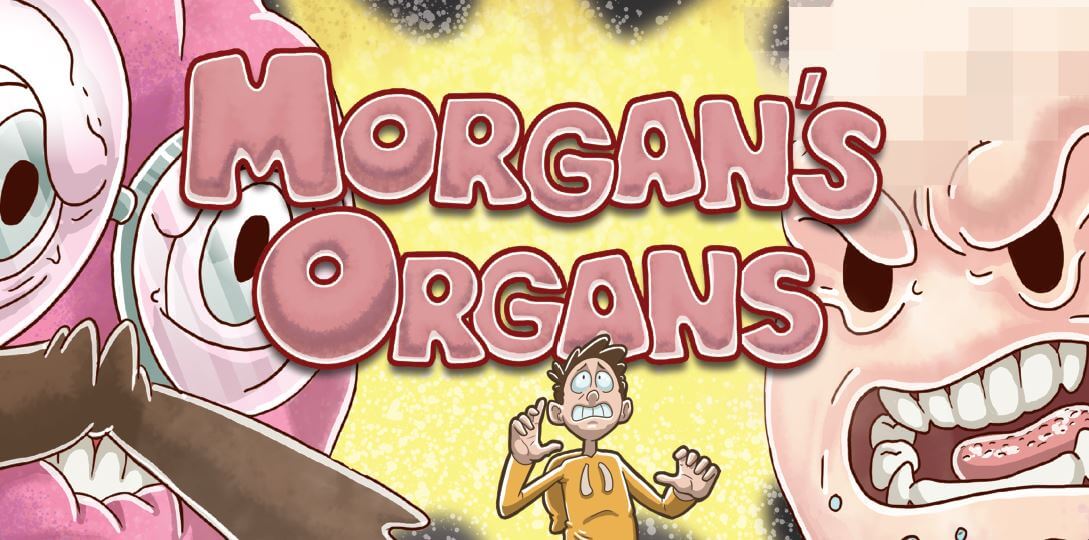
Morgan's Organs

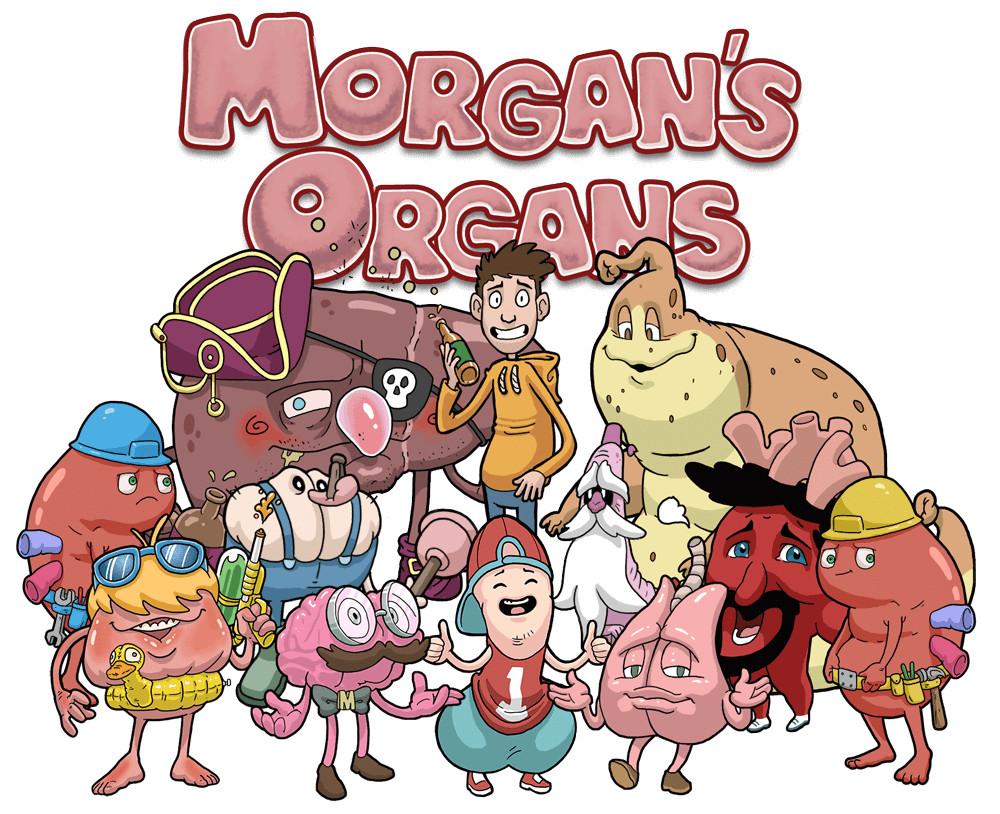
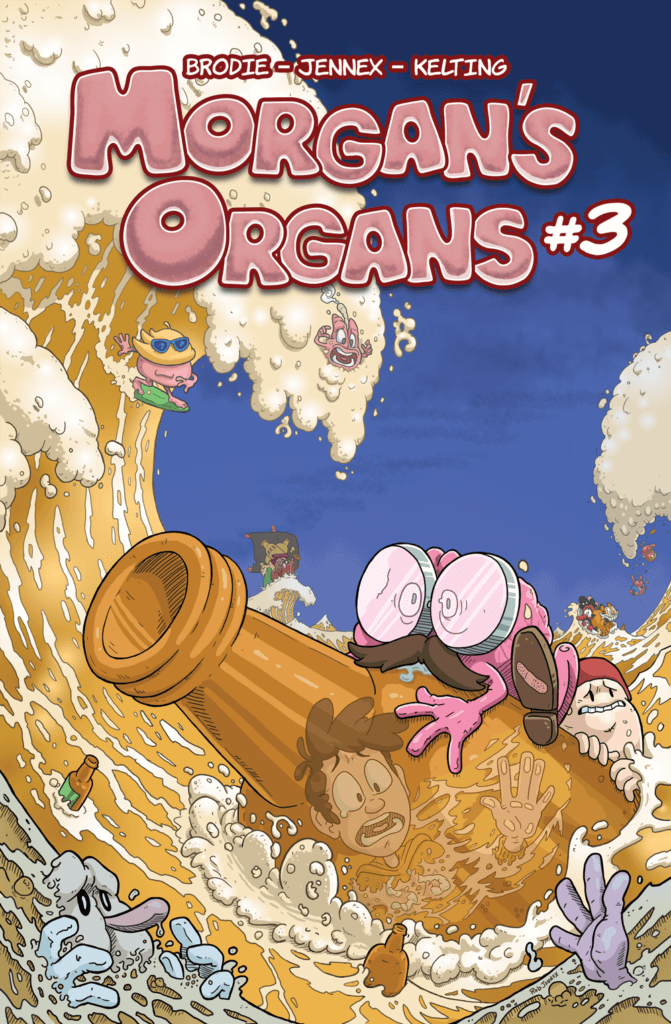
Having already impressed with the first two issues of the utterly unique Morgan’s Organs, creator Daniel Brodie has now launched a Kickstarter campaign for the third outing for Morgan and his, err, organs . We were lucky enough to grab some time with Daniel to discuss issue 3, how he came up with the bizarre but brilliant concept of Morgan’s Organs, his experience of using crowdfunding, what perks backers can expect, and a whole lot more.

STARBURST: Where did the initial concept for Morgan’s Organs originate from?

Daniel Brodie: Funny enough, the idea sprung up in the summer of 2013 while strolling along the streets of Amsterdam [cough, cough]. I don’t remember much of what went through my head, but I distinctly remember coming up with the name Morgan’s Organs and a vague thought of what if the organs inside our body each had their own voice?

I obsessed over the idea that summer and thought that it could make a great television show. Later that year, I decided I would make it happen myself.

How have you found the process of translating those initial ideas down into an actual physical comic book?

When I first began working on Morgan’s Organs as a comic book, it was definitely a challenge. For one, I had ZERO experience in producing comic books. I didn’t know proper comic book writing structure or how to layout a page.

Secondly, I have zero artistic talent, so it was difficult for me to perfectly visualize what I wanted for the look and feel of the series. Thank god I stumbled upon our lead artist, Robert Jennex, as he really is the person I need to give credit to for creating the visual foundation. Before him, it was just a story on paper.

With two issues having already been successfully backed, how have you found using crowdfunding?

Crowdfunding, specifically Kickstarter, has been absolutely fantastic and also pivotal to the success of this series. When I started on Book 1, I really had zero audience. And I also didn’t have much for funds. Kickstarter allowed me to balance my risks – I only produced 5 pages + cover for Book 1 before our Kickstarter launched, in case my hopes were wrong and people did not like my vision. Fortunately, the Kickstarter was a quick success and we were funded in about a week, which was all the motivation that I needed to keep working on the book and to continue the series.

Since then, we have seen a growing audience of supporters on Kickstarter for Book 2, which continues to tell me I am on the right path with the series.

What has been the biggest challenge of going the crowdfunding route?

The biggest challenge is really just patience. Since we are an indie series, all of us have day jobs that we need in order to allow us to work on our passion projects. That means it can take a long time for the books to be complete.

For me, once a Kickstarter is over, I really feel the pressure to deliver rewards by the time I’ve promised them. When we are talking 3-4 months after the campaign, it can be a struggle to keep patient while the artwork is still being complete.

How has the reader response been to the two issues so far?

The reader response has been incredible. From the sounds of it, people really enjoyed Book 1, but they loved Book 2 even more. I am really happy to hear that, as it means we are growing with each story. I hope what fans say next is they loved Book 3 the most!

How about the look of Morgan himself? Was there anybody you based him on?

Not really. The character description that I gave to Rob was probably, “make him look as average as possible”. He does kind of look like a grown-up Morty from Ricky & Morty though.

The characters in general, how much direction did you give Robert with the look of them or did you give him creative freedom?

I like to think I gave Rob a lot of creative freedom with their look. It was a lot of fun watching these characters come together. I basically just gave him a general description of each character, their personality, and any thoughts that I did have on visuals. Rob then just did a whole bunch of sketches of different character shapes and details within each option and we discussed which we both liked best. It was very collaborative!

Probably the character that we had the most debate on was Vee the Vagina, who is interested at the end of Book 1.

You’ve previously referred to the title as “Inside Out for adults”, but is there anything else that you’ve particularly drawn inspiration from for Morgan’s Organs?

To clear up the air, I wouldn’t say I’ve taken inspiration from Inside Out, mostly because I’ve never seen it! I just reference Inside Out because it is an easy reference point for connecting with new fans and explaining the series premise. I actually started development on Morgan’s Organs well before this movie was a thing.

I would say my biggest inspiration is Rick & Morty. I love the depth and breadth of comedy and stories in this show. They know how to perfectly balance dirty humour, smart humour and dark humour, all while telling a great story. I try to do the same for Morgan’s Organs.

Each of Morgan’s organs are a key part of the overall narrative, but is there a character that stands out as your favourite?

Tough to say if I have a favourite character! I honestly love all of them – each one is so unique in my mind and I really can distinguish personalities as I write for them, making it fun to write for them all. I know that Pepe the Penis, Andy the Appendix and Meats the Stomach are some fan favourites.

If all goes well with issue 3, do you already have further Morgan’s Organs stories envisioned and ready to move forward with?

Absolutely! I have so many stores planned, and spin-offs, and even a theme park (okay, maybe that’s stretching it). The main point is that the world of Morgan’s Organs has so much opportunity for new stories, inside and outside of the body, and I would love to continue to tell more of these stores.

I already know what I want the story to be for Book 4 and am at the initial stages of mapping out the story structure. If all goes well with the Kickstarter, I’ll be boosting up my work on developing Book 4!

Morgan's Organs

As an independent comic book writer, how do you find the fact that now anyone can make a comic – funding permitting. Is it more beneficial because the internet means you’re able to put yourself out there, or is it more a case of oversaturation making it harder to get noticed?

Good question. I feel like it is a bit of a double-edged sword. For one, I am thankful that we live in a world today that it is possible to make indie comic books and easily connect with a potential audience through crowdfunding. Without a platform like Kickstarter, I am really not sure how I could be where I am at today. On second hand, having something like Kickstarter so openly available makes it difficult to have your voice heard.

For me, I try to slice through that to find a peaceful middle ground. The audience will decide what the audience wants, so as long as I still have fans of the series, I know that I am doing the right thing and I should keep making more books. I try not to focus on what’s going on around me, and instead try to focus on the people that already love what I am doing as a starting point.

What can you tell us about the campaign and perks for issue 3?

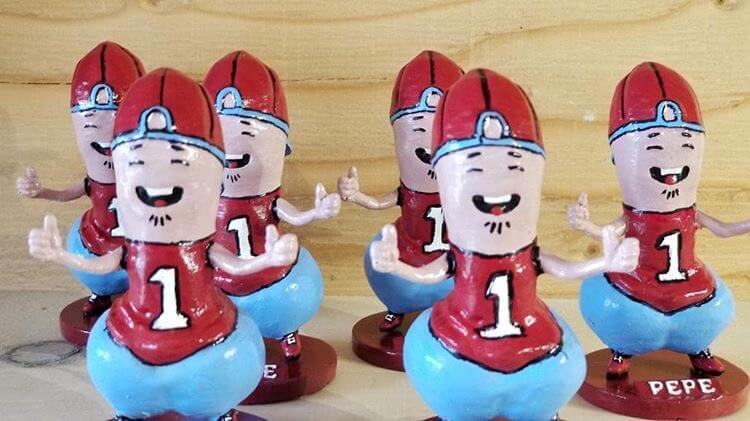
In the past, I’ve focused more on the paper side of rewards, but I am excited to have some fun new collector’s items in this campaign. That includes an enamel pin of our series star, Bran the Brain. It also includes two really fun creations that were done by a couple of Canadian artists. There will be a Pepe the Penis 3D printed figurine and Angus the Anus Wall ornament. It’s so cool to see my characters in 3D format!

Anything else you would like to add?

Just that we launch our Kickstarter on Saturday May 11th – and anyone that backs in the first 48 hours will have a surprise extra goodie included in their package!

For full details on the latest Morgan’s Organs Kickstarter campaign, be sure to head here.

Morgan's Organs

Thomas ‘Dome’ Karukoski | TOLKIEN

Thomas Karukoski

Thomas “Dome” Karukoski is one of Finland’s most successful film directors, having won over 30 festival awards. His work includes The Grump and Tom of Finland. His latest movie is Tolkien, a biopic about the father of modern fantasy.

STARBURST: What was the elevator pitch for Tolkien?

Dome Karukoski: It’s a story about friendship, love and creation. It’s about how we see a young genius’s mind flourish and where the inspiration comes from. He’s confronting his own imagination, understanding it and learning to use it.

What drew you to Tolkien’s story?

There are two sides to it, as film maker and as a person. I read the Lord of the Rings when I was 13 and at that time I was an outsider. I was growing-up without a father who I later got to know, I was bullied, I was very alone and miserable.  Then I open up this book and basically it became an escape. Those stories became friends.   Fast forward 30 years and I’ve read almost all of his books, some of those twice. I knew about the Inklings/CS Lewis era, but I also knew about his youth years. And then you understand reading those stories that he was an outsider, that he became an orphan.  Then finding these friends whom he went to war with. And that story was so beautiful that I wanted to tell it.

What inspiration did you draw on when casting Tolkien and his childhood friends, the TCBS?

The casting process was quite easy. When I started meeting actors I didn’t really have a script I want to show them. I would meet a lot of actors –  I started with Nic because he was on the top of my list and top of the studios list. With actors I always try to find who they are and build upon them, because every actor has their own skill. With Nic he was inspirational. He’s very intelligent and very fast and witty. We always joked that he’s a bit of a hobbit even though he’s quite tall. The method was trying to find the true character in those people that resonates with the character portrayal later. After seeing Nic, it couldn’t be anybody else.  When building the characters, it was just research, a lot of it was finding the right pace and rhythm.  Everything I read about them said they were very witty, with a lot of pace and comeback lines. When you have that with friends that means you trust that they’ll understand your humour and understand your point.

Much of the movie’s focus hinges on the relationship between Tolkien and Geoffrey Smith. Why the focus?

Well of course they grew very close to each other in Oxford, and the other two went to Cambridge so they’d only see the others on the weekends, back and forth.  They grew very close to each other.  Stephen Beresford, who is one of the writers, is a gay man. He read Geoffrey’s letters and poems and he felt that there was a possibility that he was also gay.  We can’t claim that, of course. I read it as the relationship was intimate though not romantic.  Geoffrey was a bit younger, and his affection toward Tolkien was one of admiration. What’s beautiful about that story is that he was there for his friend during the darkest times.  Geoffrey’s letter to Tolkien is word by word how he wrote it. Thinking about Tolkien at a time he thought he was going to die. Their relationship was friendship to its purest level. To think that you’re going to die and know that there is one friend you have who will continue your aim and your mission, the one desire they have about the world.  I think that’s very beautiful.

How important was Edith’s perspective to you?

If I was to write that love story into a film that was untrue, and tell a tale about friendship and then love and then eternal love. The producers would say that would never happen. That it was too ‘Gone With the Wind’.  The problem is that Edith can be easily seen as an elven princess, which of course what I’m going to do because it inspired Tolkien’s story Beren and Lúthien.  When you starting reading about her, you find that she had this huge intellect and she was strong willed. She had character that Tolkien admired. It was very important to show these layers, that she was not just an elven princess and show her great stamina.  She’s also an orphan. She’s learned to be strong and learned to fight.

How much did the story of Beren and Lúthien influence the script?

It influenced, yes. But at this point in Tolkien’s life he hasn’t written the story yet.  We show the dance scene that inspired the idea of the story. He’s getting inspiration, he’s getting ideas and sounds and voices. He’s slowly building the theme of his life. Later he’s ready to build that world. The emotional truth of that story has to be in the film, but it’s not that story.

How much of a challenge was it to fold the fantastic elements?
In the movie, he’s not yet written the books.  The knight is perhaps the best example. He first sees the idea of a hero, but his ideal of a hero with a white horse is a notch higher, but then when he gets corrupted by war and bloodshed, that beautiful image becomes something else. It turns into a black knight. You might think it’s a Nazgûl but it’s not yet a Nazgûl . It’s something that has fallen. Internally, for him, it’s a battle of good and evil. How does he feel, what is his emotion here.  Dragons in mythology are about fear, and here we have the fear of losing your friend, of losing your love.  These aren’t taken from his books.

How different was this project from Tom of Finland?
They’re very different. One is the story of an artist growing into fame, the other is a young man growing up to become an artist. Tom of Finland was more difficult because the time from had to be told in forty years. Where Tolkien’s story is more of a story about friendship and love. It’s much more focused on the personal.

How has the response from Middle Earth Fandom been?

We’ve had several screenings and we had applause during the film, so that’s always a good sign. I was with the Finnish Tolkien Society and they praised the film. I think the fans have loved. There will always be people who don’t like it and they’ll be people who will debate the facts. With a film like that you have to choose between facts and emotion, and if you chose facts it doesn’t become drama. It’s about the emotional truth.

What’s next for you?

I’ve just done two biopics back to back. Biopics tend to be hard to make because of the research and you can lose perception as to what to do next. Rest is what’s next.

Tolkien is out now at all good cinemas and you should rush out and catch it while you can. You can read our review here.

Let Sleeping Straw Dogs Lie

sleeping straw

Sam Peckinpah’s 1971 film Straw Dogs was an instant cause célèbre when it was released, and that reputation only grew with the dawn of the video age. It was unthinkable for many that anyone would tackle such a controversial story again, but in 2011, director Rod Lurie did just that.

Times had changed during the interim years, and attitudes towards violence – particularly sexual violence against women – have quite rightly affected how we view such subjects on screen. The notorious rape sequence in the original movie is undoubtedly hard to watch and has, if anything, increased in intensity when viewed today. The remake, while not shying away from troubling issues, doesn’t go as far as Peckinpah’s classic, but still packs quite a punch.

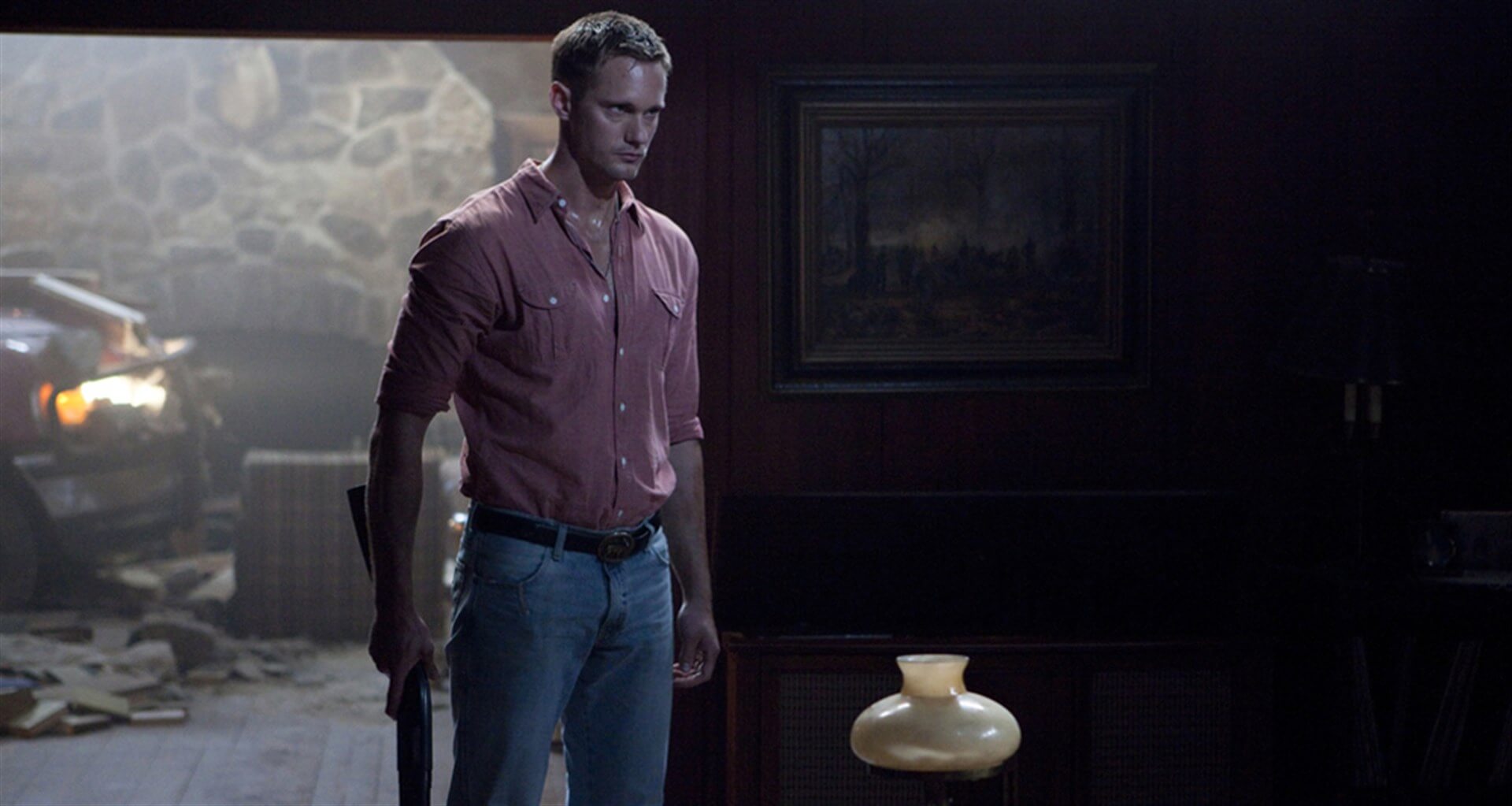
The original film was partially based on The Siege of Trencher’s Farm, a novel by Gordon Williams. The remake follows the film’s narrative rather than going back to the source material and relocates the action from rural southern England to Mississippi and has James Marsden (X-Men’s Cyclops) and Kate Bosworth (Superman Returns’ Lois Lane) as David and Amy Sumner. They have just moved to Amy’s hometown following the death of her father and David – a screenwriter and ‘modern guy’ – stands out like a sore finger against the rugged locals, who are all testosterone and brawn. It’s underlined how alien this town’s attitude is to his when the local bar doesn’t even stock Bud Light. He’s an amiable chap, though, even hiring Amy’s former boyfriend, Charlie (played with evil relish by True Blood’s Alexander Skarsgård) and his gang to repair the roof on their garage. Amy has done well for herself since leaving town, becoming a TV star and all eyes are on her when she returns – for more than one reason.

Amy distracts the crew while they’re at work by jogging past them in very short shorts and a tank top with no bra underneath. Nothing wrong with that in a sensible world, of course, but these are backwoods types, and there’s a palpable pressure cooker of immature hormones from the start. They are the typical jock stereotype; they’ve been on the high school football team, which was looked after by a coach, whose toxic masculinity and prejudice have not softened since leaving the position. Played brilliantly by James Woods, Coach Tom Heddon is still looked up to by the town, holding court in the pub and spouting bile and hatred. It’s not hard to understand where the younger locals’ attitudes have been nurtured. David begins by pitying them and likening them to Chinese ‘straw dogs’, thus clumsily explaining the film’s title (dogs made of straw that were ceremonially revered in ancient China but disposed of when not needed). The team working with Charlie even start taking an interest in David’s vintage – and expensive – car, admiring the engine and bodywork in the same way they’d leer at a woman.

Charlie begins a campaign of bullying and undermining of David, who’s clearly not a physical type and is easily intimidated. His cowardice even extends to Amy, as his response to the ogling she received when jogging is “Perhaps you should have worn a bra”. Charlie’s advances increase – largely influenced by his disdain for the ‘weakling’ David, but also spurred by Amy’s clumsy posturing. Flaunting herself topless in front of the group while getting changed perhaps isn’t the wisest move. What should have been her show of strength, independence, and authority are interpreted by the Neanderthal local as a come-on.

Like in the 1971 version, Amy is brutally assaulted while left alone as David is attempting to bond with the men by going hunting with them. Charlie takes the opportunity to confront Amy, assuming that she still has feelings for him. After the attack, he realises what he’s done, but when one of his friends arrives and sees the situation, he decides to rape her too. Charlie watches almost helpless and in disbelief but doesn’t attempt to help or stop it. Thankfully, we’re spared the nasty details this time. The sequence is juxtaposed with David, walking through the woods with a rifle. He’s as uncomfortable with the weapon as we are with the sexual assault. When faced with a deer, he tellingly pauses and contemplates whether he can fire the shot.

Wracked with guilt, Amy doesn’t tell David of the attack. Instead she just insists that he dismiss them. Using the excuse that the repairs are taking too long, David does this, but Charlie uses his antagonistic attitude to force David to overpay for supplies already purchased. The group are clearly happy with a lucrative payday for the little work they did. Amy, however, attempts to keep her emotions about the attack under control but things are going to boil over in this particular pot very soon anyway.

As well as being a horrible loud-mouthed bigot, Coach Haddon is the father of a 15-year-old, Janice (Willa Holland, Thea Queen in Arrow), and he’s very protective of her. Barroom banter is one thing when it comes to women, but Janice is out of bounds. Particularly when it comes to Jeremy Niles (DC’s Legends of Tomorrow’s Dominic Purcell, in a role a million miles away from what we’re used to seeing him in), a mentally-challenged man whose mental age is nearer the young girls he enjoys playing with than his own. During a big football match (the American kind, obviously), Janice – a cheerleader and older than her years – takes Jeremy into the locker room and is rather forward with him. When Haddon realises his daughter has left her post, he immediately jumps to the conclusion that it’s Jeremy that’s taken her away. Hearing the angry Haddon looking for him, he accidentally smothers Janice. Jeremy panics and dashes away from the scene, while Haddon riles up his misguided disciples to become an angry mob, the likes of which we’ve not seen since the villagers were chasing Universal’s Frankenstein monster in the forties.

Things get worse as David knocks down Jeremy in his car as they are leaving, and take him back to their house to attempt to get help, but Charlie hears the call on his police scanner, and it’s not long before the mob are heading their way. As they descend on David and Amy’s place, it’s clear these people are a law unto themselves. David must step up to protect his wife, and he’s pushed to do things he wouldn’t even write in his screenplays. The siege is only substantial element transferred from the book on which it was based, and although it’s not as shocking as the 1971 version, there’s still a lot of brutality and disturbing moments.

Away from the exploitation angle (which isn’t as prevalent in Lurie’s version), the film poses a genuine psychological dilemma: how far do you have to be pushed before you break, and even more disturbingly, to what lengths will you go to protect those you love. In David’s case, he’s not just protecting his wife, but the life of someone who could have committed a horrendous crime. We’re used to seeing backwoods yokels being depicted as murderous inbreeds, but here they are all victims of a distorted patriarchal upbringing. It’s like the false cover of religion excusing many indiscretions. It’s something we see in real life the world over, and it’s hard ever to find a reason to excuse it. However it continues, and arguably, is getting worse in some cultures. The dichotomy of morals and emotion is strong on both sides here, though. Such as even though Charlie knows he has done wrong by attacking Amy, his upbringing doesn’t allow him to change or be a better person. The culture of the bully is a hard one to break, or so it would seem.

It’s unfair to dismiss Lurie’s version of Straw Dogs as ‘just another cash-in remake’ as there is plenty to recommend it, and providing you don’t spend the whole time comparing notes with the original, you’ll find it’s a completely engaging, utterly horrifying, and deeply disturbing film in its own right.

You can catch STRAW DOGS on Horror Channel . Tune in on Sky 317, Virgin 149, Freeview 70, Freesat 138.

Win CUJO on Blu-ray [ENDED]

CUJO

We’ve teamed up with the ever wonderful Eureka to bring you a chance of winning one of three Blu-rays of the cult classic CUJO.

To be in with a chance of winning, simply answer the question below:

Who directed Cujo?

a) Benji De Vil

b) Lewis Teague

c) Duane Chapman

Send your answer, along with your address details, to [email protected] labelled CUJO before midnight on May 17th.

SYNOPSIS:

Eureka Entertainment to release CUJO, the terrifyingly effective 80s cult horror based on the best-selling novel from Stephen King, on Blu-ray for the first time ever in the UK in a Special Limited Two-Disc Edition as part of the Eureka Classics range from 29 April 2019. Featuring a Limited Edition Hardbound Slipcase, with artwork designed by Graham Humphreys, a Limited Edition Collector’s Booklet and Bonus Blu-ray disc [4000 units ONLY].

Evil bites when a monstrous canine terrorises a helpless family in this legendary cult classic. Based on Stephen King’s best-selling novel, Cujo gives horror a new name. While Donna (Dee Wallace, The Howling, E.T. the Extra-Terrestrial) and Vic Trenton struggle to save their rocky marriage, their son Tad befriends the loveable St. Bernard who belongs to their mechanic. But what they don’t realise is that a bat bite has transformed Cujo from a docile pup to a vicious killer. With Vic away on business, Donna and Tad’s car trouble pushes them into a living nightmare — trapped by the demonic, relentless dog from hell. This critically acclaimed thriller promises to have you glued to your seat and foaming at the mouth!

Making its UK debut on Blu-ray, with over 7 hours of extra content, Eureka Classics is proud to present Lewis Teague’s Cujo in this special Limited Two-Disc Blu-ray Edition.

Available to order from:

Amazon  https://amzn.to/2GxdRvj

SPECIAL LIMITED EDITION [4000 UNITS] CONTAINS

  • Hardbound Slipcase, featuring newly commissioned artwork by iconic British illustrator Graham Humphreys
  • Reversible sleeve featuring artwork by Justin Osbourn and original poster artwork
  • PLUS: A LIMITED EDITION 60-PAGE Collector’s booklet featuring new writing on the film by Lee Gambin, author Scott Harrison, and Craig Ian Mann; illustrated with archival imagery from the film’s production.


DISC ONE


  • 1080p presentation of the film, on Blu-ray for the first time ever in the UK
  • Uncompressed LPCM mono soundtrack
  • Optional English SDH subtitles
  • New and exclusive feature length audio commentary by Lee Gambin, author of Nope, Nothing Wrong Here: The Making of Cujo
  • New interview with Dee Wallace [40 mins]
  • New interview with composer Charles Bernstein [35 mins]
  • New interview with stuntman Gary Morgan [25 mins]
  • New interview with stuntwoman Jean Coulter [21 mins]
  • New interview with casting director Marcia Ross. [20 mins]
  • New interview with visual effects artist Kathie Lawrence [13 mins]
  • New interview with special effects designer Robert Clark [12 mins]
  • New interview with dog trainer Teresa Miller [28 mins]
  • Dog Days: The Making of Cujo – archival documentary on the film’s production [42 mins]


DISC TWO [Limited Edition Only]


  • Q&A with Dee Wallace from “Cinemaniacs & Monster Fest 2015”, moderated by Lee Gambin [96 mins]
  • New interview with critic and author Kim Newman [25 mins]


Terms & Conditions:

EUREKA/STARBURST do not accept any responsibility for late or lost entries due to the Internet or email problems. Proof of sending is not proof of receipt. Entrants must supply full details as required on the competition page, and comply with all rules to be eligible for the prizes. No responsibility is accepted for ineligible entries or entries made fraudulently. Unless otherwise stated, the Competition is not open to employees of: (a) the Company; and (b) any third party appointed by the Company to organise and/or manage the Competition; and (c) the Competition sponsor(s). This competition is a game promoted STARBURST. STARBURST’s decision is final in every situation and no correspondence will be entered into. STARBURST reserves the right to cancel the competition at any stage, if deemed necessary in its opinion, and if circumstances arise outside of its control. Entrants must be UK residents and 18 or over. Entrants will be deemed to have accepted these rules and to agree to be bound by them when entering this competition. The winners will be drawn at random from all the correct entries, and only they will be contacted personally. Prize must be taken as stated and cannot be deferred. There will be no cash alternatives. STARBURST routinely adds the email addresses of competition entrants to the regular newsletter, in order to keep entrants informed of upcoming competition opportunities. Details of how to unsubscribe are contained within each newsletter. All information held by STARBURST will not be disclosed to any third parties

Sam Liu | JUSTICE LEAGUE VS. THE FATAL FIVE

Sam Liu Justice League vs. the Fatal Five

With Warner Bros. and DC Entertainment having regularly wowed audiences for several decades now with their animated output, the next animated DC offering on the table is Justice League vs. the Fatal Five. Having directed fan favourites such as Batman: Year One, Teen Titans: The Judas Contract, Batman: Gotham by Gaslight and the two-part adaptation of The Death of Superman, Sam Liu is the person tasked with helming Justice League vs. the Fatal Five. We were lucky enough to grab some time with Sam to discuss the movie, returning to the Timmverse of characters, showcasing lesser-known heroes and villains, and a whole host more.

STARBURST: Of all the characters to call on, what prompted the decision to make the Fatal Five the villains of the piece in this latest movie?

Sam Liu: You know, I asked the same question when I got the script. Because it’s a Bruce [Timm] movie, he takes control over a lot of it and he just likes to use different characters. When we start a project, he goes through his rolodex and just sees what takes his fancy, what piques his interest. We do these so quickly, it’s not a case of “Have you done your favourites?” because I think he did his favourites ten years ago or more. So it became a case of how can we make this new and interesting.
Justice League vs the Fatal Five

Given that there’s someone like Bruce involved, then the writing team of Alan Burnett, Eric Carrasco and Jim Krieg, how does the creative process work for yourself as the director and is it almost like a studio system setup?

That’s a good question. I’ve since become a producer a couple of years ago, but I’m the junior producer; I still don’t necessarily get to pick. For the past maybe four years or so, it’s been primarily James Tucker and Bruce Timm. They’re the ones that spark the sort of, “Well, what do I want to do?” It comes from different places because it’s a mix of the big creative producer – whether it’s Bruce or James – and then DC or home video will have something that they want to push, something on their wish list. It’s either something Bruce or James wants to do, or it’s, “Oh, we want to do this character. Is there something you can create with this?” So where it comes from is a few main areas. That’s where it starts. They generally have a loose concept that they want, which they flesh out with the writer. At this time it’s Jim, but in the past it’s been Alan Burnett. They work with whoever is going to write it. Sometimes it’s Jim or Alan, but most times they have someone they target to write it. I usually come in during the draft. We read them, we have our notes and we sort of pound out the script. Before, when I was just a director, I would wait until the script was finished or close to finished – I would probably come in during the third draft – and I would have my notes. Now I have a little more input towards the direction of it.

In the past, we’ve had to do things like re-write the third act entirely. I’ve been doing that a little more with James, as James seems to embrace the collaborative a little more than Bruce – Bruce is a little more reluctant – but it’s been good. The last couple I’ve come in a little earlier, so I’ve been able to get some things in. Justice League vs. the Fatal Five, it was kind of earlier in my being a producer so I didn’t have as much say. As a director, you’re absolutely correct that it’s like a studio system. For the past four or five years, they have a project, they assign it to me. I think there’s a politeness where they ask me if I want to do it, and of course I want to do it, but after the script is finalised and the designs are picked the director works primarily on their own with a storyboard team. The producers will come back in after a first pass. In that sense, the director has a lot of creative control. That’s where the relationship between the director and the producer is: does the producer trust the director to carry out the vision they want? A lot of this is so fast, and as a director you’re only one person and as a producer you’re only one person, so it’s a lot of things to manage. The whole familiarity and trust is important. If everything I show Bruce or James is wrong, there’s no time to fix anything. That’s a lot of our job, actually. I almost parallel it as we’re trying to cook a Thanksgiving dinner and we have our shopping list. That’s what we send to overseas, but actually what comes back is what we have to work with. You go to the store and order all of the pieces that you want, then when you’re at home that’s all you’ve got. You can’t go back to the store. Sometimes you don’t have a good turkey, but you have to think about how you’re still going to make this meal.

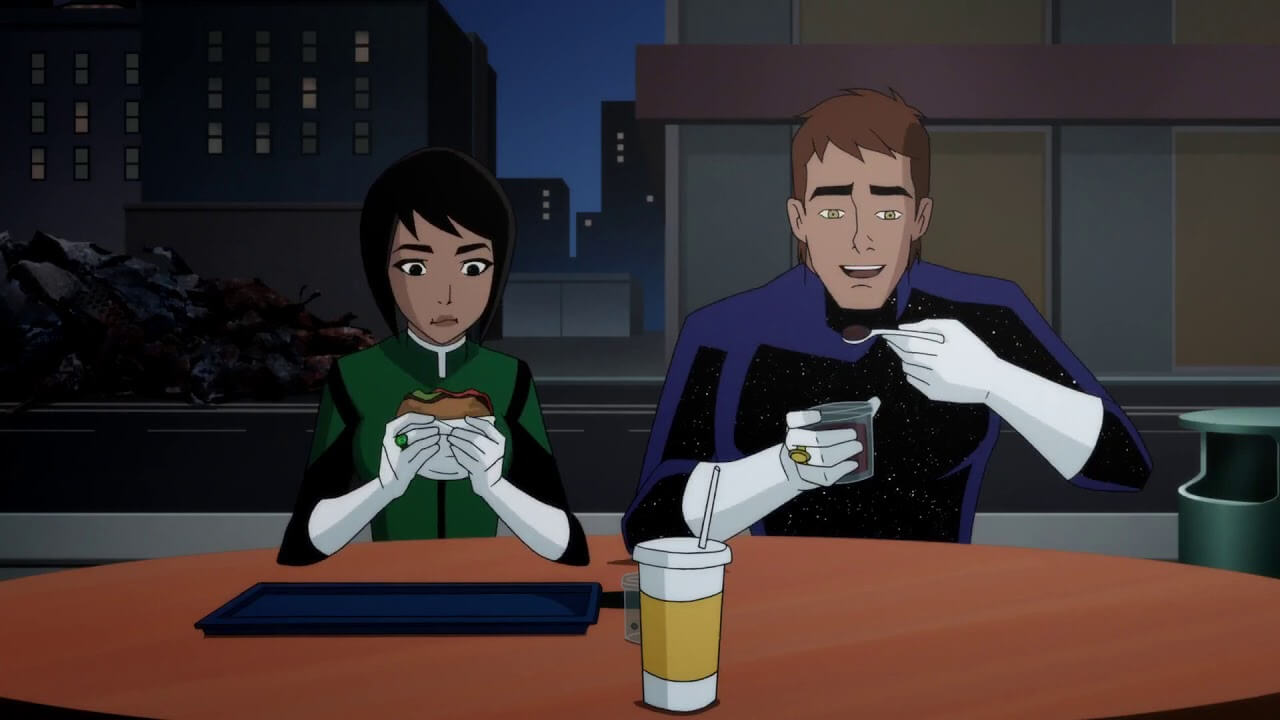
In addition to the Fatal Five, the other big characters to be featured are Star Boy and the Jessica Cruz Green Lantern. Given the very real issues – such as PTSD and mental health concerns – that this duo has, how important was it to make sure that Star Boy and Green Lantern didn’t get overshadowed by the all-powerful bad guys or the more famous Justice League names?

I feel like I’ve done so much of these types of stories, and obviously Bruce has done way more than I have, that it was really refreshing. That was my favourite part of it, as to me it was very unique. The stories that I like or tend to focus on, it is that characterisation. With this one, it’s not something I have to dig out; it was on the page. Again, it wasn’t very difficult at all. Thankfully, we used the iconic designs and iconic voices attached to these designs that I felt like I didn’t have to catch people up; people already know who Superman is, who Batman is, who Wonder Woman is. People know already, so we didn’t have to set them up and it instead gave us time to set up the new people. My general theory on ensemble casts is you’ve got to pick. You have to give everyone their moments so they’re not entirely these cardboard people sitting in the background, but you have to pick stuff, pick who you’re going to be highlighting and who needs to fall into the background a little bit.
Justice League vs the Fatal Five

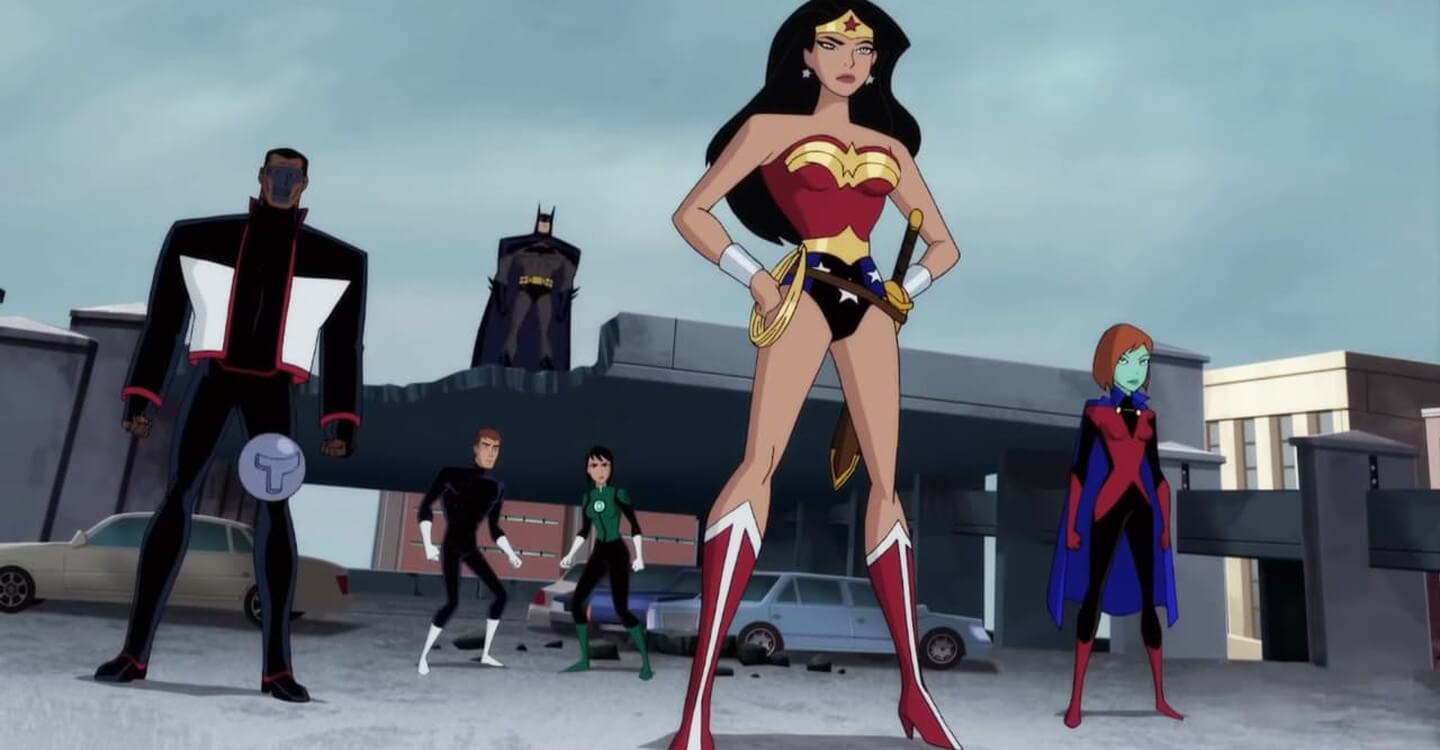
Where the Justice League is concerned in this film, was there ever any talk of featuring any other or alternative Leaguers or was it always to be the Holy Trinity, Miss Martian and Mister Terrific?

So much of this is based around what story we’re telling, what’s the plot. Then it gets torn down from there. It roughly breaks down to how many pages are in a script – which is usually limited to 90 or 100 pages – so there’s a certain point where you’re keeping those things in mind. That’s probably a better question for the writers, but there’s a certain point where you try to tell a manageable story. And most of the time we’re a little bit long, so we have to start cutting things out. Things like having all of these characters would be great and it works much, much better in a series as you can tell many more types of stories. Even with the characters we have, there’s a few of them who probably could’ve gone, that we didn’t 100% need. I think we were pretty good at picking who stayed, but adding more would have bloated it and made it longer without necessarily helping the plotting or the story we’re trying to tell.

Justice League vs. the Fatal Five uses the classic animation style of what many call the Timmverse or Diniverse. As someone who was making their first foray into this particular world, how was it to work in that realm and in that style?

People make a huge deal out of it, but if you ask Bruce then it’s always about telling stories. The Timmverse, the Diniverse, that’s Bruce’s take on stories. If you do enough of them then there’s certain consistencies. During ADR – the additional dialogue we record once we’ve done the body of it and we’re looking at the picture – hearing Susan [Eisenberg] in the booth and seeing the picture pair together, there’s just something about seeing his [Bruce Timm’s] Wonder Woman and his Superman. I’ve worked on Batman so much, but the Wonder Woman and the Superman, just seeing them…

When Wonder Woman shows up in the alleyway to meet Jessica, or even when Superman is doing his wind breath, I was just, “Wow!” There’s something about it that feels so classic. You do it, but then when it comes back and you see the combination of all the voices, the way those designs animate, it took me aback a little bit. I didn’t expect to have that kind of reaction, but seeing them and hearing them, there’s something magical about it.
Justice League vs the Fatal Five

Often it can be hard to make bad guys feel like a genuine threat, as we all know that the heroes will ultimately, usually save the day. With the Fatal Five, however, they instantly feel like a major threat. In these times, how hard it is to make the villains feel like a legitimate big deal?

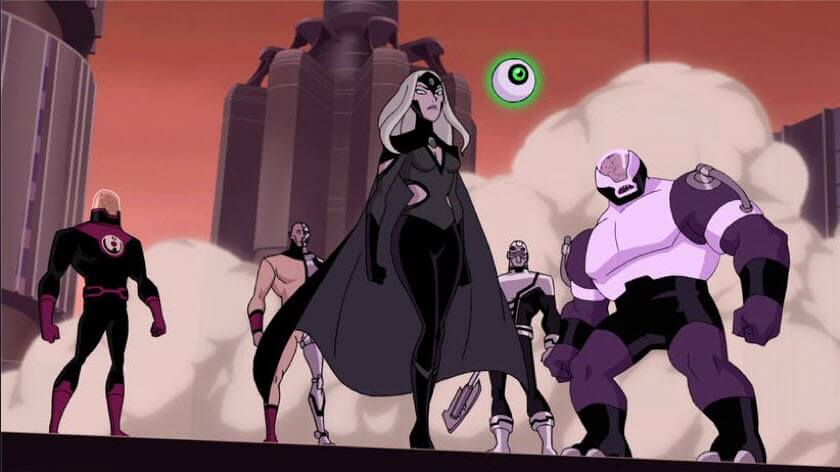
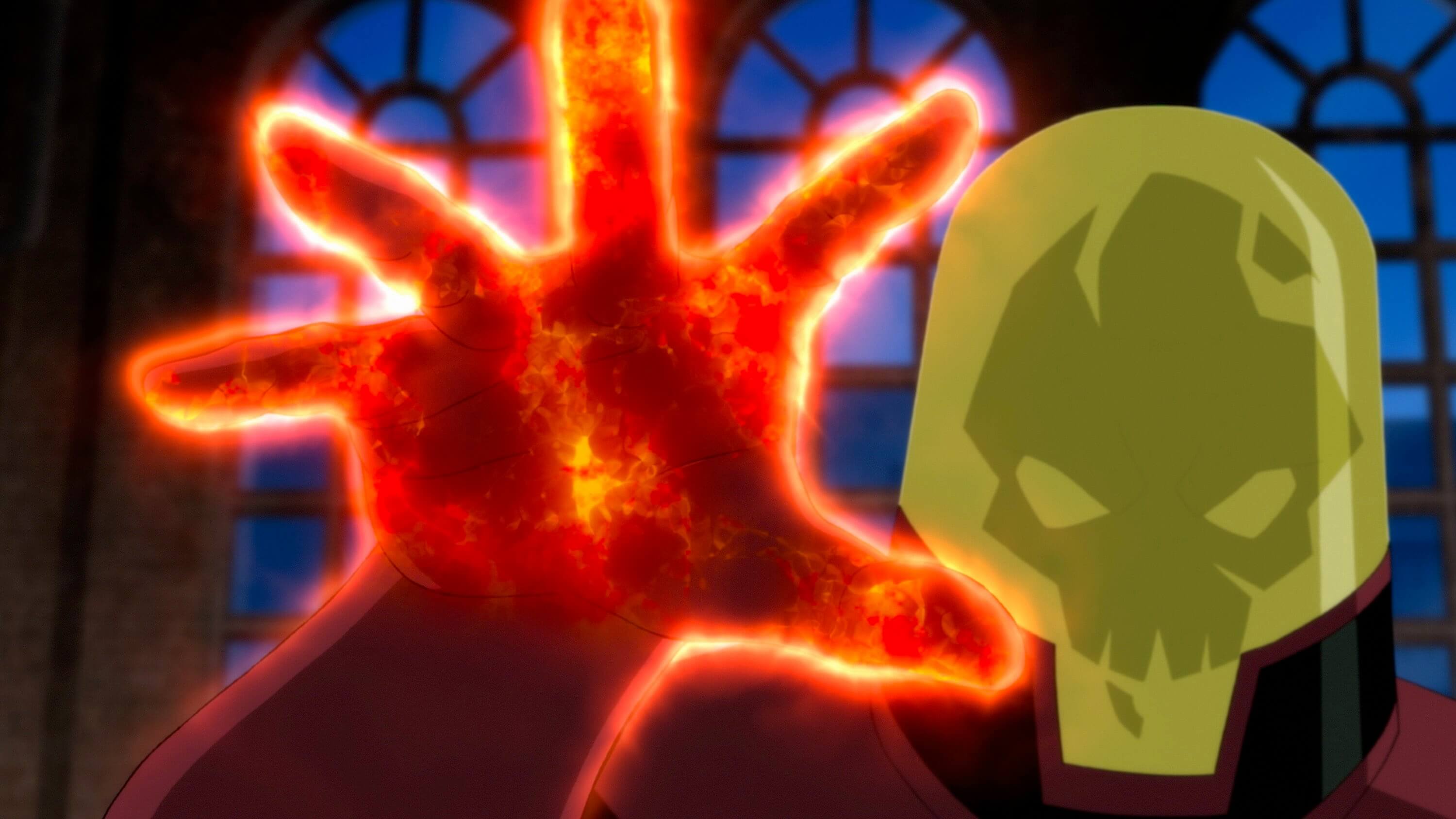
Oh, it’s especially hard. The audience is a lot more critical these days than, say, 20 years ago. With the internet and video games, there’s an oversaturation. Back in the day, it was hard to find things. Fight choreography in Asia was so much better than in America in the ‘80s – I think that’s why Hong Kong cinema was so potent back then – but now it’s everywhere and people are used to it. It has to be good and it has to be done in a way that it’s earned, so it does make it difficult. I have to say, in this movie there are a lot of things that I wasn’t sure the audience were going to buy. Thankfully it hasn’t come up – I haven’t seen anything online, anyways – like how quickly the Justice League get taken down by the Emerald Empress. In order for that to happen, you have to make her extra powerful; there has to be these shows of power so that you’re, “Oh, well that could happen.” There’s a lot of cheating that happens.

Somewhere during the middle of this production, Bruce and I had gone through quite a few rounds of editing, we were trying things up and were just, “I don’t know if this is any good or not.” There are these huge things going on, then there’s these very personal things going on with two people, so you have no idea how people are going to react to this. There’s a lot in here, we’re using all of our instincts, both of us wear things close to our chest, and you have to almost be a hater when you’re watching it so that you can catch things that aren’t believable or that people won’t buy. But then you also have to be a dreamer as well, because you have to take people on an adventure. So a lot of the time, in the middle of the process, you’re wondering whether you’ve achieved this or not. With things like The Killing Joke, it caught me a little off-guard at the beginning. But as we were building it, I thought, “This is smooth” and that people would go along with that. Then we’d get the reaction that we do and it’s, “Oh, I guess people couldn’t go along with us on that ride.” You never know with these things, but in this case I remember telling Bruce, “I’m not sure if plot-wise it’s going to be a bumpy ride maybe. All I know is I really love these characters, I feel really attached to these characters, and I think it’s a really strong character story.”

In a world where everyone is quick to take to social media to let their thoughts be instantly known, how hard is to not get too carried away with either the praise or the criticism that comes your way for these projects?

It’s easier with the praise, obviously, because it’s like what athletes say or businesses say: it’s what have you done for me lately. The window of praise is always short, then people are always looking for the next thing that’s going to entertain them. So that’s easy and you know that you have a window where that’s potent and then the returns are going to be very low. But the hate seems to last longer, which I think is a by-product of the whole social media thing. I think people are more likely to get online to complain about something, whether it’s their job or entertainment, than to praise. It’s harsh at the beginning when people are hating something that you’ve done or calling for your head or your job. The first time you experience that, it’s a little shocking. I think that’s just the way the internet is and you just have to get used to it.

Even in things where people are these very popular reviewers, I think part of their schtick is to bash on things. I think that’s what the audience likes; they like turmoil and dramatics and things like that. But I guess it’s all entertainment, so whether it’s good or bad you have to pander to the audience a little bit.
Justice League vs the Fatal Five

You earlier mentioned how Bruce Timm is at a point where he’s looking at what characters he’s not used yet. Having done a lot of DC work yourself, is there still a character or comic book arc out there that you’re dying to get your hands on?

You know, I haven’t read comics in two decades. I’m an ‘80s, ‘90s sort of fan. I felt that that was the most potent for me, so I kind of feel like we’ve done most of the iconic ones from those eras. This is kind of my standard go-to one, and I really don’t know how it would be portrayed, but it’s always Neil Gaiman’s Sandman. The later part of my comics interest was Vertigo and all that stuff. I know that’s not really our audience as it’s more of a drama, and it would work better as a streaming series. I don’t think kids would be interested in it as it slow burns. I think it would be difficult to do and I don’t know how big the audience for that would be. But for me as a fan, those stories left a big impact on me. It’s a very niche fan base.

For years now, the animated DC output has been knocking it out of the park with so many brilliant movies and shows. So, what’s the secret to the constant success?

I’ve worked at quite a few major studios and I think it really comes down to the heads. They allow you to edit a certain way, they allow you to tell a certain kind of stories, they don’t want you to dumb it down. DC’s been very good and it’s great to have legendary people like Bruce and James, where they just leave us alone and let us do our stuff without too much outside influence.

Justice League vs. the Fatal Five is available on Blu-ray and DVD from April 29th, and you can find our review of the movie here.

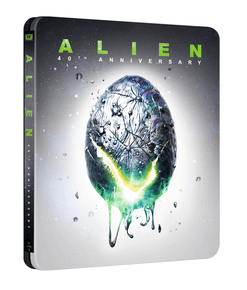
Win ALIEN 40th Anniversary on 4K Steelbook [ENDED]

ALIEN

What more can be said about this masterpiece?  It finally gets the 4k treatment and is out now in case you cannot wait to win this competition. We have one lovely looking Steelbook to give away and all you have to do in answer the following question…

We all know Lance Henriksen played Bishop in the huge ’80s sequel but who played the android in this 1979 horror classic?

A) Ian Holm

B) Bender Rodriguez

C) Sean Young

Email your answer, along with your address details, to [email protected] labelled ALIEN before midnight on  MAY 10TH.

Here is a list of the all important special features:

DVD Special Features:
– Includes the 1979 Theatrical Version and the 2003 Director’s Cut!
– Audio commentary by Director Ridley Scott, cast and crew (theatrical version only)

4K Ultra HD™ and Blu-ray™ Special Features:
– Includes the 1979 Theatrical Version and 2003 Director’s Cut!
– Audio Commentary by Director Ridley Scott, Cast and Crew
– Audio Commentary by Ridley Scott++
– Introduction by Ridley Scott+ (Blu-ray™ only)
– Final Theatrical Isolated Score by Jerry Goldsmith++
– Composer’s Original Isolated Score by Jerry Goldsmith++
– Deleted and Extended Scenes

+Director’s Cut only ++Theatrical Version only


ALIEN 40th Anniversary 4K ULTRA HD™ & Blu-ray Specs:
Screen Format: Widescreen 16:9 (2.40:1)
Audio (4K Ultra HD™): English DTS-HD-MA 5.1 / English DTS-HD-MA 4.1 (Theatrical Version Only) / English Surround DTS-HD-MA2 2.0 / Spanish DD 5.1 / French DTS 5.1
Audio (Blu-ray): English DTS-HD-MA 5.1 / English Dolby Digital 4.1 (Theatrical Version Only) / English Surround Dolby Digital 2.0 / Spanish DD 5.1 / French DTS 5.1
Subtitles: English / Spanish / French

Terms & Conditions:

Twentieth Century Fox Home Entertainment/STARBURST do not accept any responsibility for late or lost entries due to the Internet or email problems. Proof of sending is not proof of receipt. Entrants must supply full details as required on the competition page, and comply with all rules to be eligible for the prizes. No responsibility is accepted for ineligible entries or entries made fraudulently. Unless otherwise stated, the Competition is not open to employees of: (a) the Company; and (b) any third party appointed by the Company to organise and/or manage the Competition; and (c) the Competition sponsor(s). This competition is a game promoted STARBURST. STARBURST’s decision is final in every situation and no correspondence will be entered into. STARBURST reserves the right to cancel the competition at any stage, if deemed necessary in its opinion, and if circumstances arise outside of its control. Entrants must be UK residents and 18 or over. Entrants will be deemed to have accepted these rules and to agree to be bound by them when entering this competition. The winners will be drawn at random from all the correct entries, and only they will be contacted personally. Prize must be taken as stated and cannot be deferred. There will be no cash alternatives. STARBURST routinely adds the email addresses of competition entrants to the regular newsletter, in order to keep entrants informed of upcoming competition opportunities. Details of how to unsubscribe are contained within each newsletter. All information held by STARBURST will not be disclosed to any third parties

Issue 460 – Out Now!

460 NS

Get ready to catch ‘em all as STARBURST looks forward to Pokémon Detective Pikachu with an in-depth feature on the phenomenon and the film.

We also look at clones in movies to coincide with the home entertainment release of Keanu Reeves’ latest Replicas and some real movie curses come under the spotlight – were the cast of Poltergeist and The Exorcist damned by their involvement? Make your mind up after considering the facts.

One of the most maligned films of the eighties is set for re-appraisal on Blu-ray, so find out everything you need to know about Howard the Duck – the character and movie.

If that’s not all we chat to legendary actor Sam Elliot about The Man Who Killed Hitler and Then The Bigfoot, classic horror author Ramsey Campbell, Christopher Caldwell and Zeek Earl, directors of Prospect, Nicolas Pesce tells about his follow-up to The Eyes of My Mother, Piercing.

Horror Obscura looks at a brace of alien invasion movies and Independents Day chats to Jared Bentley, the director of Intensive Care.

Plus all your favourite COLUMNS, NEWS, REVIEWS and much MORE from the worlds of SCI-FI, HORROR and FANTASY!

Scarlett Rayner | SIFF 2019 BEST PERFORMANCE

Rayner

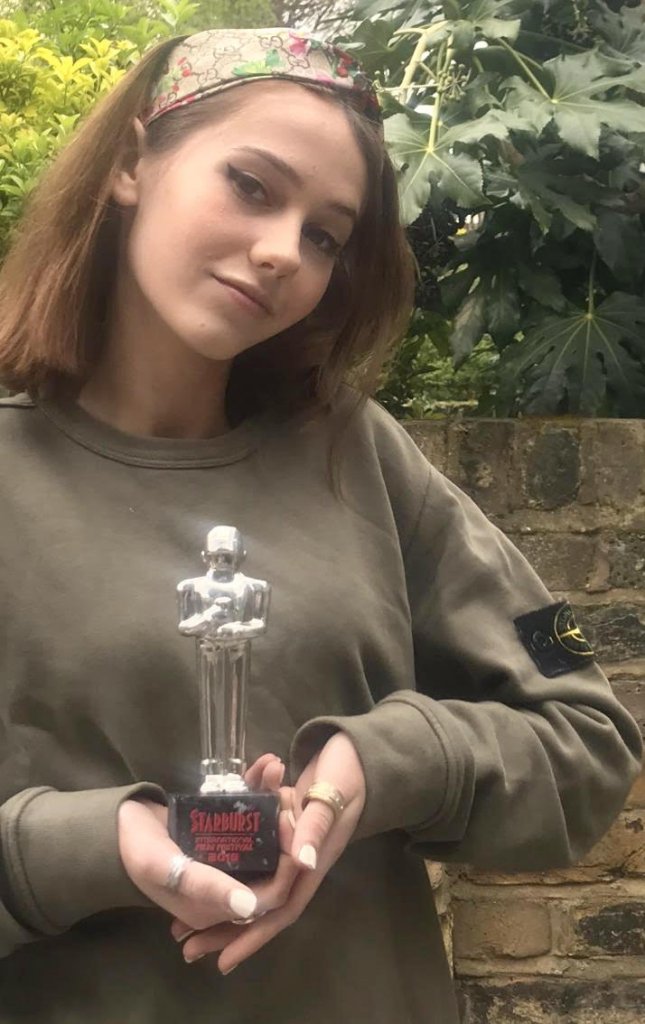
Fresh from her BEST PERFORMANCE win at the recent STARBURST INTERNATIONAL FILM FESTIVAL, rising star SCARLETT RAYNER talks with us about the acclaimed short film INDWELLER, her acting career, aspirations, Aaron Paul, and more…

STARBURST: Congratulations again on the award! How does it feel to win Best Performance?

Scarlett Rayner: Completely amazing. I’m so grateful, and shocked to be honest! I didn’t expect this at all. It’s so cool to have won this award. Thank you!

It’s well deserved! You won for your lead role in the wonderful Indweller, which is currently playing festivals. For those who haven’t had the chance to see it yet, what can people expect?

It’s a dark short which focuses on a young teenage girl and her mother, played by Zoe Cunningham, and their tricky relationship. The girl’s mind is clouded with darkness and she heads down a twisted path when confronted with weird goings-on in her new home.

It’s an extraordinarily accomplished film, how long did it take to shoot?

It was filmed over about six months. We filmed more or less every other weekend.  It took a long time as Alwyne Kennedy [the director] is an absolute perfectionist, and he literally did every element of the film, including the camera work, the lighting, editing, music, etc, etc, etc! Funny story, when we thought filming was over I got my hair cut into a bob, but then Alwyne changed his mind about one of the scenes… and that’s why I’m wearing a hair towel in the film!

Given the calibre of performances we had to judge from at SIFF 2019, your victory is an incredible achievement, doubly so when you factor in that you’ve only just turned 16. How long have you been acting?

 I can’t remember exactly, but I’ve been acting professionally since I was 10 and I have adored acting for as long as I can remember. I used to do LAMDA lessons, which I loved, with our good friend and now director Elizabeth Blake Thomas. When I was 9 she introduced me to a film director called Martin Gooch to do a short interview on aliens for the extras of his film. I was young, confident and a bit weird but it turned out Martin liked my personality… a year later he messaged my mum saying he’d written a film, The Gatehouse, with the lead character inspired by me! It was insane. I can’t thank Martin enough for that incredible opportunity, and he’s an amazing director! That film was the best experience, and I literally had the time of my life with all the cast and crew, including my fabulous on screen Dad Simeon Willis and brilliant producer Clare Pearce, amongst others. Since then I’ve done quite a few short films, and two more features, fortunately being one of the leads in them all. I also need to credit my amazing drama coach Sarah-Jayne Butler for all her support as, although I don’t see her often enough, she is truly inspirational!

Rayner

Was there any specific moment you remember that first inspired you to pursue acting? A film or performance perhaps?

Yes, as I said, I’ve always loved acting. It’s something about the opportunity to craft a character and see the world through someone else’s eyes that excites me. My drama teacher in primary school – Mr. Brockwell, a legend –  is probably the person who initially got me into acting. However, I think if it hadn’t been for The Gatehouse, I wouldn’t be as invested in acting as I am now. That film made me realise how much I love acting.

If you could appear in any film franchise or TV series, what would be your dream role?

Wow. Tough question.  I love to act in dark dramas and horrors. I like to play characters with a lot of depth to them. I was shortlisted for the lead in The Conjuring 2 when I was 12, and that was very exciting! That’s the kind of film I would like to work on. I guess it would be pretty cool to be in a TV series, something like Breaking Bad or Black Mirror.

Well, Black Mirror is showing no signs of ever stopping, so we’ll certainly be rooting for you to get that call from Charlie Brooker one day!

That would be crazy!

Are there any other areas of the film/TV business that you’d eventually like to try your hand at?

I love scriptwriting. When I was 11, I wrote a feature-length film script. Looking back, it’s probably quite rubbish, but still! I’d like to write more of them, and hopefully direct one day, too.

What do you enjoy most about being on a set?

I adore meeting new people. This is so off topic, but I just love how all people have different personalities and ways of being. Anyway, obviously I love the aspect of being able to transform into a character, but I also love working with the cast and crew.

Which stars do you admire most? Who inspires you?

The cast of Breaking Bad are phenomenal. I have a particular bias towards Aaron Paul because I’m in love with Jesse Pinkman. But yeah, the skill level that Bryan Cranston and Aaron Paul have is second to none.

Completely agree! Your last two films – Indweller and The Gatehouse – both deal in the supernatural. Where do you stand on the spirit world yourself? Do ghosts exist, and if so have you ever seen one?

Ha! Yeah, I don’t believe in ghosts – touch wood, even though I love being in horrors, I get scared pretty easily. Actually I have a BIG fear of the unknown – probably shouldn’t put that out there… don’t want it to be used against me – but unfortunately no, I don’t have a story about an encounter with a ghost.

Sounds like that’s probably for the best! So what project or projects are up next for you?

To be honest, it’s quiet at the moment due to my age, but I’ve just turned 16, so as soon as school’s over in June I’ll be ‘out of licence’ which means I can work without restrictions, which is great! I’m waiting for my last film October, which I filmed a year or so ago, to come out. That was filmed in Brittany and is about the end of the world. It was a great experience, with Tom Forbes playing my Dad. I’ve also been completely focused on schoolwork as I have my GCSEs coming up next month! I really miss auditioning for projects though! I have to say that GCSE drama at my school is phenomenal, and I’m just going to have to mention my drama teacher, Miss Amelia Morse. She’s AMAZING. I recently did my drama GCSE scripted piece and it was such a great experience. I played Paula from The Positive Hour. I’m staying at my school for A levels and then hoping to go to uni or drama school, but hopefully I’ll keep working at the same time!

INDWELLER is currently playing festivals, and THE GATEHOUSE is available on DVD, iTunes, Amazon Prime Video, Google Play, Rakuten TV, Sky Store, and Virgin. Scarlett’s 2017 family film PRETTY OUTRAGEOUS is also available via Amazon Prime Video.

Twitter: @ScarlettRayner | Instagram: @scarlettrayner | IMDb | Showreel | Spotlight

Currently Represented by: [email protected]

Mark Lawrence | ONE WORD KILL

one word kill

Mark Lawrence is best known for his fantasy novels, particularly The Broken Empire series. His latest work, One Word Kill, is science fiction fantasy novel inspired by gaming trends of the 1980s. We caught up with him to find out more…

STARBURST: What’s the elevator pitch for One Word Kill?
Mark Lawrence: I’ve managed nearly a decade as a published author without ever making an elevator pitch. The closest I can get is reading the headline off the back of the book. ‘Ready Player One meets Stranger Things.’ The next few floors of the ride are just going to be a comfortable silence.

And how would you pitch that to someone who isn’t into games?
Heh, “Ready Player One meets Stranger Things.” Neither of those was really about games, not even Ready Player One, which was set inside one. They were about people and about the trouble and adventure they fall into. Good Will Hunting wasn’t about mathematics. Good stories don’t require you to like the thing that they are ostensibly about – and One Word Kill isn’t about gaming in any event.

What character is the most fun to write?
Well, if we’re talking about the Impossible Times trilogy of which One Word Kill is the first book… then I would have to note that it’s written in the first person, which really makes it a no contest. But more generally, even on the rare occasions where I write multiple point of view stories, it is the story that is the fun thing to write, and it really doesn’t matter what character I happen to be seeing it through at any given time. If any of the characters wasn’t lots of fun to write then I would know something had gone wrong and would need to rethink.

How long did it take to write?
About 4 months. It’s a relatively short book. The whole trilogy will be released in 2019.

Why the Dungeons and Dragons references?
A D&D group seemed a nice nucleus to have, and the game itself offers an extra strand in the storytelling. It also fitted in with the setting: ‘80s London. I grew up in London, and my teenage years were in the ‘80s. And I played a lot of D&D back then! It’s the first book I’ve written in a real world setting and I wanted to do it in a setting I knew a lot about.

Is D&D cool again?
I don’t recall it ever being cool. I think it’s always attracted people who aren’t bothered about whether they’re cool or not.

What’s your favourite gaming story?
For my favourite book with a gaming theme, it would have to be Ready Player One, it’s basically the only one I’ve ever read. If we’re talking about literally my favourite story about gaming, then I would have to say that I don’t have one. Games don’t make good stories. It’s a bit like dreams. Having someone tell you about their dream is boring. Don’t do it to anyone. Dreams are good at the time. They do not make good stories. Similarly, don’t be a gaming bore. Games are fun at the time. They don’t make good stories. The D&D game in One Word Kill is not a recollection of an actual game – it’s crafted to be interesting after the event, while games exist to be interest as you play them.

 What has been the most interesting shift in genre writing in recent years?
That’s a bit like asking a fish about the ocean. The only thing I can think of, which may just be a local current, is that self-published fantasy seems to be gaining more acceptance and taking a larger share of the sales. Readers have often been put off by the sheer amount of choice when it comes to self-published work, not knowing what books are good – or at least popular. Efforts like the SPFBO contest I run have helped highlight some of the best work out there.

What’s next for you?
I’m writing a follow up trilogy to my Book of the Ancestor trilogy that starts with Red Sister. The new trilogy will probably be called Book of the Ice, and opens with The Girl and the Stars.

If you could take one piece of art/music/movie/book/etc, and ensure it would last until the sun dies out, what would it be?
A big responsibility! Is it terrible to say that I don’t really care what happens after everyone I know is dead, much less until the sun dies?

If you could give the 16-year-old version of yourself any advice, what would it be? Would you listen? Buy Apple shares. Lots of them. And yes.

One Word Kill comes out on May 1st, with its sequels following hot on its heels through out 2019.