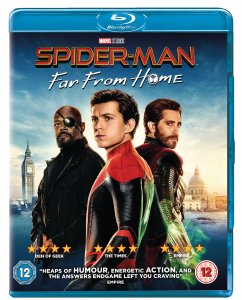
SPIDER-MAN: FAR FROM HOME is out now on Digital Download and on DVD and Blu-ray™ 11th November. To celebrate, we are giving three lucky winners the chance to get their hands on a copy of the Blu-ray
The movie sees Tom Holland return as everyone’s favourite web-slinger. This next chapter after SPIDER-MAN: HOMECOMING sees our friendly neighbourhood wall-crawler decide to join his best friends Ned, MJ, and the rest of the gang on a European vacation. However, Peter’s plans to leave super heroics behind for a few weeks are quickly scrapped when he begrudgingly agrees to help Nick Fury uncover the mystery of several elemental creature attacks! Spider-Man and Mysterio (Jake Gyllenhaal) join forces to fight the havoc unleashed across the continent but all is not as it seems.
To be in with a chance of winning, just answer the question below and email [email protected] with the heading ‘SPIDERMAN’. Entries must arrive before 11:59pm on NOVEMBER 10TH, 2019:
Which actor plays Nick Fury in SPIDER-MAN: FAR FROM HOME?
STARBURST do not accept any responsibility for late or lost entries due to the Internet or email problems. Proof of sending is not proof of receipt. Entrants must supply full details as required on the competition page, and comply with all rules to be eligible for the prizes. No responsibility is accepted for ineligible entries or entries made fraudulently. Unless otherwise stated, the Competition is not open to employees of: (a) the Company; and (b) any third party appointed by the Company to organise and/or manage the Competition; and (c) the Competition sponsor(s). This competition is a game promoted STARBURST. STARBURST’s decision is final in every situation and no correspondence will be entered into. STARBURST reserves the right to cancel the competition at any stage, if deemed necessary in its opinion, and if circumstances arise outside of its control. Entrants must be UK residents and 18 or over. Entrants will be deemed to have accepted these rules and to agree to be bound by them when entering this competition. The winners will be drawn at random from all the correct entries, and only they will be contacted personally. Prize must be taken as stated and cannot be deferred. There will be no cash alternatives. STARBURST routinely adds the email addresses of competition entrants to the regular newsletter, in order to keep entrants informed of upcoming competition opportunities. Details of how to unsubscribe are contained within each newsletter. All information held by STARBURST will not be disclosed to any third parties
If there’s one thing that Hollywood can rely on, it’s the fact that cinema audiences love big-budget sci-fi movies. The ongoing popularity of franchises like Star Trek and Star Wars have shown that all of us love to look into our futures on the silver screen.
But what is it about science fiction that has proven to be so alluring for filmmakers? The sci-fi trend has been with us for well over a century, and it is only getting stronger.
From literary pioneers like HG Wells and Mary Shelley to Yevgeny Zamyatin, there’s always been a thirst for contemplating possible utopias and dystopias. The sci-fi theme is already getting popular in many different industries, including the online casino world. For instance, you can check out the new Kaboo Casino that features a dark sci-fi theme that shows that even classic games like slots and roulette aren’t immune from the futuristic feel.
The Rise of Science Fiction Films
The silver screen was indeed the place where science fiction has genuinely started to shine. Early films like Fritz Lang’s Metropolis hinted at the massive potential of science fiction movies, but things took off really well in correspondence with the space race of the 1960s.
From the thought-provoking likes of Stanley Kubrick’s 2001 to trashy space flicks like Barbarella, science fiction offered ambitious filmmakers a blank canvas where they could express themselves without limitation.
Big Budget Sci-fi Hits the Cinema
Everything changed when George Lucas released Star Wars in 1977. This film set the standard of sci-fi movies that were thought-provoking yet family-friendly. The following decade saw a tidal wave of science fiction films that pushed the boundaries of the genre.
From James Cameron’s horror sci-fi flick Alien to Mel Brooks’ Spaceballs parody, science fiction proved to be endlessly adaptable. In correspondence, cinema audiences relished the introduction of new and more realistic special effects that indicated what our futures could end up looking.
However, the 1990s proved to be a challenging decade for science fiction movies. While films like Independence Day managed to fill the multiplexes, they often appeared to be formulaic. Similarly, even George Lucas stumbled a little, when his Star Wars comeback, The Phantom Menace, was mauled by fans and critics alike.
Sci-fi Reborn for a New Century
As the new century dawned, it looked like a new era for science fiction had begun. Things kicked off with The Matrix in 1999 that showed that sci-fi movies could be darker and weirder than ever before. Similarly, films like Inception also hinted that reality might not be as it seems.
Many of these films paid respect to the acclaimed sci-fi writer Philip K Dick who gave us the inspiration for movies like Total Recall, Blade Runner and Minority Report. All of these releases had a much more paranoid feel than family-friendly sci-fi fodder of previous decades, and they hinted at a maturing audience for the genre.
The Arrival of Comic Book Sci-fi
Few people would have guessed that comic book franchises like DC Comics and Marvel would dominate 21st-century cinema. But if we take a look at the biggest-grossing movies of all-time, we can see a list populated by comic book films like Avengers, Spiderman and Captain America.
While these movies are supposedly part of the superhero genre, many of them feature a great deal of science fiction motifs. Films like X-Men: Dark Phoenix allow limitless use of imagination to amaze and impress their audiences. We should also not underestimate the box office revenues of these movies. Plus with ongoing rumours that Quentin Tarantino is going to make a Star Trek movie, it seems that even our most gifted filmmakers cannot resist the appeal of sci-fi.
Low budget folk horror film Armageddon Gospels is about to hit Apple TV, so we caught up with the director, John Harrigan, to find out more about it…
STARBURST: What was the inspiration behind Armageddon Gospels?
John Harrigan: The story grew out of the landscape of Sussex Downs and surrounding villages, it’s a beautiful and evocative place. When you’re there, you feel the presence of a spirit of the place. You only have to walk the hills and see the Long Man of Wilmington, where we shot the finale of Armageddon Gospels, to see how others have had their imaginations stirred by what resides there.
This combined with immense life changing events: early in 2016, I lost my mother to Alzheimer’s having been her main carer for six years. Grief can be a powerful inspiration, it helped me evaluate my relationship to the British landscape. The loss of David Bowie, my mother and then the aftermath of the EU referendum combined together to inspire me to create a story of lost gods engaged in a ritual to save Albion from a dark entity called the Bone King. The film explores the moment in history we find ourselves in.
Were there any films you had as a point of reference when you were in the planning stages?
Penda’s Fenn was probably the most important touchstone and reference, but also Andrei Tarkovsky’s Stalker. Each time I make a film, I find myself paying my respects to masters such as Tarkovsky.
Do you have a natural interest in folk legends and the like?
Yes, folk legends have always been an important aspect of my work as a storyteller. It’s a pleasure to reinterpret and reimagine an old folktale or legend, subverting them to use them in a modern context. This time, it was one of the earliest legends – that of the Holy Grail.
I think this is how stories are remembered and mutate over the years, through each generation of storyteller, revitalising a legend for their particular time and place. I love cult films, and I love seeing a story I know well through the eyes of a new filmmaker.
You really make the most the locations – some familiar to viewers – how did you go about securing those?
The gods and spirits in the film are exploring a dream version of England, so we had to make sure the modern world didn’t encroach or appear too many times. Often, we’d plan and arrange to shoot at a location, but on arrival we’d learn that it wasn’t possible due to the number of people present, so we’d pack our gear up and walk until we found somewhere that felt correct. In many ways, we were guided by the landscape of the South Downs, and what was occurring in real time, intuition played an immense part in securing locations. The landscape of the South Downs National park is perhaps the most important character in Armageddon Gospels.
Were there any problems you had during production?
The biggest problem we encountered during filming was that the camera of our DOP, Mark Caldwell, broke a week into the shoot. It was so windy that day that a part of a leaf got pulled into the fan and it stopped the camera. This was a terrifying moment, as we had no means or time to hire in a camera, on such a tight budget and schedule. Luckily Mark managed to fix it, however, it did mean we could no longer use the gimble rig for the rest of the shoot. We had used this piece of equipment for the majority of shooting in the first week, so had to adapt our shooting style, which brought alive other scenes in an unexpected way. Crisis is often a form of disguised opportunity.
Exhaustion was also a major factor, I’d written the script in a month shortly after I had lost my mum and we shot the film in just over three weeks in August 2016. The entire cast and crew lived and worked together, cooking for each other throughout the shoot in Kate Alderton’s former family home, the Haven. Kate played Aradia, and is an extremely talented actress and performer.
Kate, her partner, and two children patiently accommodated us all, their home was in the middle of all the incredible sites we were planning to shoot at. They were amazing hosts and I’m eternally grateful to them.
It often appeared that our journey to make Armageddon Gospels mirrored the quest the gods had to successfully complete for the ritual in the film, with cast and crew hiking everywhere, carrying all the camera equipment and gear to get the stunning shots, notably to the top of the Long Man of Wilmington. On this particular day, once we got to the top, we realised an essential item of equipment had been left half way up when we had stopped for a break, so Milo – one of the crew – had to run down and up to get it!
And lastly, the most important prop in the film is the Holy Grail. I wanted to use a piece of Molodovite, which is a green stone, taken from a meteorite that crashed in the region that is now the Czech Republic fifteen millions years ago. It’s said that this was the original inspiration for some of the Grail legends and it seemed like it would be impossible to obtain. However, it transpired that Kate Alderton’s mother, actor Pauline Collins, purchased this stone whilst shooting a film in the Czech Republic, and she agreed to lend it to us.
With Midsommar going down so well this year, do you think people are ready for a return of folk horror?
Yes I think so, pastoral and folk horror offer a perfect way to examine the horror of the immediate. The question of survival in the presence of otherworldly forms that don’t recognise human agency as absolute. Folk Horror, and especially Midsommar, appear as portents and omens of a very specific aspect of the time we’re living in now.
Storytelling as a repeated ritual is an important problem solving tool of immense adaptability. When you think about The Wicker Man as the definitive work of folk horror, it is very much about a community telling the story of the landscape’s survival, and casting Police Sergeant Howie as the fool, in a theatrical performance that the every resident of Summerisle engages in.
Tell us a little bit about Foolishpeople, your creative company.
FoolishPeople takes its name from the Fool tarot card, a character that teaches us we have to be willing to let go of outmoded ways of thinking. We celebrate our thirtieth anniversary this year!
The projects we have created always utilise ritual as a tool of storytelling in theatre and film. We helped pioneer immersive theatre in the late nineties and early 2000s. We used an old, disused abattoir in Clerkenwell to set two of our most successful stories, Abattoir Pages and A Red Threatening Sky. Location, and working with a site-specific process is always key to each of our projects. That often comes out of my imagining what story could exist in a specific locale, then interpreting that into the form of a script.
We’ve performed at Arcola Theatre and the ICA, Birmingham Rep, and also told stories across historic sites such as the Galleries of Justice in Nottingham.
Our first feature film, Strange Factories, was shot on location in Prague and took cult film as its core inspiration. We placed our audience into the experience of watching a lost film that was said to be haunted. We toured Strange Factories in the oldest and most unique independent cinemas in Britain with a live cinema event that had the characters from the film manifesting inside the cinema.
FoolishPeople is comprised of a small group of creatives that grows and expands during the time a project is live. I am the fool at the heart of FoolishPeople
Do you know what your next project will be?
I’m currently working on my third feature Lightships, a collaboration between GHRL Ltd and FoolishPeople. We shot in January and it is now in the final stages of post-production, having just reached picture lock. The screenplay is inspired and adapted from the book Remembrance by Maryann Rada:
Eve’s family is missing: her journal holds the key to locating them. As her world and reality begin to unravel, she must unlock the mystery of the visions and transmissions she is experiencing.
Is she a prisoner, a patient… or dead?
The film explores alien contact from the perspective of those who claim alien intelligences are being communicated via direct transmissions into their minds and imagination. In the same manner that Philip K. Dick stated that he was contacted by a pink beam of light; this later became an important aspect in his book Valis.
It’s interesting to be completing work on Lightships just as Armageddon Gospels is about to be released.
Armageddon Gospels is available on Apple TV from October 31st and reviewed here.
Whilst attending London Film Festival, director Lorcan Finnegan spoke with STARBURST to discuss his uncomfortably close to home mystery/sci-fi, Vivarium. Starring Jesse Eisenberg, Imogen Poots the film poses a claustrophobic and surreal look at suburbia living. (Warning: potential spoilers ahead.)
STARBURST: how did the interesting story idea for Vivarium come together?
Lorcan Finnegan: It’s difficult to pin-point, but [co-writer] Garret Shanley and I made a short film in 2011 called Foxes and that was set in this ghost estate, this abandoned housing development in Ireland that became a product of the recession. So there were ideas and themes left over from that short film that we still wanted to explore. We were thinking ‘what if this housing development went on infinitely?’ in a much more quantum way, like a parallel universe. At the same time, I was watching this David Attenborough documentary about the life cycle of the European cuckoo, and we were discussing our next project. The cuckoo idea was related to coming up with a monster that was relevant to society today, a bit like the way that Godzilla is a product of the Japanese fear of atomic energy. We were trying to think of what young people in their 30s were really afraid of these days. The atomisation of society. Getting stuck on these commuter belts that are miles away from anywhere. Having to work in a city all day, commute, and come back and sleep in this little box again and again until they can pay off the mortgage and expire. There’s an existential horror to that. So it was all of those thoughts combined at the same time, which melded into the movie.
Can you tell us how you originally met Garret, and why you think that this pairing just works so well?
We met at this seminar for making low budget films in Dublin, called the Catalyst Project. You had to apply, there’s about 500 to 800 people who go into it, and you have to do a course. We just met there, he posted on their forum, he said that he was a writer, and I said that I was a director. By coincidence we ended up sitting beside each other at a talk, and we ended up just getting on. We wrote an application for this crazy comedy/sci-fi that we didn’t get chosen to make. After the process of collaborating on that, we then wrote Foxes. Garret had written it as a blog post on his own blog called Fug the World. I found that, it’s a really funny blog, and we developed it into a script and made that. We are working on a bunch of new things as well. It’s a good collaborative and artistic relationship.
The introduction with the birds, the wildlife scene, foreshadows the whole movie. So, how did this idea come about, and what was it like to film?
It was one of the main set ups for the story. I really like introductions that tell you about the film before the film begins. Something that encapsulates all of these ideas. We had it originally in the script as a longer scene that was in the tree outside of the school where Imogen Poots’ character Gemma is a teacher. The camera was supposed to be there for a while, and you see a bird feeding another bird, then the camera comes slowly down into the school. That ended up being impossible to do with the time restrictions, and the budget. We actually cut it out of the film entirely. Then when we were in post-production it felt like it needed that scene to set up the tone of the film. Also, I wanted to do a title sequence that set up what it was all about. To give you a feeling that it was more of a throwback to a ‘70s approach to sci-fi. So we went and we shot some elements of it. We got some wildlife stock, and we had to manipulate it to have the same kind of feel as the rest of the film.
There’s obviously a fantastic cast here. Can you tell us about what Imogen and Jesse were like to work with throughout the film as their characters descended into madness?
It was great. They are both brilliant actors. They are very open and collaborative. We met and talked a lot before shooting, but we didn’t really have much time to rehearse or anything. It was more about having conversations about what the film is about. The tone of it, the acting style is very naturalistic but in an unnaturalistic environment. So we were just talking about how that contrast would work. We shot the film completely out of sequence, because we did all of the exteriors in Belgium, and then all of the interiors in Ireland. So it was tricky to keep the same emotional intensity. Especially when Jesse is dragging Imogen back into the house, the scenes around it were weeks apart. They are brilliant actors, and very funny. Even though the film gets very dark, we had a great laugh.
They’ve worked together before, most recently on The Art of Self Defence, so did that further help you as a director, as they already had chemistry?
Yeah, I’m friends with Riley Stearns, who directed The Art of Self-Defence, it was just a coincidence that we ended up with the same cast. It was weird, because when he wrapped, he went on a European holiday and stopped off at Dublin, we hung out. I only got to see his film a little while ago, but I’m glad that it’s very different. It’s mostly Jesse, whereas this is mostly Imogen. To me anyway, it’s more her story.
They both provide a feeling of awkward frustration very well, especially from the moment they meet the estate agent. How fun was that scene in particular to work on with Jonathan Aris, and how important was it for you to get an instant sense of tension across to the viewer?
Yeah that was always part of the plan. Jonathan is brilliant, that was probably the hardest character to cast. We got audition tapes from a lot of people, but eventually we got one from Jonathan. I’ve seen his work before, but I’ve never seen him acting like that. With the tape I had written an explanation of exactly what I was looking for. So, when I got it, I was like ‘this guy is amazing!’ But Imogen and Jesse had never seen him. So a lot of their response on camera to him in that scene was quite real. It’s all shot in a way to create a sense of unease, but also a funny but weird feel, which I wanted to ease the audience in a little bit, because it does get quite surreal. To disarm it a little bit with the comedy.
At times the film does feel like an exaggerated version of the way some people live their lives, so could you elaborate on that, and how you went about putting that idea at various points throughout the movie?
All of the stuff that happens in the film are reflections of what does happen in real life, but just twisted in order to show just how bizarre a certain type of life can be. The reason we were doing that is to just highlight the strangeness of it. We are sold an idea of a way of living, it’s heavily advertised and pushed on people, this social contract that you sign up for. That’s what is insidious. It’s sold to you by people who purely want to make profit. It’s the same with these housing developments, these massive sprawling places with these identical houses. The only reason they are all identical is because you can fit a lot more of them into the space, it’s cheaper, and you can maximise the profits. It’s very calculated, and there’s this feel of capitalism at work. Even with the boxes arriving, it’s relating to people ordering content online and just not communicating to anyone. So all of the scenes in the film are really just trying to highlight that, but in a kind of nightmarish way. It’s not like a critique saying that that way of life is wrong, it’s more questioning what the alternatives are. It’s like the kid at the start who says that she doesn’t like the way things are, it’s representative of a future generation, where people might do things a little bit differently.
When the boy character arrives in the film, you do get this sense of divide between Imogen and Jesse. What did you enjoy the most about working on this mysterious character, and how crucial is he to the balance of the film?
Senan Jennings was great. He again was one of the big surprises, as we were trying to find this person who could mimic. His character sort of represents a child, but at the same time he’s not a child. He’s there to divide the couple, that’s essentially it. To create that drama between them. So his arrival is the beginning of the bad part. He just manipulates them to get what he wants. He’s not going to come up to you in the middle of the night and suck your blood. He just needs them for a certain amount of time until he doesn’t need them anymore, which for me is a lot more horrific.
There are also various freaky effects being used on his voice when he is younger. How did that idea come about?
It was always the plan that he was able to mimic them exactly but a little bit off. He only really needs to pretend to get away with being a person just enough to convince you to come into Yonder, the housing estate. Senan did kind of imitate them, but his own voice was too nice and enduring. So we actually got Jonathan Aris, who plays the estate agent at the beginning, to voice the child’s voice for the whole movie. The boy’s voice is a mix of his own voice and Jonathan’s throughout. So there would be this acoustic consistency between the species.
With the sets, sky, and overall quietness you really get that feeling of claustrophobic suburbia across. Could you tell us how you achieved that atmosphere and how essential it was to Vivarium?
In the script it was described as looking like the René Magritte painting Empire of Light. There being no wind, no sound, no birds, and no insects. It was the trickiest part. Yonder is a character in the film as well, the environment. We looked at tons of locations, and we also thought about mixing sets in with real locations, like that were half formed. Ultimately, we needed more control in order to make this headache but tangible world for the character to live in. So we built a set of tree exteriors, garden, wall, footpath, road, in a warehouse in Belgium. We used digital mapping, CGI, and sky replacement to extend it. Scans and 3D models made using the textures and dimensions of the set. So the CG is an extension of the same look. It feels like a giant set, but it’s not as big as what we built. Just for the tone of the film, it’s quite dreamy and nightmarish in a horrible, surreal way. If you were stuck there you’d get sick from no real sunlight. Roy Andersson films were an influence, with the way he’d build sets and have this sickly artificial light. It was really important to give this feeling that it wasn’t a real world, and that you’ve entered into another dimension. It’s like they’re trapped within a catalogue or brochure for Yonder that’s been photo shopped.
Without giving too much away, why should STARBURST readers watch Vivarium? Why does it stand out?
It’s certainly different! It’s a strange and unique little film. I think not everybody is going to love it. However, from showing it at festivals so far it seems like a lot of people really love it. If you’re looking for something different and interesting, and you like unusual genre films with amazing performances and existential dread then you’ll love it.
Let the nightmares return this Halloween with this terrifying bundle of TV classics to get the heart racing.
We have an array of spine-tingling releases up for grabs, with one lucky winner receiving copies of:
American Horror Story: Apocalypse,
Buffy: The Complete Series 1-7,
Sleepy Hollow: The Complete Seasons 1-4
Angel: The Complete Collection Seasons 1-5.
With scares so intense you’ll be breaking out in cold sweat for weeks, these toe-curling boxsets deserve pride of place in anyone’s Halloween collection.
To be in with a chance of winning, just answer the question below and email [email protected] with the heading ‘FOXHALLOWEEN’. Entries must arrive before 11:59pm on OCTOBER 30th, 2019
Which underrated pop punk band performed the Buffy theme tune?
FOX and STARBURST do not accept any responsibility for late or lost entries due to the Internet or email problems. Proof of sending is not proof of receipt. Entrants must supply full details as required on the competition page, and comply with all rules to be eligible for the prizes. No responsibility is accepted for ineligible entries or entries made fraudulently. Unless otherwise stated, the Competition is not open to employees of: (a) the Company; and (b) any third party appointed by the Company to organise and/or manage the Competition; and (c) the Competition sponsor(s). This competition is a game promoted STARBURST. STARBURST’s decision is final in every situation and no correspondence will be entered into. STARBURST reserves the right to cancel the competition at any stage, if deemed necessary in its opinion, and if circumstances arise outside of its control. Entrants must be UK residents and 18 or over. Entrants will be deemed to have accepted these rules and to agree to be bound by them when entering this competition. The winners will be drawn at random from all the correct entries, and only they will be contacted personally. Prize must be taken as stated and cannot be deferred. There will be no cash alternatives. STARBURST routinely adds the email addresses of competition entrants to the regular newsletter, in order to keep entrants informed of upcoming competition opportunities. Details of how to unsubscribe are contained within each newsletter. All information held by STARBURST will not be disclosed to any third parties
Raven Dane is a UK-based author best known for her dark fantasy and steampunk novels. STARBURST spoke to her to find out more about her new book Cyrus Darian and The Wicked Wraith.
STARBURST: What can you tell us about your forthcoming novel, coming out via Telos Publishing?
Raven Dane: Cyrus Darian and The Wicked Wraith is the third in a series of misadventures about my bad boy anti-hero, Cyrus Darian. A very bad boy who would sell his own mother – whoever she was – then steal her back and sell her again to someone else. His past is murkier than an ancient peat bog and hides as many secrets and bodies. He finds a haven in an alternative Victorian London. A city cloaked in toxic fumes and with the constant threat from demonic beings let loose a century before by an inept sorcerer’s meddling with occult forces. Persian-born, perhaps, Darian is a hedonist, philanderer, compulsive liar, alchemist and necromancer. He is also wealthy, charming, charismatic and financially generous to those drawn to him and his shady escapades. In this book, Darian finds it wise to make himself scarce in England due to a ruthless government-led crackdown on all occultists. The gift of a beautiful, genuine dragon scale sends him and his sidekicks to the Dutch East Indies and the volatile, active volcanos of Java.
What inspired the story?
Dragons. I love them. I always wanted a Cyrus Darian story to include a dragon. In this case, it’s an eastern mythos creature from Java. It is huge, it makes Smaug look like a gecko.
How is it different from your previous work?
My short stories in many international anthologies and my Absinthe and Arsenic collection with Telos are all definitely horror. My past novels are dark fantasy and supernatural alternative history. This latest book is from my steampunk world. They are fast-moving adventures with vivid characters and a bit tongue in cheek but never a parody of the steampunk genre which I love so much. I bring occult danger and dark magic into a Victorian world that never was. Probably a much-used trope now but it wasn’t back in 2011. This was when the first book, Cyrus Darian and the Technomicron, won the Victorian Steampunk Society’s Novel of the Year award, which had a shortlist that included work by well-established steampunk authors, Jonathan Green and Gail Carriger.
What is the appeal of horror?
I wish I could pin it down. What makes horror so intriguing? Why do so many of us love to be frightened out of our wits? It began at an early age for me. My younger brother and I would sneak down the stairs and peek through a gap in a door frame as our parents watched scary programmes like Quatermass or films like Hitchcock’s Psycho. The fear of being caught out of bed, as well as the frightening black and white imagery on the TV screen, gave us an intoxicating frisson of excitement. Somewhere in our young minds, we knew the films were not real, and our parents would only pretend to be cross, so it was a safe form of thrill-seeking. Maybe that is what the appeal is, to be scared witless but with no bad consequences. That pumping adrenaline we get from being frightened helped keep our distant ancestors alive. That twitch of greenery could be the warning of a sabre tooth tiger about to pounce. Maybe we need the scares from books and films to keep that life-preserving instinct. Come the zombie apocalypse, we will be grateful for it. I love writing horror though only short stories, I do not have the skills to keep up the tension for a full-length novel. I’m sure in some past life I was a tribal shaman and storyteller, crouching by a fire in a cave and spinning yarns of the monsters and evil spirits lurking in the darkness.
Which character from any of your novels would you most like to meet in real life? And why?
Well, certainly not Cyrus Darian… I wouldn’t trust him for a second! Or my beautiful but deeply flawed Dark Kind vampire, Jazriel. His insecurity and addiction driven personality can be exasperating. As a reader said ‘I never know whether to hug Jaz or give him a kick up the backside.’ So I think it would be Brandan, the wandering Irish warrior/bard from Death’s Dark Wings. The novel is an alternative history version of events leading up to 1066, one complete with Celtic pagan magic, valiant Saxons and primitive but deadly steam-driven Norman weaponry. Brandan is fierce, brave and honourable and easy on the eye! He also sings and plays a haunted golden harp beautifully.
What approach do you take when writing fantastic elements?
My mother was Irish, my father Welsh, so I am most definitely a child of the Celtic Twilight. I am also a practising Pagan, pantheistic hedgewitch. There is an eerie darkness about the old stories of the Irish Sidhe and Welsh Tylwyth Teg that intrigue and inspires me. Fairy folk are not sparkly pretty things with magic wands and butterfly wings, and I use their legendary eerie strangeness and danger in my stories.
I try hard to create a sense of otherworldliness when using the supernatural in storylines. From my own experiences through life, I do believe that other dimensions exist alongside ours. That sometimes the veil between those dimensions can thin and glimpses of another can be seen. I don’t use magic as a get out of jail free card in my stories, there are always serious consequences to dabbling in strange forces and contact with preternatural beings. I sometimes use the term Old Earth Magic in my storylines, it’s dark and ancient and cares nothing for the wellbeing of humans that are brave or foolish enough to use it.
Ironically, the least supernatural books I have written are about vampires. My Dark Kind are not the Undead, and they are not human. They are a species higher up the food chain to humans, and their long lives are due to superior biology. They are most definitely mortal and have no supernatural powers. They also do not sparkle or fall in love with humans – that would be considered bestiality to them.
How do you approach your writing?
Some people meticulously plan their work, write copious notes beforehand, map out timelines and spend many hours in prior research. Or there are people like me who throw themselves into storytelling, flying by the seat of our pants. Either method is perfectly valid. If there are rules to writing, I have never read them. An idea, often just a single image comes into my head, one that won’t go away. I begin writing that scene, and the book begins to form organically around it. For instance, one image of a dark-clad horseman negotiating a tangled forest by moonlight sparked the whole of my Legacy of the Dark Kind trilogy. When I first discovered and fell in love with steampunk, I began experimenting with making jewellery and artefacts (really badly!) I thought up the name of a mysterious, magical shop selling these pieces and that triggered the creation of Cyrus Darian and his world. I write stories that are very much character-driven. So much so that it feels like channelling them from another dimension… a very real dimension where they can sometimes take over and challenge where the plot is leading. Jazriel was the worse for making me change his story. He became so real that even my husband said he should be paying us rent. He is still my Muse. A wayward one with the habit of deserting me at times.
As I write, I do research – a great deal of it. Even magical, fantastic stories must have a base in plausibility. I believe to do less is to short change your readers. A typical example involves horses, the centre of my non-writing life for many decades. I remember reading a high fantasy story that had a knight riding a nineteen-hand high warhorse. That would be well over six feet at the shoulders. A warhorse that tall would be a liability. Difficult to mount and dismount from and virtually impossible to climb up on in full armour without a winch. The warrior would be too high up to engage with an enemy fighting on foot. And that’s not counting the cost of feeding and housing such a gigantic equine. Every mounted warrior in real history has used small, strong and agile horses. The huge size of Shire horses came much later when they were only bred for agricultural work.
Is the fantasy community as accessible as it thinks it is?
I think so. I hope so! At the start of my writing career, I only received wonderful friendship and support as a newbie from already established fantasy writers. There were a couple of exceptions but not worth changing my views over. I also value the friendship from the LARP and cosplay community, who I have met over the years at events. There can be a different vibe to the horror and SF communities… sadly there are often some high profile feuds and problems, but that is just people being people. I am certain the same things happen in trainspotting circles, hamster clubs, and giant vegetable growing.
Is it easier to get published these days?
A classic how long is a piece of string question! If you are a media ‘celeb’ with a good agent, then it is very easy… you don’t even have to write a word. That’s what ghostwriters are for. The world of self-publishing, especially with CreateSpace and Amazon Kindle, could not be easier for every Tom, Dick, and Harriet to get their work out there. Breaking into mainstream traditional publishing has always been difficult. Many of the larger publishers will only take author submissions through established literary agents and getting an agent is harder than winning the lottery. I certainly believe quality smaller presses offering traditional contracts can offer good experience for writers. It’s in their interests to continue to support and promote their authors over a longer period of time than the big five are able to do. They do not, however, have the same budgets for advertising and promotion. For all writers, however published, getting their work noticed amid an ever-growing tidal wave of new books is a nightmare… who can see any individual waving in the midst of a tsunami? This is the hardest problem facing all writers these days, one I wish I had an answer to.
What’s next?
I’m working on another novel set in my existing alternative Victorian London. This book centres on a run-down East End music hall theatre whose fortunes are revived by a troupe of demons and magical creatures pretending to be human to survive detection. I’m having a great deal of fun writing it and hope readers will feel the same way. I hope to rerelease my comedic take of high fantasy, The Unwise Woman of Fuggis Mire, originally with Endaxi Press. I have a fabulous new cover for this. I also have a post-apocalyptical novella due to be published later this year – too early to officially release details yet. Think Mad Max crossed with Game of Thrones – shiny chrome meets rusty chain maille in a dangerous, toxic landscape.
What authors are you reading? And why?
I am currently working my way through The Expanse novels by S. A. Corey. I fell out of love with SF many years ago but never with SF TV and films. I became hooked to the point of obsession with the TV series of The Expanse. I downloaded the first novel of the series and found it as brilliant and exciting as the TV version. Beautifully written Space Opera with fully fleshed-out characters to care about, believable science-based action and vivid imagination given full rein.
I have a quarantine thing going on with reading… I am paranoid over any influence creeping into my own work, so I do not read any steampunk or vampire novels. I made an exception with Sam Stone’s wonderful Vampire Gene series as they are so different to mine and highly addictive. My main go-to reading for pleasure are horror and SF novels. These include the terrifying books of Adam Nevill. His Last Days made me sleep with the lights on for weeks! I do enjoy a big, meaty Stephen King horror novel and I also love the work of Joe Hill. I have an increasingly long ‘to read’ list, which includes Jilly Paddock’s SF book Starchild, Joe Hill’s Strange Weather and Adrian Tchaikovsky’s Children of Time.
If you had the chance to preserve one bit of media in such a way that it would last forever, what would it be?
That is a tough one! I’m sure greater minds than mine could come up with worthy answers. It would have to be beautiful, inspiring and reflect all the good things humanity is capable of achieving. I would have to choose music – classical wonders like Allegri’s Miserere Mei Deus and O Mio Babbino Caro by Puccini. Also a selection of world and popular music. The beauty of good music is timeless and universal.
Raven Dane’s Cyrus Darian and the Wicked Wraith is available now.
The gambling industry might have grown exponentially in recent years, thanks in part to the advent of online casinos, but gambling has been one of our favourite pastimes for thousands of years. It’s no surprise, then, that it often crops up in films and TV shows in some form or another. They often feature games we know and love, or games that are completely new inventions. Here are five films and shows that feature casinos that you’d love to visit – or at least watch from a safe distance.
Star Wars: The Last Jedi
When The Last Jedi was released, it provoked a strong backlash. A lot of people were unhappy with the film, particularly with the section where the characters visit an alien casino. Some people claimed it didn’t add much to the film’s plot, but one thing that can’t be denied is that the casino looks like a great place to visit. It’s full of colourful aliens in elaborate costumes and is definitely classier than some other places on this list.
The ‘space casino’ theme is certainly one that’s proved popular, perhaps more so than Star Wars: The Last Jedi even was. At online casino sites like Paddy Power, for instance, the space theme is combined with slots gameplay in titles such as Galactic Streak and Stars Awakening to keep players coming back for more.
Batman Forever
Batman Forever is the sixth Batman film, and the only one to star Val Kilmer as the masked superhero. One scene sees the two villains, The Riddler and Two-Face, robbing Gotham’s glittering Excelsior Casino. That’s not the film’s only link to gambling, though. Two-Face, played by Tommy Lee Jones makes all his decisions based on the toss of a coin, which is the hallmark of this classic villain.
The Hunger Games
The Hunger Games is also full of elaborate costumes, but no one would describe it as classy. These days, people can bet on all kinds of sports, from horse racing to boxing. In The Hunger Games, which is set in a dystopian future, things are taken one step further. In the trilogy of films, the richest citizens place bets on the titular Hunger Games. It’s a dystopian series for a reason…
Battlestar Galactica
In the remake of Battlestar Galactica, which aired between 2004 and 2009, the characters were often seen playing a card game called Triad. Fans latched on to it, and you can now buy your own set of Triad cards online to play with friends. The game is played with a set of hexagonal cards, and although the rules of the game were never actually explained in the show, the fans didn’t care and were happy to make up their own rules.
Mad Max: Beyond Thunderdome
The third film in the Mad Max series is best known for starring Tina Turner – she also sang the film’s theme song. The Thunderdome of the title is a domed arena full of weapons, in which two gladiators battle it out, while onlookers can watch and place bets on which one of the fighters will survive and get to leave the dome. In the film, Max, played by Mel Gibson, ends up fighting for his life in the Thunderdome. You’ll have to watch to find out if he wins.
It’s no surprise that gambling and betting plays an important role in films and shows like these. It adds more excitement, and the element of chance means you’re never sure what will happen next. And with the rise of the online casino industry, there’s bound to be more and more films incorporating games like these.
With Tom Paton’s third film BLACK SITE hitting UK streaming services on Monday, we sat down with the incredibly passionate and ambitious UK director to talk about the film, where the idea came from and what the future holds for this Universe that he has created.
STARBURST: What can audiences expect from Black Site?
TOM PATON: Black Site is set in a world where Elder Gods once ruled but were pushed into another dimension using magic. During the 1920s some of them, weakened by their time on the other side, found their way back to Earth and quickly started possessing human bodies. A top-secret government organisation called Artemis is set up to capture and deport these entities back to the other dimension using a portal at an underground base called the Black Site. We meet Ren Reid in the present day as she struggles with visions after seeing an Elder God as a child when a cult invades the Black Site and tries to stop the deportation of an Elder God called Erebus. Accompanied by Sam Levi, she is the only thing standing between them and their goal of releasing this ancient evil back out onto an unsuspected public. Black Site is a Cosmic Action film with an 80’s aesthetic and some huge world-building going on in the background.
You have a long term relationship with cinematographer George Burt, what was it like working with him again and did it make the project easier due to your history?
Black Site was mine and George’s third collaboration together, and we’ve since gone on to shoot two more movies (coming soon) and are in prep for our sixth. Working with George is always a pleasure because we are very much on the same wavelength in terms of how to get things done on time and on budget. We’re very good at the push and pull creatively between a director and cinematographer and have sort of got our own shorthand now. George is one of the most talented cinematographers working today and it’s great to see him getting the credit he deserves lately.
Since Black Site, you’ve worked with actress SAMANTHA SCHNITZLER a second time in your most recent film The Ascent. Was it her fantastic performance in BLACK Site that led you to want to have her onboard future projects?
Filmmaking can be really exhausting at times and so you sort of have to surround yourself with people that keep you going. Sam has this wonderful, positive energy about her that made working with her again a no-brainer really. Her combat skills are next level too and that really helps make the fight scenes get done from a production perspective, as well as lend them a lot of credibility for the viewer. I’ve been very fortunate to work with lots of awesome actors and have managed to pull together a really cool group of people that I work with all the time, so you’ll often see faces from my previous work popping up later on. I hope I always get to work like that, to be honest.
Where did the idea for Black Site come from?
The concept for Black Site was really born out of me trying to push the envelope in terms of mixing genres. I felt like blending 80’s action with Lovecraftian lore would be really difficult and that felt like a challenge I wanted to tackle. I also wanted to talk about the labels we are often given by other people. This was my third film and I felt like I was starting to get put in a certain box as to the type of filmmaker that I am, and it really didn’t sit well with me that I was getting given a label like that. So the whole movie, including the character’s journey’s within it is a kind of push back against that. Hopefully, we’ve created something pretty left-field that people will find interesting and want to dig into more. I was very lucky to have the support of my Executive Producer Alvin Adams, who really encouraged me to explore these themes and just try and create something that perhaps wouldn’t get made at all inside the bigger studio system.
How was the challenge of creating this vast universe of lore that transcends the story told on screen?
I think the big mistake I see a lot of independent filmmakers doing is that they let their lack of budget hold them back. I’ve never let that be the case, and some of my biggest critics will say that’s my weakness. But I don’t believe storytelling should be restricted by money because there is always a story you can tell within a world if you’ve crafted it well. I always looked up to films like The Evil Dead and Assault on Precinct 13, because they refused to let a lack of money inhibit their imagination. So I’d say the key is to just let loose and the right audience will see the diamond in the rough shining through. If you’ve made the decision to jump into the pool that is the film industry, then you might as well dive into the deep end head first if you ask me.
Do you plan on making more films set in the same universe?
Absolutely. There are a lot more stories we’d like to explore with these characters and we are currently hard at work on an Anime inspired animated version of the story that we feel will really let us cut loose and go crazy with the Elder Gods. It’s very much in the vein of Netflix’s Castlevania and digs a lot deeper into the history of this universe. So if you like this film and want to see more, make sure you tweet at your streaming platform of choice and let them know you want this animated show. As for the live-action version we will have to see, but I’d love to return to the Black Site and let loose some of these monsters on a bigger scale.
BLACK SITE is available on iTunes, Amazon Prime Video, Google Play, Microsoft, Sky Store and Rakuten from Monday 21st October 2019.
KT Davies is a British Fantasy Award nominated author who happens to be based in the Midlands. Their series The Chronicles of Breed has gained lots of critical acclaim and has a cult following. The final book in the series, Something Wicked, has just been released.
STARBURST: How would you describe The Chronicles of Breed to new readers?
KT Davies: As funny as Deadpool and as epic as Game of Thrones. It’s a baroque n’ roll adventure. It gud, much fight. I also like how one review described it as ‘the fantasy version of Hitchhikers Guide to the Galaxy’.
What’s the latest book about?
Being old, dealing with loss and responsibility. Also, dragons.
How would you pitch it to a beloved elderly relative?
Book? What book? Oh, that book. I swear I never heard of it before you and the church book group happened upon it, honest. Same name? a pure coincidence, Grannie. Davies is a very common name. Yes, I agree, that other KT Davies is a reprobate. No Gran, they’re not right in the head, you’re absolutely right about that. Now, how about another Werther’s Original and a cup of tea?
Some of the details about the protagonist are pretty ambiguous throughout. Why?
Why not? In truth, I was vague on purpose, partly to see what readers made of the ambiguities (if anything), and partly to see if I could write an entire novel being unspecific about ‘things’. Turns out I could write three novels being vague (hurrah for vagueness!). Also, quite a lot of readers haven’t even noticed the odd missing detail, which says as much about how people read as how people (me at least) write, which is something I find fascinating and could bone on about for ages, but nobody got time for that.
What’s it about rogues that appeals to readers?
Sexeh leather togs? Or maybe it’s that most of us are chickenshits, I know I am. I once accidentally stole a D20 from a games shop. It’s a dull tale, so I’ll spare you the details but in short, I was mortified and felt like a fugitive for days.
People like rogues because they act as surrogates and playact in the safety of our imagination. They practice the behaviours we think might be fun: steal a diamond necklace, hold-up a stagecoach, and generally thumb their noses at authority. But of course, we know these acts ultimately lead to censure and disgrace within the confines of our civil society. So, we live out our darker, more anarchic fantasies in safety through the actions of these types of characters. Characters that if you encountered them in real life you would most likely cross the street to avoid. They take the risks and let off our metaphoric steam so that we don’t go to real jail – in my opinion. That’s the short answer but I swear, after a few pints it gets much more convoluted and intricate, full of big words and philosophical quotes.
Breed seems pretty angry most of the time. Why do you torture your characters so?
Torture is such a harsh word; I prefer ‘test’. It’s a fair point that during this story Breed is quite miffed. I assure you, before the story began Breed was entirely sanguine and just got on with being a thug, all nice and quiet like. Alas, drama is conflict. We meet Breed when Breed is having a really bad run of luck.
If you weren’t writing, what else would you be doing?
Cooking meth. I hear there’s good money to be made. Or making theatrical props which was the main day job before I started writing in earnest. I also work in the family engineering firm.
How have you found the journey into print? What would you do differently?
Depressing, infuriating, frustrating, all the things ending in -ing. What would I do differently? Many things. I wouldn’t second guess myself, I wouldn’t take things so personally, and I wouldn’t waste as much time as I’ve wasted. To coin a phrase, I’d get on the pot and start pissing straight away.
Why fantasy? Has fantasy made a comeback?
Fantasy is my first love. Like a baby goose I imprinted on the first genre I read, which was fantasy. It is the language of myth, of us. I write about life, things that interest me, and much like the renowned interviewer Philomena Cunk, I ponder things like, ‘why is spaghetti?’. Much like mother’s milk, fantasy provides all the metaphors a growing smart-arse could wish for. I don’t think fantasy has ever gone away.
Where’s the best place to start with your work?
The beginning! I have a couple of short story/novellas on my website http://kdavies.net that will give people a taste of what the Chronicles of Breed are about and indeed, gauge their tolerance for bad language. Or they can dive right in and buy Dangerous to Know here http://kdavies.net/adtk . It’s also available as an audio book on most platforms.
What’s next for you?
Breed’s story might have come to an end, for now, but there are a couple of other characters in Dangerous to Know who had unfinished business of their own.
Tell us a bit about yourself.
I live in the Midlands, I have a couple of kids, four dogs, a cat, and an understanding partner. I play with swords, axes, and throwing knives – no log is safe! I occasionally LARP and when the weather is inclement I also play MMORPGs.
Chronicles of Breed can be purchased directly from kdavies.net, as well as other places where you can obtain good books.
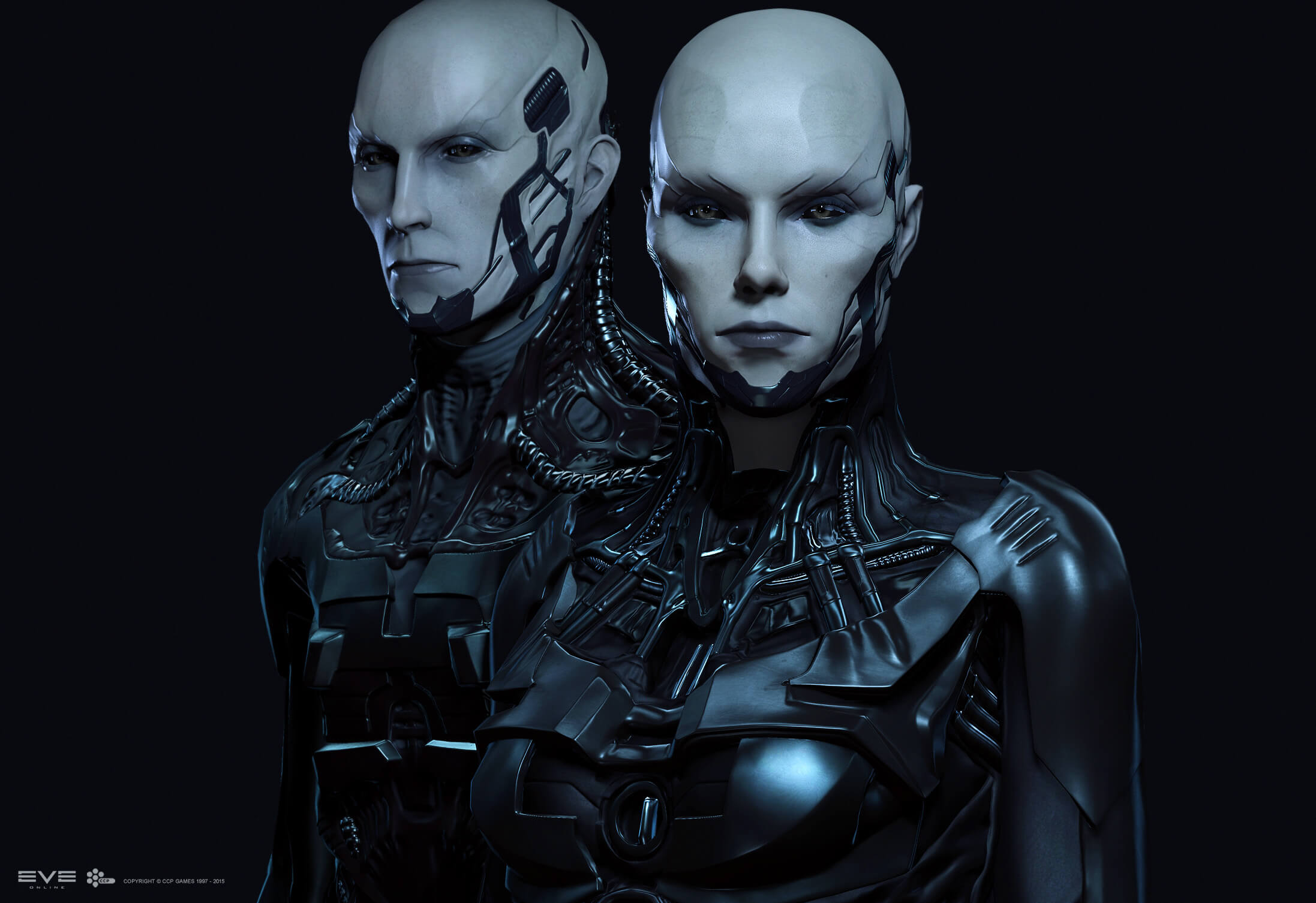
EVE Online is the biggest single shard, free to play MMO of all time. Its universe – shared by hundreds of thousands of players – is set 21,000 years in the future and centres on a distant cluster of over 7,000 star systems known as New Eden. It is the age of the Capsuleer; a revered breed of highly trained spaceship pilot that has achieved immortality through the use of cloning technology. Capsuleers enjoy complete neural harmony with their ships, controlling them from within an armoured capsule at the heart of their vessel.
New Eden, while dominated by the four great Empires of the Amarr, Caldari, Gallente and Minmatar, still contains many deep mysteries. Significant threats to the established civilisations of New Eden, as well as the players who take on the role of Capsuleers, exist in many forms. Massive player alliances and corporations regularly do battle and compete over disputed territory, and pirate factions have always been adept at causing trouble for Empire, citizen, and player alike. Then there are the Triglavian Collective and the Drifters.
The Triglavian Collective, until just recently, existed in an anomalous region of space called Abyssal Deadspace, hidden in an isolation that lasted for millennia. Constant incursions into the newly discovered pockets of Abyssal Deadspace by Capsuleers – as well as others – eventually caused the Triglavians to mount an offensive into New Eden. Their veil of isolation penetrated, the Collective emerged and began a full-scale invasion of known space, taking over star systems and bringing numerous fleets of technologically advanced spacecraft with them to secure fresh territory.
CONCORD, one of several policing forces in New Eden, has been urging Capsuleers to engage the Triglavian fleets and help drive them from occupied systems. Neither CONCORD nor the Empires have actively taken a hand in the fight against the invaders, preferring to let Capsuleers bear the brunt of taking the fight to the enemy. The Triglavian invasion is ongoing, with player efforts to halt their advance still very much underway.
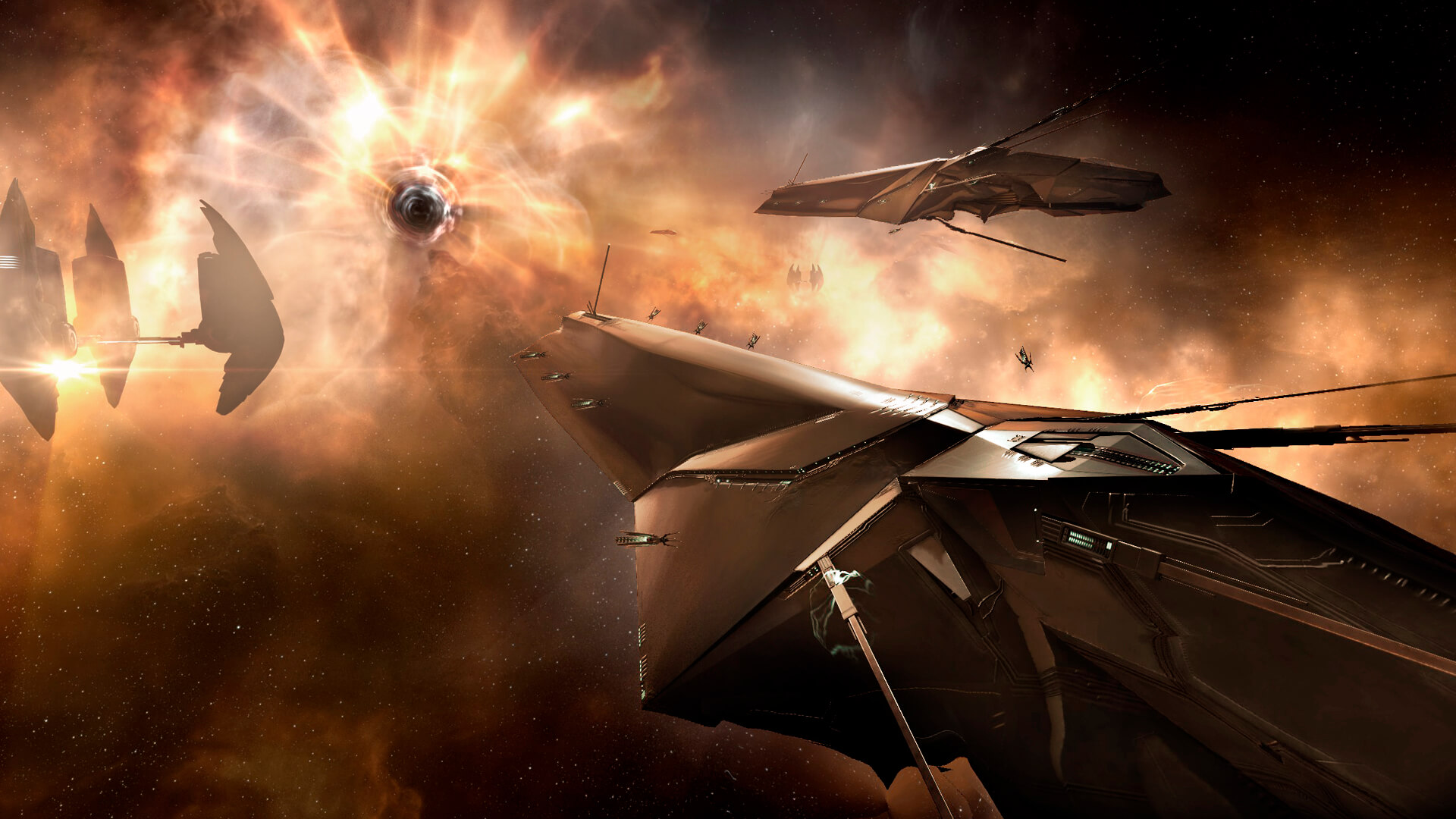
The Drifters are the remnants of another of New Eden’s ancient civilisations called the Jove. An enigmatic and often aggressive faction, the Drifters also possess highly advanced technology and are distinguishable by their sleek and formidable warships. Their appearance on the galactic stage was sudden and seemingly triggered by a huge stellar anomaly nicknamed ‘Caroline’s Star’, originating in Jove space. Subsequently, all the stargates in Jove space started shutting down, with ancient structures and sites appearing across New Eden. Unidentified wormholes began opening at these sites, with Drifter forces arriving to investigate the strange structures. From then on, they’ve been a regular thorn in the sides of Capsuleers and Empires alike.
The Drifters have been responsible for several targeted incursions into known space, with one such attack resulting in the assassination of Amarr Empress Jamyl Sarum I. They have even caused grief for the Triglavian Collective, with plenty of evidence suggesting they had entered Abyssal Deadspace and engaged the Triglavians long before Capsuleers ever made the breakthrough.
While Drifter activity in New Eden has been a constant source of concern over the last few years, recently players were completely unprepared for the sudden, swift and unprovoked attacks by fleets of Drifter battleships on their forces in Nullsec. The aggression with which player ships and structures were seemingly targeted without pattern caused hysteria in the community. Some quarters were thrilled that the element of danger and risk had returned to the lawless Nullsec regions, while others were riled by the fact that huge alliance campaigns had to be paused while defensive forces were redirected to counter the Drifter invasion.
The Drifter assaults, unsurprisingly, had a noticeable impact on player movements in Nullsec regions. The Imperium, a large alliance of player corporations, responded to the Drifter invasion by pulling back from other regions to defend their assets that were under threat of attack. At the time, Imperium forces were invading a specific area of space. In an unprecedented move, both the Imperium and those defending against them agreed to call off hostilities temporarily in order to address the Drifter threat.
The invaders have targeted almost anything they’ve come across in Nullsec territories, including player ships and structures. The Drifters have even been observed attacking and destroying non-player craft and structures in space. Considering the fact that high security space has been invaded by Triglavian forces, the added Drifter threat throughout Nullsec has created an atmosphere of genuine chaos, unpredictability and danger across all of New Eden for players old and new.
EVE players are known for their ability to adapt to changing circumstances, and the Drifter invasion has been no exception. Experienced Capsuleers and their alliances have eventually found methods of defending their structures, repelling the onslaught to the point where they can once again resume their campaigns in other regions of space. While news spreads fast and effective tactics can be adopted by a majority of players, the Drifters’ reputation for unpredictability means that all will have to remain alert for further, unexpected activity.
However, mysterious and technologically advanced adversaries laying waste to Capsuleer vessels and systems has not been all that players have had to deal with recently. CONCORD announced that New Eden’s Fluid Router FTL communications network was under enormous pressure due to the combined impact of Triglavian and Drifter invasions. To ensure sustainable operation of the communications network and guard against the risk of it becoming compromised, reduced bandwidth across its Nullsec routers was enforced.
This created difficulties for the player alliance power blocs, who now had to deal with the developing situation without intelligence gathered from automated ship registrations on local system chat channels in Nullsec. CONCORD stated that should the Drifter and Triglavian attacks continue, which they did, support for the communications network in Nullsec would not continue. As a result, the Nullsec Blackout – as it has been dubbed – has been in place since early in the summer. Player reception to this turn of events has been divided, again with some parties welcoming the added excitement and danger of navigating Nullsec, while others lament the major disruptions to their activities and machinations in the region.
Adding further fuel to the rising tensions in New Eden during this age of chaos, CONCORD have raised market taxes across the cluster to help finance the continuing efforts of Capsuleers defending their territory from the Triglavian Collective and Drifter invasions. This has affected all transactions on the player market and acts as an ongoing reminder of what has been – and continues to be – a turbulent time in New Eden’s recent history.
Players of EVE Online have never had more to keep them occupied or engage their abilities as they do right now in the ‘Chaos Era’. Driving the Triglavian Collective back from their established footholds in New Eden, fighting off the Drifter menace in Nullsec and navigating dangerous regions of space – as well as intra-community relations – during the communications blackout mean that both veteran players and newcomers to EVE have plenty of challenges, varied gameplay and content to get their teeth into. As these situations in EVE develop, it is expected that Triglavian and Drifter activity will continue to influence Capsuleers, the Empires and everything else in New Eden.
Sign up to start playing today for free at eveonline.com and join hundreds of thousands of campaigners in the best MMO on the Internet.