Filmmakers eager to find an audience for their small scale, post-apocalyptic story need to bring something new and distinctive to what’s long since become an overcrowded genre. The team behind Die Alone rise to the challenge to deliver an inventive and thoughtful tale of tragedy and survival which – while it includes some familiar dystopian tropes – feels fresh and original.
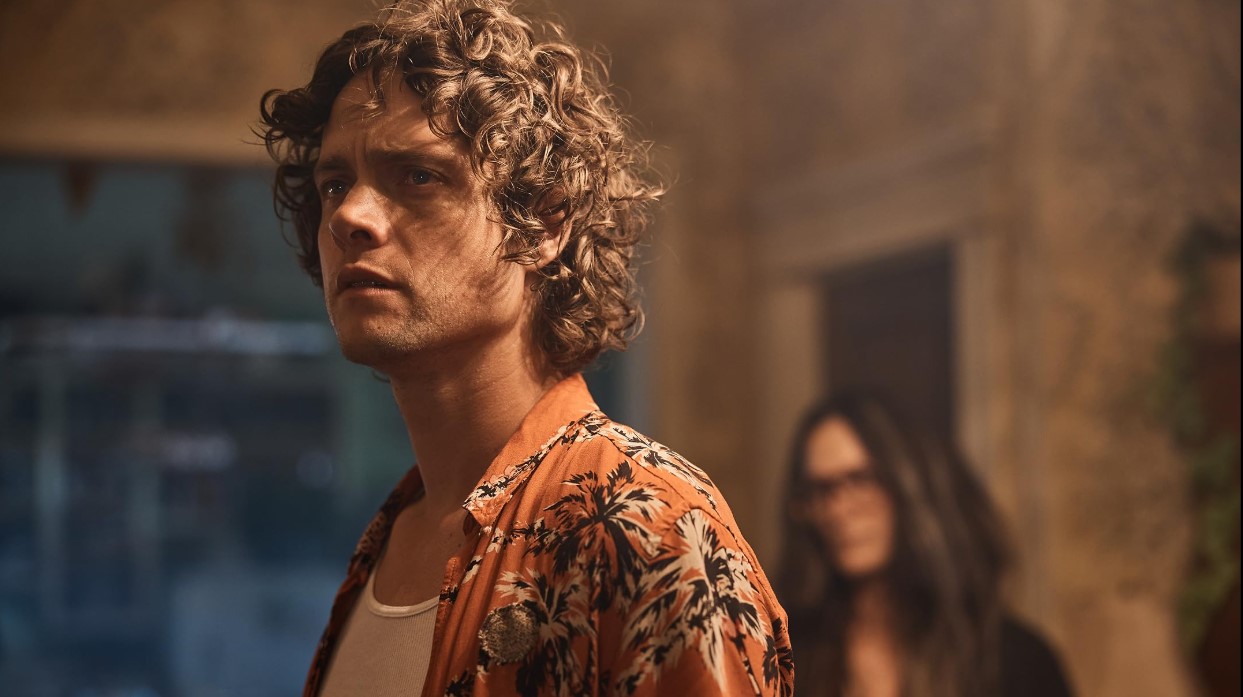
In a world laid waste by a lethal virus, the natural world has turned against the remaining survivors. Victims become an aggressive hybrid of human and plant life, driven to attack the uninfected. Youngsters Ethan and his partner Emma have fled the city to wait out the disaster in their isolated retreat. When a startled Ethan wakes up in their crashed vehicle, Emma is gone, and he’s only saved from raiders by Mae, a solitary, middle-aged woman who takes him to her rural homestead. Ethan is struggling with memory lapses and periods of disassociation, and his efforts to trace Emma take on an increasingly alarming timbre.
While Douglas Smith is great as the distressed and driven Ethan, Carrie Anne-Moss is simply superb as the resolute and guarded Mae. Writer-director Lowell Dean is an auteur with an eye for the twisted and macabre, and Die Alone mixes moments of explosive and bloody violence with periods of reflective restraint. It’s a well-plotted and well-paced affair. But it’s the film’s unnerving atmosphere, its sharp visual aesthetic, and the way in which the central mystery of Emma’s fate is resolved, which impress the most. Although the menace of the hybrid creatures is often peripheral to the main plot, Dean’s team do conjure up some extraordinarily vivid and unsettling designs.

DIE ALONE will be released on DVD and streaming platforms from 10th March