DASHCAM

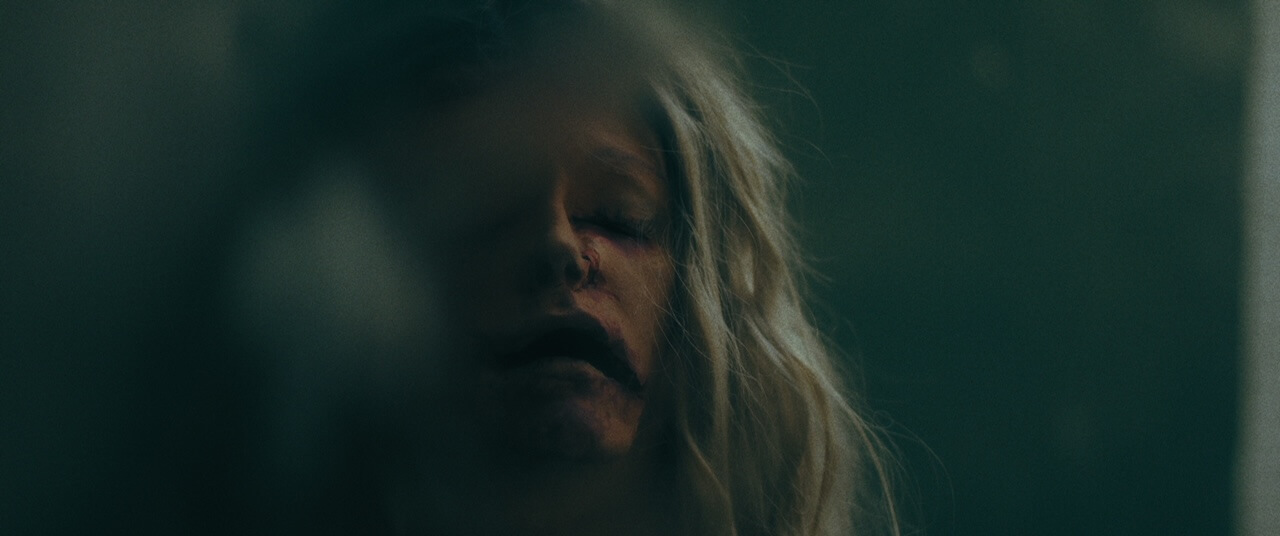
After his phenomenally successful Zoom ‘em-up Host, director Rob Savage returns to the COVID well for this found footage-inspired horror feature, following the adventures of a grating influencer abroad in England. As the star and host of an improvised singing slash driving show (think Carpool Karaoke, except somehow even more vile) Annie Hardy (also Annie Hardy) jets off to Blighty, having tired of COVID restrictions in the States.

Making sure to pack her MAGA baseball cap and livestreaming equipment, Annie wastes little time in pissing off everyone she meets – particularly old friend Stretch (Amar Chadha-Patel) and his girlfriend (Jemma Moore). Stealing Stretch’s car and hijacking his job as a food delivery driver, Annie’s night devolves into chaos when she is tasked with driving a sick old woman across town. Getting peed and pooped on is only the start of it.

Stepping out from behind the Zoom interface to deliver a more traditional found footage experience, this is a chaotic and unpredictable road trip across the streets of England. While the film’s structure and format are more familiar than Host, the film is no less ambitious, featuring a vast variety of shocks and scares. A white-knuckle rollercoaster of crashes, clashes and explosions of violence, it’s the most relentless found-footager since 2007’s [Rec].

Blurring the line between performer and performance is the controversial Annie Hardy, swearing, screeching, screaming, rapping and slapping her way to online infamy. It’s a bold choice, to make an Internet Troll one’s protagonist, and Hardy is never switched off, leaving audiences constantly guessing where Annie’s true beliefs lie. No effort is made to make our Annie more palatable to either her online audiences or this one; every time you think she might show a bit of humanity, it’s undercut with a foul comment or casual cruelty to poor Stretch.

This is a brave, blunt-force charismatic performance from Hardy, but not a pleasant one. Between its nails-down-the-chalkboard protagonist, near-constant jump scares and gross-out trauma, it makes for an exhausting experience. An essential addition to found footage canon, Dashcam will have its haters, but one suspects that’s almost the point.

SCARE US

Not to be confused with Scare Me, the anthology movie about aspiring writers testing their scary stories on each other; Scare Us is an anthology movie about aspiring writers testing their scary stories on each other. As serial killer ‘Cutthroat’ claims his victims on the streets of small town Sugarton, a group of writers meet to share scary stories. As they swap their terrifying tales, it becomes clear that Cutthroat too, has taken an interest.

Scare Us’s real-life audiences, however, may be altogether less invested. As is a kind of tradition (The ABCs of Death; Deathcember), this anthology feature employs guest directors for each of its entries (Carl Jensen IV, Ryan Henry Johnston, Ryan Kjolberg, Charlotte Lilt, Tom J. McCoy and Jordan Pillar), but maintains a consistent tone and aesthetic. Sadly, that aesthetic is a dreary muted look, populated with wooden performances and stilted deliveries.

Still, everyone manages to conjure up a creepy bit of imagery when the time comes, and the segment “Dead Ringer” is, at least, louder and more energetic than the others. Of the five stories, “the Resting” is perhaps the most effective, taking advantage of the gloomy visuals and off-kilter performances to craft something genuinely unsettling and memorable.

It’s film critic cliché to wheel out the ‘mixed bag’ descriptor when it comes to anthology horror movies, but here we are. Scare Us is fitfully effective, but ultimately fails to live up to its own lofty ambitions.

ZERO CONTACT

Zero Contact - film 2022

High-concept techno-thriller Zero Contact is the latest mainstream movie determined to make a virtue out of the necessity of the Covid lockdown. Filmed during the global pandemic restrictions of 2020, the film was put together by a cast and crew based in locations across the globe who only connected with each other online. Recorded in physical isolation, the contribution of each actor was then stitched into the film’s complex narrative in post-production.

The large ensemble of scattered characters are all connected in some way to the legacy of the eccentric entrepreneur Finley Hart (Anthony Hopkins), the head of a major global company before he was ousted in a boardroom coup. With Hart now dead, his most controversial and potentially most dangerous new technology had been abandoned before its release. But five of Hart’s associates are contacted by an artificial intelligence insistent that they work together to restart his mothballed initiative. While the AI is adamant that their efforts will save the world, it’s soon apparent that other hi-tech forces, convinced of impending catastrophe, are equally determined to thwart them.

Given the challenges that the producers faced, the on-screen results are technically impressive and evidence of the filmmakers’ inventive problem-solving skills. The film’s design is strong too, with nifty on-screen visuals blended with the voyeuristic security-camera footage being harvested by an unseen observer. The script delivers some clever twists, and the largely static setting is broken up by some breathless running-whilst-filming phone footage. But it’s difficult to ignore the fact that, for a large part of the running time, many viewers will feel like they’ve joined a particularly intense Zoom call. Hopkins’ involvement certainly lends the project gravitas. Yet Hart’s solitary musings on life, the universe and everything (Hopkins riffing, unscripted) quickly become tiresome.

The film’s Covid-era credentials, and the script’s reflections on the themes of digital identity, online surveillance and the morals of mega-wealthy tech bosses, all chime with today’s cultural zeitgeist. But despite the laudable creative ambition, this is a film as frustrating as it is audacious. The behind-the-scenes snippets that accompany the end credits suggest that a ‘how we made Zero Contact‘ documentary might be a more compelling watch than the movie itself. That said, two sequels are apparently already in the works.

ZERO CONTACT will be available in select theatres, on-demand, and digital on May 27th in the US, and later in the year in the UK

NIGHT CALLER

night caller

Clementine (Susan Priver) works on a psychic chatline, only unlike the usual people on the end of the phone, she has a genuine gift. When she ‘sees’ a caller kill a woman she becomes distraught that she can’t help the victims and obsessed with unmasking the murderer.

Night Caller is an impressive melting pot of several iconic examples of the genre – take a pinch of Maniac, add a soupçon of Psycho, mix in a dollop of The Eyes of Laura Mars, and stir with a hint of Ed Gein (which is even more apt when you realise which character Steve Railsback plays!). It arguably works because of these blatant influences, leaving a homage to the style of film that would have run for a while on 42nd Street.


night caller


Clementine’s father (Robert Miano), practically bedridden following a stroke, is a film-loving character whose walls are adorned with horror posters and is surrounded by Betamax videotapes and DVDs, and is a former cop who has a gift himself. Susan Priver is fabulous as the lead, a part that would have been played by the likes of Lin Shaye. It’s a refreshing change of pace to have the protagonist being an older female, and it works perfectly. The killer’s raspy voice is straight out of a ‘70s cop drama, as is the score, but they add to the fun if you’re in on the reference. If there’s a wink link, it’s Bai Ling as Clementine’s boss, whose hysterics are somewhat over the top.

Night Caller revels in its lurid, grindhouse feel and could certainly gain a cult following with fans of that fare (fortunately writer/director Chad Ferrin shows he has grown with much more class and ability since Easter Bunny, Kill! Kill!, and hasn’t covered the film in fake scratches and grain to imitate the period – the movie does that well enough with the tone and content). The violence and gore (actually quite well-executed) border on Giallo a Venezia levels at times, so mainstream horror fans will also have a field day with the action.


Night Caller is available to stream in the US.


18½ MINUTES

18½ MINUTES

Beginning with a botched break-in at the eponymous Washington hotel in 1971, Watergate went on to become a synonym for the criminal abuse of executive power. The arrest of the burglars triggered an investigation that revealed an illegal conspiracy against his opponents instigated by US President Richard Nixon. Such was Nixon’s paranoia that, as part of the operation, he secretly recorded hundreds of hours of conversations with his aides in the Oval Office. Forced to hand over the relevant tapes, Nixon resigned before he could be impeached. Officials found that a section of one critical recording (potentially the most incriminating) had been wiped – accidentally, it was claimed.

In 18½ Minutes, writer Daniel Moya imagines what could have happened if a junior White House transcription secretary found herself in possession of that damning lost recording. Connie (Willa Fitzgerald) arranges to meet journalist Paul (John Magaro) to discuss the unattributable release of the recording. With Connie unwilling to hand over the tape, the pair agree to check in to a local motel to listen to the evidence. The hunt for a working reel-to-reel tape machine leads them into unwanted encounters with a preposterous group of radical hippies, an eccentric dance-obsessed retired couple, and the motel’s oddball owner.

Director Dan Mirvish, who devised the original story, renders a credible 1970s setting. But the film makes few accommodations for those unfamiliar with the Watergate story. More problematic is that Mirvish tries to meld a political thriller with a larger-than-life comedy: a decision that means that his cast’s performances are completely out of sync tonally. A jarring ending wraps up an unusual but underwhelming fictional flashback.

18½ MINUTES will be released on May 27th in US cinemas, and US VOD on July 5th. It will be released in the UK later in the year.

DOCTOR WHO AM I

doctor who am i

Matthew Jacobs isn’t a name held in particularly high regard in Doctor Who fandom. As the scriptwriter of the ill-fated, dead-on-arrival 1996 transatlantic TV movie starring Paul McGann, he dared to suggest that the Time Lord was “half-human on his mother’s side” and allowed the Doctor his first passionate kiss. Fans’ brows were fevered for months as they struggled to accustom themselves to these fundamental changes to the character they had worshipped for years as a beneficent alien with no interest in all that sloppy lovey-dovey stuff. Although the film was a success in the UK – usefully reminding the BBC that there was still some untapped potential in the character – it sank without trace in the States and the good Doctor lay fallow for a few more years. Matthew Jacobs himself moved on with his life but never made peace with the Doctor or its more vociferous, possessive fans. In this rather charming new film, Matthew’s friend, filmmaker Vanessa Yuille, persuades him to show his face above the parapets and embrace Doctor Who fandom not only at convention events but by visiting some American fans in their own homes…

Doctor Who Am I actually uses its format not just to share Matthew’s own experiences in the belly of the beast but also as a sensitive and considered exploration of how Doctor Who fan culture – in America, at least, where it’s rather less absurdly vitriolic than the UK – can bring people together as they share their love and devotion for a fictional character with a real, unfettered sense of joy and creative freedom. These are people who have found their ‘tribe’; for a while, they are with their own kind, they can share their passions free from the disdain and ridicule of non-believers and they are happy to wear makeshift outlandish costumes and participate in ‘best costume’ competitions at conventions with an unbridled gusto and fearless enthusiasm. There’s no selfish backbiting and #notmydoctor nonsense here (nor, interestingly, any mention of Jodie Whittaker so this may well be a project that’s enjoyed a very lengthy gestation), just an uncritical portrayal of like-minded souls happily sharing their appreciation of an indestructible TV legend.

Matthew Jacobs himself is an interesting presence. He’s not sure if he’ll be welcomed by those who have vilified him for over twenty years, he’s not sure he wants to embrace this alien culture. His own childhood is brought into focus; his mother took her own life when he was very young, and his father (actor Anthony Jacobs who actually appeared in Doctor Who in 1966 – Matthew himself vividly recalls visiting the set) suffered with his own mental health, and there’s a sense that returning to the Doctor Who fold is as much a painful experience as it is cathartic. Occasionally reluctant to participate – at one point he’d clearly rather do anything else than provide a convention commentary on his father’s Doctor Who serial (The Gunfighters) – he eventually, and rather poignantly, realises that his own childhood makes him a part of the American Doctor Who ethos far more than he might have realised.  During his journey back into the world of Doctor Who Jacobs meets up with some old friends – the TV movie’s tireless producer Philip Segal (now a major purveyor of American reality TV), Eighth Doctor Paul McGann, his TV movie companion Daphne Ashbrook and even Eric Roberts, who portrayed the movie’s flamboyant incarnation of the Master, always dressed for the occasion.

Doctor Who Am I is a fascinating sideways look at Doctor Who through the eyes of one of its lesser-celebrated lights. It’s moving, sometimes quite emotional and even a little thought-provoking. Mercifully free of the wild-eyed ravings of many UK fans, it’s a welcome and timelessly reminder that Doctor Who can unite people in very special ways and create bonds and friendships that can last a lifetime and, in the case of Matthew Jacobs, that its fandom can sometimes forgive and forget and embrace even the most outside of outsiders. Genuinely lovely stuff.

Doctor Who Am I makes its world premiere at the Sci-Fi London event (the London International Festival of Science-Fiction and Fantastic Film) at the Stratford Picturehouse on May 21st.

THE INNOCENTS

The Innocents

If you’re after an original and disturbing horror movie, The Innocents is a must-watch.

Eskil Vogt, the director and screenwriter behind the Norwegian film shares that the idea came to him when he watched his children – now 11 and nine – play at the school gates. The children weren’t aware Vogt was looking on, and he noticed how differently they behaved with their friends than at home. Vogt wanted to delve into the secret world of childhood. Now, we’re not saying all children turn into supernatural power-wielding murderers when their parents aren’t looking, but The Innocents certainly takes an interesting view of what kids get up to when adults turn their back…

The story is set in an apartment complex at the height of the Nordic summer. We follow two sisters, Ida and her older sibling Anna, as they befriend other young children in the complex, most notably a young, bullied lad called Ben and their quiet neighbour, Aisha. The children soon realise they have extraordinary abilities: Aisha can listen to people’s thoughts, and Ben can control objects with his mind.

Interestingly, and perhaps most hauntingly, the film explores the children’s perceived innocence in the eyes of their parents, and the lack of it when they’re not looking. Ida often pinches Anna, who is severely autistic, and plays cruel tricks on her, such as putting smashed glass in her shoes. Things take a darker turn when Ben and Ida exhibit animal cruelty (a very necessary spoiler as it’s not for the faint-hearted!), and even bleaker still when the children realise the full extent of their supernatural powers and use them for violence.

The Innocents is in UK cinemas and digital from May 20th.

EVERYTHING EVERYWHERE ALL AT ONCE

Everything Everywhere

Between multiple Spider-Men, an Illuminati of Marvel deep cuts, and imminent Flashpoint Batmen, we are living through the age of the cinematic Multiverse. Independently of the blockbusters, the Daniels (Kwan and Scheinert) deliver a true multiverse of madness in this action sci-fi comedy, starring Michelle Yeoh as multiverse-hopping mom Evelyn.

When an interdimensional menace threatens all of reality, dowdy laundromat owner Evelyn is dragged into the fight of her life (lives) – part The Matrix, part 2001 Jet Li ‘em up The One. Drawing from a multiverse of skills, Evelyn must juggle her failing marriage, an Even More Failing business, daughter drama, and a potentially multiverse-shattering threat. With so much on her hands, what’s a mom to do?

It’s the role of a lifetime for star Michelle Yeoh, who gets to showcase both her impressive acting chops and just-as-impressive martial arts skills. But the action is only a small part of what makes Everything Everywhere All at Once work. Yeoh and the Daniels put every other cinematic universe to shame as Evelyn trips through a series of absurd, demented, and dazzlingly original worlds, both familiar and not. This is Yeoh’s show, but she is well backed up by a stacked cast which includes a loveable Ke Huy Quan, cinematic legend James Hong, and scene-stealing Jamie Lee Curtis.

For all the madcap, almost non-stop action (perhaps too much for some) there’s an emotional throughline which cannot be broken, wringing pathos (and tears) even from a world in which everyone has hotdog fingers. Carrying an essential message for today’s cynical, busted up world, it’s uplifting, occasionally heartbreaking, everything, everywhere, all at once.

EVERYTHING EVERYWHERE ALL AT ONCE is out now in UK cinemas

HELL HATH NO FURY

The latest action film from stuntman-turned-director Jesse V Johnson sees a French woman Marie (Nina Bergman) team up with a ragtag group of American soldiers searching for SS Officer Herr Von Brucker’s (Daniel Bernhardt) Nazi loot at the height of World War II in 1944 in Hell Hath No Fury.

After luring Von Brucker into a resistance trap in order to help the allies effort, Marie is turned on by her fellow countryman and branded a Nazi cohort and is publicly shaven and is left with a swastika on her forehead. In order to escape, she cuts a deal with Major Maitland (Louis Mandylor) and his squad and tells them she knows where a plethora of gold is hidden. However, the deal doesn’t go down smoothly as greed begins to take hold in a three way mind game of ambushes and deceit.

War films are always an interesting story to tell on screen because primarily you normally have to have a hero or group of people that you fully support that usually falls on the side of the allies. However, with Hell Hath No Fury, although Bergman’s brilliant central performance commands the “hero” moniker, even the character of Marie isn’t all that perfect in her motives.

The film is mostly set in one location of a cemetery which allows the tension of this surprising character piece to grow throughout the 94 minute runtime.

Although far from perfect, this independent feature is tight in its choreography during the heated action scenes with great practical effects (blood squibs a plenty) and thanks to a strong central performance manages to get through the moments that would otherwise lack a punch. A solid ensemble cast of characters makes this a decent although flawed character-based action flick.

Hell Hath No Fury is out on demand now.

FIRESTARTER

CERT: 15 / PLATFORMS: CINEMA; PEACOCK / RELEASE DATE: OUT NOW

Stephen King’s influence on horror is undeniable, and you could dedicate a whole book to the adaptations in TV and film of his work. Quality wise, these adaptations occupy a very varied spectrum, for every Carrie, Misery and IT, you get a few more like Dreamcatcher or Cell. Sadly, Keith Thomas’ (The Vigil) new take on King’s 1980 novel ‘Firestarter’ and its previous 1984 film adaptation, feels burnt out.

Young Charlie (Ryan Kiera Armstrong) has the ability to conjure fire but her control of this power is slipping, and when sinister secret forces come calling, desperate to have this power, Charlie’s loving telepathic father Andrew (Zac Efron) and telekinetic mother Victoria (Sydney Lemmon) must use their own powers to save their daughter. But does she need saving? 

Firestarter may not be the worst Stephen King inspired film but nor is it anywhere remotely close to the best, in what is ultimately a disappointing and unmemorable re-adaptation/remake that runs out of steam. Not to mention one that feels a bit out of place on the big screen in 2022. 

Starting off initially well, with violent VHS-like opening credits creating an anarchic starting tone, as well as a game cast (Efron and Armstrong especially deserve a far better horror to work with), things start getting irreparably messy some point after the film pointlessly and graphically fries a cat onscreen. The elements are here but the story never taps into any real depth and the action never turns up the heat, as the script’s logical issues begin to pile up to the point they can no longer be ignored and the terrible ending only leaves a further dissatisfying taste. 

There’s a good film here but this new take on King’s pyrokinetic horror thriller is sadly unable to let it out, resulting in a film that is a rather snuffed out affair. However, its one saving grace really is the superb soundtrack by John Carpenter, Cody Carpenter and Daniel Davies. These guys are really scoring a far more chilling, emotive and powerful film than this one, and their music is every bit as excellent as the collective’s recent work on the infinitely superior recent legacy Halloween films.

Remember the soundtrack, forget the film.