GOTHAM – SEASON 5

Gotham

GOTHAM – SEASON 5 / CERT: 15 / SHOWRUNNER: JOHN STEPHENS / STARRING: BEN McKENZIE, DAVID MAZOUZ, SEAN PERTWEE, ERIN RICHARDS, CAMREN BICONDOVA, MORENA BACCARIN / RELEASE DATE: OUT NOW

Special Features: Villains: Modes of Persuasion / Three featurettes / Unaired scenes

After five seasons, FOX’s Gotham has now finally come to an end. What started off as the story of a young Jim Gordon (McKenzie) looking to clean up the streets of Gotham City, ultimately ended up being so much more – for better or for worse – than fans were originally promised when the series began back in 2014. With the final season now on home release, let’s take a look and see how Gotham’s swansong fared.

Picking up where Season 4 left off, we see a Gotham City that’s essentially cut off from the mainland thanks to the crazed antics of Jeremiah Valeska (Monaghan). Clearly pulling inspiration from the No Man’s Land comic arc of 1999, this isolated Gotham becomes the playground for the city’s villains as a turf war of sorts plays out. In amongst the gangland action, of course, there are familiar nefarious faces such as Penguin (Robin Lord Taylor) and Riddler (Cory Michael Smith), while a new rogue rears his head in the form of Bane (Shane West). As Gotham looks to somehow survive in these gone-to-the-dogs times, it’s left to Bruce Wayne (David Mazouz) and Gordon to fight the good fight and put an end to the spiralling violence and crime that surrounds them.

As far as final seasons go, Gotham’s fifth year moves along at a brisk pace as it delivers a shorter 12-episode season that looks to tie up certain loose ends while similarly serving up questions as to what lies ahead for these characters. While the likes of McKenzie, Mazouz, Camren Bicondova, Sean Pertwee and Donal Logue are all fantastic here, mind, the real stars of the season are Cameron Monaghan and Francesca Root-Dodson. Sure, Root Dodson’s Ecco is for all intents and purposes simply Harley Quinn-lite on the surface, yet the talented actress brings an adorably sinister edge to the character that Harley on her best day would struggle to top.

Of course, while the first 11 episodes of this season focus on the No Man’s Land-esque scenario of a destroyed Gotham that’s been left to eat itself from the inside out, the final episode jumps forwards ten years into the future and to the arrival of a certain suited-up Caped Crusader in Gotham City. Said finale is the money shot that so many Gotham fans have been waiting for, and it’s a blast to see how things line up a decade down the line.

All in all, Season 5 was a great way to close Gotham out, and it was a season that largely hit the right beats and gave a satisfying conclusion for fans who’ve stuck with the show and embraced its alt-world tone and unique characterisations.

Making this home release even more enjoyable, is the fantastic Villains: Made of Persuasion piece that’s included as part of the bonus material. Not just focussing on Gotham, this offering explores the infamous rogues from across a slew of DC TV shows. Likewise, the Gotham: A Modern Mythology featurette is another impressive addition that looks back on Gotham and the world created for the series.

Gotham may not have been for everyone and may have at times deviated from what people know and love from the pages of DC Comics, yet as a five-season piece of television completely in its own bubble, the series was impressive on so many levels – and the series’ fifth and final season followed suit.

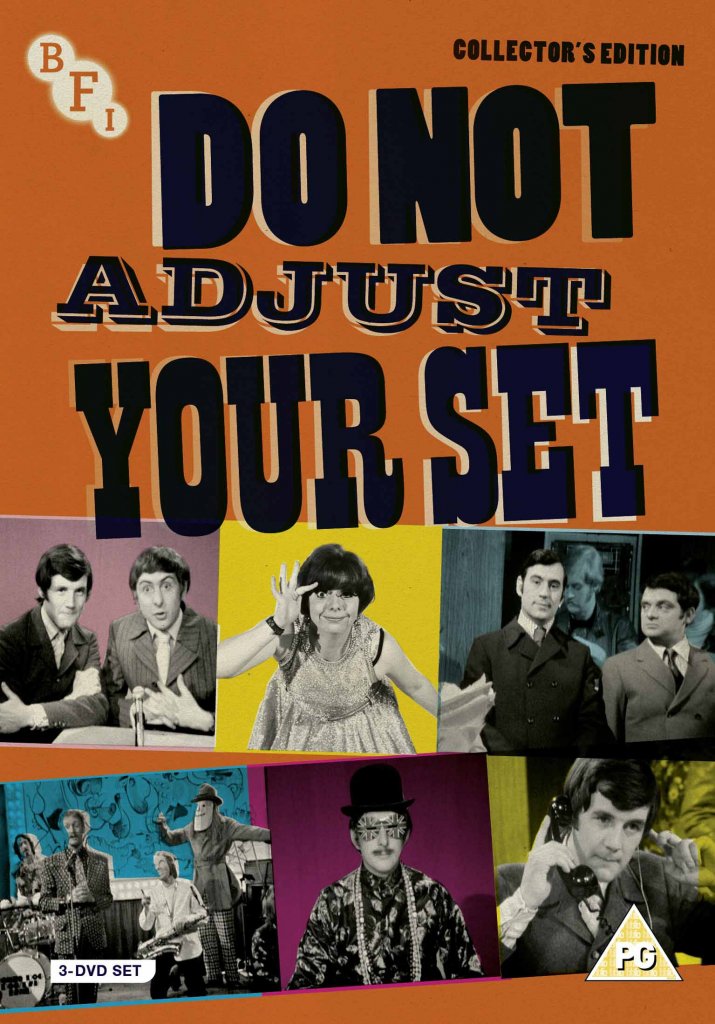
DO NOT ADJUST YOUR SET

do not adjust your set

DVD | STARRING: ERIC IDLE, TERRY JONES, MICHAEL PALIN, DENISE COFFEY, DAVID JASON | RELEASE DATE: OUT NOW

Some historians or biographers might have you believe that a rough timeline of British comedy goes thus: The Goon ShowMonty PythonThe Young Ones – the Rest. The space in between The Goon Show’s finish in 1960 to Monty Python’s Flying Circus’ beginning in 1969 was a fertile one that was hardly the vacuum one might think. Prior to the six members of Monty Python converging together to create a landmark body of work in comedy, its various members wrote and starred in numerous television and radio productions in that time-frame, honing their comic talents. In particular, it was thanks to At Last the 1948 Show and Do Not Adjust Your Set that Monty Python was born, and both of these series have received long overdue and extensive restorations via the BFI, collecting together surviving episodes with an abundance of new features.

Do Not Adjust Your Set was written and performed by Terry Jones, Eric Idle, and Michael Palin, with additional material produced and performed by David Jason and Denise Coffey, and captures the young artists sharpening their respective comic capabilities for what would come. It’s an odd thing to review material like this in hindsight, whether it be TV shows, literature, comics, movies, or music, when we see the influence that earlier material had on later work so clearly. Many contemporary audiences coming to the likes of Do Not Adjust Your Set and At Last the 1948 Show will no doubt define these shows as proto-Python, but does that prevent them from having their own entertainment value? Do Not Adjust Your Set is, essentially, Monty Python’s Flying Circus, but on a smaller scale. Where At Last the 1948 Show centred on politically and socially-tinged tinged satire, Do Not Adjust Your Set prided itself on being far more bonkers.

Conceived as a children’s comedy show, there’s a jangling, rapid-fire looseness to the sketches of the show, its experimental attitudes in trying numerous comedy hats on heightened by another comic powerhouse gaining early exposure thanks to Do Not Adjust Your Set – the Bonzo Dog Doo-Dah Band. Their madcap musical interludes provide a further unpredictable edge to an already enjoyably bizarre landmark in British television comedy. The low-budget aesthetic of the show matches the immediacy with which Terry, Eric, Michael, Denise, and Jason throw themselves into their material.

The more cerebral wordplay of Palin, Idle, and Jones is offset by the physical comedy of Jason, whose tangible talents come most readily apparent in the show’s superhero/spy parody serial Captain Fantastic. Coffey, by comparison to both, is… there. She acts as a welcome female presence, but is seen the least in the sketches. As a chapter of British sketch comedy, Do Not Adjust Your Set is a vital link in the chain, and it’s exceedingly pleasant to have this lavish, detailed boxset that aims to paint as full a picture of the series as possible.

The boxset itself contains all the surviving episodes of the show, from both the Rediffusion and the Thames series, plus a wealth of newly recorded interviews with Palin, Tim Brooke-Taylor, John Cleese, and Humphrey Barclay offering their perspectives of the series. The 60-minute Bonzos on the Box documentary will no doubt delight fans of the Bonzo Dog Doo-Dah Band, while other bonus material ranges from digital copies of original scripts to audio clips of lost episodes. It’s hugely welcoming to have this exhaustive compilation of material for fans to enjoy, and to have a key era in British comedy cemented for future generations.

CLICK PIC FOR WHERE TO BUY

A SCORE TO SETTLE

A SCORE TO SETTLE / CERT: 15 / DIRECTOR: SHAWN KU / SCREENPLAY: JOHN NEWMAN / STARRING: NICHOLAS CAGE, BENJAMIN BRATT, NOAH LE GROS / RELEASE DATE: 30TH SEPTEMBER

It’s that time again for us to delve into yet another mediocre direct-to-DVD Nicholas Cage movie, an event which is as common as Adam Sandler making bad films or Marvel releasing two or three movies every single year. You might be getting tired of Cage slumming it but, as the man himself has said, he’s a “working actor.” He doesn’t want to stand by until an actual good project eventually comes along, so he opts to do many direct-to-DVD shlockfests as possible in order to keep himself busy and stay out of trouble, while also indulging on the paychecks he gets.

That’s definitely evident in A Score to Settle, where all the familiar tropes come into play including family troubles, a messed-up past, gritty environments, expected violence and Cage ranging from emotionless to full-on OTT. Perhaps there might be some enjoyment depending on how you view these films but, just like all the other films that have come before this, this particular slice of Cage mayhem feels incredibly lifeless with everything from the acting to the filmmaking feeling like it’s running on autopilot. Even the story, which revolves around Cage trying to reconnect with his son when he’s released from prison as well as seeking revenge against some crims that have wronged him in the past, feels too cookie cutter in the way the plot plays out and how the characters act. They attempt to pull off a twist in the last third of the film, but by the time it happens you’ll have long since stopped caring.

Really, it’s no surprise to learn that A Score to Settle is just another misfire in the long catalogue of direct-to-DVD misfires in Cage’s résumé. If you are a die-hard aficionado then there might be some enjoyment value for you, but if you’re looking for a good quality movie viewing experience then it’s best to skip this one entirely. There’s a plot point of Cage’s character suffering from a severe fatal case of insomnia, but this movie will probably send you to sleep instead of keeping you awake.

A CONNECTICUT YANKEE IN KING ARTHUR’S COURT

A CONNECTICUT YANKEE IN KING ARTHUR’S COURT / CERT: NA / DIRECTOR: TAY GARNETT / SCREENPLAY: EDMUND BELOIN / STARRING: BING CROSBY, RHONDA FLEMING, SIR CEDRICK HARDWICK, WILLIAM BENDIX, MERVYN VYE, VIRGINIA FIELD / RELEASE DATE: OUT NOW (AUS)

Legendary crooner Bing Crosby takes the lead role of ‘Connecticut Yankee’ Hank Martin who is inadvertently knocked unconscious only to awake and find himself somehow transported back to 16th Century Camelot in this lively, colourful and still-engaging 1949 musical version of Mark Twain’s classic 1899 novel.

Bright, breezy and vibrant, this handsome production tells the story of a likeable, laidback mechanic Hank Martin (renamed from the Morgan of Twain’s novel) who receives a blow to the head and is somehow thrown back to olde worlde England. Don’t expect any exploration of time paradox or timey-wimey nonsense here (even the implications of the grandfather paradox don’t get a look in!) – this is pure, unassuming and unpretentious family fantasy.

Hank accepts his new situation with remarkable alacrity and a notable lack of consternation, setting about convincing the court at Camelot, with the help of his 20th century wiles and technology, that he is, in fact, a powerful and formidable wizard. Inevitably – this is a romantic fantasy, of course – Hank takes a shine to the incandescent Alisandre la Carteloise (Fleming) but incurs the hatred of faux wizard Merlin (Vye) and the scheming Morgan le Fay (Field). Hank tries to persuade the ageing, sniffly King Arthur (Hardwicke, who also plays equally-sniffly 20th century castle owner Lord Pendragon) to tour his kingdom so he can witness first-hand the wretched conditions endured by his subjects. But, of course, the wily Merlin and Morgan have their own plan to usurp the throne from the ailing King…

Largely eschewing the satire and allegory of Twain’s original novel, A Connecticut Yankee in King Arthur’s Court is a wonderfully creaky cinematic period piece, an ambitious if lightweight production powered by Crosby’s effortless easygoing charm. The film’s 16th century is a shameless Hollywood affectation of broad slapstick, extremely mild peril and a few broad Musical Hall-era performances. The film is sold as a musical but the songs aren’t exactly earworms, with only “Busy Doing Nothing” standing the test of time despite a rather lacklustre staging which belies its jauntiness.

Poor Hank is flung back to the 20th century when he’s again knocked out as he tries to put a stop to Merlin and le Fay’s schemes and is bereft at losing the love of his life. But, of course, there’s a happy ending when Lord Pendragon comes to the rescue and points him in the direction of his niece who bears a remarkable – if unlikely – resemblance to Hank’s historical hottie. Fun and frothy but ultimately slightly forgettable, this new Region 4 DVD (a UK release is still available in a Crosby boxset) is worth tracking down if you’ve a hankering for Hollywood’s golden days of uplifting, lavish and charmingly-naive musical fantasies.

THE CHILL FACTOR

THE CHILL FACTOR / CERT: 15 / DIRECTOR: CHRISTOPHER WEBSTER / SCREENPLAY: JULIAN WEAVER / STARRING: DAWN LAURIE, AARON KJENAAS, CONNIE SNYDER, DAVID FIELDS, EVE MONTGOMERY / RELEASE DATE: OUT NOW

Exhumed from utter obscurity (the film received a perfunctory VHS release, blandly retitled Demon Possessed) and presented in a typically lovingly-restored and well-supported Blu-ray edition by Arrow, The Chill Factor is an odd, curious, lumpen supernatural slasher torpedoed by iffy acting (who are these people?), shonky production and a tone that veers and zigzags as much as the snowmobiles in the well-staged chase sequence towards the end of the movie’s mercifully brief 80-odd minute runtime.

A motley group of young couples are enjoying a snowmobiling trip, but an ill-advised race between the group’s two Alpha Males turns into a nightmare when one of the oafs is thrown from his machine and knocked unconscious. In one of many “Why are you doing this exactly?” moments that pepper the film, the rest of the group decide to take refuge in a nearby remote cabin which, they discover, is filled with arcane religious artefacts. Despite the threat of a snowstorm, one of their number decides to travel to get help even as the injured Tom wakes up, dazed, disorientated and seriously injured. Naturally enough, the rest of the group decide to fool around with a ouija board with inevitable consequences; they awaken an evil, possessive spirit which stalked and terrorised the cabin years earlier when it became a hastily-abandoned Christian camp.

The Chill Factor is all over the place, aiming for as many horror movie targets as it can and, more often than not, completely missing the mark. An intriguing introduction toys clumsily with issues of racism and macho aggression and there are some peculiar hints at an incestuous relationship between two of the characters which never amount to anything at all as the film becomes engrossed in its half-baked supernatural trappings. The séance awakens a spirit, a robed, creepy-looking shadowy figure who embarks on an irritatingly anodyne killing spree (the camera continually turns way from the gore and guts we might have paid to see – although one sequence involving an icicle and an eyeball does the trick) before reanimating the dead and turning them into crazed – if rather aimless – zombies. The film’s structure is underpinned by an awkward narration from the point of view of one of the characters who survived the ordeal, but the voiceover is confusing and unconvincing and appears to be an afterthought in an attempt to make sense of muddy, shambolic storytelling.

Filmed in 1989 and only seeing the light of day, however briefly, in 1993, The Chill Factor is eminently missable, memorable only for its wintry Wisconsin landscape and a few adrenalised, nicely-filmed snowmobile sequences which give the movie a sense of scale that the dimly-lit interiors utterly squander. Cold comfort, then, for anyone who takes a punt on this frosty farrago sight unseen. The Chill Factor is, largely, a load of snow balls.

Special features: Commentary, make-up artist interview, production manager interview, stunt co-ordinator interview, stills gallery, booklet

DRIVE-IN DELIRIUM: DEAD BY DAWN + WITH A VENGEANCE

delirium dead

DRIVE-IN DELIRIUM: DEAD BY DAWN + WITH A VENGEANCE / RELEASE DATE: OUT NOW

Trailer compilations are a strange beast. These two releases are the latest from Australian label Umbrella and represent a fine collection of both rare and common titles but offer nothing less than unwholesome entertainment.

Dead by Dawn, as you may expect from the title is focused on horror, fantasy, and what is subtly dubbed ‘T&A’ titles. Split into two sections, The Final Chapter and A New Beginning, the first is very much weighted to more ‘old school’ titles. It begins, for example, with 1955’s It Came from Beneath the Sea and includes several Hammer movies and giallo entries. It’s definitely fun seeing the different approach to selling films through the ages, and it’s always remarkable how many spoilers there are in there!

The second section has a more modern slant, with psycho thrillers and saucy titillation being the order of the day. It’s odd to have the likes of The Princess Bride and Bill and Ted’s Excellent Adventure included, particularly after movies like Candy (1968), and Immoral Tales (1983). Diversity aside, it’s a brilliant collection of trailers – and they’re all in HD, too.

Similarly, …With a Vengeance follows the same two-part format and also has a wildly varied selection. Edged more towards action and cop films, it manages to include some great forgotten fantasy films that were perhaps a little too tame for the other collection. Titles like The People that Time Forgot and Terminal Island rub shoulders with The Good, the Bad, and The Ugly and Shaft.

Each disc comes with a bonus selection of standard definition ‘VHS’ quality trailers too, and even despite the reduced quality, these are a fun watch. At over six hours per disc, you’re certainly not short of things to see. This is the sort of thing you can pop on in the background at a geeky party and your guests will end up being mesmerised. Be warned, though, you may end up with a shopping list of ‘must-see’ titles once you’ve gone through the compilations.

WHO AM I?

WHO AM I? / CERT: PG (AUS) / DIRECTOR: BENNY CHAN, JACKIE CHAN / SCREENPLAY: JACKIE CHAN, SUSAN CHAN / STARRING: JACKIE CHAN, MICHELLE FERRE, MIRAI YAMAMOTO / RELEASE DATE: OUT NOW (AUS)

1998’s Who am I? holds an interesting place in Jackie Chan’s filmography. It ends a trilogy of international films which he made before finally dangling from the Hollywood sign itself in Rush Hour, to signal that he had finally arrived in America at the age of 44. Like First Strike and Mr Nice Guy before it, Who Am I? is shot in English, in various exotic non-Asian locations and features questionable acting and plots that don’t always make sense. Of course, we are really here for the action and, as always, Chan delivers a varied assault on the senses that is hard to argue with.

Chan plays a CIA operative who, along with a hilariously varied international team, is tasked with kidnapping a group of scientists working on a powerful energy source in the South African jungle. However, the team are double crossed and, in the struggle, Jackie supposedly falls to his death, only to be rescued by a tribe who call him Who am I, after he discovers he has amnesia. Who Am I must find a way back to civilisation and take down the corrupt CIA agent who left him for dead in the first place.

From South Africa to Rotterdam, we get some lovely pieces of parkour, a grand car chase, some fun with clogs and finally an obligatory big stunt as Jackie slides down the front of a conveniently-designed building that he was just having a tussle on. This is probably the final Chan film to feature all the classic elements that had become his trademark over the years, so it has to be applauded for that, as does Chan who once again puts his body on the line for our entertainment.

You just have to forgive the plot, as Who Am I never finds out who he is, even though surely the CIA agent sent to help him could have easily done the research herself instead of delivering the throwaway line at the end of the film; “We are sending through the information on your identity.” It is not helped by the US version of the movie, which is all we get on a very lazy Blu-ray transfer, with the only extra being a Theatrical Trailer. The Hong Kong version contains a few extra scenes featuring Who Am I learning the tribe’s language before becoming a fully-fledged member, and it also only shows that Jackie and his men were double crossed in a flashback later on, leaving it as a surprising reveal.

Despite this, the film’s strength is in its ending, with Who Am I facing a Chinese boxer and a Dutch super kicker in a fight that contains so many elements and is so well choreographed that it is truly unique. The techniques come so thick and fast, with minimal cutting, you can forgive some obvious doubling for the villains. As the credits roll, we’re treated to Jackie’s obligatory out-takes and are reminded that we have had a lot of fun. This may not be Chan’s best, but it’s the last time he delivered such variety in one movie.

HIGH LIFE

HIGH LIFE / CERT: 18 / DIRECTOR: CLAIRE DENIS / SCREENPLAY: CLAIRE DENIS, JEAN-POL FARGEAU, GEOFF COX / STARRING: ROBERT PATTINSON, JULIETTE BINOCHE, MIA GOTH, JESSIE ROTH / RELEASE DATE: OUT NOW

Set on a spaceship in the far reaches of the universe, a single father and his young daughter are the last remaining survivors of a scientific experiment turned suicide mission in Claire Denis’ visually striking yet narratively muddled English Language debut High Life.

From the outside, this film looks like a deep character-driven narrative that taps into human nature and the will to adapt and survive – and on most accounts it successfully accomplishes that, but in others it does not as it transforms into a story that is full of unlikeable characters and possesses some truly difficult to watch material.

The story begins with Monte (played by the ever-superb Robert Pattinson) who is having to jettison a corpse of a blonde woman into space before returning to care for his infant child, all whilst sustaining the onboard garden for food and sending reports back down to earth. As the narrative progresses, we discover that the members of the crew on the ship are all criminals who have been sent to space to live out their days and take part in an experiment to see if they can reproduce whilst millions of lightyears away from home – this is explained in one of the biggest throwaway scenes of the year with a reporter interviewing a man on a train.

But soon after the film devolves into a brutal and uncomfortable array of scenes involving rape and artificial insemination by the crazy doctor Dib (a zany performance by Juliette Binoche) on board as the crew members begin to lose their minds. Essentially the film feels like two distinctly different stories at opposite ends of the spectrum.

The film only excels in the scenes between the flashbacks to the savagery when Monte is left to grow as a character as he is forced into fatherhood and as a member of the audience, one would have much rather seen more of that grounded and real interaction than the twisted drug-fuelled erotica that was placed before us – however, the cinematography of Yorick Le Sauk has to be commended as even though these scenes are hard to view, they are shot in an interesting way.

That being said, High Life does invoke a variety of emotions that makes it stand out from its peers, but goes too far in the repulsive direction that will alienate viewers and is a muddled narrative when not in the strong screen presence of star Robert Pattinson who continues to break out of the glittery mould that he has was once trapped in.

SPECIAL FEATURES

The special features contained on the DVD release of High Life are a selection of interviews with Director Claire Denis on her focus to filmmaking and the making of her film – an interesting watch for budding filmmakers.

BFI MASTERCLASS WITH CLAIRE DENIS [48:58] – An full-length video of “An Audience with Claire Denis” that took place at the BFI in London.

Q&A WITH CLAIRE DENIS & MIA GOTH [19:23] – A Q&A with Director Claire Denis and Actor Mia Goth after a screen of High Life at the BFI in London.

TRILOGY OF LIFE

TRILOGY OF LIFE / CERT: 18 / DIRECTOR & SCREENPLAY: PIER PAOLO PASOLINI / STARRING: FRANCO CITTI, HUGH GRIFFITH, NINETTO DAVOLI / RELEASE DATE: 9TH SEPTEMBER

The Decameron, The Canterbury Tales and Arabian Nights – the three films that compose Pier Paolo Pasolini’s infectiously enjoyable Trilogy of Life – are arguably the best movies the Italian director ever made. They’re infinitely more fun than the notorious and still uncomfortable-to-watch Salo and, beyond the anarchic genius that was Britain’s own marvellous Ken Russell, it’s hard to think of any other 1970’s auteur who would dare to take three of literature’s best-loved classics and turn them into something that frequently resembles a handsomely-shot Confessions of a… movie (an association that’s only made stronger when Confessions bad boy Robin Askwith pops up (and out) during The Canterbury Tales, fiercely spouting Chaucer while peeing with spectacular gusto on a barn full of peasants).

Yes, that’s right. The Trilogy of Life might be all gussied up to look like the kind of cinema only beard-stroking pseudo-intellectuals could sit through without complaining their bums hurt, but this is rustic arthouse sex comedy goodness for the masses, and even those who are allergic to subtitles and soft-focus codpieces would be well advised to pull out the pole and give these films a chance.

That’s not to say all the films are equally as successful. The Decameron skips happily through themes of sex and death, horny nuns and swaggering braggadocios falling into toilets but it’s more of a hit-and-miss affair than the films that come after it, while The Canterbury Tales quickly becomes a joyous riot of ribald madness involving lustful merchants, lustful students, lustful friars, and Bosch-like demons farting dodgy Holy men across the rocky landscape of Hell. It’s a romp (literally) and anyone who ever wondered if the fourth Doctor was overcompensating for something with his famously long scarf will have all their questions answered during “The Wife of Bath” episode.

But Pasolini definitely saved the best for last. Arabian Nights is more thoughtful and less comic than the films that precede it, as well as being the most narratively successful. With its wraparound story of a lovesick young man searching for a precocious kidnapped slave girl and episodes that include a demon who turns a king’s son into a monkey and a man who doesn’t understand the value of love until its far too late and something quite squirmy has happened to his privates, this is Pasolini musing upon sex and death in a much more mature way than in the previous entries. It’s also a fantastic example of Pasolini as documentarian, especially during the later scenes that were shot mainly in Nepal using local people as extras.

The BFI have given Trilogy of Life a fine treatment, although the pictures of all three films are showing their age and have the inherent visual softness of many of that era’s movies. Still, beyond a full-on 4K restoration it’s unlikely the trilogy will ever look or sound any better. The discs include both Italian and English versions of the films, too. Disappointingly, they really dropped the ball in the special features department. There are only four extras spread across the three discs, the best of which are deleted scenes from Arabian Nights. Considering how much could be said about this trilogy, it’s a genuinely missed opportunity.

THE SHADOW

THE SHADOW / CERT: PG (AUS) / DIRECTOR: RUSSELL MULCAHY / SCREENPLAY: WALTER B. GIBSON, DAVID KOEPP / STARRING: ALEC BALDWIN, JOHN LONE, PENELOPE ANN MILLER / RELEASE DATE: OUT NOW (AUS)

Many will know The Shadow as one of the original “pulp fiction” characters of the 1930s. In 1994, an adaptation of The Shadow was released, starring Alec Baldwin, Penelope Ann Miller, Ian McKellen and Tim Curry. It was neither critically nor commercially successful but, over the last twenty-five years, it has achieved cult status amongst fans and has now been released on Blu-ray.

The Shadow starts off in Tibet where opium trader Lamont Cranston (Baldwin) is reformed by the mysterious Tulku and given the ability to cloud, manipulate and read the minds of others. He returns to New York City to fight crime as The Shadow and to live the life of a millionaire playboy, which is initially almost uncovered by Margo Lane (Penelope Ann Miller) who, it transpires, has telepathic skills like Cranston. Meanwhile, Shiwan Kahn (John Lone), the last descendent of Genghis Kahn, secretly arrives in New York and begins his plot for world domination, kidnapping research scientist Dr. Reinhardt Lane (Ian McKellen) to begin development of what will become an “atomic bomb”…

If you’re expecting profound storytelling with the sort of thought-provoking dialogue and brooding angst that comes with modern comic book adaptations, The Shadow will not be for you. However, if you’re wanting pure cheesy escapism – a film that is incredibly entertaining with some (unintentional) tongue in cheek moments – then this is definitely for you. Alec Baldwin suits the dual role of The Shadow (hence why rumours of him being offered Batman at the time were abound) and the supporting cast is excellent, with Ian McKellan as the humble victim scientist and Tim Curry playing the villainous stooge Farley Claymore with completely lunacy (the best scene of the entire film sees Farley unloading a machine gun into thin air as he is stalked by The Shadow). John Lone and Penelope Ann Miller also do a good job in what are very one-dimensional roles.

Overall, The Shadow is enormous fun, if you’re prepared to just let go.