FRIEND OF THE FAMILY

Friend of the Family Dean Koontz novel

Dean Koontz returns with a masterful blend of suspense and thrill in his latest novel The Friend of the Family. It follows Alida, the star attraction in a travelling carnival’s freak show in Depression-era America, as she breaks away from the gaslights and backstage dramas of speakeasies and carnival tents to find a family with whom she can retreat to safety and familiarity.

A stately, intentional progression through the historical backdrop showcases deep research of the era; these carnivals are strikingly three-dimensional as the freak show cast cower before their owner Captain Farnham. As soon as the novel opens, Koontz reveals the tender, well-read voice of teenage Alida, who is profoundly deformed and exploited by Farnham for money. Pushed onstage at seedy illegal bars and tormented backstage as they travel the dusty motel circuit, Alida at once becomes the shining antithesis of the mundane evils that lurk in places frequented by the immoral and the wealthy.

Koontz’s historical voice is well-developed and immersive, from the thuggish threats of Farnham and his lackeys to the well-heeled bantering of Alida’s saviours Franklin and Loretta, a young couple who have made their fortune in the movie business. Alida is moved to the glitzy Bramley Hall and installed as a sister-cum-mentor to their three younger children, taken to grand meals, movie premieres, and social gatherings with famous actors and singers.

Koontz creates the opulent setting of safety and enjoyment, and then sets a murky undercurrent burning beneath it as Farnham tries to find Alida, and as small mundane mysteries begin to cloud the days of the children. As Alida grows closer to her new family and struggles with her disabilities in these new surroundings, Koontz creates a layered narrative; all seems well in the cavernous corridors of Bramley Hall and in the cosy tightening of relationships, but a deep thrill begins to echo as Alida finds strange notes hidden in private rooms, poisoned pets, strange beliefs. Evidently, not everyone can be trusted – but who?

Throughout the novel, Koontz subtly interrogates the prevalent mindsets of the era, calling into question racial bias, unconscious ableism, and the effect on families and individuals of the dogged capitalistic desire for growth. The novel never seems preachy or contrived; it becomes a lived experience of these people themselves, three-dimensional and believable entities inhabiting a world where some deep darkness threatens at even the most familial and familiar levels. The messages echo across the years.

Alida remains a relatable and heart-rending figure; her rising fortunes are genuinely enjoyable to witness, her danger is a heart-pounding concern. The subtle magical realism that centres around her as she slowly comes to realise she possesses extra-human powers is a delicious addition to the complexities of the narrative – Alida’s power in a cruel world seeking to pit us against each other comes from the inner childlike joy of existence, from the bravery to connect when it seems everything is at the mercy of corruption. Her suffering early in the novel does not harden her against experiencing the most base and pure experiences of being human. Koontz asks what it means to be good, if it is even possible to be good in this kind of world and then, through Alida, suggests a tentative but empowering ‘yes’!

The Friend of The Family becomes a discussion of powers – semi-magical powers, the power of connection, the power of a social elite intent on separation and destruction – and it implores us to be better. As Alida’s siblings reach adulthood and fulfil their callings, it suggests that there is a place somewhere for everyone, even if that purpose is merely to remind and encourage a greater, more connected and empowered existence. Koontz’s tear-jerking finale follows an action-packed climax of gunfighting, buried plots coming to fruition, and old threats revealing themselves beneath the glitzy lights of Bramley Hall. The powerfully and tightly plotted narrative comes to an end as naturally as the years have passed and made its characters into what they truly are.

Despite the extra-earthly powers and at-times cartoonish villains, Koontz’s core message is simple and timeless. Everything can be overcome if we open ourselves to others, if we focus on what connects rather than what divides, if we are mindful and aware of our own prejudices and the influence these can have on how we behave. Through his masterful Alida, he asserts that we must never forget what we truly are inside, and what goodness can come from remembering.

THE FRIEND OF THE FAMILY is released 20th January 2026 from all good bookshops.

GLADIATOR II: THE ART AND MAKING OF THE RIDLEY SCOTT FILM

The latest in author John Walsh’s ‘Making of’ series of books looks at Ridley Scott’s long-awaited sequel and is a lavish treasure trove of images and info.

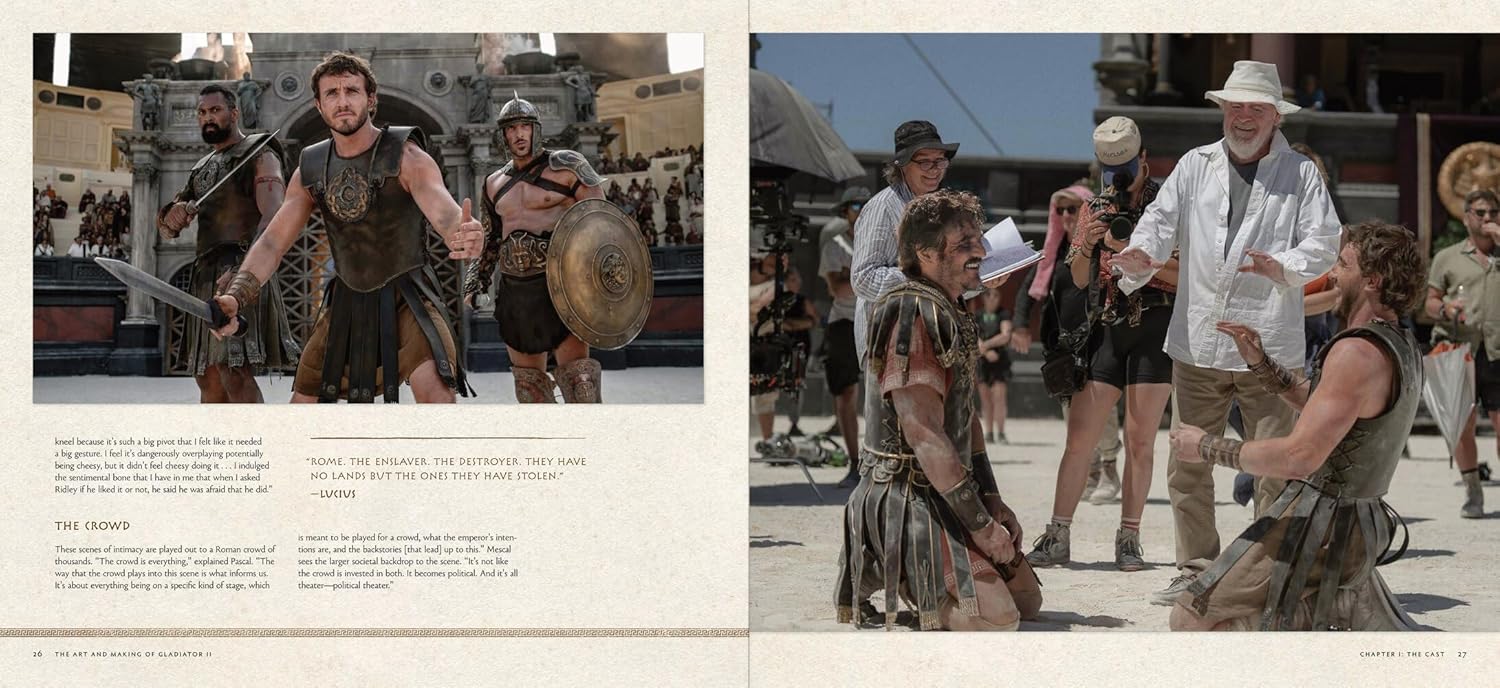
Taking in every aspect of the movie’s conception and creation, the book opens with a look at the cast. Rather than a deep dive into each actor’s resume, we have them talk about the character they are playing, various aspects of the production, and their motivations.

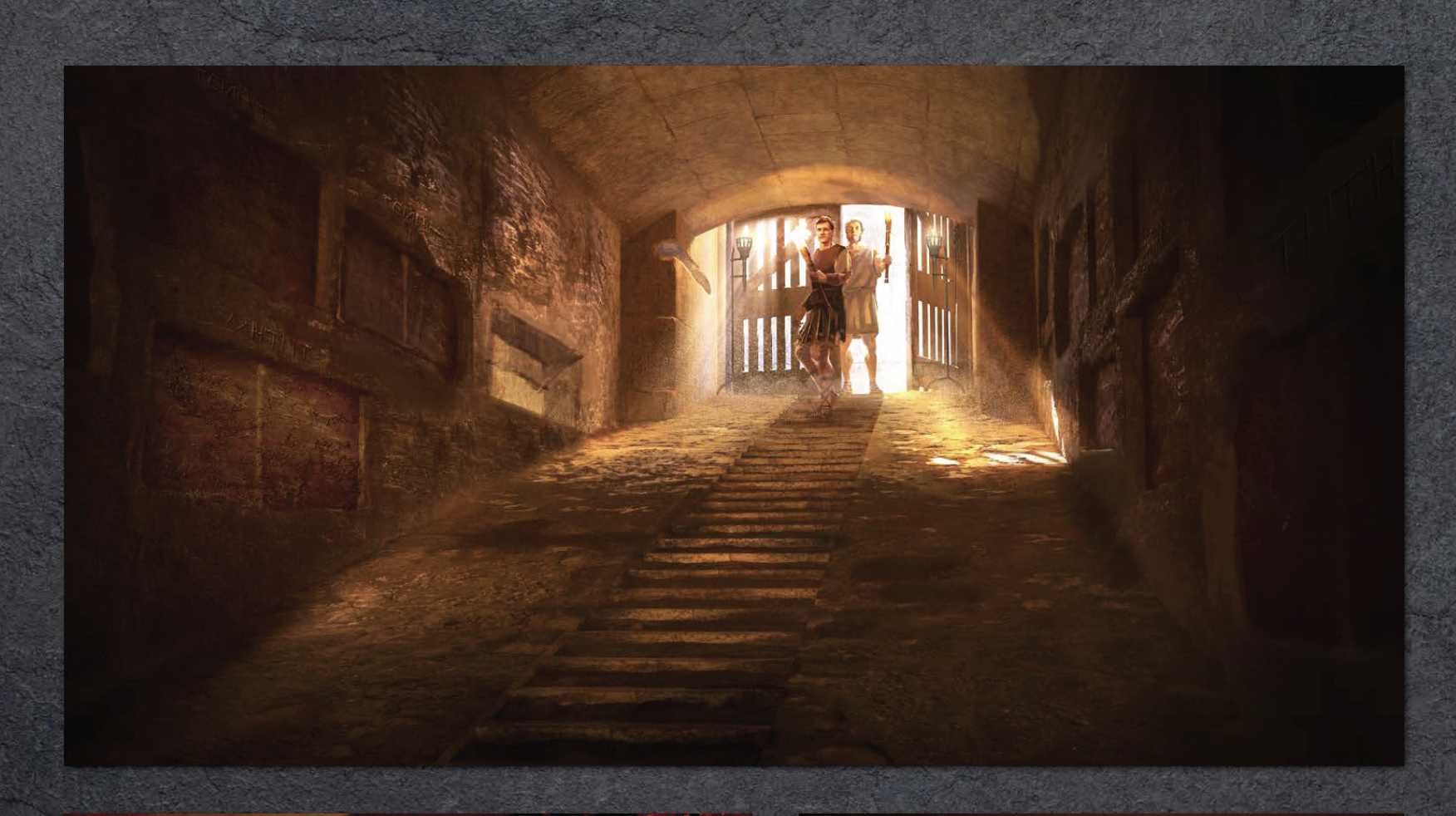
The chapter on the film’s design is where the book shines. As well as some stunning photos and illustrations, there are quotes from the people who worked behind the scenes and details about the props and grand sets. Even if you weren’t a fan of the film, the insight into the technical aspects and filmmaking expertise is fascinating. Every image is reproduced perfectly, allowing the reader to really take in every detail.

Walsh covers every aspect of the film succinctly, often letting the images do the talking. The input from the creatives adds first-hand anecdotes that provide invaluable insight into the thought process behind the scenes.

Fans of epic cinema will get a lot out of the book, and Gladiator fans will relish every page.


GLADIATOR II: THE ART AND MAKING OF THE RIDLEY SCOTT FILM is out now.

WHO ME!

Who Me!

As an imaginative child of the 1960s, David J Howe, like so many of his generation, became entranced by the adventures in space and time of a certain ramshackle traveller known as the Doctor, whose weekly Saturday teatime exploits became part of the fabric of family life in the UK. But unlike many (if not most) of his generation, David went on to turn his obsession with Doctor Who into something rather more.

A ferocious and determined collector of Who-related merchandise and memorabilia (which would allow to him to open his own museum dedicated to the display of his collection in later years), David found himself drifting into the orbit of a nascent Doctor Who fandom in the 1970s when like-minded afficionados were banding together to share their appreciation of the series and to quietly investigate its history and chronicle the making of the show by talking to the people who made it happen. In subsequent years, David found himself involved in the writing of a dizzying array of officially-licensed books on the series – the hardback Decades volumes he co-authored with Stephen James Walker and Mark Stammers still have pride of place on many fans’ shelves – and his own Telos publishing imprint is pretty much the byword for quality niche genre publishing.

Who Me! is David’s story… but it’s also the story of Doctor Who fandom as it emerged blinking from the monochrome 1960s into the Technicolor ’70s. Many readers of this chatty, likeable memoir will be reminded of those long-lost days of writing and collating enthusiastic and cheaply produced fanzines using the primitive printing technology available to teenagers at the time and forming friendships and associations based on a shared passion that would last a lifetime.

David’s story is full of landmark moments in his lifelong journey with the Doctor; taking snapshots from TV transmissions at a time when official BBC photographs were hard to get hold of, making his own Dalek with his Dad, attending studio recording sessions at BBC Television Centre, tracking down and interviewing legendary writers such as Malcolm Hulke and Terrance Dicks who became firm friends, and eventually becoming a well-respected published authority on the history of Doctor Who and, especially, the collectibles and the ephemera it has generated across sixty-plus years on TV. He’s made enduring friendships amongst the show’s cast and his devotion to the Doctor has taken him and his wife Samantha all over the world as they attend conventions as fans and as guests. It’s a story that, in the age of social media and instant access, just couldn’t be told from a modern perspective.

Such is David’s dedication to all things Who it’s perhaps almost inevitable that the “me” in his memoir is almost secondary. Yet he touches on key personal moments in his life  – family loss, the birth of his children, his 9 to 5 work in the banking sector – but he doesn’t dwell or linger on them because he knows that what his readers really want are those stories and anecdotes and snippets that connect him to Doctor Who. His personal life and the show do cross streams occasionally, to sometimes amusing effect – he tells of how his first date with his first wife Rosemary was a trip to the BBC Radiophonic Workship in Maida Vale! Who said romance was dead? But there’s high drama too, as David suffers a near-fatal heart attack in 2015… en route to a visit to the Doctor Who Experience in Cardiff!

Like so many Who fans who connected with the show in the 1960s, the show runs through David’s veins like blood, and Who Me! is the warm, welcoming and hugely enjoyable story of a life not defined by Doctor Who but clearly enriched by it. At a time when Doctor Who fandom is divided by ugly toxicity and bitter entitlement, Who Me! is a reminder of the rich, life-affirming power of the series and how stepping aboard the TARDIS can take people to extraordinary places and offer up wonderful opportunities.

WHO ME! is published by Bedford Square on  October 9th.

STEVE NALLON’S GHOST STORIES

Don’t be fooled by the cover of Steve Nallon’s Ghost Stories, which illustrates the actor, impressionist and now author sitting in front of a roaring fire, with a cat on his lap and a big smile on his face. Beneath that surface, as you’ll find out in this collection of tales, is a mind that inhabits the catacombs of hell.

The stories in this book vary from the traditional to the outright weird. We get the ghost of Kenneth Williams talking about Hattie Jacques, and along the way, we learn much more about such Carry On films. In The Return of the Handbag, we get Margaret Thatcher telling us about her life as a ghost inside No. 10.

More disturbing is the revenge story It’s What She Would Have Wanted; through a series of emails, this shows how the interfering mother-in-law is finally bested. Other stories feature haunted objects like a theatre’s Ghost Light, where ghostly powers are observed to serve up poetic justice.

For the Hell of It is a gorier story that starts with a group of young people waking up on a beach. Everything seems normal until they find a human head and hand it over to a couple of police officers. Nothing is what it seems, and slowly it is revealed that this is a form of living hell.

Nallon uses a variety of different styles to narrate his stories, and for the Visiting Hattie story in the appendix, he provides a glossary of Polari words and expressions. In another appendix, he provides a guide to ghost tales in literature and a long list of films and television shows mentioned in the main text.

At the end of the book is a ghostly gallery of full-colour illustrations by Scott Brooker, one for each of the twelve stories. Our favourite is the illustration of the laughing policeman; it’s no laughing matter.

As you open these pages, enjoy Nallon’s talent for mixing humour and horror to titillate your senses.

stars

STEVE NALLON’S GHOST STORIES is out now.

THE FAHRENHEIT ALLIANCE V [Edinburgh Fringe]

We often forget that not only is the Edinburgh Festival Fringe a huge event filled with shows for people to come and see, but it also functions as a massive three-week exhibition for the arts. Sometimes a show exists not to delight audiences or to get a slot on Broadway, but to demonstrate a new idea or principle.

The Fahrenheit Alliance V is one example of something so different and unusual that you’d struggle to find it elsewhere. It’s an adaptation of sorts of Ray Bradbury’s often misunderstood classic Fahrenheit 451. In the original story, society ceases to value books and active communication, and massive television screens dominate one’s life.  This inspired a play by Kyle Yamada called The Fahrenheit Alliance, which further modernised those themes, which has led to this sequence of works that also add the concept of isolation and the global pandemic to the mix.

The Fahrenheit Alliance V is a play with one audience member and one performer.  The audience member lies in darkness, on a mattress beneath a blanket. Images are projected all around them, and a soundscape in both English and Japanese plays from various speakers, surrounding the audience member in a blanket of sound and light. The images are a combination of landscape pictures and the artist, who lies on their own mattress and blanket, in a separate chamber.

Halfway through, this changes, and rather than a performer, it is the audience member who is projected. Presumably representing isolation, though it’s all up to your own interpretation, as this is more art than performance. It’s also oddly retro-futuristic, at times feeling like a scene from something like Space 1999 or The Prisoner.

If that sounds weird, well, it is. But it’s also oddly intimate and self-reflective. It’s a bit like entering Yoda’s cave on Dagobah, in the sense that the most important thing you bring to this is yourself. Immersive experiences require real effort to be actually immersive, and The Fahrenheit Alliance V does this very well. Unusual, thought-provoking, and deeply rooted in speculative fiction and future thinking, The Fahrenheit Alliance V is something rare and unique. Experience if you can.

You can book tickets for the Edinburgh Fringe show here and learn more about the artist and future performances here.

stars

A VIEWING GUIDE TO THE PANDEMIC: DEPICTIONS OF PLAGUE AND PANDEMIC ON FILM AND TV

A decade ago, we’d have read this book in awe at the fantastical situations in the movies and TV series depicted. Now, following a nightmare two years not so long ago, this is a much more sobering read.

Author Richard Scheib opens the book with his chilling account of what he went through during the COVID pandemic, which took place as he was in the final stretch of finishing what would have simply been another published work. Covering all types of outbreaks and aftermaths, Scheib covers everything from 1950’s Panic in the Streets to the movies produced during and after our pandemic, such as Rob Savage’s Host (2020). These films made the most of the limited movement the world had, and utilised tools such as Zoom to allow the actors to ‘phone in’ their performances, although the results were much better than that derogatory phrase would suggest.

There are numerous movies that most would have never heard of, and some surprising entries that you wouldn’t necessarily thought of as epidemic films. Luchino Visconti’s Death in Venice (1971) is one such example. Away from the real-world plagues and terrors, there’s plenty to be said about the more fantastical pandemic depictions, with room for zombies, vampires, and mass hysteria outbreaks.

Schreib keeps the writing entertaining and informative throughout and he’s clearly done his homework. The fact we now have a point in recent history to relate with when reading his analysis gives us a deeper appreciation of the works of fiction he covers.

STRANGE HOUSES

The anonymous Japanese YouTuber known as Uketsu became a literary phenomenon in Japan with his debut mystery collection Strange Pictures. He hopes to replicate the success with follow-up Strange Houses, now released with an English translation by Jim Rion.

This unconventional crime thriller is written in first-person, from the perspective of an unnamed author who has discovered a floor plan to a seemingly ordinary house which has a number of unusual and unsettling details. What is that walled-off space in the corner of the bathroom? And why does the child’s room have no windows?

As he investigates the house – and a body found in its vicinity – the author presents us with transcripts of his conversations with an architect friend and a woman potentially related to the crime. Events escalate when he discovers two further houses with similarly mysterious details.

With the floor plans printed as part of the narrative – repeated, zoomed in, and added to as the characters discuss them – Strange Houses is a very involving read. It’s easy to get caught up in studying the plans, trying to solve the mystery ahead of the protagonists.

It does sag a little in the final chapter, though, as the overly convoluted truth behind the houses is revealed. The book loses some of its novelty and thrill as it gets lost in this backstory.

Nevertheless, Strange Houses is a remarkably original take on the crime thriller, which makes for a compelling read. It’s 208 pages – and a lot of these are diagrams! – making for a quick and easy weekend read.

STRANGE HOUSES will be released on July 3rd, 2025.

DOCTOR WHO – FRANKENSTEIN AND THE PATCHWORK MAN

The latest in Penguin’s series of books in which various incarnations of the Doctor encounter variations of famous characters from history and/or fiction sees writer Jack Heath create a fearless and sometimes surprisingly raw re-invention of Mary Shelley’s legendary Modern Prometheus. The book hurls us back to 2005 and the rebirth of Doctor Who in the 21st century as the Ninth Doctor and Rose Tyler pitch up at a small village just outside Cardiff in the 19th century. Something strange is stalking the misty woods and graveyards, and locals have gone missing. The travellers encounter a scientist named Vincent Frankenstein who, inspired by Shelley’s novel (and, conveniently, sharing the lead character’s surname), has been experimenting with creating a new type of life. But his experiments with his “Patchwork Man” have allowed an ancient electrical sentience – the Voltigrades – to awaken and turn its attention to dominating the human race.

Frankenstein and The Patchwork Man clearly takes its lead from 2005’s classic Unquiet Dead episode – swap the gaseous Gelth with the electrical Voltigrades, swap Charles Dickens with Dr Frankenstein – and it even borrows the Cardiff-centric location (although Heath, writing in Australia, clearly has no idea about the geography of Wales as his descriptions later in the book are far more Universal movie Romania than 19th century Wales, all rugged terrain, wreathing mists, Gothic castles and… err… lochs). It’s surprisingly dark, though, for a book aimed at any kids who might still be interested in Doctor Who, with its body horror themes and imagery of a mongrel monster animated by electricity looming out of the gloom. Heath adopts the Season One tone of telling stories largely from the perspective of Rose Tyler and she very much leads the narrative here, often energising the Doctor when he’s run out of steam and ideas. He’s captured the perky relationship between the two with the dialogue sparking and sizzling, and it’s easy to imagine Christopher Eccleston and Billie Piper striding through the story, which has much of the vibrancy and energy of the best episodes from that first season. As the current show becomes ever more cluttered and convoluted, it’s actually a little nostalgic reading a story that evokes so well the freshness and energy of Doctor Who when it first emerged from its near-sixteen-year TV exile. Ah, them were the days…

A brisk and action-packed read, Frankenstein and The Patchwork Man is a welcome addition to this quirky new range of novels, and we’re rather looking forward to the next title as Paul Magrs takes the first Doctor and his team to Whitby in October’s Dracula!

DOCTOR WHO – FRANKENSTEIN AND THE PATCHWORK MAN is available now from Penguin/Puffin Books

D: THE LOST DIARIES OF DRACULA

Author Aiden Truss follows up the brilliant Gape with this novella that runs adjacent to Bram Stoker’s classic vampire tale. Utilising the format of diary entries (just as used in the original book), it’s a fun, wry insight into the narcissistic psyche of the undead bloodsucker.

Beginning with the preparations for the arrival of Jonathan Harker, the estate agent who was sent to facilitate the purchase of properties in and around London. Who knew he who commanded nations was bothered about his dirty castle and so proud of his slippers? Dracula’s frustration at having to use local gypsies to help around the home, particularly when having to do things like cook for Harker, is something we wouldn’t have thought of! We also get to find out how he grabbed the baby that is fed to his brides. The entries are full of delicious details that flesh out what Stoker alludes to in his story.

Getting to read the Count’s side throws some interesting nuggets that Stoker wouldn’t have dreamt of including in his text, such as how often people literally shit themselves when confronted with the prince of darkness. Truss injects the diary entries with plenty of humour, revealing Dracula to be a vampire full of biting wit. And despite his outrageous hubris, he has some surprising moments of self-deprecation at times that, dare we say, add a touch of humanity to the character.

The diary format makes for an easy read and serves as the perfect accompaniment to the original book. Truss’ sense of humour and irreverence shine throughout, but he also doesn’t shy away from some graphic spurts of violence and bloodletting. Heads are ripped off, as well as plenty of throats bitten, and gallons of plasma drunk. Fans of Stoker’s story and vampire fans in general should seek out D: The Lost Diaries of Dracula.

D: THE LOST DIARIES OF DRACULA is out now. 

CLEANIN’ UP THE TOWN: REMEMBERING GHOSTBUSTERS

Cleanin’ Up The Town: Remembering Ghostbusters

With any documentary, especially a labour of love about a decades-old genre favourite, you expect that there will be plenty that has been left on the cutting room floor to ensure that the feature can align with an agreed running time.

With 2019’s Cleanin’ Up The Town: Remembering Ghostbusters, fitting every story from the set, every special effect that was created in a world before CGI, every talking head reminiscing about their experience, into a two-hour runtime was always going to be a difficult ask.

And so it turned out to be the case. However, a few years after the documentary release, the sister and brother team of Claire and Anthony Bueno have returned with this Stay Puft Marshmallow Man-sized tome of the same name, which checks in at over 550 pages and aims to give us access to every interview they undertook for their film.

From the stars themselves – Dan Ackroyd, Sigourney Weaver, Harold Ramis, and Ernie Hudson, although both Bill Murray and Rick Moranis are still notable by their absence – to some new interviews with Jason Reitman and Reginald VelJohnson, as well as those lesser-known names of the people that made it all look so good in 1984, this book is an absolute treasure trove of information.

Sure, some of the technical stuff regarding how they created certain effects comes across as a little dry, but the pure enthusiasm that they have for telling these stories really shines through and gives a feeling of being there and understanding what they did as a team to conceive this fan favourite that has had us all coming back for more for over 40 years.

There are some lively personal anecdotes from Clare Bueno about their adventures in filming the documentary littered about, and it is really impressive that considering the breadth of information covered here, it all feels so smoothly edited together and nothing appears out of place. Add to this the pictures from both personal photographic collections of those who worked on the original film and those from where the Buenos met some of their interviewees and got to see their own collections of items from the original production, and you’ve got one hell of a book.

Who ya gonna call? Hopefully, your local bookstore to see if they have this in stock!