THE BLOOD OF A POET (1930) AND TESTAMENT OF ORPHEUS (1960) / CERT: PG / DIRECTOR & SCREENPLAY: JEAN COCTEAU / STARRING: JEAN COCTEAU, ENRIQUE RIVERO / RELEASE DATE: AUGUST 5TH
The French cinema of the twentieth century produced many notable filmmakers, but few as distinctive as Jean Cocteau, a master of the avant-garde. Also a playwright, poet, and visual artist, he mixed in various artistic circles, all of which inspired his striking celluloid creations. Two films made thirty years apart, which bookend his career in film, are Le sang d’un poète, or The Blood of a Poet, and Le testament d’Orphée, or Testament of Orpheus; both now receive 4K restorations as they debut on Blu-ray courtesy of StudioCanal.
The Blood of a Poet stars Enrique Rivero as an artist who draws a face, only for the mouth to come to life. He then ‘experiments’ with this mouth for a bit (no prizes for working out what that means… it’s surprisingly kinky for a 1930 film), but the plot only gets weirder from there, as a statue comes to life and forces the artist through a mirror into a surreal and torturous world. The meaning of it all is deliberately enigmatic, but it’s a dream-like visual delight, with some impressive in-camera effects for its era.
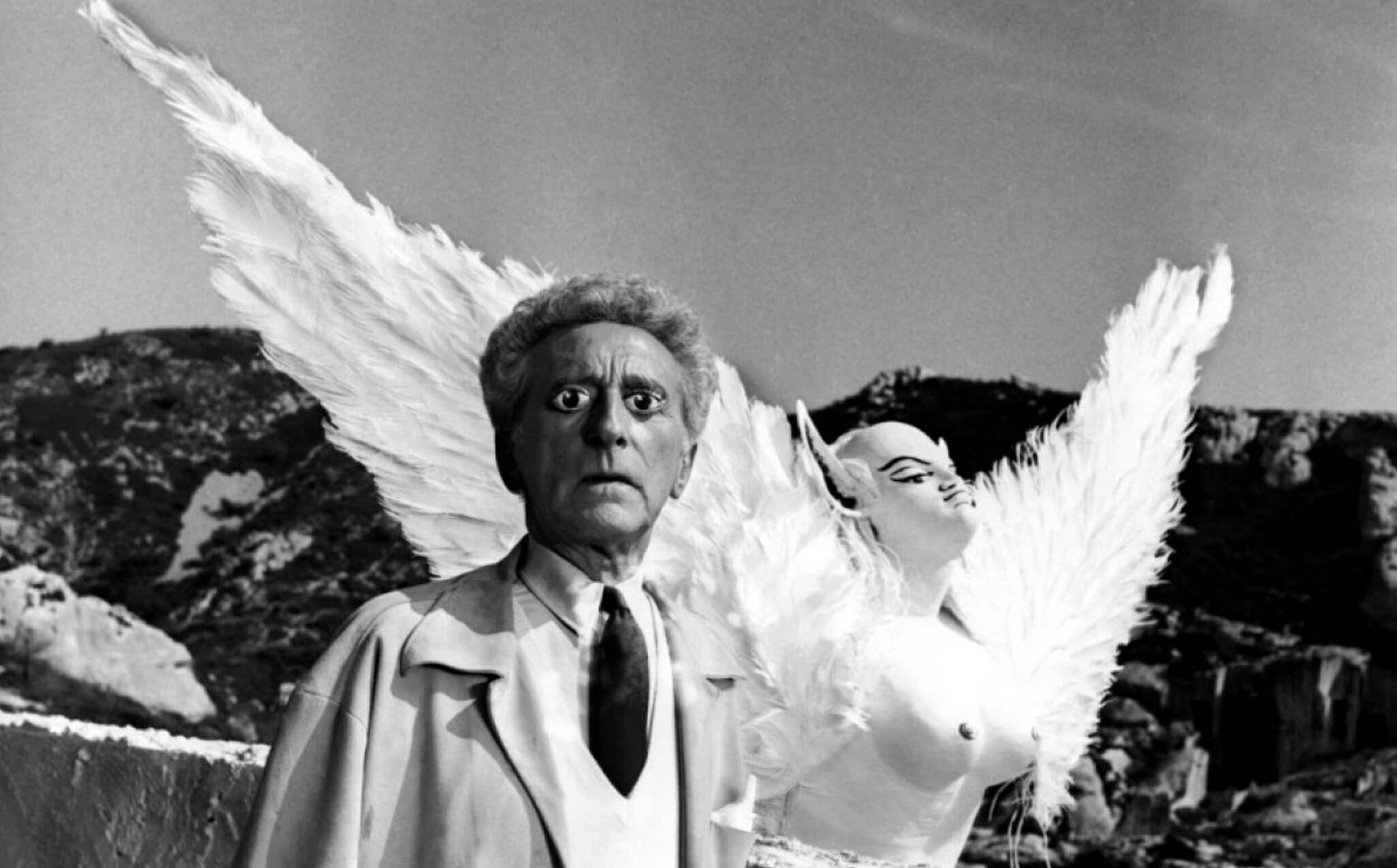
Jumping forward 30 years, Testament of Orpheus is an equally abstract film in which Cocteau stars as himself. After an opening sequence in which he time travels to various points in the life of a professor, Cocteau becomes trapped in a world that can best be described as a reflection of his artistic career, with a character he’d previously killed as a ghostly guide – think the avant-garde version of Scrooge being taken through his own lifetime. There are also cameos from many notable figures of the time, including Pablo Picasso, Yul Brynner, and Brigitte Bardot.
Both these films, then, are a reflection on the artistic process. This can, to be frank, come across as irritatingly pretentious, as if the only person Cocteau is interested in is himself. Nevertheless, both films have a plethora of imaginative visuals that, except for one overlong trial sequence midway through Testament, prevent them from becoming tedious. Cocteau’s approach seems to have lightened over the years; Blood of a Poet is a dark, grim dive into the psychological struggles of an artist, whereas Testament is a much more cheerful musing, with several moments of humour.
If that appeals to you, then these two films are a good introduction to Cocteau’s career, and they look better than ever on these well-restored Blu-ray presentations. The extras are a little slim; each film comes with a half-hour documentary exploring an aspect of Cocteau’s career, featuring interviews with experts.