Gavin Grant Smith | THE BASTARD LEGION WAR CRIMINALS

gavin bastard

Gavin Grant Smith is a Scottish science fiction writer best known for the sci-fi novel Veteran. His latest work is the critically acclaimed Bastard Legion series, which is cracking military sci-fi. We caught up to find out more about his latest novel, The Bastard Legion War Criminals.

STARBUST: What’s the elevator pitch for The Bastard Legion War Criminals?

Gavin Grant Smith: Aliens meets The Dirty Dozen. Or: a mercenary legion, consisting of some of the worst criminals in human space, is blamed for a series of atrocities – most of which they didn’t commit – whilst fighting a vicious colonial war on an alien jungle planet. But if they didn’t commit the atrocities who, or what, did?

And how would you pitch that to someone who has only ever seen Star Trek?

If the Federation were to hire the Bastard Legion, the Borg would just go home. These are the people you send to frighten the Klingons.

What character is the most fun to write?

Miska, the protagonist, is a lot of fun to write because she’s a horrible person, but she’s very upbeat about it, and that’s very refreshing (for me, at least). I also like the Mafia consigliere ‘Uncle’ Vido Cofino because I write him as a genuinely nice guy, and I suspect he probably is. Also Massimo ‘the Fisherman’ Prola, Vido’s right hand man, who’s not so nice. With those two characters, I get to embrace my love of the likes of The Sopranos and Goodfellas, which becomes all the more interesting when you get past their archetypal exterior and find out what they’re really about. The big fun about the series is writing about a group of people who have an excellent reason to dislike one another coming to very begrudgingly like each other. It’s best not to get too attached to any characters, however, as the body count is so high Sean Bean fears being drafted.

Which character seriously needs to have word with themselves?

Well, Miska doesn’t really get morality… but she seems reasonably content. Torricone, one of the convicts, tries to be her conscience and I suspect he can be a little sanctimonious about it. The serial killer known as the Ultra, leader of the Nightmare Squad, a kind of post-human weapon of mass destruction only used in emergencies, is a bit too cool for school but he seems popular. I’m not sure that they’re ‘have a word with themselves’ kinds of people. There’s a lot of psycho/sociopath juggling amongst the Bastard Legion.

Why did you go for military sci-fi?

I’m not sure I have a really good answer for this. I’m interested in military history, particularly the history of Special Forces, but I also saw Aliens when I was 12, decided that Star Wars wasn’t for me, and I haven’t really looked back since (also Rogue Trooper!)  I’m a bit wary of mil-SF as a subgenre but there’s no denying that’s what the Bastard Legion books are, though there’s a big crime element as well. I guess I see myself as writing SF action adventure stories.

Why did you use the name ‘Bastard Legion’?

Because punk rock – that’s why! Err… I genuinely can’t remember. I was thinking about all the names of pulp – I love pulp in all its myriad forms – bad boy military units: The Dirty Dozen, Inglorious Bastards, The Expendables, Bad Company, etc. and Bastards just seemed to fit. Legion came because I wanted a big pool of potential victims err… I mean characters choose from and this feeds into a central mystery running through the series. It’s caused some problems, it made some people in my publishers a bit nervous, doubtless it didn’t help foreign sales, and I can’t advertise it on that guardian of public morality: Facebook.

The Internet tells us that you won the Campbell for Veteran. How has that shaped your writing career so far?

Sadly I didn’t win the Campbell award, I was nominated for it but Ian McDonald won it, which is worrying because I’ve been holding a grudge against Hannu Rajaniemi for winning it for years now. Also I saw Ian in the pub last week could’ve railed bitterly against him if I’d realised! It’s made no discernable difference to my career and I have to admit that when I was told about it I had no idea what a Campbell award was or its significance. Now my only award ambition is to get the award that George R. R. Martin allegedly gives out for not winning a Hugo!

What has been the most interesting shift in sci-fi writing in recent years?

It feels, and I’ll probably be told that I’m hugely out of touch for saying this but we’ve moved a little beyond trends in science fiction. My sweet spot is the sort of post/transhuman space opera and that seems to be going great guns at the moment. I think the most interesting thing that’s happening, however, is that we’re starting to hear from a much more diverse spectrum of writers. I know there’s people out there who feel it’s a cynical box ticking exercise but I think it’s making a huge difference. We’re getting perspectives that we’ve never seen before, which is in turn making us older hands reassess our comfortable position and so every one is just making a bit more of an effort across the board. What I don’t understand is the resistance to this, particularly in a genre like SF. I mean it’s not as if all of Heinlein’s books have been burned.

What tropes do you personally avoid the most?

I love tropes! I’m irritated that so many of them are now considered old hat. I’m the guy who’s annoyed that he can’t get away with writing a book where a dwarf, elf and wizard all go on an adventure together. The ones I do avoid are the ones I know I sort of should because people express dislike for them. There are also some properly toxic tropes out there tied to representations of race, gender, and sexuality – those can do a burton. Other than that I avoid the chosen one trope because I’m deeply suspicious of messianic figures (as good guys anyway), and think people should save themselves rather than wait for a hero to do it for them. Thing is people say they don’t like the chosen one/messianic trope but it’s pretty much every superhero film. At least Harry Potter was bred as a weapon!

If you could give the 16-year-old version of yourself any advice, what would it be? Would you listen?

Be less of a dick, try harder in college, write more, mullets aren’t cool, go easier on your family. Also, here, take this manuscript and send it to this address before the Internet takes off! And no, he wouldn’t listen. He was an idiot.

THE BASTARD LEGION WAR CRIMINALS is available now.

Issue 458 – Out Now!

458

CAPTAIN MARVEL takes centre stage in the latest issue of STARBURST as we look back at the chequered history of the character and forward to the new film.

Elsewhere, we chat to the director and stars of HAPPY DEATH DAY 2U, heading to terrifying and delight cinemagoers in March.

With the live-action version of DUMBO hitting screens soon, we look at the other Disney properties that have been given the do-over with real people and what we can expect in the future.

We go on the set of WINIFRED MEEKS, the latest film from JASON FIGGIS, chat with VANESSA MARSHALL about voicing Gamora in the animated GUARDIANS OF THE GALAXY series, and MARK L. LESTER reveals all about cult classic CLASS OF 1999.

If that’s not enough, there’s a preview of the STARBURST International Film Festival and a profile of TROMA, the studio headed by our Guest of Honour, Lloyd Kaufman.

In our regular features, Horror Obscura digs up some loved ones and Independents Day focuses on another up and coming director.

Plus all your favourite COLUMNS, NEWS, REVIEWS and much MORE from the worlds of SCI-FI, HORROR and FANTASY!


Jay Reso | KNIGHT FIGHT

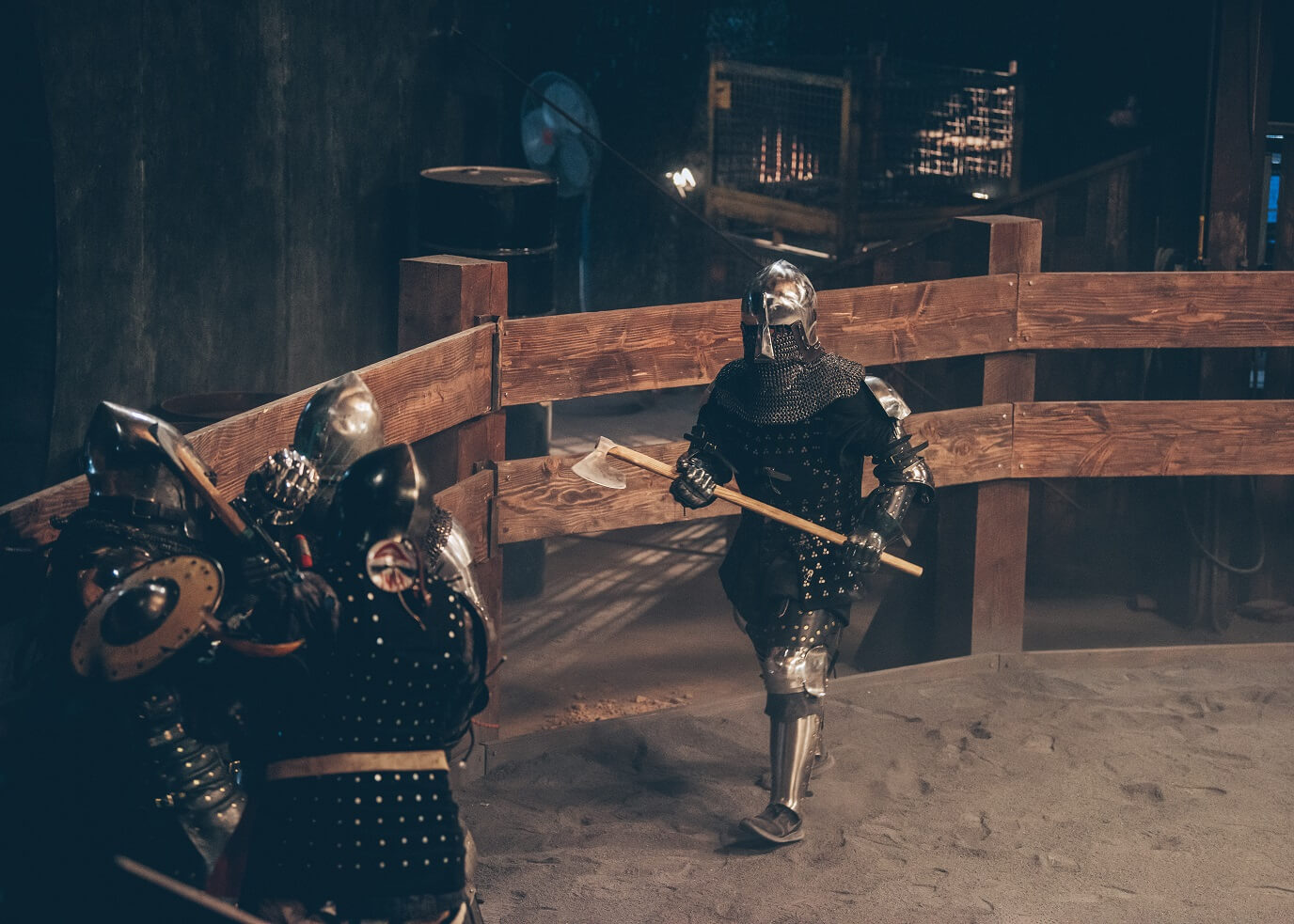
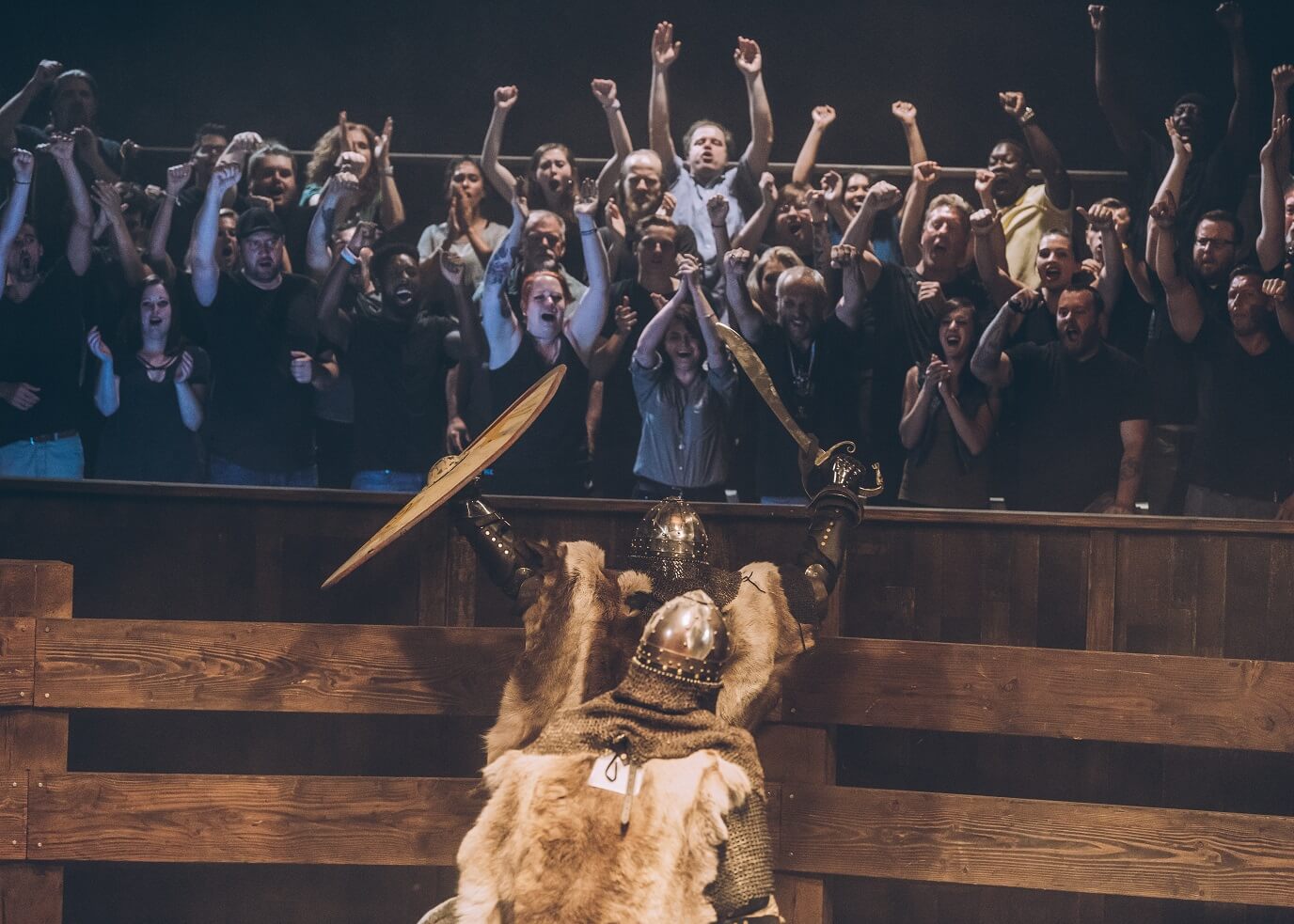
Often referred to as one of the best all-round professional wrestlers of his generation, Jay “Christian” Reso is now hosting a new TV show that’s every bit as brutal as being RKO’d through a table by Randy Orton. Premiering on HISTORY in the UK later this month, Knight Fight is an unrelenting battle between armoured knights fighting for pride, honour, the title of Fight Knight Champion, and a possible $20,000. We caught up with Jay to discuss this brutal-but-brilliant show, the comparisons between pro wrestling and medieval MMA, his ever-expanding career away from the squared circle, and a whole lot more.

STARBURST: For those unfamiliar with Knight Fight, how would you summarise the show?

Jay Reso: It’s a hard-hitting, action-packed, physical combat sport. At this point it’s a relatively underground sport, and HISTORY has given these knights the platform to show the world what they can do. They go around and compete in festivals all over the United States, all over the world. In some circles it’s known as medieval MMA or even Knight Fight Club. I’m not sure if they have Medieval Times over there in the UK, but over here there’s this themed restaurant called Medieval Times. I did think, “Do people think it’s going to be two people jousting, trying to knock each other off a horse?” No, these guys are going at it; they’re swinging, they have full size blunted weapons. It’s the weapons and armour you’d see from historical times, and they leave it all out there, man. It’s really something to see.

Not being familiar with all of this before you signed on for the show, did you expect it to be so brutal?

No, I didn’t. When I got the call that I was going to be involved with it, I was actually vacationing in London. I was over there for a month this past summer and they sent me a bunch of footage. I’d heard of it, kinda seen clips of it, but when I really watched the footage they sent me I was just blown away at what it was that these guys do. Of course, when I got on set and watched it all unfold in front of me, I grew a whole new appreciation for the physicality that the show brings. If you like action sports, if you like hard-hitting combat sports – not unlike you would see in MMA or in boxing or in a contact sport like American football – you’re gonna love this show. For these guys, this being a relatively underground sport, to get on this stage is their WrestleMania; this is their big moment to show the world what they do. You know they’re going to leave everything out there, and there’s a cash prize at the end. They win $10,000, then there’s the chance to come back in the finale and win another $10,000 if they win it all. So there’s a lot on the line.

Have you had the urge or chance to suit up and try this out for yourself yet?

No. I’m 45, my getting beat up days are behind me. I’ve done enough falling off ladders through tables. I’ve done enough of that. I’ll leave it to these guys to do it. I looked at some of the weapons they have and checked those out, and the armour, but I didn’t want to disrespect anybody. The armour these competitors compete in is their own armour. It’s very personal to them, it fits almost like a glove. They go into battle with their armour. We throw them a little bit of a curveball after the grand melee, we throw them into a team melee and take them back to the armoury to present them with new armour from an iconic period in history. That throws them off a little bit because they’re used to their own armour, and that’s another mental thing that they have to overcome as well as the physical; they get thrown this curveball that they have to suit up in this new armour. We provide each team with their own armour and they have to figure it out in 90 minutes. Sometimes they’re using a weapon they’re not used to, or the armour doesn’t fit quite like they’re used to, and they have to go out there and win it. Then the winning team gets split up and have to duel. We go back to the armoury again but then it’s up to them; they can go back to their own armour or they can use pieces of the armour we’ve presented to them during the team situation. So it’s a really cool concept.

It seems as if this world is a very close-knit community in the sense that so many of these guys have competed against each other before or are training partners. As a former wrestler, is that something that you could relate to? For instance, you came up in the business with people like Edge and Rhyno, where you were buddies and trained together but you were all ultimately competing to get noticed.

Very much so, and even relatable in the sense that, to me, when I was coming up in independent wrestling before I made it, I was wrestling for little or no money. I was just wrestling to get my name out there and I would’ve done it for free because I loved it that much. And these guys remind me of that. They’re pretty much doing this for no money, they’re going out to festivals, they’re going out to different competitions. They’re competing because they purely love what it is they do. Yeah, they’re going out there and trying to do whatever it takes to win – it’s like a switch flips in your mind and the competitor takes over – but after, the camaraderie these guys have for each other is unbelievable. They’re out there trying to take each other’s heads off, trying to hurt each other, then they pick each other up, dust each other off, give a hug. Win or lose, all the competitors are very, very gracious, and I was really impressed with that.

Having seen the first two episodes, an early personal favourite was Trash Panda. Without going too heavy on spoilers, is there anyone in the series that was your particular favourite or you had the most fun watching?

The guy that won the first show, Brian Juranty. He epitomised to me what a knight is. He even looked like a knight with his beard and his haircut, the way he carried himself, and he was so fluid out there when he was competing. His awareness was impeccable. You kind of have to learn when you’re out there watching it, but there’s a real technique to what these guys do out there; they’re not just throwing bombs or trying to knock people out, you have to defend and be aware of where you are at all times. These guys are carrying an extra 80 lbs of weight on their body with the armour on. And the helmets, the peripheral vision of those isn’t great. You have to have your head on a swivel, you have to have a real awareness and try not to turn your back. To me, he just tied everything together really, really well and I was really impressed with him.

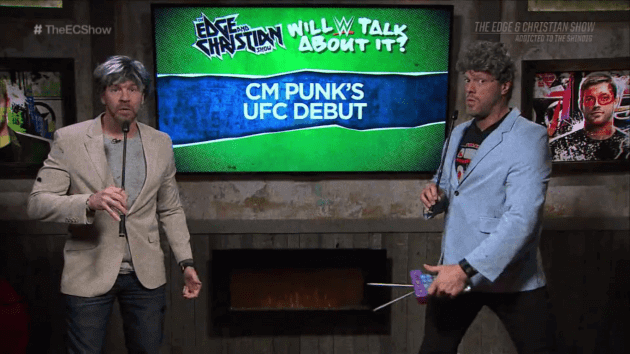
Right now, you have E&C’s Pod of Awesomeness, The Edge and Christian Show That Totally Reeks of Awesomeness on the WWE Network, you’ve previously done Haven, you recently did SuperGrid with Lowell Dean – who had nothing but praise for you. As a former wrestler, though, have you found that sometimes people may incorrectly typecast you or have a certain stereotype in mind when you’ve gone for new roles?

I think the stigma and the stereotype of that has been knocked down a little bit because of guys like The Rock and Dave Bautista doing so well with what they’re doing. For me, I was never the biggest guy. I was never a guy who was 6’6” or 6’7” that could get roles as Bouncer #1 or Bouncer #2. For me, the thing I have going for me is that in street clothes I look relatively like a normal person. I just wanted to challenge myself when I retired from in-ring competition. It was almost like, “Okay, I’m still a relatively young guy. I don’t want to sit around and do nothing, what’s the next challenge?” It’s almost like when I started to wrestle. The challenge then was to gain experience and knowledge, to work with people that were better than me so that I could to try and get better. I portrayed the character of Christian, and I still am to this day. With wrestling, the great thing is that everything is live. You’re pretty much trained right away that there’s no back-up. When you’re doing different things and learning lines, that is already ingrained in you that there’s no second take here, you’ve got to nail it. When I went in for SuperGrid, my first day on set I had four full pages of dialogue that was all me. I remember Lowell – who’s amazing by the way, an amazing director, an amazing person who made me so comfortable from the moment I stepped on set – he said, “Well we’ll get as much of this as we can.” I turned around and said, “No, no, we’ll get all of this.” He said, “I like that attitude,” and then we got it all. He came up to me afterwards, he was all, “When you said that, I was thinking ‘we’ll see…’” He appreciated that I was prepared. More than anything, I think what surprises people about wrestlers is that they’re always prepared. That’s what I try to be; I just try to be a professional. I want to learn as much as I can and to get better.

On the wrestling front, you’ve been officially retired for a few years now, although there was a rumour a few weeks ago that you were to be a surprise entrant in the Royal Rumble match. Is there any truth to that or is just online chatter?

You hear it every year, right? I’m not going to be back in the ring at all. I was in Phoenix, I was at the Royal Rumble, but I was shooting some content for the WWE Network. I don’t know if somebody saw me there and it leaked out that I was there. I never heard the rumours so I’m not sure, but you know how it goes. Somebody sees you and automatically you’re entering the Royal Rumble.

To just touch on The Edge and Christian Show, as someone who grew up watching wrestling in the ‘80s it’s all kinds of fun to see Sean Mooney pop up or to try and guess the names of classic Survivor Series teams. For you and Edge, how cool is it to revisit so many of the things that you grew up with?

It’s really, really cool. You realise there’s this whole library of content on the WWE Network. Even if the people watching it might not have grown up in our era or not really know what it is they saw, they can always go back through the WWE Network and watch it. Even having some of the legends come on the show and do cameos and things like that, that was huge for me and Edge. A show like this had never been done before, a variety show with a wrestling theme, so we just had a ton of fun with it. We tried to have everybody that came on for cameos just have as much fun as we were having, and I think that came through in the final product.

Is there any word on a possible third season for The Edge & Christian Show at this stage, and what other projects have you got in the pipeline that you can tell us about?

I had a really, really busy 2018, which I was really grateful for and really happy about. Right now we’re about to wrap up the second season of The Edge and Christian Show, and then we’ll see. I haven’t heard anything about a third season yet, but I know it’s been really well received; people seem to really enjoy it. That’s what it’s all about for us, about putting out something that people like. I had a really fun time writing and producing that. It was another new challenge and that was great. Right now, my focus is all on Knight Fight – premiering in the UK on February 19th. We talked before about different challenges, and hosting something outside of the wrestling walls was something I was really interested in. When this opportunity came up, I jumped at it. I couldn’t be more proud of the competitors and I can’t wait for everybody in the UK to see it.

You obviously have to cover certain bases, but how much freedom did you have on Knight Fight? For instance, the whole “Fight!” shout and fist action you do before each battle.

Everybody was really great. The other judges, John Clements and Andre Sinou, they were great and obviously helped me a lot. They’re experts in weapons and this sort of combat. Getting to work with them, I was like a sponge just soaking it all in. All the banter you see between us, that was completely just us talking and trying to explain what it is that we just saw the competitors do. And the “Fight!” thing, it was written in there that we would start things. Instead of a bell ringing or something, there had to be something to signal the start of the fight. They didn’t have it written in there as “Fight!”, but the thing just happened. I was just trying to make it a little more emphatic, a little more like, “Hey, we’re going to battle here. Let’s go!”

UK audiences can check out Knight Fight on HISTORY from February 19th.

Jessica Rothe & Israel Broussard | HAPPY DEATH DAY 2U

jessica israel

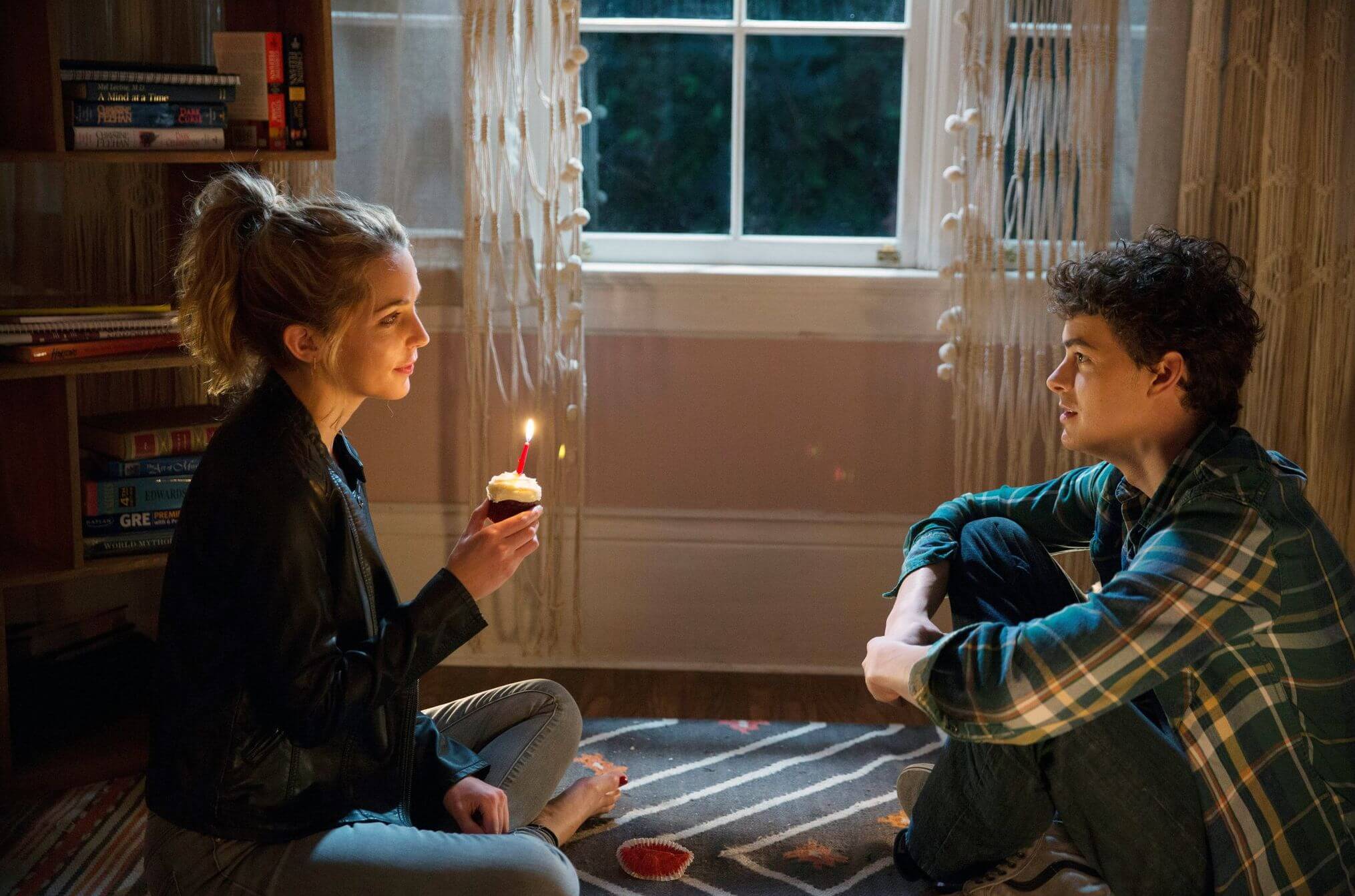
STARBURST has a feeling of déjà vu as we get the lowdown on HAPPY DEATH DAY 2U from the film’s stars JESSICA ROTHE and ISRAEL BROUSSARD…

STARBURST: How was it getting back into the character of Tree/Carter for you?

Jessica Rothe: It was amazing and completely terrifying! Shooting the first film was an unbelievable experience because we bonded as a cast and crew and Chris Landon (the writer/director) was our captain. He is such an intelligent, generous, and kind human being that he set the tone on set and challenged everyone to be their best version of themselves. So when the opportunity for the second film came around, I was so excited to get the band back together again. But I was nervous because sequels are tricky and it’s easy to sit back and do all of the same things as the first one, but that can create a boring film. I have to commend Chris for saying we can’t do that; we have to turn this thing on its head to make it crazier and funnier and more emotional and continue evolving the world and expanding it. Once we put the focus on that, I realised that it’s just a continuation and I don’t have to replicate anything, and I can expand on what I did before.

Israel Broussard: It was little difficult, to be honest – Carter had such a happy-go-lucky vibe that I was worried the energy wouldn’t match from the first one, especially because of the continuity and starting the story from the next day. But once I got that out of my head and we started shooting, I fell right back into being Carter. It was super fun in the end.

It was a great choice was to have your character called Tree, meaning that her growth over time works on another level.

JR: Exactly! Chris is great like that. There’s also the joke about if a tree falls in the woods does it make a sound. Tree is in a metaphysical quandary, and I think another reason people connected with the film is she turns into such a badass and seizes her own destiny without having to wait for someone to save her – it doesn’t mean that she doesn’t need help or that she won’t ask for help, but she’s not the kind of person to run away from the killer. Blumhouse has been doing a great job with helping genre films with female empowered characters and leads – for example, look at the new Halloween movie, it had a purely female-driven protagonist story. I think that audiences are really ready to see that.

What are some of your favourites scenes (or more specifically, deaths) that you shot across both films?

JR: There is truly a plethora of fun and strange deaths that Tree has. There was a time on set that the game of the day was “What are all the weird and creative ways that we can kill Jessica?” [laughs] which was a very funny but morbid game. I loved shooting the skydiving scene in HDD2U, which was a reshoot; it was added after we had wrapped the second film. Chris had wanted to do and wasn’t sure if it would work, but once we did it, he said we have to use that. It was so much fun, and our costume designer nailed the bathing suit, and I got to do a trust fall, in which I fell kinda far. The electrocution death was also a lot of fun, that hairstyle was all my hair and lots of hairspray. These weren’t death scenes, but I also loved filming the scenes with Tree’s mum in the second film because they were emotionally challenging. They had a different energy and it as fun figuring out how to balance that with the rest of the film.

IB: I had fun re-watching the first one, and with this one, I had read the script but had no idea on how Chris was going to execute it. The dorm room scenes were always a lot of fun; in the second one, specifically, I loved the scenes with Tree and her mum. Almost every time I saw that I would tear up. That definitely gave the movie what the first one lacked, which was pure emotion and we did it while maintaining the main concept. And, of course, the skydiving scene [laughs], it was so much fun to film.

HAPPY DEATH DAY 2U is in cinemas now and you can read our review here. Read more from our interview with Jessica and Israel as well as director Christopher Landon in the latest issue of STARBURST #458 – on sale now.

Nick Castle | HALLOWEEN

Halloween

For last year’s Halloween, director David Gordon Green got fans on his side when it was announced that the original Shape, Nick Castle, would be making a cameo appearance as Michael Myers in the re-enivisioned sequel to John Carpenter’s 1978 horror classic. While Castle has been retired from acting and making films for several years, it seemed like those making the new Halloween were dead-set on connecting the new film to the original as much as possible. While he only appears in one scene – when Jamie Lee Curtis’ Laurie Strode first encounters Myers – Castle also recorded all of the sounds of the Shape, from his breathing to the grunts from the many hits he takes in the film’s no-holds-barred finale.

STARBURST: How far along in the process did you become involved with the new Halloween?

Nick Castle: About a year ago, August, I got a call from my agent who books me at horror conventions. He also represents all the other guys who played Michael Myers in the other films, and the casting people from the movie were calling him up, trying to get ideas. He suggested me, without asking me, and he called and asked, “Would you be interested? I found out that they’d be interested in you doing it, if you want to.” I knew that they were going to do a new Halloween. I didn’t know what the script was, but I knew John [Carpenter] was involved. So, that was in August [2017], and they were going to do it in October, but they delayed it a few months to work on the screenplay, and wound up shooting it, I think, in February.

The recreation of the famous on-set photo of you drinking a Dr. Pepper with the mask on suggests that shooting was pretty fun. Was it as enjoyable as that image suggests?

Oh, yeah. All that and more. First of all, it was great to be on a set again. Y’know, I’m a filmmaker, but I’ve been retired for a while, so I haven’t been on a set, so that in and of itself was nostalgic. Met a lot of great people – very talented and warm. Got a lot of pats on the back for my own career and my own movies – a lot of fans of those. And, because I had, for the last few years, been going to these horror conventions, I know the fans, and know how much they love this genre, and I know what they would like, so some of my suggestions of revisiting these old photos and reliving some of these old moments from the original were ones that both myself and the filmmakers there wanted to do, so we had a blast with that. A lot of fun – got to meet Danny McBride, one of my favourite comedy actors, and see Jamie Lee Curtis and John again, so it couldn’t have been more fun.

You’re the one who recorded all of the breathing for Michael Myers in this film. What’s that process like – is it kind of ridiculous, sitting in a recording booth, breathing heavily into a mask?

Well, that’s basically what it is. I got an email or a call – I don’t remember which – and David [Gordon Green] said, “Wouldn’t it be great if you did all the breathing?” and I went, “Oh, that’s great. I love that idea.” [chuckles] He said, “We’ll do it in L.A., and we’ll just send you to one of these post-productions houses,” and that’s what we did. I went there and Ryan Turek, who was one of the producers, was there, along with the post-production group, and that was the first time I got to see the movie, too – in stops and starts. We just played through all the scenes with Michael Myers and we started by me actually putting on a mask and breathing. Then, we took that off, and I just kind of ended up breathing into my hands, instead. That’s what we ended up using – it came out better than going through the mask itself. That was fun, and I got to be a part of the movie again.

Seeing all of those scenes with just the Shape – how did that prepare you for seeing the final, completed film?

Not only did David send the me the original script when I first got on, but was gracious enough to hear my thoughts on some of the scenes and things like that, so I was very much aware of the storyline. But, I was only on the set for about a week, so I saw material that was being done there, but seeing it [during post-production], it was hard to tell, because of stops and starts, but it looked like it was really working. What I really appreciated was the work they did on extending the ending of the movie. I thought that was really helpful to giving some impact to the finale.

Of all the scenes for which you recorded the sound, which required the most interpretation on your part?

Well, the entire ending. There were so many efforts – it’s not just breathing, but when you’re hit or when you get shot or what the character might do. Then, you leave it up to the director and the editors to decide how much of that impact they want to hear. Does it play within the setting of the scene, because it might not be as prevalent as if you’re alone in a closet, hearing the Shape’s menacing breathing. There’s not a lot of nuance you can give to these things – you’re breathing! [laughs] You just have to figure out how this is going to play – he’s a tough guy, so he’s not going to say, “Ouch,” out loud. You don’t want it to come off as comical – let’s just put it that way!

HALLOWEEN is available on Digital Download now, and 4K Ultra HD, Blu-ray and DVD on February 25th from Universal Pictures Home Entertainment.

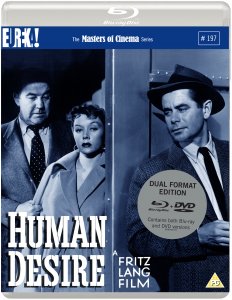
[ENDED] Win Human Desire on Blu-ray


Looking for some fantastic film noir look no further than Eureka’s issue of this Fritz Lang classic on shiny Blu-ray and we’ve got our hands on three copies of these  to give away just for you guys!

To be in with a chance of winning one of these fantastic prizes, simply answer the below question:

Which 1927 movie did Fritz Lang  direct that changed the face science fiction forever?

a) The Day the Earth Stood Still

b) This Island Earth

c) Metropolis

Email your answer, along with your address details, to [email protected] labelled HUMAN DESIRE before midnight on FEBRUARY 25TH  .

HUMAN DESIRE, a hard-edged and chilling film-noir from legendary filmmaker Fritz Lang, is OUT NOW on Dual Format and can be purchased here https://amzn.to/2R6tKPl

Here is the press release to get you going

A startlingly dark, late film noir masterwork by director Fritz LangHuman Desire reunites Lang with his hero Glenn Fordand femme fatale Gloria Grahame from the previous year’s The Big Heat and the screenwriter of Lang’s 1952 noir Clash by Night, Alfred Hayes. Like those two classics, Human Desire finds Lang casting a pitiless eye on all of the human weaknesses that define film noir: deception, infidelity, passion, and murder.

Adapted from the same Émile Zola novel previously filmed by Jean Renoir in La Bête humaine (1938), Lang’s gripping thriller has Ford as train engineer Jeff, just home from the Korean War. He’s instantly attracted to passenger Vicki (Grahame), not yet realising that she’s the abused wife of Jeff’s alcoholic railroad yard superior Carl (Broderick Crawford) — or that Vicki was just entangled in a jealousy-fuelled murder committed by Carl. As Jeff and Vicki embark on a steamy affair, she tells him about the crime, and Carl’s blackmail hold on her. If only Carl could be taken out of the picture…

The only thing that’s not pitch black in this noir are the ethical shades of grey inhabited by all its characters. Yet its placid small town setting also offers a unique perspective on the genre, with Lang uncovering sinister secrets on these quiet streets that could rival any big city immorality. The Masters of Cinema is proud to present one of this brilliant filmmaker’s most underrated films for the first time ever on Blu-ray.

Terms & Conditions:

EUREKA and STARBURST do not accept any responsibility for late or lost entries due to the Internet or email problems. Proof of sending is not proof of receipt. Entrants must supply full details as required on the competition page, and comply with all rules to be eligible for the prizes. No responsibility is accepted for ineligible entries or entries made fraudulently. Unless otherwise stated, the Competition is not open to employees of: (a) the Company; and (b) any third party appointed by the Company to organise and/or manage the Competition; and (c) the Competition sponsor(s). This competition is a game promoted STARBURST. STARBURST’s decision is final in every situation and no correspondence will be entered into. STARBURST reserves the right to cancel the competition at any stage, if deemed necessary in its opinion, and if circumstances arise outside of its control. Entrants must be UK residents and 18 or over. Entrants will be deemed to have accepted these rules and to agree to be bound by them when entering this competition. The winners will be drawn at random from all the correct entries, and only they will be contacted personally. Prize must be taken as stated and cannot be deferred. There will be no cash alternatives. STARBURST routinely adds the email addresses of competition entrants to the regular newsletter, in order to keep entrants informed of upcoming competition opportunities. Details of how to unsubscribe are contained within each newsletter. All information held by STARBURST will not be disclosed to any third parties

Professor Richard J Hand | HORROR AND HILARITY: THE LEGEND OF THE GRAND-GUIGNOL

hand

Richard J Hand is one of the foremost experts in ‘Grand-Guignol’, the ‘Granddaddy of Modern Horror’, which has influenced many of the classic horror films of past and present decades. STARBURST had the pleasure of speaking with him after his excellent lecture ‘Horror and Hilarity: The Legend of the Grand-Guignol’, which took place in London in February 2019.

STARBURST: When you look at the whole history of ‘Grand-Guignol’, would you say it encompasses everything we have grown to know and love, or are there specific films and subgenres of horror that it focuses on?

PROFESSOR RICHARD J HAND: What is probably most important to note about the original Théâtre du Grand-Guignol is that, despite being the ‘Theatre of Horrors’, it was not interested in the supernatural or the fantastic: rather, the horrors it focused on were possible. It emerged out of the tradition of realist and naturalist drama but pushed it to the max with graphic displays of violence with plays – often based on true news stories – of real-life terror and extremity accompanied with ultra-realistic special effects. The repertoire of the original theatre loved to start with a slice of life but descend into full-blown, full-blooded melodrama – without the audience noticing the join. The Grand-Guignol is full of monsters, but these are emphatically human monsters. So, in this way, Grand-Guignol is most accurately applied to those tales of feasible terror: serial killers, vendettas and revenge attacks, escaped axe murderers, lunatics who have taken over the asylum, deluded doctors and mad scientists whose experiments are less grandiose and a bit more squalid than Doctors Frankenstein or Jekyll. In terms of cinema, the most truthfully Grand-Guignol are therefore films like Psycho, Whatever Happened to Baby Jane?, Peeping Tom, Blood Feast, Texas Chain Saw Massacre, Halloween, Silence of the Lambs, Saw, Hostel and so on. At the same time casting a long shadow over the splatter genre; we must remember how much the Grand-Guignol audience relished the acting ensemble and core actors – such as its resident ‘scream queen’ Paula Maxa – and this emphasises how Vincent Price, Christopher Lee, Barbara Steele, Jamie Lee Curtis through to Vera Farmiga, Eva Green and Sarah Paulson have acted in the Grand-Guignol tradition of heightened performance whatever the specific horror narrative might be.

What struck us about your presentation in London recently was how naïve we have become in thinking we knew what it was and how clear a lot of the influences are. When did you first become interested in ‘Grand-Guignol’ and what specifically was it that sold it to you?

I remember as a child getting Denis Gifford’s book A Pictorial History of Horror Movies (1973) for Christmas. With a lurid green cover with drawings of Karloff, Cushing, Lugosi and others, I read it again (and again). The first chapter was called ‘How Grand was My Guignol’ and gives a concise outline of the Grand-Guignol before its detailed and wonderfully illustrated journey through horror film. It was then years later that I read Mel Gordon’s Theatre of Fear and Horror (1988) with its amazing pictures, plot summaries and sample scripts. When Michael Wilson and I started working together as lecturers at the University of Glamorgan in Wales, we shared a mutual admiration of Gordon’s book but wanted to learn more. So, we read Agnes Pierron’s excellent French anthology of Grand-Guignol plays (1995), visited library collections in Paris and located numerous original French scripts. We set up the Grand-Guignol Laboratory where we worked with drama students in mounting full in-house and touring productions of translated Grand-Guignol plays with recreations of special effects and the whole Grand-Guignol ‘experience’.

A lot of the Halloween and Chainsaw generation first heard the term via John McCarty’s classic horror volume Splatter Movies – Breaking the Last Taboo. Did you read his book and how comprehensive was the chapter he covered compared to your own books?

Yes, indeed. John McCarty gives an excellent account of the significance of the Grand-Guignol as the ‘root’ of the splatter genre and persuasively argues how Hammer’s landmark film The Curse of Frankenstein is an assimilation of the traditions of the French Grand-Guignol and the English Gothic. He sees the spectre of the Grand-Guignol in subsequent high points of cinematic horror: persuasively arguing, for instance, that The Exorcist is Grand-Guignol on an operatic scale. McCarty made a very important intervention in popular horror studies which signals, as it were, that before horror cinema there was horror theatre. There are even more depths and connections than McCarty has space to discuss: the story of the Grand-Guignol is richer and richer the more we look into it…

Censorship certainly was a big issue both here and in France and in the UK particularly with the Lord Chamberlain’s Office at the time when it came to London in the 1920s. Would you say the political and world context ‘Grand-Guignol’ found itself at the heart of helped shape it’s evolution until its demise?

Luckily, the Grand-Guignol had a comparatively easy ride in Paris, although there was considerable outrage at its use of the guillotine in various plays – a serious emblem of the state some felt should not be parodied on stage – and various critics (as well as, no doubt, some spectators) disapproved of its explicitness and immorality. In the notable London experiment in Grand-Guignol in the early 1920s, censorship was a complete nightmare for the company. The Lord Chamberlain’s Office – in charge of licensing plays for public performance in the UK – took great exception to the Grand-Guignol, including its comedies as much as its horror plays. It disliked this continental import and enforced edits and even banned outright numerous plays on the grounds of indecency, obscenity or profanity. Eventually, the Grand-Guignol in London will call it a day after being under the censor’s microscope for so long. However, the Grand-Guignol will recur on the London stage. We must remember that the Grand-Guignol used reality for its inspiration: both in France and the UK, there are remarkable and uncompromising plays about the First World War, plays which must have been arresting for the audience. Similarly, the Parisian theatre staged a play about the Boxer Rebellion and the brutal experience of the French legation siege which reconstructed recent horrors for its enthralled, perhaps voyeuristic, audience. The Grand-Guignol stayed open during the Second World War and was popular with the occupying German forces. The sadistic terrors of the Grand-Guignol probably didn’t seem quite so playful for the Parisians after that.

It was interesting to note that Noël Coward and Joseph Conrad, both classic writers, had an interest in ‘Grand-Guignol’. Tell us more about their contributions and how successful they were.

Noël Coward wrote The Better Half for the London Grand-Guignol. He was only twenty-two years old at the time. It is a dark and delectable comedy which is as witty as one would expect from Coward, in which we see a frustrated woman encouraging her rather bland husband to run off with her best female friend for the sake of everyone’s mutual satisfaction. Things turn very Grand-Guignol when her husband threatens to kill her. However, all ends happily. Indeed, it is interesting that the Lord Chamberlain didn’t object to a happy ending in which a married woman runs off ‘to find a lover and live in flaming sin – possibly at Claridges’. A writer at the other end of his career, Joseph Conrad, was also interested in seeing the Grand-Guignol imported to Britain. This grand old man of English letters went to see a Grand-Guignol performance and immediately wrote Laughing Anne, a very violent thriller set in Macao in which a group of gangsters attempt to rob a boat transporting money. Unfortunately, the Grand-Guignol politely declined staging the play as it was difficult to stage and, in two acts, probably somewhat long for the classic Grand-Guignol formula of short plays. I was lucky enough to be the first director to stage the play in 2000, eighty years after it was written.

In terms of putting on ‘Grand-Guignol’ – type productions these days – and we understand there are several companies throughout the world, including one in Liverpool who have put on regular productions. What advice would you give any enterprising theatre companies in terms of securing the performing rights and what should they be careful of in terms of the graphic violence that defines it?

I would, of course, encourage theatre companies to explore the Grand-Guignol. It is a wonderful form of theatre and for companies can be enormous fun to stage. All of the translations in the books by Mike Wilson and I are free to perform: all we ask is that companies get in touch with pictures or posters – we love to hear about any Grand-Guignol shows and add any documentation to our collection! Be warned: although the Grand-Guignol is fun and playful for a company and audience, it does handle very dark material. In this way, we always attempt to balance the horrors on display so that we don’t have an evening of plays in which just women are victims but ensure something more balanced and inventive. Similarly, we have had spectators faint during graphic scenes and I have been in shows where audience members have walked out. It may be theatre, but it is real people enacting realistic illusions on stage. The Grand-Guignol’s all-important douche écossaise (interspersing horror plays with comedies) is significant here: the Grand-Guignol was a theatre of laughter as well as its more famous horrors. Theatre ensembles must not forget that. Keep it intense and compelling but always keep it fun and playful. At the end of the day, the Grand-Guignol is something of an adrenaline-fuelled thrill-ride.

Tell us more about your experiences working on productions and some amusing and interesting anecdotes from a selection of these.

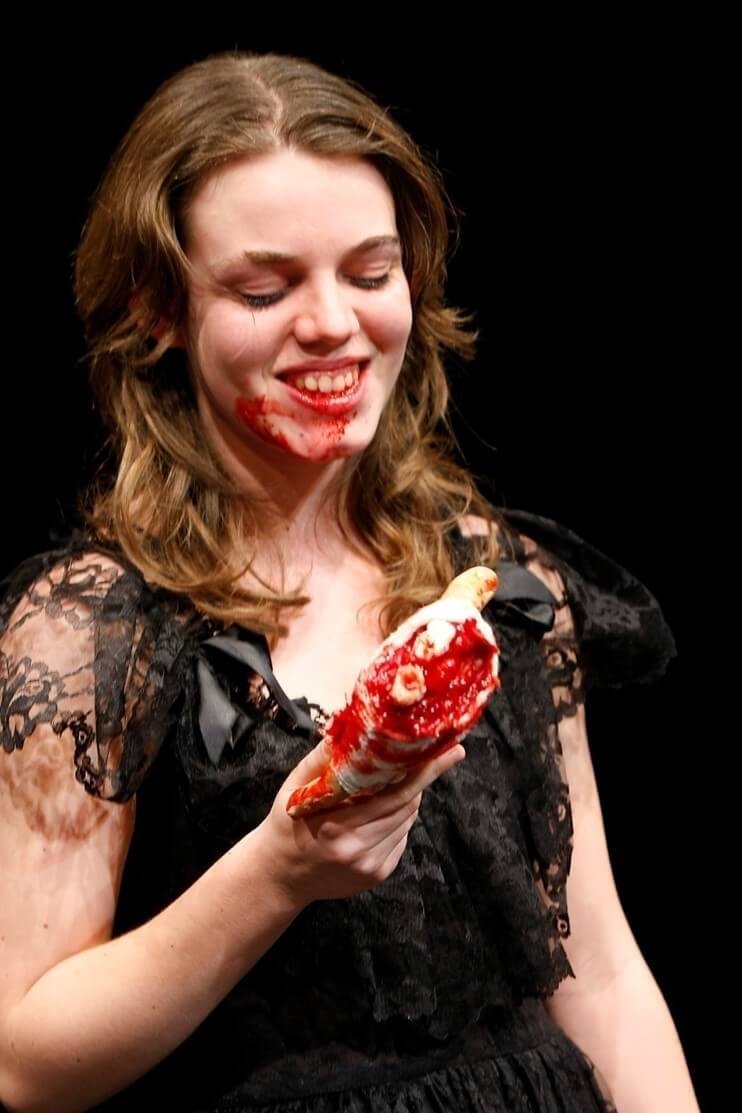
It is great fun putting together Grand-Guignol plays. I have staged all kinds of theatre but some of the biggest laughs and closest ensembles have emerged while doing Grand-Guignol productions. The actors may do awful things to each other on stage, but behind the scenes there is real camaraderie – there has to be! We once took a show to the Edinburgh Fringe which included a finale in which a female doctor castrated a male patient as an act of revenge. We even had a real doctor take the actors through a detailed description of the castration procedure in rehearsal. In early performances of this immaculately rehearsed play, we went to the trouble of ordering numerous pairs of sheep’s testicles from a specialist butcher. However, during one performance I was in the audience and overheard a spectator whisper in all earnest ‘Look, they are using plum tomatoes’. After this, we revised the scene so that the doctor’s scalpel punctured a concealed condom filled with stage blood. The resulting pool of red, gradually spreading over the patient’s white boxer shorts and dripping onto the floor proved to be much more effective. It gave us the desired result for the rest of the run: it made every male member of the audience gasp and cross his legs and every female roar with laughter. Sometimes, less is most definitely more!

What productions should people start off with in terms of reading and research?

I would obviously recommend Mike and my books! Each contain ten or more plays and substantial context and, in book 3 (Performing Grand-Guignol, 2016), lots of ‘how to’ stage a Grand-Guignol performance. In addition, do check out Mel Gordon’s classic study – it will certainly whet your appetite. Just as importantly, go and see some horror theatre in the broadest sense! There are major works like The Woman in Black and revivals of Jeremy Dyson and Andy Nyman’s Ghost Stories or the touring thrillers of Peter James. Also, festivals such as the London Horror Festival and the London H. P. Lovecraft Festival host wonderful displays of fringe-scale horror theatre. If you get chance to go further afield, go and see the Molotov Theatre Group in Washington DC, the Grand Guignol in Milan, or Vigor Mortis in Brazil – great custodians of the Grand-Guignol.

Please tell us about some of the key writers who contributed the classic works in their native France.

The single most important writer at the Grand-Guignol was undoubtedly André de Lorde, the prolific ‘Prince of Terror’ who joined in 1901 and wrote over 150 horror plays. Even when criticising the themes or morality of his plays, critics like the influential Georges Bourdon had to admit that ‘nobody surpasses Monsieur de Lorde in theatrical technique’. De Lorde was a great and generous collaborator, writing with experts from the world of science, history, psychology, and criminology to ensure the plays were as accurate as possible. It is also worth noting that other major writers were drawn to the Grand-Guignol: Maurice Level (much admired by H. P. Lovecraft), Gaston Leroux (Phantom of the Opera), Maurice Renard (The Hands of Orlac), and Octave Mirbeau (The Torture Garden) all write original plays for the Grand-Guignol.

Every art form evolves and has to move with the times to survive. Could contemporary theatrical companies create more ‘Grand-Guignol’ influenced modern works, in the same way that Dracula influenced Stephen King’s Salem’s Lot for example?

When I work with students and professional actors on the Grand-Guignol, I am always emphasising the contemporary potential of the form. Escaped lunatics and outrages in the colonies are probably dated anxieties which might make us giggle more than gasp. So what scares us now? Such angst was the spirit of the Grand-Guignol and contemporary interpretations (including our own) have created some fantastic modern terror plays: the world of social media, internet dating, house sharing, and fast food home delivery is ripe for latter-day Grand-Guignol! Fascinatingly, the content may have changed but the formula would be something de Lorde could still recognise!

Finally, what is your goal in terms of spreading the word about ‘Grand-Guignol’?

It is a shame that the original Théâtre du Grand-Guignol is long gone. Although the original venue is still a theatre the inside has been transformed and the giant angels and other residue of its days as a deconsecrated chapel are no more. The first-hand memories of the original are rapidly receding if not almost vanished. But the legend lives on. And unlike some legends, the true story of the Théâtre du Grand-Guignol is perhaps even more rich and fascinating. A world of gruesome tales of true terror, eye-gouging and blood-letting, tragic victims and sadistic villains. In other words, great writing, amazing special effects, and superb acting. In other words, a bloody good night out that can still be hugely thrilling and hilarious when restaged – the ultimate three-dimensional horror experience!

Check out Professor Hand’s books on Amazon.

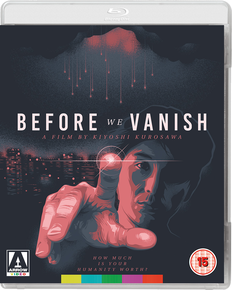
[ENDED] Win BEFORE WE VANISH on Blu-ray

before we Vanish

We have teamed up with the wonderful Arrow Video to bring you the chance to win a copy of this interesting future cult movie on Blu ray

To be in with a chance of winning one of two copies of Before we vanish on Blu-ray , simply answer the below question:

What movie did  Kiyoshi Kurosawa also direct?

  1. a) Pulse
  2. b) Death becomes her
  3. c) Creep

Send your answer, along with your address details, to [email protected] labelled BEFORE WE VANISH before midnight on Sunday,February 17th.

WRITER/DIRECTOR: Kiyoshi Kurosawa

CAST: Masami Nagasawa (Your Name, Godzilla: Final Wars), Ryûhei Matsuda (The Raid 2), Hiroki Hasegawa (Shin Godzilla), Kazuya Kojima (Guilty of Romance)

Synopsis:

Three aliens on a reconnaissance mission to Earth take over the bodies of human hosts to explore the world they’re about to invade. On the way they steal individual concepts from the minds of anyone who crosses their path, from work, to free will, to love, leaving behind them a trail of soulless bodies.

The film follows Narumi, whose husband Shinji becomes one of the three hosts. As the invasion grows nearer, Narumi’s attempts to save humanity from extinction become increasingly entwined with Shinji’s decision on whether to save the humanity within himself.

Special Features:

– FIRST PRESSING ONLY: Illustrated collector’s booklet featuring new writing on the film by Neil Mitchell

– High Definition Blu-ray (1080p) presentation

– Original 7.1 DTS-HD Master Audio

– Optional English subtitles

– The Making Of Before We Vanish, an 53-minute featurette including on-set footage and interviews with cast and crew

– Inside The Story and Inside The Characters, two featurettes with cast and crew interviews

– Looking Back, members of the cast reunite to discuss memories of the production

– Red carpet interviews from the Cannes Film Festival premiere

– Cast and crew Q&As from four screenings including the Japanese premiere

– Trailer

– Reversible sleeve featuring original and newly commissioned artwork by Tommy Pocket

UK Release date On Blu-ray and Digital HD 11 February 2019. Also premiering on Arrow Video Channel on Amazon Prime Video UK  11th February 2019.

David Gilbank | POLTERHEIST

gilbank

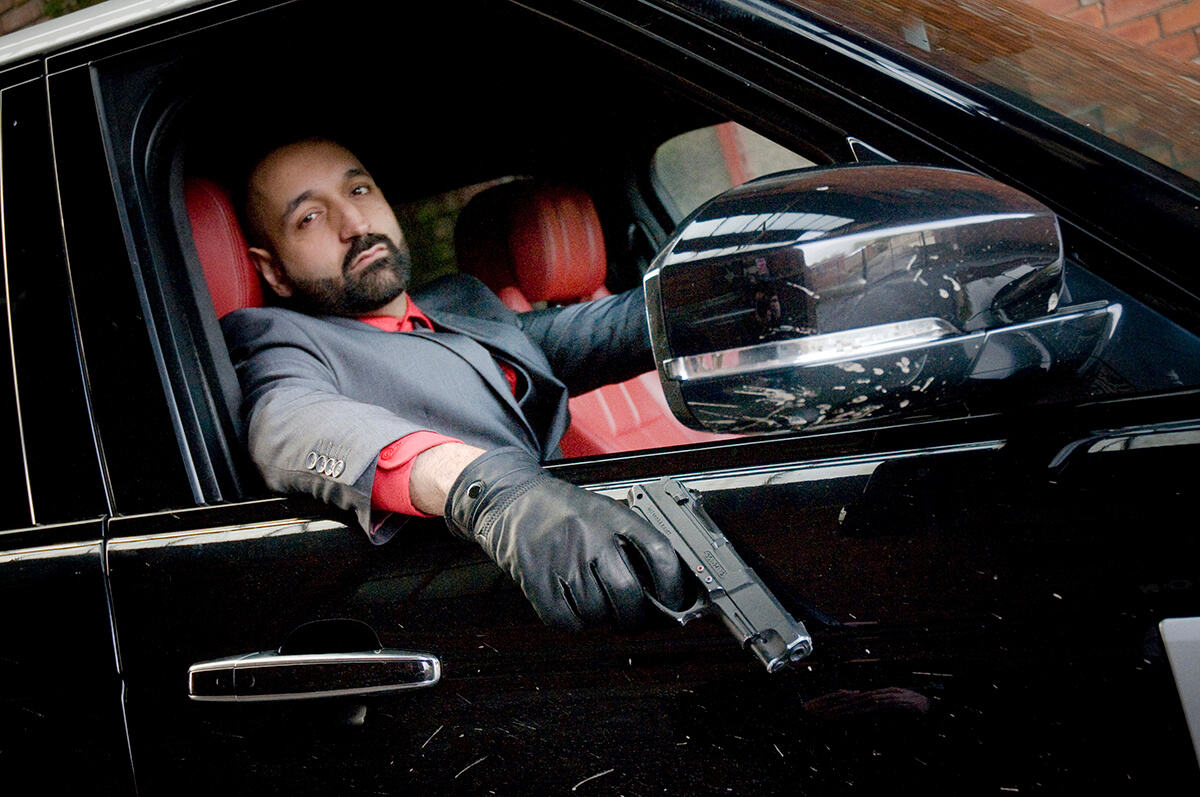
In 2016, a short film entitled POLTERHEIST caught our attention when it played at the STARBURST International Film Festival. We were delighted to when we heard that the team behind it were expanding it to feature length. Now that the film is available on DVD and VOD, we spook – sorry, spoke with the director David Gilbank to discuss making the gangster horror comedy…

STARBURST: Why did you decide to expand the original short to feature length?

David Gilbank: From the very start, the reason we made the short film version of Polterheist was to make a ‘shop window’ for our writing and filmmaking. Even though we didn’t have a feature-length screenplay of Polterheist, we always considered there was a 90-minute version lurking in the background somewhere that we would have to write one day. The short film was to be something we could shop around as a taster for someone to make it into a feature film. Of course, no-one is ever going to do that, or it’s a very rare occurrence, as we learned. There’s no avoiding hard work. Yet the short film won a bucket load of awards all over the world and attracted some favourable reviews. So we wrote an original screenplay that was OK.

Then we asked a Leeds-based theatre playwright called Gemma Head to add some magic to it. She gave the film some real humour and heart that is testament to her talent. So we had a screenplay, but nothing happened. I started to get frustrated that the film wasn’t getting made so I approached a few people asking for money, including a guy that broke my ribs in an international Rugby League match a few months previously. There was another guy who I played rugby with who gave us some money. I guess you could say I forced the agenda and just started filming with about 20K in the bank. I just started to make it without a plan. I just did it.

Then I asked a great producer called Pepe Fowler to come on board and help me get things organised and she did a fantastic job. So we started filming bits here and there over the course of a year, as and when the actors were available. We managed to get hold of a top-notch cast who really added some quality to the film. The acting and screenplay are really impressive.

What was the biggest challenge on the film?

Every first-time filmmaker with a small budget gets the same two pieces of advice: keep your costs low by a) setting your film in one location and b) have three characters only.

My response: fuck off. I’ve never taken advice that everyone follows. I love Apocalypse Now and Colonel Kurtz is an inspiration. My motto is ‘do what is necessary to achieve victory’. Fuck that one location rule. Fuck that three actor rule. So I gathered a team around me that fought tooth and nail to make it happen. We did. Everyone around me believed in what we were doing and we all marched together.

My ambition was to make a good film, and to that ends, Polterheist is set in over 20 different locations and uses a cast of hundreds. We used our money wisely with a few extravagances like set builds and car rental. We paid our actors and crew.

It’s a low-budget film, and that is a big challenge in itself. We auditioned all the key roles and when I saw the actor I wanted we did everything we could to get them in the film. Pushpinder Chani did a sensational audition for the psychotic crime lord Uday, and I knew he was the guy I wanted to be in the film. But Pushpinder is very much in demand as a stage and TV actor so we had to synch up his rare free days with those of the other cast members. Likewise, Jo Mousley (Alice the psychic) and Polly Lister (The cop). Both our main protagonists Siddique Akbar Ali and Jim Cymbal are also bust people. Getting them all together in the same room was a challenge.

Was there anything that you wanted to do but couldn’t, either for budget or other reasons?

We wanted to have a massive shoot-out between the Pakistani gang and the Polish gang towards the end of the film. I wanted to make it like Heat and Zulu but set in Bradford. The cost for it would’ve been extravagant. Paul Renhard loves guns and action films and he wrote a doozy… the audience would have felt the bullets ripping into skin. But, alas, it never happened. I imagined that the Polish gang were all ex-military so would have had that methodical approach but the Pakistanis were more feral and inventive. But in the end, we did perfectly well without it, but that scene would’ve been sensational.

The film looks as though it cost more than the low budget you had – how did you manage that?

Our cinematographers, Charlie Leek and Chris Powell are very, very talented and they shot it beautifully. But importantly, we worked with a post-production house in Brighouse, West Yorkshire called One Bright Dot. The guy there, Chris Brearley, has an amazing eye and gave the film a seriously good look, scene by scene. Chris went through the film and was meticulous. He’s an amazing talent, as was Nick Nestle, who did all the Foley and sound effects work. We were also very lucky to get Umberto Gaudino to do the film music. I discovered Umberto at the Leeds Conservatoire of Music. I approached one of the tutors and asked if there was any talented movie musicians there and he immediately told me about Umberto. I met with Umberto and agreed to work together. He went back to Italy soon after and completed the music from his bedroom in Turin. He’s one to watch. The music in the film, like all the other elements enables it to punch well above its weight.

POLTERHEIST is available on DVD, VOD, Digital Download and Prime Video. Read out review here. It will screen at the STARBURST International Film Festival with the director in attendance.  

[ENDED] Win Powerpuff Girls and Bis Swag

Bis Slight Disconnects released February 19th on Last Night in Glasgow Records

Available on three different coloured vinyl , CD and download.

So we have teamed up with our favourite indie pop heroes BIS and their new label ‘Last night from Glasgow’ to do a great big  giveaway for their brand new album !

Well where do we start with Bis?

Recorded the world class Powerpuff girls theme tune?

First unsigned band on Top of the Pops?

Signed by the Beastie Boys label in the US?

Everything they touch is golden basically!

It’s all below in their bio below so let’s get to the loot and the question.

UP FOR GRABS


Signed copy of their new CD ‘Slight Disconnects’

 Rare copy of the Powerpuff Heroes and villains Soundtrack CD ( Bis , Devo, Frank Black)

 Collectable Funko pop vinyl of the mighty  MOJO JOJO

All you have to do to be in with a chance is answer the following question…

What was the title of their first top 40 hit which burst onto our unsuspecting screens in back in 1994 via the once popular medium of Top of the Pops?

1 Disco love funk injection

2 Kandy pop

3 Rock sux

Email your answer, along with your address details, to [email protected] labelled BIS before midnight on  FEBRUARY 15th

BIS

Since forming in 1994, bis have continually mutated their initial influences of Synth-pop, Riot Grrrl and DIY Punk into weird and wonderful songs with a natural gift for melodic earworms with a disco heartbeat. Sci-Fi Steven, John Disco and Manda Rin first caught the UK underground’s attention with the “Disco Nation 45” EP in 1995. Its cross-breeding of Huggy Bear, Blur and Devo made it stand out in the dreary death of Britpop, fanzines had new saviours and before long the underground went overground. With the next release, “The Secret Vampire Soundtrack”, suddenly bis were playing “Kandy Pop” on Top of The Pops – as the first unsigned band ever to appear – and riding high in the “proper” charts. Bands, record labels and entire movements seemed to spring up in the aftermath of this generational wake-up call. Whilst bis didn’t quite pull-off the revolution they threatened too, they have still managed to survive the twists and turns of 20 years of Punk Disco.

A frantic bidding war resulted in bis turning down big-money from big business and opting to sign for Wiiija Records in 1996, a spiritual home where the band could maintain absolute control. Choosing the Beastie Boys’ Grand Royal label in the US was based on the same philosophy. The first album “The New Transistor Heroes” came out in early 1997, a punk rock ethos meaning there were to be none of the earlier hits present as to give the fans complete value for money, so 16 new tracks were written and recorded in the gaps in the band’s vigorous touring schedule. The album sold 100,000 copies on release in Japan and saw bis support acts as diverse as Bikini Kill, Pavement and Foo Fighters across Europe and the US. The band were even seen as the ideal candidates to write and record the theme tune to Hanna-Barbera’s classic cartoon, “The Powerpuff Girls”. By the time of 1999’s “Social Dancing”, the band’s sound had shifted away from the more DIY sonics of the earlier recordings and a more electronic, polished sound was emerging. Punk hadn’t been forgotten but it’s the shiny Electro-Pop of its signature song, “Eurodisco” that encapsulates the second phase of the band. After spending most of 1999 on the road, including a main stage appearance at the inaugural Coachella Festival and a headlining show at the Benicassim Festival, bis released the even more electronic “Music For A Stranger World” EP in early 2000 before spending the rest of the year in the studio creating the band’s most misunderstood album “Return To Central”. Seen by some fans as the masterpiece the band had been striving towards, and by other fans as the final straw, “Return To Central” showcases the band’s impatience and desire not to repeat themselves. Gone was the shouty vocal style, replaced by Manda’s threatening whisper and in came lush, layered electronics. Instead of cribbing riffs from old Rough Trade records, “Return To Central” aimed for the gravitas of The Associates, Talk Talk and Brian Eno but with those trademark melodic earworms and disco heartbeat intact.

With contracts expired and emotions exhausted, bis continued in a more club-orientated electronic format until calling it a day in 2003. A farewell tour brought back the guitars and memories, and the farewell only lasted until 2007 when the band played their biggest headline show to date to commemorate the 10th anniversary of “The New Transistor Heroes”. A show at the Primavera Festival brought the band out of semi-retirement once more in 2010 and the band have been performing irregularly ever since.

2014 saw the band’s 20th anniversary, bringing firstly “data Panik etcetera”, an unofficial 4th album made up of songs recorded in 2005-2006 during the band’s year spent rebranded as Data Panik. Garnering some of the best critical acclaim of the band’s career, “data Panik etcetera” successfully combined all the disparate elements of bis and re-ignited the original fans whilst introducing the band to a whole new generation. Then followed a lavishly produced compilation of hits, misses, rarities and exclusives – “The Anthology – 20 Years of Antiseptic Poetry” – and expanded, re-mastered deluxe editions of “The New Transistor Heroes”, “Social Dancing” and “Return To Central”.

2017 saw the emergence of new single “You Wrecked My Christmas”, the perfect alternative to the seasonal dirges that rot your brain at Christmas. Things moved up another gear in 2018 with the band back in the studio and signed to homegrown label Last Night From Glasgow. With new songs slowly creeping into the live set and becoming fans favourites in waiting, the infamous punk/disco heartbeat returns as fresh as ever. And now the wait is over and the new album “Slight Disconnects” is released in February. Early reactions have been overwhelmingly positive for a sound that is both thrillingly fresh and unmistakeably Bis.

Terms & Conditions:

Bis/STARBURST do not accept any responsibility for late or lost entries due to the Internet or email problems. Proof of sending is not proof of receipt. Entrants must supply full details as required on the competition page, and comply with all rules to be eligible for the prizes. No responsibility is accepted for ineligible entries or entries made fraudulently. Unless otherwise stated, the Competition is not open to employees of: (a) the Company; and (b) any third party appointed by the Company to organise and/or manage the Competition; and (c) the Competition sponsor(s). This competition is a game promoted STARBURST. STARBURST’s decision is final in every situation and no correspondence will be entered into. STARBURST reserves the right to cancel the competition at any stage, if deemed necessary in its opinion, and if circumstances arise outside of its control. Entrants must be UK residents and 18 or over. Entrants will be deemed to have accepted these rules and to agree to be bound by them when entering this competition. The winners will be drawn at random from all the correct entries, and only they will be contacted personally. Prize must be taken as stated and cannot be deferred. There will be no cash alternatives. STARBURST routinely adds the email addresses of competition entrants to the regular newsletter, in order to keep entrants informed of upcoming competition opportunities. Details of how to unsubscribe are contained within each newsletter. All information held by STARBURST will not be disclosed to any third parties