Makoto Shinkai | WEATHERING WITH YOU

Following the worldwide success of YOUR NAME in 2016, legendary Japanese filmmaker MAKOTO SHINKAI brings the world his newest masterpiece WEATHERING WITH YOU. We received the highest of honours to spend time talking to the man himself about his new film, the inspirations behind the story and the importance of human relationships.

Below is an extract of the interview – the full interview will be available to read in STARBURST Issue #469

STARBURST: Congratulations on the film. It’s an absolute masterpiece. How has the reaction from the fans been for you?

MAKOTO SHINKAI: Simply amazing. It’s the number one Japanese film at the box office in 2019. I didn’t expect that and I’m really happy that it has reached that height. We’ve had a lot of young support too which is great to see.

As with Your Name (and your other films), you also wrote the screenplay as well as directing. Where did your inspiration for the story come from?

There are a few inspirations – the biggest is the fact that climate change is becoming a reality and every year in Japan we are getting these really heavy rains that are causing flooding and they are becoming more frequent along with other natural disasters so I thought it was a good time to make a film on the theme of weather.

Music in film is such a huge aspect and one of our favourite parts of the film is the music. Just like with Your Name you’ve worked with RADWIMPS again on Weathering with You. How important was the music to you and what was it like working with RADWIMPS again?

I think music can move and audience more than the visuals. I wanted to work with artists who understand that role that music can play and RADWIMPS get that and understand what they can do – understand the power that music has, and I think that brings something truly special to the film.

Hodaka and Hina are both wonderful and interesting characters – both from completely different backgrounds. Who was your favourite to write and develop and did you draw any inspiration from yourself or people that you know for those characters?

Well, Hodaka as the narrator is maybe closer to me – he’s the one moving the story along but Hina, she’s the unknown. She is something that Hodaka is trying to figure out but can’t because she is the sunshine girl and she has these powers that normal people don’t have, and it was fun to write that sense of the unknown. I wanted her to be a character that the audience couldn’t predict. One minute she’d be crying, the next she’d be laughing, and it was fun to write that character. She wasn’t really inspired by anyone that I know, it was more like I was imagining someone that I’d like to meet.

The animation in your films is easily some of the best in anime today – arguably THE best. Every single one of your worlds feel full and alive and feels like a character itself – is that something you always try to achieve whenever you make a new film?

With Weathering with You, I feel like Tokyo itself is a character – Hodaka goes Tokyo, meets Hina and gets to know her and at the same time he’s getting to know Tokyo, so it is as important as the characters and I wanted to draw it in as much detail as possible.

WEATHERING WITH YOU is released in UK cinemas on Friday 17th January 2020.

Our full review of the film can be found here and to find the nearest cinema to you that is showing the film and to book tickets, please visit https://weatheringwithyoufilm.co.uk/

REELING IN THE YEARS – Stranger Fears

Shows such as Stranger Things have had us longing for the time of Day-Glo legwarmers, big bad hair, and no Internet. This trend has extended to movies, with plenty of titles being influenced from the decade of the video nasties and social unrest. We’re going to focus on four such films that you may have overlooked on their original release.

The Void (2016)

Directed by Jeremy Gillespie and Steven Kostanski, who are best known as members of the cult Canadian collective Astron-6. The pair co-directed such exploitation fare as Father’s Day (2011) and Kostanski was a member of the team when they made Manborg (2011). The Void is massively different to the work of the collective, lacking the gaudy fun element and playing it as straight as a die. The film is clearly influenced by the lore of H.P. Lovecraft and the visceral imagery of John Carpenter, particularly his terrifying eighties movies such as The Thing and Prince of Darkness. Fans of Clive Barker’s Hellraiser will also get a massive kick out of the blood-soaked finale.

Things are creepy from the very start as a state trooper comes across a young man, bloodied and dishevelled running from the woods. He takes him to the nearest hospital, which just happens to be closing down following a recent fire. His estranged wife is also the head nurse, which adds some more tension. It’s the least of his worries, though, as they soon become under siege from a group of robe-wearing strangers who have a black triangle on their hoods. Things get really bad when ghastly creatures appear to be taking over the bodies of the recently deceased.

Packed full of amazing physical special effects that were part-financed through an Indiegogo campaign, it’s a very satisfying film that flew under the radar of the mainstream when it was released, but is certainly worth checking out. Fans of Lucio Fulci will get a kick out of it as the story brings the characters into a basement that looks as though it’s come through from one of the seven gates of Hell. Cult favourite Art Hindle – best known for the original Black Christmas (1973) and David Cronenberg’s The Brood (1979), another film that The Void shares themes with – makes an all-too brief appearance, but the rest of the cast, particularly Aaron Poole (soon to be seen as legendary guitarist Mick Ronson in the David Bowie biopic Stardust), who plays the deputy who stumbles upon the nightmare situation.

Beyond the Gates (2016)

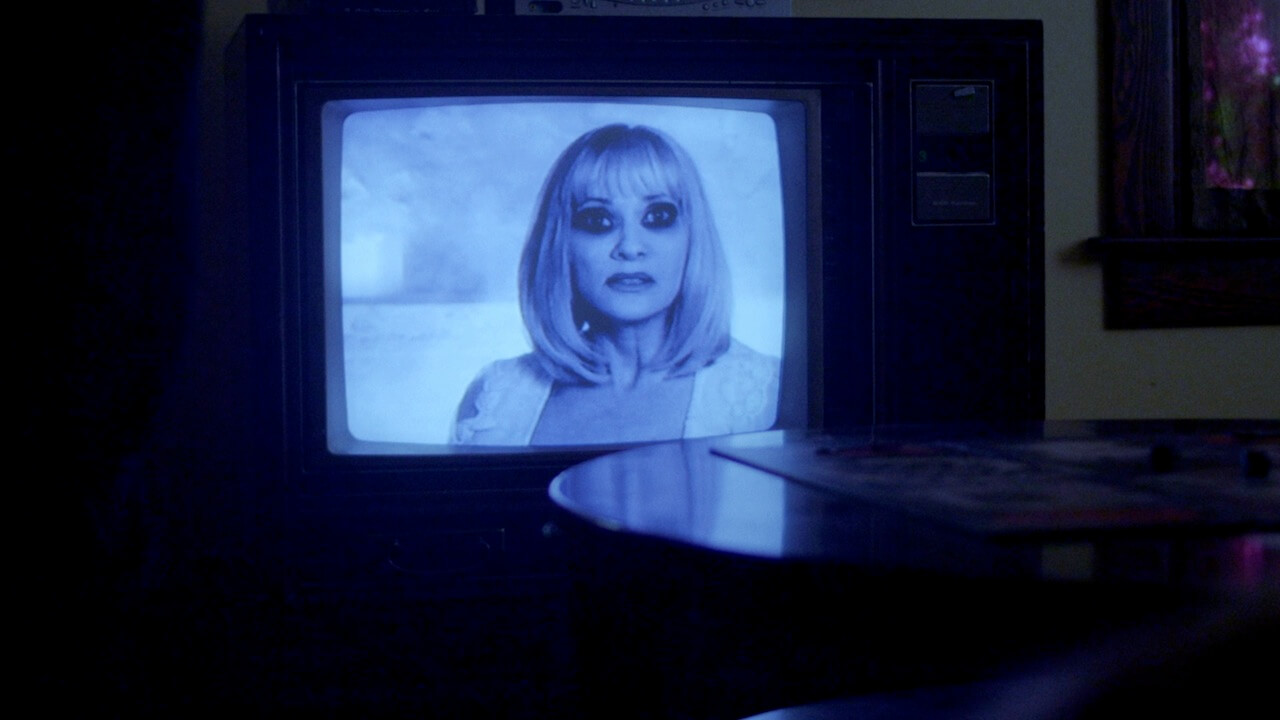
Following their father’s disappearance, two brothers attempt to clear out his shop. Amazingly, it’s a video shop filled with enough bounty to send VHS collectors into a frenzy. Amongst the stock they find in the locked office is a VCR game that they think might have been the last thing their father may have played on his machine. When they start to view it, an ominous host (played by everyone’s favourite Barbara Crampton) warns of what’s to come before the pair are bombarded by a seizure-inducing white noise. Settling down to play it opens up even more questions as the host says they must collect four keys to save their father’s soul. Obviously this surprises them but they continue to explore the game more.

The success of role playing games such as Dungeons & Dragons (played in movies such as E.T. the Extra-terrestrial and latterly in Stranger Things) and the success of the home video market meant that ‘interactive’ video games that incorporated both visuals and a regular board became more commonplace. The use of the device in Beyond the Gates give the film an atmosphere of days gone by. Hold tight, though, because despite the demure, almost family-friendly (apart from the bad language), first half, when the brothers begin to get into the game, things get very gruesome.

Genre regulars Graham Skipper (Bad Apples) and Chase Williamson (John Dies at the End) play the brothers – surname Hardesty, in a nod to Tobe Hooper’s unfortunate heroine in The Texas Chain Saw Massacre, and director Jackson Stewart interned with Stuart Gordon (Re-Animator), and his influence is seen in some of the later scenes. The interior of the video store the brothers are attempting to clear out is actually Eddie Brandt’s Saturday Matinee, a famous real-life store in North Hollywood that is still running to this day, which as well as selling and renting films is host to two tons worth of old movie production stills. These alone are worth their weight in gold and a reason for checking this place out should you find yourself in the area.

The Final Girls (2015)

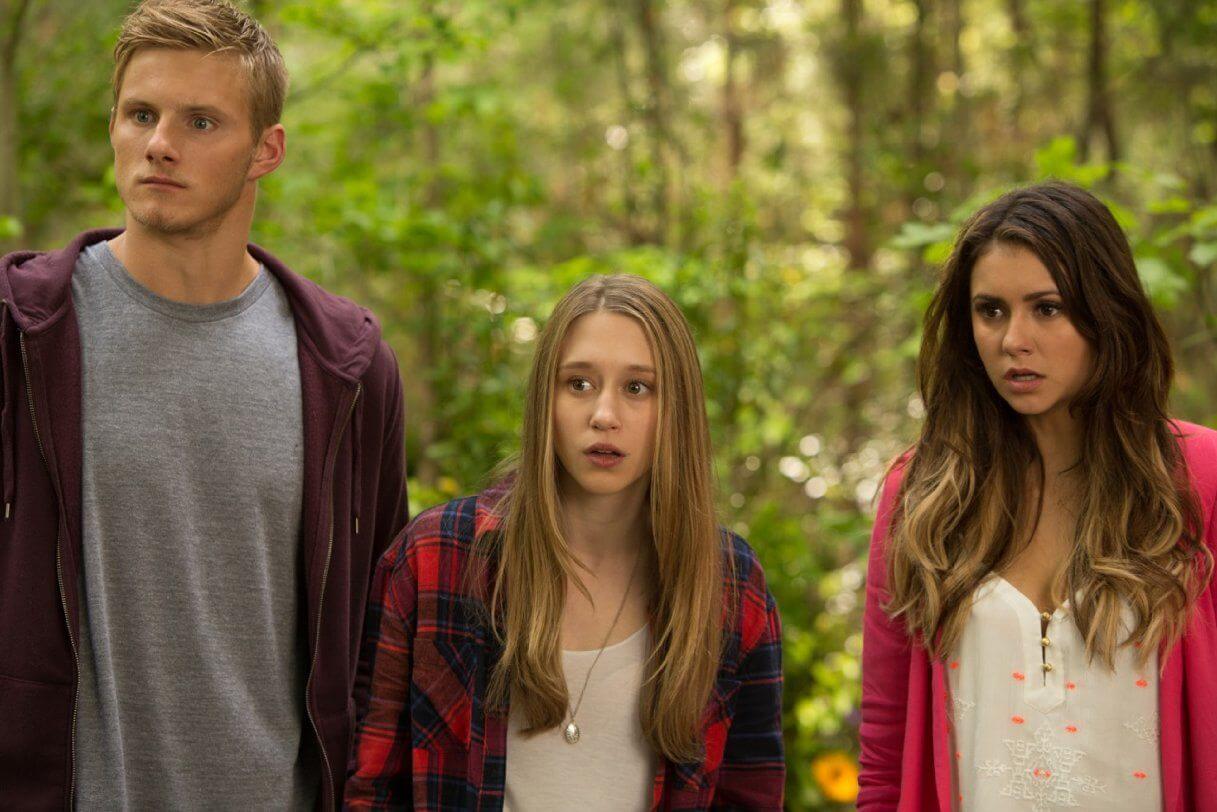
The clichés of the summer camp slasher film are both lampooned and celebrated in Todd Strauss-Schulson’s clever and highly entertaining movie. Imagine Friday the 13th and The Burning mashed together with Stay Tuned and The Purple Rose of Cairo and you might begin to get the gist of how messed up in the best possible way this is. American Horror Story’s Taissa Farmiga is still mourning her actor mother (Malin Akerman), whose one big claim to fame was as a scream queen in eighties shocker Camp Bloodbath, when she’s invited to a retrospective screening. A fire breaks out while they’re watching the film, and a group of them escape the inferno through the screen… literally putting them into the heart of Camp Bloodbath.

All the slasher tropes are here: the slutty but bubbly floozy, the over-confident sex addicted but obnoxious jock, the innocent but soon-to-be deflowered (and slaughtered) virgin, and the token black character who won’t make it past the first reel. However, with the modern-day group entering proceedings, all bets are off when it comes to how this massacre will go down.

As well as a healthy (well – that’s what we’re here for!) body count, the film has a lot of heart. The relationship between the mother and daughter is wonderful from the outset, with both actors excelling in their roles. It also touches on the friendship of the others in the group and despite the horror being front and centre, home truths and buried frustrations are brought to a head and cleared up in a beautifully natural way. In true eighties style, the film ends with some outtakes played over the end credits, just to cement the comedy edge. But rest assured, the humour isn’t to the detriment of the gore and terror.

While Scream birthed a franchise, it’s rewarding to know that The Final Girls, arguably the worthy successor to Wes Craven’s property’s crown, has remained a one-and-gone wonder. The fact that it’s not as widely celebrated is a crime, however. The campaign to make this a more recognised cult classic begins here.

WolfCop (2014)

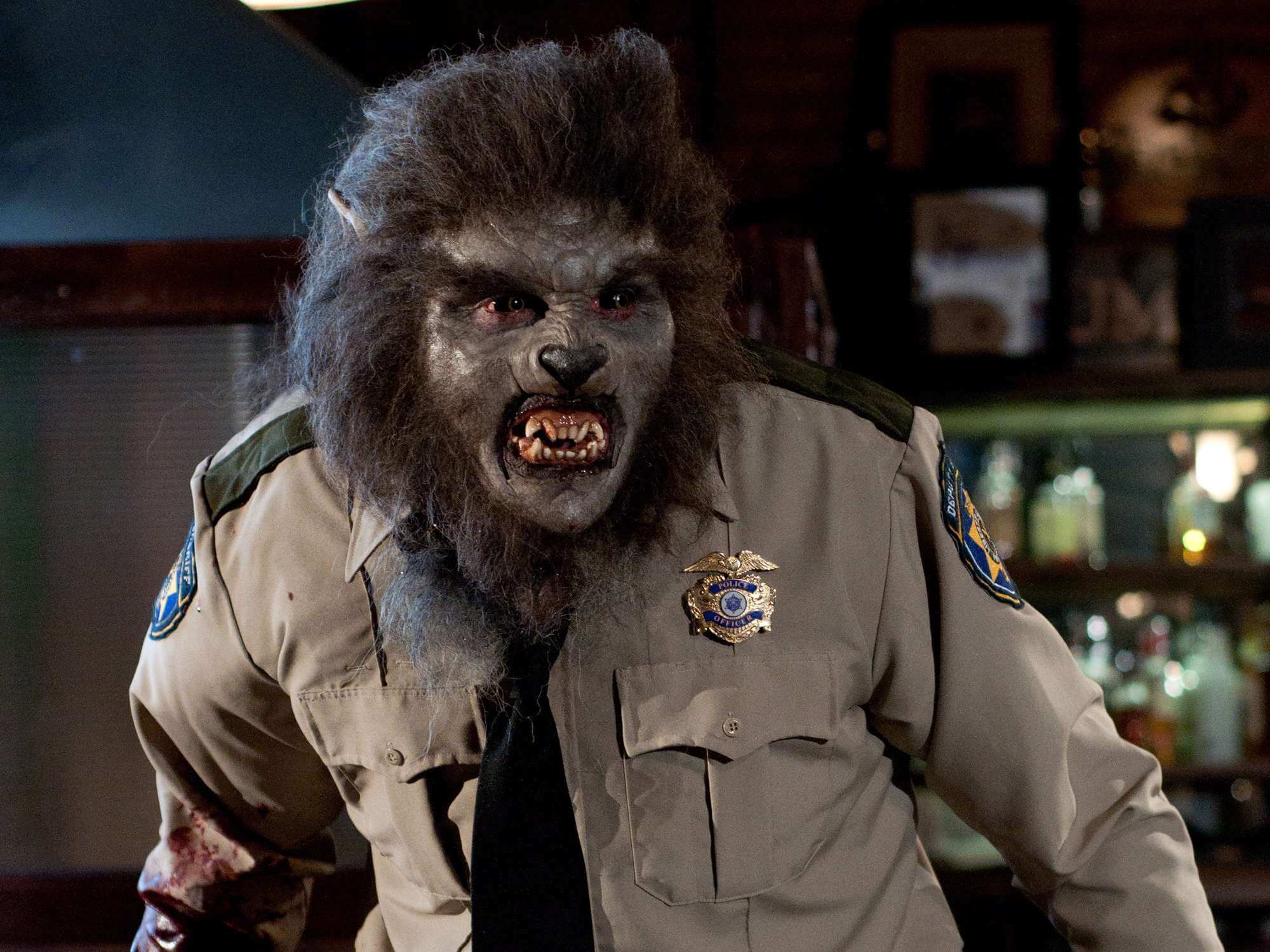
Lowell Dean’s ode to the lycanthrope is a joyous, if schlocky, romp that delighted audiences open minded enough to check it out and spawned a sequel in 2017 (the imaginatively titled Another WolfCop). Leo Farfard is the booze hound cop Lou Garou (French for… well, we’re sure you can guess), who is knocked out while investigating something in the woods and wakes to find he has acute hearing and smell and has a pentagram carved into his stomach and a tendency to become very hairy when the moon is full.

While everybody quite rightly cites the transformation in An American Werewolf in London as the pinnacle of perfection, the moment Lou first changes into his hirsute alter ego takes place in the toilet, and the first part to grow is… well, use your imagination. Like Landis’ masterpiece, this leaves nothing to the imagination and appears as painful as it should be. Unlike every other metamorphosis, the wolf inside literally tears through Lou’s flesh, leaving a snake-like skin behind. WolfCop does out-do American Werewolf in one stake – the love scene takes place with a fully-transformed Lou rather than pre-moon dance form.

Packed with fantastically riotous moments, WolfCop is everything you expect it to be and much more. Occult ceremonies, political conspiracy, ocular trauma, face ripping, shape-shifters, and a donut-eating hairy cop – the film has it all. And all the effects are done practically, which adds so much more charm to the proceedings. And if you’re worried about product placement, pay close attention to the Tennessee whiskey bottles, you’ll find it’s actually Jim Dandie’s Old no. 2 Kentucky Whiskey. You’ll be howling mad if you pass up this any longer.

You can catch this quartet of movies during the STRANGER FEARS season on Horror Channel throughout January. Tune in on Sky 317, Virgin 149, Freeview 70, Freesat 138.

Six Anime Characters Who Love to Gamble

There have been a host of gambling-themed anime over the years with the tiled based game Mahjong and other forms of wagers central to many of the most memorable narratives and stories. The running theme of gambling is also brought to life by colourful characters. You can read up on it here and find the few who were willing to risk it all for that satisfying feeling of winning a bet.

Tsunade from Naruto

Tsunade is one of the most loved protagonists in anime and it’s no surprise that she backs up her badass persona and ability to heal wounds even when faced with death with a penchant for hard gambling. Tsunade’s love of gambling was passed down through the family, learning from her grandfather that it can be incredibly fun and relaxing even if you are not winning all the time.

Tsunade possesses a true gambling spirit in the series and even though many of her plays end up failing, she continues to be positive and hope for the best. Tsunade is known for medical jutsu and a signature move called Creation Rebirth. It may be this invincibility that makes her believe she can gamble without any consequences.

Naruto ran for 220 episodes for five years between 2002 and 2007 and during that time, Tsunade had such bad luck at gambling that she picked up ‘The Legendary Sucker’ moniker. Success doesn’t matter though – a true gambler has the spirit to get knocked down and to continue rolling the dice thereafter.

Light Yagami from Death Note

The main protagonist in beloved manga and anime series Death Note may not be a conventional gambler but he regularly partakes in high-stakes games and decisions during the series. The story is focused on a boy genius who is unhappy with his lot and seeks to change and mould the world to his way of thinking. After a notebook called ‘Death Note’ arrives one day, Light Yagami battles against the dark spirit Jabami Yumeko and decides to rid the world of all criminals. Light Yagami’s fortitude would surely have made him an expert at the craps table.

Akagi from Akagi: Yami ni Oritatta Tensai

Another handsome protagonist makes the list of heavy gamblers by taking on all yakuza gamblers and defeating them single handedly. Akagi from the manga Akagi: Yamo ni Orittat Tensai is just 13-years-old at the start of the story but he has no problem dispatching his older and more experienced opponents at mahjong and develops a legendary reputation as a result.

One particular plot point sees Akagi use his gambling prowess to help small-timer, Nangou, who has got in too far with the yakuza and is set to lose everything. Akagi saves the day by defeating them all and winning a huge amount of money. Akagi is the quintessential gambling hero and in the manga, he returns after a six-year hiatus with a mythical status and continues to blow away his opponents.

Faye Valentine from Cowboy Bepop

Anime classic Cowboy Bepop which ran for just a single memorable season across 26 episodes in the late 90s also had one of the most unforgettable gambling characters. In addition to being a fan of smoking, drinking and other forms of recreational drug use, Faye Valentine was a pathological gambler which enhanced her image as a femme fatale and ruthless bounty hunter.

Tetsuya from Legendary Gambler Tetsuya

To complement the list of characters, let’s also have a look at an anime specifically about gambling. The appropriately titled Legendary Gambler Tetsuya debuted in 1997 as a manga series centred around gambling. Writer Fumei Sai and illustrator Yashshi Hoshino crafted an enticing premise around the main protagonist, Tetsua, who is a master gambler and defeats anyone he goes up against and takes all the winnings.

Set against the backdrop of World War Two, Tetsuya continues his winning streak until one day he loses out to notorious gambler Boushu-san. Tetsuya takes the defeat as a sign to learn more about the world of mahjong and he then dedicates all of his time to training with a view to getting back into the game.

Legendary Gambler Tetsuya debuted as an anime series in October 2000 and ran for a single season over 20 episodes. The last episode aired in March 2001.

Kaiji Itou from Gyakkyou Burai Kaiji: Ultimate Survivor

Kaiji is one of the ultimate rags to riches stories in anime and his transformation from complete loser with huge debts to mature is propelled by his natural talent for gambling. Kaiji goes through several hardships but a sophisticated approach to gambling sets him on the right path. A few other notable anime gamblers include Daniel J. D’Arby from JoJo no Kimyou na Bouken: Stardust Crusaders, Leroute from Hunter x Hunter and Shigeru Akagi from Touhai Densetsu Akagi: Yami ni Maiorita Tensai.

Out Now – Issue 468

468 ns

In the new issue of STARBURST we look forward to the upcoming year as we present The Must-See 53. Every film and TV show that we think you won’t want to miss.

We also look back over the previous year with the Top 40 Movies of the Year and the Top 20 TV Shows, as voted by the STARBURST writers. Where will your favourite be? Will you find some nugget that’s worth checking out?

We also have a preview of the upcoming new Star Trek series, Picard and everything you ever needed to know about Jean-Luc too.

If that’s not enough, we celebrate Galaxy Quest becoming 20 years old, Horror Obscura looks at a quartet of ‘80s-influenced films, plus much more…

Plus all your favourite COLUMNS, NEWS, REVIEWS and much MORE from the worlds of SCI-FI, HORROR and FANTASY!

Head Office – A Short Story by Kate Shenton

head office


Santa Claus is a shit.

We all think it. Just a blundering buffoon who consumes one mince pie after another because he’s too egotistical to believe he’ll ever have a heart attack.

Two hundred and twenty-six years I’ve worked on that damn factory floor, wearing this stupid ‘elf’ uniform, laughing at his terrible turkey jokes, which are both offensive and borderlining on bestiality.

Two hundred and twenty-six years I’ve sat at that damn conveyor belt, adding the ribbons to each present, as they play that god-awful Christmas music in the background. If I ever meet Rudolf the red-nose fucking reindeer, I’ll skin him alive and turn his coat into a pair of moccasins.

But those two hundred and twenty-six years of shit are about to pay off.

I’m being promoted to head office.

Currently I’m sitting in reception, next to the old bastard’s office, waiting for my induction.

I’ve heard good things about head office. Nine-to-five hours, six weeks’ holiday, and no fucking Christmas music. Apparently everyone is given a kneeling posture chair, because when you’re important, the company cares about your posture.

“Mr Claus will see you now,” says the receptionist, in her monotone ‘god I hate my job’ voice.

His office is like everything else about him – grandiose, extravagant, and vulgar. Hundreds of Santa statues surround his oak desk, all of them there to inflate his ego, probably compensating for a tiny dick.

“Elfie, you old cock!” beams Santa, scoffing his five o’clock Christmas dinner, gravy dribbling down his beard. “Good to see ya! Sit down, sit down!”

My name’s not Elfie. Santa calls all his employees this, so he doesn’t have to bother learning our names. It’s not like we play an important part in his trillion-dollar empire!

I sit down.

“So, Elfie… Before you make the leap, I need to know… do you love Christmas?”

“Yes, of course I love Christmas!”

“Would you do anything to keep Christmas great?”

Right now, I’d do anything to get out of this stupid fucking uniform.

“Yes, Mr Claus,’ I lie, ‘I’d do anything.” He smiles, blue eyes twinkling.

“Good. Because we’ve built up one hell of an empire here! I’ve gone from being a simple saint to a global icon. There are more look-a-likes of me than the fucking Queen! The kids love me. The parents love me. They all love the brand and we need to protect it, no matter what.”

Santa Claus heaves himself from his chair and walks over to the smallest, oldest statue of himself, which is stationed on the fireplace.

He twists the statue’s porcelain head.

The floor behind me slides back, revealing a small staircase, leading into the darkness.

“So … what’s down there?”

“Head office!”

Shit! No one told me it was a basement office. I wonder if I can claim for vitamin D pills. Still, it’s got to be better than working in the factory…

The further down we go, the narrower and more crooked the steps become. Torches on the walls light our way. When we reach the bottom, we are confronted by a simple iron door.

“Here we go!” says Santa as he slides a key into the lock, pulling the door open.

He gestures for me to enter. I obey.

“Now what you need to understand is, during my sainthood, Christmas was a very different business. Cakes and nuts for the good girls and boys, a whipping or a kidnapping for the bad…”

The room was dark, so dark I can barely see anything, but I can hear something rustling in the shadows…

“However, I saw the potential… with the right marketing and a bit of clever branding, Christmas could be more than just a stocking full of dried fruit. But, to do that, I needed him to stand down and let me take the reins.”

I hear the rustling turn to grunting. Then, the sound of hooves striking the stone floor. Terrified, I turn to the door, but Santa has already locked it. His dead, black eyes meet mine through the peep hole.

“The thing is, he really liked eating the children and as they’re my best customers, we had to make a compromise… A sort of severance package.”

I hear a roar.

Out of the shadows Krampus emerges, licking his sharp teeth, dried blood glistening on his horns. He scrapes his hooves against the floor, excited to see me.

Santa smiles.

“You did say you’d do anything for Christmas!”

Where Have All the Great Christmas Films Gone?

Festive flicks like Last Christmas have been hugely successful at the box office, but the biggest movies aren’t always the best. Christmas films are in higher demand than ever before. There’s one problem, though: the recent ones just aren’t very good.


Take Last Christmas, the Paul Feig-directed romantic comedy starring Emilia Clarke and Henry Golding, which was released in November. Despite being panned by some critics (we loved it, though – check out our review here), the George Michael-inspired flick has been a huge success at the box office, grossing $69.7m worldwide in less than a month.

The same goes for The Grinch, the 2018 reboot of the Dr Seuss Christmas classic. The animation starring Benedict Cumberbatch received mixed reviews – it has a score of 59% on Rotten Tomatoes – but took over $500m at the box office, making it the second-most successful Christmas film ever behind Home Alone.

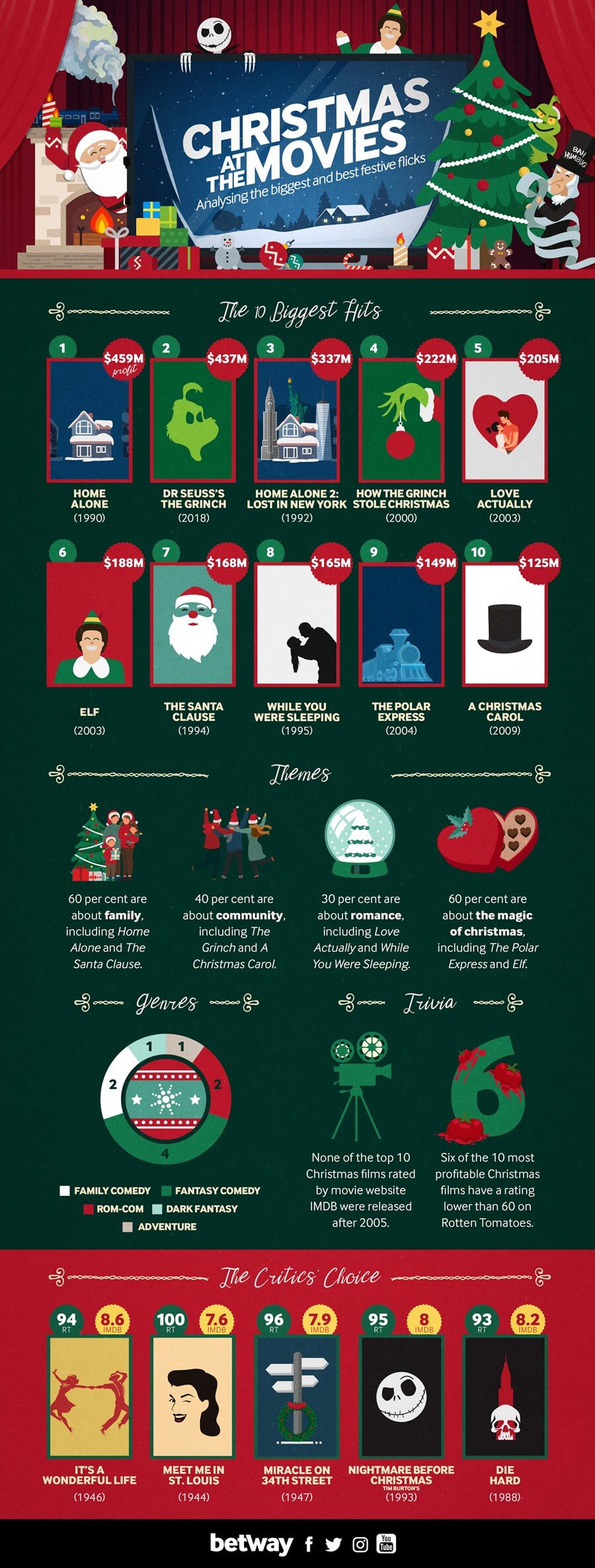
While festive films still perform very well at the box office, it’s telling that none of the 10 highest-rated Christmas movies on IMDB were released after 2005. Check out this handy graphic created by Betway, which demonstrates it perfectly. (Click to enlarge)

Film critic Nicholas Barber – who wrote a scathing review of Last Christmas for the BBC – says the dearth of modern festive classics is the result of a change in the wider film industry. “It’s about budget. Hollywood just isn’t investing in this kind of film anymore,” Barber says. “There aren’t that many low- or mid-budget British films these days. Everyone’s making Star Wars and superhero blockbusters. Then at the other extreme you’ve got tiny little indie films, experimental arthouse films. There aren’t many films in the middle, and that’s where most Christmas films would have been.

A change may be coming, though. The success of Last Christmas proves that low- to mid-budget romantic comedies, which have been on the decline since the 1990s, can still be a major success at the box office.

That’s particularly true in the holidays, when audiences are looking for a pleasant way to spend two hours indoors at the weekend. “It’s almost surprising there aren’t more Christmas films,” Barber says. “I thought Last Christmas was painful to watch but the poster’s pretty good, it’s got a good title, it’s got these good-looking young people who are laughing and have nice Christmassy clothes on with snow and twinkly lights. So I can imagine wanting to go and see it. These obviously do work, this is still a genre where you can spend not that much and do well. Love, Actually cemented the idea that you could put a romantic comedy out at Christmas and absolutely make a mint. If I was a British film producer I’d definitely be making them.

That change is already happening on streaming platforms. Netflix released seven Christmas films in November and December this year, five of which were rom-coms. These cheesy flicks, like The Knight Before Christmas and A Christmas Prince: The Royal Baby, wouldn’t necessarily make the cut in the cinema, but they’re cheap to produce, they’re appealing to audiences looking for a feel-good film during the holidays, and they’re easy to binge, making them perfect for Netflix’s platform.

Barber says those films are an example of a wider strategy for streaming services. “What Netflix does is pump it out,” Barber says. “They’re behind some really great films, but essentially they’re about quantity over quality. That’s not just about Christmas films, that’s everything. They put out this massive number of films, which has never been done before. They’ve got so much money and it’s all about just getting tons and tons of content out there.

It’s easy to criticise the cheap-and-cheerful streaming movies that have effectively replaced straight-to-video releases. Netflix knows these films aren’t going to win any awards. Their fourth-most popular tweet ever made fun of 53 users who had watched A Christmas Prince on 18 consecutive days. They are, however, money spinners that allow Netflix to fund more ambitious, artistic projects.

There’s a lot of dross being produced, and yet Amazon or Netflix will fund Roma, or The Irishman – films that get great reviews and are going to win lots of awards,” Barber says. “Some people would argue that if you’re an arthouse director or auteur, you can get funding for a risky project that you just wouldn’t get otherwise, and actually it’s a good thing that these people are willing to stump up the money. In The Irishman, you’ve got Martin Scorsese, Robert De Niro and Al Pacino. They made the film with Netflix because no one in Hollywood would pay for it. Even though they’re pumping out loads and loads of terrible films, maybe it is increasing the quality overall.

The Irishman has been an unmitigated success for Netflix. It has a 96% rating on Rotten Tomatoes, and is the favourite to win Best Picture at the Oscars. So when Scorsese receives the green light on his next masterpiece, perhaps he’ll have The Knight Before Christmas to thank.

CAL DODD [Wales Comic Con 2019]

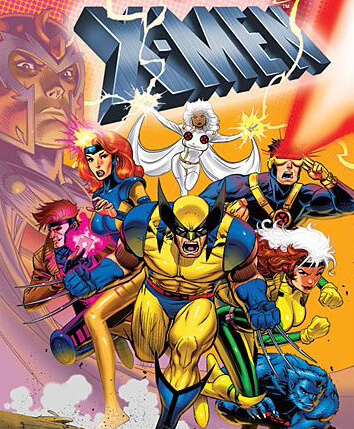
There’s no denying that the cultural impact of X-MEN: THE ANIMATED SERIES, a show which has gone on to become something truly special since its debut in 1992. With that in mind, it was a pleasure to speak with voice actor CAL DODD, who tells us what it was like to be a part of this cult classic cartoon with his influential take on Wolverine, and how that experience changed his life…

STARBURST: How and when did you first get into voice acting?

Cal Dodd: I was a singer for years in Toronto, doing commercials. I was a session singer, doing jingles etc, that’s what I did — about 2-3 a day for around twenty years. I was quite busy. I did a commercial for Chrysler, we were the background singers, and I was the voice of the sergeant. A year after I did that commercial, a woman called Karen Goora, who was a casting director asked me if I’d be interested in using my voice for a future cartoon called ‘Project X’. I said, “I don’t know. I’ve never done one!” This was 1992, and I had been in Toronto for about twenty years at that point. She said that she’d heard what I’d done before, and thought that I might be interested. I went to the audition, they showed me pictures of this guy, and I said: “Who’s this guy?” They explained it to me, and I loved the way that he looked. They explained what his character was, how they figured that he should sound. I said OK. To be honest, before going into this, I had studied a little bit for it. My girlfriend at the time got me some Wolverine comics. I knew what I wanted him to sound like. I grew up in a small town, and there were guys like Logan around, it was a tough little town. I read the script, and the first line was “You like picking on people smaller than you? Well, I’m smaller than you so pick on me!” The guys behind the studio glass just freaked out, and got me some more lines. I finished, and said “Thank you!” then, they called me the next day…they said, “You are our Wolverine.” That’s literally how it started. After this I got major cartoon roles, all my life I had been doing impersonations of people and animals, etc. So it was just a natural thing for me. I had five years of unbelievable joy with Wolverine, he’s just a great dude. 

What actors influenced you the most growing up, and why? 

I was mainly into music. I toured with Joe Cocker, we went to New York and recorded our first album there. Being a singer, I just loved going to Elvis Presley movies and watching him sing. I love Steve McQueen, who I sort of brought into Wolverine’s character. He is very into himself; he is strong but quiet. Of course, John Wayne, everyone loves him. Growing up, I liked Chuck Connors from The Rifleman series back in the early 60s. 

How much freedom did you get when you got to play Wolverine in X-Men: The Animated Series? 

They worked for about two hours with each one of us before we did the first episode. To nitpick, like “What’s Wolverine going to sound like when he’s not screaming, yelling, arguing etc” So, we had to come up with that voice. There wasn’t a lot of that, but we arrived at a solution. I had total freedom, because he was the only Canadian. I would add little things here and there, and they’d ask me for feedback. They’d say, “Perfect, do it!”. It was a riot to do him, and he became like my right arm. He became another part of myself. Very much like me – according to my wife!

Cal Dodd

Can you tell us a little bit about what the cast was like to work with?

I was brand new. I would see them every once in a while, but not that often. Although I had been doing voice work for about twenty years, I was actually still the new kid on the block. They were wonderful to work with, we had a great rapport, almost immediately. For the first 4-5 episodes, we worked in a circle in the studio, but the engineer wouldn’t let us carry on doing it. He said that there was spillage (leakage into the microphone) from my microphone to the one across from me, into Gambit’ s/Rogue’s mic for example. As a result of that, they stopped that altogether, and we would just go in one at a time. I would get a call, and they’d say from 2 pm we are doing Wolverine’s voice, until 3:30 pm. Then I’d be done; I wouldn’t see anyone else. The director, Dan Hennessey (who is very good) would explain everything that was going on, so it was still wonderful. It was great to create this character, and have them really like what I was doing. The writing was so superb; it was hard not to succeed with this. It was also very funny. Wolverine had all of the funny and stupid lines! They were all very professional. I was welcomed aboard. 

The reason this cartoon went on to be so huge is that it had serious themes within it. So, when did you first realise just how good the writing was for the show?

When I first saw him, in the first episode on Halloween night 1992, I freaked out because I finally got to see the guy that I had been doing the voice of. To see what he was like, how he moved, and what he looked like. The animated drawings, etc. I said, “Oh dear, this is going to be good!” We all thought that. For the first nine months, we didn’t know if we were going to go another year, there was no feedback. Then all of a sudden when the FOX network took off, someone within the company said to the president of the company that they can’t do the series with the way that they’re writing it. She put her job on the line and said: “We are doing it this way” she went out on a limb, and then FOX was the top Network after six months, because of the Saturday morning X-Men series. After that, we all knew that this was unbelievably a lot of fun. It was just great to watch it. 

The show was obviously highly praised, and adored by fans, but for you, personally when you look back on it why else do you think that the show went on to have such a huge cultural impact?

It’s made a huge impact. I started doing comic cons about a year ago. They finally talked me into doing it. I just wish that I had done it earlier. It was the 25th anniversary of the X-Men series, so I said “OK”! I went by myself, and I couldn’t believe it. I couldn’t believe the knowledge and the love that these fans have. It astounds me every time I go out. Half of them are in tears when they come up, it breaks my heart. They tell me that I’m an iconic character, I’m the same with Wolverine as Kevin Conroy is to Batman. I say “Thank you so much!” I just can’t believe it, and I don’t know what to say to them, they come up to me and say that I’ve made their childhood. Then, of course, some of them have their own children with them, who they’re just starting to show this series to, and they just love Wolverine. One little boy, who was about 4 or 5, had a picture with his family and me, and the kid’s name was Logan! So many people come up telling me that they’d named their child after Wolverine. So yeah, the cultural impact is amazing, and it blows me away. 

You got to play Wolverine in numerous video games over the years including Marvel Vs. Capcom, what was that like for you, compared to what you did on the TV show?

No comparison. They were just very strange. There was no real dialogue for Wolverine or any of us. It was just these ridiculous sounds or noises. Yelling weird things! Fans do come up to me at comic cons and ask me to do those parts! It was just different. You’d be done in 2-3 hours, something like that. I wasn’t that into it.  

How did you end up meeting Hugh Jackman, and also, have you seen any of the X-Men movies? 

In 2000 he was in Toronto to shoot X-Men. I was invited to this function where we were to meet. The only reference for Wolverine’s voice for five years was my voice from the series. So Hugh had to study my voice, to get it as close as he could to the way that I did it, because when people read comic books they hear my voice in their head (they tell me this at comic cons). When we met, I said “It’s a pleasure to meet you Hugh”, and he said, “G’ day Cal, it’s good to meet you, but I’m sick and tired of listening to your voice mate!” I said “Oh, OK then!” he said that he meant it in a good way! It was just that he was tired of listening to it. He had to listen to it months. I said “You be good to him!” and he said “OK, I’ll do my best”, “I’m sure you will”. I watched about ten minutes of the first movie after he first came on, I just couldn’t do it, because the character was still so close to my heart. It wasn’t me. So, I haven’t seen any of the movies. As it went on, no one else could do it any more after what he’d done with it. He has just been superb. Myself, I couldn’t watch it. 

How excited are you for your upcoming appearance at Wales Comic Con, and what can attending fans expect?

I can hardly wait to get there. Donna, my wife, goes with me (the agent/manager). Hopefully, a lot of my friends will be coming to Telford to see it. We are so excited for getting there because it’s the first time that we’ve (cast members) ever gone across the ocean together. George Buza (Beast) is beside himself, he just loves the idea, and he can hardly wait. I had to talk him into doing this about six months ago. Beast had never even seen the show; he hadn’t seen one episode of the five years that the show was on the TV. He was busy doing other work. I lent him some of my X-Men DVDs and said: “George, watch this!” For Beast it was just his natural speaking voice. Very rhetorical, and sharp-minded. He said “Oh, this is wonderful!” and I said, “Yes, it is!” He loves every second of it, and it’s great to see the excitement from the fans. Of course, at comic cons I like to talk about Slappy as well! It actually confuses people, because they see the picture of the dummy, and they say, “Wait, what? You did that voice as well!” they go “Oh My God!” 

What else can we expect to see from you in 2020? 

I’m working on 2-3 animated series. I just finished a Paw Patrol movie, then other cartoons, like Corn & Peg. Then the other voice over work that is here and there.   

For more information on CAL DODD and his work, visit his official website www.caldodd.com. To meet him in person, head to the next WALES COMIC CON on December 7th – 8th.

MARC SILK [Wales Comic Con 2019]

From STAR WARS: THE PHANTOM MENACE right through to recent work THUNDERBIRDS ARE GO, voice actor MARC SILK has had a diverse and fulfilling career. So with WALES COMIC CON on the horizon we thought it would be a great time to discuss this incredible journey with the man himself…

STARBURST: When and how did you first get into voice acting?

Marc Silk: My heroes were people that did that. Ever since I was a kid watching cartoons, I was fascinated with the idea that there was someone voicing my favourite characters. So when you see the very rare behind the scenes shows on TV, it blew my mind. There was a documentary on TV when I was 9-10 years old, and it was called Of Muppets and Men. You saw behind the scenes of The Muppet Show. My jaw hit the floor, because you go “Oh my God, those are the people who make what you see come to life!” I remember seeing Jim Henson performing Kermit the Frog, Frank Oz doing Miss Piggy, and Dave Goelz performing Gonzo. I just thought that it was the coolest thing in the world. I remember on Blue Peter once, they had a guest called Don Messick, and they said “What do you do, Don?” and he said, “Well I’m the voice of Scooby, Scooby, Doo!” Again, I kind of fell off the sofa. These were my heroes, they were the biggest stars in the world, but you never really knew who they were. So, it was kind of that. Even as a kid I was taking all of this in, being inspired by people who were behind the scenes. People like Steven Spielberg, George Lucas or even people like Robin Williams and Kenny Everett, a great TV comedian who was also a great producer. As a short cut back to your answer, I did work experience at a radio station in Birmingham. I taught myself really how to run a studio by watching people who I thought were the best at what they did. When no one else was there, late at night I would go into the studio and teach myself how to do it. I would get a microphone out, teach myself how to do character voices, and just experiment. I started out as a producer, making other people sound good. I was the button guy, the pair of hands you see on a mixing desk making other people sound like Hollywood. Bit by bit I needed voices for what I was doing, and I did it. I learned that way, I’ve got no formal training. Being inspired by people behind the scenes, I thought I’d rather be there creating characters, doing it that way opens up a whole new world of character creation that I don’t think you could do if you were in front of the camera, or on a stage. There are hundreds of characters that I’ve performed character voices for. I just don’t think you could do that if you were seen in vision.

What was your first major acting project, and what do you remember the most from this experience?

Things just went well really early on. The first big break was Chicken Run. They’d already cast all of the main characters. Right at the end, I got a call saying that Aardman are making this movie called Chicken Run, they need extra chickens! Basically Aardman needed extra cluckers. So I had to put a showreel together showcasing that I could do really good chickens! I thought, this isn’t just sounds, this is voice acting. So I gave them a whole load of different examples. To show that you understood yes it’s funny, but they might be larger than life characters. In the end it’s still acting. You’re creating these characters, and you’re bringing them to life. So I put this showreel together, showing what I would do, but just to leave them remembering me a bit more, to put my stamp on it, I did a five-part chicken harmony to an instrumental recording of Frank Sinatra’s New York, New York, right at the end! I got the gig. When I was in the studio, any time they needed me, I heard someone say “Can you bring in the Sinatra chicken please!

You went on to work on the Chicken Run video game! What was that like, and what did you contribute to the game?

Yeah, after we did the movie, I ended up being brought in to work on the game. I was Mel Gibson’s character, Rocky the Rooster for that. I was basically replicating Mel Gibson’s character voice for the actual game. As well as other bits and pieces, again that was very early on, and it opened up the games world for me. I’ve done a lot of game work, and I’ve been fortunate enough to work on some incredible titles.

You’ve worked on a stack of video games over your career; as time has gone on, and the graphics/technology within games has, of course, become better, how has that sort of helped you accomplish what you do as an actor?

At the core of it, where you start it’s exactly the same. In the end, we are telling stories. Any piece of entertainment will have great characters, stories, and performances. So whether the quality of the actual animation is more, maybe cinematic/realistic, that can end up making it a more immersive experience for you. In the end, funny is funny, and dramatic is dramatic. It doesn’t matter how good technology will get, with reading a book it’s still your imagination and great writing that make that thing come to life. I’m a huge tech-head, I love going around a studio, and seeing how technology can help us tell a story. Or make something even more magical. What I love with the advances in it, is like I said, the way it can make it more immersive. There’s a real landmark game that I worked on called Black & White, by Lionhead Studios. I was all of the main characters in that. We recorded that over a series of months. Thousands upon thousands of lines. The scripts were like a printed version of Wikipedia. I was the voice of the conscious of this game, it was the first real, big, God game, where you chose to be good or evil. I was the voice of your conscious, of good and evil. We recorded character dialogue that covered every single permutation of what you could do. For its time, it was ground-breaking. So that is where technology becomes your friend and helps as a game-player. With animation, the computing power now is so much that you could perform an animated character live. You have every possible movement that the character could do. It’s almost like a puppet, and you could talk to someone live, with that character voice performing it live at the same time. We did that when I was performing Johnny Bravo. There’s also a great show on the BBC called Go Jetters, it’s on CBBC’s and I play the kind of bad guy, who is just misunderstood. His name is Grandmaster Glitch, again what we’ve been able to do in terms of being interactive with that show, it helps in terms of education. In the end, it’s just fun. It’s just really great fun, as an audience you like the characters based on the strength of the story, and the performances. That’s what it all boils down to. Brilliant writing, great characters, and great performers. A clue to what is at the heart of something that’s timeless, if you go back to something like The Muppets, if that was great CGI, it wouldn’t have been any funnier. That’s still as funny now. At the heart of those great characters were brilliant performers with Jim Henson, and Frank Oz. It just stays with you.

As you briefly touched on, another huge world that you got to be in was the cartoon classic Johnny Bravo – how did this opportunity come about, and what did you love the most about voicing him?

He is such a larger than life character! Johnny was a big male himbo who loved himself more than anything else. He was put into his place by everyone around him. What I loved was almost going back to the technology side of it. We actually performed Johnny Bravo live for the entire day between shows. So Johnny Bravo becomes the host of Cartoon Network, for twice a year, for about three years. It was a huge technological feat. We did it live in the UK, and it was seen as far as South America. In-between Cow and Chicken, The Powerpuff Girls etc. Johnny was actually the live in-studio link guy, but it was all performed using high-end computing power, and me performing the voice live. Talking to kids live on the phone. Doing competitions and all kinds of stuff. That’s taking something to a whole new level. It’s the first time that an A-list Cartoon Network character had ever been performed in that way. I only found out about it afterwards when I saw a feature about it in a magazine. We were too busy doing it. It was a hell of a thing to do it, and when that microphone opened, the trust in you was enormous. It’s a huge privilege and responsibility, you’ve got to be funny, professional, keep it going, stay in character, do it on time, and listen to what the kids are saying that are phoning you. It was an amazing thing to do the voice for.

Did your background in radio help you with achieving the voice of Johnny Bravo in a live situation?

Yeah, so I hosted a radio show for a few years before I went full time doing voice work. I think that was incredible groundwork, for knowing how to get through anything. Working in local commercial radio, you know that at some point, everything will just fall apart around you. It did. Things would stop working, technical things wouldn’t work correctly. As the host of it, you had to make it carry on. Often when things went wrong, it was almost better because of that. So having that experience was an incredible starting point for performing this character, or any other character live. Because they knew that if something went wrong, you’d make it OK. That moment could end up being more exciting or more thrilling for the viewer, because you know that it’ll be OK. It’s a lot of fun to see how you’ll get out of it.

How did you end up becoming a part of Star Wars: The Phantom Menace, and what do you remember the most about working on this sci-fi giant? 

I got a call saying, “Are you free? on Tuesday to meet with a casting director of a brand new Star Wars movie?” I said “Give me a second… yes!” and this was of course for The Phantom Menace. I’m a huge Star Wars fan, and it had been 16 years since Jedi. In fact, I’ve still got a STARBURST Magazine from around that time! It’s got Darth Vader, C-3PO, R2-D2, and I think Leonard Nimoy was on the cover as well. I was reading STARBURST in school, I was a fan of it! Anyway, long story short. I ended up working with George Lucas on Star Wars. Talk about a triple whammy. I’m a Star Wars fan, it’s the first Star Wars film since Jedi. I’m working at Abbey Road Studios, and being directed by George Lucas. It was incredible. I played a character called Aks Moe, and he was the ambassador of Malastare, he was in the senate scene. Within the Star Wars universe my role was relatively small, but it was still a role in Star Wars! It’s something that I’m entirely grateful for, and I’ll remember every single moment of it, forever.

It seems like George Lucas was a very interactive and hands-on director?

He was! He was very hands-on. He directed me, and people from Skywalker Sound were in the control room at Abbey Road Studios. Rick McCallum the producer was there, Robin Gurland the casting director, and then George actually directed me. He was such a lovely guy to work with. I walked into the studio, and the first thing he said was “Would you like a potato chip?” so at that point, I thought, “This is going to go OK!” Also, when you work on something of that scale, it’s a really good short-cut for future work, because they think, if they trusted you, then we can probably trust you as well. I think that was the project that opened so many doors. It’s taken me to places that are just wonderful. I now host Star Wars Symphonies, a couple of years ago we did Symphonic Star Wars, and it was the Royal Philharmonic Orchestra and myself live at The Royal Albert Hall! We did two shows in one day, and we had over ten thousand people come to play. To be asked to be the person to front that, is a hell of a thing. I go back to, “I’m a Star Wars fan” and a huge fan of John Williams, so to share that with other people that like the same stuff that I do, is incredible.

Going back to cartoons, you got to play both Scooby-Doo and Shaggy, how did you go about doing your own approach on these characters, especially as they’ve been around for a very long time?

I grew up, watching the original Scooby-Doo, and a tip of the hat to Don Messick, the original voice. Scooby-Doo started in 1969, and it celebrated its 50th anniversary this year. I did interviews for the BBC a few weeks ago, just celebrating, and talking about the history, and my love of it. I got to meet Don Messick as a fan, at a gallery event for original Scooby-Doo artwork, before I was doing this professionally. I’m a fan. I actually collect original animation art from my favourite shows and animation artists. I’ve got a huge archive. My love of this, is more than just what I contribute. I’m still a big fan of the craft that happens behind the scenes. When it comes to my involvement with Scooby, I’ve just always been able to do it. I think that when you really love something, art, music, whatever it might be. It’s just in you. Like if you’re learning how to play the guitar, you learn the tunes by your favourite musician/band. So when doing character voices, I was learning how to perform my favourite character voices, and two of them were Scooby-Doo and Shaggy. You figure it out. So just from playing around in studios for other recording sessions, people got to know that I could perform these characters. But also, more than that. I could perform them accurately. It wasn’t just copying what someone else had done, it was understanding where these characters had come from. How to make them live and breathe. If all you do is copy what someone else has done, you can’t really go anywhere. If you understand why they did it that way, and what made it work. Then that’s the most healthy starting point. Just playing in studios, I would sometimes just do it, for no other reason than it being funny, to entertain people that were in the room. Then word got around that I could do it. Then about ten years ago I got brought in to start doing the voice of toys, games, commercials and things for Cartoon Network, and CITV. It’s a hell of a thing. These characters are such icons, they’re not just another character, they’re something that you’d see on a T-shirt! That’s the level of epic that these characters have reached. So the first day I found myself in a studio with a script, and the first line says “Yikes!” you realise that this is going to be a fun way to spend the day.

Talking of well-known cartoon characters, Danger Mouse got rebooted back in 2015 – how did you become a part of it?

Danger Mouse was a huge favourite of mine, and it still is. The very first cartoon that I ever worked on was created by the people behind Danger Mouse, Cosgrove Hall Films. When I found out that they were rebooting it, I spoke to one of the people behind it and said that “I’d love to be a part of it. There’s a whole bunch I could bring to it.” Then they went, “Alright, leave it to me!” Then a few months later I got a phone call asking me to come down and perform these characters. In the first season of Danger Mouse I’m the voice of 31 characters.

What can you tell us about another one of your latest TV shows, Go Jetters?

It’s an incredible show. That’s now showed all over the world, it’s got its own magazine. They’ve actually just released the Grandmaster Glitch plush toy! So there are a lot of people getting Grandmaster plush gifts this year. That’s an amazing show. It has that Sesame Street, Muppets sensibility, where, it’s really exciting, really funny, but you might just learn something along the way? It’s that. Anyone of any age could watch Go Jetters. It’s a terrific show.

Thunderbirds Are Go is still going strong, especially as it’s a new approach that also respects its roots. What can you tell us about working on it?

Yeah, I’m the voice of the incredibly handsome Captain Rigby. He has the greatest eyebrows on TV. It looks like they’re freshly baked. It’s Weta Studios that have done all the live background and models for it, and CGI characters. In Season 3 it’s gone from being a great new animation show, to something that is truly cinematic. Ben & Nick Foster, their soundtrack is a full orchestral score. It’s like something from a movie. Lee Majors is the voice of Jeff Tracey! It’s absolutely incredible. I’m Captain Wayne Rigby, a super tough guy that works with international rescue, but in terms of heritage it’s so wonderful what they’ve achieved. They brought in David Graham, who was the original voice of Parker in Thunderbirds. He is still the voice of Parker now. They know all of those little bits of detailed spice that fans will love. I’m a fan, so I just get excited watching it. You’ve got Rosamund Pike as Lady Penelope and David Graham as Parker. It means the world to me, just being in that room. Forget work for a second, to be in that room, when we’re recording. To walk in there and the original voice of Parker goes “Morning Marc!”, you go, “Yeah, this is it!”.

Two Point Hospital went down a storm with gamers. What can you tell us about your role within the game?

It’s incredible. It was a smash hit for Two Point Studios and Sega. Within 48 hours after it came out it became the number 1 game worldwide on Steam. It was up for a BAFTA this year at the BAFTA Games Award. When you’re playing the game, I’m the voice of the diverse presenters on the radio in the background. It’s become such a big deal now that these characters have a following. We keep on releasing new add-on packs that feature these presenters having new adventures.

How excited are you for your upcoming appearance at Wales Comic Con, and what can attending fans expect?

It’s kind of as good as it gets. The guests that they get at Wales Comic Con are up there with the absolute best that you’ll bump into. The atmosphere is terrific. I love meeting the people that walk through the door, because I think I love the shows as much as they do. So for anyone who is coming to do Wales Comic Con, come over and say hello. I’ll make sure that they are thoroughly looked after, I’ll give them as many voices as they want. Whether they want to bring pictures for me to sign, or if they get something from me, I’d love to do that for them. It’s a great and really exciting day.

What else can we expect to see from you in 2020?

There’s a couple of new shows that I’m working on right now that haven’t been announced yet. I’ll tell you about those when I can. There’s more Thunderbirds to come next year, more Go Jetters as Season 3 continues. I think that it will go to infinity and beyond.

For more information on MARC SILK and his work, visit his official website www.marcsilk.com. To meet him in person, head to the next WALES COMIC CON on December 7th – 8th.

PETER WELLER

robocop

The award-winning actor PETER WELLER has appeared in more than seventy films and television series including STAR TREK: ENTERPRISE episodes ‘Demons’ and ‘Terra Prime’. He is also well known for the cult 1984 science fiction film THE ADVENTURES OF BUCKAROO BANZAI ACROSS THE 8TH DIMENSION, and for starring in Manny Coto’s 2002 cable television series, ODYSSEY 5. More recently he played Admiral Alexander Marcus in 2013’s STAR TREK INTO DARKNESS, but he is arguably best known for his iconic role as the title character in the 1987 classic ROBOCOP and its 1990 sequel, ROBOCOP 2. We caught up with the veteran actor ahead of his appearance at December’s FOR THE LOVE OF SCI-FI fan convention to talk about his ROBOCOP recollections, his varied career, art, and more…

STARBURST: Is it correct that you turned down a higher paid role in Dino De Laurentiis’ 1986 film King Kong Lives to play the RoboCop character?

Peter Weller: Yes. I had not received the Robo offer, but my dear friend and agent, Rick Nicita, were hoping it was going to come in that day; thus we took the meeting with ‘The Great Dino’; for whom I later did Leviathan, along with his brother Luigi and nephew, Aurelio who was the hands-on producer and who, along with his family, are still friends. Dino had the most entertaining and mesmerising energy. He stood up, came around his desk and immediately demanded, as Rick and I were barely in the door “how much money, you want, not to do this ‘robot’ movie?” I was instantly thinking of Ferraris and such. We got the Robo offer that afternoon, from the great Mike Medavoy for much less loot. Who cares. Money isn’t everything.

The film was highly prescient: despite being set in 1991, it correctly visualised a future of runaway consumerism, movies recorded onto disc, ‘data strips’ – which were basically USBs – and the concept of a privatized police force whose central agenda was profit. Did you think such things were plausible when you read the script?

As a child of the ‘60s, meaning the most influential music, protest, social revolution of the century; by 1986, I was buried into the fallout of the ‘me decade’ ‘70s, thus politically asleep, more or less. Although the script was a powerful and funny read, and the entire adventure was endemic to my life on more plateaus than I could begin to iterate, I did not see the prescient sociology in the script; inclusive of ‘privatisation, trickle-down eco justifying post-modern greed, identity theft, 3rd world exclusionism; crime-cops ownership, media mind-swamp; death by atomic bomb made commercial.’ On and on. I do now, but did not then. I prefer to call my lack of awareness of how profound this film would be… ‘movie-guy myopia’.

Moni Yakim, the mime you’d engaged, originally envisaged a more fluid, Tai Chi-style of movement for the character. How did you both cope with the restrictive weight of the suit and develop RoboCop’s unique physicality?

For years I had practiced – and was still practicing – Iaido or Iai-Jitsu, which is the art of katana fighting or, simply put, the live blade, or to dumb it down, ‘samurai fighting,’ from which Aikido, Jodo, and Karate derive. Living in New York, after interviewing several mimes for coaching – I had taken mime and years of dance – I interviewed with now dear friend Moni and he started moving in a fluid, legato idea with heavy staccato accents at the end of movements, just like Iaido. I loved it. And him. The framework of the movement remained, but the tempo changed when Rob Boutin’s genius suit arrived. The suit transformed previous ideas or concepts about the physicalisation of Robo. The entire physicality was slowed into a ‘largo’ power that bridged humanity and beast. Moni worked with me over a weekend and had me watch Nicolai Cherkasov in Sergei Eisenstein’s Ivan the Terrible; wherein I saw the same thing; huge legato-largo movement with big staccato punctuation. Brilliant. He looks phony and operatic… for about 5 minutes… after which one becomes mesmerised.

Were you comfortable with the third draft of the script, which incorporated Paul Verhoeven’s suggestion that Murphy should have an affair with Nancy Allen’s Lewis?

Never read it. So do not care now, nor ever did.

Whenever production halted during filming, is it correct that you passed the time playing the trumpet? Were you already performing with Jeff Goldblum at Le Petit Four at this point?

Production never halted. There were no stalled moments. The shooting went like a tornado thanks to Paul, Jost Vacano, the script and crew and especially the Robo make-up/costume team. Yes, I played the trumpet; but I was up every morning at 3:00 AM running four to six miles a day, prepping for the New York Marathon. Jeff and I started at Le Petite Four in 1993 I believe.

You were very focused on set and reportedly stayed separate from the actors playing the villains. Did you workshop any scenes with them? And did you ever get the impression that Kurtwood Smith’s character Clarence Boddicker knew that RoboCop was one of his own murder victims?

I was never kept separate. I stayed separate on set because the character was alone in a bubble called ‘machine.’ Thus I rarely spoke to anyone except Paul or the Robo team on set; they referred to me as ‘Robo’ on set if they needed to address me. Understand that I warmed up vocal cords to drop intonation, and was also saving my voice. However, off the set, I would hang with Kurtwood and Joan Smith; Ray Wise, Calvin Jung, Jesse Goins. The bad guys were my buds; Kurtwood and Paul McCrane still are. I never considered if Kurtwood knew Robo was Murphy. I assumed he knew; as we were both set up.

You produce some horrific screams during the film, most notably when Murphy is executed, and again when RoboCop’s chest is pierced during the finale. Which painful experiences did you return to hit those notes?

Any of a thousand pains, emotional and physical, since infancy.

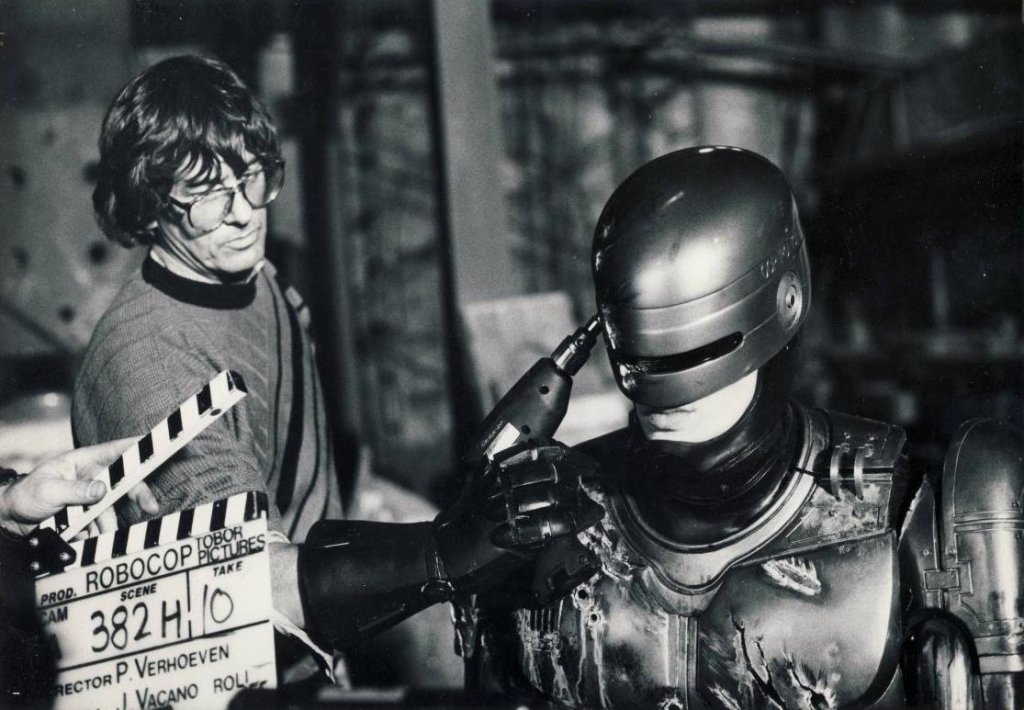
Peter Weller on the set of RoboCop (1987)

Did you think RoboCop would go on to become such a prominent part of your acting career?

I knew a) that Paul Verhoeven was gifted; and I had worked with Mike Nichols, Sydney Lumet, Richard Lester; been inducted into the Actor’s Studio by Elia Kazan with whom I had only done improvisation, but that was enough to reveal his genius; studied with the great Uta Hagen, etc and had seen all of Paul’s films. RoboCop, as brilliant as it was penned by Michael Miner and Ed Neumeier – who wrote it, by the way, right next door to where I now live – would have never been that film without Paul’s infusion of loss, identity, myth, empirical value. I knew it would be terrific, but there is no guarantee of success or classic legacy until the audience sits in front of it. My career? I never think of ‘my career’. I only move from one gig to the next… by choice. 

You’ve said before that Paul Verhoeven’s involvement in the project is what led you to lobby for the part of Murphy. Were you happy to commit to the sequel despite his absence?

The sequel lacked a third act. I said this going in. Had a ball making it. Loved Irv Kirshner and Frank Miller. No third act, alas.

Were you proud to support the 2011 Kickstarter campaign for a statue of RoboCop to be erected in Detroit?

I did not support nor denigrate it. I only supported Martha Reeves move when she was, I believe, on the city council, to line the Detroit greats from music and sports along the waterfront by the arm of Joe Louis, the bronze icon by renowned figurative sculptor, Robert Graham, who is a great friend and influence. The statue of Robocop is on its own.

Are you happy that the film is now part of the Criterion Collection, alongside such classics as Seven Samurai and Naked Lunch?

…and Sweet Smell of Success, possibly one of the three most poignant and brilliant American movies about America ever made. Yes.

How did you transition from directing and starring in movies/TV to qualifying as a Renaissance art scholar?

A long series of events, beginning with the wonderful, beautiful, mind-blowing intelligent Ali Macgraw taking me by the hand through five floors of the largest ever Picasso retrospective at MoMA before sending me to Italy, where I now live part-time. And then seminal director of photography, Vittorio Storaro, sending me to see Giotto’s Capella Scrovegni [Arena Chapel] possibly the single most influential piece of western art in the early modern era. It is all visual information and entertainment, one way or another, n’est pas?

The impact of RoboCop has not dimmed in 32 years. Does it feel strange to have been part of art history, as well as studying and teaching it today?

Strange? No. Immensely satisfying, yes. I just, in October of this year, while directing Magnum P.I. for CBS, took a Friday-night flight from Honolulu to Salt Lake City to connect to St. Louis, just to give a 25 minute paper and answer an hour’s worth of questions at the Sixteenth Century Society of 2019, one of the larger and important academic yearly events on the Renaissance. The panel of papers addressed ‘Why the Renaissance Matters’. My paper was ‘Giotto, Caravaggio, and Storaro: Renaissance Narrative Art to Modern Film’. This paper journeyed from that very Giotto fresco cycle, to which Storaro sent me, through futurism, modernism, post-modernism – Carrà, Rothko, Mondrian – to Storaro’s cinematography. Then I had a steak with some scholars; and jumped a 6 AM flight back, 15 hours, to Honolulu to continue shooting. Most people I know didn’t consider that ‘strange’. They voiced it as down-right lunacy! But I have been blessed with my father’s gift of tenacity. And my mother’s gift of passion. As she would say: “do it all. All of it… and do not quit.” 

PETER WELLER will be appearing at the world’s biggest Sci-Fi fan convention FOR THE LOVE OF SCI-FI, December 7th and 8th at Bowlers Exhibition Centre Manchester alongside the legendary WARWICK DAVIS, THE BOYS and DREDD star KARL URBAN, THE PUNISHER’s Jon Bernthal, UNIVERSAL SOLDIER’s Dolph Lundgren, LETHAL WEAPON’s Danny Glover, STRANGER THINGS’ Charlie Heaton, FLASH GORDON’s Sam Jones and Brian Blessed, STAR WARS’ RAY PARK, SPENCER WILDING, and UK exclusive MARK DODSON, and martial arts legend AL LEONG. For more information and tickets visit www.fortheloveofsci-fi.com


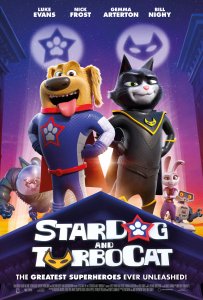
Nick Frost | STARDOG AND TURBOCAT

We caught up with STARBURST favourite NICK FROST to talk about his new animated sci-fi movie STARDOG AND TURBOCAT…

STARBURST: What attracted you to the project?

Nick Frost: The chance to make a film that my kids can see. I don’t think there’s anything I’ve made up until this point that my kids are allowed to watch! I have a seven-year-old who’s constantly badgering me to watch things that usually involve beheadings, or someone being eaten, or swearing, or “daddy, why are you in bed with another lady that isn’t mummy?”, so it was a nice opportunity to do something that I could be proud of my children watching!

You voice StarDog in the movie, how do you prepare for this kind of role?

I come in with an idea of what I think the character is and meet with the creatives on the other side and between us, we find a voice that suits the character and is true and honest and easy to reproduce. It’s fine to do a crazy voice but you run the risk of tearing your throat to pieces and never being able to work again.

What was your biggest challenge with this role? 

I’ve never done an American accent before. I’ve been reticent and afraid of doing an American accent because people just judge you on the accent rather than the performance but I thought ‘well why not’? So I just had a go. I think time will judge me… and Americans, but I enjoyed doing it.

What qualities do you like about your character?

He’s a tryer who works hard and is very enthusiastic about life. He’s a good egg who’s been hurt and wants to try and find out the truth about a man he loves and I can really relate to that.

Who’s your favourite superhero?

There’s one by Image Comics about a boy called Invincible that I really love. It’s about a 14-year-old boy who suddenly realises his father is a god and his mother was human. He’s a kid at school and suddenly starts to get these amazing powers. Out of all the superheroes, that’s the one I’ve read front-to-back and loved forever.

If you could have a superpower what would it be?

Flying is fine but imagine you could re-arrange items down to a molecular level. To just be a god would be it.

Are you a cat person or a dog person?

I have had dogs and as much as I love dogs, I’m a cat man. I have a cat called Eric. He’s the bane of my life and one of the loves of my life. He’s the boss of the house and he’s very naughty.

If you could be an animal what would it be? 

I’d have to say a domestic cat. I think they have lovely lives if they have nice owners. Or something in the Fjords like an Osprey or something.’

How do you think the movie will be received? 

I think people will really like the film. The world’s in a kind of mucky place right now so to get a film which is so full of light and hope and comedy and friendship is the thing we need right now.

STARDOG AND TURBOCAT opens in UK cinemas on December 6th