Charlotte Robinson • MARS ONE

Charlotte Robinson is a television producer and author from the UK. Their debut novel, Mars One, is out on the 23rd April 2026. We caught up with them to find out more.

How would you pitch Mars One to a fan of Star Trek?

I would pitch it the same way as I would to anyone: it’s an epic global thriller about a one-way colonisation mission to Mars and three unlikely heroes trying to save themselves, and the people they love, from disaster.

But I guess what might appeal to Star Trek fans in particular is that the novel centers around humanity’s inherent desire to “boldly go where no man has gone before”, as well as focusing on the ultimate costs of exploration, and the responsibilities we – as a species – have to not only the planet we choose to call home, but also to each other.

And how would you pitch it to someone who is more into fantasy than science fiction?

I’d say sadly there’s no dragons, but there is most definitely a hero’s quest at the very heart of it, along with intrigue, adventure, and an enigmatic cat.

Why should I read this book?

Because it might just make you think about your place in the world and realise that everyone can play a part in our planet’s future. And also, because it’s great fun and you’ll make a debut author incredibly happy!

Are we ever going to Mars?

Yes. I think it’s safe to say we will. Although how we will get there and who will ultimately be paying the price for it (both financially and ethically) is a very interesting and important question. A new space race is already upon us. And with private companies and wealthy individuals becoming more and more imbedded within national space programmes, as well pursuing their own missions and agendas, I think it will also happen sooner than we think; especially if there is power and profit to be gained from it.

(Note: the first steps to Mars are already very much underway, as NASA’s current Artemis programme is launching new lunar exploration missions as we speak, and that is being used as a road test for future Martian exploration!)

What is the most interesting sci-fi element in your books? Why?

I think the most interesting sci-fi element in the book is that everything within it is possible: it’s fiction based on science and technology that we have right now. If someone had the means and the guts, they could launch a ship to Mars tomorrow (although, whether it would get there in one piece, is another thing entirely!). But probably the most “sci-fi” of all elements in the novel is a device within the narrative that runs off of the body’s very own bioelectricity. Bio-energy harvesting is an area of science that is moving rapidly fast and some of my initial research into the magic of bioelectricity was sparked (pardon the pun) by working with Naomi Alderman on the television adaptation of her incredible novel THE POWER.

If anyone is interested in more information around electricity within the body and the new science of our body’s ‘electrome’, I’d highly recommend Sally Adee’s book WE ARE ELECTRIC, which shows how concepts that have previously only been the stuff of science fiction are now becoming a reality. All of which feels pleasingly circular when you realise that it was Galvani’s studies of bioelectricity that inspired Mary Shelley to write the very first work of science fiction: the incomparable FRANKENSTEIN. Science inspires fiction which, in turn, becomes science.

How long does it take you to get to a first draft?

This book was a long time in the making, as I originally pitched it as a television show when I was working as a script editor. So, it was several years before I attempted to write it as a novel. When I did finally start, it took me about three years to get a full first draft, as I was also holding down a day job, and then I worked on it for another year, rewriting and editing, before I was ready to send it out into the world.

What’s your favourite joke or pun in the book?

It’s not a joke, per se, but as a sci-fi fan and self-declared nerd I had fun dropping in some pop-culture references and nods to my favourite films, TV series, or books: MEN IN BLACK inspired a really key element to the plot; a character makes a dig at the THE MARTIAN (a book and film I hugely love and respect, by the way!); there’s Star Wars references; a Game of Thrones reference; Pixar references; also a few in-jokes from the TV industry about self-important producers (being very aware that I am a producer myself!). And, of course, a cat is key to the story, so I couldn’t avoid a pussy pun.  And watch out for the bit where a character quite literally lets the cat out of the bag. I shamefully made myself chuckle with that one.

What is science fiction for?

I slightly touched upon this already, but I think it’s for three key things:

  1. First and foremost: to entertain. That’s what stories of any kind are for. To tell stories, and to entertain other people with them, is the most basic of human instincts. It’s the way we connect as a species.
  2. To make us question who we are, and where we’re headed. What science fiction is brilliant at doing is allowing us to slightly distance ourselves from reality, so that we can think more clearly and critically about the human condition and the world that we find ourselves in. And when we’re able to ask questions, we’re also then able to change things.
  3. To inspire: so many innovations, technological breakthroughs, and even moments of political change, have been inspired by works of science fiction. If MARS ONE inspires someone to question things, to make a change (however big or small), or even to become an astronaut, a coder, or an environmental activist, I would be thrilled and honoured beyond words.


Mars Attacks or Mars Bars?

Mars Attacks! (I’m not a huge fan of caramel)

Dragons or Death Stars?

Dragons

Truth or Beauty?
Truth. Always. Even if it’s painful.

Mars One by Charlotte Robinson (Bantam, £16.99) is published on 23rd April 2026.


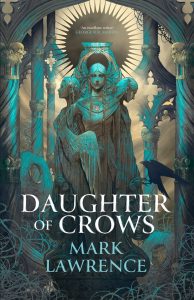
Mark Lawrence • DAUGHTER OF CROWS

Mark Lawrence is a novelist best known for The Broken Empire trilogy. He also won the David Gemmell Award for For Fantasy. His latest novel, Daughter of Crows, is the first of his new series, The Academy of Kindness. We caught up with him to find out more.

How would you pitch Daughter of Crows to someone who loved The Book That Wouldn’t Burn?

I would say that it starts a trilogy that, like all my trilogies, is pretty different from my others. Give it a go if you enjoyed my writing – don’t go in expecting more of the same.

It shares a somewhat literary edge with TBTWB and has some thoughtful moments on the themes it has in focus – in this case a person’s whole life, and how the years change us and how they don’t. It also looks at how experience shapes us and how we resist shaping.

On the other hand, it’s a much darker and more violent book with far less charm and whimsy on display.

And how would you pitch it to someone new to your work?

I am allergic to pitching. Yet here I am. There’s the surface level excitement of a badass old lady with a background that could be described as ultra-dark academia, getting pulled back into conflicts she thought she had escaped. And there’s the somewhat deeper examination of a life and how age changes us, not just physically, but at the core.

Which character would you want to avoid being trapped in a lift with, and why?

Being trapped in a lift sounds so unappealing that the question of “with whom?” becomes secondary. I guess I would want to avoid being trapped in a lift with someone skinny because if we were trapped for a long time someone with more meat on their bones would be more likely to sustain me until rescue arrived.

How long does it take you to get to a first draft?

I generally only do a first draft, and that typically takes between 6 and 9 months.

Sunshine or Lollipops?
Dragons or Death Stars?
Truth or Beauty?

I was a research scientist for 20 years, my first degree was in physics and my Ph.D in an area of statistical mathematics. Truth or Beauty makes me think of quarks. Sunshine or lollipops, here I’m too busy trying to work out the connection to answer the question. Dragons or Death Stars reminds me that I’m always being asked why a scientist chose fantasy over scifi. But it’s dragons every time. Though I don’t really like dragons in my fantasy books that much.

Daughter of Crows is out now. 

Sarah Roach & Johnny Yong Bosch • TRIGUN STARGAZE

Trigun Stargaze takes us to the anime world of Trigun, a high-octane show available now on Crunchyroll.

The synopsis for the show is “Vash the Stampede is a joyful gunslinging pacifist, so why does he have a “$$6 million bounty” on his head? That’s what is puzzling rookie reporter Meryl Stryfe and her jaded veteran partner when they look into the fugitive only to find someone who hates blood. But their investigation uncovers something heinous.”

We caught up with the show’s English dub stars, Johnny Yong Bosch who plays Vash (Mighty Morphin Power Rangers, Demon Slayer: Kimetsu no Yaiba Infinity Castle ) and Sarah Roach  who plays Meryl Stryfe ( the actor is also known for You and I Are Polar Opposites, My Dress-Up Darling) to find out more.

How would you pitch the show to a beloved elderly relative?

Sarah: Dystopian Space Western, with a lot of heart.

Johnny:
Vash is a pacifist in a world that is very crazy and violent, and his twin brother is part of that violence, and he is just trying to bring peace to this world. And there are many adventures, meeting many friends along the way, and they end up working together to try to, you know, achieve that same goal. And it’s fantastic, and the animation is great, and the music is amazing.

But what was your first day on this project compared to your most recent last day? What were the two like?

Sarah: I mean, for me, I was really nervous and excited to be stepping into this series, and so I’m still very excited every time I go in, just a lot less nervous now

Johnny:
I feel, I mean, I’m very comfortable with the character.  We show up and the script is right there, but it’s not like we can turn the page, it’s electronic, so we’re finding out what’s happening in the story as we’re going along. Or if we ask Jeremy, our director, would feed us what’s happening in the story. And I think, earlier on, I was just kind of curious where things are going to go. Now I kind of see the direction of where we’re going so I am more comfortable

What happens when you’re in that like you’re in the zone. You’re in that role, you’re going through the script, and suddenly there is a huge surprise. How do you essentially keep your characters cool during those moments?

Johnny: Well, sometimes you want to react to those surprises appropriately, you know. So if you’re seeing something for the first time and you’re saying something, a line or whatever, you might get a natural reaction off of, like, Whoa. Okay. A lot of times, though, with this sort of thing, with anime, specifically, there’s, you’ll have previews and stuff.

So this is a far future space apocalyptic story. What do you that’s very different from, you know, living in LA, what do you do? What do you do to get into the role to like, get into behind the wheel of the characters?

Sarah: For me, anytime I play a character, I like to listen to music beforehand that either kind of reminds me of the world that they live in or that I think the character would like. And so I like listening to kind of, like that Western, like whistly kind of stuff. Sometimes, sometimes, yeah, spaghetti western. I like to listen to kind of music to get me in that space.

Johnny:  Typically, I try to find what’s the heart of the character? Like, what is their main goal? Like, what do they want to achieve? And it doesn’t always happen right away. Sometimes you find out through a few lines or an episode or two, but once you find that piece, then you just sort of lean into that.

Why do we marry science fiction and Westerns together so often? What is it about those two genres that inspire that kind of merge?

Sarah: Something about it just really works. I don’t know. I. It’s always really cool. I mean, a Western in space, just saying that, it’s like, that sounds awesome.

Johnny:
 It’s Pretty cool. I don’t know. I really just in anime there’s, there’s a huge variety, so you can find just about anything. But yeah, there is something fascinating about it, for sure.

If you could grab one thing from the show, one piece of technology, one power, one ability from the show and bring it into your everyday, day to day life. What would it be?

Sarah: I love the birds that they ride on, like horses. I would love one of those to be my pal. I don’t know. They’re really cool.

Johnny:
 I’d take Vas’s Arm.  Or Wolf Wood’s Cross.

You can catch the show on Crunchyroll here.

Based on the original popular manga created by Yasuhiro Nightow, TRIGUN STAMPEDE and TRIGUN STARGAZE are produced by Studio Orange (BEASTARS, Leviathan). TRIGUN STAMPEDE was directed by Kenji Muto (Land of the Lustrous episode director), and TRIGUN STARGAZE is directed by Masako Sato (HAIKYU!! TO THE TOP). Additional credits for both include scripts based on Takehiko Oki’s concepts and concept art and character designs by Kouji Tajima (GANTZ:0 character artist).

Official TRIGUN STARGAZE Synopsis

It’s been two and a half years since the Lost JuLai tragedy laid waste to an entire city and engulfed the whole planet in chaos. Meryl continues her search for Vash with her new younger sidekick, Milly, and runs into Wolfwood along the way. Meanwhile, Vash has taken the new name Eriks and is living in hiding in a backwater town. When he receives an abrupt visit and SOS from the third ship they call home, he acts swiftly in order to protect those dear to him. However, as soon as the planet receives good news from the far reaches of outer space, the one-winged angel returns to wreak havoc and despair. Fates collide to forge a final conclusion for the panicked planet. TRIGUN STARGAZE is the second season and final journey of TRIGUN STAMPEDE.


David Matranga & Alexis Tipton • TRIGUN STARGAZE

Trigun Stargaze takes us to the anime world of Trigun, a high-octane show available now on Crunchyroll.

The synopsis for the show is “Vash the Stampede is a joyful gunslinging pacifist, so why does he have a “$$6 million bounty” on his head? That’s what is puzzling rookie reporter Meryl Stryfe and her jaded veteran partner when they look into the fugitive only to find someone who hates blood. But their investigation uncovers something heinous.”

We caught up with the show’s English dub stars. Alexis Tipton plays Milly Thompson (the actor is also known for  Chainsaw Man – The Movie: Reze Arc, Fire Force) and David Matranga plays Nicholas D. Wolfwood  ( the actor is also known for My Hero Academia, Attack on Titan) to find out more.

What is your elevator pitch for the show?

David: Space Battle Western. Humanity is trying to survive, and the characters that are at the forefront of trying to help them survive are dealing with their own morality that bumps into each other and gets in the way as they try to save the planet.

Alexis: if I was going to add anything, I might just mention, like, great music, great animation, yeah, right, timeless themes that anybody can, can be entertained by and or relate to. There’s a little something for everybody. So it would be a good show for anybody to check out, because it stands to reason that there is something in it for everybody.

What was your first day recording compared to your last day of recording this show?

Alexis: We actually don’t really get any time to prepare. Sometimes we know we’re coming in to record. Sometimes don’t even tell us what we’re coming in for. They told us for this. But when we come in, everything we do is what’s called cold reading, which means that we’re seeing the script for the very first time. And there’s a lot in that process that helps us find the character, find our performance, figure out what the scenes need as we go through them, but yeah, the first day, it was just, it was that that just like nervous excitement of, oooh, new project, and I know what this is, and this is really fun. As the show and the title progresses get to learn more about these characters.

David: If you watch, you know, your favourite television show, let’s say, and you watch the pilot, and then you watch the season finale, or a series finale, you can see that the character almost deepen with the actor’s relationship to that character. Seamless transitions, those things deepen as it goes for me. You create the voice right there in that first session. And I’m a pretty physical actor, just in general. When I’m working with Wolf, would you know, my posture changes a little bit. My shoulders are held a little differently just because of who he is and his kind of aura. And so that you know that first session you’re trying those things on, you lock something in, but then you know, all to the last session, all of that stuff is second nature. It’s not even you don’t even know you’re doing it anymore  and the performance is just right at your fingertips.

What do you draw on as actors to get into the zone?

David: I think no matter how, and I’ve seen this with other media, no matter how futuristic something is, it comes down to those basic human needs of validation and love and friendship and community, and those things are so apparent in this show.

So, you know, it’s, it’s not like I have to imagine myself or something in a futuristic world. I think, I do think about, you know, what would it be like if things were more dire than I feel they are for me now. It really is about how you take on those given circumstances of the world, whatever those are, and then you play the truth of the character in those moments. And if you do that, I feel like the journey will always sort of calibrate itself well

Alexis: And we’re also very lucky with this title, that there are so many amazing storytelling elements present. And so when we preview all the lines in Japanese first, before we lay down the English track, and we get to hear the music, and we get to hear what the Japanese has done, like if there’s a big action sequence happening and or there’s a bunch of people screaming, or there’s something really emotional happening. You can really lock into those emotions of the preview, and it really does translate to feeling it in your own body.

If you could take one thing from the show, like it’s a power or a piece of technology or something like that, and have it for yourselves, what would it be?

Alexis: I mean the space travel is pretty great. I mean being able to travel farther in space than we can currently,

David: Being able to operate with like, acrobatic ease. That or a gun that is in the shape of a cross that’s got like, two different ends to it. That would be really cool. That would be really cool. I don’t think you could take it to a traditional shooting range or anything.

You can catch the show on Crunchyroll here.

Based on the original popular manga created by Yasuhiro Nightow, TRIGUN STAMPEDE and TRIGUN STARGAZE are produced by Studio Orange (BEASTARS, Leviathan). TRIGUN STAMPEDE was directed by Kenji Muto (Land of the Lustrous episode director), and TRIGUN STARGAZE is directed by Masako Sato (HAIKYU!! TO THE TOP). Additional credits for both include scripts based on Takehiko Oki’s concepts and concept art and character designs by Kouji Tajima (GANTZ:0 character artist).


Official TRIGUN STARGAZE Synopsis

It’s been two and a half years since the Lost JuLai tragedy laid waste to an entire city and engulfed the whole planet in chaos. Meryl continues her search for Vash with her new younger sidekick, Milly, and runs into Wolfwood along the way. Meanwhile, Vash has taken the new name Eriks and is living in hiding in a backwater town. When he receives an abrupt visit and SOS from the third ship they call home, he acts swiftly in order to protect those dear to him. However, as soon as the planet receives good news from the far reaches of outer space, the one-winged angel returns to wreak havoc and despair. Fates collide to forge a final conclusion for the panicked planet. TRIGUN STARGAZE is the second season and final journey of TRIGUN STAMPEDE.


STARBURST’S New York City Fringe Festival Picks 2026

The New York City Fringe has a fetching penguin as its logo and is relatively new, as it’s only been around since 2007 , uniting a handful of theatres across the city.  It has become essential development point for the US Fringe scene. The New York City Fringe runs from Wednesday April 1st through Sunday April 19th.  You can find out more by following this link. Here’s a pick of show we’d think you would enjoy.

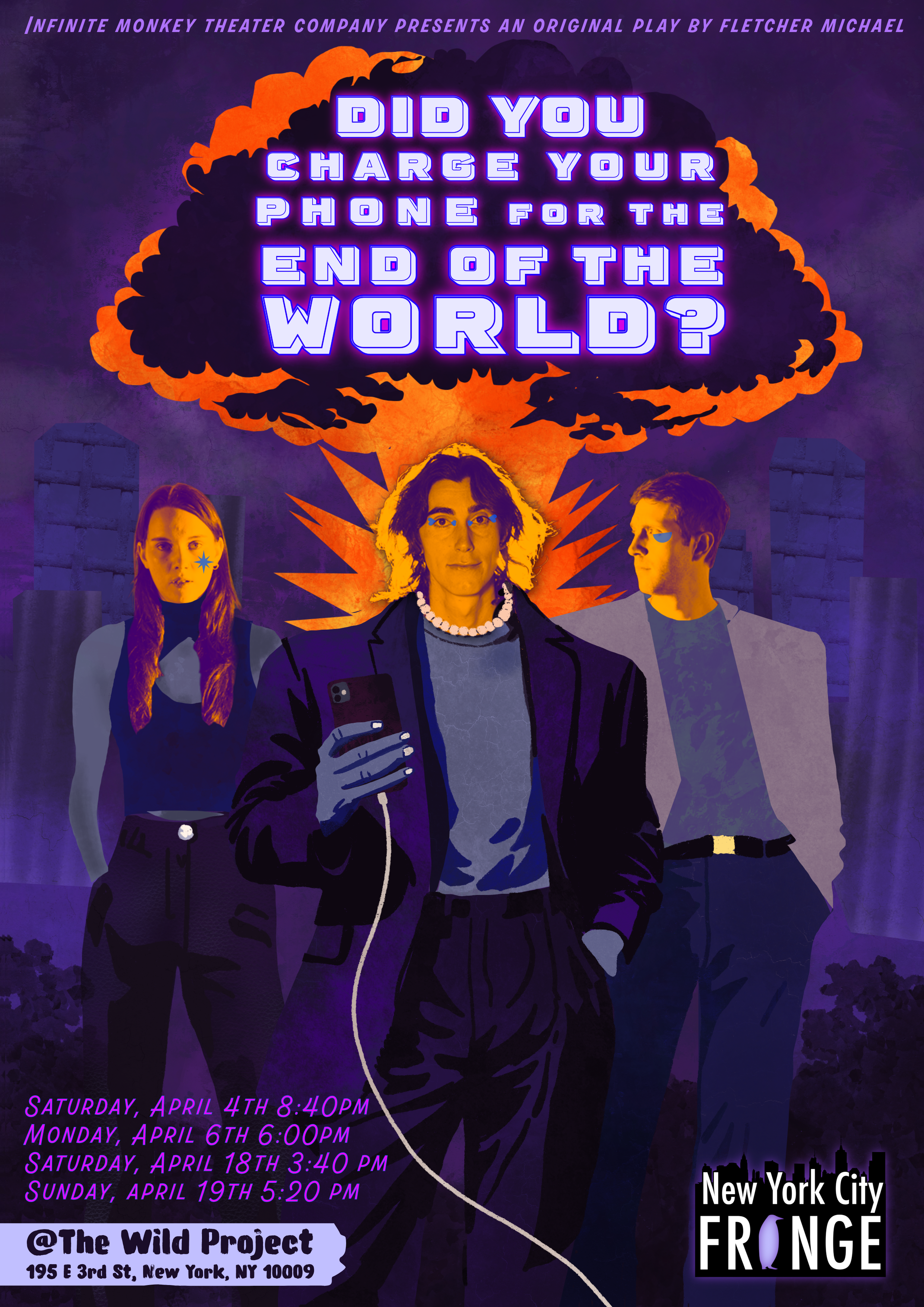
Did You Charge Your Phone For The End of the World?
Set in the near-future, this is a tale of city destroying asteroid heading to Brooklyn. With the government refusing to tell people what’s coming, rapid redecoration seems inevitable. But then an advertising agency decides to ‘help’. This show is also coming to the Edinburgh Festival Fringe.

Becoming Psychic
A skeptic develops psychic abilities, and comes to the only sensible conclusion; that they are going mad.  A darkly comic one-woman show about belief, rationality and the line between sanity and stupidity.
Event Image
Revenge of the Soy Boy
Star Wars is so ubiquitous that it has become a reliable cultural touchstone for pretty much everyone. Justin Avery Smith hangs his comedic ramblings on the tales from a galaxy far far away in the light-sabre swinging one-man show.

Miracle of The Star
A heart-warming story of two teens, one who wants to be an astronaut, the other an astrologer, who discover a new star. Life is never each and fortune is fickle; will they ever truly know their future before it is too late?

Squire D. Rathbone, Esq.

Existential angst as entertainment. Three souls explore a world where punishment is not a thing, and justice has long since vanished. Jaw dropping supernatural stuff.

You can check out our picks from 2025 here. You can book tickets for the New York Fringe here.


K.A. Linde • HOUSE OF SHADOWS

K.A. Linde is the number one Sunday Times bestselling author of The Oak and Holly Cycle. Their new series, The Royal Houses, launched to an excited fan base and is currently grabbing the attentions of fantasy fans all over the world. We caught up with them to find out more.

How would you pitch House of Dragons and House of Shadows to someone who was a fan of Dungeons and Dragons?

For anyone who enjoys Dungeons and Dragons, my Royal Houses series would be a fun adventure. The main characters, Kerrigan and Fordham, go on many quests throughout the books to discover who murdered Kerrigan’s friend as well as entering into a dragon tournament. And in the second book they travel to a new land that has been forbidden entry for a thousand years and the spell around it is weakening and Kerrigan may be their salvation or their doom.

Why should I read this book?

The Royal Houses appeals to anyone who loves a good dragon story, a good slow burn romance, and good magic learning. There’s also fights for the rights of those who are not Fae. There’s an underground fighting ring, dragon tournaments, spies, a magical academy type setting, regency era Season events with dancing, an arranged marriage, a murder mystery, and so much more. It has a little bit of everything for those who love the fantasy genre.

Why has fantasy and romance suddenly become huge as genre?

While romantasy itself is a new term, it has been big for a long time. We can look back at Jacqueline Carey’s Kushiel series, Karen Marie Moning’s Fever series, and C. L. Wilson’s Tairen Soul series which were all massive New York Times bestselling series. They were already out there in the 90s and early 00s. Then with the rise of Sarah J. Maas and Jennifer L. Armentrout, we could see the shift that more readers wanted it. And it really boomed with Fourth Wing by Rebecca Yarros.

Part of that is because for so long most women were relegated to writing young adult, because if there was romance in your fantasy then it wasn’t for adults. Partly it is because readers demanded it. The self publishing boom helped shape what readers wanted more of and romantasy became it!

What is the most interesting fantasy element in your books? Why?

I have a personal love for magical artifacts. The book opens on an underground magic fight where the heroine beats someone who shouldn’t and he comes after her in retribution. He gets away with it by using a magical artifact that would knock her out. Throughout the books you get introduced to new artifacts like the Ring of Endings which is immune to magic and the Collector which can take a trace of magic from every user who touches it and then used by other people. And all the artifacts build up each other as you read.

How long does it take you to get to a first draft?

I’ve been a fulltime writer since 2012 and have always been very fast at drafting. I can write more first drafts in 6 weeks.

What’s your favourite joke or pun in the book?

In House of Shadows, Kerrigan and her dragon, Tieran, don’t get along. So the entire book they are overly sarcastic and poking at one another. Tieran’s sense of humor is so clever and witty. But most of it makes sense in context.

What sort of fantasy setting do you enjoy?

Personally I love almost all of them when I’m reading. But I really loved getting to explore writing in a city in the Royal Houses. I have another series, Ascension, which was a typical journey fantasy, where each book is a different country or city they go through. But the majority of the Royal Houses are set in the city of Kinkadia. It was interesting to see how much more you had to dig deep into one world rather than getting fun new things to play with every book.

Dragons or Kobolds?
Dragon

Star Trek or Star Wars?
Star Wars

Truth or Beauty?
Truth

You can find out more here and pick up a copy of the book here.

Emily Carding • BRIDGE COMMAND

Emily Carding  is an actor, theatre-maker, writer and artist. They are best known for their award-winning interactive solo Shakespeare shows, as well as the role of Dara 2026’s Return to Silent Hill.  Their award winning  work immersive experiences such as The Key of Dreams and, of course, Bridge Command, where they play the dour and disciplined Captain Athena Hamilton. We caught up with them to find out more.

How did you end up working for Bridge Command?

Owen Kingston (artistic director of Parabolic Theatre) is very careful about who he hires and thankfully I was recommended to him by a couple of people on the immersive scene whose opinion he trusts. As a lifelong fan of Star Trek and sci-fi in general as well as specialising in responsive immersive work, it’s a dream!

And how would you pitch it to someone who can quote Wrath of Khan?

Live your dreams of being part of a real starship crew and be the hero of your own adventure. We don’t believe in the no-win scenario- at Bridge Command we know you’ll succeed.

What is the trickiest part of your job?

One of the extraordinary things about the company is how every aspect is run by the actors, including the bar, admin, video editing…everything! I can find working in the mess pretty stressful when it’s loud and busy but we all muck in and get the job done and remember how lucky we are to essentially play pretend in space for a living.

Why science fiction?

Genres like science fiction allow us to view humanity through an alternate lens and look at real issues in a revelatory and insightful way as a result. The possibilities of immersive adventures in this environment are not just escapist but allow us to explore facets of ourselves that the everyday may not allow for or support.

How does it compare to other, similar shows?

Tricky to say what’s out there that is similar, but in terms of other immersive shows it’s incredibly responsive and remembers your progress. For example, you can be promoted and that’s the rank you’ll be when you come back. There are now around 25 different missions running and we always do our best to make sure you won’t do the same mission twice. For our most committed regulars who have been even more times than that, we do our best to put unique spins and twists in when we can. Outside of the missions there is a constant, unfolding and developing world in which your actions have consequences, and ongoing relations between our characters in that world that you become part of. It’s truly unique in that sense.

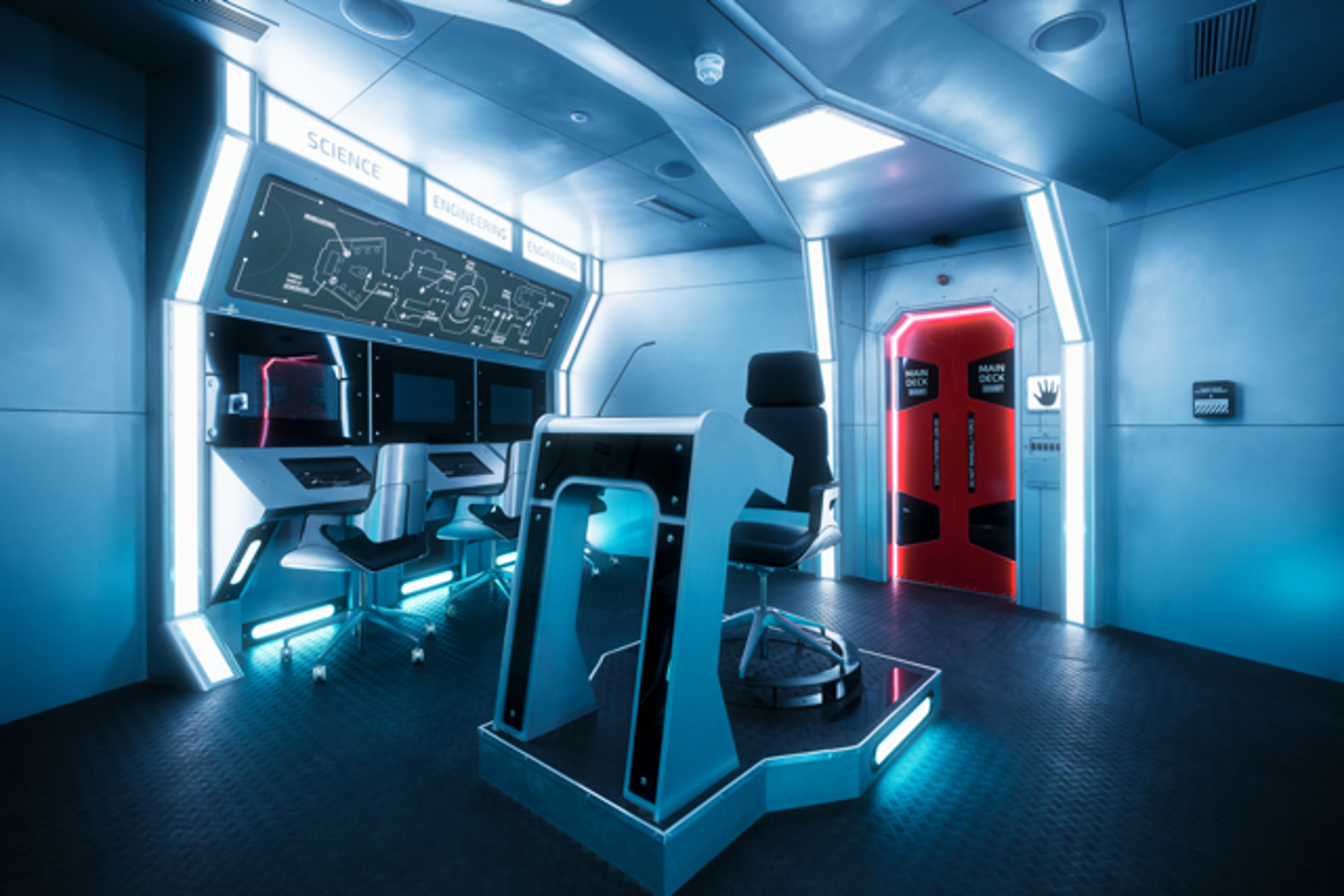
Bridge Command – mssv

Is this the future of entertainment?

I think people are hungry for something that feels real in a world that is too often virtual and detached, yes. Video games are obviously incredibly popular as they give you agency and put you at the centre of the action. At Bridge Command you really get to live that experience and interact with the world in a physical way which is beyond anything virtual reality can achieve, along with an incredible community-building social experience.

How similar is this to other projects you’ve worked on?

It’s very unlike anything else, but in terms of immersion, responsivity and audience agency it has some crossover with Key of Dreams, the 24 hour luxury Lovecraftian experience by Lemon Difficult which is my other main gig. It’s a very, very different show for many reasons but the personal interactions and consequences are special in both. You never know what extra magic or challenges audience members will bring and it’s a privilege to co-create their experience with them in this way.

What is your favourite moment in the show?

Every show is different, but the moment when you can create real magic and wonder for someone- that’s my favourite.

What’s next?

More Bridge Command, more Key of Dreams, and I have a small role in the new Silent Hill movie, Return to Silent Hill, which is out in January. In the new year I’ll look into touring possibilities for my new solo show with Brite Theater, Timonopoly, which had a great run at Edinburgh fringe this summer (2025).

Doctor Who or Doctor No?

Always the mad individual in the blue box.

Death Stars or Dragon?

Why not both? Imagine riding a dragon down the trenches of the Death Star!

Truth or Beauty?

Is there in Truth no Beauty?

Bridge Command can be found at Vauxhall in London, EnglandBook now to avoid disappointment. 

William Shick • ATOMIC MASS GAMES

William Shick is VP of Creative Development & Strategy for Atomic Mass Games

What are your favourite Marvel and Star Wars moments?

Starting off with the impossible questions!

My favorite Star Wars moment is the Death Star battle over Yavin 4 from A New Hope. I loved that part so much I eventually wore out the VHS tape from so many repeated viewings.

For Marvel, it’s a lot tougher purely because there are so many different pieces of media all with their own great moments. Like for comics, I think my favorite all time moment is probably the Maximum Carnage run, for the MCU it’s probably the moment in Infinity War where Proxima and Corvus have Vision and Wanda cornered in the train station and Steve Rogers, Falcon, and Black Widow show up. The swelling of the incredible Avengers theme and the fight sequence still gives me chills. And animated wise it’s hard not to point to the 90’s X-Men and Spider-Man animated series. Two just fantastic interpretations of the comics into serialized media.


Where do you start with a game – the models, the setting, the rules or is it something else? Why?

AMG has a strong philosophy of always starting from the theme and story of any game we are trying to make first. Because we primarily work on creating games within well established and beloved settings, the most important element for success is that when players sit down to play the game, they feel like they are playing within the Star Wars Galaxy or Marvel Universe. Even for a non-licensed game, if the narrative or theme feels tacked on or simply painted over the mechanics, the experience won’t be as compelling or immersive. One of the best things about great miniatures games especially is that they can draw you completely into the world that is being represented in tiny form on your tabletop. But in order to do that, the way the game plays, from core rules to character abilities all must feel like accurate translations of those things from the wider media to the table.

What none AMG game do you love to play?

Ooo, another tough question, there are so many great games, and they all hit a different vibe. Really there isn’t a game I don’t enjoy sitting down to play, but there are ones I love based on the mood of the day. Our household is big on deck builders with Marvel Legendary, Dominion, and the Blood Bowl Card Game being at the top of the pile. I really enjoy racing games like Dungeon Kart and Heat, Pedal to the Metal for their mix of strategy and spatial awareness skill ask. I’m also of course a huge fan of tabletop miniatures games such as Flames of War, Halo: Flashpoint, and my all time favorite miniatures game Confrontation. And TCG wise I’ve been very much enjoying exploring the Gundam and Dragon Ball Super Fusion World card games.

How much cross over in terms of design is there between Shatterpoint and Crisis Protocol?

Honestly, not much beyond the very typical core DNA of all miniatures games. Most of the reason that they are so different goes back to the earlier question about where we start when designing a game. The themes and feel of Marvel and Star Wars are dramatically different. Crisis Protocol was designed to replicate fast and furious superpowered battles. One of its biggest inspirations was iconic arcade fighting games like Marvel vs Capcom and blending that experience into a wider battle miniatures game.

With Shatterpoint we were really focused on trying to bring the feeling of those iconic cinematic Star Wars duels to the tabletop. It’s why the combat system for Shatterpoint is so heavily weighted in terms of the gameplay. What’s more, the way characters fight in Star Wars is very different both tonally and physically than it is in Marvel. There’s a weight to their battles and a personal back and forth, a narrative within the fight itself, that we really wanted to try our best to capture and translate in a way that would make players feel the story they were telling as they performed their in game actions. Obi-Wan needed to feel like Obi-Wan, Vader like Vader, and the fights like they had jumped right off the screen and onto your tabletop.

This all meant that while we used our experiences of working on miniatures games over the last decade to help make the rules concept and game mechanics the best we could, the approach and decisions we made between the two were often starkly different because they both attempt to do extraordinarily different things in terms of the players’ experience.

Which other type of games would you like to add to AMG’s roster?

Oh there are too many to count! As someone who just loves tabletop games, there really isn’t a type of game that I haven’t thought about making or would jump at the chance to try my hand at. Currently though, Legion, Crisis Protocol, and Shatterpoint are plenty to keep everyone at AMG engaged, excited, and working full time and we’ve barely scratched the surface on where we want to take each of them with new releases and rules expansions.

What’s the stickiest moment in creating a game?
The moment you release it to the players! The thing that I love so much about getting to work on games like we do is that no matter how well you think you understand your game and rules systems the player base will also surprise you with how they approach and build on the game you created.

Oftentimes that surprise is good, it shows you a depth to the game that you may not have realized was there, or more commonly that you hoped was there but you just didn’t quite know exactly how it was there.

I’ve described game design and development as a dance where both partners lead. The key to success is to find that rhythm where you can both take players where you want them to go and that excites them, while also being able to follow them when they discover something you might not have planned or thought of that makes the game more enjoyable. It’s exceptionally challenging work, but there’s a joy to the challenge that is unlike anything I’ve ever experienced anywhere else.

Simpsons or Futurama?

Futurama, I’m a bit of a hopeless romantic so I love the Fry and Leela arc and the beautiful way the show originally wrapped up with them doing it all again.

Dungeons or Dragons?
DRAGONS!

Truth or Beauty?
I would say there is the most beauty in truth, so Truth.

John Patton Ford • HOW TO MAKE A KILLING

Writer-director John Patton Ford first made his mark with the tense, character-driven thriller Emily the Criminal (2022), a film that explored economic precarity and moral compromise in contemporary America. His latest feature, How to Make a Killing, expands those themes into darker, more satirical territory, blending black comedy, crime thriller elements and class commentary into a story about ambition, resentment and the pursuit of status.

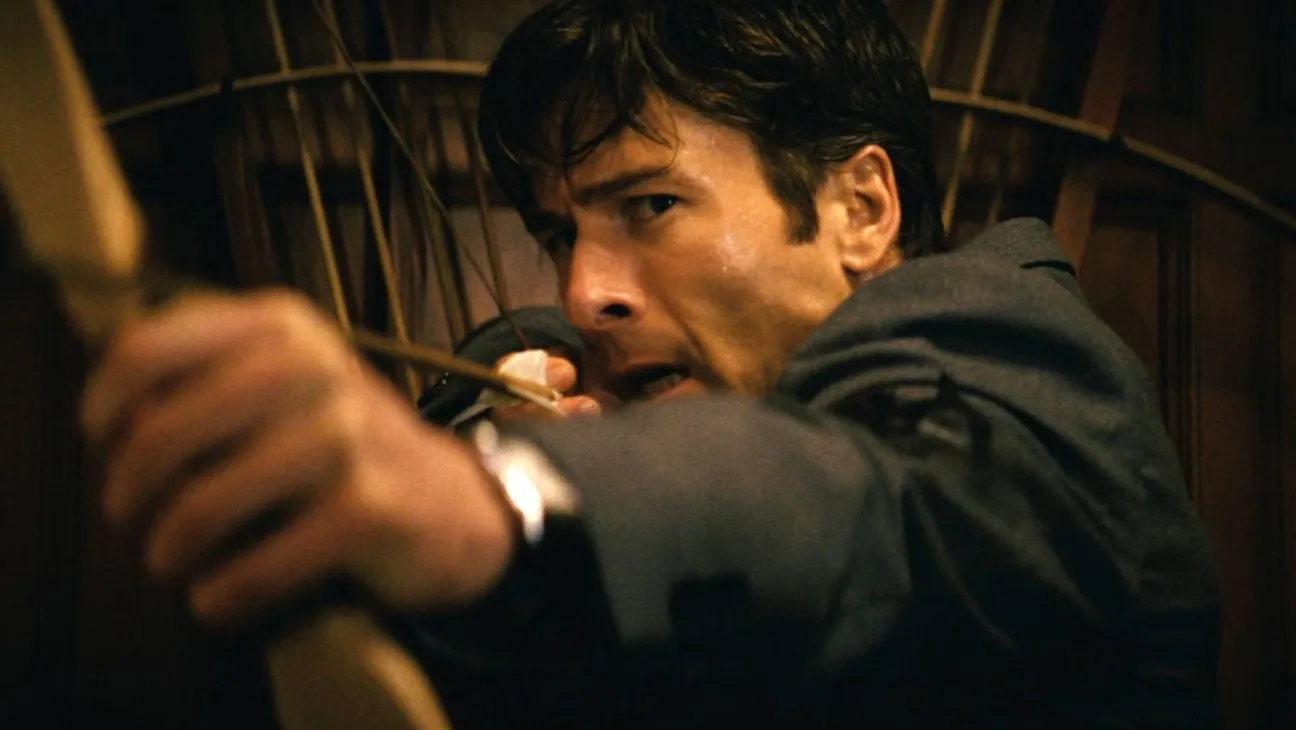
Starring Glen Powell alongside Margaret Qualley, Jessica Henwick and Ed Harris, the film follows Becket Redfellow, a working-class outsider disowned by his obscenely wealthy family before he was even born. When he discovers that a vast family fortune may technically still belong to him, Becket decides to remove the relatives standing between him and the inheritance, setting off a string of murders that are equal parts calculated and absurd.

Loosely inspired by the classic Kind Hearts and Coronets (1949), Ford’s film updates that aristocratic murder-comedy premise for a modern, American context shaped by widening wealth inequality and fascination with the ultra-rich.

How to Make a Killing continues Ford’s interest in characters navigating a ruthless economic hierarchy, and the compromises people make in pursuit of the lives they believe they deserve. In conversation with Starburst, Ford discusses the film’s long development journey, its inspirations, and why he wanted its murderous anti-hero to feel both sympathetic and troubling.

The screenplay originally appeared on the 2014 Black List under the title Rothschild, and you weren’t initially attached to direct it. How does it feel more than a decade later seeing it realised, and how has your perspective on the material changed?

John Patton Ford: The first draft was much sillier and a lot more bombastic. It was kind of crazy in places. As we developed the newer version, we had to bring it back down to earth. I also needed to make it a little more sophisticated and thoughtful, to update it and make it feel like something I could do with integrity.

Part of that was practical; the original script was just too big, and needed to be scaled back. There were huge, expensive set pieces that we would never realistically be able to shoot. So, we had to scale it down and make something that felt cohesive and achievable.

What was the most bombastic set piece that you couldn’t make happen?

John Patton Ford: In the early version, Beckett goes to Hong Kong and recruits people to come back to the U.S. to help him kill someone. At one point he even goes off and fights in the Iraq War. It had this huge, Forrest Gump-like, globe-trotting arc. We had to compact the story and make it more focused.

The film draws inspiration from the classic Ealing comedy Kind Hearts and Coronets. At what stage did you decide you wanted to reinterpret the concept rather than remake the film?

John Patton Ford: Right out the gate. I didn’t have any desire to remake Kind Hearts and Coronets. It’s a perfect movie and very much of its time. It’s so British, so specific to that era.

What interested me was the structure and the central concept. I wanted to use that as a jumping-off point for something contemporary and distinctly American, something that could speak in a slightly different cultural language.

You’ve said before that you didn’t want the film to fall into a simplistic “rich people are bad” narrative. Why did that feel too easy?

John Patton Ford: We’ve seen a lot of movies lately that indict the wealthy and allow the audience some wish-fulfilment in seeing rich people get what’s coming to them. And that can be fun.

But I wanted to take it a step further. There’s this contradiction where we resent the wealthy while also wanting to be them. Most of us are trying to make more money, fantasising about what we’d do with it, while hating the people who already have it.

I wanted to explore that tension and try to reconcile those ideas. How does someone who has killed people for money deal with a relationship where the other person doesn’t believe in wealth as the means to happiness?

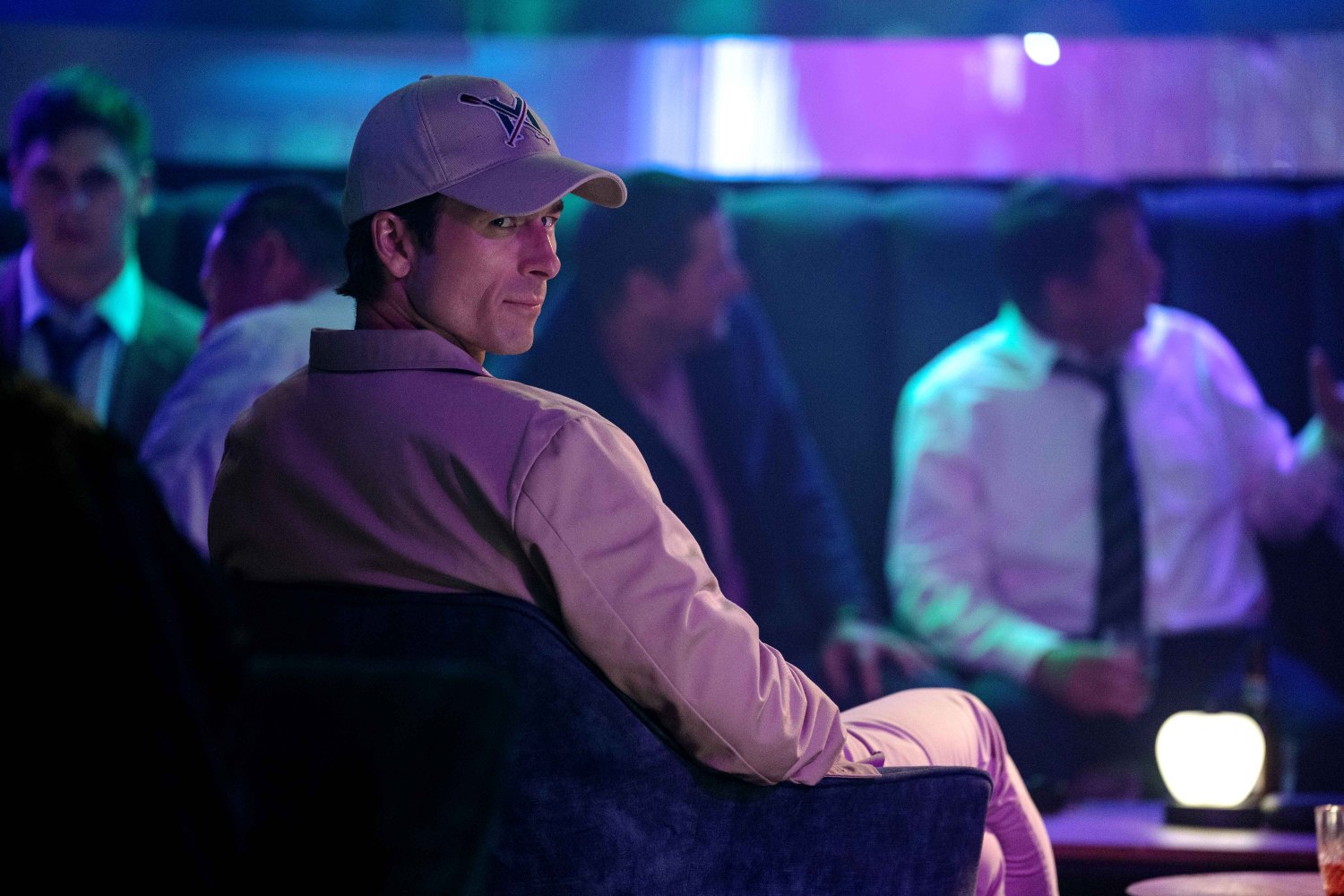
glen powell in how to make a killing by writer-director john patton ford

Do you think resentment toward the rich is mainly driven by envy?

John Patton Ford: Historically, people have felt very resentful towards the upper classes and the rich. But I think now, it’s more than jealousy.

There’s a growing sense that the scale of wealth inequality itself is ethically wrong. In the U.S., you have 700 people who control half the wealth. They accumulate all this money into overseas account, on which they don’t even pay taxes, and never put that money back into the U.S. system. They’re literally syphoning off money, and it’s more money than anyone could conceivably spend.

So, there’s a real… hatred isn’t even the word. People ethically disagree that these people should even be allowed to exist. The resentment isn’t just envy anymore; it’s a moral argument about whether that level of wealth concentration should exist at all.

Beckett is sympathetic but far from heroic, given he’s very much out for himself. How do you see him: as a hero, a victim of circumstance, or something else?

John Patton Ford: I see him as a tragic hero. He’s convinced there’s this one thing he needs in order to be happy — wealth, success, security — and he pursues it relentlessly.

And really, it’s only after he’s killed that he begins to realise that perhaps he could have been content without crossing those moral lines. But of course, by that point, it’s too late to go back. He has to deal with the repercussions of his decisions.

I see him as a hero, yes, but a tragic one who learns his lesson too late.

Have audiences interpreted that tragedy in different ways?

John Patton Ford: Definitely. Some people see the ending as tragic, while others see it as a kind of victory. There’s an irony there that doesn’t always register for everyone.

As you’ve mentioned, many recent films have leaned into “eat the rich” satire. How did you want your film’s critique to stand apart?

John Patton Ford: I wanted the central character to be someone the audience could also indict. Beckett is just as complicit in the system as the people he’s targeting, even if he doesn’t see himself that way in the very beginning. That’s more interesting to me than a film where the central character is totally redeemable, and the rich are all bad, and they get what’s coming to them.

The problem with wealth inequality isn’t just that billionaires exist, it’s also that our whole culture is obsessed with wealth and success. We’re all participating in that system in some way. So in a way, we all need to be held accountable. You can only indict the rich so much when half the country votes for an administration that creates tax loopholes for corporations. When I pay taxes in California, all I’m doing is subsidising billionaires. I don’t get back any kind of benefits at all. What I’m saying is that I wanted the film to acknowledge that broader complicity through its central character.

glen powell as beckett redfellow in how to make a killing by john patton ford

And while Beckett is undoubtedly the film’s central character, like you said, Jessica Henwick’s character Ruth often feels like the emotional and moral centre. How did you design their dynamic?

John Patton Ford: Beckett is chasing what he believes success looks like — money, status, achievement — then Ruth represents the opposite. She’s someone who has gradually realised she’s happier wanting less and has learned not to feel ashamed of that.

In a culture that constantly pushes ambition and accomplishment, simply saying “I’m content with a modest life” and “my small dreams are perfectly fine” can be a rebellious act. It’s a subversive, brave thing to do.

Her worldview challenges Beckett emotionally and philosophically. At first the film seems like it’s about the logistics of killing people, but eventually the real conflict becomes whether he can keep doing this after meeting someone whose entire worldview completely upends his own? That’s the bigger challenge.

Some critics have criticised the satire as lacking bite and consider the film more of a black comedy. Was that lean into tonal ambiguity intentional?  

John Patton Ford: I think the film ultimately becomes more of a character study than anything else. People might expect a very biting satire because that’s what a lot of recent films in this space have done.

But this story is really about someone coming of age, in a strange way, within this high-concept situation. It moves across different tones and genres, which might surprise some audiences, but hopefully in a good way.

How To Make A Killing releases in cinemas from March 11th. Watch the trailer here.

STARBURST’S Adelaide Fringe Picks 2026

The Adelaide Fringe is the world’s second largest fringe festival, and has been wowing audiences since 1960. This year’s fringe features well over a thousand shows many of which would delight STARBURST readers. We dived deep to pick out five shows that we think our readers would love.

Swamplesque 2
We absolutely adored the first Swamplesque, which was a glorious mix of fairy tales, burlesque and Shrek. Swamplesque 2 premieres at the Adelaide Fringe, bringing fresh fun to an already amazing idea. Go see it if you can, especially as it’s likely to tour the world. 

Coco laughing and looking into the middle distance, against a blue vortex backdrop and bespectacled and decked out with pearl bracelets and necklaces.

Coco The Time-Travelling Tart 
Best known for viral social media posts in which London’s funniest social butterfly Coco says hilarious things to tourists, this national treasure in training has traveled all the way to Australia to share her wisdom with the people of Adelaide (and beyond). History, culture and couture collide in this must-see show.

Eight characters in medieval costumes pose against a parchment-coloured backdrop. At centre, a knight in shining steel armour and blue cloak holds a sword beside a nobleman in a red velvet robe with gold trim. To the left stand three peasants: a man in a beige cap and tunic, a laughing man in green, and a woman with auburn hair in a tan blouse. To the right, a scowling man in rough beige cloth, a solemn woman in brown, and behind them a hooded monk with hands clasped in prayer.

A Kingdom of Fools
There was a time that we would describe a fantasy meets history style comedy show about bumbling knights and sassy maidens as Python-esque, but apparently all the cool kids reference Horrible Histories these days instead. (Which makes sense; Monty Python and the Holy Grail is over fifty years old now.) Described as deeply silly, we understand it’s an excellent way to spend a (k)night.

Man floats in space in an astronaut suit
Space Comedy
Sometimes you just need to name a show for what it is. Combining science education with a touch of comedy, this critically acclaimed show sounds like the perfect bit of fun for  STARBURST readers.

Star Wars: The Next Generation - Star Wars The Next Generation
Star Wars: The Next Generation
With a title that will send some people straight to their keyboards to post on social media, British Comedian Dan Willis presents his latest geek-powered show. Dan has seen all the Star Wars movies, in the year they were released, and has decided to share his love of the films with his young daughter, with hilarious results.


The 2026 Adelaide Fringe runs from the 20th of Februrary to the 22nd of March, so if you happen to be on that side of the world, check it out.  (Also check out our New Zealand Fringe Festival 2026 picks )