Dirk the Dice | THE GROGNARD FILES

Grognard

THE GROGNARD FILES is a popular podcast that discusses RPG from back in the day – North West England in the 1980s, to be precise – as well as more recent games. We caught up with genial host DIRK THE DICE for a quick chat…

STARBURST: How did the podcast come into being?

Dirk The Dice: It was originally conceived as a written memoir of our experiences playing role-playing games in the ‘80s. Back then, we were living the life that has been popularised by Stranger Things – patrolling our neighbourhood on our bikes while playing Dungeons & Dragons in our den. STARBURST was actually responsible for us getting into the hobby as it was an article in your magazine that explained how to play Fantasy Roleplaying games! It was written by Steve Jackson, one of the founders of Games Workshop and a writer who would go on to create the Fighting Fantasy books. We had great fun recalling our lives in ‘80s Bolton, and the strangeness of thinking that you were the only people playing role-playing games, and having to search the small ads in White Dwarf magazine for other players. Blythy and I have been friends since we were twelve and thought it would be good to capture some of our chats; the podcast format felt more immediate, and I think the reason it’s popular is that we have one foot in the past and the other in what’s happening today.

So you cover the contemporary gaming scene too…

Yes, but through the prism of nostalgia. We’re discovering some of the developments in RPGs over the past 30 years since we last played, but we never give an opinion on a game we haven’t played; we’re not collectors, so we’re not going to obsess over different editions – play is the thing, so when we get a game, we want to understand how it fits within the context of gaming history. Night’s Black Agents, for example, is interesting as it’s a game that emulates cinematic spy-craft, but with vampires. Jason Bourne against Dracula! It’s fresh and new, but you can definitely trace elements of the James Bond RPG that came out in the mid-‘80s. Podcasts are an aural fanzine, so we format it in a similar way as a magazine with regular features: Open Box is where we reflect on a game from back in the day – our nostalgic memories of it compared with what we think about playing it today; Judge Blythy Rules, is where our Rules Lawyer does a deep delve into the system rules; Gamesmaster’s Screen is where we pick random topics to discuss; in Starburst Memories, we reflect on some of the influences back in the day. There are also interviews and sample play. The podcast has been compared to the late-night Mark and Lard show in the ‘90s, but with less Nick Cave and more Runequest. That’s the mood we want: taking the subject seriously, but not ourselves.

Things have changed so much since the 1980s, especially with the advent of the Internet…

It’s been a fantastic way to reconnect with some of the people who were engaged with the hobby back in the day – such as Paul Cockburn [editor of Imagine magazine] and Tim Olsen [manager of Games Workshop’s Hammersmith store], but the most rewarding element is making connections with people around the country, and the world, who had similar experiences to us with the world of gaming. There’s a community that has built around the podcast; people are rediscovering the hobby, sharing their experiences and, perhaps more importantly, playing the games again. I started talking about vintage gaming on Twitter around the same time that Daily Dwarf started posting images from when the magazine featured RPGs. We struck up a dialogue and he agreed to submit to the podcast. His wonderfully witty and detailed examinations of the coverage in the magazine are the highlight of the month when they land in the in-box. I like how the internet has diversified the hobby with games to satisfy all tastes, covering every genre and style you can imagine. I don’t understand the hostility I see sometimes on forums; who has the right to determine the ‘right way to play’? Be nice. Be inclusive. It’s meant to be fun for everyone.

What else has developed from the podcast?

Every November we have the GROGMEET in Manchester – a small convention kindly hosted by Fan Boy Three, with over twenty-five games on offer from the early days of role-playing right up until the present day. In April we run a similar event online; playing games this way has given our participation in the hobby a new lease of life. There’s also the blog at www.thegrognardfiles.com.

What can we expect this year from the podcast?

Along with Ed, we’re looking at some of the films and TV programmes that influenced us back in the day, against the background of political and popular culture changes. We’ve just released a GROGGLEBOX podcast about Robin of Sherwood and we have another coming soon about Blake’s Seven.

Listeners can contribute to Patreon – what are the rewards?

Having the crowd-sourced ‘tips’ from listeners has been a great help as it’s covered production costs and allowed us to fund other projects like GROGMEET.  We produce an annual fanzine as a gift to Patreons around the world, in the style of the ‘zines we used to enjoy, which includes the Daily Dwarf essays and an exclusive cover produced by Russ Nicolson.

This feature was designed to highlight one of our favourite podcasts each issue, are there any shows that you’d like to recommend to the readers?

There’s a wonderful catalogue of podcasts from Mr Jim Moon under the Hypnogoria stable that are detailed examinations of the strange and wonderful. When it comes to gaming, the UK has some really great RPG podcasts, including What Would the Smart Party Do? which has conversation and interviews about major gaming topics. Good Friends of Jackson Elias is a great podcast about horror gaming and horror films.

THE GROGNARD FILES can be found on Spotify and iTunes. For more information on the show, visit WWW.THEGROGNARDFILES.COM

[This article was originally published in STARBURST #460, May 2019. For that back issue and others, visit www.starburstmagazine.com/store]


Mister Crowley – Burying the HATCHET

hatchet

By the time Adam Green made Hatchet in 2006, we’d grown out of the backwoods killer subgenre. Films such as Just Before Dawn and Madman had given way to shockers like Wrong Turn. Green’s movie brought the flavour of Friday the 13th and the slasher film and mixed in the mutant murderer in the woods aspect of The Burning while laying the foundation for a franchise that would delight gorehounds for years to come.

The secret of Hatchet’s success is in its simplicity and familiarity. We’re presented with a whole host of genre tropes and even some familiar faces, but what it does so well is deliver on all its promises.

From the get-go, when we see a pair of fishermen trying to bag a big alligator in a remote New Orleans swamp in the dead of night. The father and son (the former played by genre legend Robert Englund) soon fall foul to something unseen and monstrous.

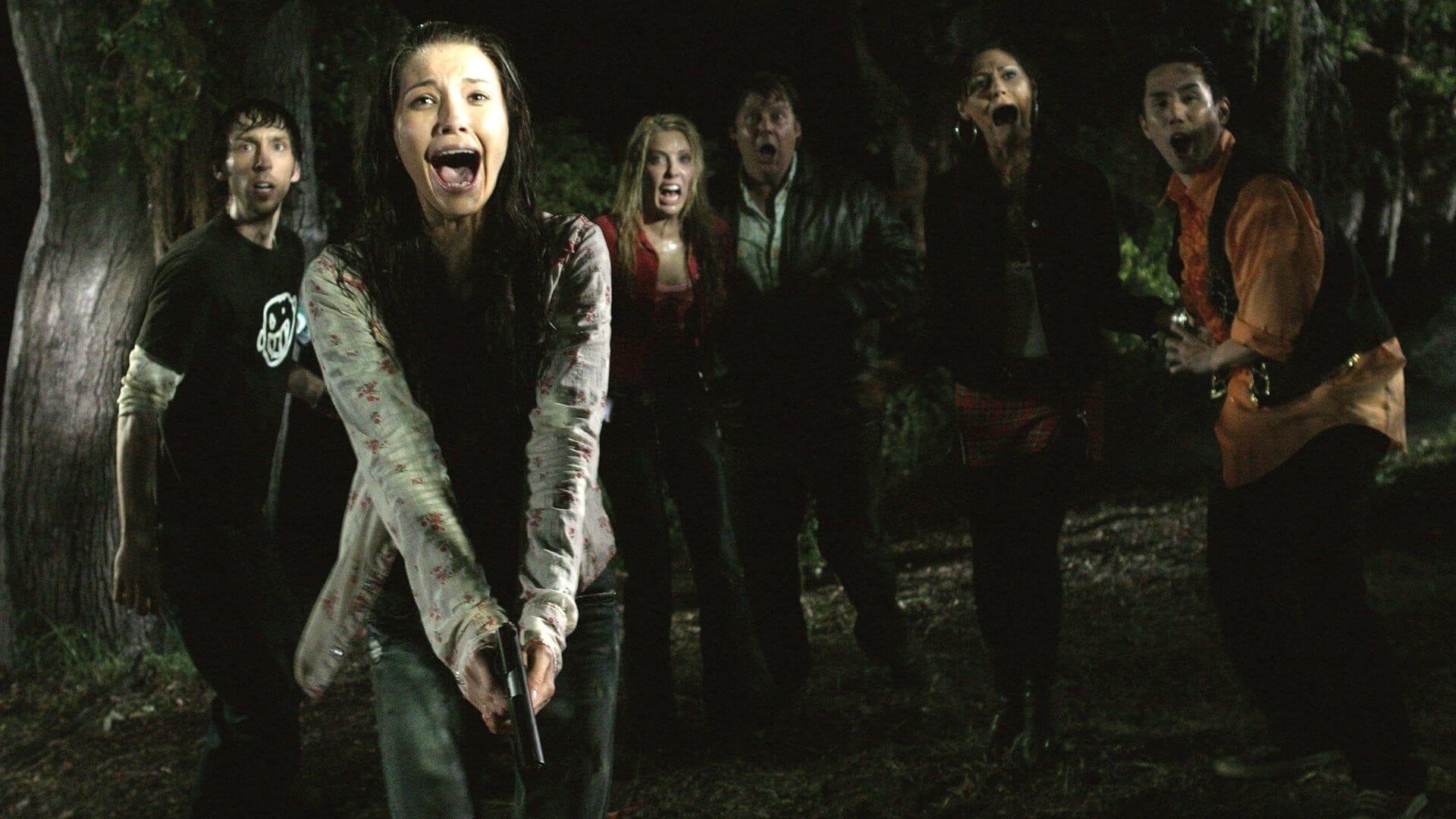
Meanwhile, it’s the Mardi Gras celebrations in the town, and all kinds of drunken merriment are taking place. Beads are being traded for flashes of boob, and the whole city is having fun. Except for Shaggy lookalike Ben (Joel Moore) that is. He’s still mourning his split with his girlfriend, and he wants to see the real side of the Big Easy; he wants to go on a trip through the haunted bayou. He manages to convince one of his friends, Marcus (Deon Richmond), to come along with him, albeit against his better judgement. They call on the local tour guide, the Reverend Zombie (played by the Candyman himself Tony Todd, and yes, the name is a nod to Rob), but unfortunately, because of some ‘incident’ (he was sued for a health and safety issue), he has stopped taking groups out into the swamp. The Rev suggests they try further across town to Marie Laveau’s House of Voodoo, which turns out to be run by the less experienced but certainly flamboyant Shawn (Parry Shen). They’re in luck since he’s just about to leave with a motley group of tourists: an elderly couple, a porno filmmaker and his vacuous models (one played by Buffy’s Harmony, Mercedes McNab), and Marybeth (Amara Zaragoza, billed as the easier to pronounce Tamara Feldman). Marybeth has her reasons to take the tour, as she’s the daughter of the pair killed in the prologue.

As the group getting further into the swamp – ignore the shouted warnings of a local hick – they become stranded when the boat hits a rock, making it even more apparent that Shawn has little clue about what he’s doing or what he’s gotten his customers into. Walking through the woods, they come across an abandoned house; one that used to belong to the Crowley family. Marybeth knows all about the legend of Victor Crowley, the poor unfortunate child who lived there.

Suffering from a rare deforming disease, Victor was kept hidden away by his father (seen in flashback played by Kane Hodder, who also portrays the older Victor) but one night, a group of cruel kids threw fireworks at the house to scare the poor child. When his father Thomas returned to his burning home and hearing the screams of his son, he attempted to rescue him by chopping at the front door. Unfortunately, Victor was right on the other side of the wood and caught a hatchet to the bonce. Thomas died of a broken heart later, and since then people have been going missing, and the locals are convinced Victor haunts the area, still screaming for his daddy. The swamp area was sealed off and declared illegal to be in, which explains why there are no other boat trips!

As the group attempts to get to the main road and safety, they begin to meet some very gruesome ends, much to the delight of the audience, of course.

Although Hatchet is almost the definition of the slasher film, it wasn’t that genre that influenced writer-director Adam Green the most. “While I may have grown up on a healthy diet of all of the great slashers, my two biggest influences for Hatchet were actually not slasher films at all.  John Landis’ An American Werewolf in London and Tom Holland’s Fright Night were the two films that influenced Hatchet the most,” he told us. “The fact that those movies contained so much comedy made them massively entertaining, far beyond what audiences had come to expect from those subgenres. There may be nothing funny about Victor Crowley himself, and the violence/gore may be turned up to eleven, but Hatchet has a comedic edge that very few slasher films that came before it (intentionally) had.

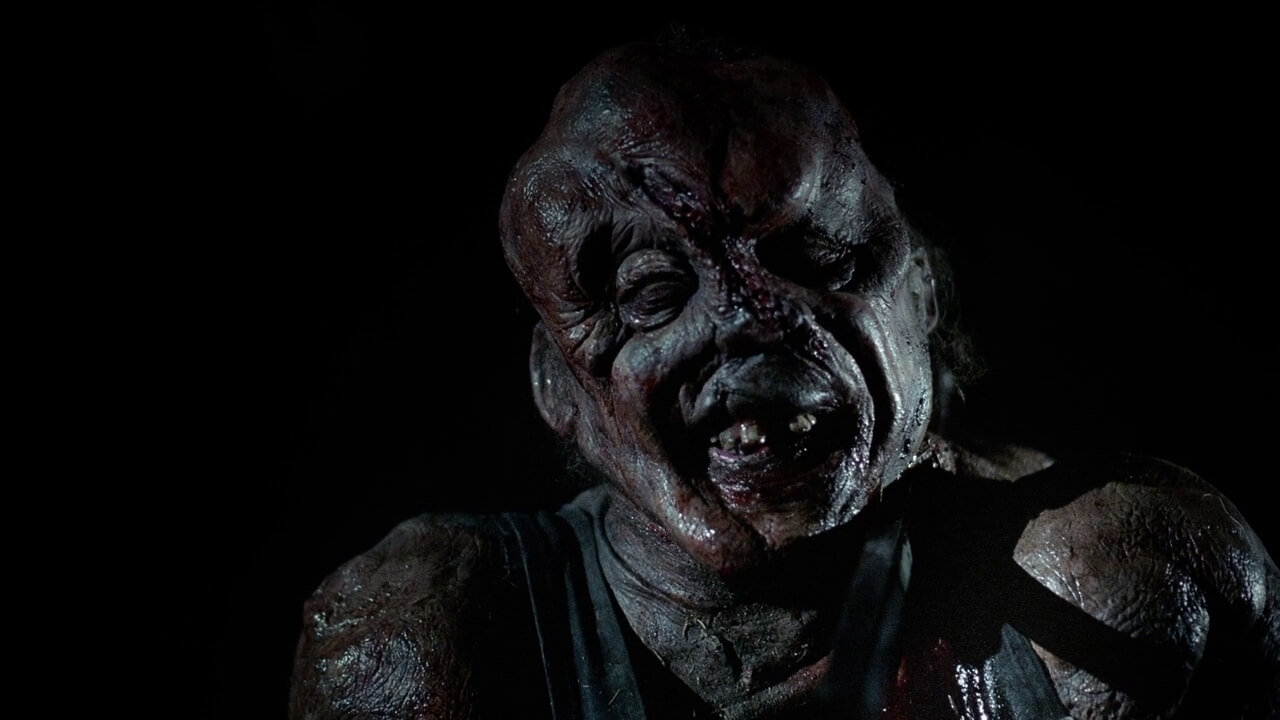
It was a slasher that influenced the look of Victor Crowley, though. Green describes the makeup design as a cross between John Merrick (the real-life Elephant Man) and Rocky Dennison (whose life was depicted in the Cher film Mask). He wanted the audience to feel the same shock they felt when they first saw the unmasked Jason come crashing through the window at the end of Friday the 13th Part 2. It’s a repulsion at how he looks, but within the Crowley story, there’s the empathy we feel for both Merrick and Dennison, too.

Slasher films had fallen out of favour, and Green was met with some resistance when trying to get it made initially. “The trend was leaning towards no more slasher-in-the-woods-type stuff. My reps basically told me that Hatchet wasn’t going to happen,” he explained, “I then got Kane Hodder attached and the producers, and I made a mock trailer. We made that trailer for literally $4. That’s what we used to get the horror community talking about the film and then it was a little easier to get the money to make it. So, I went to my industry connections and told I got the money to make this now!

What Hatchet had was some bloody effective gory kills – all done with prosthetics and in-camera ingenuity. Audiences saw people being torn in two, hacked in half lengthways, a head being ripped open from the mouth backwards not to mention one being twisted like a bottle top, arms ripped off and gallons of plasma thrown over nearby trees to emphasis the carnage. We lapped it up.

Hatchet wasn’t a commercial success initially. Horror fans got it; it was a hit at all the festivals, and while it took a little longer for the rest of the film-watching public to latch on to the movie, it found an appreciative audience on DVD. It was a perfect storm; horror fans had been chomping at the bit for a new bogeyman to slice up screens, and having the hulking Hodder under the horrific makeup was a masterstroke since he was already known to fans for his portrayal of Jason Voorhees in four of the Friday the 13th movies. The home release benefitted from being released in both theatrical and ‘unrated director’s cut’, the latter containing an extra minute of that all-important gore.

Now, after over a decade, the terror is hitting UK TV screens as Hatchet finally receives a TV premiere courtesy of Horror Channel. Considering the station’s close ties with FrightFest over the years, it’s only fitting. It’s surprising, however, since the sequels have already been screened. Green is ecstatic, though, “I’ve always said that even though Hatchet may have world premiered at the Tribeca Film Festival in NYC, it was at FrightFest in London where Victor Crowley was truly born. FrightFest was ‘the screening heard around the world’, and the UK audience was so enthusiastic over Hatchet that every genre festival on the planet seemed to call asking to program the film the very next day. A decade and three sequels later, it’s about time that the film plays on Horror Channel, which feels like its natural home.

And as we mentioned, sequels did indeed follow, much to the delight of fans. Hatchet II and III were released in 2010 and 2013, respectively. Scream Queen Danielle Harris replaced Zaragoza as final girl Marybeth and Parry Shen returned as an entirely different character. Green himself had already had these planned, however: “A major reason why the Hatchet sequels have succeeded is that they were planned out from the very start. In the first film, I actually showed some of the weapons that Victor wouldn’t actually use until the later films and I held back crucial elements of his mythology to be revealed later on down the road. Of course, it was also a risky move given that there was no way of knowing if I’d ever get to make the sequels.” The latter was only written by Green, however, but was still an entertaining gore-filled romp with his stamp all over it. The trilogy complete, everybody thought they’d seen the last of the hulking swamp monster.

Then in 2017, out of the blue, came a fourth instalment, merely entitled Victor Crowley. At that year’s FrightFest, Hatchet was originally listed as being screened in a special 10th-anniversary version with never before seen footage and extended death scenes that were cut from the film before it even hit the festival circuit. Just before the screening, however, it was revealed that it would be, in fact, a brand new Hatchet film getting its European premiere at the illustrious horror gathering (the world premiere happened a few nights before at Hollywood’s ArcLight Cinema at another event similarly advertised as an anniversary celebration.

The fourth film is set ten years after the trilogy with Shen’s character being the only survivor of the original carnage. The return to the swamp was in a way prompted by the sad passing of Wes Craven. It was another late legend, however, who initiated the process: “The reality that our idols are not going to be here forever was suddenly very real. You start asking yourself, ‘Well, what have we done that even matters?’ For months, I was really in a depression, thinking that nothing we’ve been doing really matters, that it can’t compare,” he explains, “Then, at Rock and Shock, which is a convention in Worcester, MA, I wound up being asked to moderate George Romero’s panel. After the panel, George said, ‘I know you’ve been going through a rough time, I know you’ve been taking Wes’ passing personally – you have to get over that, and get back on your feet.’ And as part of his pep talk, he had said, ‘So, where’s the next Crowley picture?’ And I said, ‘There isn’t going to be one, I’m done with that.’ And he pointed to this standing ovation in the audience, and he said, ‘You’ve got to understand, ’til they say it’s over, it isn’t.’ 48 hours later, I’m back in LA, and I’m sitting at my desk, and I’m typing ‘Ext. Honey Island Swamp. Night.’

After over a decade, it’s hard to recall the impact Hatchet had on horror cinema. It took us back to the gory heyday of slashers while also driving forward with physical gore effects (Green’s no CGI rule is immensely rewarding) and giving us a new bad guy to be afraid of. The mix of scares and laughs is pitch-perfect and Victor Crowley, ever silent, is one of the most terrifying bogeymen of recent memory. Here’s to the next instalment!

HATCHET screens on Horror Channel on August 26th. Tune in on Sky 317, Virgin 149, Freeview 70, Freesat 138.

Out Now – Issue 464

464 ns

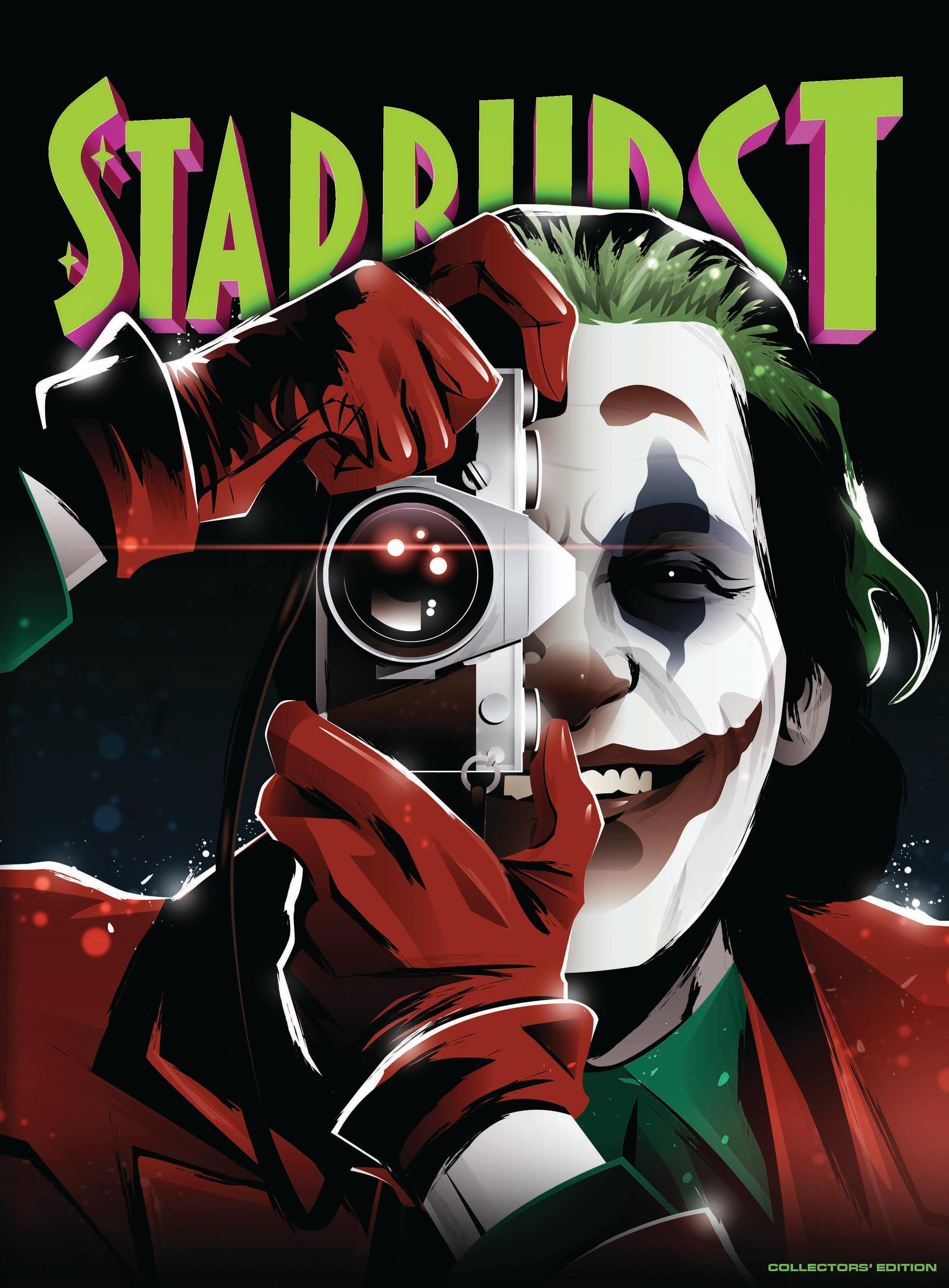
In the latest issue of STARBURST, we take a look at the most terrifying creature known to man – clowns! With the release of Joker, starring Joaquin Phoenix, and IT Chapter Two, featuring the return of Pennywise, we take a look at our favourites and preview the movies.

Stallone is back in Rambo: Last Blood, the Henson Company’s classic story The Dark Crystal returns to the small screen in Age of Resistance, and in anticipation of the release of Crawl, we look at the world of killer crocodile movies – not to mention chatting to the director and star about the film.

We also chat to director Danishka Esterhazy about the horror updating of beloved kids’ TV show in The Banana Splits Movie, and composer Kristian Eidnes Andersen talks about scoring Lars Von Tier’s Antichrist.

Plus Horror Obscura looks at another overlooked shocker and you can get the skinny on cool card game Keyforge.

Plus all your favourite COLUMNS, NEWS, REVIEWS and much MORE from the worlds of SCI-FI, HORROR and FANTASY.

464 col 464 ns

In Praise of the Adult Babies

adult babies

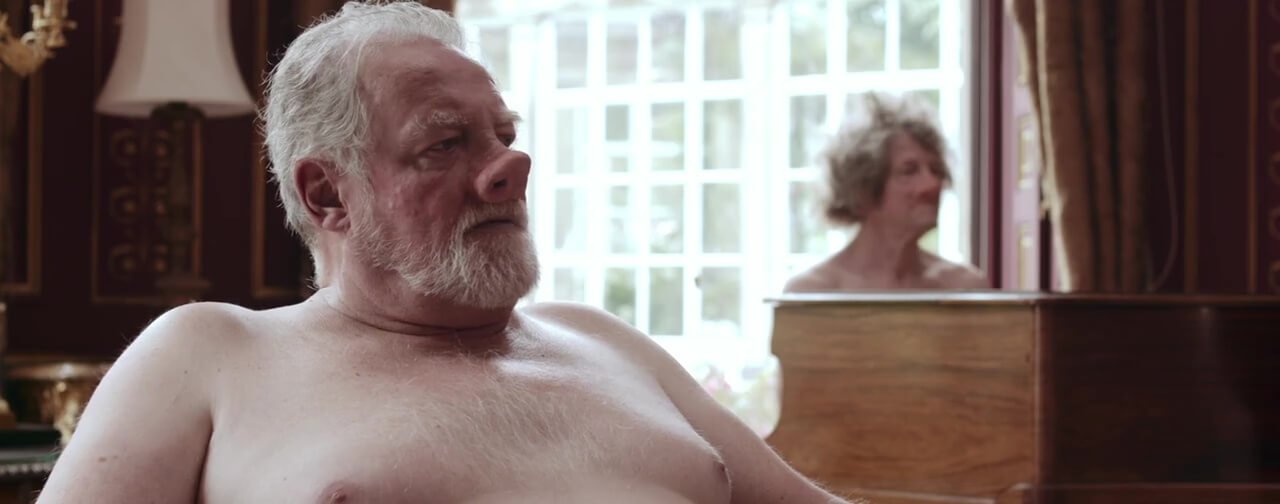
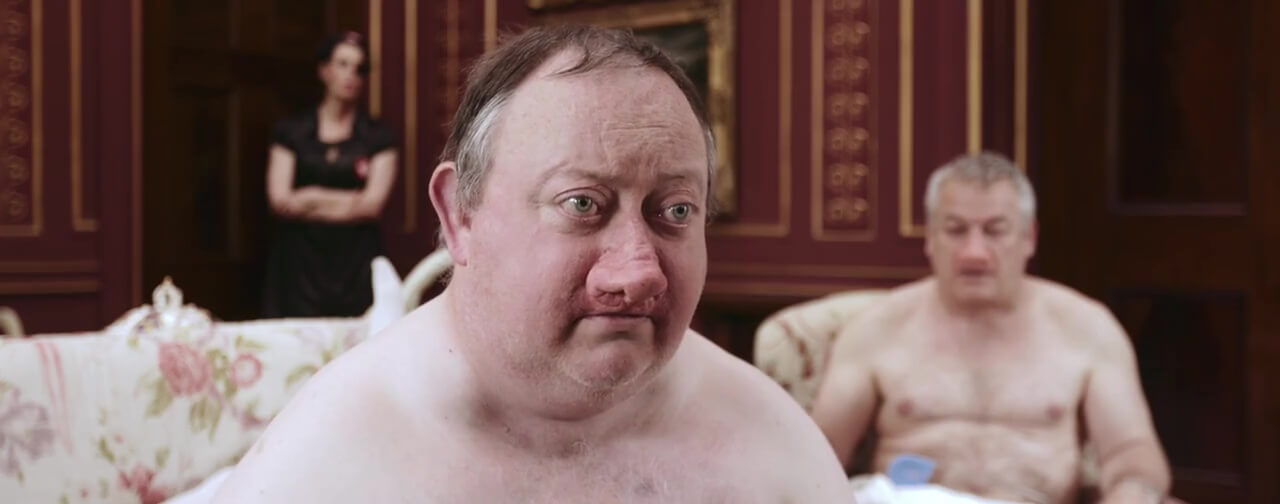
Most ‘normal’ folk know him as that nice Paddy off of Emmerdale on the telly, but to us, Dominic Brunt is a director of fantastic films – quite literally. His debut Before Dawn was a relationship drama set among a zombie apocalypse, and his follow-up, Bait, was a gore-filled, hard-hitting story of desperation when faced with debt collectors. However, his latest cinematic outing – hitting the Horror Channel in January – is an outrageously grotesque slice of surreal horror. Imagine if John Waters directed an episode of The Outer Limits that was written by Roald Dahl’s more sadistic twin. It probably still couldn’t prepare you for what you’ll be faced with. Surprisingly, though, it was Brunt’s wife, Joanne Mitchell, who came up with the story.

While Brunt’s previous films have had a grounded social conscience among the horror, Attack of the Adult Babies takes a less cerebral approach to ethics, politics, and the world order. Taking a leaf out of Alex Chandon’s book (the pair have worked together several times, and Dominic was a memorable cast member in Chandon’s superb Inbred), there are plenty of outrageous visuals, and sickening situations as the story unravels before our disbelieving eyes.

We spoke to Dominic and Joanne as the film was due to be released in 2017, and they told us that although Joanne wrote the story, they trusted Paul Shrimpton with the script, largely due to his work on the aforementioned Inbred. “I really like Paul’s way of working, and I know he can deal with that side of things,” Dominic explained, “Jo broke it down scene-by-scene and then we passed it to Paul. He stuck rigidly to the storyline; he changed some of the ending and the dialogue, he put a few jokes in, and he brought a fantastic pace to it and a shape that was far better than it had been.

It was a step-up for the pair filmmaking-wise, as Brunt told us: “There was a lot of pre-production because there’s a large cast in this one. It’s set in a massive manor house, and we found one about called Broughton Hall [in Skipton], so we managed to live there and eat there, and we could get up in the morning and start filming and stop when we dropped.” The convenience of shooting and staying in the same place made the production much easier than the previous film, “Bait was twenty-six locations – it was a nightmare dragging these massive lorries and seventy-three crew around,” he continued. All this with only a three-week shooting schedule!

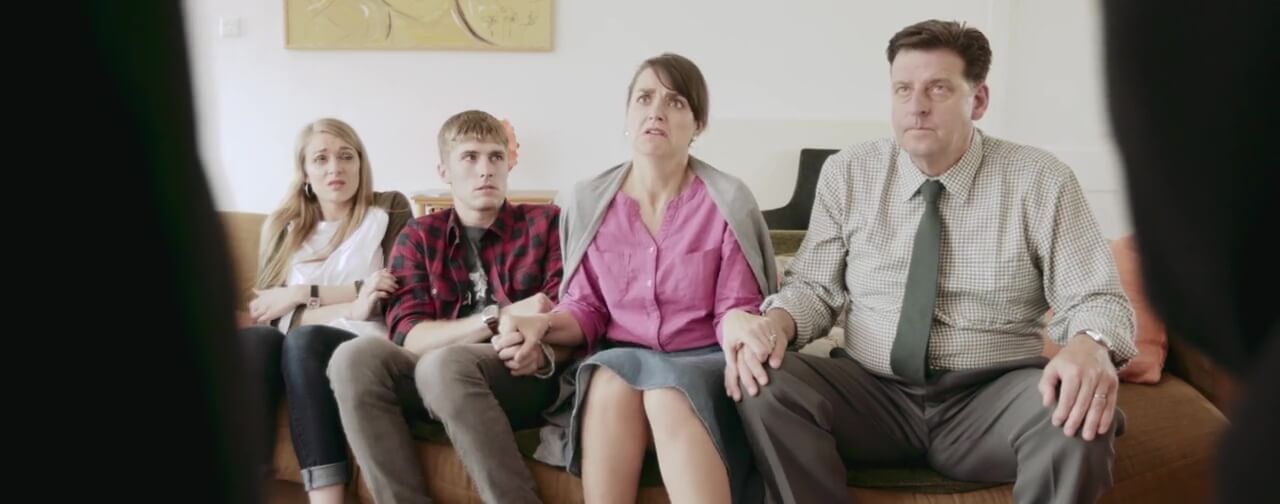
The film begins rather sedately, albeit interspersed with a grotesque nappy-wearing man being pursued by a sexy young nurse, while others get into their uniforms. We’re introduced to a nice family playing a board game. George and Sandra (Andrew Dunn, best known for TV’s Dinnerladies and Kate Coogan) seem to be attempting to coax Sandra’s son Tim (Kurtis Lowe) to get into the spirit of it, while Tim’s daughter Kim (Mica Proctor) is more concerned that her would-be stepbrother has been having a dirty rummage with her underwear. Suddenly, a pair of Eastern European thugs burst in and demand the group hit the deck. Despite being absolutely inept, they tell Sandra and the two kids to go to retrieve some documents from a nearby mansion, or George will ‘get it’. Although they’re terrified, they set off, leaving George in their home. Except it turns out, it’s all his planning, and the pair are even more incompetent than one could possibly imagine.

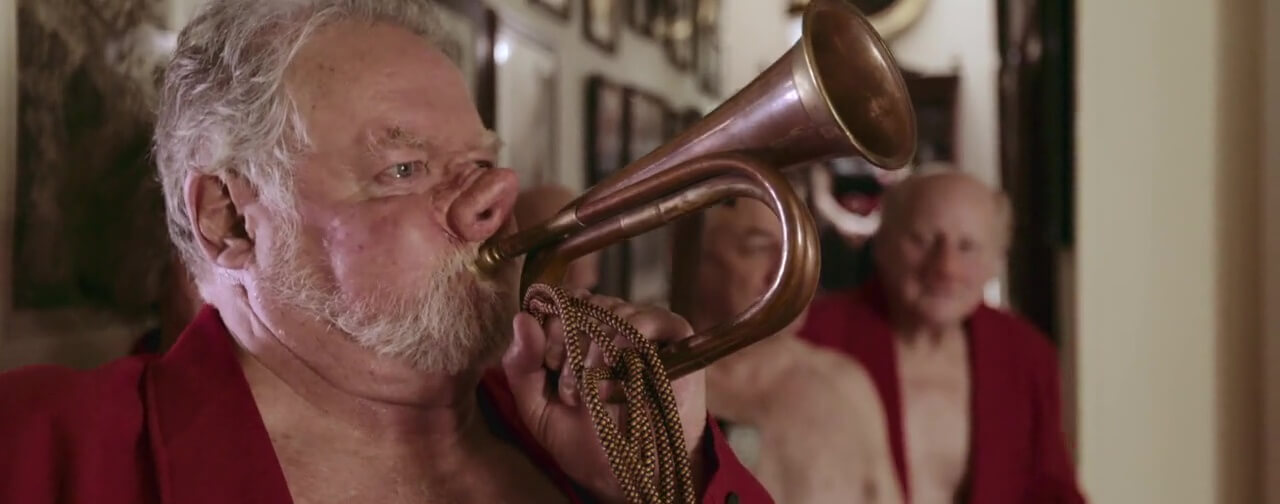
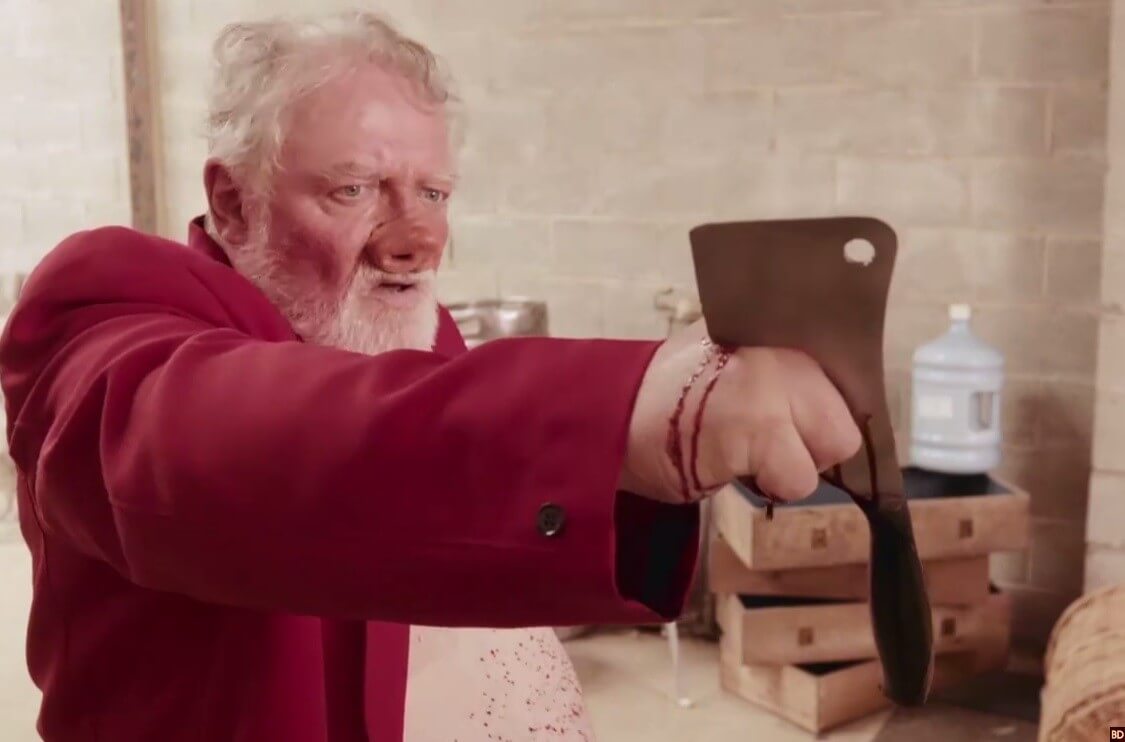
Meanwhile, at the mansion, a strange gathering is taking place. A group of ageing, overweight gentlemen are assembled for a weekend refuge. They are not getting pampered, though. Well, not in the normal spa way. Clad only in towelling nappies, they are given oversized milk bottles and begin guzzling at the teats. The nurses, all attractive, stocking-clad young girls are given strict instructions from the dominatrix-like Margaret (Sally Dexter) and her sidekick Clinton (Joanne Mitchell). The collection of men includes bankers, ministers, and other dignitaries and are played by the best of the grotesque. Brunt has worked with some of the men before; Seamus O’Neill is another Inbred veteran along for the ride while wild-haired comedian Charlie Chuck (Woof! Bark! Donkey!) appeared in the director’s Bait, but new to the team is Laurence R. Harvey, versatile star of The Human Centipede sequels amongst other cult offerings. They may look unusual to start off with, but once they commence feeding on the milk, am even more outlandish physical change begins. They grow porcine-type snouts and, worst still, start to soil their nappies.

This is the reason they are there: their excrement feeds the machine that perpetuates their wealth. Literally. Only, rather than a nuts-and-bolts thing, it’s an ancient alien that lives deep underneath the house. It’s an interesting concept (and beautifully farfetched) and is just crazy enough to make the rest of the film appear normal.

What follows is a gloriously wild ride in which the family attempt to escape not only the marauding head nurse and her chainsaw-wielding colleague but the riled adult babies who are upset that their Masonic-type ritual has been interrupted.

By the time the movie reaches its climax, there’s enough gore to please any horror hound and more shite than Pasolini’s Salò, or the 120 Days of Sodom and The Human Centipede 2: Full Sequence put together. If you can stomach that, you’re in for a treat. We’re also treated to several different styles of filmmaking: a vintage cartoon sequence, for example, illustrates the pig’s greed, Alex Chandon weaves his visual magic for a psychedelic trip into the creature’s mind, and a brilliantly over the top sequence animated by Claymation master Lee Hardcastle comes out of nowhere.

In today’s political climate, the gap between the ‘haves’ and ‘have-nots’ has increased exponentially. It actually makes the powerful, well-to-do occupants of the retreat rather believable. Some of the most influential figures in the world act like man-babies a lot of the time (there are a few, like a certain president, who seem to behave no other way), so it makes sense that they’d want some place where this can be indulged to the most grotesque degree. However, this is not a perverse fetish. They are there for a reason, and that reason perpetuates their wealth.

Dominic elaborated on what he wanted to do with the film: “I wanted to tell a wider story about the banking system and the people in charge and the corrupt politicians and MPs and people in authority who seemingly have the power to tell us and everybody else what to do,” he told us, “whereas they’re actually human beings, too and more often or not they are where the stories are.” The situation is so ridiculous that there had to element of humour in there, though, “It’s all to do with poking fun at that, not being too serious, trying to make a political point but putting it across satirically because nobody wants to listen to a political point any more, certainly not over an hour and a half in a film.” And although there’s a serious point behind it all and some wry comedy, it’s not played wholly for laughs. “It’s not a Shaun of the Dead-type thing,” Brunt said, “there’s humour in there, but it’s not presented as humour. Everyone plays it absolutely straight. In tone, it’s a bit like The Lobster, where everything’s very strange, and the funny things are ignored; it’s not played for laughs at all.

Brunt peppers the film with horror film references and tropes – some obvious (quotes from Night of the Living Dead and a line lifted straight from anarchic eighties show The Young Ones) and some surprisingly subtle – but it’s the screenplay’s unique take on modern living that raises the biggest smiles. Some very low brow but on-the-pig-nose humour comes from the hideously deformed wheelchair-bound elder (whose name is bleeped out in a high-level Pythonesque show of surrealism), who’s meant to be keeping an eye on the security of the place but ends up watching call girl-type shows (you know, the ones that are on the lower reaches of the Sky channels) on his laptop. His desk is covered in tissues (he… err… must have had a cold…) and at one point he’s seen putting the phone down just as the girl on screen breaks down uncontrollably. We’d have loved to overhear that conversation! While we’re on that seedy subject, there’s an intermission midway through (a nod to Monty Python and the Holy Grail, perhaps?) in which we see two very bored-looking models awaiting their calls, shaking their mobiles eagerly at the camera. Superb attention to detail there, Mr Brunt!

Fans of Dominic’s TV acting career will be pleased to know that, despite the big man not appearing in front of the camera this time (we do hear him doing a rather fine Alan Bennett voice, though), several of his Emmerdale alumni make appearances, but they are not token cameos, they also prove their acting chops (as well as showing how game they are). Nicky Evans (Shane Maguire in Shameless) also returns to work with the director (he played a key role in Before Dawn) as one of the utterly clueless Russian thugs in the opening who ends up with more than just a headache. Fans of Cannibal Apocalypse and the 2003 version of The Texas Chainsaw Massacre will enjoy his demise.

We’ll leave the last word on why you should see the film to the director himself: “The image of an adult baby is great; big fat men running around dressed in nappies chased by sexy nurses in suspenders. That would carry me through an hour-and-a-half of any movie, to be honest with you!” If that doesn’t convince you to watch, nothing will.

ATTACK OF THE ADULT BABIES screens on Horror Channel on January 5th. Sky 317, Virgin 149, Freeview 70, Freesat 138.

Indian Dawn: A Look at The Dead 2: India

dead india

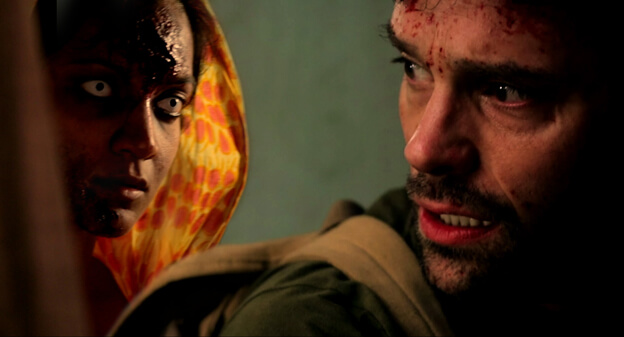
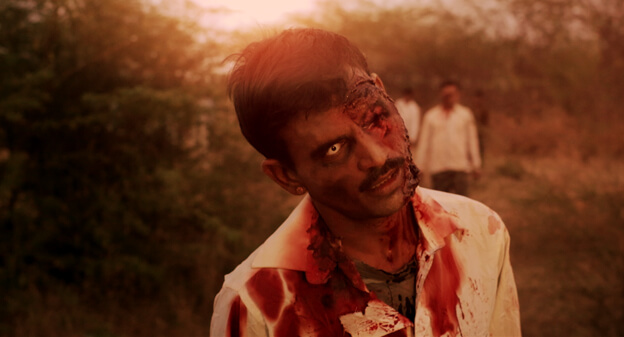
In 2010, Howard and Jonathan Ford wrote and directed a fresh take on the zombie film with The Dead. Set within the soaring heat of Africa, a survivor of an airplane crash attempts to find his family while the undead take grip of the country. It was a bold and exciting change of pace from what we were used to from the zombie subgenre at this point, debuting just before the behemoth TV series The Walking Dead hit screens in October, 2010. It was as bleak as a zombie movie should be and paved the way in 2013 for a sequel, this time set in India.

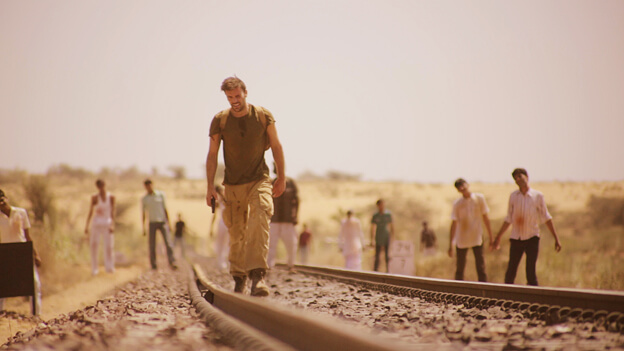
The Dead 2: India, like its predecessor, makes no attempt to explain the zombie outbreak, instead just puts us straight into the action. However, it’s a subdued affair, and like the first movie, involves a trek across barren land and dangerous clime as our hero, Nicholas (Joseph Millson), attempts to reach his pregnant girlfriend, Ishani (Meenu Mishra), 300 miles away in Mumbai. Nicholas is an engineer on the wind turbines, a job that comes in handy later on when he needs to get things working to aid him on his journey. Along the way, he meets a small orphan boy, Javed (Anand Krishna Goyal), who he saves from certain death when the boy’s village is overrun with the undead.

The film kicks off, however, with a stunningly evocative credit sequence that juxtaposes the bustling cities of India with the poor and litter-strewed slums; the camera floating past the locations creating an almost 3D effect. Our first taste that something’s wrong is when a passenger on ship from Somalia (a neat link with the first film) stumbles home feverishly after his journey, dazed having been ‘bitten by a mad woman’ before boarding. In such a densely populated city, it’s not long for his disease to spread, and soon the dead will be tearing the throats of the living and stumbling slowly across the continent.

Not only does The Dead 2: India masterfully play with tension and deliver some gory treats, it’s stunningly photographed by Jonathan Ford, on triple duties as well as co-writing and co-directing. The opening shots have a nightmarish quality and pays homage to the likes of George A. Romero’s Night of the Living Dead beautifully. Effects-wise, the majority were done in-camera, with just a few CGI moments to smooth things over. Star Joseph Millson told reporters when interviewed at the film’s premiere at the Film 4 FrightFest in 2013 that he “had almost no idea what was coming on every bit of action,” revealing that despite the intricate script, the shock set-ups were as surprising to him as they are to the audience. The stunts were all him, too “I was black-and-blue; I have the scars and bumps and bruises to prove it – that was fun!” Millson had previously been best known for British TV series Holby City and The Sarah Jane Adventures but had actually worked with the Ford Brothers on his first acting role, La Belle Dame Sans Merci by John Keats, directed by Jonathan Glendening. He actually got the role of Nicholas after contacting the brothers about a film he was helping produce. The director wanted to call the movie The Dead, but Millson had heard of another film of the same name. Realising he’d worked with the Ford Brothers earlier, he contacted them and asked if they’d change their name. Naturally, they refused, but it put the actor back on their radar.

According to Millson, the Ford Brothers shot the film over the course of a month guerrilla-style on location after the Indian authorities refused permission. Whatever the reality, the brothers managed to do so much that was thought undoable. It was big ask, especially considering the action scenes the brothers had set up in the script. Many of these were intended for the first film, but that was such a harsh shoot, they were shelved. Here, though, there are no such reservations as Nicholas uses a paraglider and a vintage motorcycle among other things to make his escape. The army were also involved, appearing in the film and allowing the use of guns. The big problem authorities would have is the showing of the complete offensive contrast of the situation in the towns – opulent living overlooking the poorest living conditions you could imagine. Co-director Howard Ford said of the situation: “We all had tourist visas but when we went under the radar alarm bells must have rung as people from the ministry would consistently turn up at the hotels and bed and breakfast places where we were staying. However, we always managed to stay one step ahead of them as we were travelling 300 miles every other day. On one occasion we could see the flashing lights of police cars in the distance coming for us, but we still managed to escape in the nick of time”.

Like the first movie, in between the flesh-eating carnage and boiling hot road trip, there’s a real heart and human story. Nicholas’ motivation is the love of his girlfriend and the hope that he can save his unborn child. His unlikely friendship with the orphan Javid also spurs him on to ensure he’s safe too. There are awful decisions to be made along the way, though. Particularly when Nicholas comes across a young mother and child trapped in a crashed car.

Although The Dead 2: India wasn’t as well received as its predecessor, it’s deserves much more of an audience. Everything about it: the cinematography (how could you go wrong with the stunning vistas and evocative surroundings?), the subtle and haunting score by Imran Ahmad complements the images perfectly, and has the most simply effective zombies since Romero’s corpses shuffled across the screen. It’s also chock-full of gore, with the undead tearing pieces off victims and open wounds aplenty.

You get the chance to catch The Dead 2: India when it gets a UK TV premiere on Horror Channel. The channel will also be screening another film written and directed by Jonathan Ford and featuring sibling Howard in a small role, Offensive (2016). Set in rural France, it follows a retired couple who move into a house inherited by the male’s father, who helped liberate the village from the Nazis. As outsiders, they are besieged by a bunch of local thugs who have been conducting a reign of terror in the area and could have been behind the death of the father. A cross between Sam Peckinpah’s Straw Dogs and James Watkins’ Eden Lake in both tone and brutality, it’s another one not to miss. A sort of geeky side note: the lead character (Bernard, the son of the war hero) is played by Russell Floyd, who was DC Ken Drummond in the much-missed TV series The Bill for three years during its heyday. Now don’t tell us we don’t educate you…

The Dead 2: India and Offensive bookend Horror Channel’s FrightFest season in August, which highlights some of the best films from previous years’ festivals. Other titles include: Attack of the Adult Babies, A Lonely Place to Die, All Cheerleaders Die, Martyrs (2015 version), The Green Inferno, Ginger Snaps, and more.

You can tune into the Horror Channel on Sky 317, Virgin 149, Freeview 70, Freesat 138.

John Robertson | THE LITTLE TOWN OF MARROWVILLE

robertson

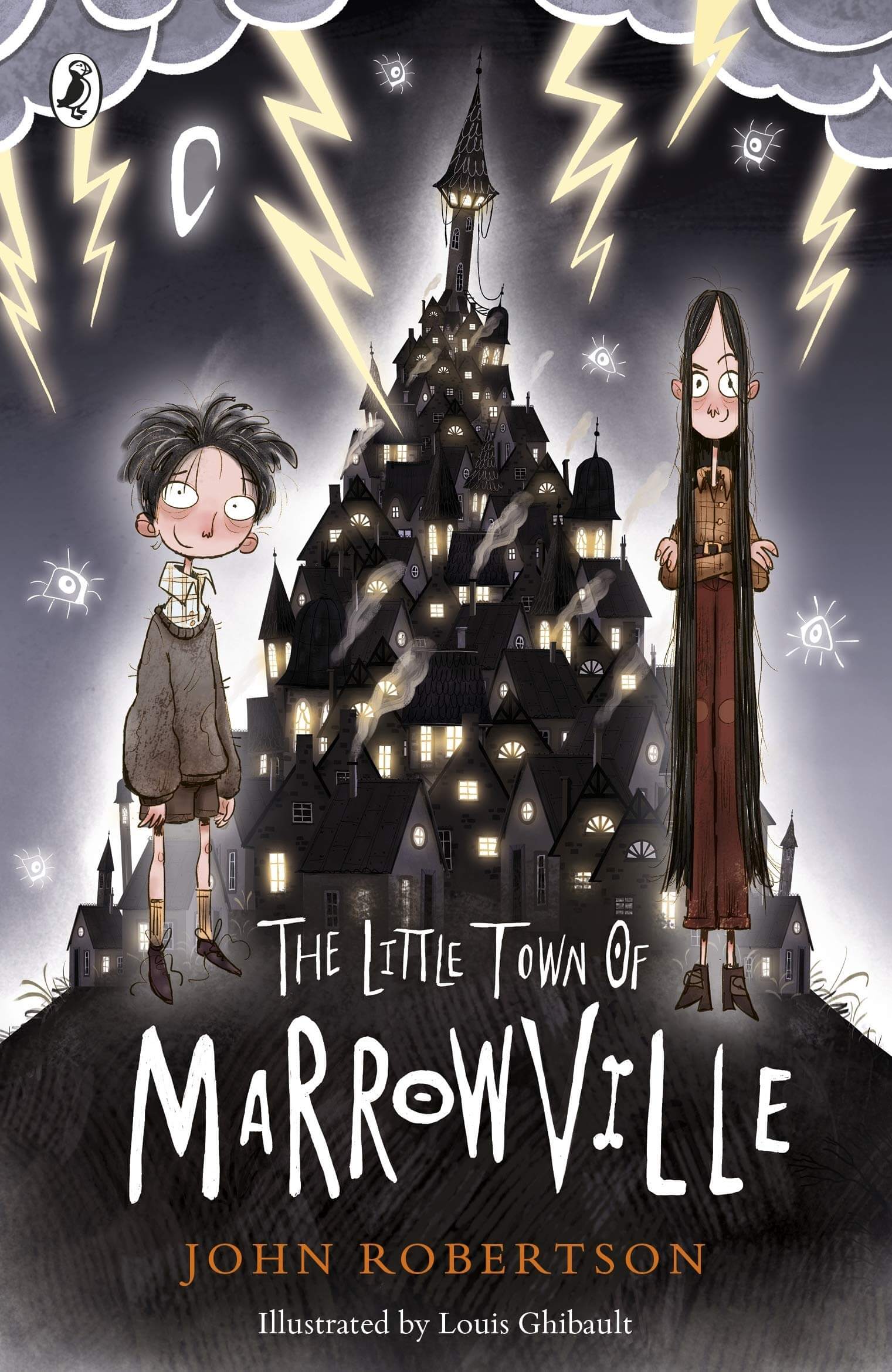
John Robertson is best known for his smash-hit comedy show The Dark Room, a pastiche on early computer adventure gaming. His latest project is a bizarre yet hilarious children’s novel called The Little Town of Marrowville. We got in touch to find out more.

STARBURST: Tell us about The Little Town of Marrowville

John Robertson: A few years back, an editor named Gary Panton at Penguin turned out to be a big fan of my show The Dark Room. He was looking for someone to edit a Roald Dahl anthology and I put my hand up. He messaged back to say “Yeah, you didn’t get the job, but if you ever have any ideas for a kid’s book please let us know.

At the time I was all “But I’m a grungey alternative comedian. I swear and I’m dark and I work with chasms of the human soul. And retro gaming. So a part of me was all ‘I’m not going to write a kids’ book”. Then he messaged me a second time and I was like “My god, Puffin aren’t going to message three times. I better come up with something.” So I wrote a thing where horrible six-fingered father named Howard Howard met his gruesome and funny demise and his children were happy about it. And they said “Gee that’s good. Why don’t you write a whole book.” So I did.

It is quite a gruesome book in place, though in a good way. Where does come from?

Well that comes from the history of children’s literature. Terry Pratchett said a very smart thing, which is kids love blood. I used to read Norse myths when I was a kid and that was the best thing in the world at age eight. It was so funny. My dad was a priest and we where being told that God was a being that created the Earth and it just was. Whereas the Vikings are all ‘and then Odin tore out the throat of Ymir the colossal giant and the stars are his entrails’. That kind of thing, when you’re eight, is very funny.

There’s a very apocalyptic feel to all your work. What is it about laughing at the darkness that appeals to you?

Every aspect of it. Darkness isn’t something to be shied away from. To look at death and have a wry smile on your face, I think is a wise thing to do. In terms of Marrowville, I think occasionally people don’t write for children. They write for what they think children are. I think you look back at your own childhood with rose tinted glasses and think everything was light and bunnies and flowers. I was an appalling little shit. I’m writing stuff that is as dark as I liked it when I was a kid. I wrote a story when I was ten years old. It was about a man stuck on a desert island who jumped off a cliff. He wasn’t trying to die, He was just trying to escape. He landed on a stick, and stick was stuck in his eye. My teacher said to me she enjoyed the story because the man was just walking around with this stick poking out of his eye which he didn’t seem to mind and it wasn’t mentioned again. That tickled her. Cartoonish violence.

I don’t like to patronise kids – when I was growing up, we all knew children who had mean dads – this guy liked to yell, this guy was scary, etc. – so it’s something I think all children are aware of – so in Marrowville, I wanted to give kids a funny way of getting rid of those guys. And if it could make you want to throw up your breakfast a little, that’s good too.

The art in Welcome to Marrowville suits perfectly. How did it come about?

That’s one hundred per cent Louis Ghibault. A bunch of different illustrators were suggested and Louis was by far the best. He’s absolutely fantastic. He really encapsulated the heart and the gore of Marrowville. I know we keep talking about the darkness but so help me, there’s a lovely little story in there, even though it’s caked with jokes and blood.

There’s a sequel already planned. Will it feature more of Aubrey and Aubrey’s sister?

Absolutely, it’s their story. To be fair, it’s Aubrey’s sister’s story. It’s just one of those things. When I was creating the characters, I thought here’s a little ten-year-old boy and his fourteen-year-old sister. When I started reading it to people, they really resonated with the teenage sister who was having a horrible time with her father. I think that happens with a lot of children. I think Aubrey’s sister is me expressing that. And it’s me saying what happens when you’re actually a very capable person but you find yourself surrounded by people who are incapable but are very, very loud and domineering.

What’s next for you?

The next project after this? It is more of The Dark Room on tour. We are making a Dark Room augmented reality game. They’ll be further development on the Dark Room game on Steam, because we’ve just got some grant money for that. And I’m working on the Island Next Door to the Little Town of Marrowville. Touring, novel, video game, other video game. I’m doing well for someone who doesn’t have to get off the couch to go to work.

How different is the stage work from writing?

Sitting down and writing a novel, aside from getting out and performing live to a group of people who are happy to see you, is just the single most pleasurable activity. I disliked the process of writing stand-up comedy to the point that I stopped doing that and started improvising. But just sitting down and getting to be in your own world and taking the time to work out the architecture or how ugly and bumpy a bad guys nose should be or coming up with an appallingly gruesome thing for a disgustingly sweaty man to do is a really fun activity. And then you have to figure out how you make a capable fourteen-year-old and their idiot ten-year-old get out of this one. It’s fun. I just sat down and had a really wonderful time.

Why is geek culture on the rise?

It’s a got a lot to do with exposure. The Internet has given us a lot of things, and never underestimate the sheer power of Disney buying something. If you want something to go mainstream, have the Mouse run it. You sometimes get these moments where superheroes start to inform the zeitgeist. I just get the impression where a lot of really good commercial understandable art has come out and thanks to the Internet people are doing their research. And theirs no longer the shame attached to these things. There’s people down my gym wearing Tony Stark T-shirts.

If you got to play in someone else’s sandbox and create something for an established franchise, what would it be?

To be fair, if anyone gives me their sandbox, they’re going to wake up tomorrow with the sand in every crevice and all of the characters dead and exploded. I would absolutely love to jump aboard just any Star Trek franchise. I would finish Deep Space Nine. I’d bring Sisko back, brutally aged and have a wonderful time. Deep Space Nine was the first Star Trek series where people were violent, flawed and occasionally had libidos, and now we are in an age where you can actually have that on television. Hot damn!

Photo credit: Mark Dawson Photography

The Little Town of Marrowville is out now and reviewed here. The Dark Room will be at the Edinburgh Fringe throughout August and touring the UK afterwards.

little town

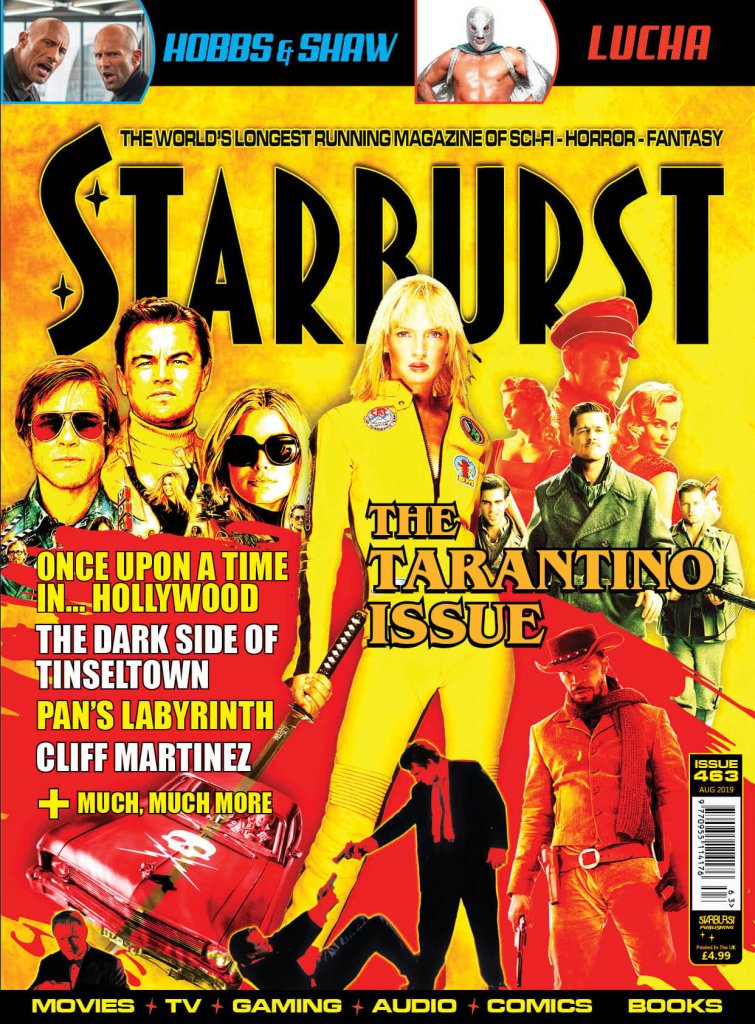
QUENTIN TARANTINO: EVERY FILM RANKED

tarantino

While we anxiously await the release of Once Upon a Time in… Hollywood, STARBURST ranks all of Quentin Tarantino’s movies in order of preference…

[Note: QT must have penned the screenplay and directed for the film to make the list – sorry True Romance fans – and while he might not count Kill Bill as two movies in his “ten and done”-career plan, we do.]

Come back soon to find out how Once Upon a Time in… Hollywood fares!

9. THE HATEFUL EIGHT (2015)

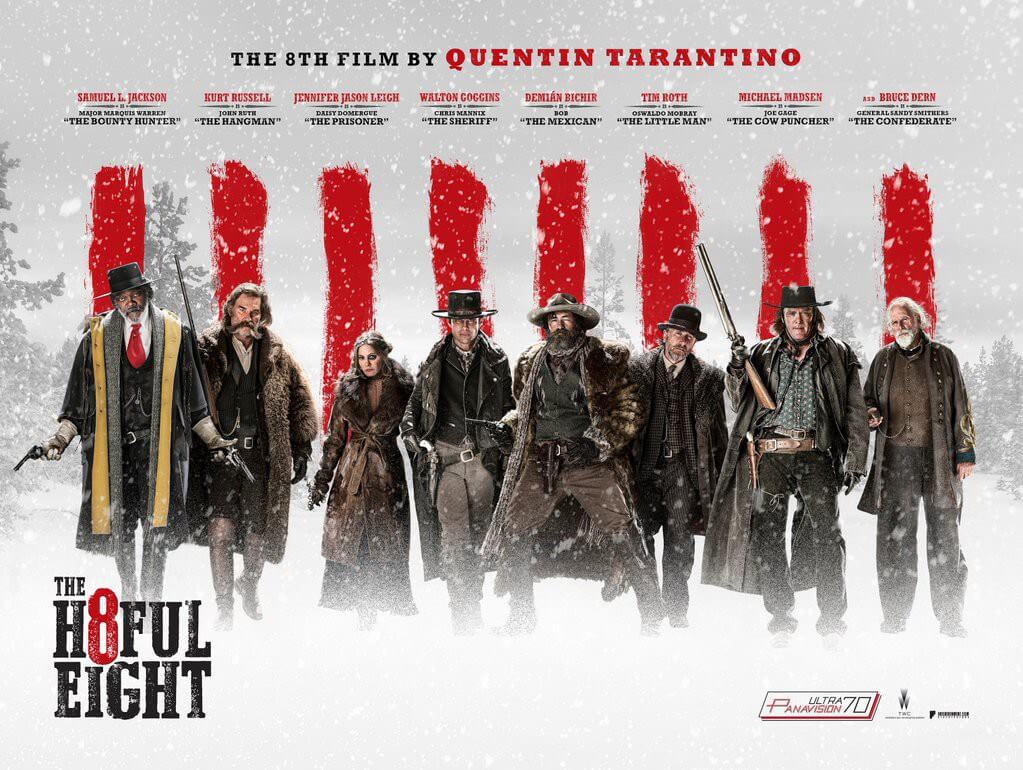
Having originally been conceived as a novel and sequel to Django Unchained, The Hateful Eight is what one could describe as more of a spiritual successor to Reservoir Dogs. With its claustrophobic atmosphere and ensemble cast, there’s a lingering dread that hangs heavy throughout. Thankfully we’re treated to some of Tarantino’s razor-sharp dialogue and enough twists and turns to leave most people’s jaws on the floor. The performances by the whole cast are stellar with Jennifer Jason Leigh hitting it out of the park as the devilish Daisy Domergue. Add to that an original score by legendary film composer Ennio Morricone and you’re left with one of the most quintessential Tarantino experiences. A western thriller which truly manages to succeed on all fronts. | James Evans

8. DEATH PROOF (2007)

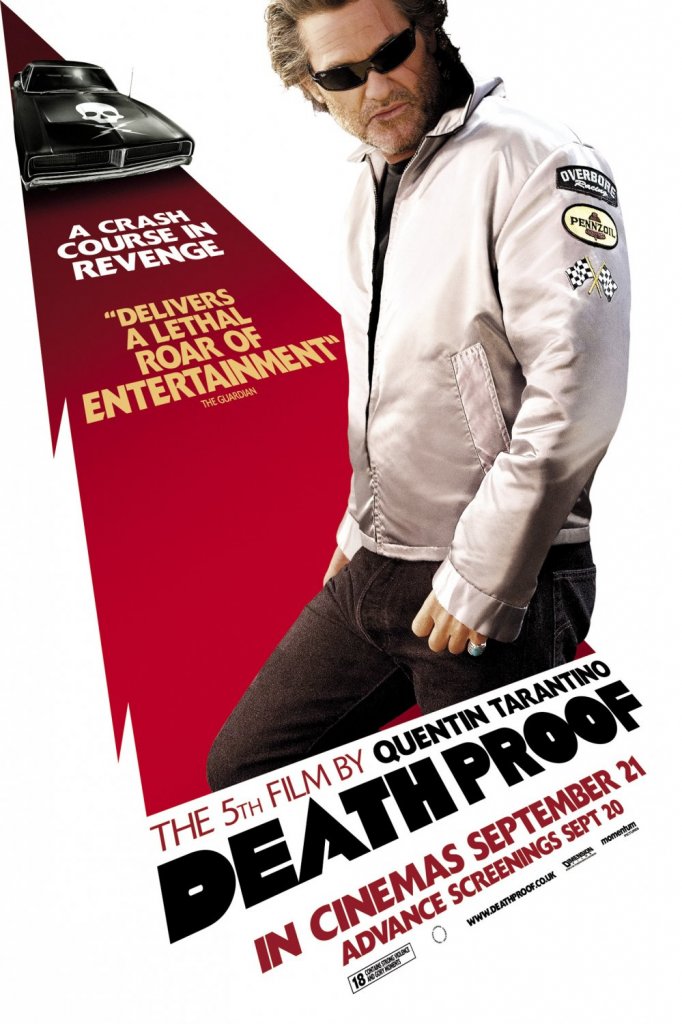
Quentin Tarantino’s contribution to Grindhouse was by far the better feature of the package, as the director drew on a range of exploitation cinema to tell an entertaining story of a stuntman murderer who terrorises his female victims and leaves them mangled by staged car crashes. The gender themes that come in to play are satisfying to see play out as hunter becomes prey and the film is entertainingly fast and furious, as it thrillingly delivers on the promise of its concept. Tarantino once said Death Proof is probably his worst flick but this blast of muscle car murderous mayhem still kicks some serious ass. | Jack Bottomley

7. KILL BILL: VOL 2 (2004)

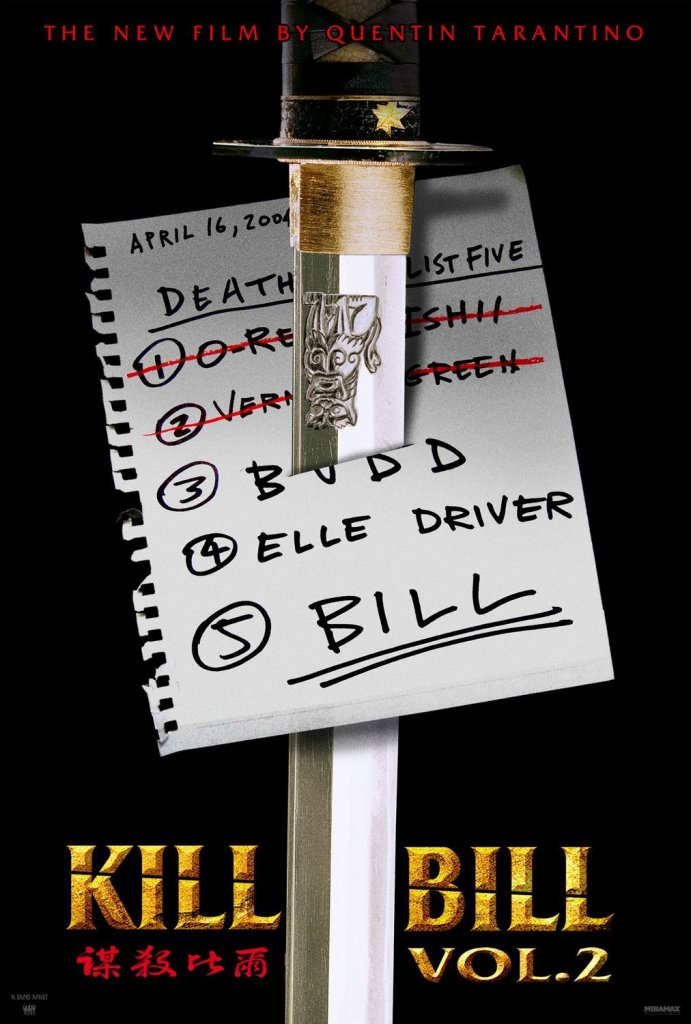
Where Volume 1 was heavily influenced by samurai movies, Volume 2 is a western, giving The Bride the opportunity to avenge the many injustices she had suffered and exact deeply satisfying revenge on the family who had turned against her. Tarantino is a directorial chameleon, replacing the tightly enclosed urban landscape of Volume 1 for wide-open vistas, and as Black Mamba hunts down Budd (aka Sidewinder) and Elle Driver (aka California Mountain Snake) before administering the legendary five finger death punch to the eponymous Bill, you can’t help but feel a deep satisfaction for her. | Mark Newbold

6. DJANGO UNCHAINED (2012)

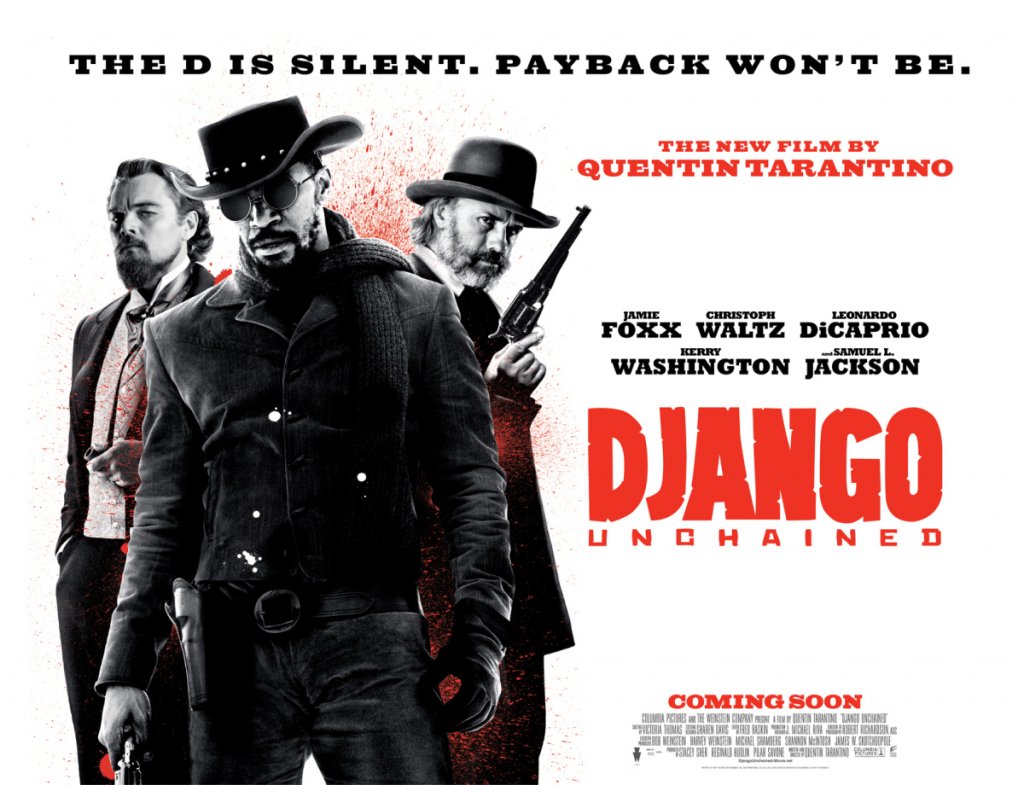
Bringing together the very sensitive subject of America’s slave-trading past with what is primarily a hilarious buddy road movie, it must have been a bit of a surprise at the time that Django Unchained was Tarantino’s highest-grossing movie to date. On the other hand, it isn’t hard to see why it was so successful: the stellar cast range from the beautifully articulate and humanly brutal hero Dr Shultz (Waltz), to the purely hideous, rage-inducing Calvin Candie (DiCaprio). With an N-word count of over a 100 and some truly disgusting racially-fuelled violence it’s a tough watch, but one that unfortunately reflects America at the time while also serving as a warning to the Trump generation. Auf wiedersehen! | Phillip Perry

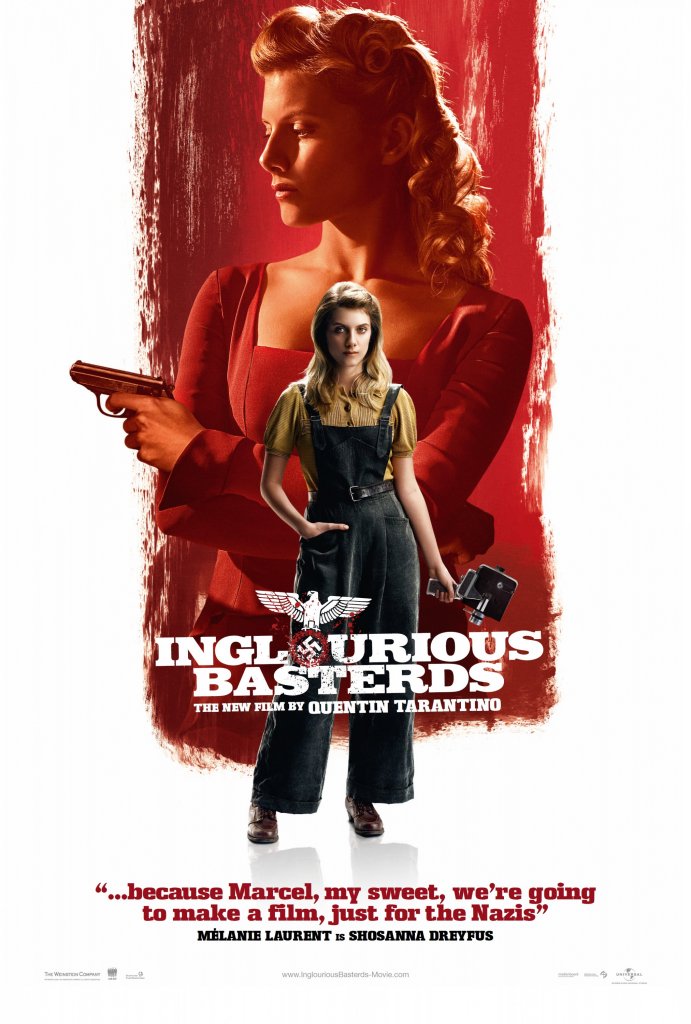
5. INGLOURIOUS BASTERDS (2009)

Inglorious Basterds is a fine example of Tarantino firing on all cylinders as a filmmaker, whilst perfectly encapsulating what we love about his films: highly tense atmosphere, darkly comedic dialogue, incredibly visceral violence, as well as excellent use of the camera and an outstanding cast bringing their top performances. While controversial topics like the holocaust have been portrayed very well on screen, Tarantino manages to create a story, while clearly being fictional, his use of historic accuracy at times, makes it feel like a story that could very easily have happened, as well as being somewhat ridiculous – am elite force of American Jewish forces plot to end the war, one Nazi scalp at a time. It also has one of the tensest opening scenes of a film we’ve ever seen. Pure perfection. | Peter Beckett

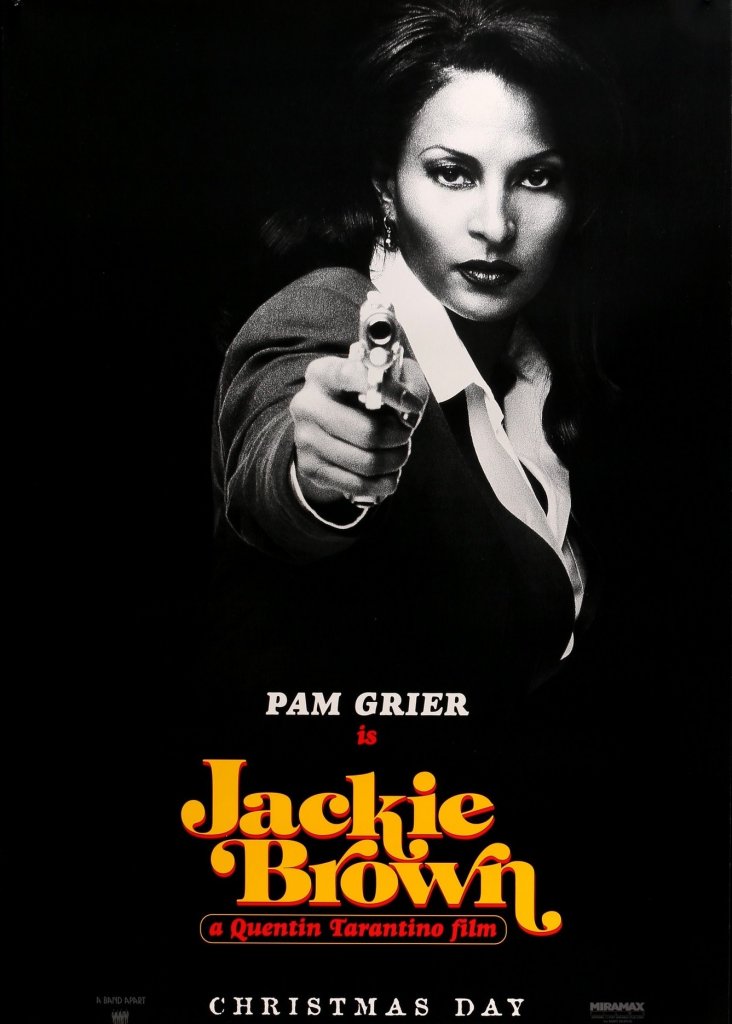
4. JACKIE BROWN (1997)

Look on IMDB and Jackie Brown rests near the bottom of Tarantino’s portfolio, just above the opinion-splitting Death Proof. But this is one of Tarantino’s smartest and most accomplished films. A love letter to the blaxploitation flicks that inspired Q in the first place, this crime thriller boasts fantastic performances from veteran leads Pam Grier and Robert Forster. Which is no small feat in a film also starring Michael Keaton, Robert de Niro, and Samuel L Jackson. It’s a smoother, slower film than Reservoir Dogs or Pulp Fiction but rewarding to those who sit back and appreciate its finer details, especially after a repeat viewing. And of course, it’s got a killer soundtrack. | Jonathan Anderson

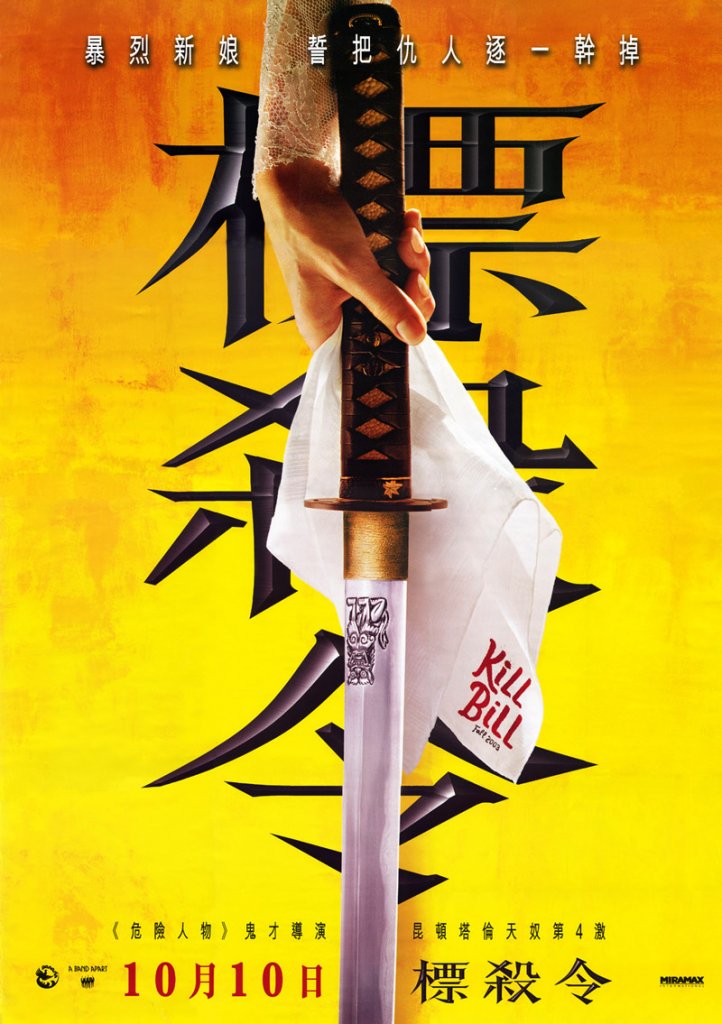
3. KILL BILL: VOL 1 (2003)

We all know the tragic story of Beatrix “The Bride” Kiddo (Uma Thurman), former member of the Deadly Viper Assassination Squad, betrayed by her former colleagues, left for dead on her wedding day and woken from a coma. Kill Bill: Vol 1 unfolds as she travels to Japan to convince legendary retired swordsmith Hattori Hanzō to forge a katana for her, leading to The House of Blue Leaves, where she takes down The Crazy 88 and her nemesis O-Ren Ishii in a memorable battle. It’s the stuff of movie legend, one Quentin Tarantino matched with the Western-inspired second volume. | Mark Newbold

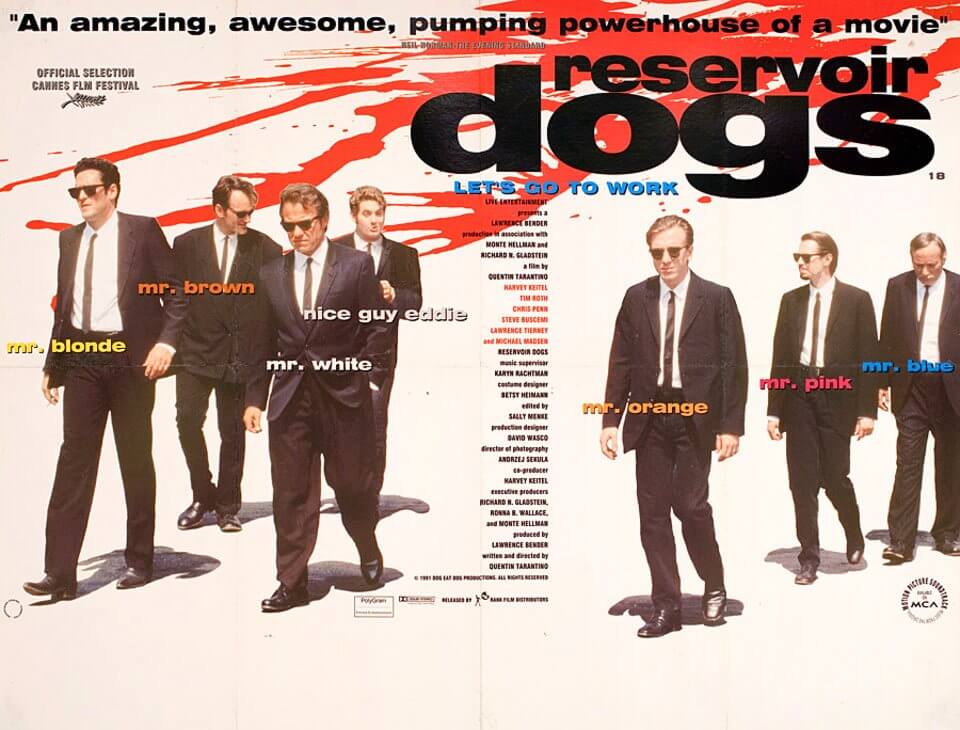
2. RESERVOIR DOGS (1992)

This is where QT came in, with all his hallmarks already in place. There is blood (so much blood…), there is inconsequential pop culture chat, posing with guns, humour, torture, cruelty, and an immaculately chosen soundtrack (the last three melding together in one memorable scene). It’s lean and mean and those of us turned off by the bloated cartoonishness of more recent films thank it for that. But it does leave you wondering how this brash young auteur managed to spend the next nearly three decades mostly not making films and certainly not much (with exceptions) to rival the lean, mean potential of Reservoir Dogs. | Spleeny Dotson

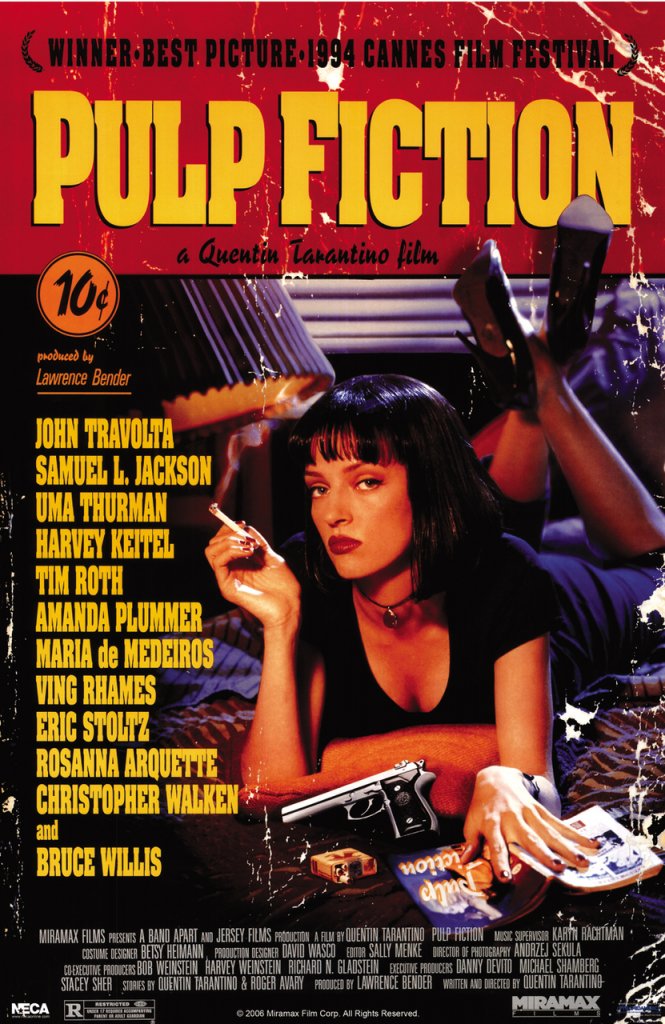
1. PULP FICTION (1994)

Reservoir Dogs was Quentin Tarantino’s calling call, a great big wake-up call to an increasingly self-indulgent and lazy Hollywood film industry. As appetisers go it hit the sweet spot but Pulp Fiction was the main course that really got audience’s taste buds racing. Pulp Fiction – the film that saved John Travolta from the career Hell of endless Look Who’s Oinking sequels and sealed Samuel L Jackson’s enduring reputation as the King of Cool. It pops and crackles with wit and invention and oozes love for both cinema and for the potential of cinema. Its punchy plot plays fast and loose with the conventions of linear cinema narrative  – characters weave in out of the scenarios in its vaguely-portmanteau structure – and we’re constantly second-guessing where we’re going and what QT has in store for us next. As endlessly quotable as it is rewatchable, Pulp Fiction remains perhaps Tarantino’s one inarguable masterpiece. | Paul Mount

ONCE UPON A TIME IN… HOLLYWOOD arrives in UK cinemas on August 14th, but in the meantime check out our latest issue for more Tarantino treats!

Gaming on a Budget

The progress of gaming companies is seemingly never ending, but something that goes hand in hand with progress is profits. As games get better they rise in price, it’s one of life’s inalienable facts.

Whilst classic games are now relatively cheap, Triple A titles have risen from £40 to £50 in recent years, with some titles even rising as high as £80. Added to that, the previously free PlayStation online service has followed Xbox Live in charging users for its service.

If you’re a gaming fan your hobby can feel like a bottomless pit of expense. So how much will gaming cost you and are there any cheaper alternatives out there?

The Current Cost of Gaming

PlayStation 4: 500GB (Includes one wireless controller) – £249.00

Xbox One S: 1TB (Includes one wireless controller) – £199.00

PlayStation 4 Wireless Controller – £44.99

Xbox One Wireless Controller – £44.99

PlayStation Plus (12 month subscription) – £39.99

Xbox Live (12 month subscription) – £37.99

Top Games on Each Platform

Call of Duty Modern Warfare – £49.99

FIFA 20 (Champions Edition) – £79.99

Detroit: Become Human – £44.99

If you are an existing PlayStation Plus subscriber, you can avoid spending £44.99 on Detroit: Become Human. This month it is available for free download to PS Plus subs

Total Complete Cost

PlayStation 4 – £508.95

Xbox Live – £456.95

Whilst opting for an Xbox might be cheaper than choosing a PlayStation, it will still set you back a good chunk of money. Excluding London, the average weekly wage in the UK last year was £539, meaning you would have to forego your weekly essentials to buy a console bundle.

If that sounds like too much money to fork out on your hobby then fear not, there are cheaper alternatives…

Online Gambling

The remote gambling sector is one of the fastest growing markets in the United Kingdom at time of writing. Online gambling represents just over £5 billion in annual revenues, and as such companies are spending more money on bringing their offerings up to scratch.

What that means for the consumer is that the quality and range of online gambling games is better than ever. Thanks to increased competition in the market, consumer costs are lower than ever as a wide range of online bonuses and offers flood the industry.

Of course, anyone gambling online should keep an eye on the amount of money they are spending and set themselves regular budgets. Some games are more fun than others, online bingo is particularly good for those that don’t want to take their gaming too seriously. There are a huge range of online bingo games, meaning users can play for low stakes, which could be much more cost efficient than continuously buying new games for PlayStation or Xbox consoles.

Google Stadia

21 years ago, Netflix launched in the United States as a direct rival to existing chains such as Blockbuster. For the better part of two decades it bobbed along, making steady profits and pleasing customers.

However, in the mid-2000s, savvy Netflix executives drew up plans to create a streaming service that would totally revolutionise the film & TV industry. After witnessing the success of YouTube in 2007, the company did just that, launching its online streaming service to the mass market.

In the years that followed Netflix ruthlessly destroyed the competition, growing into a company with annual incomes of $1.6 billion worldwide. At time of writing, nothing like Netflix is currently in operation in the gaming world, but it will be soon…

In the run-up to Christmas 2019 internet giant Google will release its long-awaited Stadia service, which has been dubbed “The Netflix of Gaming”. For a monthly subscription fee, users will be able to access a wide variety of Triple A gaming titles from a range of devices.

The initial cost to users – who will simply have to buy a controller and a subscription – has not been fully disclosed, but it is thought that it will be substantially cheaper than traditional console gaming.

Once in receipt of a controller Google Stadia users can access their library of games from TV’s, smartphones, laptops, tablets – effectively any Google Chrome enabled device.

The service will support the streaming of games in HDR at 60 frames per second with 4K resolution, with Google promising to double that within a year of the platform’s release.

Google Stadia looks all set to completely revolutionise the gaming industry, and in the process save you money whilst also giving you access to some of the best games on the market.


Everything you need to know – including title announcements – about Google Stadia

Apple Arcade

Up until this point, this article has covered gaming from a mainly console heavy viewpoint. That does a bit of a disservice to one of the fastest growing areas in the market – mobile gaming.

Apple haven’t forgotten this part of the market, and just like Google, they will be releasing a streaming service later this year. Apple Arcade will be exclusive to Apple users, but it will allow customers complete access to every game on the App Store.

Cost wise, a monthly subscription to Apple Arcade is likely to cost around £10, making it great value for money if you regularly download and pay for games on your smartphone or tablet.

Finally, Freemium Games

It has been impossible to evade the public hysteria caused by Fortnite in the past couple of years. Serious gamers see it as the ‘death of gaming’, parents and teachers think it is ‘rotting children’s minds’ and users simply love the game.

The cartoon like battle royale style game changed all the rules in 2017 when it was released as a free to play game. Millions of people around the world rushed to download it, making it one of the most popular gaming titles of the last decade.

Obviously Fortnite has to turn a profit somehow, and it does that through in-game content, but there’s no obligation to buy all that extra stuff. If you already have a console you can download Fortnite, play to your heart’s content and never spend a penny.

If Fortnite isn’t your thing (and let’s face it, it probably isn’t) then why not try out the multiple freemium games that are on the market now as a response to Fortnite? Apex Legends is an awesome game, and well worth downloading!

Alexandre O. Philippe | MEMORY: THE ORIGINS OF ALIEN

alexandra

With a documentary about Hitchcock’s Psycho in his rear-view mirror and another about The Exorcist due later this year, director Alexandre O. Philippe is the go-to man for the feature-length revisiting of classic movies. His latest film is 40th anniversary look back at Alien…

STARBURST: What inspired you to make this film about Alien?

Alexandra O. Philippe: I was very interested in the idea of exploring the chestburster scene in a way that is similar to the way that I had explored the Psycho showed scene (in the 2017 documentary 78/52). And I very quickly realised that you can’t really approach the chestburster scene in the same way, because if you do, what you end up having is a behind the scenes documentary. I could have had a very interesting discussion on the behind scenes work, but I think it’s been done and it’s just not the kind of film that I make – I’m interested to go a lot deeper than that. In fact, I had put together a ‘sizzle’ reel fir that, but it just didn’t work. But there was this in story that I did find really interesting, which is of Ridley Scott showing the Frances Bacon triptych ‘Three Studies for Figures at the Base of a Crucifixion’ to HR Giger and pointing to it as a source of inspiration. Then I started doing some research into the idea that you’re looking essentially as a scene of crucifixion but those are the Greek Furies and that the Furies keep coming back again and again in Bacon’s work. I thought ‘OK, I want to go down this rabbit hole and see what I find’. The moment I started going down that path of mythology and looking at Alien from that perspective, doors started opening. In fact, shortly after that, very serendipitously I ended up getting introduced to Diane O’Bannon (wife of Alien screenplay writer Dan O’Bannon) who for the first time opened her husband’s extraordinary archives. Everything ensued from that and as a result Memory is a very different film than 78/52 and I think in many ways it goes deeper.

I found the Bacon connection very interesting. I remember as a kid my mates and I being fascinated by the imagery of Alien and chestburster scene in particular, which we saw in the Alien photo-novel, and also by Francis Bacon’s artwork, because Bacon had a weekend house in the village where we lived, and we’d peer through his letterbox at the weird paintings in his hallway, which spooked us. We definitely felt that Bacon’s work and Alien were somehow connected.

I think you’ve hit the nail on the head. Alien hits you in a way you don’t really comprehend because the imagery is rooted in iconography that as humans and has meant something to us for millennia. You respond to it without completely understanding what it is you’re responding to, and I fully believe that that is the reason Alien became as popular as it did at a time when was not supposed to work. It went completely against the grain of what people wanted in 1979 but resonated on a mythic level. People walked out of the theatre shaken; I think it took a long time for them to understand how it had affected them, and I think we’re still digesting – no pun intended – what Alien really is about, 40 years later.

Dan O’Bannon is a significant figure to the film, was it tempting to make the film entirely about his story, his contribution?

No question about it. At one point the title of the film was Dan O’Bannon’s Alien, but to me what became really central is this idea of the symbiosis between O’Bannon, Giger, and Scott giving us Alien in the way that we know it. I think Memory is fundamentally a film about the resonance of myth and our collective unconscious. That’s why it is an origin story very specifically examined through that lens.

The opening scene of the film is a dramatic sequence that really throws the audience loop…

[Laughs] Well I want to be careful not to tell you too much because I think it’s a scene that has to be experienced. It’s a scene that contains everything the film is about and it’s meant to experience on a purely visceral level. If you’re an Alien fan you’re gonna recognise some imagery and see they are linked to Alien but also connected to the ancient world. What’s going on? It’s a scene that quite frankly came out completely from the unconscious and it establishes this question of what is the connection between the Furies and Alien. It’s to keep the audience on their toes and make them realise that this is not the kind of film on Alien that they might expect it’s going to be.

Just as unnerving as the Alien itself at that time was the movie’s ‘adult’ approach to big-budget SF – the very naturalistic performances, the greasy food, the sweaty clothes, the smoking, the swearing…

Yeah that’s the genius of the movie, this very strange combination of blue-collar workers in space, a very realistic kind of world, with the completely out-there Lovecraftian universe of HR Giger. To marry those two worlds in a way that works so beautifully is so good, it’s just so good…

What have you got coming up next?

I’m actually finishing it now; it’s called Leap of Faith and it’s a completely unique take on The Exorcist. It’s essentially a chamber film, a very intimate portrait that goes to the heart of William Friedkin’s process as a filmmaker and an artist. So it’s only him and it’s the Exorcist via arts, classical music, classic cinema and it goes into his mind’s eye and his thought process. So we’re looking to premiere that in the fall, so it’s a big year!

MEMORY: THE ORIGINS OF ALIEN  is in cinemas 30 Aug and on DVD and on demand 2 Sept and is reviewed here

SIX THINGS I LEARNED AS A COMIC CON FIRST-TIMER

MCM

Despite what the many Hot Topic t shirts and graphic novels on my shelves may suggest, until this past weekend, I had never been to a comic con. Actually, that’s not entirely true, I hung around a Manchester con once when my graduation ceremony took place across the street, and though I didn’t manage to get inside, it did make for some lovely family photos with my mum, Iron Man, War Machine and the entire Ghostbusters team.

So, this past weekend I was excited to actually go through the doors to find out exactly what draws thousands of fans to Manchester Central year after year for MCM Comic Con. Amidst the costumes, the exclusives and celebrity guests, here are a few things I learned…

PEOPLE TAKE COSPLAY VERY SERIOUSLY

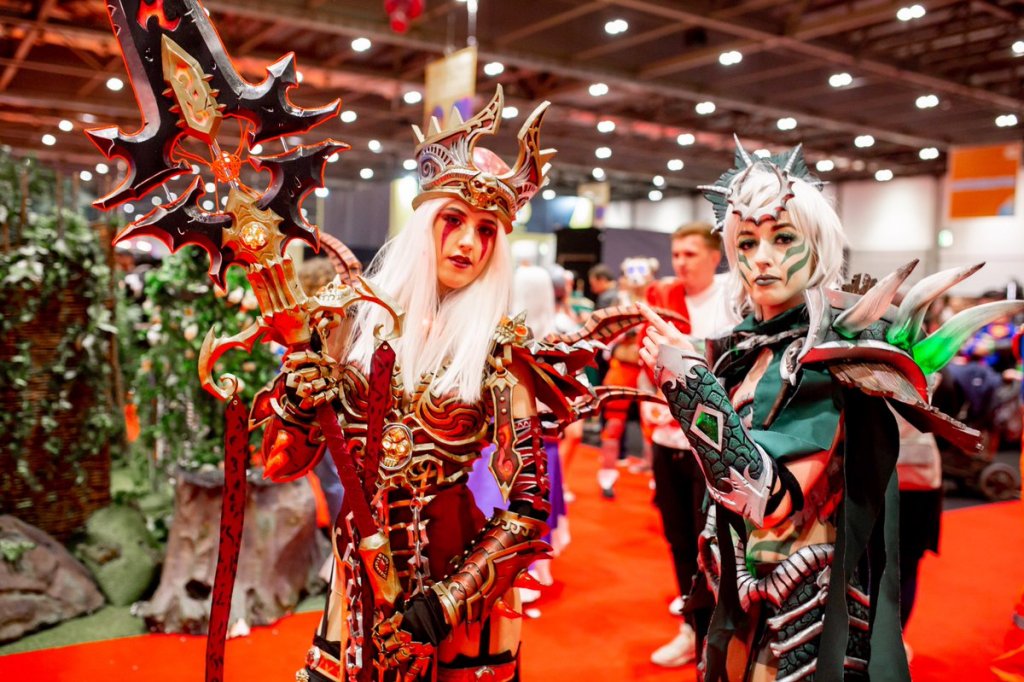
And rightly so. The steps of the convention centre were a who’s who of the various pop culture universes and left me feeling incredibly underdressed in a feeble Godzilla shirt. The commitment to gravity-defying hairspray and papier-mache props were as impressive as they were gargantuan, with lines for the cosplay masquerade stretching from one end of the centre to another. Think cosplay is just about dressing up? Think again, it’s an entire performance – music, scripts, backdrops, the lot – and I am here for it.

YOU ARE NOT ALONE

Remember when you were growing up and there was that one movie, TV show, book you loved so much yet no one else had seen or heard of it? (The same kind of reaction you get now when you tell someone you HAVEN’T seen Love Island). Well, you are guaranteed to get the nod from at least one kindred spirit in the crowd with the same shirt, wig or cardboard sword, no matter how obscure. Try as you might, you can’t out-geek this crowd and it was great to see lots of fan meet-ups happening in and around the convention. Shout out to the Avengers: Endgame-style Thor cosplayers complete with pyjama bottoms, scruffy stuck-on beard and can of pop in-hand.

YOU SHOULD SUPPORT INDEPENDENT BUSINESSES

The comic book village is a great place to discover new books to add to your collection. With a mix of established and up and coming titles, it’s a good opportunity to meet the creators and get your copies signed. Same goes for the various stalls around the show floor featuring prints and handmade goods from local artists. If you never knew you needed a postcard of Solid Snake illustrated in a traditional Japanese art style or a necklace with the Triforce symbol, well you do now.

THAT SAID, YOU WILL BUY A LOT OF STUFF YOU NEITHER NEED OR HAVE ROOM FOR

Did I need prints of Nathan Drake in three different art styles? Probably not. Did I need cans of Jigglypuff soda? Unlikely. Could I have lived without that Spider-Man cupcake? Well no, it’s a Spider-Man cupcake, but you get the idea. No matter what you’re into, the traders are a treasure trove of art, figures, and just about anything else you could want or need. Plus, you’re likely to spot exclusive merchandise you can’t get anywhere else. I spotted a number of Comic Con exclusive figures that were snapped up very quickly by avid collectors, and if you’re a Funko Pop fanatic, this my friend, is your playground.

MYSTERY BOXES ARE STILL KING

Though I’m not the biggest fan of loot crates or mystery bags in general (my equivalent as a child was a £3 lucky dip bag from Claire’s Accessories filled with jelly bracelets and butterfly clips), it was hard to ignore their enduring popularity at events like this where kids are shelling out an easy 40 quid on a Poke Ball themed cardboard box filled with surprise merchandise. Everywhere you looked, traders were getting in on the gimmick with secret Funko match ups and pastel pink carrier bags containing Kawaii cuteness. Though some of the £80 boxes had me feeling a little iffy, for the cheaper options, I can see the appeal in a few mystery stickers and plushies tailored around your favourite franchise, and for independent artists and traders, they seemed like a great way to introduce new people to their work.

FORGET FASHIONABLY LATE – IF YOU WANT TO SEE THE COOL STUFF, ARRIVE EARLY

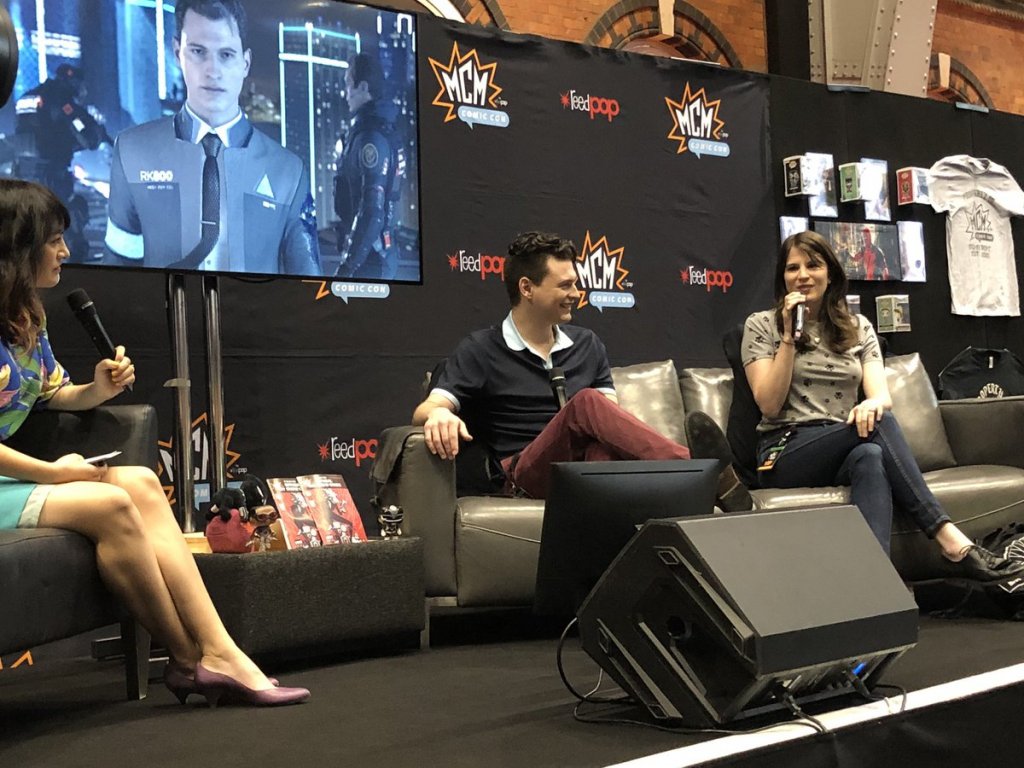
Aside from the paid-for meet and greet opportunities, I was surprised just how up-close and personal fans were able to get to special guests on the show floor. For that reason, I learned it’s a good idea to get yourself down to the various stages nice and early if you want to get the best views in the house and take part in Q&As. The first panel I attended was 5 rows deep of standing room only, so I ended up watching most of it through the mobile phone of the guy in front of me who kindly held it up throughout the whole thing – not to be the old bore, but come on people, who honestly goes home and rewatches these things? Your co-workers don’t want to see your iPhone 4 camera skills when they politely ask how your weekend was.

The next MCM Comic Con takes place on 28-29th September at SEC, Glasgow.

All images courtesy of MCM