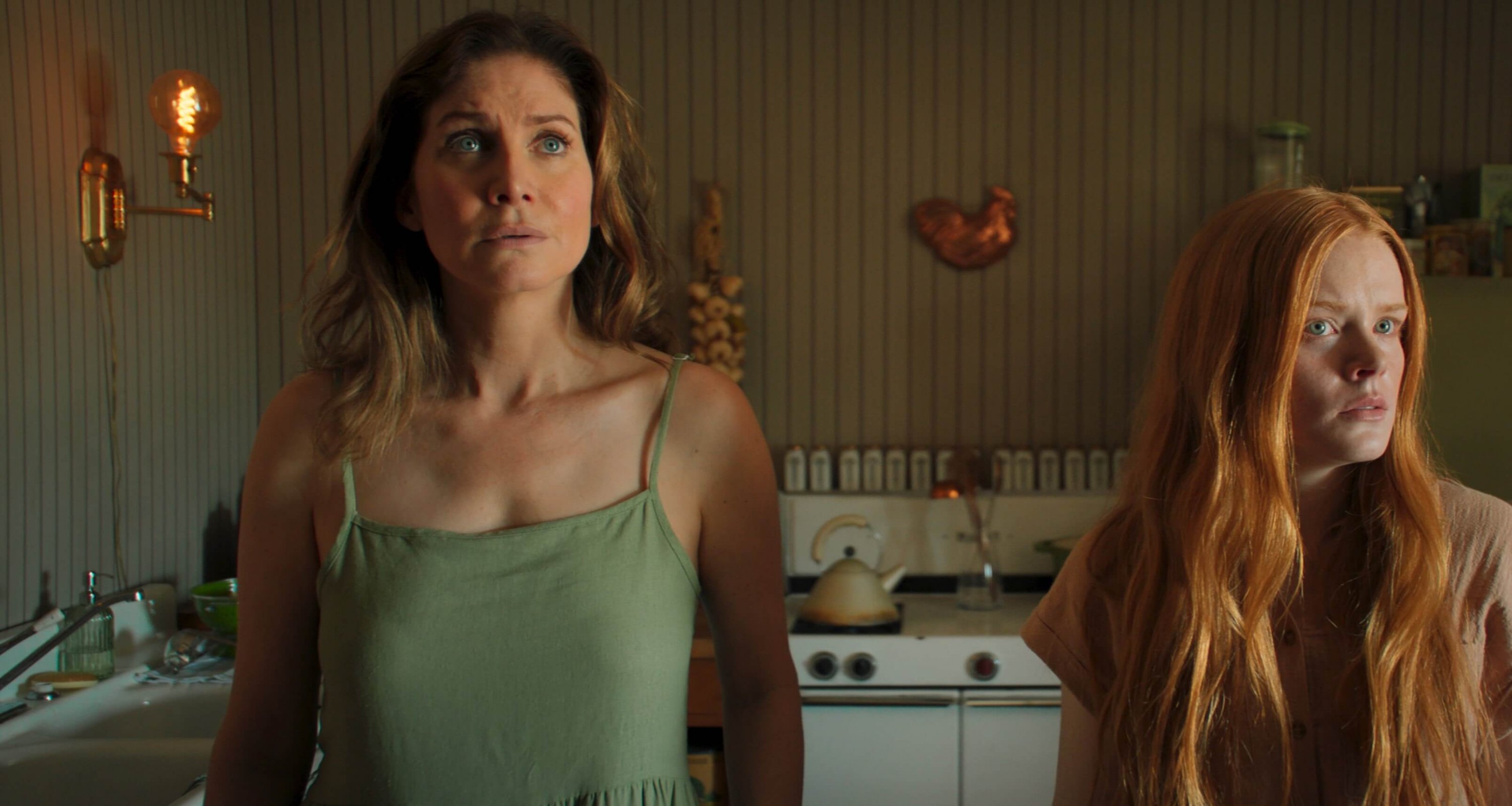
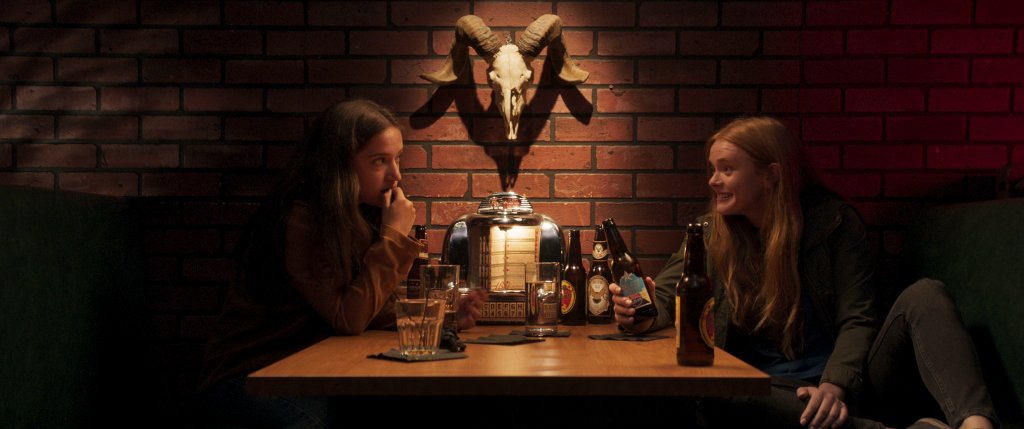
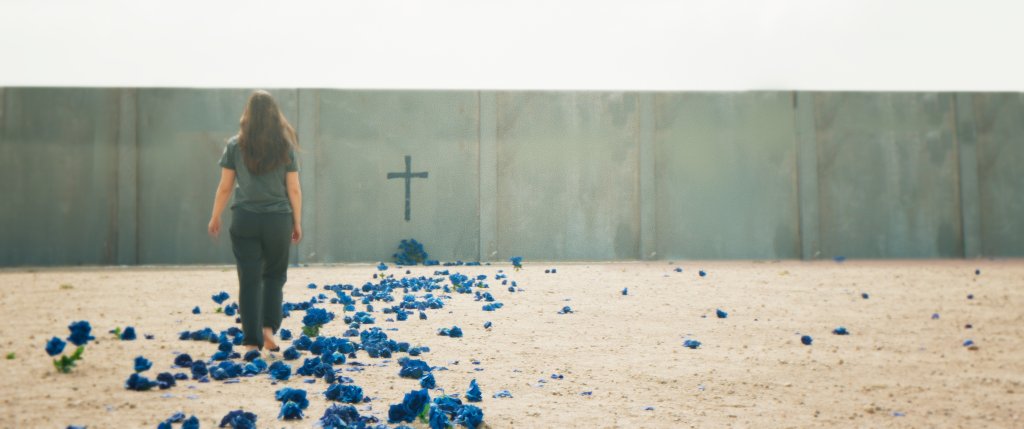
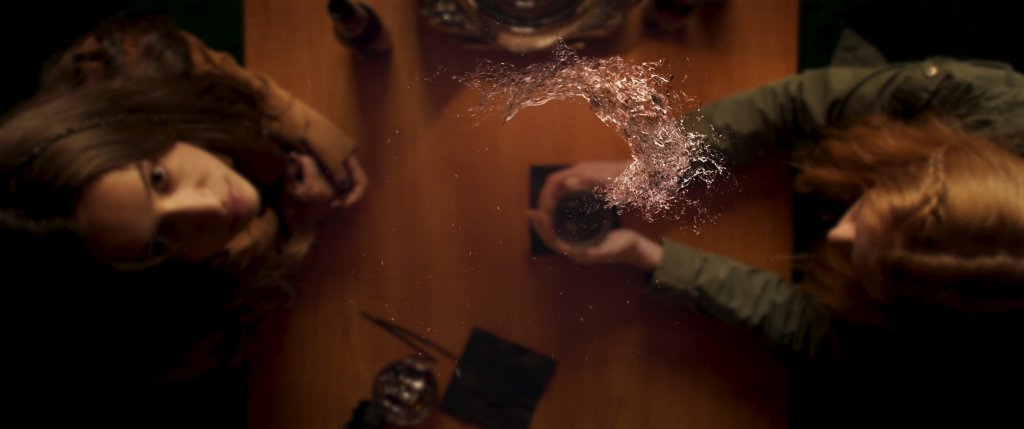
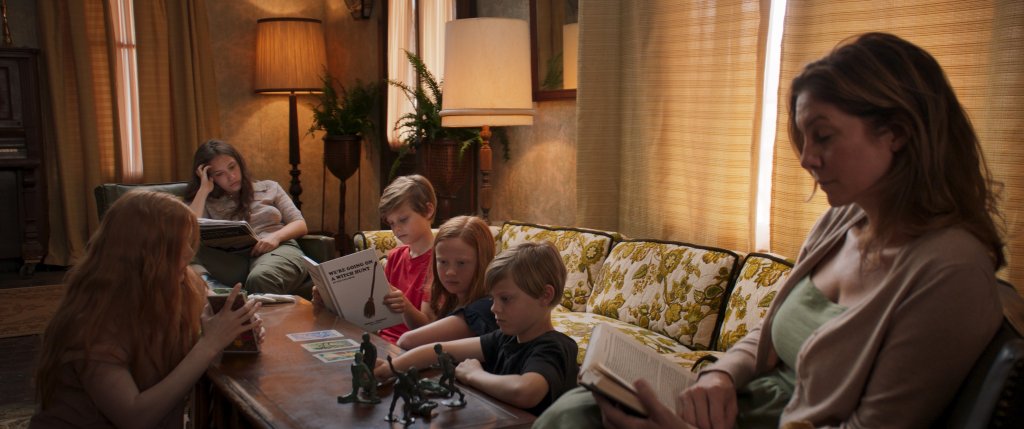
Elizabeth Mitchell stars as Martha Goode in Elle Callahan’s sophomore feature film, Witch Hunt. Also starring Gideon Adlon (The Craft: Legacy, Blockers) and Abigail Cowen (The Chilling Adventures of Sabrina, Fate: The Winx Saga), Witch Hunt is set in a modern America where witches are real, and witchcraft is illegal. Claire (Adlon) is a sheltered teenager whose mother (Mitchell) is part of an underground movement in charge of smuggling women accused of witchcraft across the southern border, to asylum in Mexico. When the witch hunters find their way to their door, Claire is forced to confront her own prejudices and risk it all for the two young witches (Cowen, Echo Campbell) under their care.
Ahead of the release of Witch Hunt, STARBURST spoke with renowned Lost and Revolution actress Elizabeth Mitchell about working with women, the film’s political relevance, and who she considers to be today’s heroes.
First off, how did you come to be involved in this project?
Elizabeth Mitchell: About four years ago, I realised that I had worked with very few female directors. I wasn’t sure why, but the realisation made me start to actively seek them out. So I think the initial draw was that Elle was directing, and I had heard so many incredible things about her. And I really liked the script – it’s going to sound strange, but I liked the softness of it. I felt like it approached the genre in a particularly female way, and I liked that. I thought all the characters were really interesting, and I thought the parallels it drew with what’s happening in our world now were pretty precise. And then I heard Gideon was doing it, and I was basically all in. I think she’s incredible.
She’s brilliant. You mention this softness that attracted you, and I feel a lot of that comes from the mother-daughter relationship between Martha and Claire. And there’s not much in the way of exposition, so how did you go about building that depth?
Elizabeth Mitchell: It was so easy with Gideon. From the minute I met her, I had that feeling of wanting to protect her, wanting her to be everything that she could be. She brings that out. She is an incredibly creative, kind, and talented woman. So that relationship came about really quickly for us. I think creating the tension between them was probably where we did the most work. She’s so easy to love that that was the hard part [laughs]. We had to work out the obstacles to explain why they can’t connect, why they’re not on the same page, and where the friction comes from.
So that aspect had collaborative elements?
Elizabeth Mitchell: Yes! As we went through the days and through what we were doing, we would create that tension and craft their relationship together. The fun thing about an independent film is that everyone comes in with so many amazing ideas, and then you marry those ideas together and find something you didn’t even know would happen. A lot of the reactions and such that ended up in the movie were riffing off of what was there. Elle let us do that and I thought that was really exciting. She is an incredibly insightful filmmaker and a real joy to work with.
You mentioned not getting to work with many female directors – what did you find was different about the feeling on set and the way the production developed?
Elizabeth Mitchell: I think “inclusive” is the word that I would probably use. It felt different, less like a hierarchy; it felt like we were all working together for exactly what we wanted, and it was very nurturing. Well into the night, we would all have huge conversations about our lives, about how it feels to be women in this business, the different things we had gone through.
You mentioned collaboration, which I think is spot on. And Elle is very kind, of course, but she’s also powerful: she knows exactly what she wants, but she’s not rolling over anybody to get it. She is precise about what she needs, and I think that direction makes things easier for us as actors and easier for the crew, because there’s a definite leader. Yet at the same time, she absolutely welcomes creative input, and anything that might make the shot better. It was a really fun collaboration for us, out in the middle of the desert [laughs]. We had a great time!
And you got to shoot in that amazing house that’s got some horror history [the location is also where Annabelle: Creation was filmed].
Elizabeth Mitchell: Oh my gosh, and all the bats [laughs]! Has anyone told you about the bats?
I heard about the bats, it sounded like they were a fun supporting cast [the house was inhabited by its fair share of bats, to the point that a bat wrangler had to be brought in].
Elizabeth Mitchell: It was! You know, as actors we try so hard not to be in our heads. We try to just be reactive creatures, and I think that having the possibility that a bat might fly into your face at any moment definitely changed the dynamic.
I’m sure it also helped establish the ambience.
Elizabeth Mitchell: It really did! It definitely had that creaky feeling to it. And of course, it’s in the middle of nowhere and it’s so disconnected – generators are brought in for electricity, the whole thing is really odd and dusty, and quiet, and it was really something. I took 8 million pictures there because everything had such a cool vibe to it [laughs].
Beyond that, what did you find most intriguing about Witch Hunt’s concept when you first read the script? Politically, it does feel very appropriate to the times.
Elizabeth Mitchell: It really is. There has been such a rebirth in understanding a woman’s path through the world, and I feel like this was such an interesting take on our rights as women, our freedoms as women. What can be taken away from us, what we are sometimes allowed to have by people who are not women. I think that this film really spelled out – almost in a Handmaid’s Tale kind of way – the fear there is towards powerful women. And it shows what can happen in a patriarchal society when women’s power, women’s magic, is regulated or contained. That’s probably what I found to be so interesting about it.
There must also have been some level of catharsis in playing this role, especially since you were filming during the Trump presidency.
Elizabeth Mitchell: There was, and it was something we all talked about. There are some really fierce women in this movie, Gideon being one of them. It’s fun being on her Instagram because she is such a passionate and intelligent activist, and I felt like she was just the perfect choice for this role. I loved that part of it.
And what did you find most interesting about your character, Martha?
Elizabeth Mitchell: I love strong mama bears. I so often play sociopaths and women on the verge, it was really nice playing someone that I felt was a little bit more like me. I loved this softness in her, but I also loved her strength. She is quietly doing the right thing and not calling any attention to herself, she doesn’t defend herself, nor does she say, “Hey, look at me and all this good stuff I’m doing!”. She’s a chameleon dedicated to what she thinks is best, and I loved that. I also really enjoyed playing all the different colours that you have to present in order to hide in plain sight. One of my favourite scenes is when Martha is questioned by a neighbour. I found that to be so interesting, questioning how do we blend in when we are absolutely opposed to the person that we’re trying to blend in with?
In that respect, there are obviously many historical echoes to Nazi Germany, or as far back as the Underground Railroad which resembles the smuggling network that Martha is a part of. Did you do much in the way of historical research, to better understand the thoughts and motives of those persons?
Elizabeth Mitchell: You know, I did do a fair bit. I’m an avid book reader and I am captivated – and have been since I was really young – by the heroes of the Underground Railroad, and every single person who has hidden the oppressed and guided people towards freedom. And you’d love to think that you’re going to be that person, but going against the flow is a lot harder than it seems in the abstract. Those people are true heroes to me, people that I look to. So yes, I did a fair bit of reading, but I had also steeped myself in that sort of research in my early 20s because I was so curious to understand what a hero meant to me.
What do you think that role looks like today? Beyond historical references, Witch Hunt also reflects the Black Lives Matter movement and issues of immigration, so what does that kind of hero look like today?
Elizabeth Mitchell: I think it’s very difficult to speak your truth, especially with so many trolls online. There’s the fear of saying the wrong thing, the possibility that you will then have a whole group of people who are offended and who come after you. I’m still fascinated by all our heroes. Gideon is one of mine, for sure! That girl is fearless. It’s the most incredible thing to me, to watch how she navigates the world. She lives fully in her truth, and I think she’s really something special.
I do think it is challenging to be the hero in today’s world. And I’m always amazed at how many brave and vibrant women – and for me, that’s who I tend to watch – who have come forward and stated their truth. I navigate that every day; I’m always drawn to heroes, to the strong, to the outspoken. I do think it’s challenging in this day and age to speak your truth.
Do you believe that’s particularly the case for people with substantial platforms, like actors and entertainers?
Elizabeth Mitchell: I’m relatively new to social media, so my experience has been so lovely. It’s such a small audience and they’re all so kind and amazing, but I’ll go on some of my friends’ Instagram’s and I will see horrific trolling, all based on small statements of their truth. I do think there’s an intense responsibility, but I’m also amazed that people continue to say what they mean and use their platform for good, especially when the backlash is so horrific.
As I said, I’m pretty new to it. I just avoided it because I lead a very quiet life – not because it’s not intriguing to me, but I just spend a lot more time in the garden than I do on my phone. But I am very amazed at the bravery of Gideon and many actors like her with huge platforms, who continue to be brave and put themselves out there. I suppose I would count them as my heroes. Ruby Rose is another one – I’m absolutely nuts about her. And every time there’s any kind of backlash, I’m always on there like, “I’ll send her a DM to say that I’m here, and not to worry.” [laughs] They’re amazing women.
It’s those mama bear instincts coming through.
Elizabeth Mitchell: They always do. I mean, I grew up in a pretty matriarchal society, which my dad would freely admit to. He loves strong women. I have a lot of sisters and a lot of female cousins, and I’m nuts about all of them! I love women. I want them to feel supported and like they can do anything in the world that they want to. I was certainly not brought up thinking there were any limits for me. It was only when I got out in the world that I realised that that was possibly the norm in the worlds.
And so, when Witch Hunt finally comes out, what are you hoping people take away from it? I ask because I have a feeling your answer follows a similar vein.
Elizabeth Mitchell: I always hope with movies that they provide people a little bit of catharsis, but I also want them to gain strength from it. I think that movies were such great teachers for me in my teen years, and in my 20s. And I would hope that every person walking away from it will feel empowered to do the things that they need to do, that they’re called to do and that they think are right. That’s my hope. Wouldn’t that be fun [laughs]! But I also want people to feel entertained, and I want them to get that shiver and those goosebumps which Elle is so good at giving us. I suppose I want people to come away feeling entertained and empowered. How’s that?
Perfect! And it’s also great because as well as the history it honours, there’s also all kinds of throwbacks to cinematic works like Thelma & Louise, which helps Witch Hunt to feel like part of a feminist film lineage.
Elizabeth Mitchell: Yes, I completely agree! It has that element of fun but also of that fearless femininity. I love it!
And as we wrap up, do you have any projects that you’re seeking to pursue in the near future, or any upcoming releases you’re excited to share?
Elizabeth Mitchell: Oh, I do! It’s been a really busy year for me. I realise it wasn’t the same for everybody, so I have a certain measure of guilt about that. I did a really lovely show, the second season of Outer Banks, and I’m playing a character that I’m excited for people to meet. I can’t say anything about it except that she’s a true piece of work and I got to do some real film school stuff, which I loved [laughs]. You know, where you get to do all these things that are outside your norm? That was really fun. And right now I’m playing a vampire in a show called First Kill. I’m really loving that, and also can’t say anything else [laughs]. You know how it is with these shows!
And there’s one that I did in Canada, a movie called When Time Got Louder. It’s really powerful and pretty wonderful, about a family dealing with autism. And then Queen Bees is out now, in which I got to play opposite Ellen Burstyn, and Ann-Margret, and James Caan, and that was one of those career goal things where you pinch yourself! I actually went to the theatre to see that one a few days ago because, when does that ever happen? I got to share a screen with Ellen Burstyn! It was amazing and I loved every second of it. There’s another one that I feel I’m missing, but I feel like that’s enough [laughs].
You weren’t joking when you said you’d been busy!
Elizabeth Mitchell: I know! I am proud of the work we were all able to do.
Signature Entertainment presents Witch Hunt on DVD and Digital Platforms 5th July.