Not one for the thrill-seekers, this atmospheric, unnerving study of identity, connection and place builds its appeal through the creeping terror of what might be about to happen. This is a world away from a derivative haunted house flick.
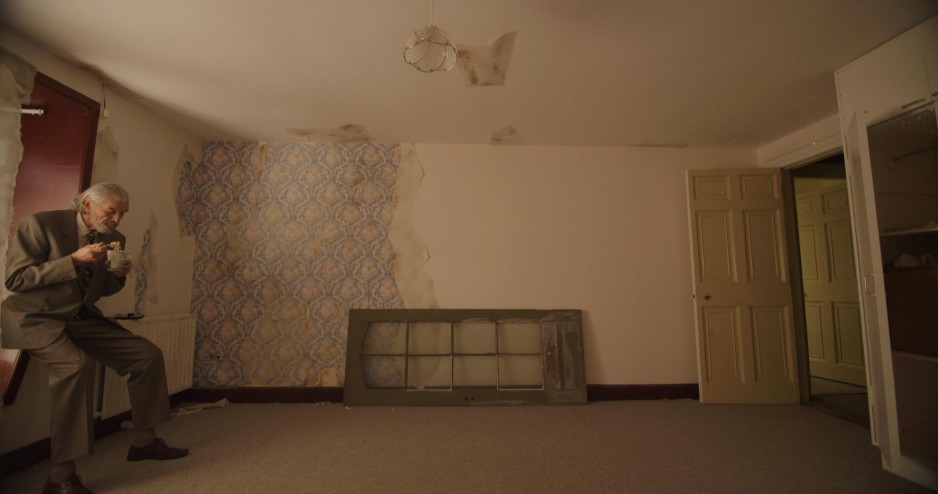
The House Was Not Hungry Then unfolds in a surprisingly spacious empty house over countless, timeless days. The silence is only broken when an estate agent arrives to show prospective buyers around; visitors who, if the house needs sustenance, will never leave. While the agent lives in fear of the house’s vengeance, the building makes an unlikely connection with a squatter who moves in, a young woman struggling to emotionally reconnect with her ailing father, who’s been transferred into a care home.
Until the final scenes, the film is shot in a stubbornly obtuse way; locked-off cameras frame everything in static mid-shot in lengthy, unbroken takes. The ‘voice’ of the house, audible only to those it reveals itself to, is rendered noiselessly by simple on-screen ‘captions’. This could all come across as pretentious arthouse affectation. But there’s enough thoughtfulness stitched into the narrative to dilute those accusations.
Although Clive Russell (the agent) and Bill Paterson (the voice of the father) add acting gravitas to the modest cast, it’s Bobby Rainsbury (the girl) who carries the film’s emotional weight. Yet it’s the inanimate, sentient house that remains the lead character of the story. Writer-director Harry Aspinwall knows that he’s produced a film certain to divide audiences, sections of which will tune out and turn off after twenty minutes. But those who stay the course might find themselves drawn into a surprising, immersive, and extremely unusual quiet horror.

THE HOUSE WAS NOT HUNGRY THEN is available on streaming platforms in the USA.