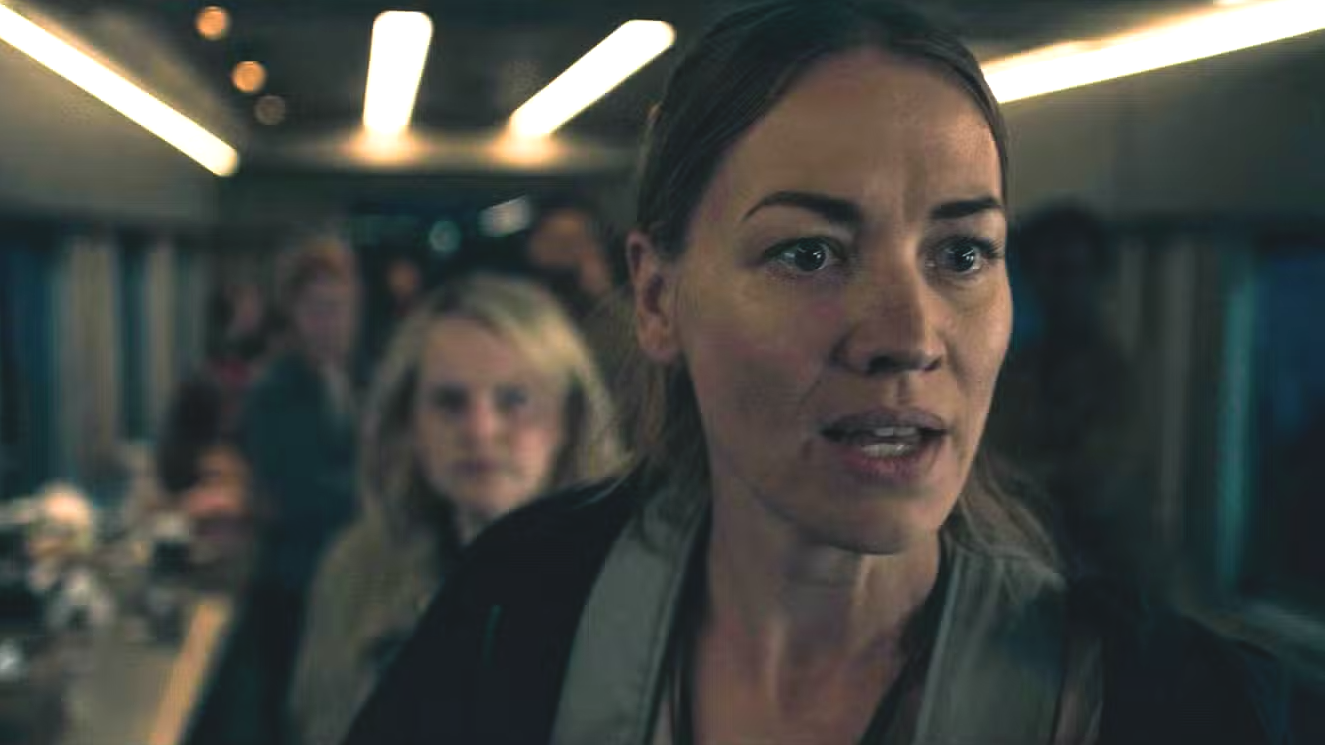
Trapping June and Selina together as fugitives on a refugee train in the finale of season five of The Handmaid’s Tale was an inspired idea ‒ a new pivot point in their impossible relationship. But the suggestion hinted at by the closing shot of Safe that there might be some kind of reconciliation between these two antagonists is ripped away in the events of Train. While both now share the status as fugitives ‒ mothers forced to care for themselves and their children as stateless, impoverished refugees ‒ their shared predicament can only be temporary.
As the penultimate series of The Handmaid’s Tale drew to a close, hostility towards asylum seekers who’d fled from Gilead in hope of a safe haven was growing. With the civil war between the ousted US government and Gilead’s military sliding towards stalemate, these increasingly unwelcome escapees were being forcibly relocated. An attempted assassination hit on June by Gilead agents had left her partner Luke facing serious charges, as he physically assaulted her attacker, and forced the pair to split up once again.
With little prospect of the two being able to extricate their kidnapped daughter Hannah from Gilead’s clutches, and a dwindling number of allies for their cause, the future of the resistance to the religious dystopia is now an open question. What makes things harder for the opposition is the rise of a revisionist tendency within Gilead, which hopes to populate New Bethlehem as a “kinder, more liberal” bridgehead for a future reformed theocratic state. This complex set of circumstances provide an enticing set-up for the coming conflicts of the final season, which will once more blend intimate personal stories with world-shaping political convulsions.
Much of the storyline of Train is an intense and claustrophobic two-hander set aboard the refugee train on which June and her nemesis Serena Joy find themselves trapped. From the show’s opening episodes, Yvonne Strahovski has been superb as the ice-cold zealot Serena. But the murder of her Commander husband has compelled her character to become more assertive, which makes her interactions with the fiery june more combustible, something which has seen Strahovski shine. The pair are able to broker a temporary alliance, although June rebukes Serena’s hope that their alliance could be more long-lasting. When her identity as a fugitive war criminal is revealed, the twisted religious fervor that continues to animate Serena resurfaces in a welter of accusations. As aggrieved passengers turn on her and her child, June is forced to intervene as their relationship again pivots. It’s a nerve-jangling, explosive moment which leads to one of the episode’s dramatic highpoints.
In Canada, events are moving quickly. Moira and the bailed Luke learn from government-in-exile ambassador Mark Tuello that diplomatic options are disappearing and that the makeshift armed forces of the May Day group may need to become the spearhead of anti-Gilead activities. The pair make some high-risk decisions about their future, as both characters volunteer to take on new roles in the emerging showdown.
Gilead is itself a moving target. Commander Lawrence is pressing ahead with the New Bethlehem project, hopeful of giving the repellent regime a more human face. His connections with the equally conflicted Nick highlight the growing personal and ideological strains that both these Gilead enforcers are now wrestling with. Events conclude with a joyously unexpected reunion for June in an Alaskan refugee camp. It’s emotionally impactful stuff, although the potential of free childcare would free June to be a full-time anti-Gilead revolutionary deep in the enemy’s territory, should she wish!
Hints abound in the show’s opening episodes that a time of reckoning with the darkness of Gilead might be forthcoming. Shifting geo-politics, a hostile atmosphere, desperate refugees, large-scale displacement of populations, sharpening political polarisation, and the spectre of more intense guerrilla resistance. It would be difficult to see the drama of The Handmaid’s Tale’s endgame as anything other than a potent echo of the contemporary real world.
Elizabeth Moss (June) is back in the director’s chair for the opening episodes of this final series, and she delivers her signature heightened emotional texture to proceedings, focusing on shifting character dynamics. That said, the bigger picture of the series’ endgame is already coming into focus – but it’s not yet clear whether liberation and justice or bloody retribution will win out.
The sixth and final season of THE HANDMAID’S TALE premiered earlier this month on HULU in the US, and begins screening on Channel 4 in the UK from May 3rd