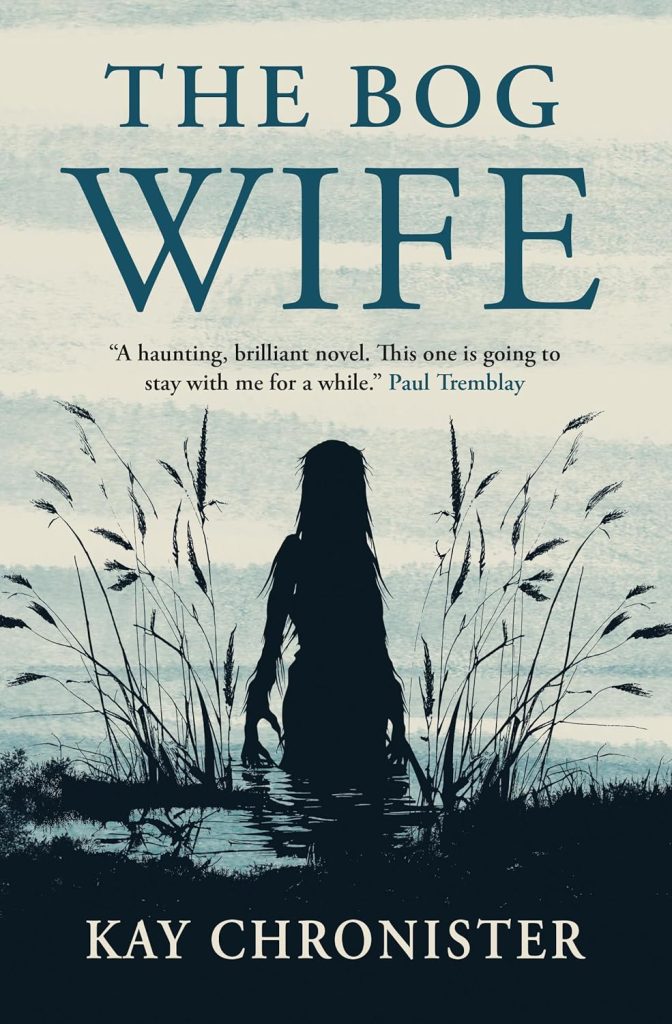
Kay Chronister’s genre-defying new novel The Bog Wife is a heartfelt and haunting exploration into the intersection of the occult and the mundane, the supernatural and the familial, and the blurred line that attempts to separate humanity from the wild nature in which we live. The novel, set in the impenetrable Appalachian wilderness, follows the five reclusive Haddesley siblings – Charlie, Eda, Percy, Wenna, and Nora – following the death of their father and patriarch. Living in a crumbling stone manor on ravenous bogland to which they have made an ancient blood compact, the siblings prepare for Charlie to take a wife from the bog that has wedded itself to countless generations of Haddesley men; in the form of a woman hewn from plant matter and mud, pulled from the wild and brought into their human family.
Chronister’s creation of the Haddesleys is strange, almost ephemeral. Cut off from the outside world and tethered to nothing but the bog that they must care for, the five siblings are oddly childlike, unaware of the realities of real modern life until their estranged sister Wenna returns for the burial of their father, having lived in the city for the past decade. As the claustrophobia of the Haddesley life collides with the possibilities that Wenna has seized for herself, the arcane and wild core of this shut-off way of living rises to the surface as surely as the bog threatens to flood. These strange, quietly desperate characters and the heavy, heady density of the setting combine into an intoxicatingly charged prose, a narrative voice that seems to imbue every subtlety and sensation of this wild world into the most mundane of occurrences. There is a deep, inherent strangeness to this novel – the prose style, the character creation, the tantalisingly open-ended mysteries that Chronister weaves into the fabric of their existences; it elevates the mundane horror of the bog wives into something almost tangible – an existence that a reader has come to inhabit without realising, one that has settled over them like a mist.
The balance struck between the Haddesleys and their land is striking – a co-dependent set of demands ensuring one cannot function without the other. In exchange for their dead patriarchs and the removal of invasive species, the bog provides the family with fuel for their cruel winters, with mothers for their children. It is an interesting, oddly refreshing look at an older, more symbiotic way of living – a deep and intrinsic connection between human and nature. Chronister’s characters are so at one with the wilderness, so unsocialised as to be barely a step away from wild creatures themselves. The novel paints a convincing, thought-provoking portrait of a human existence more in tune with its basest self – strange and alien because it is closer to a true nature from which the modern human being has become woefully estranged.
The Bog Wife is masterfully paced. Divided into four sections – each one a season with suitably shifting colours, plants, problems – the novel does not deviate from the stately, thudding pace of the natural world, and the Haddesleys seem to swirl around within, untouched by the passage of time. And yet the problems grow – Wenna’s old life threatens to come knocking, the Haddesley fortune is dwindling, an heir is needed, strange documents cast shadows of doubt onto the very history of these wild Haddesley generations, winter is closing in and Percy is missing. Each ruinous possibility piles quietly into the cramped, leaking manor house and sits around the table at dinnertime. The real horror here is not the bog wives, is not the arcane knowledge or the occult rituals, but rather the poisoned human core at the centre of the family. Never comfortable, building under a steady pressure and bowing to the demands of the seasons, the narration allows the horror elements of this novel to lurk in the background, in the corner of an eye – while the casual cruelty of a family forced together, and the intolerant attitudes of the outside world threaten to shatter the fragile lives that the Haddesleys have forged around their bog. Gendered expectations, warring ideals, dark sibling rivalries – the novel is at its heart a character exploration, a deep-dive into the myriad and minute ways that people do not just watch as the rot sets in, but feed it, cultivate it; even at the expense of everything they’ve ever known.
The novel also subtly explores the roles of women in these kinds of antisocial families, in this folky, mouldering style of horror writing. Pulled from the earth, forced to bear human children and endure the abuses and indignities of violent men, The Bog Wife draws subtle allusions to the ruinous, imposed demands that human society makes of the Earth. The Haddesley children barely knew their distant, inhuman mother – instead sensing only the misery she exuded at being dragged from the land, and yet they can only watch as the brothers attempt a series of increasingly bizarre rituals in order to resurrect a Bog Wife for Charlie. The novel questions the demands that tradition, expectation, and gendered roles make of women, and the choicelessness that often rears its head in horror and yet is rarely questioned down to its core. When the Earth becomes a currency, so do those bodies which live upon it, within it – those which care for it and mother it. Is the poison at the heart of the Haddesleys some inner darkness seeping into the surroundings? Or is it the result of generations of obscure, unforgiving tradition that forces the bodies of its family into increasingly constrictive and cruel positions. The Bog Wife, then, becomes a question not only of what we would do for the iron fist of tradition and generational trauma, but of how much we are willing to force our bodies through for the collective good of the things around us.
A visceral, bodily-focused novel with such rich writing style that a reader can almost smell the Haddesley land, strange warped imagery and striking symmetries to city living, The Bog Wife is a dense and rich connection made to the very roots of the earth. Steeped in the subtle mysteries of an obscure family history, plagued with loss and threat, woven tightly around the full, fleshed-out characters that inhabit it, The Bog Wife employs a delightfully subtle, sinister strangeness; a bizarre, ancestral familiarity that throws a reader into the Haddesley life and unmoors them there – Charlie needs a wife, and the bog is shrinking.

THE BOG WIFE is out now from Titan Books