PLATFORM: PC, PS5, XBOX SERIES (REVIEWED) | RELEASE DATE: OUT NOW
After the success of Nightdive Studios’ System Shock remake, it makes perfect sense that the restoration specialists would then turn their attention to System Shock 2. Originally released in 1999, System Shock 2 was co-developed by Irrational Games, a company better known these days for the Bioshock series, which itself was intended to be a spiritual successor to SS2.
Its sturdy repertoire of RPG elements, allowing players to focus their efforts on several different aspects of their character’s abilities which would lead to different ways of tackling their objectives, along with its unparalleled (for the time) atmosphere, made it a huge hit with those who experienced the game, and over the years it has become revered as one of the most influential titles in its genre.
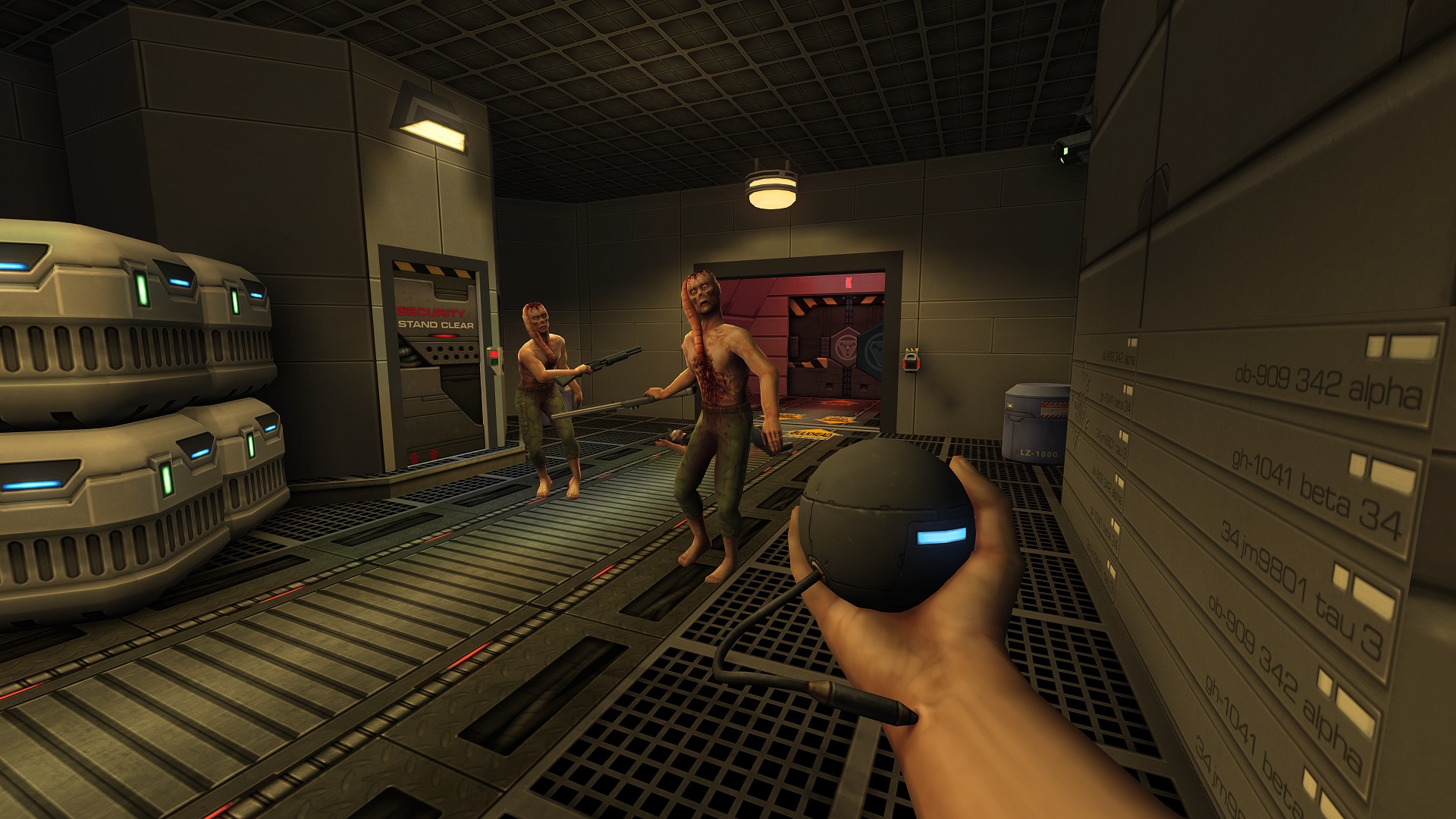
System Shock 2‘s plot takes place 42 years after the events of the first game, on board the Von Braun starship. Waking up from cryosleep, you’re immediately contacted by a mysterious doctor who demands that you meet her. It quickly becomes apparent that something untoward has happened on the ship, with mutants now swarming throughout its corridors. And then, further inconveniences arise when it’s revealed that the rogue AI from the first System Shock, SHODAN, hasn’t actually been defeated…
Where SS1 received a full-on remake, SS2 is afforded a less comprehensive remaster. The visuals have been sharpened up nicely to the point where the game now looks like it did in the minds of players 25 years ago (a time when less advanced graphical capabilities meant that our brains would have to fill in the gaps), and a range of options are included to fit the tastes of both new and old players. Full mod support is available for PC players, and it’s now possible to play through the entire game with a team of up to four players in cross-play multiplayer (so whatever platform your pals are using, you can all join the same game). Exploring the Von Braun’s corridors is great fun with other people, and joining a session is as simple as entering a four-letter code. The one drawback to multiplayer is that items aren’t shared between all players, so if somebody picks up a health pack or a vital pack of ammo, it’s tough luck for the rest of you. But this leads to each person taking on a designated role, specialising in weaponry, repairs or hacking, for example, making System Shock 2‘s multiplayer more involved and engaging than it might have seemed at first. A wonderful addition to an already great game!
Even with the help of others, though, System Shock 2 can be confusing and often brutal. Its old-school origins are evident in its level design and lack of hand-holding, although those who favour a more immersive experience will be pleased with the reliance on audio logs and written notes to figure out where you’re supposed to be going. Its UI can be a bit fiddly to get the hang of too, especially on console controllers (keyboard and mouse are the way to go here, if you can), and checkpoints during gameplay are hard to come by, so manually saving your game should always be a top priority.
Remnants of a bygone era are nothing to really complain about in remasters such as this one, though, but it’s worth modern players being aware that they might find themselves a bit taken aback by how difficult things can really get. With new additions that breathe new life into a truly classic game, this is by far the best way to experience System Shock 2.