COME BACK LUCY (1978)

Come Back Lucy - 1978

Adapted for television from Pamela Sykes’ 1973 novel, Come Back Lucy reflects many themes common to children’s literature of the era. Produced for ATV in 1978, the six-part series has a decidedly melancholic atmosphere. The story takes the tropes of a traditional Victorian ghost story, adds in elements of a classic time-hopping adventure, and blends both into a drama that touches on the themes of childhood loneliness, and the awkwardness that can accompany the transition to adolescence. If that all sounds quite ambitious, Come Back Lucy pulls off the combination very successfully.

When her kindly aunt dies, the grieving young Lucy is fostered in her cousins’ family home. The household is loud and a little chaotic, and a place where progressive, liberal parents give Lucy’s three extrovert cousins great latitude. Lucy feels out of place and unwanted. When she glances into an old mirror in the attic she finds herself transported into the house’s history and into the company of Alice, a precocious Victorian child. Lucy is initially pleased to have found a secret, mischievous friend. But Alice becomes more insistent about Lucy staying with her permanently, just as Lucy recognises that her new family truly cares for her. As Alice’s mood darkens, Lucy risks losing control over her own fate.

With a strong ensemble cast, and great performances from the young female leads Emma Bakhle (Lucy) and Bernadette Windsor (Alice), Come Back Lucy is both an entertaining and at times a disconcerting watch. The challenges of loss, alienation and disconnection are all prominent in what’s a pleasingly unsettling example of 1970s’ kids’ teatime fantasy fare. Some interesting talking-head special features complete this package.

COME BACK LUCY: THE COMPLETE SERIES is available on DVD from NETWORK

FORTEAN TV

fortean tv

This 3-series Channel 4 show (UK TV) from the late ’90s was made by the Rapido company, the same people responsible for Eurotrash, and it’s with that same tongue planted firmly in cheek that Fortean TV took to our screens. The subject matter, however, was quite different.

Charles Fort was an American writer who became a world authority on matters which pushed the boundaries of known science, unnatural phenomena and the supernatural. He published several books, some of which influenced the science fiction of the time and when he died in 1932, the term Fortean became accepted parlance for anything a bit spooky. His cult following led to the creation of the publication The Fortean Times, upon which this series is based.

Each week, unusual phenomena from all over the world are investigated, ranging from ghostly sightings in rural England, monsters in Norwegian lakes, holy cows in America or the face of Mother Theresa miraculously turning up in a cinnamon roll…

So much for the content, a sometimes fascinating and sometimes gleeful look at the unusual.

But what makes Fortean TV well worth your time is the producer’s genius selection of host, Reverend Lionel Fanthorpe. A bonafide man of the cloth, Fanthorpe was, and remains, a writer fascinated with the very same things that had excited Charles Fort. With his shaved head, white beard and leather biker jacket, Fanthorpe wouldn’t look out of place propping up the bar at a fetish event in Berlin, only his dog collar betraying his heavenly calling.

His playful presentation, warm wit, and soothing tones elevate the programme beyond its modest production values. Fanthorpe even throws in a song to finish each episode. He’s just lovely.

This collection has every episode, including the final series, Fortean TV Uncut, and the Christmas special, Xmas Files. Great fun.

Fortean TV is available on DVD from November 21st.

THE WAR OF THE WORLDS (1953) / WHEN WORLDS COLLIDE (1951)

war worlds

Two classic George Pal films in one package? Count us in! As an even bigger sweetener, The War of the Worlds, still the most enjoyable version of the H.G. Wells story, has been upgraded to a 4K UHD disc!

The Earth is in peril from two very different sources in this pair of fabulous ‘50s sci-fi pictures that Pal produced. His impact was so great on the burgeoning genre that the actual directors (Bryon Haskin and Rudolph Maté) are forgotten. In The War of the Worlds, alien invaders land in California (moved from Victorian London in the novel) and slowly begin their mission to destroy mankind.

The earlier When Worlds Collide is an even grimmer affair as Earth is threatened by an approaching planet, prompting the creation of a rocket that will save a select group of people. The depressing choice of who shall be aboard the ship is almost as bad as the fate awaiting those left behind.

Fans of sci-fi cinema will no doubt be familiar with both of these films, and it’s a pleasure to say they both stand up brilliantly today. The War of the Worlds is packed with atmospheric scenes, be it when the Martians land and the first contact or Gene Barry and Ann Robinson hiding in a shack when we first get a good glimpse of the aliens. The 4K disc presents the film spectacularly, looking vibrant and as good (if not better) as the day it was released. There have been a few digital ‘improvements’ to remove the very obvious wires holding the war machines, but only a true pendant will baulk at that. The bonus features are all ported over from previous releases, but it’s great to have them all in one place.

If there’s a disappointment with the set, it’s that When Worlds Collide is included on a standard Blu-ray only. It’s not a deal breaker, but it would have made sense to give both movies the 4K treatment. That said, it still looks brilliant and is a massive improvement from the previous DVD releases. It’s a film that should be revered more than it is, with a powerful statement on the state of mankind amid a strong sense of pessimism.

The set itself is given a deluxe slipcase that houses the two discs in a fold-out digipack that includes a 3-D pop-up of the main film’s poster art. Also included are a couple of cute magnets depicting the spaceships of the films and a nice set of mini photo/art cards. All in all, a pretty sweet package.


The War of the Worlds / When Worlds Collide 4K + Blu-ray set is out now. 

GIRL AT THE WINDOW

girl at window

Yes, it may sound like a few films you’ve seen before, but the Australian horror thriller Girl at the Window still has a few surprises.

Amy (Ella Newton) and her mother Barbara (Radha Mitchell) have moved into a suburb following the tragic death of Amy’s father. An occurrence Amy blames herself for. She’s awoken one night by a van being driven out by the next-door neighbour, Chris (Vince Colosimo). This is enough to make her suspicious of him, even before he starts dating her mum. There has been a spate of kidnap-murders in the town, and Amy’s money’s on Chris being the culprit. She talks her friend Lian (Karis Kailani) into helping her snoop around Chris’ property to find evidence of the latest missing girl.

Part-Fright Night, part-Rear Window, and a sprinkling of The Woman in the Window, director Mark Hartley’s film has the stifling atmosphere of the Aussie exploitation films of the late ‘70s and early ‘80s (as Hartley made Not Quite Hollywood, the definitive documentary of that style of Oz cinema, it makes perfect sense). While it could be tempting to write the film off as a knock-off of similarly themed movies, there’s a mid-point twist that rivals the recent Barbarian to keep things fresh and interesting. Terence Hammond and Nicolette Minster’s script keeps the characters interesting while knowing of its influences. Ella Newton is dynamic as the teen whose suspicions could put her loved ones in danger, and there are plenty of “get out of there!” moments as she takes to roaming about the neighbour’s property looking for clues that Chris is the Clockwork Killer. She also sells the trauma of reliving her father’s death well, adding a surprising amount of depth to the character.

Rising above expectations while fitting perfectly into the Ozploitation bracket, Girl at the Window is certainly one to check out.

Girl at the Window is on digital and VOD in the US from November 4th.

THE DEEP HOUSE

the-deep-house-starburst-review

Some say if you have seen one haunted house film, you have seen ‘em all. Well even those people have not quite seen one done like writers/directors Julien Maury and Alexandre Bustillo’s (Inside) latest film The Deep House. Taking a familiar genre and asking the question of what would happen if this were all underwater? This high-concept horror is every bit as intriguing as it sounds, even more so considering the incredible lengths gone to create it. Lengths that have made all the difference.

The film sees engaged young couple Ben (James Jagger) and Tina (Camille Rowe), as they scour Europe to search old abandoned properties and live stream it for their YouTube channel. Driven by achieving big views, Ben seeks out a secret spot in France, only for it to turn out to be a tourist hotspot. Deflated and disappointed, Ben soon meets a local who tells him of a real secret, a house, fully preserved, found at the bottom of a secluded part of an artificially submerged lake. This could be a chance to go where no one has before, but what lies beneath is a home to not just drowned secrets but something truly sinister.

While it’s not unfair to say that you have seen some of the plot elements here played out before, you’ve never seen it all done like this. The Deep House is a slow-building, taut and even rather cruel horror offering (that ending), which at a brief 85 minutes swims along at a good pace and is packed with an unshakeable inevitable dread and terrific atmosphere.

Combining elements of found footage with traditional narrative filmmaking, this movie crafts its scares and settings fully the old-fashioned way. Relying on impressive sets and an almost real-time underwater story, achieved with real stunt divers and outstanding aquatic camerawork. 

Jacques Ballard’s cinematography is particularly brilliant, even before it heads to the depths of the lake, and the abandoned evil property that sits there. The early moments even neatly set up what is to follow, as the quiet, nature-reclaimed visuals grow in number until we are trapped alongside Ben and Tina in the soggy home from hell, which is fully concealed by mother nature. 

Meanwhile, our affections for these well-played lead characters are allowed to grow too, as they both increasingly realise (Ben especially) that the price of viral fame is far too often, all too great.

While ‘The Deep House’ of the title is almost a third main character. It looks fantastic, feels claustrophobic and even authentic, and the mystery it shelters, while not exactly as novel as the concept itself, is effectively nasty. And there are even a couple of twists thrown in (and a post-credits scene).

Maury and Bustillo achieve maximum effect from their oxygen-dwindling premise, and it blends pretty fantastically with the tropes of the haunted house film, as well as other horror sub-genres that serve as inspiration here. This is a film, that’s ambition is clear to see, even when some of the bubble-coated, water thrashing action isn’t. Indeed there are a couple of moments where you lose track of who is doing what, but they are low in quantity. And don’t sink, what is a very well-made film.

The Deep House is a rather original submerged subversion of the haunted house horror flick, that makes its paranormal activity even more breathless…literally!

The Deep House is out now on Blu-ray and DVD

MASSACRE AT CENTRAL HIGH (1976)

MASSACRE AT CENTRAL HIGH

On the surface, this could have been another vengeful body count student bloodbath, but Rene Daalder’s film has an interesting twist on a subject that would be commonplace in the ‘80s.

Moving to a new high school, David (Derrel Maury) reunites with an old friend, Mark (Andrew Stevens), but is disappointed to find he is hanging around with the elite ‘clique’, who make all the other students’ lives a misery. As he picks off each of the group in grisly, ‘accidental’ ways, he’s dismayed to find the former bullied pupils making a power grab of their own.

The catalyst for David’s killing spree comes when his best mate sees him skinny-dipping with Theresa (Kimberley Beck), who’s meant to be Mark’s girlfriend. Feeling a touch aggrieved, he tells the gang that David has refused to see things their way, and they see that his leg is crushed under the wheels of his car while he’s repairing it. Why the police – or indeed, the teaching staff – do nothing about the killings is remarkable. In fact, they’re nowhere to be seen!

Rather than a predictable revenge slasher, Massacre at Central High provides a spin on Animal Farm and highlights the nastier side of human nature. There’s also a rather prescient undercurrent that predates the school shootings that have become all too commonplace in the US. It’s ably directed by Daalder, and the leads are watchable even if it does have the feel of a gory (and above average) made-for-TV film.

Synapse’s US Blu-ray (region free so safe to import) presents the film well, with a couple of informative interviews in lieu of commentaries. Still, the must-see extra is the 40-odd-minute feature on the making of the film. There’s an incredible array of on-screen and behind-the-scenes talent on display and it’s worth a watch even if you’re not a fan of the film (which you should be!).

Massacre at Central High is available on Blu-ray in the US now.

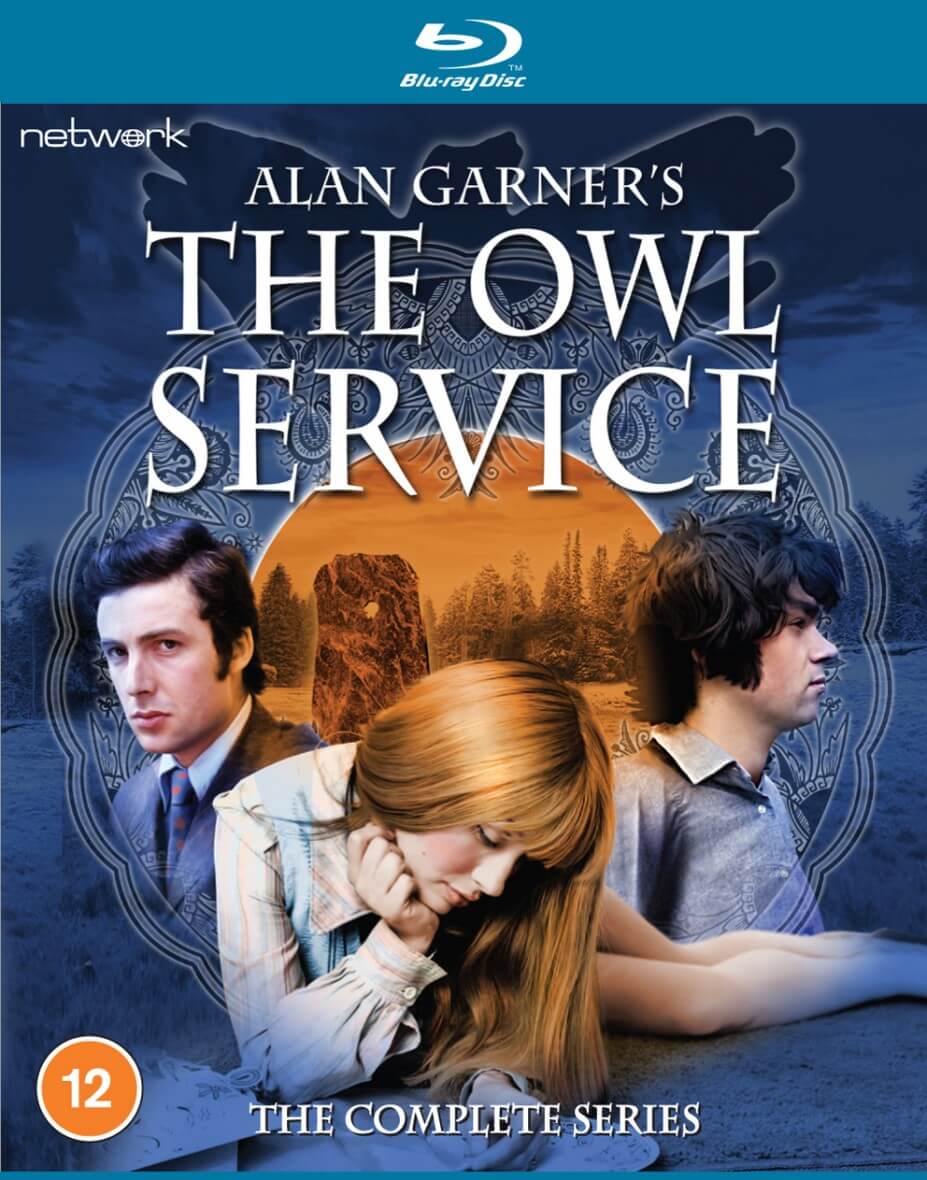
THE OWL SERVICE

The Owl Service

On its release, The Observer described The Owl Service as “far more than an ordinary children’s story” and, if anything, watching it fifty-three years later has only served to prove that several times over. The latent sexual tension of the piece, noticed at the time, now shines through, all lingering glances, shots of Gillian Hall’s bare legs, and an uncomfortable feeling that there are darker things at play than even those Alan Garner and the ancient Welsh folk tale he used as inspiration intended.

The eight-part show begins with new step-siblings, teenagers Allison and Roger (Hall and Francis Wallis, both in their mid-twenties but playing younger), on holiday with their spliced family for the first time, at the remote Welsh house that used to belong to Alison’s father before he died. Now Roger’s dad is the man of the house, Alison’s mother never-seen but ever-present, and the cast is completed by the gardener and housekeeper (who both seem aware that something strange is happening), and the housekeeper’s teenage son.

The Owl Service
There’s a whiff of doomed fate in the air, accompanied by an eeriness that would be all but impossible to replicate, the epitome of “children’s” television from the haunted generation. This Blu Ray release from Network offers the show in beautiful high definition for the first time, with a new set of commentary tracks from Tim Worthington helping to put the show into its wider cultural context, and an illustrated booklet with pieces from Chris Lynch, Stephen McKay, and Kim Newman.

The Owl Service rightfully takes its place as one of the pillars of the hauntology canon but quite apart from that it’s a unique cultural artefact on its own terms. That it retains the ability to unsettle and enthrall at five decades’ removal is a testament to Garner’s original story, Peter Plummer’s adaptation, and to the courage of those who commissioned such drama for children in the 1960s, 1970s, and 1980s.


The Owl Service is out now on Blu Ray from Network.

THE HUNCHBACK OF NOTRE DAME (1923)

hunchback notre dame

In 1923, this staggeringly expensive production (it cost $1.8million) of the classic Victor Hugo novel, Notre Dame de Paris from 1831, became one of Universal’s most prestigious pictures and biggest hits. Watching it a century later, it’s easy to see why.

Set in Paris in the 15th century, the story centres around Esmerelda, a beautiful Gypsy dancer, who is the object of desire for both an honourable King’s guard and a lustful man, Jehan. Jehan is the master of Quasimodo, Notre Dame’s bell-ringer, a deaf, part-blind man with physical deformities who has a life within the cathedral but whose knowledge of the outside world is limited. When Jehan orders Quasimodo to seize Esmerelda on his behalf, a chain of events is set into motion which results in a peasant revolt. Along the way, kindness, compassion, lust, depravity and the structure of society are all touched upon.

The story is, of course, iconic – it has been filmed over a dozen times – but this version is one of silent cinema’s true epics. So vast and detailed in its production is it that you’d be forgiven for thinking that it had been filmed on actual locations but no, it’s all sets recreating Paris and Notre Dame, with hundreds of people fighting it out as the angry mob. It’s a spectacular feat of design and direction.

But despite the impressive scale, what makes the film linger is what makes the novel so enduring – a morality tale in which the plight of the underdog, of the oppressed, of the marginalised, is the emotional core of the story.

Conveying that emotion under a ton of state-of-the-art for the times make-up is an extraordinary Lon Chaney, The Man of a Thousand Faces as he would come to be known, in his first starring role. At once maniacal, then tender, fierce and compassionate, his is a superb performance that grounds the story very much in the heart.

A few years later he’d achieve even greater heights as the Phantom of the Opera but this Masters of Cinema release from eureka is a welcome reminder of how early cinema established the language of the epic to this day. For enthusiasts of the story, the 1939 version starring Charles Laughton is superior, but that’s no reason not to consider this a must-have disc.

Quality wise this is as good as it gets but no actual negative of the film exists and any restorations over the years have come from 16mm prints that were used for the film to be watched at home. Extras include a full commentary from Kim Newman and author Stephen Jones, Newman is interviewed separately as is film historian Jonathan Rigby and there’s a nice collector’s booklet too.

Essential viewing.


The Hunchback of Notre Dame is out now on Blu-ray from Eureka! Entertainment.

BATMAN AND SUPERMAN: BATTLE OF THE SUPER SONS

Batman and Superman: Battle of the Super Sons has absolutely no business being this damn good. Aided in part by the sure-handed storytelling of Justice League Dark co-director Matt Peters and Justice Society: World War II writer Jeremy Adams, DC’s latest animated effort benefits from focused storytelling, inspired voice performances, and a welcome willingness to sideline Batman and Superman. The result is one of DC’s most straightforward and endearing animated efforts to date.

Battle of the Super Sons coasts on the undeniable chemistry between Jack Dylan Grazer and Jack Griffo. Each of them brings a playful power that’s essential to their characters’ appeal. Grazer, moving from playing Billy Batson’s best friend in Shazam! to running the show as Jonathan Kent, proves a capable lead. He’s charming, quippy, and likeable, a cheery foil for the brooding Damian Wayne. Sure, Damian is more curmudgeon than child, but Griffo smartly imbues him with longing. Longing for affection. Longing for attention. Longing for friendship. You get it. There are layers to Damian, and Griffo communicates all of them beautifully.

Battle of the Super Sons packs its lean runtime – a breezy 79 minutes – with storytelling decisions that could have worked against a less assured creative team. Opening on the destruction of Krypton has become too played out to be compelling… in most cases. Adams plays the bones of this long-dead horse like a xylophone, feigning a “been there, done that” approach before using the tragedy to set up something else entirely.

Adams refuses to introduce anything he won’t bring back later. Even Clark’s excuses for missing his son’s baseball games serve a purpose… as do the games themselves. Fun, funny, and conscious of its constraints, the script is a great example of ruthlessly efficient writing. It’s not groundbreaking. It won’t redefine anything. But it’s also not trying to. It’s a sweet story that establishes a fan-favourite friendship, showcases some cool fights among Justice League members, and then wraps things up neatly and without fanfare.

From a technical standpoint, Super Sons mostly nails it. It’s DC’s first foray into CG animation so there are kinks here and there. Somewhat incongruously, though, the clunkiness is only noticeable in more mundane moments. Jonathan dashing through farmland doesn’t look quite right, nor do most of the interactions in the Kents’ kitchen. When given time to linger, the visual flaws are obvious. But when things ramp up, the movie is stunning.

Thanks to Battle of the Super Sons, the Jonathan Kent/Damian Wayne dynamic has never been snarkier or more fun. More, please!

BATMAN AND SUPERMAN: BATTLE OF THE SUPER-SONS hits DVD/Blu-ray on October 17th


THE INTRUDER (1972)

The Intruder - 1973

A deeply unsettling children’s teatime drama, both the grown-up themes and the melancholic timbre of The Intruder are far removed from the usual lightweight preoccupations of 1970s kids’ TV serials.

Adapted from the novel by John Rowe Townsend, the series’ bleak setting is an isolated village on an outcrop off the British coastline where tidal surges cut off the residents from the mainland. Helping visitors navigate the treacherous crossing is Arnold Haithwaite, a ‘sand pilot’ whose family runs the local shop. But the aged man he calls father harbours a secret about Arthur’s parentage that he refuses to divulge. The young man’s anxiety about his real nature is heightened by the arrival of a mysterious stranger who claims he shares more than the family name with the young Haithwaite. Amongst a small but committed cast, Milton Johns is singularly impressive as the creepy and disturbing interloper.

The Intruder is sombre, downbeat and sporadically alarming. Its plot wrestles with issues of identity, attachment, family and class, generational conflict and adolescent longing. There’s precious little humour and lots of ill-tempered exchanges between characters. But it remains a strangely compelling watch, particularly in its determination to keep its young audience guessing about the place’s buried secrets, and in the way its atmospheric filming locations are framed on screen. As a niche provider, tight budgets often mean that Network’s releases have to remain vanilla. This Blu-ray is better served, offering idiosyncratic solo episode commentaries from writer Tim Worthington; a sit-down with Townsend from a 1972 episode of Granada’s Writers’ Gallery; a new interview with actor Simon Fisher Turner; and a typically comprehensive booklet from renowned TV historian Andrew Pixley.

THE INTRUDER is available on Blu-Ray from Network on OCTOBER 17th