PLATFORM: SWITCH 2 | RELEASE DATE: OUT NOW
Over the years, Yoshi seems to have become something of an experimental vehicle for Nintendo. His first appearance, in 1995’s Super Mario World 2: Yoshi’s Island, completely changed people’s expectations of what a Mario game would (or should) be like, and pretty much all of the games that he’s starred in ever since have been, at the very least, a bit unconventional. But despite the gimmicks, Yoshi games have largely all been charming, quirky and fun, while never quite sticking to the standard platformer formula.
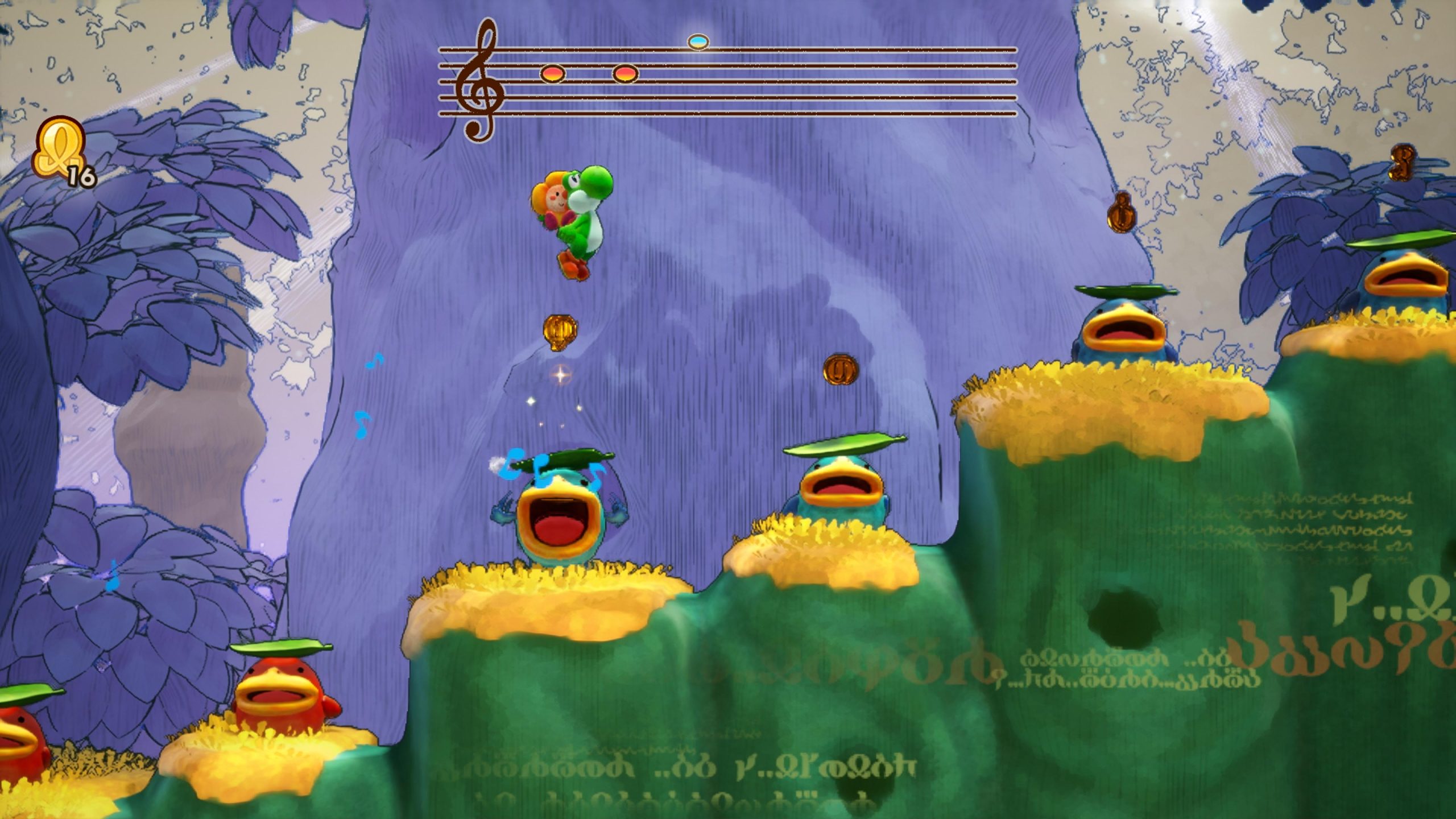
This trend continues with the Mysterious Book, which finds a gigantic talking encyclopedia, Mr E, arriving on Yoshi’s island. His pages have fallen out, and Yoshi is tasked with diving into the book and restoring its contents. Each chapter has a double-page spread which you’ll examine using a magnifying glass before zooming in on one of the weird and wonderful animals that inhabit that particular chapter. Each creature has its own dedicated level which you’ll need to thoroughly explore, using the creatures’ abilities to solve puzzles, find hidden flowers and earn stars.
Yoshi is able to jump, gobble up creatures, whip them onto his back, and shoot eggs to reach distant objects. It’s only a small suite of abilities, but each creature that you discover has a whole range of unique uses, which combine with Yoshi’s abilities to give a huge amount of possibilities. The froggy Croakaoke sings songs and has a head that can be bounced off, Glubbits create bubbles that Yoshi can float around in, while fluffy dandelion-like Scatterpuffs can be (slightly awkwardly) pushed around the screen in an attempt to make them land in the right place to grow into larger plants that you can bounce off. There are almost 60 creatures across the game’s 6 chapters, and the more you experiment, the more discoveries you make, although some of the creatures’ abilities can be a bit obtuse and more than a few levels will require a bit of trial and error to figure out.
The Mysterious Book is a curiously short game – a more skilled player could see the end credits within around 4-5 hours – but it crams a lot of endearing silliness into its brief appearance. Those looking for the type of platformer that Nintendo has become known for might find that this doesn’t quite scratch the same itch, with its unique approach to level design and the sometimes stubbornly confusing objectives, but a more inquisitive (and potentially younger) audience is likely to be more appreciative of its emphasis on exploration and experimentation.