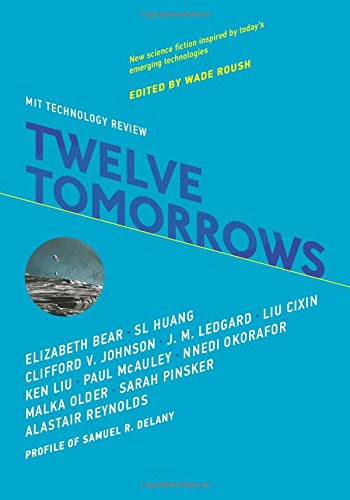
Originally launched in 2011 by the MIT Technology Review, the Twelve Tomorrows series brings together a collection of all-new speculative fiction short stories which explore the future implications of new and emerging technology upon the human race. Twelve Tomorrows isn’t interested in the sensational side of science-fiction; aliens, monsters, invasions are strictly off-limits. The dozen contributions in this latest volume – ten short stories, one “graphic novella”, and one essay/interview celebrating the life and times of genre author Samuel Delany (best known for his prodigious science-fiction output in the 1960s and 1970s) – are largely concerned with technology and whether humanity’s interests are likely to be best-served by its increasing reliance on science and the fruits of scientific labour.
TV’s Black Mirror is probably Twelve Tomorrow’s closest spiritual cousin, but where Charlie Brooker’s anthology series is, out of necessity, more melodramatic and driven by the need for incident, the stories here are a bit more reflective, posing the question but not overly concerning themselves with suggesting an answer. There’s no real sense that the writers are trying to warn us to take a different path before the machines destroy us all or turn us into something less than we already are, but the downside is that many of these tales just seem to happen with nothing much in the way of consequence. The writers postulate a putative future – technology allows human personality to be adjusted and altered via elective Deep Brain Stimulation, a world riven by climate change and AI which has outgrown those who created it, a moral debate about whether organ transplant makes us less human – and invite us to come to our own conclusion without moralising or finger-wagging. The strongest stories are those with a sense of dramatic urgency; SL Huang’s The Woman Who Destroyed Us starts as a tale of bitter revenge, Elizabeth Bear’s Okay, Glory is a cautionary tale for those who rely on Alexa a little bit too much as the protagonist finds his futuristic, automated home in permanent lockdown, and in Alistair Reynolds’ Different Seas a robot ‘proxy’ comes to the aid of a stranded sea-voyager. The best story here, however, is Nnedi Okorafor’s often-thrilling Heart of the Matter in which in which the ailing Nigerian President’s heart is replaced by an artificial 3D construct against the background of an attempted coup by a bunch of fanatics who equate science with witchcraft.
Contemplative rather than showy and lurid – editor Wade Roush specifically banned dystopian tales from the book – Twelve Tomorrows will certainly provide food for thought, and whilst it’s unlikely to set your pulse racing and you might be inclined to wonder ‘so what?’ at the end of one of two of the stories, there’s enough here to make us wonder – probably not for the first or, indeed, the last item – if drone technology, the Internet, and the quest for true artificial intelligence are really all we tend to make them out to be.
TWELVE TOMORROWS / EDITOR: WADE ROUSH PUBLISHER: MIT PRESS / RELEASE DATE: OUT NOW