Emily Hamilton’s intergalactic sapphic romance The Stars Too Fondly is a rich and heartwarming reminder of the strengths we draw from those around us, and how the simple fact of being human is often the strangest experience of all. The novel careers around the galaxy, warps out from between stars and back again, and yet Hamilton’s writing makes stunningly clear that the most powerful of forces aren’t these intergalactic physics, nor the high-stakes cosmic conflict, but rather the human bonds between her found-family crew of protagonists.
–
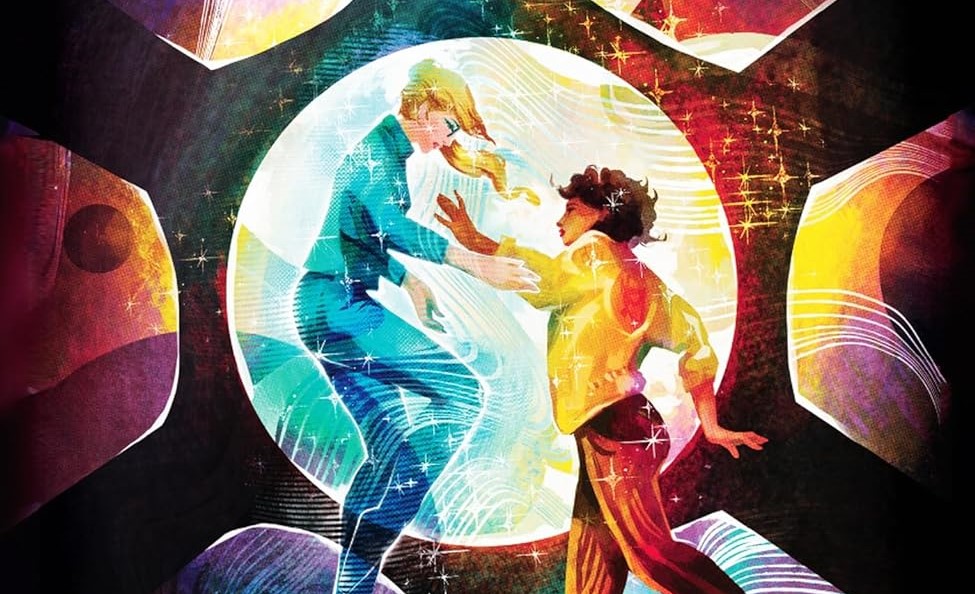
Immediately upon the novel’s opening it becomes clear that Hamilton’s characters will be the shining jewel in the novel. A group of four ferociously characterised life-long friends – the adventurous physicist Cleo, outspoken ringleader Kaleisha, reserved and intelligent Ros, and the sensitive peacemaker Abe – are haunted by the strange and murky history of a failed space travel operation some twenty years previously, and have planned a heist to seek the truth. When they inevitably end up stuck in the furthest reaches of outer space with nothing but each other and the sentient holographic Captain Wilhelmina Lucas for company, the interpersonal relationships and strikingly realistic dialogue carve out these characters as the real heart and soul of a novel simultaneously preoccupied with things much bigger than themselves. Hamilton represents each element of the LGBTQ community through these characters, and weaves a beautiful collective power and spirit through their friendship and support of each other through not only the slow-burn confusion as Cleo begins to fall for the holograph of the Captain, but through the most mundane of issues. Despite the quintessentially sci-fi backdrop of their home planet spinning light-years behind them, The Stars Too Fondly never veers too far from the core humanity that drives it. As Ros sinks into a worrying isolation, as Abe and Kaleisha’s relationship is tested, as the group bonds over the familial and romantic traumas that plagued them on Earth, Hamilton’s characters are unwaveringly supportive, three-dimensional – inarguably real and human.
Similarly striking is the continual ducking and weaving of Hamilton’s plotting. What appears initially as simply a heist-gone-wrong, a desperate mission to return to Earth and the initially humorous crush that Cleo develops on the hologram is only the tip of the novel’s iceberg – a tightly knotted and often ingeniously complex overarching plot with implications for not only the humans on board this wayward spaceship, but for the entire known universe as it currently exists. This sweeping plot arc – informed by the slowly unfolding mystery of the initial failure of the original launch when the characters were children – manages to establish itself as a colossal atmospheric conflict without ever feeling excessive or contrived. Hamilton’s plot takes an impressively original tilt to the tropes of sci-fi novels, sweeping through alternate universes, dream states, and the endless reaches of the cosmos. The slow-release of the characters’ understanding of the true nature of their situation takes readers on a deliciously mysterious and intriguing mental and physical journey, continually twisting into new explanations and fresh ideas.
The structure and formation of the novel itself is similarly innovative. Swapping between narrative sections, newscasts, text messages, archive documents, and a mysterious omniscient narration, The Stars Too Fondly is less a straightforward story and more of a dossier on the intersection between the history of human space travel and the present experiences. This highly original concept allows for insights into character psyches and relationships in a way that feels strikingly natural, and elevates the ideas and devices that Hamilton uses into something that feels stunningly real. This also means that Hamilton’s complex plot is intrinsically tied to the array of forms used, and allows for twists in the plot to come from directions that readers would likely never have seen coming. Hamilton’s stacking narrative choices mean the novel becomes deliciously three-dimensional – the crossroads between that which is purely human and that which is entirely out-of-this-world.
The romance at the core of the novel is a slow-burn, almost enemies-to-lovers exploration into the bounds of what love can be and what it can become. Captain Lucas – later affectionately known as ‘Billie’- is an intangible hologram of the original Captain of the ill-fated exploration all those years ago, and Cleo’s childhood hero. Curt, stoic, and initially unfriendly, the two immediately snap and bicker with each other – a suggestion of tension that Cleo herself cannot seem to fathom the origins of. The terse, flirtatious bantering and tight, clipped dialogue is at once a humorous reprieve from the crushing stakes of the novel, and the kindling of a romantic spark that burns brighter as the narrative progresses. This idea of the novel being a crossroads between the human and the intangible is never more apparent than in the blossoming interactions between Cleo and Billie; never touching, unable to be together outside the ship, almost from entirely different timelines and origins. It offers an interesting consideration of the very nature of romance and friendship – what it becomes when intrinsic parts of it are inaccessible – and represents a potential outcome of our increasing interactions with, and development of, AI. Also pertinent, when considering that the initial space exploration was to find alternate land for humanity to inhabit after the near-total destruction of the Earth, is the idea that humanity may be pushed to find connections in places that they can never really exist if the climate emergency and unstoppable tide of capitalist progress remains on its current course.
The Stars Too Fondly is at its core a sci-fi novel, and yet simultaneously so much more; a richly plotted and tightly constructed view into the possible futures ahead of an Earth desperate for advancement at any cost. It is a lens into the beauty and collectivism of found family and underrepresented LGBTQ relationships and experiences, a blending of genre and form, a sweeping intergalactic conflict. Hamilton’s characters work through earthly traumas in the dark abyss of space, they form connections and grow inwardly in ways otherwise impossible. Cosy and funny and yet simultaneously deliciously complex and challenging, The Stars Too Fondly subtly questions the very nature of what humanity is at its core.
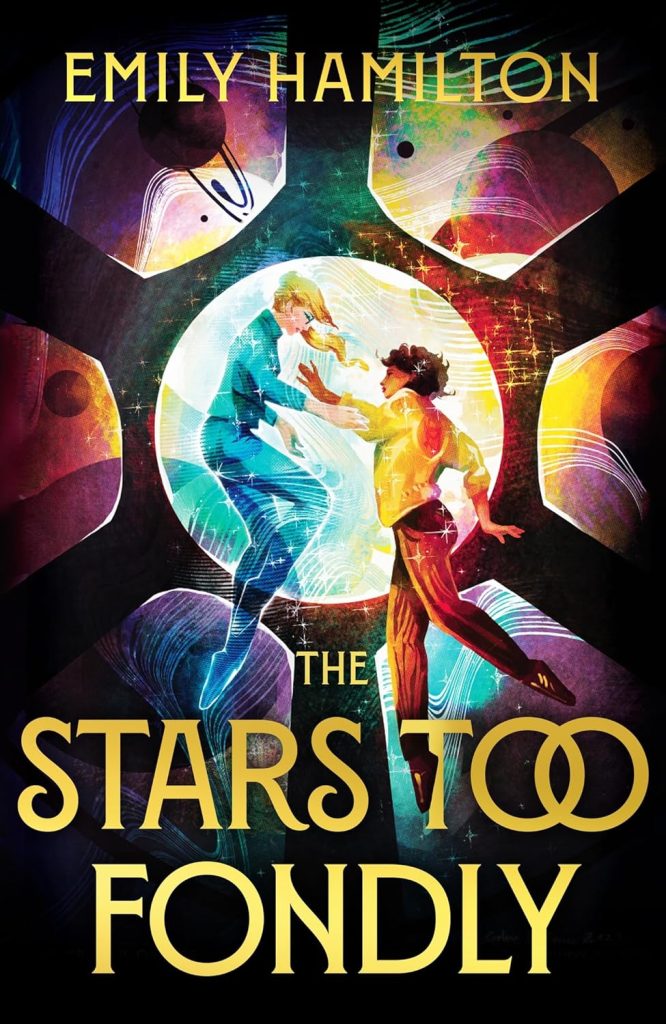
THE STARS TOO FONDLY is out now from Gollancz
 click to order from amazon.co.uk