The long history of Doctor Who 1963 – 1989, behind and in front of the cameras, has been painstakingly chronicled in any number of magazines, books, academic texts and partworks. The story of Doctor Who from 2005 to the modern day has been similarly well-mined. What’s not been so well-documented – presumably because the show had no significant new TV presence much of the time – is the show’s state of play in the years it was off-screen, particularly in the aftermath of the well-meaning but ultimately doomed 1996 US co-production TV movie starring Paul McGann. Fans, perhaps understandably, just assumed that the show was swept under the carpet by the BBC who had little or no interest in further reviving this relic from a bygone age in any form. But they couldn’t be wider of the mark; as this astonishingly interesting and page-turning book reveals, the future of Doctor Who in some form or another was very much a concern to the BBC, an organisation that didn’t really understand the show or its success and ongoing fan support but certainly weren’t blind to its potential as a lucrative title worth its weight in gold in a rapidly-changing multi-channel TV environment.
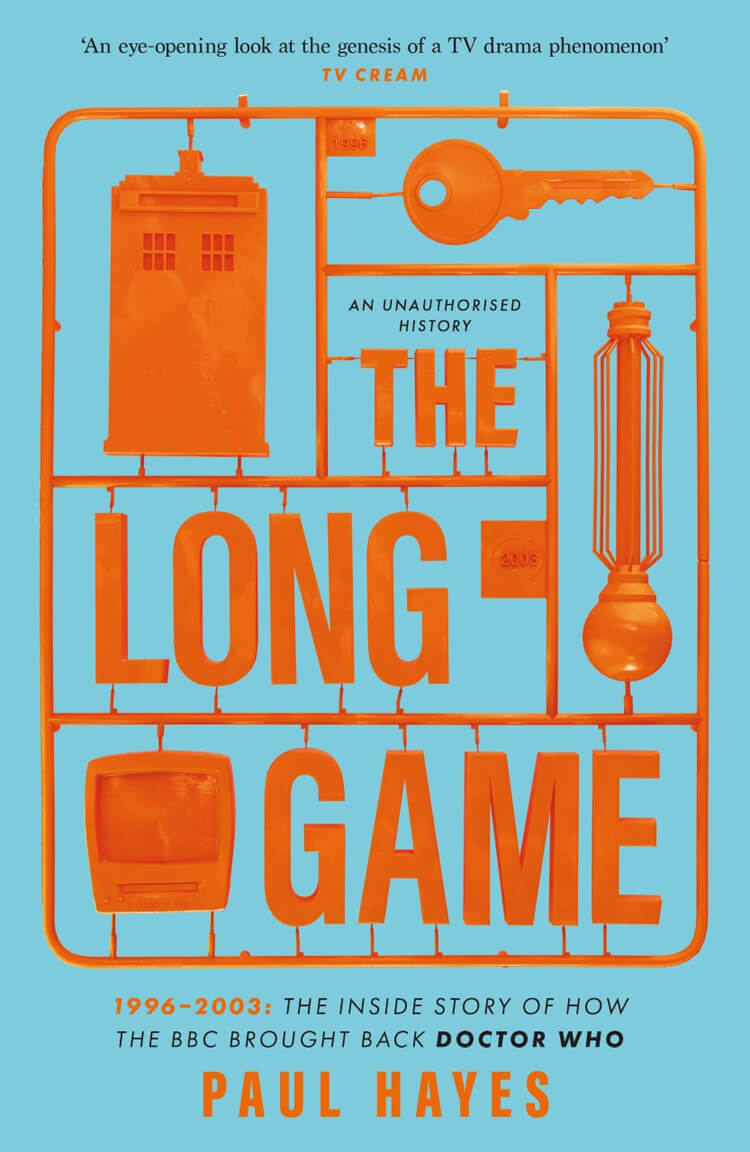
The Long Game – the name is well-chosen, lifted from an episode in the comeback season in 2005 – takes us from almost the very moment the McGann film was screened in May 1996. The project was already dead as a going concern, having flopped in the US ratings and the BBC were both unwilling and unable to support the production of new episodes on their own. The TV movie is often dismissed as an aberration, a misstep in the show’s long history but its success in the UK where it entertained nearly 10 million viewers, held up a flag at the BBC highlighting that this was a show that might still have some broad public appeal. But it would take some time for the stars to align and it would take years of musical chairs at the BBC as channel controllers and drama commissioners moved around the industry and the arrival of Russell T Davies as a powerful and influential TV scriptwriter (and, of course, lifelong Doctor Who fanatic) at the same time as genuine long-time supporters of the show in real positions of power at the BBC, for the show to slowly lift its head up from its long slumbers.
This terrific ‘unofficial’ book is as much the story of the machinations of the BBC as it’s the story of Doctor Who’s resurrection. Writer Paul Hayes’ meticulous research – he undertook more than thirty interviews with many of the movers and shakers involved in and around the BBC during the period, including Mal Young, Jane Tranter, Julie Gardner, Alan Yentob, and Lorraine Heggessey. Russell T Davies declined to be interviewed but he’s represented by a string of well-chosen quotes lifted from numerous interviews given over the years. What’s revealed isn’t just the minutiae of battle to get Doctor Who back on screen, but also some eye-opening revelations about the nature of the BBC in the late 1990s/early 2000s, the posturing and the manoeuvring and the rivalries, petty and otherwise and the Corporation’s constant struggle to pit its populist needs with its public service remit. We’re reminded, of course, that whilst Doctor Who may not have been on TV it was always there; new series format pitches were being put forward, film proposals were being developed, rights became a tangle (an easily-resolved one, as it turned out) and through it all Doctor Who lived on as audio drama and crude web animations, books and comics, all of which are touched upon in detail in The Long Game.
The Long Game, brilliantly collated and written with precision and a commendable academic detachment finally fills a frustrating gap in the story of Doctor Who but it also serves as a frank and fascinating look at the BBC and how its working cogs do, indeed, often take a very long time to turn but usually get to where they need to be in the end. An essential book for anyone interested in the arcane world of British television production.
The Long Game is published by Ten Acre Films Books.