AUTHOR: UPTON SINCLAIR | ARTIST: KRISTINA GEHRMANN | PUBLISHER: CROWN BOOKS FOR YOUNG READERS | RELEASE DATE: JULY 2ND
Upton Sinclair’s The Jungle caused a surging tide of real-life events in the wake of its publication. Its harrowing revelations of worker exploitations within Chicago’s meat industry led to the Pure Food and Drug Act of 1906. Prompting outrage when it was released, numerous attempts were made to discredit the book’s factual accuracy, including then-USA President Theodore Roosevelt. The book itself fell victim to Nazi book burnings in the 1930s, highlighting the continued impact it had long after its release.
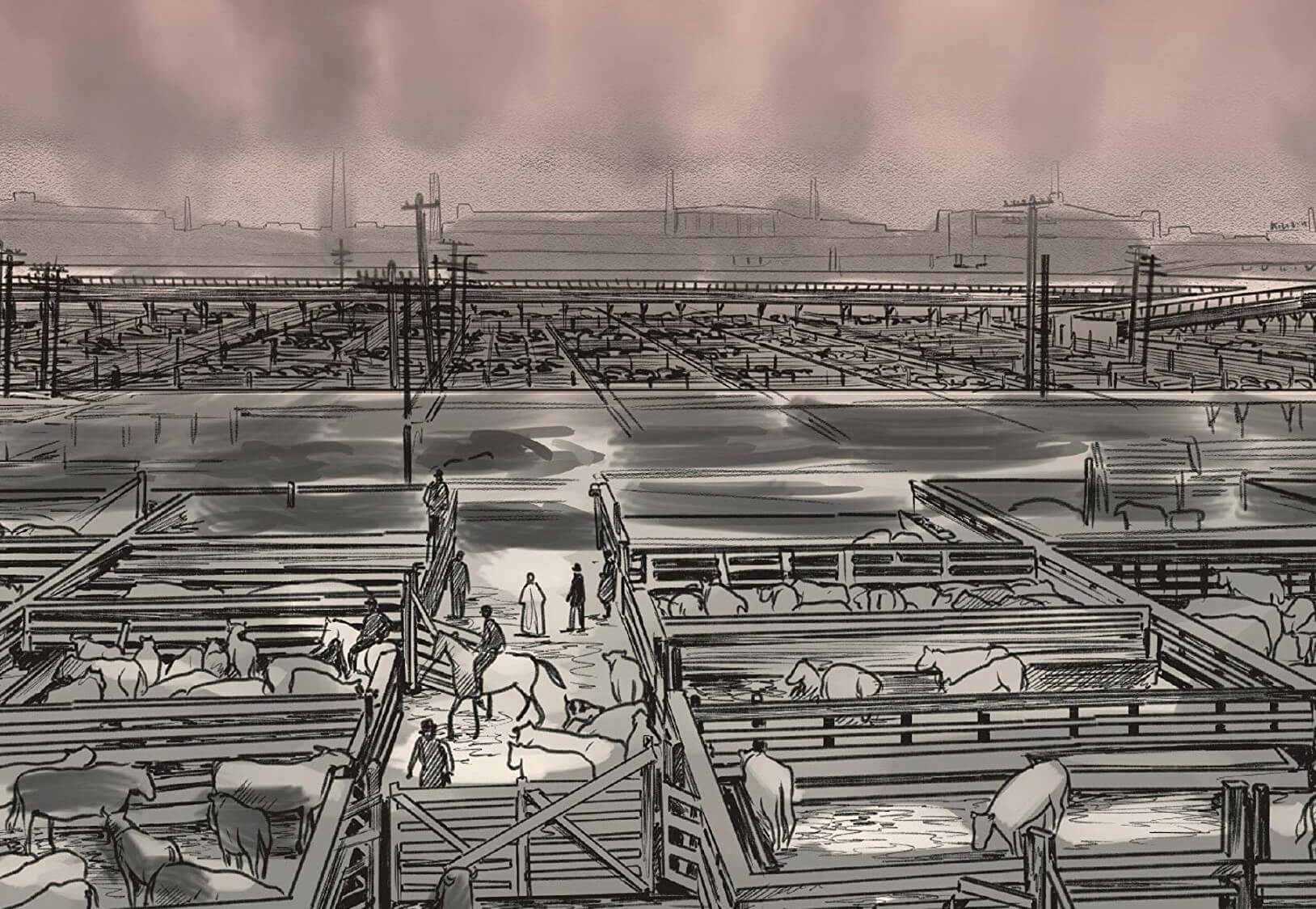
Over 100 years after its initial publication, new life has been breathed into the work by illustrator/graphic novelist Kristina Gehrmann via this comic book adaptation of Sinclair’s work. Gerhmann illuminates The Jungle in a clear, succinct style that’s stately yet raw. She effortlessly paints a striking visual portrayal of immigrant workers being trodden upon by their work superiors.
The Jungle is told mostly from the perspective of Lithuanian immigrant Jurgis Rudkus. He and his extended family travel to America in search of a better life, but are met with a slowly-tumbling avalanche of obstacles placed before them. From the jobs they work to the home they live in, not a day goes by when Jurgis and his family don’t suffer some form of hardship. Gehrmann depicts their daily plights with care and attention, illustrating The Jungle in greys, blacks and whites. The only discernible colour she contributes is red, which she uses sparingly to highlight the comic’s darker moments. It’s a welcome touch that adds subtle yet immediate bursts of emotional impact.
Gehrmann places additional emphasis on the Rudkus families’ expressions and emotions. She draws Jurgis with an innocent, wide-eyed flair that reflects his optimistic ambitions for giving his wife and the rest of his family a successful, nurtured life in America. She adds subtle shades to the story’s development by dimming his eyes with each chapter, as Jurgis’ idealistic attitudes are slowly chipped away with each act of corruption and exploitation on the part of his employers. Elsewhere, the lettering leaves a little to be desired and comes off as rather visually stilted when describing actions or shouting, throwing the comic’s otherwise low-key vibes off balance.
Gehrmann’s incarnation of Sinclair’s seminal work pulls no punches, and doesn’t smother or censor the original text. Doing such a thing would utterly defeat the point of transferring the text from a literary to a sequential medium, and Gerhmann does so with distinct, taught style. She injects a visually heart-wrenching tone into Sinclair’s work, making her version of The Jungle a tough yet vital depiction of worker exploitation that continues to hold many truths and warnings to this day.