Famed for his meticulous research methods and attention to every detail of his films, Kubrick was equally unstinting when he decided to make a film about the life of Napoleon.
The film nearly became a reality in 1967, but after spending a bigger outlay on preliminary research than on any of his previous productions, MGM decided not to go ahead with it. United Artists also flirted with the project, but like MGM decided it was too risky an enterprise after the failure of Sergei Bondarchuk’s Waterloo at the box office in 1970.
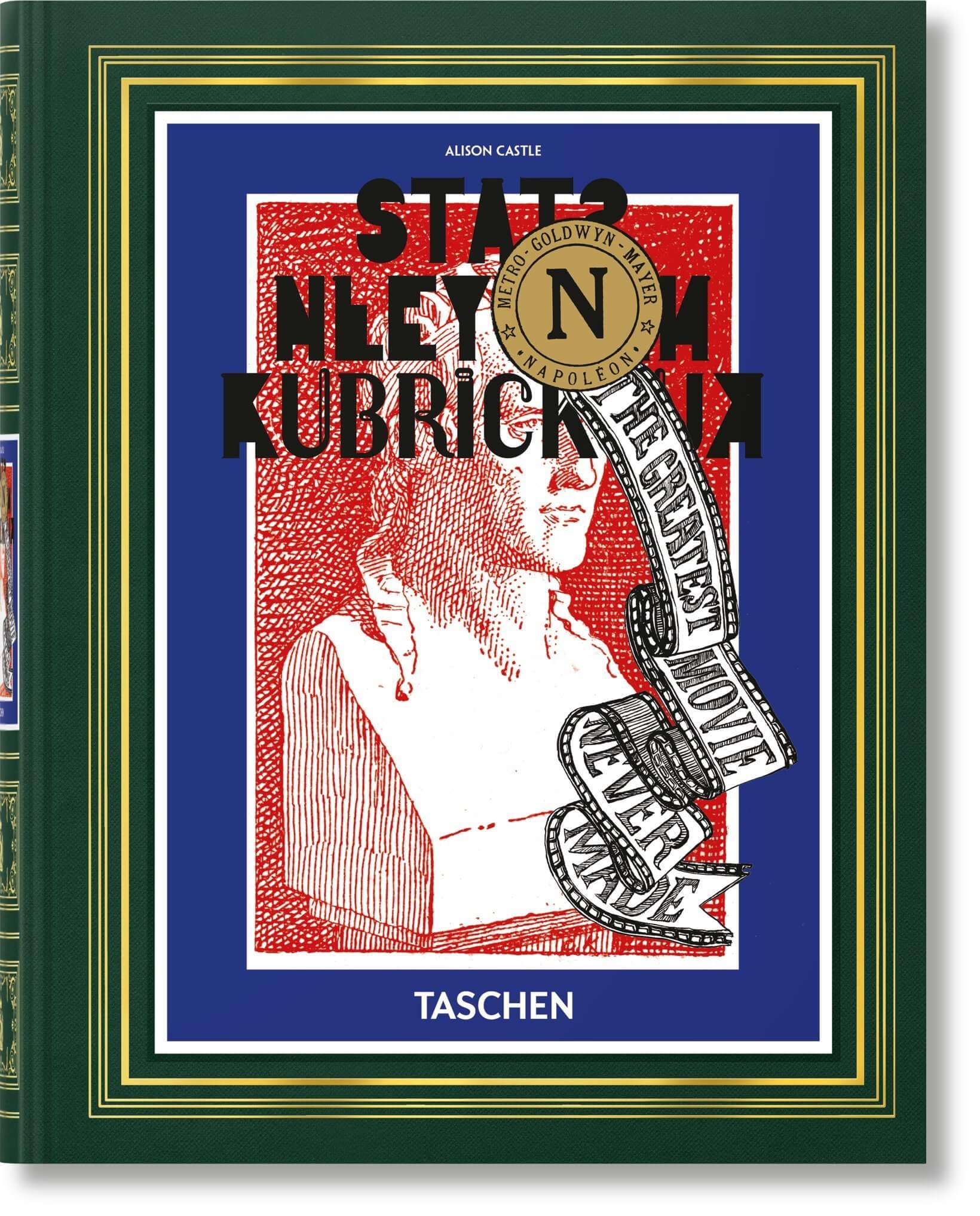
Deprived of the actual film, we have the next best thing, with this lap crushing volume, which gathers together ten books that were originally bundled together inside a reproduction of a Napoleon history book.
The first, 281-page book ‘Text’ is worth the cover price alone as this contains numerous essays about how Kubrick envisaged filming the story of Napoleon’s life. His archives show that Kubrick planned to use impressive battle scenes, along with an intimate portrayal of Napoleon’s upbringing and personal relationships, in ten chapters. Hand-drawn animated maps and a narrator would help expose the rise and fall of this heroic, yet flawed, figure.
The following nine books include the ‘Picture File’, which includes some of the 17,000 images a team of assistants collected and mounted on IBM cards to form a visual database. The chapter on ‘Production’ contains facsimiles of Kubrick’s notes and a scene-by-scene breakdown of the screenplay. ‘Location Scouting’ contains a selection of the 15,000 colour photographs taken in 1968 and 1969 throughout Europe to provide inspiration for the shooting locations; ‘Chronology’ shows the exhaustive card index database, compiled by a team of history graduates, detailing when, where and what historical characters were doing in the film’s time period; ‘Costumes’ includes a series of test pictures of cost-cutting tear-resistant paper military uniforms along with costume sketches commissioned by Kubrick; ‘Correspondence’ contains facsimiles of Kubrick’s correspondence with Oxford historian Felix Markham, whom he used as an advisor; ‘Notes’ shows the different stationary and notebooks Kubrick used to doodle in and pin down his thoughts and then we finally get to the ‘Script’.
The screenplay by Kubrick is dated September 29th, 1969, and it would have had a running time of approximately 200 minutes. This story of a ‘towering hero’ would have included ‘plenty of bravery, cruelty and sex.’
Lastly, the chapter entitled ‘Reference’, selects from the images Kubrick cut from books and magazines and collected inside 24 ring binders, which he stored in a steamer trunk.
An awesome book that is a meticulous and fascinating insight into the greatest film never made.
STANLEY KUBRICK’S NAPOLEON: THE GREATEST MOVIE NEVER MADE / EDITED BY ALISON CASTLE / PUBLISHER: TASCHEN / RELEASE DATE: NOW