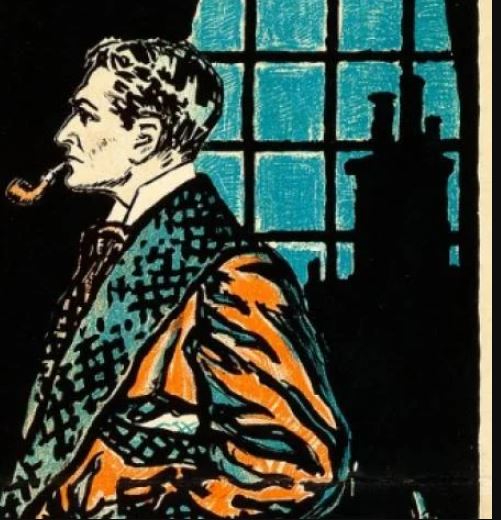
Poor Sherlock Holmes, we are never letting the world’s greatest detective retire, not while the world still has mystery in it. Sherlock Holmes and the Man Who Believed in Fairies is an entertaining new take on both Holmes and his creator, Sir Arthur Conan Doyle.
This is a tale set during the twilight of Holme’s years. Both Watson and Holmes are semi-retired, having returned to 221b Baker Street for nostalgia and comfort, both having failed at a quiet retirement. Two old men fighting crime; what could go wrong?
The case is none other than that of the Cottingley Fairies, a real-world photography fraud that, just over 100 years ago, tried to convince the world that fairies existed. Sir Arthur Conan Doyle is convinced that the photos are real, and Holmes is outraged; in this story, Doyle and the Detective are linked by reputation in some way (it’s never quite explained, which is a good thing). It’s a fun idea to imagine a world in which Holmes gets more and more annoyed at the way Sir Arthur Conan Doyle seems so willing to buy into any pseudo-scientific trend.
Guy Hepworth is particularly strong as the pontificating and overly self-important Doyle, carrying himself like an author famous for his intellect. Harry Meacher equally portrays a wiry and elderly Holmes in a delightful way; this is the sort of Sherlock who can somehow get away with more because of his aura of ‘old man’ charm.
The narrative suffers a little bit from hugging a little too closely to the Sherlock Holmes storytelling style, and we understand that the play’s writer also wrote a book about the Cottingley case. It really shows that Sherlock’s genius is used to dump a lot of information on the audience in a very short space of time. The problem is that either the play needs to be longer in order to make the details easier to absorb, or all the intricate details of the case need to be cut. As it stands, the script is a little too much like a Wikipedia article in places.
Sherlock Holmes and the Man Who Believed in Fairies is a solid show with strong performances and a really neat mystery story. One we hope to see ventures beyond the confines of the Edinburgh Festival Fringe.
You can find out more about future productions here.